Quick diagnosis
Match the row to what you’re seeing, then jump to the fix.
| What you see | Likely cause | Confidence | How to confirm | What to do now | Urgency |
|---|---|---|---|---|---|
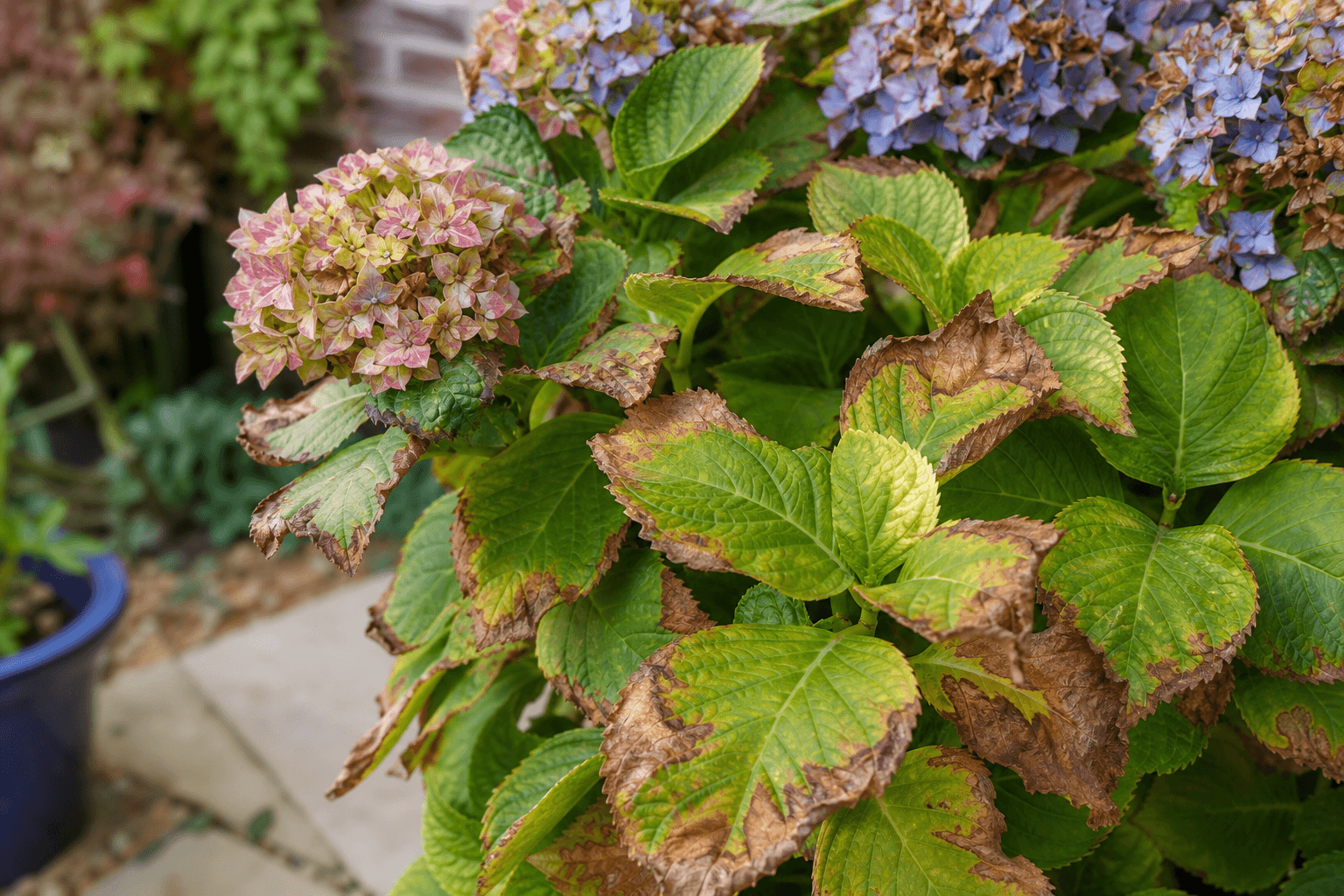
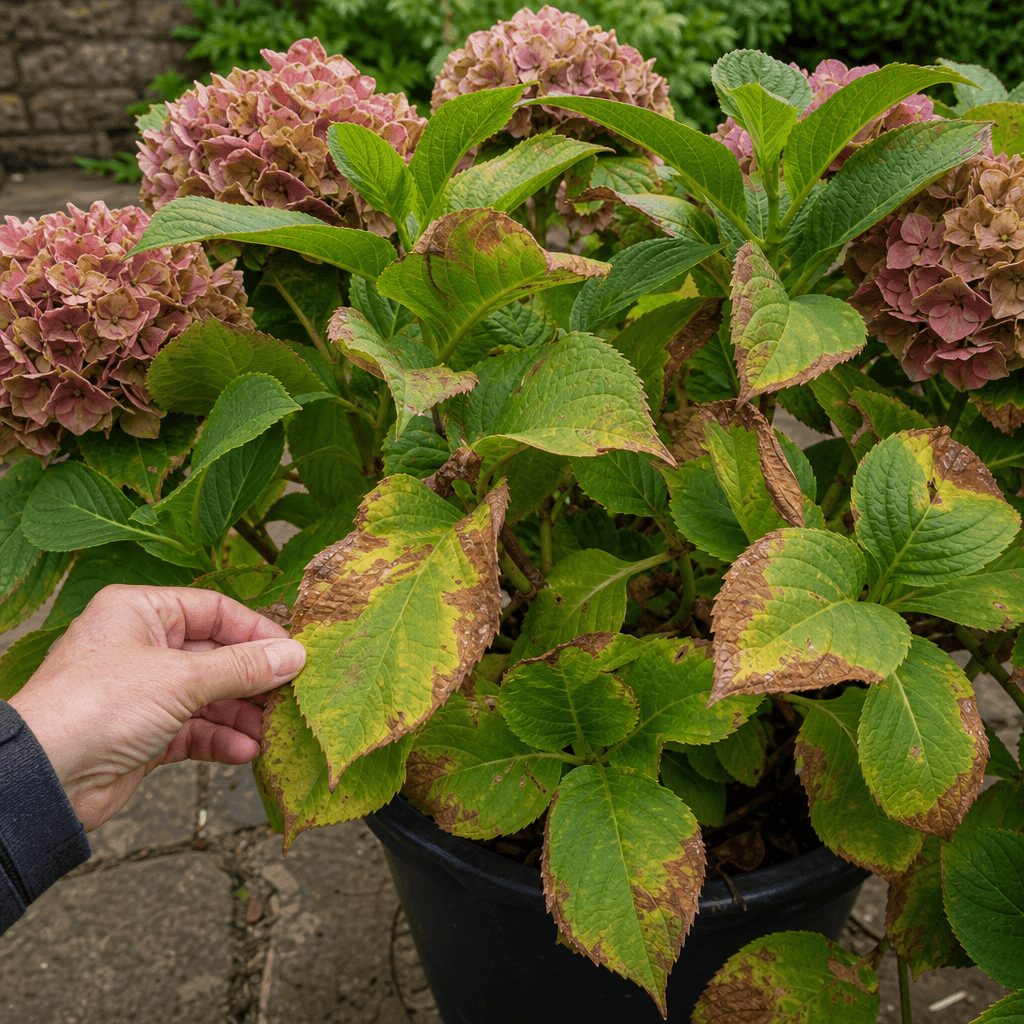
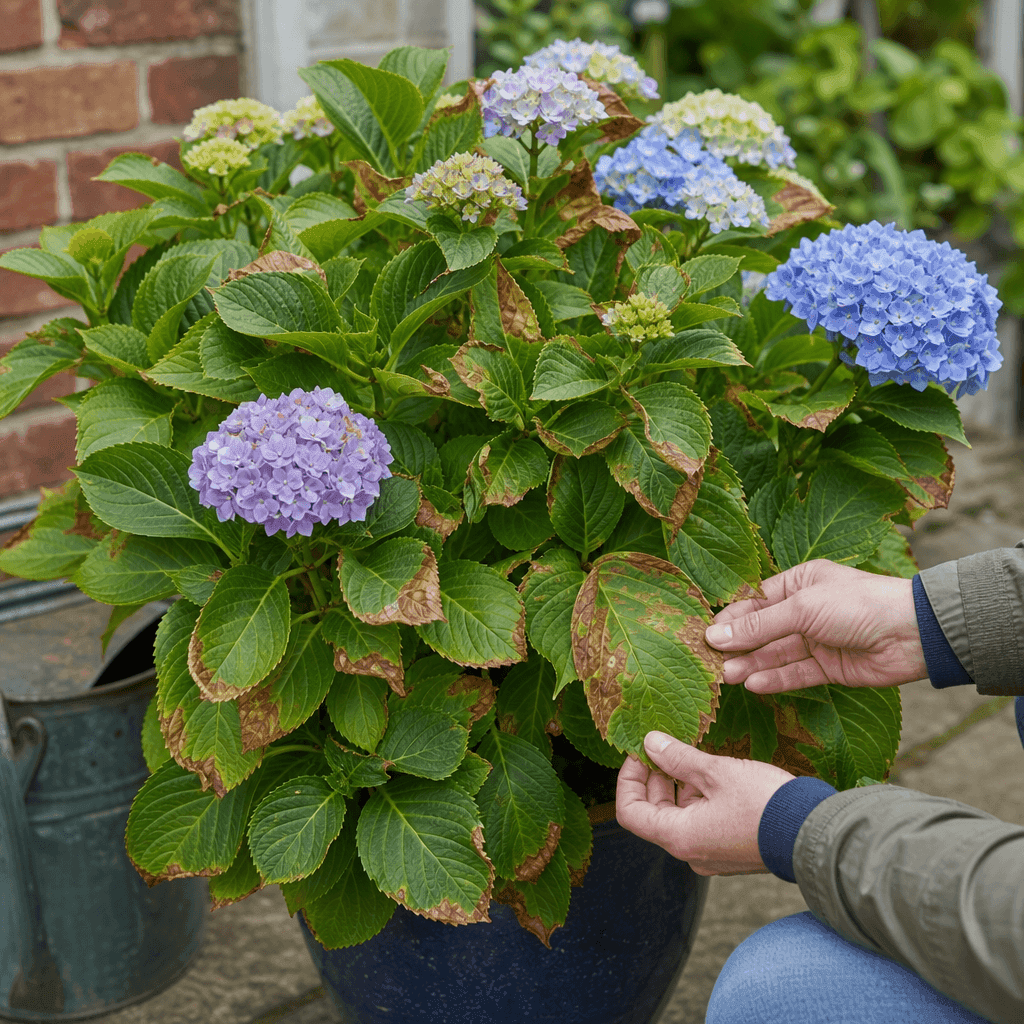
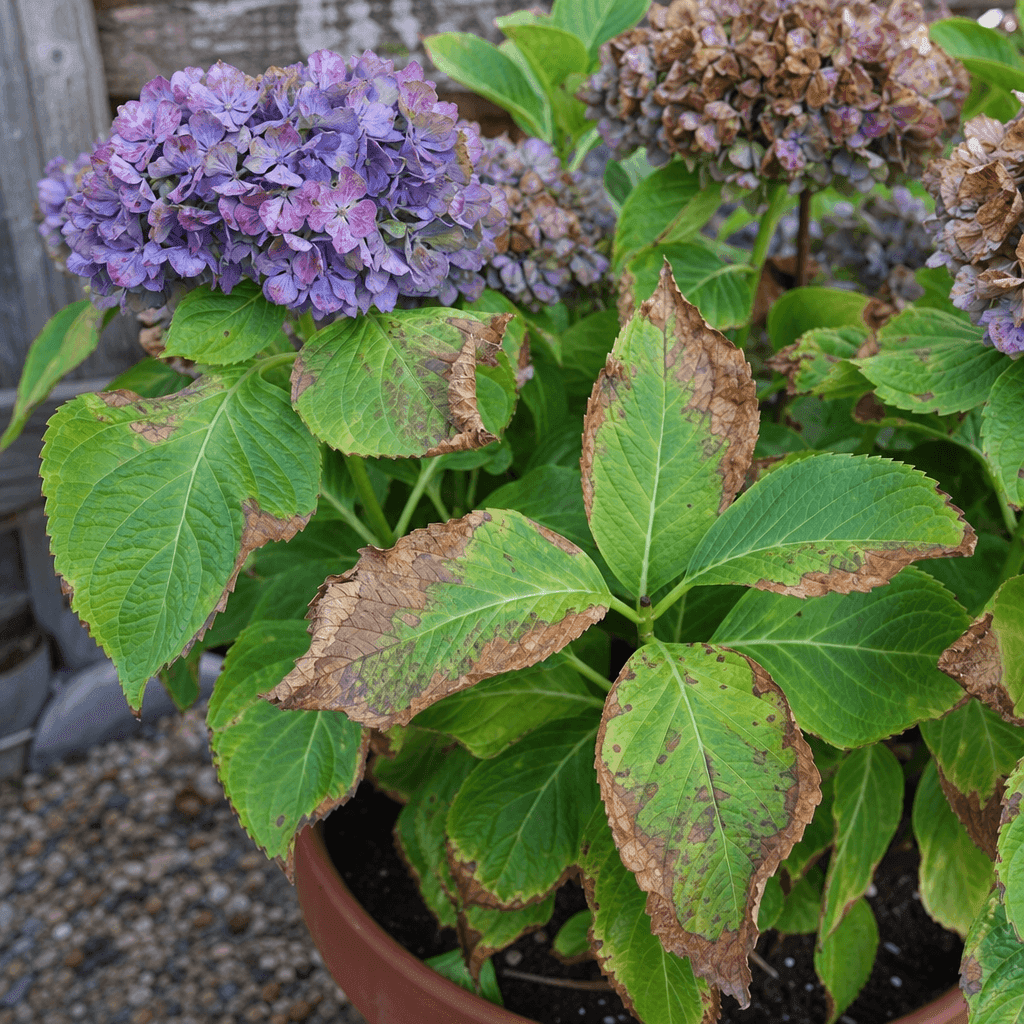
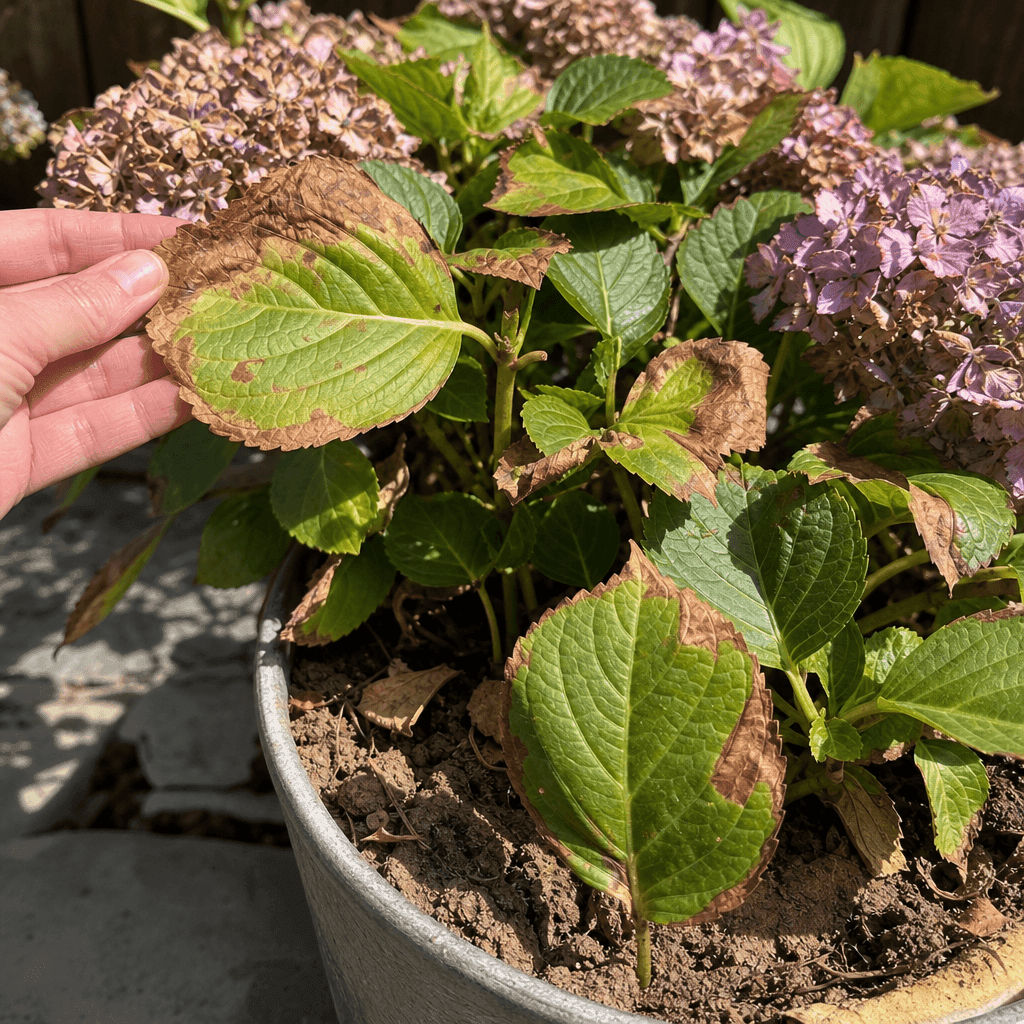
| Crispy brown edges and tips on leaves; worst on sunny or windy side of plant | Drought and sun/wind scorch | High | Soil dry 5+ cm down; damage worse on exposed sides; no spots or halos | Deep-water the full root zone; add 5 cm mulch; provide temporary shade in heatwaves | High |
| New spring shoots and soft growth blacken or collapse after a cold night | Late frost damage | High | Frost or cold night preceded the damage; mainly new growth affected; older stems fine | Wait until frost risk passes, then prune back to healthy buds | Medium |
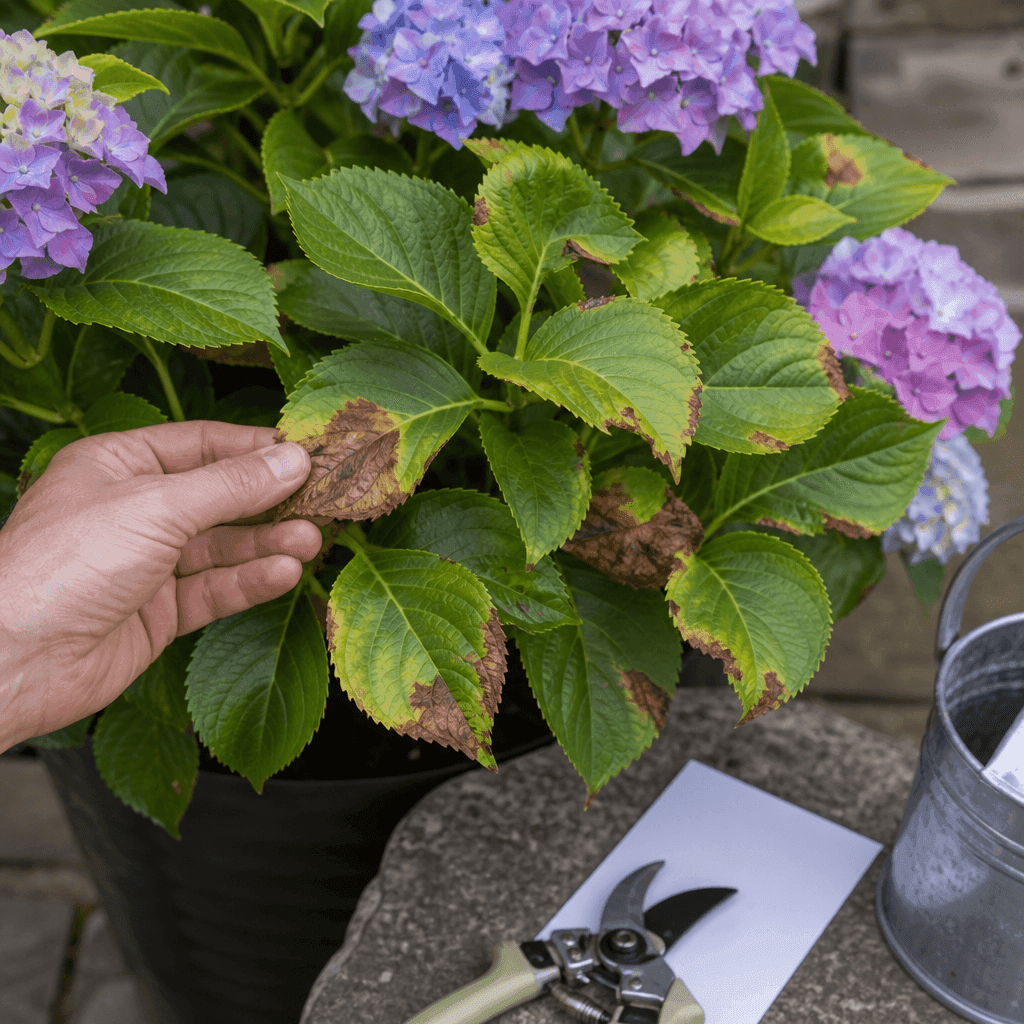
| Circular brown or tan spots with purplish-brown borders on lower leaves; spots enlarge and merge | Cercospora leaf spot (fungal disease) | Medium | Spots worse on lower leaves; warm humid weather preceded; no drought signs | Remove infected leaves; clear leaf debris; improve airflow; avoid overhead watering | Medium |
| Brown leaf edges; damage on one side only; no specific spots or patterns | Wind scorch and desiccation | Medium | Plant in an exposed position; damage worse after windy spells; one-sided browning | Erect a windbreak; deep-water; mulch; move pots to a sheltered spot | Low–medium |
| Yellow-brown leaves with wet, cold soil; roots may be mushy; wilting despite wet ground | Waterlogging and root stress | Medium | Soil stays wet for days; low-lying spot; clay soil; blocked pot drainage | Stop watering; improve drainage; repot if roots are rotting | High |
| White, waxy flat bumps on stems; sticky honeydew; loss of vigour; leaf browning | Hydrangea scale insect | Low | Inspect stems in early summer for white waxy blobs (females) and brown males | Scrape off colonies; apply plant-oil-based spray; encourage natural predators | Medium |
The causes, in detail
Drought stress and sun or heat scorch
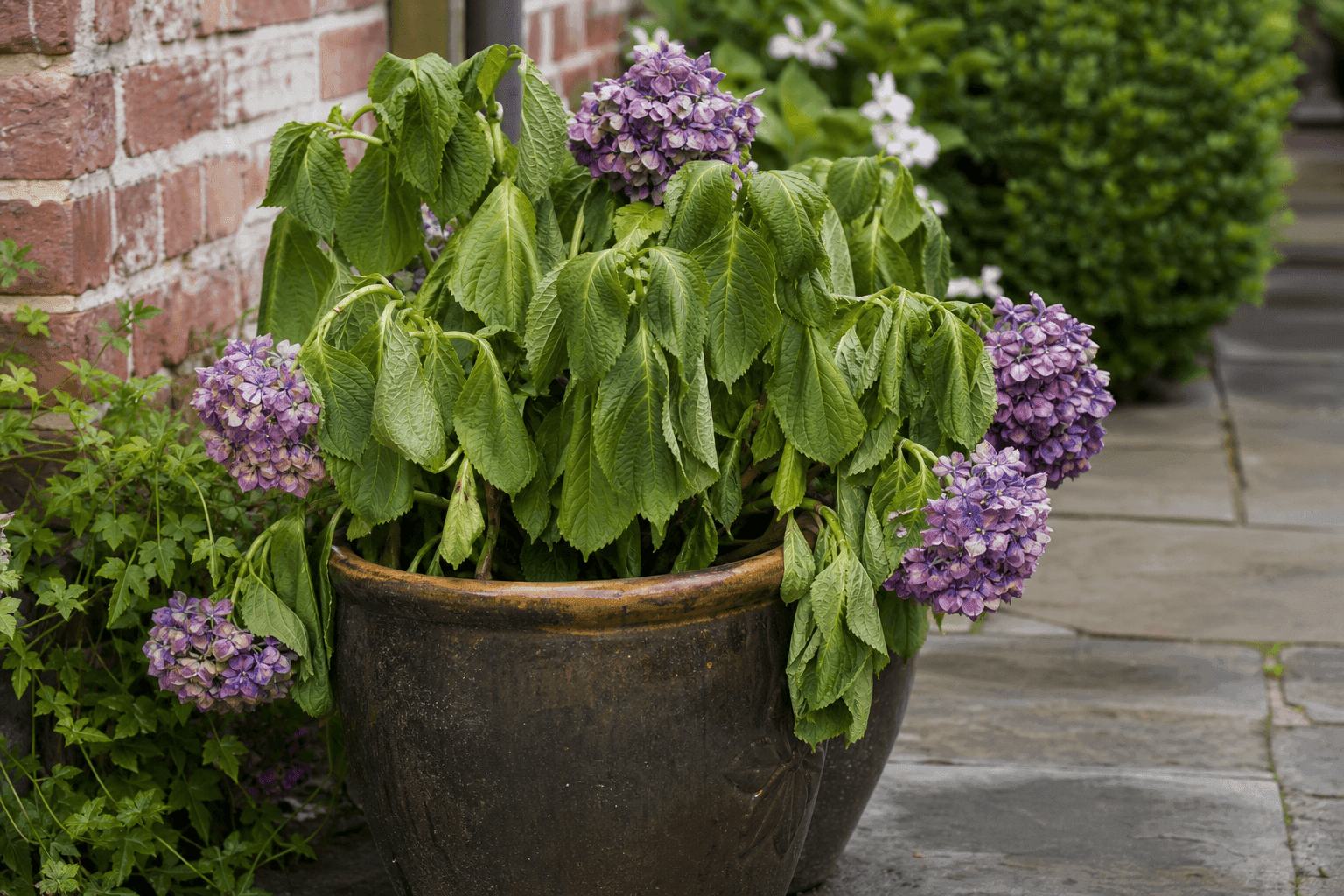
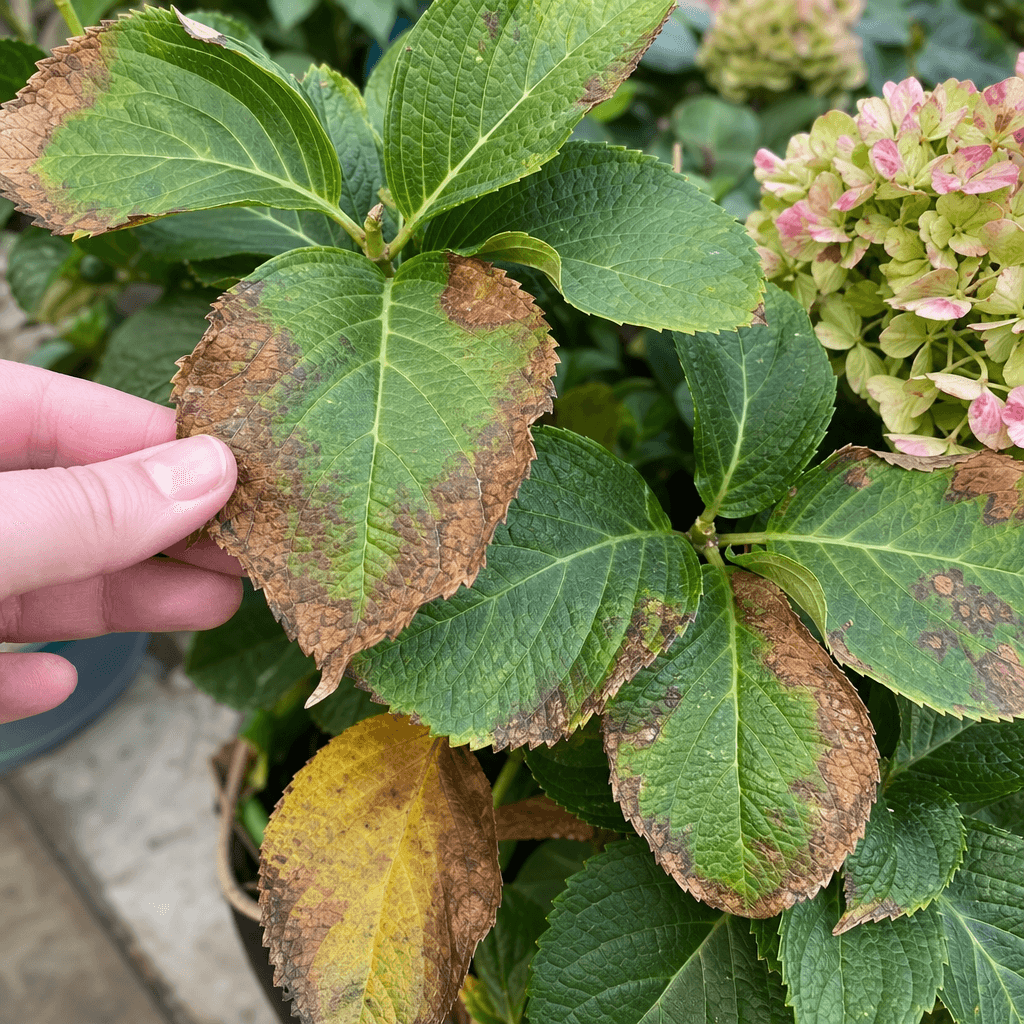
Most likelyHydrangeas need consistently moist soil and are among the first garden plants to show heat and drought stress in UK summers. In dry spells from June onwards, water moves out of the leaves faster than the roots can replace it, and the leaf edges and tips dry out and turn brown. This is most common on mophead and lacecap hydrangeas (H. macrophylla), which are less drought-tolerant than panicle or smooth hydrangeas. The RHS notes that weather damage — particularly drought and scorch — is the most common cause of brown leaves on woody plants, and warns that damage is often worst on the side of the plant facing prevailing sun or wind.
- Soil or compost is dry more than 5 cm below the surface.
- Browning is at the leaf edges and tips, crispy to the touch.
- The damaged leaves are on the sunny or windward side of the plant.
- The problem developed during or after a dry or hot spell.
- Water slowly at the base of the plant until the full root zone is saturated — a brief splash only wets the surface.
- Apply a 5 cm mulch of garden compost, leaf mould, or composted bark, kept clear of the stems.
- Provide temporary afternoon shade (shade cloth, parasol) during heatwaves.
- Move potted hydrangeas away from hard surfaces and walls that reflect heat.
- Repeat deep watering next morning if the plant does not show signs of recovery.
Stop it coming back:Crispy brown leaf edges will not turn green again, but the plant can produce new healthy growth if roots are kept moist and cool. Remove only fully dead, dry leaves.
hard prune a heat-stressed hydrangea to 'refresh' it — this adds further stress and stimulates vulnerable soft new growth.
Late frost damage on new growth
Most likelyIn the UK, late frosts — sometimes as late as May in northern England and Scotland — can blacken or collapse the soft new growth of hydrangeas that are already into their spring flush. Mophead and lacecap types are especially vulnerable because they carry their flower buds at the shoot tips where frost hits first. The RHS confirms most hydrangeas are hardy through much of the UK, but their young buds and shoots are susceptible to late spring frosts.
- A frost or cold night below about 0°C occurred recently.
- The damage is mainly on soft new growth — blackened, collapsed, or water-soaked in appearance.
- Older, harder stems and established leaves are largely unaffected.
- Do not prune immediately while more frost is forecast.
- Once the frost risk has definitively passed (usually late May), cut blackened shoots back to a pair of healthy buds.
- Move potted hydrangeas temporarily into an unheated greenhouse, porch, or against a sheltered wall during frost warnings.
- If frost catches a plant in an exposed spot repeatedly, consider moving it to a more sheltered position.
Stop it coming back:Hydrangea paniculata and H. arborescens flower on current year's growth, so late frost damages their new shoots but costs fewer flowers; mopheads that flower on old wood lose flower buds and may not bloom that year.
prune frost-damaged shoots back while temperatures are still below zero — wait until the frost risk is clearly past.
Cercospora leaf spot
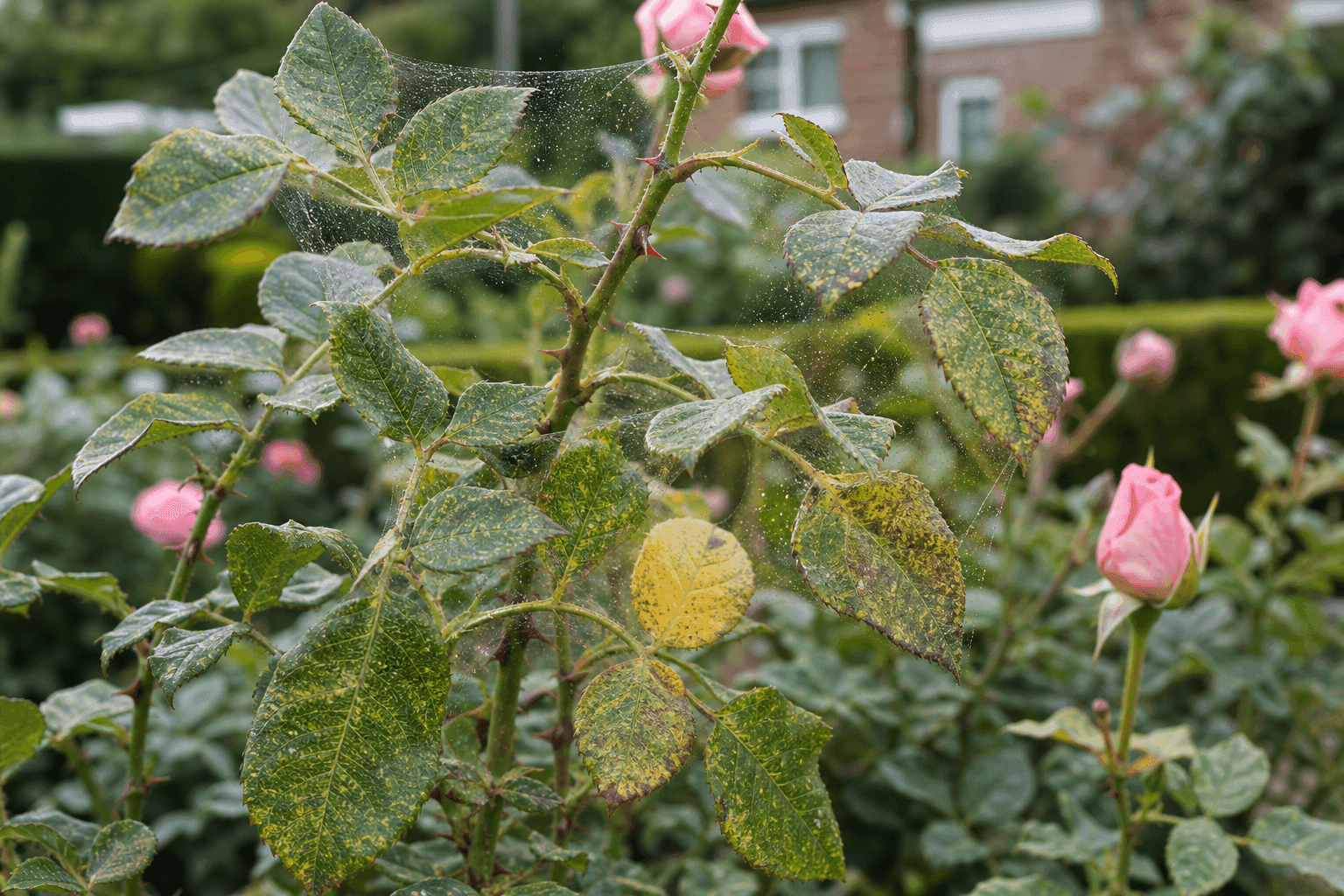
PossibleCercospora leaf spot is a fungal disease caused by Cercospora hydrangeae. It is increasingly common in UK gardens during warm, humid summers. Spots begin as small purplish circles on lower leaves, then enlarge into angular or irregular patches with tan or grey centres and dark purplish-brown borders. The University of Connecticut identifies Cercospora as the most common foliar disease of hydrangeas, and notes it is worse on plants in full sun, where water stress makes the plant more susceptible. Spores spread from infected leaf debris via splashing rain.
- Brown or tan spots with distinct purple-brown borders — not just crispy edges.
- Spots first appear on lower, older leaves near the base of the plant.
- Warm, humid weather preceded the problem.
- No drought signs — the soil is moist.
- Remove and bin all affected leaves — do not compost them.
- Clear fallen leaf debris from around the base of the plant to reduce overwintering spores.
- Avoid overhead watering — water at the base only to prevent spore splash.
- Improve airflow by not crowding hydrangeas in the border.
- In severe or recurring cases, a fungicide containing myclobutanil or trifloxystrobin can be applied at first signs.
Stop it coming back:Keep the ground beneath the plant clean of leaf debris, especially in autumn. Mulch helps reduce spore splash from the soil.
assume that all spotty browning is disease — check soil moisture first, as drought spotting and disease spots look similar but require different responses.
Wind scorch and desiccation
PossibleWindy weather removes moisture from hydrangea leaves faster than the roots can replace it, leading to brown, crispy leaf edges — particularly on one side of the plant facing the prevailing wind. The RHS specifically lists wind scorch as a common cause of brown leaves on shrubs and warns it is often confused with drought or disease. Plants in gaps between fences, at the end of terraces, or in coastal gardens are most at risk.
- Browning is on the windward side of the plant only.
- The plant is in an exposed position — at a fence gap, terrace end, or open site.
- Damage is worst after windy periods, not just after heat or drought.
- Leaf edges are brown and papery but the pattern is not spotty.
- Erect a temporary windbreak (hessian or horticultural fleece) on the exposed side.
- For permanent exposure, plant a living windbreak of taller shrubs over time.
- Move potted hydrangeas to a more sheltered spot.
- Deep-water and mulch to reduce the combined stress of wind and drying.
move an established border hydrangea in full summer growth — wait until autumn or early spring.
Waterlogging and root stress
PossibleHydrangeas tolerate moist conditions but not permanently wet, airless soil. In waterlogged ground, roots are starved of oxygen and begin to rot, so the plant cannot take up water even though the soil is wet — causing wilting and yellowing that turns brown. This is more likely in heavy clay soil, compacted ground, or containers with blocked drainage holes. The RHS highlights that waterlogging following heavy rain is a frequent undiagnosed cause of browning in shrubs.
- Soil remains wet for several days after rain — push a finger in to test.
- The plant is in a low spot, heavy clay, or in a pot with blocked drainage.
- Roots look brown and mushy rather than firm and cream-coloured.
- Leaves droop and brown even though the soil is wet.
- Stop watering and allow the soil to partially dry before watering again.
- Clear blocked drainage holes in pots; raise pots on feet; empty saucers after rain.
- If a pot smells sour, repot into fresh compost and trim dead roots.
- In the ground, improve drainage with grit or organic matter; avoid planting in hollows.
water more in response to wilting without checking whether the soil is already wet — more water makes waterlogging worse.
Hydrangea scale insect
Less likelyHydrangea scale (Pulvinaria hydrangeae) is a sap-sucking insect that the RHS describes as white, waxy, flat blobs on stems and the undersides of leaves, most visible in early summer when the females lay eggs. Heavy infestations weaken the plant, cause sooty mould to form on honeydew, and can contribute to general browning and leaf loss. It is more common on wall-trained and sheltered hydrangeas.
- White, waxy, flat or domed blobs on stems — particularly noticeable May to July.
- Sticky honeydew deposits on leaves with black sooty mould following.
- General loss of vigour and leaf browning not explained by water stress.
- Scrape scale colonies off stems with a soft brush or cloth.
- Spray with a plant-based oil product (such as plant oil spray or fatty acid spray) in June when crawlers are active.
- Encourage natural predators — avoid broad-spectrum insecticides.
- Cut out the most heavily infested stems where practical.
apply insecticide in winter when adult scales are protected under their waxy coating and most sprays will have little effect.
Still not sure?
Work down these branches — the first one that matches is your answer.
What not to do
- Hard prune a hydrangea immediately after heat or frost damage — this adds stress and triggers vulnerable soft new growth.
- Overhead-water a hydrangea with leaf disease — it spreads fungal spores.
- Assume all browning is drought without checking the soil — waterlogging and drought produce similar symptoms.
- Compost leaves with Cercospora spots — bin them to break the disease cycle.
- Leave fallen leaf debris around plants going into autumn — it harbours overwintering disease spores.
Common questions
Why are my hydrangea leaf edges turning brown?
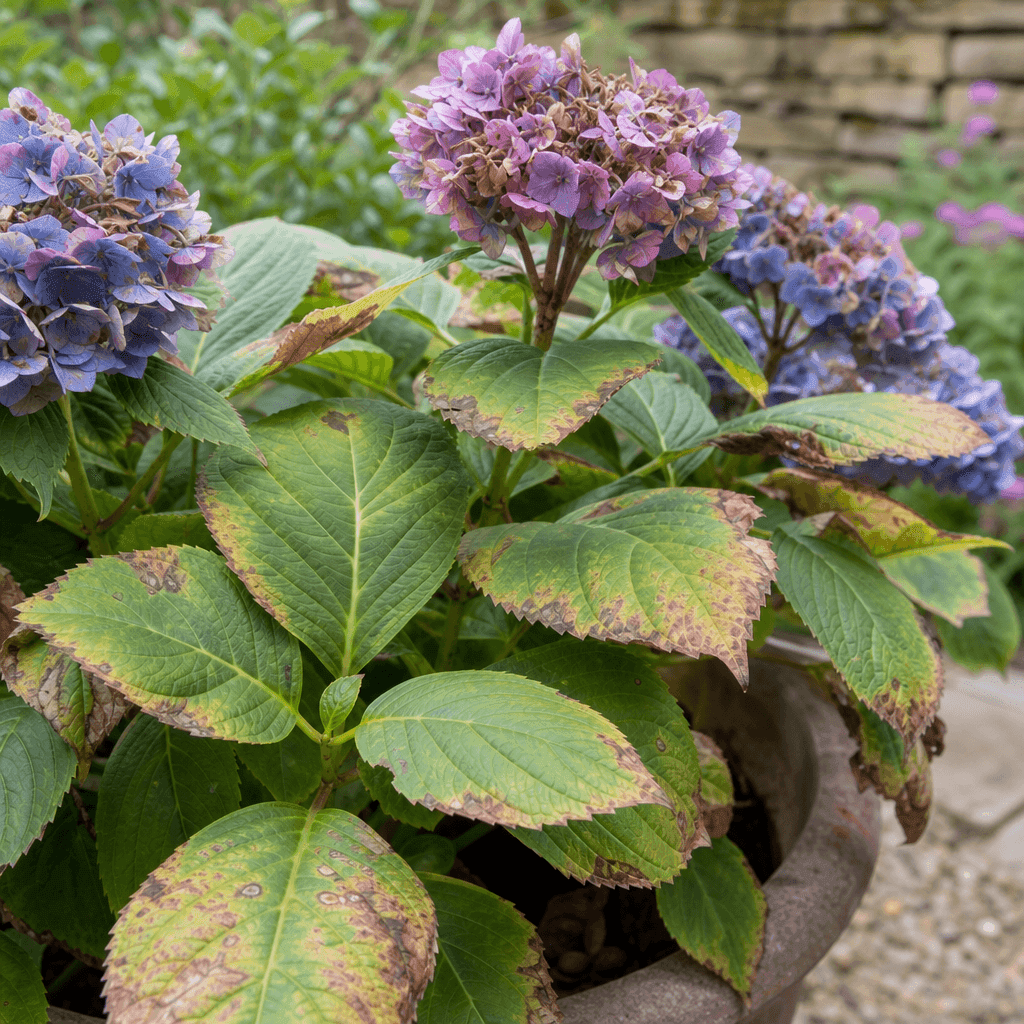
Brown leaf edges are most often caused by drought stress, sun scorch, or wind desiccation — the leaf is losing moisture faster than the roots can supply it. Check the soil: if dry below 5 cm, deep-water and mulch. Brown edges on a moist, sheltered plant may indicate wind damage or Cercospora leaf spot.
Can brown hydrangea leaves recover?
Already-brown, crispy tissue does not turn green again. However, once the underlying cause is fixed — usually by watering and mulching — the plant will produce new healthy leaves. Remove dead and crisped leaves once the plant stabilises.
What does Cercospora leaf spot look like on hydrangeas?
Cercospora spots are roughly circular, often angular, with tan or grey centres and distinct purple-brown borders. They start on lower leaves and spread upward. Unlike drought browning, they are not crispy at the edges — the spots have defined borders.
Why are my hydrangea leaves browning after frost?
Late spring frosts blacken or collapse the soft new growth on hydrangeas, particularly mopheads and lacecaps, which carry flower buds at exposed shoot tips. Wait until the frost risk passes, then prune back to healthy buds. Many plants recover and reflush.
Should I remove brown hydrangea leaves?
Remove leaves that are fully dead, crispy, or diseased. Leave lightly marked but still-green leaves — they still photosynthesise. After Cercospora infection, remove and bin affected leaves; after heat scorch, hold off pruning until the plant stabilises.
My hydrangea leaves are browning but the soil is wet — why?
Waterlogging causes brown and wilted leaves even when the soil is wet, because oxygen-starved roots cannot absorb water or nutrients. Stop watering, check for drainage problems, and inspect the roots. This is distinct from drought — the fix is opposite.
Which hydrangeas are most prone to brown leaves in UK gardens?
Mophead and lacecap hydrangeas (H. macrophylla) are the most sensitive to drought, heat, and frost. Panicle hydrangeas (H. paniculata) are tougher and more sun- and drought-tolerant. Smooth hydrangeas (H. arborescens) are also more forgiving than macrophylla types.