Plant diseases
Diseases fall into three families — fungal, bacterial and viral — and they call for very different responses. Fungal problems are by far the most common and the most treatable. Telling them apart early decides whether you save the plant or pull it before it infects the rest.
Most plant diseases fall into a few practical groups: fungal and fungus-like diseases that cause spots, mildew, rots and blight; bacterial diseases that often cause rapid wilting or wet-looking lesions; viral diseases that distort growth or create mosaic patterns; and environmental problems that look like disease but do not spread from plant to plant.
The group matters because the fix changes. Fungal problems can often be slowed with hygiene, airflow, resistant cultivars and dry foliage. Bacterial diseases are hard to cure once inside the plant. Viral diseases have no chemical cure for gardeners. And environmental lookalikes are not infectious, so spraying wastes time. Before treating, ask: is it spreading? Are unrelated plants affected? Is there visible growth — powder, fuzz or ooze? Which part was hit first? And are the roots involved?
Managing disease is not always about saving every leaf — sometimes it means prune, isolate, or remove the plant to protect the rest of the garden. Wait and monitor when only a few old leaves are marked and new growth is clean; act quickly when lesions spread in wet weather, a crown or stem turns soft, or a virus is likely on an edible crop. Use the guides below to tell the families apart and decide when to act.
32 diagnosis guides in this area
Showing 1–12 of 32 guides
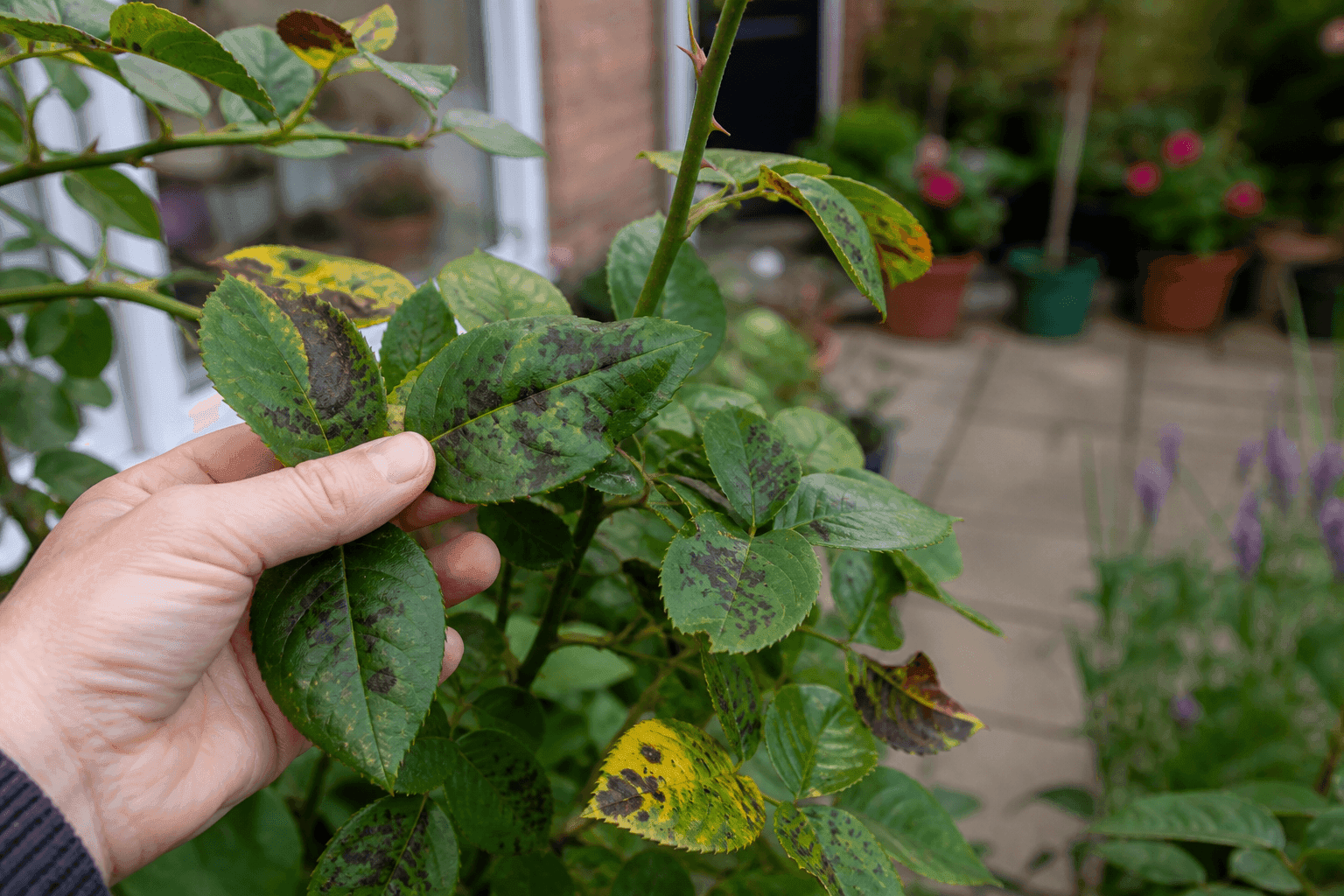
Black Mould or Mildew on Plants: UK Diagnosis and Fixes
Black sooty mould, powdery mildew or grey mould on your plants? Use this UK diagnosis guide to tell them apart and treat the real cause.
Read the guide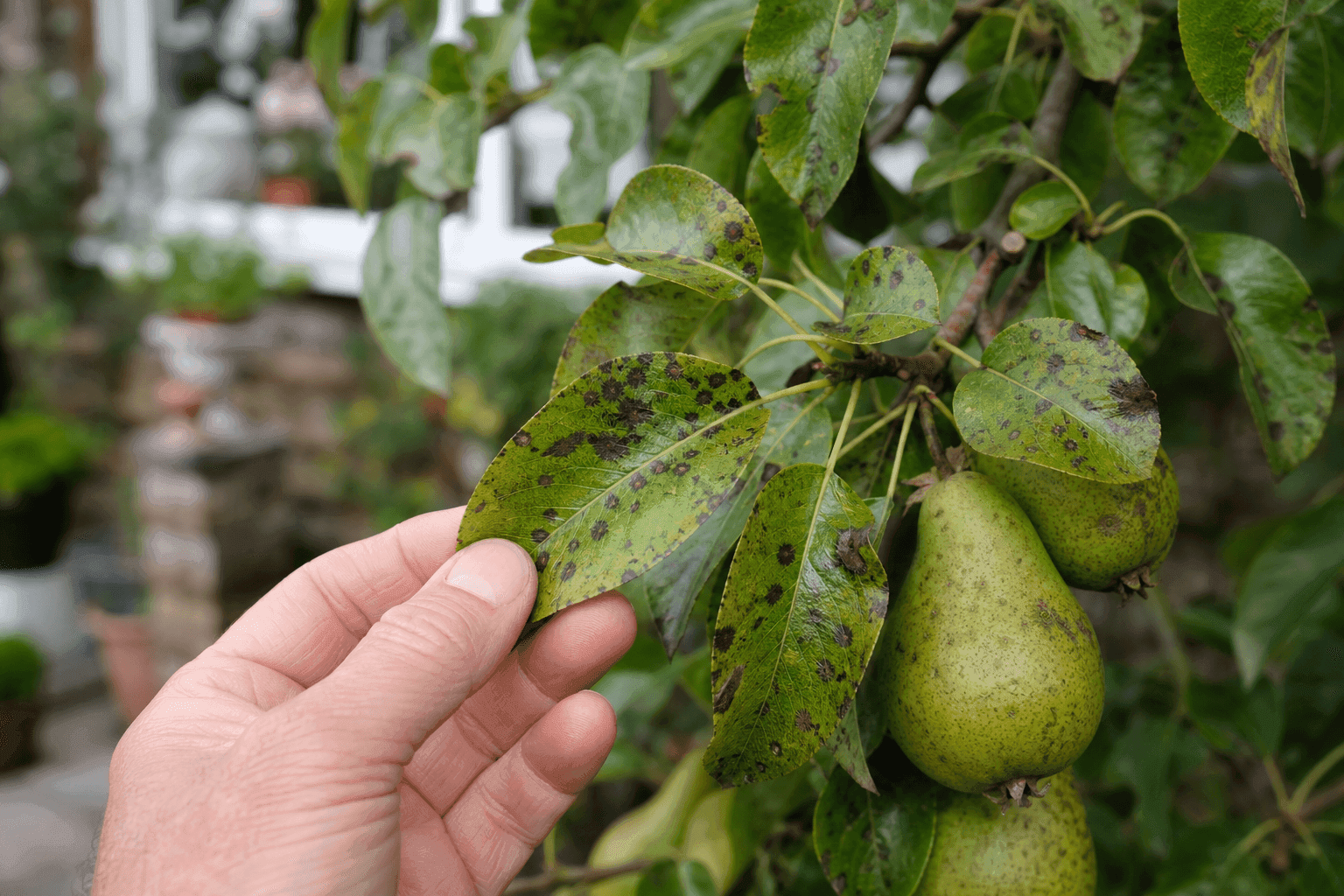
Black Spots on Pear Tree Leaves: UK Diagnosis and Fixes
Black spots on pear tree leaves are usually pear scab or pear rust. Use this UK diagnosis table to identify the cause and decide what to do.
Read the guide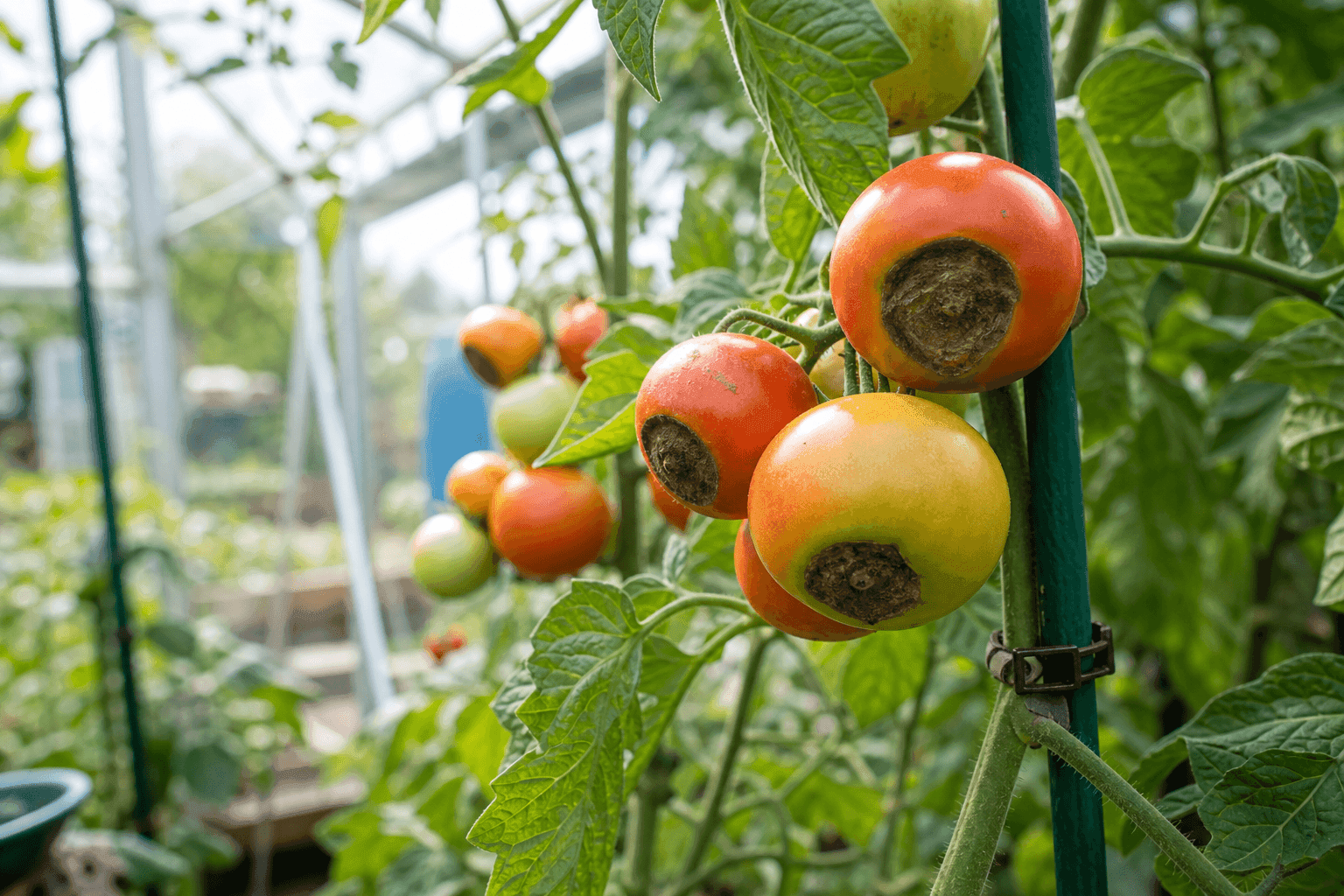
Blossom End Rot on Tomatoes: Causes and UK Fixes
Blossom end rot on tomatoes is caused by inconsistent watering, not calcium-poor soil. Diagnose and fix it with this UK guide.
Read the guide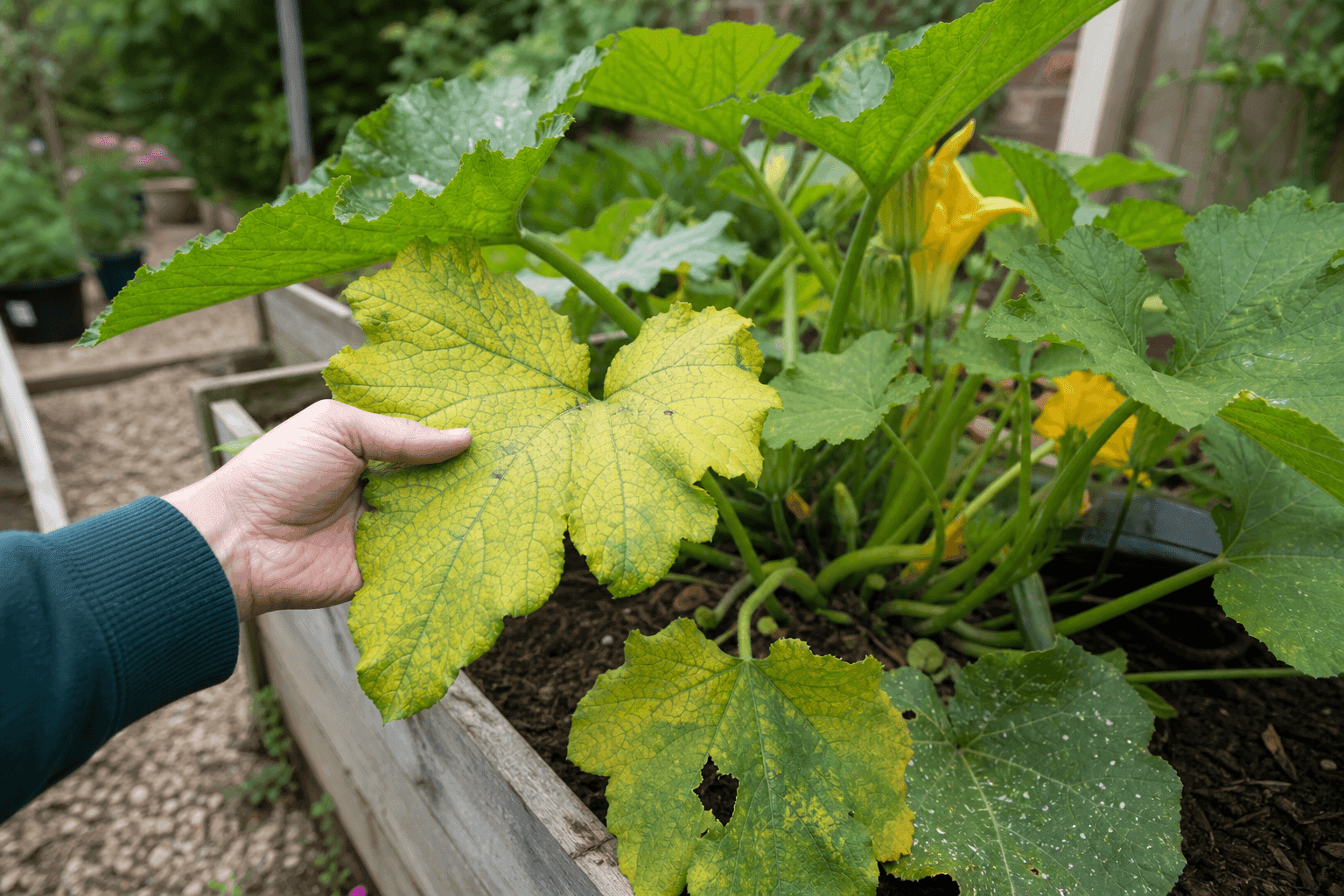
Courgette Yellow Leaves: Causes and Fixes for UK Gardeners
Courgette leaves turning yellow? This UK guide covers powdery mildew, nutrient shortage, mosaic virus, downy mildew and normal ageing — with specific fixes.
Read the guide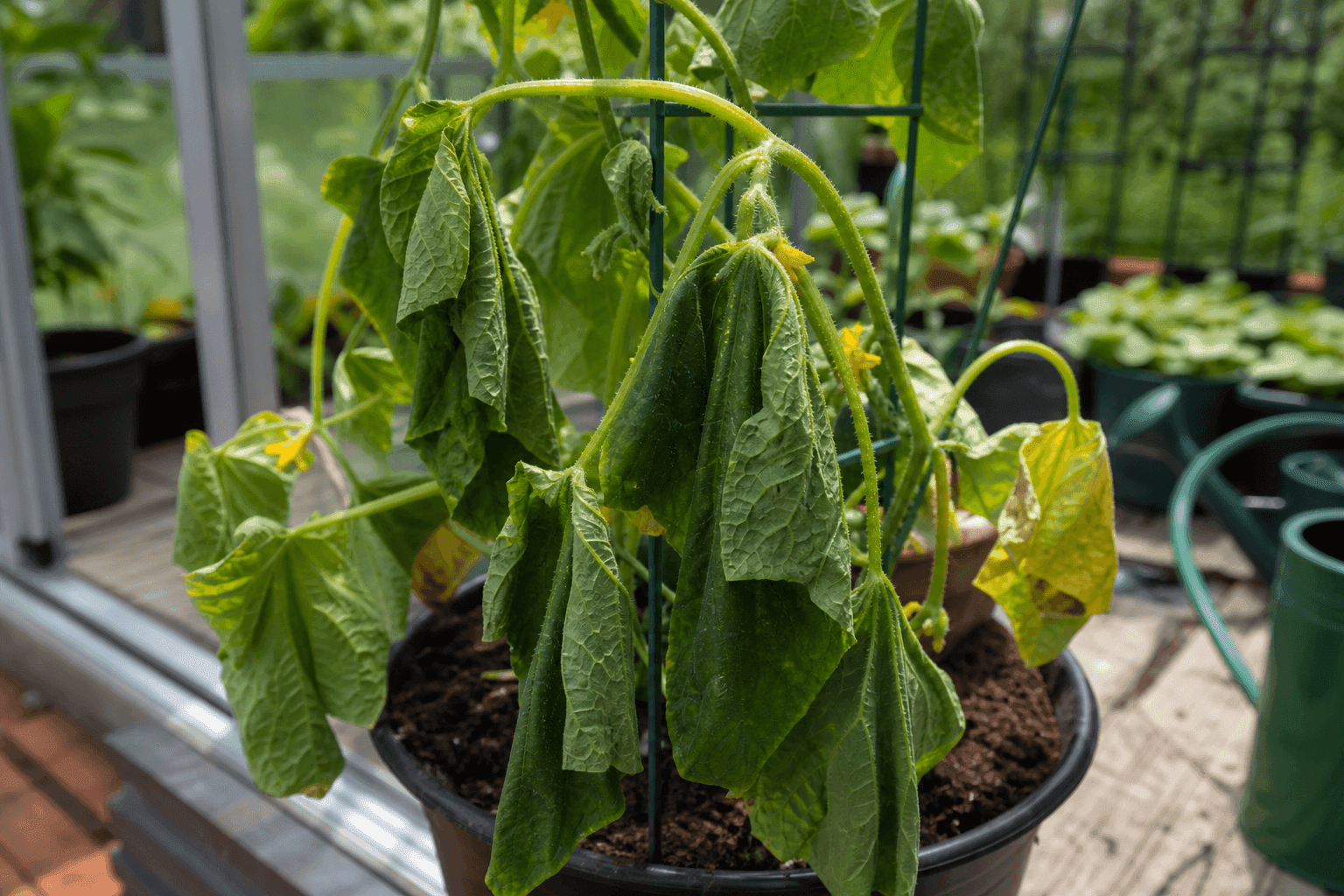
Cucumber Plant Wilting: UK Causes, Diagnosis and Fixes
Cucumber wilting in the UK is most often underwatering, root rot, or Verticillium wilt. Use this diagnosis table to find the cause and act fast.
Read the guide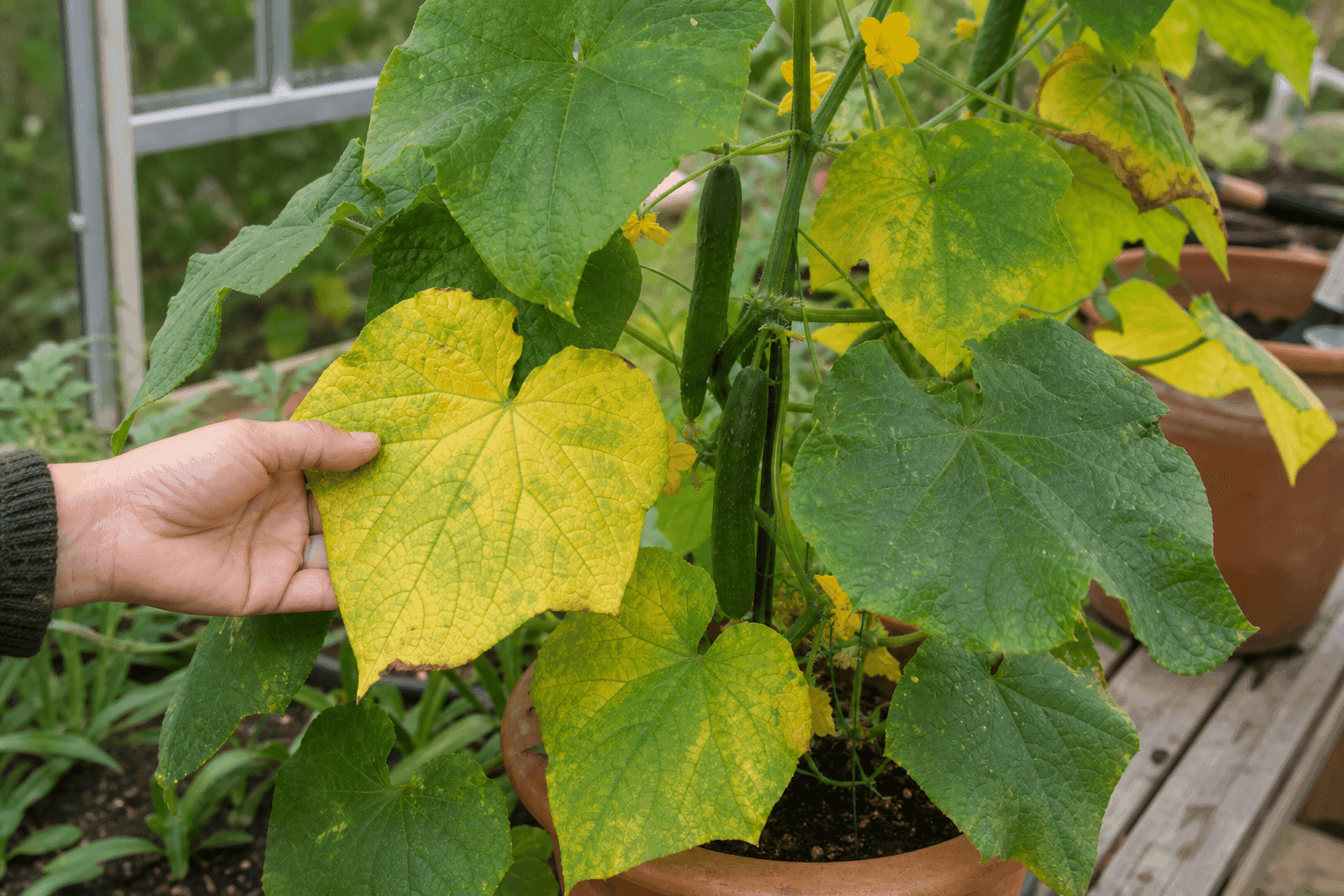
Cucumber Yellow Leaves: Causes and Fixes for UK Growers
Cucumber leaves turning yellow? Diagnose the real cause — from nitrogen shortage and overwatering to mosaic virus and powdery mildew — with UK-relevant fixes.
Read the guide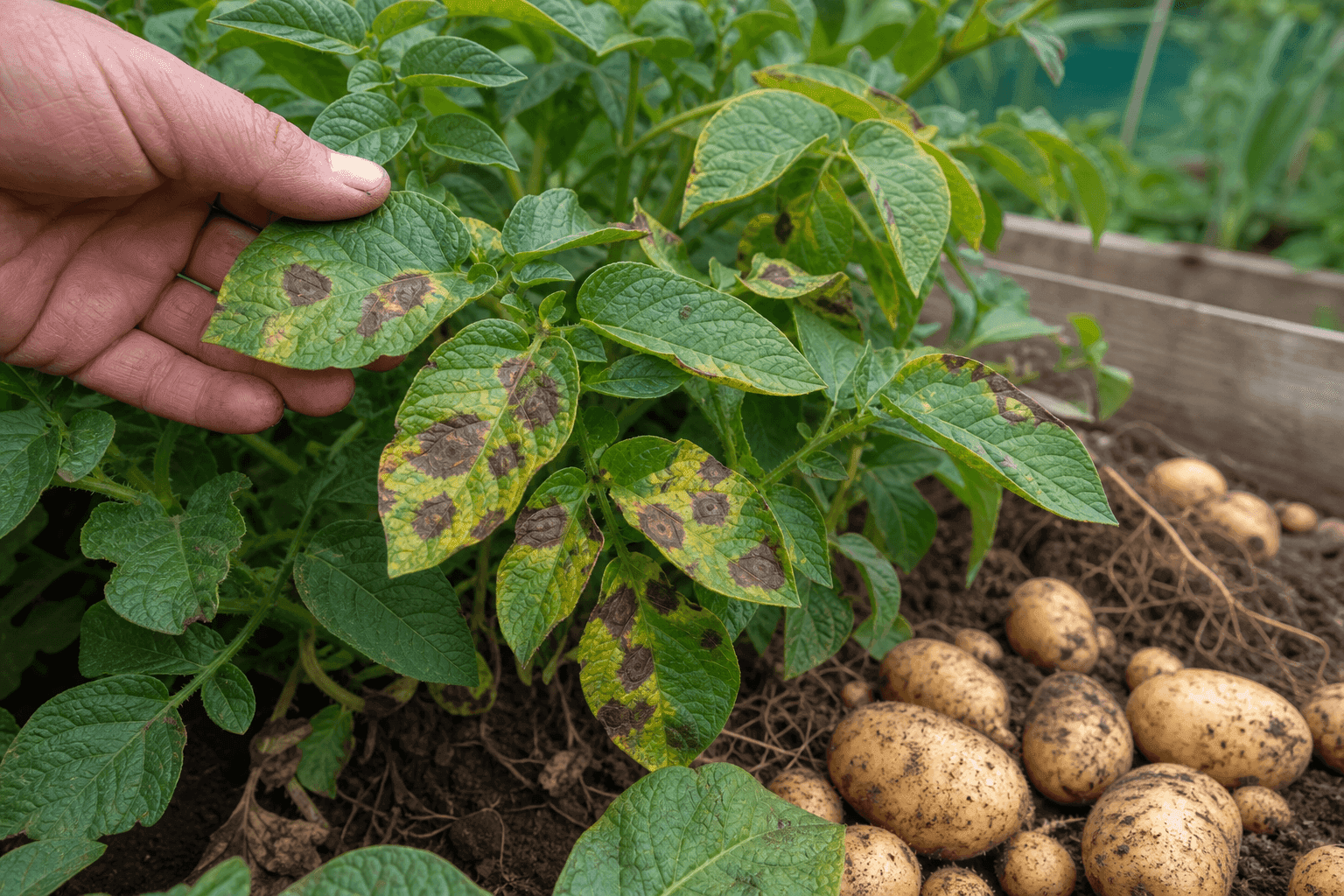
Early Blight on Potatoes: UK Diagnosis, Symptoms and Fixes
Dark target-spot lesions on your potato leaves? This UK guide separates early blight (Alternaria) from the far more common magnesium deficiency and late blight.
Read the guide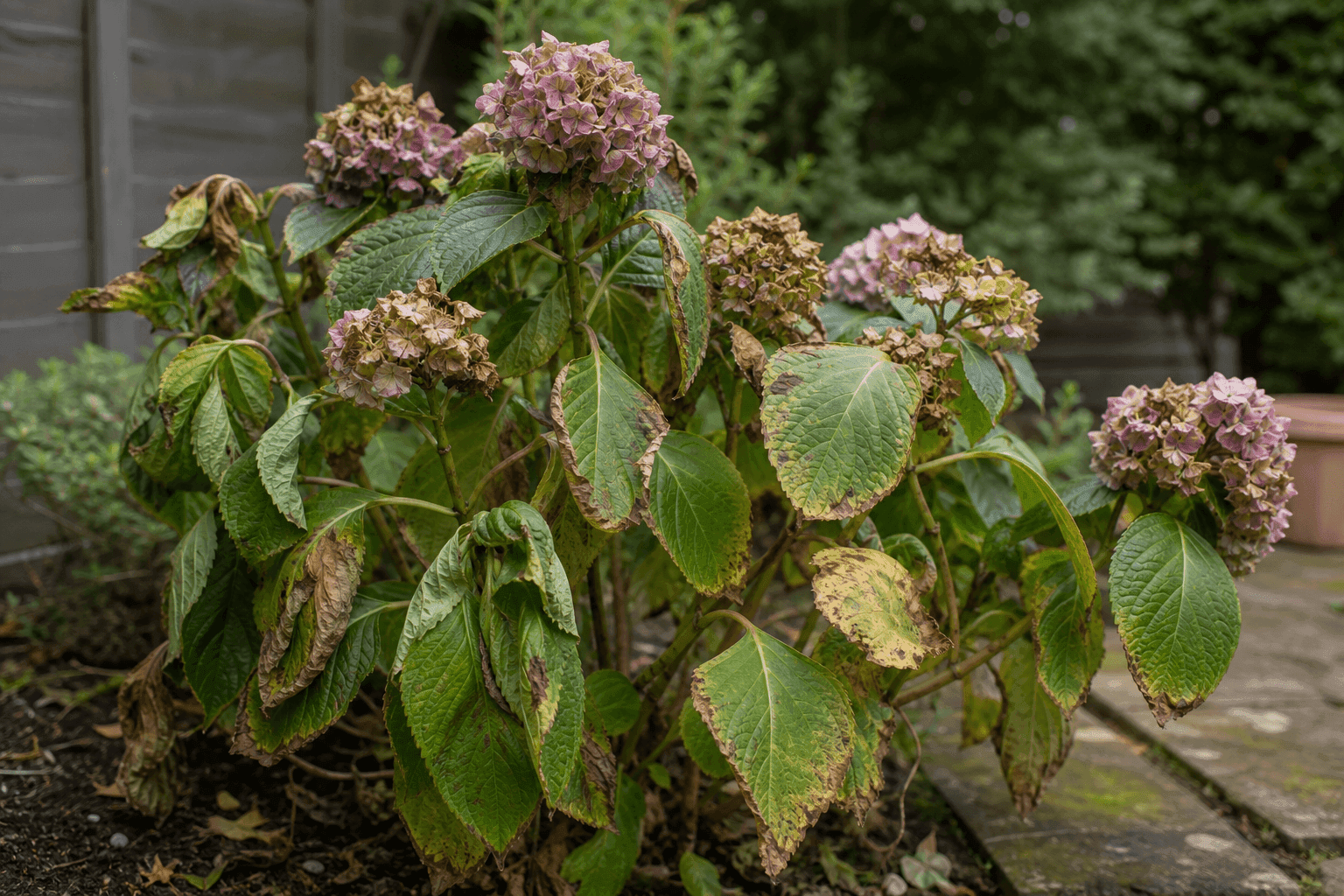
Hydrangea Dying? UK Causes, Diagnosis and Recovery Guide
Hydrangea dying or failing? Diagnose the real UK causes — wrong pruning, root rot, waterlogging, drought or disease — and find out what to do.
Read the guide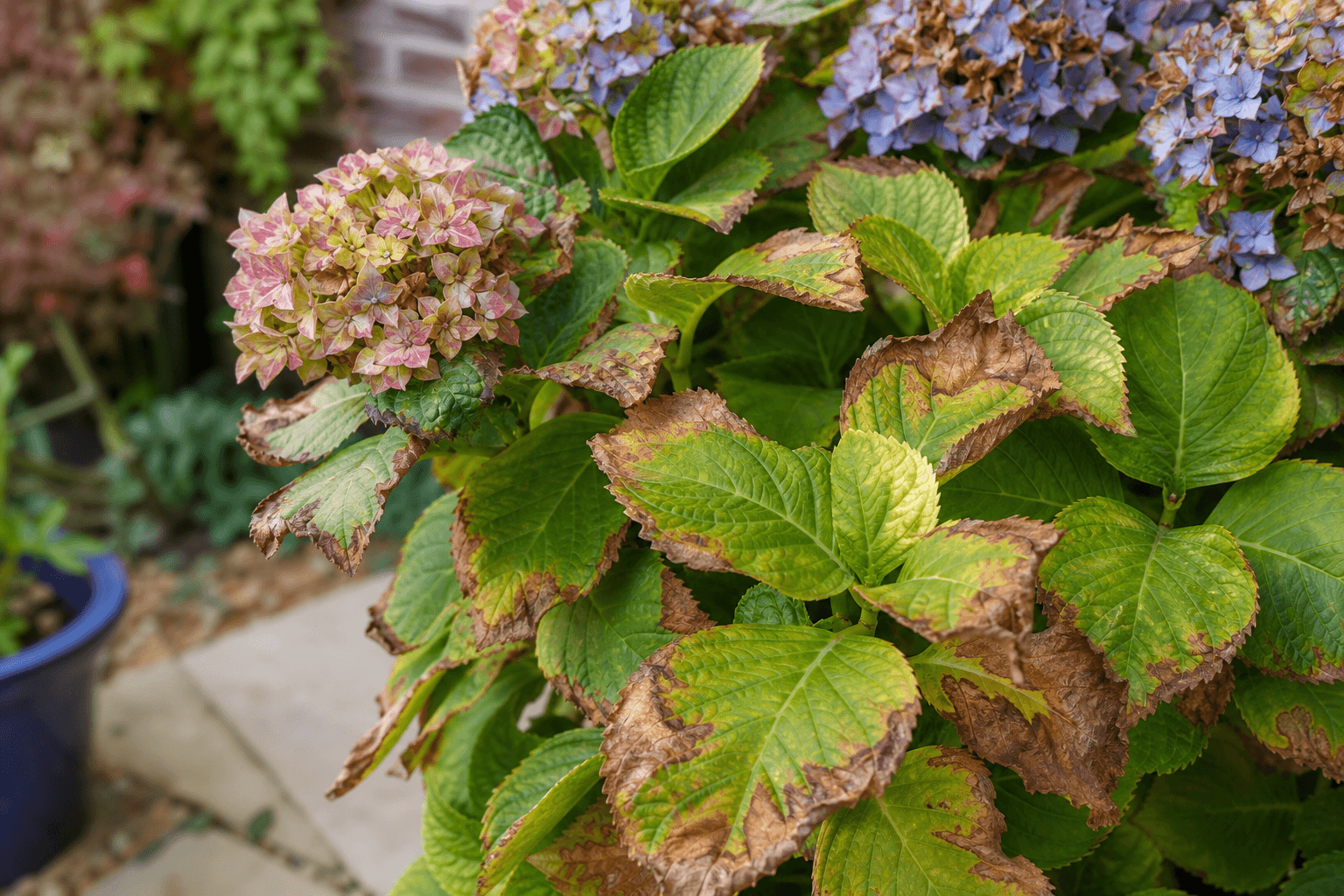
Hydrangea Brown Leaves: UK Causes and Fixes
Hydrangea leaves browning? Identify sun scorch, drought, frost damage, Cercospora leaf spot, and wind damage with this UK diagnosis guide.
Read the guide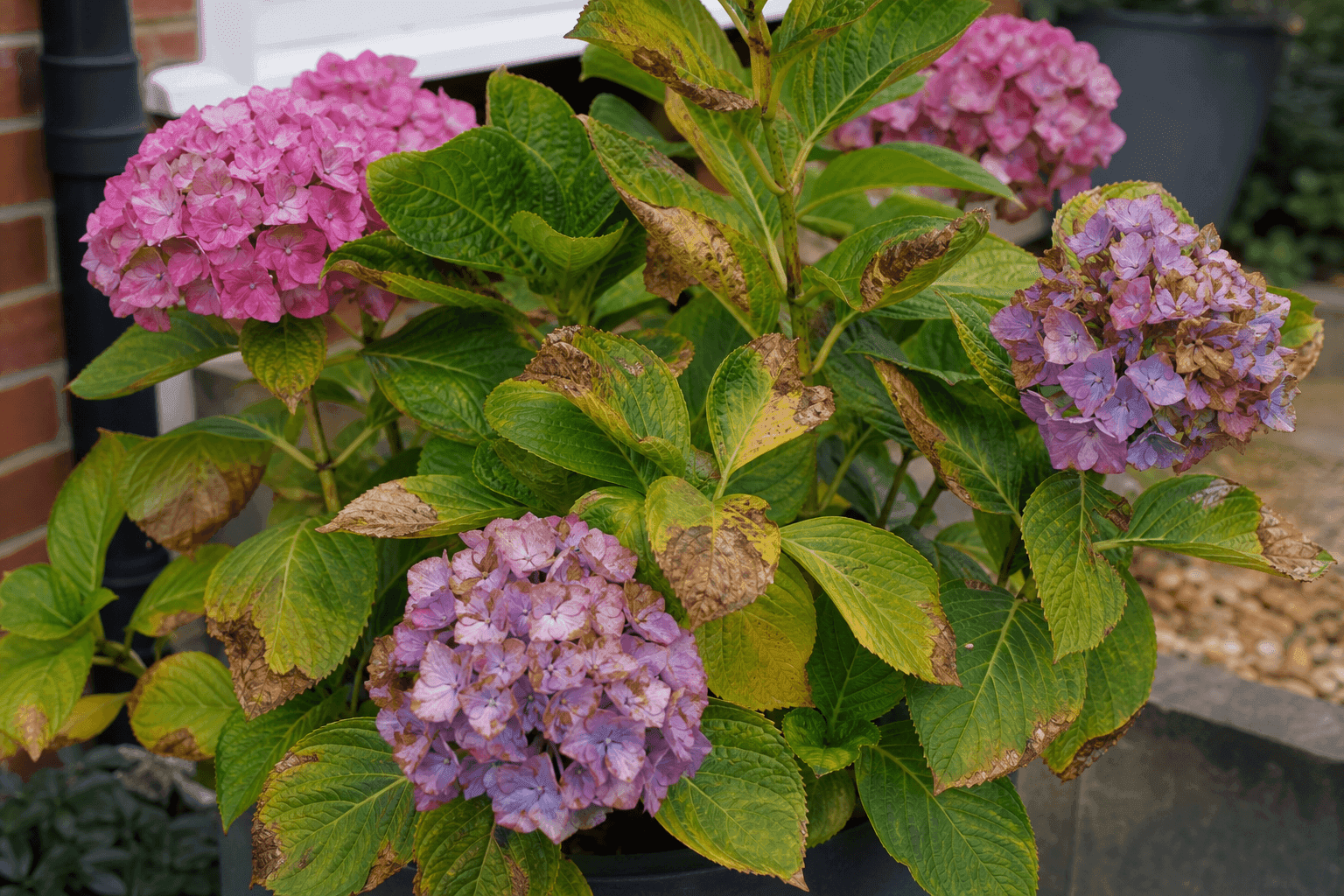
Hydrangea Problems: UK Diagnosis Guide for Common Issues
Hydrangea problems in the UK — wilting, brown leaves, no flowers, pests, powdery mildew and more. Diagnose the cause and find the right fix.
Read the guide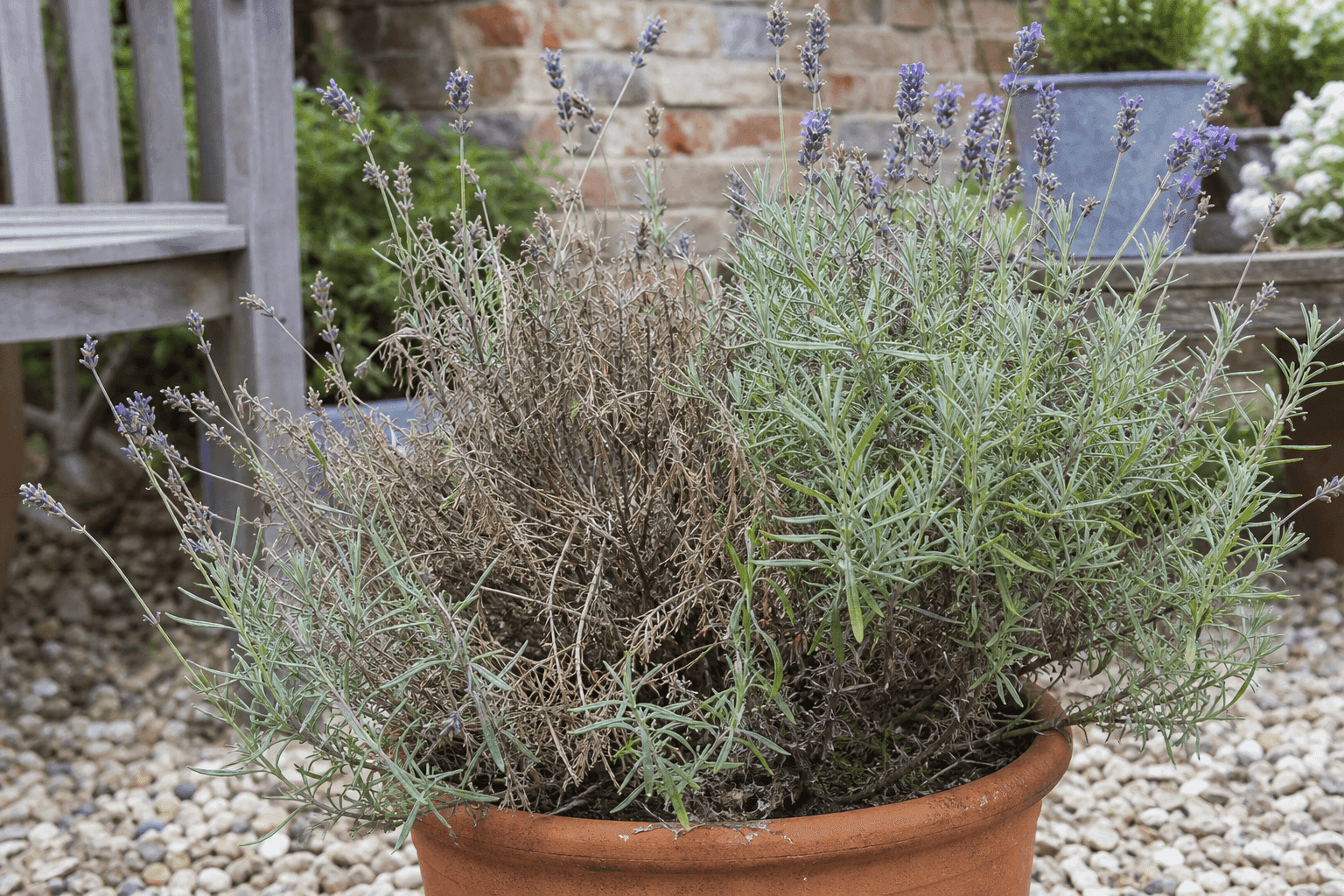
Lavender Dying or Going Brown: UK Causes and Fixes
Lavender dying or going brown in the UK is usually poor drainage, woody over-growth or shab disease. Diagnose and fix your lavender with this guide.
Read the guide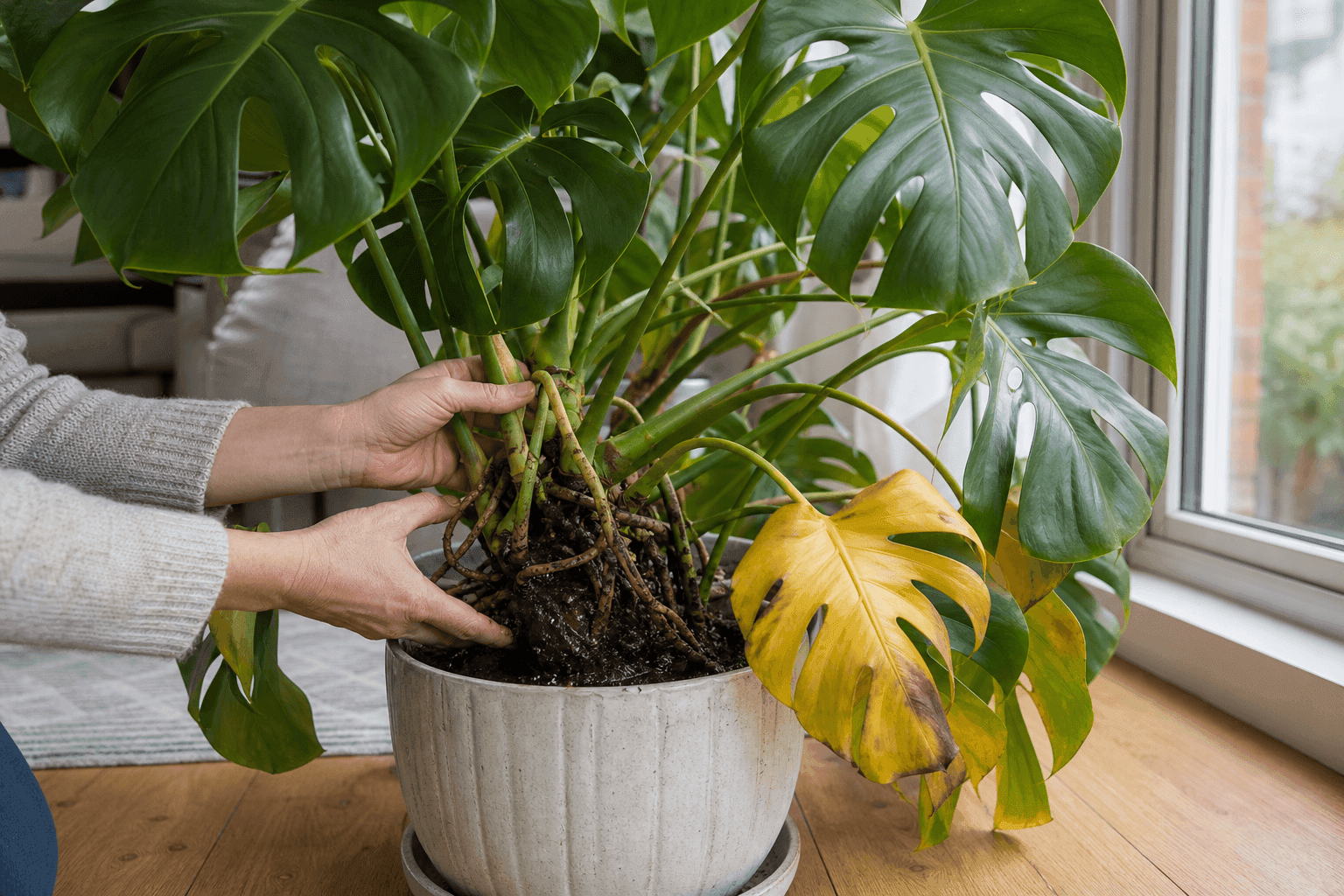
Monstera Root Rot: Signs, Treatment and Prevention
Monstera root rot is caused by overwatering and poor drainage. Learn the 5 key signs, how to repot and trim roots, and how to prevent it from returning.
Read the guideCommon questions
How do I find out what disease my plant has?
Identify the plant first, then note which part is affected, whether symptoms are spreading, whether there are visible signs (powder, mould, pustules, ooze), and whether the roots are healthy. Compare with plant-specific guidance, and for valuable plants use an RHS or university diagnostic service.
Can a plant recover from disease?
Sometimes. Powdery mildew, black spot and minor leaf spots can usually be managed, though damaged leaves won't repair. Viral diseases can't be cured. Severe root rot, systemic bacterial wilt, soft crown rot and advanced blight usually mean removing the plant.
Should I remove diseased leaves?
Remove badly diseased leaves if the plant has enough healthy foliage left and the disease is likely to spread from them. Don't strip a weak plant bare. Combine leaf removal with better airflow, watering at the base, and clearing debris.
Can I compost diseased plants?
Only compost lightly diseased material if you're confident your heap gets hot enough for the pathogen. For serious blight, virus-suspect material, soft rots or persistent root diseases, follow local council guidance and avoid cool home composting.
Are black spots on leaves always fungal?
No. Black marks can be fungal leaf spot, bacterial spot, pest-related sooty mould, weather injury, scorch, chemical damage or natural ageing. On roses, black spots with yellowing strongly suggest rose black spot; the plant and pattern decide it.
Is root rot caused by overwatering?
Overwatering and poor drainage rot roots by starving them of oxygen, and they also encourage root-rot organisms such as Phytophthora. If a plant wilts in wet compost, inspect the roots before adding any more water.
Sources
- RHS — Powdery mildews
- RHS — Rose black spot
- RHS — Tomato blight
- RHS — Plant viruses
- RHS — Phytophthora root rot
- Penn State Extension — Diagnosing a plant problem
Reviewed by the Leaf & Cause team. General guidance for UK growing conditions, not a substitute for professional advice — always follow product labels.
Keep looking
Browse by plant
Browse by problem area
Can’t see your symptom? Search by symptom →