Quick diagnosis
Match the row to what you’re seeing, then jump to the fix.
| What you see | Likely cause | Confidence | How to confirm | What to do now | Urgency |
|---|---|---|---|---|---|
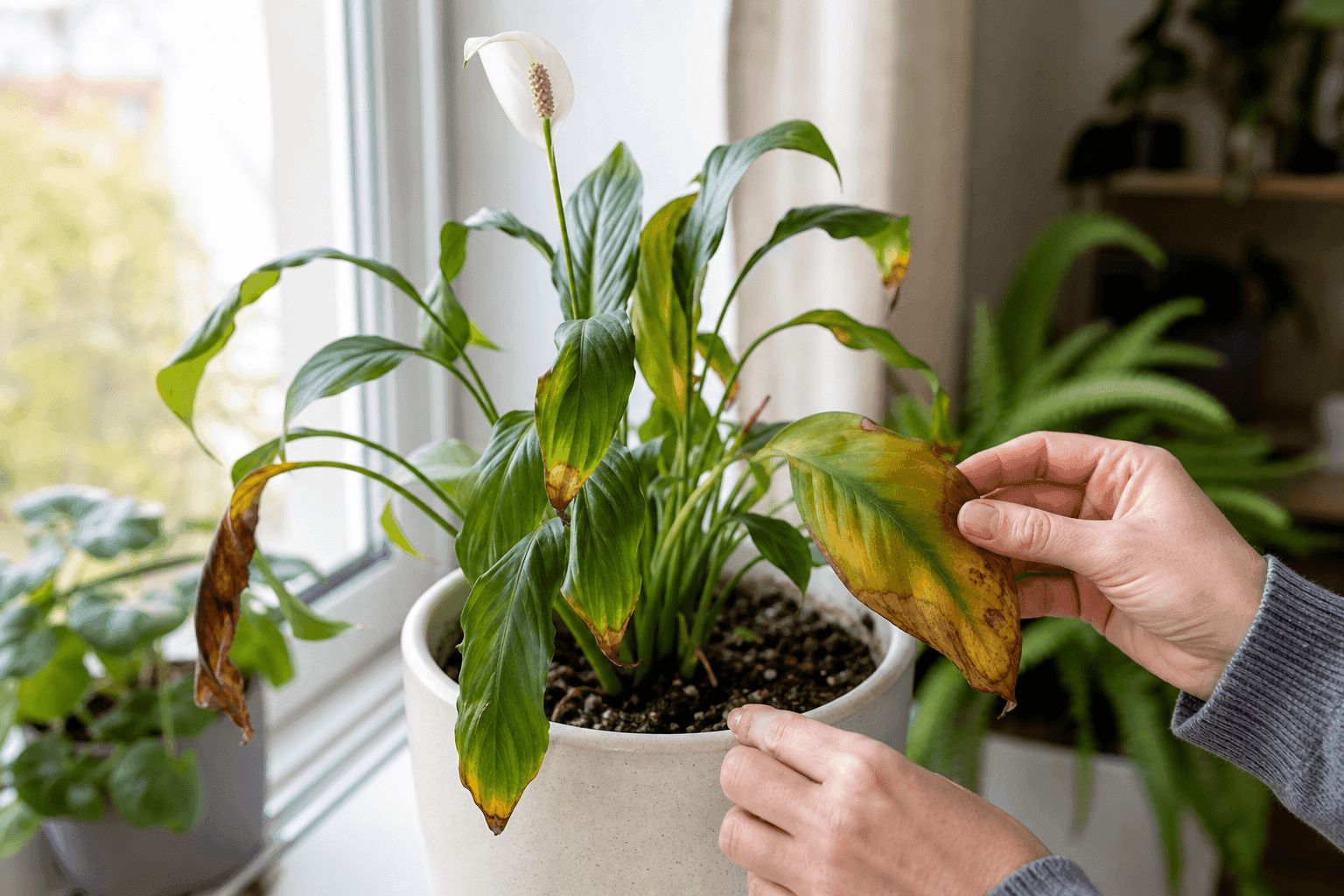
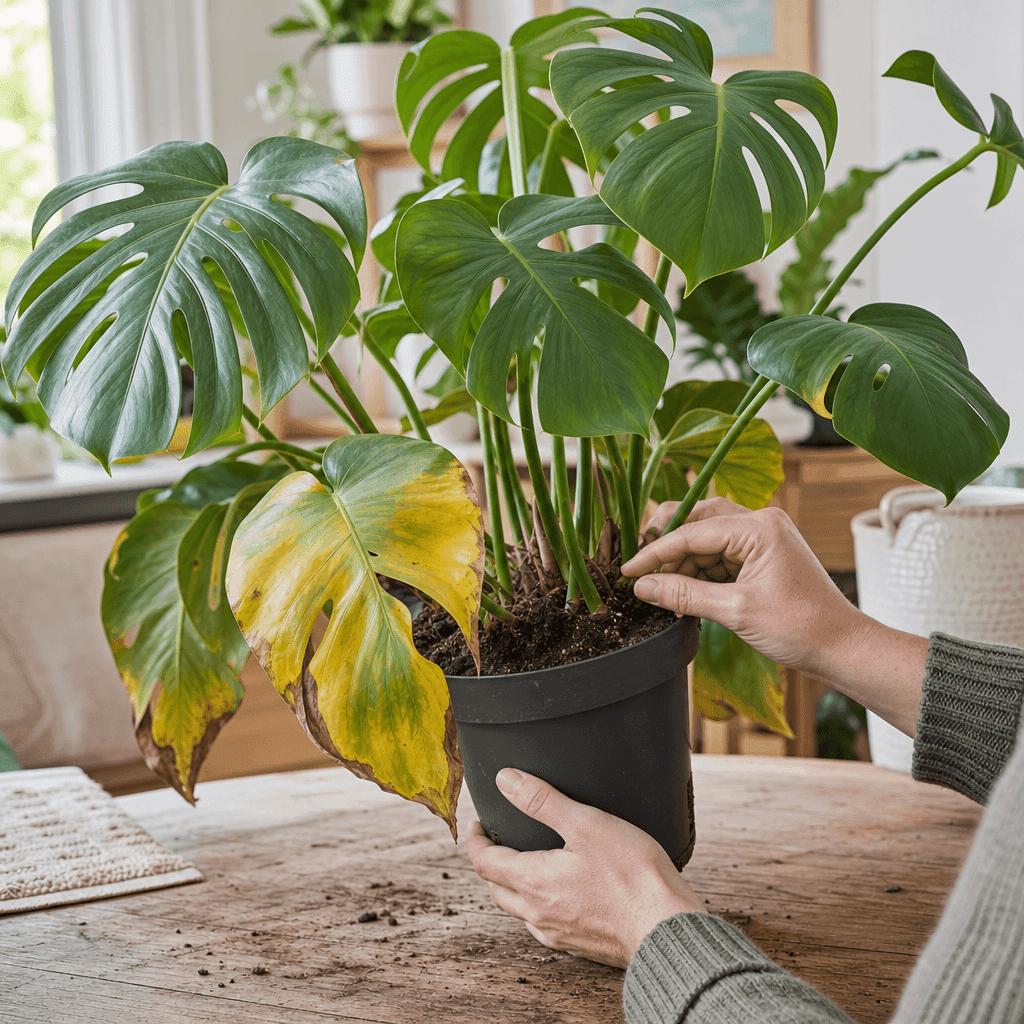
| Yellow lower leaves, compost wet, no new growth | Overwatering — the most common cause | High | Push a finger 5 cm into the compost: if still wet 7–10 days after the last watering, overwatering is likely | Stop watering, check drainage, let compost partially dry before watering again | High |
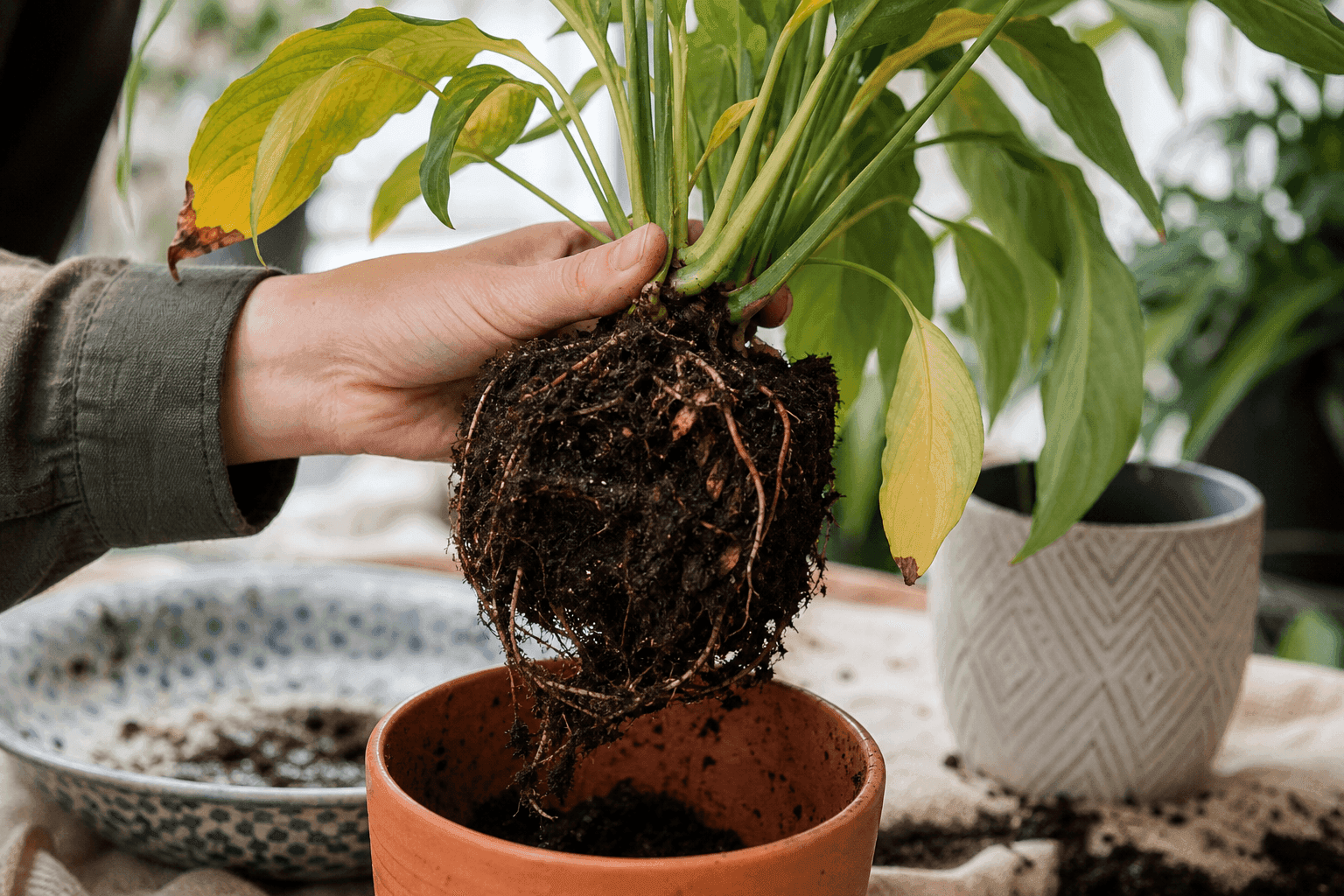
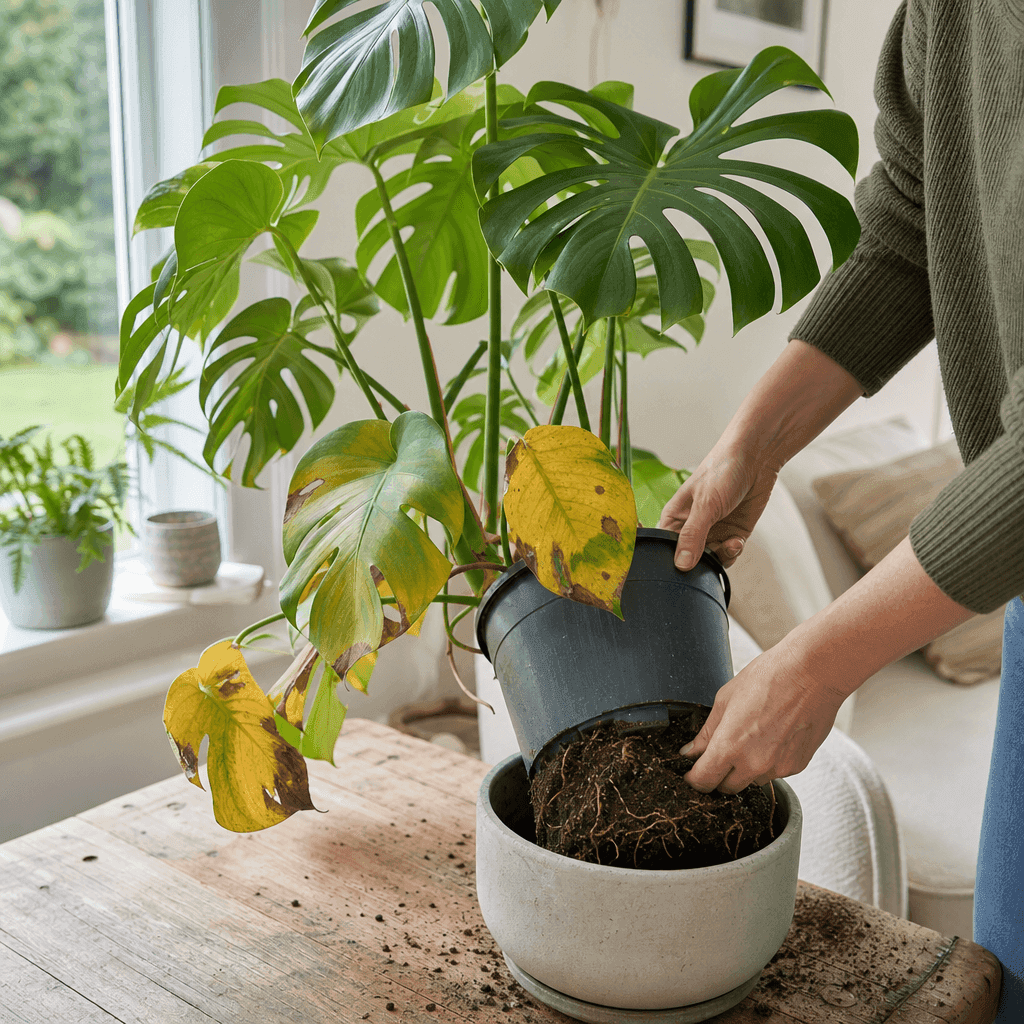
| Soft or mushy stem at the base, sour compost smell, wilting despite wet soil | Active root rot — Pythium or Fusarium infection | High | Slide the plant from its pot: roots are black, brown or slimy rather than white and firm | Remove from pot immediately, trim dead roots, repot in fresh draining compost | High |
| Compost stays wet for many days; pot is heavy; no visible drainage holes | Pot or compost with poor drainage | High | Check the base of the pot — holes are blocked or absent; compost is dense multipurpose with no perlite | Repot into a pot with drainage holes using a free-draining mix with perlite or orchid bark | Medium |
| Soft, brown or blackened tissue at the soil line or where the stem meets the compost | Crown or stem base rot | Medium | The main stem feels mushy or hollow near the compost level — this is more serious than root rot alone | Remove all soft tissue with a sterile knife; treat cut surfaces; check if any healthy stem remains | High |
| Dark water-soaked spots on leaves expanding with yellow halos; unrelated to watering | Fungal or bacterial leaf infection (often secondary to root stress) | Medium | Spots have defined edges, yellow halos, or concentric rings; spreading in warm damp conditions | Remove affected leaves; improve airflow; address any overwatering at the root zone | Medium |
The causes, in detail
Overwatering — the primary root rot trigger
Most likelyOverwatering is the leading cause of monstera root rot in the UK. In summer, a monstera in active growth may need watering every 7–10 days; in winter, every 3–4 weeks or less. The plant has no way to use excess water — it simply sits in the pot, displaces oxygen from the root zone, and creates perfect conditions for Pythium and Fusarium fungi to take hold. Multiple houseplant sources confirm that the first symptom of overwatering is yellowing of lower leaves, often confused with underwatering.
- Push a finger into the compost 5 cm deep — if the compost is still wet one week or more after watering, the frequency is too high.
- The pot feels consistently heavy.
- Yellow leaves appear on lower stems despite the compost being wet.
- No new leaf growth has appeared in months.
- Stop watering immediately and allow the compost to dry partially.
- Place the plant in a warm, bright spot to help the compost dry more quickly.
- Check drainage holes — clear any blockages and raise the pot on feet if it has been sitting in a saucer.
- In future, water only when the top 2.5–5 cm of compost is dry to the touch.
- Reduce watering frequency significantly between October and March when growth slows.
Stop it coming back:Use a moisture meter or the finger test before every watering rather than a fixed schedule. Monstera prefer to dry slightly between waterings — they are far more tolerant of underwatering than overwatering.
water your monstera on a rigid weekly schedule throughout winter — growth slows dramatically and the plant needs far less water than in summer.
Active root rot — fungal root decay
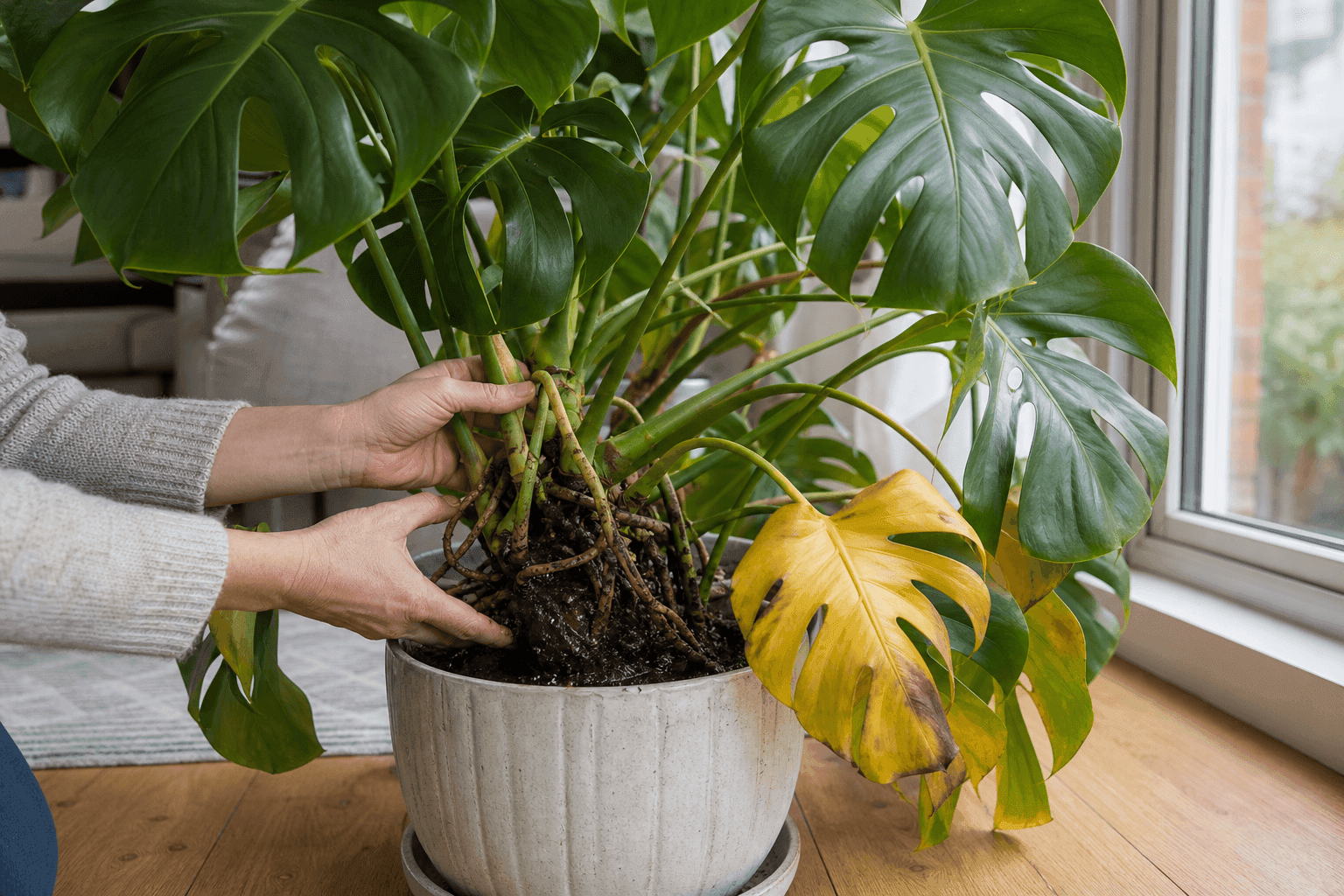
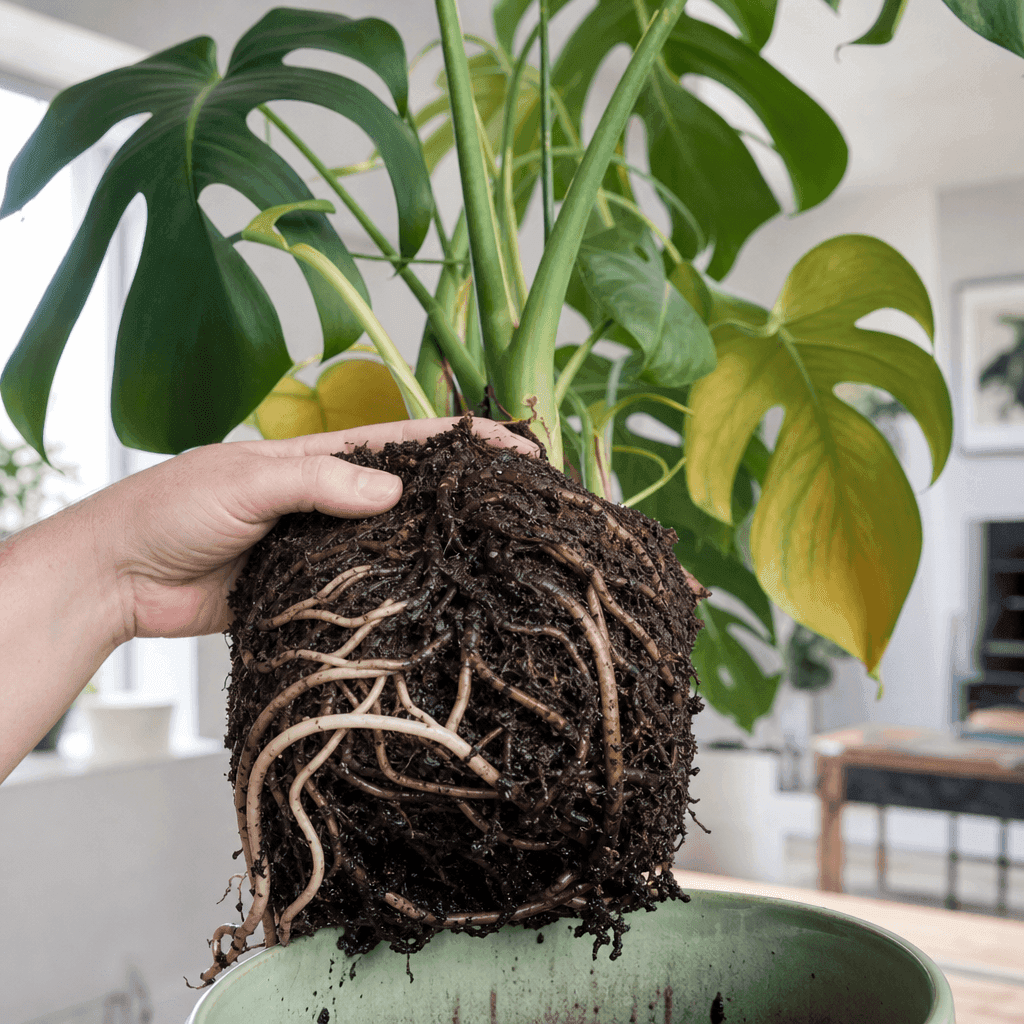
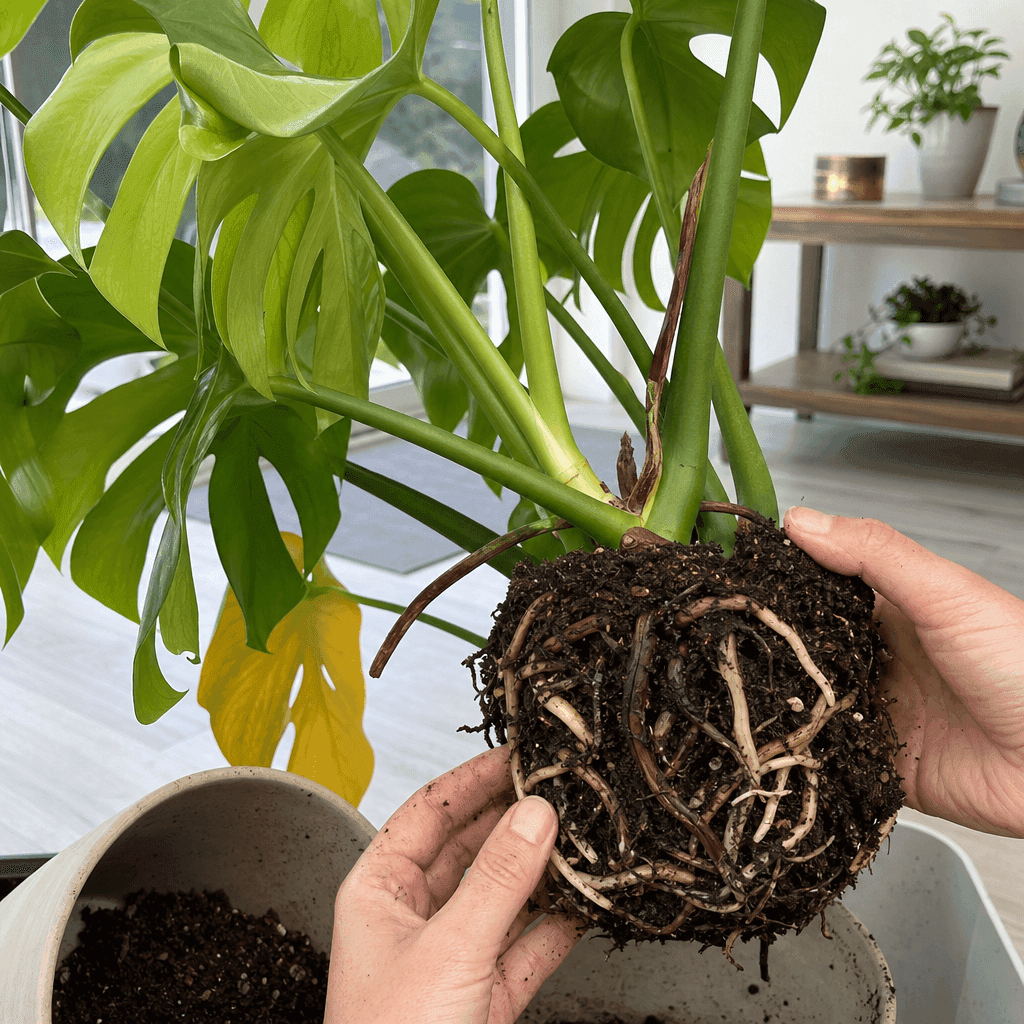
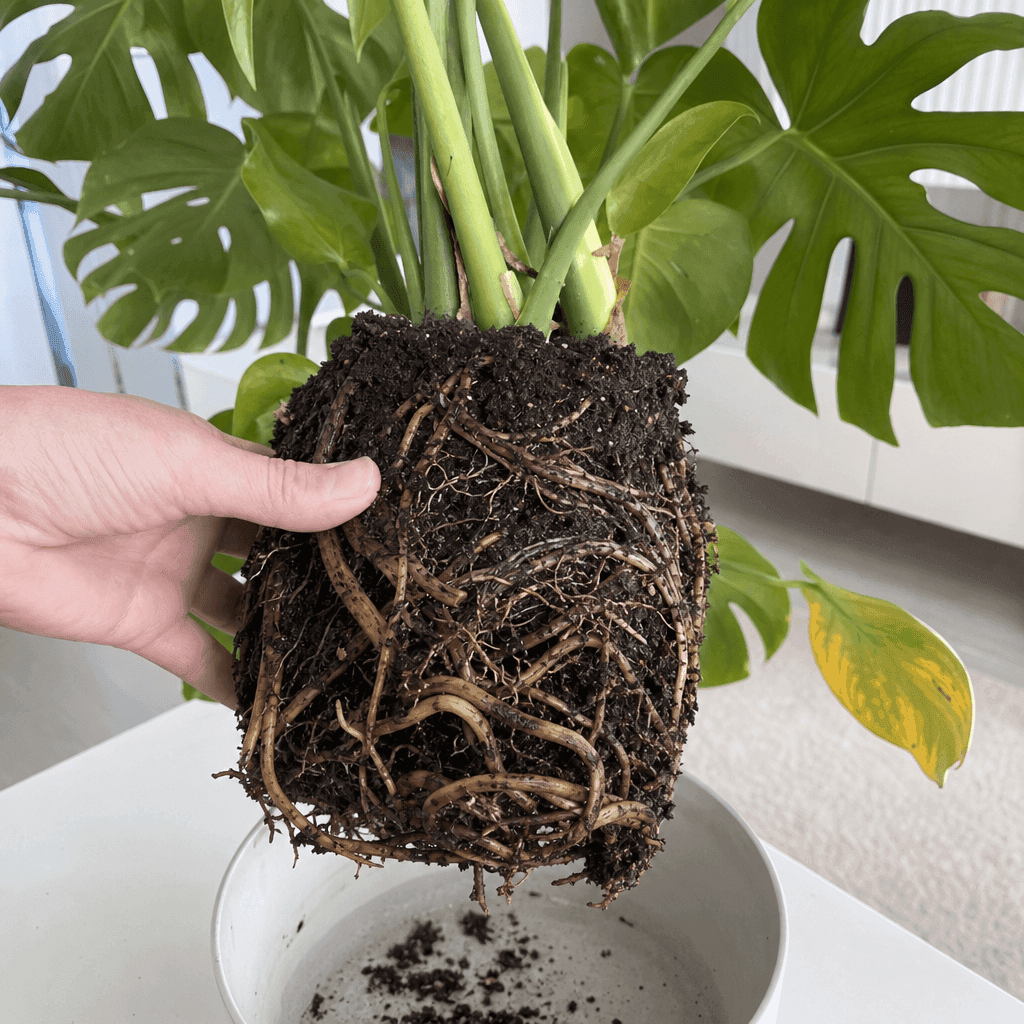
Most likelyOnce overwatering has occurred, root rot develops rapidly. The main fungal pathogens — Pythium, Rhizoctonia, and Fusarium — are present in most composts and become active when soil is saturated and anaerobic. Healthy monstera roots are firm, white or pale tan. Rotting roots are black or dark brown, soft, mushy and may fall apart when handled. Epic Gardening notes that once roots are visibly rotting, they cannot be saved — only healthy root tissue can recover. However, a monstera with even a few surviving healthy roots can regenerate if treated promptly.
- Remove the plant from its pot and shake off the compost — rotting roots are black, dark brown or slimy.
- The compost smells sour, musty or like rotting vegetation.
- Stem at the soil line may be soft or discoloured.
- The plant is wilting despite wet compost — a key clue, as healthy roots in wet soil would take up water.
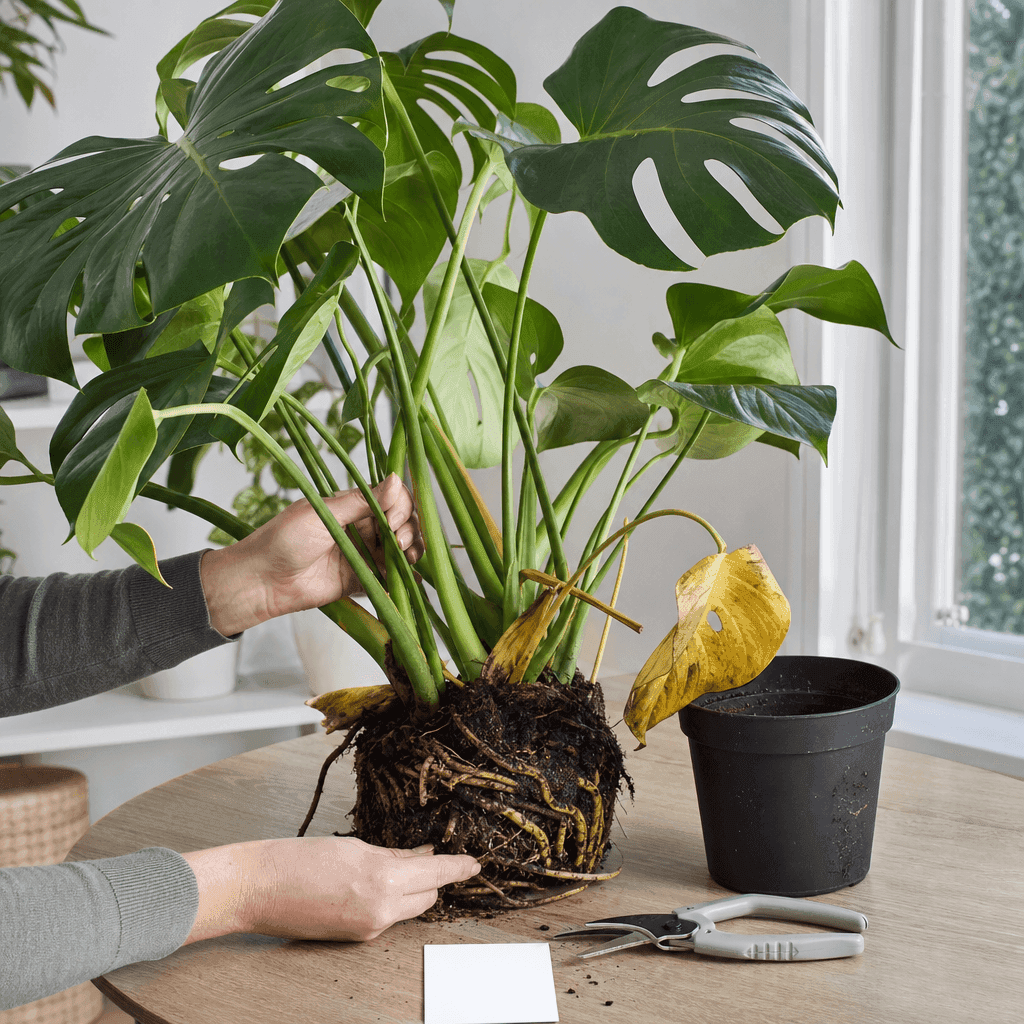
- Remove the plant from its pot immediately and rinse the root ball under lukewarm water to expose all roots.
- Using clean, sharp scissors or secateurs sterilised in diluted bleach, cut off all black, brown or mushy roots back to healthy white tissue.
- Allow the trimmed root ends to air-dry for 20–30 minutes.
- Repot into a clean pot (sterilise the old pot or use a new one) with fresh, well-draining compost — a mix of peat-free multipurpose, perlite and orchid bark works well.
- Do not water for the first 3–5 days after repotting; then water very sparingly.
Stop it coming back:Early identification is the key to survival. Check the roots annually when the plant is repotted — pale, firm roots are healthy; dark soft roots need immediate action.
repot into the same old compost or pot — this re-inoculates healthy roots with the fungal pathogens that caused the rot in the first place.
Poor drainage — pot and compost problems
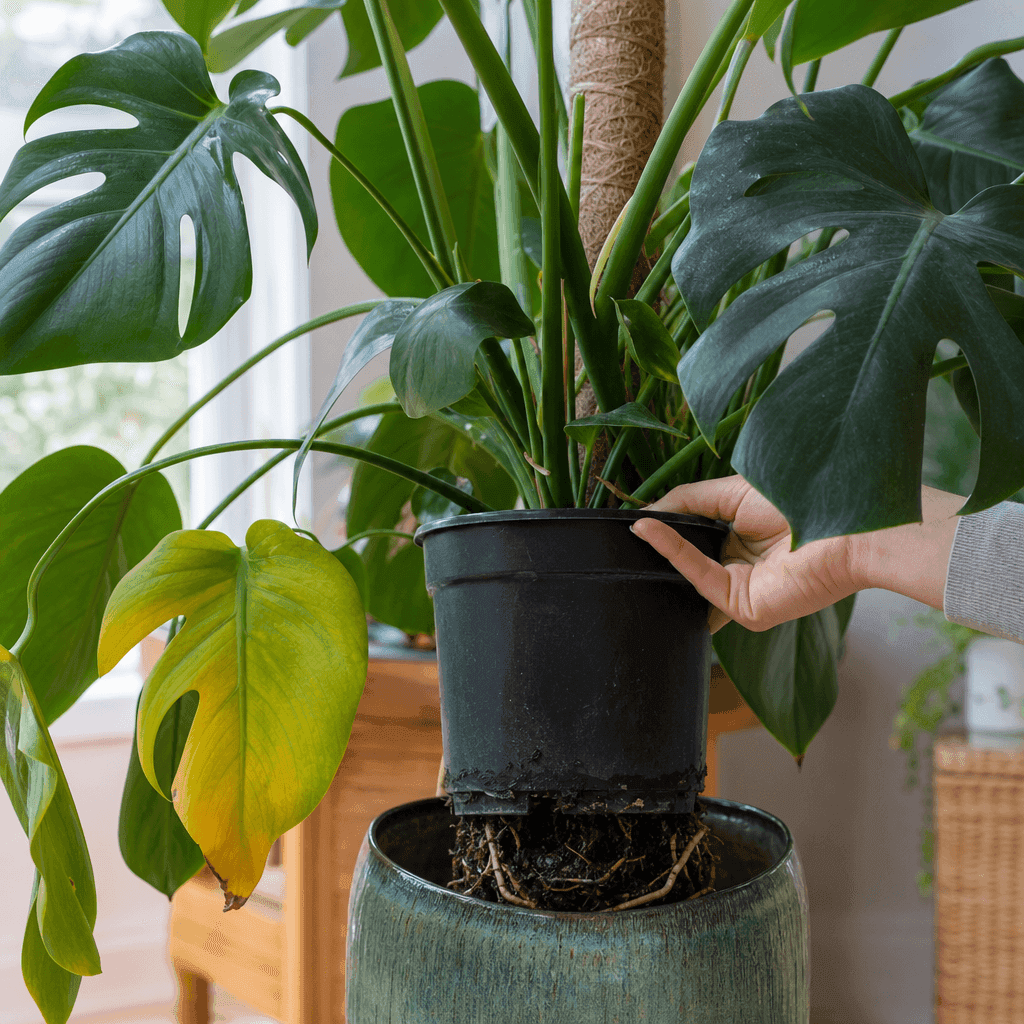
Most likelyEven correct watering frequency will cause root rot if the pot has no drainage holes, the drainage holes are blocked, or the compost is too dense and water-retentive. Standard heavy multipurpose compost used alone holds far too much water for monstera. UK houseplant retailer Patch Plants recommends adding perlite or orchid bark to create an open, free-draining mix. Decorative cache pots without drainage holes are a common hidden cause — the inner nursery pot sits in standing water inside the cache pot.
- The pot has no drainage holes, or holes are blocked with roots or compacted compost.
- Compost is dense, dark and heavy — no visible perlite or bark.
- There is a decorative outer pot (cache pot) with no drainage of its own.
- Water sits at the surface for a long time after watering rather than draining through.
- Repot into a pot with at least two drainage holes.
- Use a free-draining mix: approximately two parts peat-free multipurpose to one part perlite, plus a handful of orchid bark.
- If using a cache pot, empty it of water every time after watering.
- Raise the pot on feet to allow free drainage and airflow beneath.
add a layer of gravel or stones to the bottom of the pot thinking it improves drainage — research shows this actually creates a perched water table that keeps roots wetter for longer.
Crown or stem base rot
PossibleCrown rot occurs when the rot extends from the roots up into the stem base — the growing crown of the plant. This is more serious than root rot alone, because the crown is the source of new growth. Soft, discoloured or mushy tissue at the soil line, or where the stem meets the compost, is the key sign. If the crown itself is fully rotted, the plant cannot be saved; if even a small section of firm, green stem above the rot remains, it may be possible to take a cutting and propagate a new plant.
- The main stem feels soft, hollow or mushy at or near the soil line.
- Discolouration has spread above the compost level.
- The plant collapses or leans even when staked.
- Remove the plant from its pot and inspect the full stem base carefully.
- Using a sterile sharp knife, cut away all soft tissue until you reach firm, healthy green stem.
- If a healthy stem section of 10 cm or more remains, take it as a cutting and root in moist perlite or water.
- If the crown is completely destroyed, the plant cannot be saved — take cuttings from any healthy stems before composting.
leave crown rot untreated hoping the plant recovers on its own — once the stem base is compromised, the rot will continue to spread upward unless all affected tissue is removed.
Fungal or bacterial leaf infection
PossibleOverwatered or root-stressed monsteras are more susceptible to secondary fungal and bacterial leaf infections. These appear as dark, water-soaked spots with yellow halos that expand over days or weeks. They are sometimes caused by splashing water onto leaves in warm conditions, poor airflow, or by fungal pathogens already active in wet compost. Leaf infections alone rarely kill a monstera but they indicate underlying stress that should be addressed.
- Dark spots on leaves have defined edges with yellow halos or concentric rings.
- Spots expand over days rather than being stable.
- Warm, humid conditions and poor airflow are present.
- Root zone is also wet or the plant has recently been stressed.
- Remove all badly affected leaves cleanly at the stem junction.
- Improve airflow by moving the plant to a less crowded position or opening a window for part of the day.
- Water at the base only — never splash water onto the leaves.
- Address overwatering at the root zone, as the leaf infection is often secondary to root stress.
Stop it coming back:Improve airflow and water only at the base. Monstera leaves are waxy and generally resistant to disease when the root system is healthy.
spray an overwatered monstera with a chemical fungicide on the leaves without first addressing drainage and watering — the leaf disease is a symptom; root stress is the cause.
Still not sure?
Work down these branches — the first one that matches is your answer.
What not to do
- Water on a fixed schedule regardless of the season — reduce frequency significantly in winter.
- Assume yellowing leaves mean the plant needs more water — in wet compost, yellowing means overwatering.
- Repot into the same old compost or pot after treating root rot — this re-exposes healthy roots to the same fungal pathogens.
- Add a layer of gravel to the pot bottom — this worsens drainage by creating a perched water table.
- Leave the plant in a decorative cache pot without checking whether water is pooling inside it.
Common questions
How do I know if my monstera has root rot?
Slide the plant from its pot and examine the roots. Healthy monstera roots are white or pale tan and firm. Roots affected by rot are black, dark brown, soft or slimy. A sour or musty smell from the compost is also a strong indicator, as is wilting despite wet compost.
Can a monstera recover from root rot?
Yes, if treated promptly and some healthy roots remain. Remove the plant from its pot, trim all dead roots to white healthy tissue with sterilised tools, repot in fresh free-draining compost and withhold water for 3–5 days. A monstera with even a few healthy roots can recover, but crown rot that has reached the stem base is harder to reverse.
What compost should I use to prevent monstera root rot?
A free-draining mix works best. A simple recipe is two parts peat-free multipurpose compost, one part perlite and a handful of orchid bark. This holds enough moisture for the plant but drains freely, preventing the waterlogging that triggers root rot.
How often should I water my monstera in winter?
In winter in the UK, a monstera may only need watering every 3–4 weeks or even less. Growth slows significantly and the compost takes much longer to dry. Always use the finger test — water only when the top 5 cm of compost feels dry.
Can I save a monstera with root rot by just reducing watering?
If root rot is minor and early, improving drainage and reducing watering may be enough. But if roots are already black and mushy, simply reducing water will not kill the fungal pathogens that have already taken hold. Repotting with root trimming is necessary to remove the infection.
Why does my monstera have yellow leaves even though I'm not overwatering?
Lower leaves naturally yellow with age. But yellowing that spreads upward, appears on multiple leaves simultaneously, or is accompanied by soft stems or wet compost almost always indicates overwatering or root rot. Nutrient deficiency, too little light and cold draughts can also cause yellowing in monsteras.
Is it normal for monstera roots to grow out of the drainage holes?
Yes — aerial and root extension beyond the pot is normal and healthy. But roots blocking the drainage holes can prevent water from escaping, which is one of the hidden causes of overwatering. If roots are circling or blocking holes, it is time to repot into a slightly larger container.