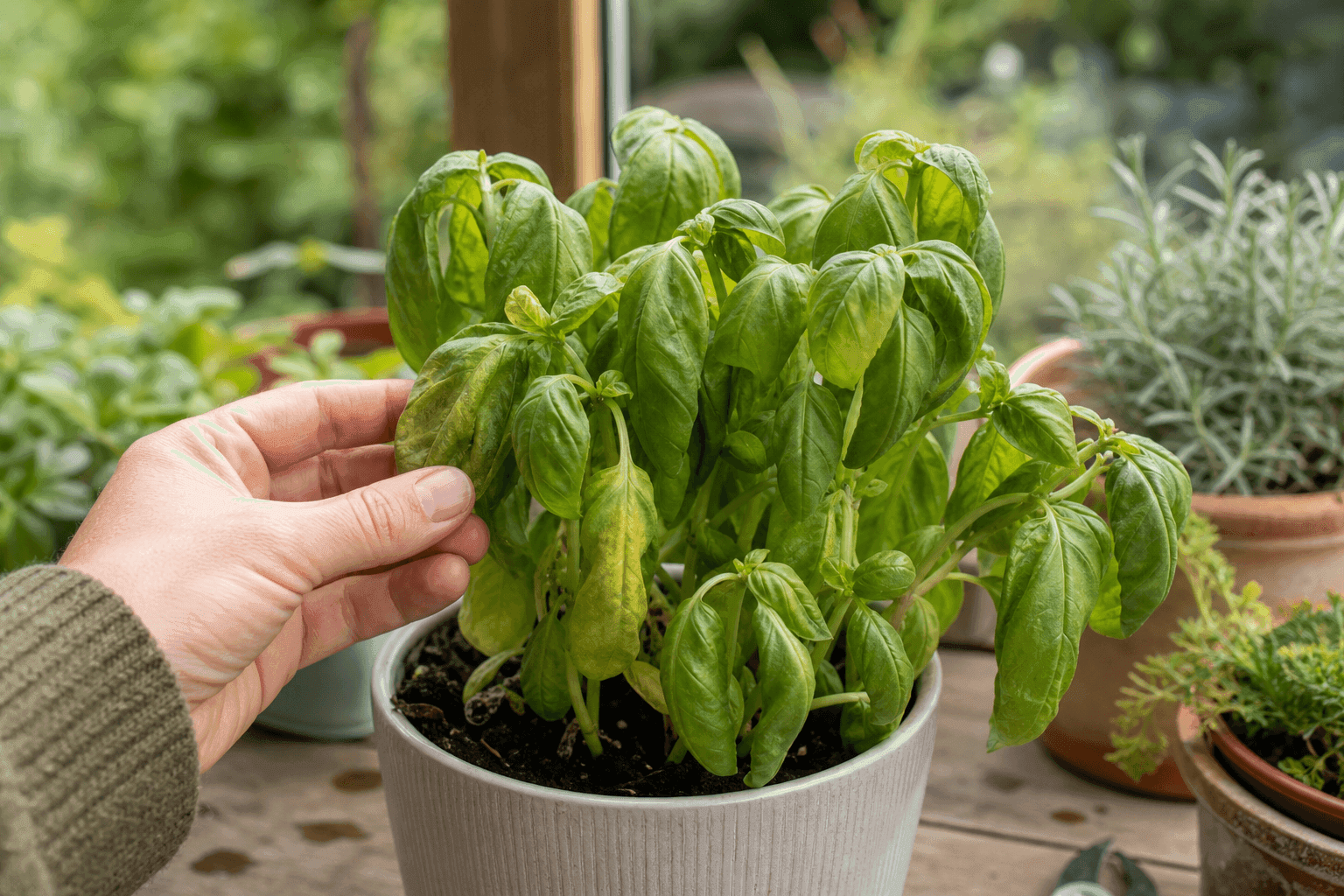
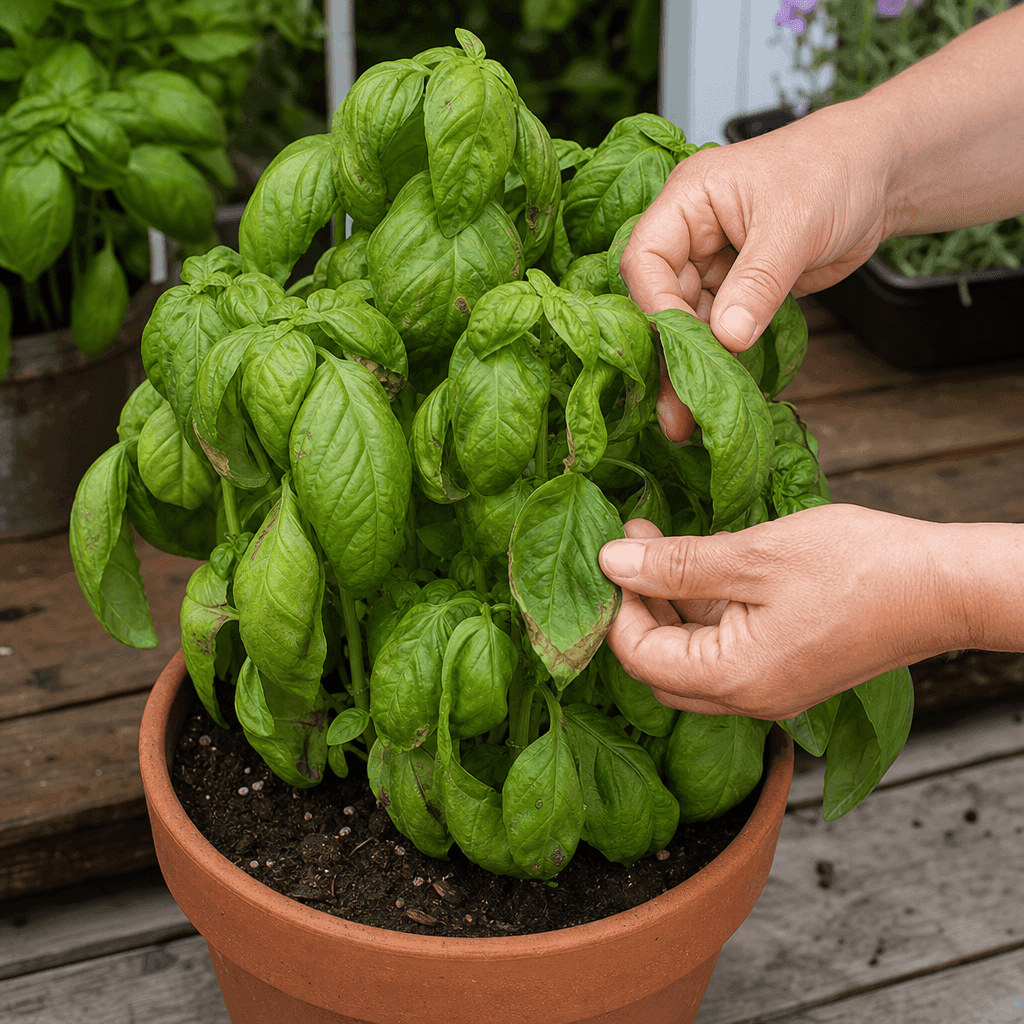
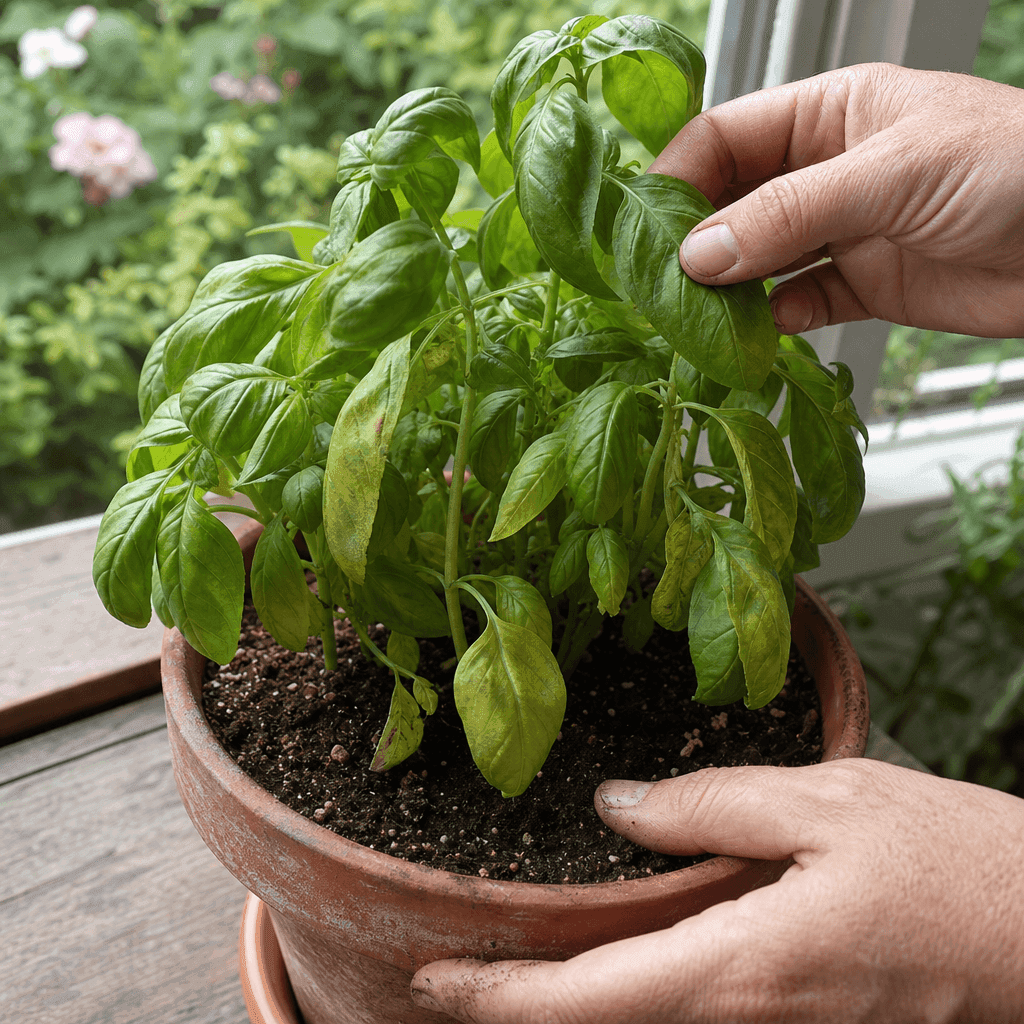
Quick diagnosis
Match the row to what you’re seeing, then jump to the fix.
| What you see | Likely cause | Confidence | How to confirm | What to do now | Urgency |
|---|---|---|---|---|---|
| Soft limp wilt; compost is wet; possibly sour smell from pot | Overwatering or waterlogged roots | High | Compost wet to touch; plant was in a saucer of water; drainage holes may be blocked | Stop watering, improve drainage, allow compost to dry slightly before next watering | High |
| Crispy, dry wilt; dry light compost; leaves starting to feel papery | Underwatering or dried-out root ball | High | Compost dry 3–5 cm down; pot feels light; plant was missed for several days | Water thoroughly until draining from base; the plant should recover within 1–2 hours | High |
| Wilting after a cold night; blackened or soft leaves; plant near a cold window | Cold temperature damage — below 10°C | High | Plant was on a cold windowsill, outdoor table or near a draughty door overnight | Move immediately to a warm spot above 18°C; do not water cold-shocked roots | High |
| Wilting despite correct watering; supermarket pot; plant dries out within a day | Root restriction — pot-bound or supermarket overcrowding | High | Roots visible at drainage holes; compost dries very quickly; many seedlings in one pot | Divide or pot on into larger individual pots; water thoroughly after repotting | Medium |
| Wilting on a plant that seemed healthy; stems may show brown discolouration inside | Fusarium wilt (Fusarium oxysporum) | Medium | Plant is 20–30 cm tall; wilting does not respond to watering; cut the stem — brown discolouration inside | Remove and dispose of the whole plant immediately; do not compost; discard the compost | High |
| Soft floppy wilt immediately after repotting or moving | Transplant shock | Medium | Plant was recently repotted or moved; roots were disturbed; all growth wilting uniformly | Keep conditions stable; water gently; avoid feeding; give the plant 3–5 days to adjust | Low–medium |
The causes, in detail
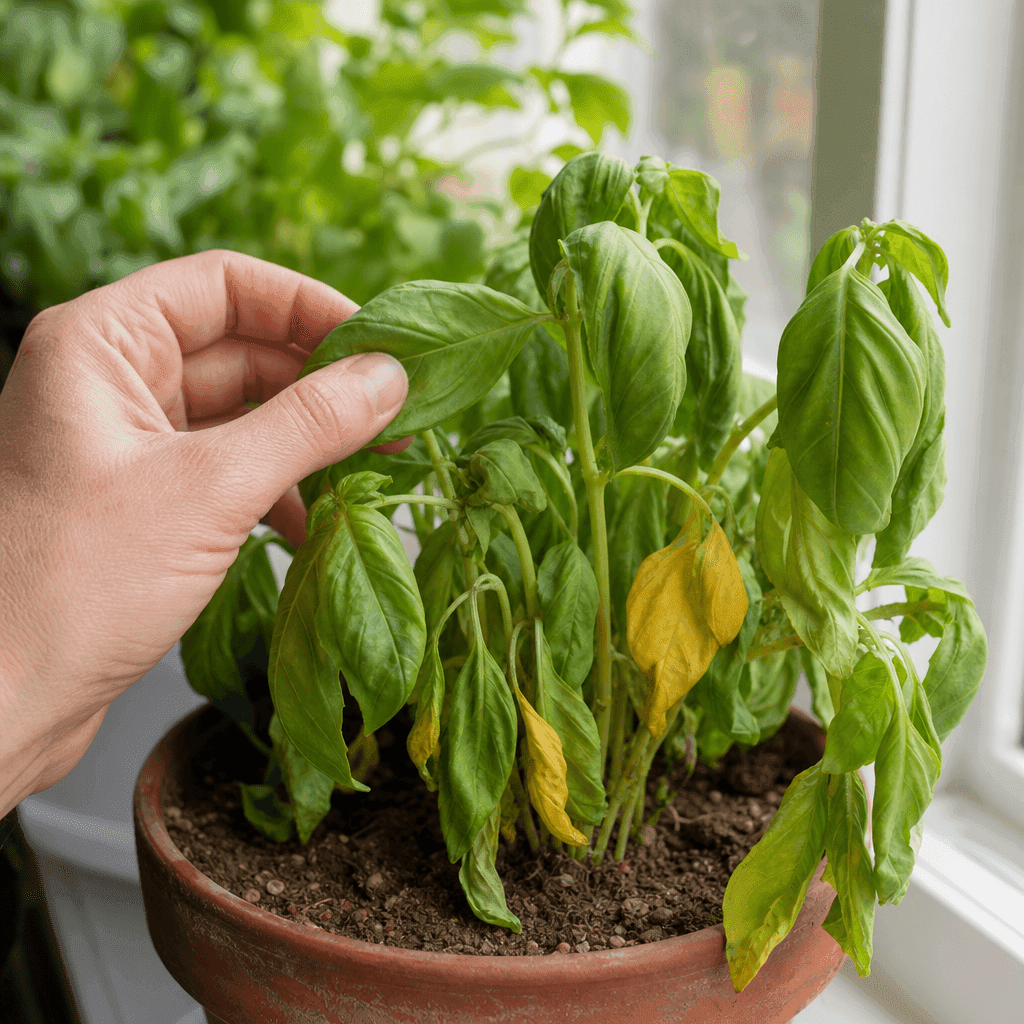
Overwatering — the most common basil problem
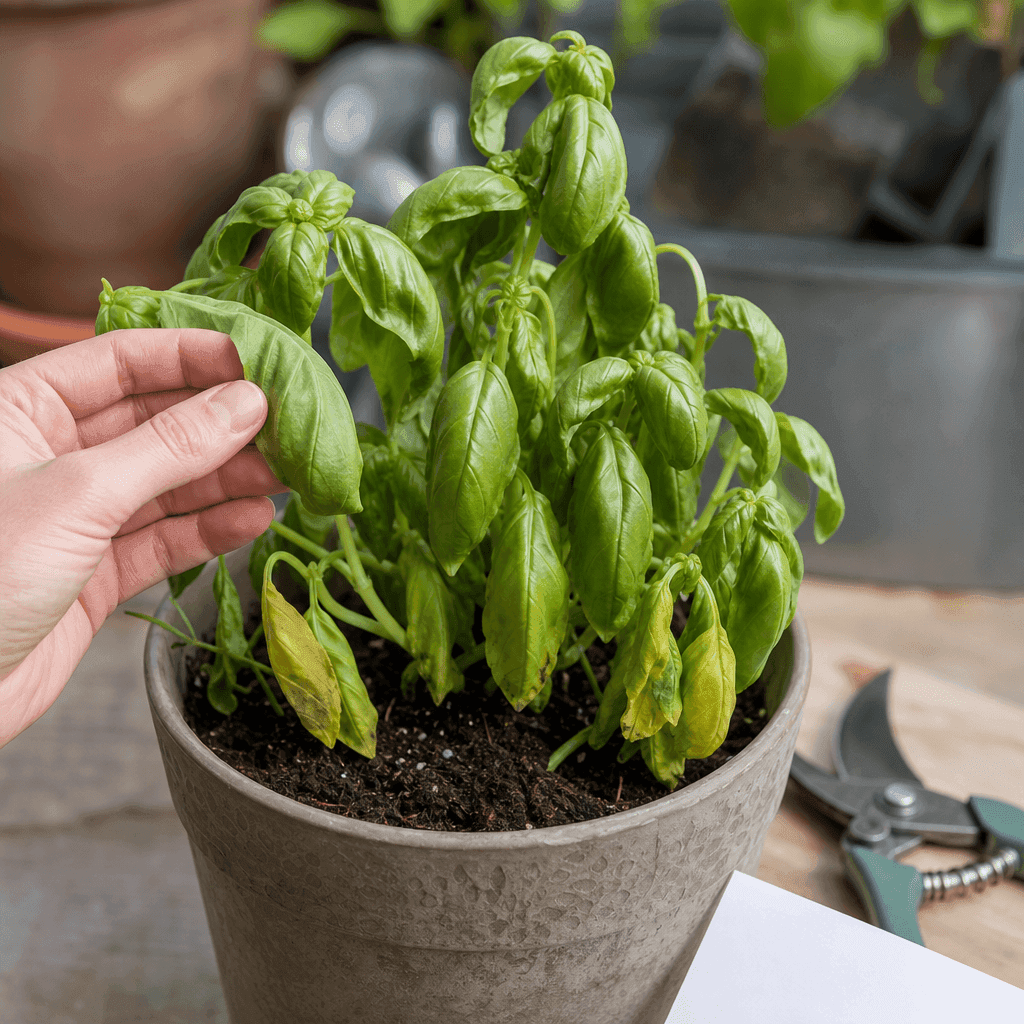
Most likelyOverwatering is the most frequent cause of basil wilting, particularly with supermarket basil left sitting in a saucer of water or placed in a pot without drainage. Basil's roots are poorly adapted to cope with waterlogged soil — Smart Garden Guide confirms overwatering as the number one cause of basil plant decline. The plant wilts softly rather than crisply, the compost smells sour, and the wilt does not improve after more watering. UK supermarket basil is usually grown in damp, dense growing medium in a saucer that keeps roots permanently wet — one of the first things to do when bringing it home is to stop adding water and let the roots breathe.
- Compost feels wet or very damp when pressed 3–5 cm deep.
- The plant was sitting in a saucer of water.
- The pot has no drainage holes or the holes are blocked.
- The wilt is soft and limp, not crispy.
- A sour or musty smell comes from the compost.
- Stop watering immediately and remove any standing water from the saucer.
- Check that drainage holes are open — if not, repot into a pot with holes.
- Allow the compost to partially dry before considering any further watering.
- If roots are brown and slimy, repot into fresh, well-draining compost after trimming dead roots.
- In future, water basil only when the top 2.5 cm of compost feels dry, and always empty the saucer within 30 minutes of watering.
Stop it coming back:Basil needs consistent moisture but good drainage — it does not tolerate its feet sitting in water. Water from above when the compost surface is dry and empty the saucer promptly.
keep basil in a saucer of water to 'self-water' — this keeps the roots permanently anaerobic and triggers root rot rapidly, especially at UK room temperatures.
Underwatering — drought stress
Most likelyBasil has large, soft leaves with a high transpiration rate and wilts quickly when the compost dries out. The wilt is crispy and dry rather than soft — leaves feel papery and the whole plant droops simultaneously. Biology Insights confirms this is the most recognisable basil wilt: give a thorough watering and the plant typically recovers within 1–2 hours if roots are still healthy. Repeated severe drought weakens the plant and makes it more susceptible to disease, so consistent watering is important.
- Compost is dry 3–5 cm down.
- The pot feels very light.
- Leaves feel dry and papery as well as limp.
- The plant has gone more than 2–3 days without water in warm conditions.
- Water thoroughly — pour water slowly until it drains freely from the base.
- Allow excess water to drain and empty the saucer after 30 minutes.
- If the compost has dried and shrunk away from the pot sides, place the pot in a bowl of water for 20 minutes to allow even rehydration.
- The plant should recover within 1–2 hours. If it does not, check for root rot or fusarium wilt.
Stop it coming back:Check basil compost moisture daily in summer — it can dry out within 24–48 hours on a warm, sunny windowsill. Move to a slightly cooler position or group with other plants to slow moisture loss.
place a wilted basil plant in full afternoon sun immediately after watering — allow it to recover in a warm, bright but not scorching spot first.
Cold temperatures — a very common UK problem
Most likelyBasil is a tropical herb from southern Asia and is acutely sensitive to cold. Temperatures below 10°C cause wilting and cell damage — even a single cold night on a UK windowsill in spring or autumn can collapse the plant. Grow Veggy notes that a sudden cold snap, even after mild temperatures, triggers wilting as a stress response. UK gardeners often lose windowsill basil when temperatures drop overnight between October and April with single-glazed windows or unheated conservatories. Cold-damaged basil often goes from healthy to completely limp within hours and may not recover if the damage is severe.
- The plant was on a windowsill, outdoor table or near a draughty door where temperatures could have dropped below 10°C.
- Wilting appeared or worsened after a cold night.
- Leaves may have blackened or become translucent as well as wilting.
- The compost moisture is neither very dry nor very wet.
- Move the plant immediately to a warm position where temperatures stay above 18°C.
- Do not water cold-shocked roots until the plant is in a warmer location and shows signs of recovery.
- Remove any blackened leaves to prevent secondary infection.
- If the plant does not recover within 24–48 hours of warming, it may be too severely damaged to save — take cuttings from any still-green stems.
Stop it coming back:Keep basil on a warm indoor windowsill away from cold glass. In the UK, basil should not go outdoors or on a patio until daytime temperatures are reliably above 15°C — typically June to early September. Bring outdoor basil in before evening temperatures drop in late summer.
place basil outside or in an unheated conservatory in spring when daytime temperatures are pleasant — night temperatures in the UK can drop below 10°C until late May or June.
Root restriction — supermarket basil and pot-bound plants
Most likelyUK supermarket basil is grown commercially from densely sown seed, with many seedlings packed into a single small pot. This produces a cheap, lush-looking plant that is actually under enormous root stress — dozens of seedlings competing for water and nutrients in an undersized pot. Within days of being brought home, the plant wilts rapidly because the rootball cannot hold enough water. Biology Insights and Grow Veggy both identify root restriction as one of the primary reasons supermarket basil dies quickly after purchase. The solution is to divide the plant or pot it on into a larger container — not simply water it more.
- The plant came from a supermarket in a small plastic pot.
- Roots are visible at the drainage holes or compacted into a dense mass in the pot.
- The compost dries out within 24 hours of watering.
- The plant wilts despite regular watering.
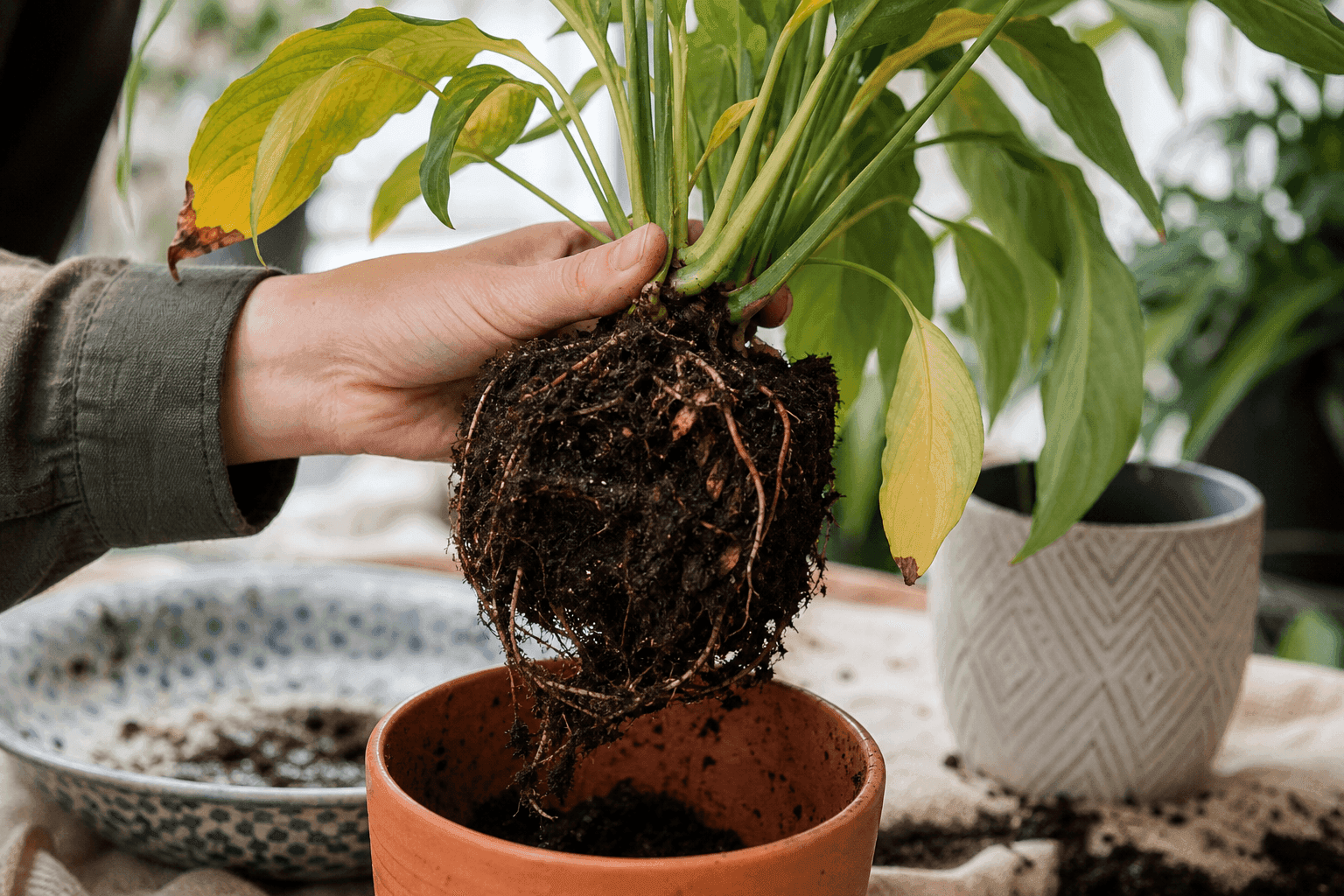
- Repot immediately on bringing the plant home. Tip out the root ball, gently separate the seedlings into groups of 4–6, and pot each group into a 10–12 cm pot with fresh peat-free compost.
- Alternatively, pot the whole rootball into a significantly larger pot — at least twice the diameter — with fresh compost around it.
- Water in gently and place in a warm, bright spot away from direct midday sun for the first week.
- Do not feed for at least two weeks after repotting — let roots establish first.
Stop it coming back:Treat supermarket basil as a temporary cutting rather than a mature plant. For long-lived productive basil, either grow from seed in the correct pot size from the start, or immediately pot on a supermarket plant on the day of purchase.
simply water a supermarket basil more frequently to prevent wilting — the root restriction means additional water cannot be absorbed and overwatering will make the problem worse.
Fusarium wilt — no cure
PossibleFusarium wilt, caused by Fusarium oxysporum f.sp. basilici, is a soil-borne fungal disease that specifically affects sweet basil (Ocimum basilicum). The University of Maryland Extension notes that infected plants typically show no symptoms until they reach 20–30 cm in height, at which point they become stunted, begin to wilt, and die rapidly. The disease blocks the vascular system of the plant — cut the stem of a wilting plant and you may see brown discolouration in the centre of the stem tissue. There is no treatment. Infected soil can carry the pathogen for years, so the compost must also be discarded.
- The plant is 20–30 cm tall and was growing normally before suddenly wilting.
- Wilting does not respond to watering — the soil is neither very dry nor very wet.
- Cut the main stem horizontally — brown discolouration in the centre of the stem confirms vascular wilt.
- Other plants in the same compost may also begin to wilt.
- Remove and bag the entire plant for household waste — do not compost.
- Dispose of the compost from the same pot — do not reuse it or add it to the garden.
- Sterilise the pot in a diluted bleach solution (1 part bleach to 9 parts water) before reusing.
- If growing basil again in the same area, choose a Fusarium-resistant variety — several are now available from UK seed suppliers.
- There is no chemical treatment available for fusarium wilt in UK home gardens.
Stop it coming back:Buy seed from reputable sources that test for fusarium. Water at the base rather than overhead to avoid spreading spores through splashing. Rotate basil to different pots and positions each year.
compost a plant suspected of fusarium wilt — the pathogen survives in home compost heaps and will infect future basil plants grown in that compost.
Transplant shock after repotting or moving
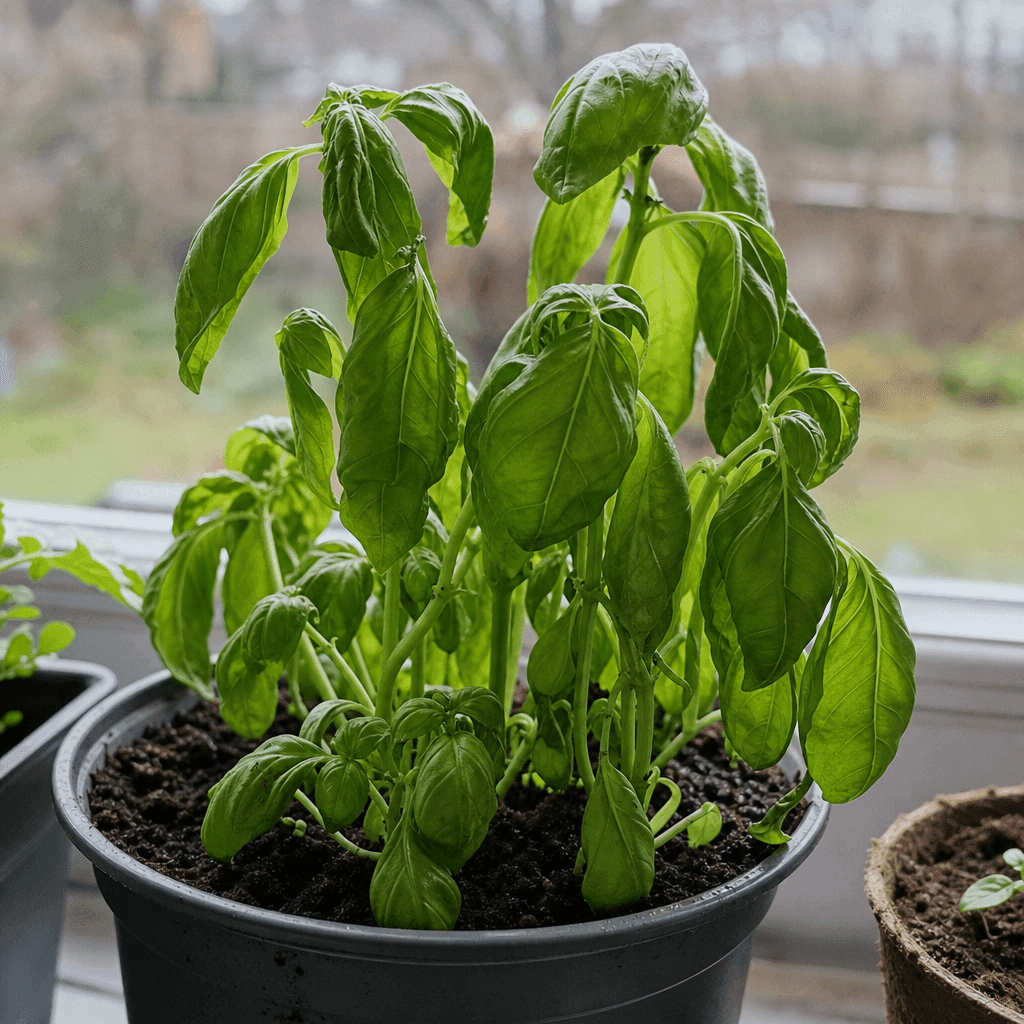
PossibleBasil wilts readily after being repotted, moved to a different environment, or disturbed at the roots. The wilting is usually temporary — all the leaves droop uniformly and the plant looks dramatic but the compost is at the correct moisture level and the roots are undamaged. This is the plant adjusting to disrupted root hairs and reduced water uptake. Most basil recovers from transplant shock within 24–48 hours if kept in stable, warm, moderately humid conditions.
- The plant was repotted, divided or moved within the last 24–48 hours.
- All leaves are drooping uniformly rather than some being worse than others.
- Compost moisture is neither very dry nor very wet.
- No sour smell from the compost.
- Keep the plant in a warm location (above 18°C) out of direct strong sun for the first few days.
- Keep compost evenly moist but not wet — water once only if the surface is dry.
- Do not feed until the plant shows clear signs of recovery and active new growth.
- Avoid moving or disturbing the plant again during this period.
- Most transplant-shocked basil recovers within 24–72 hours.
Stop it coming back:When repotting basil, disturb the root ball as little as possible. Water the plant well a few hours before repotting to reduce stress. Repot in the evening rather than during the hottest part of the day.
feed a newly repotted or transplant-shocked basil plant — fertiliser adds osmotic stress to roots that are already struggling to absorb water.
Still not sure?
Work down these branches — the first one that matches is your answer.
What not to do
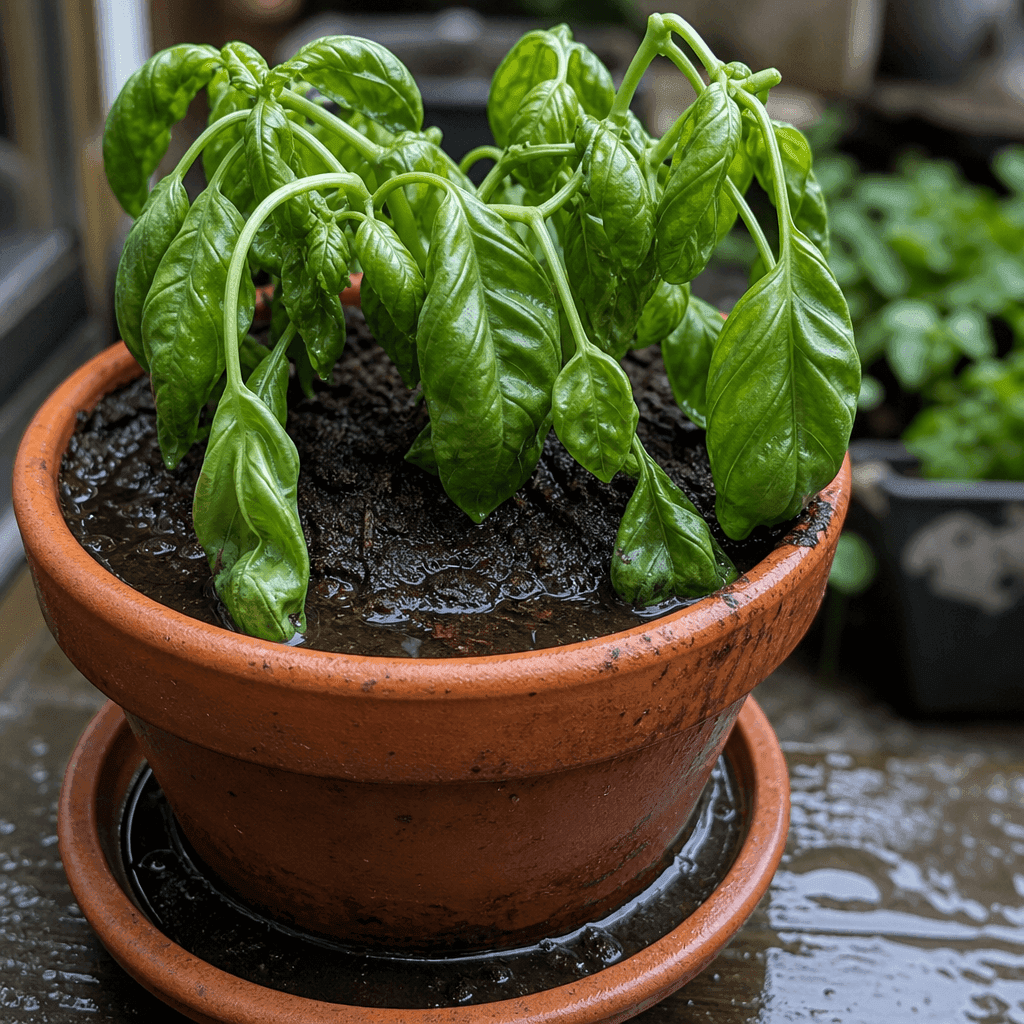
- Leave basil sitting in a saucer of water — this causes root rot more rapidly than almost any other mistake.
- Place basil outdoors or on a windowsill when overnight temperatures may drop below 10°C.
- Give more water when the plant wilts without first checking whether the compost is wet or dry — wilting in wet compost means overwatering.
- Compost a basil plant suspected of fusarium wilt — the pathogen persists in home compost and will spread to future plants.
- Feed a wilting, newly repotted or cold-damaged plant — it adds stress at a vulnerable time.
Common questions
Why does my supermarket basil always die so quickly?
Supermarket basil is grown with many seedlings packed into a tiny pot, making it root-restricted and unable to take up enough water. The solution is to repot it immediately on purchase — separate the seedlings into groups and pot each group into a 10–12 cm pot with fresh compost. Treated this way, a single supermarket pot can produce multiple healthy plants for weeks.
Can I revive a wilted basil plant?
Usually yes, depending on the cause. Underwatered basil recovers within 1–2 hours of a thorough watering. Cold-shocked basil often recovers once moved to a warm spot. Overwatered basil with root rot is harder to save — remove it from its pot, trim dead roots and repot in fresh compost. Fusarium wilt cannot be reversed.
How do I know if my basil has fusarium wilt?
Fusarium wilt typically strikes a plant at 20–30 cm tall that appeared healthy until then. The wilting does not respond to watering. Cut the main stem horizontally — if there is brown discolouration in the centre of the vascular tissue, fusarium wilt is confirmed. Dispose of the plant and all the compost immediately.
Can basil recover from cold damage?
It depends on severity. A brief chill — temperatures just below 10°C for a few hours — may cause drooping that reverses once the plant is warmed. Prolonged cold or frost causes cell damage and blackening that is irreversible. If more than half the leaves are blackened, the plant is unlikely to recover fully; take cuttings from any remaining green stems.
How often should I water basil in the UK?
In summer on a warm windowsill, daily or every other day. In a cooler room or in autumn, every 2–3 days. Always check the compost — water when the top 2.5 cm is dry, and always empty the saucer 30 minutes after watering. Basil prefers consistent moisture but cannot tolerate standing water.
Can I grow basil outside in the UK?
Yes, but only reliably between June and early September when minimum overnight temperatures stay above 10°C. Basil grows very well in a sheltered, sunny UK garden during midsummer but must be brought indoors before temperatures drop in late August. Even a single cold night outdoors can collapse the plant.
Why is my basil going black after wilting?
Blackening after wilting usually indicates cold damage — cell walls have been destroyed by temperatures below 10°C. It can also indicate severe overwatering with bacterial or fungal secondary infection. If the blackening is soft and spreading, the plant is unlikely to recover; if it is localised to a few leaves and the main stem is still firm and green, take stem cuttings to propagate new plants.