Quick diagnosis
Match the row to what you’re seeing, then jump to the fix.
| What you see | Likely cause | Confidence | How to confirm | What to do now | Urgency |
|---|---|---|---|---|---|
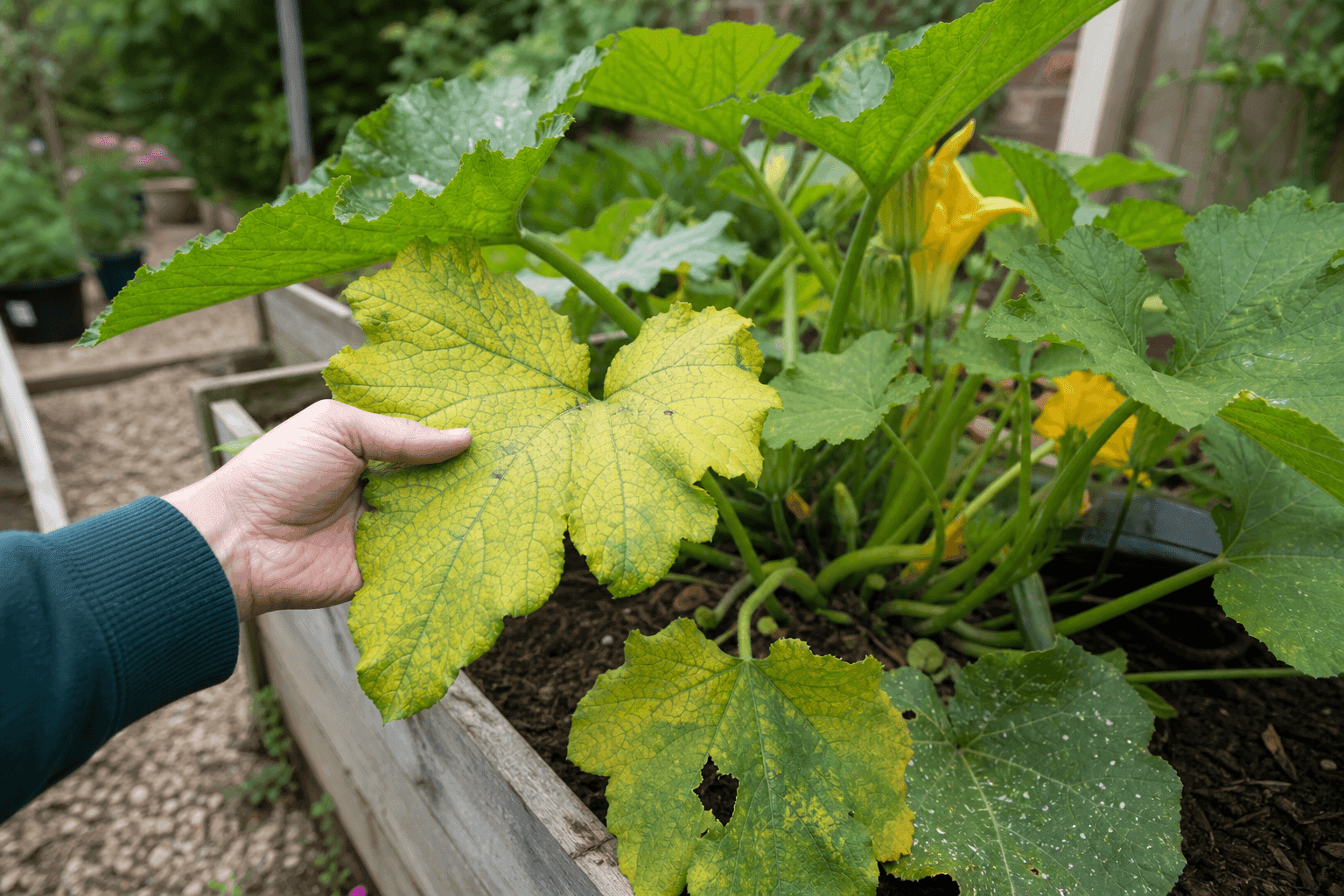
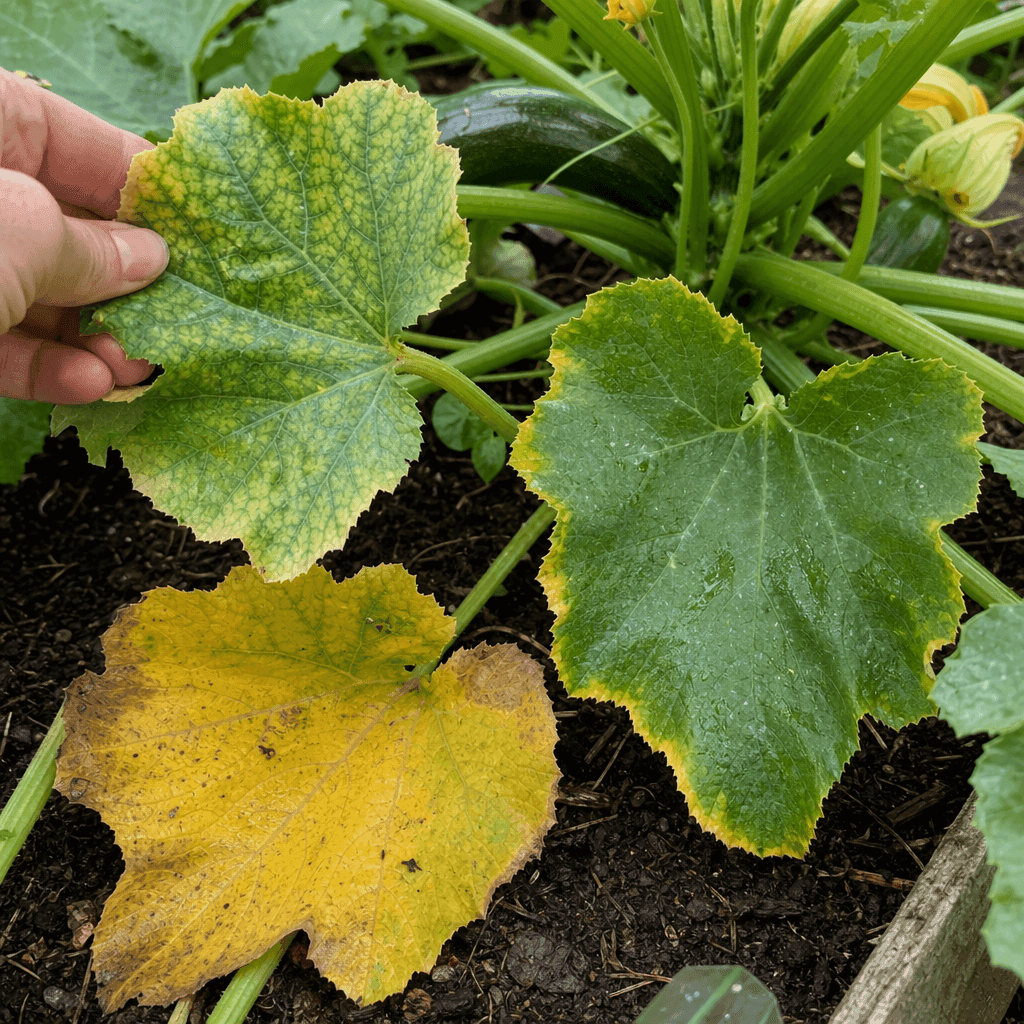
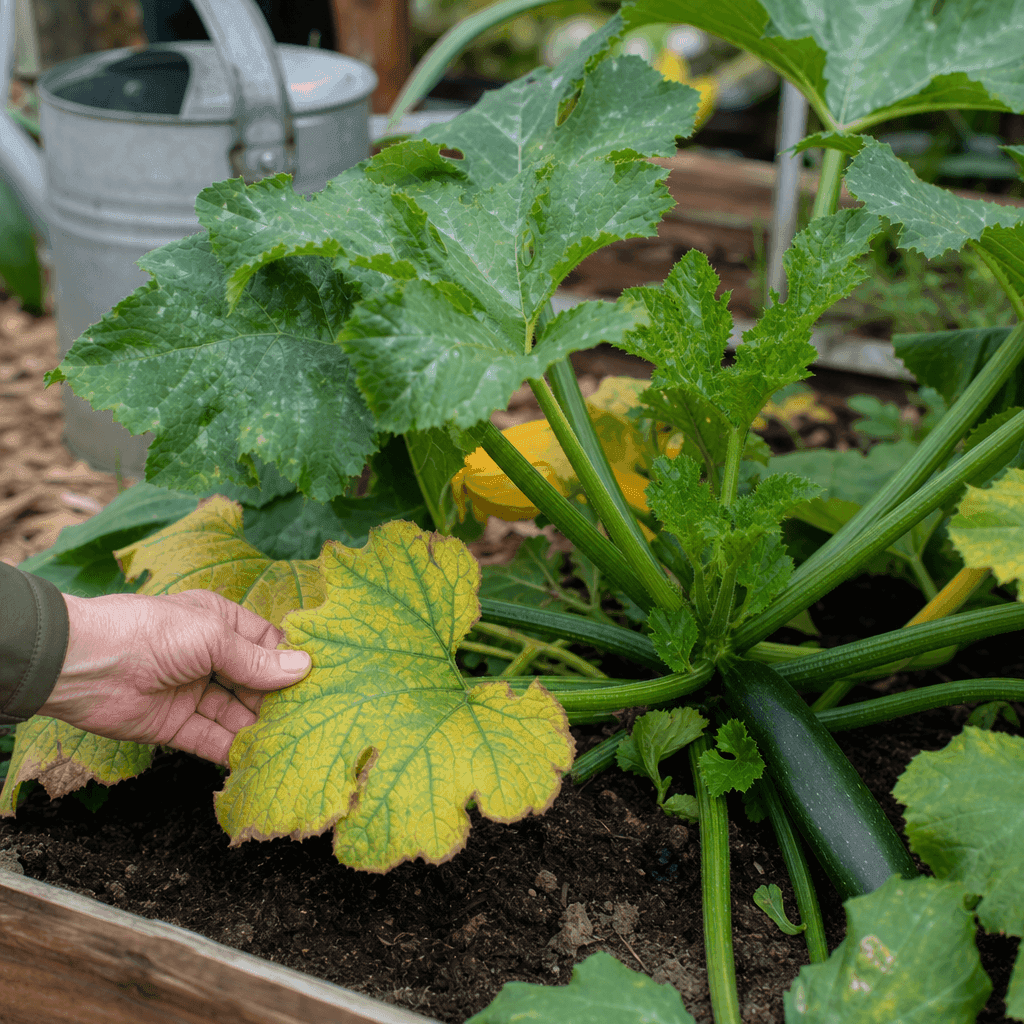
| Oldest lower leaves yellowing, plant tip is healthy, fruit setting well | Normal ageing and nutrient reallocation | High | New growth and fruit are healthy; yellowing starts at the base and moves up slowly | Remove fully yellow leaves to improve airflow; apply balanced liquid feed if growth looks pale | Low |
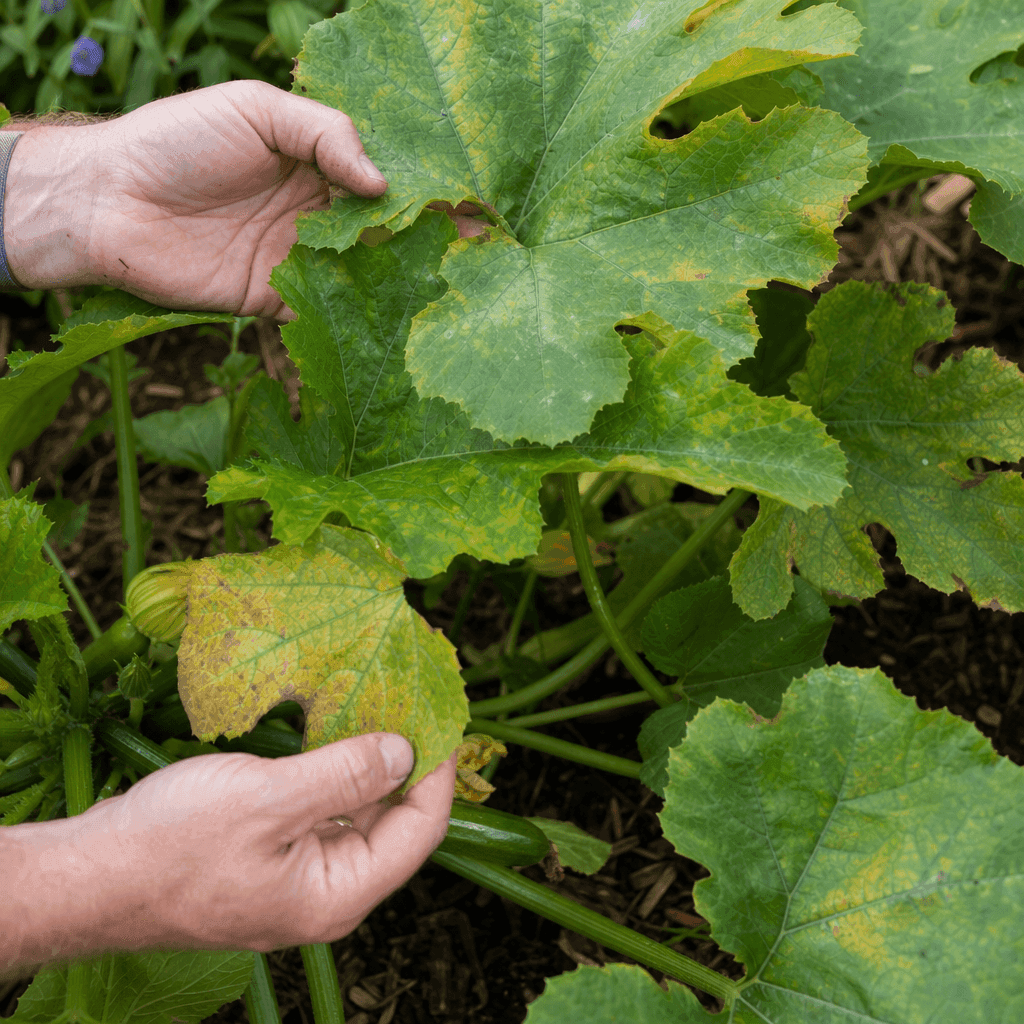
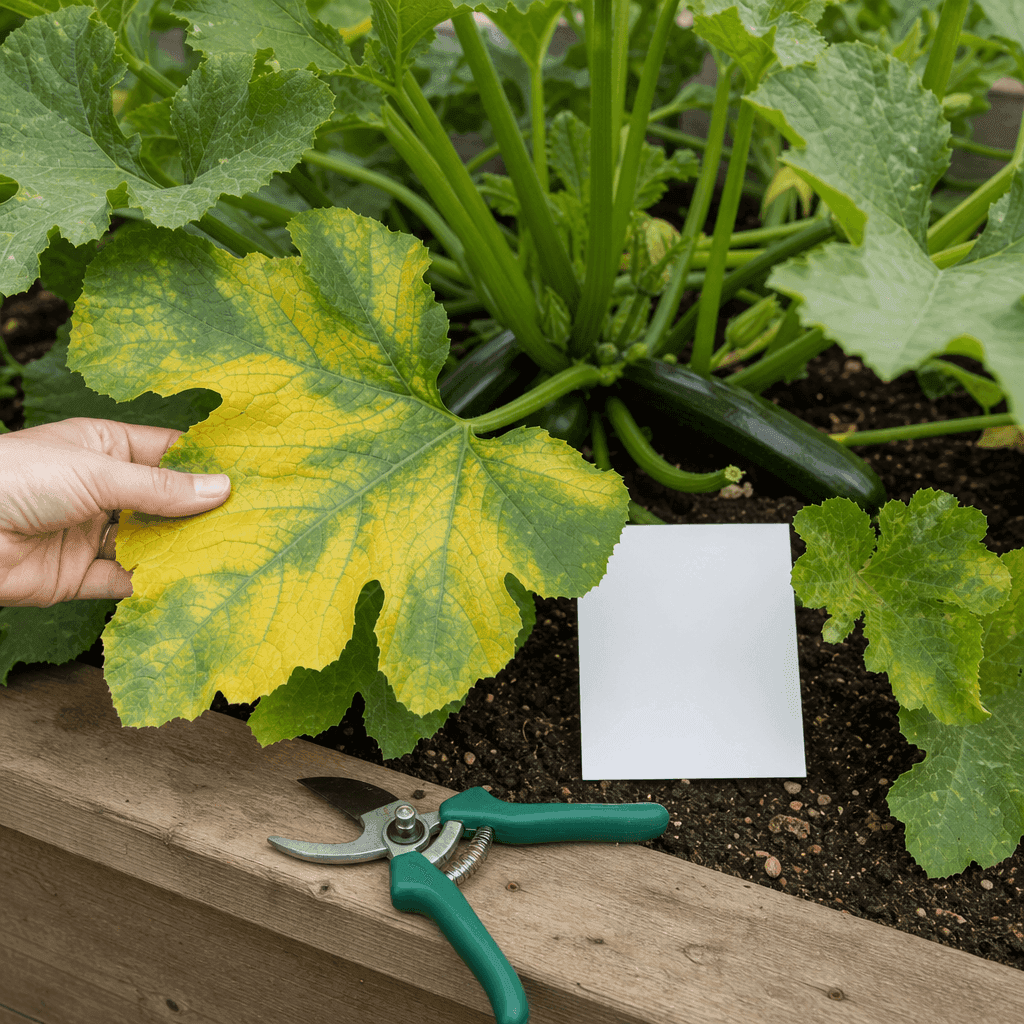
| Yellow patches between green veins on mid-aged leaves | Magnesium deficiency | High | Interveinal pattern on older leaves; plant is fruiting heavily; sandy or acidic soil | Apply Epsom salts at 20g per litre as a soil drench or dilute foliar feed | Medium |
| White powdery coating on upper leaf surface; leaves begin to yellow beneath it | Powdery mildew | High | White dust rubs off the surface; appears in warm dry spells from midsummer | Remove worst leaves; improve watering consistency; increase airflow between plants | Medium |
| Yellow-brown mosaic patches on upper leaves; grey downy growth on undersides | Downy mildew | Medium | Grey or purple fuzz on the leaf underside matches yellow patches above; cool damp conditions | Remove affected leaves; avoid overhead watering; improve spacing | Medium |
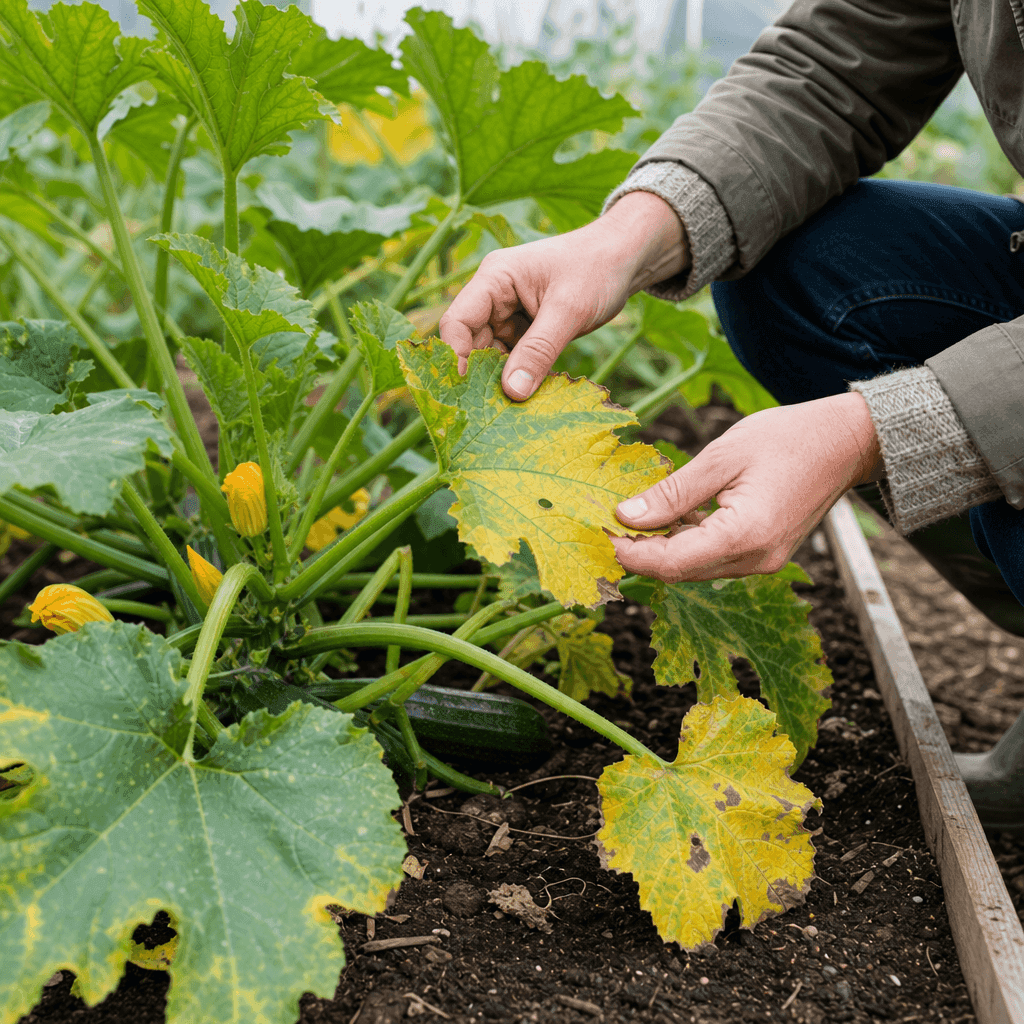
| Irregular mosaic of yellow and green across leaves; distorted, puckered growth | Cucumber mosaic virus (CMV) | Medium | Mottling is random and not vein-patterned; new leaves also affected; aphids present | Remove and dispose of the whole plant; do not compost; control aphids on remaining plants | High |
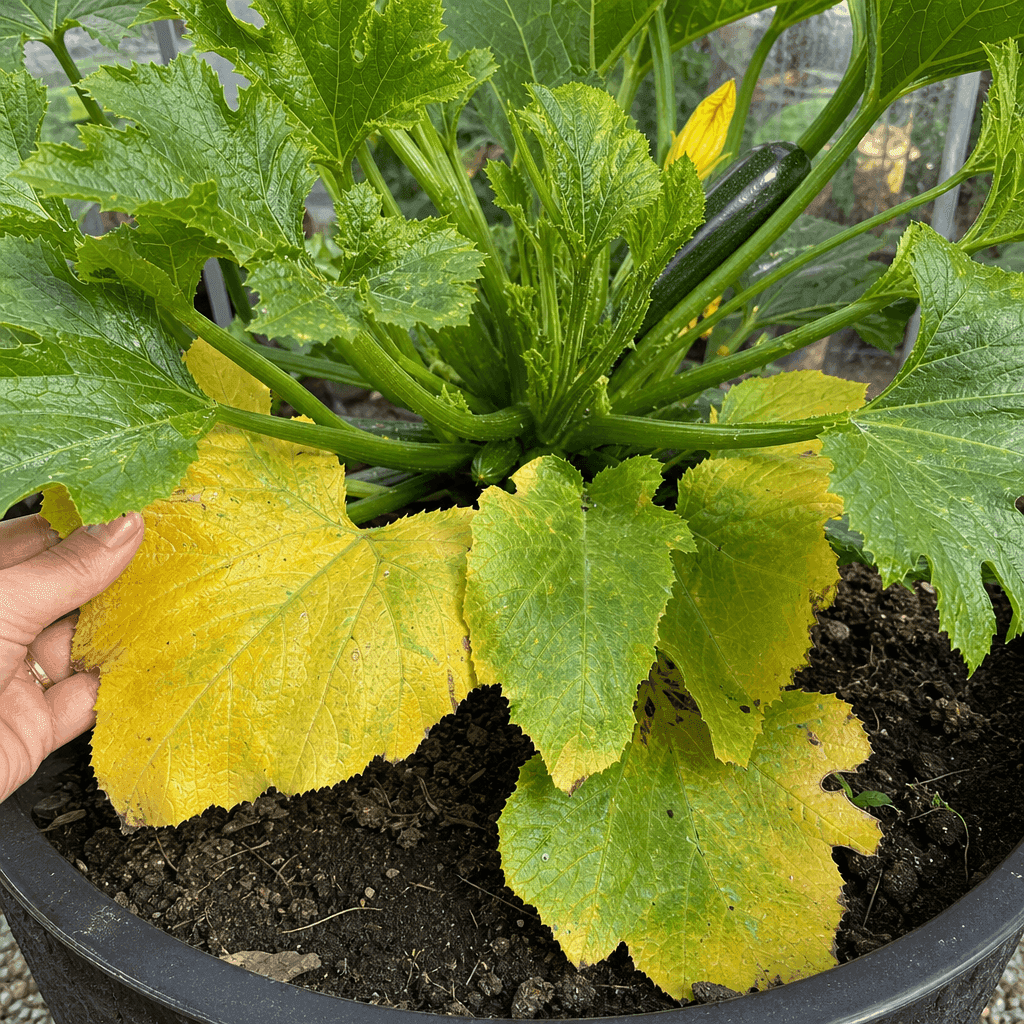
| General pale-yellow colour across the plant, especially in hot dry weather | Drought stress or nitrogen shortage | Medium | Soil is dry; no feeding for several weeks; courgette in container or poor soil | Water deeply and consistently; apply balanced liquid feed or high-potassium tomato feed | Medium |
The causes, in detail
Normal ageing and nutrient reallocation
Most likelyAs courgette plants grow rapidly and set fruit, they redirect mobile nutrients — especially nitrogen and magnesium — from old leaves to new growth and developing courgettes. Lower leaves that are now shaded by the canopy also yellow naturally as they lose light. The RHS acknowledges this is expected in vigorous fruiting courgettes and notes that liquid fertiliser quickly remedies acute yellowing in lower leaves if the plant overall looks hungry.
- The newest leaves and growing tip look healthy and green.
- Yellowing starts on the oldest lowest leaves and progresses gradually upward.
- The plant is actively setting or producing fruit.
- There has been no regular feeding since planting out.
- Remove fully yellow leaves at the base to improve airflow and reduce disease risk.
- Begin a regular high-potassium feed (tomato feed) once fruit starts forming — apply every 10–14 days.
- If the whole plant looks pale and slow, apply a balanced liquid feed first to restore nitrogen levels.
- Recheck in one week: if new leaves are also yellowing, investigate further.
Stop it coming back:Courgettes are hungry plants — incorporate well-rotted garden compost or manure into the planting hole and begin feeding once the first fruits swell. A mulch of compost also maintains moisture and adds nutrients through the season.
feed with a high-nitrogen feed late in the season — it encourages leafy growth at the expense of fruit when you want the plant to produce courgettes, not foliage.
Magnesium deficiency
Most likelyMagnesium deficiency produces a characteristic interveinal chlorosis — the leaf tissue between the veins turns yellow while the veins themselves stay green. This is one of the most recognisable plant leaf problems, and it is common in courgettes that are fruiting heavily, particularly on light sandy soils, in containers, or where heavy rainfall or irrigation has leached magnesium from the root zone. The RHS notes that magnesium symptoms begin in older leaves because magnesium is a mobile nutrient that the plant moves from old tissue to support new growth.
- The yellowing is between the veins — the veins themselves stay green.
- Older and mid-aged leaves are affected first; the tip and newest growth may look fine.
- The plant is cropping heavily, or growing in a container or light sandy soil.
- High rainfall or very frequent watering has occurred.
- Apply Epsom salts (magnesium sulphate) at 20g per litre of water as a soil drench around the root zone.
- Alternatively, use a more dilute foliar spray (10g per litre) applied to the leaves in the early morning.
- Repeat once or twice more at fortnightly intervals if the problem is persistent.
- Check soil pH — at pH above 7.5, magnesium is less available; apply sulphur chips to gradually lower pH if needed.
Stop it coming back:Incorporate garden compost rich in magnesium before planting, and feed with a balanced fertiliser rather than nitrogen-only products through the season.
apply multiple corrective feeds at the same time — Epsom salts and chelated iron together can cause further imbalances. Diagnose the specific deficiency before treating.
Powdery mildew
Most likelyPowdery mildew is almost universal on courgettes by late summer in UK gardens. It is caused by fungal species that are favoured when roots are dry but the air is warm and humid — the classic British July and August pattern. It first appears as white floury patches on the upper leaf surface, which expand to cover whole leaves; affected tissue yellows beneath the mould. Plantura garden notes that drought-stressed plants are especially prone, and removing infected leaves while improving watering is the main response.
- White powdery or floury coating on the upper surface of leaves.
- The white dust rubs off the surface with a finger.
- Symptoms appear in midsummer during warm, dry spells.
- Lower and outer leaves are typically affected first.
- Remove the worst-affected leaves and dispose of them — do not compost, as spores can survive.
- Improve watering consistency: courgettes in dry soil are far more susceptible.
- Increase spacing between plants to improve airflow, or remove some lower leaves to open up the canopy.
- There is no widely available chemical fungicide for powdery mildew for home gardeners in the UK.
- Continue harvesting fruit — a mildewed plant in late summer will usually still crop until the first frost.
Stop it coming back:Varieties such as 'Defender' and 'Supremo' have some resistance to cucumber mosaic virus, and several modern courgette varieties have improved mildew tolerance. Water at the base and mulch to maintain consistent soil moisture.
remove all leaves with any mildew — the plant still needs working foliage to photosynthesize and continue producing fruit.
Downy mildew
PossibleDowny mildew on courgettes produces small yellow-brown patches on the upper leaf surface, with a corresponding grey or purple downy growth on the underside that distinguishes it from powdery mildew. It thrives in cool, damp conditions when leaves cannot dry out — the opposite of powdery mildew. The RHS notes it can spread rapidly in wet summers or polytunnel conditions. Affected leaves cannot recover but spread can be slowed.
- Yellow-brown mosaic patches on the upper leaf surface.
- Grey or purple downy fuzz directly beneath the yellow areas on the leaf underside.
- Weather has been cool and damp; leaves are frequently wet.
- Remove affected leaves promptly and dispose of them away from the garden.
- Water at the base, not over the leaves, and water in the morning so foliage can dry.
- Improve plant spacing to allow better airflow.
- In a polytunnel, ventilate more aggressively — open vents and doors during the day.
water in the evening when downy mildew is active — wet foliage overnight is ideal for spore germination and rapid spread.
Cucumber mosaic virus (CMV)
PossibleCucumber mosaic virus causes irregular yellow-green mottling, puckering and distortion of courgette leaves. New leaves are as affected as old ones, which distinguishes it from nutrient deficiency patterns. CMV is spread by aphids and has no cure — the RHS confirms the only response is to remove and destroy the whole plant, as it will continue to decline and act as a virus reservoir for aphids to spread to neighbouring cucurbits. Courgette varieties 'Supremo' and 'Defender' have some CMV resistance.
- Mottled, irregular yellow-green patches that do not follow the vein pattern.
- New leaves are also affected — often with puckering, blistering or distortion.
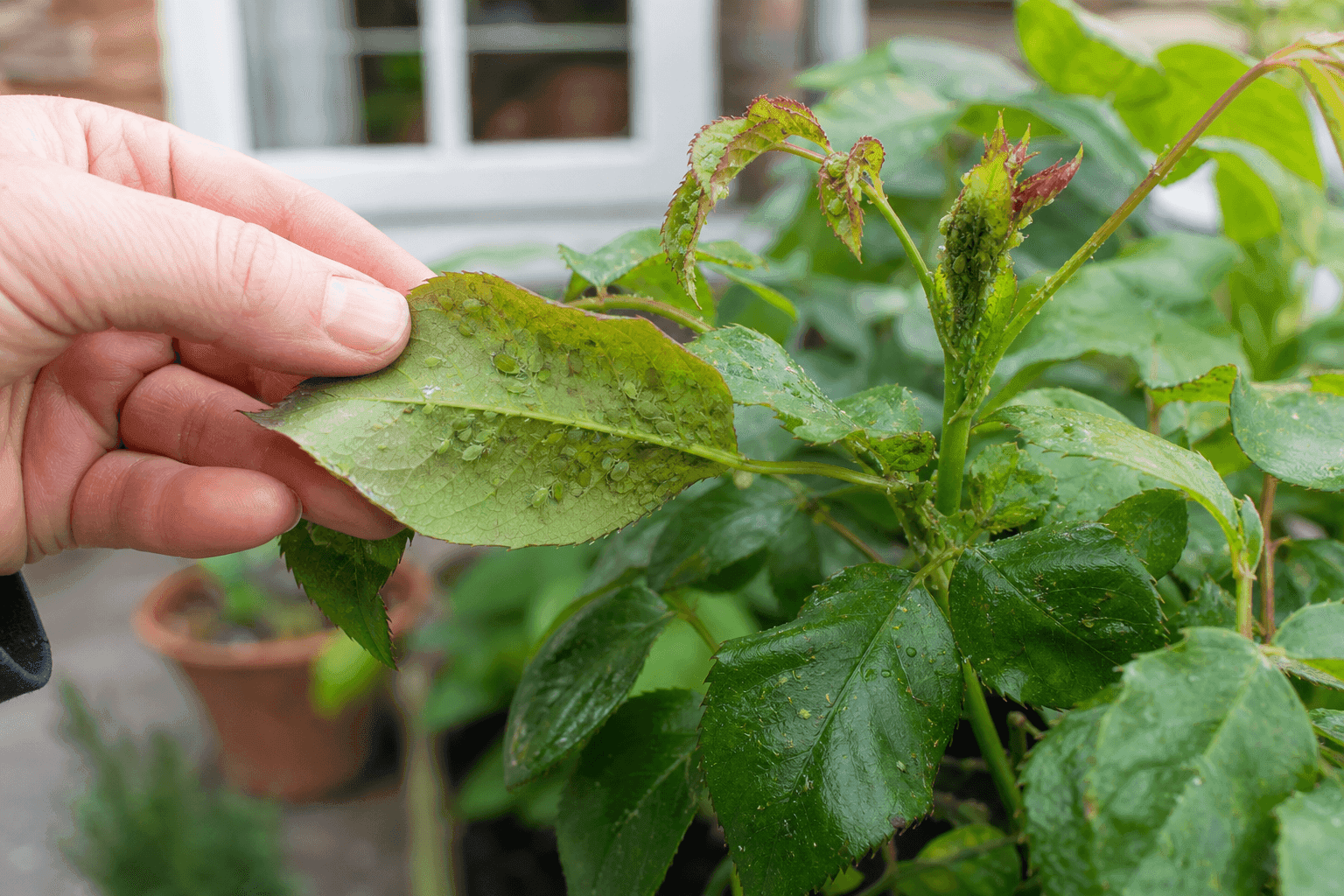
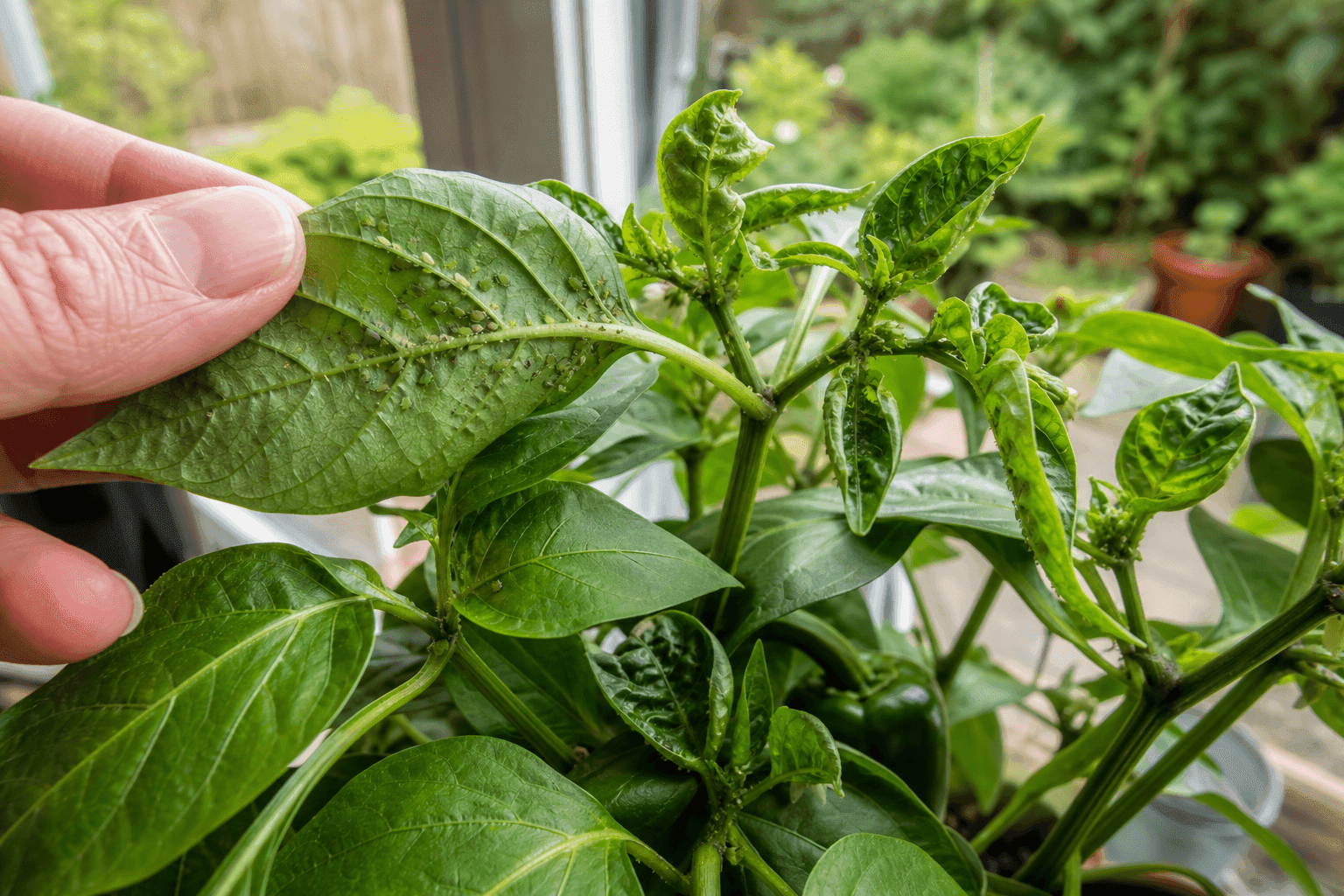
- Aphids are visible on the plant or nearby.
- Nearby cucumbers, squashes or melons may show similar symptoms.
- Remove and dispose of the whole plant — bag it and put it in household waste, not the compost heap.
- Wash hands and tools before touching healthy plants.
- Control aphids on remaining plants in the vegetable garden to reduce further spread.
- Do not replant a new courgette in the same spot this season; the virus cannot survive in soil, but aphids may be carrying it locally.
Stop it coming back:Grow CMV-resistant varieties where the virus has been a problem. Control aphid populations throughout the season. Remove and destroy infected plants promptly.
compost plants infected with cucumber mosaic virus — CMV is not fully inactivated by home composting and aphids feeding on composted material can still transmit it.
Drought stress or nitrogen shortage
PossibleCourgettes are fast-growing, large-leaved plants with a very high water and nutrient demand. Prolonged dry periods or containers that dry out quickly cause general yellowing and wilting. Nitrogen shortage — common in poor soils or containers that have not been fed — causes a general pale-yellow colour from the base upward, unlike the interveinal pattern of magnesium deficiency.
- Soil or compost is dry 3–5 cm down.
- Yellowing is generalised, not patterned between the veins.
- The plant is in a container or poor soil with no regular feeding.
- Dry or windy conditions have persisted.
- Water deeply and consistently — use a drip irrigation system or mulch to maintain steady moisture.
- Apply a balanced liquid feed to restore nitrogen if growth has been pale and slow.
- Switch to a high-potassium tomato feed once good-sized fruit are forming.
- For container courgettes, be prepared to water daily in warm weather and feed every 10–14 days.
water inconsistently, swinging between dry and flooded — irregular watering causes blossom end rot and increases susceptibility to mildew.
Still not sure?
Work down these branches — the first one that matches is your answer.
What not to do
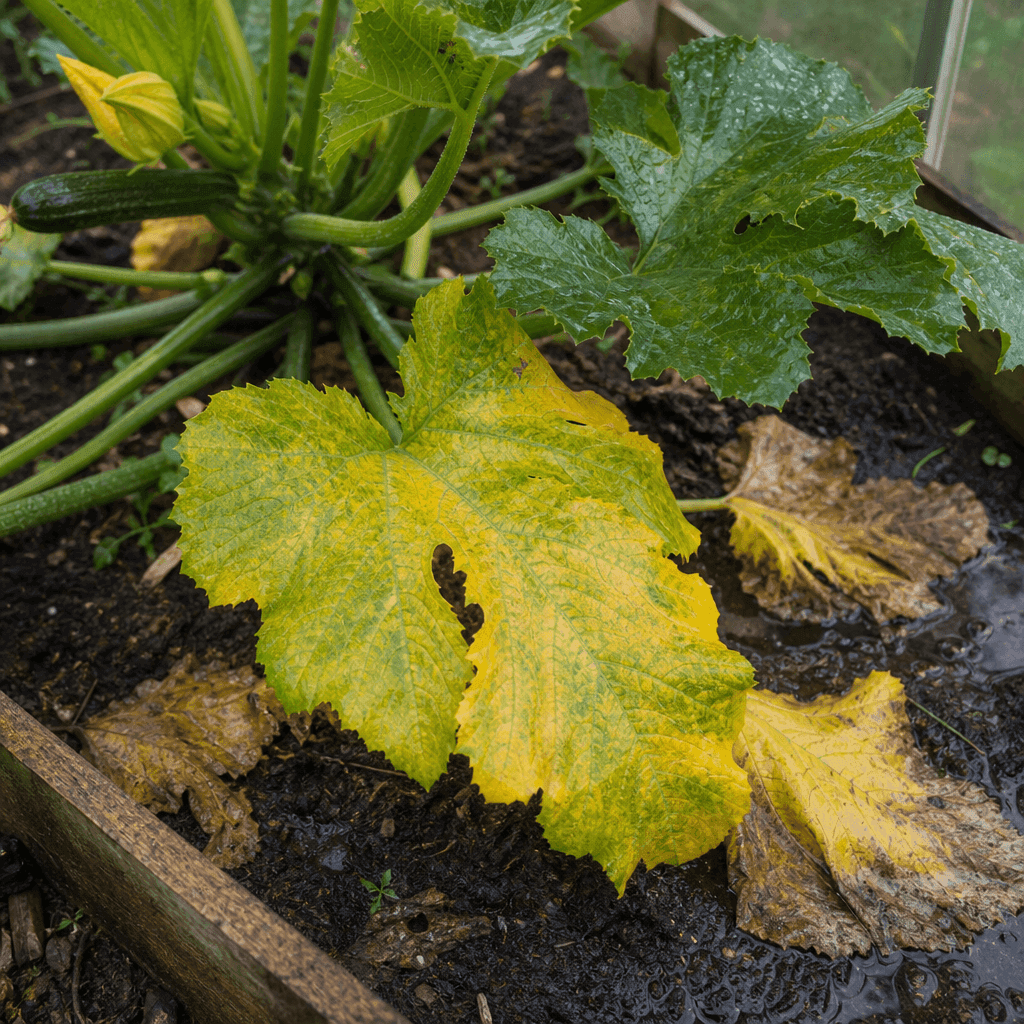
- Remove all the yellowing leaves at once — the plant still needs working foliage to fruit.
- Feed with a nitrogen-heavy fertiliser when the problem is magnesium deficiency — they are different nutrient shortages.
- Compost plants that look virus-affected — dispose of them in household waste.
- Ignore powdery mildew and hope it clears — remove affected leaves to slow spread and maintain watering.
- Water inconsistently, swinging between drought and flooding — courgettes need steady moisture for healthy growth and fruit.
Common questions
Why are my courgette leaves turning yellow from the bottom up?
This is usually normal ageing and nutrient reallocation, especially once the plant is fruiting. Courgettes divert mobile nutrients from old leaves to new growth and fruit. Remove fully yellow leaves and apply a balanced or high-potassium feed every 10–14 days.
What causes yellow patches between green veins on courgette leaves?
This interveinal chlorosis pattern typically indicates magnesium deficiency. It is common in heavily fruiting courgettes, in sandy soils or containers, and after heavy rain. Apply Epsom salts at 20g per litre as a soil drench.
My courgette has a white powder on the leaves — what is it?
Powdery mildew. It is caused by fungal species that thrive when roots are dry but air is warm and humid. Remove the worst affected leaves, water consistently at the base, and improve airflow. It is almost universal on courgettes by late summer in the UK but does not necessarily stop cropping.
Can cucumber mosaic virus spread to my other plants?
Yes — via aphids. CMV affects cucumbers, squashes, melons and some ornamentals. Remove and dispose of infected courgette plants promptly, control aphids on neighbouring plants, and wash tools before touching healthy cucurbits.
How often should I feed courgettes in the UK?
Once plants are growing strongly and the first fruit has set, feed every 10–14 days with a high-potassium tomato feed. Before fruiting, a balanced feed is more appropriate. Container courgettes need more frequent feeding than border plants. See our full courgette care and problem guides for more on keeping plants cropping all season.
Is it too late to save a courgette with yellow leaves in August?
It depends on the cause. Normal ageing and late-season mildew are manageable — the plant can still crop until frost. A virus-infected plant cannot be saved. A nutrient-deficient plant fed in August may recover and crop for several more weeks.
How do I prevent powdery mildew on courgettes?
Choose mildew-tolerant varieties if available, water at the base and keep soil consistently moist, space plants well to allow airflow, and remove lower leaves to open up the canopy. Drought-stressed plants are much more susceptible.