Quick diagnosis
Match the row to what you’re seeing, then jump to the fix.
| What you see | Likely cause | Confidence | How to confirm | What to do now | Urgency |
|---|---|---|---|---|---|
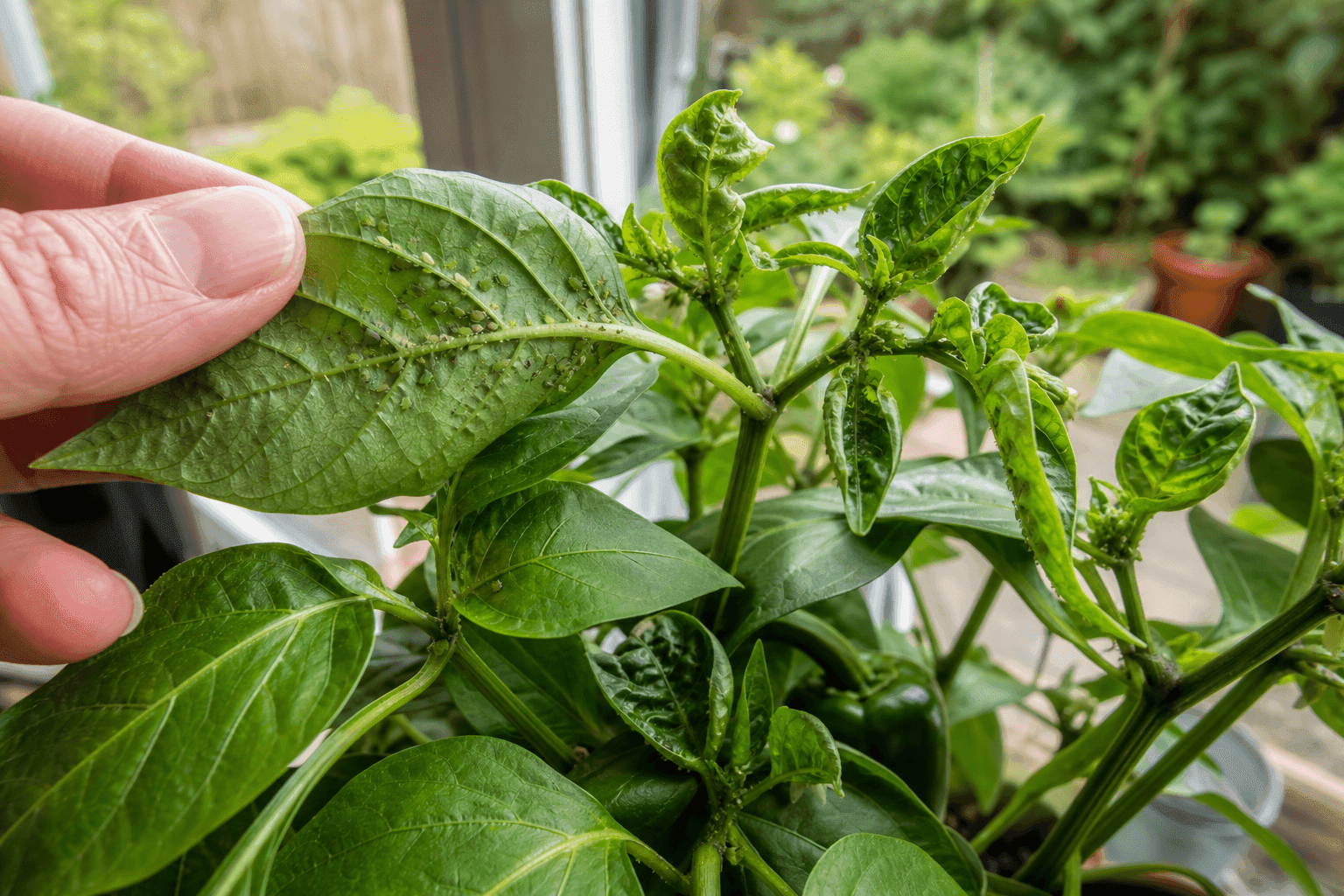
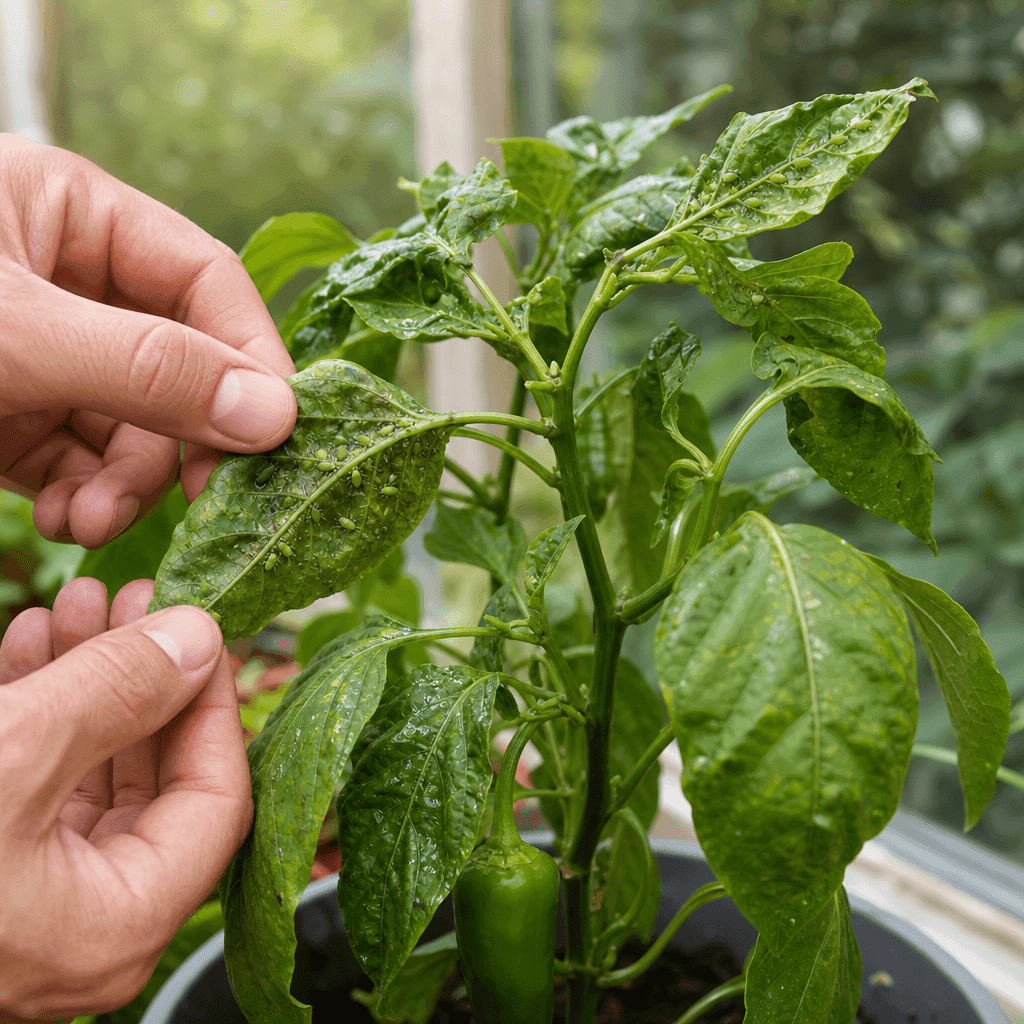
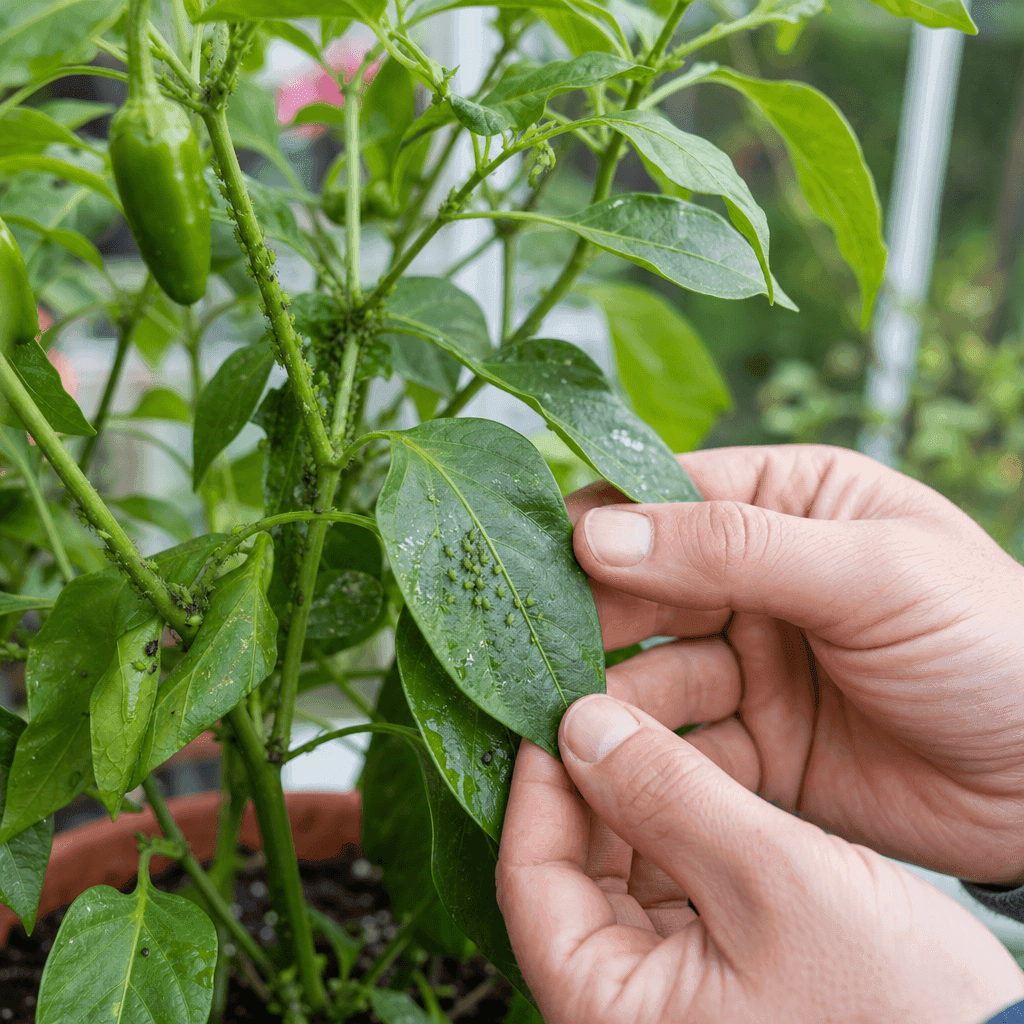
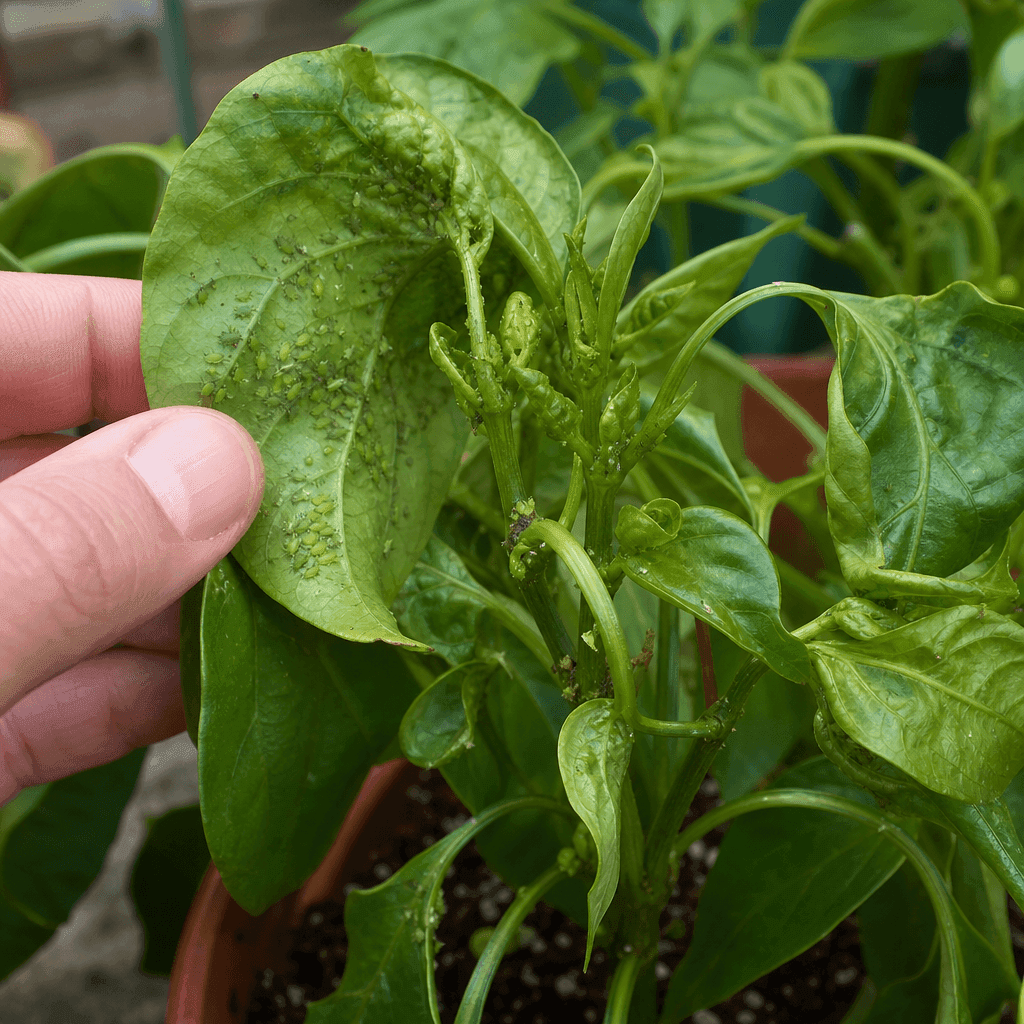
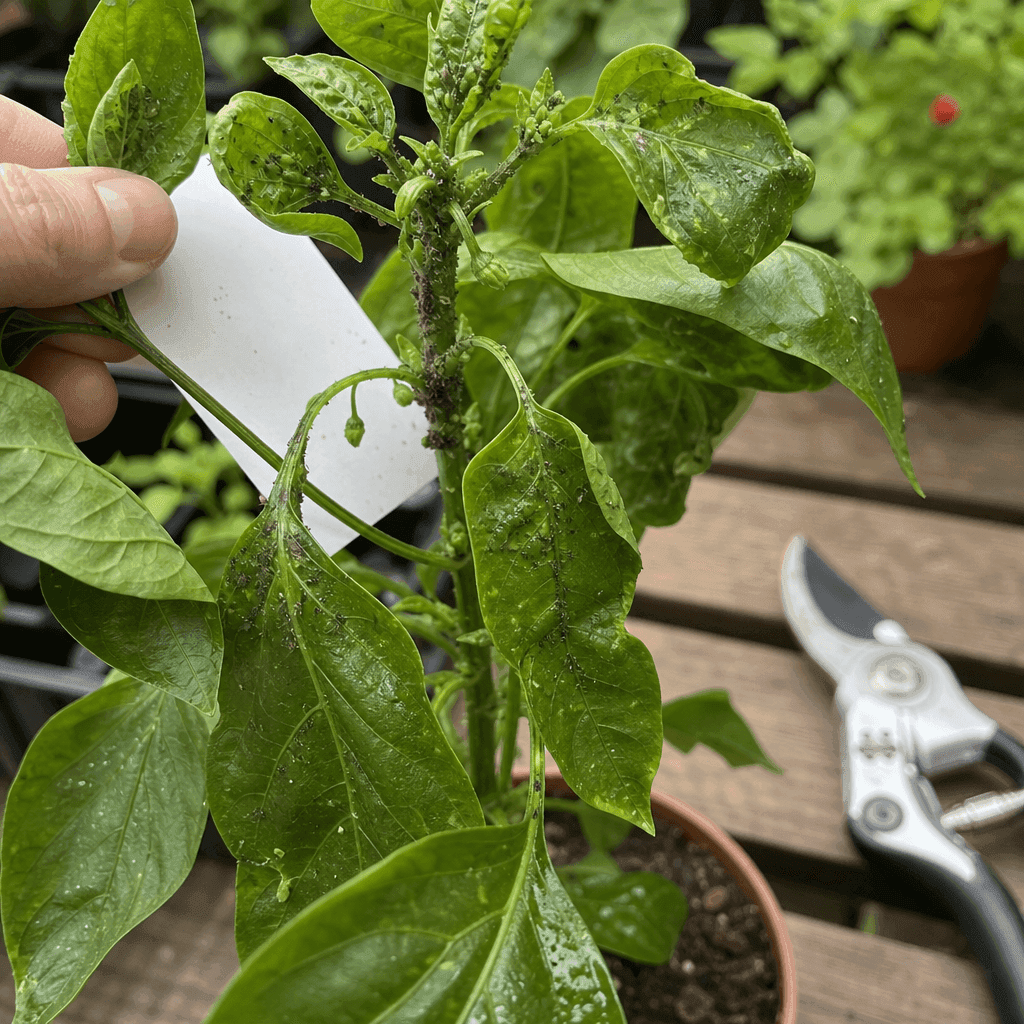
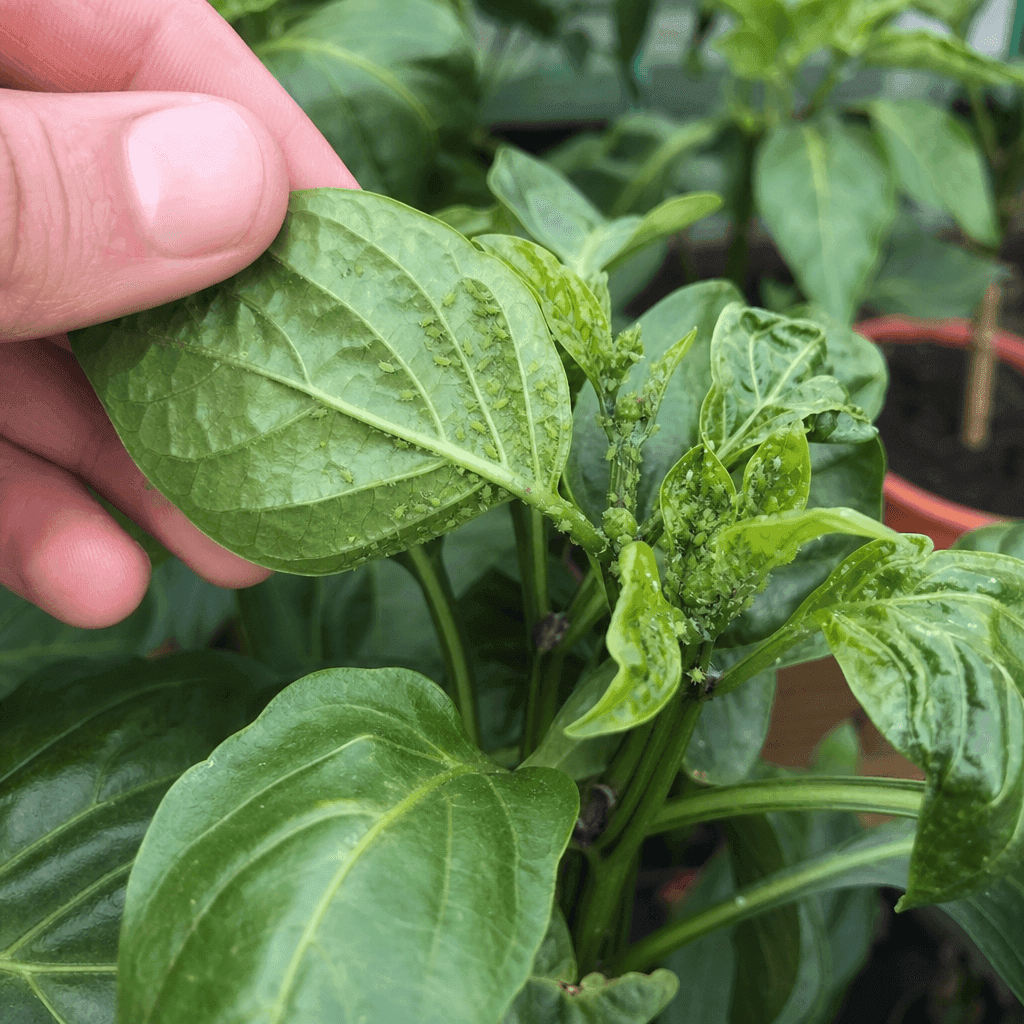
| Dense clusters of yellow-green insects on shoot tips and leaf undersides; leaves curl and distort | Peach-potato aphid (Myzus persicae) | High | Examine new growth with a torch; look for tiny soft-bodied insects and cast white skins | Squash by hand or dislodge with a strong water jet; repeat every 2–3 days | Medium |
| Tiny white moth-like insects fly up when the plant is disturbed; sticky leaves; black sooty mould | Glasshouse whitefly | High | Tap leaves — white insects fly off; check undersides for flat oval scale nymphs | Introduce Encarsia formosa biological control; use yellow sticky traps to monitor | Medium |
| Large (2–3 mm) pale green or pink aphids; less clustering than peach-potato aphid | Potato aphid (Macrosiphum euphorbiae) | Medium | Look for larger, more elongated insects on stems and leaf undersides | Dislodge with water; encourage predators; remove heavily affected shoots | Medium |
| Leaves sticky and coated with black powdery mould; few insects visible | Honeydew and sooty mould from sap-sucking pests | Medium | Look above sticky areas and on nearby plants for the active colony | Wipe leaves clean and control the source pest to stop further honeydew | Low–medium |
| Plant wilts and fails to thrive despite correct watering; white woolly deposits on roots | Root aphids | Low | Knock plant out of pot and inspect roots for white waxy aphid colonies | Repot into fresh compost; destroy or wash roots thoroughly; isolate affected plants | High |
The causes, in detail
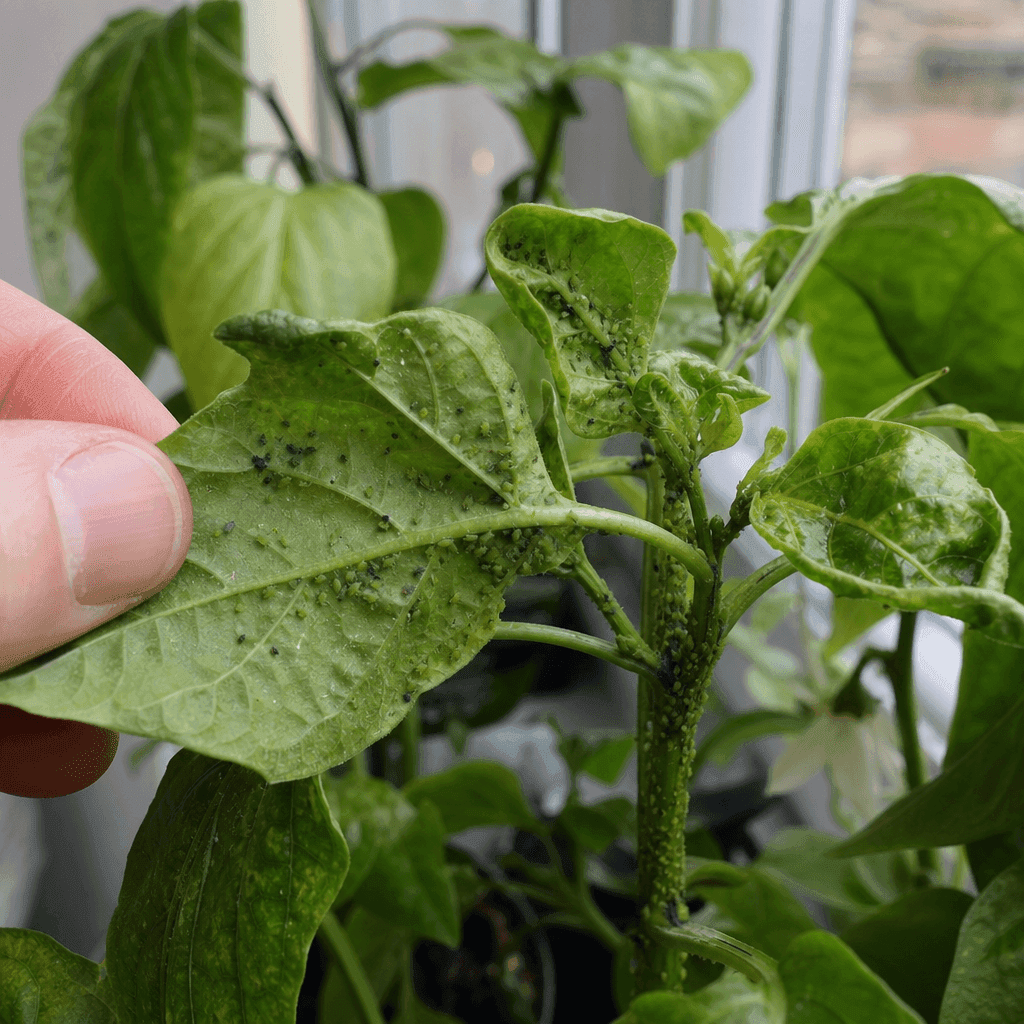
Peach-potato aphid (Myzus persicae)
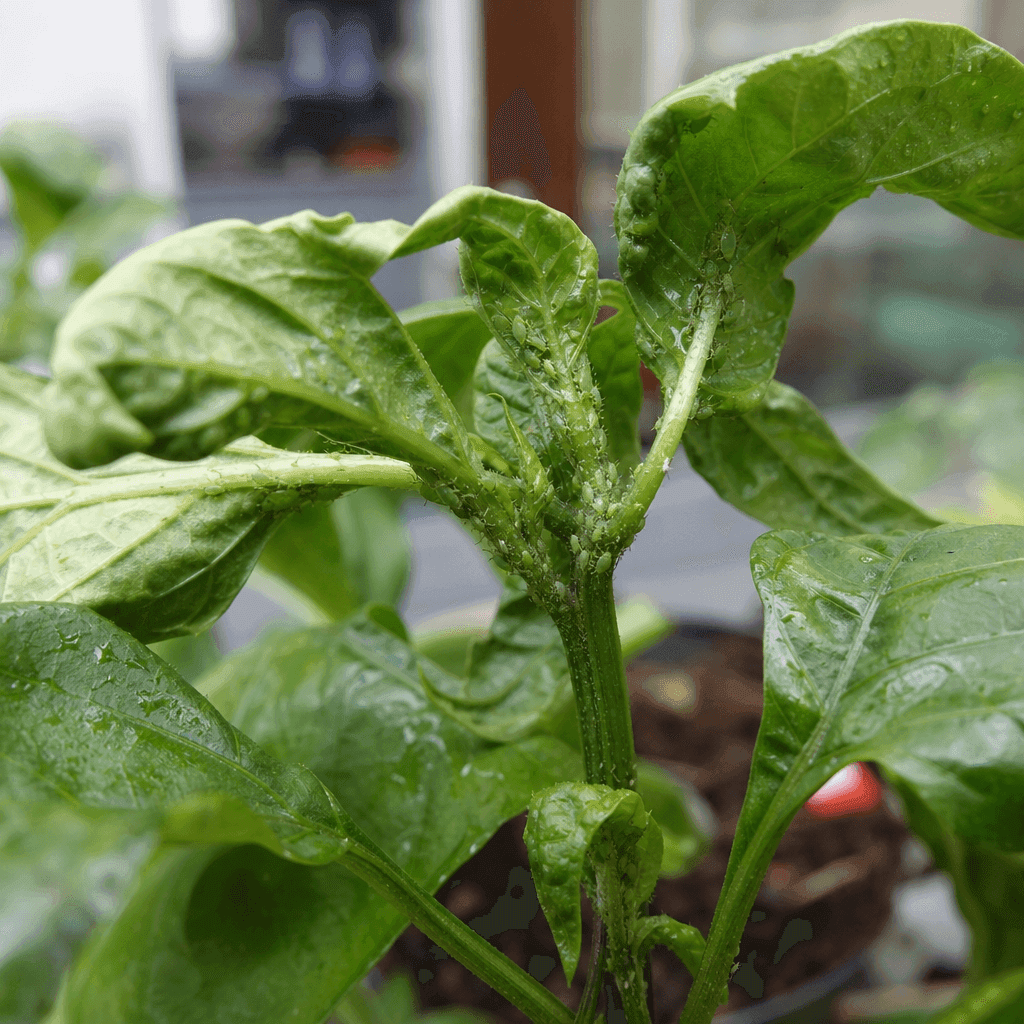
Most likelyThe peach-potato aphid is by far the most common aphid pest of UK pepper and chilli plants, recorded as the dominant species among the 14 aphid species found on peppers in Britain. Colonies form quickly on soft shoot tips and the undersides of young leaves, injecting saliva that causes leaf curl and distortion — one of the common reasons behind pepper plant leaves curling. Heavily infested plants also become coated in sticky honeydew, which allows sooty mould to grow. The RHS notes aphids cause reduced vigour, distorted growth, and honeydew fouling on almost any vegetable crop.
- Inspect shoot tips and the undersides of the newest leaves with a torch.
- Look for dense clusters of small (1–2 mm) soft-bodied yellow-green insects and white cast skins.
- Check for curling or cupping of new leaves — the aphid's saliva causes this distortion.
- Look for ants on the plant — ants 'farm' aphids and are a reliable indicator of infestation.
- Squash small colonies by hand or with a damp cloth as soon as they appear.
- Dislodge larger colonies with a firm jet of water directed at shoot tips and leaf undersides.
- Repeat every 2–3 days — aphids reproduce extremely quickly in warm conditions.
- Remove and bin the most heavily distorted shoot tips; do not compost them.
- Avoid broad-spectrum insecticides, which kill the ladybirds, lacewings and parasitic wasps that naturally suppress aphids.
Stop it coming back:Keep plants well-watered and not under heat stress — stressed plants attract aphids more readily. In a greenhouse, hang yellow sticky traps to monitor early build-up.
spray with a broad-spectrum insecticide at the first sign of aphids; this destroys natural predators and often leads to a worse rebound infestation.
Glasshouse whitefly
Most likelyGlasshouse whitefly (Trialeurodes vaporariorum) is the second most common pest on UK greenhouse peppers. Tiny white winged adults and their flat, scale-like nymphs feed on the undersides of leaves, excreting large amounts of honeydew. The RHS lists whitefly as a major problem in heated greenhouses and polytunnels. Biological control using the parasitic wasp Encarsia formosa is highly effective and is preferred over chemical treatment.
- Tap or gently shake the plant — clouds of tiny white-winged insects rise from the leaves.
- Examine the undersides of leaves for flat, oval, pale green scale-like nymphs.
- Check for sticky honeydew deposits and sooty mould on upper leaf surfaces.
- Introduce Encarsia formosa parasitic wasp as a biological control — available from UK biological control suppliers.
- Use yellow sticky traps near the plants to catch adults and monitor infestation levels.
- Hang reflective silver mulch film under plants, which confuses whitefly.
- Insecticidal soap (fatty acid spray) can reduce adult numbers without harming predators if applied to undersides of leaves.
- Avoid overcrowding plants — good airflow reduces pest pressure.
Stop it coming back:Introduce Encarsia early in the season before populations build up; it is far easier to prevent an outbreak than to bring a heavy infestation under control.
use pyrethroid insecticides in a greenhouse — they harm Encarsia and other beneficial insects, and whitefly quickly develop resistance to them.
Potato aphid (Macrosiphum euphorbiae)
PossibleThe potato aphid is larger (2–3 mm) than the peach-potato aphid and is increasingly common on UK peppers and chillies, particularly later in the season. It tends to spread more loosely across foliage rather than forming dense colonies at shoot tips. Like other aphids, it excretes honeydew and weakens plants under heavy infestations.
- Look for larger, more elongated pale green or pinkish insects on stems and leaf undersides.
- Note they spread more sparsely than peach-potato aphid colonies.
- Check for honeydew deposits and ant activity.
- Dislodge with a strong jet of water, paying attention to stems and the undersides of older leaves.
- Encourage predators by avoiding insecticide use.
- Remove and destroy heavily infested leaves.
- Introduce aphid predators such as Aphidius colemani parasitic wasps if colonies are large.
confuse it with the peach-potato aphid — while control is similar, potato aphid tends to disperse more and is less concentrated at shoot tips.
Honeydew and sooty mould
PossibleSooty mould is a black fungal growth that colonises the sticky honeydew secreted by aphids, whitefly, mealybugs, and scale insects. The mould itself does not infect the plant tissue but blocks light from the leaf surface, reducing photosynthesis. It is a sign that a sap-sucking pest is active somewhere on the plant or on a plant above it.
- Rub the black coating — sooty mould smears or flakes off, unlike leaf disease.
- Look above and around the sticky area for the pest colony producing the honeydew.
- Check ant trails — ants protect aphid colonies and follow the honeydew.
- Identify and control the source pest (aphid, whitefly, etc.) — without this, sooty mould will return.
- Wipe affected leaves with a damp cloth to remove mould and honeydew.
- Improve air circulation — mould spreads in still, humid conditions.
treat sooty mould with fungicide before finding the pest causing the honeydew — the mould will return as long as the source pest is active.
Root aphids
Less likelyRoot aphids are less obvious than foliage aphids but can devastate potted pepper plants. They feed on roots, causing a general decline — the plant wilts despite seemingly adequate watering, growth slows, and the foliage yellows. The RHS identifies root aphids as an increasing problem on container-grown plants. Affected roots show waxy white deposits where the aphids feed.
- Tip the plant out of its pot and inspect the roots for white, woolly, or powdery deposits.
- Look for tiny pale or creamy aphids clustered on the roots themselves.
- Rule out overwatering and root rot first — the symptoms are similar.
- Remove the plant from its pot and wash the roots thoroughly under running water.
- Repot into fresh, clean compost in a clean pot.
- Isolate the affected plant from other container plants.
- Water with a dilute solution of insecticidal soap to the root zone if infestation was severe.
- Destroy badly affected plants — do not compost.
assume wilting in a well-watered pot plant is always overwatering — check the roots for root aphids before adjusting your watering routine.
Still not sure?
Work down these branches — the first one that matches is your answer.
What not to do
- Spray with a broad-spectrum insecticide before trying physical control — it kills natural predators and causes rebound infestations.
- Ignore ants on pepper plants — they protect aphid colonies and should be managed as part of aphid control.
- Assume wilting in a pot is overwatering without checking the roots for root aphids.
- Compost aphid-infested shoot tips — bin them instead.
- Use the same insecticide repeatedly — aphids develop resistance quickly.
Common questions
What aphids are most common on UK pepper plants?
The peach-potato aphid (Myzus persicae) is the most common, followed by the potato aphid (Macrosiphum euphorbiae). Fourteen species have been recorded on UK peppers, but these two dominate. Glasshouse whitefly is also a major pest on indoor-grown plants.
How do I get rid of aphids on pepper plants without chemicals?
Squash small colonies by hand, dislodge larger ones with a firm jet of water, and remove the most badly affected shoot tips. Encourage natural predators by avoiding insecticides. In a greenhouse, use biological controls such as Encarsia formosa for whitefly or Aphidius wasps for aphids.
Will aphids kill my pepper plant?
A small aphid colony on a healthy plant is unlikely to kill it, but a heavy infestation left untreated will weaken the plant significantly, distort new growth, reduce yields, and allow sooty mould to develop. Act early when colonies are small.
Can I use soapy water on aphids on pepper plants?
Yes. A dilute solution of insecticidal soap (or washing-up liquid as a last resort) can be sprayed onto aphid colonies. Cover the shoot tips and leaf undersides thoroughly. It works on contact only and breaks down quickly, so repeat after a few days. It is less harmful to beneficials than synthetic insecticides.
Why do my peppers keep getting aphids?
Peppers growing under stress — too little water, excessive heat, or overcrowding — are more attractive to aphids. Soft, fast-growing shoots from over-fertilising with nitrogen are also targeted. Improving growing conditions and encouraging natural predators usually reduces the frequency of attacks.
Should I remove aphid-damaged leaves?
Remove leaves that are severely curled, heavily infested, or no longer contributing to photosynthesis. Do not strip a plant of all its marked leaves — the plant still needs foliage to recover. Bin removed material; do not compost.
Do aphids spread disease to pepper plants?
Yes. The peach-potato aphid is a major vector of plant viruses including cucumber mosaic virus and various pepper viruses. Controlling aphids early is therefore important not just for the direct feeding damage but also for virus prevention.