Quick diagnosis
Match the row to what you’re seeing, then jump to the fix.
| What you see | Likely cause | Confidence | How to confirm | What to do now | Urgency |
|---|---|---|---|---|---|
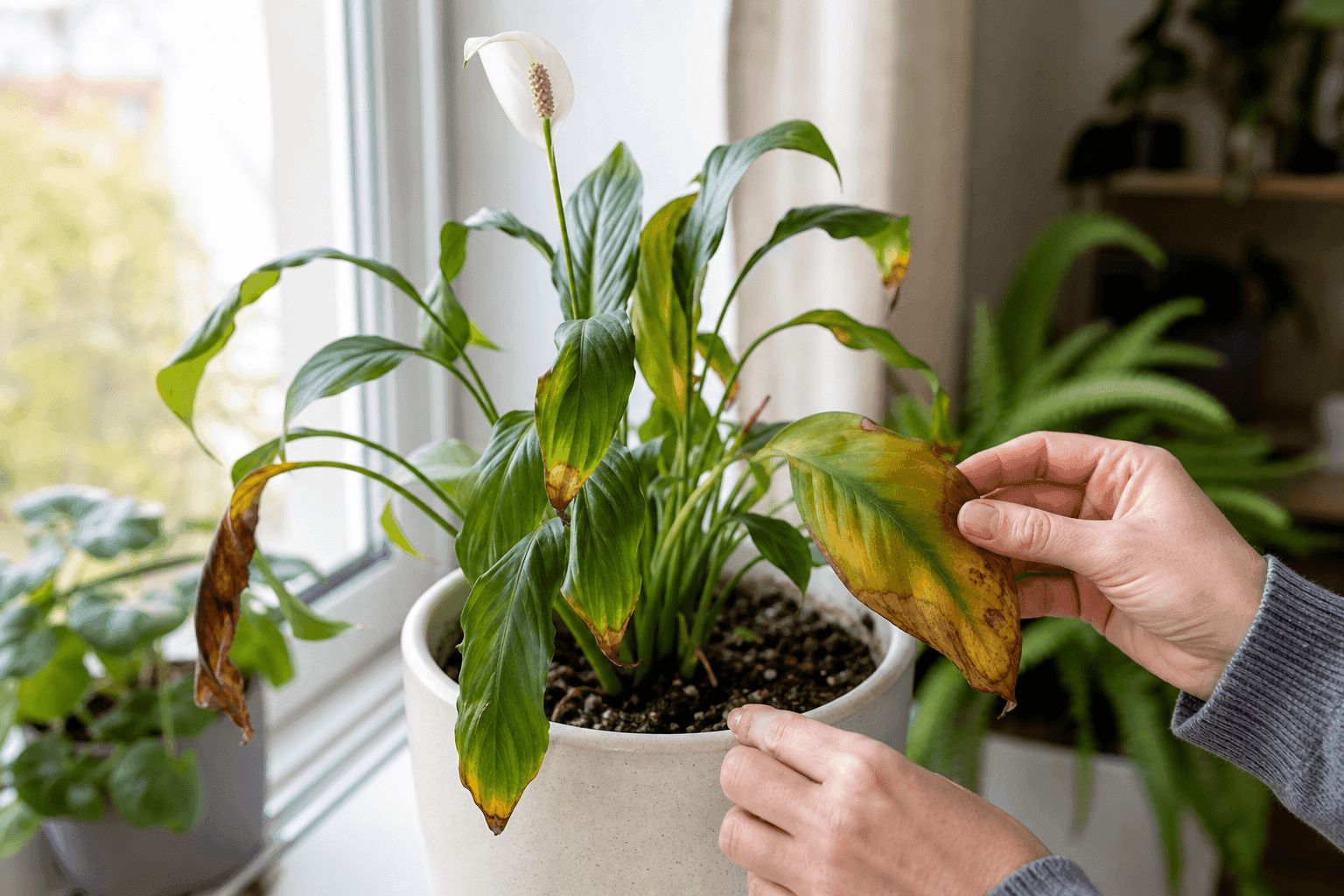
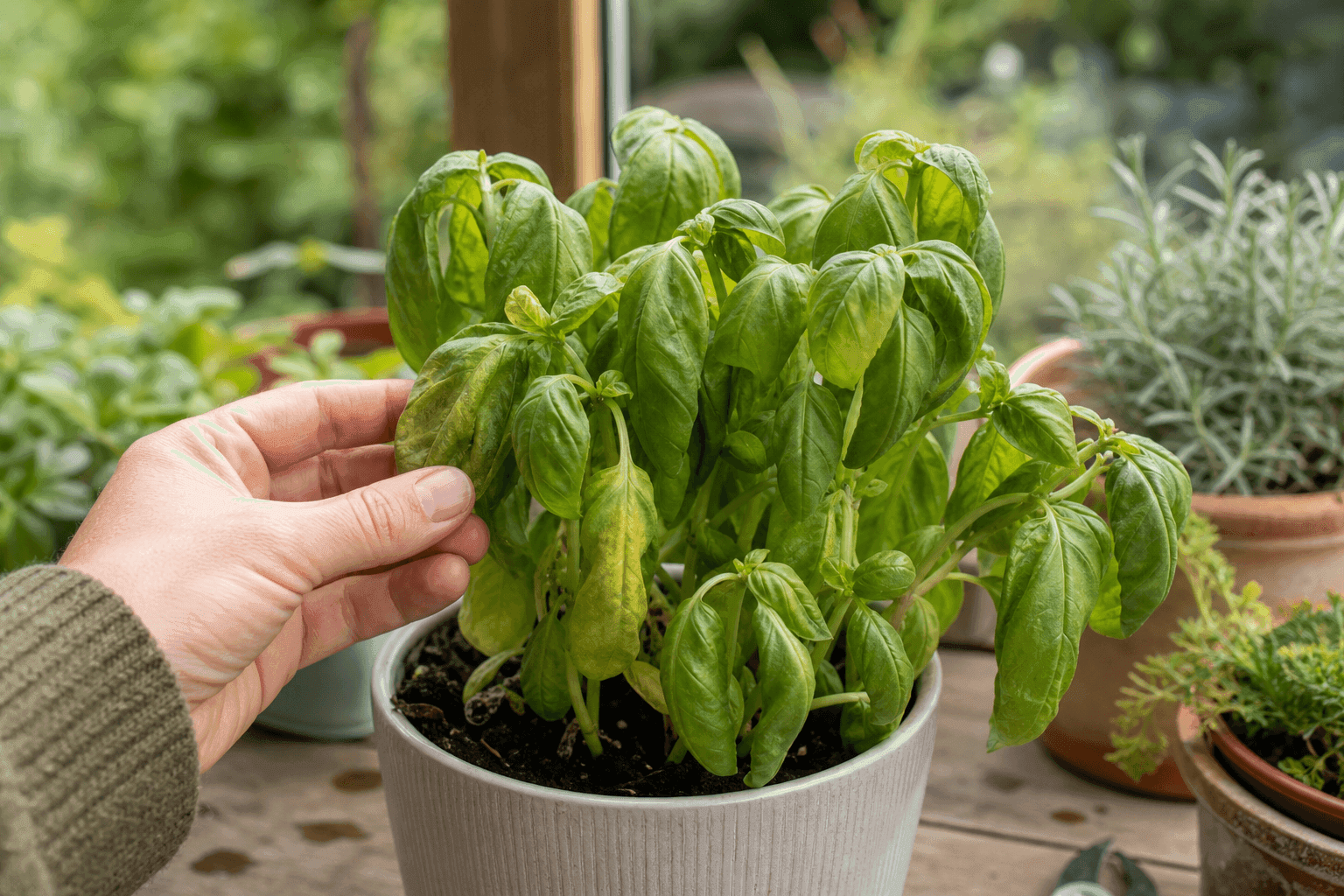
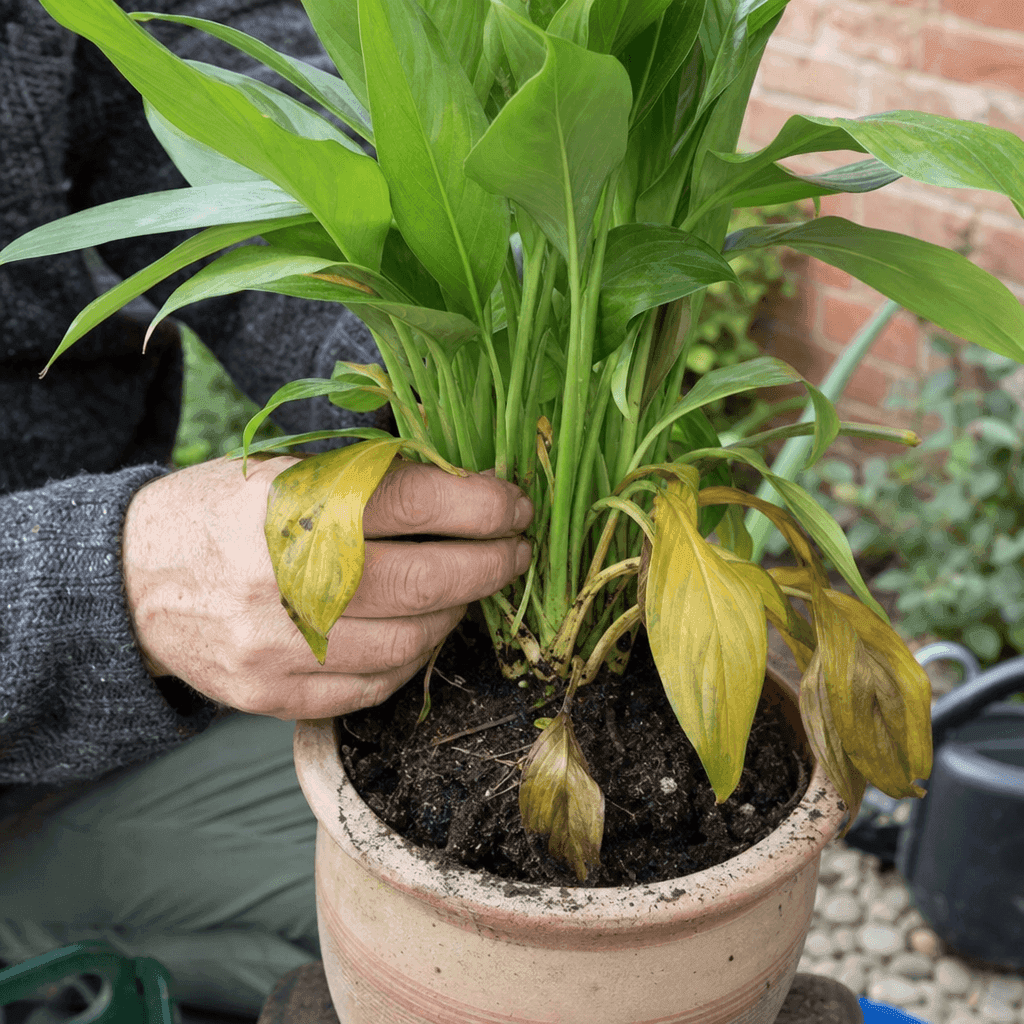
| Houseplant wilting with wet or damp compost; yellowing lower leaves | Overwatering — triggering root rot in container plants | High | Compost still wet 7+ days after watering; sour smell; roots dark when checked | Stop watering, check drainage, then assess roots by removing the plant from its pot | High |
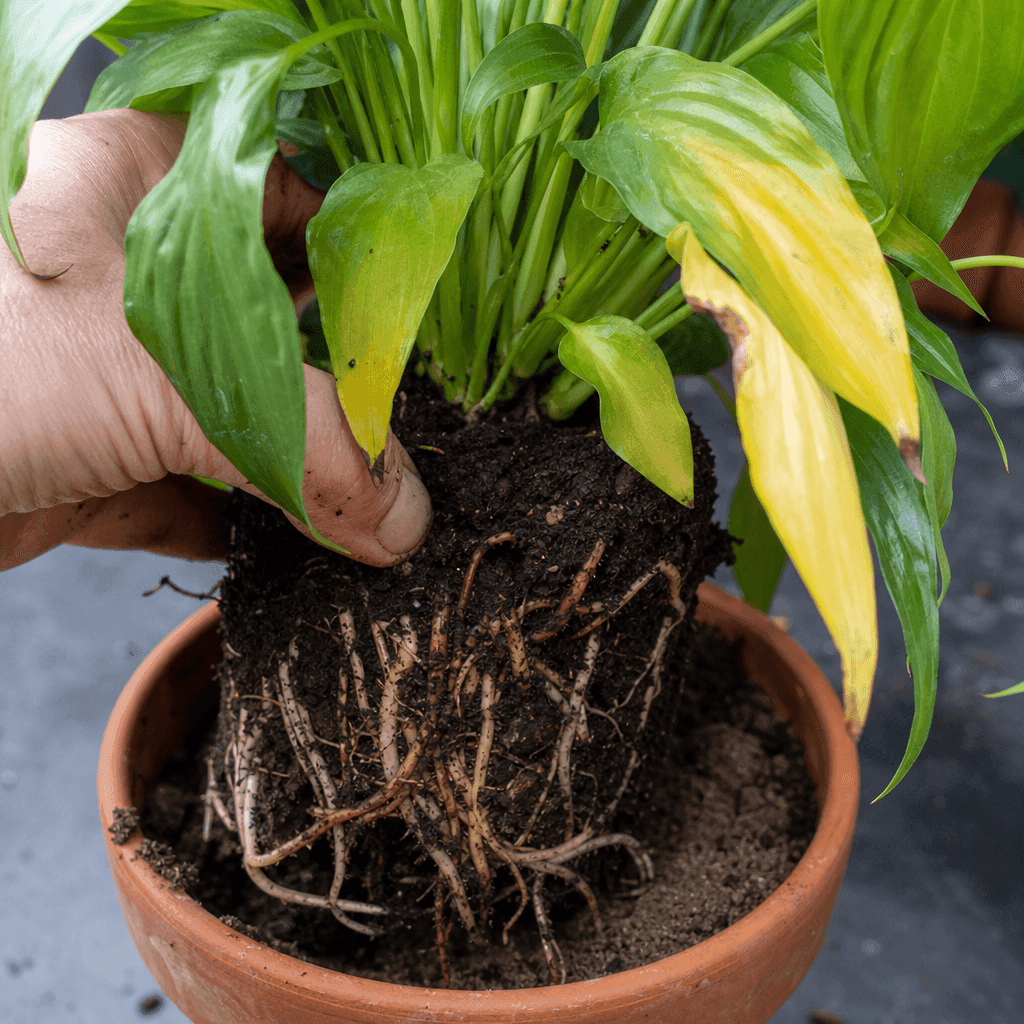
| Roots are brown, black or mushy; compost smells sour; plant declining despite care | Active fungal root rot (Pythium, Fusarium or Rhizoctonia) | High | Slide plant from pot: roots dark, soft, slimy or falling apart — not white and firm | Remove plant, trim all dead roots to healthy tissue, repot in fresh draining compost | High |
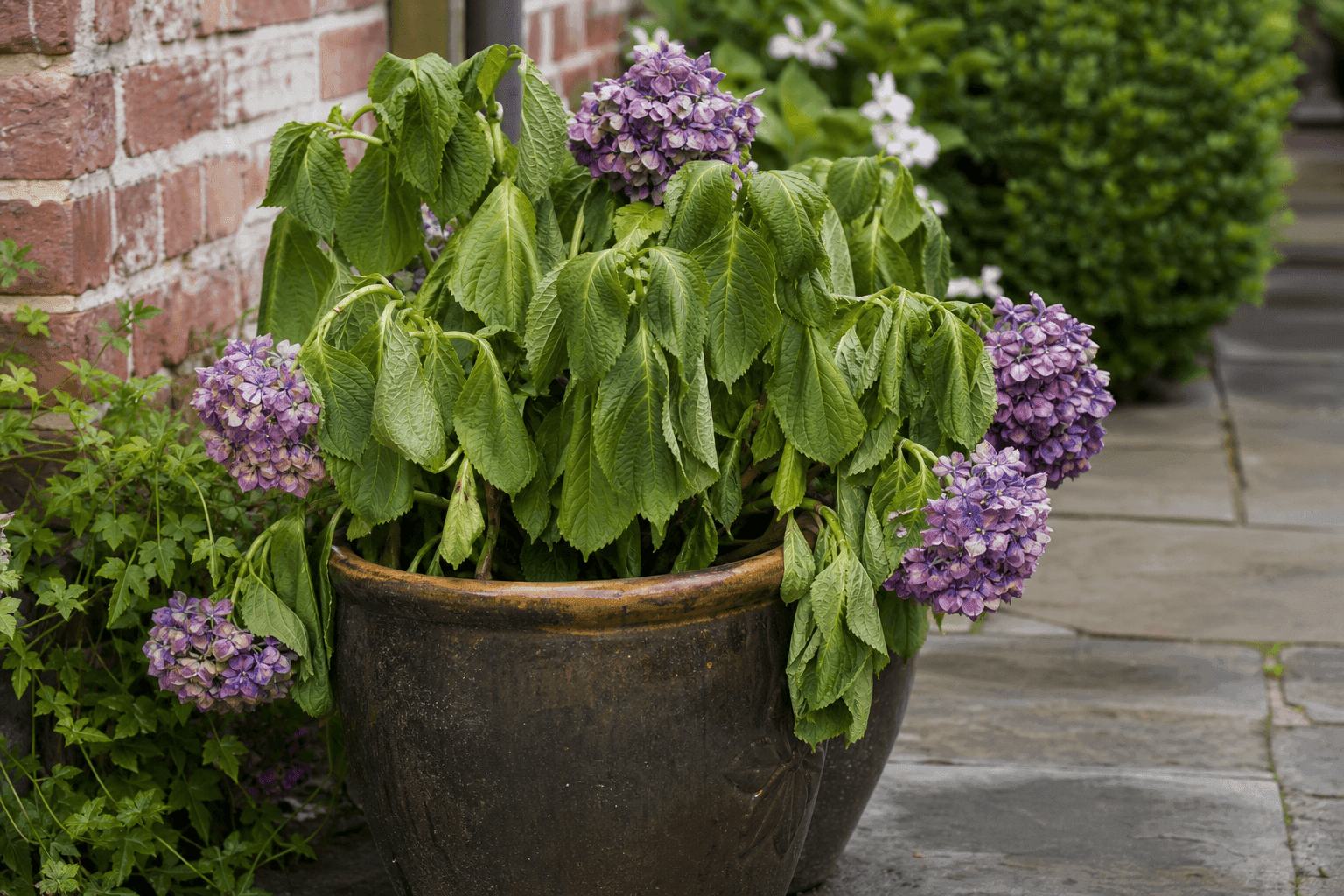
| Garden shrub or tree declining with dark discoloured bark at soil line; leaves yellowing and wilting | Phytophthora root rot in garden plants | Medium | Scrape bark at soil line — dark brown staining beneath; wet or heavy clay soil; RHS host plant list | Improve drainage urgently; remove and destroy affected plants; do not replant susceptible species | High |
| Compost or soil stays wet for many days after watering or rain | Drainage failure enabling root rot conditions | High | Pot has blocked or no drainage holes; clay soil; low-lying garden area; cache pot with no drainage | Repot into a draining container or improve garden bed drainage before replanting | Medium |
| Soft, brown or black tissue at the point where the stem meets the soil | Crown rot — rot has spread from roots into the stem base | Medium | Press the stem at the soil line — if it feels mushy or hollow, crown rot has set in | Cut away all soft tissue with a sterilised knife; check if any firm healthy stem remains for propagation | High |
| Garden plants decline or die after a wet UK winter; no obvious pest or disease | Winter waterlogging — oxygen depletion in the root zone | Medium | Water sits on the soil for days after rain; roots are pale brown rather than bright white when dug up | Improve drainage with fork aeration; raise beds; replace plants with waterlogging-tolerant species | Medium |
The causes, in detail
Overwatering — the trigger for most houseplant root rot
Most likelyThe majority of root rot in UK houseplants is triggered by watering too frequently, too heavily, or without checking whether the compost has dried sufficiently between sessions. Dense, peat-heavy compost and pots without drainage holes compound the problem. BBC Gardeners' World Magazine confirms that root rot in houseplants is caused by overwatering or poorly draining soil. The fungal pathogens involved — mainly Pythium and Fusarium — are present in most commercial composts but remain dormant unless conditions are waterlogged.
- The compost still feels wet or damp one week or more after the last watering.
- The plant wilts or yellows despite wet compost — wilting in wet soil is not drought.
- A sour or musty smell rises from the pot or compost.
- The pot is consistently heavy.
- Stop watering immediately and allow the compost to partially dry.
- Check and clear drainage holes — raise the pot on feet if it has been sitting in a saucer.
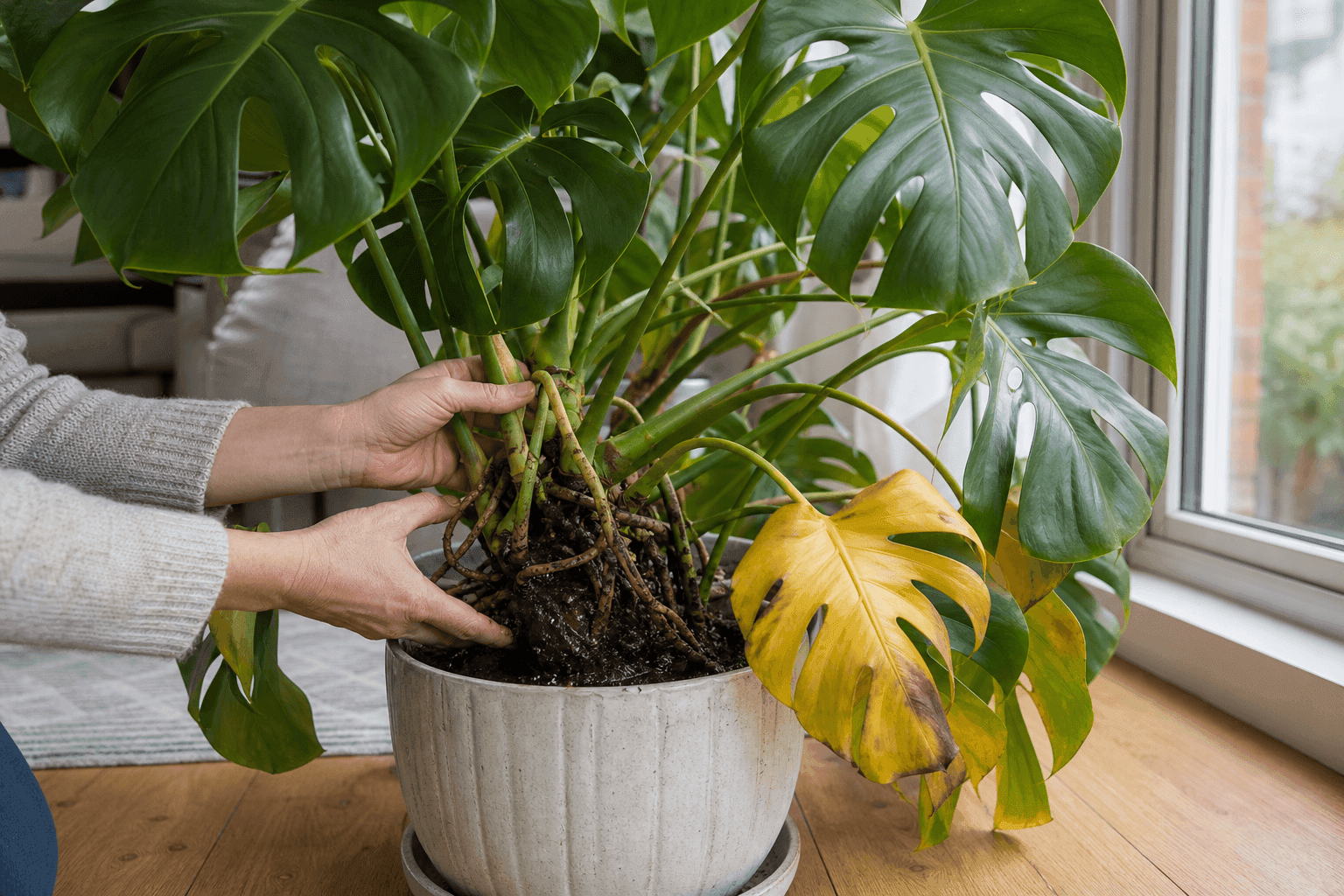
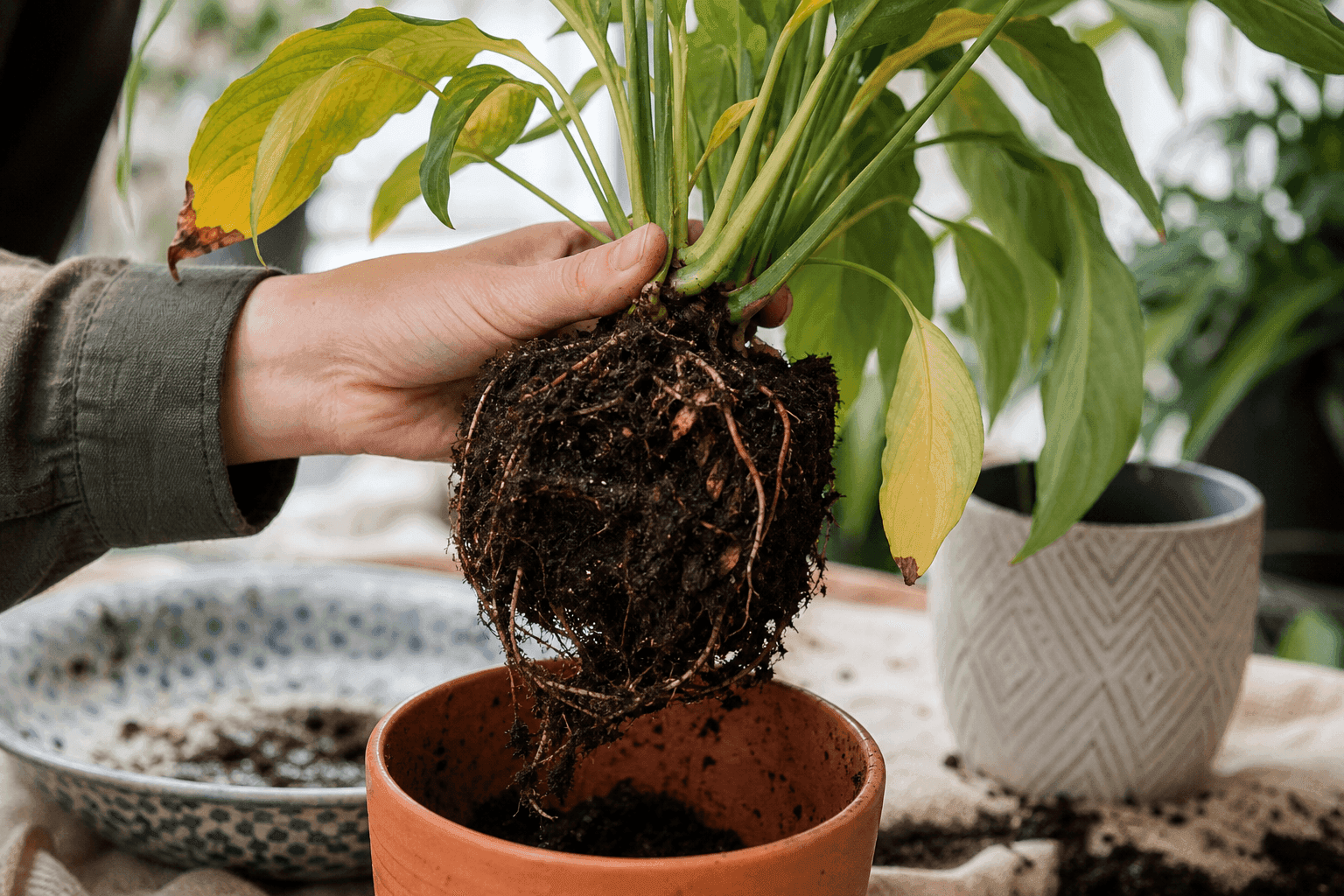
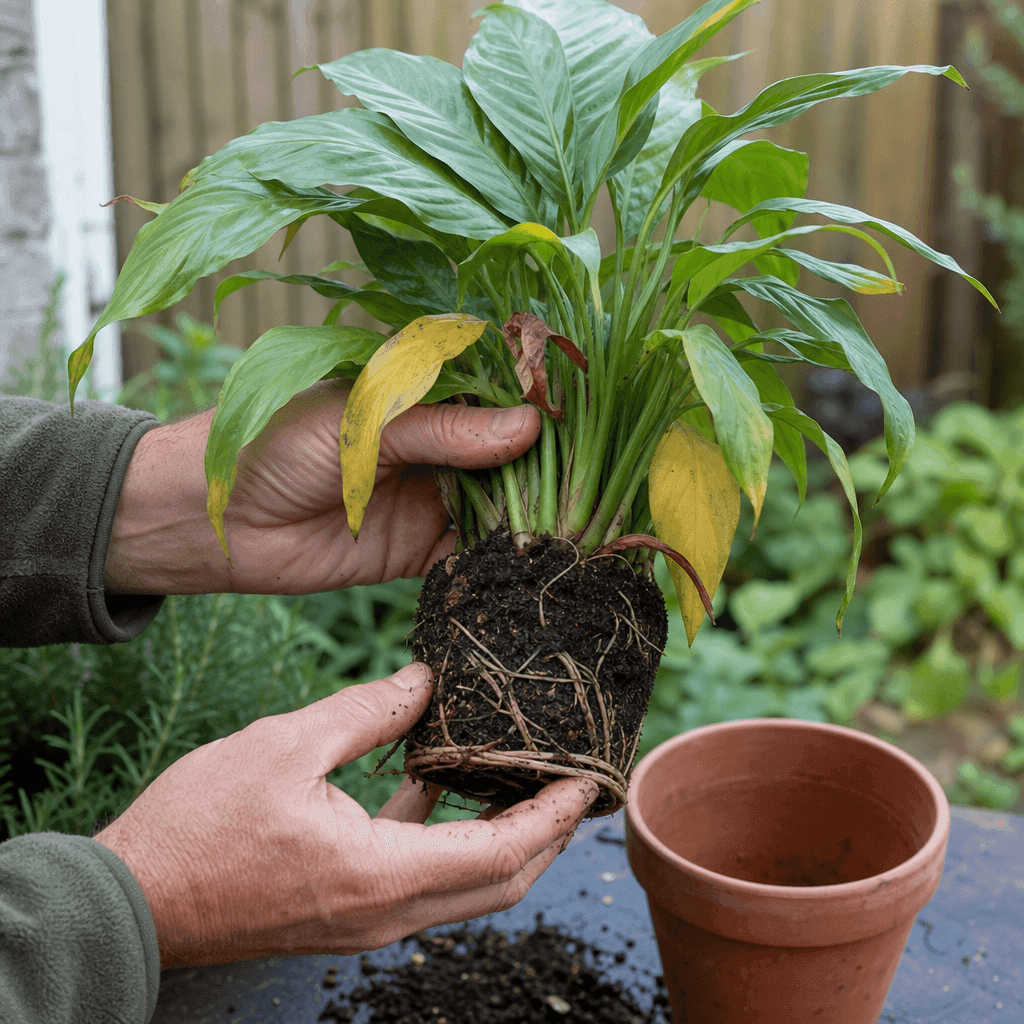
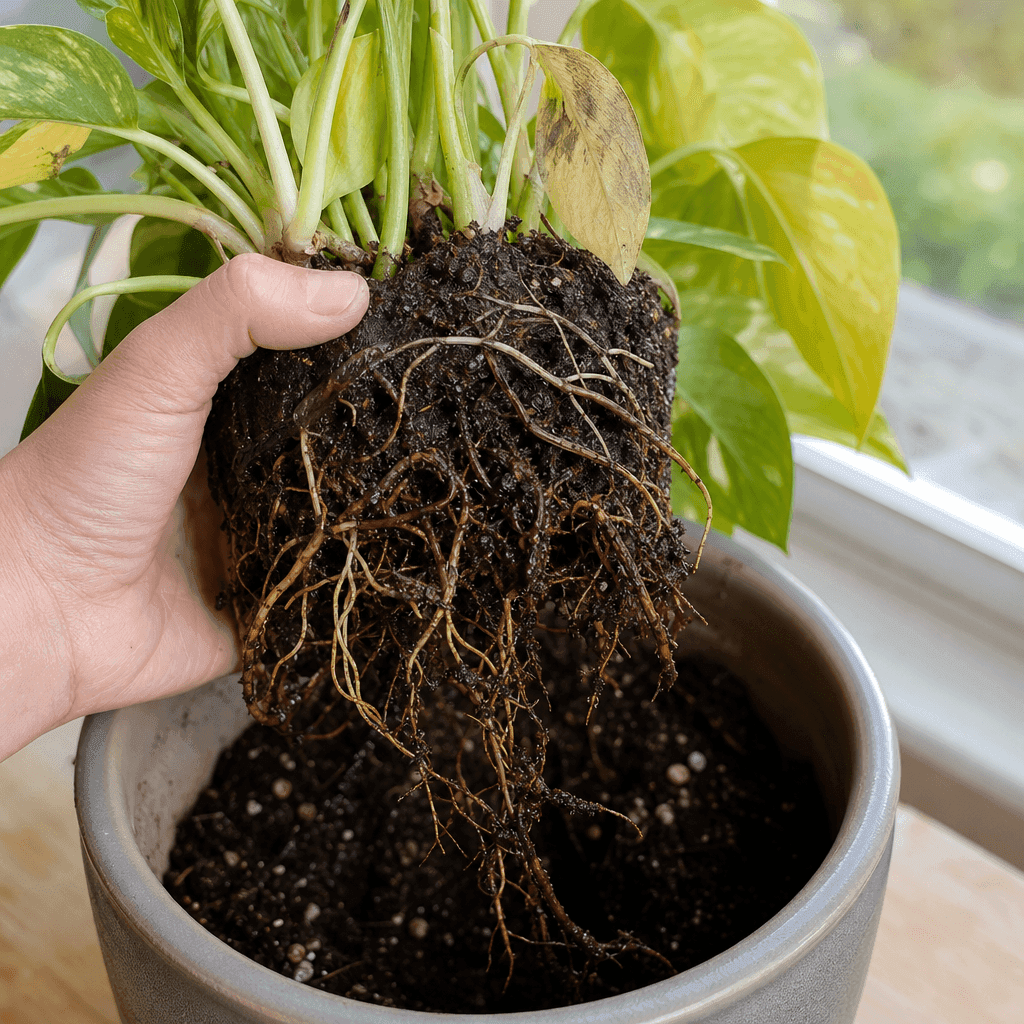
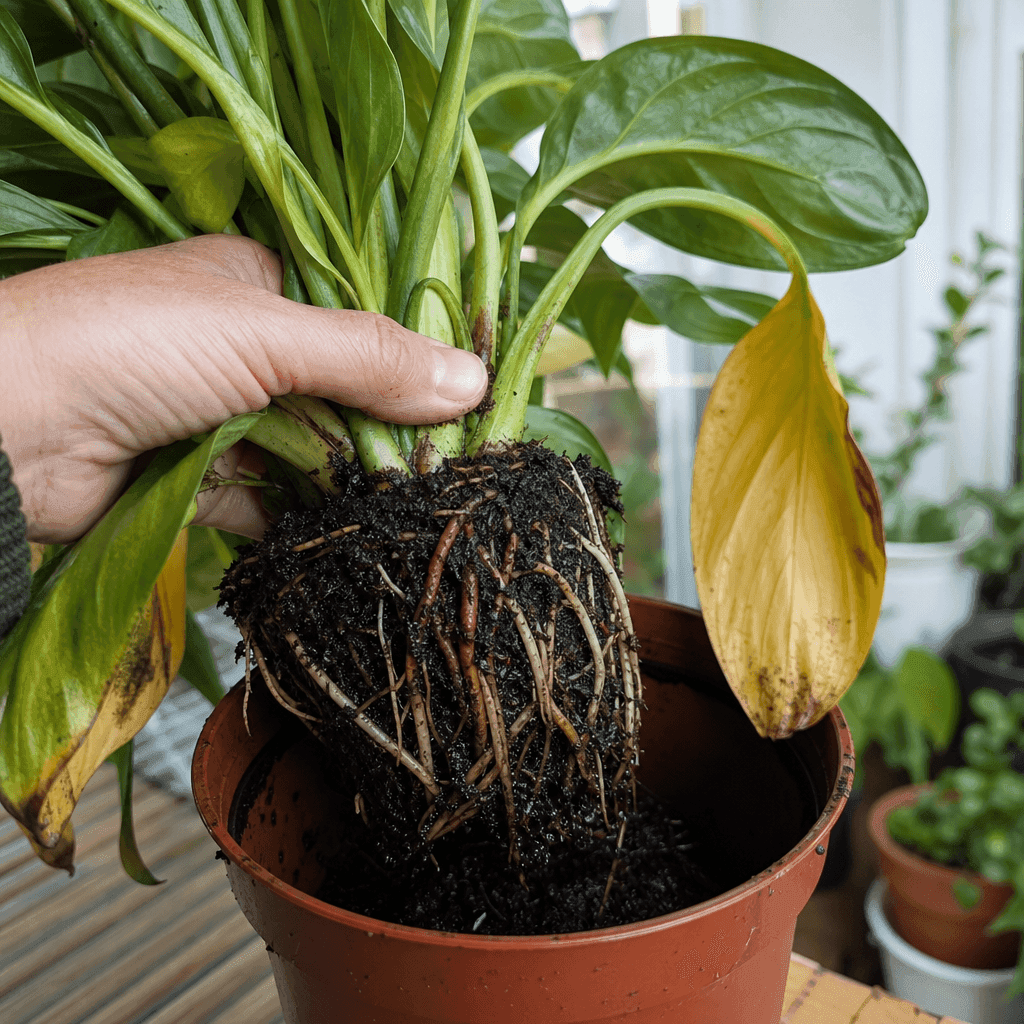
- After a few days, slide the plant from its pot and inspect roots — white and firm is healthy; brown, black or slimy is rot.
- If rot is found, treat as per the fungal root rot cause below.
- Going forward, always use the finger test — water only when the top 5 cm of compost is dry.
Stop it coming back:Use a moisture meter or develop a finger-test habit. Reduce watering frequency significantly in winter when most houseplants slow down or stop growing. Never leave a pot sitting in a full saucer.
water on a fixed weekly schedule throughout the year — most houseplants need significantly less water in winter, and this is when root rot most commonly develops.
Fungal root rot — Pythium, Fusarium, Rhizoctonia
Most likelyOnce waterlogging has occurred, fungal pathogens destroy root tissue rapidly. Healthy roots are white or pale cream and firm. Rotting roots are black, dark brown, soft, slimy and may disintegrate when handled. UK Houseplants and BBC Gardeners' World both describe the same treatment: remove from the pot, rinse roots, trim all dead tissue back to healthy white roots with sterilised tools, repot in fresh compost, and prune back the foliage by one-third to reduce the demand on the diminished root system.
- Slide the plant from its pot — roots that are dark brown or black and soft or slimy are rotting.
- The compost smells sour, musty or of rotting vegetation.
- Trim one root with clean scissors — healthy tissue inside is white or cream; dead tissue is brown throughout.
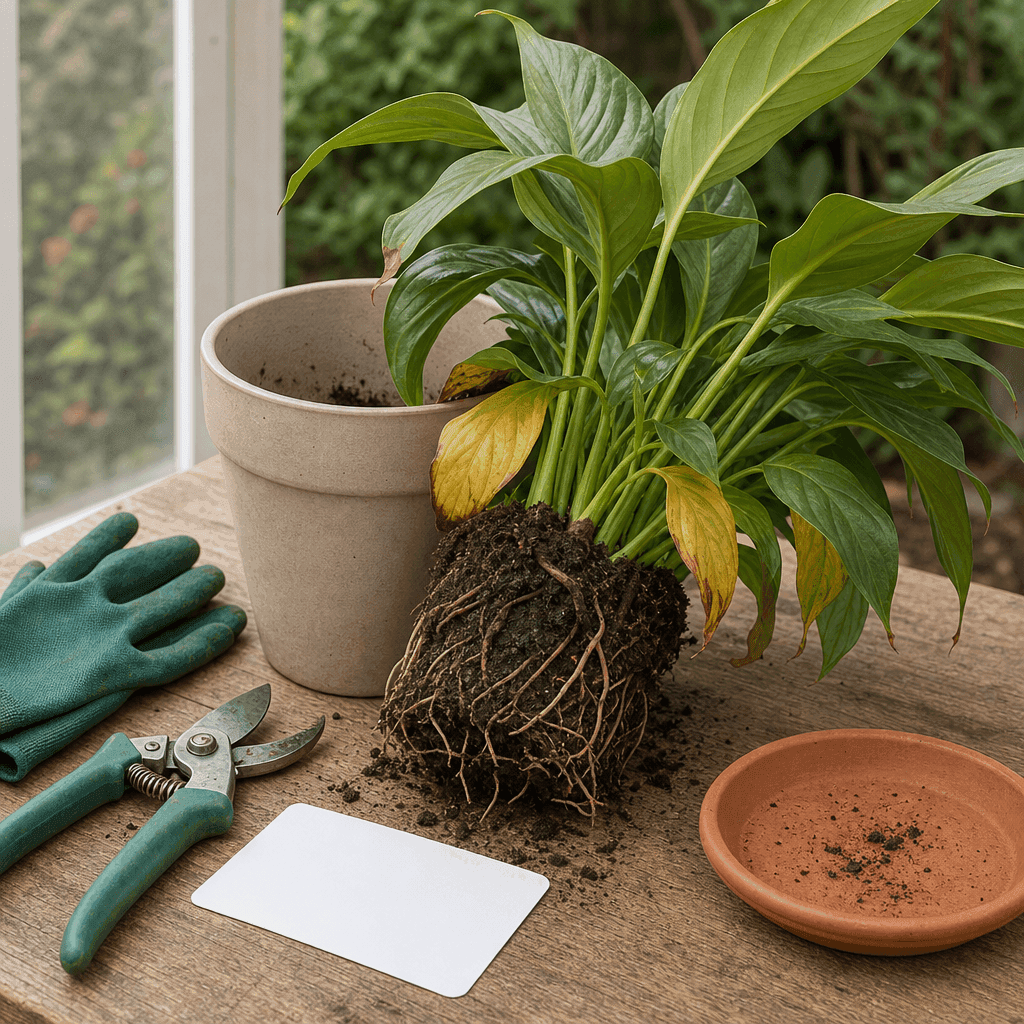
- Remove the plant from its pot and gently shake off as much old compost as possible.
- Rinse the remaining roots under lukewarm water to expose all tissue.
- Using scissors or pruning shears sterilised in a solution of one part bleach to nine parts water, cut all dead or mushy roots back to healthy white tissue.
- Allow trimmed roots to air-dry for 20–30 minutes.
- Repot into fresh, well-draining compost in a clean pot (sterilise the old pot or use a new one) — do not reuse old compost.
- Trim foliage by one-third to reduce water demand on the recovering root system.
- Do not water for 3–5 days; then water sparingly while roots re-establish.
Stop it coming back:Act quickly — the sooner root rot is treated, the higher the survival chance. A plant with only a few surviving healthy roots can recover if repotted promptly and kept in the right conditions.
repot into the same old compost — it contains the fungal pathogens that caused the rot and will re-infect healthy roots immediately.
Phytophthora root rot in garden plants
PossiblePhytophthora is a genus of fungus-like organisms (Oomycetes) responsible for some of the most destructive root rots in UK gardens and landscapes. The RHS identifies it as second only to honey fungus in severity for trees and shrubs. It spreads through waterlogged soil and infected plant material. Rhododendrons, viburnums, camellias, heathers, lawson cypress, larch and many other plants are susceptible. The RHS notes no chemical treatment is available to home gardeners for Phytophthora. Improving drainage and replacing with resistant species are the main management options.
- Scrape the bark at the base of the stem near the soil line — Phytophthora causes dark brown staining beneath the bark, visible as a distinct discolouration.
- The soil is wet, clay-heavy or in a low spot where water collects.
- The plant is on the RHS Phytophthora susceptible host list.
- Decline is gradual over weeks or months rather than sudden.
- Remove and destroy affected plants — do not compost.
- Replace the soil in the root-run area with fresh topsoil if replanting.
- Improve drainage: use a garden fork pushed to full depth to create aeration holes; fill with horticultural sand to keep them open.
- Redirect surface water run-off away from affected beds — check for leaking drains, overfull water butts or soak-away issues.
- Replant with resistant or less susceptible species — the RHS lists host susceptibility as a guide.
Stop it coming back:Choose planting sites with good natural drainage. Avoid repeatedly planting the same susceptible species in an area where Phytophthora has occurred, as spores persist in soil for years.
assume that improving drainage alone will eliminate Phytophthora — the pathogen can survive in soil without a host for many years. Replace susceptible plants with more resistant species.
Poor drainage creating root rot conditions
Most likelyRoot rot cannot develop without waterlogging — and waterlogging is almost always a drainage problem. For houseplants, the usual culprits are pots without drainage holes, blocked drainage holes, dense water-retentive compost used without perlite, and cache pots or saucers that hold standing water. Adding a layer of gravel at the base of a pot is a common folk remedy that actually worsens drainage by creating a perched water table. The Radiant Plants blog confirms that good drainage is the single most effective root rot prevention measure.
- Water does not drain through the pot within a few minutes of watering.
- The pot has no drainage holes, or the holes are blocked by roots or compacted compost.
- The compost is dense and heavy — standard multipurpose with no added perlite or bark.
- In the garden, water sits on the soil surface for many hours after heavy rain.
- For houseplants, repot into a container with at least two drainage holes.
- Use a free-draining compost mix: two parts peat-free multipurpose, one part perlite, plus orchid bark for larger-rooted plants.
- Never leave pots sitting in saucers of standing water — empty saucers 30 minutes after watering.
- In the garden, fork aeration holes to break up compaction; incorporate horticultural grit into clay soil.
- Raise low-lying beds with fresh topsoil and compost to improve run-off.
add a layer of gravel or stones to the bottom of a pot to improve drainage — this does not improve drainage and actually raises the level at which water pools within the pot.
Crown rot — when root rot reaches the stem base
PossibleCrown rot develops when the fungal infection spreads from the root system up into the stem base, destroying the growing crown — the source of all new growth. Soft, discoloured or mushy tissue at or above the soil line is the key sign. Crown rot is more serious than root rot alone: if the crown is fully destroyed, the plant cannot regenerate from remaining roots. However, if even a small section of firm, undamaged stem above the rot survives, propagation from a cutting may save the plant.
- Press the stem at and just above the soil line — healthy tissue is firm; crown rot is soft, hollow or mushy.
- Discolouration extends above the soil level into the visible stem.
- The plant collapses or leans despite being staked.
- Remove the plant from its pot and inspect the stem base fully.
- Using a sterilised sharp knife, cut away all soft and discoloured tissue until you reach firm, healthy green or white tissue.
- If a section of healthy stem 10 cm or more in length remains above the damaged area, take it as a cutting.
- Root the cutting in damp perlite or water, keeping conditions warm and humid.
- If the crown is fully destroyed, the plant cannot be saved from the stem — take cuttings from any healthy side shoots if present.
Stop it coming back:Prevent crown rot by not burying the crown of sensitive plants below the soil surface when planting or repotting. Keep mulch away from the stem base.
bury the plant's crown or stem base in compost or mulch when repotting or planting out — this traps moisture against the most vulnerable part of the plant.
Winter waterlogging in UK garden soil
PossibleUK winters — particularly in the south and west where rainfall is high — can cause extended waterlogging in heavy clay or poorly drained soils. This deprives roots of oxygen for weeks or months, causing a slow root death that may only become apparent in spring when the plant fails to produce new growth or begins to decline. The RHS notes that Phytophthora and other root rot organisms are most active precisely in these cool, wet, poorly aerated conditions that are common in UK winters.
- The garden soil holds water visibly for many days after heavy rain.
- The plant is in a low-lying area, clay soil or against a wall or fence that concentrates run-off.
- Decline appeared or worsened after a wet autumn or winter.
- Digging carefully near the plant reveals pale brown roots that lack the white freshness of healthy root tissue.
- Fork aeration holes at 15–20 cm intervals around the root zone to improve oxygen movement; brush horticultural sand into the holes.
- Redirect surface run-off away from the root zone — check for hard surfaces, gutters or drainage outlets channelling water towards the plant.
- For severe cases, consider installing a French drain or raising the bed.
- Remove severely affected plants and replace with waterlogging-tolerant species suited to your soil.
immediately replant a susceptible species in a bed where waterlogging has killed a previous plant — address the drainage problem first or plant species naturally tolerant of wet soil.
Still not sure?
Work down these branches — the first one that matches is your answer.
What not to do
- Water more when the plant wilts — always check whether the compost is wet before watering.
- Repot into the same old compost after trimming roots — the old compost contains the root rot pathogens.
- Add gravel to the base of a pot thinking it improves drainage — it creates a perched water table and worsens the problem.
- Assume a garden plant with Phytophthora can be treated with fungicide — no chemical treatment is available to UK home gardeners for Phytophthora.
- Leave a rotting plant in its original pot 'to recover' without removing it and inspecting the roots.
Common questions
How do I know if my plant has root rot?
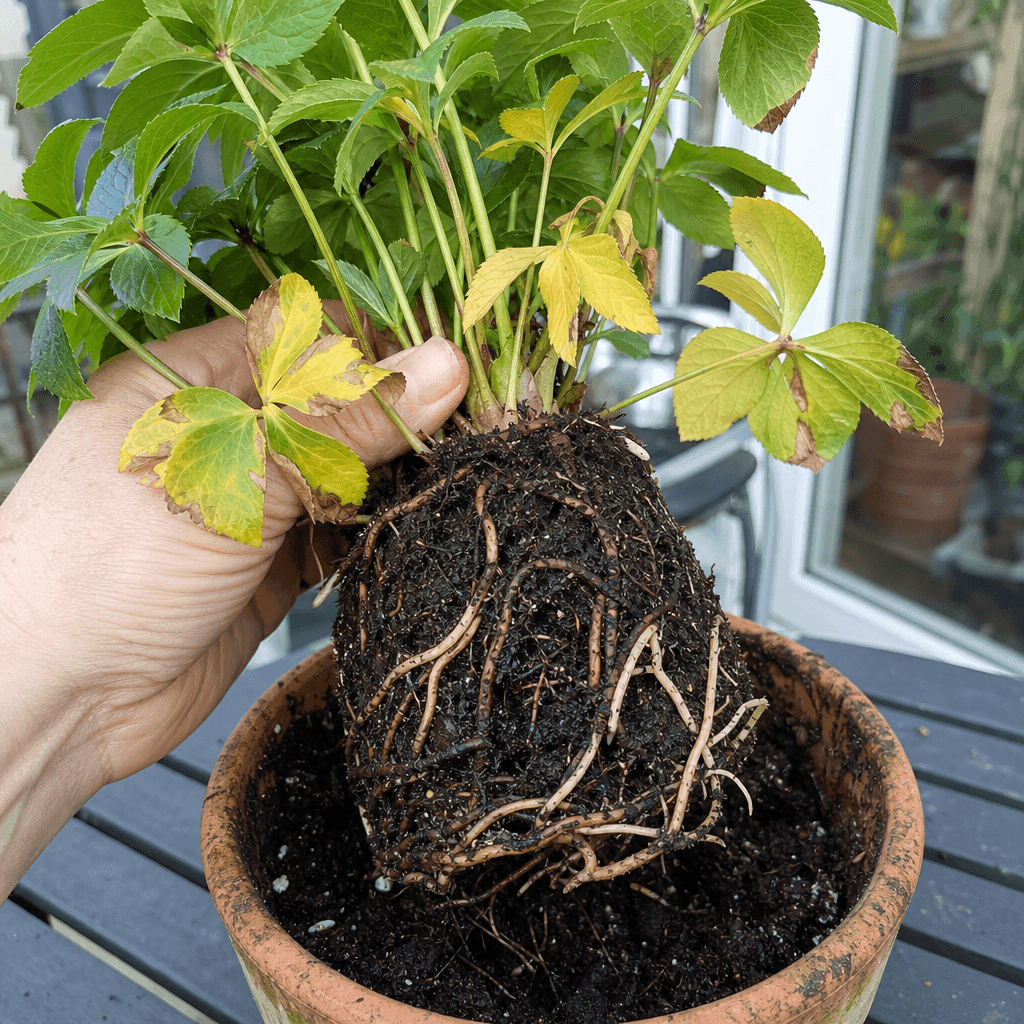
The most reliable confirmation is to remove the plant from its pot and inspect the roots. Healthy roots are white or pale cream and firm. Roots affected by rot are brown, black, soft or slimy and may disintegrate. A sour or musty smell from the compost and wilting despite wet soil are strong indicators before you even remove the plant.
Can a plant recover from root rot?
Yes, if some healthy root tissue remains. Remove the plant from its pot, trim all dead roots to clean white tissue with sterilised scissors, repot in fresh free-draining compost, and reduce the foliage by about one-third to match the diminished root system. Plants treated quickly have a good recovery rate — our guide to reviving a declining peace lily walks through the same recovery steps for a common houseplant.
What compost should I use to prevent root rot?
For most houseplants, a mix of two parts peat-free multipurpose compost and one part perlite gives good drainage while retaining enough moisture. Add a handful of orchid bark for plants like monstera, which is especially prone to root rot, and orchids that suffer the same waterlogging damage — both prefer very open, airy roots. Always use a pot with drainage holes.
Is there a treatment for Phytophthora root rot in the garden?
No chemical treatment is available to home gardeners in the UK for Phytophthora. Management focuses on removing affected plants, replacing soil in the root-run area, improving drainage and replanting with resistant species. The RHS has a Phytophthora host list to guide species selection.
Does adding gravel to the base of a pot help prevent root rot?
No — despite being a common piece of advice, gravel at the base of a pot actually worsens drainage by creating a perched water table that keeps water higher in the pot. The only effective drainage measures are using a pot with drainage holes and free-draining compost.
How do I prevent root rot in garden plants over winter?
Improve soil drainage before planting by incorporating horticultural grit into clay soils or raising beds. Fork aeration holes around existing plants in autumn. Redirect surface run-off away from vulnerable plants. Choose species appropriate for your soil drainage — not all plants tolerate UK winter waterlogging.
Can I use the same pot after treating root rot?
Yes, but sterilise it thoroughly first. Wash the pot in hot soapy water, rinse, then soak or wipe with a diluted bleach solution (1 part bleach to 9 parts water). This kills residual fungal spores before you reuse it with fresh compost.