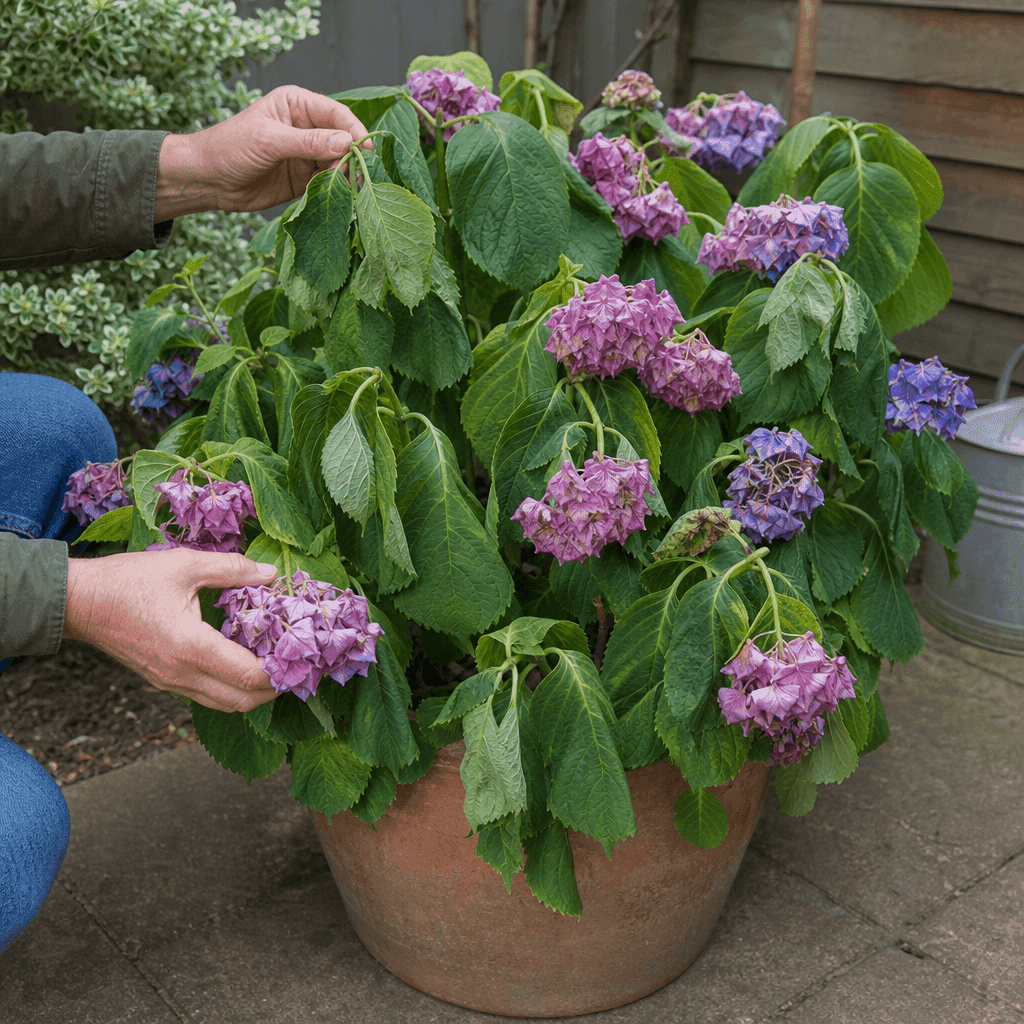
Quick diagnosis
Match the row to what you’re seeing, then jump to the fix.
| What you see | Likely cause | Confidence | How to confirm | What to do now | Urgency |
|---|---|---|---|---|---|
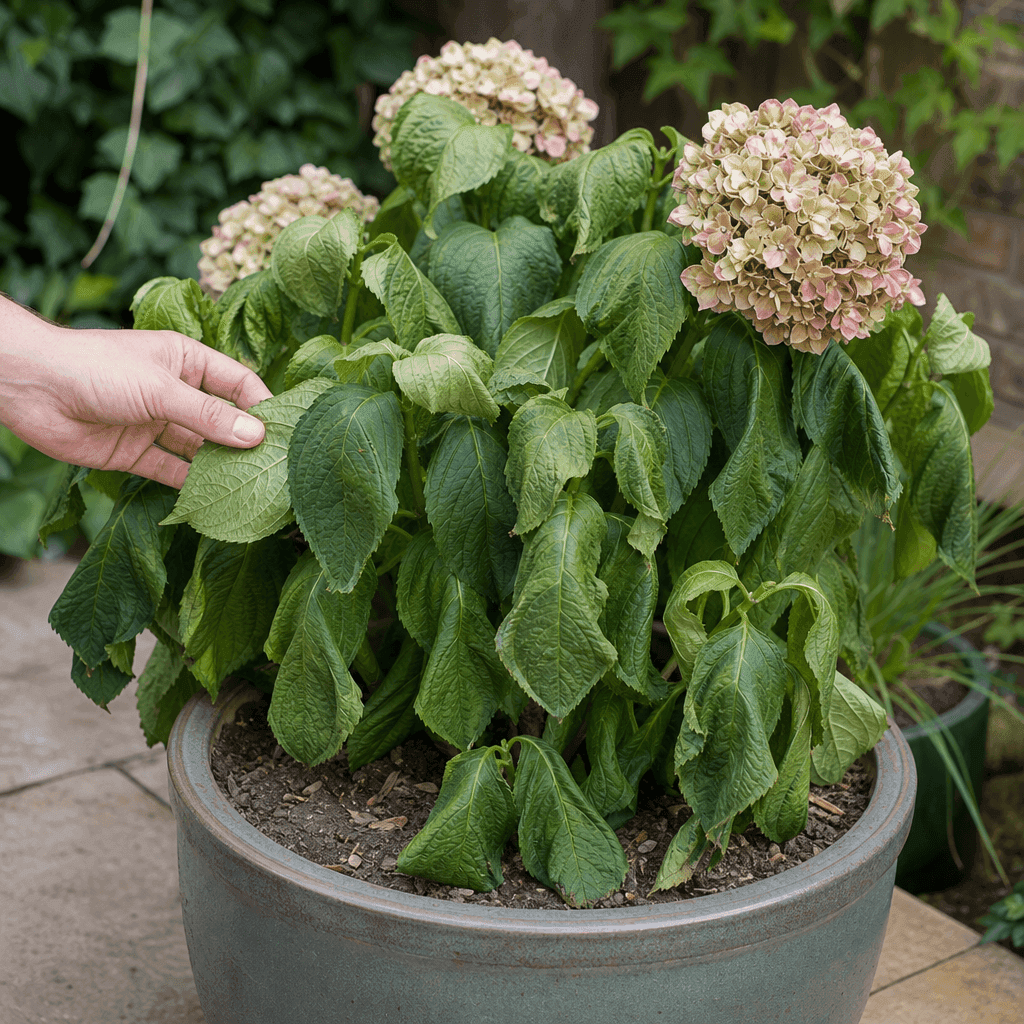
| Leaves droop at lunchtime but recover by evening | Temporary heat or sun wilt | High | Check again after dusk or early morning; the soil is still slightly moist. | Leave it alone, water only if the soil is dry, add mulch and consider afternoon shade. | Low |
| Whole plant wilts, soil is dry 5–8cm down, pot feels light | Drought stress / underwatering | High | Finger or trowel test, or lift the pot; dry compost pulls away from the pot edge. | Water slowly until the full root zone is wet; repeat next day if needed; mulch. | High |
| Newly planted hydrangea droops even after watering | Transplant shock or a dry rootball | High | Outer soil is damp but the original pot-shaped rootball is dry or hard. | Soak the rootball deeply, keep evenly moist for several weeks, shade from afternoon sun. | Medium |
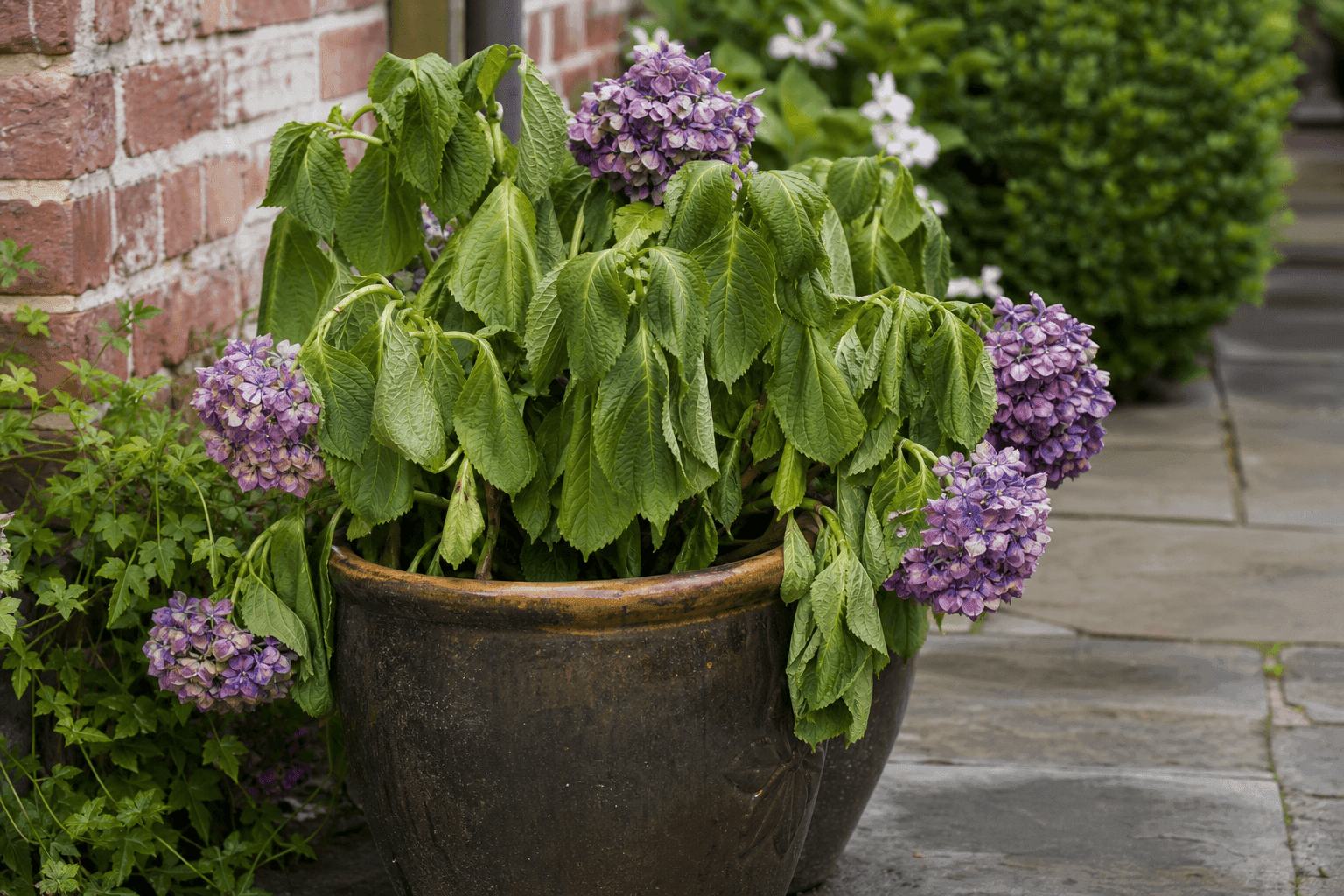
| Potted hydrangea wilts daily, recovers after watering, then wilts again | Pot too small / compost drying fast | High | Roots circle the pot; the compost dries out within 24 hours. | Move to a larger container with drainage and a moisture-retentive peat-free compost. | Medium |
| Wilted leaves with wet, cold or sour-smelling soil | Waterlogging / root stress | Medium | Soil stays wet for days; pot holes are blocked; roots look brown or mushy. | Stop watering, clear drainage, raise pots on feet, repot if roots are rotting. | High |
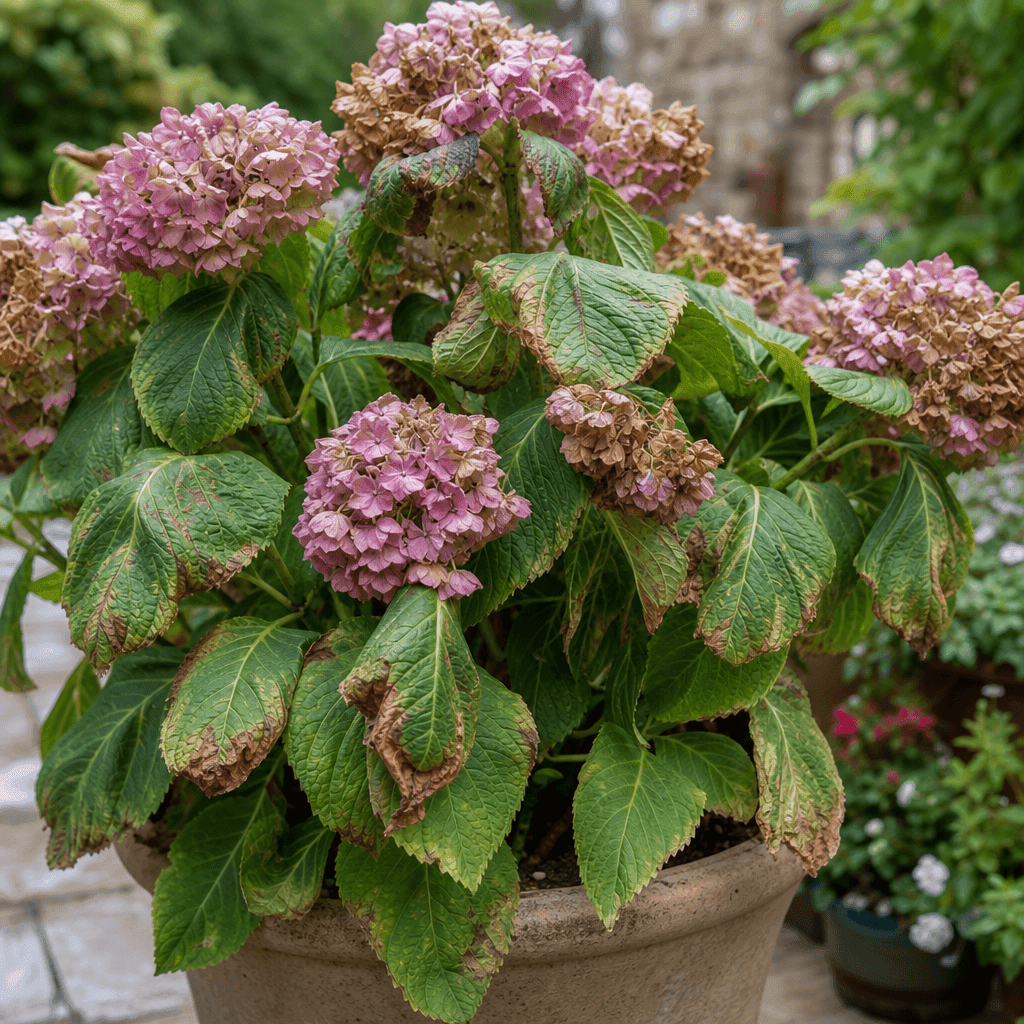
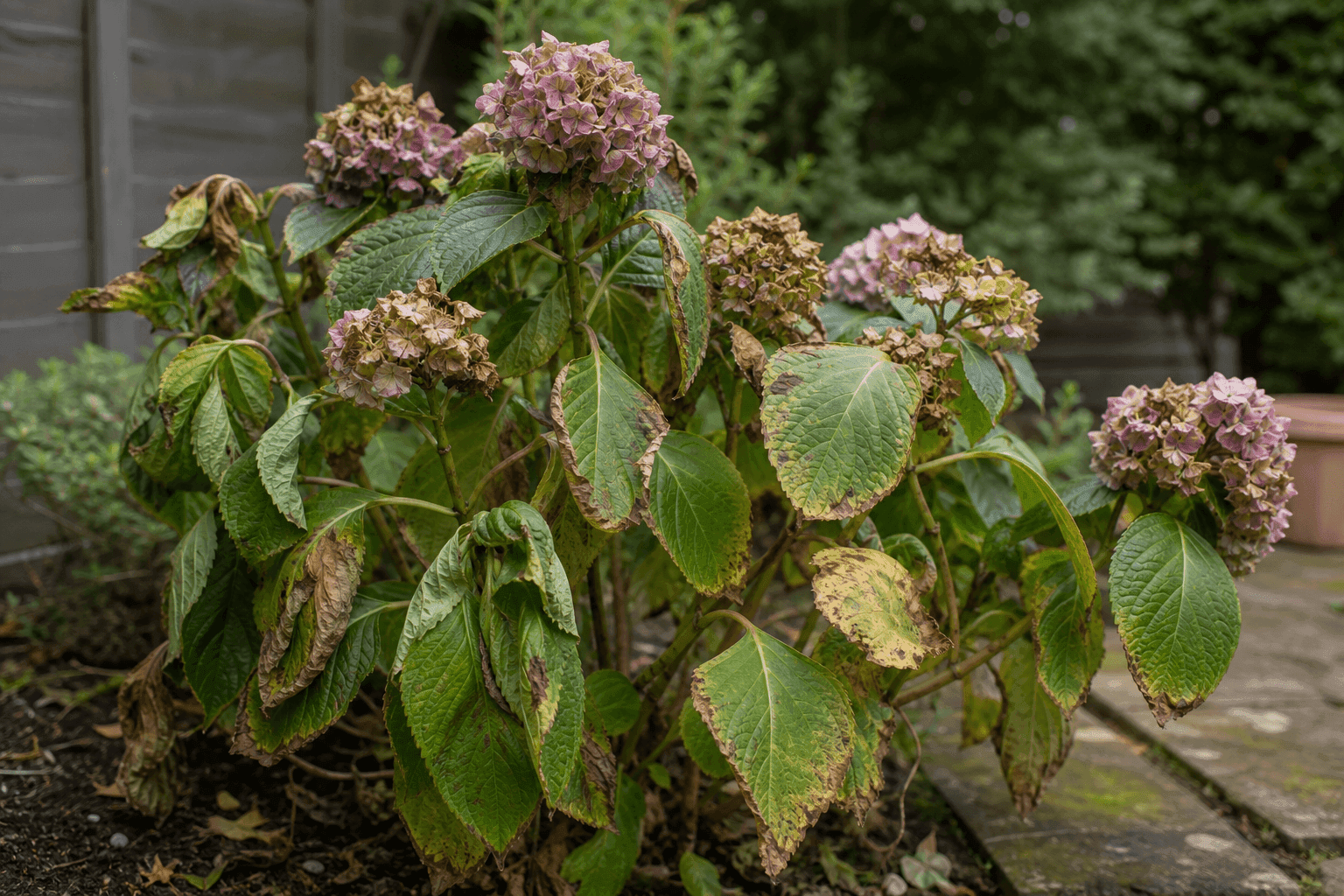
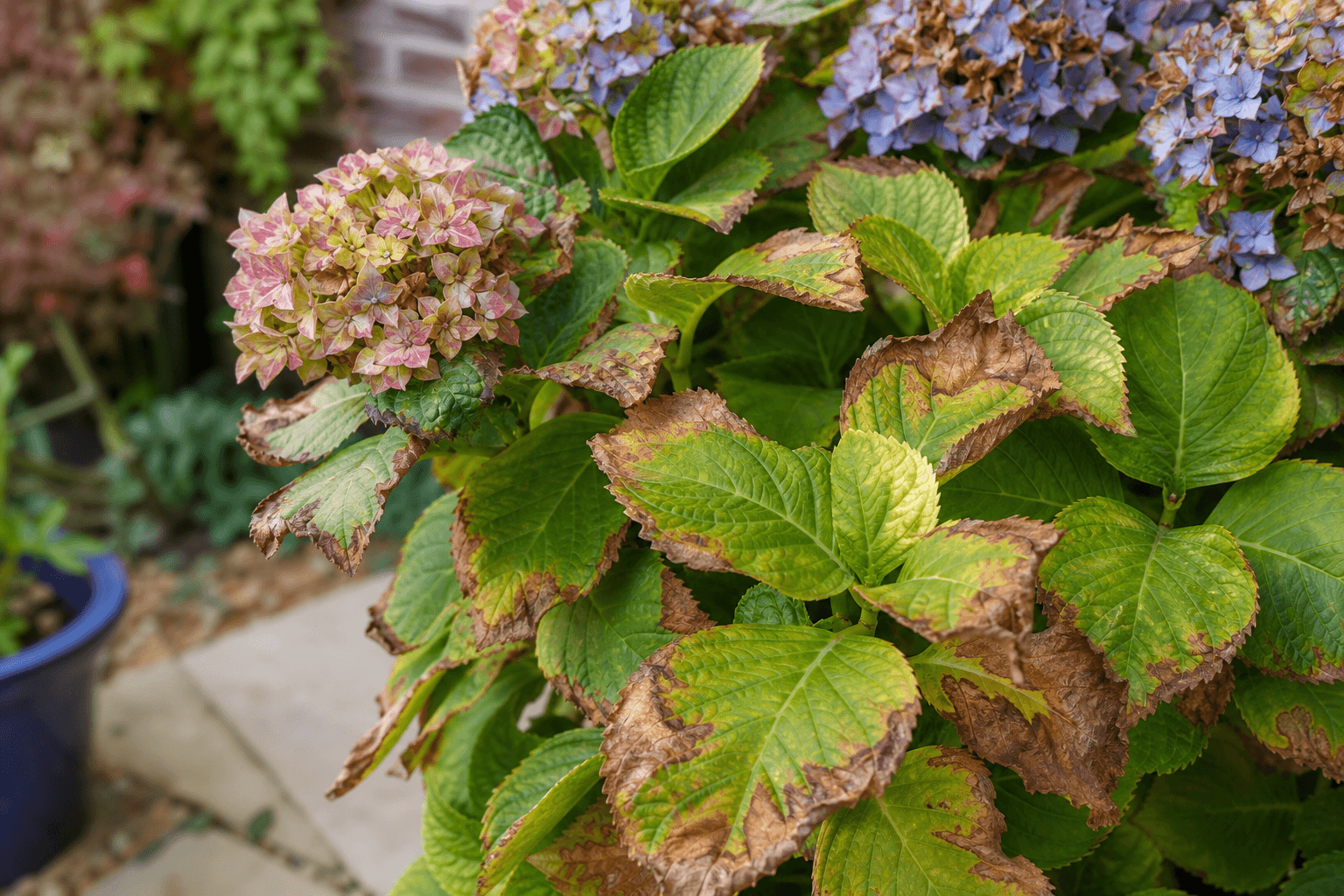
| Leaves droop and the edges turn brown or crispy after hot weather | Heat scorch and water loss | High | Damage is worst on the sunny or windy side; burnt tissue does not green up. | Deep-water, mulch, give temporary shade; do not hard prune or feed. | Medium |
| New spring shoots blacken or wilt after a cold night | Frost damage | High | There was a recent frost; damage is mainly on soft new growth. | Wait, then prune to healthy buds once the frost risk has passed. | Medium |
| Stems flop under huge flowerheads but the leaves look healthy | Heavy blooms / soft growth from overfeeding | Low | Bending is localised to flowered stems; the leaves are not limp. | Stake, reduce wind exposure, and avoid high-nitrogen feeding. | Low |
| Yellowing, webbing, sticky residue, distorted leaves or scale on stems | Pest stress, or disease secondary to stress | Medium | Inspect the undersides of leaves and along stems for scale, aphids or mites. | Improve plant health, remove badly affected leaves, use non-chemical controls first. | Medium |
| Leaves wilt and turn brown while the soil is neither dry nor soggy | Root damage, compaction or a planting issue | Medium | Recently dug nearby; planted too deep; compacted soil; rootball unstable. | Loosen surrounding soil gently, correct the depth, water to settle, mulch. | Medium |
The causes, in detail
Drought stress and underwatering
Most likelyHydrangeas thrive in evenly moist soil, and in the UK they often struggle during dry spring winds, hot spells from June to August, and in dry shade under trees or beside walls. Drought wilt is most likely when leaves are limp, the soil feels dry below the surface, the pot is light, or the compost has shrunk away from the container edge. The name hydrangea even means 'water vessel'.
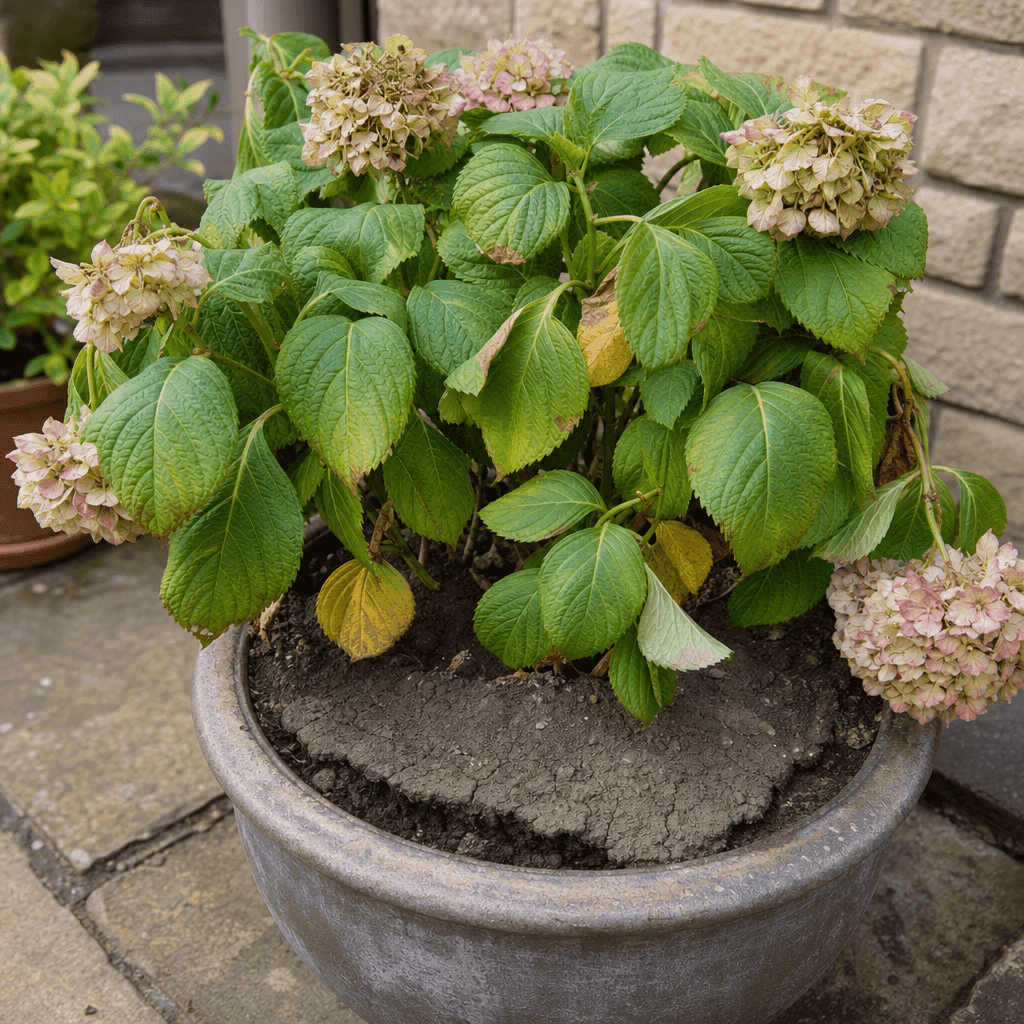
- Leaves are limp and the soil feels dry below the surface.
- A pot feels noticeably light.
- The compost has shrunk away from the edge of the container.
- The plant perks up within hours of a proper soak.
- Water slowly at the base, not over the leaves — a quick splash only wets the surface.
- Soak the full root zone: in the ground let water trickle in; in pots water until it runs from the drainage holes, pause, then water again.
- Check again the next morning and repeat a deep soak if it is still limp and dry below the surface.
- Apply a 5cm mulch of garden compost, leaf mould, composted bark or well-rotted manure, kept clear of the stems.
- Keep newly planted hydrangeas evenly moist through their first growing season.
Stop it coming back:A thirsty hydrangea can lift within hours after a proper soak, but scorched leaf edges will not turn green again. Badly dried plants may need several days of steady moisture before they look stable.
feed a drought-stressed hydrangea to 'perk it up' — fertiliser does not replace water and pushes soft growth that wilts more easily.
A newly planted hydrangea wilting
Most likelyNewly planted hydrangeas often wilt because the roots have not yet grown into the surrounding soil. The deceptive pattern is damp soil around the planting hole but a dry, peat-free or coir-heavy nursery rootball inside it, so water runs around the rootball instead of soaking into it. RHS guidance is to water well before planting, set the pot compost level with the surrounding soil, water in, and keep the soil damp in the following weeks.
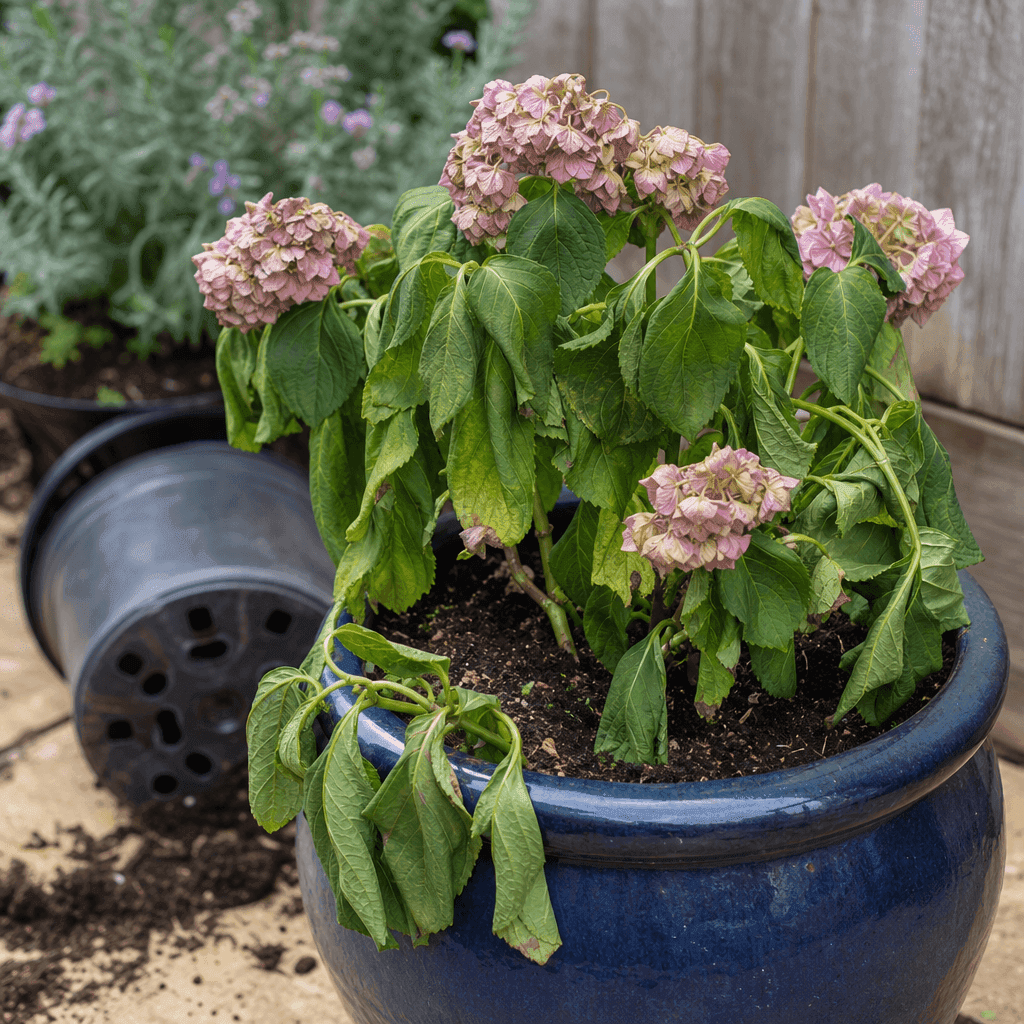
- The plant was recently planted, and wilts even after the surrounding soil is watered.
- The backfilled soil is damp but the original pot-shaped rootball is dry or hard.
- Water runs away across the surface rather than soaking into the rootball.
- Push a finger or narrow trowel into the original rootball, not just the backfilled soil.
- If the rootball is dry, water slowly and repeatedly over the planting area until it rehydrates.
- If water runs away, make a shallow watering basin around the plant for the first few weeks.
- Mulch after watering and give temporary shade from hot afternoon sun, especially for mophead and lacecap (Hydrangea macrophylla) types.
Stop it coming back:Mild transplant wilt may improve overnight after watering, but root establishment takes weeks; a spring- or summer-planted hydrangea may need careful watering for the rest of the season.
keep lifting and replanting it — only reset the plant if it is clearly too deep or sitting in waterlogged soil.
Potted hydrangea drying out
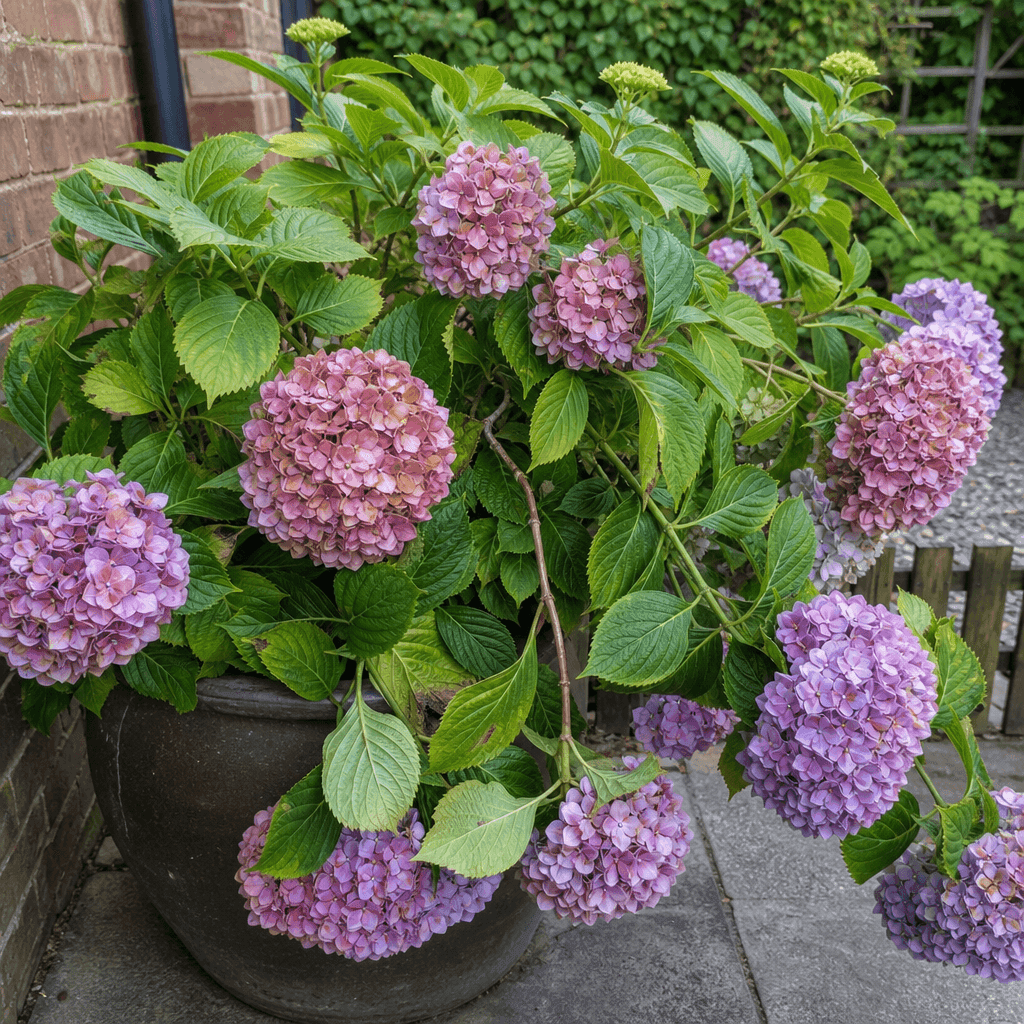
Most likelyPotted hydrangeas wilt faster than plants in the ground because their root space is limited and the compost heats and dries quickly. A hydrangea in a black plastic nursery pot on a patio can wilt even when nearby border plants look fine.
- The plant wilts daily, recovers after watering, then wilts again.
- Roots circle the inside of the pot or emerge from the drainage holes.
- The compost dries out within about 24 hours.
- Check the drainage holes first — they must be open.
- If the pot is small or packed with roots, repot into a larger container.
- Use a moisture-retentive but free-draining peat-free mix, such as two parts peat-free John Innes No.3 to one part peat-free multipurpose compost.
- Water deeply until excess drains away, and move the pot to morning sun with afternoon shade during hot spells.
- Raise containers on pot feet in winter to reduce waterlogging.
leave the pot standing permanently in a saucer of water — that simply swaps drought for waterlogging.
Hot afternoon sun and heat scorch
Most likelyHydrangeas can grow in sun if the soil stays reliably moist, but many UK gardens now get sharper summer heat, reflective patios, south- or west-facing fences and drying winds. Bigleaf hydrangeas are especially prone to drooping in hot sun. As Oregon State University Extension explains, in hot, windy weather water moves rapidly out of the leaves, and if the roots cannot replace it fast enough the tissue scorches and the leaf edges turn brown and crispy. If browning is the dominant symptom, our guide to hydrangea brown leaves separates scorch from drought and disease.
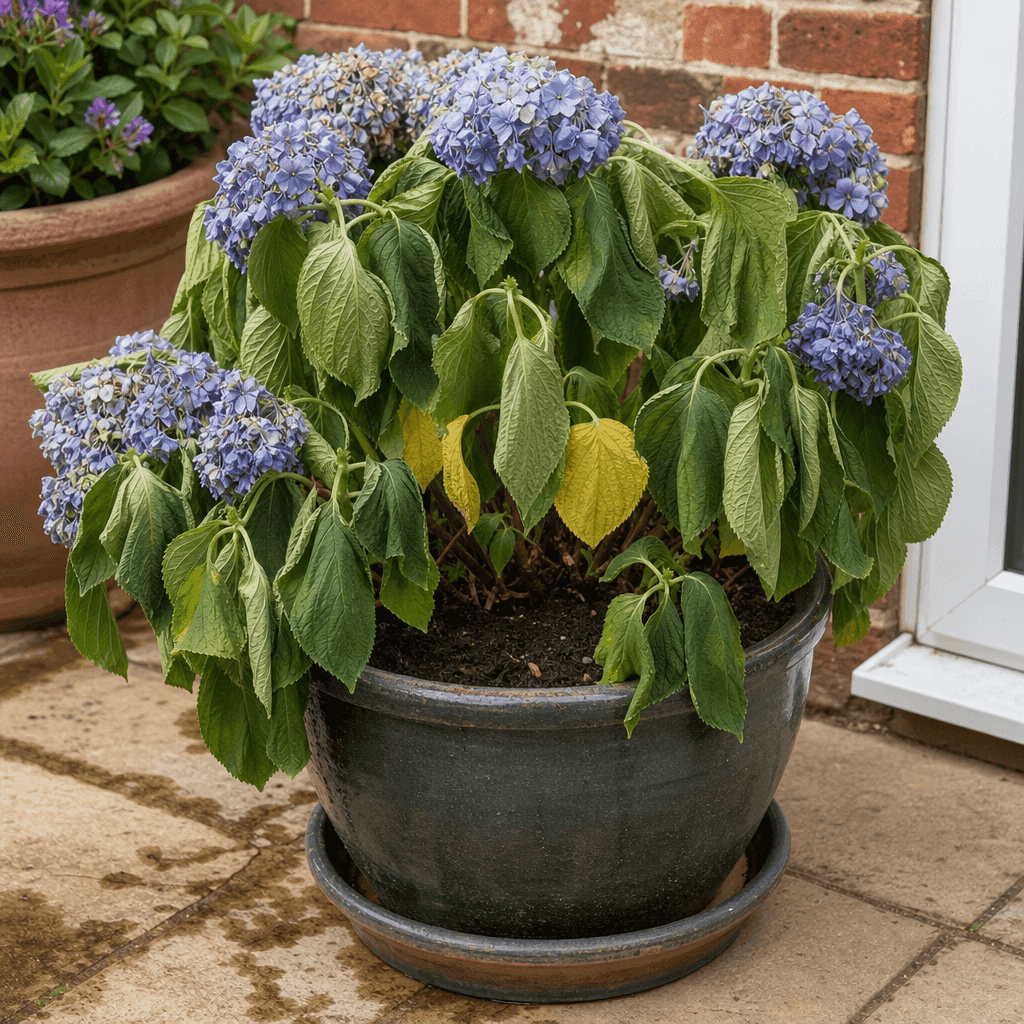
- Leaves droop in the hottest part of the day, then recover by evening.
- Damage and browning are worst on the sunny or windy side.
- Brown, crispy leaf edges do not green up again.
- Deep-water before and during hot spells.
- Add organic mulch to keep the roots cooler and conserve moisture.
- Move potted plants to light shade; for border plants use temporary shade cloth or a parasol during heatwaves.
- Avoid gravel or black plastic mulches around struggling hydrangeas, as they raise the heat around the roots.
- Remove only fully dead, crispy leaves or spent flowerheads.
Stop it coming back:Wilting from heat may reverse in the evening. Brown scorched tissue will not recover, but the plant can produce healthy new growth if the roots are kept moist and cool.
hard prune a hydrangea after heat damage to 'refresh' it — that adds stress and encourages tender new growth.
Waterlogging and overwatering
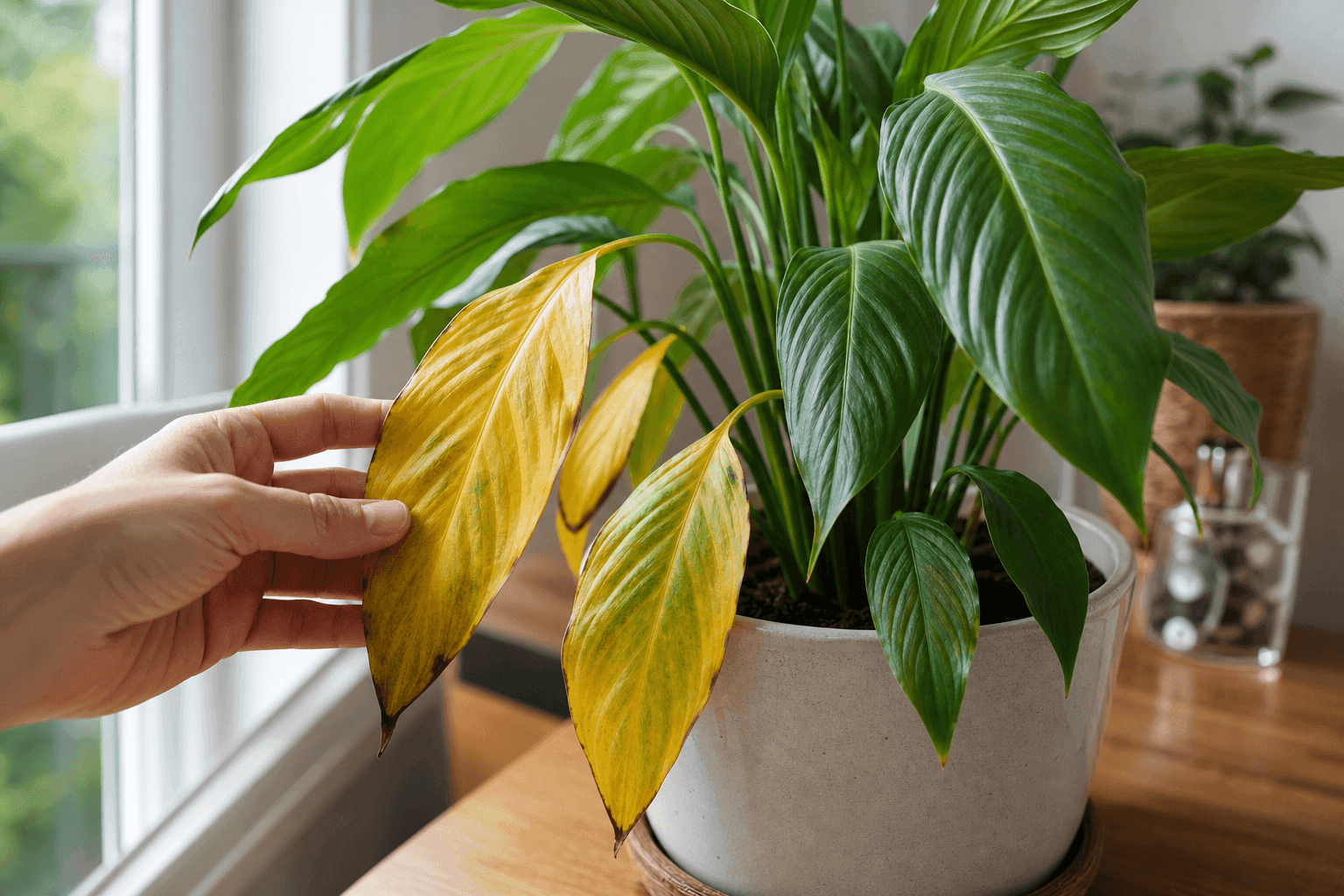
PossibleA hydrangea can wilt in wet soil because damaged or oxygen-starved roots cannot take up water — which is why wilting alone does not prove the plant is thirsty. Waterlogging is more likely in heavy clay, compacted new-build soil, pots without clear drainage holes, containers left in saucers, and low spots where winter rain sits. Hydrangeas like moisture, but they still need drainage.
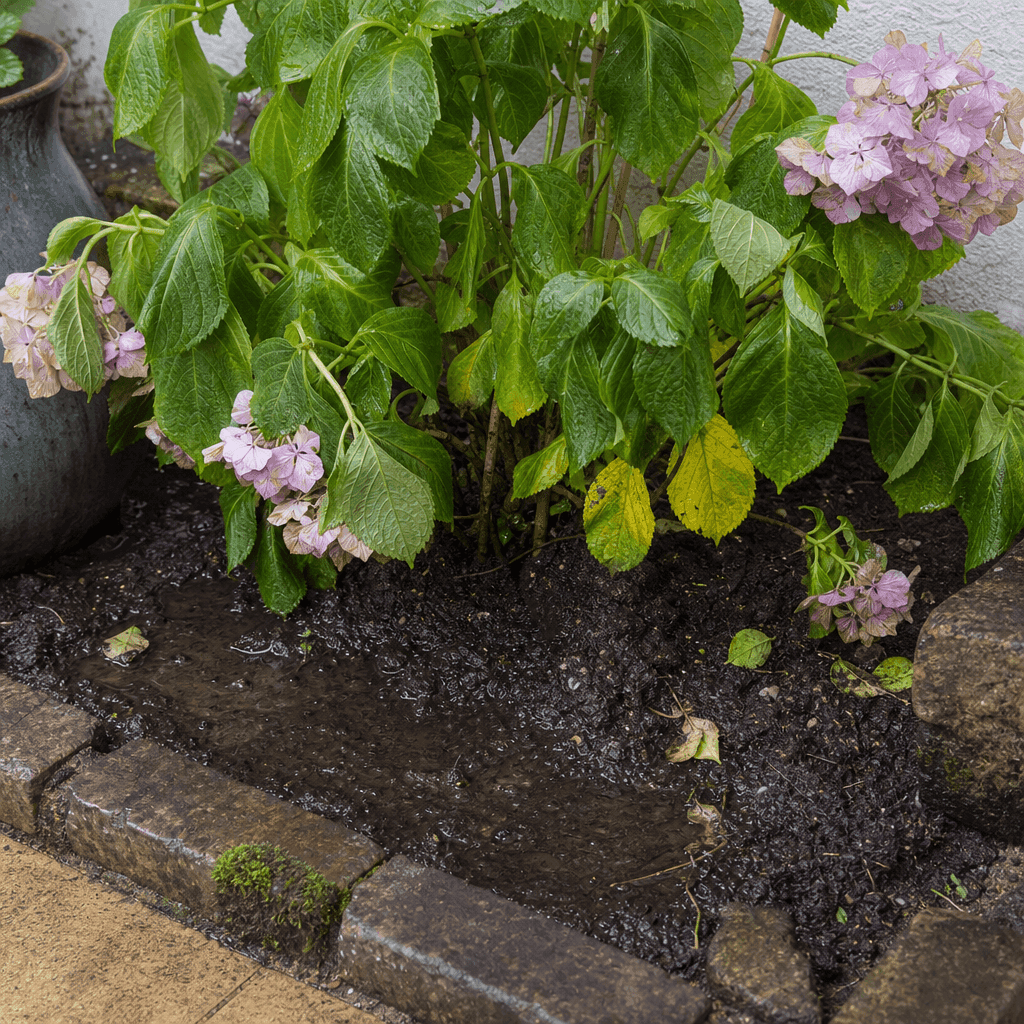
- The soil is wet below the surface, sometimes cold or sour-smelling.
- The pot has blocked drainage holes or sits in a full saucer.
- Roots look brown and mushy rather than firm and pale.
- Check the soil before watering — if it is wet below the surface, do not add more water.
- Clear blocked pot holes, lift containers on feet, and empty saucers after watering.
- If a pot smells sour or roots are brown and mushy, repot into fresh compost and trim only dead roots.
- In the ground, improve future planting areas with organic matter and avoid planting in a sump-like hollow.
- On heavy clay, plant slightly proud of the surrounding soil and mulch rather than burying the crown.
Stop it coming back:Mild waterlogging may improve after the soil drains and warms. Root rot is slower and less certain; expect weeks, not days, and avoid feeding until the plant is actively recovering.
assume that wilting means thirst — in wet, airless soil more water makes it worse.
Dry shade and root competition
PossibleHydrangeas are often planted for shade, but 'shade' can mean very different things. Light shade with moist soil is ideal. Dry shade under mature trees, beside conifers, under eaves, or against a wall can be one of the hardest places for a hydrangea, because the soil stays dry even when it rains.
- The plant sits under a tree canopy, beside conifers, under eaves, or hard against a wall.
- Rain rarely seems to reach the soil at the base of the plant.
- It wilts in spells that are not especially hot.
- Check whether rain actually reaches the soil; if not, water the root zone deeply during dry spells.
- Mulch every spring with organic matter.
- Reduce competing weeds and nearby shallow-rooted plants.
- If the site is permanently dry, consider moving the hydrangea in autumn or spring to brighter, moister light shade.
rely on rainfall under a tree canopy or house eaves — that soil can stay dry even after heavy rain.
Frost damage in spring
PossibleIn the UK, late frost can blacken or wilt soft new hydrangea growth. This can look alarming, especially on mophead and lacecap hydrangeas that hold flower buds near the stem tips. The RHS notes most hydrangeas are hardy through much of the UK, but young buds can be damaged by late frosts.
- There was a recent frost or cold night.
- Damage is mainly on the soft new growth, which blackens or wilts.
- Older, harder wood is largely unaffected.
- Do not prune immediately if more frost is forecast.
- Once the danger has passed, cut blackened shoots back to healthy buds or live wood.
- Move potted hydrangeas temporarily to a sheltered wall, porch, unheated greenhouse or cold frame during frost warnings.
- In exposed gardens, avoid frost pockets for future planting.
Stop it coming back:Hydrangea paniculata and H. arborescens are often more forgiving because they flower on the new season's growth, so a late frost costs fewer flowers than on a mophead.
prune frost-damaged shoots while more frosts are still forecast — wait until the danger has passed.
Too much feed and soft, floppy growth
Less likelyExcess nitrogen can encourage lush, soft stems and leaves that droop more easily, especially when flowerheads are heavy or rain-soaked. The RHS warns that regular feeding of established hydrangeas is generally not needed, and that too much fertiliser encourages soft leafy growth, reduces flowering and increases vulnerability to problems.
- The plant has been fed heavily, or lawn feed has drifted or washed into the bed.
- Stems flop under heavy flowerheads while the leaves themselves stay firm.
- Bending is localised to flowered stems, not whole-plant wilt.
- Stop feeding until growth looks balanced.
- Avoid lawn fertiliser drifting or washing into hydrangea beds.
- Support heavy flowered stems with discreet stakes or plant supports.
- In spring, prune according to hydrangea type rather than cutting everything back hard.
routinely feed an established hydrangea — too much fertiliser encourages soft growth, reduces flowering and adds problems.
Pest or disease stress
PossiblePests are not usually the first cause of hydrangea wilting, but stressed hydrangeas become more vulnerable. Look for aphids on soft tips, spider mites in hot dry weather, and hydrangea scale on stems and leaf undersides — the RHS describes hydrangea scale as white, waxy, flat blobs most noticeable in early summer.
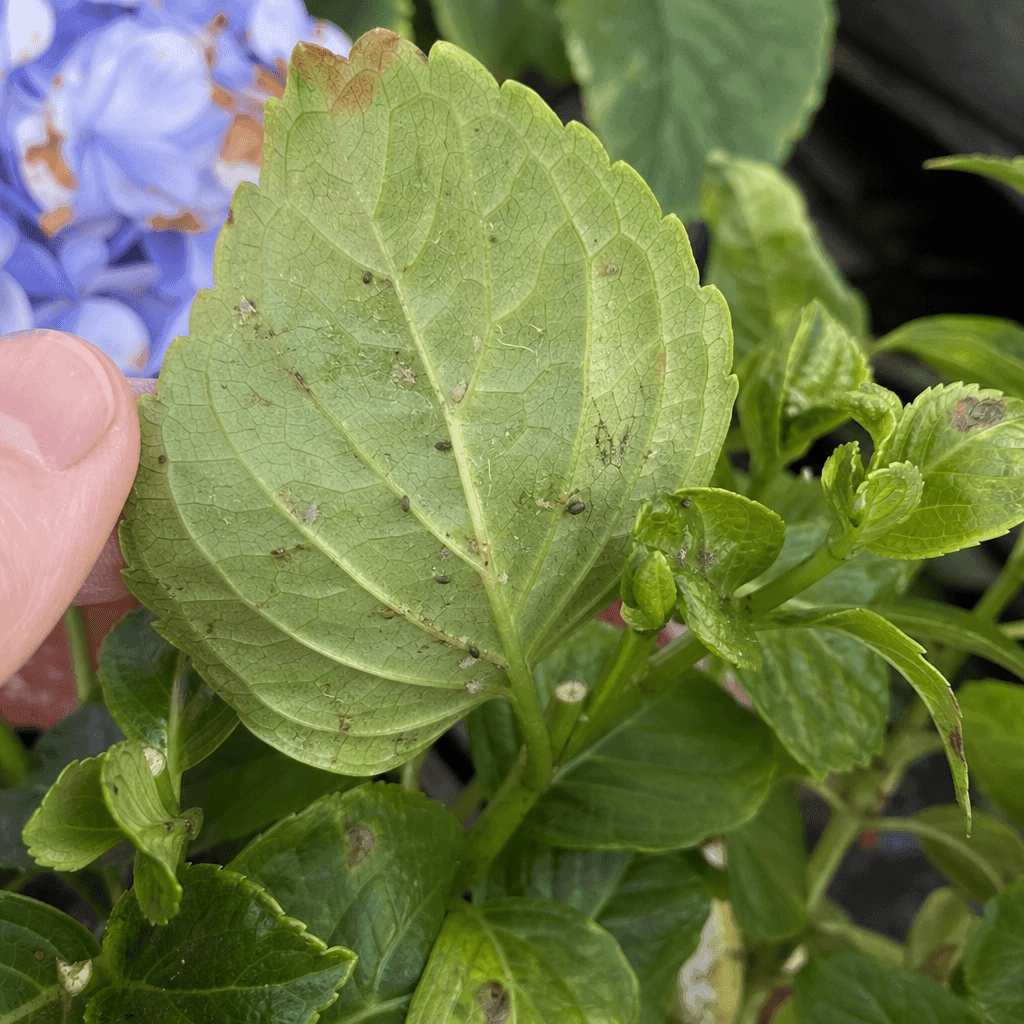
- Inspect the undersides of leaves and along the stems.
- Look for white waxy scale, aphid colonies, fine webbing or sticky honeydew.
- New tips may be distorted as well as wilted.
- Wash off aphids or mites with water where practical.
- Encourage natural predators by avoiding unnecessary insecticide.
- Remove heavily affected leaves if disease is localised.
- Improve watering, mulching and airflow — a stressed plant is far less resilient.
reach for insecticide first — it harms the predators that keep aphids and mites in check.
Planting depth, compaction or root damage
PossibleA hydrangea may wilt if it is planted too deep, rocked loose by wind, compacted into poor soil, or damaged by digging. This is especially common in new-build gardens where shallow topsoil sits over compacted subsoil, and the leaves can wilt or brown even though the soil is neither dry nor soggy.
- Leaves wilt and brown while the soil is neither dry nor waterlogged.
- There has been recent digging nearby, or the plant rocks loosely in wind.
- The top of the rootball sits below the surrounding soil, suggesting it was planted too deep.
- Check that the top of the original rootball is level with the surrounding soil.
- Firm a loose new plant gently with your hands or heel, then water to settle the soil around the roots.
- Loosen compacted soil around the planting area without chopping through main roots.
- Keep mulch over the root zone, but do not pile it against the stems.
pile mulch against the stems or bury the crown deeper to steady a wobbly plant.
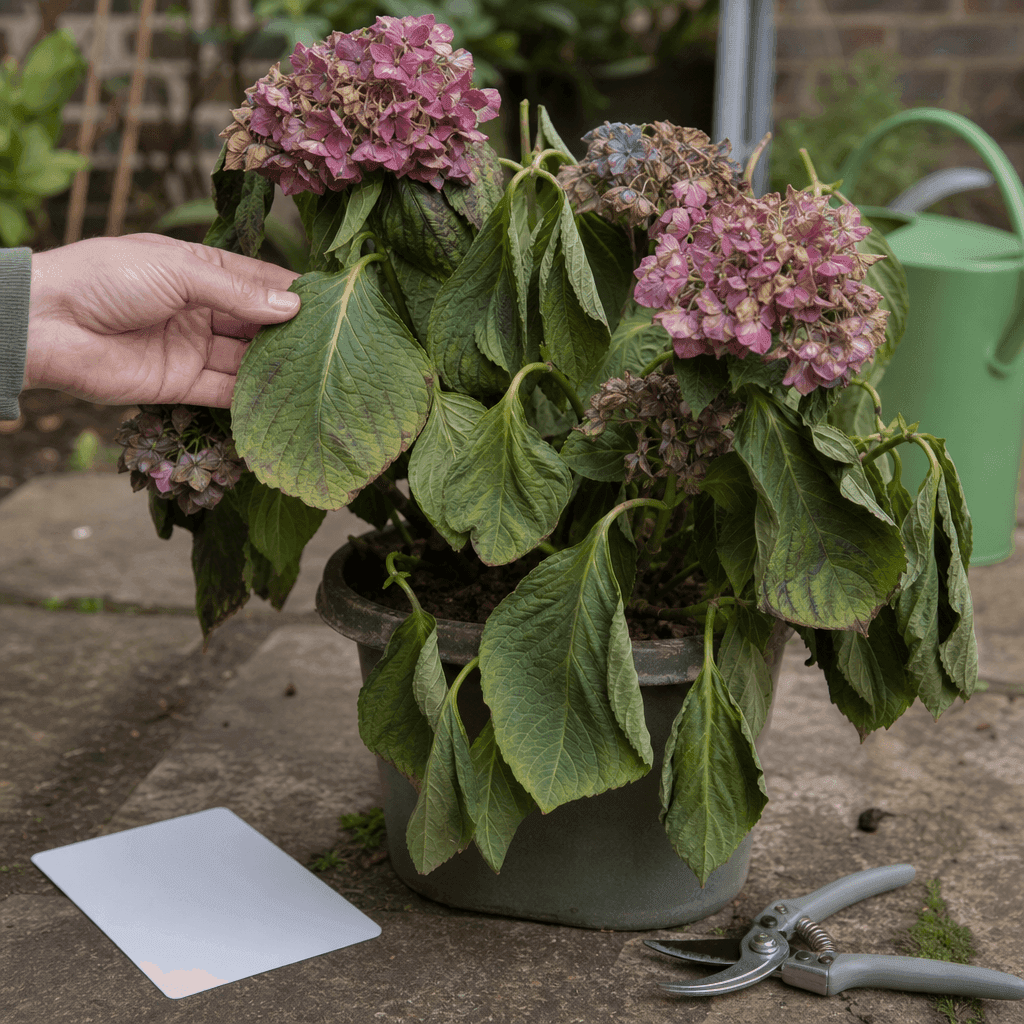
Still not sure?
Work down these branches — the first one that matches is your answer.
What not to do
- Water automatically without first checking the soil.
- Feed a wilted plant as your first response.
- Hard prune a heat-stressed plant to 'refresh' it.
- Assume wet soil means the plant has enough usable water — roots fail in waterlogged soil too.
- Move an established hydrangea in hot weather unless it is in immediate danger.
- Judge recovery by scorched leaves — look at firm stems, moist soil and healthy new growth instead.
Common questions
How do you revive a wilted hydrangea?
First check the soil. If it is dry below the surface, water slowly and deeply at the base until the whole root zone is moist, then mulch. If the soil is wet, stop watering and check drainage. Move potted hydrangeas out of hot afternoon sun while they recover.
Why is my hydrangea suddenly wilting?
Sudden wilting is usually caused by a hot, dry or windy day, a dry rootball, transplant shock, or a pot drying out. If the plant does not recover overnight, check for dry soil, waterlogging, frost damage or root problems.
Will a wilted hydrangea come back?
Often, yes. Temporary heat wilt and mild drought wilt can recover quickly after shade and deep watering. Plants with severe root rot, repeated drying, or major frost damage recover more slowly and may lose some stems or flowers.
What does an overwatered hydrangea look like?
An overwatered hydrangea may have limp leaves even though the soil is wet, yellowing foliage, poor growth, and sometimes brown or mushy roots in pots. The key clue is wet soil that stays wet for days.
Why is my potted hydrangea wilting every day?
The pot may be too small, the compost may be drying out quickly, or the plant may be in too much sun. Repot into a larger container with good drainage, water thoroughly, and move it to morning sun with afternoon shade in summer.
Should I cut off wilted hydrangea leaves?
Not straight away. Limp green leaves may recover. Remove leaves only when they are fully brown, crispy, diseased or clearly dead. After heat scorch, avoid severe pruning because it adds stress and encourages tender new growth.
Why are my hydrangea leaves wilting and turning brown?
Wilting plus brown edges usually points to drought stress, heat scorch or drying wind. Brown, soft or yellowing leaves in wet soil may point to waterlogging instead. Use the soil test and site conditions to separate the two.
Why did my hydrangea wilt overnight?
If it wilted overnight after planting, the rootball may be dry or damaged. If it followed a frost, new shoots may have been chilled. If the soil is very wet, the roots may be short of oxygen. Check soil moisture and recent weather first.
Can hydrangeas wilt from too much sun?
Yes. Hydrangeas, especially mopheads and lacecaps, often prefer light shade. They can tolerate more sun if the soil stays reliably moist, but hot afternoon sun can cause drooping and scorch.
How often should I water a hydrangea in the UK?
There is no fixed schedule. Water when the soil begins to dry below the surface, more often for pots and new plantings in warm weather. Established hydrangeas in good soil need less frequent watering but still benefit from a deep soak in prolonged dry spells.