Quick diagnosis
Match the row to what you’re seeing, then jump to the fix.
| What you see | Likely cause | Confidence | How to confirm | What to do now | Urgency |
|---|---|---|---|---|---|
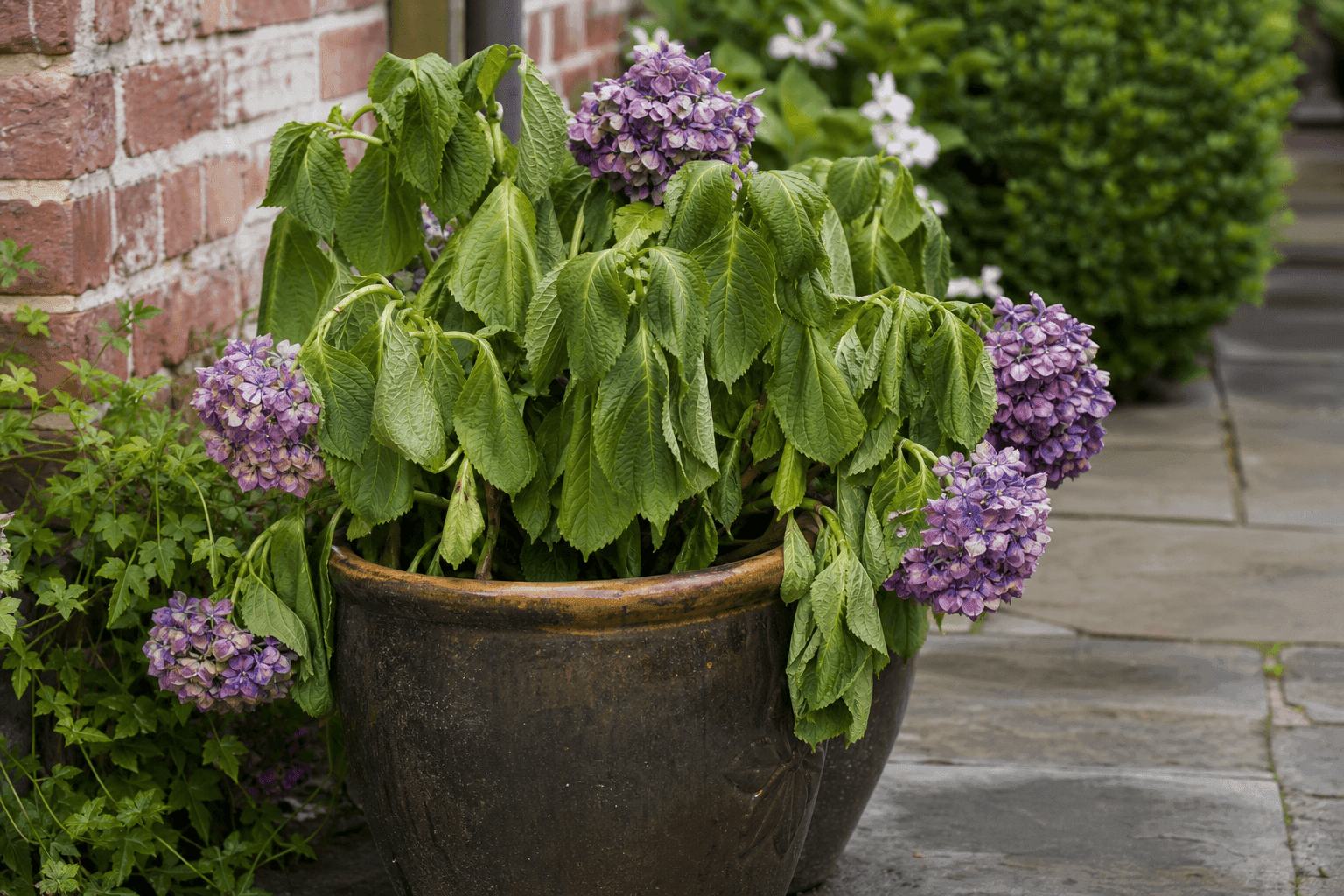
| Leaves curl and droop; soil is dry below the surface; pot feels light | Drought stress / underwatering | High | Water deeply and check whether leaves uncurl overnight. | Soak the full root zone slowly; mulch the surface; check twice a day in warm weather. | High |
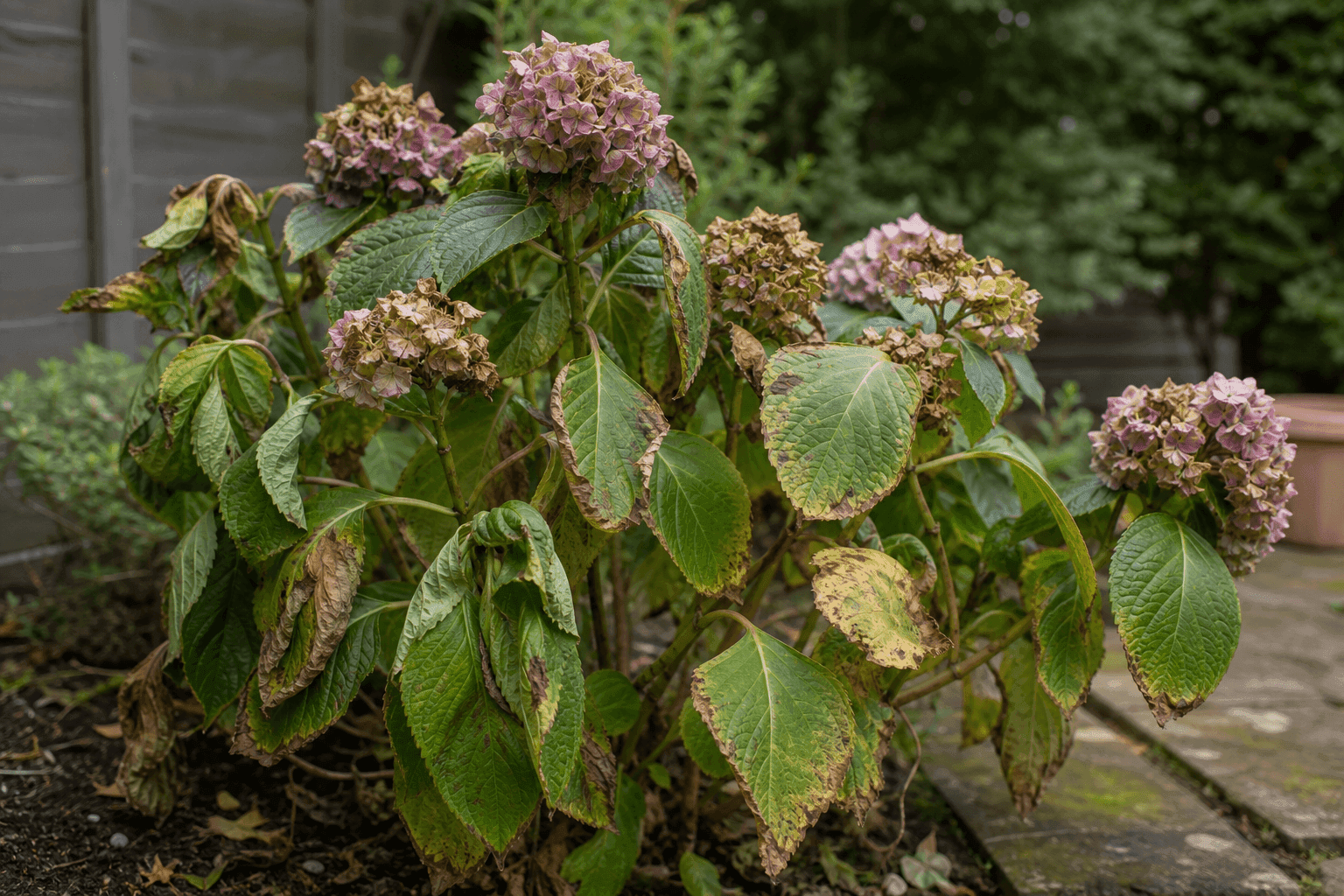
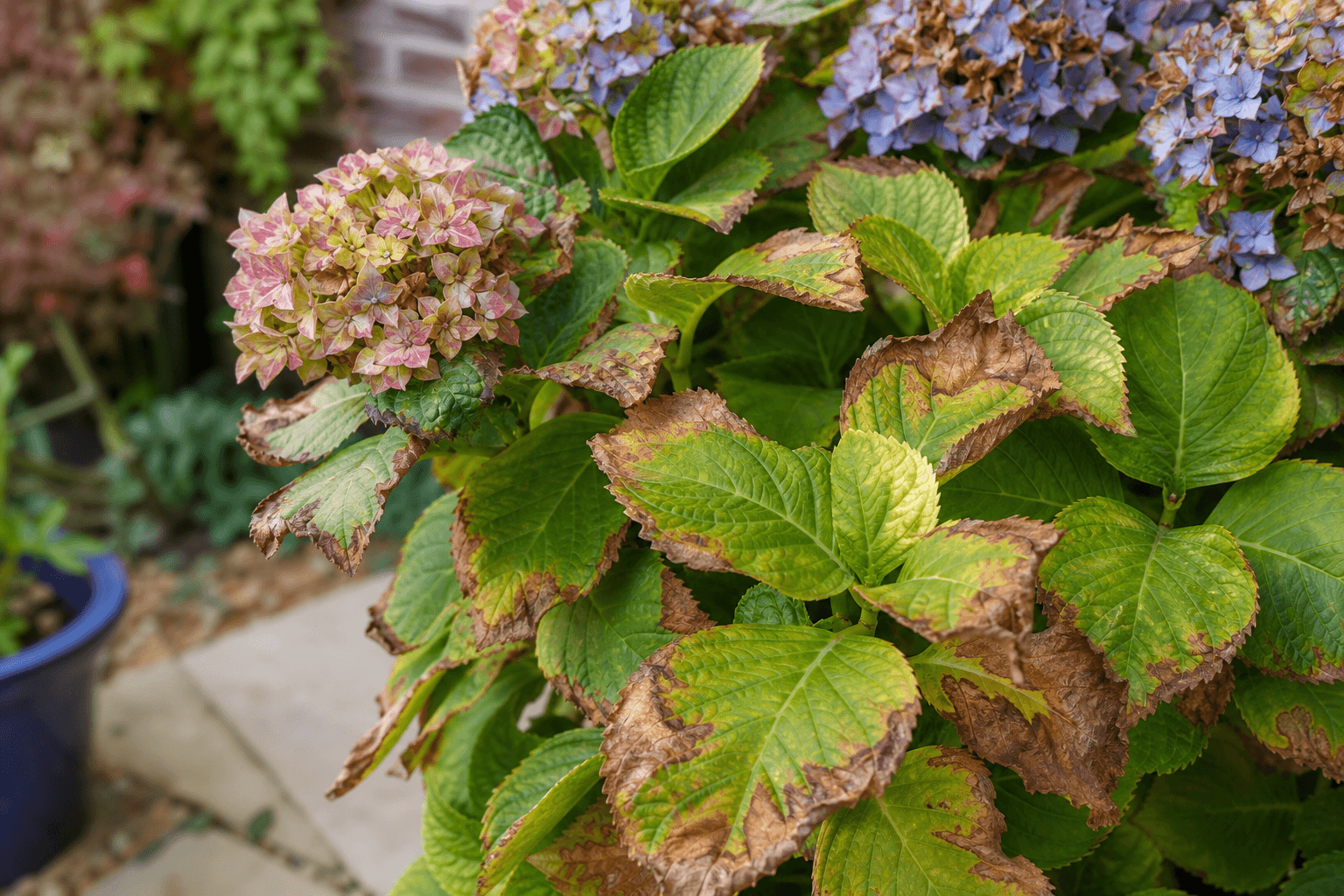
| Leaves curl inward at midday, then partially recover by evening | Heat and transpiration stress | High | Damage worst on sunny or windy side; plant is in a hot, south- or west-facing spot. | Deep-water, mulch, and give temporary afternoon shade. Move pots out of direct sun. | Medium |
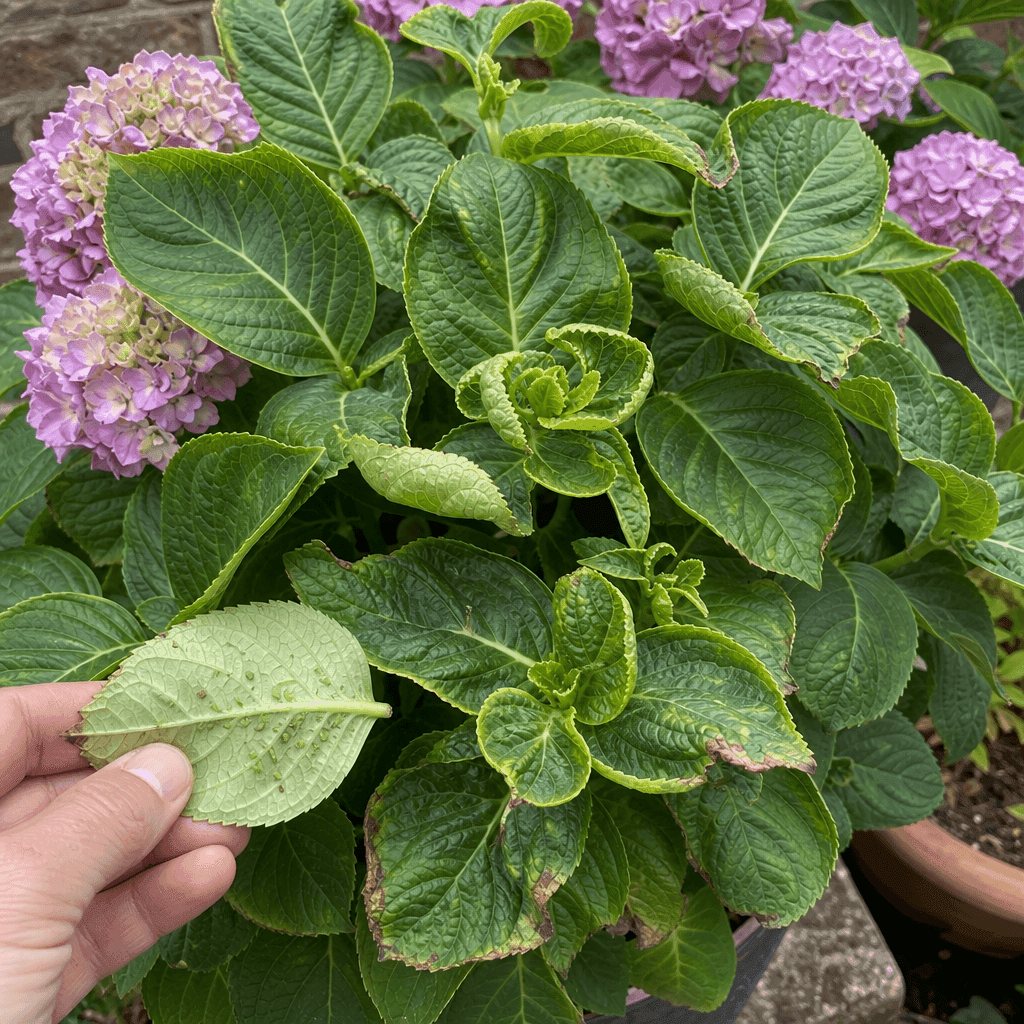
| Young leaves distorted and cupped; sticky honeydew; ants present | Aphid infestation on young growth | High | Inspect new shoot tips — colonies of small soft-bodied insects, often green or black. | Wash off with a firm water jet; encourage ladybirds and lacewings; avoid insecticide. | Medium |
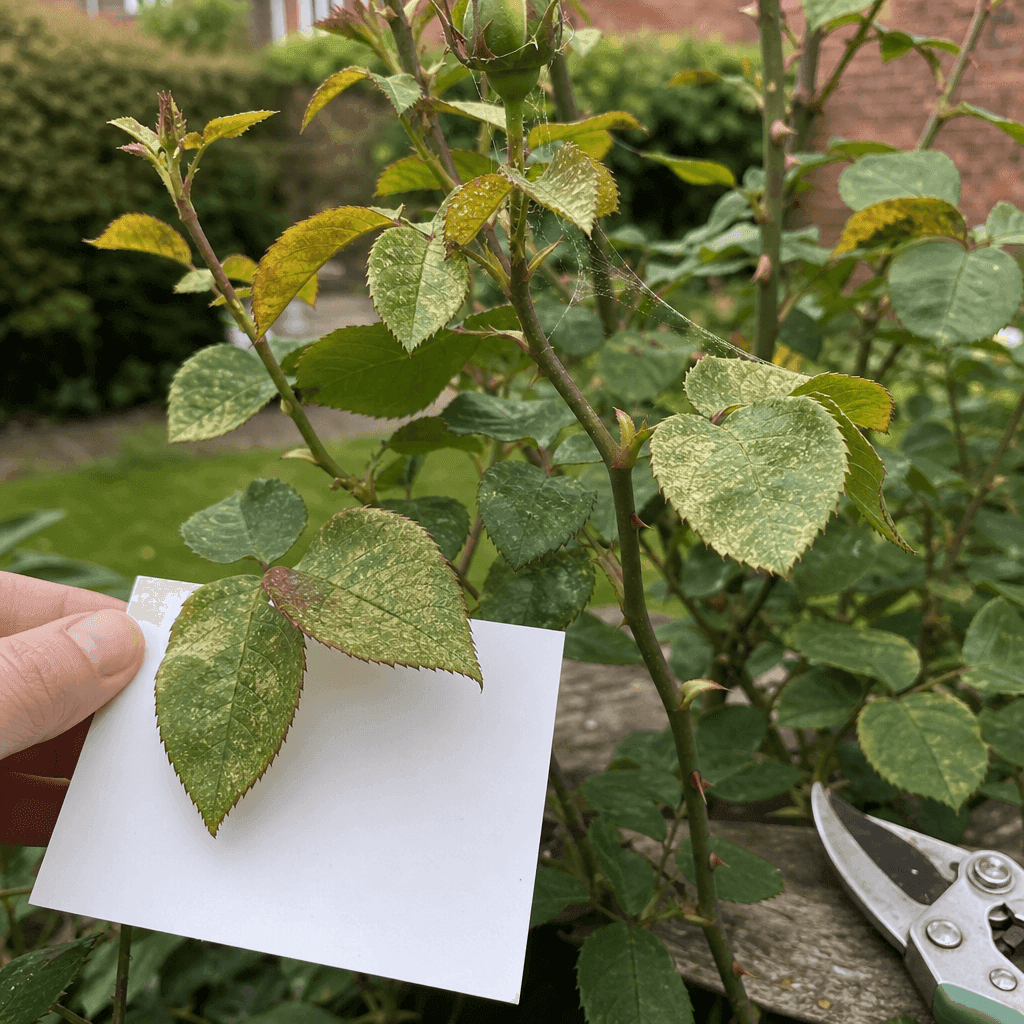
| Pale stippling on upper leaf surface; dark droppings on underside; leaves curling | Hydrangea lacebug (Corythucha ciliata) | Medium | Check leaf undersides for lacy-winged adults and dark tar-spot droppings. | Remove worst affected leaves; improve plant vigour; treat with insecticidal soap if severe. | Medium |
| White, waxy flat blobs on stems; leaves losing vigour and yellowing | Hydrangea scale insect | Medium | Look for white, flat, waxy bumps on the undersides of branches and stems. | Scrape off by hand or use a soft brush; improve plant health; accept some natural predator control. | Medium |
| Leaves curl and show white powdery coating on upper surface | Powdery mildew | Medium | White floury coating that rubs off; affects new growth in dry-root / humid-air conditions. | Remove badly affected leaves; improve airflow; keep roots consistently moist. | Low–medium |
| Leaves curl and yellow while soil is persistently wet; sour smell | Waterlogging or root rot | Low | Soil stays wet for days; pot drainage holes blocked; roots look brown and mushy. | Stop watering; improve drainage; repot if roots are rotten. | High |
The causes, in detail
Drought stress and underwatering
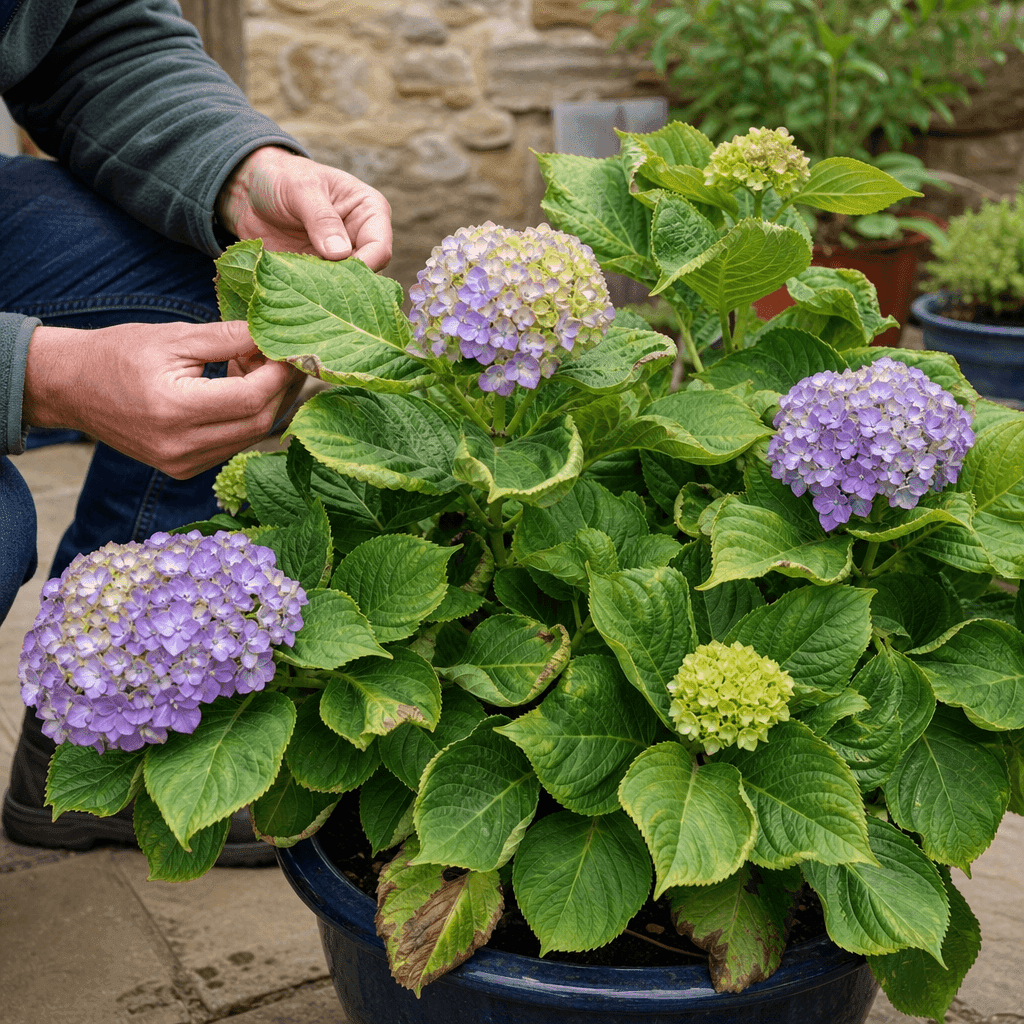
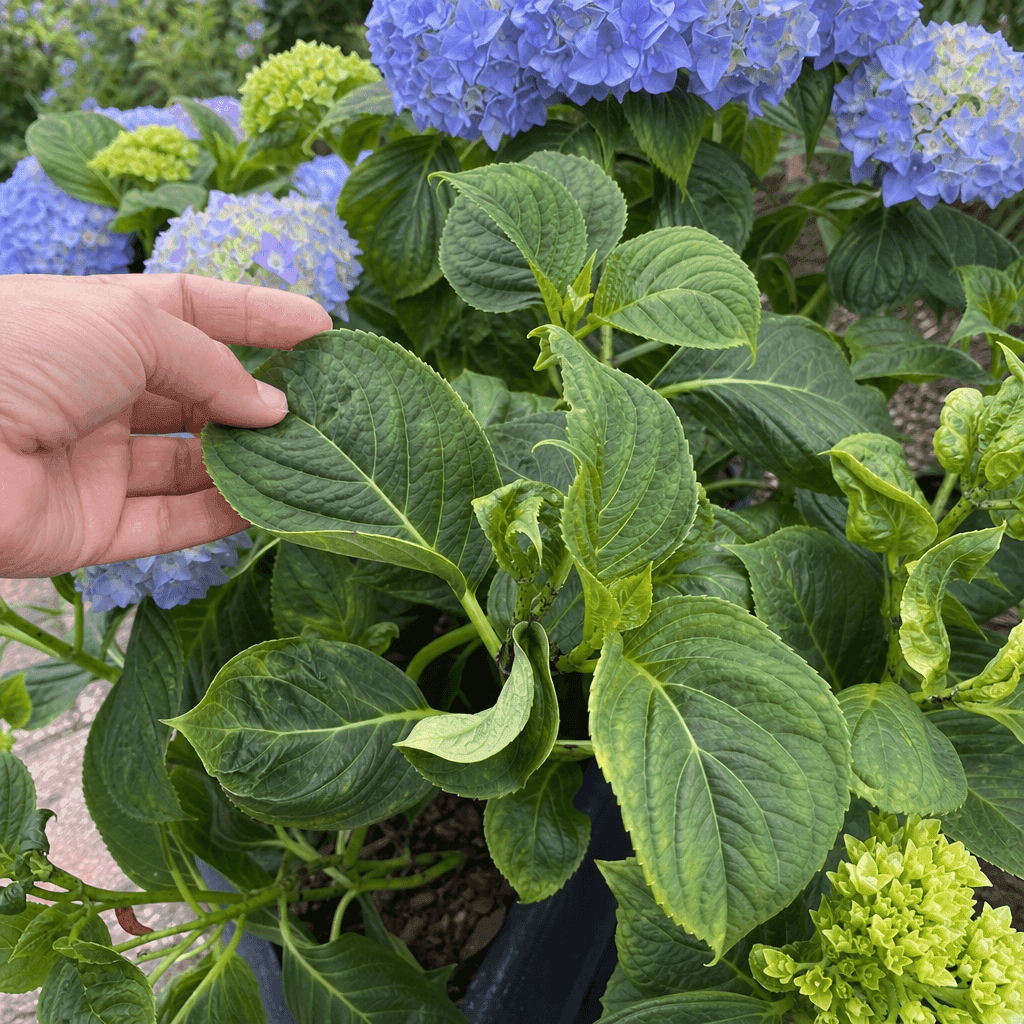
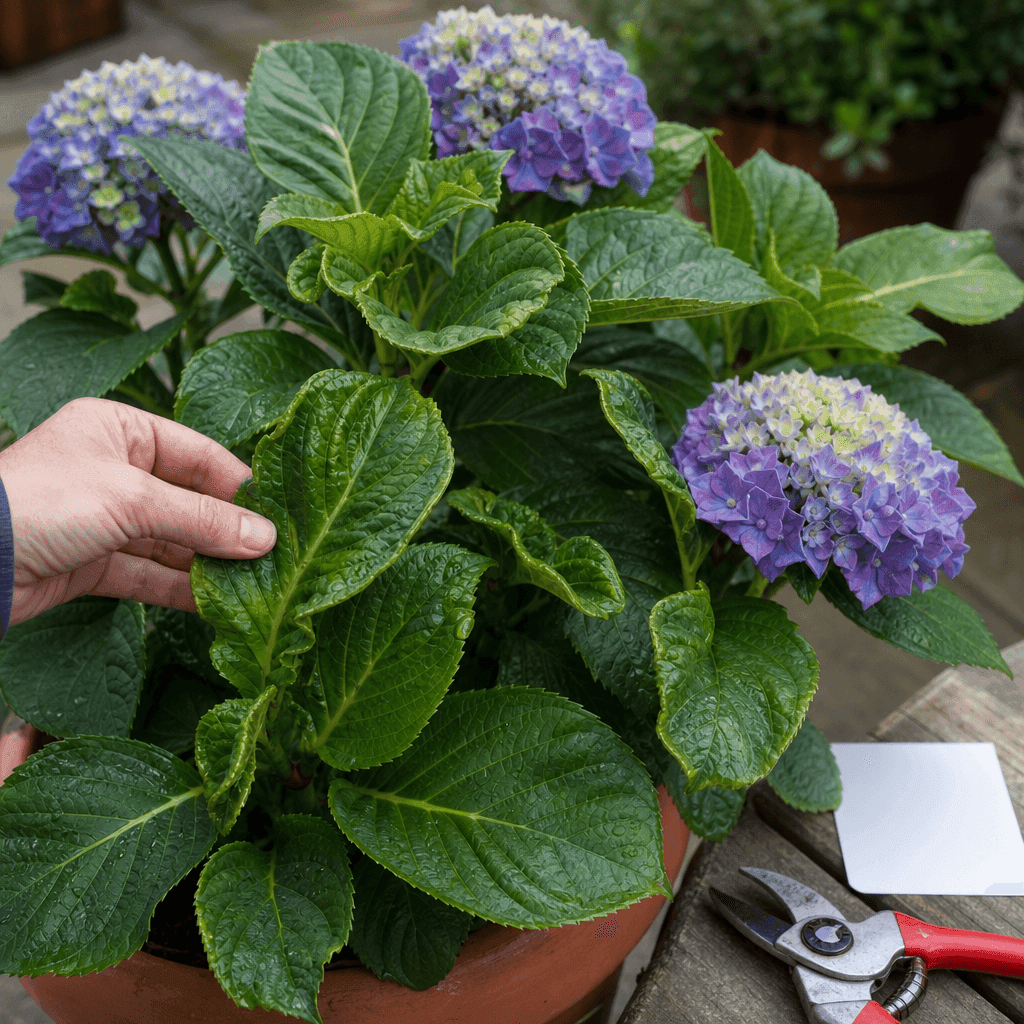
Most likelyHydrangeas have a name that literally means 'water vessel', and their large leaves lose moisture quickly. In the UK, drought stress — particularly during dry springs and the increasingly hot summers seen since 2018 — is the most common reason hydrangea leaves curl or wilt. The leaf blade curves inward to reduce exposed surface area and slow water loss. Potted plants and those in dry shade under trees or against walls are most at risk, as rain often fails to reach the root zone in those positions.
- Soil feels dry 5cm or more below the surface.
- A pot feels noticeably light when lifted.
- Compost has pulled away from the edges of the container.
- Leaves uncurl partially or fully after a thorough soak.
- Water slowly at the base, not over the leaves, until water runs from drainage holes.
- Pause, then water again to be sure the full rootball is wet — dry peat-free compost can repel water initially.
- Apply a 5cm mulch of garden compost, bark or leaf mould, kept clear of the stems.
- In hot weather, check soil moisture daily — pots may need watering twice a day.
- If the plant is in dry shade under a tree, remember that the canopy intercepts rain: water by hand during dry spells.
Stop it coming back:Mild drought curl often recovers overnight after a deep soak. Scorched edges and brown tips will not re-green, but the plant can produce healthy new growth once moisture is stable.
rely on rainfall under a tree canopy or house eaves — that soil can stay bone dry even after heavy rain.
Heat and transpiration stress
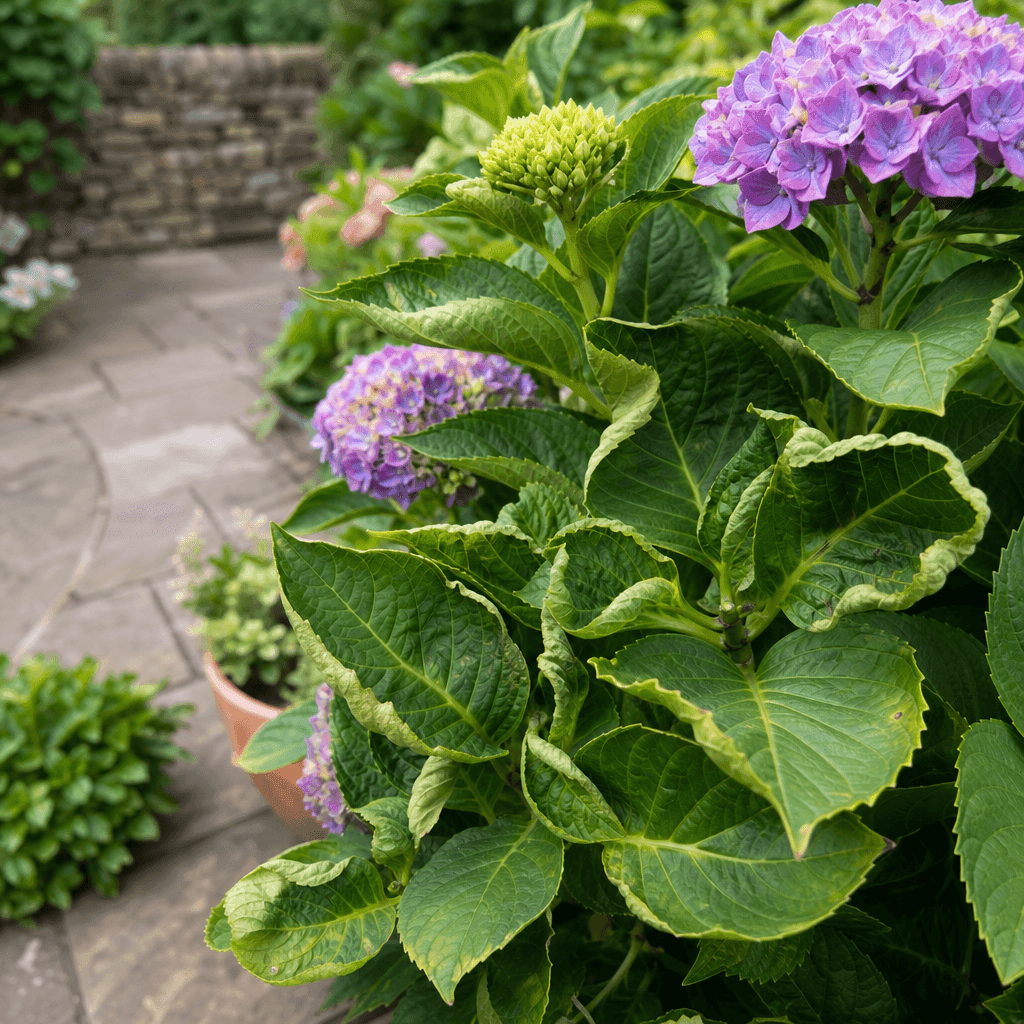
Most likelyHydrangeas, especially mopheads (Hydrangea macrophylla) and lacecaps, can wilt and curl at midday even when the soil is moderately moist. In hot, sunny or windy conditions, water evaporates from the leaves faster than the roots can replace it. This temporary midday curl is common and not cause for alarm if the plant recovers by evening. Persistent curling that does not ease overnight, or curling combined with crispy brown edges, signals a more serious moisture deficit.
- Leaves curl mainly at the hottest part of the day and ease by evening.
- Worst on south- or west-facing sides, or in windy spots.
- Brown, crispy leaf edges do not re-green after watering.
- Deep-water before and during hot spells.
- Mulch with organic material to keep roots cooler and conserve moisture.
- Move pots to morning sun and afternoon shade during heatwaves.
- Use temporary shade cloth or a garden parasol over border plants during extreme heat.
- Remove fully dead or crispy leaves once conditions cool.
Stop it coming back:Temporary midday curl that recovers by evening is usually harmless. Brown scorched tissue will not recover, but the plant will push new growth if the roots are kept moist.
hard prune a heat-stressed hydrangea to 'refresh' it — this adds stress and stimulates tender new growth at the worst possible time.
Aphid infestation on young growth
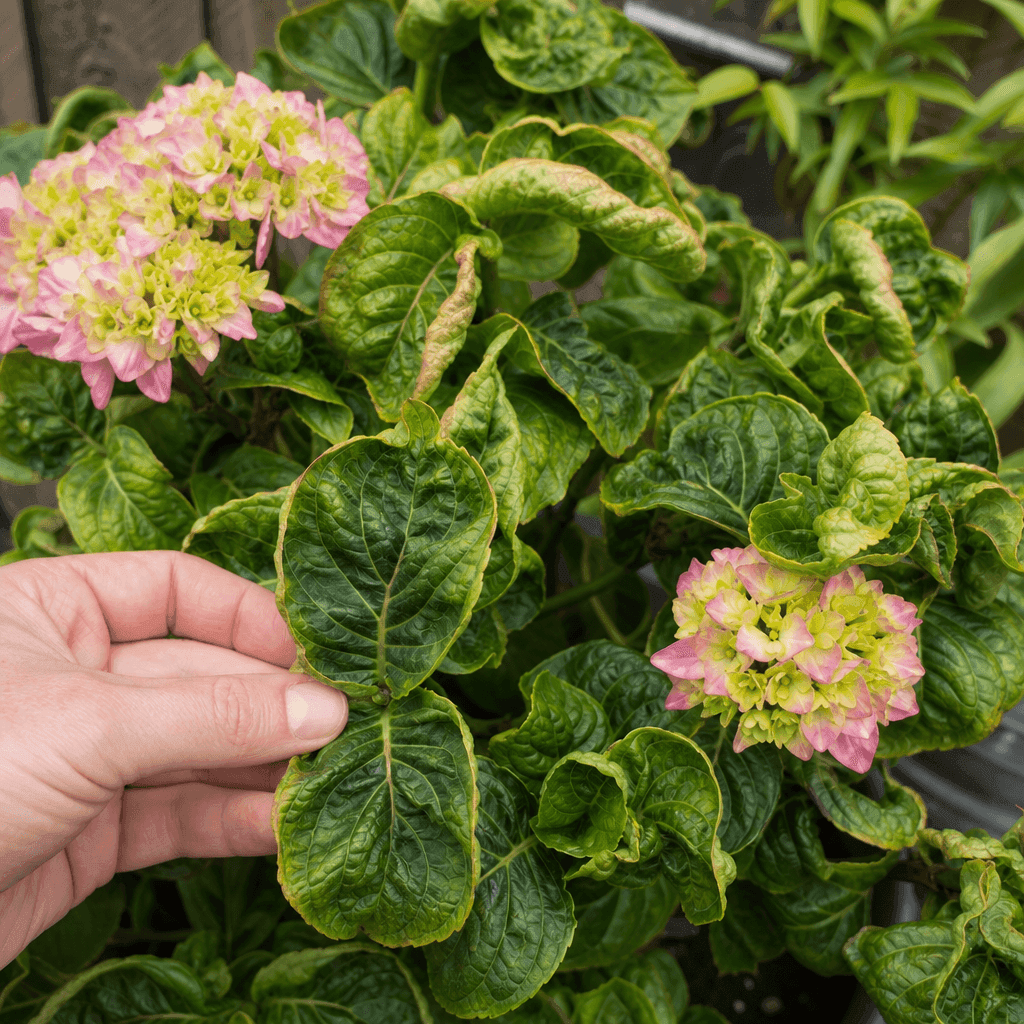
Most likelyAphids colonise soft new hydrangea shoot tips in spring and early summer. When they feed on young leaf tissue before it has fully expanded, the cells they damage cause the leaf to cup or curl as it grows. Colonies are often dense on the undersides of new leaves or clustered around growing tips. Ants farming aphids for honeydew are a useful early indicator. The RHS recommends prioritising natural predator control — ladybirds, lacewings and parasitic wasps — over insecticides.
- Inspect new shoot tips and the undersides of young leaves for soft-bodied insects.
- Look for shiny, sticky honeydew deposits and sooty mould on leaves below the colony.
- Check for ants running up and down the stems.
- Knock aphids off with a strong jet of water from a hose.
- Pinch out and remove the worst affected shoot tips.
- Encourage natural predators by avoiding broad-spectrum insecticides.
- If treatment is needed, use an insecticidal soap spray, covering undersides of leaves.
- Repeat in 7–10 days if the colony rebounds.
Stop it coming back:A healthy, well-watered hydrangea with good airflow is more resilient. Keep feeding balanced — over-feeding with nitrogen produces very soft growth that attracts aphids.
reach for a systemic insecticide first — it harms the beneficial insects that naturally control aphids and mites.
Hydrangea lacebug (Corythucha ciliata)
PossibleThe hydrangea lacebug is an increasingly common pest in UK gardens, particularly in the south. Adults and nymphs feed on the undersides of leaves, puncturing cells and extracting sap. The upper leaf surface develops a characteristic pale, bleached or stippled appearance; the underside shows dark, tar-like droppings. Heavy infestations cause leaf curling, premature leaf drop and reduced vigour. The University of Connecticut Extension confirms lacebug as one of the primary causes of hydrangea leaf distortion.
- Pale, washed-out stippling on the upper surface of leaves.
- Dark, varnish-like spots or droppings visible on leaf undersides.
- Small, lacy-winged adults visible when leaves are turned over.
- Remove and bin badly affected leaves.
- Spray undersides of leaves with insecticidal soap or a plant-based spray, ensuring good coverage.
- Repeat at weekly intervals for 3–4 weeks during active infestation.
- Avoid water stress — stressed plants are far more susceptible.
- Plant hydrangeas in partial shade, as lacebug thrives in sunny, hot positions.
ignore early lacebug signs — by the time damage is severe, natural predators may not be enough to control it alone.
Hydrangea scale insect
PossibleHydrangea scale (Pulvinaria hydrangeae) is described by the RHS as white, waxy, flat blobs found on the undersides of stems and branches, most noticeable in early summer. A heavy infestation reduces sap flow and vigour, causing leaves to yellow, curl and drop prematurely. Sooty mould may develop on the honeydew they excrete. The RHS notes that scale attacks have become more severe in UK gardens in recent years.
- White, flat, waxy bumps arranged along stems and branch undersides.
- Sticky residue or black sooty mould on leaves below infested stems.
- Reduced vigour and leaf drop despite adequate watering.
- Scrape scale off stems with a soft brush or old toothbrush.
- In early summer when crawler (juvenile) stage is active, spray with insecticidal soap.
- Cut out badly infested branches and bin them.
- Improve plant health through consistent watering and mulching.
apply chemical sprays when scale insects are in their armoured adult phase — they are much harder to kill then and treatment is largely ineffective.
Powdery mildew
PossiblePowdery mildew on hydrangeas is a fungal disease that produces a white floury coating, usually appearing first on upper leaf surfaces. Unlike most fungal diseases, it does not need wet leaves to spread — it thrives when roots are dry but air humidity is moderate to high, which is why it often appears near walls or in late summer. The leaves may also curl or distort. The RHS advises against fungicide use for most UK gardeners and recommends cultural controls instead.
- White, powdery coating on the upper surface of leaves — it rubs off.
- Worst on new growth; often associated with dry spells in late summer.
- Plant is against a wall or in a position with poor air circulation.
- Remove badly affected leaves and bin them — do not compost.
- Improve airflow by opening up crowded growth.
- Keep roots consistently moist — dry roots in humid air are the ideal environment for this disease.
- Mulch to reduce soil moisture fluctuation.
leave infected leaves on the plant — they spread spores to healthy growth.
Waterlogging and root rot
Less likelyHydrangeas need moisture but also good drainage. In heavy clay soil, compacted new-build gardens, or pots without clear drainage, roots suffocate in waterlogged soil and can no longer take up water efficiently. Paradoxically the leaves may curl or wilt even though the soil is wet. The compost may smell sour and roots will appear brown and mushy rather than firm and pale.
- Soil stays wet for days — it does not dry between rain events.
- Pot drainage holes are blocked or the container sits in a full saucer.
- Roots look brown and mushy, not firm and pale.
- Compost smells sour or unpleasant.
- Stop watering immediately and check drainage.
- Clear blocked pot holes; lift containers on feet; empty saucers.
- If roots are brown and mushy, repot into fresh compost and trim dead roots.
- In the ground, improve drainage with organic matter and avoid planting in low spots.
assume curling leaves always mean thirst — in wet, airless soil, adding more water makes it worse.
Still not sure?
Work down these branches — the first one that matches is your answer.
What not to do
- Assume curling always means drought — check the soil before watering.
- Reach for insecticide before checking what pest is present; systemic insecticides harm the beneficial insects that control aphids and mites.
- Pile on feed when leaves look stressed — feeding a drought or waterlogged hydrangea makes things worse.
- Hard prune after heat or pest damage — this adds stress and promotes soft, vulnerable new growth.
- Leave standing water in pot saucers; roots in waterlogged soil cannot take up water efficiently.
Common questions
Why are my hydrangea leaves curling inward?
The most common cause is drought stress or heat. The leaf curls inward to reduce water loss when the roots cannot keep pace with demand. Check the soil at 5cm depth — if it is dry, water deeply. If the plant recovers overnight, water stress was the cause.
Why are my hydrangea leaves curling and turning brown?
Curling with brown edges usually indicates heat scorch combined with drought stress. Water deeply, mulch the roots, and shade the plant during the hottest part of the day. Brown leaf tissue will not recover, but the plant can produce healthy new growth with consistent watering.
Can aphids cause hydrangea leaves to curl?
Yes. Aphids that feed on very young leaves before they have fully expanded damage the cells that control leaf shape, causing the leaf to curl or cup as it grows. Look for colonies on shoot tips and the undersides of young leaves, along with sticky honeydew and ants.
What is hydrangea lacebug and how do I treat it?
Hydrangea lacebug is a small insect with lacy wings that feeds on leaf undersides, causing pale stippling on top and dark droppings beneath. Remove affected leaves, spray undersides with insecticidal soap, and improve moisture and airflow — lacebug is worse on stressed, sun-exposed plants.
My hydrangea leaves are curling but the soil is moist — what is wrong?
If the soil is moist but leaves are still curling, check underneath the leaves for pests (aphids, lacebug, scale). Also check for powdery mildew — a white floury coating on upper surfaces. If the soil is very wet and smells sour, waterlogging may be the cause rather than drought.
How do I stop hydrangea leaves curling in summer?
Keep the soil consistently moist (check daily in warm weather), mulch the root zone, and provide afternoon shade during heatwaves. Avoid planting mopheads and lacecaps in hot, sunny, south-facing positions. In pots, water twice daily when temperatures exceed 20°C.
Should I cut off curled hydrangea leaves?
Not immediately if they are still green — curled leaves from drought or heat may recover after watering. Remove leaves that are fully brown, pest-infested, covered in powdery mildew, or clearly dead. Avoid heavy pruning while the plant is under stress.