Quick diagnosis
Match the row to what you’re seeing, then jump to the fix.
| What you see | Likely cause | Confidence | How to confirm | What to do now | Urgency |
|---|---|---|---|---|---|
| Dense black clusters on soft shoot tips, especially beans and nasturtiums | Blackfly (black bean aphid) | High | Check growing tips and the undersides of young leaves; blackfly are very visible | Pinch out the very tip of broad bean shoots once pods set; wash off with water | Medium |
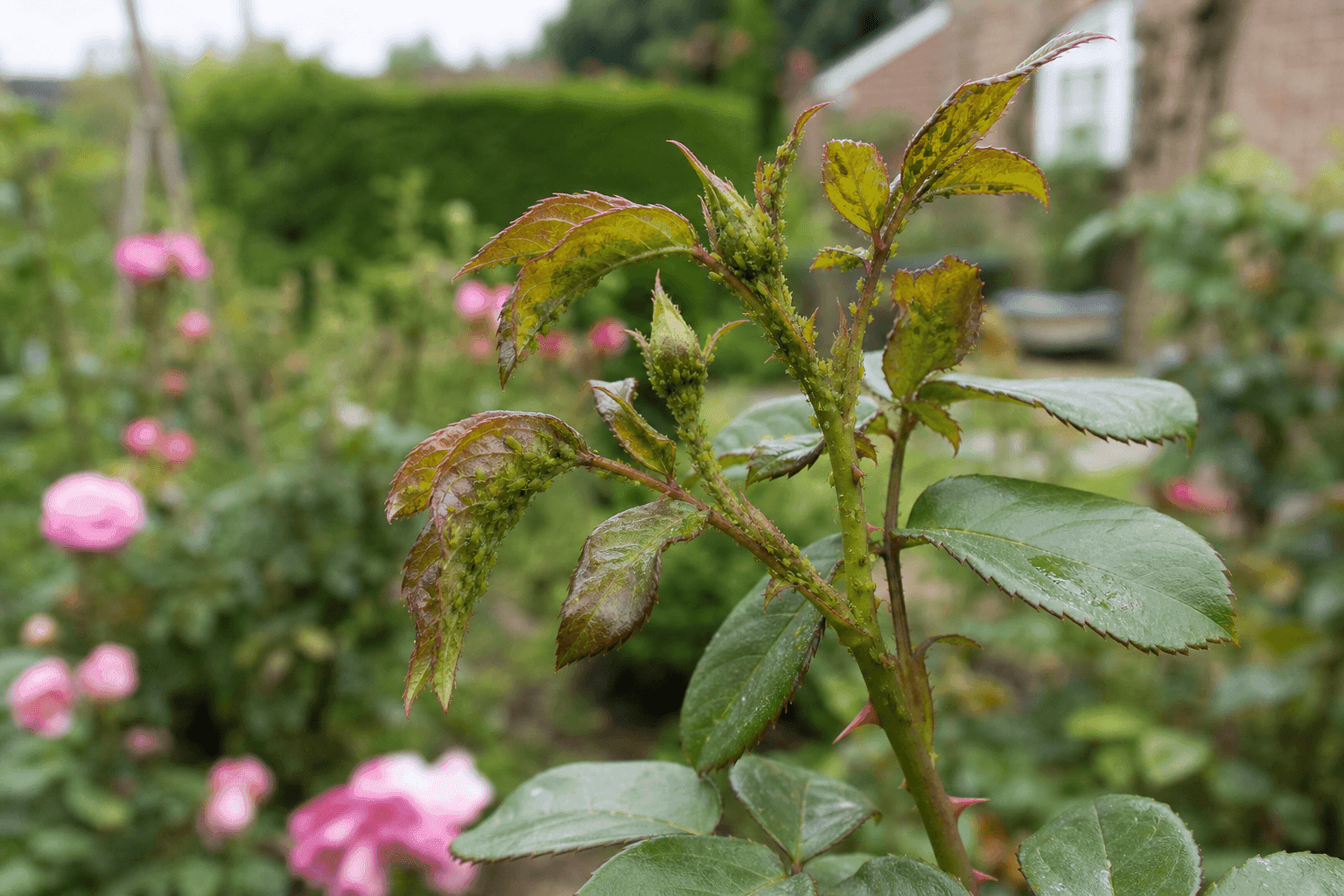
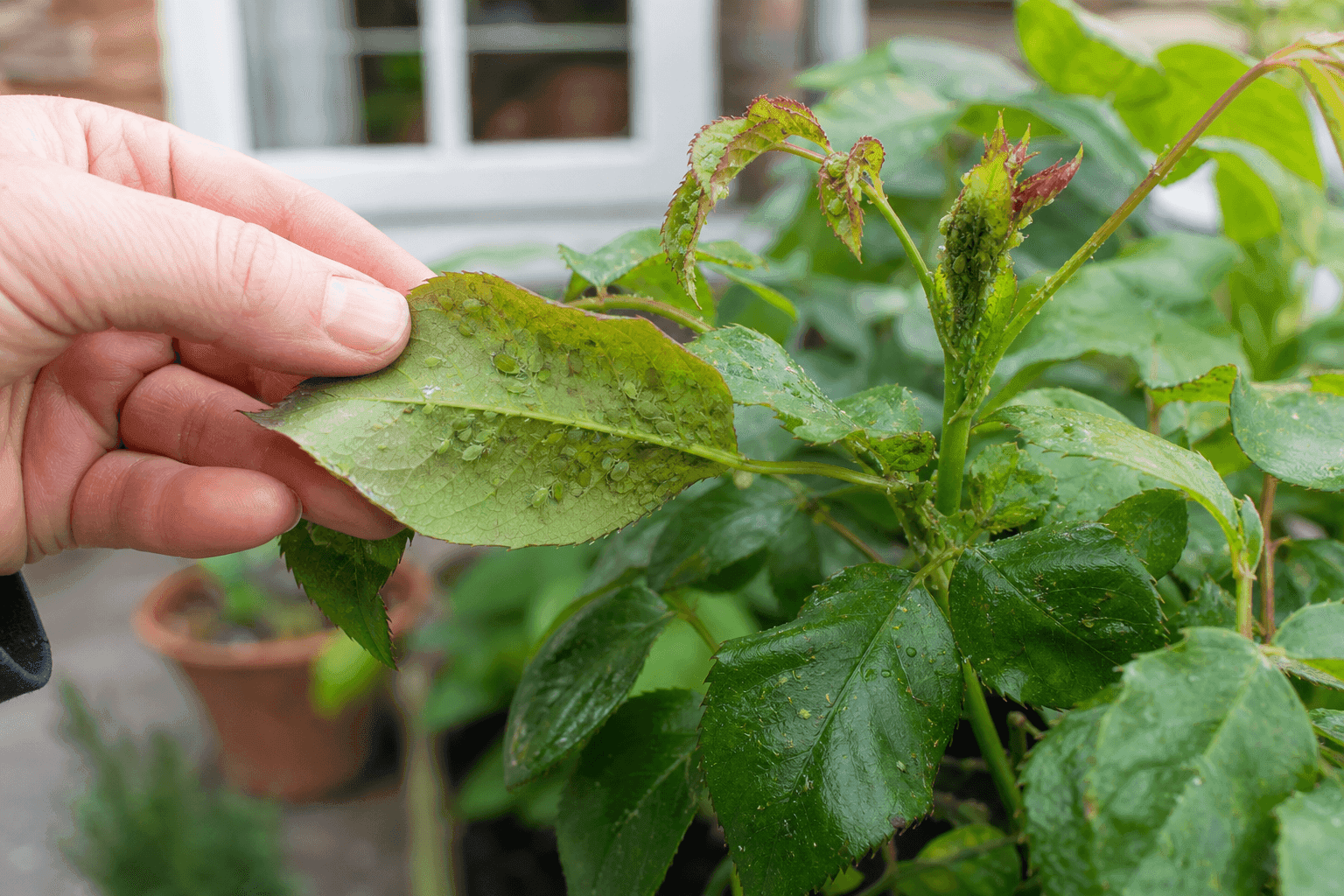
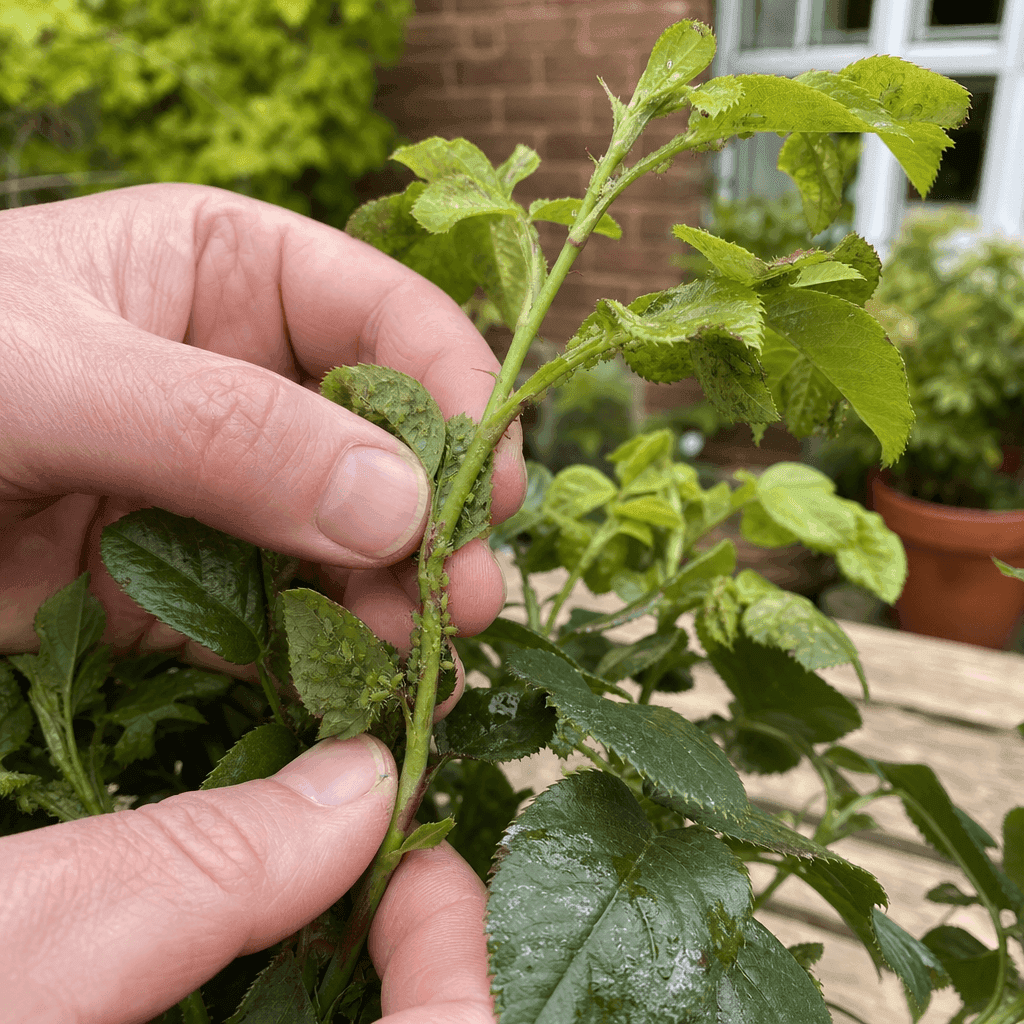
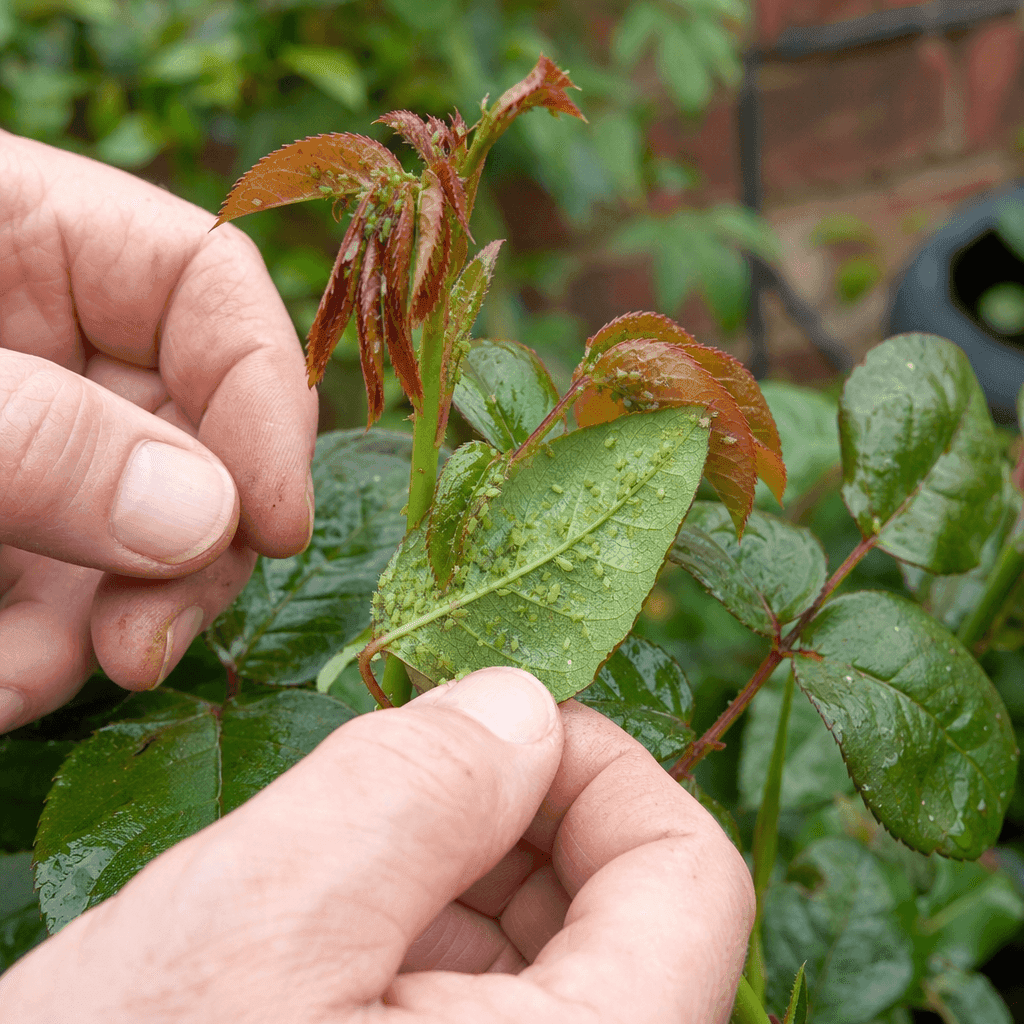
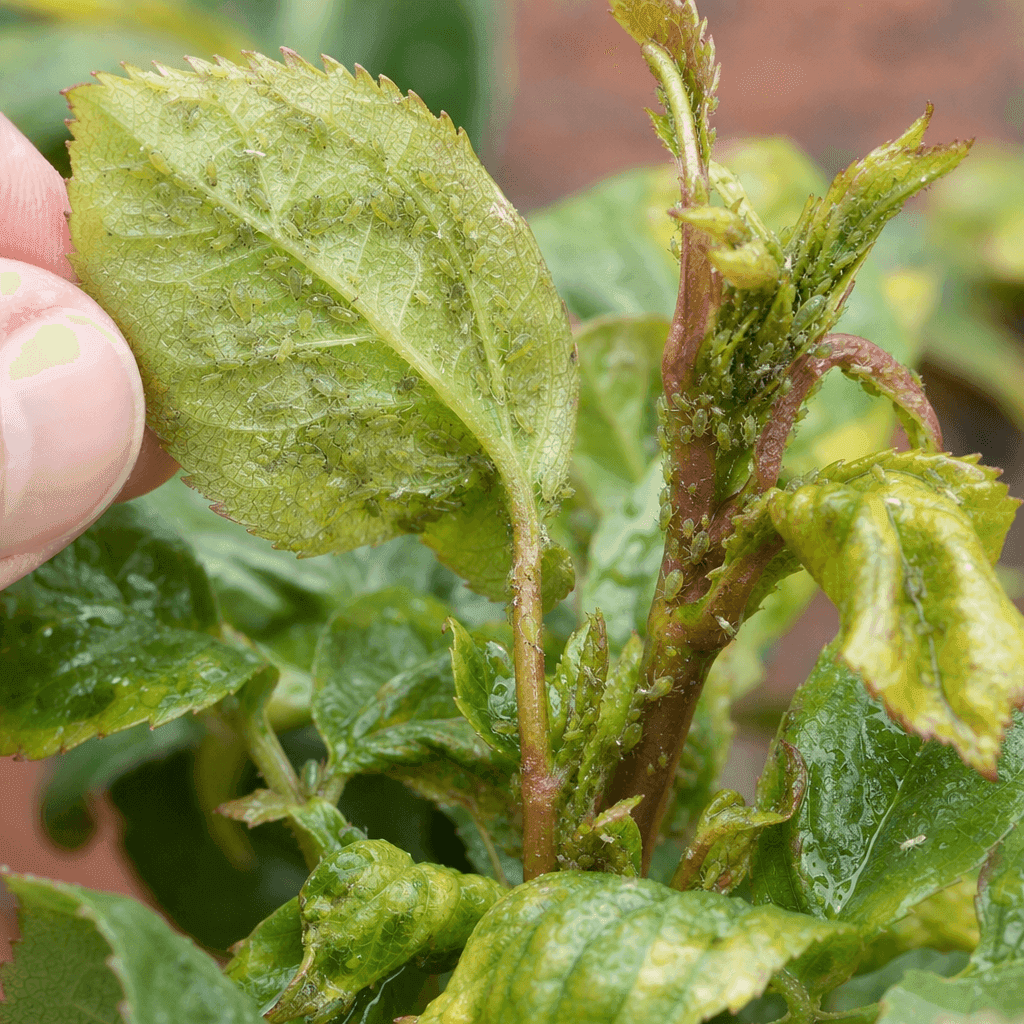
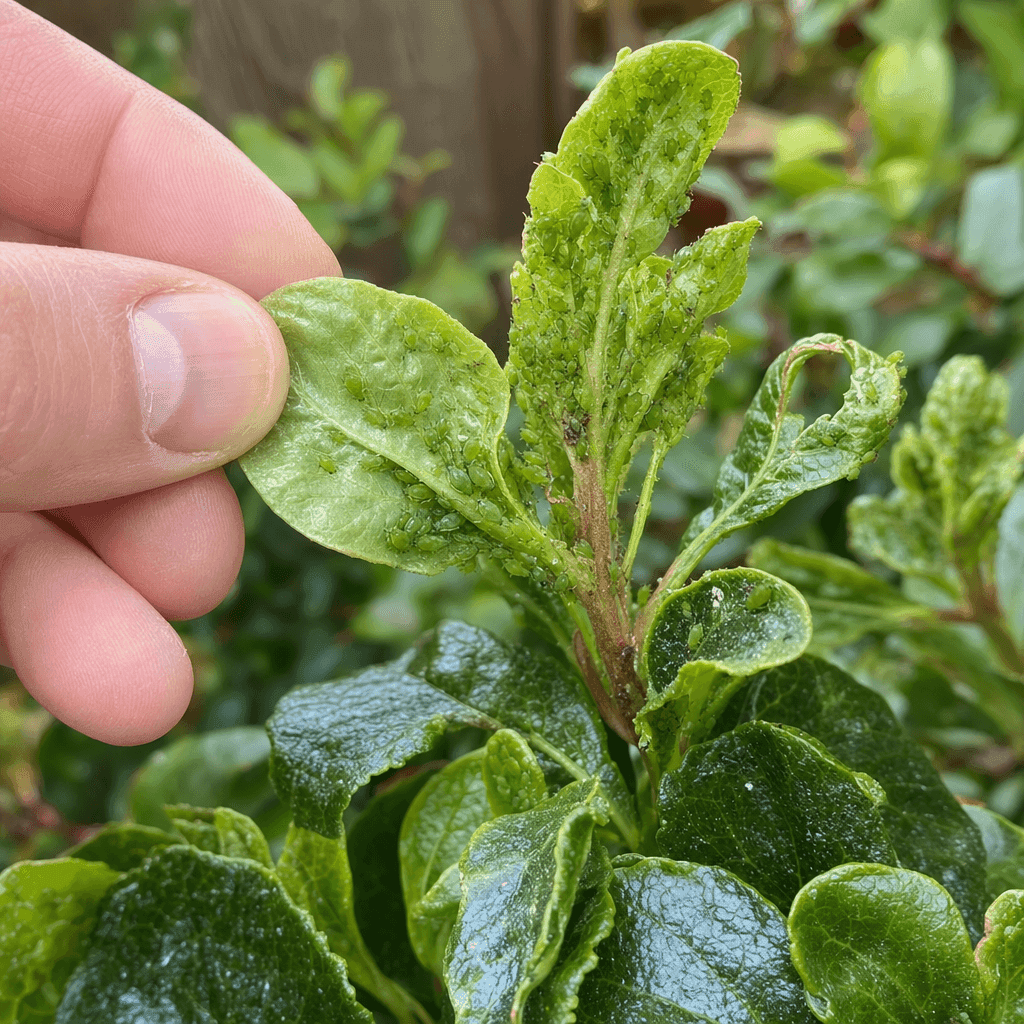
| Pale green aphids on rose buds, stems and shoot tips; sticky honeydew below | Greenfly on roses or herbaceous plants | High | Inspect bud undersides and new growth with a phone torch; look for cast skins | Squash colonies or wash off; avoid systemic insecticides that harm predators | Medium |
| White waxy wool on bark, especially around pruning wounds and branch forks | Woolly aphid on apple or pyracantha | Medium | Part the wool to find reddish-brown aphids beneath; galls may form in summer | Scrub off with a stiff brush and soapy water; encourage natural predators | Medium |
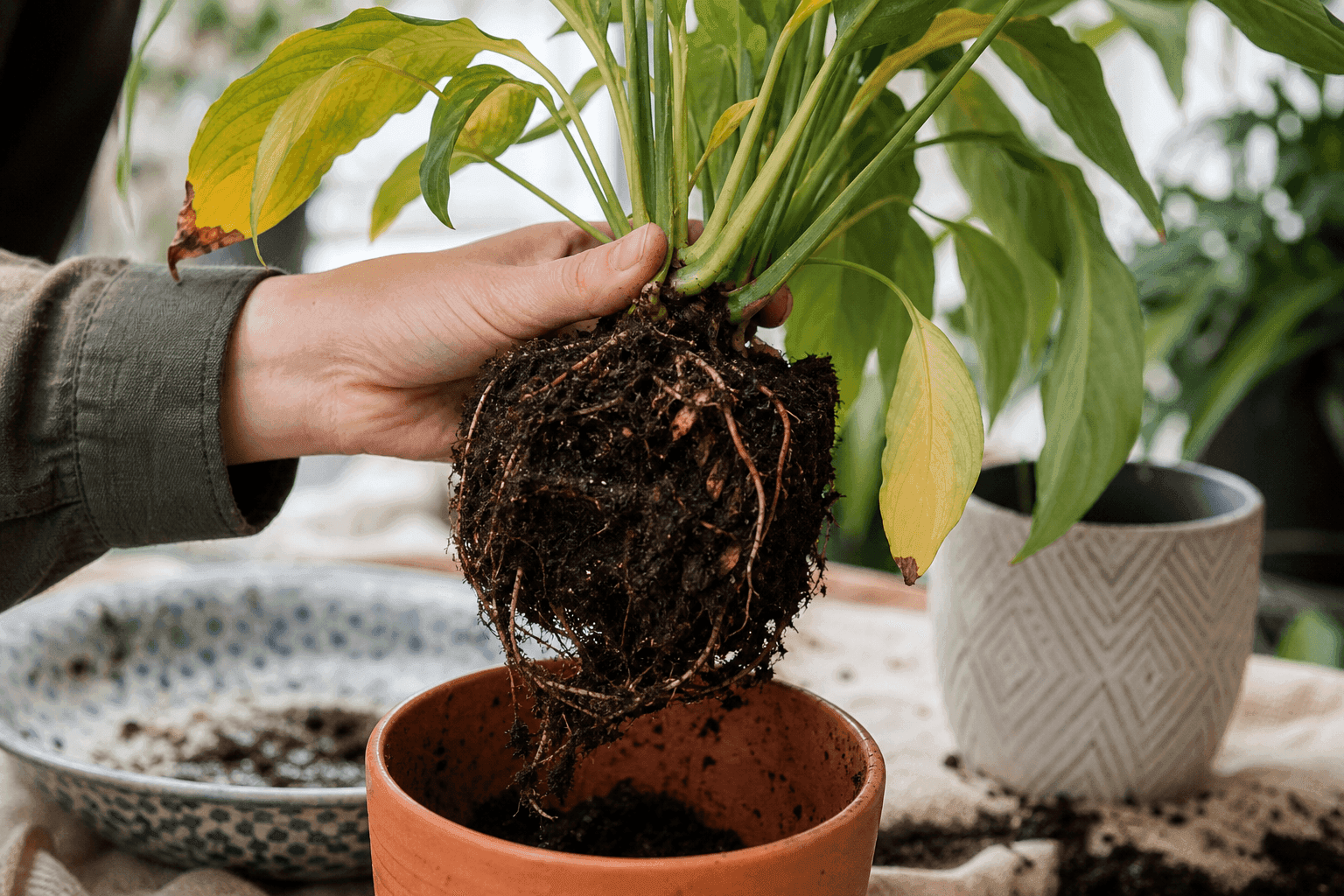
| Plant wilts despite moist soil; white waxy powder visible on roots or soil | Root aphids (lettuce, aster, beans) | Medium | Slide the plant from its pot or fork lightly around the base; look for tiny pale aphids | Remove the plant, wash roots, repot into fresh compost, avoid replanting susceptible species in the same spot | High |
| Grey-white waxy clusters on brassica leaves; leaves may cup or yellow | Mealy cabbage aphid | Medium | Check the underside of kale, cabbage and Brussels sprout leaves in summer | Remove worst leaves; encourage parasitoid wasps; treat only if infestation is severe | Medium |
| Sticky glaze on leaves; black sooty mould coating developing on top | Honeydew and sooty mould (secondary to aphids above) | High | Look above the affected area for the aphid colony producing the honeydew | Control the aphid source; wipe mould off with a damp cloth | Low–medium |
The causes, in detail
Blackfly (black bean aphid)
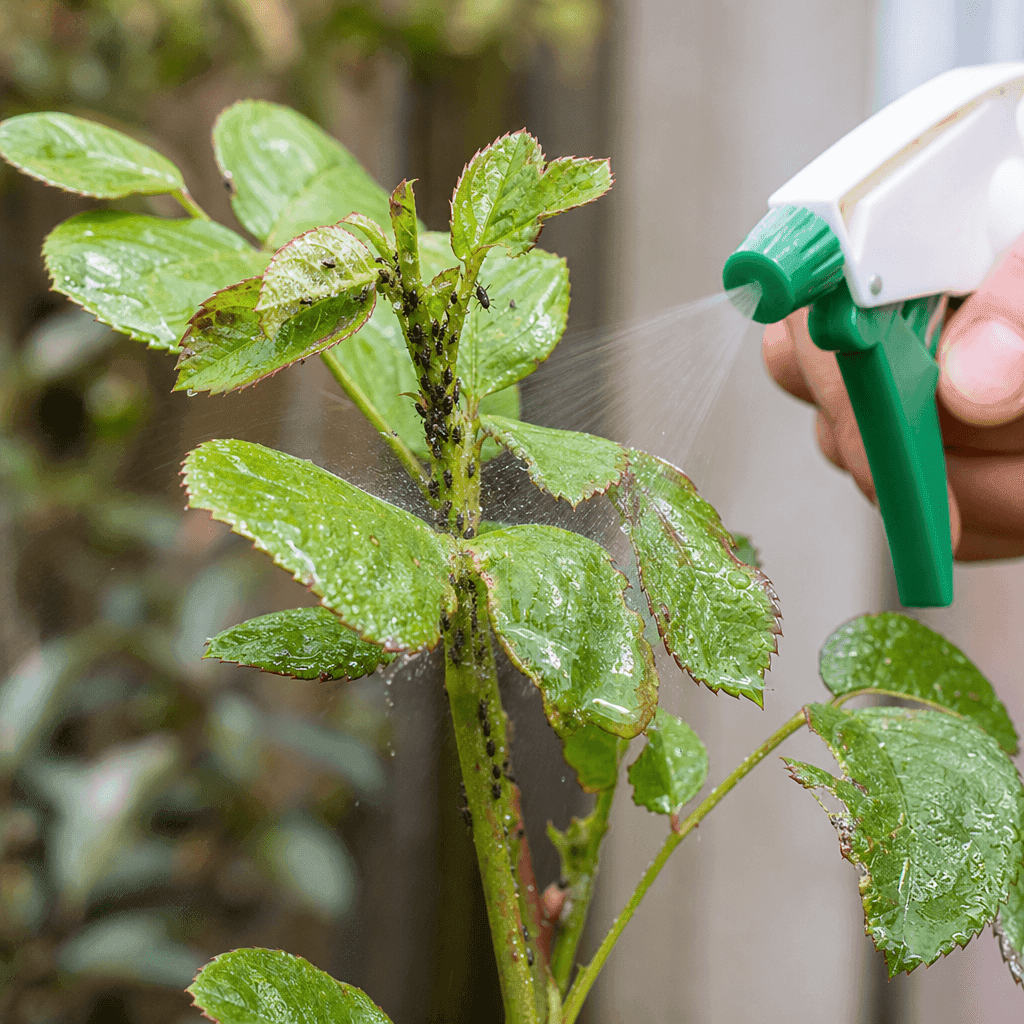
Most likelyBlackfly — the black bean aphid, Aphis fabae — is one of the most familiar UK garden pests. It overwinters as eggs on spindle (Euonymus europaeus) and migrates to beans, nasturtiums, beet and poppies in late spring. Colonies form dense black masses on shoot tips and can cause distorted growth and poor pod set. The RHS advises that pinching out the very tips of broad beans once the lowest pods have set removes the most aphid-prone tissue and is usually more effective than any spray.
- Check the soft growing tips and young leaf undersides — blackfly rarely hide.
- Look for white shed skins on lower leaves below the colony.
- Note whether the plant is broad bean, nasturtium, beet or chard, which are preferred hosts.
- Pinch out the top 5–8 cm of broad bean shoots once pods are setting — this removes the most vulnerable tissue.
- Dislodge colonies with a firm jet of water from a hose; repeat every few days.
- Crush small colonies by hand or with a damp cloth; wear gloves if you prefer.
- Delay action in spring if possible — ladybird and hoverfly populations often clear infestations naturally by early summer.
- Avoid systemic insecticides: they persist in plant tissue and kill the natural predators that control future infestations.
Stop it coming back:Sow broad beans in autumn (overwintered plants are stronger) or grow bait rows of nasturtiums to draw blackfly away from beans. Allow flowering plants such as phacelia and marigolds near the vegetable patch to attract hoverfly adults.
apply a systemic insecticide to edible plants at the first sign of blackfly — the colony will usually be controlled naturally within a few weeks, and spraying harms beneficial insects.
Greenfly on roses and herbaceous plants
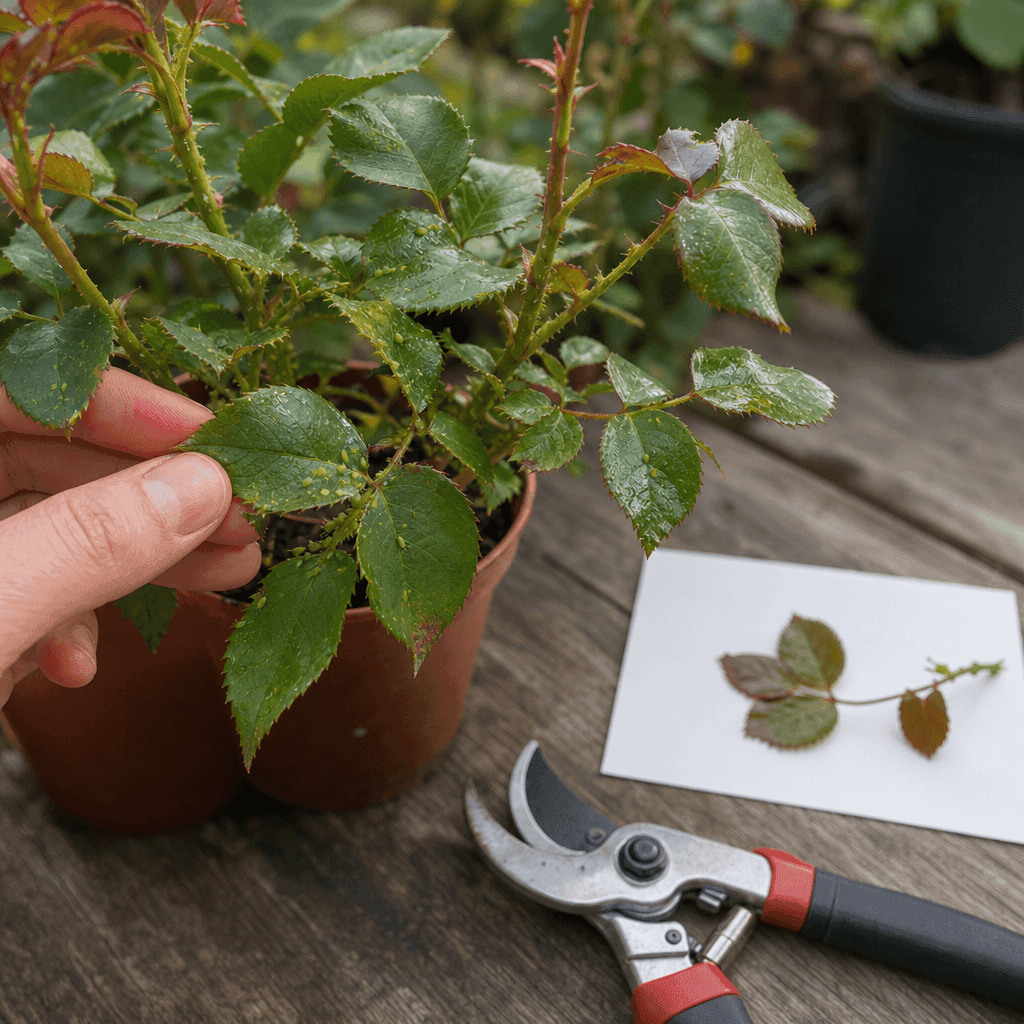
Most likelyGreenfly — various Macrosiphum and Myzus species — are the most widespread aphids in UK gardens, attacking roses, herbaceous perennials, houseplants and many vegetables. For a rose-specific walkthrough, see our guide to greenfly and aphids on roses. They cluster under leaves and on soft new shoots, causing distortion, sticky honeydew and black sooty mould. The RHS notes that populations typically build in spring before natural enemies catch up, and that by midsummer ladybirds, hoverflies and parasitoid wasps often bring numbers down without any intervention.
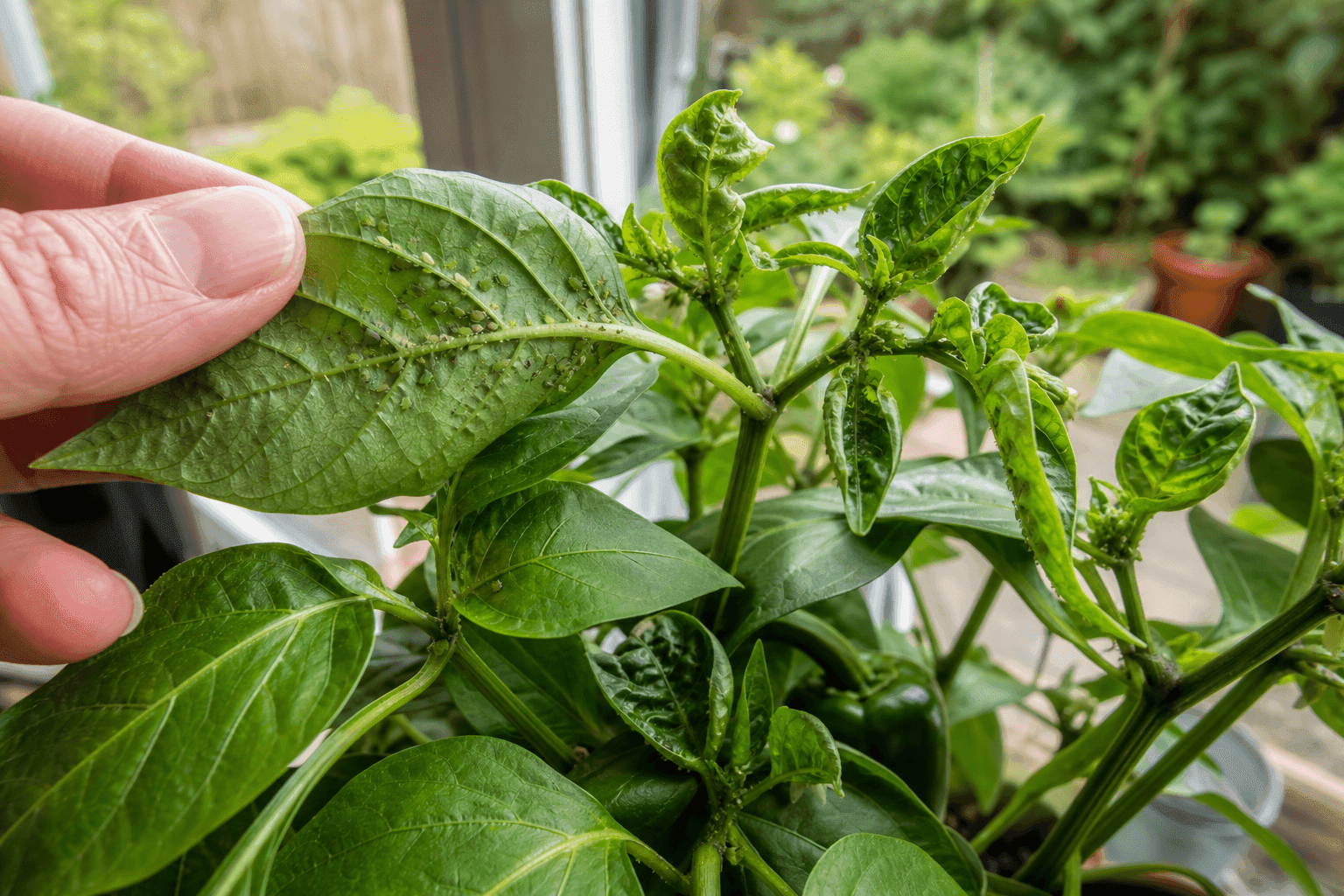
- Inspect new shoot tips and the undersides of young leaves with a magnifying glass or phone torch.
- Look for pale cast skins on lower leaves — a sign of active colony growth.
- Check for ants: ants farm aphids for honeydew and will fight off predators, so ants on a plant are a clue to aphid activity above.
- Squash small colonies with finger and thumb.
- Wash larger infestations off with a firm jet of water; repeat every few days until natural predators arrive.
- Remove the most heavily infested shoot tips and bin them.
- Encourage predators by planting fennel, phacelia, pot marigold or single-flowered plants near susceptible roses.
- If treatment is essential, use a fatty acid (potassium soap) spray, which breaks down quickly and does less harm to non-target insects than synthetic insecticides.
Stop it coming back:Avoid very high-nitrogen feeds that promote the soft, sappy growth aphids prefer. Water regularly to keep plants healthy — stressed plants are more susceptible.
spray roses with a systemic insecticide as a default — it will kill hoverfly larvae and parasitoid wasps as well as aphids, and make future infestations harder to control naturally.
Woolly aphid on apple and ornamentals
PossibleWoolly aphid (Eriosoma lanigerum) produces a distinctive white waxy wool that can be confused with mealybugs or mildew. It attacks apple trees, cotoneaster, pyracantha and related plants, clustering around old pruning wounds and branch forks. The aphid feeds under the wool and in summer causes woody galls to form on bark. The RHS notes it is controlled naturally by a parasitoid wasp (Aphelinus mali) — once you see the wasp's emergence holes in the wool, natural control is underway.
- Part the white wool to find reddish-brown aphids beneath.
- Look at old pruning wounds, branch forks and cracked bark — the preferred hiding spots.
- Check in May to July when colonies are at their most visible.
- Scrub off small colonies with a stiff-bristled brush dipped in diluted insecticidal soap.
- Prune out badly affected shoots in winter when the plant is dormant.
- Avoid wounding bark unnecessarily, as fresh wounds are the preferred entry point.
- Allow the natural parasitoid wasp to work — look for small holes in the dried wool that indicate wasps have already done their job.
paint or tar over the colonies to smother them — this traps moisture and can worsen bark problems rather than resolve them.
Root aphids
PossibleRoot aphids are harder to spot than leaf-feeding species because they live below the soil. The most common UK root aphid problems affect lettuces (Pemphigus bursarius), asters, carrots and some beans. Plants wilt despite adequate moisture in the soil, and when unpotted or dug up, tiny pale aphids and white waxy powder are visible on the root surface. The RHS notes root aphids are a particular problem in warm, dry summers in containers and raised beds.
- Slide the plant carefully from its pot or gently fork around the base — root aphids are tiny (1–2 mm) and pale cream or white.
- Look for white powdery wax on roots and at the soil surface.
- Wilting despite moist soil is the key clue — root damage prevents water uptake.
- Remove the plant from its container, shake off old compost and wash the roots.
- Repot into fresh compost in a clean pot; do not reuse the old compost.
- In borders, remove affected plants and avoid replanting the same susceptible species in the same spot for at least a season.
- Water with a solution of biological control nematodes (Steinernema feltiae) when soil temperature is above 10°C.
Stop it coming back:Avoid waterlogged or very dry soils that stress plants. Rotate lettuce and other brassica crops to avoid build-up of root-feeding species in the same spot.
confuse root aphid wilt with overwatering — check the root zone before adding more water to a wilting plant.
Mealy cabbage aphid
PossibleMealy cabbage aphid (Brevicoryne brassicae) is a persistent problem on kale, cabbage, Brussels sprouts and other brassicas in the UK. It forms dense grey-white waxy colonies on leaf undersides from late spring onwards, causing leaves to cup, yellow and growth to slow. Unlike greenfly it does not respond well to simple water washing alone and may require repeated removal of affected leaves.
- Check the undersides of brassica leaves from May onwards — grey-white, waxy, tightly packed colonies.
- Look for cupping of young leaves, which curl inwards around the colony.
- Aphids are grey rather than green, covered in a powdery white wax.
- Remove heavily infested leaves and dispose of them away from the compost heap.
- Encourage parasitoid wasps by allowing flowering umbellifers near the brassica bed.
- Apply a fatty acid (potassium soap) spray to the undersides of leaves if infestation is severe — repeat every 5–7 days.
- In autumn, clear brassica debris promptly to remove overwintering eggs.
Stop it coming back:Grow brassicas under fine insect-proof mesh from planting to harvesting to exclude the aphid entirely.
leave brassica stumps and debris in the ground over winter — they harbour aphid eggs for the following season.
Honeydew and sooty mould
Most likelyAll sap-sucking aphids excrete honeydew, a sticky sugar solution that coats leaves and allows black sooty mould fungi to grow. Sooty mould does not directly infect the plant, but it blocks light and photosynthesis and is cosmetically disfiguring. It is particularly visible on plants beneath lime trees, sycamores or heavily infested shrubs. Removing the aphid source is the correct fix — cleaning the mould is only cosmetic.
- Leaves are coated in a sticky glaze, then develop a black powdery coating.
- Look above the affected plant for the aphid colony producing the honeydew — it may be on a branch or neighbouring plant overhead.
- The mould wipes off with a damp cloth, unlike fungal leaf diseases which stain the tissue.
- Identify and control the aphid source above or on the plant.
- Wipe affected leaves with a damp cloth or soft sponge dipped in warm water.
- On larger plants, rinse foliage with a hosepipe once the aphid colony is cleared.
- Avoid positioning susceptible plants under large sycamores or limes, which host large aphid populations.
treat the sooty mould with fungicide — the mould will return until the aphid source is removed.
Still not sure?
Work down these branches — the first one that matches is your answer.
What not to do
- Apply systemic insecticides as a default — they kill ladybirds, hoverfly larvae and parasitoid wasps that naturally control aphid populations.
- Spray in bright sun or when bees are foraging on nearby flowers.
- Assume wilting means drought — check for root aphids before watering more.
- Panic at the first colony in spring — natural predators often clear aphids by early summer without any intervention.
- Leave brassica debris in the ground over winter — it harbours overwintering mealy cabbage aphid eggs.
Common questions
How do I get rid of aphids without chemicals?
Squash small colonies by hand, wash off larger ones with a firm jet of water, and pinch out the soft shoot tips where they cluster most heavily. Encouraging natural predators — by planting marigolds, fennel and phacelia nearby — is the most durable long-term solution. The RHS recommends non-chemical control as the primary approach.
Why do aphids always appear in spring?
Aphid populations build rapidly from overwintered eggs in March and April, before the natural predators — ladybirds and hoverflies — emerge in useful numbers. By May or June, predator populations typically catch up and infestations decline on their own.
Can aphids kill my plants?
Direct aphid feeding rarely kills an established plant, but a severe infestation can stunt soft growth, cause distortion, spread viruses and allow sooty mould to develop. Plants weakened by drought or poor nutrition are more seriously affected.
What is the white stuff on my apple tree bark — is it woolly aphid?
Almost certainly yes. Woolly aphid produces distinctive white waxy wool, usually around old wounds or branch forks. If you part the wool you will find reddish-brown aphids. A natural parasitoid wasp (Aphelinus mali) often controls it — small holes in dried wool are a sign the wasp has already been at work.
Why is my lettuce wilting even though the soil is moist?
Lettuce root aphids are a common cause of this symptom. Slide the plant from its pot or fork gently around the base. Tiny pale aphids and white waxy powder on the roots confirm the diagnosis. Repot in fresh compost and avoid replanting the same spot for a season.
Are ants connected to aphids?
Yes. Ants 'farm' aphids for their honeydew, protecting them from predators and moving them to fresh growth. If you see ants running up and down a stem, there is almost certainly an aphid colony somewhere above. Fitting a sticky band around the stem stops ants from accessing the colony.
Is it safe to eat vegetables that had aphids?
Yes, as long as you wash them thoroughly. Aphids and honeydew rinse off with water. If you have not used insecticide, there is no chemical residue concern.
How do I attract aphid predators to my garden?
Grow single-flowered plants that produce accessible pollen and nectar — pot marigold, phacelia, fennel, poached egg plant and single-flowered dahlias all attract hoverflies and parasitoid wasps. Avoid broad-spectrum insecticides that kill predators as well as pests — the same restraint also helps the predatory mites that control other sap-suckers such as spider mites.