Quick diagnosis
Match the row to what you’re seeing, then jump to the fix.
| What you see | Likely cause | Confidence | How to confirm | What to do now | Urgency |
|---|---|---|---|---|---|
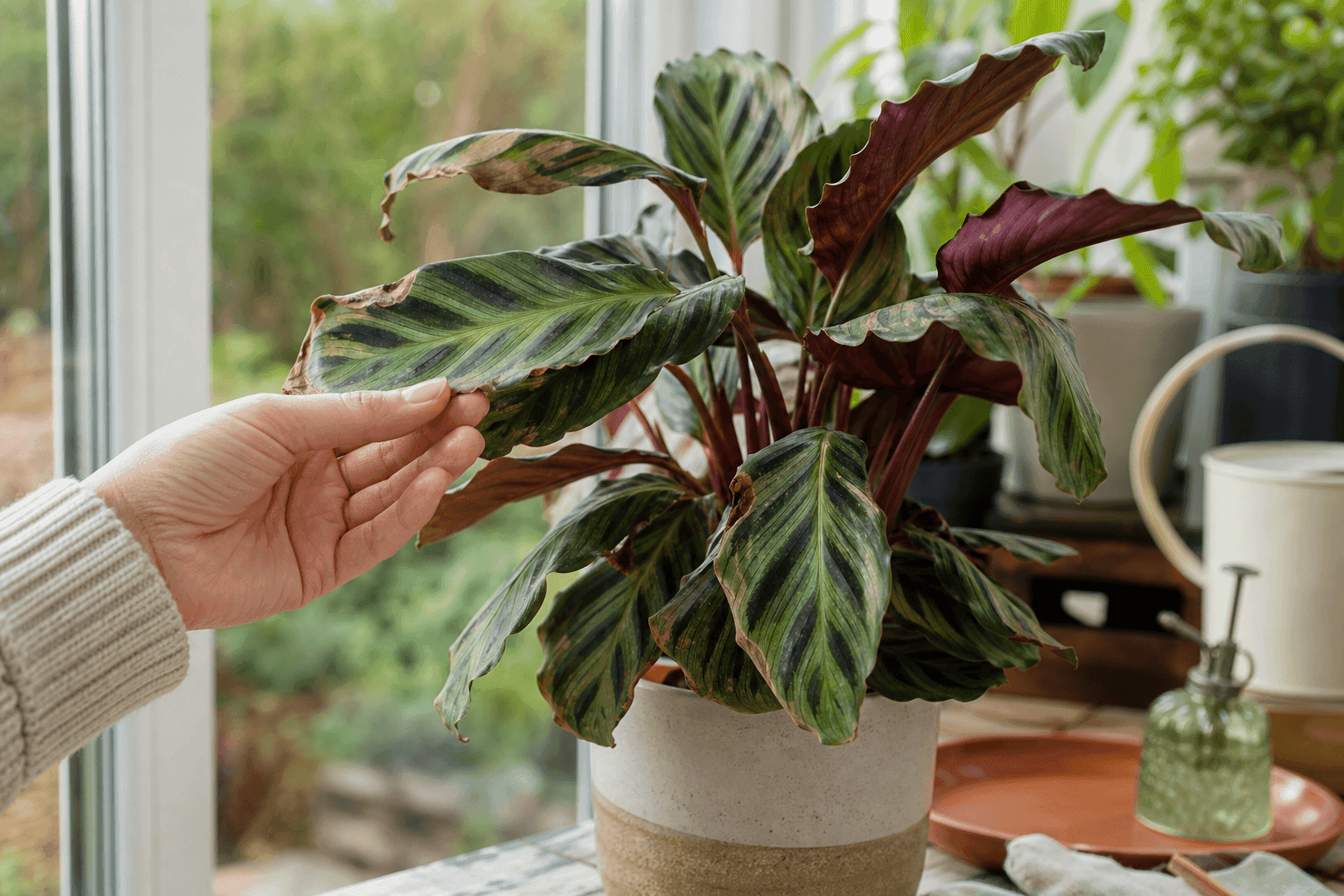
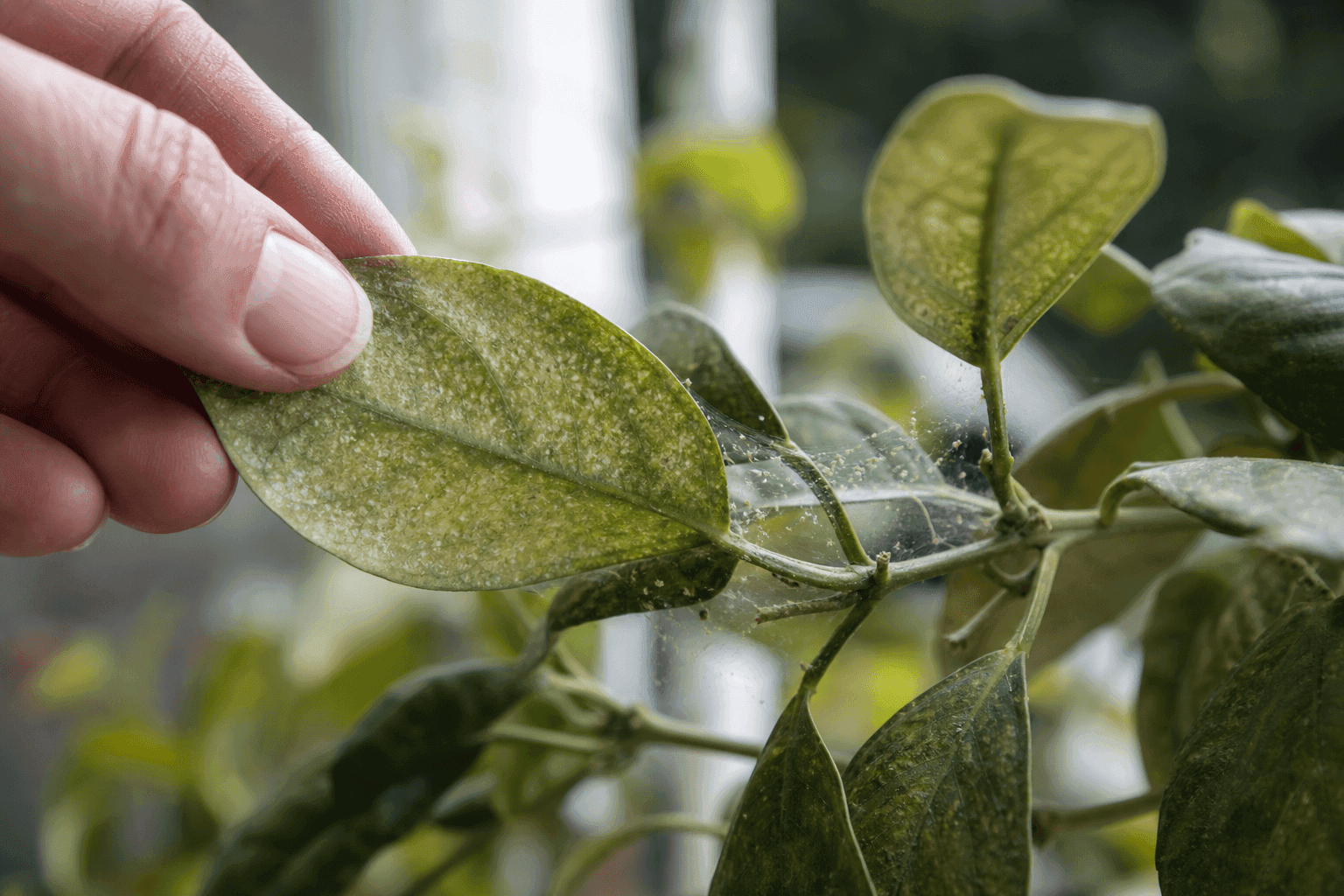
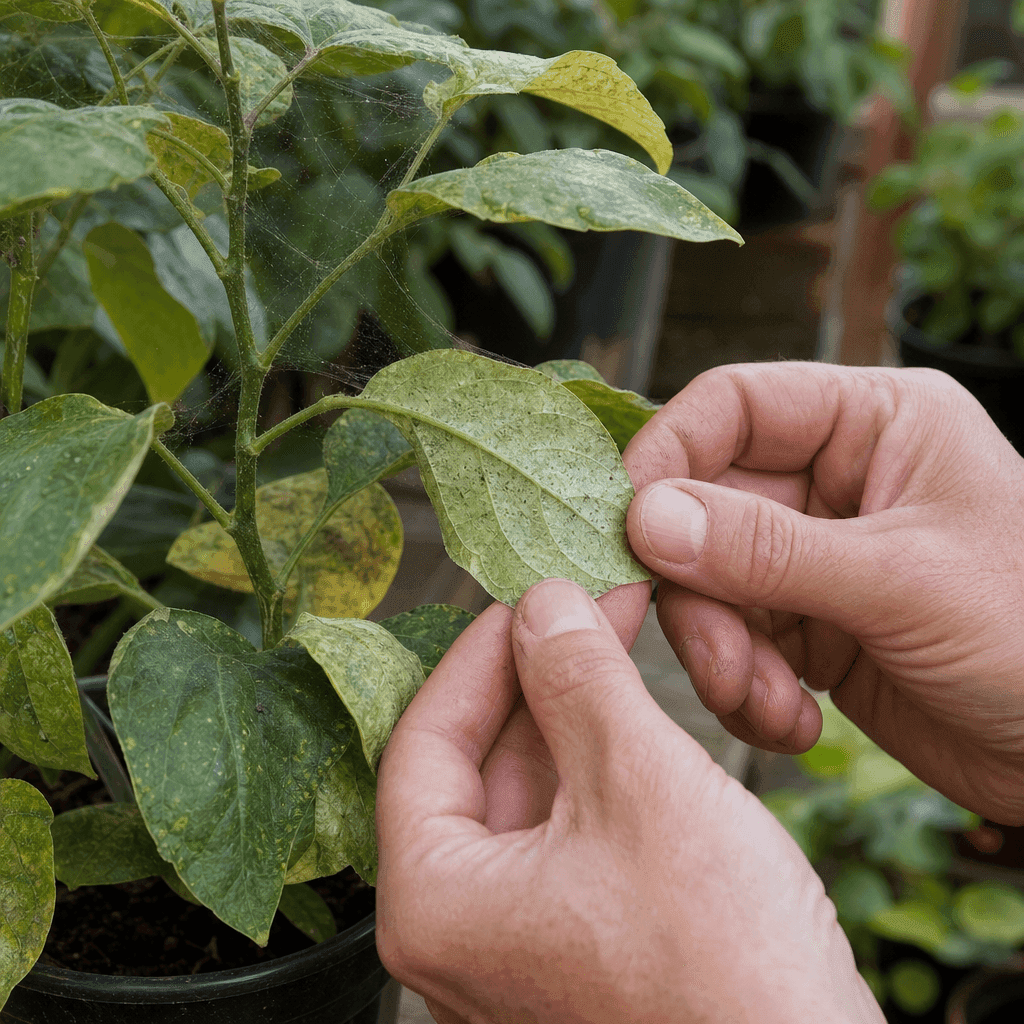
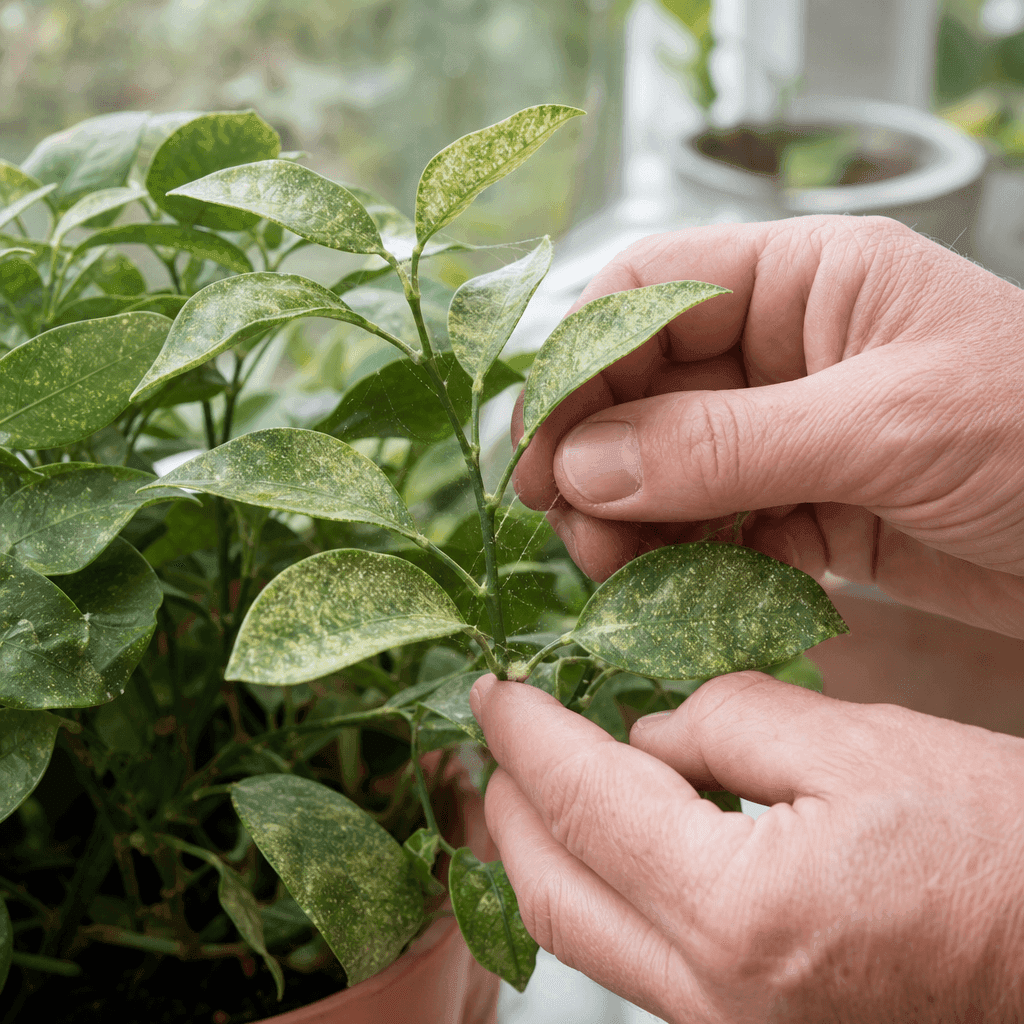
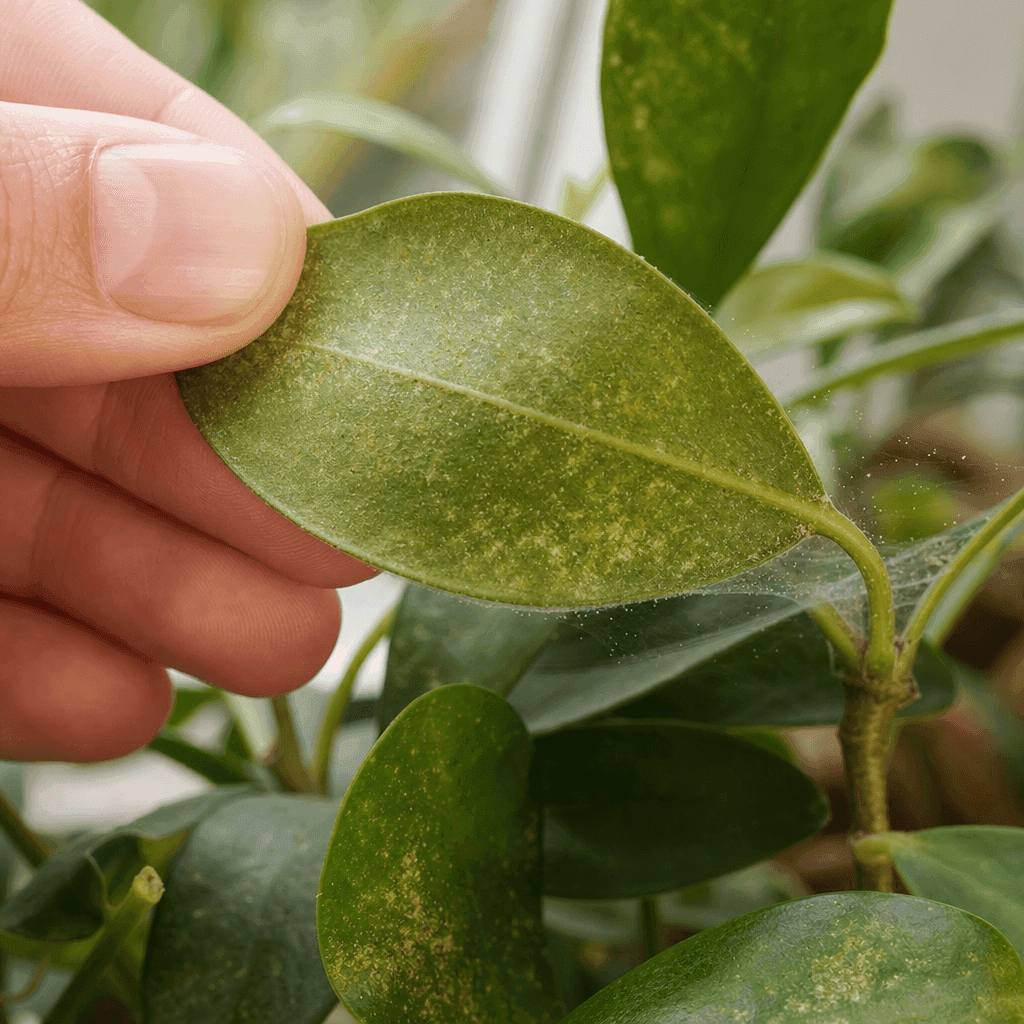
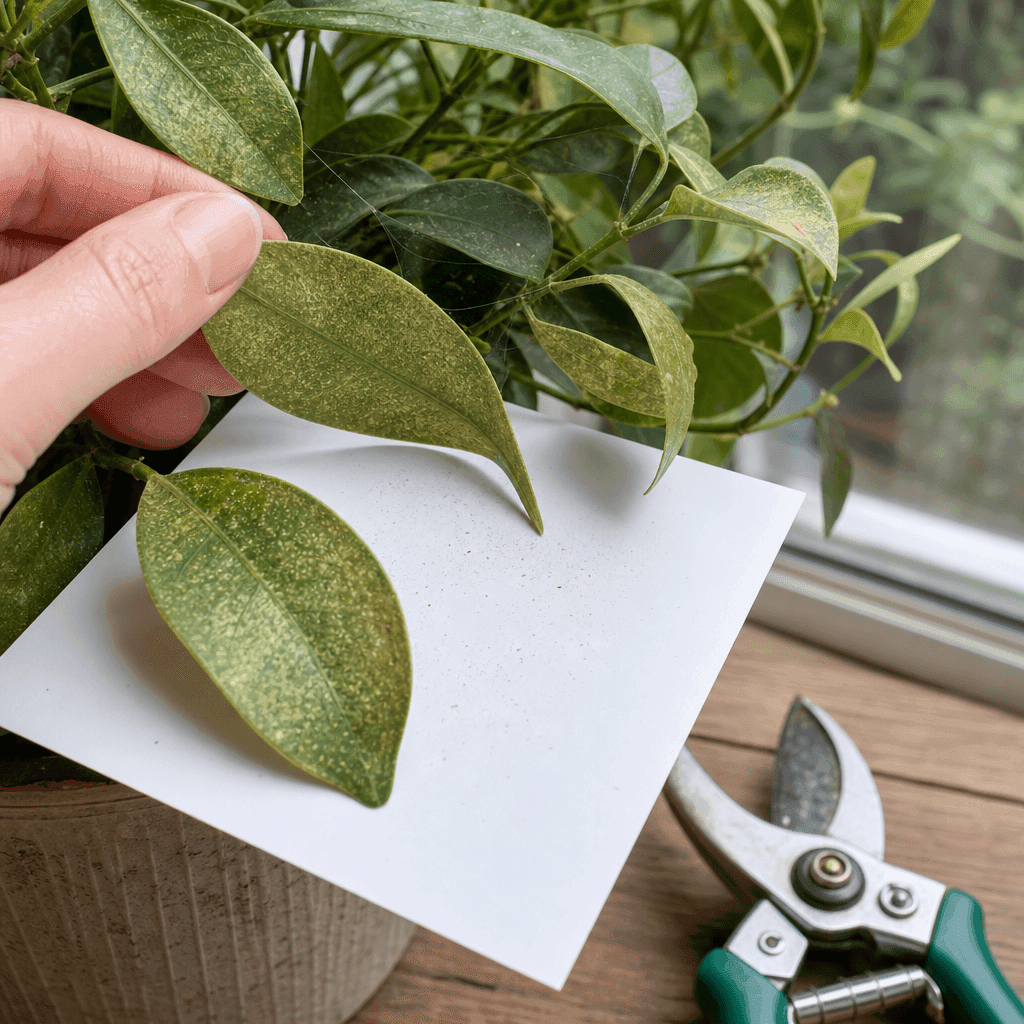
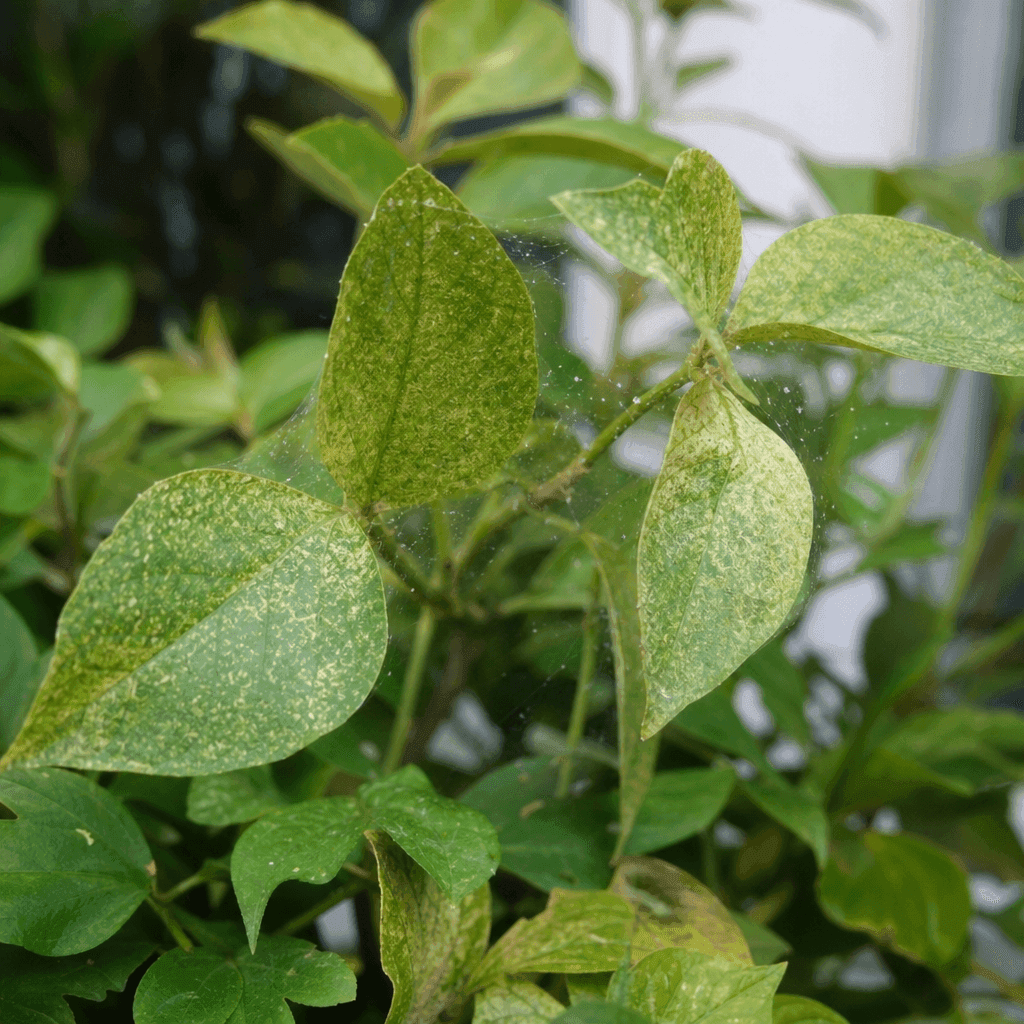
| Pale stippling or bronze speckling on upper leaf surfaces; fine webbing on tips and undersides | Active spider mite infestation | High | Tap a leaf over white paper — tiny moving specks confirm mites are present. | Increase humidity; wipe and wash leaves; begin biological control if available. | High |
| Mites appearing after a hot dry spell or near a radiator or heat vent indoors | Hot, dry conditions favouring mite build-up | High | Conditions have been consistently hot and dry (indoors: near heating; outdoors: in a drought spell). | Raise humidity, increase ventilation and remove mites physically from leaves. | Medium |
| Dense white or silver webbing covering shoot tips and leaf undersides; leaves dropping | Severe or advanced spider mite infestation | Medium | Webbing is visible to the naked eye; leaves feel papery and are dropping. | Remove worst-affected material; wash the plant thoroughly; apply insecticidal soap or biological control. | High |
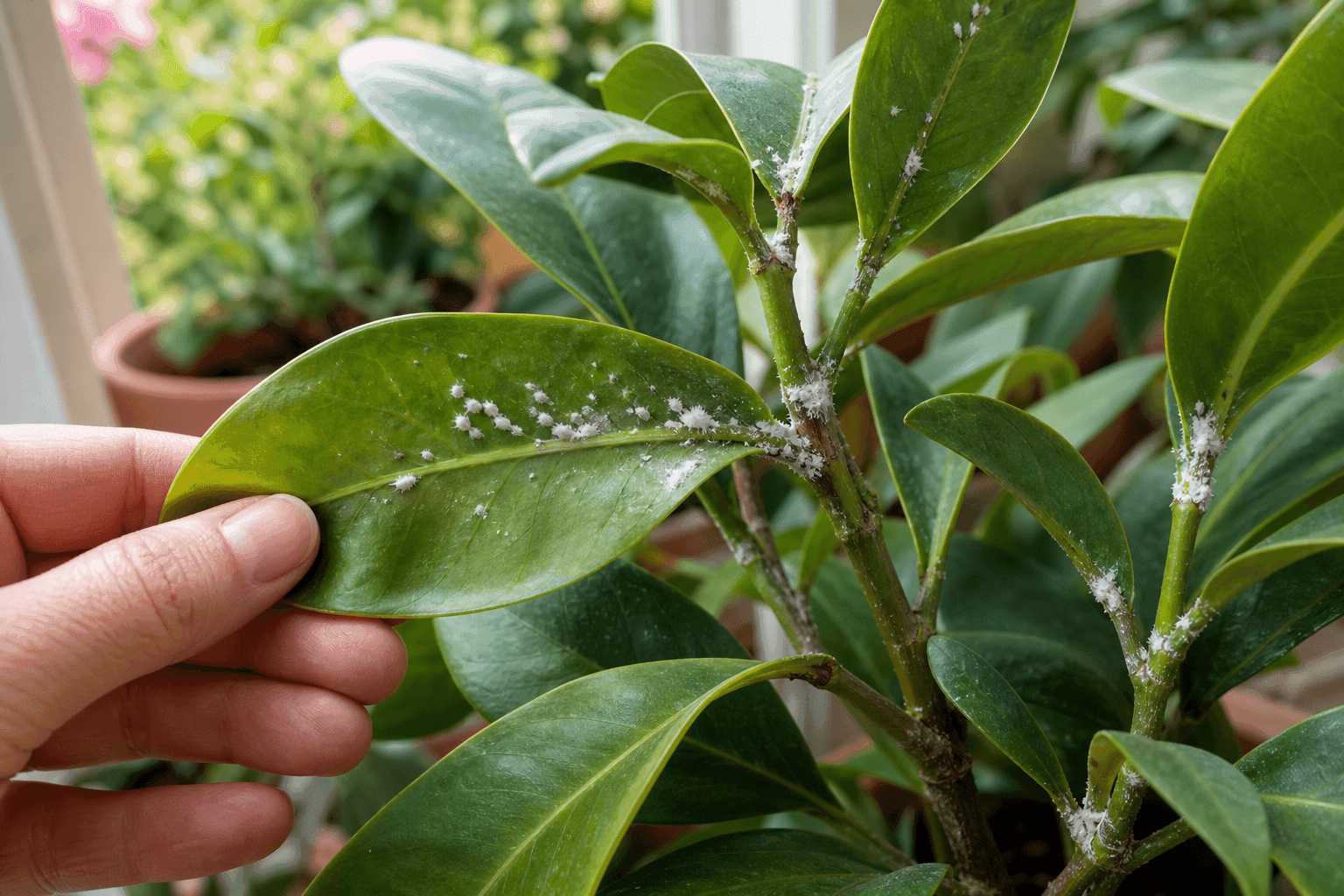
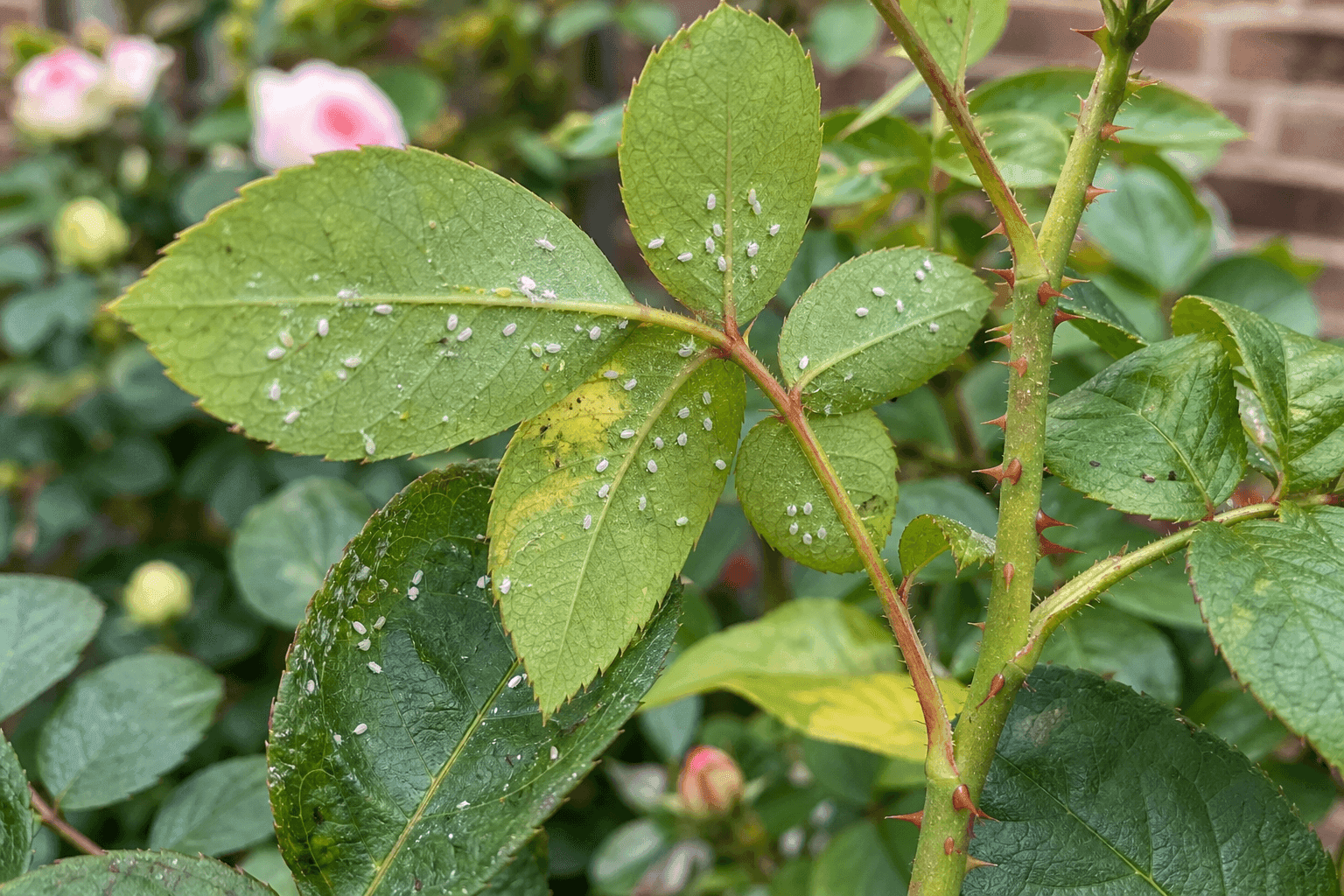
| Sticky leaves with black sooty patches in addition to stippling | Secondary sooty mould from honeydew — mixed pest infestation | Low | Check for aphids, whitefly or scale in addition to mites — sooty mould indicates sap-sucking insects. | Identify all pests present and treat each appropriately; wipe mould off leaves after pest control. | Medium |
The causes, in detail
Active glasshouse red spider mite infestation
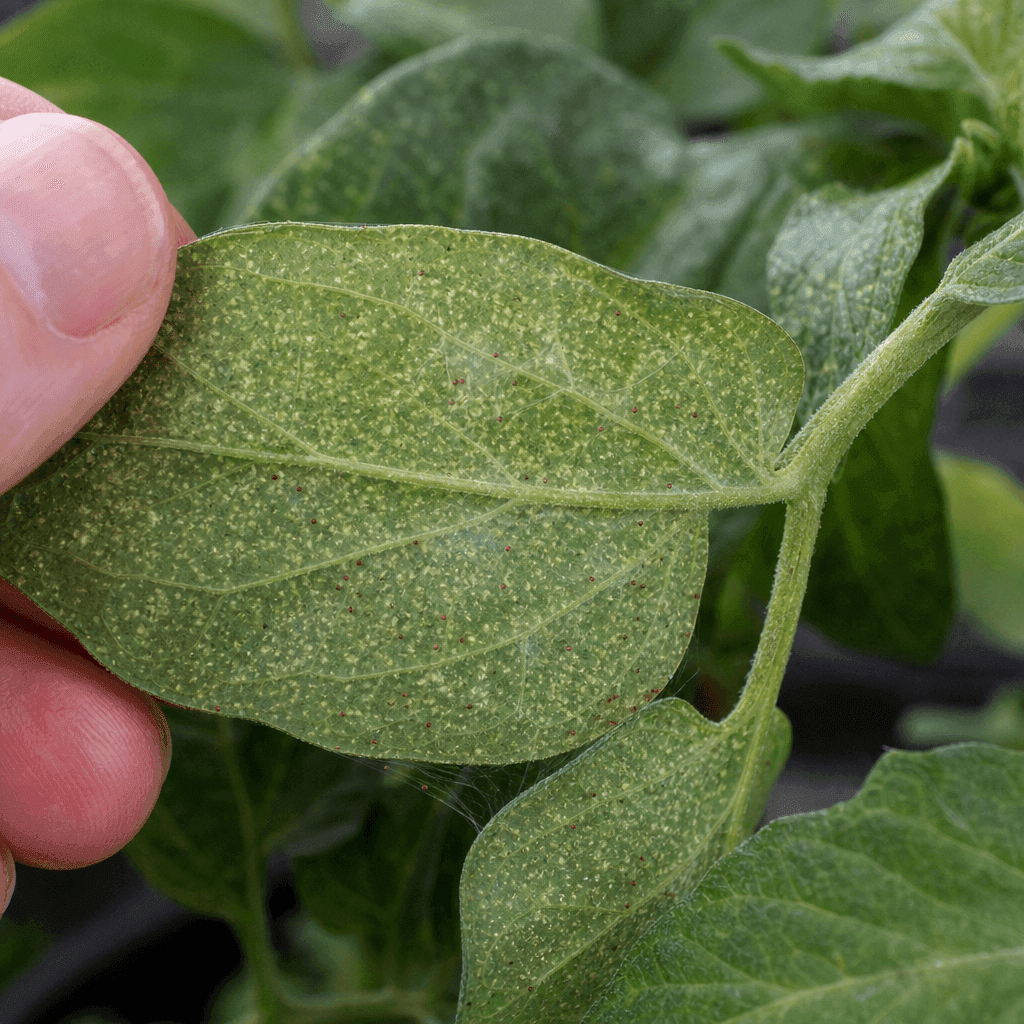
Most likelyThe glasshouse red spider mite (Tetranychus urticae) is the most common species on UK houseplants, greenhouse crops and outdoor ornamentals. Despite its name, it is yellowish-green in summer and only turns red in autumn and winter. It is a prolific breeder: at 27°C a single female can produce over 100 eggs, and the life cycle from egg to adult takes as little as seven days. The RHS confirms it is found on a very wide range of plants, including tomatoes, cucumbers, roses, strawberries, impatiens, pelargoniums and many houseplants. Early symptoms are pale or slightly bronze stippling on the upper leaf surface — each pale dot is a plant cell that has been pierced and drained.
- Tap an affected leaf firmly over a sheet of white paper — tiny, slow-moving specks (about 0.5 mm) confirm mites.
- Use a hand lens or phone camera to check the underside of leaves for mites, eggs and fine webbing.
- Stippling is on the upper leaf surface; mites feed from the underside.
- Isolate the affected plant from others immediately.
- Wipe all leaf surfaces — upper and lower — with a damp cloth to remove mites, eggs and webbing.
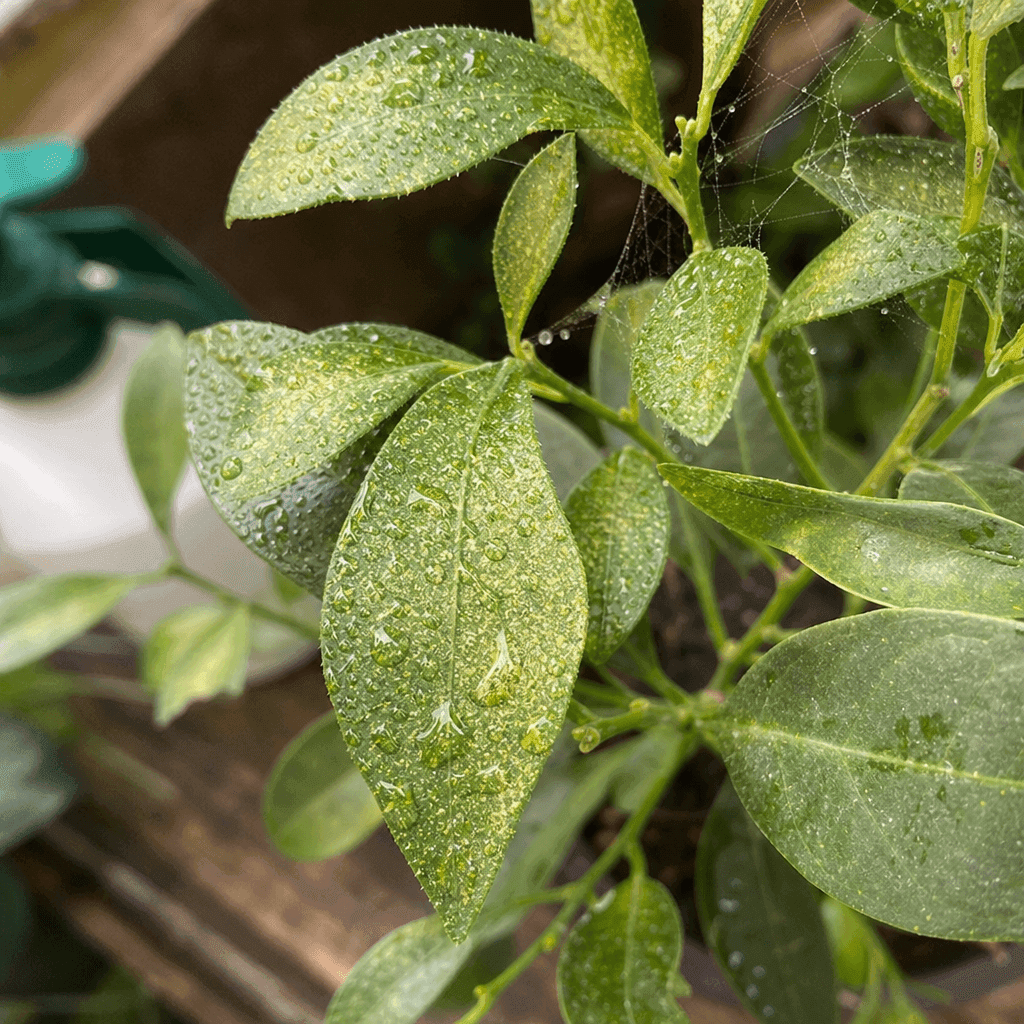
- Mist or wash the plant thoroughly, paying particular attention to undersides of leaves.
- Raise the humidity around the plant by misting the air or using a pebble-and-water tray — mites cannot reproduce effectively above 60% relative humidity.
- Repeat every two to three days for at least three weeks — the life cycle means you must catch successive generations.
- Apply insecticidal soap or fatty-acid spray to leaf undersides if physical removal is insufficient.
Stop it coming back:Existing stippling damage will not reverse, but new leaves produced once the infestation is controlled will be healthy. Monitor the plant for two months after apparent clearance.
spray with a broad-spectrum insecticide before confirming mites — most insecticides do not kill mites and will harm the natural predators (e.g. predatory midges, beetles) that help keep populations in check.
Hot, dry conditions promoting rapid mite build-up
Most likelySpider mites multiply most rapidly in hot, dry conditions — the ideal environment for Tetranychus urticae is above 27°C with low relative humidity. In UK homes, this translates to plants kept near radiators in winter, on south-facing windowsills in summer, or in conservatories without adequate ventilation. In gardens, hot dry summers since 2018 have allowed mite populations on outdoor plants to build to damaging levels. The RHS notes that populations can reach damaging levels very rapidly under warm, dry conditions, and that raising humidity is the easiest and safest way to get rid of them.
- The plant is positioned near a heat source, in a conservatory, or in a spot that becomes very hot and dry.
- The infestation worsened during a heat spell or after the heating was turned on.
- Mites are worst on the hottest, least-ventilated part of the plant.
- Move the plant away from direct heat sources — radiators, underfloor vents, conservatory glass.
- Increase ventilation — open windows and doors in greenhouses, or move outdoor containers to a less exposed spot.
- Damp down greenhouse floors and staging with water in hot weather to raise ambient humidity.
- For indoor plants, place on a pebble-and-water tray and consider grouping with other plants.
- Mist plants with tepid water, focusing on the undersides of leaves — this disrupts mite activity and reduces reproduction.
damp down greenhouse floors to the point where the compost in pots becomes waterlogged — raise humidity in the air, not in the pots.
Severe infestation with heavy webbing
PossibleWhen a spider mite population goes unchecked, the fine silk webbing they produce becomes dense enough to be visible to the naked eye — covering growing tips, binding leaves together and creating a silky coating over affected shoots. At this stage, leaves are dropping, the plant's photosynthetic capacity is severely reduced, and the mites have potentially spread to nearby plants. Gardeners' World describes this as the stage at which urgent intervention is required.
- Webbing is clearly visible to the naked eye over growing tips and stem junctions.
- Leaves are dropping, papery or desiccated.
- The stippling damage covers most of the leaf surface.
- Remove the worst-affected leaves and shoots and dispose of them in the bin — not the compost heap.
- Wash the entire plant with a fine spray of water, covering all leaf surfaces and stem junctions.
- Apply an insecticidal soap spray or fatty-acid spray to all surfaces, particularly leaf undersides, every three days.
- If temperatures are reliably above 21°C, introduce the predatory mite Phytoseiulus persimilis, available from UK biological control suppliers such as Dragonfli — it consumes up to five adult mites or twenty eggs per day.
- If the infestation is extreme and the plant is not of high value, consider disposing of it to protect neighbouring plants.
Stop it coming back:Begin checking plants in April and May, before temperatures climb, so infestations are caught at the earliest stage.
introduce Phytoseiulus persimilis and then apply pesticide — the predatory mites will be killed by most pesticides; choose one approach and stick with it.
Mixed infestation with secondary sooty mould
Less likelySticky, sooty leaves alongside spider mite stippling indicate a second pest is also present — typically aphids, whitefly, scale or mealybugs — which produce honeydew that falls on lower leaves and encourages sooty mould. Spider mites do not produce honeydew. If you see both stippling and sticky, black-coated leaves on the same plant, check for additional pests above the sooty area.
- Leaves are both stippled (mite damage) and sticky with black sooty coating.
- Checking the stems and growing tips reveals a second pest — aphids, scale, whitefly or mealybugs.
- Sooty mould grows on the honeydew below where the secondary pest is feeding.
- Identify all pests present before treating — spider mites and sap-sucking insects often require different controls.
- Treat the spider mites physically first (washing and humidity).
- Treat the secondary pest separately — aphids with a strong jet of water; scale and mealybugs with rubbing alcohol or insecticidal soap.
- Once pests are controlled, wipe sooty mould from leaves with a damp cloth.
apply one product and assume it will deal with all pests — spider mites, aphids and scale all have different vulnerabilities.
Still not sure?
Work down these branches — the first one that matches is your answer.
What not to do
- Spray with broad-spectrum insecticides — they are ineffective against mites and kill the natural predators that help control them.
- Ignore light stippling — spider mite populations double within days in warm conditions; early action is far more effective than treating a heavy infestation.
- Apply biological control (Phytoseiulus) and then use a pesticide — the predatory mites will be killed.
- Leave affected plants next to healthy ones — mites spread on air currents, clothing and tools.
Common questions
What do spider mites look like on plants?
Spider mites are about 0.5 mm long — barely visible to the naked eye. The glasshouse red spider mite is yellowish-green in summer. Tap an affected leaf over white paper to confirm them as tiny moving specks. Signs on the plant include pale stippling on leaf surfaces, a bronze or silvery sheen, and fine silk webbing over growing tips.
How do I get rid of spider mites on houseplants?
Start by isolating the plant, then wipe all leaf surfaces with a damp cloth, raise humidity with a pebble tray or misting, and repeat every 2–3 days. For persistent infestations, apply insecticidal soap to leaf undersides or introduce the predatory mite Phytoseiulus persimilis once temperatures are above 21°C consistently.
What is the best biological control for spider mites in the UK?
Phytoseiulus persimilis is the most widely used — it is available from UK biological control suppliers including Dragonfli and Ladybirdplantcare.co.uk. It is most effective above 21°C, making it best suited to greenhouses and warm conservatories from May to September. Amblyseius californicus works at lower temperatures (from 10°C) and can be used earlier in the season.
Does neem oil kill spider mites?
Neem oil can disrupt spider mite reproduction and act as a repellent but is less reliably effective against established infestations than insecticidal soap, physical removal or biological control. It is also broad-spectrum and will harm beneficial insects and predatory mites.
Why do spider mites keep coming back?
Mites thrive in warm, dry conditions. If the conditions are not changed — if the plant stays near a heat source or in low humidity — populations will rebuild after treatment. Raise humidity, improve ventilation and check plants regularly from April onwards to catch early stages.
Can spider mites spread from plant to plant?
Yes — spider mites can spread on air currents, on clothing and on tools. They also crawl between plants that are touching. Isolate infested plants immediately and inspect all neighbouring plants.
Do spider mites live in the soil?
No — spider mites live on the above-ground parts of the plant, primarily on the undersides of leaves. Soil treatment is not effective against them.
What plants are most at risk from spider mites in the UK?
The glasshouse red spider mite attacks a very wide range, including tomatoes, cucumbers, strawberries, roses, impatiens, pelargoniums and many houseplants. In hot summers, outdoor ornamentals can also be severely affected. Regular checking of these plants from May onwards is advisable.