Quick diagnosis
Match the row to what you’re seeing, then jump to the fix.
| What you see | Likely cause | Confidence | How to confirm | What to do now | Urgency |
|---|---|---|---|---|---|
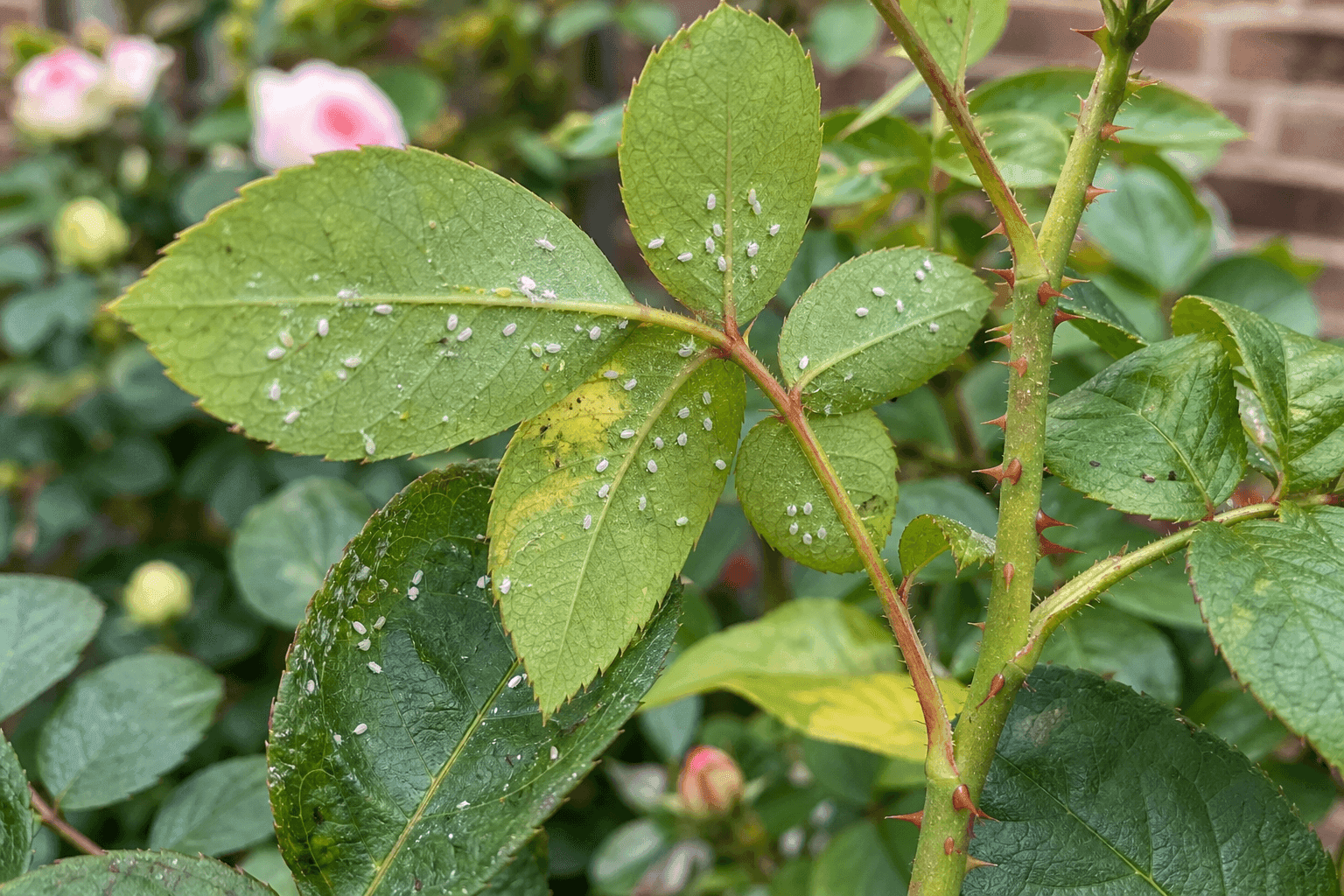
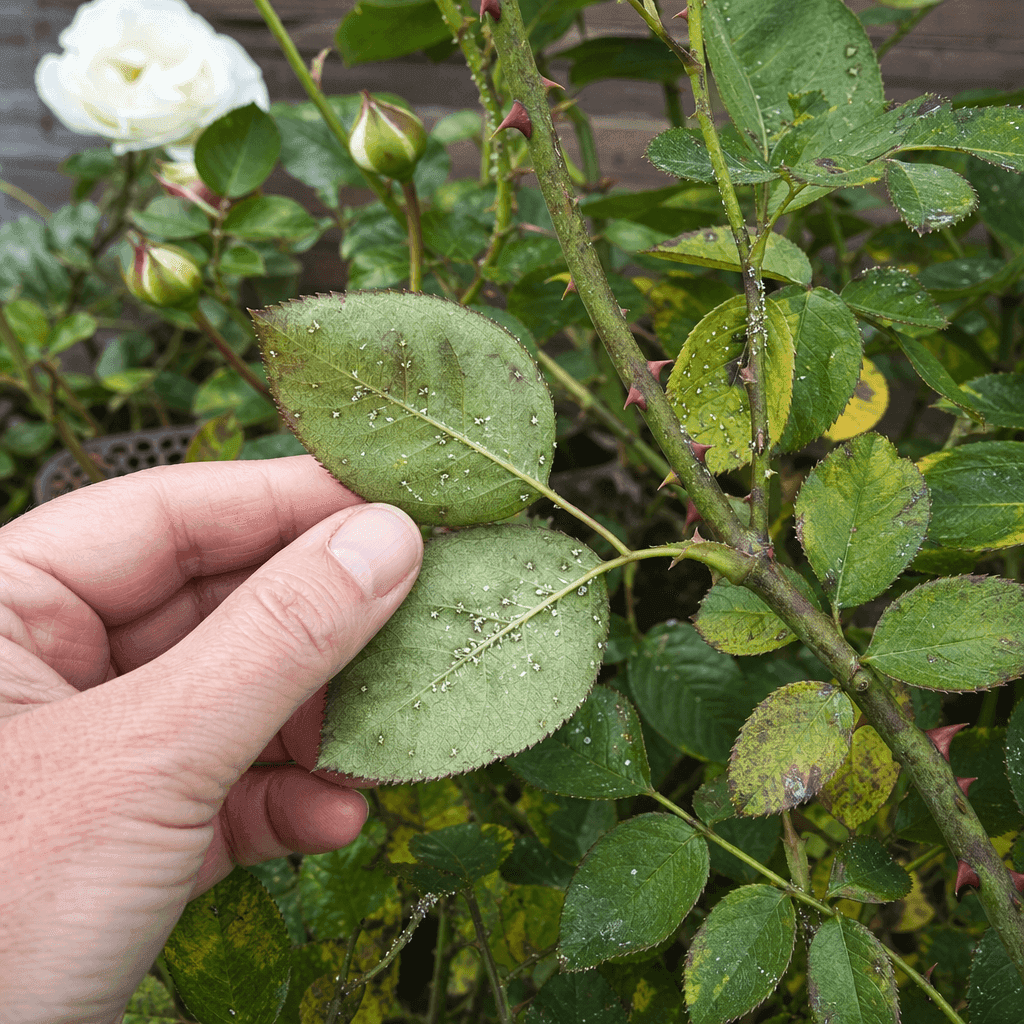
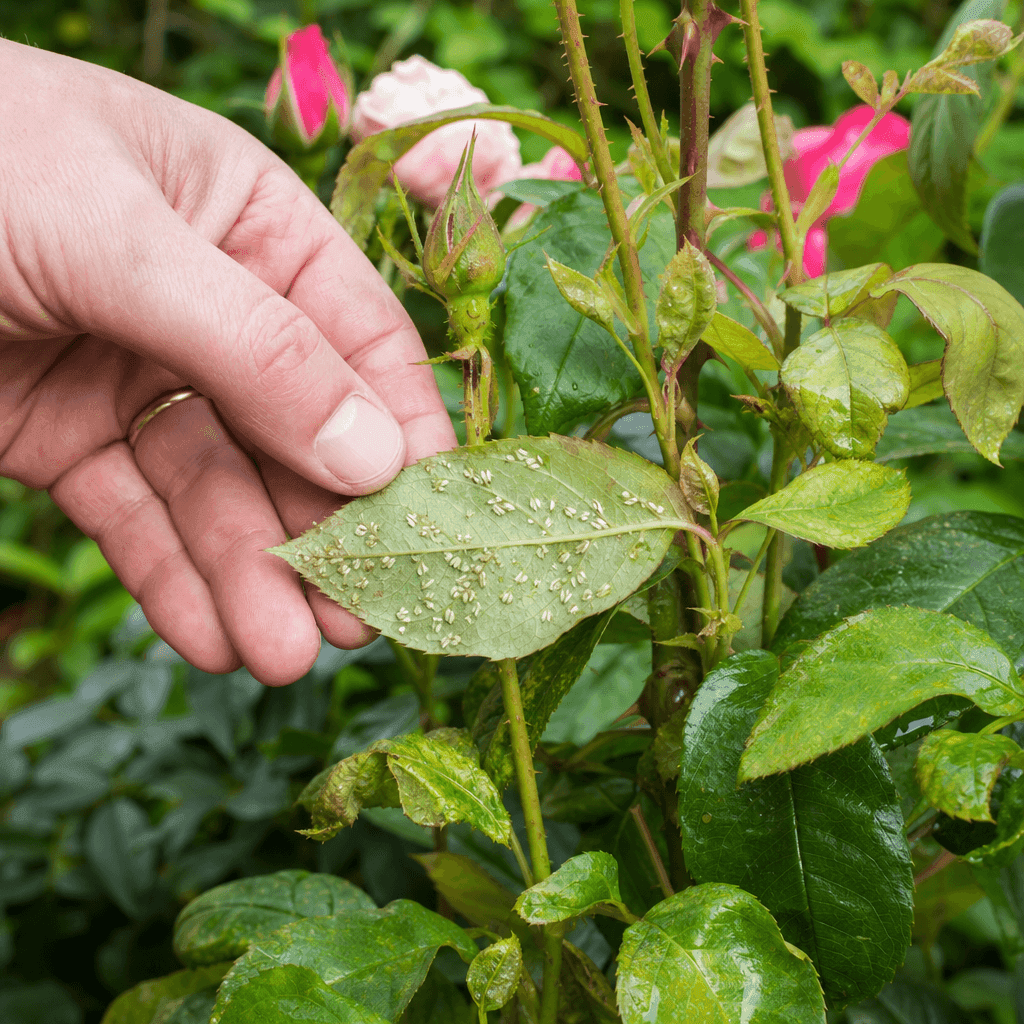
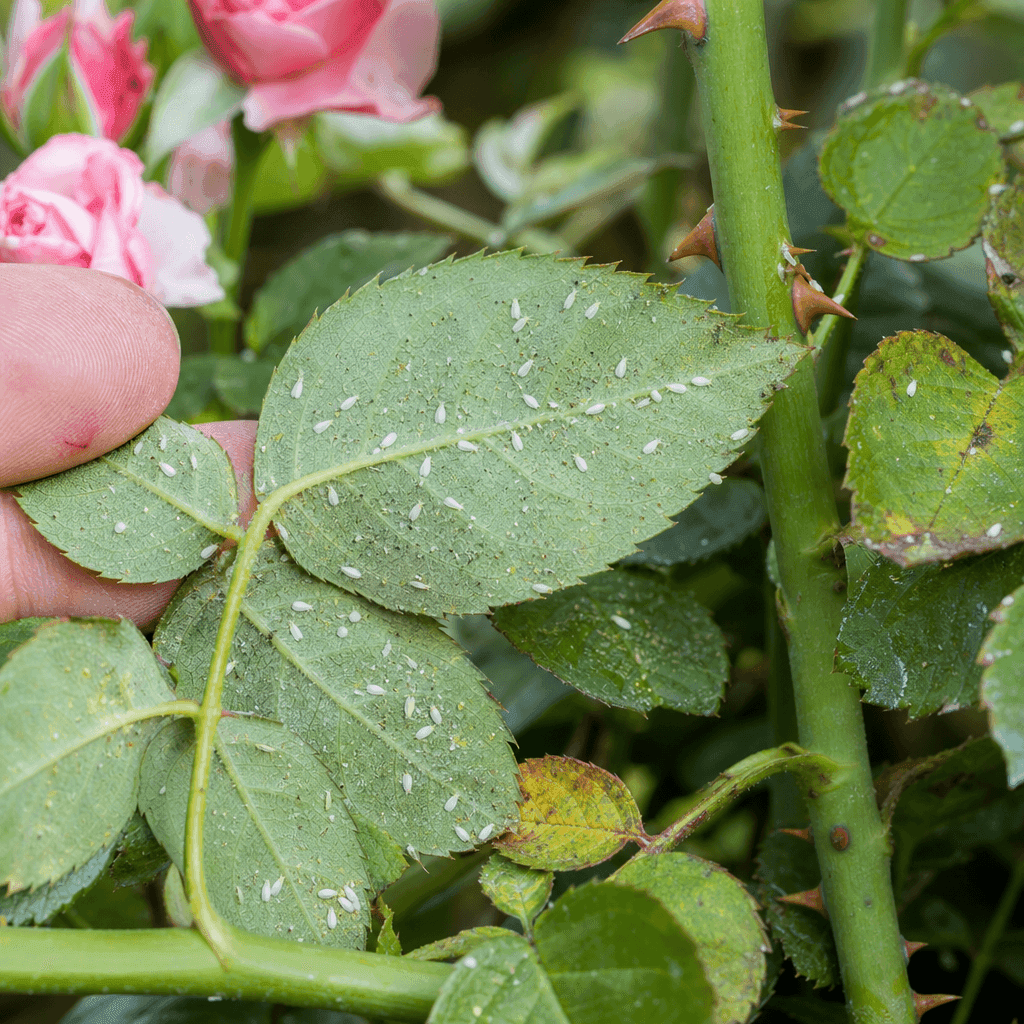
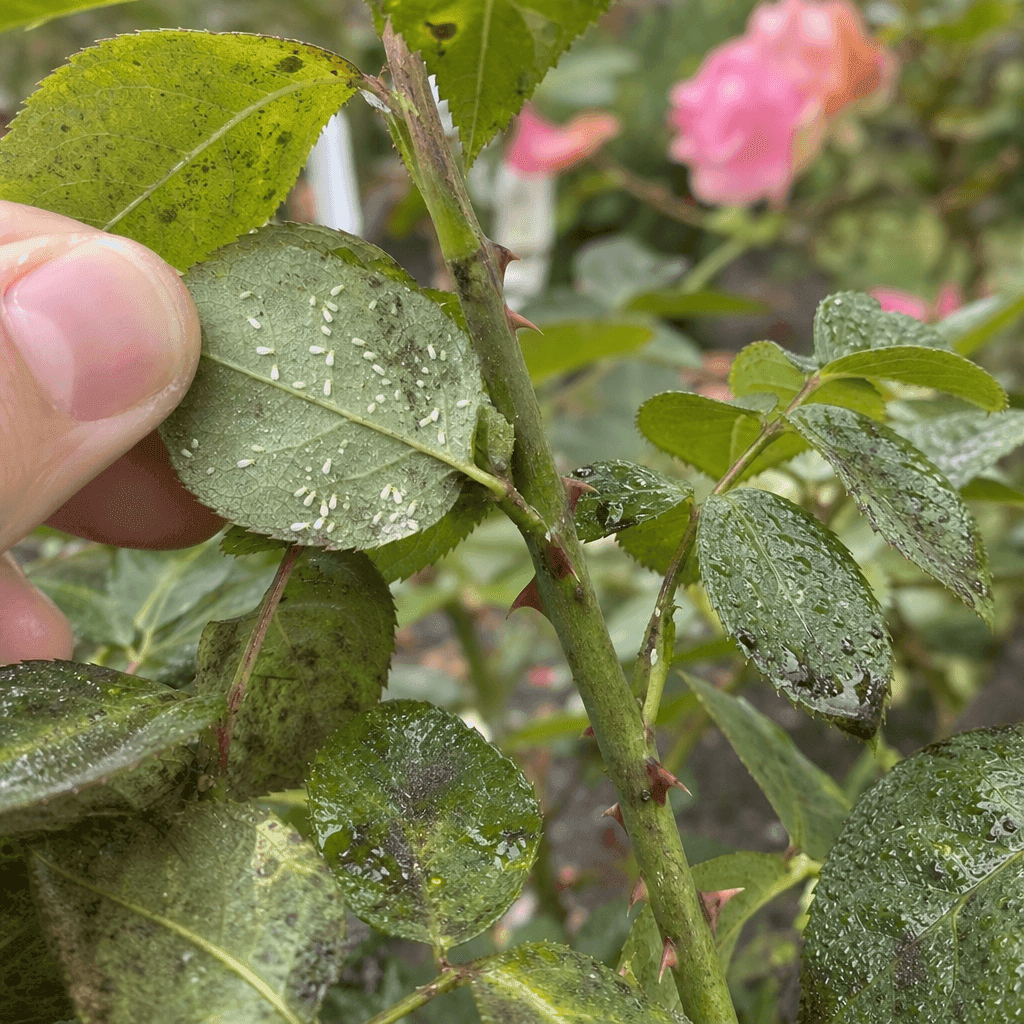
| Clouds of tiny white-winged insects flying up from leaves; pale flat scale nymphs on leaf undersides | Glasshouse whitefly (Trialeurodes vaporariorum) | High | Check undersides of upper leaves for flat, oval, pale green scale nymphs — the non-flying young stage. | Introduce Encarsia formosa for biological control, or spray undersides of leaves with fatty-acid soap every 2–3 days. | Medium |
| Leaves sticky and coated with black sooty mould below the whitefly infestation | Honeydew and secondary sooty mould | High | Black coating rubs off as a powder; look above the mouldy area for feeding whitefly. | Control the whitefly infestation first; then wipe sooty mould from leaves with a damp cloth. | Medium |
| Sticky shoot tips and distorted new growth with green or pink clusters | Rose aphids rather than whitefly — different pest, different treatment | Medium | Aphids are stationary, soft-bodied and wingless (mostly); whitefly fly up when disturbed. | Wash off aphid colonies with a strong jet of water; encourage natural predators such as ladybirds. | Medium |
| General loss of vigour, pale or yellowing leaves and poor flowering alongside whitefly | Whitefly infestation weakening an already stressed rose | Medium | Check watering, feeding and pruning — a rose under multiple stresses is less able to tolerate pests. | Address underlying rose health first, then treat the whitefly. | Medium |
| Whitefly appearing early in the season on greenhouse roses before outdoor populations establish | Overwintering whitefly population from previous season | Medium | Adults and nymphs visible on leaves in early spring before outdoor temperatures have warmed. | Clean the greenhouse in winter; introduce Encarsia formosa from late spring once temperatures allow. | Low–medium |
The causes, in detail
Glasshouse whitefly (Trialeurodes vaporariorum)
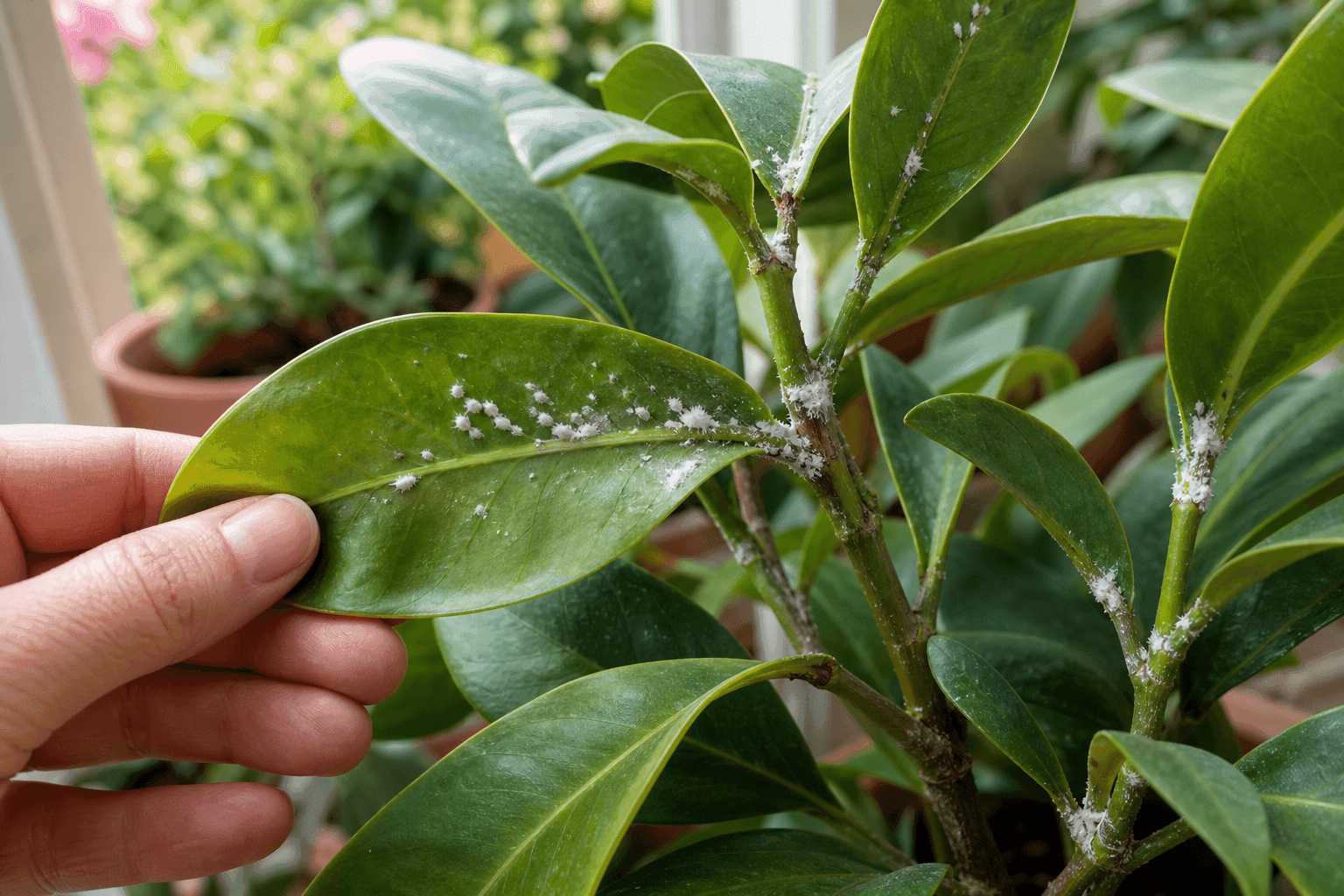
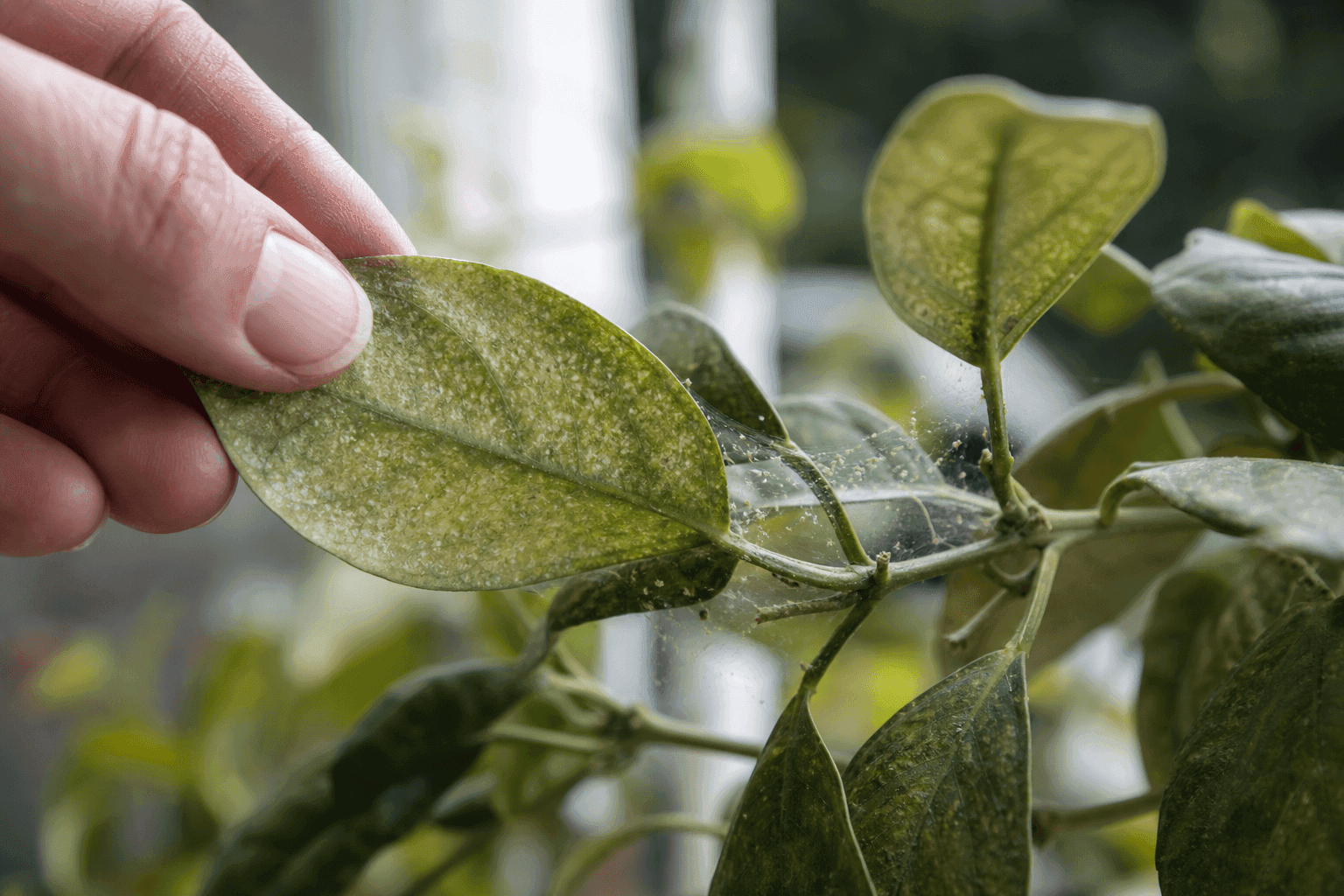
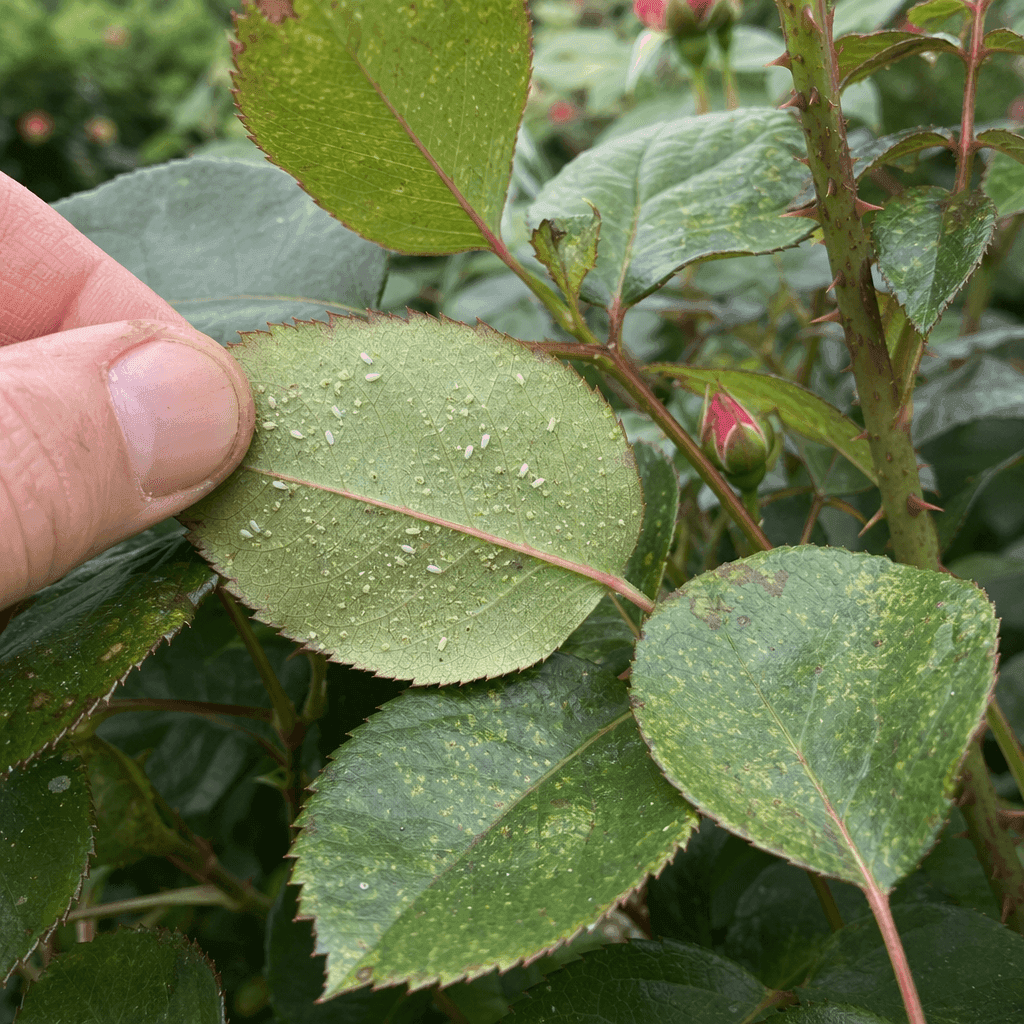
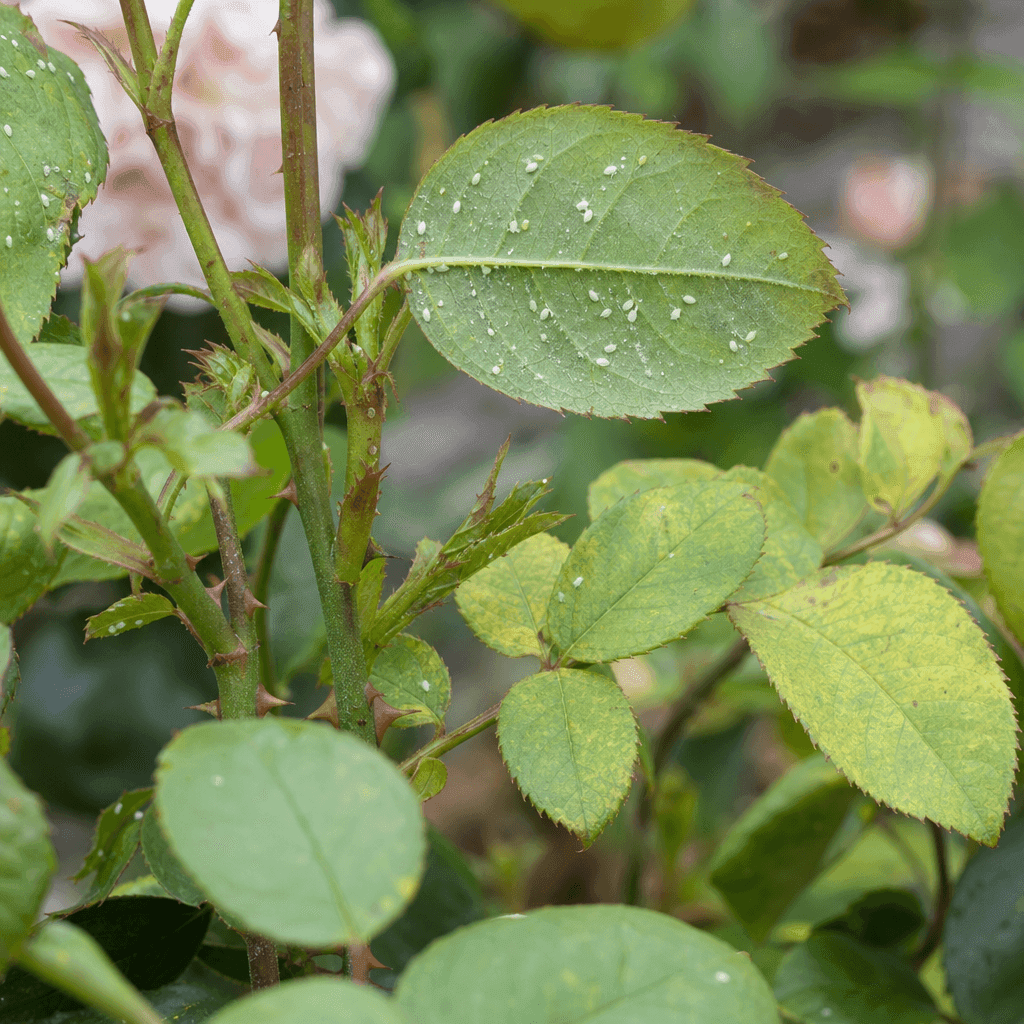
Most likelyThe glasshouse whitefly is the most common whitefly on UK roses. The RHS describes it as 'a common sap-feeding insect mainly of houseplants and greenhouse plants' whose adults — 1.5 mm long and white-winged — fly up in clouds when a plant is disturbed. The immobile scale nymphs on leaf undersides are pale green, flat and oval, and are often more numerous and damaging than the adult count suggests. Glasshouse whitefly can establish outdoors in warm, sheltered UK gardens during summer but does not survive UK winters outside; populations overwinter indoors and in heated glasshouses.
- White-winged adults fly up when foliage is disturbed.
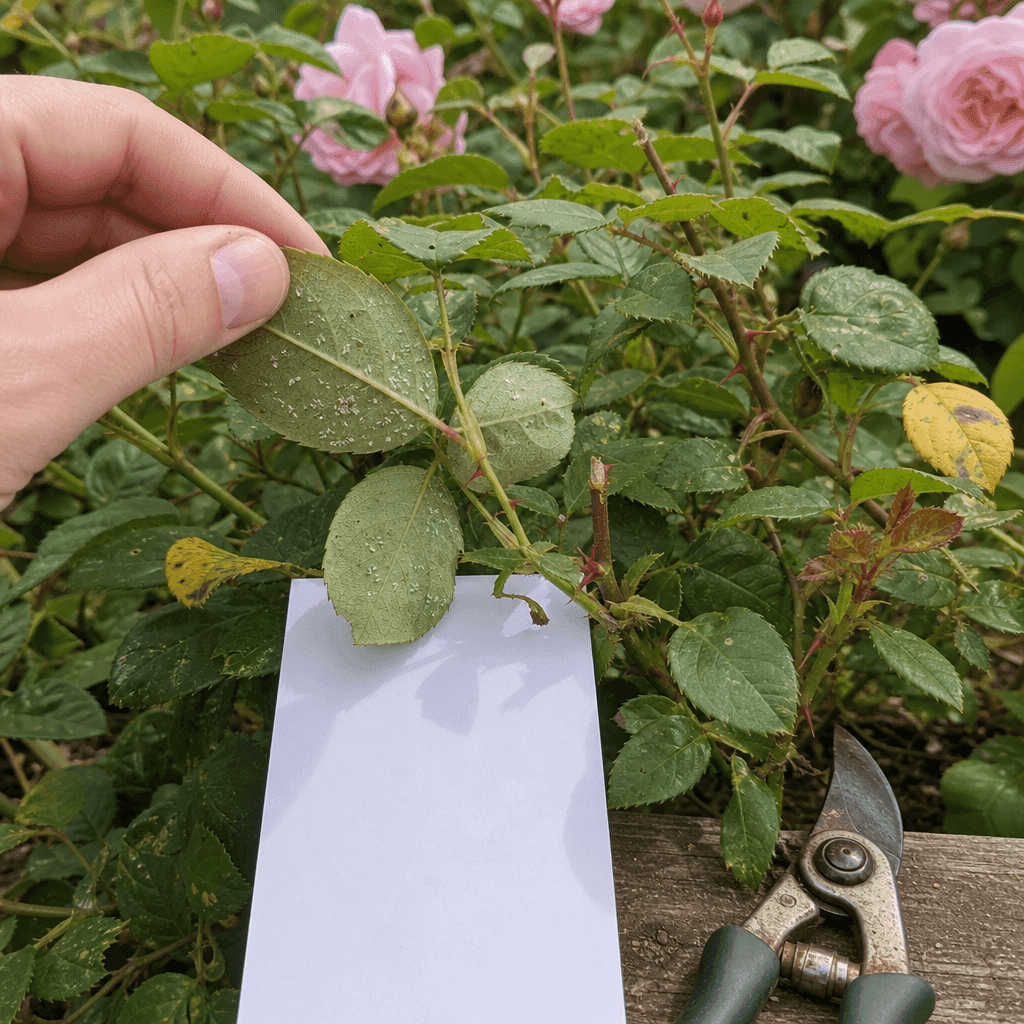
- Check the undersides of upper rose leaves for flat, pale oval scale nymphs — these are the non-flying immature stage.
- Sticky honeydew deposits on lower leaves confirm active feeding.
- For greenhouse roses: introduce the parasitic wasp Encarsia formosa, available from UK biological control suppliers including Dragonfli and Green Gardener. The RHS confirms this as an established control method — the wasps parasitise whitefly scale nymphs and the emerging adults hatch from blackened scales rather than producing more whitefly.
- For outdoor or non-greenhouse roses: apply a fatty-acid insecticidal soap spray to the undersides of leaves every 2–3 days. This kills emerging adults and nymphs on contact but has no residual effect.
- Hang sticky yellow traps above or among the plants to catch adults and monitor activity.
- Remove heavily infested leaves and place in the bin (not the compost heap).
- Avoid broad-spectrum insecticides, which will kill Encarsia formosa and other beneficial insects.
Stop it coming back:Clean the greenhouse thoroughly in late autumn and winter, removing any plant material that may harbour overwintering populations. Do not introduce new rose plants without inspecting them for scale nymphs on leaf undersides.
introduce Encarsia formosa and then spray with insecticide — the wasps will be killed by most contact pesticides, and the two approaches cannot be combined.
Sooty mould from whitefly honeydew
Most likelyLike aphids and scale insects, whitefly nymphs excrete large amounts of sticky honeydew as they feed. This falls on lower leaves and on surrounding surfaces, coating them with a shiny layer that rapidly becomes colonised by sooty mould — a superficial black fungal growth. Although sooty mould does not directly infect rose tissue, it blocks light and reduces photosynthesis, and its presence indicates a significant feeding infestation above. Once the whitefly is controlled, sooty mould can be wiped away.
- Black sooty coating on leaves below the main whitefly population.
- Leaves and surrounding surfaces are sticky.
- Rubbing the black coating reveals a cleaner surface beneath — it is superficial, not a tissue disease.
- Control the whitefly infestation first — the sooty mould will not clear while honeydew production continues.
- Once whitefly numbers have dropped, wipe affected leaves with a soft damp cloth.
- For heavy mould, use a cloth dampened with a very dilute washing-up liquid solution, then rinse with plain water.
clean sooty mould from leaves without treating the whitefly infestation — it will immediately return as long as honeydew production continues.
Rose aphids mistaken for whitefly
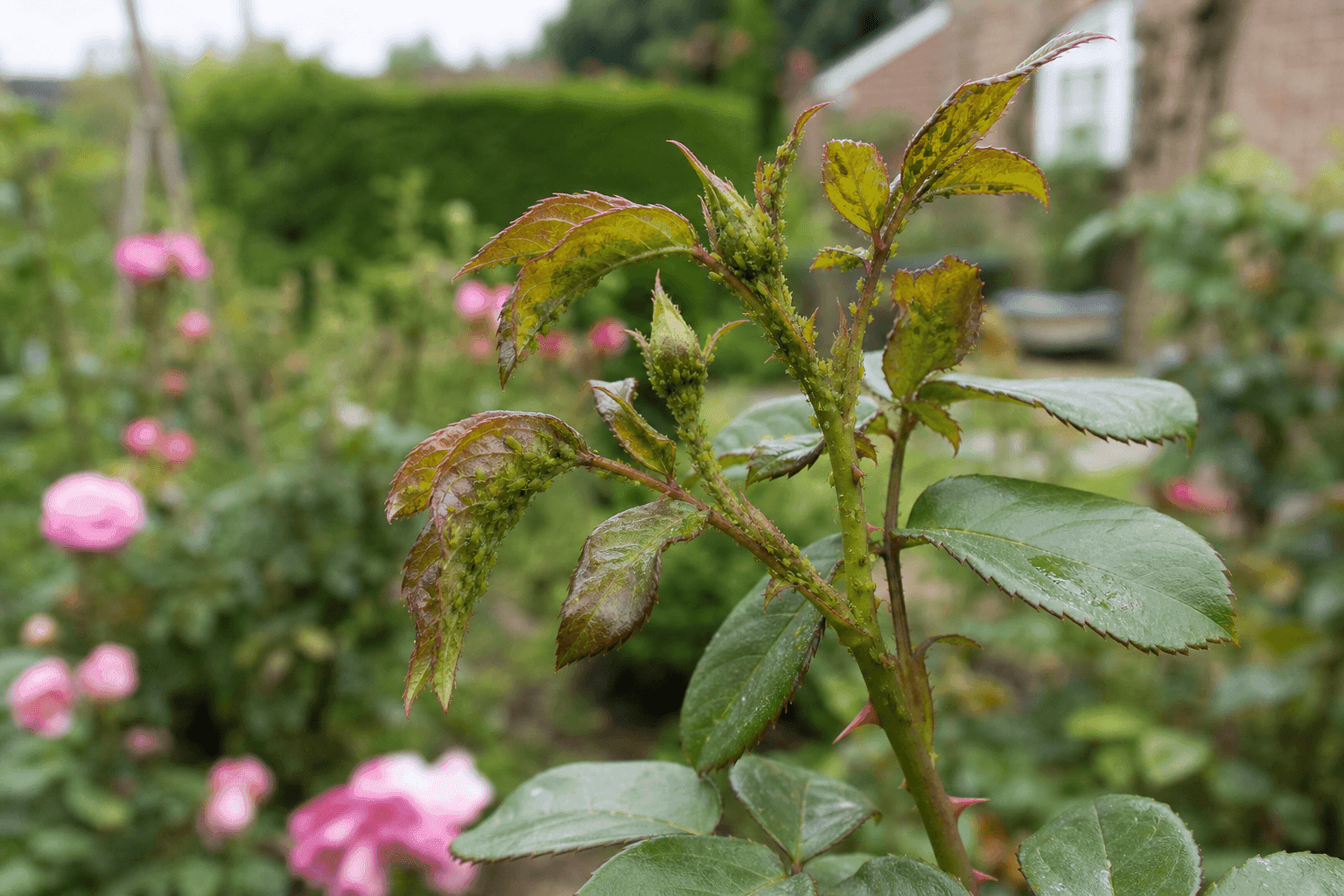
PossibleRose aphids (Macrosiphum rosae and related species) are frequently confused with whitefly because both cause sticky leaves and distorted growth. The RHS has detailed guidance on rose aphids, which are the more common of the two pests on UK outdoor roses. Unlike whitefly, aphids are soft-bodied, mostly wingless, and cluster in tight colonies on shoot tips, flower buds and young leaves in spring and early summer. Whitefly fly up immediately when disturbed; aphids stay put. The distinction matters because treatment approaches differ.
- The insects do not fly up when the plant is touched — they stay in place on shoot tips.
- Insects are green, pink or brown, soft-bodied and clustering on the newest growth.
- Damage is mainly to growing tips and flower buds rather than the undersides of mature leaves.
- Wash aphid colonies off with a strong jet of water from a hose — this is effective and avoids harming beneficial insects.
- Pinch out heavily infested shoot tips where practical.
- Encourage natural predators — ladybirds, lacewings and parasitic wasps will control colonies if insecticide use is avoided.
- For persistent infestations, apply an insecticidal soap spray to the colonies directly.
spray broadly for aphids before confirming the pest — many sprays kill the predators that would naturally bring aphid numbers down.
Whitefly infestation on a stressed or unhealthy rose
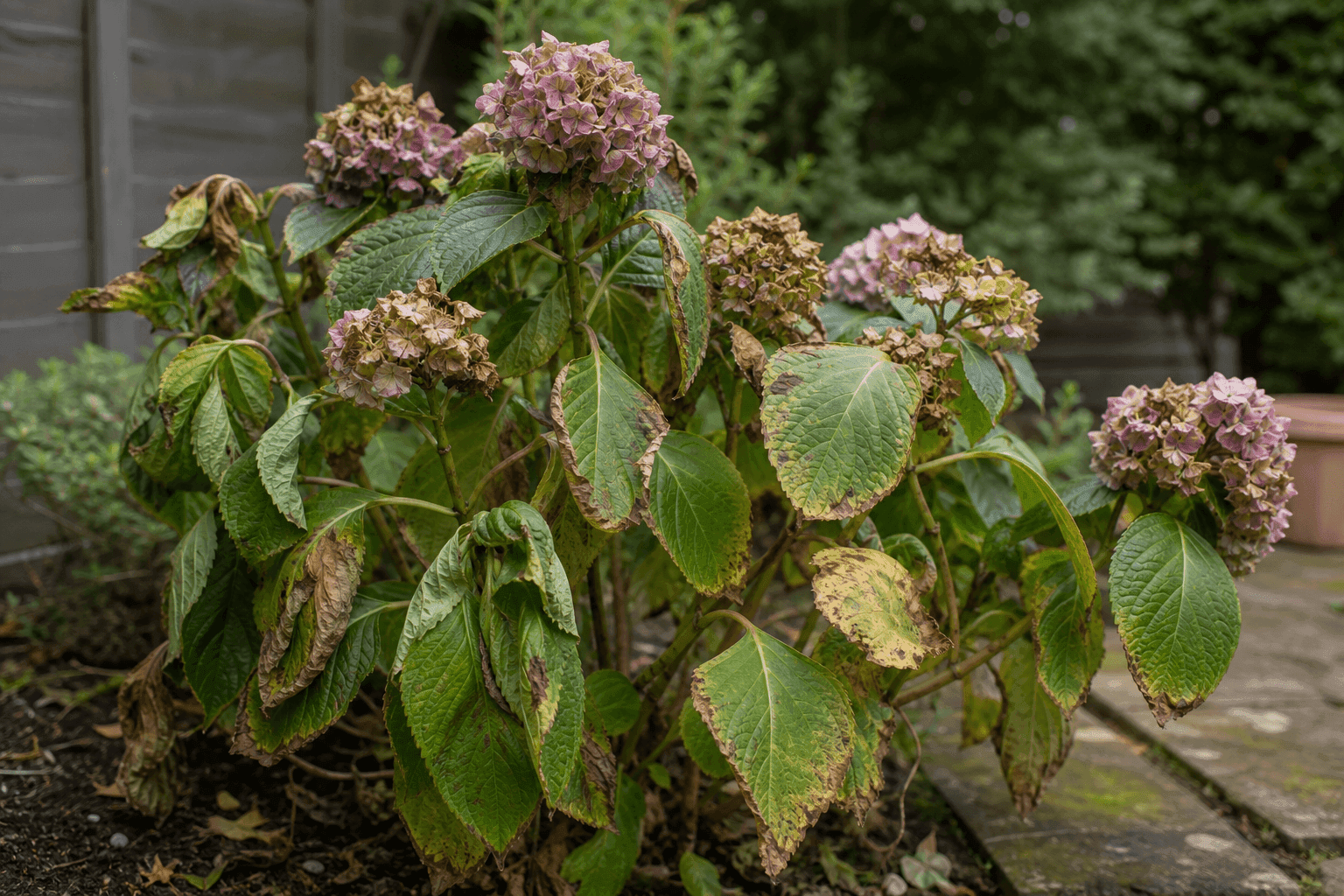
PossibleRoses under stress from drought, waterlogging, incorrect pruning, nutrient deficiency or disease are more vulnerable to whitefly damage, and whitefly on an already weakened rose can compound the decline. The RHS's guidance on rose growing emphasises that healthy, well-fed roses on good soil are naturally more resilient to pest attack. A rose that has poor colour, is failing to produce healthy new growth or shows other problems alongside a whitefly infestation needs the underlying cause addressed as a priority.
- The rose is showing other problems — pale or yellowing leaves, poor growth, lack of flowering — in addition to whitefly.
- Recent conditions have been stressful: very dry, very wet, or newly planted.
- The whitefly population seems large relative to the plant's size.
- Address the underlying rose health problem first — check soil moisture, drainage, feeding and pruning.
- A well-watered, well-fed rose on good soil will tolerate a small whitefly population without significant decline.
- Once the rose is growing vigorously, treat the whitefly with biological control or soap spray.
Stop it coming back:Healthy soil, correct pruning and consistent watering are the best long-term insurance against pest damage in roses. Feed with a balanced rose fertiliser in spring and after the first flush of flowers.
apply high-nitrogen feed to stimulate recovery — lush soft growth produced by excess nitrogen is more attractive to sap-sucking pests.
Overwintering whitefly in greenhouses
PossibleGlasshouse whitefly does not survive UK outdoor winters, but populations can persist in heated glasshouses and on houseplants year-round. Scale nymphs in particular are hardy and can survive lower temperatures than adults. If greenhouse roses show whitefly early in the season — before outdoor populations have had time to establish — the source is almost certainly an overwintering population. Cleaning the greenhouse in late autumn and early winter reduces overwintering numbers significantly.
- Whitefly is present on greenhouse roses in early spring, before outdoor populations are active.
- The greenhouse was not cleaned or cleared in autumn.
- Nymphs are visible on the undersides of older leaves that have been on the plant since autumn.
- Clean the greenhouse thoroughly in late autumn — remove all plant debris and wash down staging and glass.
- Inspect and quarantine any new rose plants before bringing them into the greenhouse.
- Introduce Encarsia formosa from late April to May once temperatures allow — UK suppliers typically recommend introduction when daytime temperatures are above 18°C.
- Use sticky yellow traps in winter to monitor adult populations and catch any early-season emergence.
skip the autumn greenhouse clean — overwintering scale nymphs are much harder to detect and treat than adult populations in active growing season.
Still not sure?
Work down these branches — the first one that matches is your answer.
What not to do
- Use broad-spectrum insecticide spray — it will kill Encarsia formosa and other beneficial insects that naturally control whitefly.
- Introduce Encarsia formosa and then apply pesticide — the two approaches cannot be combined.
- Ignore sticky, mould-covered leaves — they confirm a significant feeding infestation above.
- Apply high-nitrogen fertiliser to a rose with whitefly — soft, lush growth is more attractive to sap-sucking pests.
- Bring new rose plants into a greenhouse without inspecting the undersides of leaves for scale nymphs.
Common questions
What causes whitefly on roses?
In the UK, glasshouse whitefly (Trialeurodes vaporariorum) is the most common species on roses. It thrives in warm, sheltered conditions — greenhouses, conservatories and warm garden walls — and overwinters on heated houseplants and in glasshouses. Outdoor populations build from late spring onward in warm summers.
How do I get rid of whitefly on roses?
For greenhouse roses, the most effective approach is the parasitic wasp Encarsia formosa, available from UK biological control suppliers. It parasitises the scale nymphs and prevents the next generation hatching. For outdoor roses, spray the undersides of leaves with a fatty-acid insecticidal soap every 2–3 days. Avoid broad-spectrum insecticides, which kill the natural enemies of whitefly.
What is Encarsia formosa and where can I get it in the UK?
Encarsia formosa is a tiny parasitic wasp that lays its eggs inside whitefly scale nymphs. As the wasp develops, the whitefly nymph turns black — this is a sign the control is working. It is available from UK biological control suppliers including Dragonfli, Ladybirdplantcare.co.uk and Green Gardener. The RHS confirms it as an established biological control for glasshouse whitefly.
Is whitefly on roses serious?
A small population on a healthy, established rose causes little lasting harm. Large infestations cause loss of vigour, sticky honeydew coating lower leaves and sooty mould, and can reduce flowering. Greenhouse roses or young plants need more active management than established outdoor roses.
Why do my rose leaves have a black sooty coating?
The black coating is sooty mould, which grows on honeydew excreted by sap-sucking pests including whitefly, aphids and scale. It is not a disease of the rose leaf tissue but a secondary problem caused by the pest. Control the whitefly and then wipe the sooty mould from the leaves with a damp cloth.
Do yellow sticky traps control whitefly on roses?
Yellow sticky traps catch adult whitefly and are useful for monitoring activity, but they are not effective enough as a sole control measure for an established infestation. Use them alongside biological control or soap sprays.
Can I use neem oil on whitefly on roses?
Neem oil can act as a repellent and disrupt the whitefly life cycle, but it is broad-spectrum and will harm beneficial insects including Encarsia formosa. If you plan to use biological control, avoid neem oil. Insecticidal soap is generally more effective against whitefly and less disruptive to natural enemies.