Quick diagnosis
Match the row to what you’re seeing, then jump to the fix.
| What you see | Likely cause | Confidence | How to confirm | What to do now | Urgency |
|---|---|---|---|---|---|
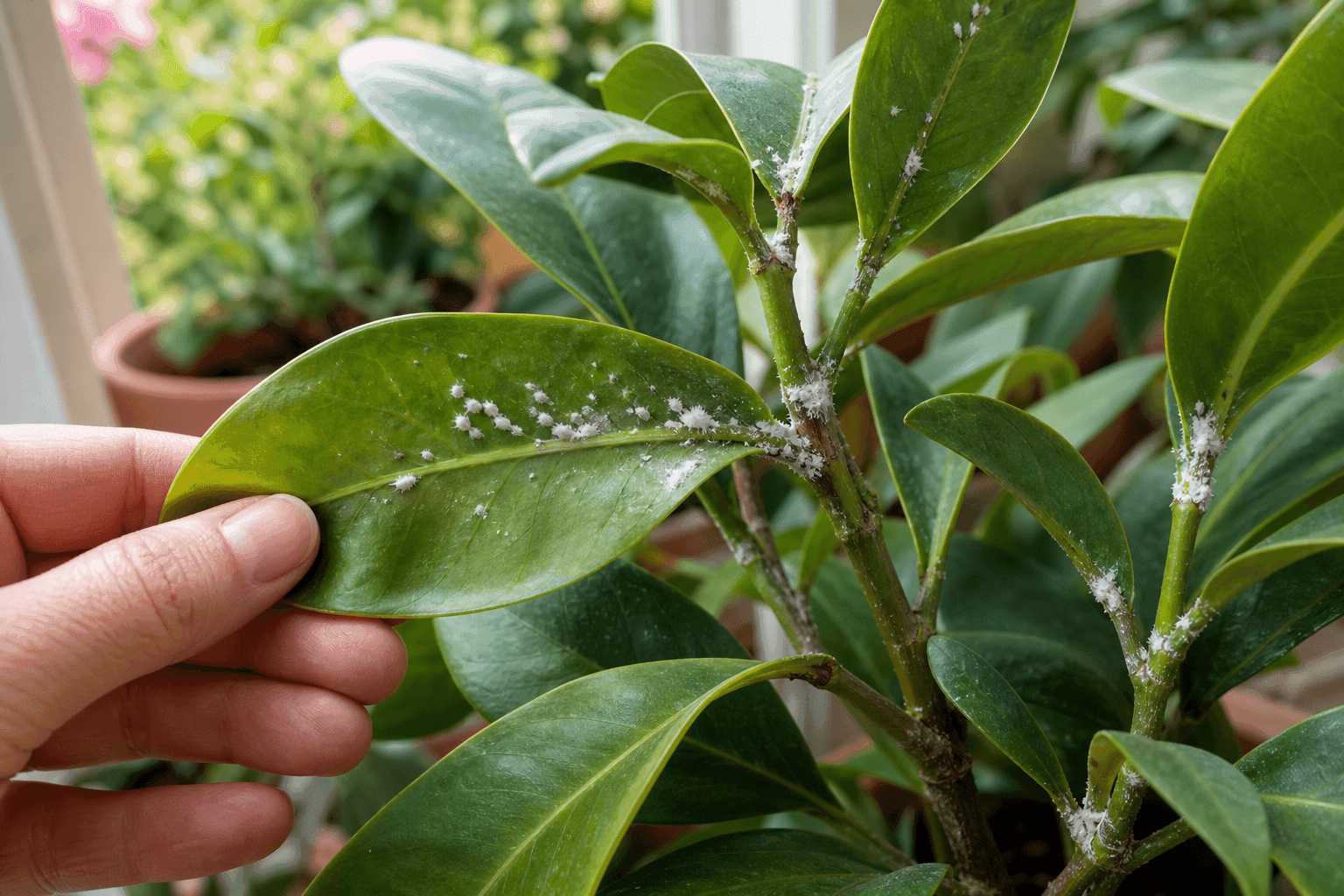
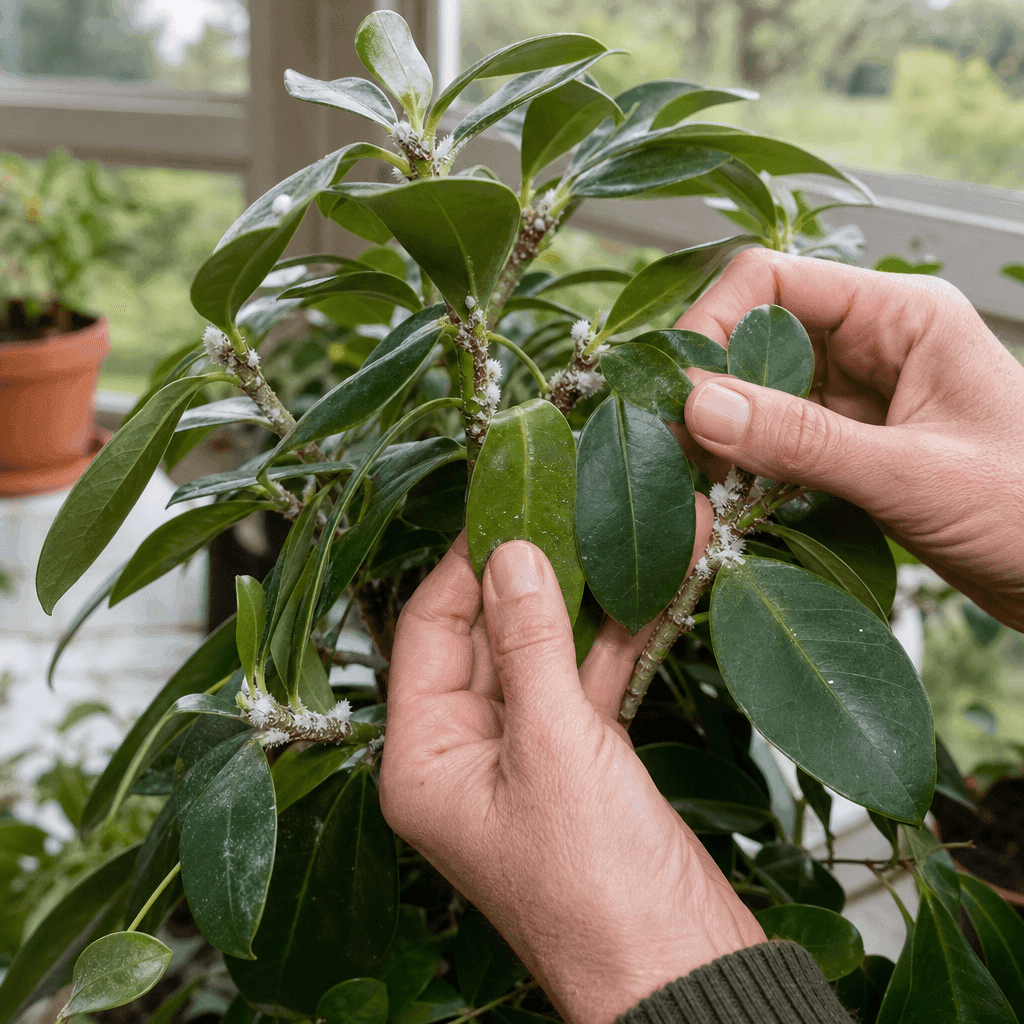
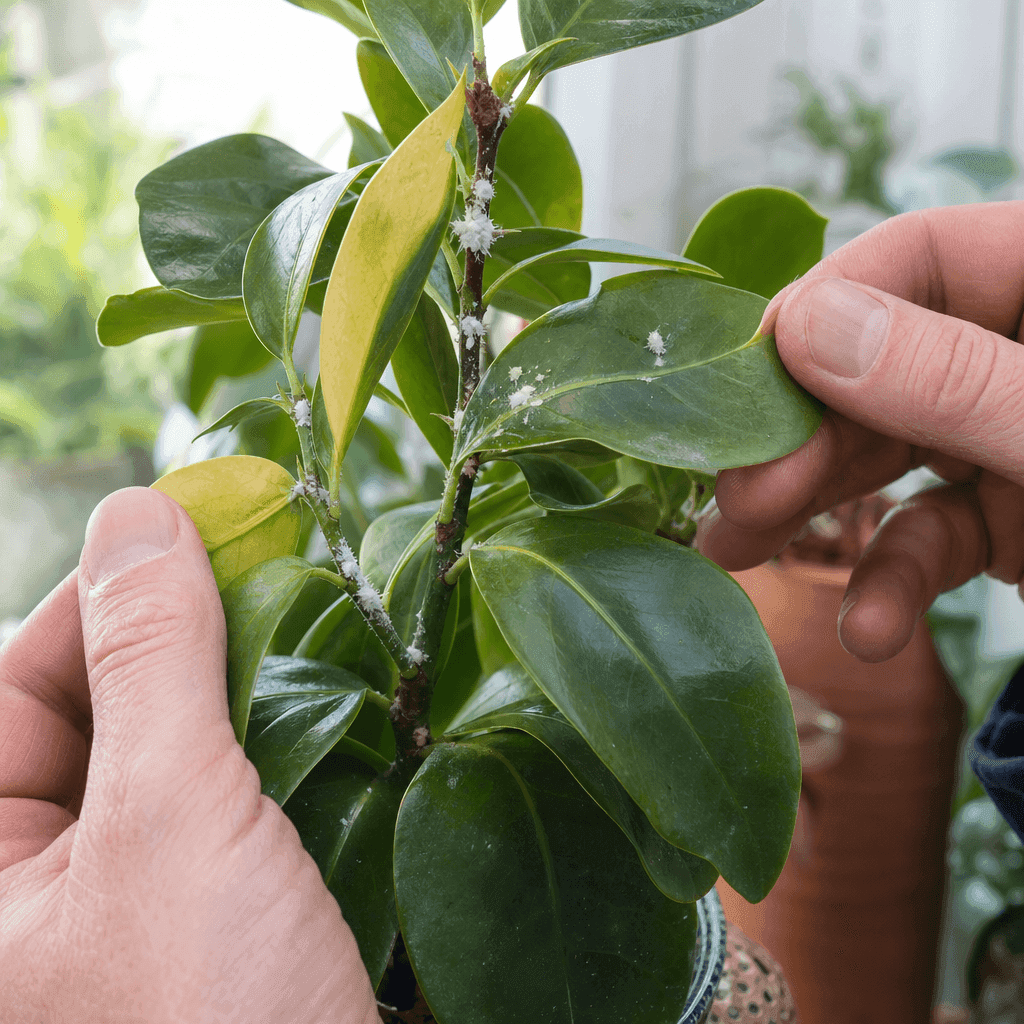
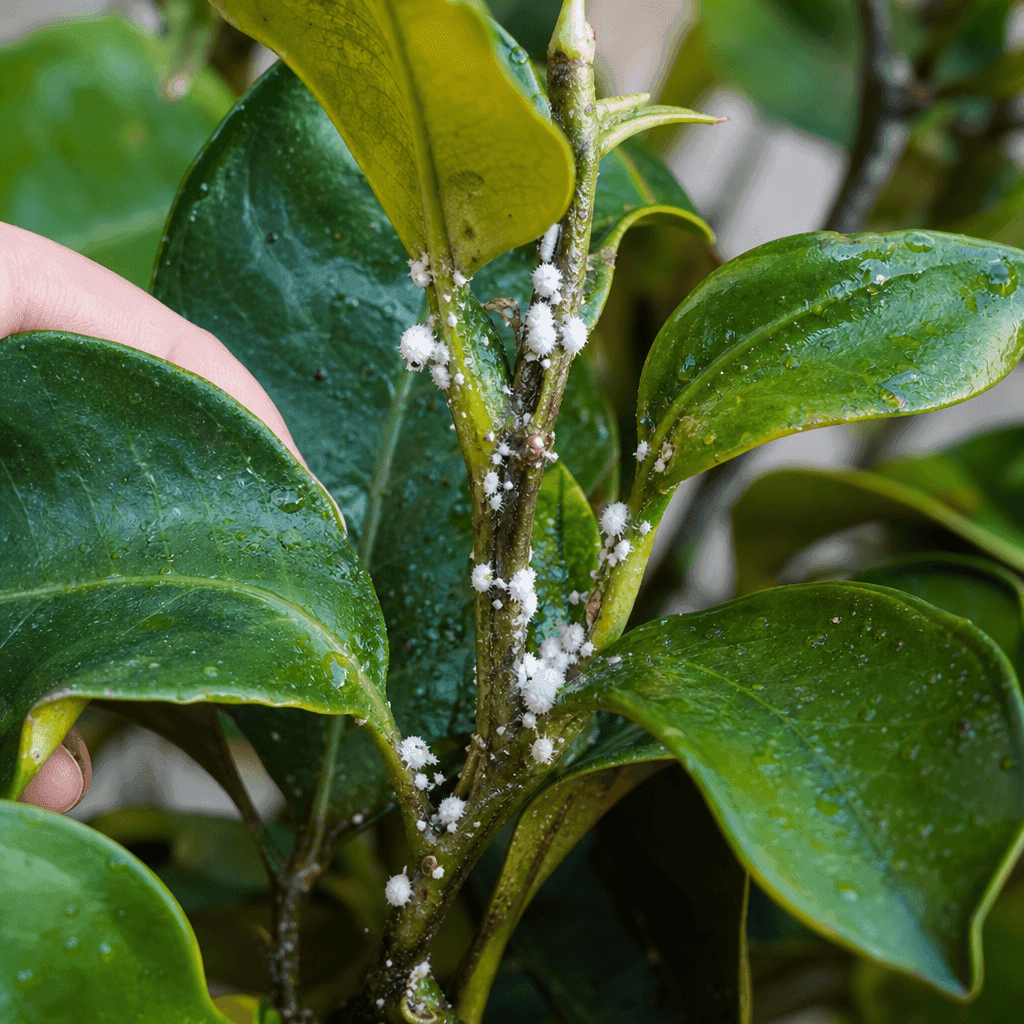
| White woolly masses at leaf joints, stem undersides or in growing tips; sticky honeydew | Active mealybug infestation | High | Check with a magnifying glass — if the white fuzz contains oval, waxy-coated insects, it is mealybug. | Isolate the plant immediately; remove visible bugs with an alcohol-dipped cotton bud. | High |
| Unexplained decline — wilting, poor growth — with little visible pest on the leaves | Root mealybugs | Medium | Unpot the plant and check roots for white powdery deposits or waxy mealybug colonies at the roots. | Wash roots clean, treat with a dilute insecticidal solution and repot in fresh compost. | High |
| Black sooty coating on leaves below the infestation; leaves sticky to touch | Sooty mould from mealybug honeydew | Medium | Look above the sooty mould for the mealybug colony — mould grows on honeydew dripping down. | Control the mealybug first; then wipe sooty mould from leaves with a damp cloth. | Medium |
| New white woolly patches appearing on nearby plants | Spread to neighbouring houseplants | Medium | Check all plants within 30 cm of the original infestation — mealybugs crawl between touching plants. | Isolate all affected plants, check every plant in the collection, and treat systematically. | High |
| Mealybugs appearing shortly after bringing a new plant into the home | Mealybugs introduced on a new plant | Medium | Check the newest plant in your collection for signs — mealybugs are often hidden in leaf axils. | Quarantine all new plants for 2–4 weeks before introducing them to your collection. | Medium |
The causes, in detail
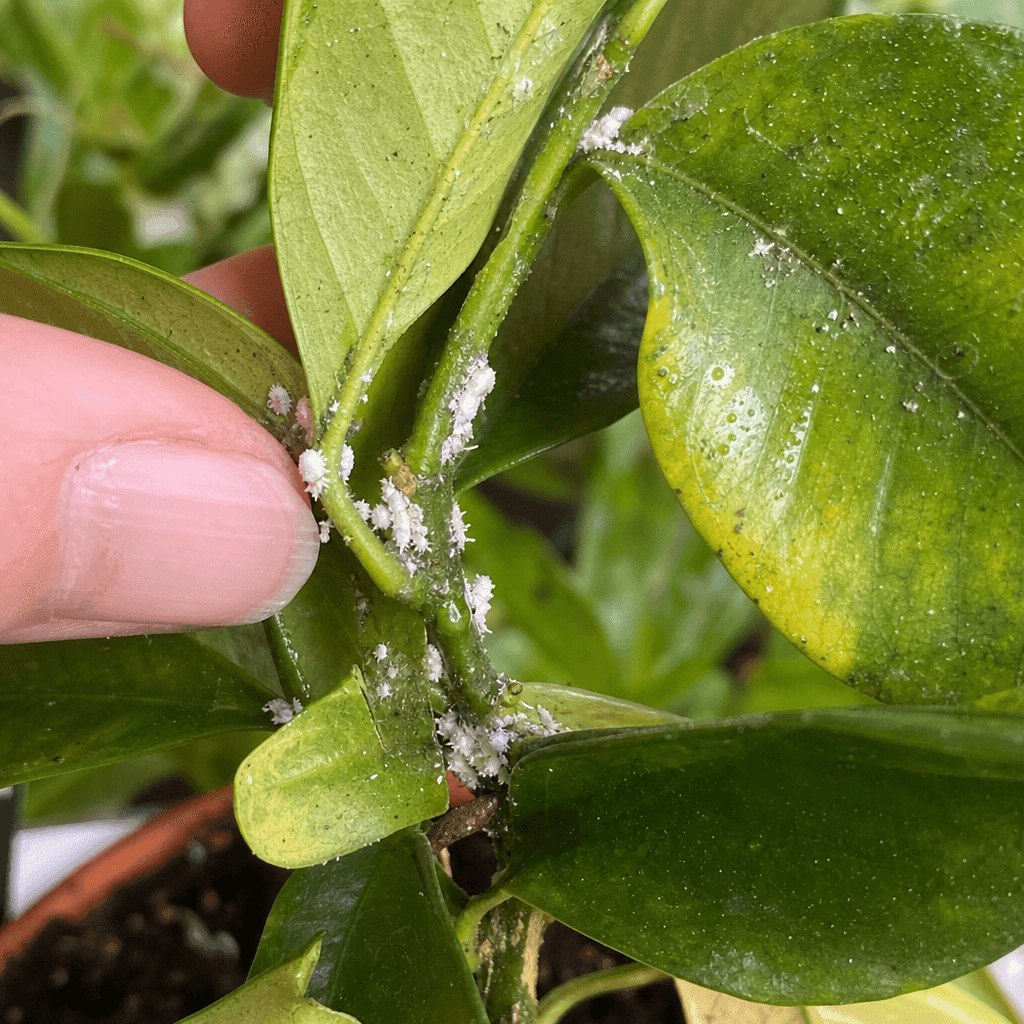
Active mealybug infestation on stems and leaves
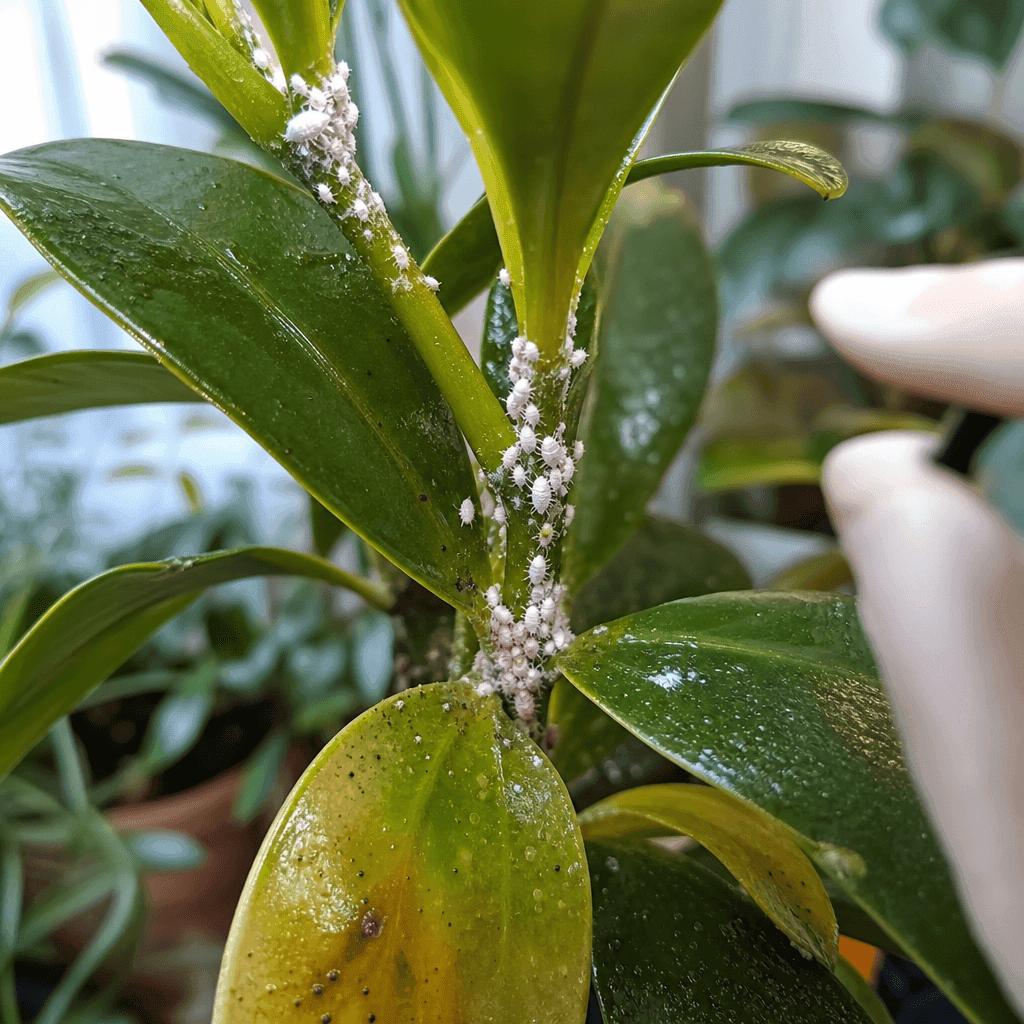
Most likelyGlasshouse mealybugs (Pseudococcus calceolariae) are the most common species on UK houseplants. The RHS describes them as producing fluffy white wax in leaf axils and other sheltered places on the plant. Adult females are up to 4 mm long, oval, and entirely coated in white waxy powder with a fringe of wax filaments at the edges. They lay eggs in a cottony mass, and both adults and crawlers (young nymphs) feed by piercing plant tissue and extracting sap. A full colony at a leaf joint can go from a few insects to hundreds within a few weeks.
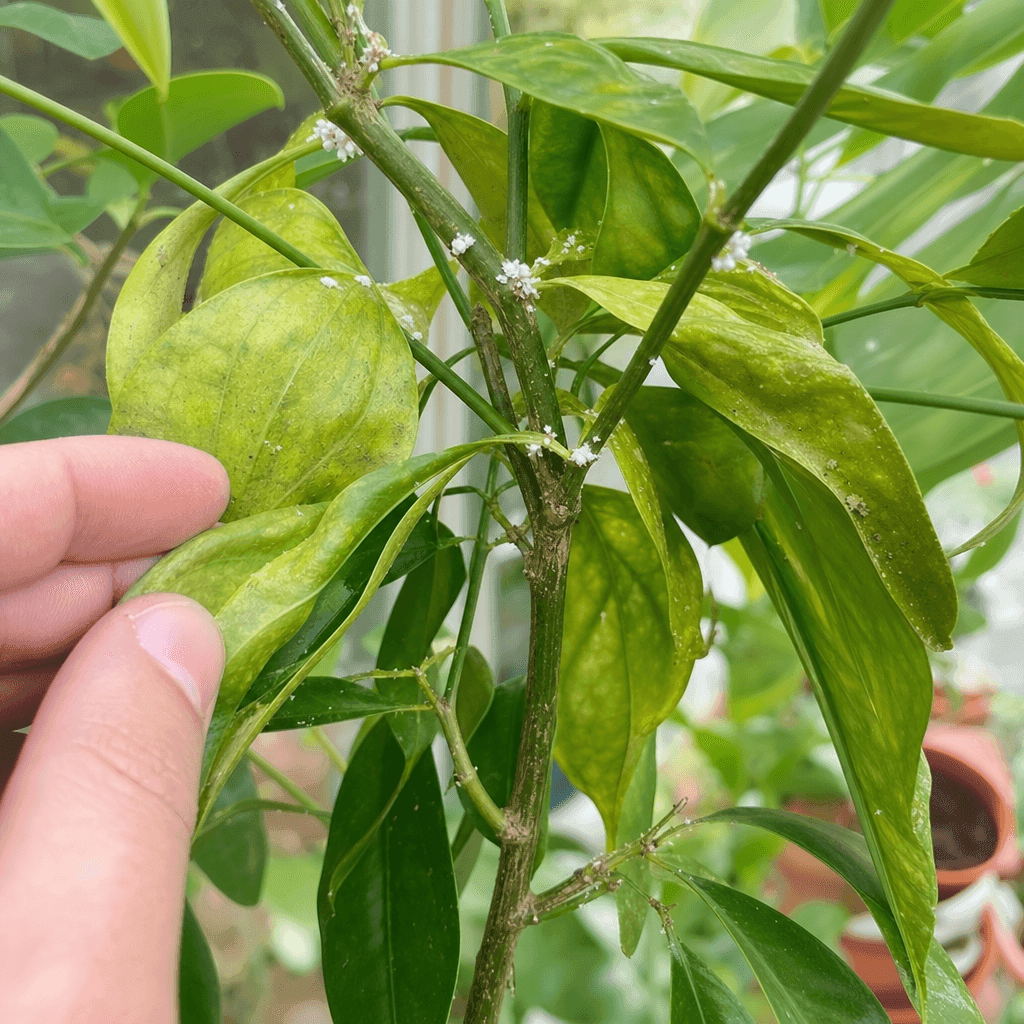
- White woolly deposits in leaf axils, on stems, at growing tips or on the undersides of leaves.
- Sticky, shiny honeydew on leaves and surrounding surfaces.
- Yellowing leaves, distorted growth or weakened stems at the point of infestation.
- Isolate the affected plant from all others immediately.
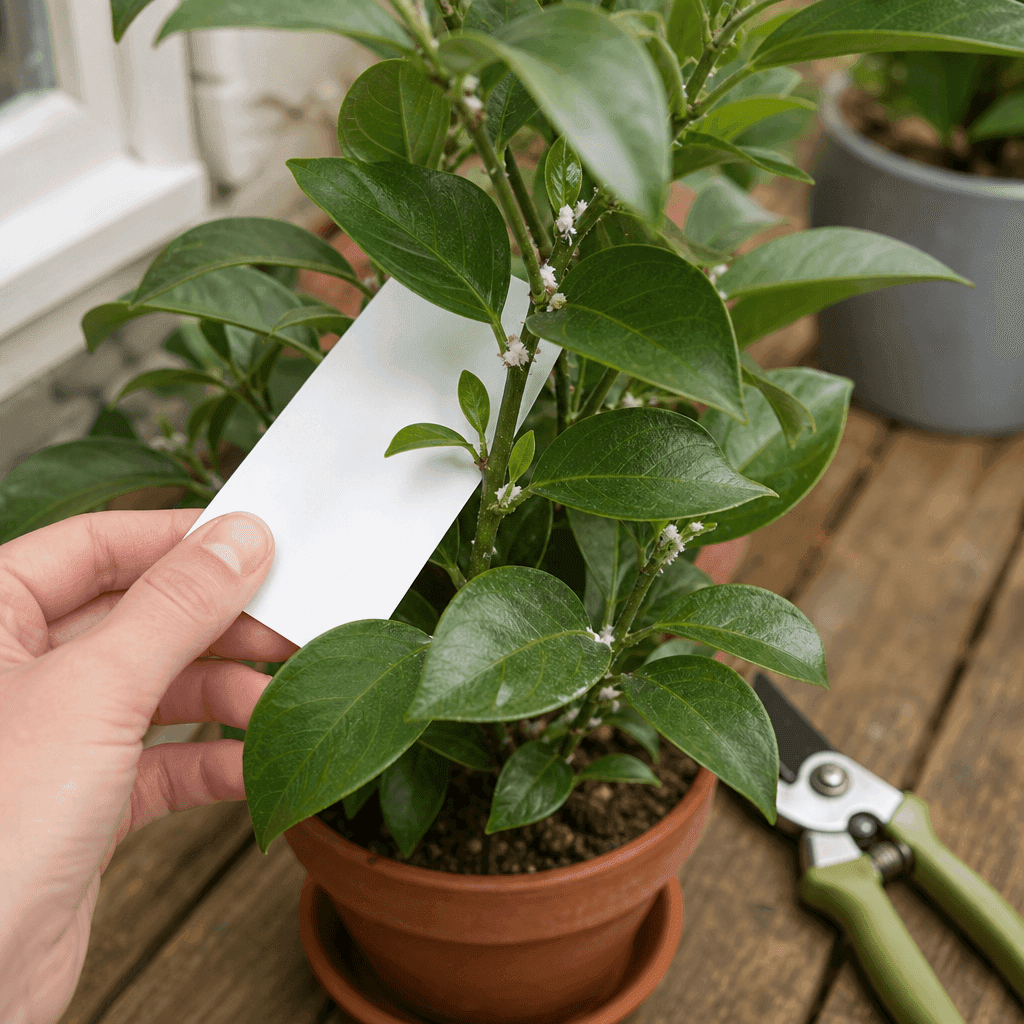
- Dip a cotton bud in 70% isopropyl (rubbing) alcohol and press it directly onto each visible mealybug and egg mass — the alcohol dissolves their waxy coat and kills on contact.
- For larger infestations, mix a spray of 70% isopropyl alcohol diluted with water (1:1) and spray undersides of leaves and stem joints, or apply a fatty-acid insecticidal soap spray to all plant surfaces.
- Repeat every 3–4 days for at least three weeks — mealybug eggs are resistant to most treatments, so you must catch each new generation as it hatches.
- Between treatments, wipe all leaves and stems with a damp cloth to remove honeydew and disturb remaining bugs.
Stop it coming back:Check new plants carefully before adding them to your collection and quarantine for two to four weeks. Inspect existing plants monthly, especially at leaf joints, which are easy to overlook.
use rubbing alcohol on newly unrolled or very tender leaves without diluting it first — test on one leaf and wait 24 hours to check for damage before treating the whole plant.
Root mealybugs
PossibleRoot mealybugs are less commonly noticed but cause significant hidden damage. They produce white powdery deposits on and around the roots, and because they are below the compost surface they are often only discovered when a plant is repotted or when unexplained decline — wilting, stunted growth, persistent yellowing — does not improve with changes in watering or feeding. They are common on cacti, succulents and some houseplants such as African violets.
- Unpot the plant and inspect the roots and root zone for white powdery or waxy deposits.
- Small oval insects are visible on the root surface or soil particles.
- The plant declines despite good watering and feeding — above-ground mealybugs are not visible.
- Remove the plant from its pot and shake off as much compost as possible.
- Wash the roots gently under tepid water to remove insects and eggs.
- Soak roots briefly in a dilute solution of insecticidal soap if the infestation is heavy.
- Repot into completely fresh, clean compost in a washed pot.
- Treat the above-ground parts with alcohol if any surface mealybugs are also present.
reuse the old compost or pot without sterilising — root mealybug eggs and crawlers survive in compost.
Sooty mould from mealybug honeydew
PossibleMealybugs excrete large amounts of sticky honeydew as they feed. This coats lower leaves and surfaces with a shiny, sticky film. Sooty mould (black fungal growth) colonises the honeydew within days. While sooty mould itself does not infect the plant, it blocks light, reduces photosynthesis and indicates the pest problem above. The mould clears once the mealybug infestation is controlled.
- Black sooty coating on leaves below the main area of infestation.
- Leaves and nearby surfaces are sticky.
- Look directly above the sooty mould for the mealybug colony on stems or at leaf joints.
- Treat the mealybug colony first — the mould will not clear until the honeydew source is removed.
- Once mealybugs are under control, wipe sooty mould from leaves using a soft damp cloth or a cloth dampened with a very dilute washing-up liquid solution.
- Rinse leaves with plain water after cleaning to remove any residue.
try to clean sooty mould without addressing the mealybug infestation — it will immediately return as long as honeydew is being produced.
Mealybug spread within a houseplant collection
PossibleMealybug crawlers (young nymphs) are mobile and can walk from one plant to another if pots are touching or leaves are overlapping. They can also spread via clothing, tools and watering equipment. A single overlooked plant in a collection can re-infest treated plants repeatedly. The RHS notes it can be simpler to dispose of heavily infested plants rather than attempt elimination.
- New infestations appearing on plants adjacent to or recently near the original affected plant.
- You have treated one plant successfully but the infestation keeps returning — another plant in the collection is the reservoir.
- Isolate every plant showing signs of mealybug from the wider collection immediately.
- Inspect every plant in your home, particularly in the leaf axils and at stem bases, even if no signs are visible.
- Treat all affected plants simultaneously so untreated ones cannot re-infest treated ones.
- Disinfect tools, pots and surfaces between plants during treatment.
assume a successfully treated plant is mealybug-free after one or two applications — repeat checks every week for a month.
Mealybugs introduced on a new plant
PossibleMealybugs are very commonly introduced to a houseplant collection on new plants from garden centres, online retailers or cuttings from friends. Many plants arrive with early-stage infestations hidden in leaf axils that are not visible at purchase. A two-to-four-week quarantine period for all new plants is the single most effective prevention for UK houseplant growers.
- The infestation appeared shortly after a new plant was added to the collection.
- The source plant has white woolly deposits when inspected closely, especially at stem joints.
- Quarantine all new plants for two to four weeks in a separate room or area before introducing them to the main collection.
- Inspect new plants carefully at purchase — check under leaves, at stem joints and in growing tips.
- If mealybugs are found on a new plant, treat immediately before placing it near other plants.
Stop it coming back:Make quarantine a routine part of adding any new plant to your home — this single habit prevents the majority of houseplant pest introductions.
place a new plant directly among your existing collection without inspection — mealybugs spread quickly and are hard to fully eradicate once established across multiple plants.
Still not sure?
Work down these branches — the first one that matches is your answer.
What not to do
- Leave an infested plant near the rest of your collection without isolating it first.
- Treat once and assume the problem is solved — mealybug eggs are resistant and new crawlers will hatch within days.
- Reuse the old compost or pot without washing and disinfecting if root mealybugs were found.
- Use rubbing alcohol neat on tender or newly unfurled leaves without testing first — it can scorch soft tissue.
- Place a new plant straight into your collection without a quarantine period.
Common questions
What do mealybugs look like on houseplants?
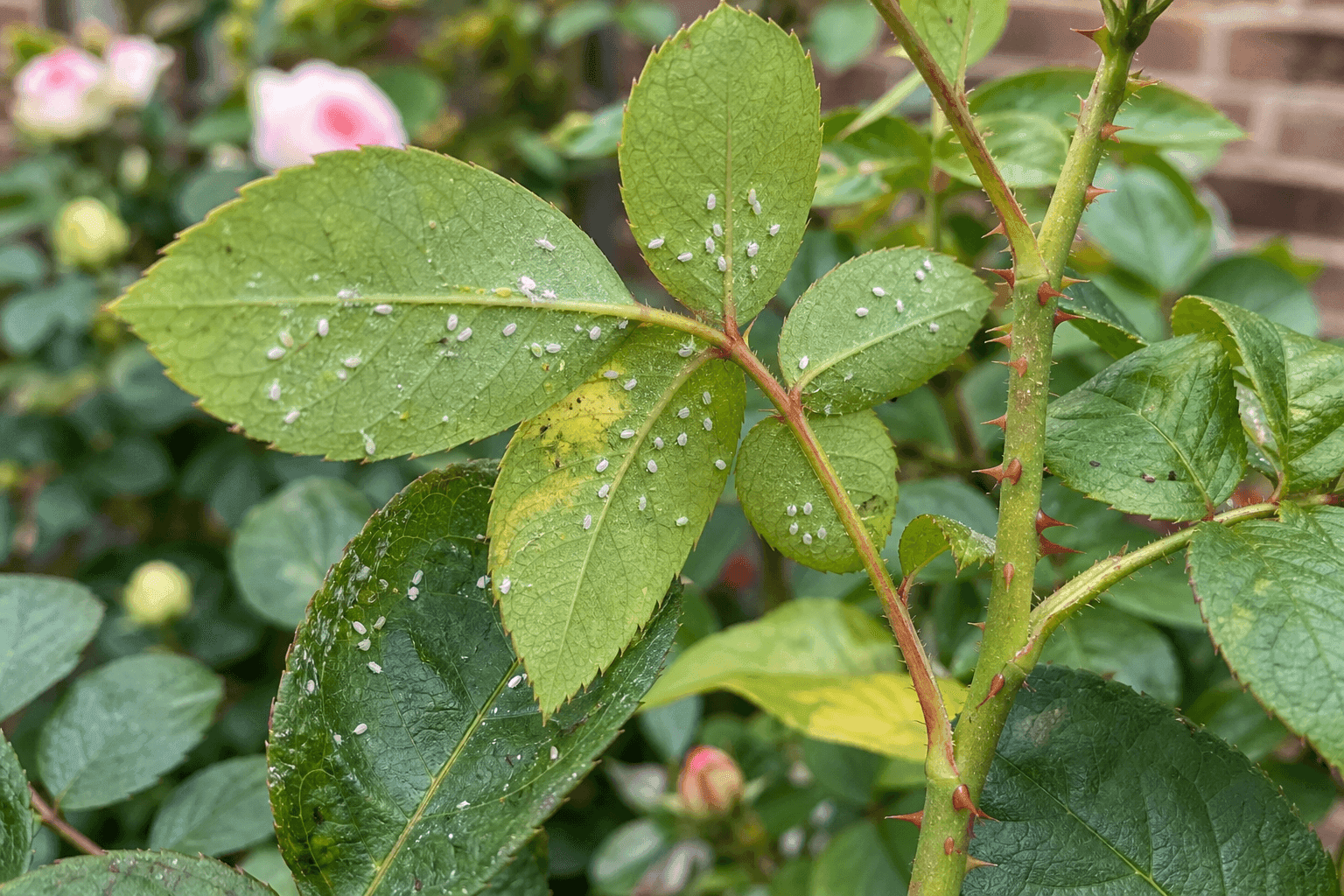
Mealybugs appear as white or grey woolly patches at leaf joints, on stem undersides and in growing tips. Up close, individual insects are oval, up to 4 mm long, and covered in white waxy powder with a fringe of wax filaments. Egg masses look like cottony fluff.
Does rubbing alcohol kill mealybugs?
Yes — 70% isopropyl alcohol dissolves the waxy coating that protects mealybugs and kills them on contact. Apply with a cotton bud directly onto each insect and egg mass. Dilute 1:1 with water before spraying, and test on one leaf first to check for damage.
How do I get rid of mealybugs permanently?
Persistence is key. Treat every 3–4 days for at least three weeks to catch hatching crawlers. Isolate the plant, treat all visible insects with rubbing alcohol, spray with insecticidal soap, and inspect neighbouring plants. Consider biological control with Cryptolaemus ladybirds in warm conditions from May to September.
Can I use neem oil on mealybugs?
Neem oil disrupts the mealybug life cycle and acts as a repellent, but it is broad-spectrum and will harm the predatory insects used in biological control. If you plan to use biological controls, avoid neem oil. For standalone chemical control, insecticidal soap or a fatty-acid spray is usually more effective and less disruptive.
What is the biological control for mealybugs in the UK?
The predatory ladybird Cryptolaemus montrouzieri and parasitic wasps (Leptomastix spp. and Leptomastidea spp.) are available from UK biological control suppliers. The RHS notes these are only effective from May to September when temperatures are consistently above 20°C, making them best suited to greenhouses or warm conservatories rather than typical UK homes.
Why do mealybugs keep coming back?
Mealybug eggs are resistant to most spray treatments, and crawlers hatch in waves. A single application rarely eliminates them. Repeat treatment every 3–4 days for three weeks. Also check whether another plant in your collection is harbouring the infestation — a hidden reservoir plant will re-infest treated plants repeatedly.
Do mealybugs spread from plant to plant?
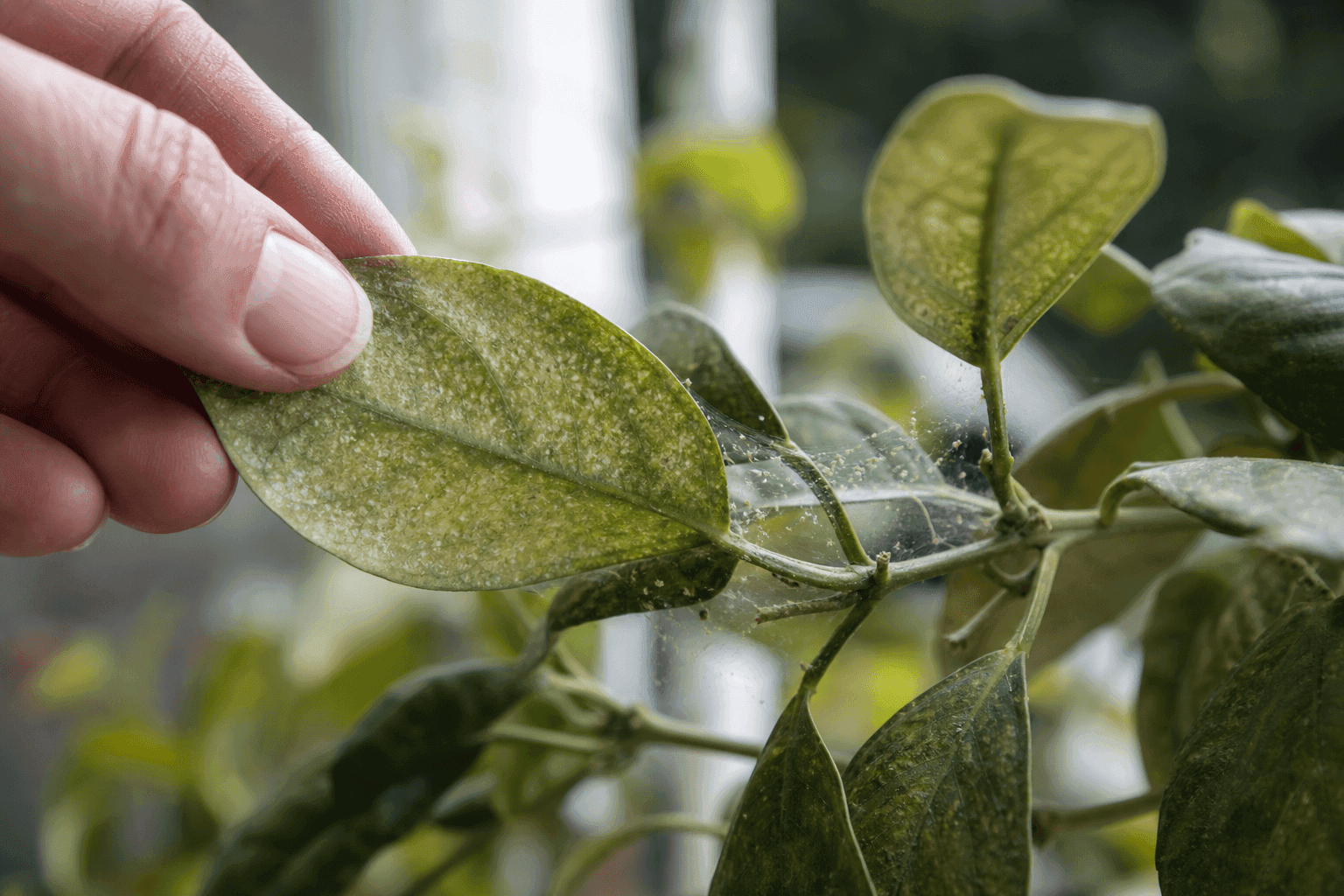
Yes — crawler nymphs can walk between pots that are touching or where leaves overlap. They can also spread on clothing and tools. Isolate any infested plant and inspect all nearby plants as soon as you spot mealybugs. While checking, look for other sap-sucking pests too: spider mites and aphids often colonise stressed plants alongside mealybugs.
Should I throw away a mealybug-infested plant?
For a mild to moderate infestation, persistent treatment with rubbing alcohol and insecticidal soap can clear it. The RHS advises that heavily infested plants are often better discarded — the risk of re-infesting your entire collection may outweigh the value of saving one plant.