Quick diagnosis
Match the row to what you’re seeing, then jump to the fix.
| What you see | Likely cause | Confidence | How to confirm | What to do now | Urgency |
|---|---|---|---|---|---|
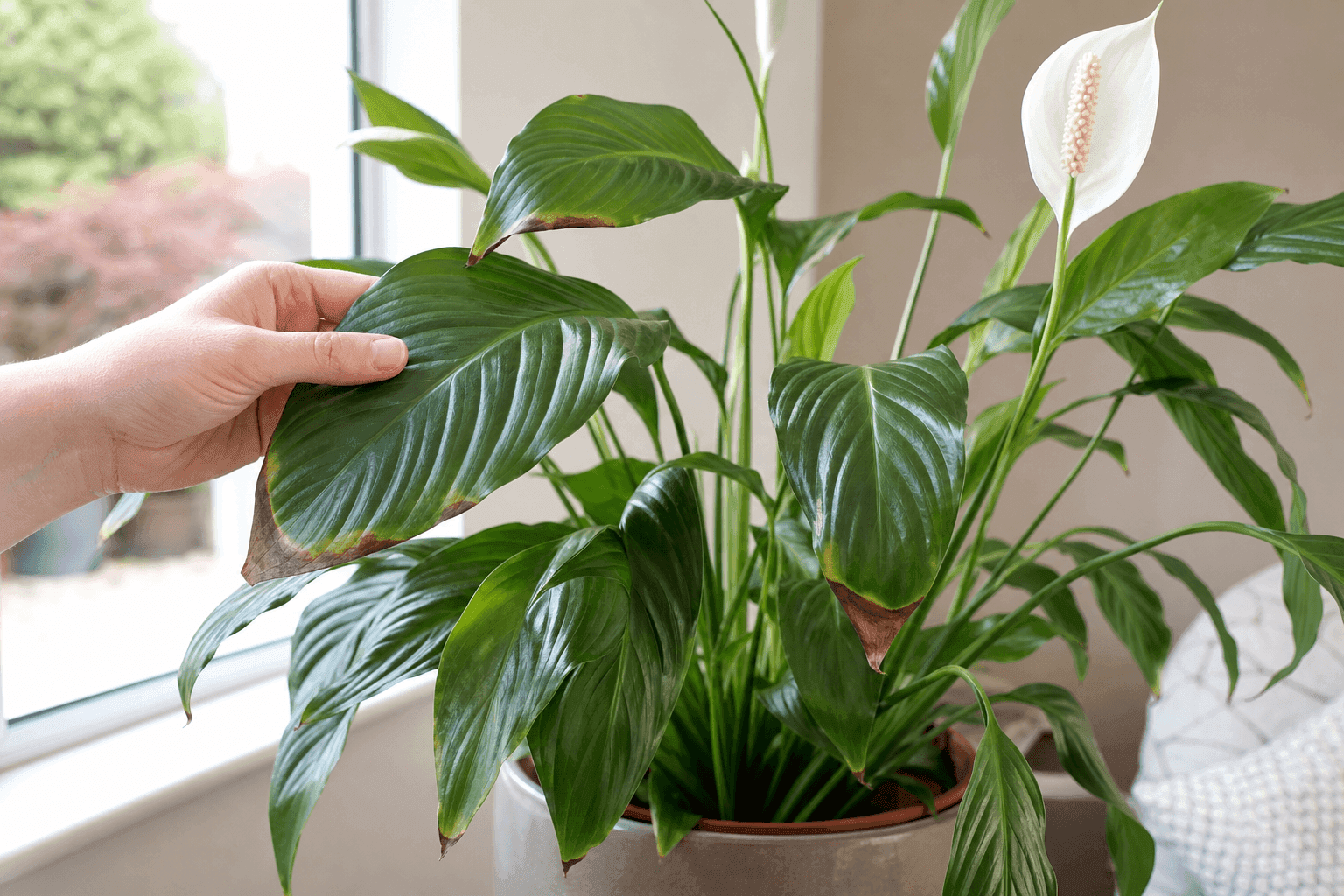
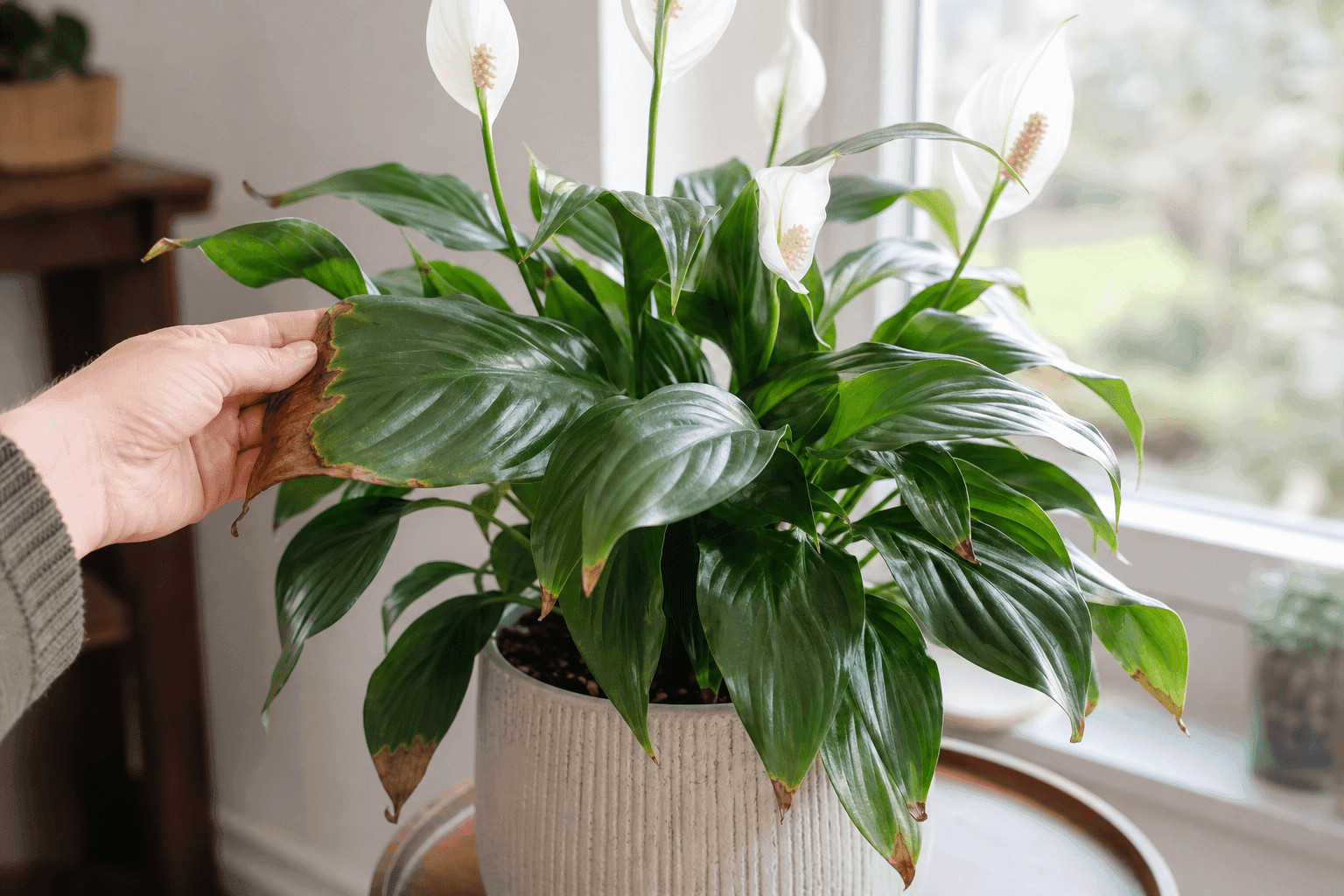
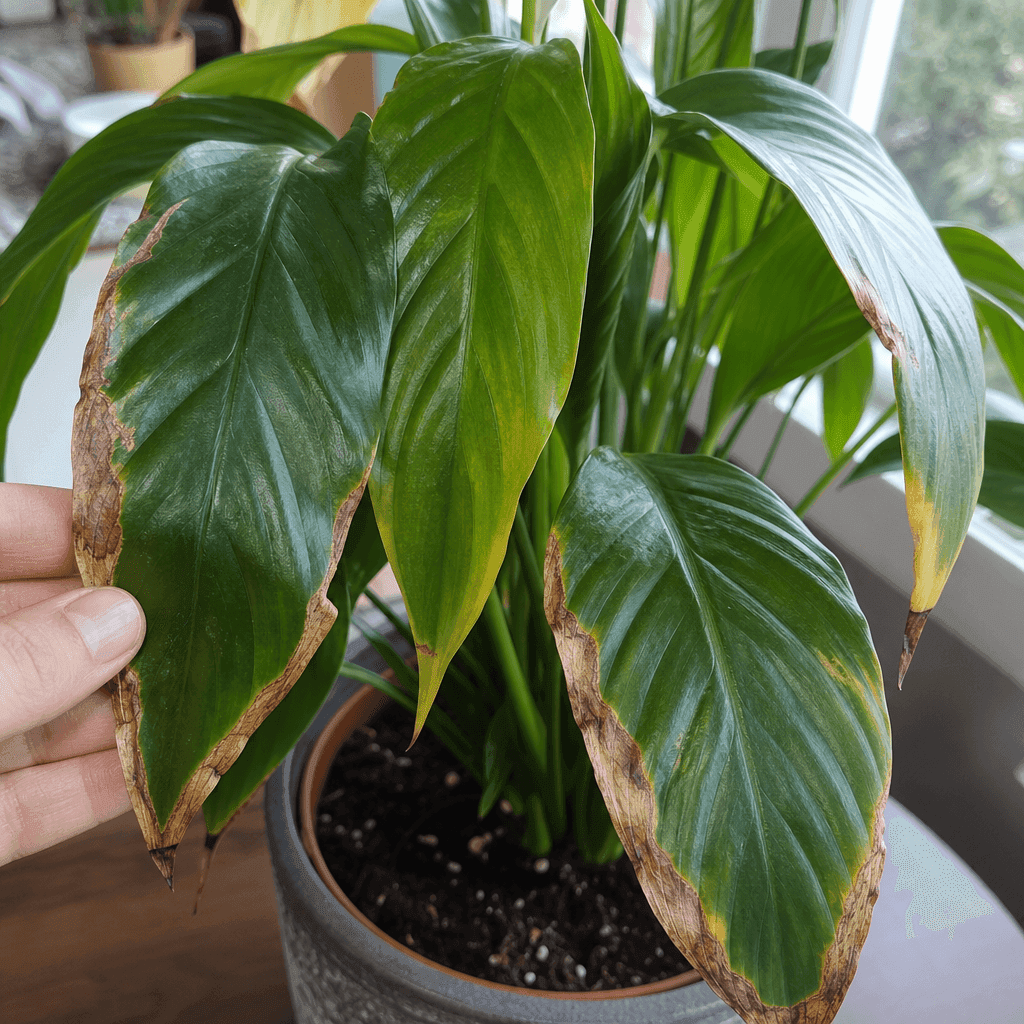
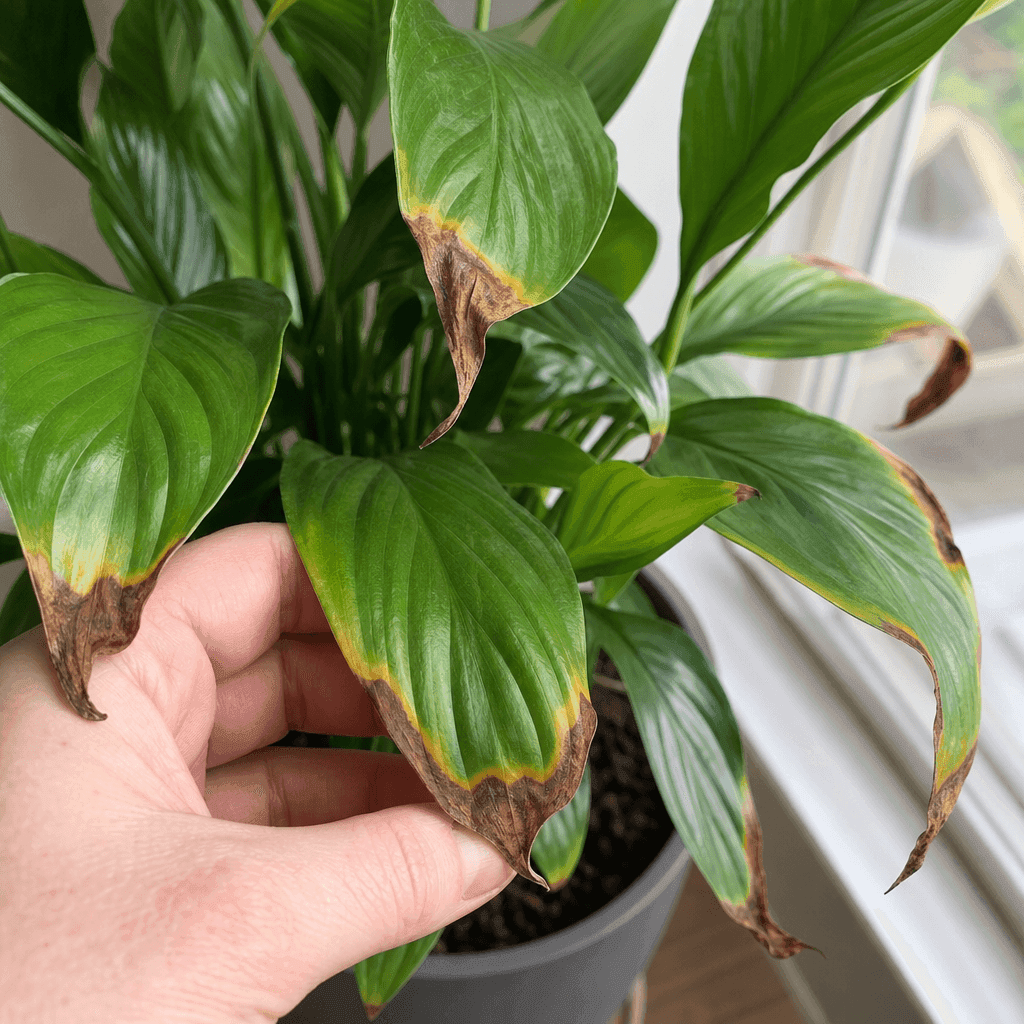
| Brown, crispy tips and edges, especially on older leaves; slow progression over weeks | Fluoride or mineral build-up from tap water | High | Check whether tap water is used regularly; a white crust on the compost surface confirms salt build-up. | Switch to rainwater, filtered water or distilled water; flush the compost with clean water. | Low–medium |
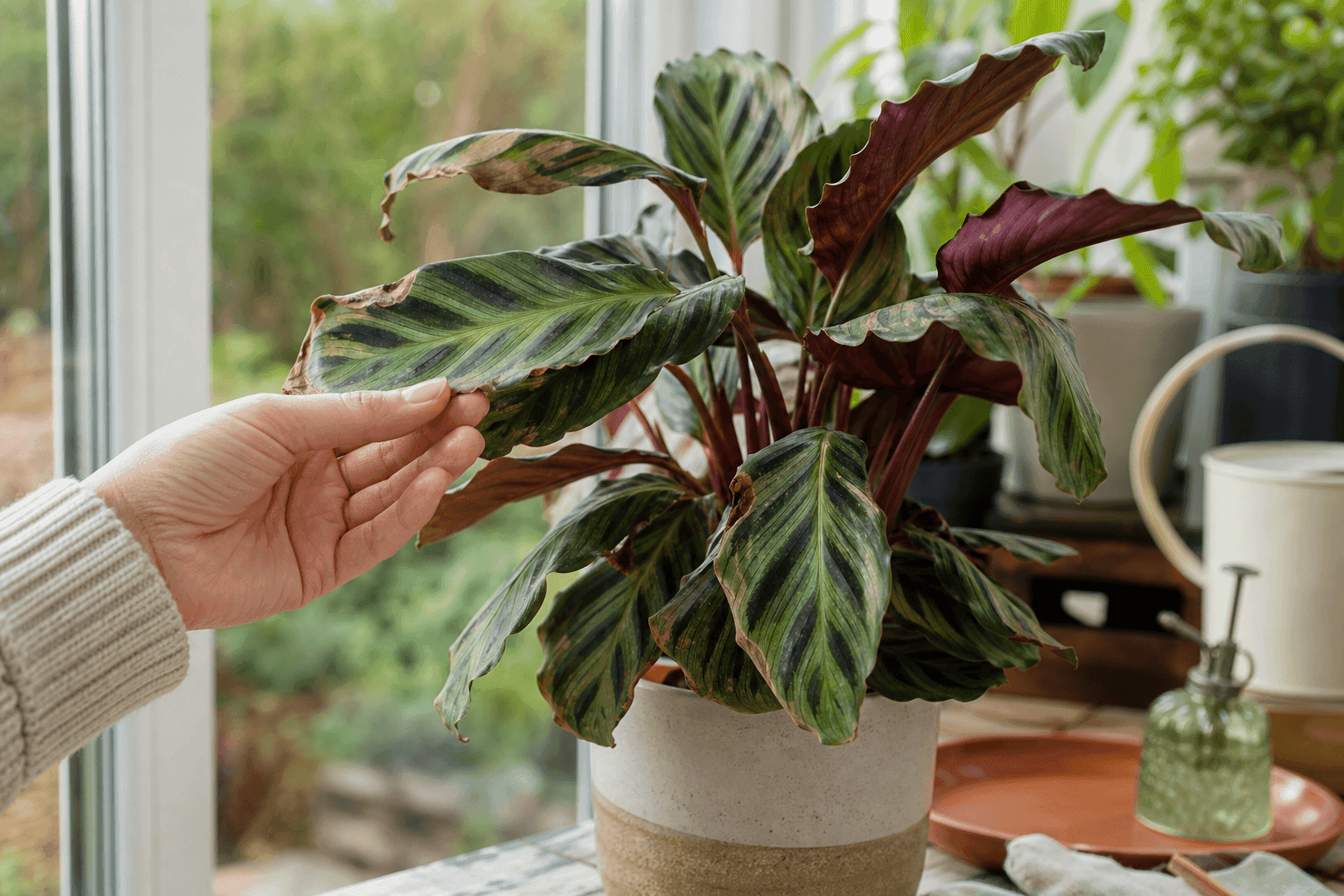
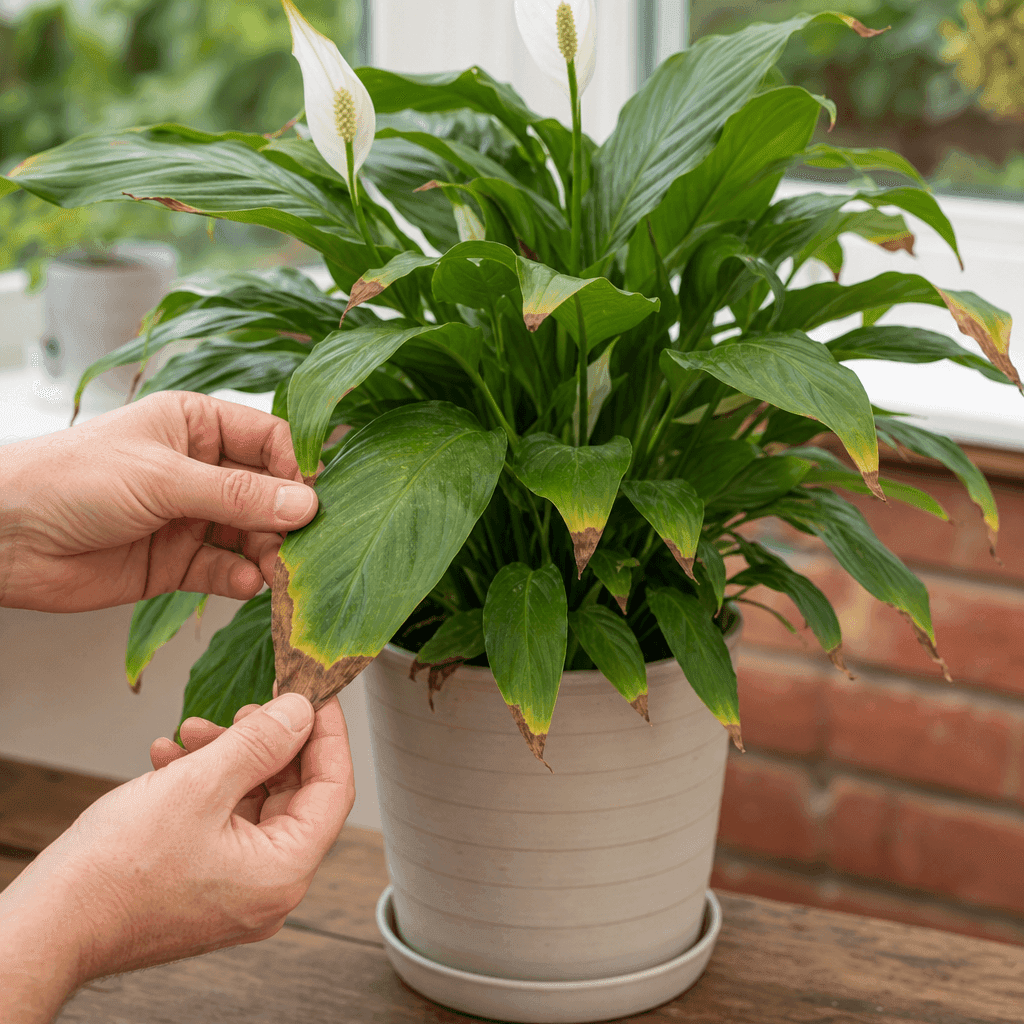
| Brown tips on otherwise healthy leaves; worse near radiators or in winter | Low humidity and dry air | High | Check with a humidity meter — below 40% is too low; peace lilies prefer 50–60%. | Place on a pebble-and-water tray or use a humidifier; move away from radiators. | Low–medium |
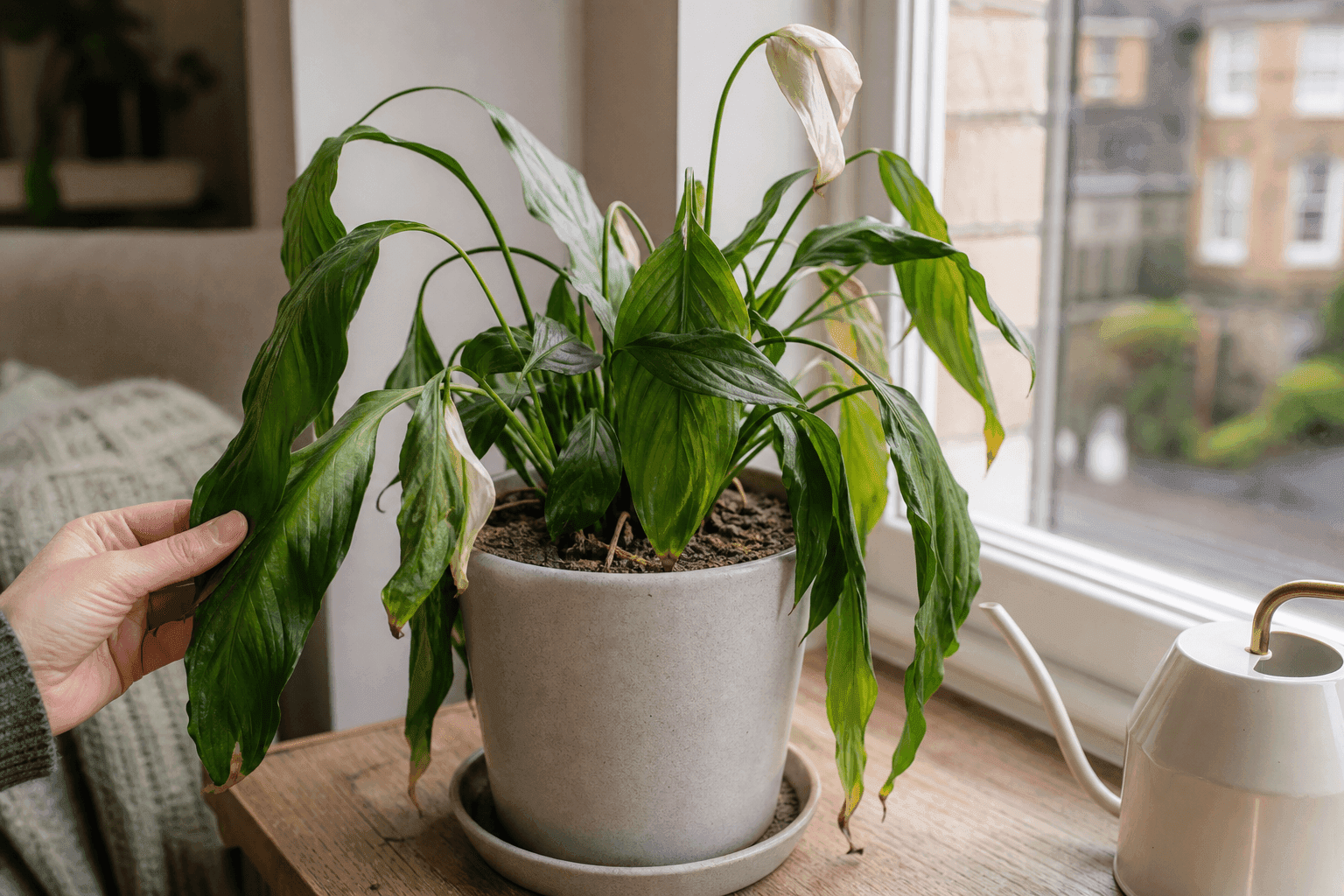
| Whole leaves droop and brown; compost feels dry; plant wilts dramatically | Underwatering or dry roots | High | Push a finger 2–3 cm into the compost — if dry, underwatering is the cause. | Water thoroughly until it drains from the base; peace lilies recover quickly after a good soak. | High |
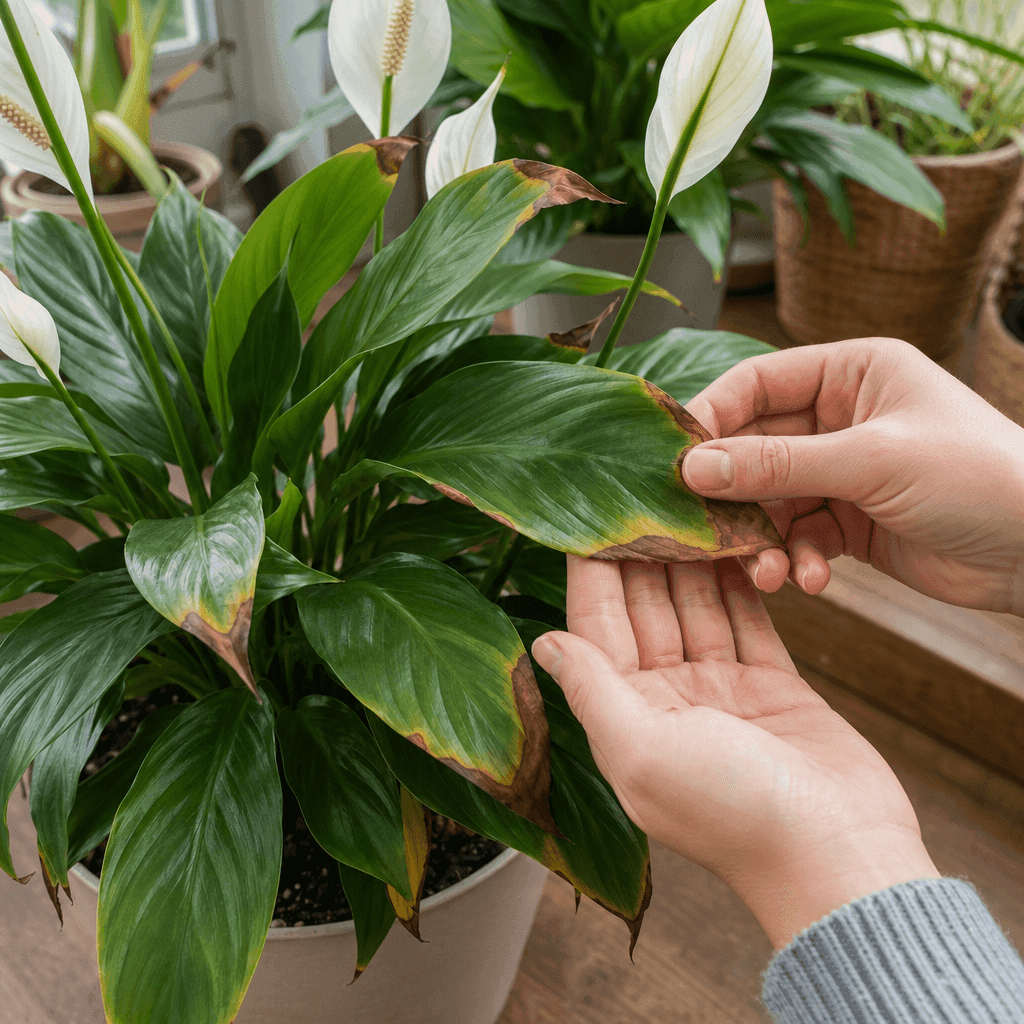
| Large tan or bleached brown patches, not just tips; damage on the side facing the light | Direct sun scorch | Medium | Check the plant's position — direct sun through glass scorches peace lily leaves within hours. | Move to bright indirect light, away from direct sun; scorched patches will not recover but new leaves will be clean. | Medium |
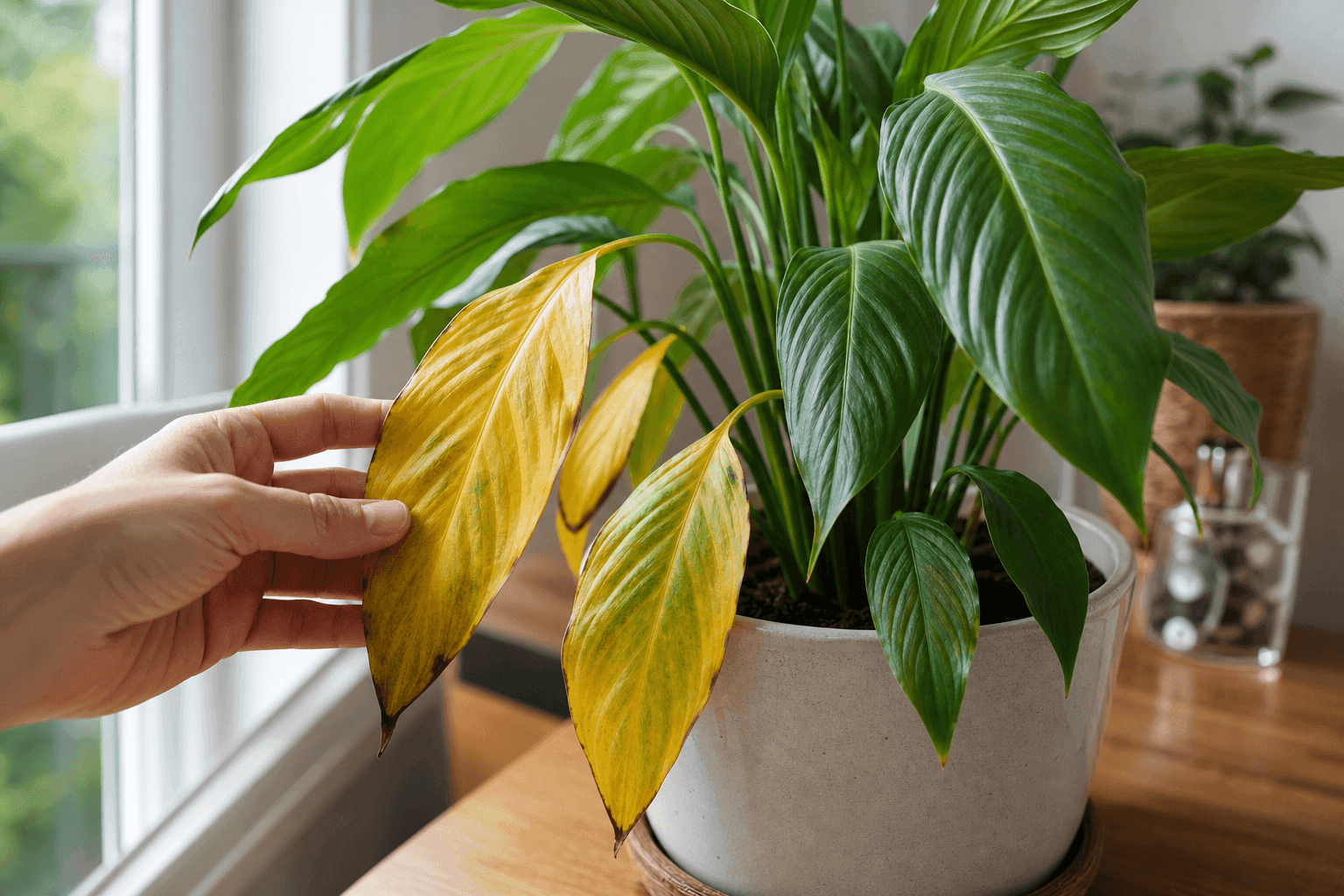
| Yellowing followed by brown leaves; plant wilts despite wet compost; sour smell possible | Overwatering and root rot | Medium | Compost stays wet for days; roots are brown and mushy rather than pale and firm. | Stop watering; check drainage; repot into fresh compost and trim dead roots if needed. | High |
| A few lower, older leaves yellowing and browning while new growth is healthy | Natural leaf ageing | Medium | Only the oldest, lowest leaves are affected and the newest leaves are clean and green. | Remove ageing leaves cleanly and continue normal care. | Low |
The causes, in detail
Fluoride and mineral salts from tap water
Most likelyPeace lilies are particularly sensitive to fluoride, which is present in UK tap water (especially in the Midlands and parts of the North) and to dissolved calcium, magnesium and sodium salts in hard water. The same mineral mechanism is behind spider plant brown tips, another houseplant prone to fluoride damage. Fluoride travels through the plant's vascular system and concentrates in the leaf tips, where it accumulates over weeks to toxic levels and kills tissue, producing crispy brown tips that cannot be reversed. Gardeningknowhow.com confirms that fluoride and over-fertilisation are the two most common causes of brown tips in peace lilies. The RHS growing guide for peace lilies notes that fluoride in tap water can cause leaves to go brown.
- Brown tips developed slowly over several weeks or months of tap-water use.
- A white crust of mineral salts is visible on the compost surface or the inside of the pot.
- The browning does not improve after adjusting watering or humidity.
- Switch to collected rainwater — the best free option for UK growers, and naturally low in minerals.
- Alternatively use filtered water (reverse osmosis removes fluoride; a standard jug filter removes chlorine but not fluoride) or distilled water.
- Flush the existing compost heavily with clean water — pour two to three times the pot volume of rainwater or filtered water through slowly to rinse accumulated salts out of the drainage holes.
- Repot into fresh peat-free compost in spring if salt build-up has been severe.
- Note: leaving tap water out overnight removes chlorine (which disperses) but does not remove fluoride.
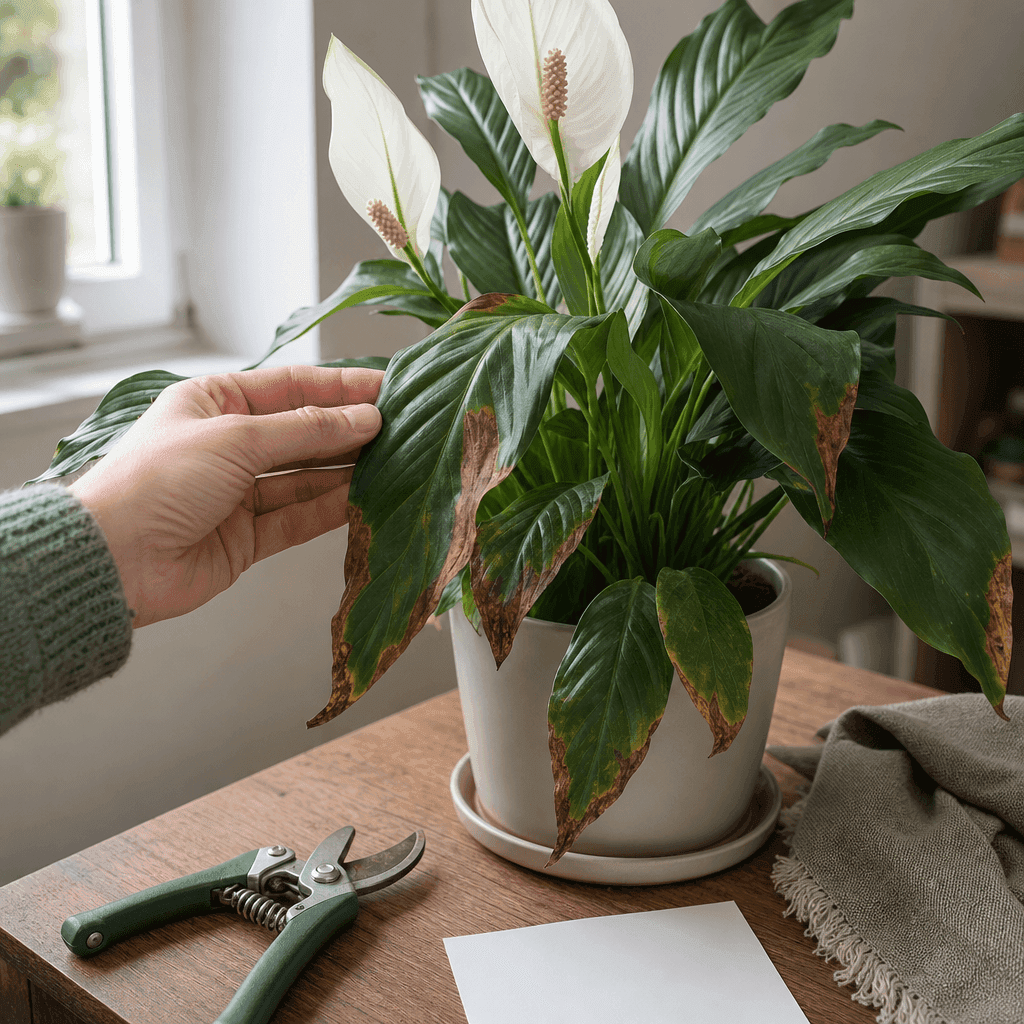
Stop it coming back:New leaves should emerge without brown tips once you switch water sources. Existing damaged tips will not recover, but you can trim them with sharp scissors at a slight angle to maintain a natural leaf shape.
rely on leaving tap water out overnight as a fluoride fix — chlorine evaporates but fluoride does not.
Low humidity and dry air
Most likelyPeace lilies are native to humid tropical environments and prefer indoor humidity of 50–60%. UK homes with central heating frequently drop to 30–40% in autumn and winter. The RHS growing guide confirms that leaves may turn brown if the air is too dry. The browning typically starts at the tips and edges of leaves — the areas furthest from the water-conducting veins — and is most pronounced near radiators, underfloor heating and south-facing windows in winter.
- A hygrometer reading near the plant is below 40%.
- Tips brown worse in winter when heating is running.
- The plant is positioned near a radiator, heat vent or south-facing window.
- Place the pot on a shallow tray filled with pebbles and topped with water so the pot base sits above the waterline — evaporation raises local humidity.
- Group the peace lily with other houseplants to create a shared humid microclimate.
- Use a small cool-mist humidifier positioned 30–60 cm away for consistent results.
- Move the plant away from radiators and heat vents.
- Avoid misting directly onto the flowers — misted flowers go brown; mist the air around the plant instead.
Stop it coming back:Peace lilies near a pebble tray and away from direct heat rarely develop humidity-related browning in UK conditions.
mist the flowers directly — this causes them to brown and spot rapidly.
Underwatering and dry roots
Most likelyPeace lilies are dramatic communicators of thirst — when the compost dries out, the whole plant wilts rapidly and leaves droop flat. This is alarming but recovery is usually quick, and the same dramatic collapse is covered in our guide to a wilting peace lily. The RHS growing guide advises allowing the top of the compost to dry out between waterings but not letting the plant fully wilt — leaves and stems stressed by repeated drying may develop brown edges that do not recover. In a warm UK room, a peace lily may need watering twice a week in summer.
- The compost feels dry 2–3 cm down when a finger is pressed in.
- The plant is clearly drooping — stems collapse outward and leaves lie flat.
- The pot feels light when lifted.
- Water immediately and thoroughly — pour slowly until water drains from the drainage holes, then stop.
- The plant should visibly perk up within one to two hours of watering.
- Establish a routine: check the compost every two to three days and water when the surface begins to feel dry.
- Do not allow the plant to reach full wilt repeatedly — this weakens the leaves and causes lasting brown edges.
Stop it coming back:Peace lilies respond quickly to correct watering and usually recover without permanent damage unless the drying is severe or prolonged.
water on a fixed schedule rather than by feel — in a cool UK winter a peace lily may need far less water than in summer.
Direct sun scorch
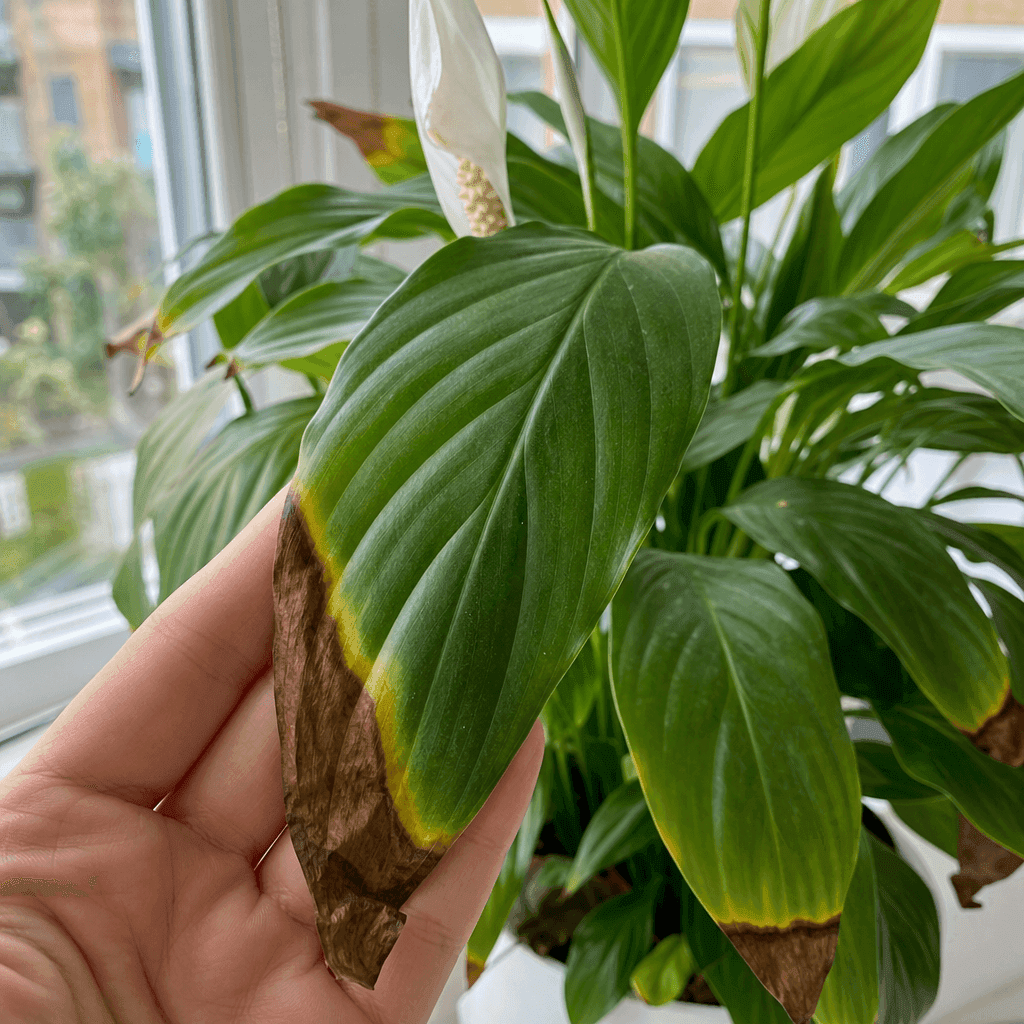
PossiblePeace lilies evolved in tropical forest understorey — they need bright, indirect light but cannot tolerate direct sun. Even a few hours of direct spring or summer sun through a window will cause large bleached or tan patches on the leaves. Scorched leaves do not recover their colour. The damage pattern differs from fluoride or humidity browning: scorch produces larger irregular patches, while fluoride and humidity damage produce neat brown tips and edges.
- Large, irregular tan, bleached or crispy patches on leaves, not just the tips.
- The damage is worst on the side of the plant facing the light source.
- The plant is within 30–60 cm of a window that receives direct sun.
- Move the plant to a spot with bright, indirect light — a north or east-facing windowsill in a UK home is often ideal.
- Use a sheer curtain to filter south or west-facing windows.
- Remove badly scorched leaves — they will not green up again.
- New leaves produced in the correct light position will be undamaged.
move a peace lily into direct outdoor sun or an unshaded greenhouse — even brief full sun exposure in a UK summer causes rapid scorch.
Overwatering and root rot
PossibleOverwatered peace lilies show a different pattern of browning from other causes: leaves yellow before they brown, the compost smells sour, and the plant may wilt despite wet soil as damaged roots can no longer take up water. Root rot (often caused by Pythium or Fusarium in houseplants) progresses from brown, mushy roots to complete collapse if untreated. The RHS peace lily growing guide emphasises allowing the top of the compost to dry out between waterings.
- The compost is wet or soggy below the surface after several days without watering.
- The pot has no drainage holes or sits in a full saucer.
- Roots are brown and mushy rather than pale and firm; the compost may smell sour.
- Stop watering immediately.
- Clear blocked drainage holes and empty any saucer beneath the pot.
- If the smell is strong or roots are mushy, unpot the plant, trim all dead brown roots with clean scissors, and repot into fresh, barely moist peat-free compost.
- Resume watering only when the top layer of compost feels dry to the touch.
assume a wilting peace lily needs more water — check the compost first; in wet compost, more water accelerates root rot.
Natural leaf ageing
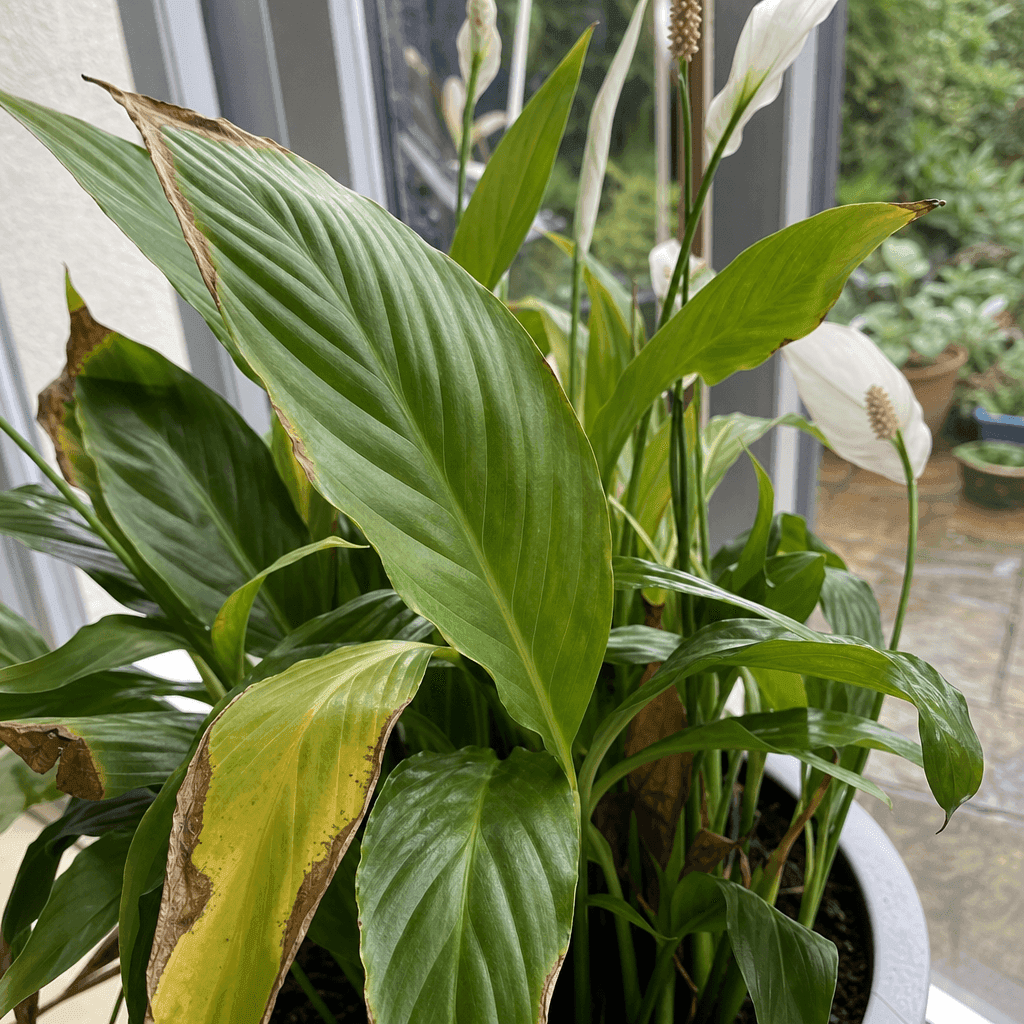
PossiblePeace lilies naturally shed their oldest, lowest leaves as they mature and put energy into new growth. A few yellowing and browning lower leaves with otherwise healthy new growth is entirely normal and does not indicate a problem. This is distinct from a pest, disease or care issue: ageing affects only the oldest leaves, the progression is slow, and the new leaves emerging at the centre are clean and undamaged.
- Only the oldest, lowest leaves are yellowing and browning.
- The newest leaves at the centre of the plant are healthy, green and upright.
- No more than one or two leaves are affected at a time.
- Remove yellowed or brown leaves cleanly by cutting at the base of the stem with clean scissors or secateurs.
- Continue normal care — no changes to watering, feeding or position are needed.
remove healthy leaves that are only slightly marked — keep them as long as they are helping the plant photosynthesise.
Still not sure?
Work down these branches — the first one that matches is your answer.
What not to do
- Water with tap water if your area has hard or fluoridated water — switch to rainwater or filtered water.
- Place a peace lily in direct sun, even on a bright UK spring day — scorch is rapid.
- Mist the flowers directly — it causes brown spotting on the petals.
- Assume a wilting peace lily needs more water without checking the compost — wet soil and wilting points to root rot.
- Remove every leaf that has a small brown tip — keep them if they are still green and helping the plant.
Common questions
Why do peace lily tips turn brown?
Brown tips in UK peace lilies are most often caused by fluoride accumulation from tap water, or by low humidity from central heating. Less commonly, tips brown from underwatering, over-fertilisation or cold draughts. The RHS notes that fluoride in tap water can cause peace lily leaves to go brown.
Should I use tap water for a peace lily?
UK tap water is fluoridated in many areas and often hard (high in mineral salts). Peace lilies are very sensitive to fluoride. Collected rainwater is the best free option; filtered or distilled water also works. Leaving tap water overnight removes chlorine but not fluoride.
How do I fix peace lily brown tips?
First switch to rainwater or filtered water, then flush the existing compost with clean water to remove accumulated salts. Check humidity — aim for 50–60%. The brown tips will not reverse, but you can trim them neatly with sharp scissors, and new leaves will emerge undamaged.
Why is my peace lily turning brown after watering?
If leaves brown and the compost stays wet, overwatering or root rot may be the cause. Peace lilies need the top of the compost to dry slightly between waterings. Check the roots — if brown and mushy, repot into fresh compost and trim dead roots.
Can a peace lily get too much sun?
Yes. Peace lilies are forest understorey plants and cannot tolerate direct sun. Even spring or autumn sun through a south-facing UK window will scorch the leaves, producing large tan or bleached patches. A north or east-facing windowsill with bright, indirect light is ideal. See our full peace lily care and problem guide for the complete light, water and humidity picture.
How often should I water a peace lily in the UK?
Check the compost every two to three days. Water when the surface begins to feel dry — not before, but also not when the plant has fully wilted. In a warm room in summer this may be twice a week; in a cool room in winter, once every seven to ten days.
Why are my peace lily flowers turning brown?
Flowers brown naturally as they age — this is normal and not a cause for concern. Brown flowers that appear too soon are often caused by direct sun, low humidity or water being misted onto the flowers. Cut brown flowers at the base of the stem.
Does a peace lily need high humidity?
Yes — peace lilies prefer 50–60% relative humidity. UK homes with central heating often drop below 40% in winter. A pebble-and-water tray under the pot, grouping with other plants, or a small humidifier nearby all raise local humidity effectively.