Quick diagnosis
Match the row to what you’re seeing, then jump to the fix.
| What you see | Likely cause | Confidence | How to confirm | What to do now | Urgency |
|---|---|---|---|---|---|
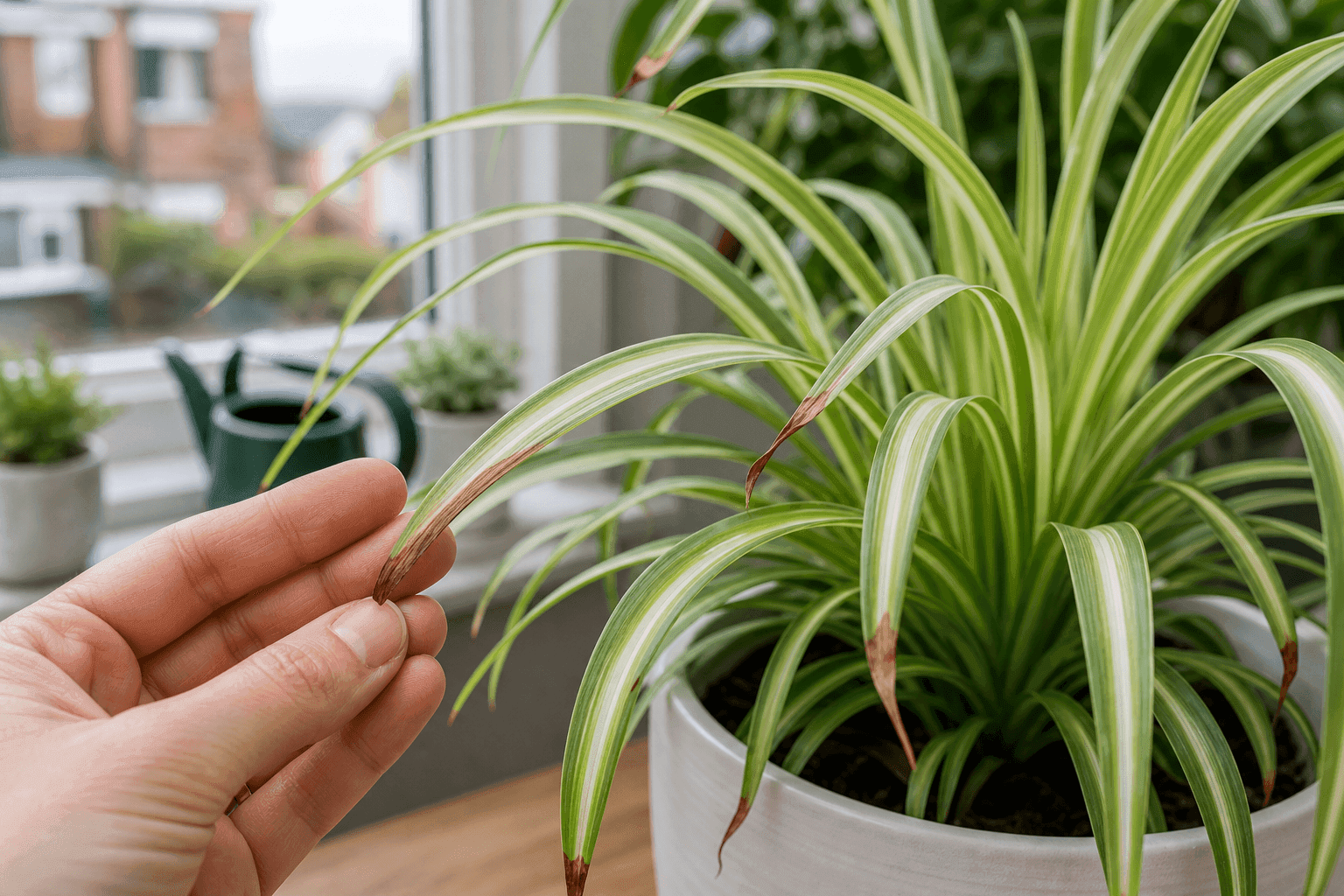
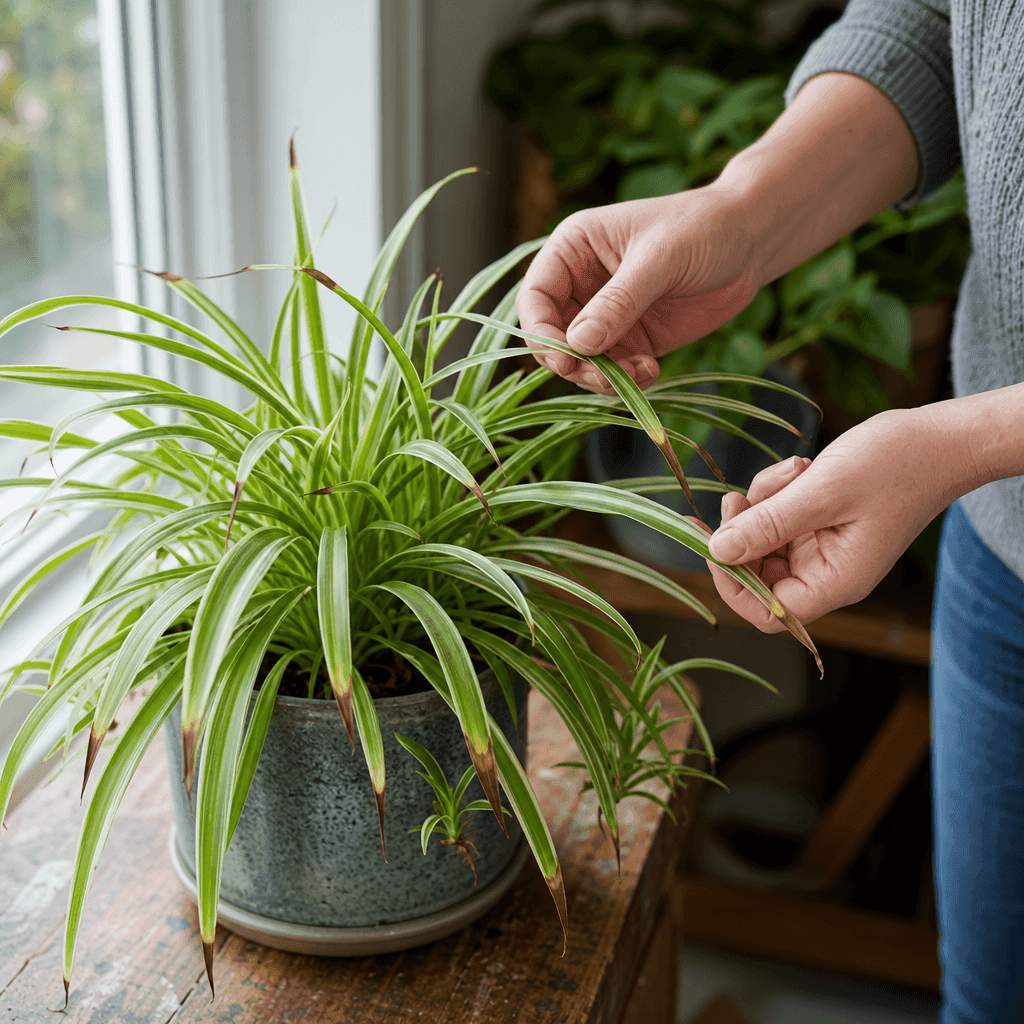
| Brown tips that have appeared gradually over months of tap watering | Fluoride or mineral build-up from tap water | High | Hard tap water used consistently; white mineral crust on compost surface or pot rim; tips are dry and papery | Switch to rainwater or filtered water; flush the compost with rainwater to leach accumulated salts | Low |
| Brown tips appearing or worsening in winter with central heating on | Low humidity from central heating | High | Heated room; plant near a radiator or on a warm windowsill; tips are dry not slimy | Move away from radiators; place on a pebble tray; group with other plants | Low |
| Brown tips plus crispy older leaves; compost has swung between dry and wet | Inconsistent watering — drought cycles followed by flooding | High | Compost has dried out completely between waterings; roots may have dried and cracked | Water consistently when the top 2.5 cm of compost feels dry; do not allow to dry completely | Low–medium |
| Brown tips plus yellowing base leaves; compost is consistently wet | Overwatering — leading to root stress or early root rot | Medium | Compost feels wet 7+ days after watering; pot feels heavy; possible sour smell | Reduce watering frequency; check drainage; allow compost to partially dry between sessions | Medium |
| Brown tips worsening over time; white crust on compost surface or pot rim | Salt and mineral build-up in the compost | Medium | Visible white or tan mineral deposits on compost surface or pot edges; tap water used for months | Flush the compost thoroughly with rainwater or distilled water; consider repotting into fresh compost | Low–medium |
| Brown tips plus overall pale growth; plant dries out very quickly after watering | Root-bound plant restricting water uptake | Medium | Roots visible at drainage holes or circling inside the pot; last repotted over 2 years ago | Repot into a slightly larger pot with fresh compost in spring | Low–medium |
The causes, in detail
Fluoride and chlorine in UK tap water
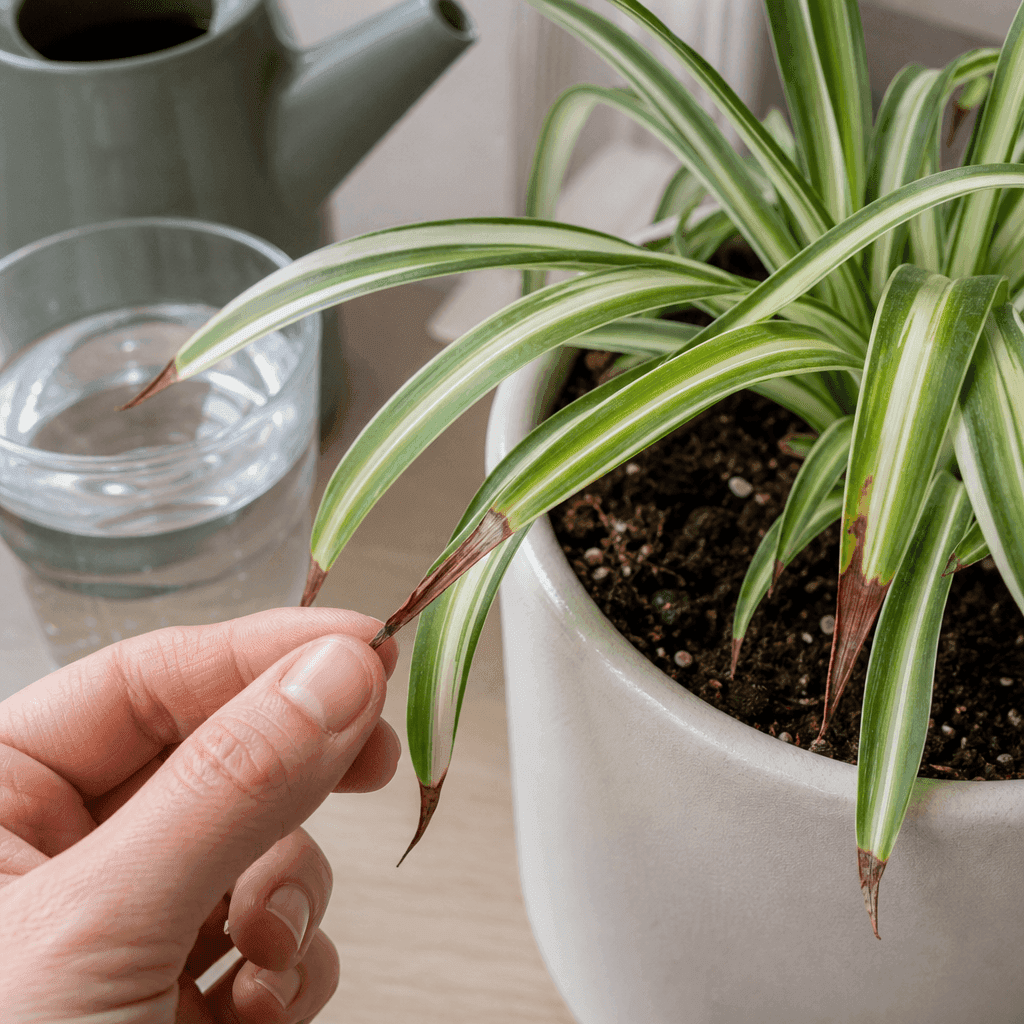
Most likelySpider plants are among the houseplants most sensitive to fluoride, and many UK water supplies are fluoridated to 0.7 mg/l or higher. This is a classic watering and nutrient problem rather than a disease. Fluoride does not wash out when water is absorbed — it migrates through the plant tissue to the leaf tips and margins, where it accumulates and causes progressive browning. Michigan State University Extension confirms this mechanism: fluoride that reaches a leaf stays there and moves to the tips, where levels eventually become toxic. The damage is cumulative and may not appear for weeks or months after starting to use fluoridated tap water. Chlorine is less damaging but still irritating to sensitive plants — leaving tap water to stand overnight allows chlorine to off-gas, but does not remove fluoride.
- Tap water used consistently, especially in a hard or fluoridated water area.
- White mineral deposits (limescale) visible on the compost surface or around the pot rim.
- Brown tips developed gradually over months, not suddenly.
- Tips are dry and papery, not soft or slimy.
- Switch to collected rainwater as the primary watering source — this is the most effective long-term fix.
- Alternatively, use filtered water or distilled water.
- Flush accumulated fluoride from the compost by slowly pouring several containers of rainwater or distilled water through the pot, allowing it to drain fully each time.
- If the build-up is severe, repot into fresh compost and continue using rainwater.
- If you must use tap water, let it stand in an open container overnight — this removes chlorine but not fluoride.
Stop it coming back:Connect a water butt to a downpipe and use collected rainwater for all fluoride-sensitive houseplants. In areas without a garden, use a filtered water jug. Organic Gardening Advice notes that rainwater is especially effective for flushing minerals from the soil.
assume brown tips are caused only by fluoride without also checking watering consistency and humidity — all three can look identical in early stages.
Low humidity from central heating
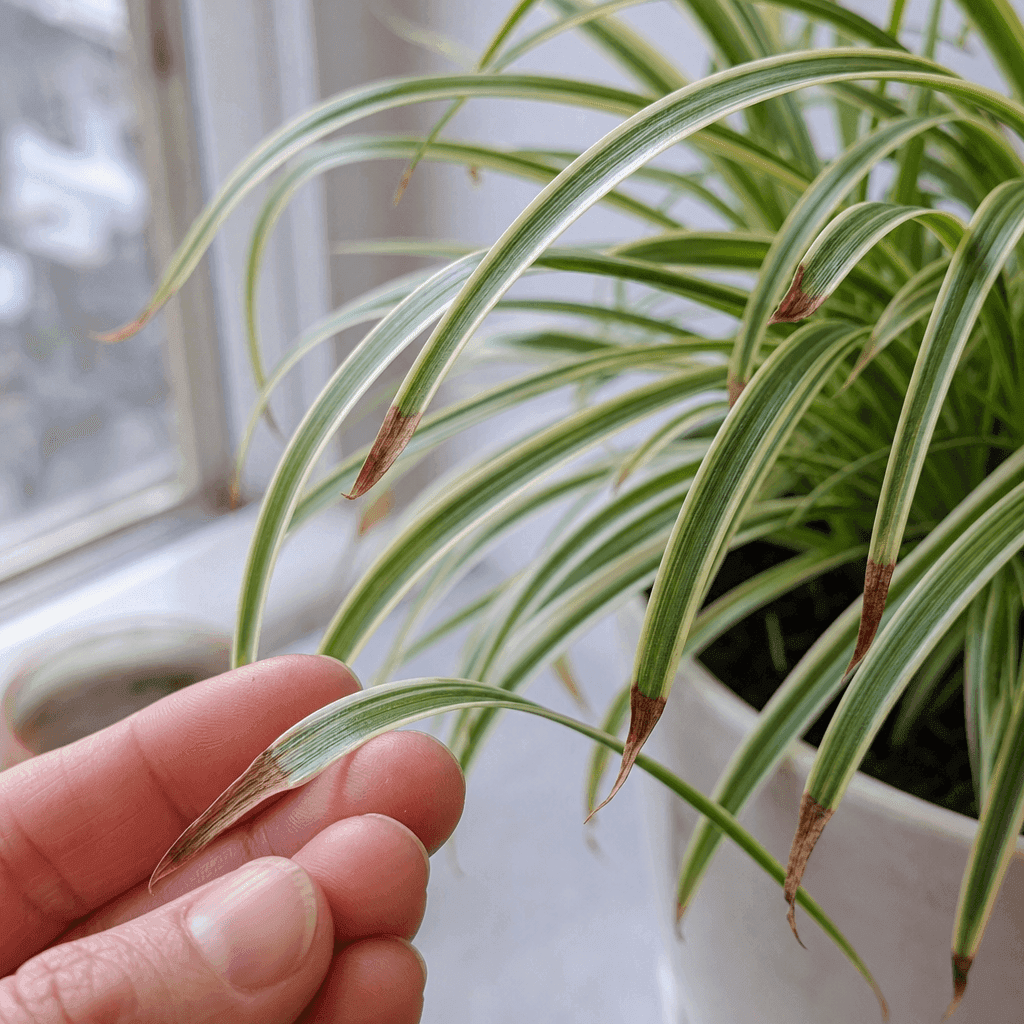
Most likelySpider plants are native to tropical and sub-tropical Africa and prefer 40–60% relative humidity. UK homes running central heating in winter typically drop to 30–40% humidity, and rooms with underfloor heating or electric heaters can be drier still. The brown tips caused by low humidity are dry and papery, starting at the very tip and progressing inward if conditions do not improve. Bloom Box Club confirms this as one of the most common causes of brown tips in UK-grown spider plants. The good news is that existing brown tips can be trimmed and new growth will be clean once humidity improves.
- Tips are brown, dry and papery specifically at the ends of leaves.
- The problem worsened in autumn or winter when heating was turned on.
- The plant is near a radiator, on top of a refrigerator, or on a windowsill above a radiator.
- The rest of the leaf is green and healthy-looking.
- Move the plant away from direct heat sources — at least 50 cm from any radiator or vent.
- Place the pot on a tray of pebbles topped with water — as water evaporates it raises local humidity without wetting the compost.
- Group spider plants and other humidity-loving plants together to create a microclimate.
- Mist the leaves gently in the morning — not the evening, to avoid fungal spotting in cooler rooms.
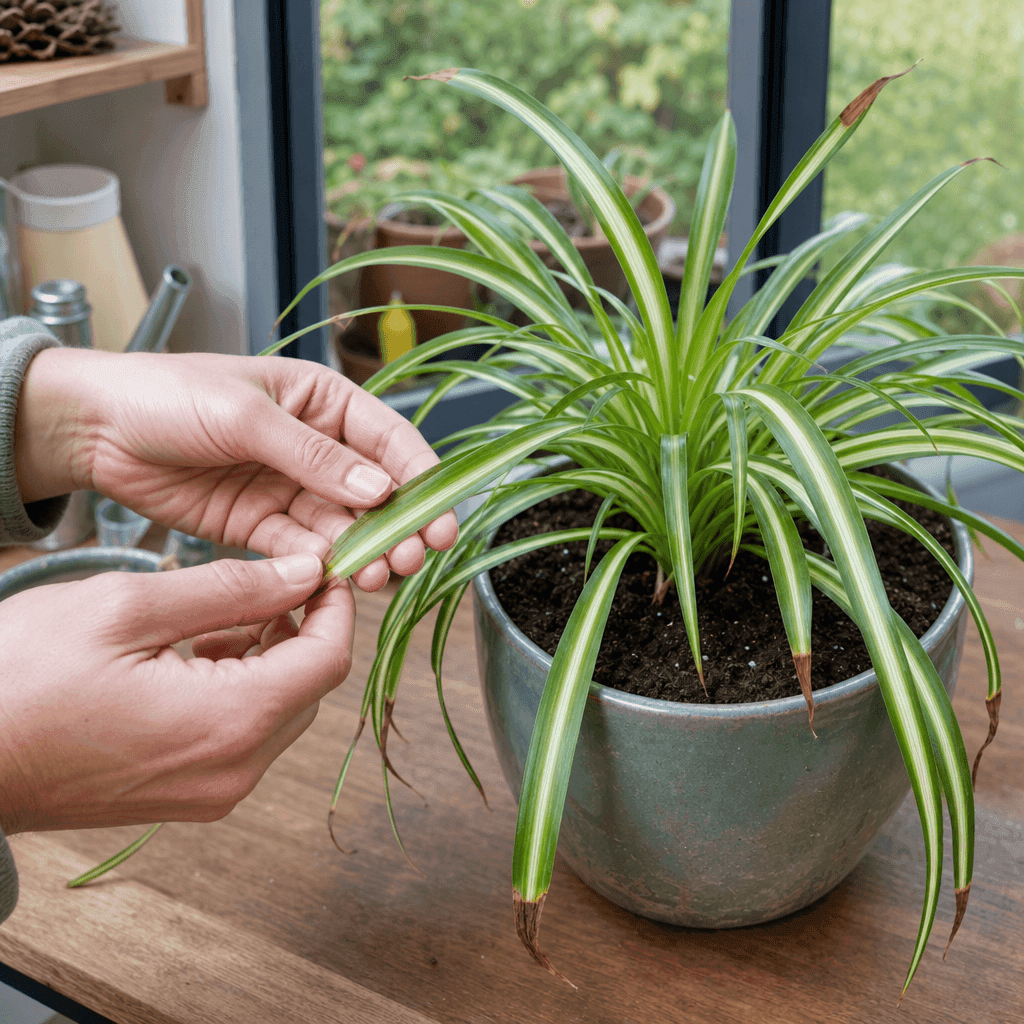
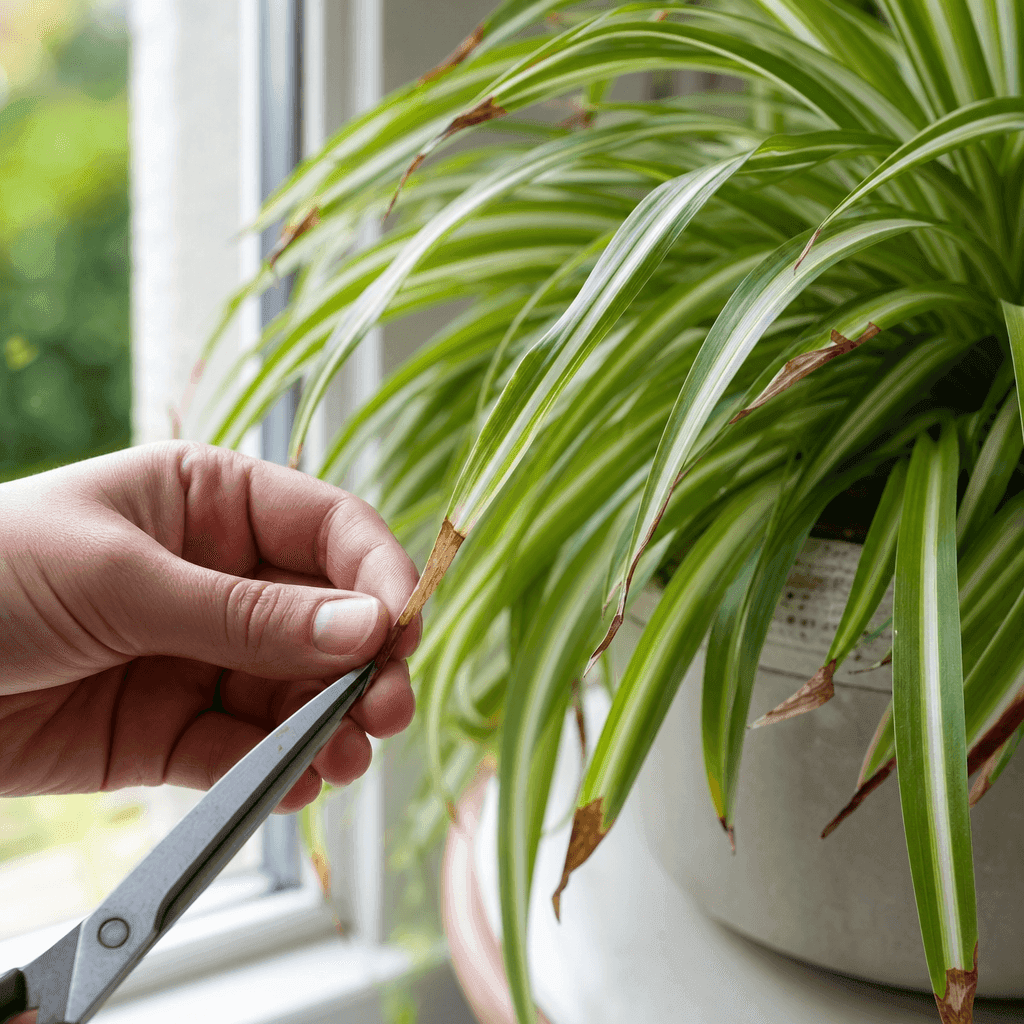
- Trim existing brown tips with clean scissors cut at a slight angle to match the natural leaf shape.
Stop it coming back:Bathrooms often have naturally higher humidity and can be a good home for spider plants, provided there is adequate indirect light. Avoid placing plants on or near radiators even in summer, as they will be similarly affected when heating seasons begin.
mist spider plant leaves in the evening in a cool, poorly ventilated room — wet leaves overnight in cool conditions can encourage fungal spotting.
Inconsistent watering — drought followed by flooding
Most likelySpider plants prefer to be watered when the top 2.5 cm of compost is dry, but are resilient to brief dry periods. Problems develop when watering is inconsistent — the compost dries out completely, roots begin to desiccate, and then a sudden heavy watering creates boom-and-bust conditions. Smart Garden Guide and Ohio Tropics both identify this as a significant cause of brown tips. The stress from repeated cycles of severe drought and flooding damages root hairs, impairs water uptake and causes persistent tip browning even when current conditions improve.
- The compost has been allowed to dry completely between waterings.
- The plant has drooped and been revived multiple times.
- Older leaves show crispy edges as well as brown tips.
- The compost pulls away from the sides of the pot when very dry.
- Water consistently when the top 2.5 cm of compost feels dry — not bone dry all the way through.
- If the compost has shrunk away from the pot sides, submerge the pot in a bowl of rainwater for 20 minutes to allow even rehydration before resuming normal watering.
- Set a regular reminder to check compost moisture every 3–4 days in summer, every 7–10 days in winter.
- Trim brown tips with clean scissors at an angle once watering is stabilised.
Stop it coming back:Spider plants are quite tolerant, but their preference is for steady moderate moisture rather than swings between drought and flood. A consistent rhythm suits them better than irregular deep waterings.
wait until a spider plant droops before watering — repeated severe wilting stresses the root system and leads to the kind of tip damage that consistent watering avoids.
Overwatering — root stress from waterlogging
PossibleWhile less common than drought-related browning in spider plants, overwatering causes a different presentation: brown tips appear alongside yellowing lower leaves, soft wilting (rather than crispy wilting), and a compost that stays wet for a long time. Houseplant Central notes that overwatering-related brown tips are accompanied by yellowing and soft leaf collapse rather than the dry, crispy browning of drought or salt stress. If left untreated, overwatering leads to root rot, which makes tip browning much harder to reverse.
- Compost feels wet or damp 7 or more days after the last watering.
- Lower leaves are yellowing as well as tips turning brown.
- The wilting is soft rather than crispy.
- The pot is consistently heavy.
- Reduce watering frequency — allow the top 2.5–5 cm of compost to dry between waterings.
- Check and clear drainage holes — clear any blockages and raise the pot on feet.
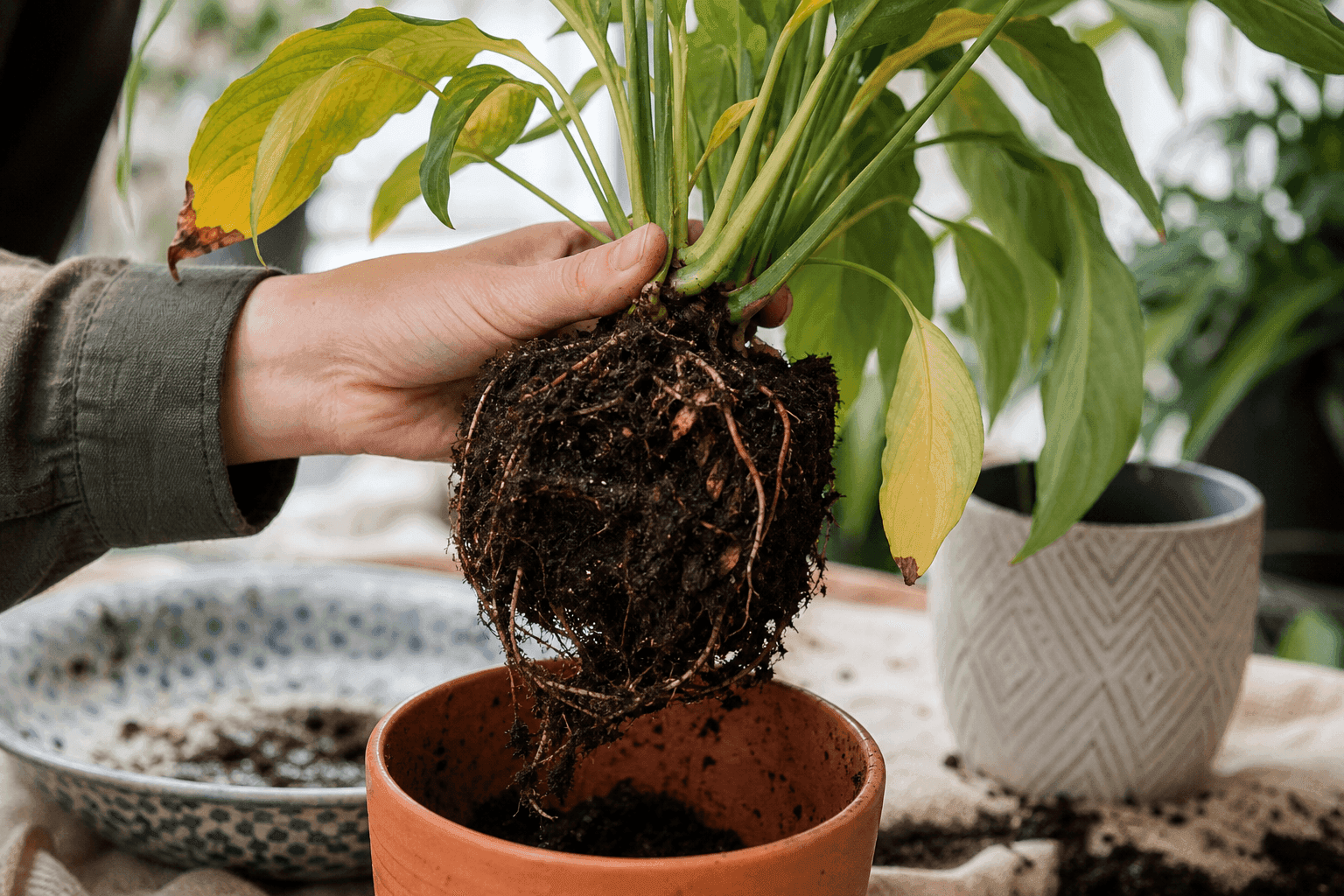
- If the compost smells sour, slide the plant from its pot and inspect roots.
- Healthy spider plant roots are white or cream and firm; rotting roots are brown or slimy.
- If root rot is found, trim dead roots and repot in fresh, free-draining compost.
water spider plants on a fixed daily or twice-weekly schedule regardless of compost moisture — use the finger test every time.
Salt and mineral build-up in compost
PossibleOver time, minerals in tap water and fertilisers accumulate in the compost as a white or tan crust on the surface or around pot rims. As concentrations increase, these salts draw water out of root cells by osmosis, causing the same browning as drought stress. Ohio Tropics identifies salt build-up alongside fluoride as a leading cause of progressive tip browning in spider plants. The fix is to flush the compost thoroughly with mineral-free water and reduce or stop fertiliser use for a period.
- Visible white or pale tan deposits on the compost surface or around the pot rim.
- Tap water used for months without flushing the compost.
- Plant has been fed regularly, especially with a liquid fertiliser.
- Brown tips have worsened progressively despite consistent watering.
- Take the plant to a sink and pour several generous amounts of rainwater or distilled water slowly through the compost, allowing each to drain fully — this leaches accumulated salts.
- Remove any visible white crust from the surface of the compost.
- If build-up is severe, repot into fresh compost using a pot of the same size or one size larger.
- Reduce fertiliser application — spider plants need feeding only during the growing season (April–September) and only monthly at most.
Stop it coming back:Use rainwater where possible and flush the compost with rainwater every 2–3 months even when watering regularly with tap water. Do not overfeed — spider plants are not heavy feeders.
feed spider plants monthly or more during winter when growth has slowed — excess fertiliser accumulates as salt in compost and worsens tip browning.
Root-bound plant with restricted water and nutrient uptake
PossibleSpider plants are prolific root producers and can become pot-bound relatively quickly, especially if growing in small nursery pots. When roots fill the pot completely, the compost dries out very rapidly, water runs straight through without being absorbed, and the plant shows signs of both drought stress and nutrient exhaustion — pale growth, slow production of plantlets and persistent tip browning. Repotting into a pot one size larger, with fresh compost, usually produces a rapid improvement.
- Roots are visible at the drainage holes or tightly circling inside the pot.
- The compost dries out within 1–2 days of watering even when watered correctly.
- The plant has been in the same pot for more than two years.
- New leaf growth is smaller, paler or slower than it used to be.
- Repot in spring into a pot one size (2–3 cm diameter) larger than the current pot.
- Use fresh peat-free houseplant compost or a 2:1 mix of multipurpose compost and perlite.
- Spider plants can also be divided at repotting — separate the root mass into two or three sections, each with healthy roots and several leaves.
- Water in well after repotting, then allow to partially dry before the next watering.
Stop it coming back:Spider plants do not need to be repotted annually — every 2–3 years in spring is typically sufficient. They perform well when slightly pot-bound but not so tight that the compost dries within a day.
repot into a very large pot to avoid future root-binding — a pot that is too large holds excess moisture and can cause root rot rather than solve the problem.
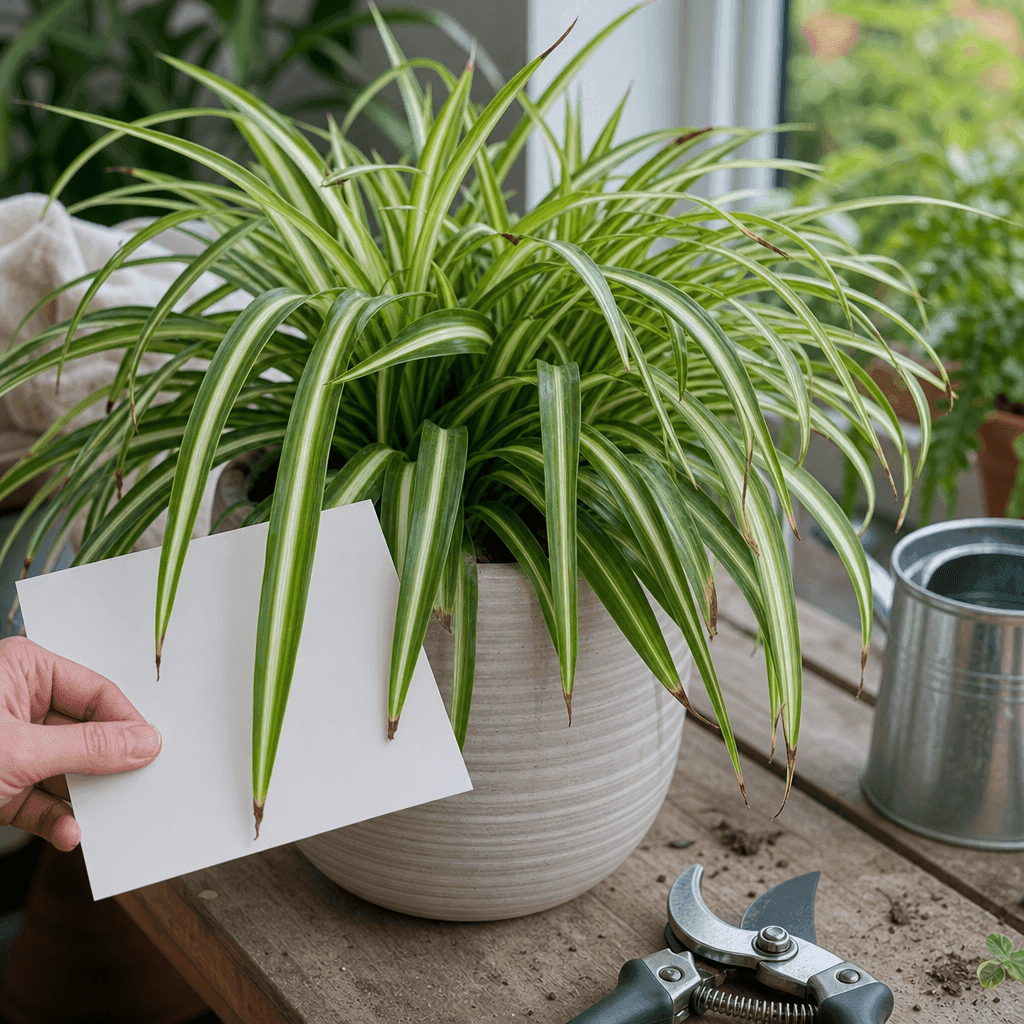
Still not sure?
Work down these branches — the first one that matches is your answer.
What not to do
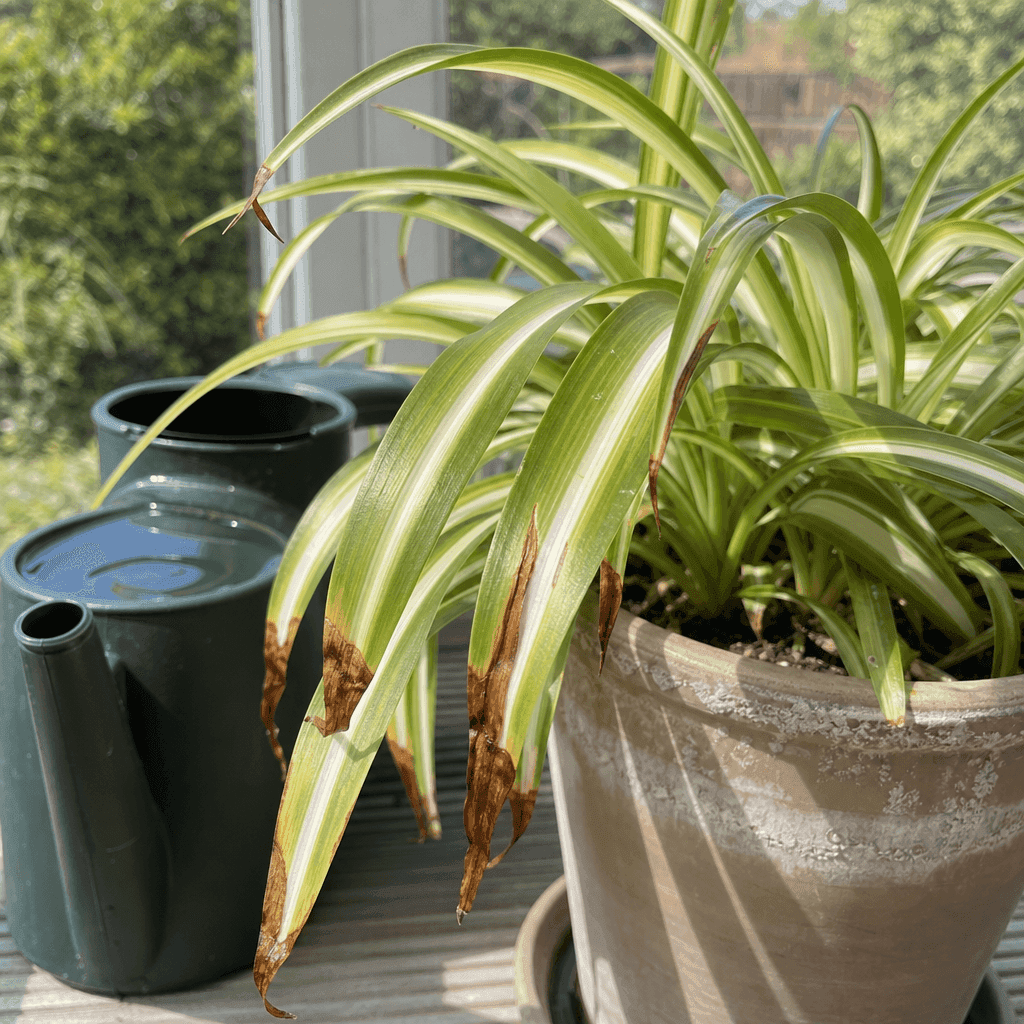
- Cut all the brown tips off and assume the problem is solved without identifying the cause — tips will continue to brown until the underlying issue is fixed.
- Use tap water in a hard or fluoridated water area without occasionally flushing the compost with rainwater.
- Place spider plants directly on or beside a radiator in winter — this is one of the most common causes of tip browning in UK homes.
- Wait until the compost is completely bone dry before watering — repeated severe drought cycles damage root hairs and worsen tip browning.
- Feed spider plants through winter when growth has stopped — this causes salt build-up in the compost without any benefit.
Common questions
Why does my spider plant have brown tips even though I water it regularly?
Watering with fluoridated or hard tap water is a likely cause — spider plants are among the most fluoride-sensitive houseplants. Even with correct watering frequency, months of tap water use can cause progressive tip browning as minerals accumulate in the compost. Switch to rainwater and flush the compost with distilled water to leach the build-up.
Can I cut the brown tips off my spider plant?
Yes — trim with clean scissors at a slight angle to follow the natural leaf shape. This is cosmetic only and does not address the cause. New growth will emerge without brown tips once you correct the underlying issue, but already-brown tissue will not turn green again.
Will my spider plant die from brown tips?
Almost never. Brown tips are a stress response, not a death sentence. Spider plants are extremely resilient. Even a plant with extensive tip browning can produce healthy new growth within weeks once the cause — usually tap water fluoride, low humidity or inconsistent watering — is corrected.
Should I use tap water or rainwater for my spider plant?
Rainwater is ideal for spider plants in the UK. It is naturally soft, fluoride-free and chlorine-free — exactly what sensitive houseplants prefer. If you cannot collect rainwater, let tap water stand overnight (to off-gas chlorine) and consider a filtered water jug for fluoride-sensitive plants.
How often should I water a spider plant?
Water when the top 2.5 cm of compost feels dry. In summer, this might be every 5–7 days. In winter, every 10–14 days or longer. Spider plants tolerate brief drought but prefer steady moderate moisture. Avoid allowing the compost to dry out completely — repeated severe drought causes the tip browning associated with inconsistent watering.
Why are my spider plant tips brown in winter specifically?
Central heating in UK homes reduces indoor humidity to 30–40%, well below the 40–60% that spider plants prefer. The brown tips that appear or worsen when the heating comes on are typically caused by this drop in humidity. Move the plant away from radiators and use a pebble tray to raise local humidity.
Can I propagate spider plant babies to get healthier plants?
Yes — spider plant babies (plantlets) that appear on long runners can be rooted in water or moist compost. Once they have roots 2–3 cm long, pot them into small pots with fresh compost. New plants started in rainwater and correct conditions will not have the tip browning that older plants accumulate from years of tap water use.