Watering and nutrient problems
Water and nutrients are where most plant problems actually start — and confusingly, too much water and too little water can look almost identical. Deficiencies have tells of their own: which leaves yellow first, and whether the veins stay green, narrows it down fast.
A nutrient deficiency is only one possible reason for yellow leaves, pale growth, weak stems or poor flowering. The same symptoms come just as often from wet soil, dry soil, damaged roots, cold compost, compaction, hard water, unsuitable pH, root rot or fertiliser burn. So the safest rule is simple: diagnose before you feed. If the roots can't take up water, adding fertiliser only makes things worse.
Work in order. Check soil moisture — is the root zone wet, dry, or unevenly wet? Check the roots — firm and pale, or dark, soft and smelly? Check drainage and pot size, and note any recent stress. Then read the leaf pattern: older leaves yellowing first suggests nitrogen, low light or ageing; young leaves yellow between green veins suggests iron unavailability, often from high pH or hard water; older leaves yellow between veins suggests magnesium; and brown tips with a white crust after feeding mean fertiliser burn.
Only once watering, roots, drainage, pH and pests are ruled out should you feed — and then with a suitable fertiliser, at label rate, while the plant is actively growing. The sequence to remember is moisture → roots → drainage → pH → pests and disease → nutrient pattern → careful feed.
55 diagnosis guides in this area
Showing 1–12 of 55 guides
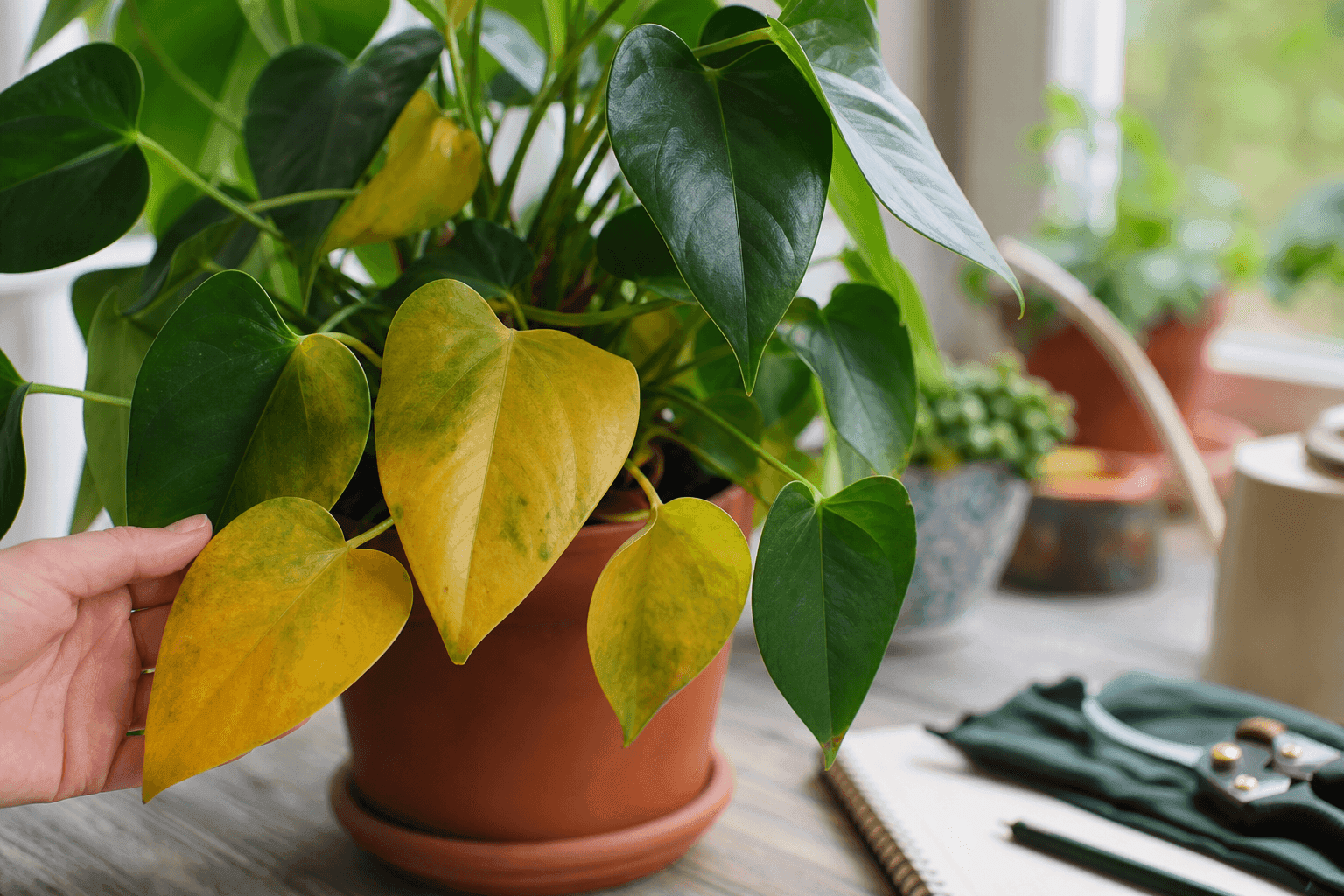
Bamboo Plant Leaves Turning Yellow: Causes and Fixes
Bamboo plant leaves turning yellow? Diagnose lucky bamboo and outdoor bamboo problems in the UK, from water quality and root rot to light, cold and feeding.
Read the guide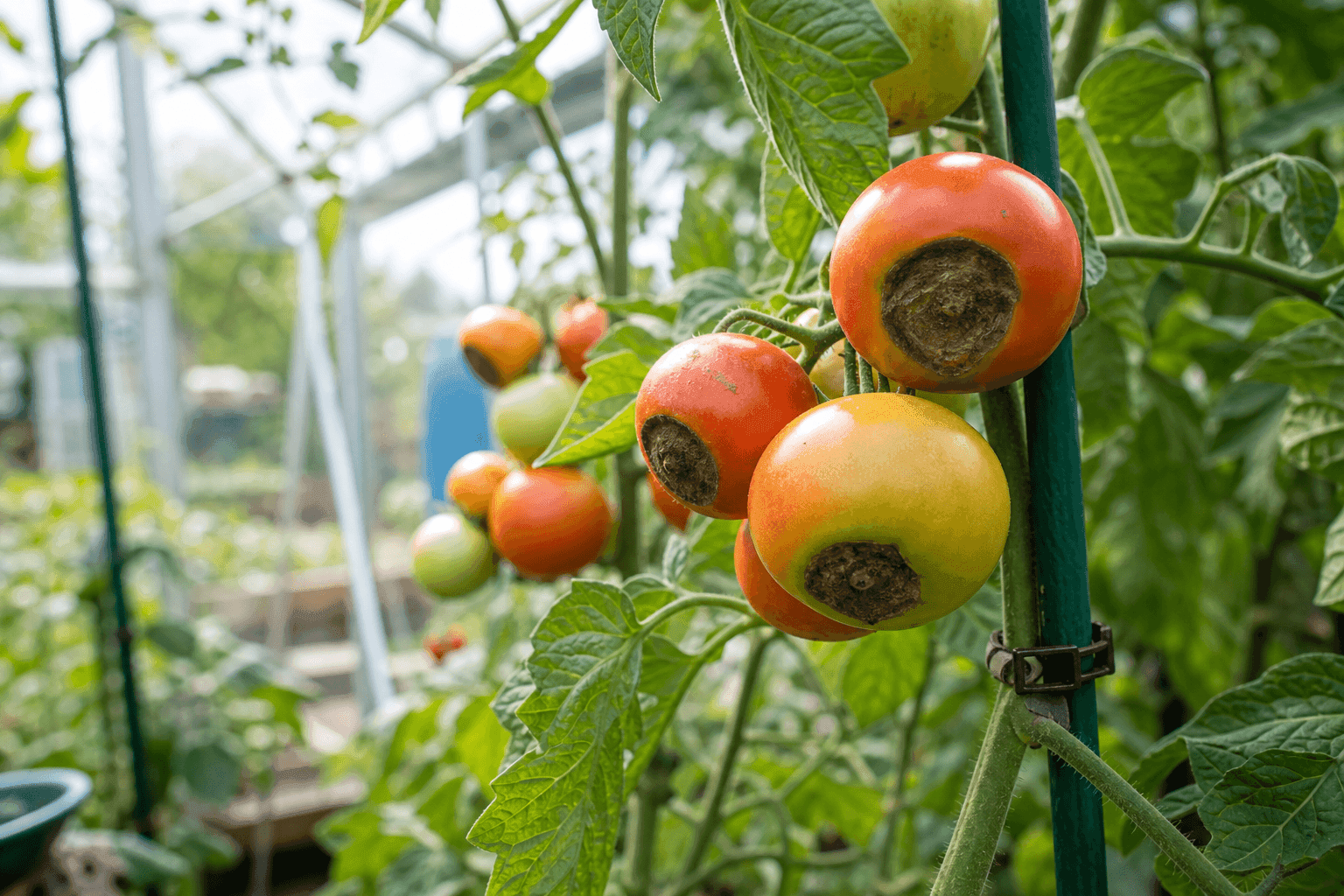
Blossom End Rot on Tomatoes: Causes and UK Fixes
Blossom end rot on tomatoes is caused by inconsistent watering, not calcium-poor soil. Diagnose and fix it with this UK guide.
Read the guide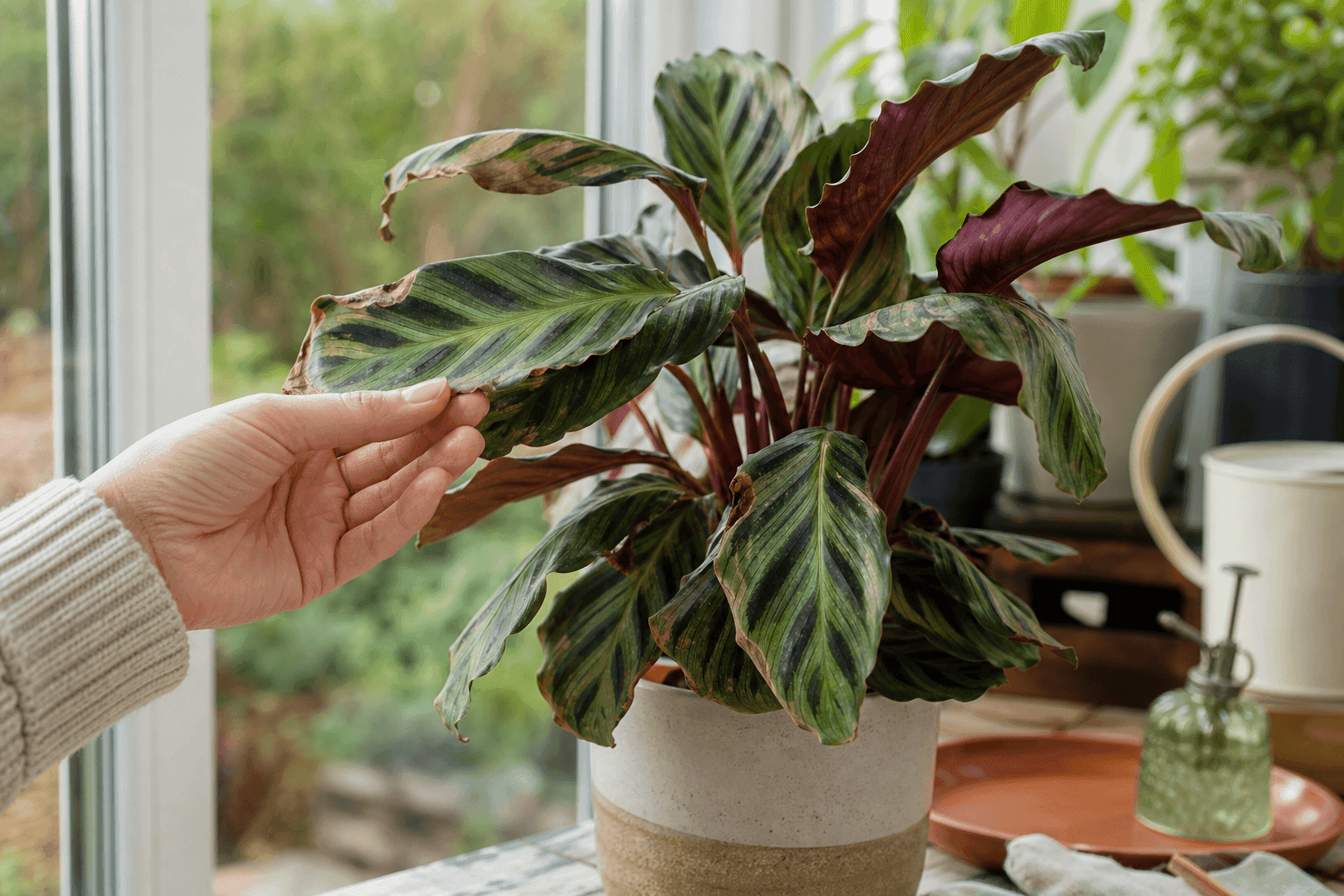
Calathea Leaves Curling: Causes and Fixes for UK Growers
Calathea leaves curling? The most likely UK causes are low humidity, underwatering and fluoride in tap water. Diagnose and fix with this UK guide.
Read the guide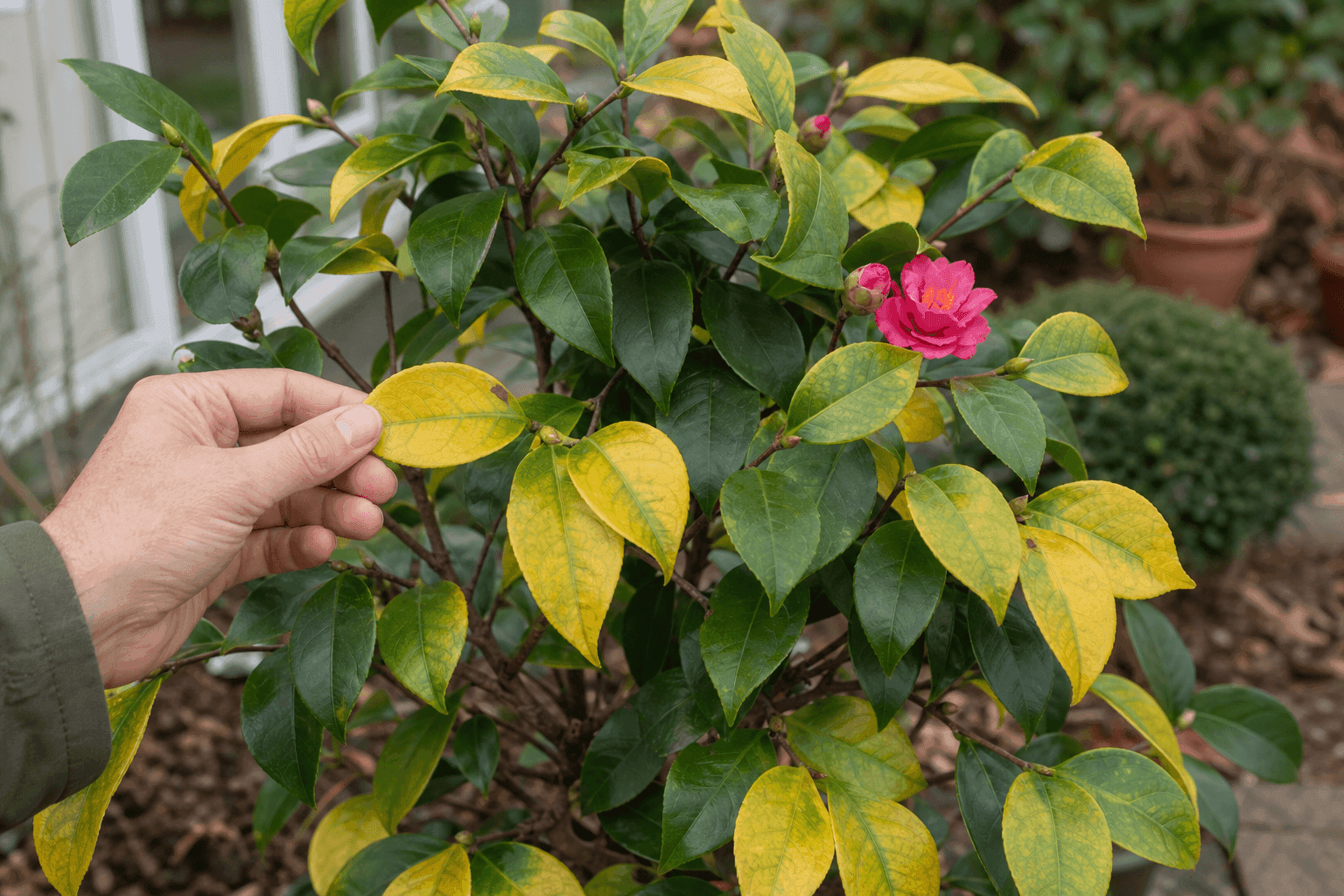
Camellia Yellow Leaves: Causes and Fixes for UK Gardeners
Camellia leaves turning yellow? Diagnose lime-induced chlorosis, hard water, waterlogging, drought, and normal shedding with this UK-focused guide.
Read the guide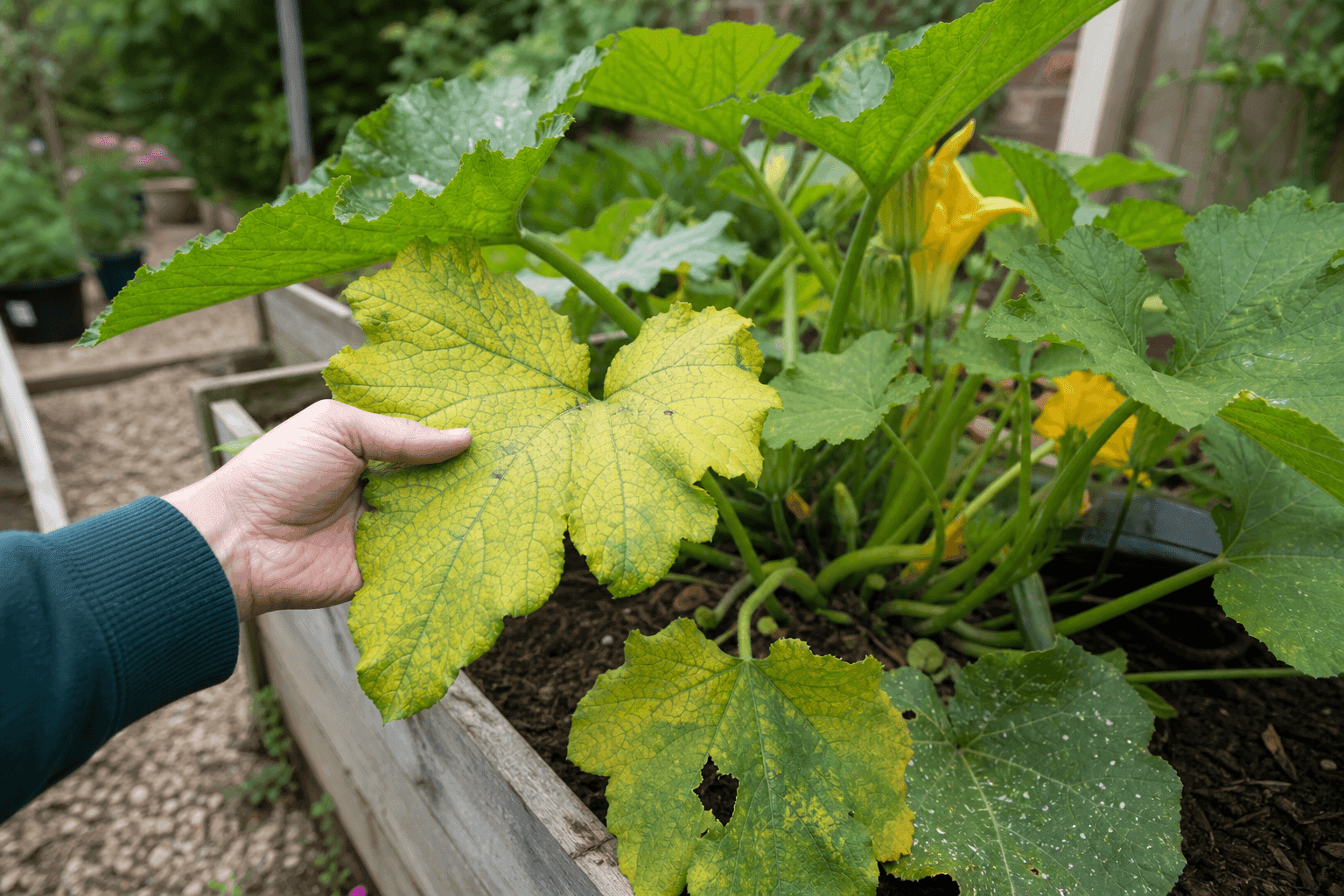
Courgette Yellow Leaves: Causes and Fixes for UK Gardeners
Courgette leaves turning yellow? This UK guide covers powdery mildew, nutrient shortage, mosaic virus, downy mildew and normal ageing — with specific fixes.
Read the guide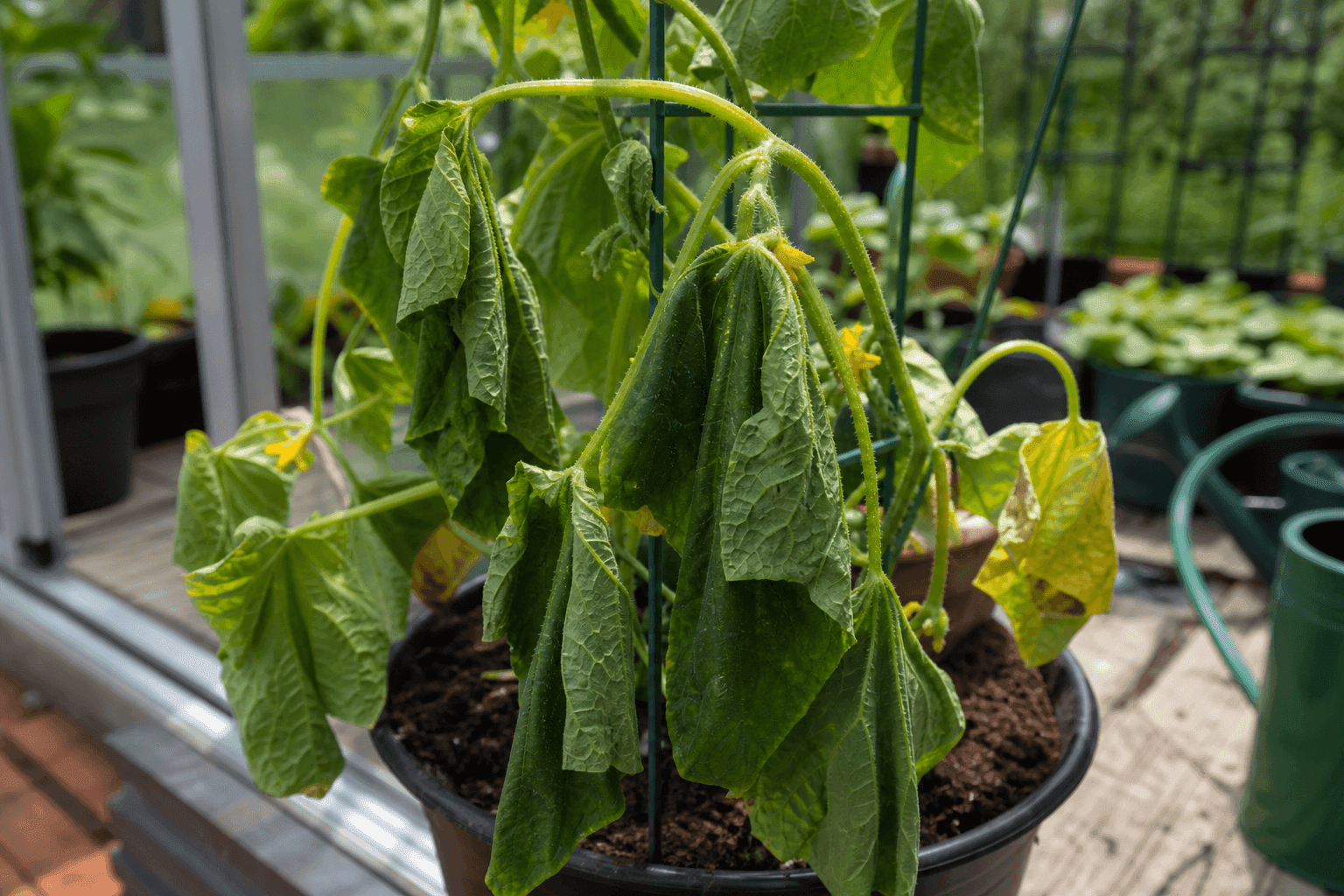
Cucumber Plant Wilting: UK Causes, Diagnosis and Fixes
Cucumber wilting in the UK is most often underwatering, root rot, or Verticillium wilt. Use this diagnosis table to find the cause and act fast.
Read the guide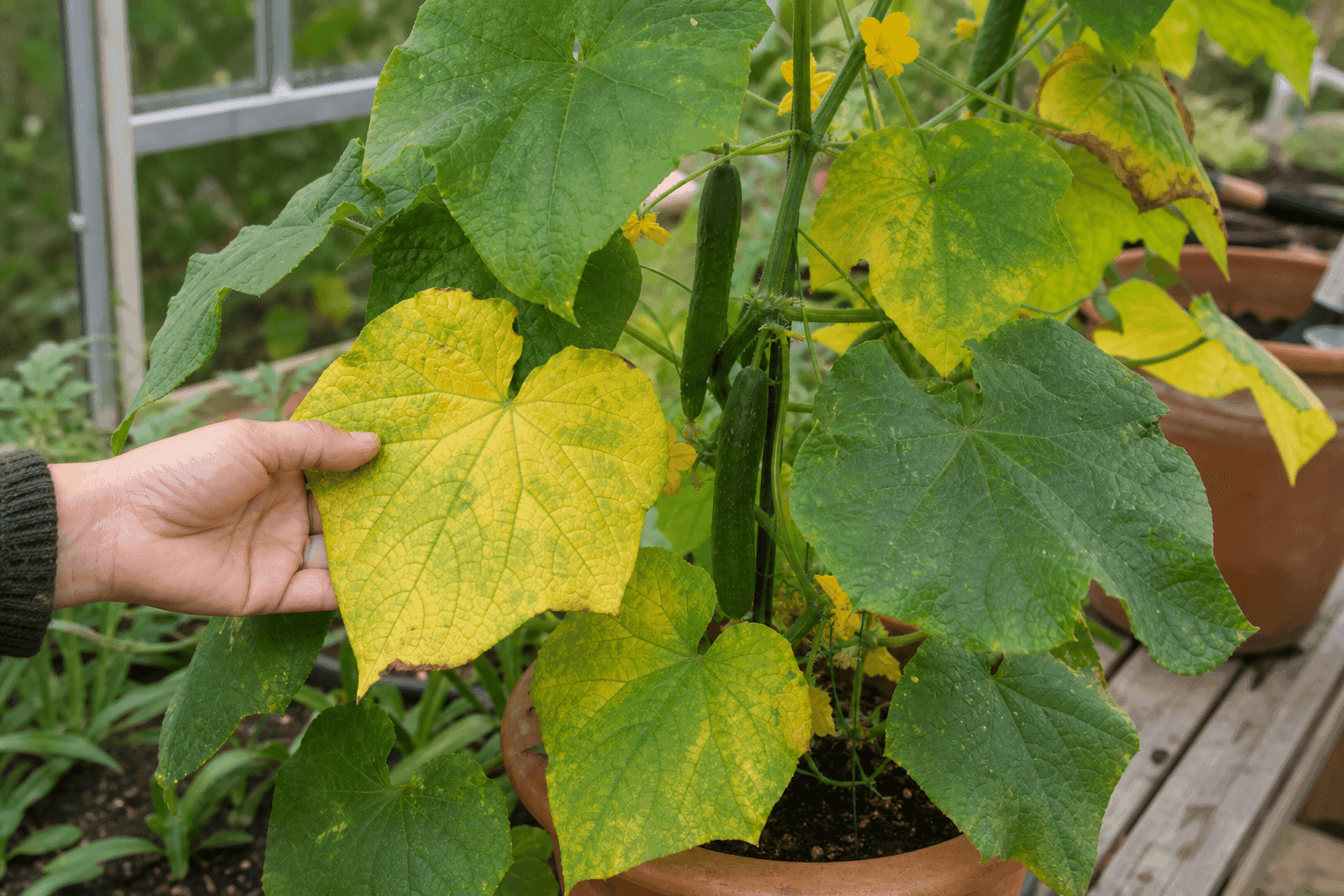
Cucumber Yellow Leaves: Causes and Fixes for UK Growers
Cucumber leaves turning yellow? Diagnose the real cause — from nitrogen shortage and overwatering to mosaic virus and powdery mildew — with UK-relevant fixes.
Read the guide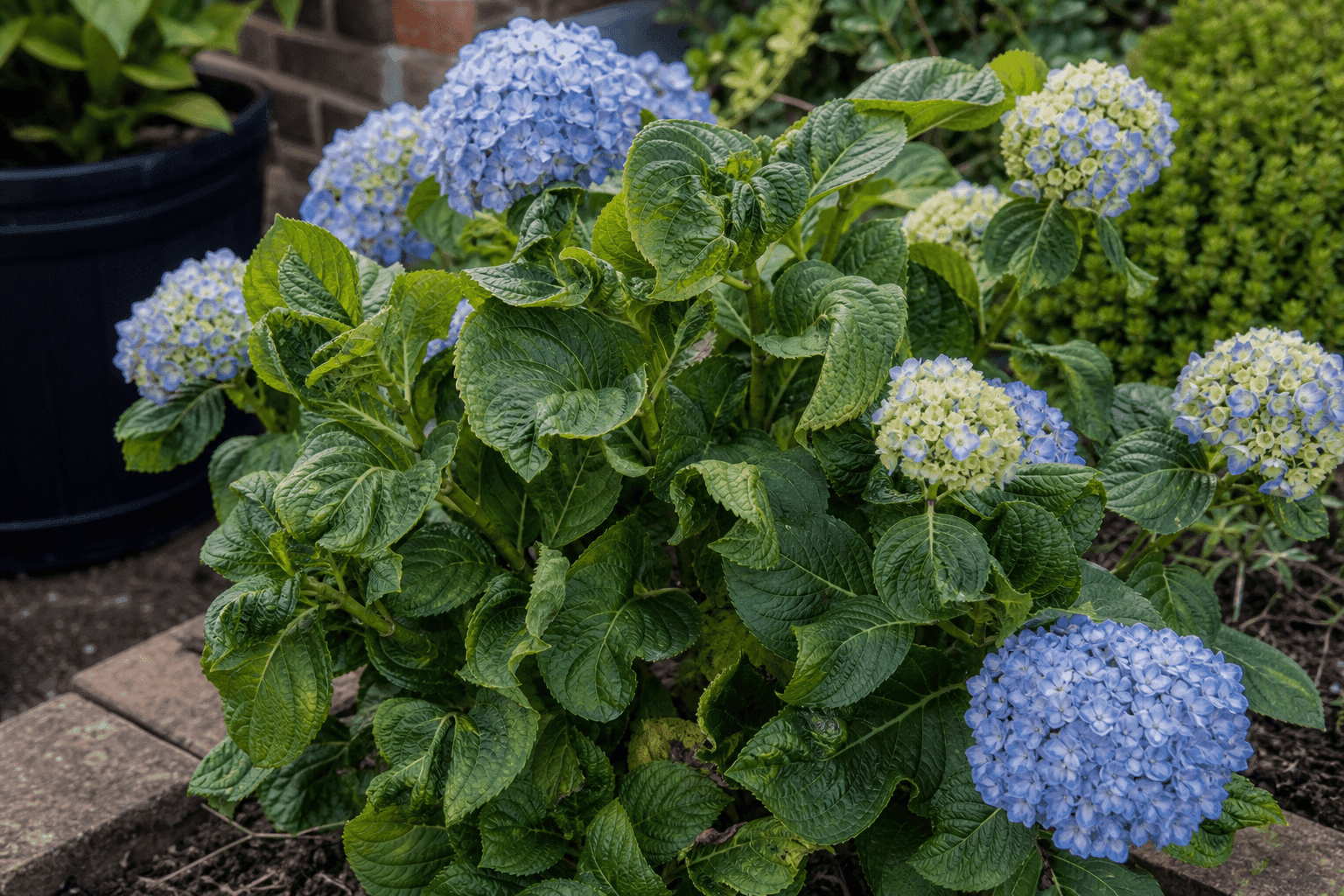
Hydrangea Leaves Curling: UK Causes and Fixes
Hydrangea leaves curling? The most common UK causes are drought, heat, aphids and lacebug. Diagnose and fix with this guide.
Read the guide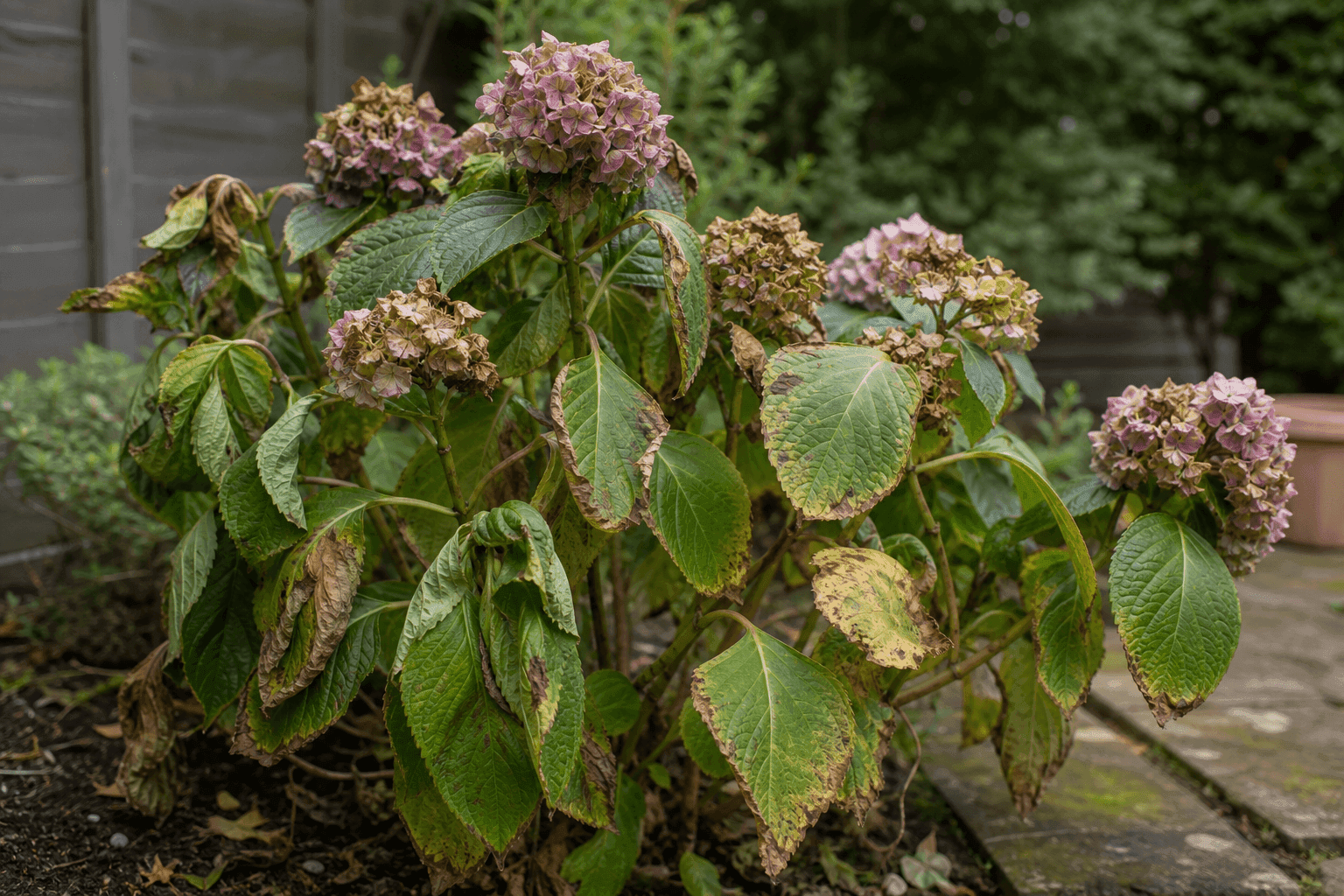
Hydrangea Dying? UK Causes, Diagnosis and Recovery Guide
Hydrangea dying or failing? Diagnose the real UK causes — wrong pruning, root rot, waterlogging, drought or disease — and find out what to do.
Read the guide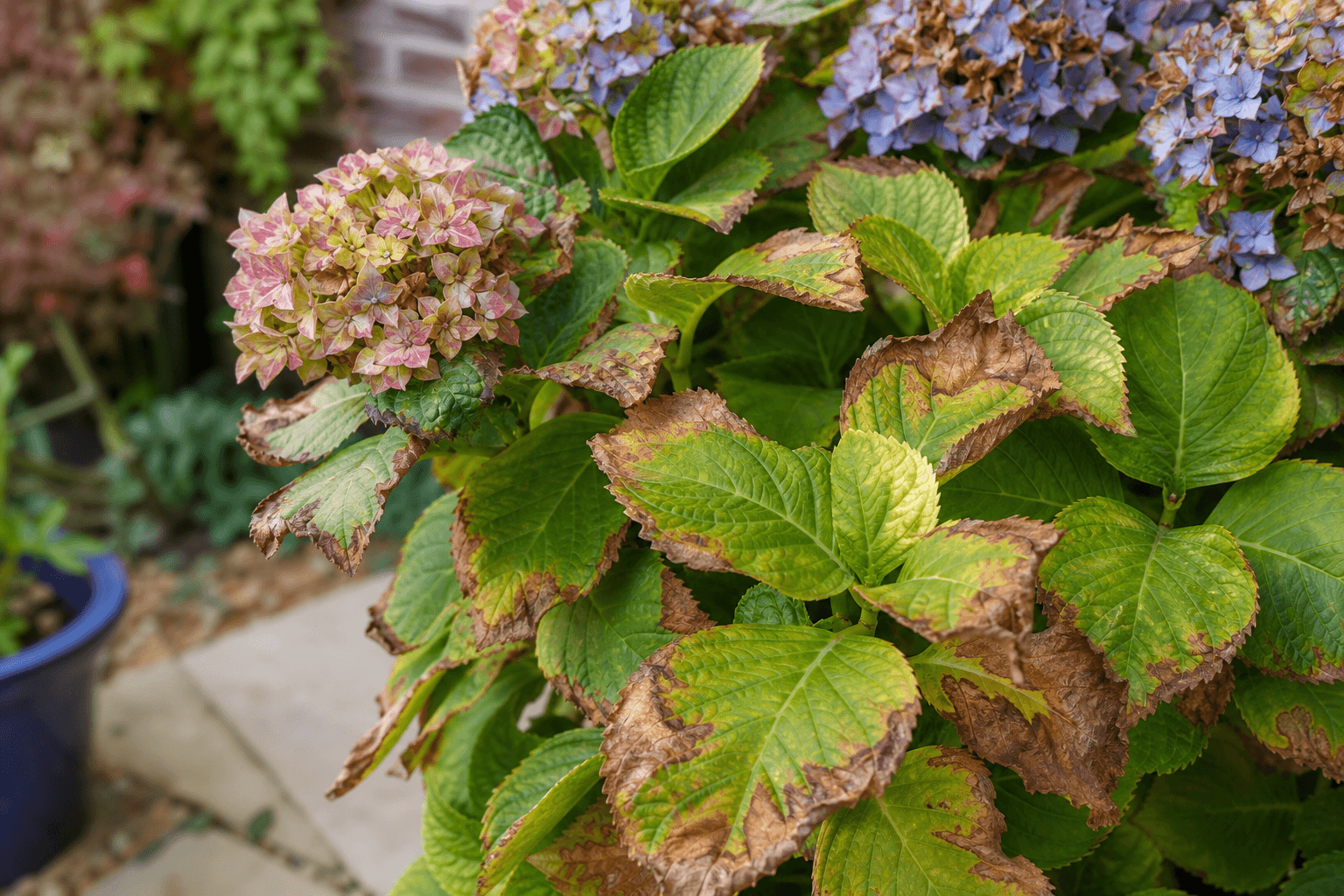
Hydrangea Brown Leaves: UK Causes and Fixes
Hydrangea leaves browning? Identify sun scorch, drought, frost damage, Cercospora leaf spot, and wind damage with this UK diagnosis guide.
Read the guide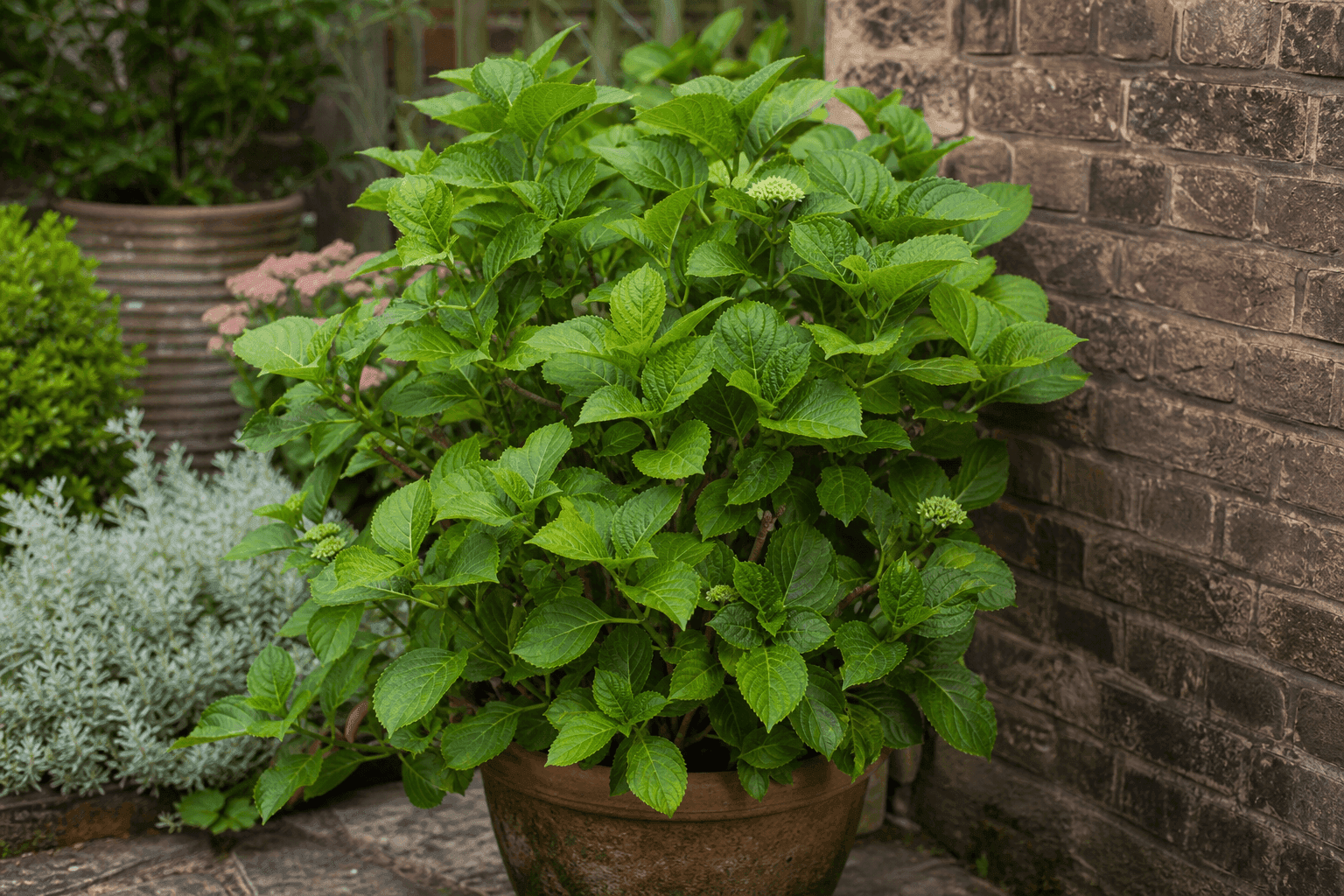
Hydrangea Not Flowering: UK Causes, Fixes and Pruning Guide
Hydrangea not flowering? In the UK the most likely causes are wrong pruning, late frost damage, too much shade, or excess nitrogen. Find out which applies.
Read the guide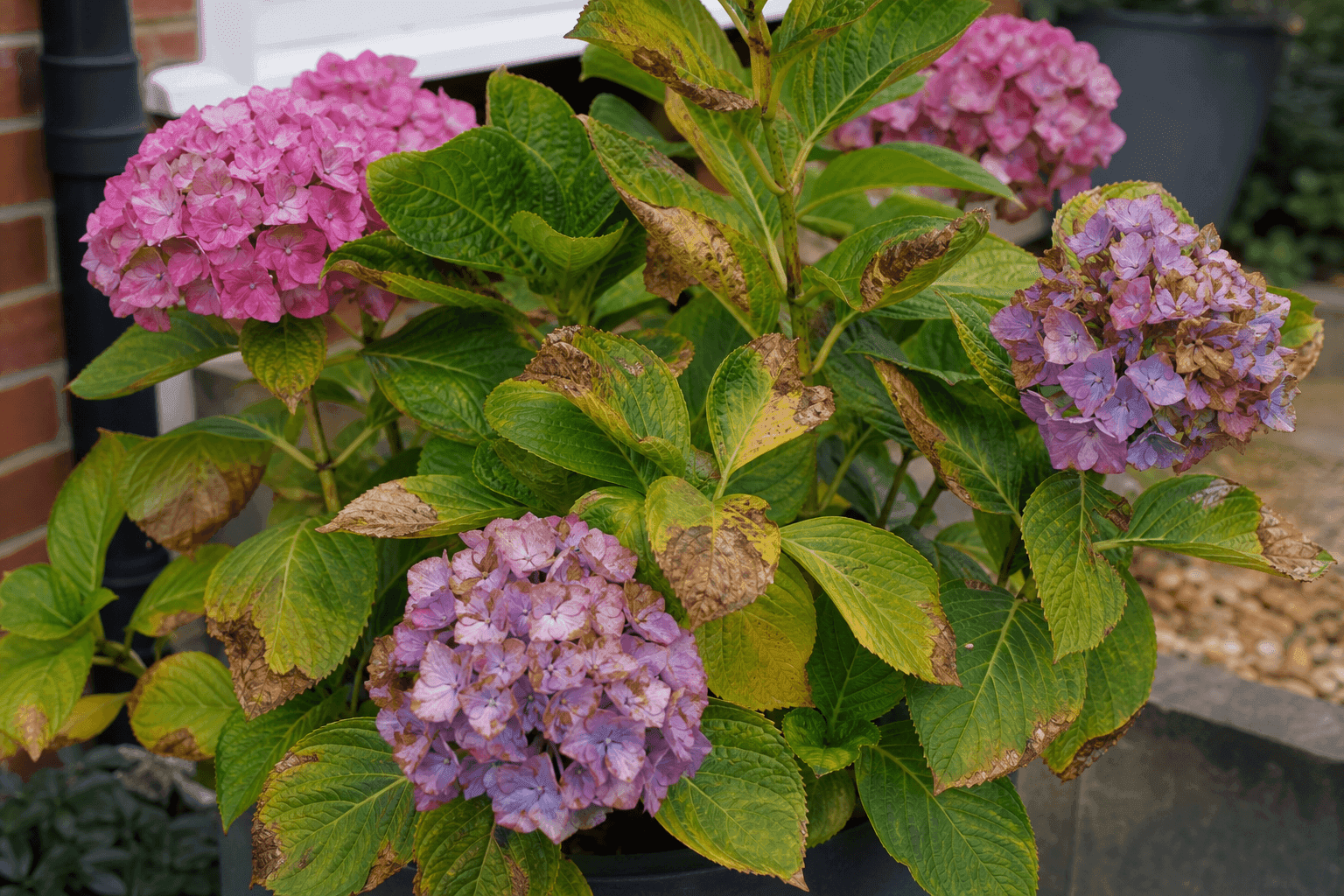
Hydrangea Problems: UK Diagnosis Guide for Common Issues
Hydrangea problems in the UK — wilting, brown leaves, no flowers, pests, powdery mildew and more. Diagnose the cause and find the right fix.
Read the guideCommon questions
Should I cut off yellow leaves before feeding?
Remove fully yellow, dying or diseased leaves if they're no longer helping the plant, but don't strip many at once from a stressed plant. A leaf yellow from nitrogen or magnesium shortage may already be having its nutrients reabsorbed. Diagnose the cause before heavy pruning.
Can yellow leaves turn green again?
Sometimes pale new growth improves once the cause is corrected, but older, fully yellow leaves rarely turn green again. Judge recovery by healthy new growth, steady watering and no further spread.
What is the fastest way to fix a nutrient deficiency?
First confirm it really is a deficiency by checking moisture, roots and pH. If the roots are healthy and the plant is actively growing, a suitable liquid feed acts faster than slow-release fertiliser. If pH lockout is the cause, more ordinary fertiliser won't solve it.
Is overwatering the same as root rot?
No. Overwatering is a care or drainage problem; root rot is damage or disease to the roots, often caused by wet, low-oxygen conditions. Catching overwatering early can prevent root rot.
How do I know if it's fertiliser burn or a deficiency?
Fertiliser burn usually follows recent feeding — high dose, dry roots or a small pot — and shows brown tips and margins, wilting, a crust on the compost and root damage. Deficiencies follow a more predictable leaf pattern, such as older leaves first for nitrogen or young leaves between veins for iron.
Does Epsom salt help yellow leaves?
Only when the problem is a magnesium deficiency, which typically shows as yellowing between the veins of older leaves. It is not a general cure, and shouldn't be used before checking water, drainage, light, pH and pests.
Sources
- RHS — Nutrient deficiencies
- RHS — Chlorosis
- RHS — Waterlogging and flooding
- Washington State University Hortsense — Fertiliser burn
- University of Missouri Extension — Soil pH and nutrient availability
Reviewed by the Leaf & Cause team. General guidance for UK growing conditions, not a substitute for professional advice — always follow product labels.