Quick diagnosis
Match the row to what you’re seeing, then jump to the fix.
| What you see | Likely cause | Confidence | How to confirm | What to do now | Urgency |
|---|---|---|---|---|---|
| Healthy leafy plant, no flower buds visible; pruned last autumn, winter or spring | Pruned off old-wood flower buds | High | Mophead or lacecap (H. macrophylla) cut back hard at the wrong time of year | Stop hard pruning for one full year; remove only dead wood and old flowerheads to a healthy bud | Low |
| Shoot tips blackened or limp in spring; flowers absent later in summer | Late frost killed the flower buds | High | There was a late frost after buds had started to swell and open in spring | Wait until frost risk passes; cut dead tips back to the first live bud; protect with fleece next spring | Medium |
| Large dark green leaves, long soft shoots, minimal or no flowering | Too much shade | Medium | Plant gets little or no direct light; shaded by trees, fence or neighbouring shrubs | Thin overhanging branches; move in autumn or early spring to dappled or morning sun | Low–medium |
| Lush leafy growth, few or no flower buds, plant fed heavily or near a lawn | Excess nitrogen suppressing flowering | Medium | Lawn feed, rich manure or high-nitrogen fertiliser applied repeatedly nearby | Stop all high-nitrogen feeding; mulch with composted bark or leaf mould instead | Low |
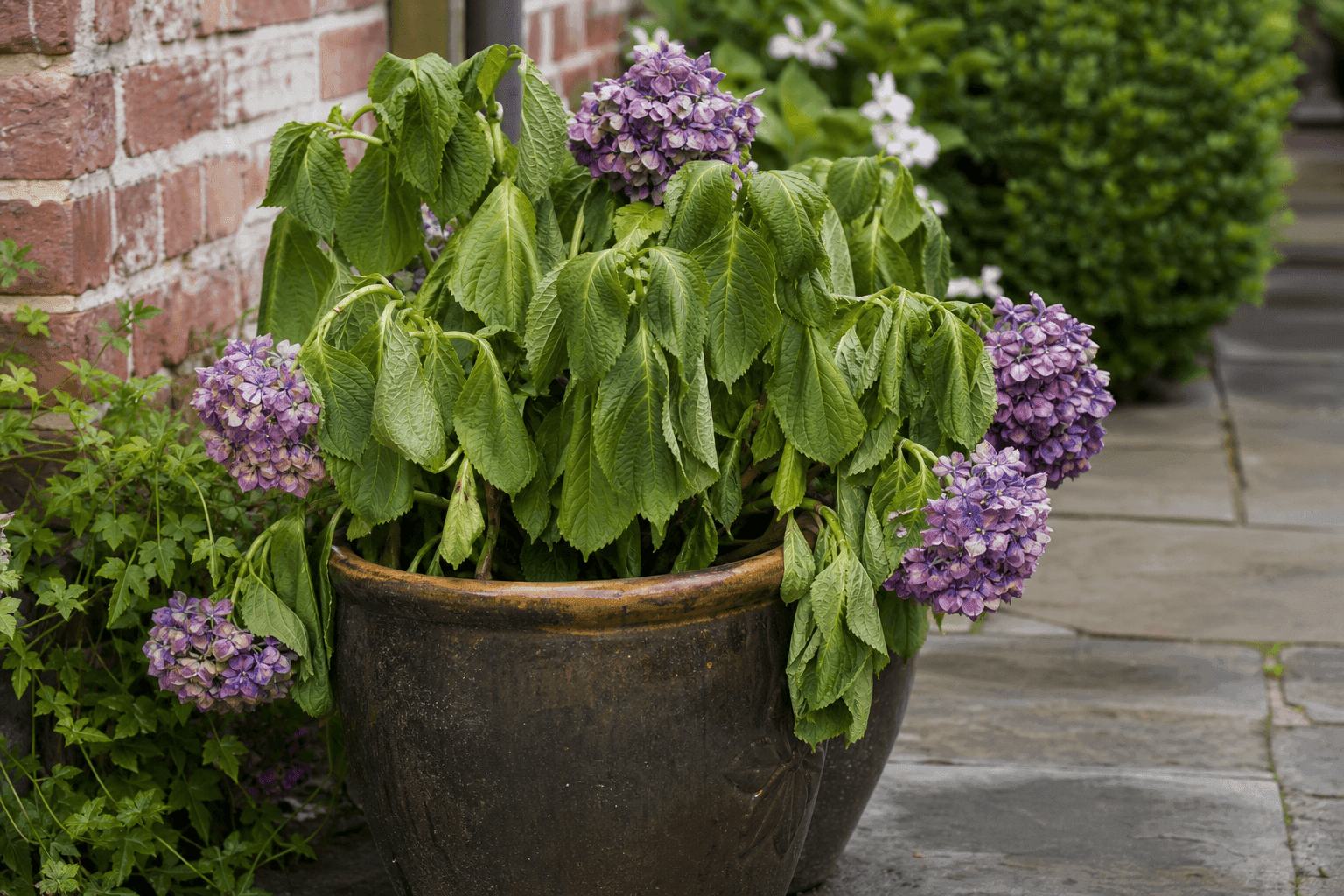
| Flower buds form but abort; plant droops in dry weather; edges brown | Drought stress during bud formation | Medium | Soil is dry 5–8 cm down, especially near a wall or in a pot; buds form but do not open | Deep-water, mulch and keep soil evenly moist through the bud formation period in late summer | Medium |
| Newly planted hydrangea grows leaves but no flowers in its first or second year | Young or newly planted — establishment phase | High | Planted within the last 1–2 years from a small pot; otherwise growing healthily | Water well, mulch, avoid overfeeding and give the plant time — most bloom in their second or third year | Low |
| Outer stems brittle and dead after a cold winter; living growth is lower down | Winter dieback — buds lost on outer stems | Medium | Hard winter or cold exposed site; dead brown stem tips; lower shoots still alive | Wait for frost risk to pass; cut dead stems to the first healthy live bud | Medium |
| Leaves spotted, yellowed, sticky or distorted as well as no flowers | Stress from pests, disease or waterlogged roots | Medium | Check leaf undersides, stem base, drainage and the rootball for vine weevil, scale, root rot | Identify and treat the stress cause first; do not chase flowers on an unhealthy plant | Medium |
The causes, in detail
Pruning removed the flower buds
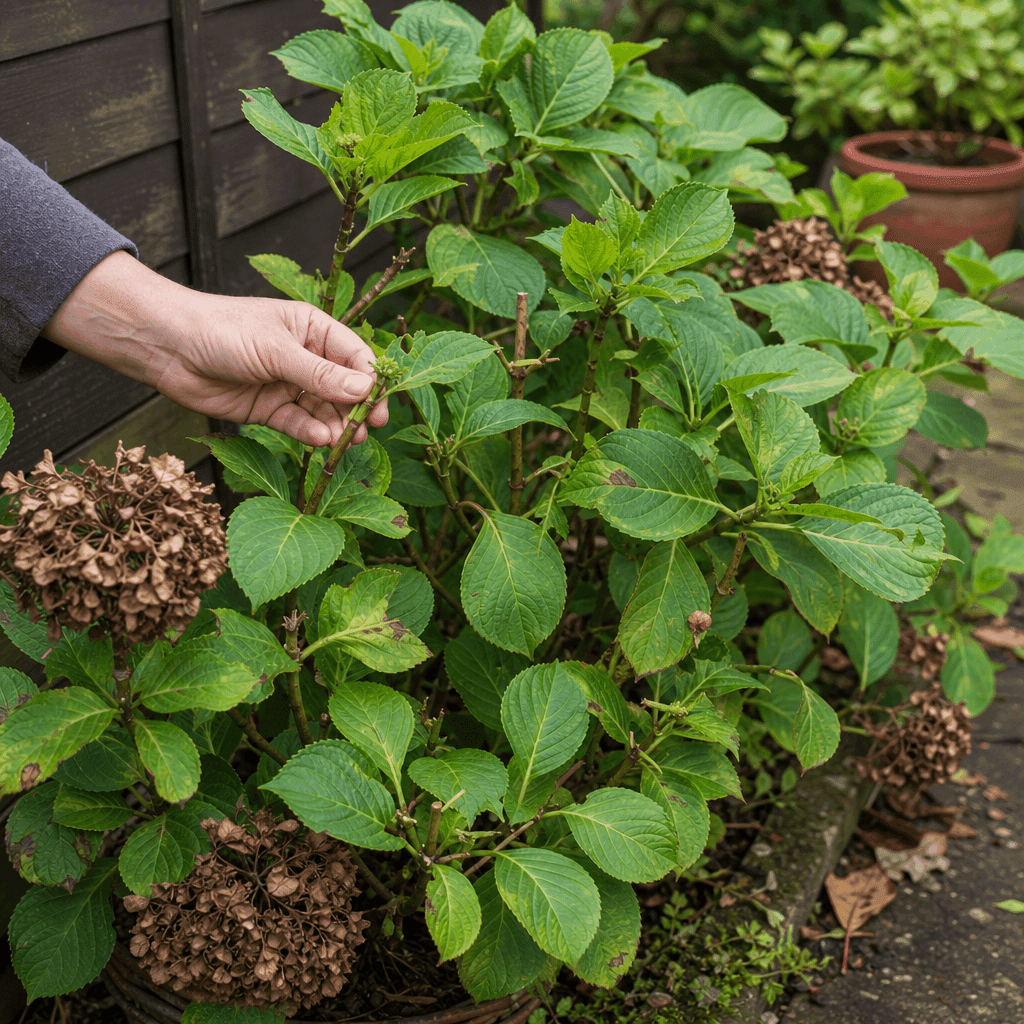
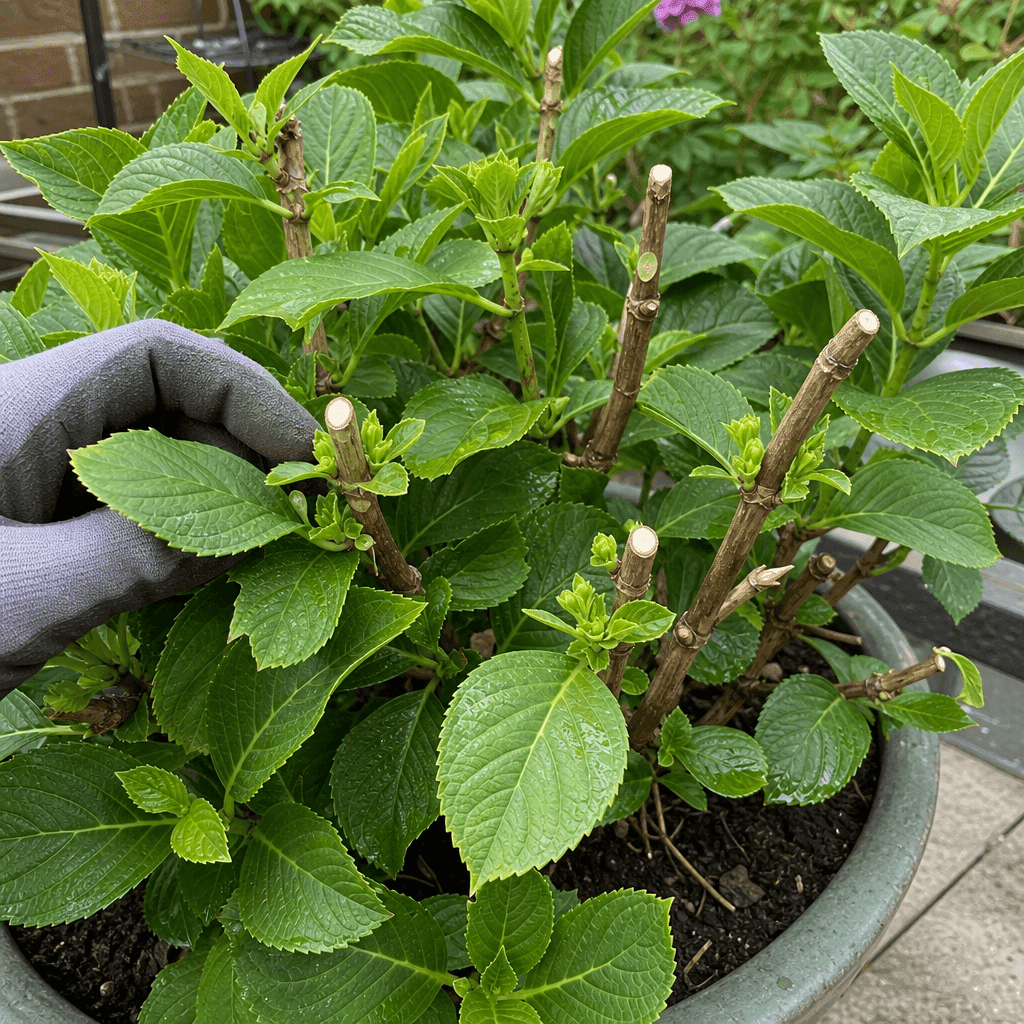
Most likelyThe most common reason UK gardeners lose hydrangea flowers is pruning mopheads and lacecaps (H. macrophylla) at the wrong time. These varieties set next year's flower buds on the current year's stems from late summer onwards. If the plant is cut back hard in autumn, winter or spring, all those buds are removed. The RHS pruning guide is specific: for mopheads and lacecaps, remove only spent flowerheads back to a pair of healthy buds, and remove one or two of the oldest stems at the base to encourage fresh growth — never shear every stem to the ground. The dried flowerheads should be left on all winter to protect the buds beneath.
- The plant was cut back hard, tidied significantly, or reduced in size between October and April.
- Neighbouring unpruned hydrangeas in similar conditions are flowering but yours is not.
- The plant has many healthy stems and buds but they are all leaf buds, with no flower bud swelling.
- Stop hard pruning completely for one full growing season.
- In spring, use clean secateurs to remove only dead wood and the old dried flowerhead, cutting back to the first pair of healthy live buds.
- Remove one or two of the very oldest thickest stems at ground level to encourage fresh flowering wood — do not shorten every stem.
- Label the plant with its type to remind yourself of correct pruning timing in future years.
Stop it coming back:If pruning was the sole cause, flowering should return the following summer. A severely reduced or very young plant may take two seasons to recover its bud complement.
shear a mophead hydrangea into a tidy ball shape in autumn — this is the most common cause of years with no flowers, and doing it again resets the problem.
Late frost killed the buds
Most likelyOld-wood hydrangeas are particularly frost-vulnerable because their flower buds are already visible on the stems from early spring. A frost after those buds have begun to swell causes them to blacken and die. This is more likely in frost pockets, exposed gardens, or on south- or west-facing walls where the warmth causes buds to break early and then a cold snap follows. Garden Ninja notes that leaving dried flowerheads on the plant through winter provides physical protection for buds on the stems below — an important UK practice.
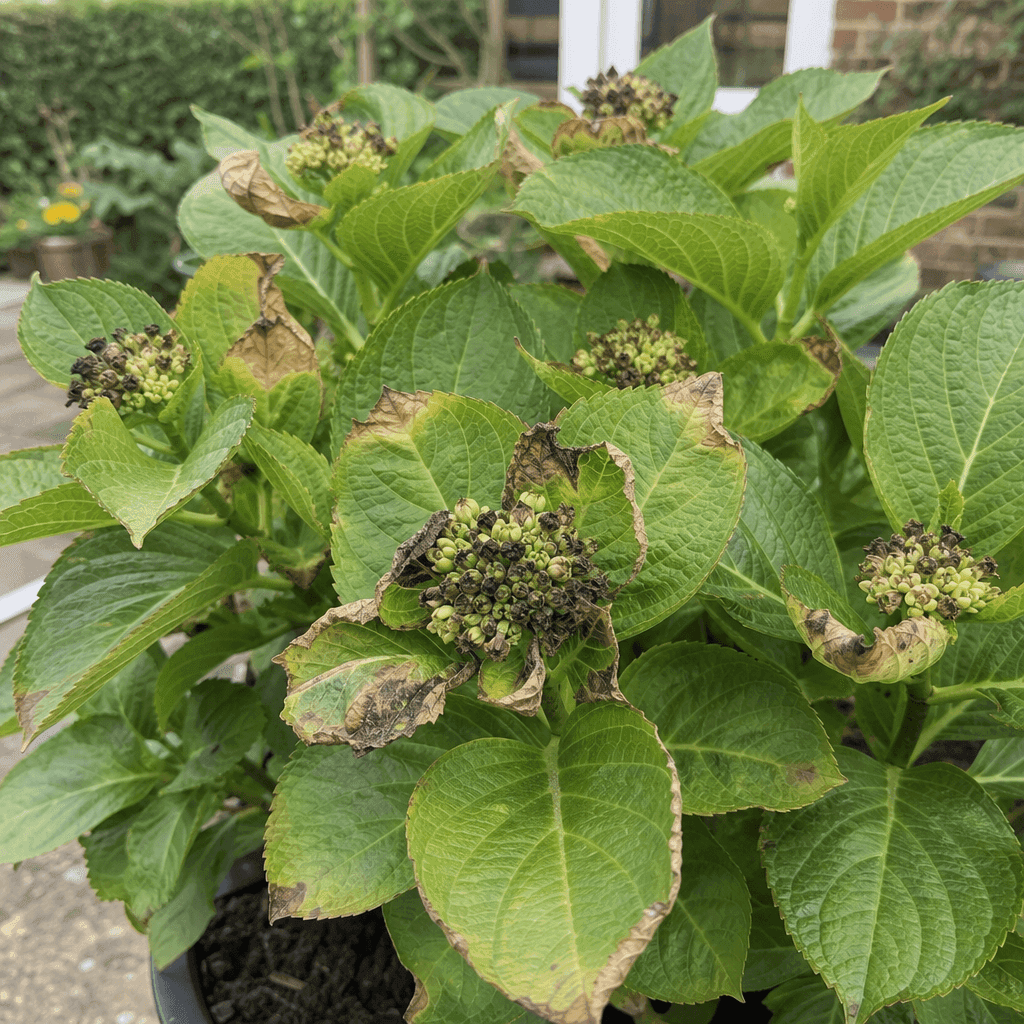
- There was a cold night after buds had visibly begun to swell and open — typically March to May in the UK.
- Shoot tips and bud tips are blackened or limp but stems lower down are still alive.
- Leaf buds lower on the stem survived even if flower bud tips are dead.
- Do not prune immediately — wait until you can clearly tell which buds are alive.
- Once frost risk has passed (usually late April or May), cut dead tips back to the first strong living bud.
- In future springs, drape the plant loosely with two layers of horticultural fleece when frost is forecast, removing during the day.
- Consider moving container hydrangeas to a sheltered porch or unheated greenhouse during frost warnings.
Stop it coming back:A frost-damaged old-wood hydrangea will not produce flowers on the killed shoots that season. However, new growth from surviving buds will be healthy, and the plant should flower on surviving lower shoots and fully again the following year.
prune immediately after a cold night — you may remove living buds that are still viable. Wait and let the plant show you what is alive before cutting.
Too much shade
PossibleHydrangeas are often recommended for shade, but the type of shade matters enormously. Light, dappled shade with moist soil is ideal. Dense shade under trees, on the north side of walls, or beneath overhanging eaves produces large dark leaves and long soft shoots but few or no flower buds. Ideal Home gardening advice confirms that hydrangeas still need enough light to initiate flowering — they prefer morning sun and afternoon shade in hot sites, but not full day deep shade.
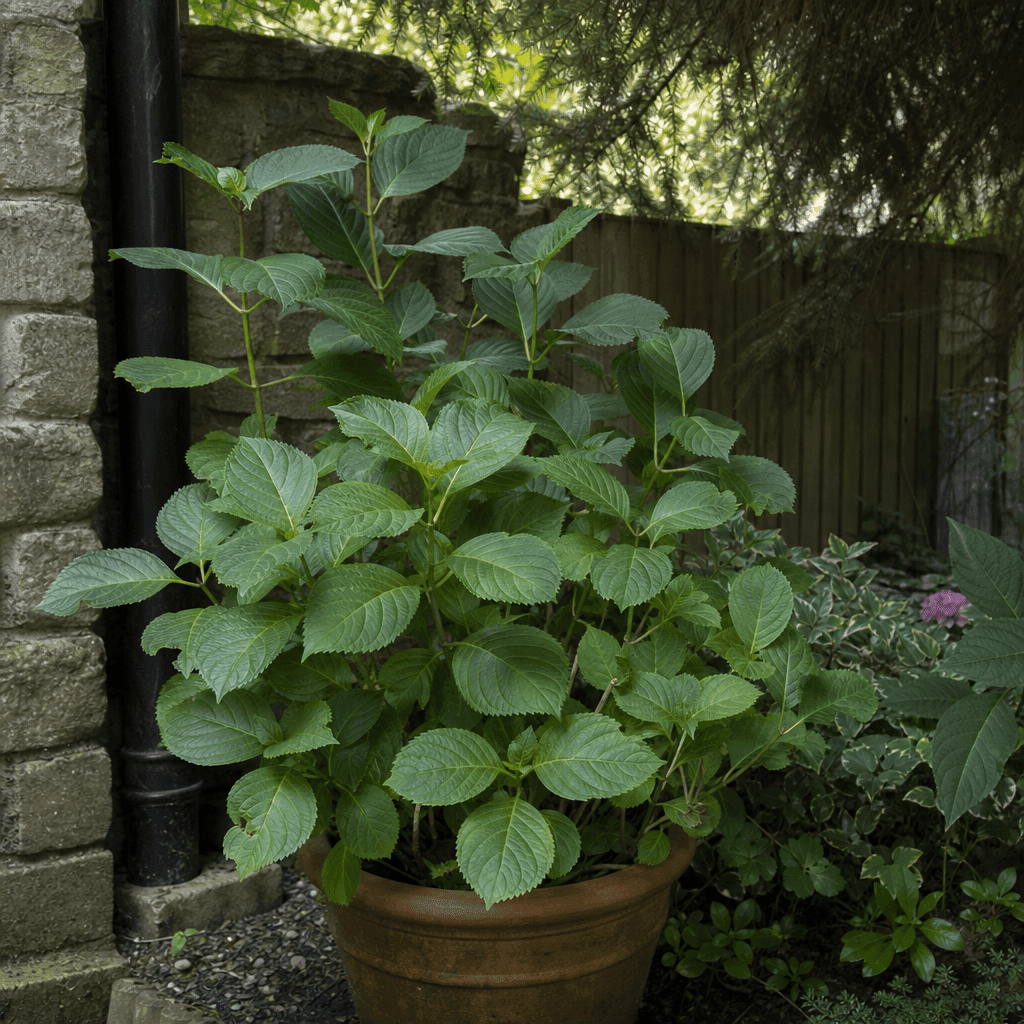
- Watch the planting spot on a bright day — if it receives no direct sun and only dim, deep shade all day, light is limiting flowering.
- Leaves are unusually large and dark green; shoots are long and soft.
- Compare with hydrangeas in slightly brighter positions nearby — if they are flowering and yours is not, shade is a strong suspect.
- Thin overhanging branches or cut back competing shrubs to bring more light to the plant.
- Move the hydrangea in autumn or early spring to a position with bright dappled shade or morning sun.
- Choose a spot with moist, well-drained soil — not under roof overhangs where soil stays dry.
Stop it coming back:A moved hydrangea may spend its first season re-establishing before flowering heavily. Expect improvement in bud numbers in the following summer.
move a large established hydrangea in midsummer heat — if moving is necessary, do it in autumn or early spring when the plant is not under heat stress.
Excess nitrogen suppressing flowering
PossibleHydrangeas fed repeatedly with lawn fertiliser, rich fresh manure, or high-nitrogen general fertiliser produce lush dark-green leafy growth but divert energy away from flower bud initiation. The RHS notes that regular feeding of established hydrangeas is generally unnecessary, and that too much nitrogen encourages soft leafy growth, reduces flowering and increases vulnerability to watering and nutrient problems, pests and disease. This is also common where run-off from a fed lawn drains into a hydrangea border.
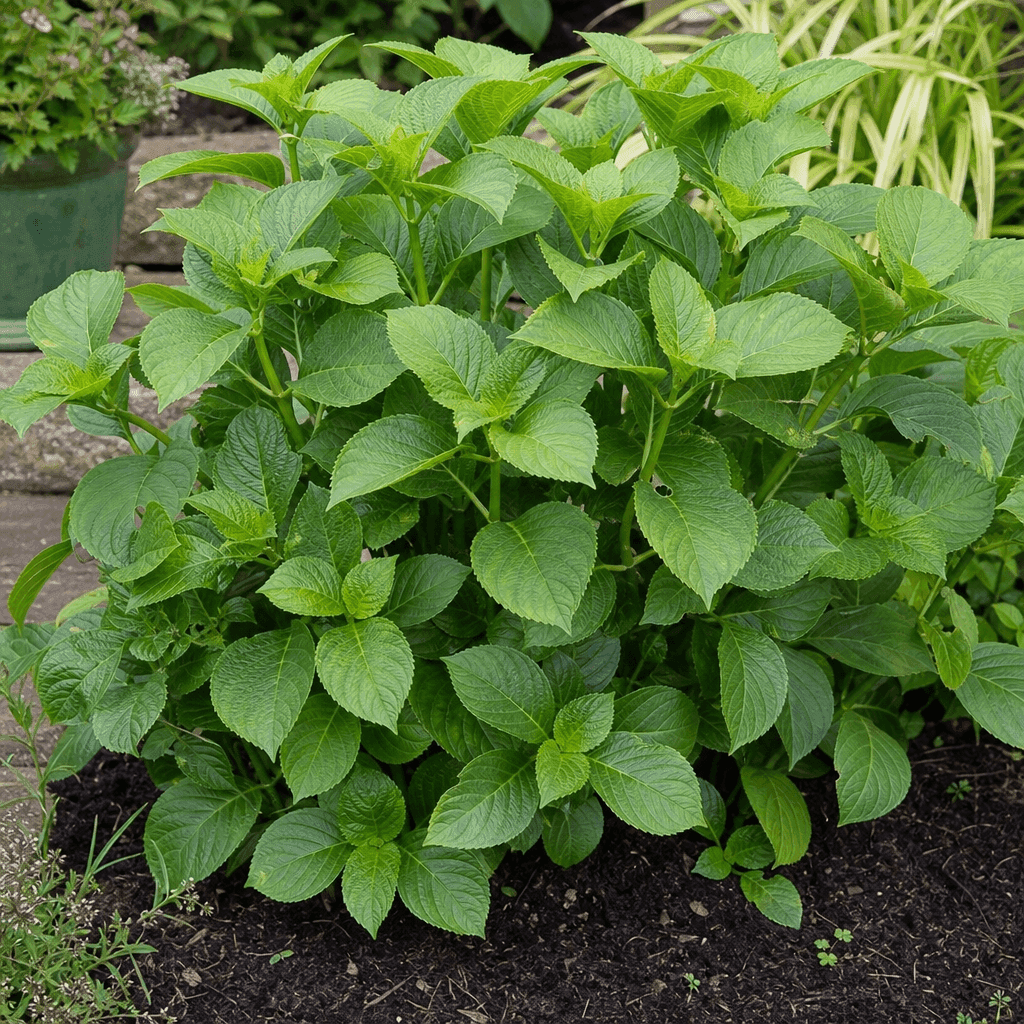
- High-nitrogen fertiliser or fresh manure has been applied in the past year, or lawn feed is used near the bed.
- The plant is growing with great vigour and dark green leaves but virtually no flower buds.
- Growth is soft and lush rather than firm and balanced.
- Stop all high-nitrogen feeding immediately.
- Replace any feeding programme with an annual spring mulch of composted bark, leaf mould or well-rotted compost.
- If the plant is in a pot, switch to a balanced slow-release fertiliser at the label rate in spring only.
- Check that lawn feed is not washing into the hydrangea bed — create a gentle physical barrier or redirect irrigation.
Stop it coming back:The nitrogen effect may reduce during the same growing season. Flower bud improvement is typically visible in the following year once the nitrogen balance is corrected.
try to force flowers by adding coffee grounds or random remedies — coffee grounds alter soil pH unpredictably and will not replace removed or frost-killed buds.
Drought stress during bud formation
PossibleHydrangeas that dry out significantly in late summer — when next year's flower buds are being initiated — may form buds and then abort them, or produce very few buds at all. This is especially common near walls and fences where rain shadow occurs, in containers that dry out quickly, and in newly planted specimens whose rootball is not yet connected to surrounding soil moisture. The name hydrangea means 'water vessel' and reflects the plant's sensitivity to consistent moisture.
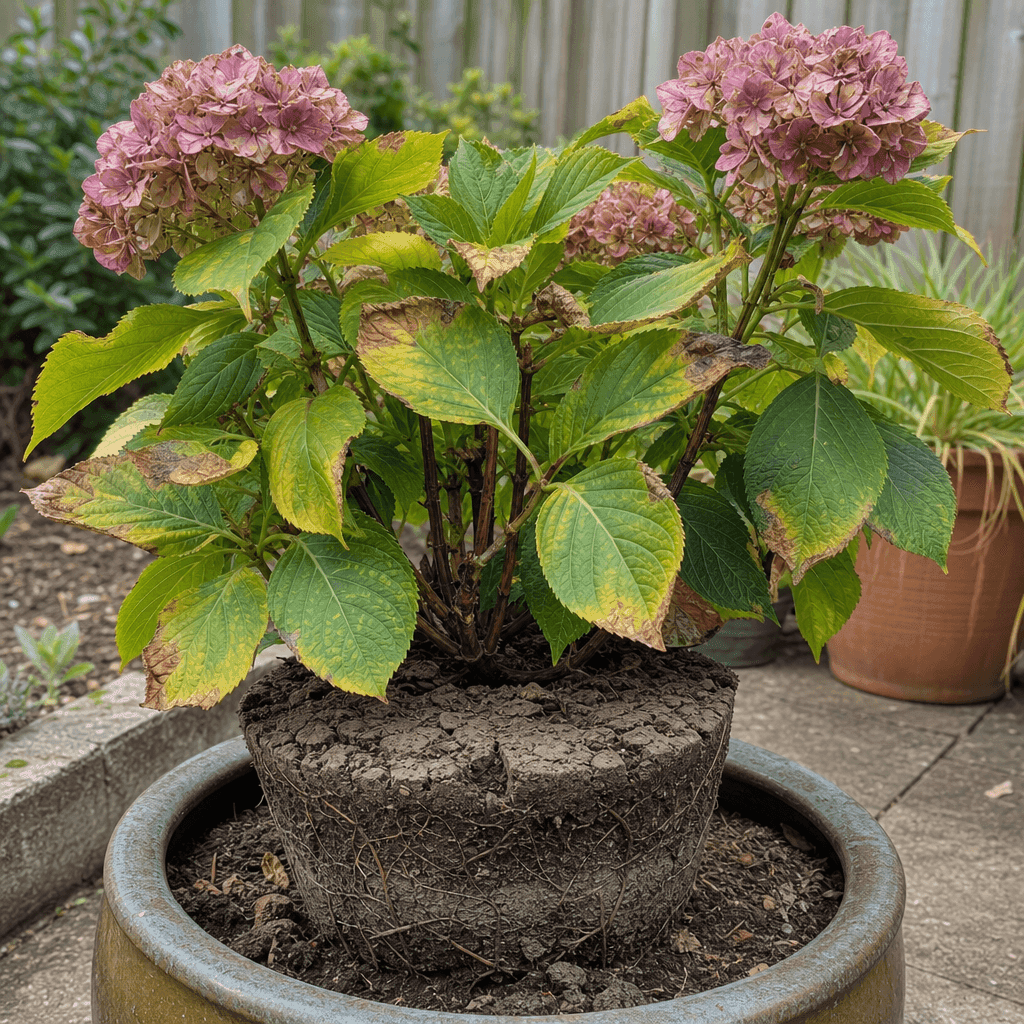
- Push a finger or trowel 5–8 cm into the root zone — if it is dry in late summer, drought stress during bud formation is possible.
- A pot or recently planted hydrangea shows this more readily than an established border plant.
- Buds appear to form but then shrivel or abort before opening.
- Water deeply and consistently through late summer and early autumn when bud formation is occurring.
- Apply a 5–7 cm mulch of composted bark or leaf mould to retain moisture and keep roots cool.
- For pots, water until the compost is fully saturated, pause, then water again — then check daily in warm weather.
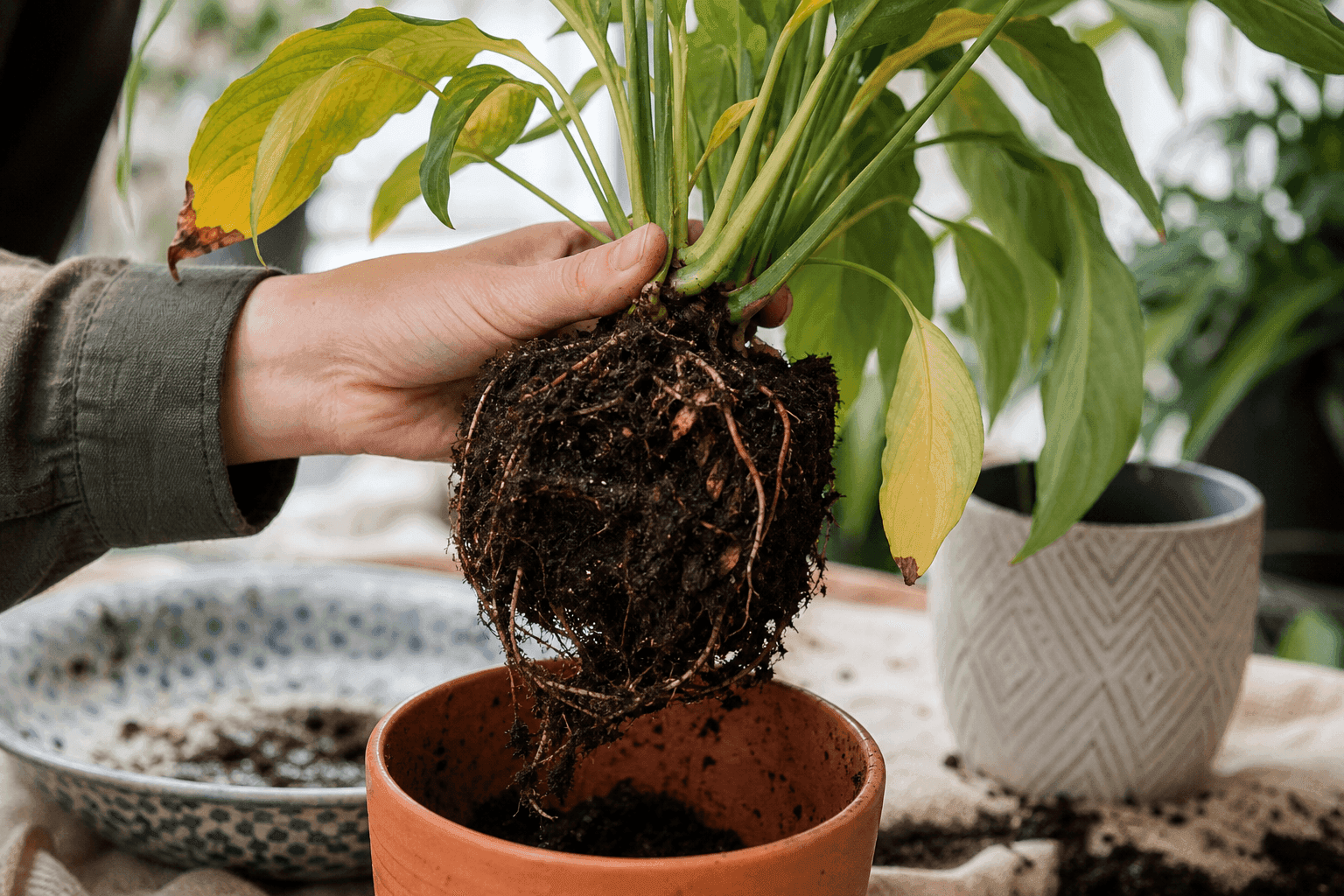
- Repot rootbound container plants into a larger container to increase the water-holding capacity.
Stop it coming back:Wilt can recover quickly after watering, but aborted flower buds do not return in the same season. The following year should be better if moisture is maintained through the bud initiation period.
leave a pot sitting in a saucer of water to compensate for drought — this swaps drought stress for waterlogging. Empty saucers after watering.
Young or newly planted — establishment phase
Most likelyA newly planted hydrangea — especially from a small pot — often produces only leaves in its first summer, or flowers very sparingly, while it is building its root system. This is normal and not a cause for concern if growth is otherwise healthy. Climbing hydrangea (Hydrangea anomala subsp. petiolaris) is particularly slow to flower, sometimes taking three to five years from planting before blooming reliably.
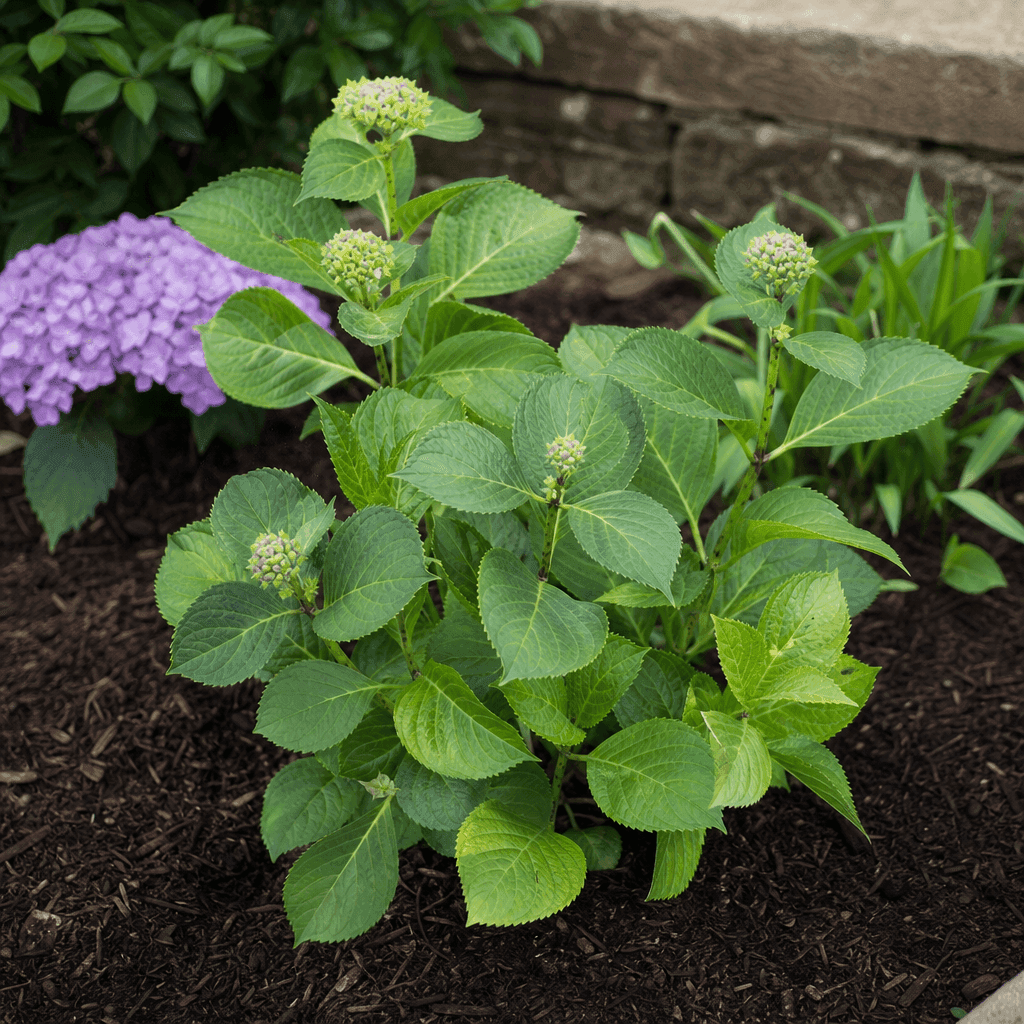
- The plant was planted or moved within the last one to two years and is otherwise healthy and growing.
- Leaves look well-coloured and growth is progressing — there is simply no flower bud.
- There is no obvious pruning, frost damage or disease issue.
- Keep soil evenly moist and mulch annually — consistent establishment conditions will support flowering.
- Avoid hard pruning during the establishment phase.
- Remove competing weeds and grass from the root zone.
- Give the plant time — most hydrangeas flower well in their second or third season; climbing hydrangeas may take longer.
Stop it coming back:If establishment is the only cause, patience is the correct response. Repeatedly moving a non-flowering hydrangea each year restarts the establishment clock.
keep moving a young hydrangea each year because it has not yet flowered — every move stresses the root system and delays the flowering season.
Winter dieback of outer stems
PossibleIn colder or more exposed UK gardens, mophead and lacecap hydrangeas can lose their outer stems in a hard winter, leaving only lower growth near the base alive. The surviving buds may flower, but the plant's display is significantly reduced. This is more common on old-wood types in frost pockets, on exposed north- or east-facing sites, or after particularly cold winters such as those the UK occasionally experiences.
- Outer and upper stems are dead and brittle in spring; scratch the bark — it is brown beneath, not green.
- Growth is alive lower down near the base.
- The previous winter was cold, with prolonged frost.
- Wait until frost risk has clearly passed before pruning — usually late April or May in most UK regions.
- Cut each dead stem back to the first pair of healthy, live buds.
- Do not cut into live wood lower than is necessary — some bud structure will survive even on partially dead stems.
Stop it coming back:A hydrangea that loses outer bud-bearing stems to dieback will flower less that season, but surviving lower stems will flower normally.
prune back into living wood more than is necessary — cut only to the first healthy living bud and no further.
Stress from pests, disease or waterlogged roots
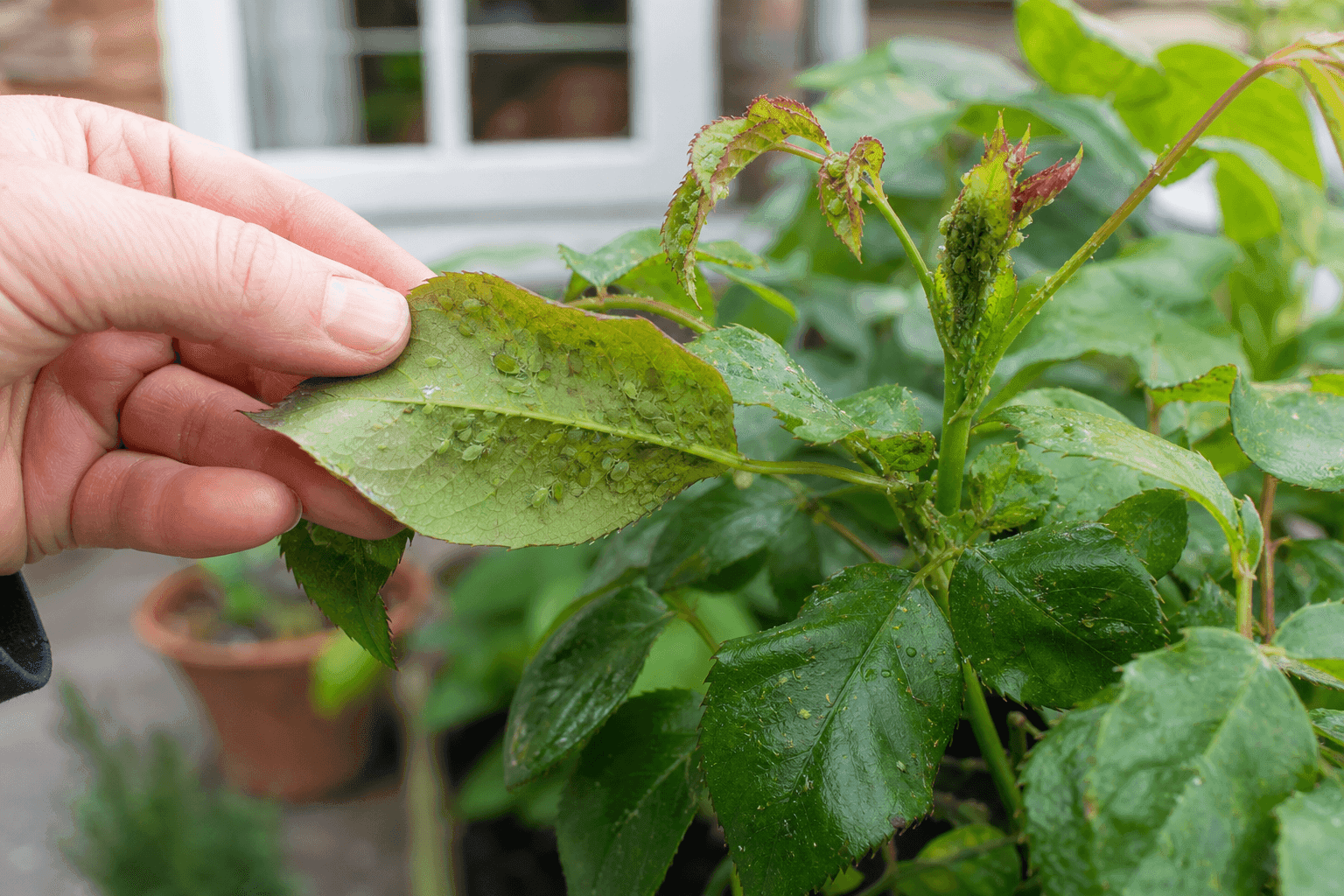
PossiblePersistent pest attack, disease, or a waterlogged root system can suppress flower bud formation. Vine weevil larvae are an under-recognised cause in containers — they feed on roots, causing the plant to decline slowly. Sap-sucking aphids and other common plant pests and hydrangea scale insects produce white waxy flat blobs on stems and leaf undersides. Root rot in waterlogged soil prevents nutrient uptake and can cause leaf yellowing, wilting and failed flowering before the root damage is visible.
- Leaves are spotted, sticky, yellowed or distorted — signs of disease or pest activity.
- Check the underside of leaves and stems for scale, aphids or visible damage.
- In containers, look for vine weevil notching on leaf margins and grubs in the compost.
- In the ground, check whether the soil stays wet for days after rain.
- Identify and treat the pest or disease correctly before focusing on flowering.
- Remove badly diseased foliage to limit spread.
- For vine weevil in pots, apply a biological control nematode treatment in late summer when soil is warm.
- Correct drainage or waterlogging issues — raise pots on feet, fork in grit to border soil.
apply a high-potassium flowering fertiliser to a plant that is diseased, pest-stressed or root-waterlogged — it adds stress to an already struggling plant and will not create flowers.
Still not sure?
Work down these branches — the first one that matches is your answer.
What not to do
- Shear a mophead or lacecap hydrangea into a neat ball shape in autumn — this removes next year's flower buds.
- Prune immediately after a late frost — wait to see which buds survive before cutting.
- Feed an established border hydrangea repeatedly with a high-nitrogen fertiliser.
- Move a non-flowering hydrangea every year — each move restarts establishment and delays flowering.
- Assume a non-flowering hydrangea is dying — if the leaves are green and the stems are firm, the plant is alive and usually just needs a pruning correction or more patience.
Common questions
How do I know if my hydrangea flowers on old or new wood?
Mopheads and lacecaps (Hydrangea macrophylla) and oakleaf hydrangeas (H. quercifolia) flower on old wood — the stems produced last year. Panicle hydrangeas (H. paniculata) and smooth hydrangeas (H. arborescens, including 'Annabelle') flower on new wood produced each spring. If in doubt, do not prune until after flowering and then observe which wood the flowers appeared on.
Should I leave the dead flowerheads on my hydrangea over winter?
Yes, if you have a mophead or lacecap. The RHS recommends leaving dried flowerheads on through winter — they look attractive and provide physical frost protection for the buds on the stems beneath. Remove them in late spring, cutting to the first pair of healthy buds.
My hydrangea flowered last year but not this year — what changed?
The most likely changes are: pruning that removed old-wood buds, a late frost that killed buds after they swelled, or a significantly drier late summer. Check your pruning record and whether there was a cold snap in April or May.
Can I use tomato feed to encourage hydrangea flowers?
A high-potassium feed can support flowering in a container if used sparingly, but it will not replace buds that were pruned off or frost-killed. For most established border hydrangeas, the RHS advises that regular feeding is unnecessary.
Why does my climbing hydrangea never flower?
Climbing hydrangea (H. anomala subsp. petiolaris) is notoriously slow to flower — it can take three to five years from planting. It also needs enough light to initiate buds. Leave it unpruned, keep it consistently moist and give it time.
Can I move my hydrangea to a sunnier spot to make it flower?
Yes, if it is currently in deep shade. Move in autumn or early spring while the soil is moist. Choose a position with morning sun and afternoon shade rather than all-day direct sun, which can cause a hydrangea to wilt and scorch unless the soil stays very moist.
How do I protect hydrangea buds from frost in the UK?
Drape the plant loosely with two layers of horticultural fleece when frost is forecast in spring. Remove the fleece during the day. Leave dried flowerheads on through winter — they protect the buds on the stems below. Move container hydrangeas to a sheltered wall or porch during frost warnings.