Plant leaf problems
Leaves are the dashboard of a plant. When something is wrong below ground or in the air, the leaves usually report it first — by changing colour, curling, spotting, or developing holes and crispy edges. Match what you are seeing below, then follow it down to the precise cause and fix.
Most plant leaf problems come from one of five groups: water or root stress, nutrient or pH problems, weather and light stress, pests, or diseases. The fastest way to avoid the wrong fix is to start with the visible symptom, then check moisture, roots, leaf undersides, recent weather, and whether the problem is spreading.
Before you treat anything, run five quick checks. Feel the compost 3–5cm down, not just the surface. Slide a potted plant out and look at the roots — firm and pale is healthy, dark and soft is not. Turn leaves over and inspect the shoot tips for pests. Ask what changed recently: a repot, a move, a cold draught, a heatwave or a new feed. And decide whether the pattern is one old leaf, the whole plant, or actively spreading.
Leaf colour and shape narrow it down fast. Yellowing usually points to water, roots, light, nutrients or normal ageing; curling to heat, drought, cold, pests or herbicide drift; brown crispy edges to dry air, salts or root stress; holes to chewing pests; and spreading spots to fungal or bacterial disease. Use the guides below to go from the symptom you can see to the exact cause and fix.
64 diagnosis guides in this area
Showing 1–12 of 64 guides
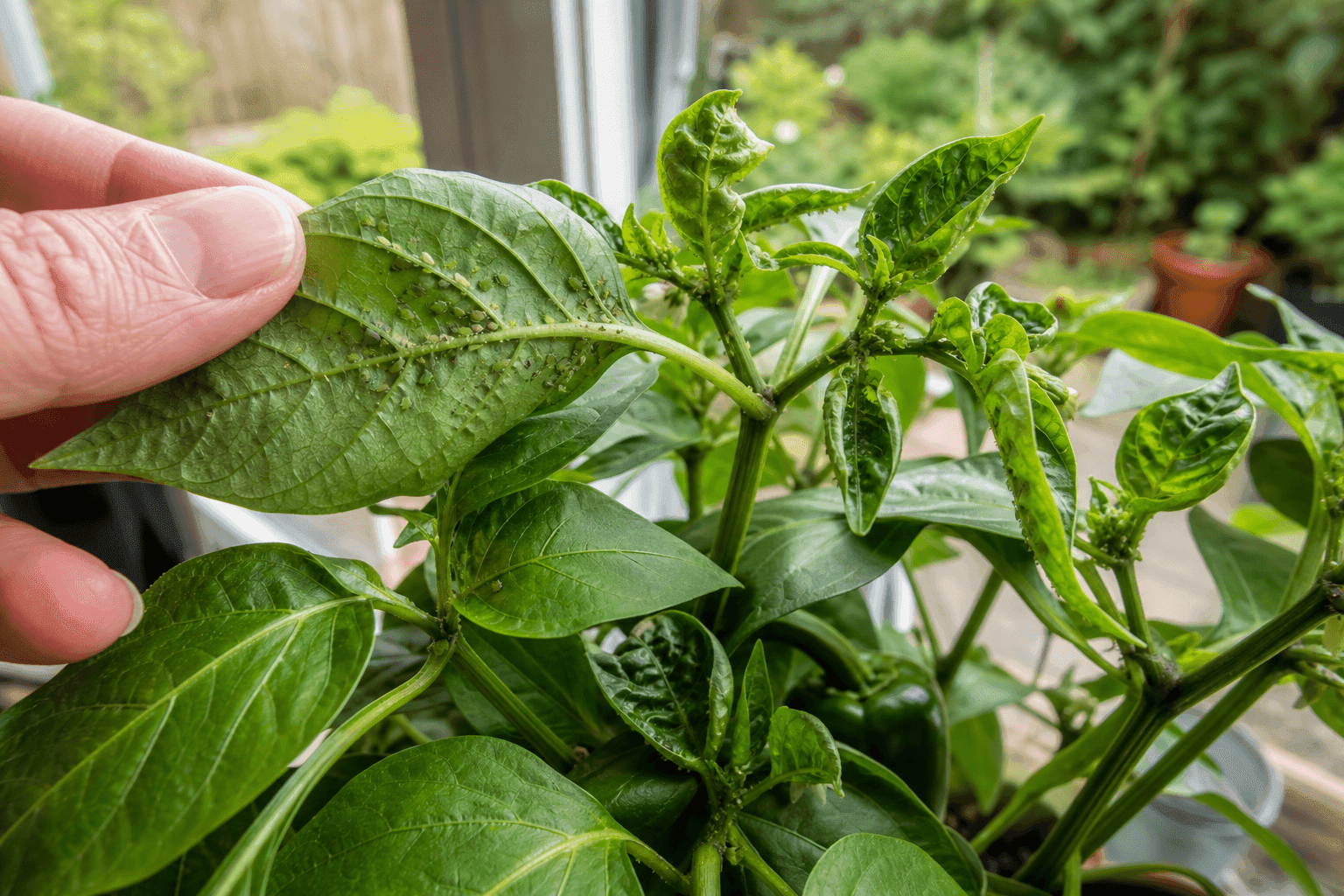
Aphids on Pepper Plants: Identification and UK Control
Identify and control aphids on UK pepper plants. Covers peach-potato aphid, whitefly, root aphids, and biological controls — no guesswork.
Read the guide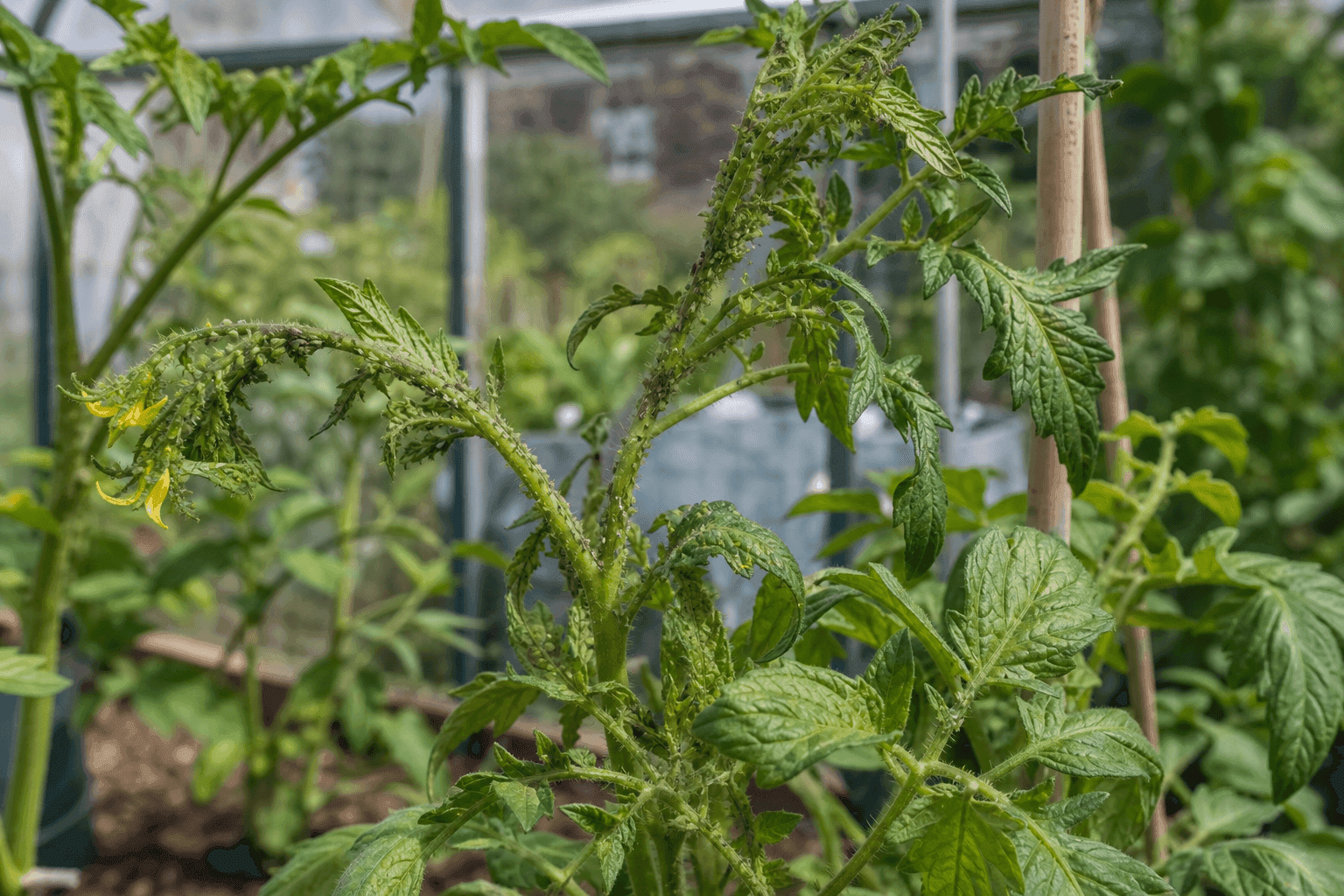
Aphids on Tomato Plants: UK Identification and Control
Sticky leaves, distorted shoot tips or clusters of insects on your tomatoes? Identify the aphid species and choose the right UK control — from ladybirds to biological controls.
Read the guide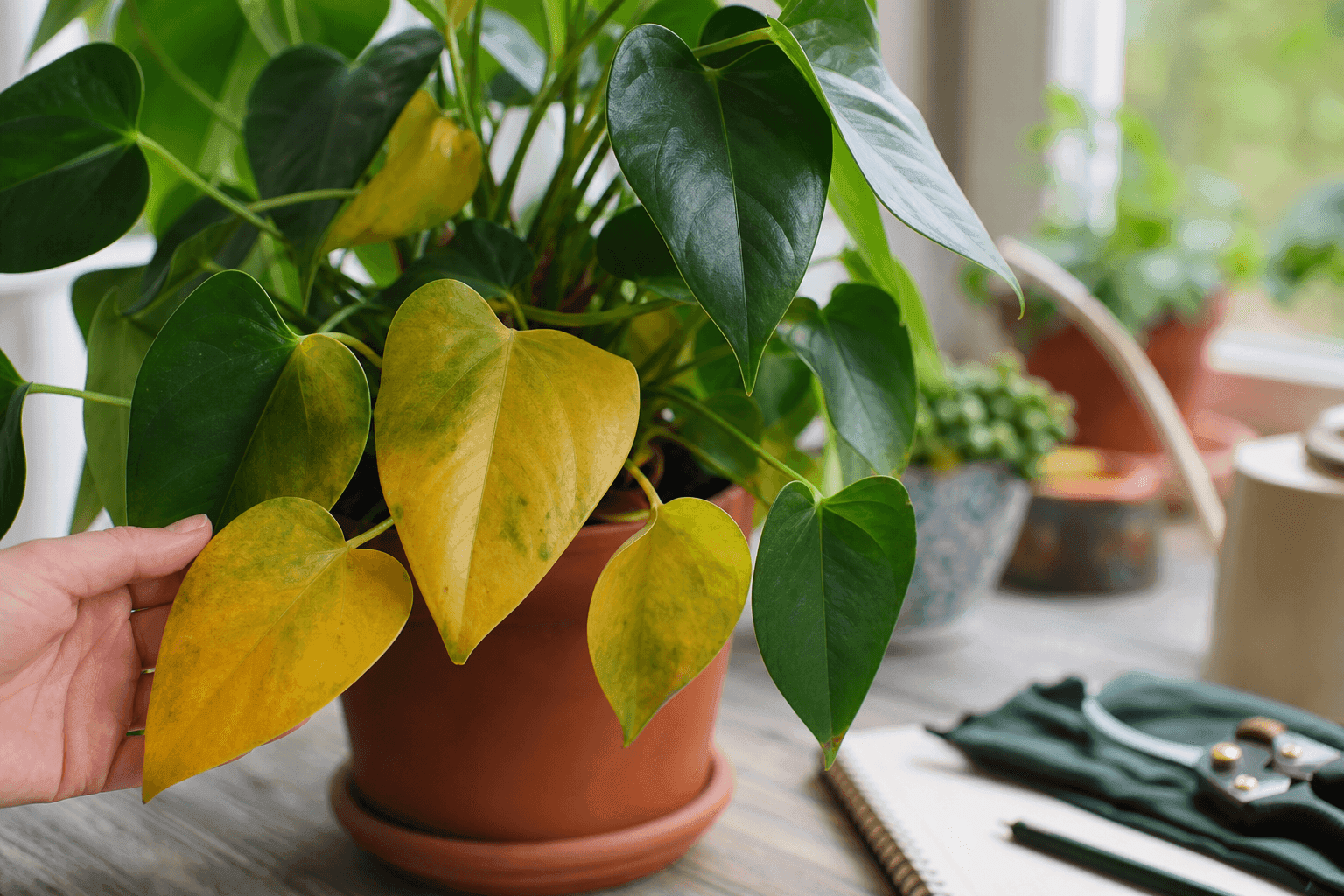
Bamboo Plant Leaves Turning Yellow: Causes and Fixes
Bamboo plant leaves turning yellow? Diagnose lucky bamboo and outdoor bamboo problems in the UK, from water quality and root rot to light, cold and feeding.
Read the guide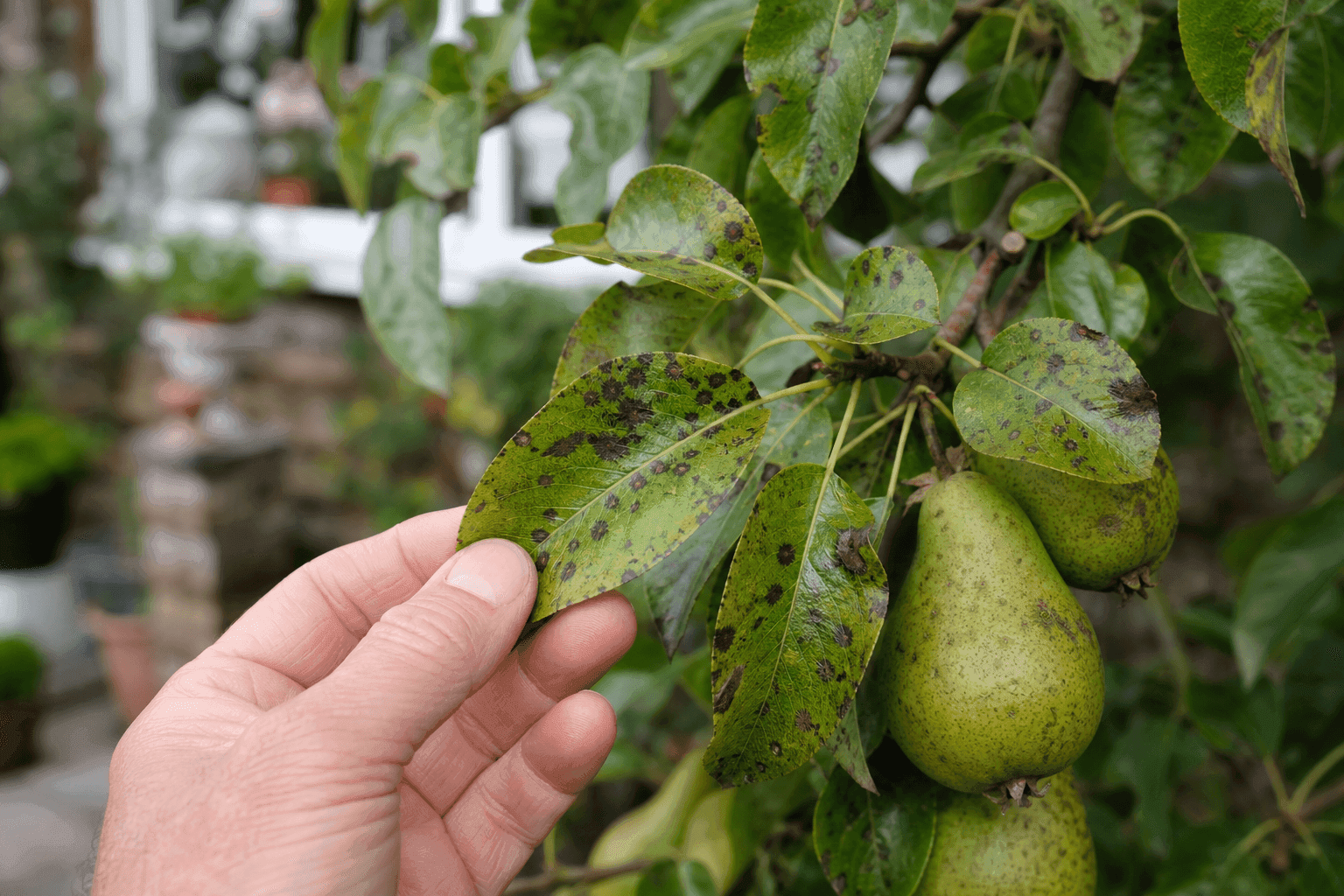
Black Spots on Pear Tree Leaves: UK Diagnosis and Fixes
Black spots on pear tree leaves are usually pear scab or pear rust. Use this UK diagnosis table to identify the cause and decide what to do.
Read the guide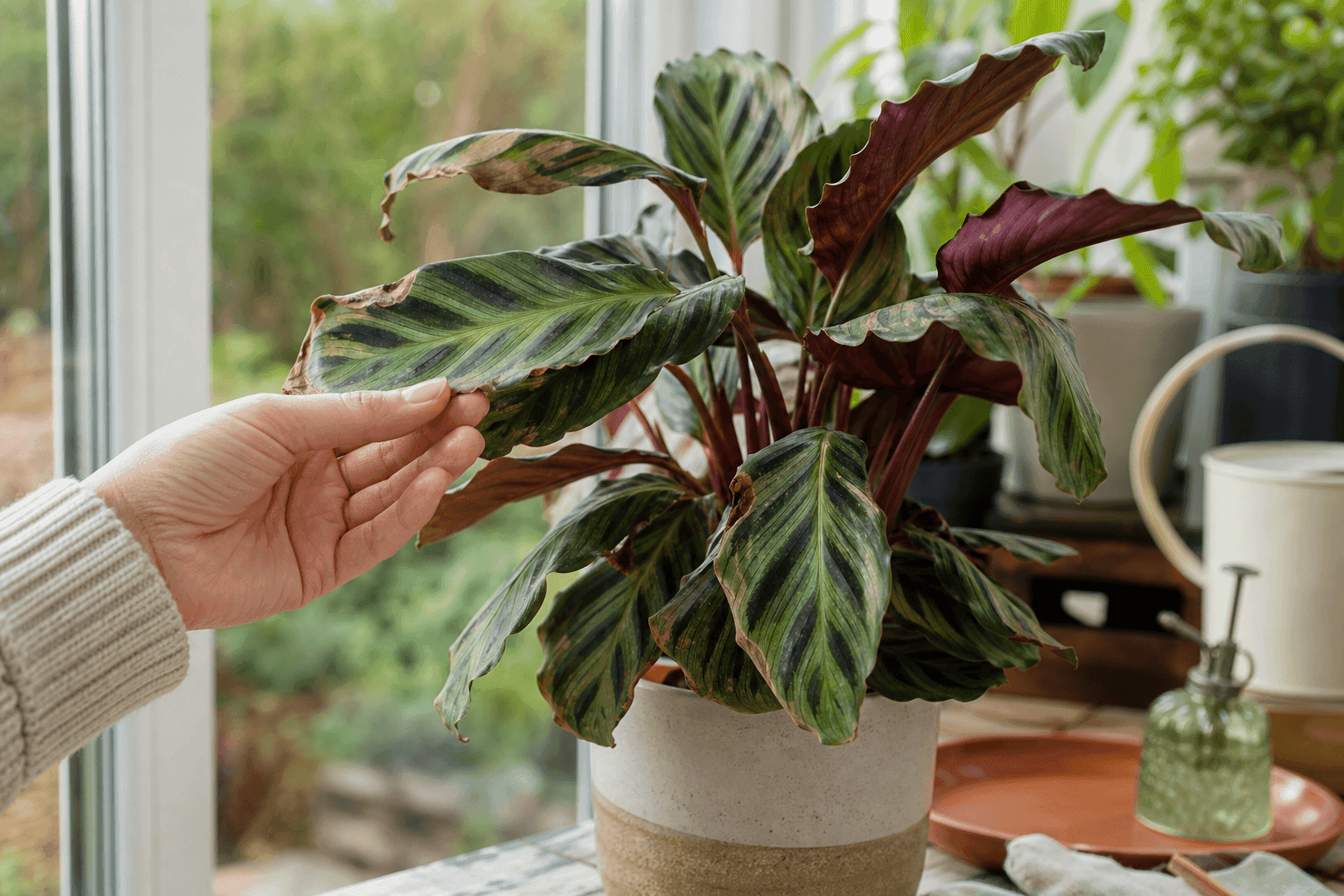
Calathea Leaves Curling: Causes and Fixes for UK Growers
Calathea leaves curling? The most likely UK causes are low humidity, underwatering and fluoride in tap water. Diagnose and fix with this UK guide.
Read the guide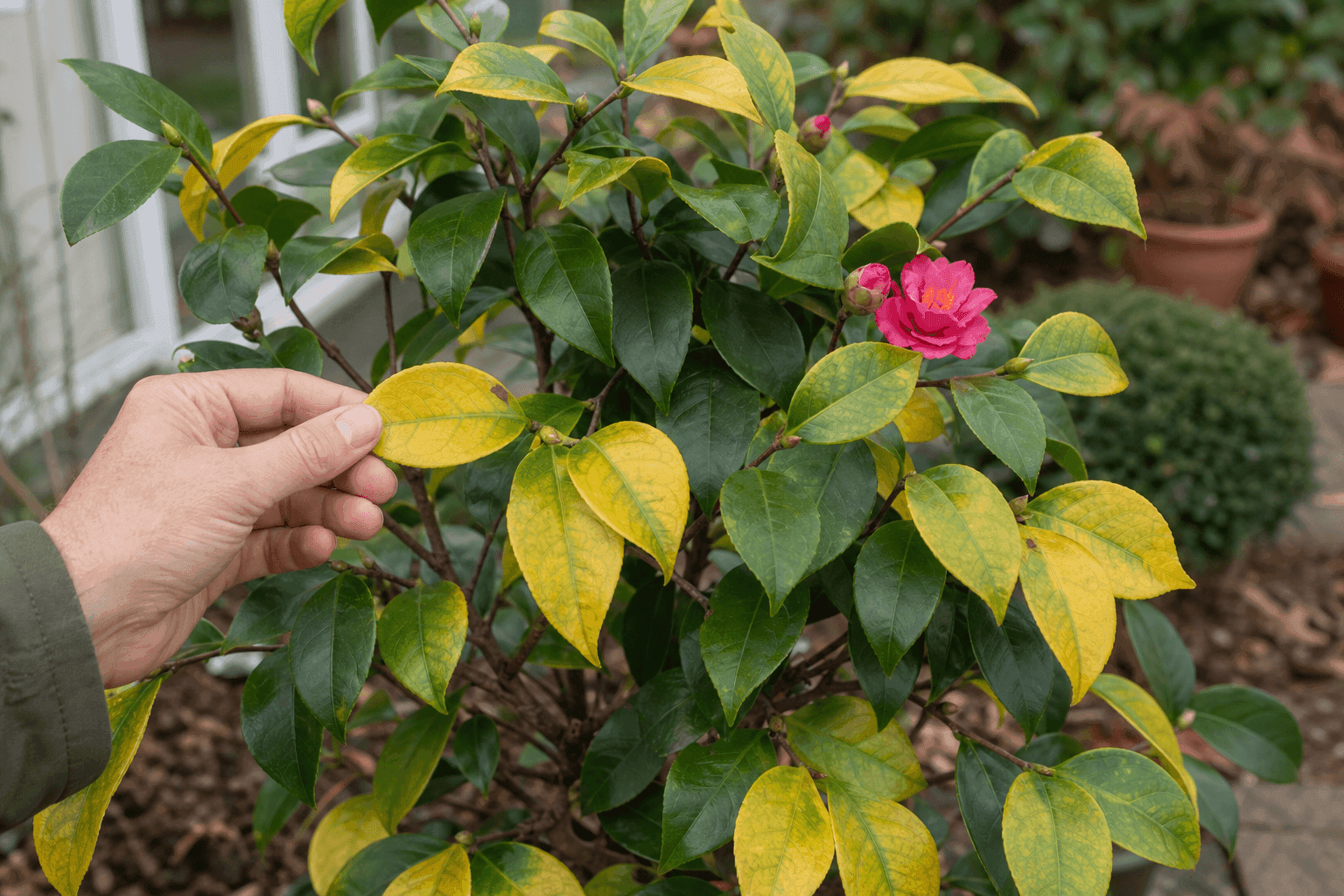
Camellia Yellow Leaves: Causes and Fixes for UK Gardeners
Camellia leaves turning yellow? Diagnose lime-induced chlorosis, hard water, waterlogging, drought, and normal shedding with this UK-focused guide.
Read the guide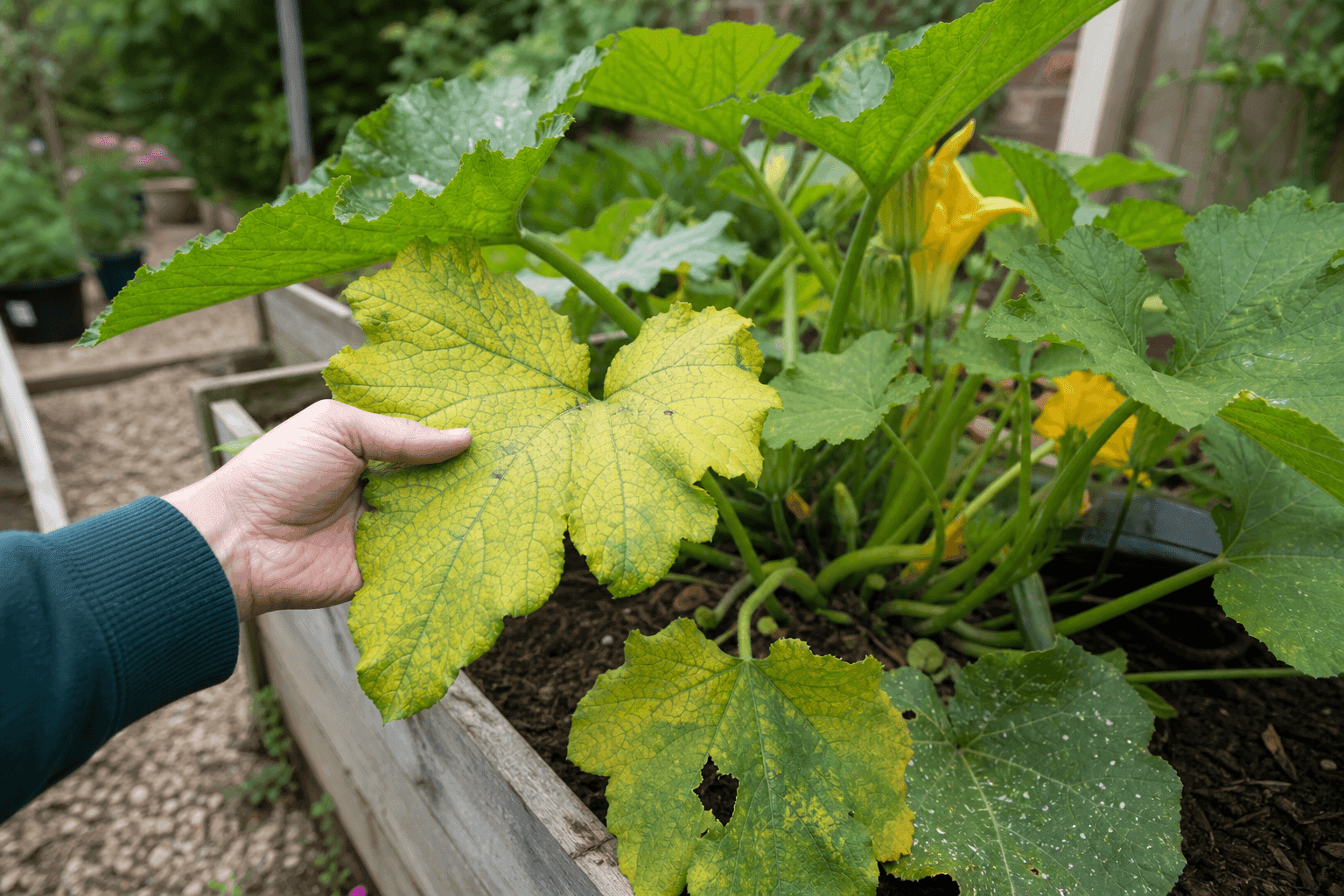
Courgette Yellow Leaves: Causes and Fixes for UK Gardeners
Courgette leaves turning yellow? This UK guide covers powdery mildew, nutrient shortage, mosaic virus, downy mildew and normal ageing — with specific fixes.
Read the guide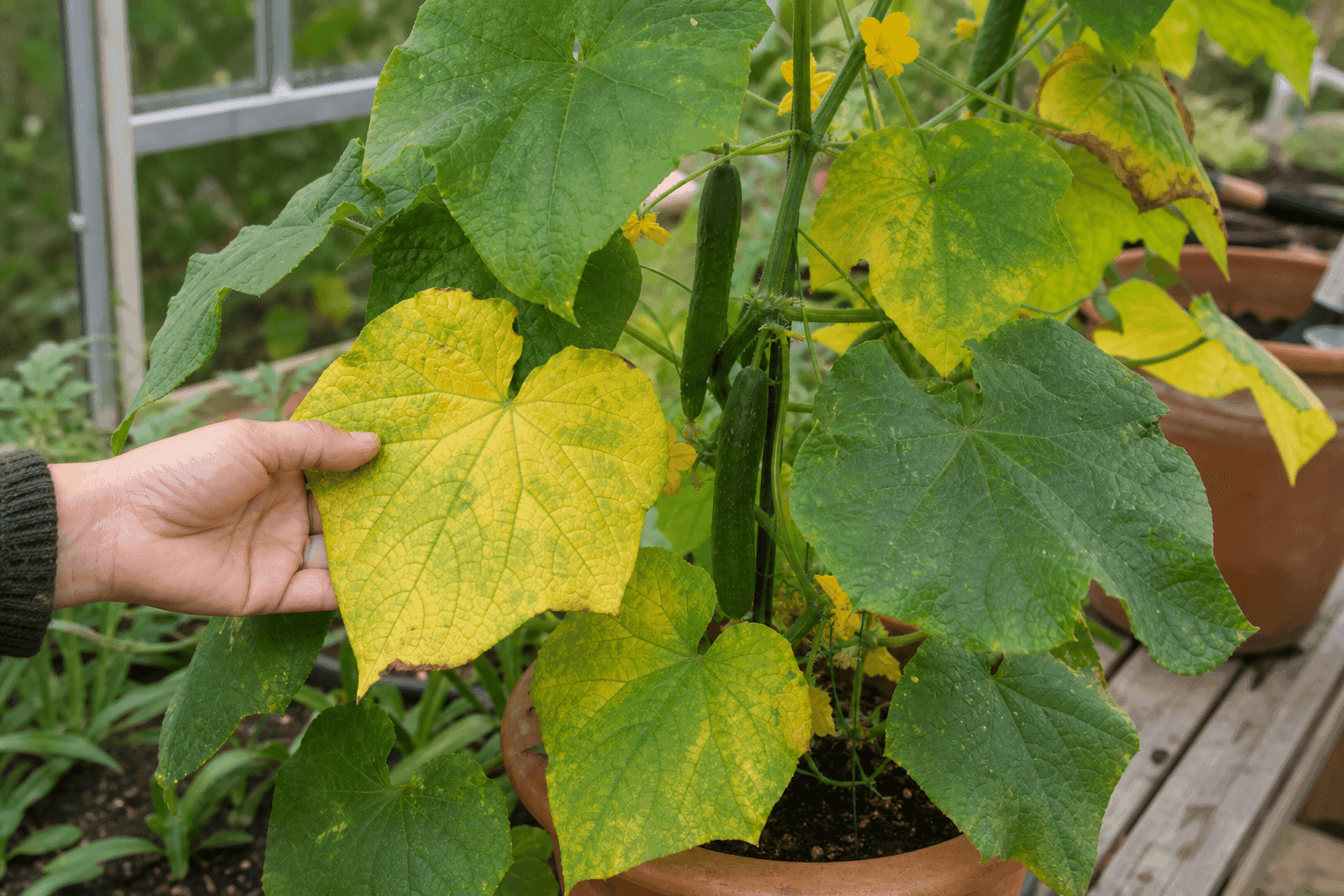
Cucumber Yellow Leaves: Causes and Fixes for UK Growers
Cucumber leaves turning yellow? Diagnose the real cause — from nitrogen shortage and overwatering to mosaic virus and powdery mildew — with UK-relevant fixes.
Read the guide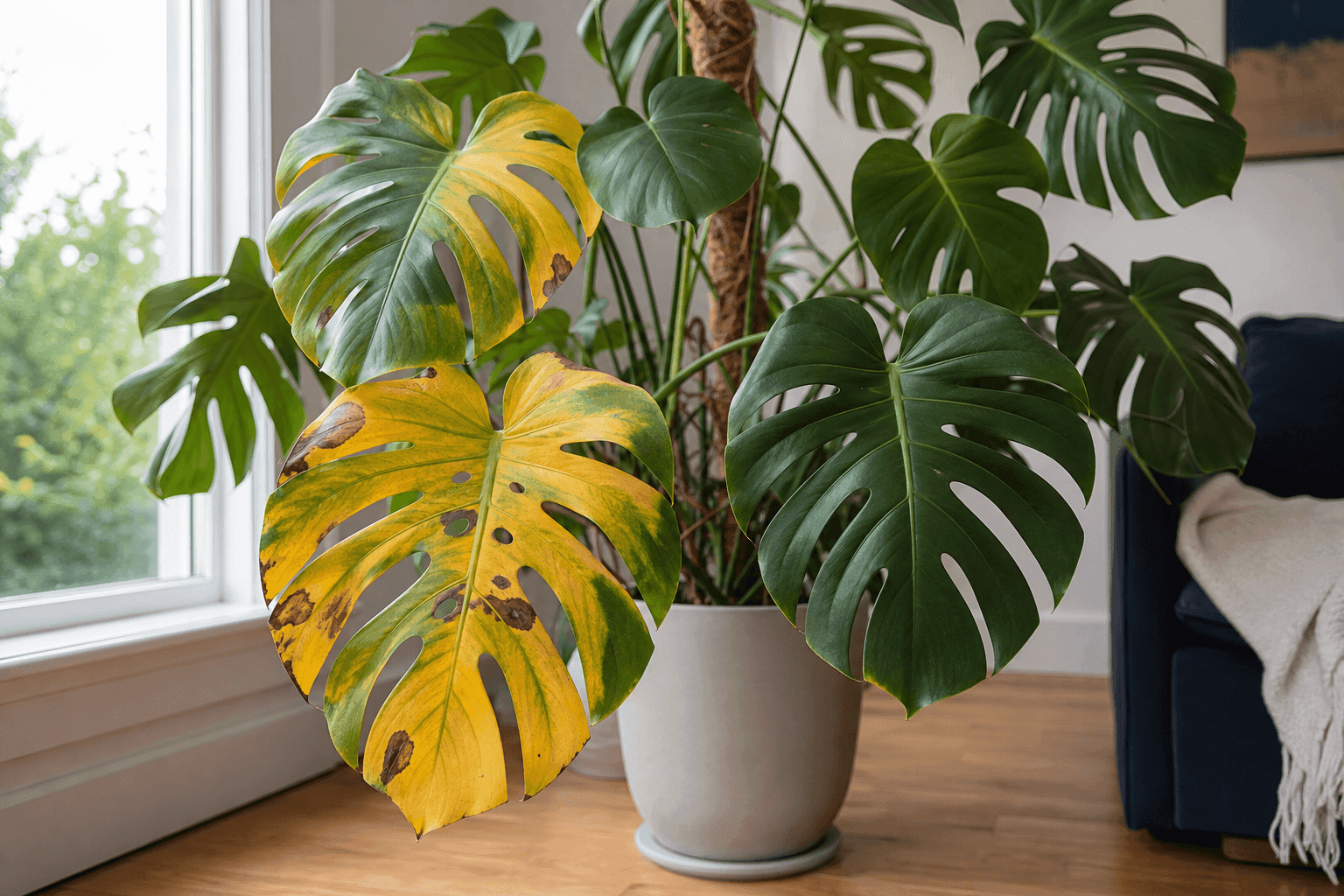
Should You Cut Off Yellow Monstera Leaves?
Learn when to cut yellow Monstera leaves, when to wait, and how to check for pests, disease, root stress, or normal ageing.
Read the guide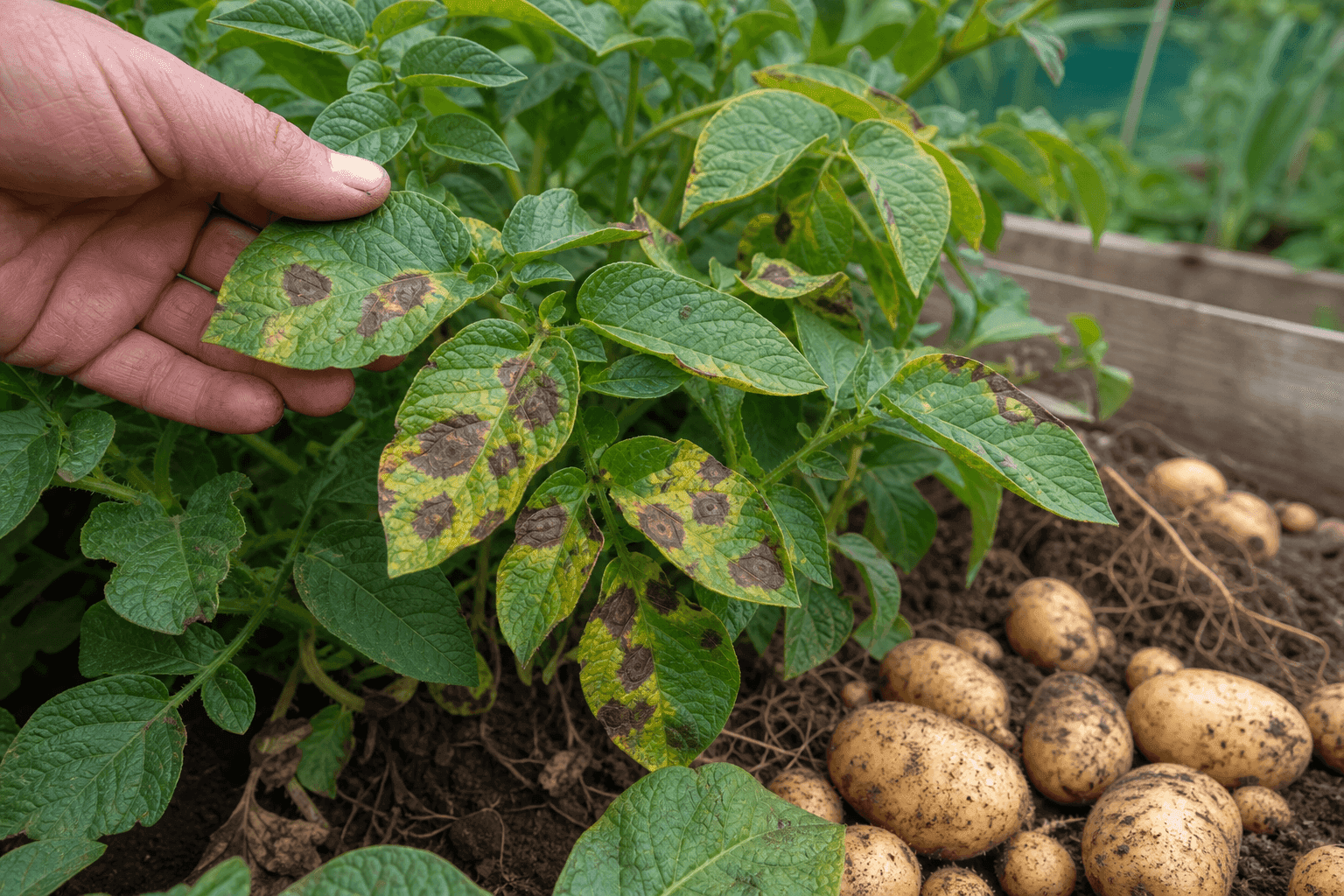
Early Blight on Potatoes: UK Diagnosis, Symptoms and Fixes
Dark target-spot lesions on your potato leaves? This UK guide separates early blight (Alternaria) from the far more common magnesium deficiency and late blight.
Read the guide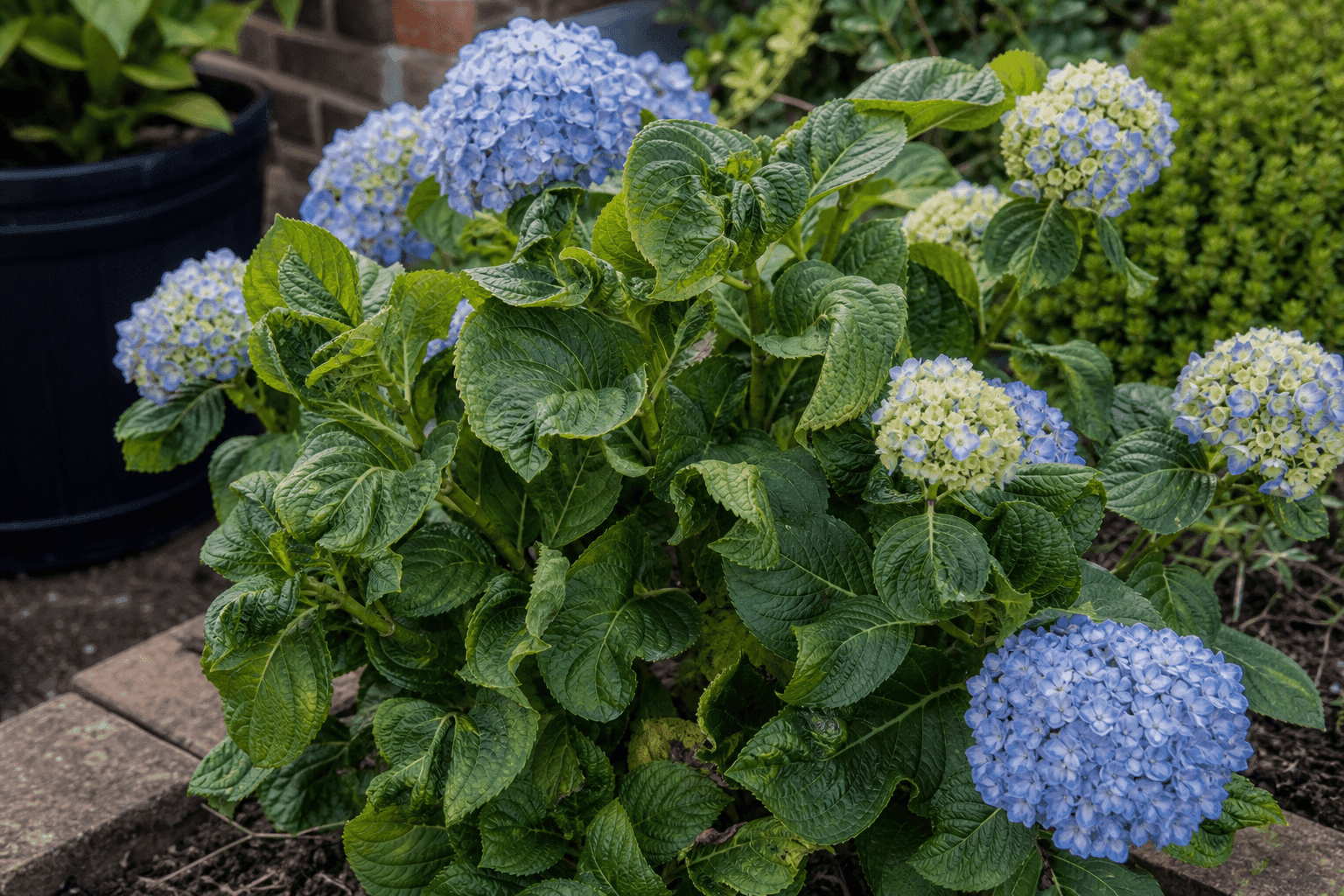
Hydrangea Leaves Curling: UK Causes and Fixes
Hydrangea leaves curling? The most common UK causes are drought, heat, aphids and lacebug. Diagnose and fix with this guide.
Read the guide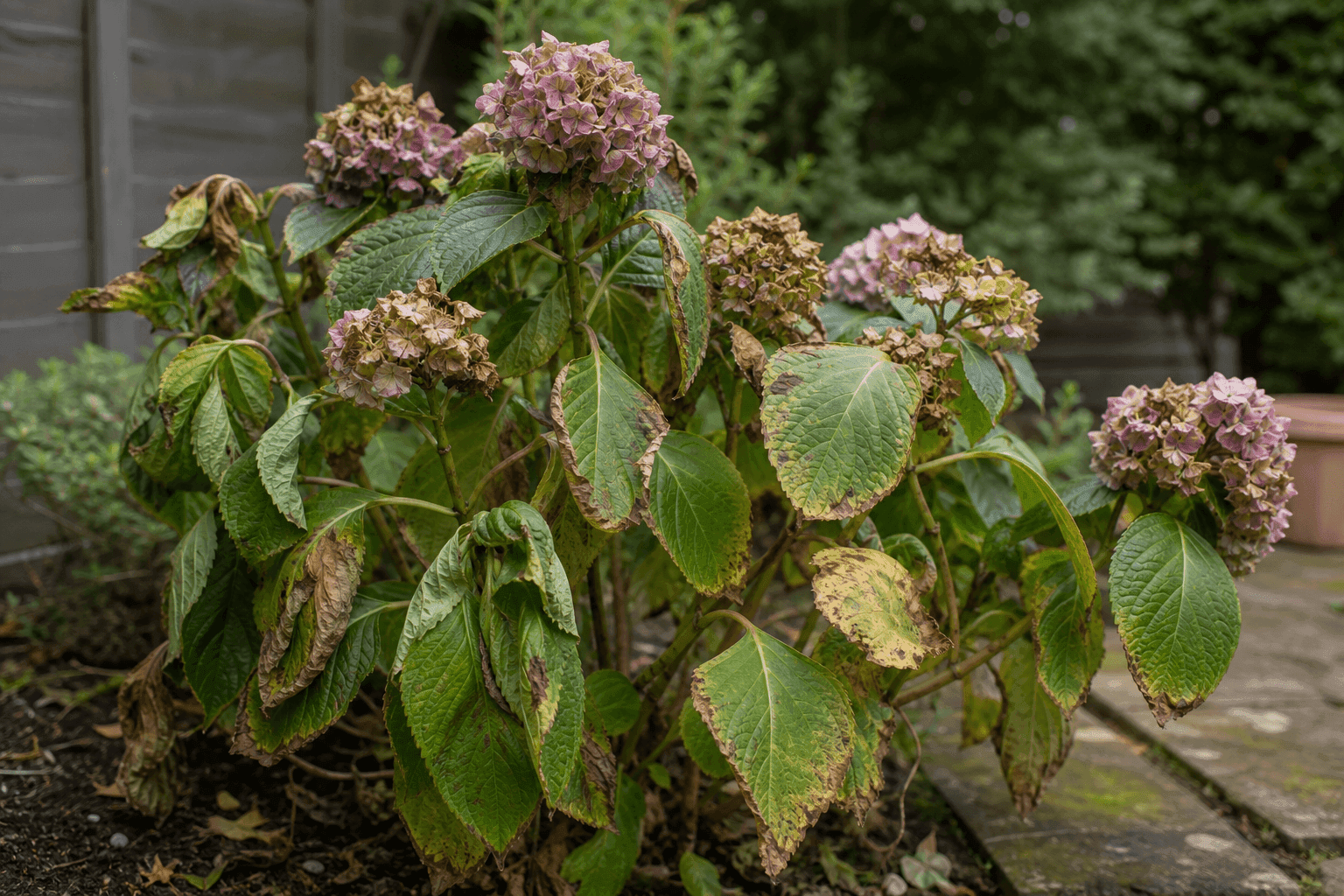
Hydrangea Dying? UK Causes, Diagnosis and Recovery Guide
Hydrangea dying or failing? Diagnose the real UK causes — wrong pruning, root rot, waterlogging, drought or disease — and find out what to do.
Read the guideCommon questions
What does an overwatered plant leaf look like?
Overwatered plants often have yellowing, limp leaves, leaf drop, soft growth, or wilting despite wet compost. The confirmation is in the root zone: heavy wet compost, water sitting in an outer pot, poor drainage and dark, soft roots all point to overwatering or root rot.
Why are the edges of my plant leaves turning brown and crispy?
Brown crispy edges usually mean the leaf margins dried or were damaged. Common causes are underwatering, irregular watering, low humidity, heat, wind, root damage, salt build-up, overfeeding or scorch. Check moisture and exposure before you feed.
Are holes in leaves always caused by pests?
No. Holes are often from slugs, snails, caterpillars, beetles or vine weevil adults, but wind, hail and shothole diseases can also leave holes or torn areas. Look for fresh feeding, slime, droppings, pests at night, and whether spots formed before the tissue fell out.
Should I cut off damaged leaves?
Remove fully yellow, dead, badly diseased or heavily infested leaves when it helps hygiene or appearance. Keep partly green leaves if they are still feeding the plant and not spreading disease. Never strip so many leaves that the plant cannot photosynthesise, especially on vegetables.
Does Epsom salt help yellow leaves?
Only if the plant genuinely has a magnesium deficiency, which is not the most common cause of yellow leaves. Guessing with Epsom salt can delay the real fix. Check water, roots, light, pests, pH and the yellowing pattern first.
Can a leaf problem be fixed after the leaf is damaged?
The plant can often recover, but damaged leaf tissue rarely turns perfect again. Judge success by new growth, fewer pests, slower spread and better root function — not by expecting old yellow, brown or spotted areas to turn green.
Sources
- RHS — Leaf damage on houseplants
- RHS — Leaf damage on woody plants
- RHS — Chlorosis
- University of Minnesota Extension — Tomato leaf spot diseases
- Penn State Extension — Plant disease basics and diagnosis
Reviewed by the Leaf & Cause team. General guidance for UK growing conditions, not a substitute for professional advice — always follow product labels.
Keep looking
Browse by plant
Browse by problem area
Can’t see your symptom? Search by symptom →