Quick diagnosis
Match the row to what you’re seeing, then jump to the fix.
| What you see | Likely cause | Confidence | How to confirm | What to do now | Urgency |
|---|---|---|---|---|---|
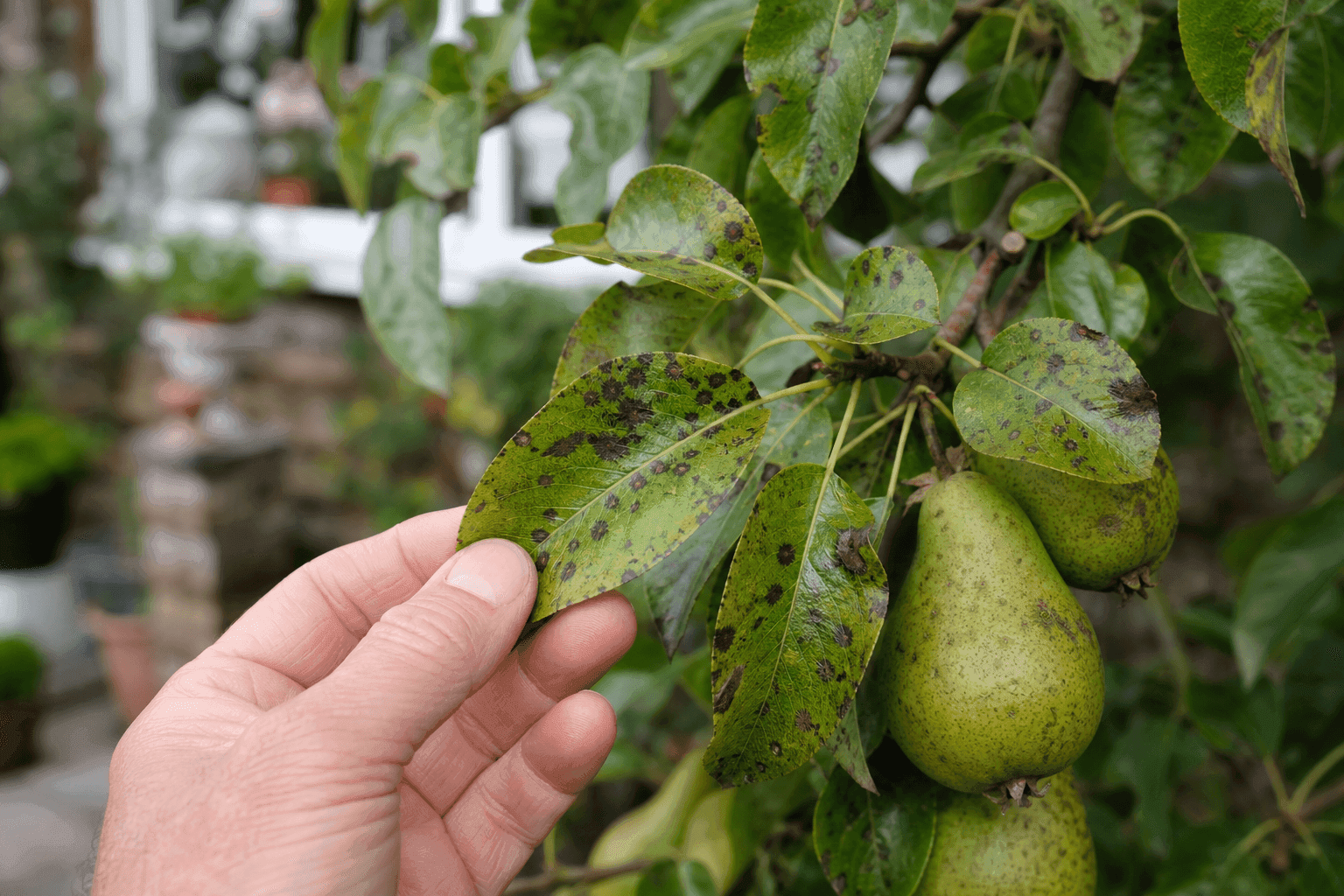
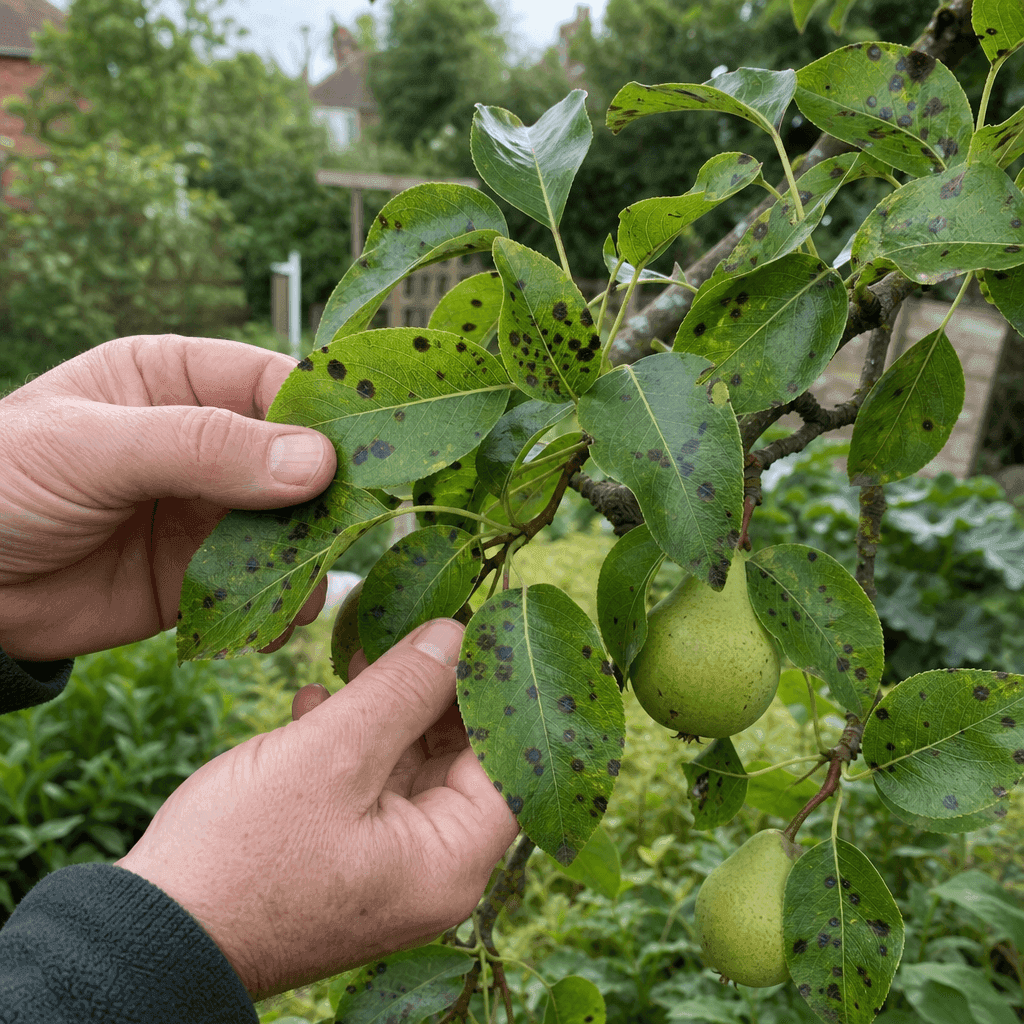
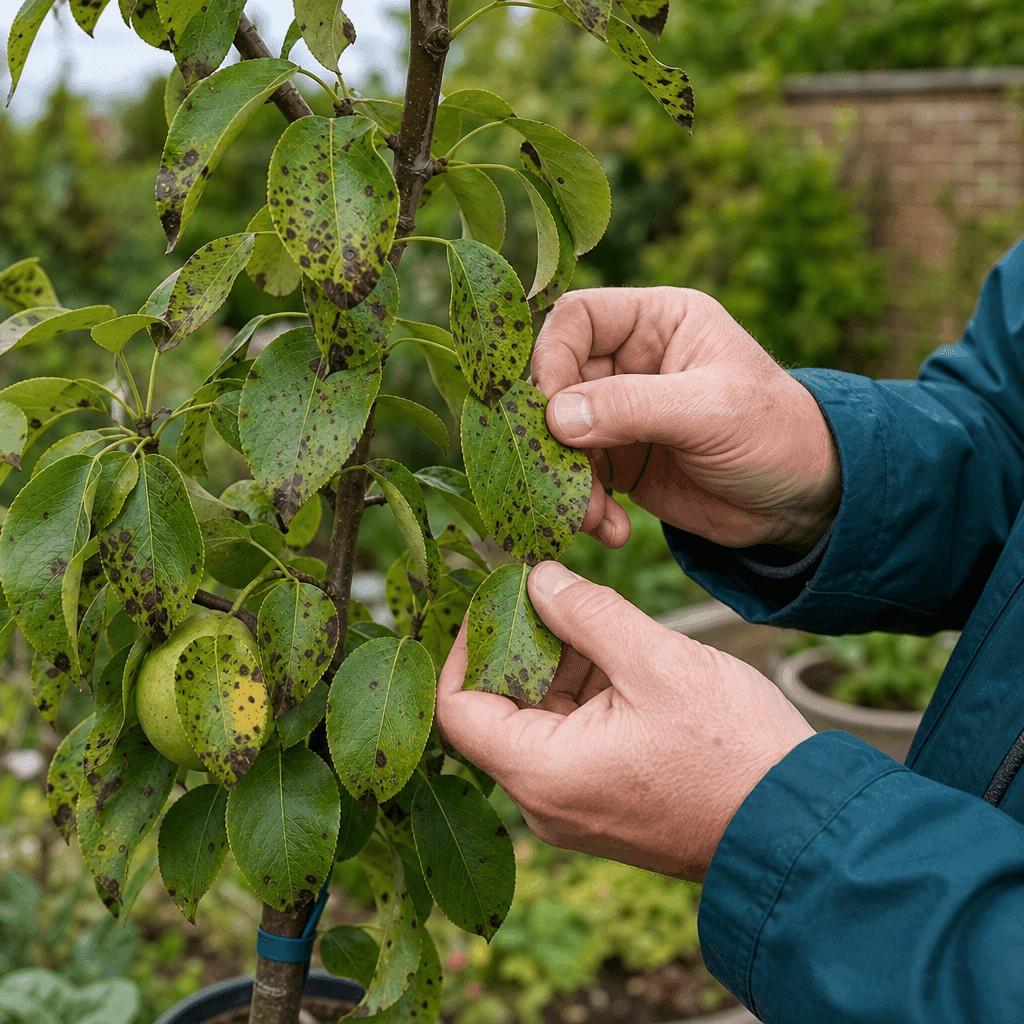
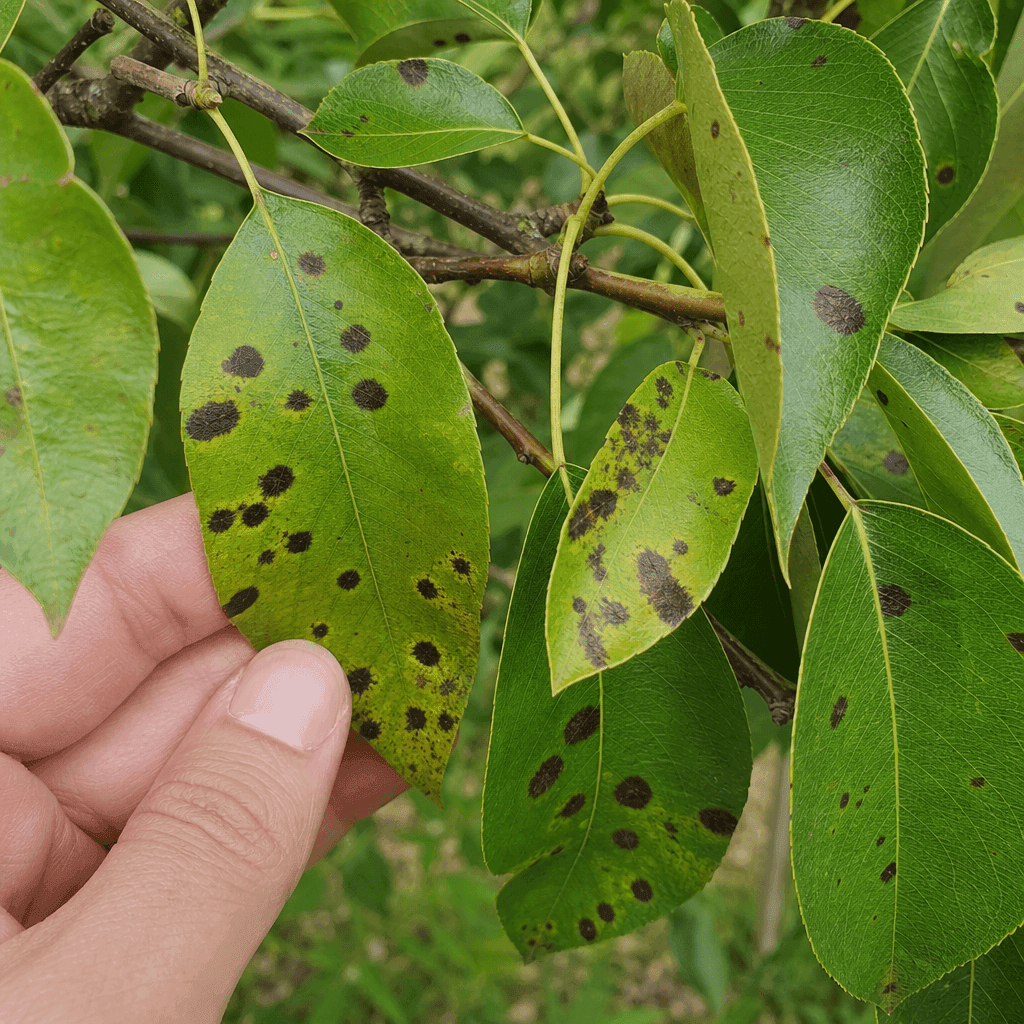
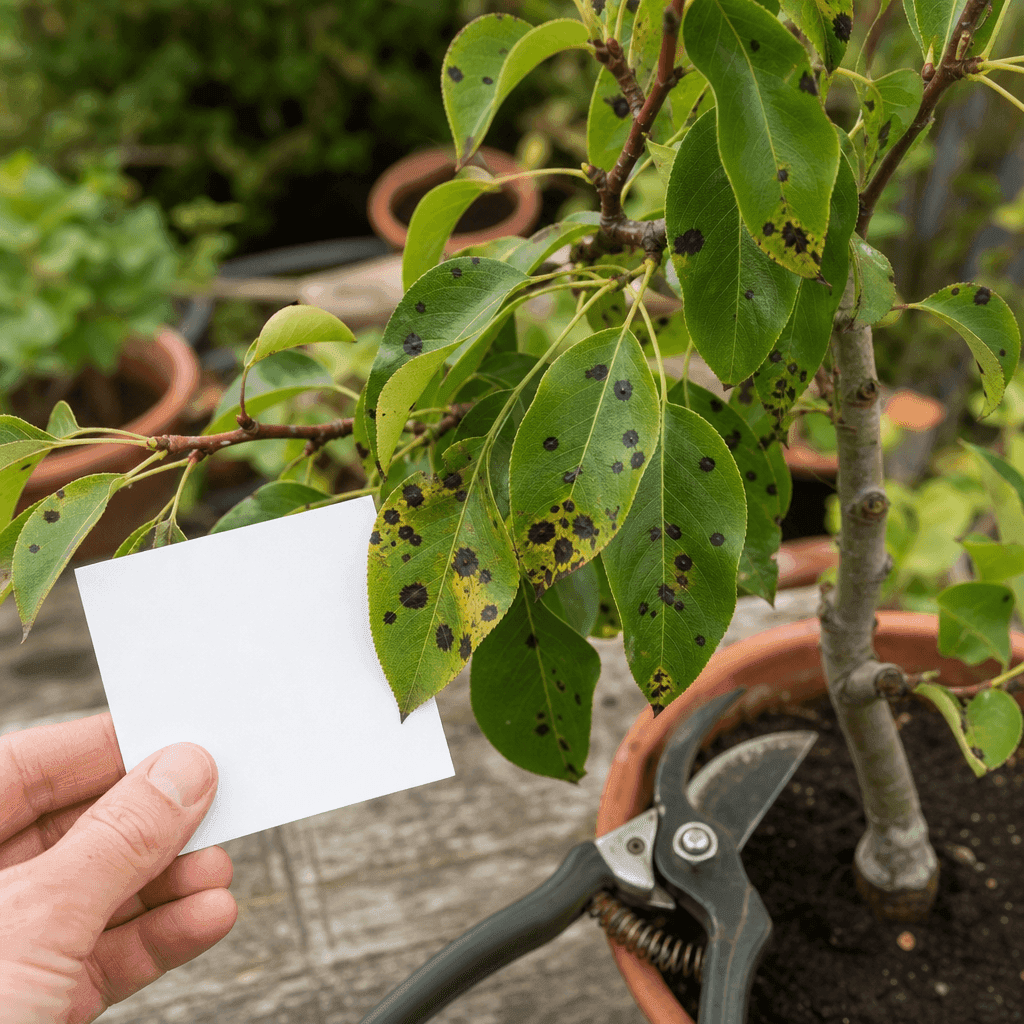
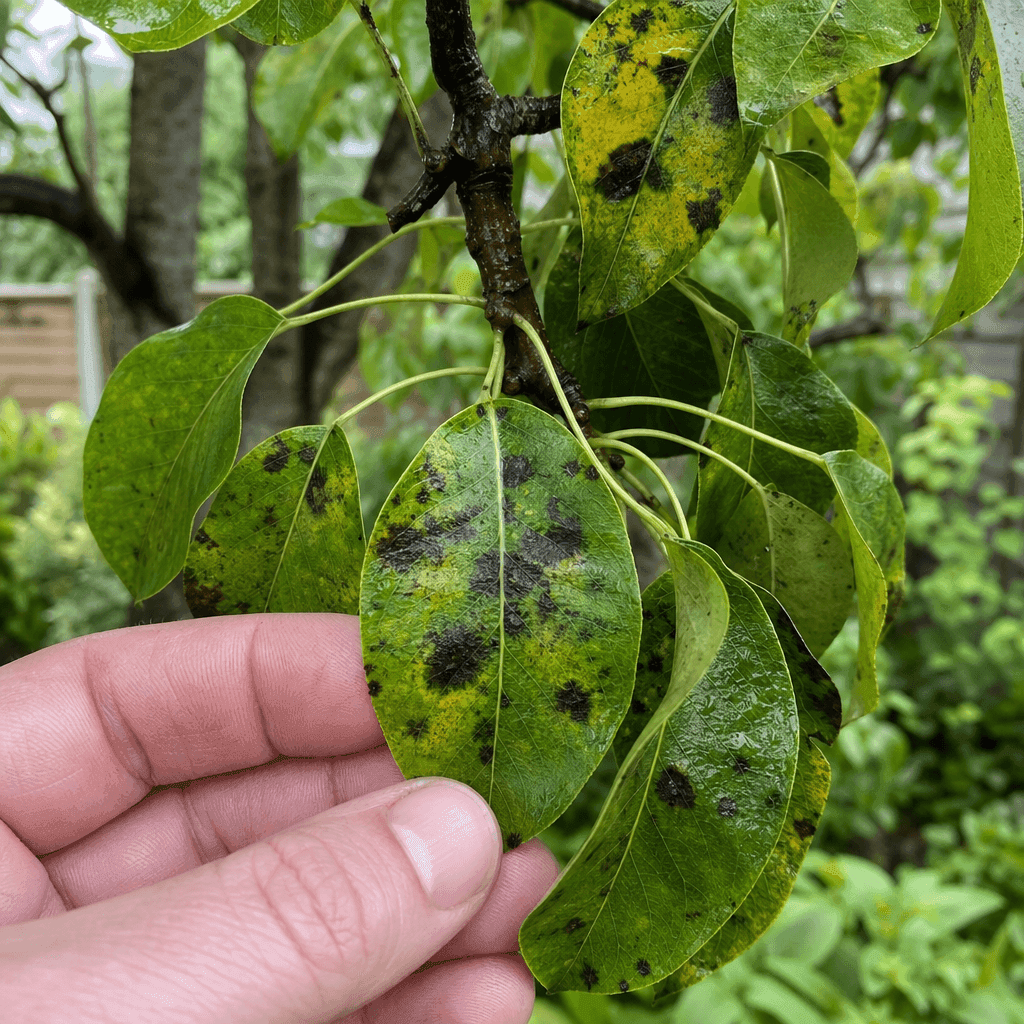
| Olive-green to black blotchy spots; leaves yellowing and falling early | Pear scab (Venturia pyrina) | High | Spots are velvety when fresh; look on upper and lower leaf surfaces; check for cracked or blistered young twigs | Rake and bin fallen leaves; prune blistered twigs; improve canopy airflow | Medium |
| Vivid orange or yellow-orange spots on upper leaf surface; brown spiky outgrowths below | Pear rust (Gymnosporangium sabinae) | High | Orange spots only on upper surface; brown gall-like tubes on the underside; any nearby juniper shrubs? | Remove badly affected leaves; check for infected junipers nearby; no effective fungicide is available to amateur gardeners | Medium |
| Small, raised blisters turning pink then brown-black across the leaf | Pear leaf blister mite (Eriophyes pyri) | Medium | Blisters are small and scattered across the blade, not centred on veins; damage appears in spring | Pick off affected leaves; generally cosmetic — no spray needed | Low |
| Dark, water-soaked spots that turn brown; dieback of shoots; gummy ooze on bark | Bacterial canker (Pseudomonas syringae) | Medium | Look for sunken, dark patches on bark as well as leaf spots; symptoms often worse after a wet winter | Prune infected wood to clean tissue in dry weather; disinfect tools between cuts | High |
| Powdery white coating on young leaves and shoots; young shoots stunted or distorted | Powdery mildew | Medium | White powder on upper leaf surface; worst on new growth in dry, warm spells | Remove worst affected shoots; improve airflow; avoid over-feeding with nitrogen | Low–medium |
| Black, smudgy coating on leaves, often sticky; no leaf spots underneath | Sooty mould from aphid or scale honeydew | Low | Wipes off easily; check shoot tips and undersides for aphid colonies or scale insects | Control the sap-sucking pest causing honeydew; wash mould off with water where practical | Low |
The causes, in detail
Pear scab (Venturia pyrina)
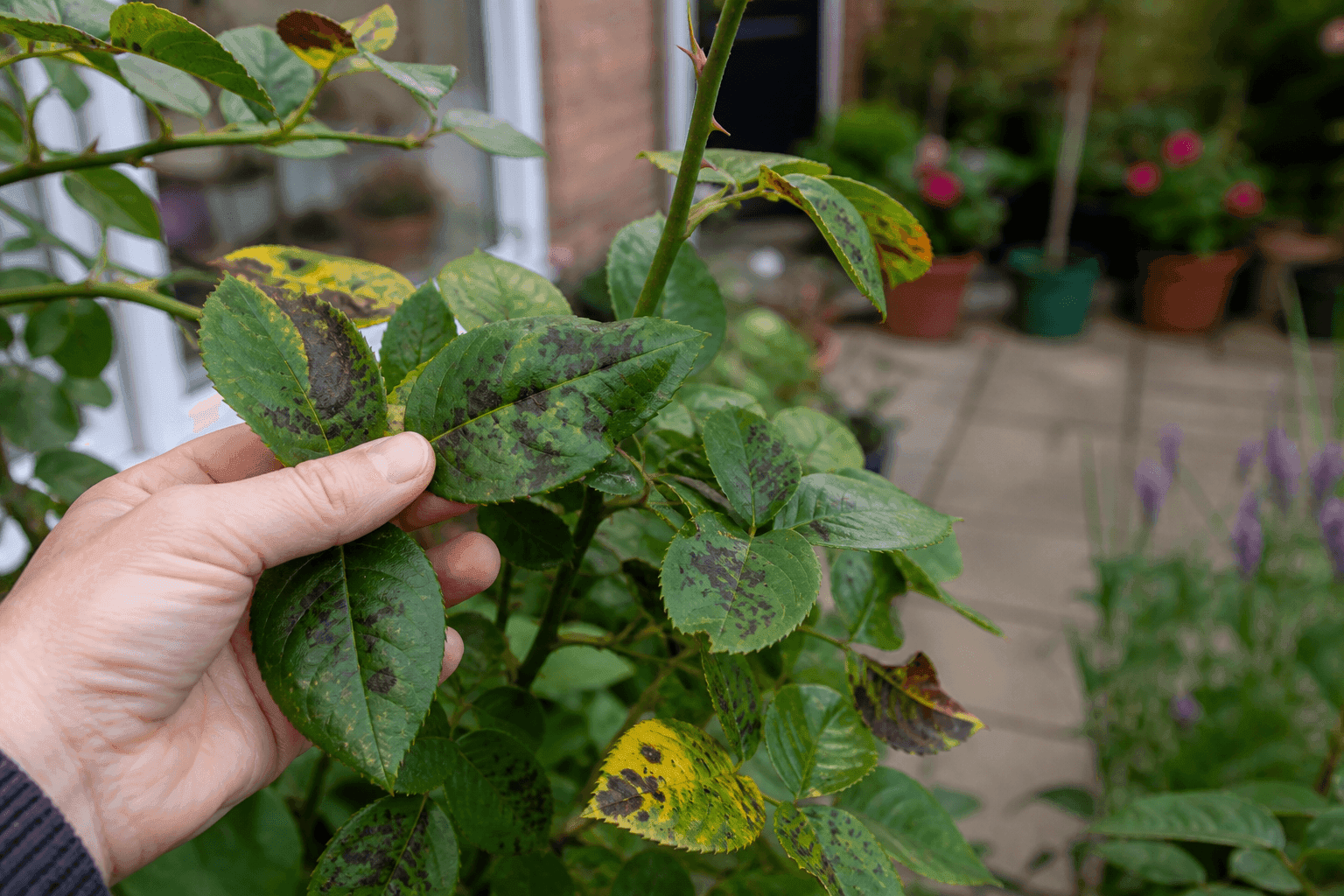
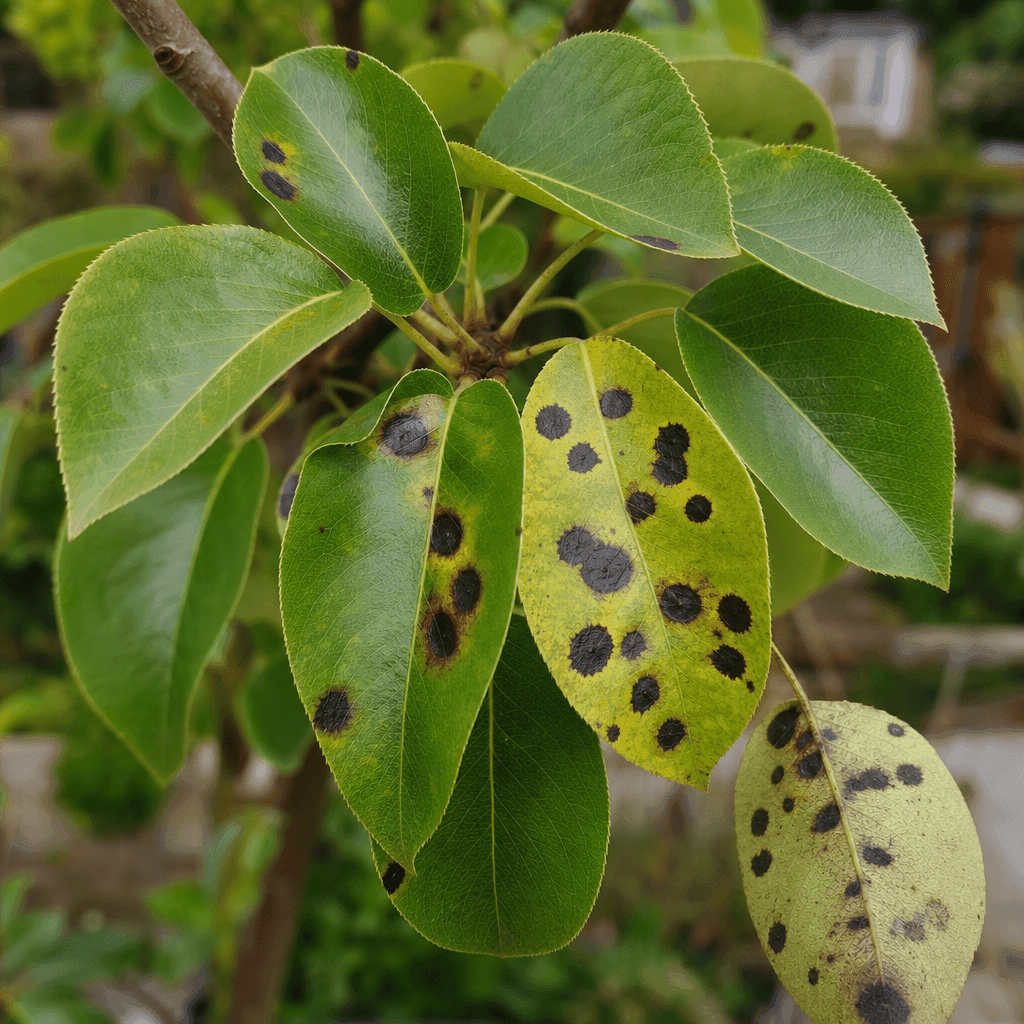
Most likelyPear scab is the most common cause of dark spots on pear leaves in the UK. It is caused by the fungus Venturia pyrina and is closely related to apple scab — see our wider pear tree care and problem guides for related issues. The RHS describes the disease as producing olive-green, velvety spots on leaves that darken and cause premature leaf drop, and scabby, cracked blotches on fruit. Infections are spread by airborne spores released from fallen infected leaves in spring; wet weather from bud burst onwards greatly increases risk. The disease overwinters in infected fallen leaves and in blistered twigs.
- Olive-green to black, velvety or scabby spots on leaves — both surfaces can be affected.
- Leaves yellowing and falling earlier than expected.
- Blistered, cracked bark on young shoots and spurs.
- Scabby, cracked areas on fruit skin.
- Symptoms begin in spring and worsen through wet spells in summer.
- Collect and bin all fallen leaves in autumn — do not compost them as the fungus overwinters in them.
- Prune out any blistered or cracked twigs during winter; dispose of prunings, do not compost.
- Open up the canopy by thinning crowded branches to improve airflow and reduce leaf wetness.
- Avoid overhead watering; water at the base of the tree.
- In future seasons, plant scab-resistant pear varieties if replacing the tree.
Stop it coming back:The RHS does not recommend fungicide sprays for home gardeners for pear scab. Established hygiene and pruning practices reduce but cannot eliminate infection in most UK gardens.
compost infected fallen leaves or leave pruned twigs on the ground — they carry the spores that restart infection the following spring.
Pear rust (Gymnosporangium sabinae)
Most likelyPear rust is caused by the fungus Gymnosporangium sabinae and has become much more common across the UK in the past twenty years. The RHS notes it was once almost confined to mainland Europe. The disease requires two hosts to complete its life cycle: pears and certain junipers (particularly Juniperus sabina, J. virginiana and J. chinensis cultivars). Vivid orange spots appear on the upper surface of pear leaves in summer, and by late summer distinctive brown, spiky or horn-like outgrowths develop on the underside of the same spots.
- Vivid orange or yellow-orange spots, 5–10mm across, on the upper surface of leaves from mid-summer onwards.
- Brown, gall-like or hair-like outgrowths on the underside of the same spots later in summer.
- No spots with white powder (that would suggest mildew).
- Look for a nearby juniper shrub with orange gelatinous growths on stems in spring — that is the alternate host.
- Remove badly spotted leaves to slow spore spread.
- Check if there is a juniper within the garden or nearby — removing or heavily pruning infected juniper stems can reduce future risk.
- Be aware that spores are airborne over considerable distances, so neighbourhood junipers can still infect your tree.
- No fungicide is approved or recommended for amateur use against pear rust in the UK.
- Maintain tree health; a vigorous tree tolerates infection better.
Stop it coming back:Pear rust rarely kills established trees but can cause premature leaf drop and reduce vigour over several seasons. Avoid planting susceptible junipers immediately adjacent to pear trees.
confuse pear rust with pear scab — rust is vivid orange on the upper surface; scab is olive-green to black and velvety.
Pear leaf blister mite (Eriophyes pyri)
PossibleThe pear leaf blister mite is a microscopic eriophyid mite. The RHS describes it as causing pale green blisters that turn pink and then brown-black as the season progresses. Damage appears in spring when mites emerge from overwintering sites under bud scales. The marks can look alarming but are usually cosmetic and do not seriously harm an established tree.
- Small raised blisters, 2–4mm, scattered across the leaf blade — not confined to veins.
- Blisters start pale cream or green in spring, turning pink then dark brown-black.
- Worst on young leaves; older established leaves may show less damage.
- No sticky residue or visible insects on the leaf surface.
- Remove and bin the worst affected leaves in spring to reduce mite numbers.
- No insecticide is approved or readily available for amateur use against this mite in the UK.
- For a healthy, established tree, no intervention is usually necessary.
- Encourage natural predators by avoiding broad-spectrum insecticide sprays.
spray a healthy established pear tree with broad-spectrum insecticide just to control blister mites — that harms the natural enemies that keep the population in check.
Bacterial canker (Pseudomonas syringae)
PossibleBacterial canker affects pears, cherries, plums and related fruit trees. It is caused by Pseudomonas syringae pv. morsprunorum and syringae strains. On pears it causes dark, water-soaked spots on leaves that dry to a 'shot-hole' appearance, and sunken, gummy cankers on branches. The RHS notes that infections enter through leaf scars in autumn and pruning wounds. Wet winters and early springs favour the disease.
- Dark water-soaked leaf spots that dry and fall out, leaving small holes.
- Sunken, elongated dark patches on bark with amber gum oozing from the edges.
- Shoot dieback — a branch dies back from the tip, sometimes rapidly.
- Symptoms often become apparent in spring after a wet winter.
- Prune out infected shoots and branches, cutting back to healthy wood at least 10cm beyond visible damage.
- Do this in dry weather to minimise re-infection risk.
- Sterilise pruning tools with methylated spirit or a garden disinfectant between cuts.
- Remove large cankered limbs flush with the trunk and treat the wound with a suitable wound paint or pruning sealant.
- Dispose of infected material — do not compost it.
Stop it coming back:Prune in summer when bacterial infections are least active, rather than in autumn or early winter. Avoid creating unnecessary wounds.
prune infected material in wet weather or use unsterilised tools between cuts, as this spreads the bacteria to healthy tissue.
Powdery mildew on pear
PossiblePowdery mildew on pear is caused by the fungus Podosphaera leucotricha (which also affects apple). It thrives in warm, dry conditions with humid air — common in UK summers. Young growth is most affected. The white powder is composed of fungal mycelium and spores, and is quite distinct from the dark spots of scab. The same fungal family causes powdery mildew on roses, and the cultural controls are very similar.
- White, powdery coating on the upper surface of young leaves and shoot tips.
- Affected shoots may be stunted or distorted.
- Worst in warm, dry spells — the opposite of scab, which is favoured by wet weather.
- Remove and bin badly affected shoots and leaves.
- Improve airflow by pruning to open the canopy.
- Avoid excess nitrogen feed, which produces the lush, susceptible growth that mildew exploits.
- Keep trees well watered at the roots during dry spells — drought-stressed trees are more vulnerable.
mistake mildew for pear scab — mildew is white and powdery on young growth; scab is olive-green to black on both young and older leaves.
Sooty mould from aphids or scale
Less likelySooty mould is a black, smudgy coating that grows on the sticky honeydew excreted by sap-sucking insects such as pear-grass aphid, woolly aphid, and pear scale. The mould itself does not infect the leaf — it grows on the honeydew surface. The RHS notes that sooty mould is a secondary problem; controlling the pest removes the food source.
- Black deposit wipes off or smears rather than being embedded in the leaf tissue.
- Leaves or surfaces underneath aphid or scale colonies are most affected.
- Sticky feel to the leaves before the mould develops.
- Inspect shoot tips and stems for aphid colonies or flat, waxy scale insects.
- Identify and treat the sap-sucking pest — aphids can be washed off with water; encourage ladybirds and lacewings.
- Wipe sooty mould off leaves with a damp cloth where practical.
- Avoid routine insecticide use that destroys natural aphid predators.
spray a tree with insecticide the moment you see sooty mould — first confirm which pest is producing the honeydew and whether natural predators are already controlling it.
Still not sure?
Work down these branches — the first one that matches is your answer.
What not to do
- Compost infected fallen leaves — the scab fungus overwinters in them.
- Use fungicide sprays for pear scab or rust — the RHS does not recommend them for home gardeners and they rarely work without multiple applications.
- Ignore blistered or cankered twigs — prune them out in dry weather before they spread.
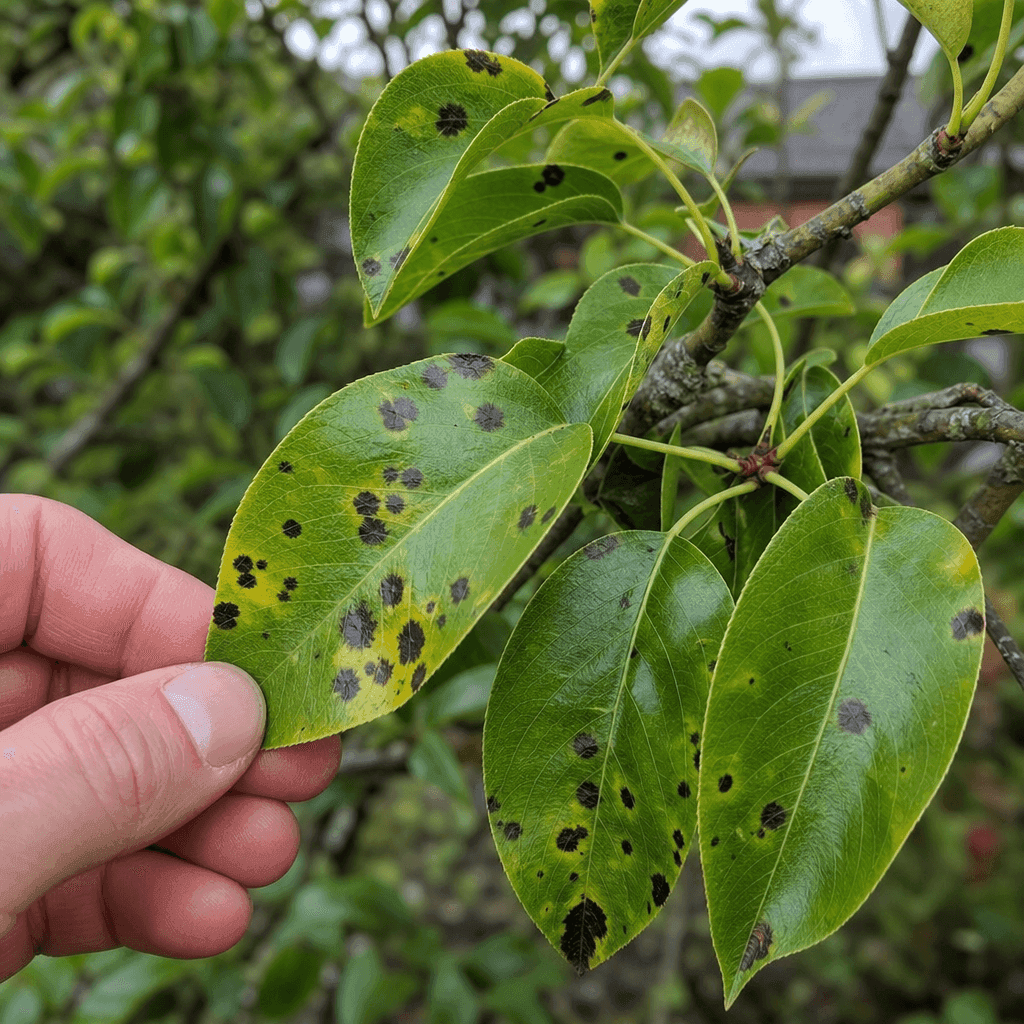
- Assume every dark spot is scab — rust and blister mite look quite different.
- Plant a new juniper next to an established pear tree.
Common questions
What are the orange spots on my pear tree leaves?
Orange spots on pear leaves are almost certainly pear rust, caused by the fungus Gymnosporangium sabinae. The disease needs a nearby juniper to complete its life cycle. The vivid orange spots appear in summer on the upper leaf surface, and brown spiky outgrowths develop underneath later. No effective amateur fungicide is available; remove badly affected leaves and check for infected junipers.
What causes black spots on pear tree leaves?
The most common cause is pear scab, a fungal disease (Venturia pyrina) that produces olive-green spots that darken and may cause early leaf drop. It spreads in wet spring and summer weather. Other causes include bacterial canker, blister mite damage and sooty mould from aphids. Black spotting is a common pattern across many plants — for example, the causes of black spots on tomato leaves and fruit overlap with several of these.
How do I treat pear scab?
There is no effective amateur fungicide for pear scab. The RHS recommends collecting and binning fallen leaves to remove overwintering spores, pruning out blistered twigs in winter, and opening the canopy to improve airflow. These measures reduce but cannot eliminate infection entirely.
Is pear rust harmful to the tree?
Pear rust weakens the tree over time by reducing photosynthesis and causing premature leaf drop, but it rarely kills an established, well-cared-for tree. Severe repeated infection over many years can reduce cropping. Removing badly affected leaves and reducing juniper hosts nearby are the main controls.
Can I spray pear trees for black spot?
The RHS does not recommend fungicide sprays for pear scab or pear rust for home gardeners. They are not reliably effective without multiple applications and can disrupt the natural predator community. Cultural controls — clearing fallen leaves, pruning and improving airflow — are the recommended approach.
Do I need to remove a juniper if my pear tree has rust?
Removing or heavily pruning junipers with rust infections on their stems reduces the spore source, but pear rust spores are airborne and can travel from neighbouring gardens. Removal helps but does not guarantee a rust-free pear tree.
Why are my pear tree leaves falling off early?
Premature leaf drop is a common symptom of pear scab. It can also follow a severe attack of pear rust, or be caused by drought stress or bacterial canker. Check the leaf surface for olive-green scabby spots or orange rust spots to identify the likely cause.
When should I prune a pear tree with canker?
Prune out bacterial canker during dry weather, ideally in summer (June to August), when infection risk is lower. Cut back to healthy wood at least 10cm beyond the edge of visible damage, and sterilise your tools between cuts.