Quick diagnosis
Match the row to what you’re seeing, then jump to the fix.
| What you see | Likely cause | Confidence | How to confirm | What to do now | Urgency |
|---|---|---|---|---|---|
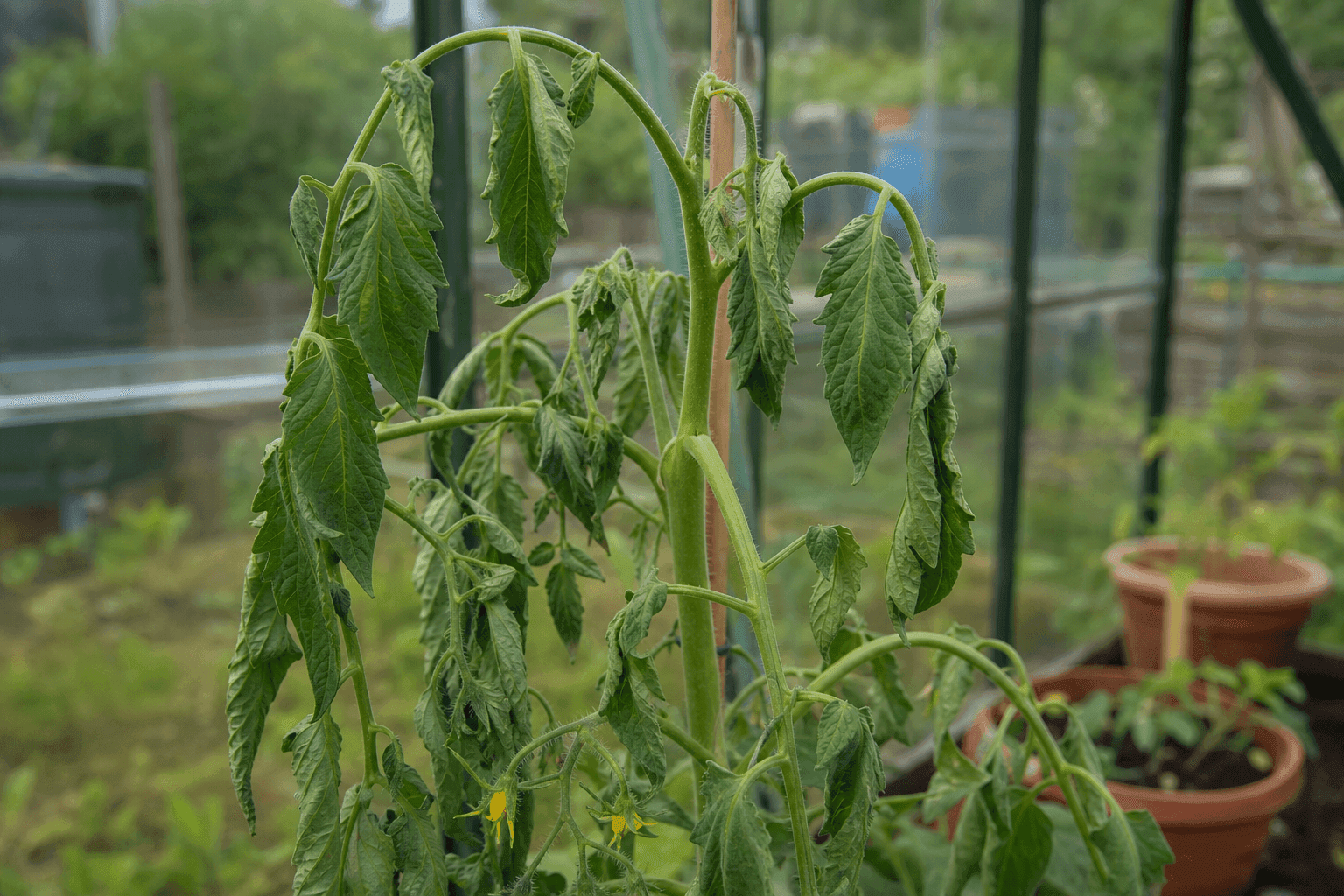
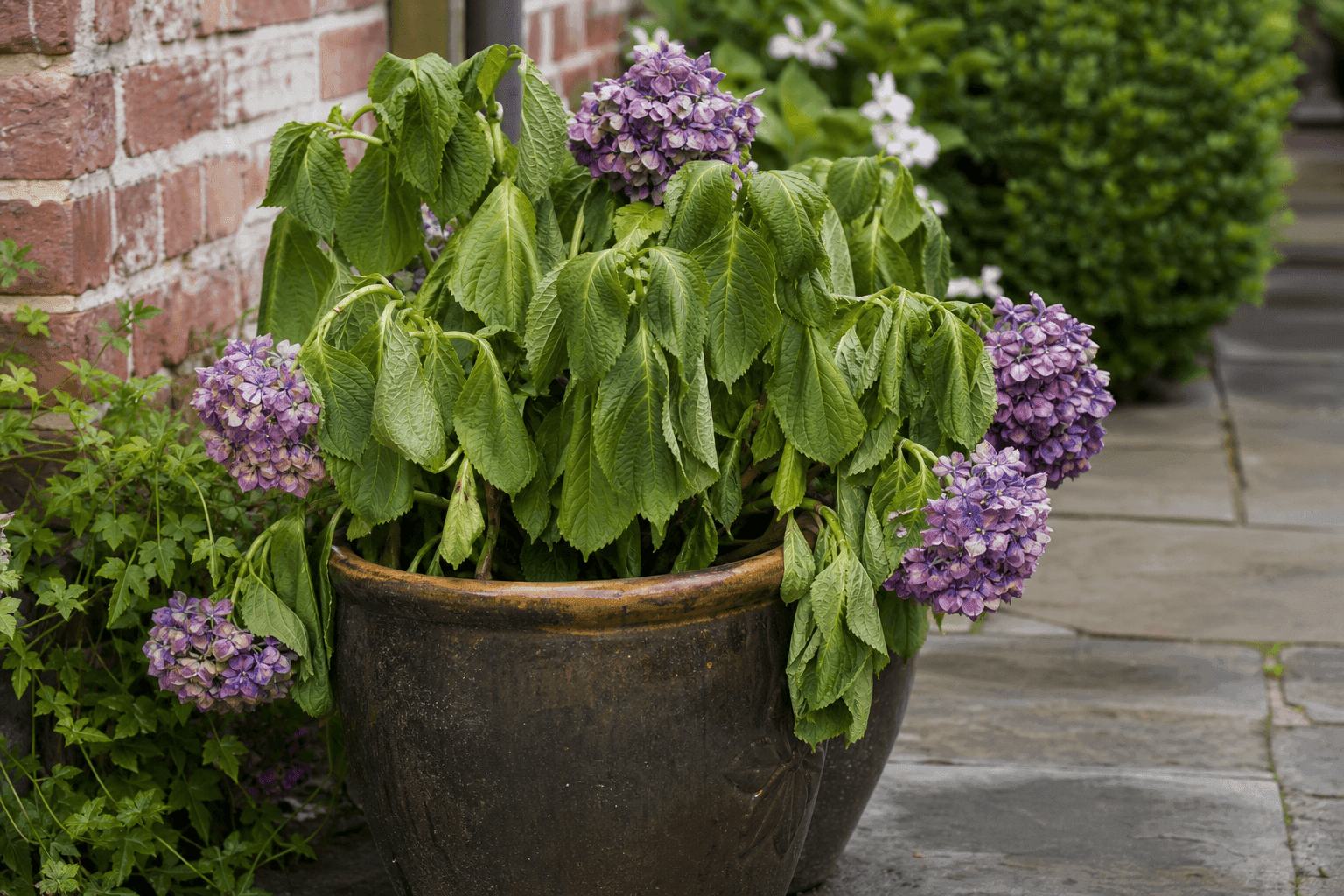
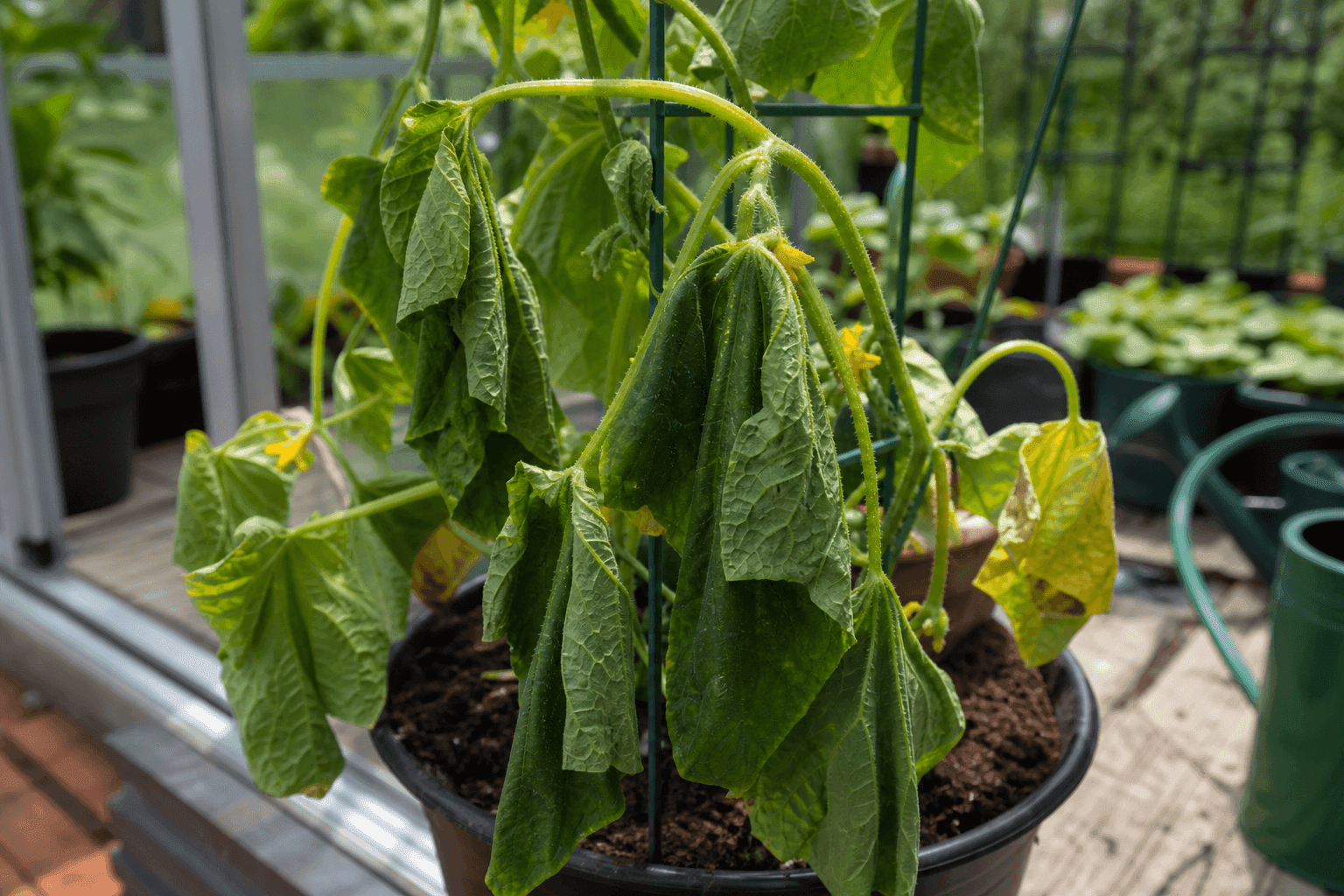
| Whole plant wilts in warm weather, compost feels dry below the surface | Underwatering / drought stress | High | Lift pot or push finger 5 cm into compost — bone dry confirms it. Plant lifts after watering. | Water slowly at the base until drainage appears; check daily in hot weather. | High |
| Plant wilts despite wet compost; pot smells sour; roots brown or mushy | Overwatering / root rot | High | Compost stays wet for days; roots are brown and soft rather than pale and firm. | Stop watering; improve drainage; repot into fresh compost if roots are salvageable. | High |
| Lower leaves yellow and wilt, plant declines despite correct watering | Verticillium wilt | High | Yellowing starts at base and moves upward; stem cross-section may show brown vascular streaking. | Remove and bin the plant; do not compost; rotate crops; grow resistant varieties. | High |
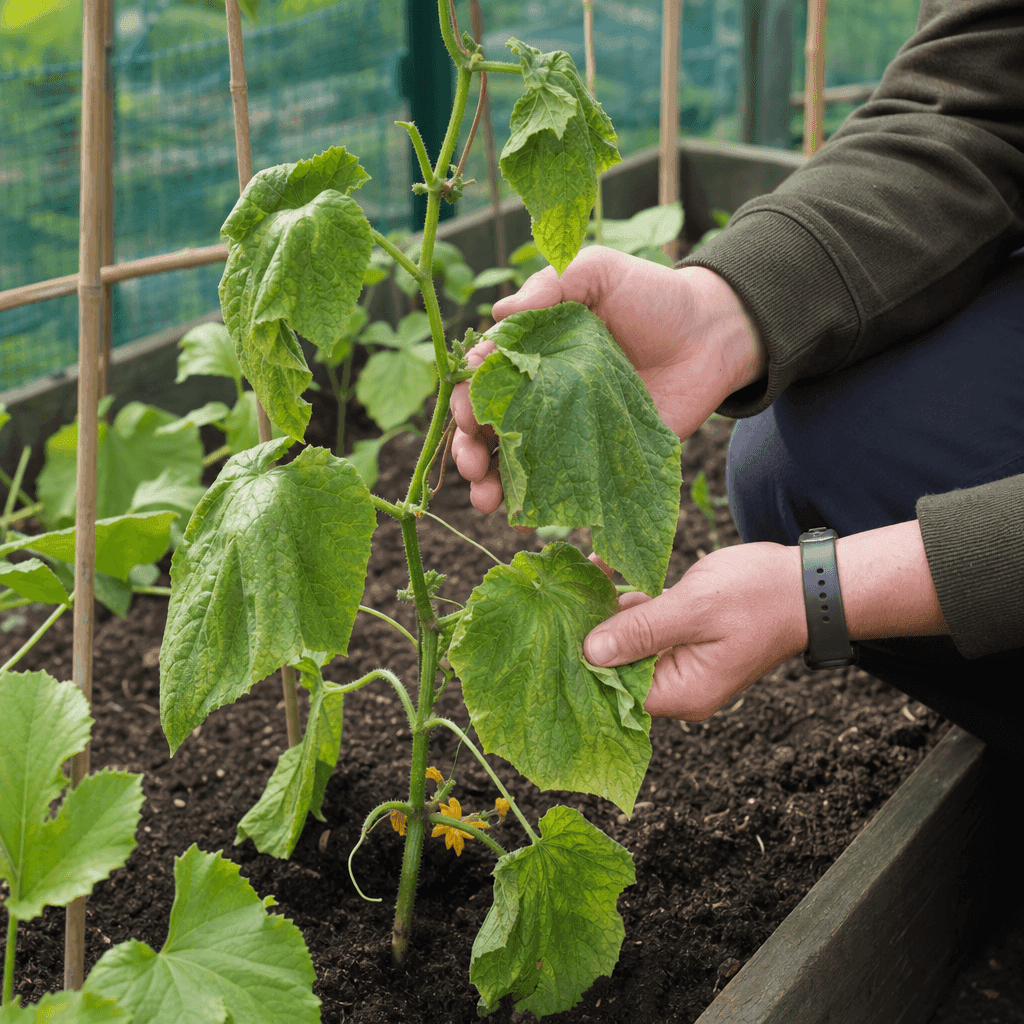
| Mosaic mottling, distorted or puckered leaves, stunted growth before wilting | Cucumber mosaic virus (CMV) | Medium | Leaves have yellow-green mosaic pattern and are misshapen; aphids may be present on nearby plants. | Remove and bin the plant; control aphids on surrounding plants; choose resistant varieties. | High |
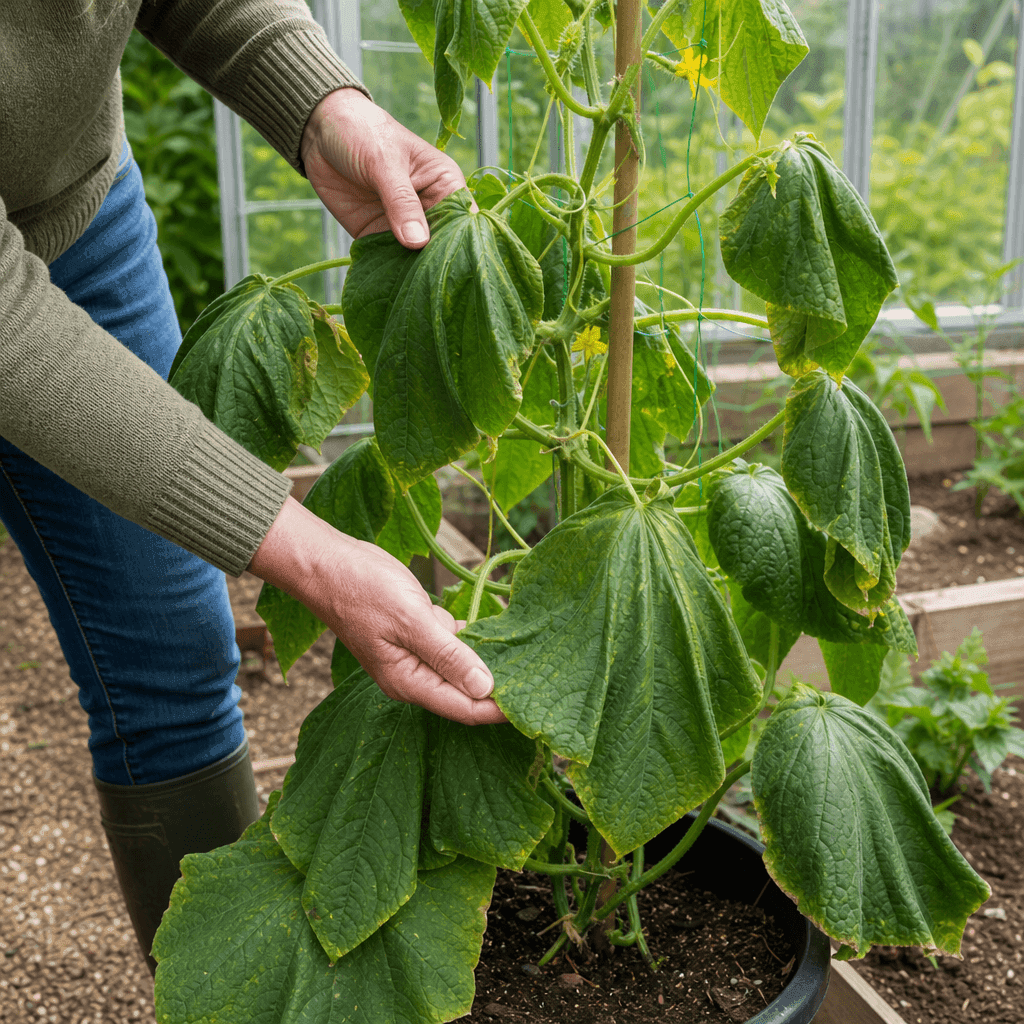
| Leaves curl or droop in afternoon heat but recover by evening | Heat or transpiration stress | Medium | Compost is moist; plant perks up overnight; damage is worst in peak afternoon heat. | Shade the greenhouse or pot in the afternoon; ensure consistent watering; ventilate. | Low–medium |
| Newly planted cucumber droops after being moved or potted on | Transplant shock | Medium | Wilting began within days of transplanting; roots were disturbed; wind or sun exposure increased. | Water rootball well; shade from direct sun for a few days; avoid feeding until growth resumes. | Low–medium |
| One branch or side collapses while the rest of the plant looks fine | Stem or root damage | Medium | Check for a snapped or kinked stem, slug damage, or a tight tie cutting into the stem. | Support injured stems; loosen tight ties; remove fully snapped branches cleanly. | Medium |
The causes, in detail
Underwatering and drought stress
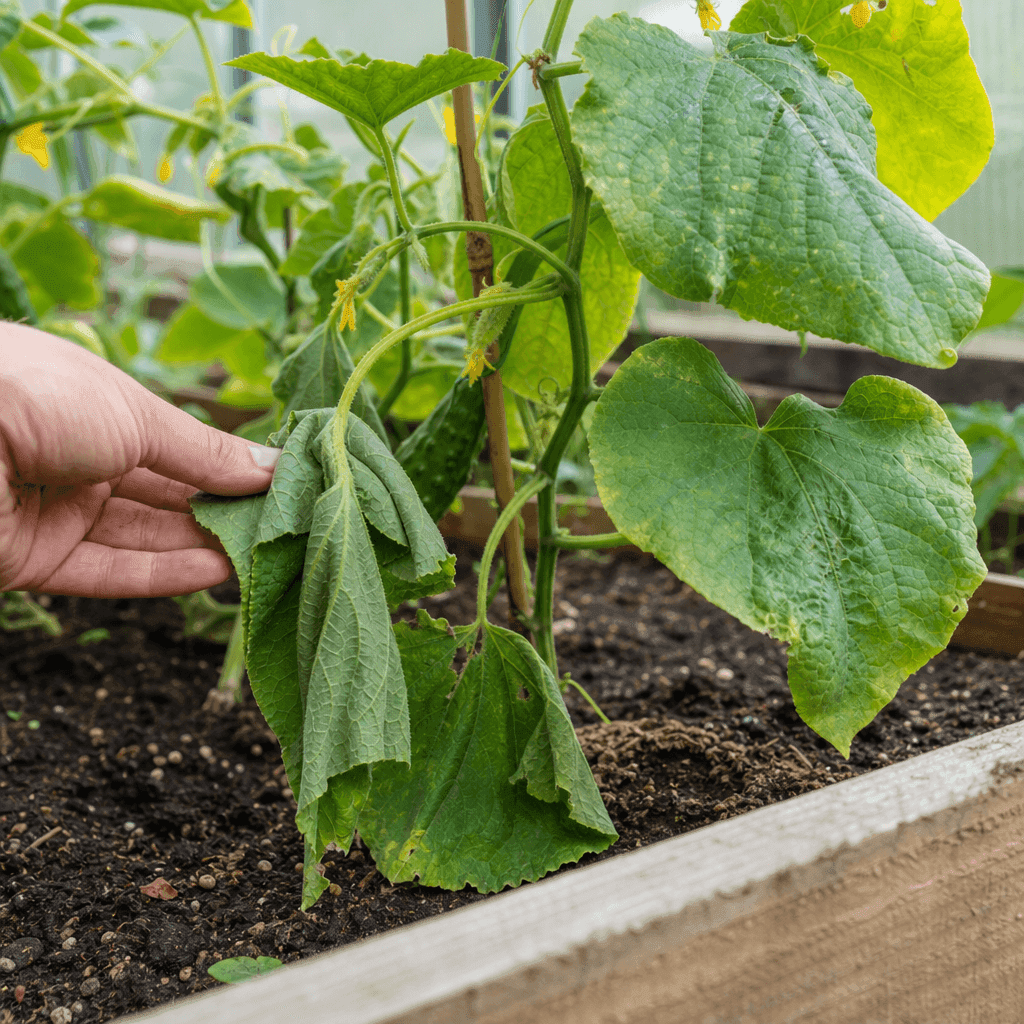
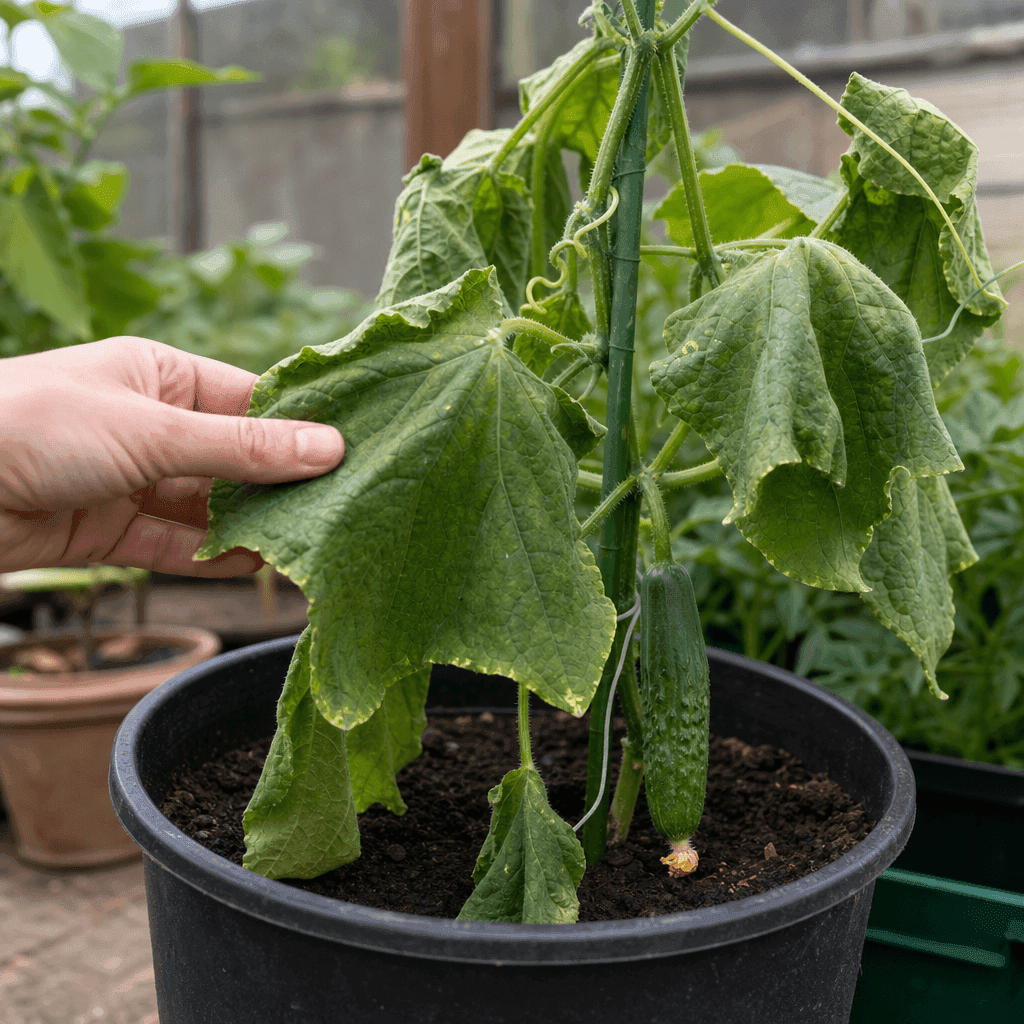
Most likelyCucumbers are among the thirstiest vegetables — they are about 96% water and have large leaf surfaces that lose moisture quickly in warm, ventilated greenhouses and on exposed patios. A plant in a 30-litre pot or a standard grow bag can need 2–3 litres per day in high summer. The RHS growing guide emphasises that cucumbers need consistently moist compost, especially once fruit is setting. Irregular watering — or forgetting to check on a hot day — is the most common cause of sudden wilting in UK greenhouse and patio cucumbers.
- Push a finger or narrow trowel 5–8 cm into the compost near the roots.
- Lift the pot — a very light pot confirms the compost has dried out completely.
- In a grow bag, check near each plant individually, as one plant's root zone can be dry while another's is damp.
- The plant should recover noticeably within a few hours of a proper soak.
- Water slowly at the base until drainage appears from the pot holes.
- In grow bags, water around each plant rather than pouring into one spot.
- If the compost has shrunk from the pot edge, water in stages — pour, wait, pour again — until fully rehydrated.
- Check moisture daily in warm weather; cucumbers in small pots or grow bags rarely need to go more than 24 hours without water in high summer.
- Mulch outdoor soil around the base to reduce evaporation.
Stop it coming back:Wilted leaves from underwatering can lift within a few hours of a proper soak. Leaves that have crisped will not repair, but new growth should look healthy once watering is steady.
water over the leaves in warm, humid conditions — this encourages fungal diseases. Do not feed a drought-stressed plant until it has been rehydrated.
Overwatering and root rot
Most likelyA cucumber wilting in wet compost is in a more serious position than one wilting in dry compost. When compost stays saturated, roots are starved of oxygen and begin to break down, allowing pathogens to move in. Root rot is common in pots and grow bags that have been watered on a fixed schedule without checking the actual moisture level, and in cold spring weather when roots are less active. Sour-smelling, dark compost and brown, soft roots confirm the diagnosis.
- The compost smells sour or musty when you push a finger into it.
- The pot is heavy and drainage holes may be partially blocked.
- The roots are brown, slimy or soft rather than pale and firm.
- The plant stays limp even in cool conditions when normally it would recover.
- Stop watering immediately.
- Check drainage holes are open and not blocked by compacted compost or a saucer.
- If the plant is in a pot, remove it and inspect the roots — trim any dead, brown roots cleanly with sterilised scissors.
- Repot into fresh, free-draining compost if more than a third of the roots are affected.
- Allow compost to partially dry before resuming cautious watering.
assume that wilting means thirst — in wet compost, adding more water accelerates root death. Do not add fertiliser until the plant has visibly stabilised.
Verticillium wilt
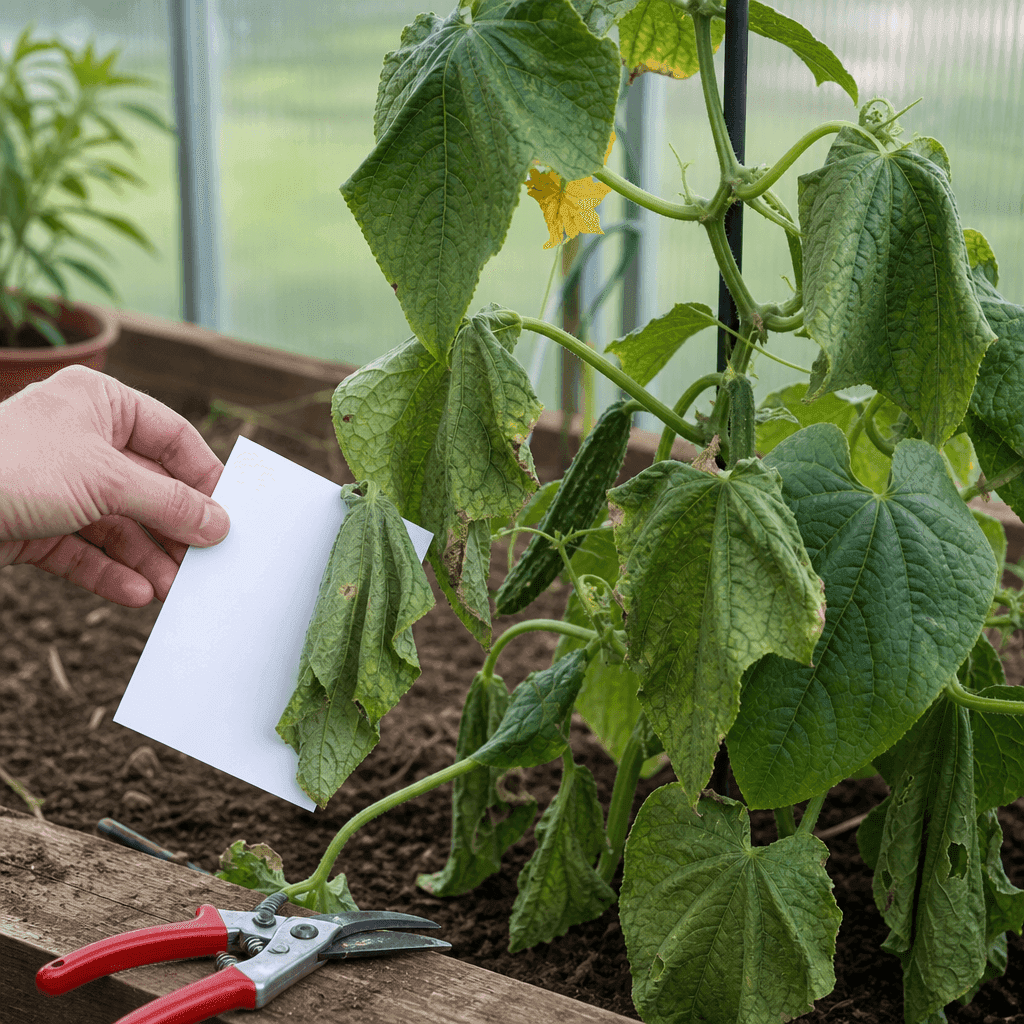
Most likelyVerticillium wilt, caused by the soil-borne fungus Verticillium albo-atrum, is the most likely fungal wilt to affect cucumbers in UK gardens. The fungus physically blocks the water-carrying vessels inside the stem, so the plant wilts and declines even when the soil has adequate moisture. The RHS describes it as one of the most damaging soil-borne diseases for a wide range of vegetable and ornamental crops. Once inside the plant, there is no cure. Affected plants show progressive yellowing from the lower leaves upwards, and may wilt on one side first. Cutting across a lower stem may reveal brown, discoloured vascular tissue.
- Wilting progresses from lower to upper leaves over days or weeks.
- The plant fails to recover overnight despite moist soil.
- Cutting a lower stem crossways reveals brown or tan discolouration in the woody core.
- Other cucurbit crops nearby may also be affected.
- Remove the entire plant including as many roots as possible and bin them — do not compost.
- Do not replant cucumbers, courgettes, squash or melons in the same soil immediately.
- Rotate crops — avoid growing cucurbits in that spot for at least two or three seasons.
- Choose resistant or grafted cucumber varieties where available.
- In a greenhouse border, replacing the soil or using growing bags of fresh compost reduces carry-over risk.
compost affected plant material — Verticillium can persist in cool home compost and re-infect future crops. Do not save seed from wilted plants.
Cucumber mosaic virus (CMV)
PossibleCucumber mosaic virus (CMV) is one of the most common plant viruses in the UK and affects a wide range of plants beyond cucumbers. In cucumbers it causes a yellow-green mosaic mottling on leaves, puckering, distortion, and stunted growth that can precede collapse. The RHS notes that CMV is spread by aphids and cannot be cured once a plant is infected. Research from the University of Illinois shows that when CMV infection is combined with root rot caused by Pythium or Fusarium, plants can collapse and die within 7–10 days.
- Leaves show a mosaic of light and dark green or yellow patches.
- New growth is puckered, narrow or distorted.
- Fruit is misshapen, may be mottled or pale.
- Aphids are present on the plant or nearby plants.
- Remove and bin infected plants — there is no cure for CMV.
- Control aphids immediately on remaining plants to reduce further spread.
- Do not compost infected material.
- Choose CMV-resistant cucumber varieties such as those labelled CMV-resistant in seed catalogues.
- Keep garden tools clean — CMV can also spread via sap on hands and secateurs.
replant another cucumber in the same compost — aphids may still be present and virus may persist in plant debris.
Heat and transpiration stress
PossibleCucumbers grow best between 18–30°C and are sensitive to sharp heat in enclosed greenhouses, against south-facing walls and in black plastic pots on paving. Leaf wilting or curling in the afternoon — with recovery by evening — is often a straightforward stress response rather than a root problem. Ventilation is the most important factor in a UK greenhouse during summer.
- The plant droops in the afternoon and recovers after temperatures fall.
- The compost is adequately moist despite the wilting.
- The greenhouse or growing area is poorly ventilated or very hot.
- Open greenhouse vents and doors early each morning.
- Provide temporary shading using shade paint or fleece during heatwaves.
- Water in the morning so the root zone has moisture before peak heat.
- Mulch outdoor plants to keep the root zone cooler.
over-water in response to heat wilt — if the compost is already moist, adding more water risks root oxygen deprivation.
Transplant shock
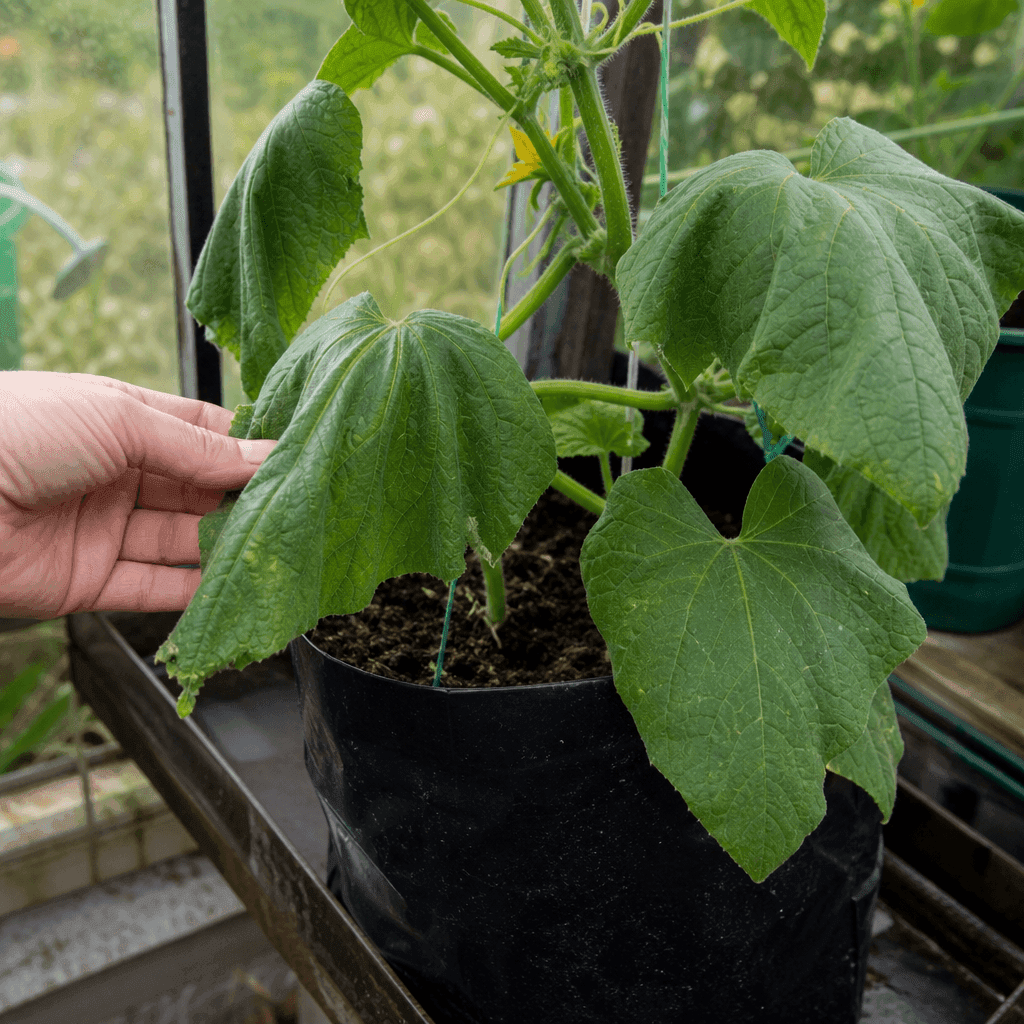
PossibleCucumbers resent root disturbance. Young plants moved from indoors to a greenhouse, grow bag or outdoor bed often wilt for a day or two as the roots adjust to their new environment. Wind, cold nights, sudden temperature changes, and handling of roots during planting all add to the stress. UK gardeners planting out in May or early June may hit a cold spell that sets plants back significantly.
- Wilting began within hours or a day or two of transplanting.
- The rootball was disturbed during planting.
- The plant was not hardened off before being moved outside.
- Water the rootball thoroughly after planting.
- Provide temporary shade from strong sun for two to three days.
- Protect from cold nights with fleece until the plant settles.
- Avoid feeding for one to two weeks after transplanting.
Stop it coming back:Mild transplant wilt typically resolves in 24–72 hours. Harden plants off over 7–10 days before planting outdoors to reduce the shock.
uproot and replant if the plant seems slow to settle — repeated disturbance makes recovery worse.
Stem damage and physical injury
PossibleA cucumber stem is hollow and surprisingly fragile. Snapping, kinking against a cane, slug damage at the base, or a tie cutting into the main stem can cut off water and nutrient flow to part of the plant, causing sudden one-sided or branch-specific wilting that looks alarming but has a straightforward mechanical cause.
- One branch or one side of the plant wilts while the rest looks fine.
- Follow the wilted section down to the stem — look for a kink, split, tight tie or slug damage at soil level.
- There is no mosaic patterning or vascular discolouration in the stem.
- Loosen any ties that are cutting into the stem.
- Support kinked stems with a light splint if they are still partly connected.
- Remove cleanly snapped branches with sterilised scissors.
- Check nightly for slug damage at the base of the stem and use appropriate controls.
tie cucumber stems tightly to a cane or use wire — use soft ties and check them weekly as stems grow quickly.
Still not sure?
Work down these branches — the first one that matches is your answer.
What not to do
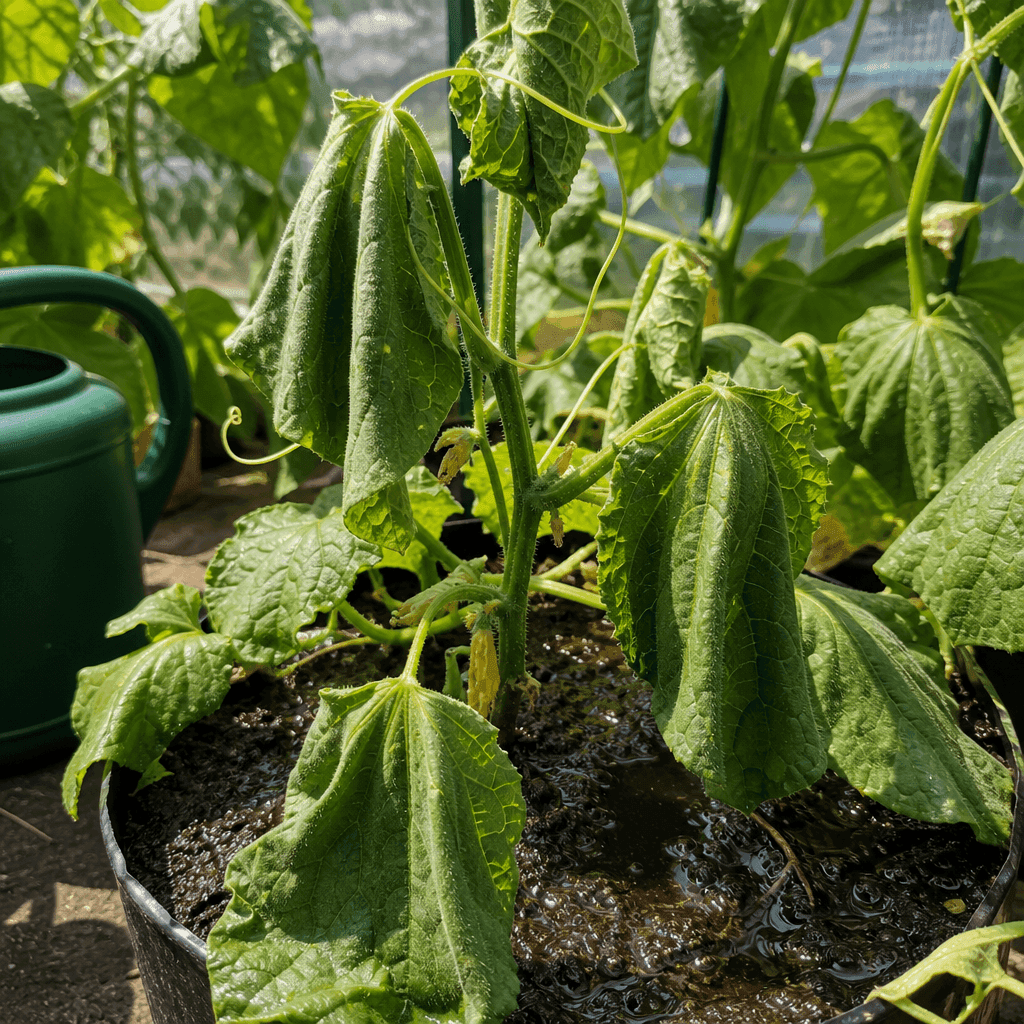
- Water more when the compost is already wet — wilting in wet soil means root damage.
- Feed a wilted plant before rehydrating it or diagnosing the cause.
- Compost plants suspected of Verticillium wilt or cucumber mosaic virus.
- Ignore the lower leaves — progressive yellowing from the bottom up is an early wilt disease warning.
- Use the same grow bag or border soil for cucumbers in successive years without rotation.
Common questions
Why is my cucumber plant wilting but the soil is wet?
Wilting in moist or wet soil usually means the roots cannot take up water properly. The most likely causes are root rot from overwatering, Verticillium wilt blocking the vascular system, or cold-damaged roots in early-season growing. Check that roots are pale and firm rather than brown and mushy.
Can a wilting cucumber plant recover?
Yes, if the cause is underwatering, heat stress or mild transplant shock. These can improve within hours to a few days. Cucumber plants with Verticillium wilt, severe root rot or cucumber mosaic virus rarely recover and are best removed.
How often should I water cucumbers in a greenhouse?
Check daily in warm weather, particularly in pots and grow bags. A standard grow bag may need 2–3 litres per plant per day in high summer. Check the compost before watering rather than watering on a fixed schedule.
What does cucumber mosaic virus look like?
CMV causes a mosaic of light and dark green or yellow patches on leaves, which become distorted and puckered. Growth is stunted and fruit is often misshapen or mottled. It is spread by aphids. There is no cure — remove and bin infected plants.
What is the most common wilt disease of cucumbers in the UK?
Verticillium wilt, caused by Verticillium albo-atrum, is the most likely fungal wilt in UK conditions. It blocks the vascular system of the plant and is soil-borne. Crop rotation and resistant varieties are the main defences.
Should I remove a wilting cucumber plant?
Remove it if it fails to recover after correct watering, if lower leaves are progressively yellowing, if the stem shows brown vascular streaking, or if leaves are mottled and distorted. These signs point to incurable wilt disease or virus.
Why did my cucumber wilt overnight after planting?
Sudden wilt after planting is almost always transplant shock. Roots were disturbed, the compost may have been inadequately watered before or after planting, or the plant was exposed to wind or cold. Water the rootball, shade from strong sun and protect from wind for a few days.