Quick diagnosis
Match the row to what you’re seeing, then jump to the fix.
| What you see | Likely cause | Confidence | How to confirm | What to do now | Urgency |
|---|---|---|---|---|---|
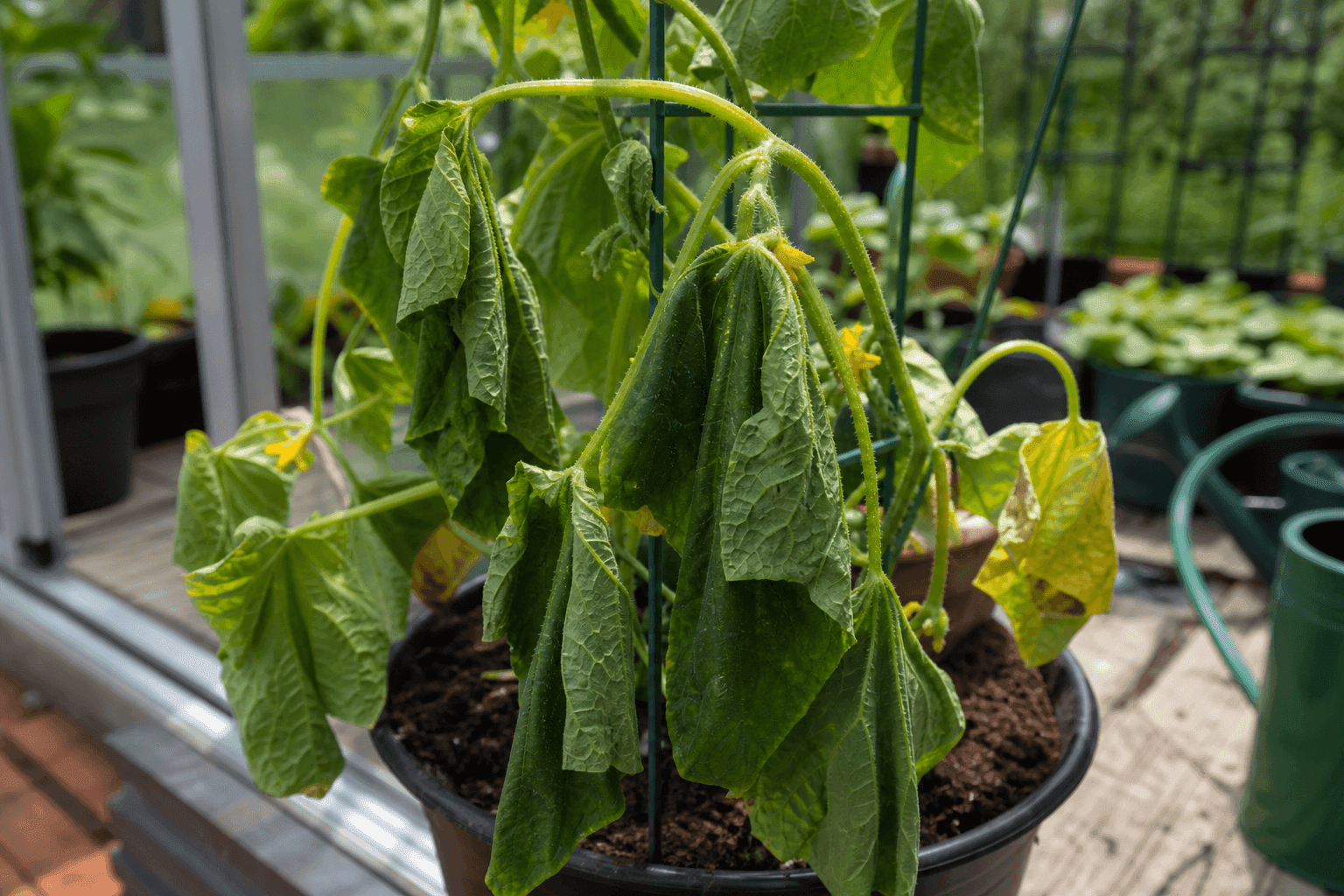
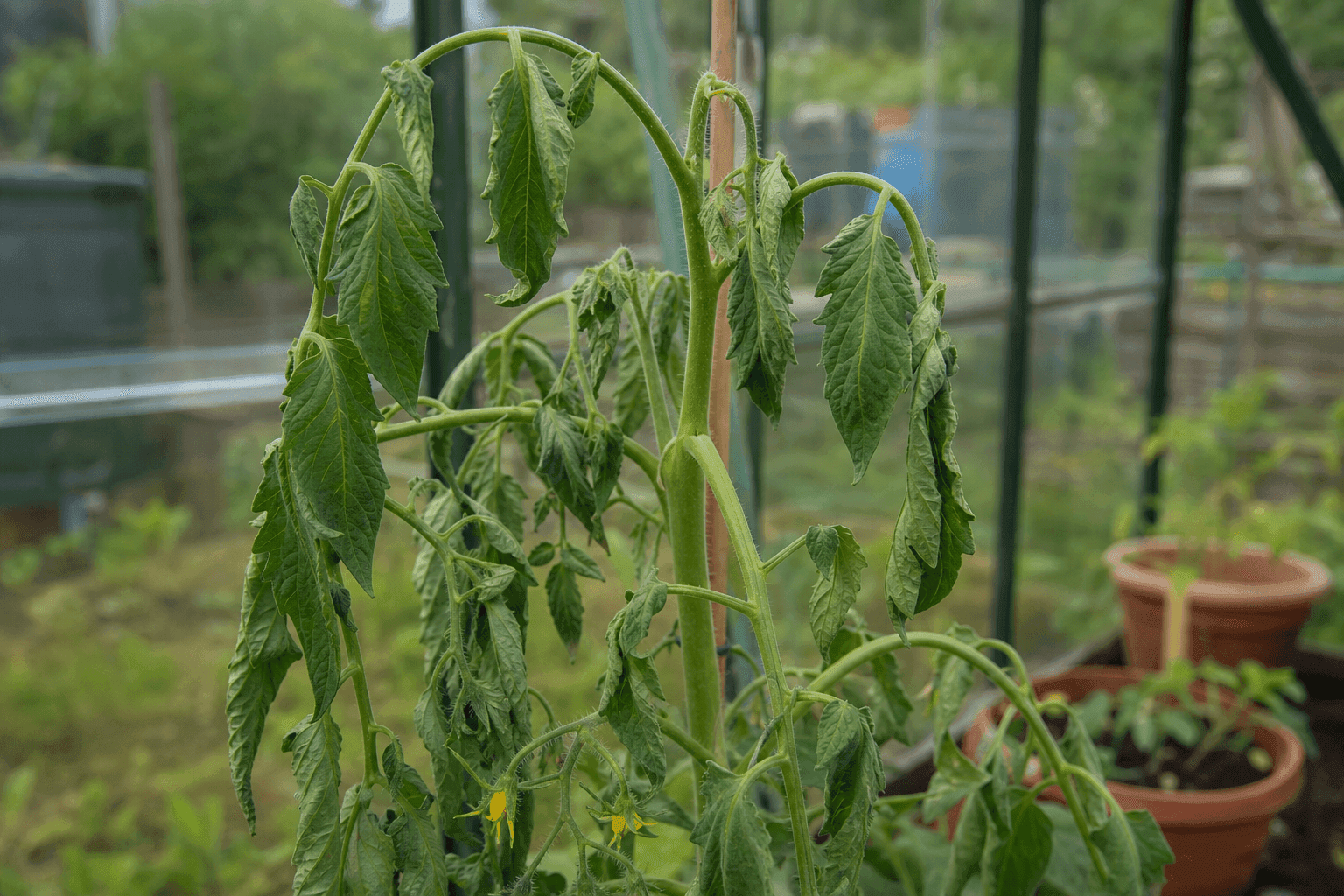
| Whole plant limp; compost dry 5–8 cm down; pot feels light | Underwatering / dry compost | High | Soil dry at root depth; compost may have pulled away from the pot edge | Water slowly and deeply at the base; repeat after 15–20 minutes if very dry | High |
| Plant droops in hot afternoon sun but recovers by evening | Temporary heat stress | High | Soil is moist; plant is upright in the morning; wilts only at peak heat | Ventilate greenhouse; water in the morning; add mulch; shade in heatwaves | Low–medium |
| Wilting with wet, sour or saturated compost; pot heavy; pot base standing in water | Overwatering / root rot | High | Roots brown or smell bad; drainage holes blocked; compost does not dry between waterings | Stop watering; clear drainage; repot if roots are rotted | High |
| Newly planted tomato wilts within hours or days of planting out | Transplant shock | High | Plant was recently moved; roots were disturbed; exposure to wind, cold or strong sun increased | Water rootball; shade briefly; protect from wind; do not feed until established | Medium |
| Lower leaves yellow and wilt from the bottom up; plant declines despite moist soil | Fusarium or Verticillium wilt | Medium | Yellowing starts low, may be one-sided; stem cross-section shows brown vascular streaking | Remove and bin plant and roots; rotate crops; use resistant varieties | High |
| Sudden whole-plant collapse while leaves remain relatively green | Bacterial wilt or rapid root failure | Medium | Collapse is fast; soil moisture seems adequate; other plants nearby unaffected initially | Remove and bin plant; do not compost diseased material | High |
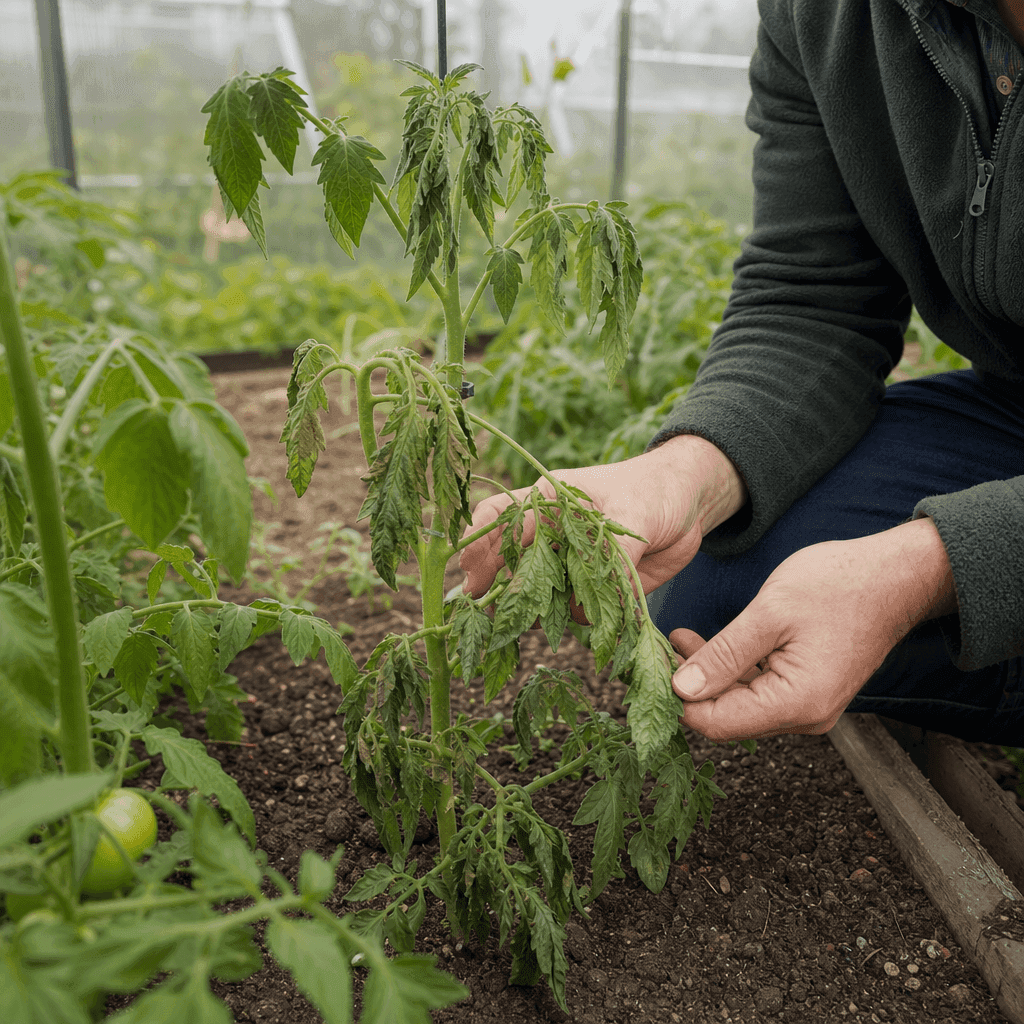
| One branch or one side wilts while the rest of the plant looks fine | Stem injury or root damage | Medium | Check for a snapped stem, tight tie, slug damage at the base, or a kink in the cane | Loosen ties; support injured stems; remove snapped branches cleanly | Medium |
| Leaves curl upward; plant otherwise green and growing well | Physiological leaf roll | High | Curling follows heat, wind, over-pruning or irregular watering; no spots or insects | Even out watering; avoid removing too many side shoots at once | Low |
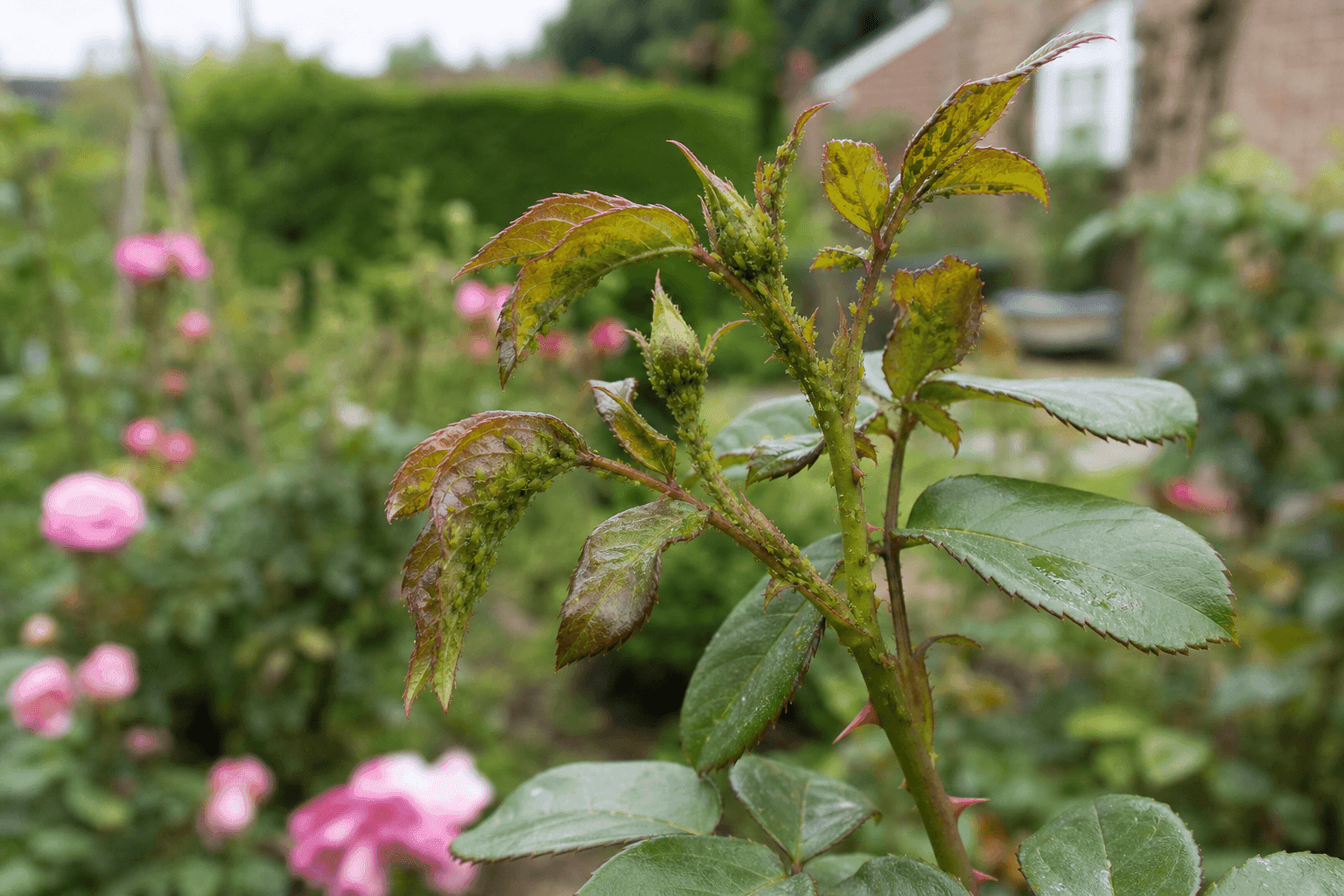
| Wilting combined with sticky leaves, webbing or distorted new growth | Pest pressure | Medium | Check undersides of leaves for aphids, whitefly or spider mites | Wash off; remove worst leaves; use biological controls in greenhouse | Medium |
The causes, in detail
Underwatering and dry compost
Most likelyDry compost is the single most common reason a UK tomato plant wilts — particularly in pots, grow bags and greenhouse beds in warm weather. A standard grow bag needs 2–3 litres per plant per day in high summer. The RHS notes that inconsistent water supply is also the primary cause of blossom end rot, so steady watering matters for fruiting as well as wilting. Compost that has dried right out may repel water initially, causing it to run down the edge of the pot rather than soaking through the rootball.
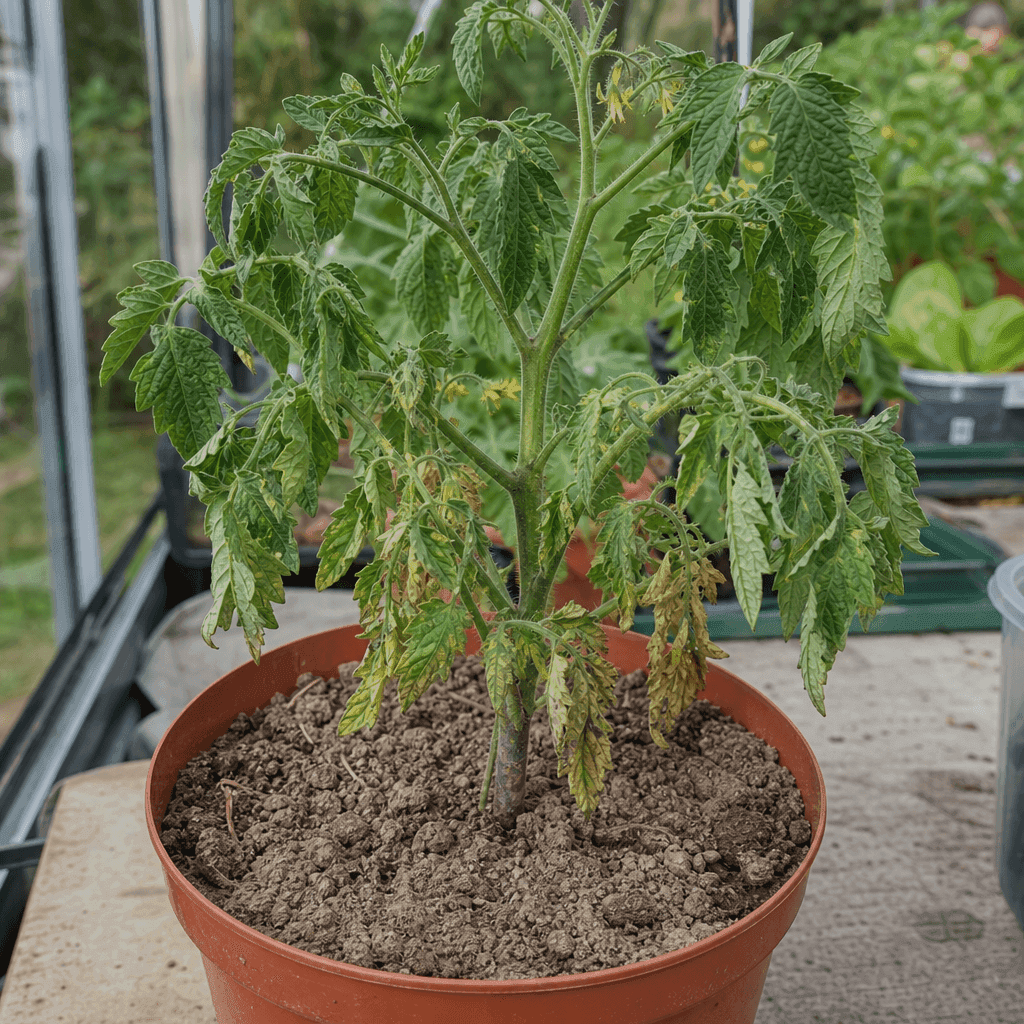
- Push a finger 5–8 cm into the compost — bone dry confirms underwatering.
- Lift the pot — a very light pot is a strong clue.
- In a grow bag, check near each plant individually.
- The plant should perk up noticeably within a few hours of a proper soak.
- Water slowly at the base — pour, wait, pour again if the compost was very dry.
- In grow bags, water around each plant rather than in one spot.
- Add mulch to outdoor soil to slow evaporation.
- Move small containers out of full afternoon sun if they are drying out daily.
Stop it coming back:A thirsty tomato can recover within hours. Scorched or crisped leaves will not repair, but new growth should look normal once watering is steady.
give a quick surface splash and assume the plant is adequately watered — a quick splash wets only the top centimetre of compost. Do not feed a wilted dry plant before rehydrating it.
Temporary heat stress
Most likelyTomatoes wilt in the hottest part of the day — particularly in a greenhouse, against a sunny south-facing wall, or in a black plastic pot on paving. This is often a normal stress response when the rate of water loss through the leaves temporarily exceeds what roots can supply. The RHS notes that some leaf roll and drooping in hot weather is a physiological response rather than a sign of disease or root failure. The key diagnostic is timing: a plant fine in the morning, wilting at peak heat, and recovering by evening is almost certainly dealing with heat stress, not a root problem.
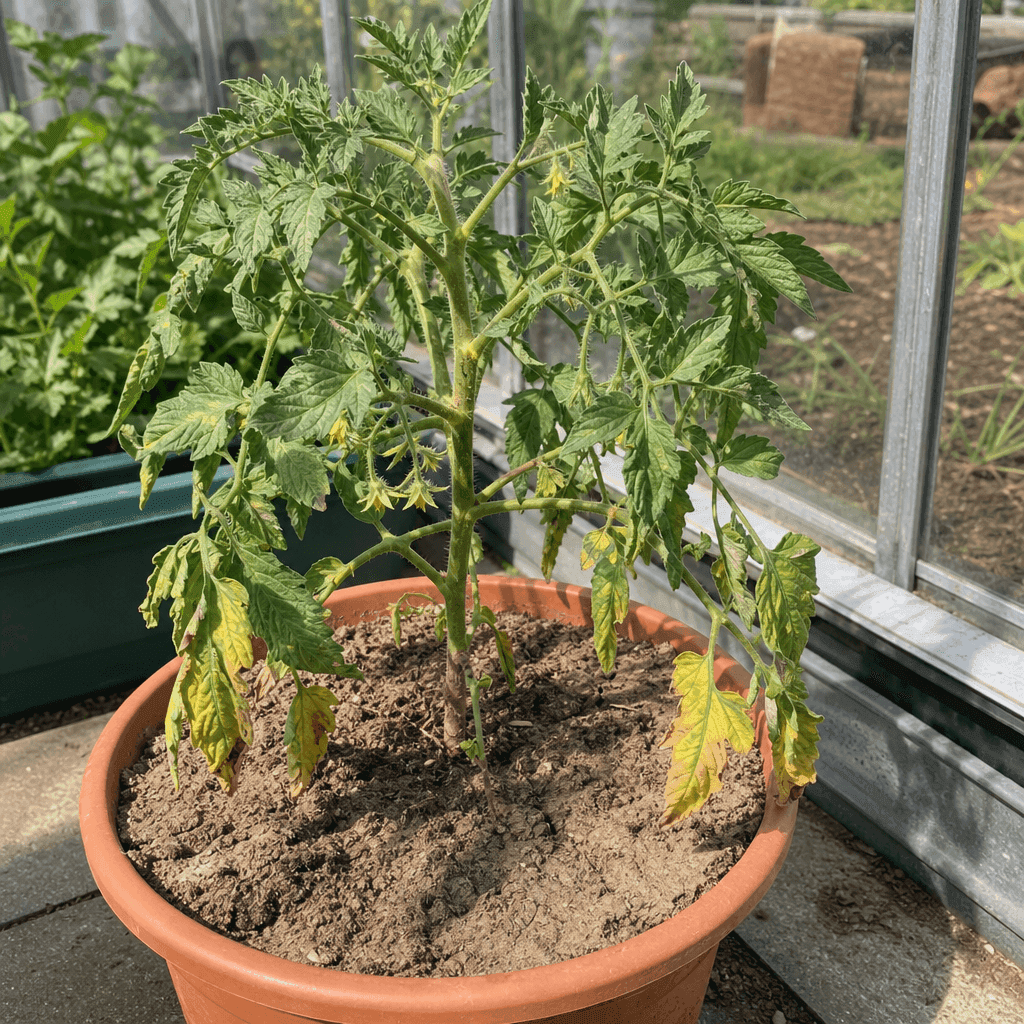
- Check at three times: morning (upright), mid-afternoon (wilted), evening (recovering).
- Compost is moist at root depth.
- The greenhouse is hot and poorly ventilated, or the plant is in a very exposed position.
- Ventilate greenhouses early — open vents and doors before temperatures peak.
- Water in the morning so the root zone has moisture before the hottest part of the day.
- Use temporary shade cloth during heatwaves, especially for newly planted tomatoes.
- Mulch outdoor soil to keep the root zone cooler.
Stop it coming back:Temporary heat wilt should resolve by evening. Repeated daily heat wilt weakens flowering and fruit set.
over-water in response to afternoon heat wilt — if the compost is already moist, more water will cause root oxygen deprivation.
Overwatering, poor drainage and root rot
Most likelyA tomato wilting in wet compost is a more urgent situation than one wilting in dry compost. When compost is kept consistently saturated, roots are denied oxygen and begin to rot. Rotted roots cannot transport water or nutrients, so the plant wilts despite the compost being wet — and more watering makes it worse. This is a common mistake in pot and grow bag growing, especially in cool, overcast UK summers when evaporation slows and compost stays wet much longer than expected.
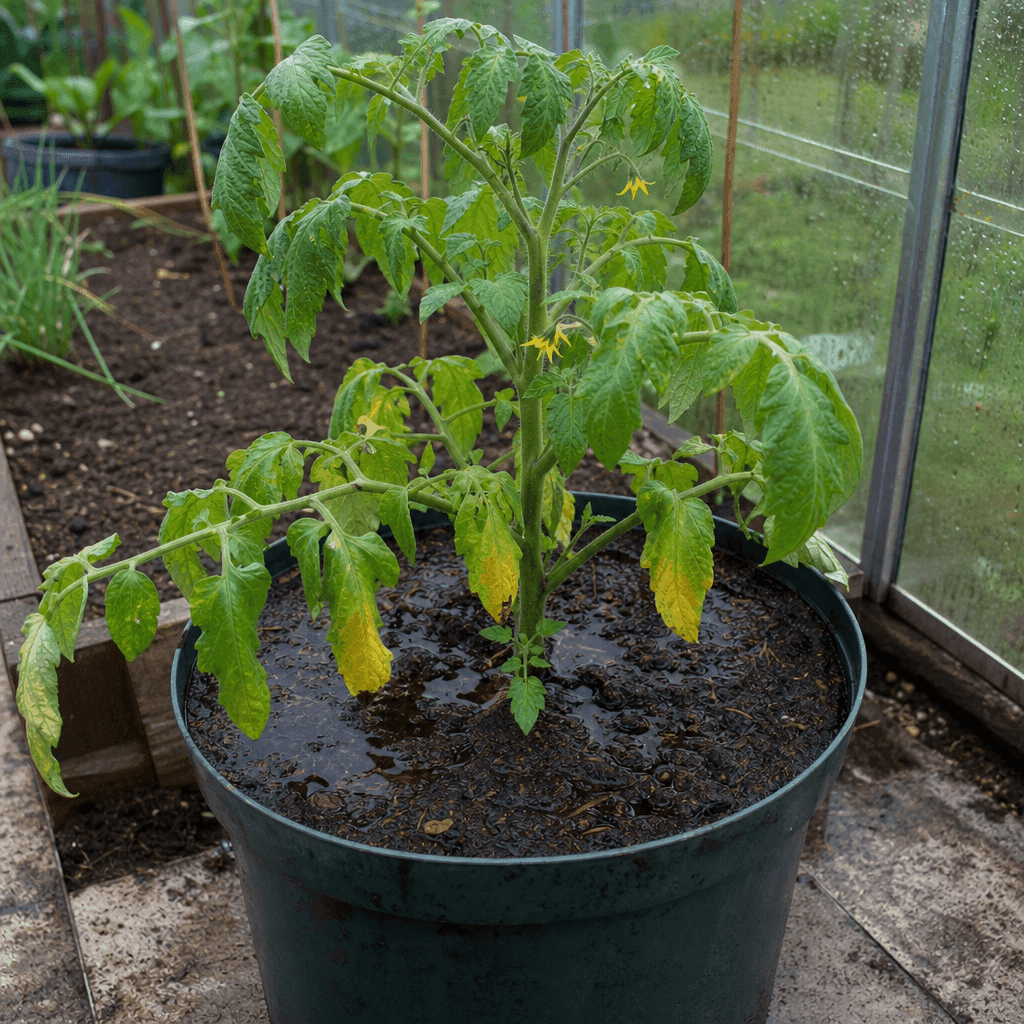
- The compost smells sour or stale below the surface.
- The pot is heavy and drainage holes may be blocked.
- Roots are brown, slimy or smell bad rather than pale and firm.
- Leaves may be yellowing as well as wilting.
- Stop watering and allow the top few centimetres to dry.
- Empty any saucer and raise the pot on feet so air can reach the drainage holes.
- If roots are rotted, remove the plant from the pot, trim dead roots with sterilised scissors and repot into fresh free-draining compost.
- In the ground, avoid planting tomatoes in cold, wet soil and improve drainage before next season.
Stop it coming back:Mild overwatering can improve within a few days if caught early. Severe root rot is very difficult to recover from, especially if the stem base has darkened.
continue watering because the leaves are wilted — in wet, airless compost, more water accelerates root death. Do not add fertiliser to rotting roots.
Transplant shock after planting out
Most likelySeedlings and young plants wilt soon after moving from a windowsill, greenhouse bench or garden centre pot into their final position. Wind, bright sun, cold nights, and root disturbance during planting all contribute. UK gardeners planting out in May may encounter unexpected cold spells, and plants hardened off in a frost-free greenhouse are often not ready for the cooler night temperatures outside. The shock typically resolves within 24–72 hours if conditions are stable.
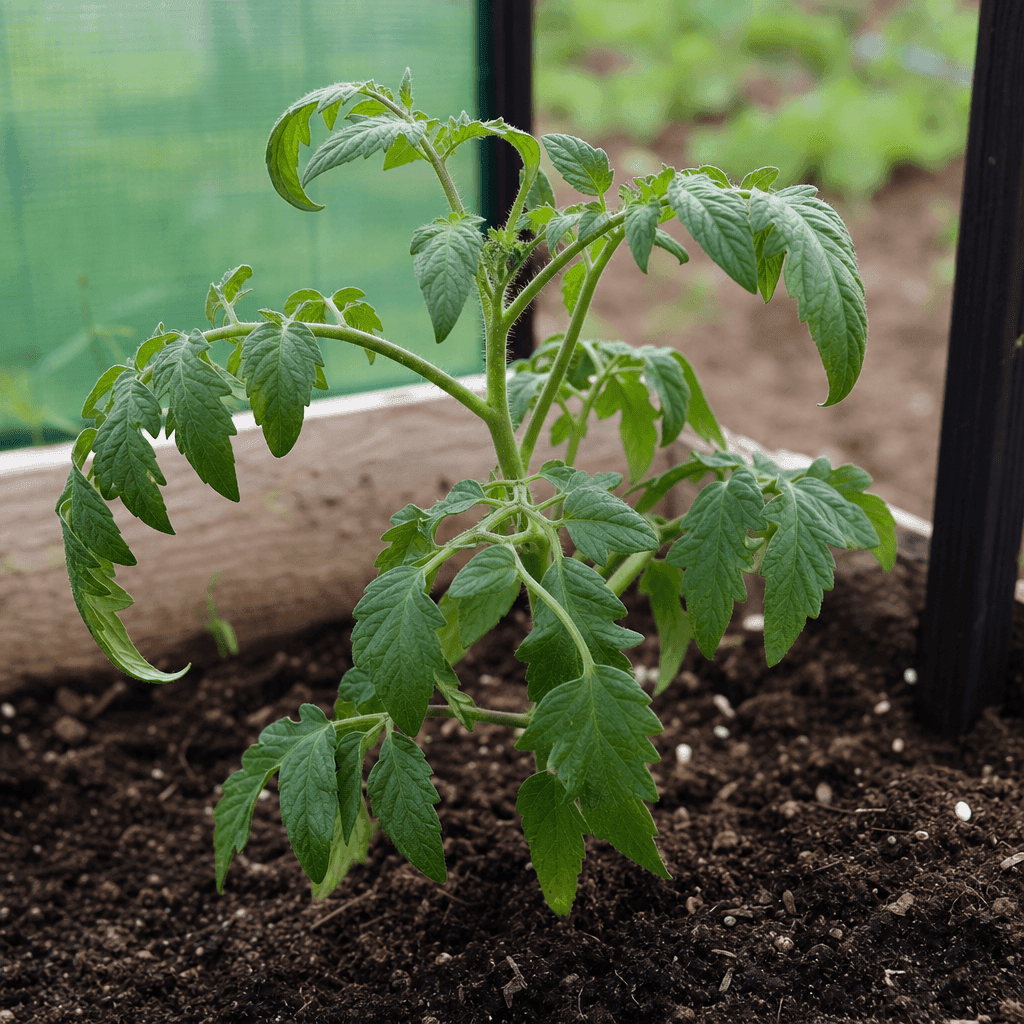
- Wilting started within hours or a day or two of transplanting.
- The plant was not hardened off gradually before being planted out.
- Wind, sun or root disturbance were factors during the move.
- Water the rootball thoroughly.
- Provide temporary shade for one to two days in hot sun.
- Protect from wind — a fleece or stake helps.
- Do not feed for one to two weeks after transplanting.
- Harden off next time: increase outdoor exposure gradually over 7–10 days before planting out.
Stop it coming back:Mild transplant wilt usually resolves in 24–72 hours. Growth may pause for a week while roots settle into new compost.
keep lifting the plant to inspect the roots — repeated disturbance makes recovery worse. Do not plant tomatoes outside before the last frost date for your area.
Fusarium and Verticillium wilt
PossibleFusarium wilt (Fusarium oxysporum f.sp. lycopersici) and Verticillium wilt (Verticillium albo-atrum / V. dahliae) are soil-borne fungal diseases that colonise the vascular system of the tomato plant, physically blocking water transport. The Nebraska University Extension describes the characteristic signs as yellowing starting on lower leaves, progressing upward, often more severe on one side of the plant, with the plant failing to recover overnight despite adequate moisture. Cutting across the lower stem reveals brown discolouration in the vascular tissue. These are difficult to eradicate from soil once established.
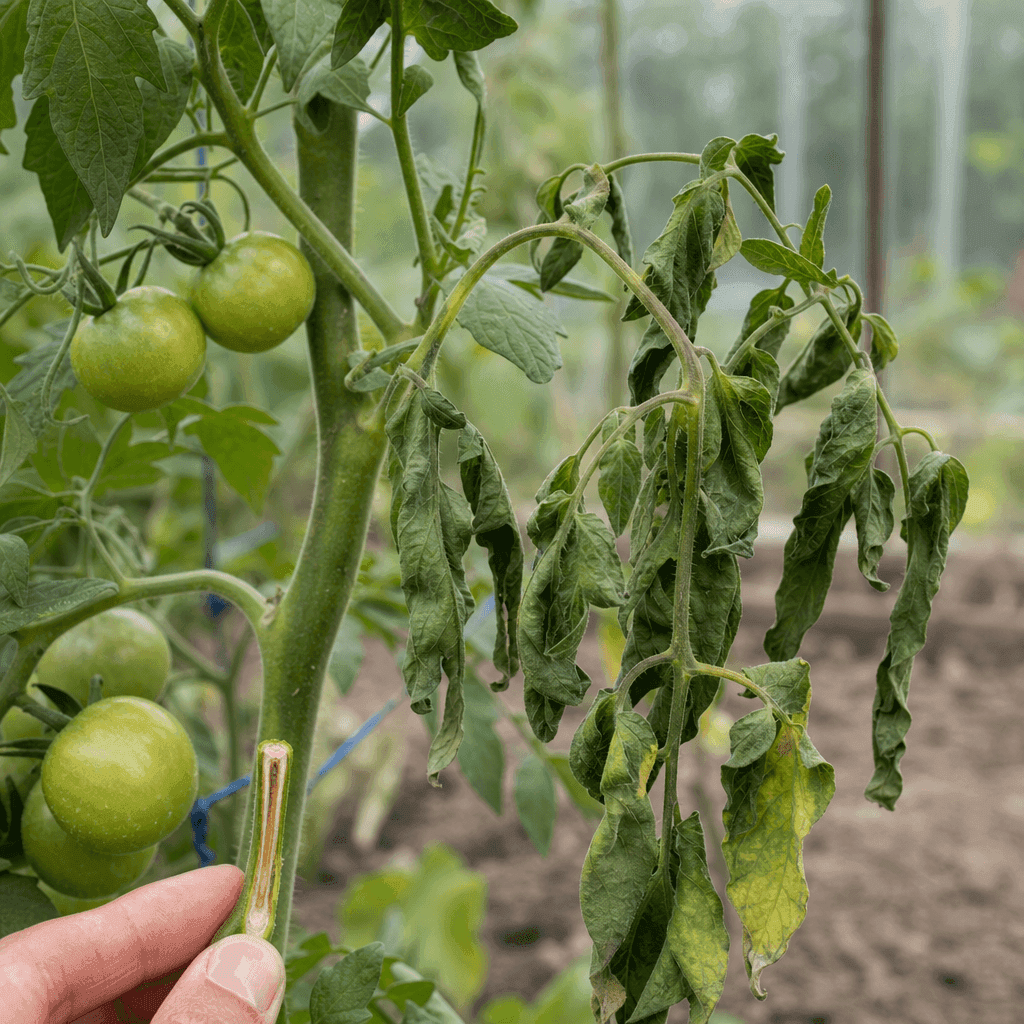
- Lower leaves yellow and wilt progressively upward over days or weeks.
- The plant fails to recover overnight despite moist soil.
- Wilting may be one-sided or affect one branch more than another.
- A cross-section of the lower stem shows brown or tan vascular tissue.
- Remove the entire plant including as many roots as possible and bin — do not compost.
- Avoid replanting tomatoes, peppers, aubergines or potatoes in the same soil immediately.
- Rotate crops — leave the bed clear of susceptible plants for 3–4 years if possible.
- Use F1 varieties labelled VF (Verticillium and Fusarium resistant) for future plantings.
- In a greenhouse border, replace the soil or switch to grow bags in a different area.
Stop it coming back:True vascular wilt does not reverse once established in the plant. The aim is to prevent spread to other plants and protect future crops.
try to cure vascular wilt with extra watering, feed or pruning — these will not work and may introduce the disease to clean tools and areas. Do not save seed from a diseased plant.
Bacterial wilt and sudden collapse
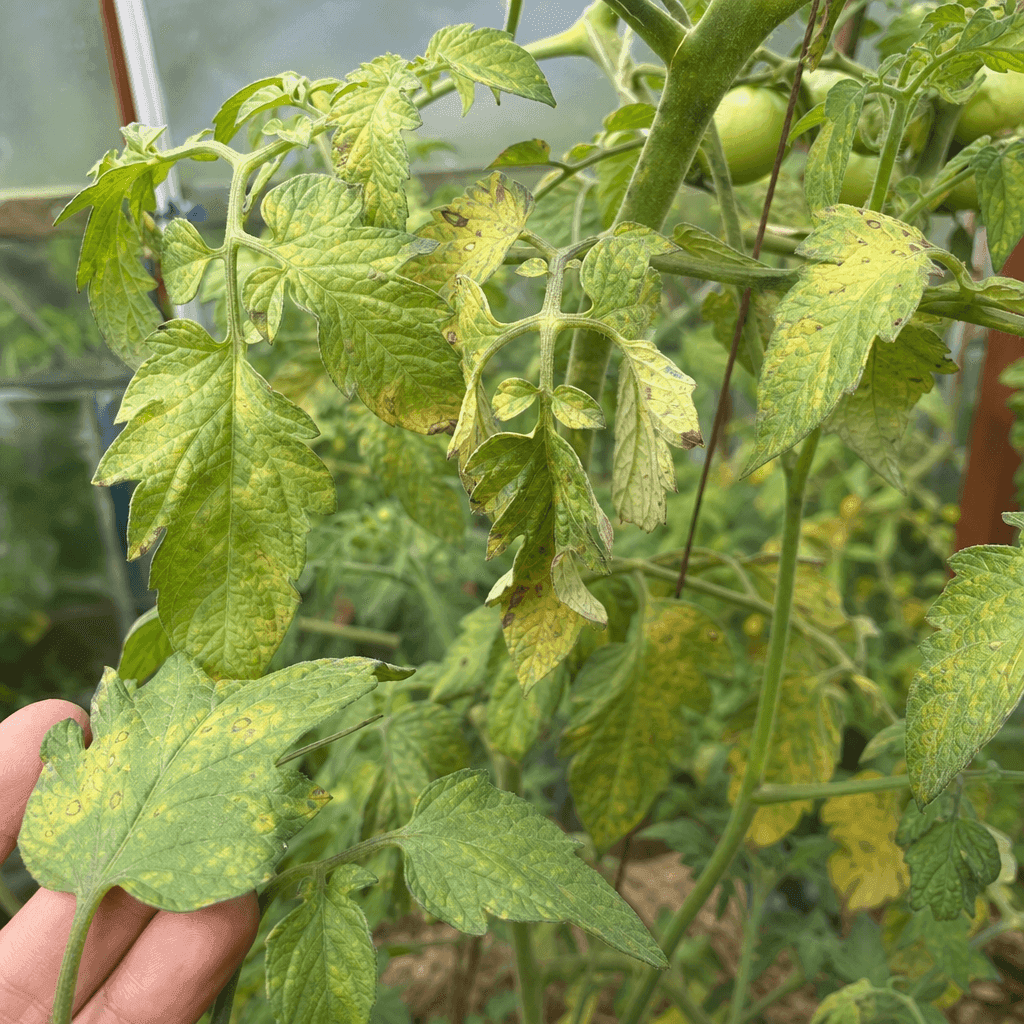
PossibleSudden whole-plant collapse in a tomato, where the foliage stays relatively green but the plant drops quickly, can indicate bacterial wilt or another rapid root failure. In the UK, bacterial wilt caused by Ralstonia solanacearum is rare in outdoor conditions but has been recorded in glasshouse tomatoes. More commonly, rapid unexplained collapse is the end stage of severe root rot, waterlogging damage, or a viral infection such as tomato spotted wilt virus (TSWV), which causes stunting, bronzing and wilting.
- Rule out dry soil, waterlogging and stem breakage first.
- If the plant collapses despite adequate moisture and nearby plants are fine, inspect stems and roots.
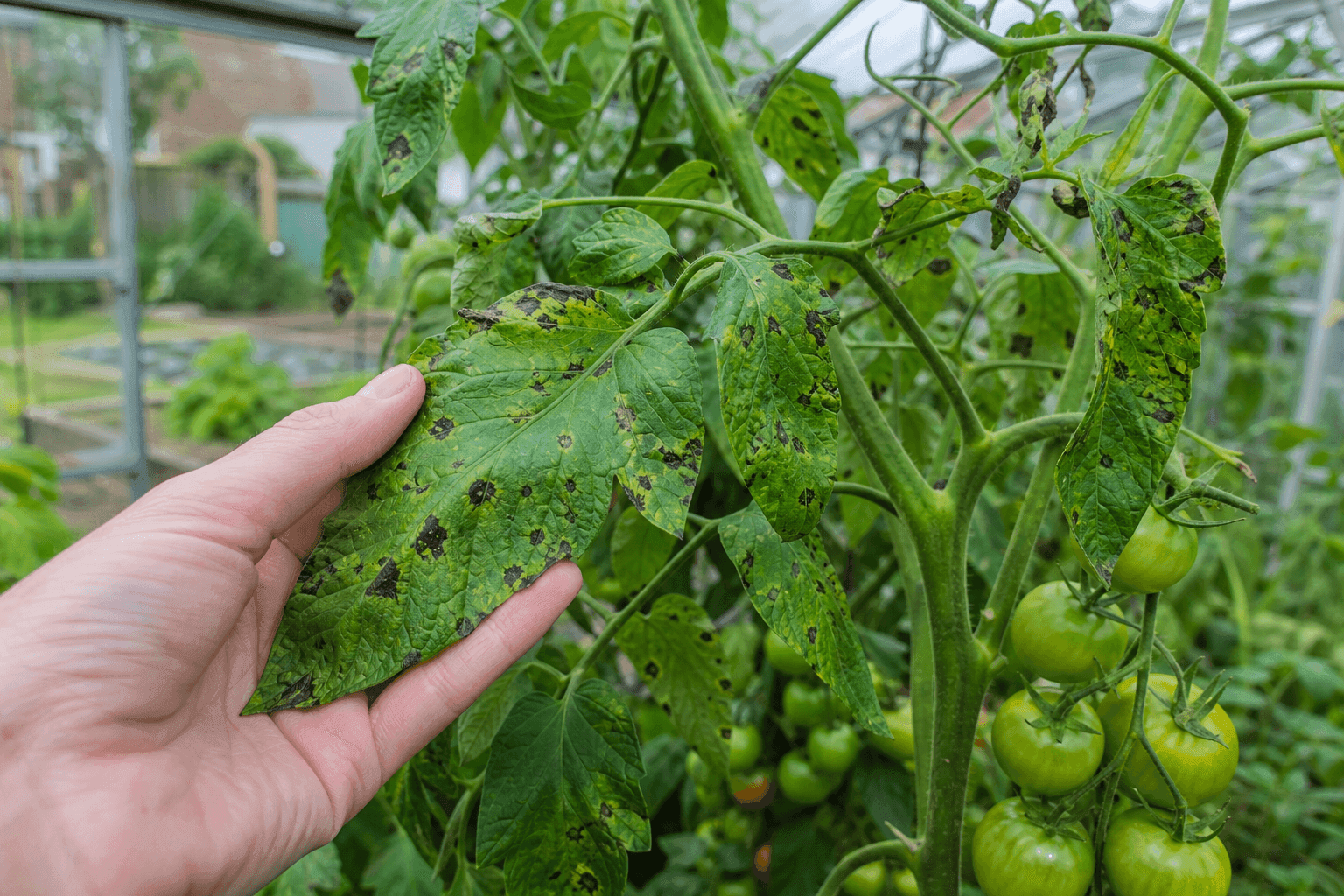
- Look for oozing from cut stems, severe leaf distortion, unusual spotting or bronzing.
- Insects such as thrips can carry tomato spotted wilt virus.
- Remove and bin plants that are declining rapidly without a clear moisture or mechanical cause.
- Control thrips and other potential virus vectors on remaining plants.
- Clean tools after cutting suspect plants.
- Use fresh compost in containers if a crop has suffered unexplained wilt.
Stop it coming back:Severe bacterial or viral wilt is rarely recoverable. Replant only after improving hygiene and, if needed, changing the growing medium and location.
compost suspect viral or bacterial plant material — dispose of it in household rubbish. Do not leave diseased roots in a greenhouse border.
Stem damage, root damage and mechanical injury
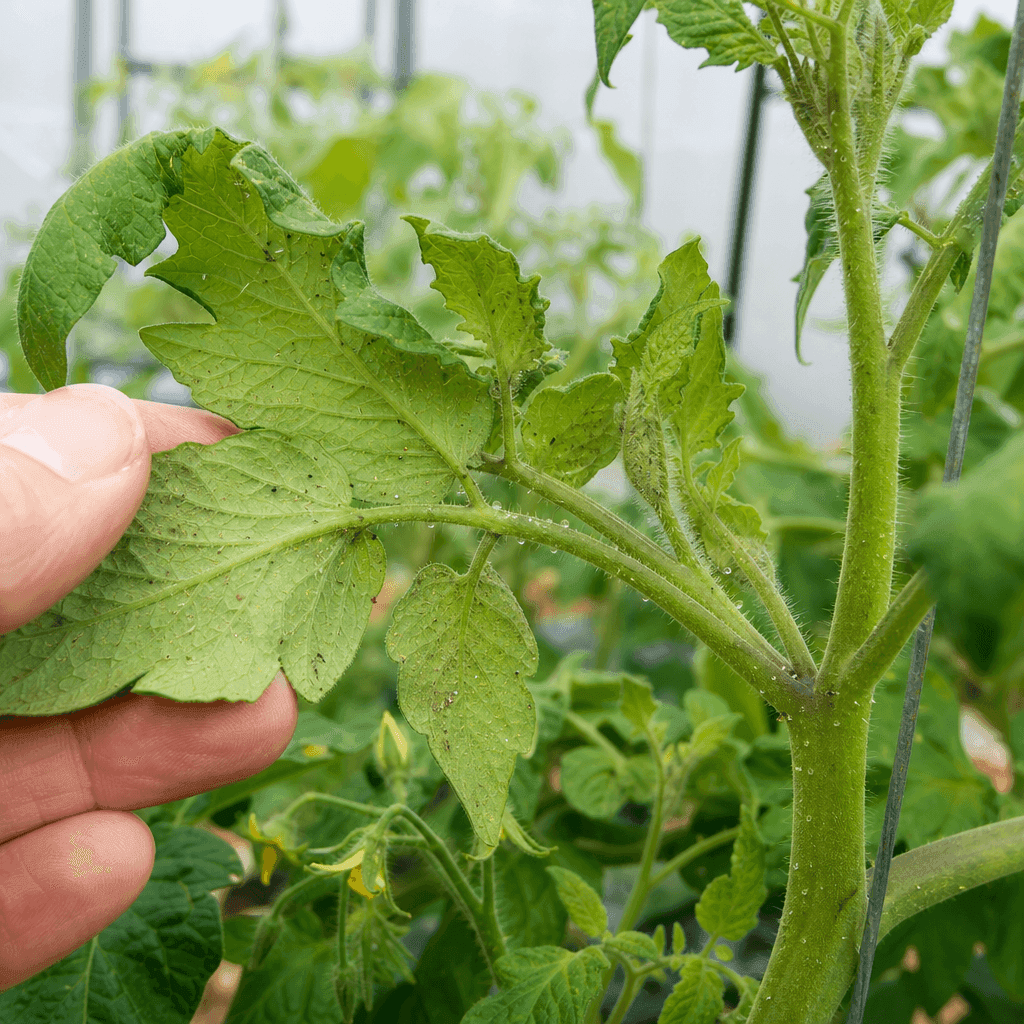
PossibleOne branch wilting while the rest of the plant looks normal almost always has a mechanical cause: a stem kinked against a cane, a tie that has cut into the stem as it grew, slug or caterpillar damage at the base, or a clean snap from handling. Pest-related wilting (aphids, whitefly, spider mites) involves sticky honeydew, visible insect colonies, webbing or fine stippling and tends to affect the whole plant more gradually.
- Follow the wilted section down to the main stem — look for a kink, split, damage mark or tight tie.
- Check the stem at soil level for slug damage or a soft, dark patch.
- Inspect leaf undersides for pests if the whole plant is affected.
- Loosen any ties that are cutting into the stem.
- Support kinked stems gently with a splint if still partly connected.
- Remove cleanly broken branches with sterilised scissors.
- Check the base of the stem nightly if slugs are present in the garden.
Stop it coming back:A kinked branch may recover within days if the vascular tissue is still partly intact. A completely severed stem will not reattach.
tie tomato stems tightly with wire or thin string — use soft, wide ties and check them weekly as stems grow quickly.
Physiological leaf roll
Most likelyTomato leaves curling upward without other symptoms — no spots, no insects, plant still growing — is a normal stress response to heat, heavy pruning, wind or irregular watering. The leaves roll to reduce the surface area exposed to sun and reduce water loss. The RHS notes that leaf roll of this type is physiological, not a disease sign, and does not require treatment beyond addressing the underlying stress.
- Leaf curling follows a hot period, recent hard pruning of side shoots, or irregular watering.
- Leaves are green and firm; the plant is producing new growth.
- No spots, insects, webbing or sticky residue present.
- Even out watering — water consistently at the base.
- Avoid removing too many side shoots at one time.
- Reduce wind exposure where possible.
assume all leaf curling is a sign of disease — check the pattern and recent growing conditions before treating. Curl that affects mosaic-patterned, misshapen or mottled leaves is more likely a virus.
Pests contributing to wilt stress
PossibleAphids, whitefly and spider mites can all weaken tomato plants significantly and contribute to wilting, especially in combination with other stressors. In UK greenhouses, glasshouse whitefly and greenhouse red spider mite are the most damaging. Aphids cluster on soft growing tips; whitefly flutter when disturbed and leave sticky honeydew; spider mites cause pale stippling and fine webbing on leaf undersides, particularly in hot, dry conditions.
- Check the undersides of leaves, young shoots and leaf joints.
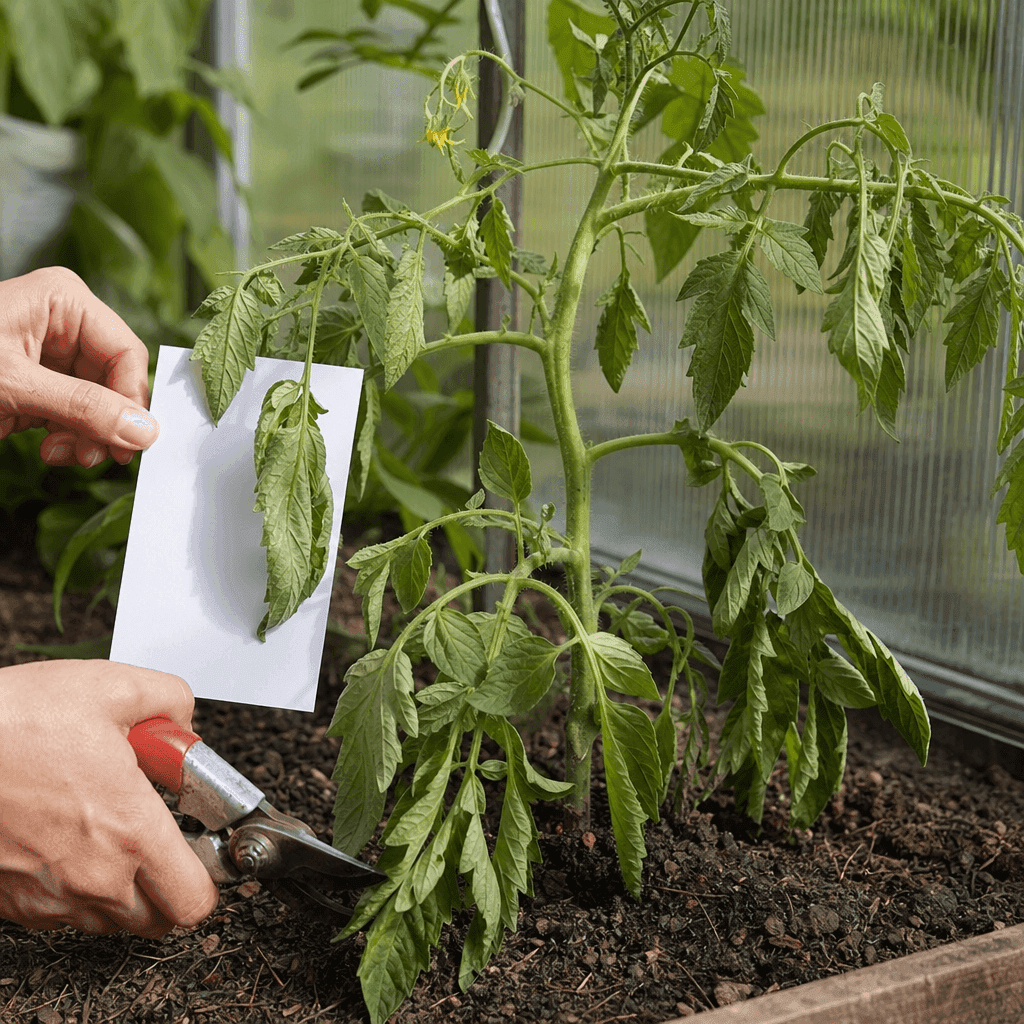
- Tap foliage over white paper — tiny moving dots, whitefly or aphid clusters identify the pest.
- Sticky leaves, webbing or sooty mould are strong clues.
- Wash pests off with a firm jet of water.
- Remove heavily infested leaves.
- In a greenhouse, introduce biological controls early — Encarsia for whitefly; Phytoseiulus for spider mite.
- Keep plants well watered — drought-stressed tomatoes are far more vulnerable to spider mite.
use broad-spectrum insecticides without identifying the pest — they harm beneficial insects and can make spider mite problems significantly worse.
Still not sure?
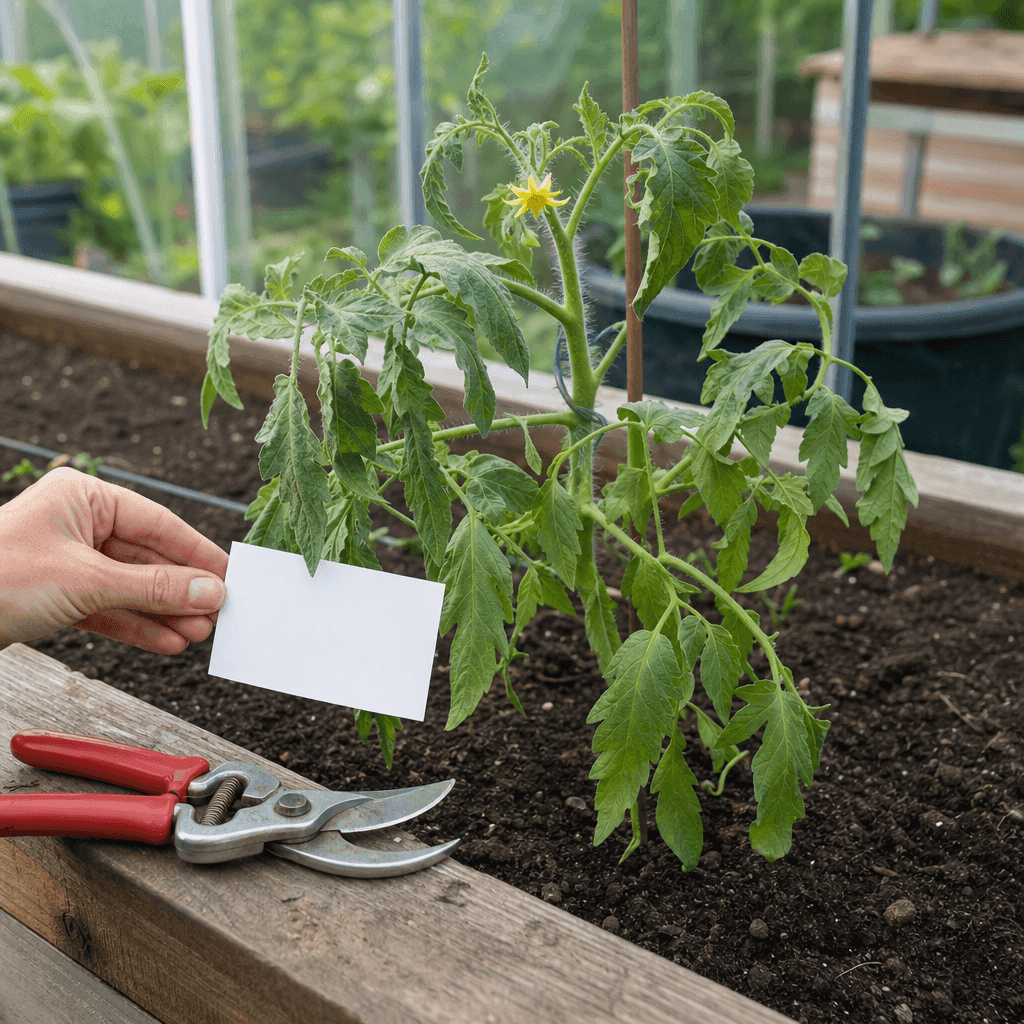
Work down these branches — the first one that matches is your answer.
What not to do
- Water again when the compost is already wet — wilting in wet soil is caused by root damage, not thirst.
- Feed a wilted or newly transplanted plant before diagnosing and fixing the cause.
- Compost plants suspected of Fusarium, Verticillium or bacterial wilt.
- Use the same grow bag or greenhouse border soil without rotation if wilt disease has affected the previous crop.
- Strip healthy leaves from a wilted plant — tomatoes need foliage to photosynthesise and to shade developing fruit.
Common questions
Can a wilted tomato plant recover?
Yes, if the cause is underwatering, temporary heat stress or mild transplant shock — these can improve within hours to a few days. Recovery is unlikely from severe root rot, Fusarium or Verticillium wilt, bacterial wilt or major stem damage.
Why is my tomato plant wilting even after watering?
The most likely reasons are that the compost is already too wet (root rot), the rootball is still dry inside despite watering the surface, the roots are damaged by disease, or the plant has a vascular wilt disease. Check below the surface — if it is wet and smells sour, stop watering and investigate the roots.
How do I know if my tomato has Fusarium wilt?
The key signs are yellowing that starts on the lower leaves and progresses upward, failure to recover overnight despite moist soil, possible one-sided wilting, and brown discolouration visible if you cut across the lower stem. There is no cure — remove and bin the plant, rotate crops and grow resistant varieties in future.
Should I water tomatoes every day?
Not automatically. Water when the root zone needs it. Pots and grow bags in high summer may need 2–3 litres daily per plant. Plants in the ground need less frequent but deeper watering. Consistency is more important than frequency — avoid alternately dry and saturated compost.
Why are my tomato plant leaves curling?
If leaves curl upward and the plant is otherwise healthy, it is almost certainly physiological leaf roll from heat, wind, irregular watering or over-pruning. If leaves are also mottled, spotted or distorted on misshapen shoots, check for virus (spread by thrips or aphids) and inspect for pests.
Should I remove wilted tomato leaves?
Remove leaves that are dead, diseased or touching the soil. Leave healthy wilted leaves during temporary heat stress — the plant needs them for photosynthesis and to shade fruit. If Fusarium or bacterial wilt is suspected, remove the entire plant rather than just the leaves.