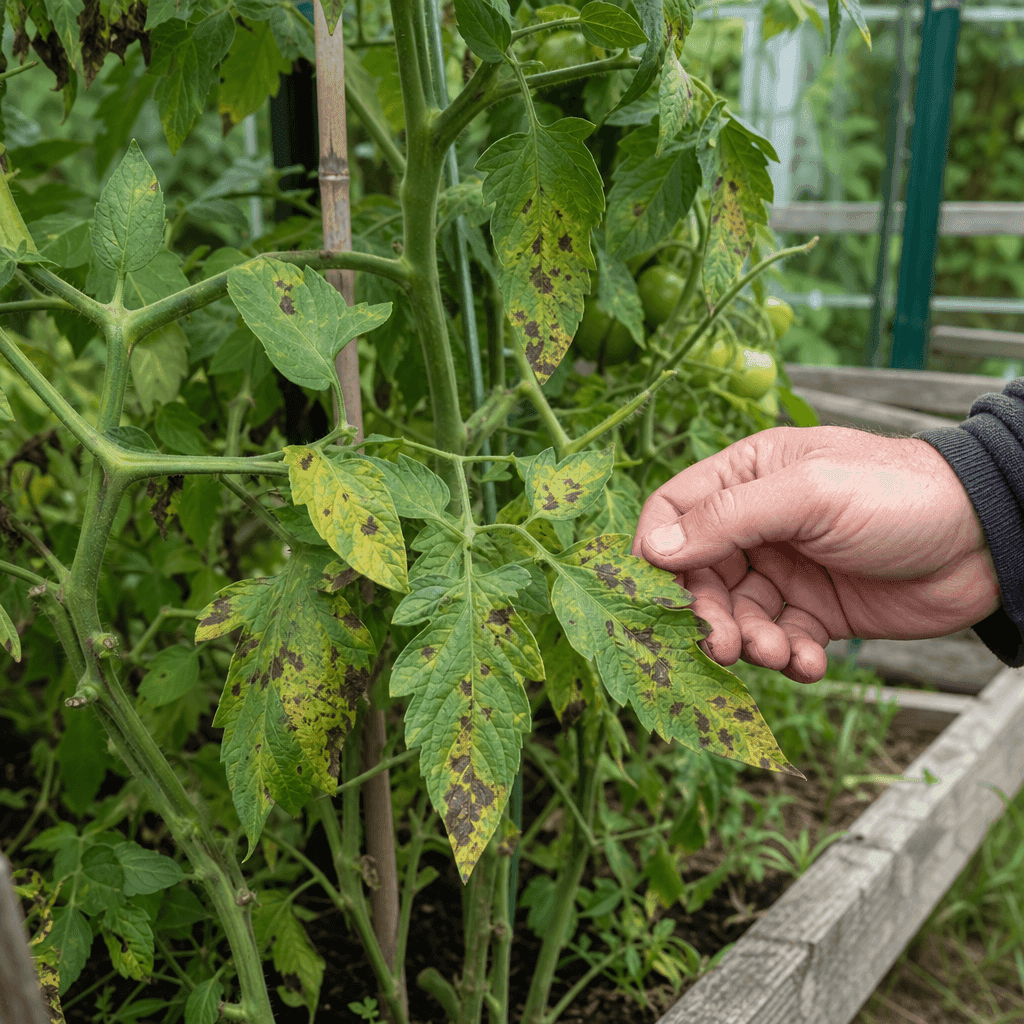
Quick diagnosis
Match the row to what you’re seeing, then jump to the fix.
| What you see | Likely cause | Confidence | How to confirm | What to do now | Urgency |
|---|---|---|---|---|---|
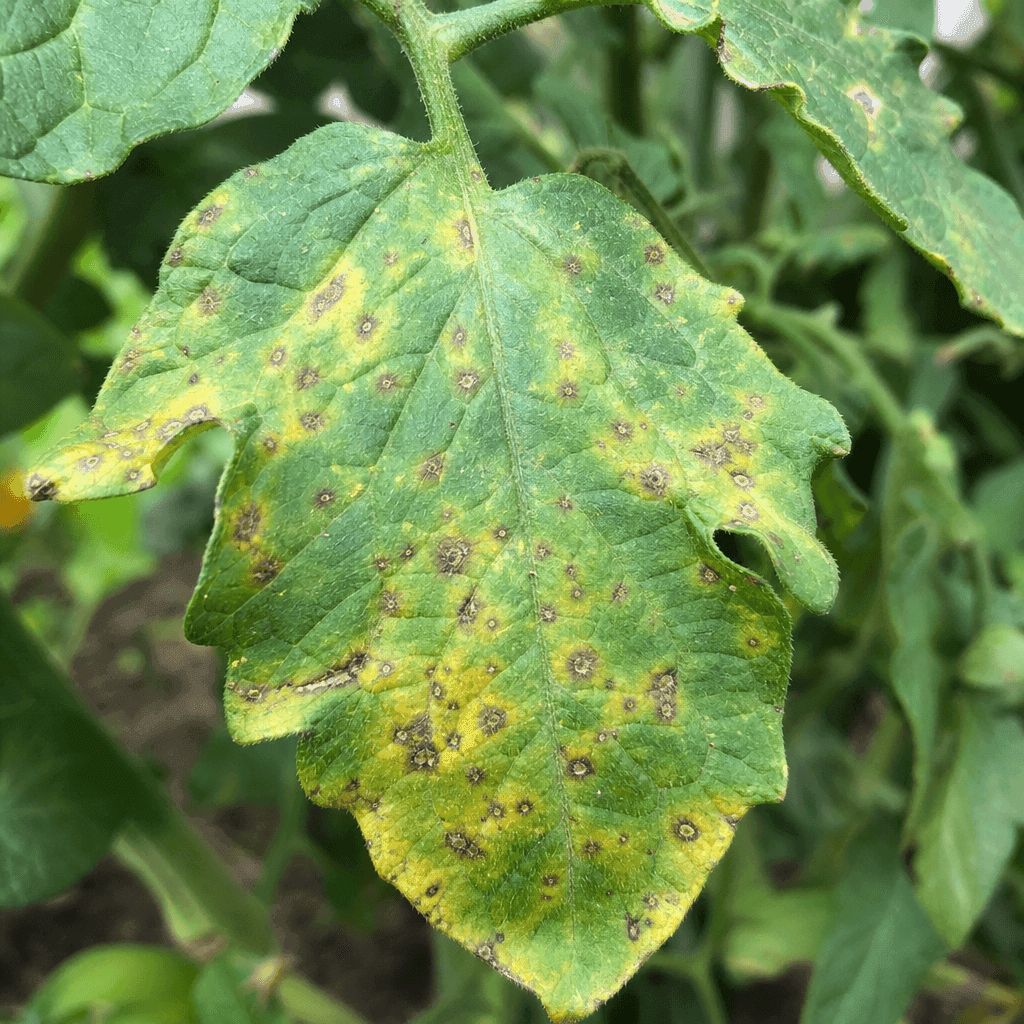
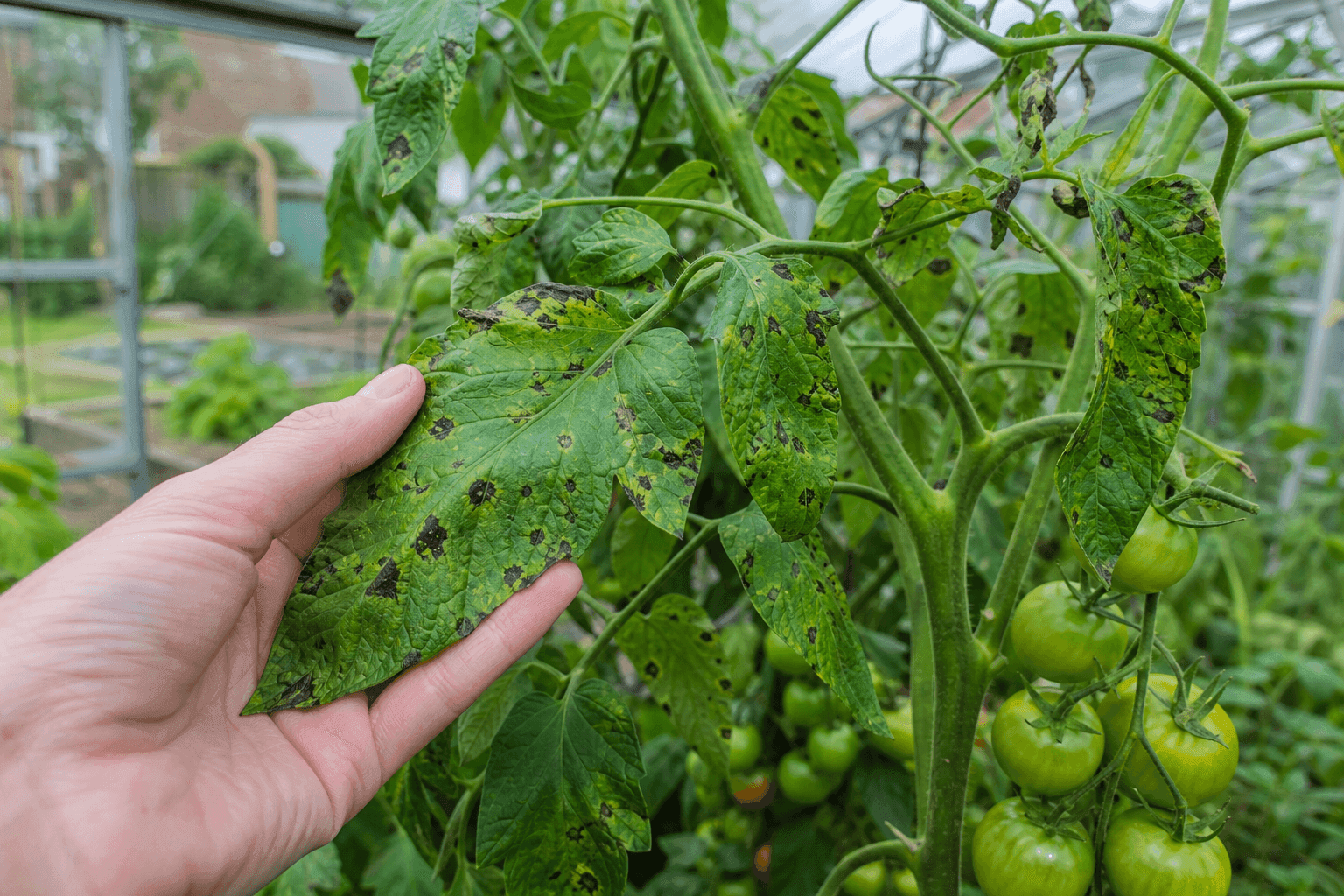
| Many tiny dark spots on lower leaves, often with yellowing around them | Septoria leaf spot | High | Spots start low, leaves yellow and drop; pale grey centre with dark border; fruit not affected | Remove worst leaves; water at soil level; mulch; improve airflow | High |
| Larger brown to black spots with concentric rings or a target pattern on lower leaves | Early blight (Alternaria solani) | High | Concentric rings visible in spots; spreads upward in warm damp weather; may affect stems | Remove infected leaves; stake and prune for airflow; avoid wet foliage | High |
| Very small, pepper-like black specks on leaves, stems or fruit, sometimes with yellow halos | Bacterial speck or bacterial spot | Medium | Specks are tiny and numerous on both leaves and fruit; may feel slightly raised on fruit | Remove affected growth; do not handle wet plants; improve spacing and hygiene | High |
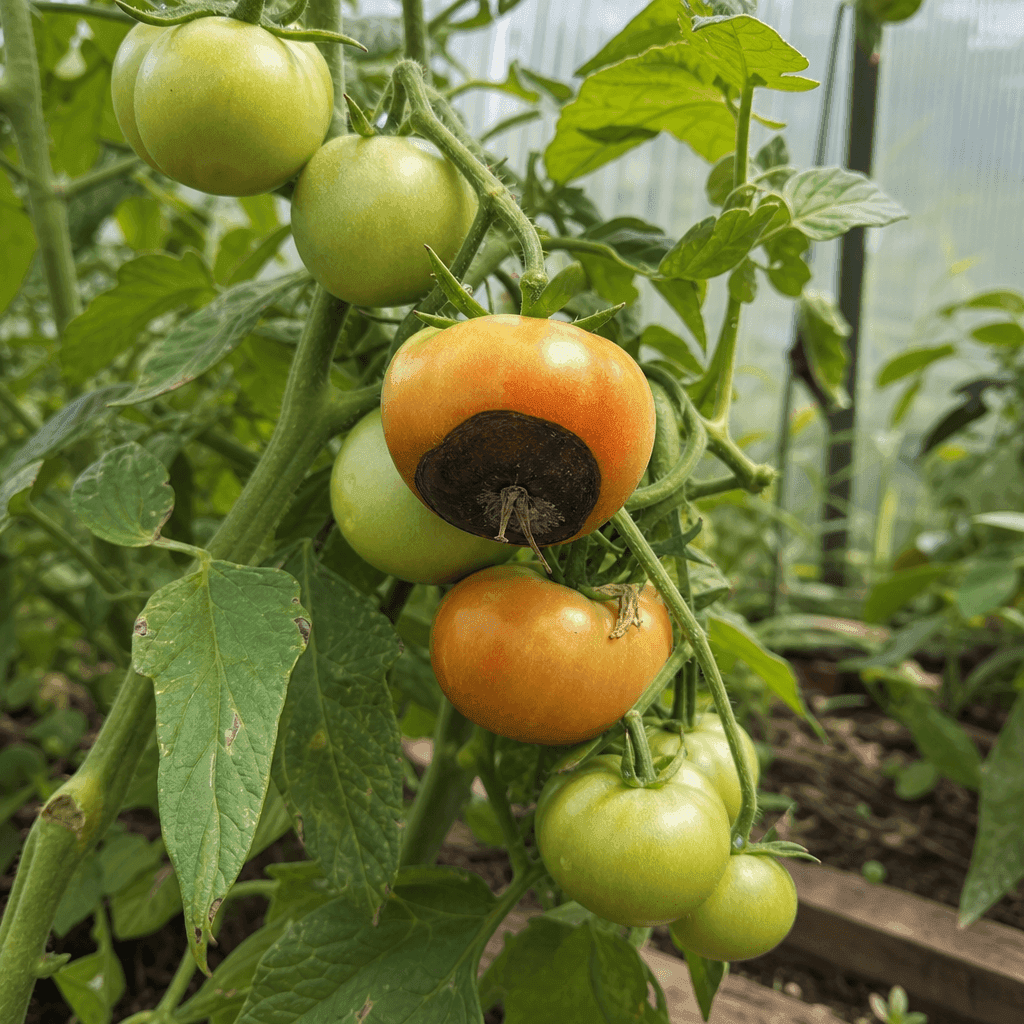
| Black, leathery, sunken patch at the blossom end (bottom) of green or ripening fruit | Blossom end rot | High | Patch is only at the blossom end opposite the stem; leaves usually look normal | Even out watering; mulch; avoid excess nitrogen feed | Medium |
| Pale or papery patch on fruit that has become dark after exposure to strong sun | Sunscald | Medium | Damage is on the sun-facing side of fruit; recent pruning or leaf loss left fruit unshaded | Retain adequate foliage to shade fruit; remove mouldy or soft damaged fruit | Medium |
| Fine stippling, webbing or sticky residue on yellowing leaves | Pests (spider mite, aphid or whitefly) | Medium | Check leaf undersides with a hand lens — tiny mites, aphid clusters or whitefly visible | Wash off pests; remove worst leaves; use biological controls in a greenhouse | Low–medium |
| Older lower leaves yellowing evenly with few or no distinct spots | Natural ageing, nutrient stress or watering issue | Medium | No clear disease lesions; plant is otherwise active and producing new growth | Adjust watering; feed correctly; remove only fully dead leaves | Low |
The causes, in detail
Septoria leaf spot
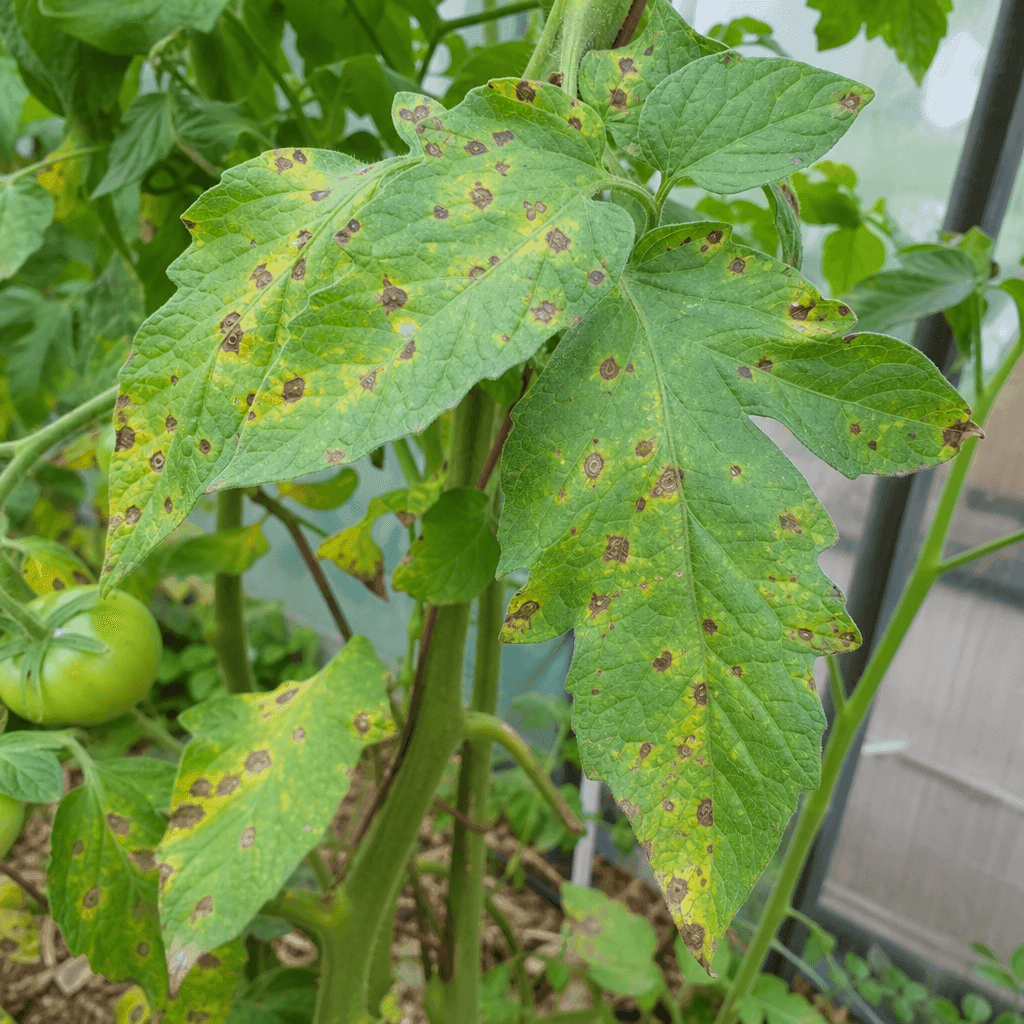
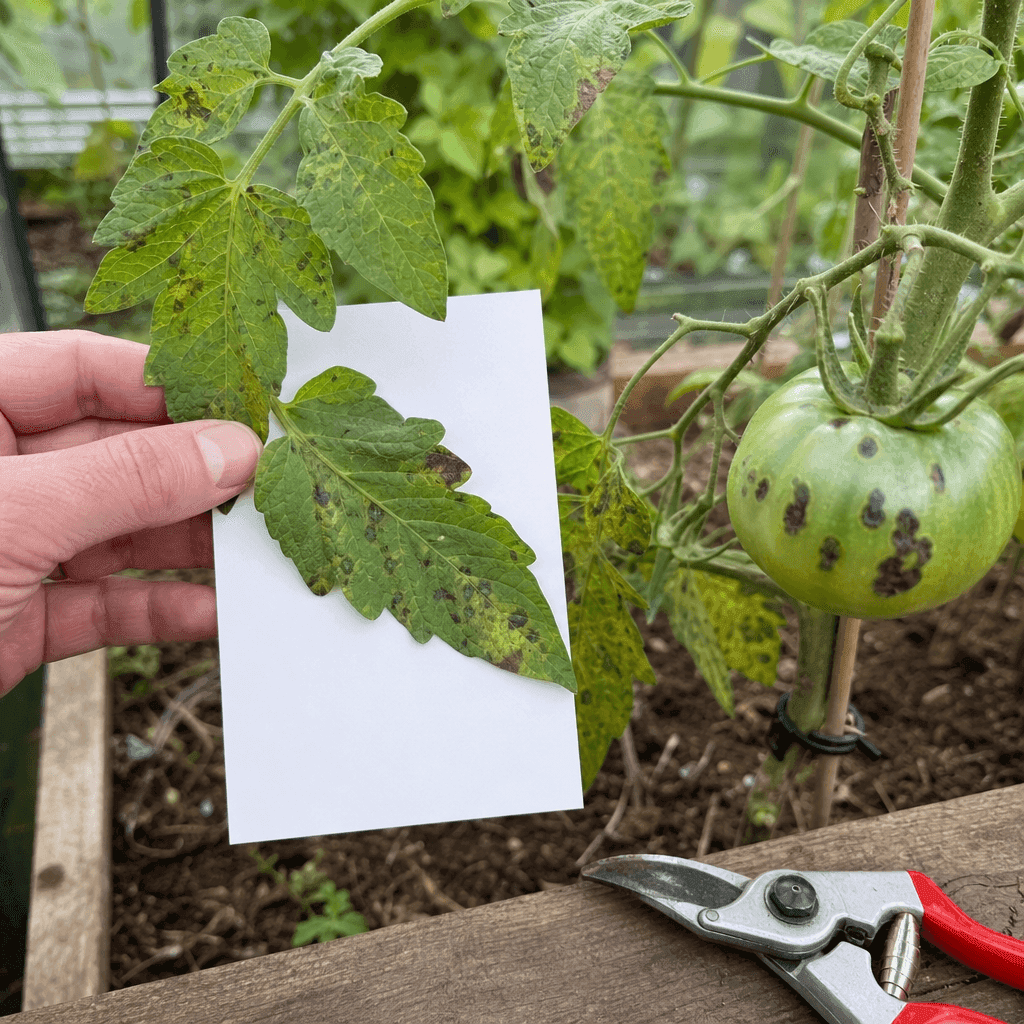
Most likelySeptoria leaf spot is one of the most common reasons for black spots on tomato leaves in UK gardens. Caused by the fungus Septoria lycopersici, it almost always begins on the lowest, oldest leaves close to the soil, because spores splash up from infected leaf debris and the soil surface. The RHS advises removing affected leaves promptly, mulching the base of the plant to reduce soil splash, and watering at the base to keep foliage dry. Michigan State University Extension describes the spots as small (up to 6 mm), dark-bordered and often with a pale grey or tan centre — numerous and clustered, unlike early blight's larger ringed spots.
- Look at the oldest lower leaves first — Septoria moves from the bottom upward.
- Spots are numerous, small and dark-edged, often with a pale centre.
- The fruit itself is not directly spotted by this disease.
- Leaves around the spots turn yellow and may drop.
- On a dry day, remove the worst affected leaves and put them in household rubbish — not the compost bin.
- Tie the plant to a cane or string so leaves are not resting on soil or compost.
- Water at the base — never over the leaves.
- Apply a mulch of clean straw, composted bark or compost to reduce soil splash onto lower leaves.
- In a greenhouse, open vents and doors in warm weather to reduce humidity.
Stop it coming back:Spotted leaves will not clear. Look for clean new growth over the next 10–21 days and slower spread of spots. The plant can still produce a good crop if enough healthy foliage remains.
strip every leaf from the plant — tomatoes need foliage to feed the crop and shade fruit. Do not spray with unapproved homemade mixtures such as vinegar, strong bicarbonate or washing-up liquid.
Early blight
Most likelyEarly blight, caused by the fungus Alternaria solani, produces larger spots than Septoria — typically 6–12 mm across — with distinct concentric rings that give a target-like appearance. The same Alternaria fungus also affects related crops, so the symptoms closely mirror early blight on potatoes. It begins on lower leaves, leaves around the spots turn yellow, and in severe cases dark lesions develop on stems and the area around the stem attachment on fruit. The University of Maryland Extension notes that early blight can appear at any time during the season but is most damaging on older or stressed plants in warm, damp weather. UK growers see it most in warm, humid summers in greenhouse conditions.
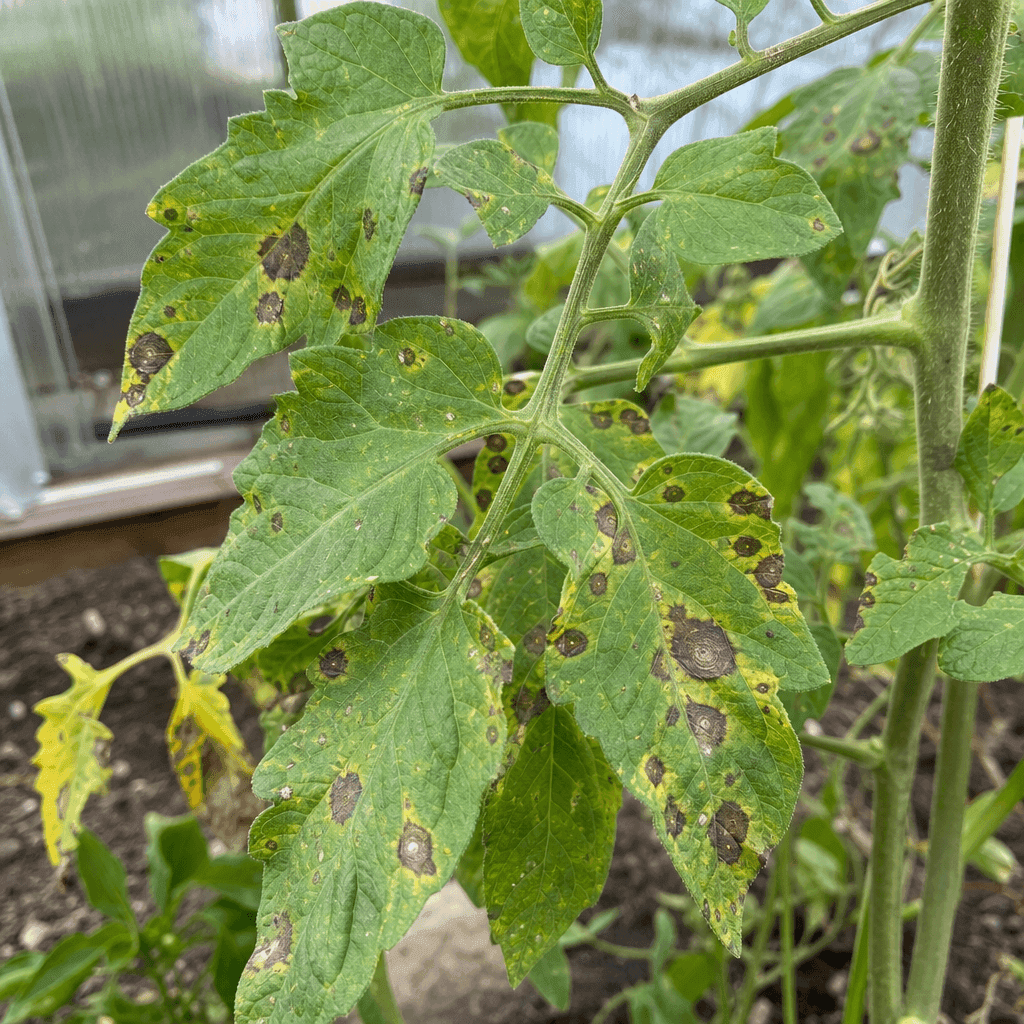
- Spots are larger than Septoria and show ringed or concentric markings.
- Damage begins on mature lower leaves and progresses upward.
- Weather has been warm and intermittently damp.
- Remove infected lower leaves promptly.
- Stake or tie in plants so air can circulate through the canopy.
- Keep enough foliage to support ripening — do not strip the plant.
- Water deeply at the base consistently.
- At the end of the season, remove all tomato debris and rotate crops where possible.
Stop it coming back:Spread should slow within two weeks if caught early. Existing damaged leaves will decline, but new leaves should emerge cleaner once conditions improve.
assume extra fertiliser will resolve ringed spots — feeding can support growth but will not remove a fungal infection. Do not water from above in the evening.
Bacterial speck or bacterial spot
PossibleBacterial diseases on tomatoes cause very small, pepper-like dark specks on leaves, stems and sometimes fruit. The spots often have yellow halos and may appear on both leaf surfaces. On fruit, specks may be slightly raised or scabby. These diseases are more common after wet, cool-to-warm weather and can spread rapidly when plants are handled while wet. They are distinct from Septoria and early blight by the much smaller spot size and the simultaneous appearance on fruit as well as leaves.
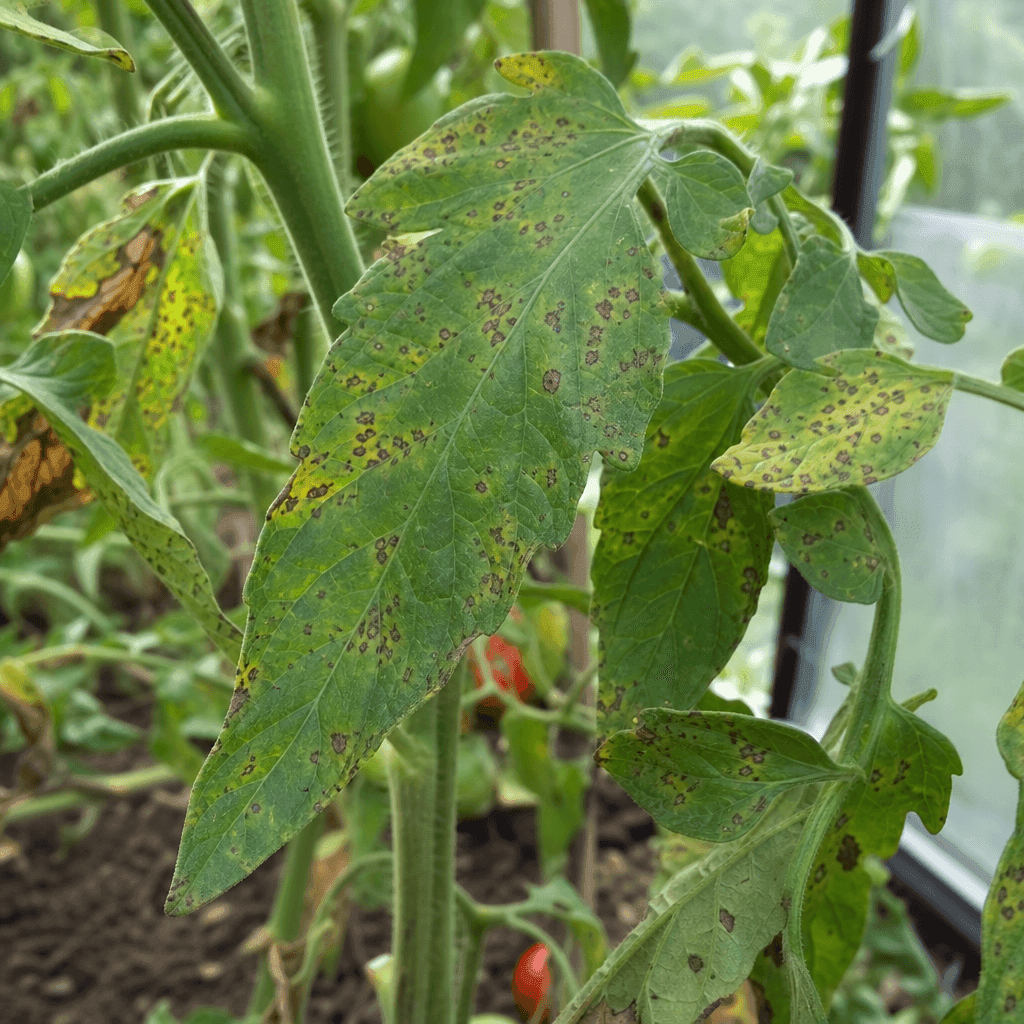
- Specks are tiny, numerous and appear on both leaves and fruit simultaneously.
- Spots on fruit feel slightly raised or have a rough, scabby texture.
- Weather has been wet and cool to warm.
- Remove badly affected leaves and fruit.
- Do not handle or prune plants when they are wet.
- Disinfect secateurs between plants if disease is spreading through a bed or greenhouse.
- Improve spacing and ventilation; water the soil, not the foliage.
Stop it coming back:Bacterial spotting is difficult to reverse in a wet season. Protect new growth and reduce spread. If the plant is badly affected early, replacement may be more practical than nursing a weak crop.
compost infected fruit and leaves in a cool home compost heap. Do not mist greenhouse tomatoes, as wet foliage aids bacterial spread.
Blossom end rot on tomato fruit
Most likelyBlossom end rot appears as a dark, sunken, leathery patch at the bottom (blossom end) of the tomato — opposite the stem. It often starts as a pale water-soaked area that darkens to brown or black. It is extremely common in UK grow bags, pots and greenhouse beds where watering fluctuates. The RHS and Iowa State University Extension both explain that blossom end rot is caused by calcium not reaching the developing fruit — but the problem is almost always irregular watering preventing calcium uptake, not a lack of calcium in the soil itself.
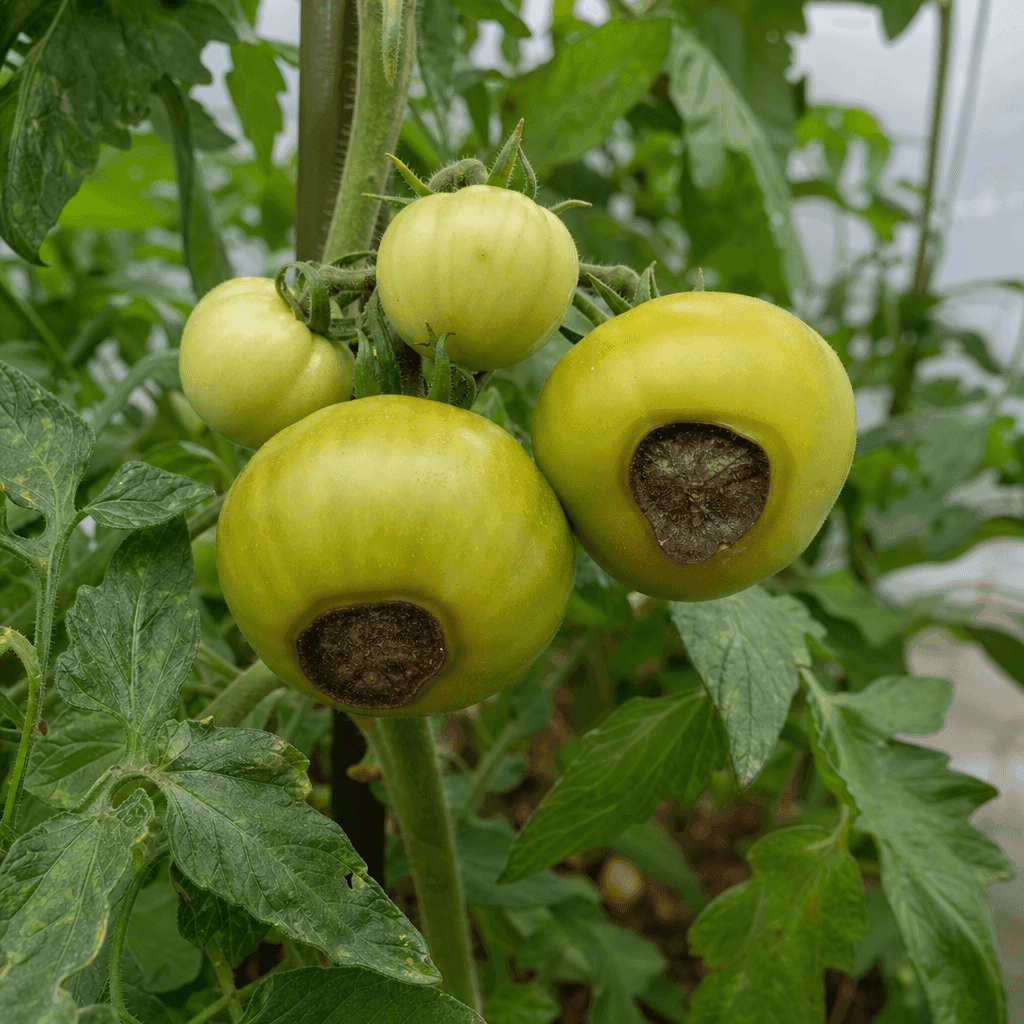
- The dark patch is at the blossom end of the fruit — the bottom, not near the stem.
- Leaves do not show spots or lesions.
- Watering has been inconsistent — alternately dry and saturated.
- The plant is in a pot, grow bag or greenhouse bed.
- Remove badly affected fruit so the plant can direct resources to healthy tomatoes.
- Water evenly — aim to keep compost consistently moist rather than alternately dry and soaked.
- Check pots and grow bags daily in hot weather; they can need 2–3 litres per plant per day.
- Mulch outdoor plants to reduce moisture fluctuation.
- Use a balanced tomato feed at the recommended rate; avoid excess nitrogen.
Stop it coming back:Damaged fruit will not recover. New fruit on the next truss can develop normally once watering is steady.
add crushed antacids, milk or eggshells as an emergency calcium remedy — blossom end rot is primarily a water distribution problem, not a simple calcium deficiency. Foliar calcium sprays do not reliably help fruit that is already affected.
Sunscald on exposed fruit
PossibleSunscald begins as a pale, whitish patch on the sun-facing side of tomato fruit that has been suddenly exposed to strong sunshine — typically after heavy pruning removed the shading leaves, or after a disease stripped the foliage. The affected area becomes papery, tan, brown or black as tissue dies and secondary rots move in. This is more common in greenhouses where full sun comes through on a hot day.
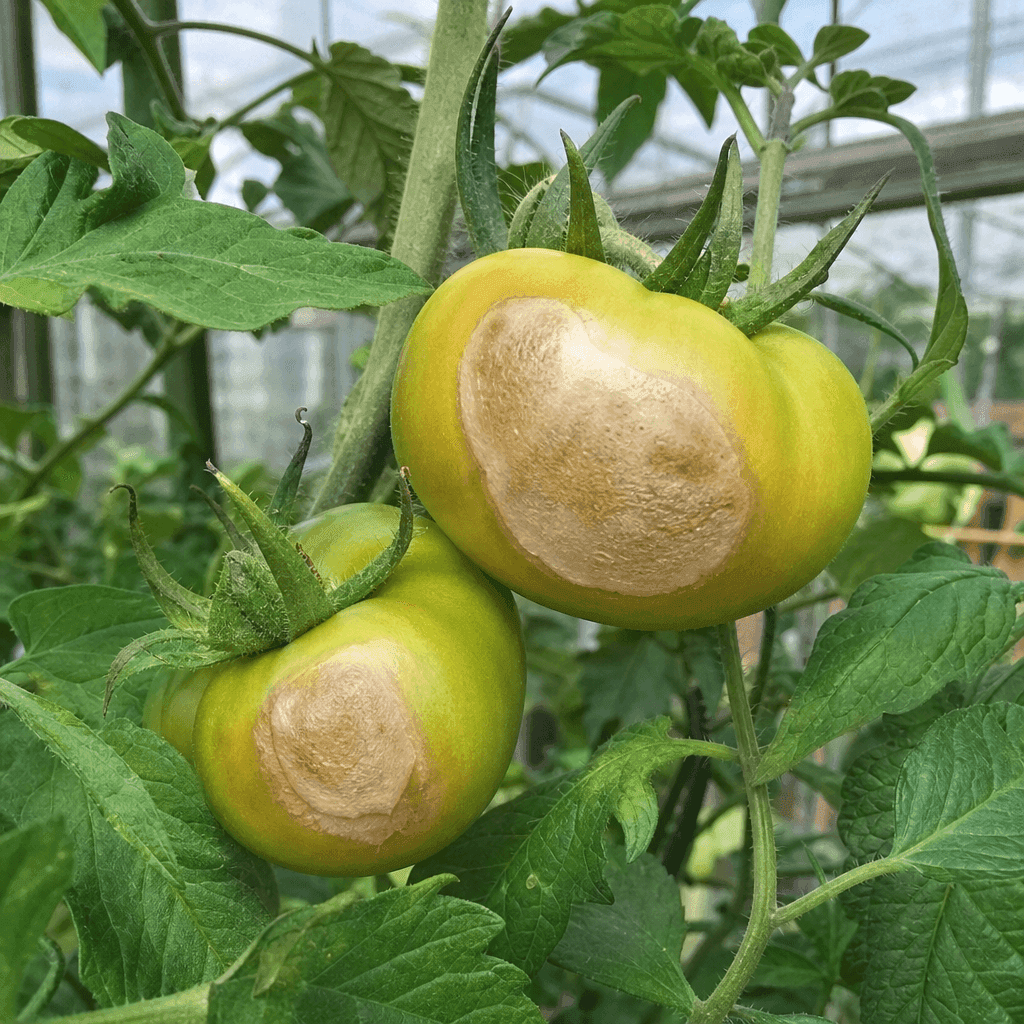
- Damage is on the sun-facing side of fruit, not at the blossom end.
- Nearby leaves were recently removed or diseased.
- The affected area is papery, not water-soaked or sunken.
- Keep enough healthy foliage to shade the fruit.
- Do not remove more leaves than necessary when pruning side shoots.
- Remove fruit that is soft, mouldy or actively rotting; slightly marked firm fruit can sometimes still ripen.
Stop it coming back:Marked fruit will not heal. Prevention is immediate once leaf cover and shade are restored.
defoliate tomato plants to speed ripening in hot weather — bare fruit is far more vulnerable to sunscald and secondary disease.
Pests causing yellowing and spotting
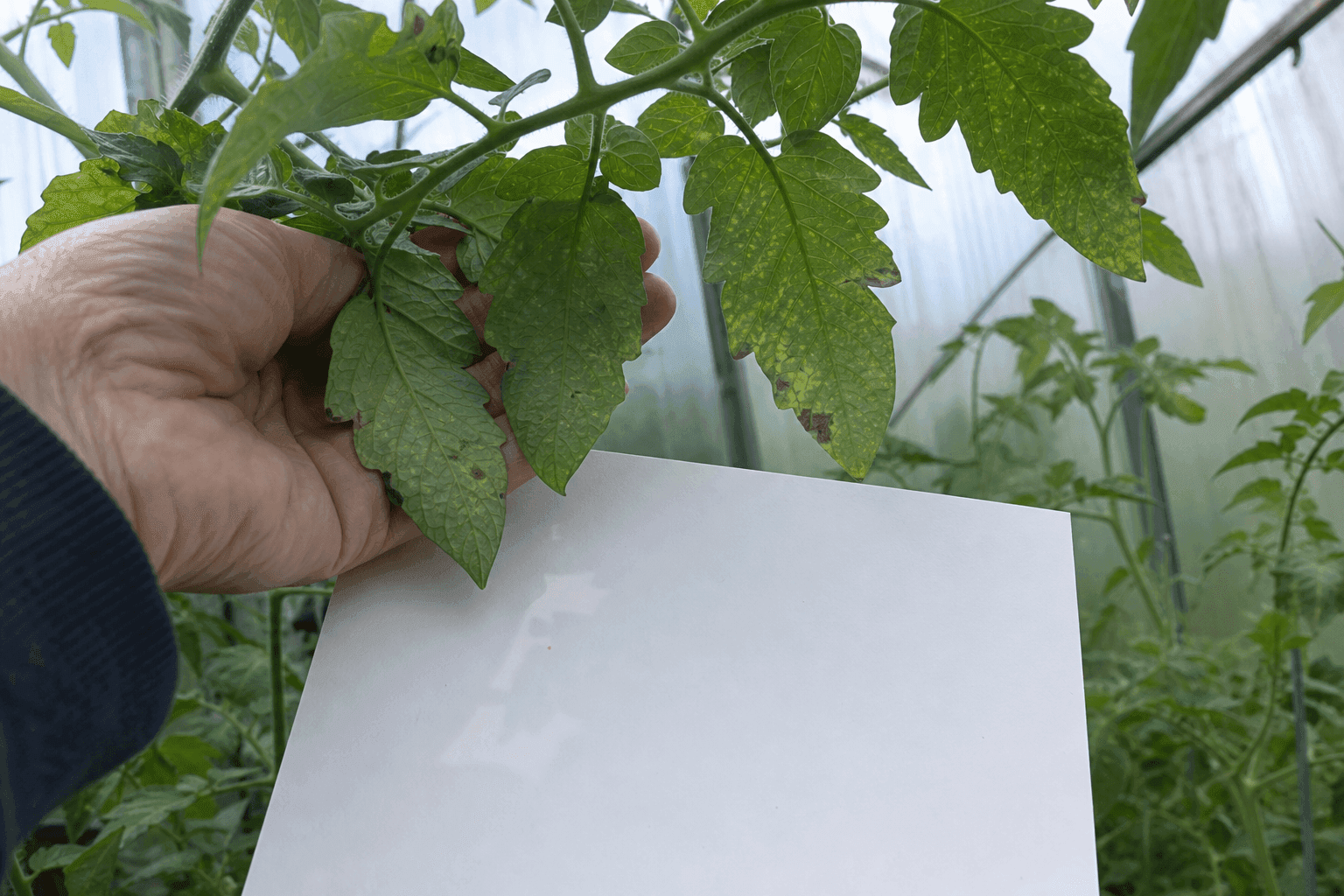
PossibleSpider mites cause fine pale stippling that turns yellow then brown, often with webbing visible under leaves in warm, dry greenhouse conditions. Aphids and whitefly cause sticky leaves, distorted growth and yellowing. Pest damage may be mistaken for black spots when dead tissue or sooty mould develops over feeding damage. Identifying the pest correctly is essential — biological controls in a greenhouse are very effective for whitefly (Encarsia formosa) and spider mite (Phytoseiulus persimilis) if introduced early.
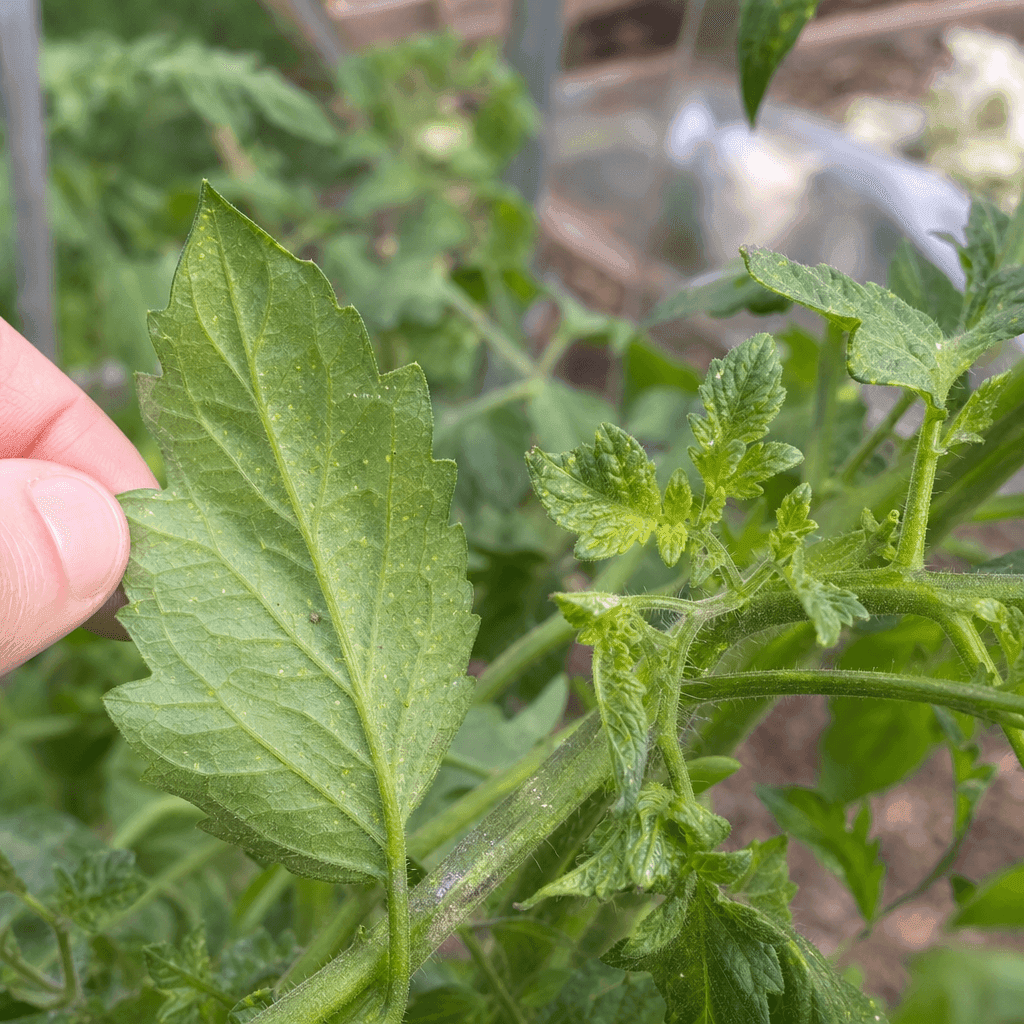
- Check the undersides of leaves and young shoots with a hand lens.
- Tap foliage over white paper — tiny moving dots, whiteflies or aphid clusters identify the pest.
- Sticky leaves, webbing or sooty mould are strong secondary clues.
- Remove heavily infested leaves.
- Wash small colonies off with a firm jet of water.
- In greenhouses, introduce biological controls early — Encarsia for whitefly; Phytoseiulus for spider mite.
- Keep plants well watered — drought-stressed tomatoes are far more vulnerable to spider mite.
Stop it coming back:Pest numbers can reduce within days after washing or biological control. Damaged leaves remain marked, but new growth should look cleaner within two to three weeks.
use broad-spectrum insecticides without identifying the specific pest — they may harm beneficial insects and can make spider mite problems significantly worse.
Natural ageing, nutrient stress or watering problem
PossibleOlder lower leaves yellowing evenly with few or no distinct spots is often normal — tomato plants shed lower leaves as the season progresses and the canopy rises. It can also indicate general nutrient stress or a watering problem (either too dry or too wet at the roots) rather than an infectious disease. This is common in pots and grow bags that have been repeatedly dry or waterlogged. The absence of distinct lesions with defined borders is the key distinguishing feature.
- No clear lesions or spots — general even yellowing of the oldest leaves.
- The plant is otherwise actively growing and producing new growth.
- The problem has not spread to young leaves or rapidly across the whole plant.
- Adjust watering to keep compost consistently moist — test at root depth, not just the surface.
- Feed tomatoes with a balanced tomato fertiliser during active growth and once fruit begins to develop.
- Remove only fully dead or completely yellow leaves.
strip all yellowing leaves from a small plant — partly green leaves still contribute to photosynthesis. Do not overfeed with nitrogen in response to yellowing without first checking root health and soil moisture.
Still not sure?
Work down these branches — the first one that matches is your answer.
What not to do
- Strip every leaf off the plant — tomatoes need foliage to fruit and to shade developing tomatoes.
- Compost diseased leaves and fruit — bin them to prevent reinfection.
- Add calcium supplements for blossom end rot before fixing watering — irregular water supply is almost always the real cause.
- Spray unapproved homemade mixtures (vinegar, washing-up liquid) on edible crops.
- Use broad-spectrum insecticides in a greenhouse without identifying the pest — biological controls are safer and more effective.
Common questions
Should I remove tomato leaves with black spots?
Yes, remove the worst affected lower leaves, especially those yellowing or touching soil or compost. Do it on a dry day and bin rather than compost them. Do not remove so many leaves that fruit is suddenly exposed to strong direct sun.
Can I eat tomatoes from a plant with black spots on the leaves?
Usually yes, if the fruit itself is sound, ripe and free from rot. Do not eat fruit that is mouldy, soft, foul-smelling or shows signs of bacterial or fungal rot on its surface.
What causes black spots on tomato fruit specifically?
Small black specks on the surface suggest bacterial speck or spot. A large dark sunken patch at the blossom end is blossom end rot. A pale or papery patch on the sun-facing side is sunscald. Each needs a different response.
Is tomato leaf spot the same as rose black spot?
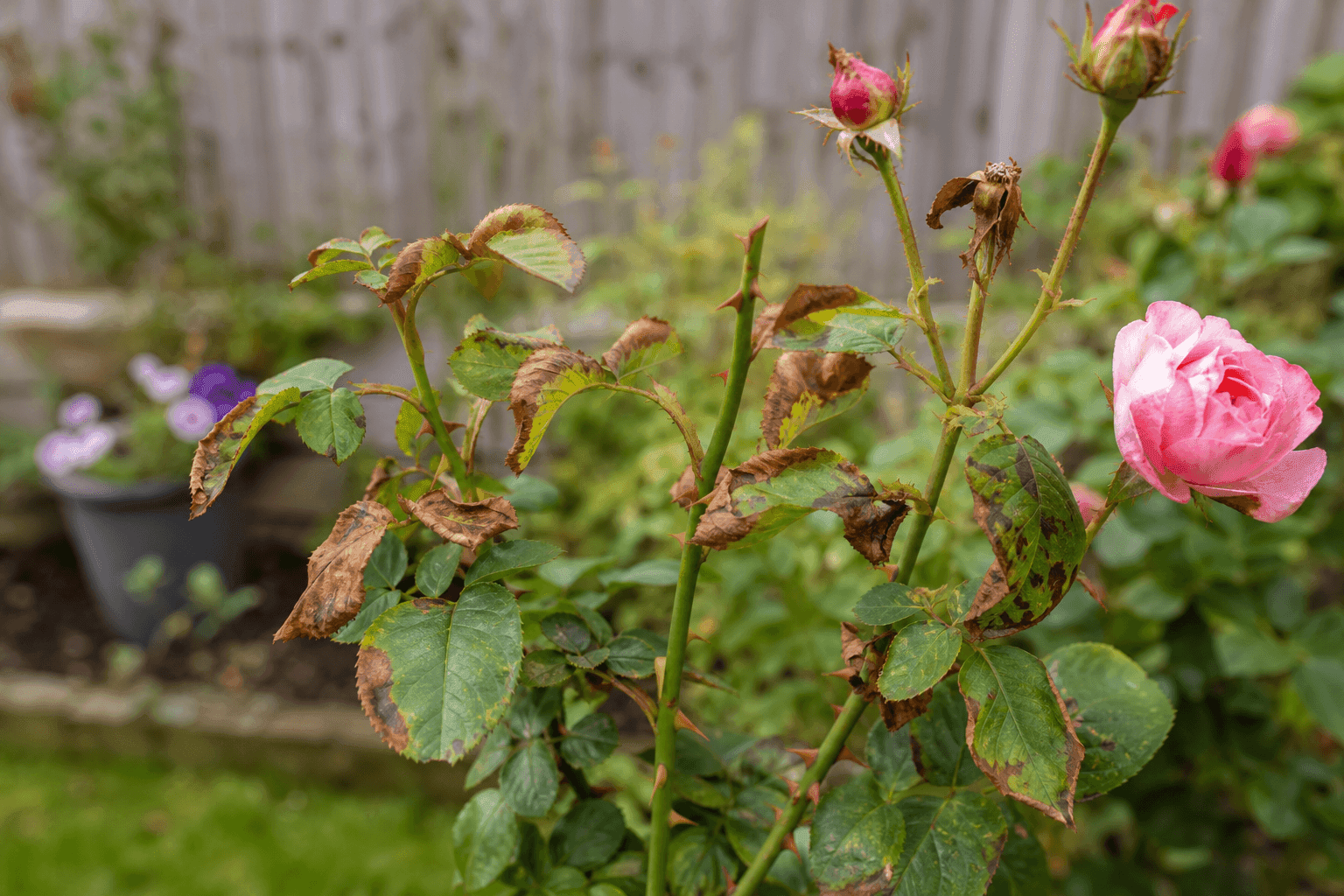
No. The name sounds similar but they are caused by entirely different organisms — Septoria or Alternaria on tomatoes, Diplocarpon rosae on roses. The diseases do not cross between these plants, so if you are seeing dark blotches on roses see our guide to rose leaves with yellow and black spots instead.
Will tomato plants recover from black spots?
They can produce a good crop if spotted early. Remove affected leaves, maintain steady watering, improve airflow, and mulch the base. Spotted leaves will not clear but clean new growth is a positive sign. For other issues affecting the same crop, our tomato plant care and problem guides cover yellowing, wilting and fruit disorders too.
Should I spray tomatoes with fungicide?
Only after identifying a likely fungal or bacterial plant disease and confirming the product is approved for use on edible tomatoes in the UK. Cultural measures — leaf removal, base watering, mulching, good spacing — should be applied first and are often enough on their own.
How do I prevent black spots on tomatoes next year?
Rotate crops to a different spot or use fresh grow bag compost. Remove all tomato debris at the end of the season. Choose varieties with some disease resistance. Water at the base, not over the leaves. Mulch around the base to reduce soil splash.