Quick diagnosis
Match the row to what you’re seeing, then jump to the fix.
| What you see | Likely cause | Confidence | How to confirm | What to do now | Urgency |
|---|---|---|---|---|---|
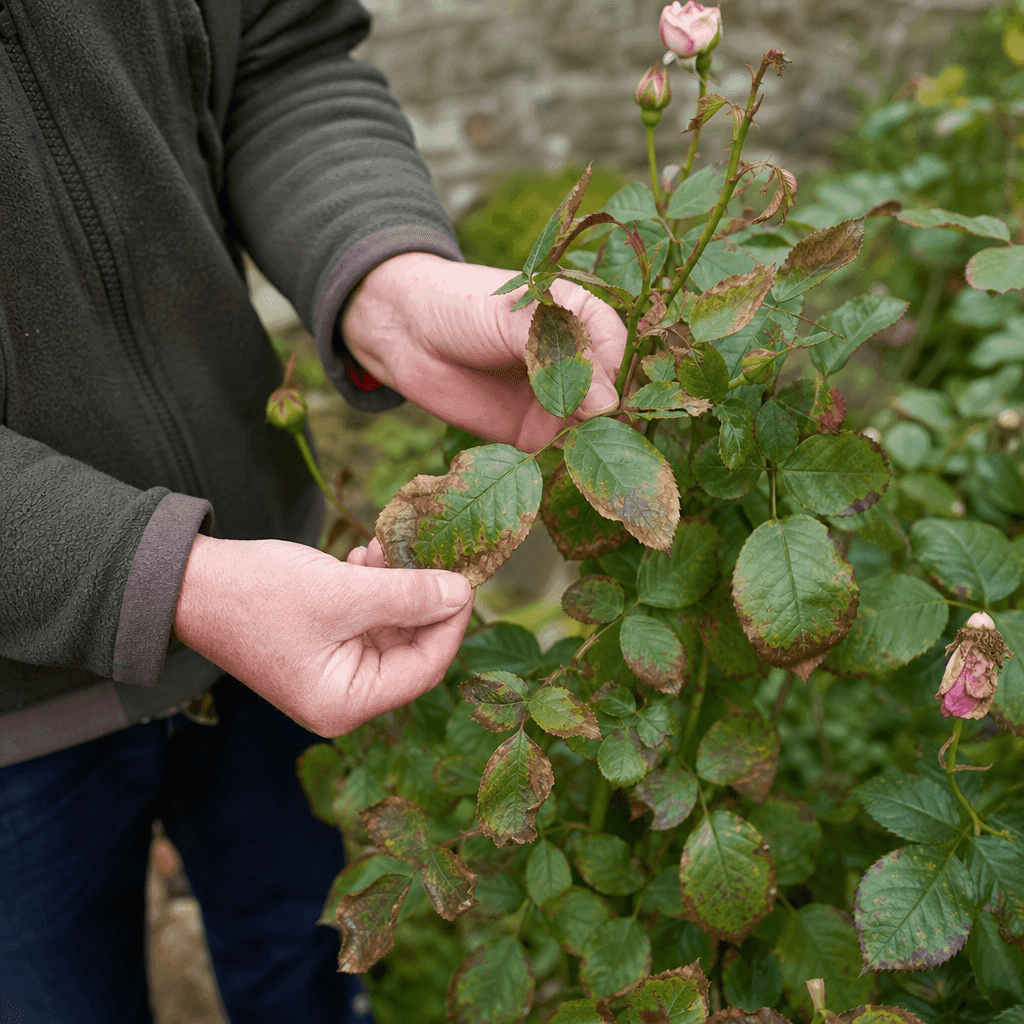
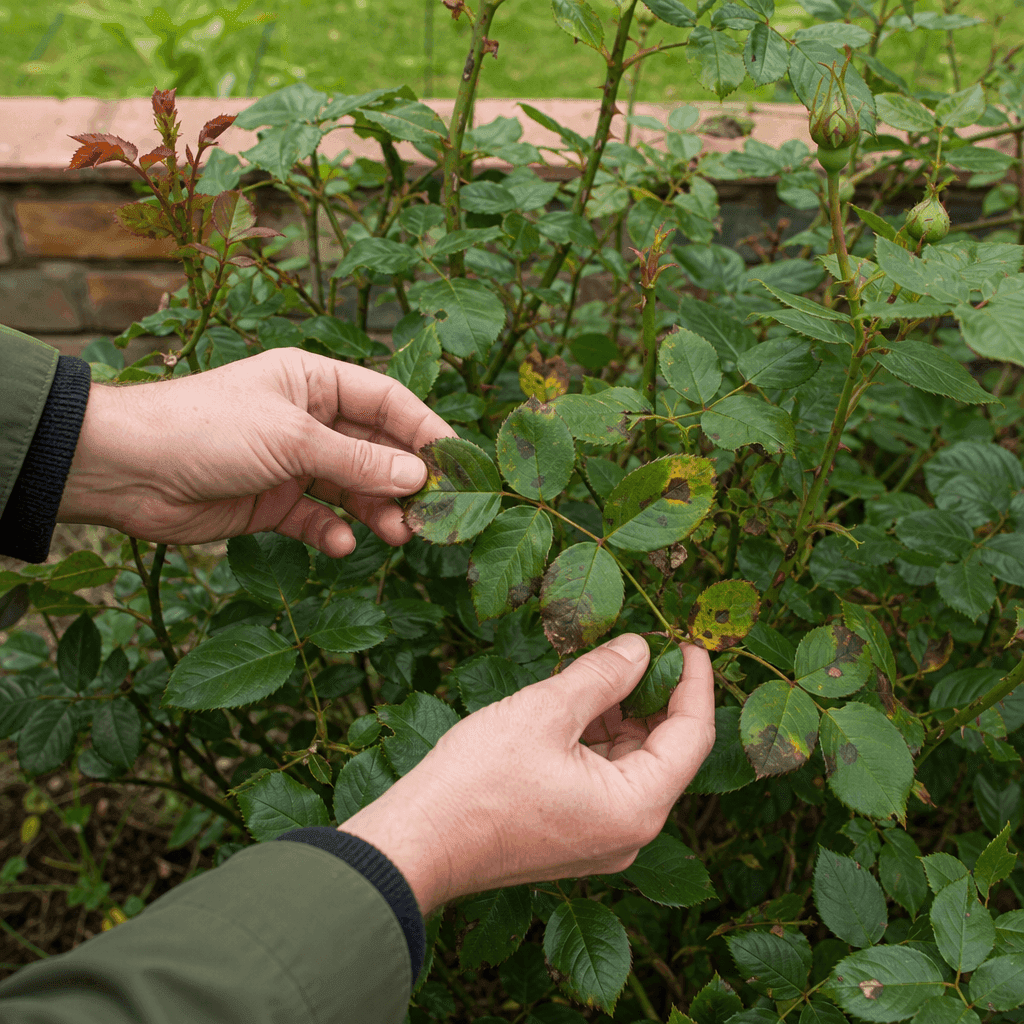
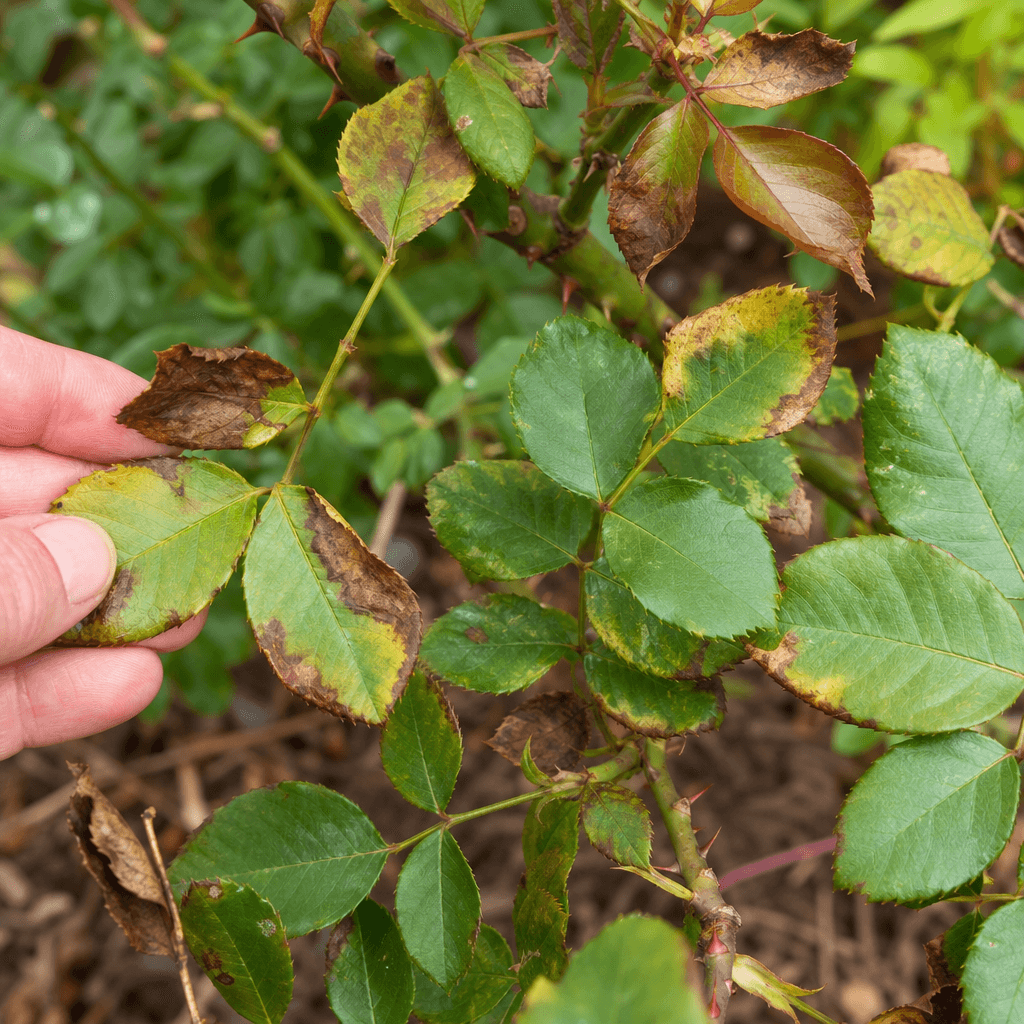
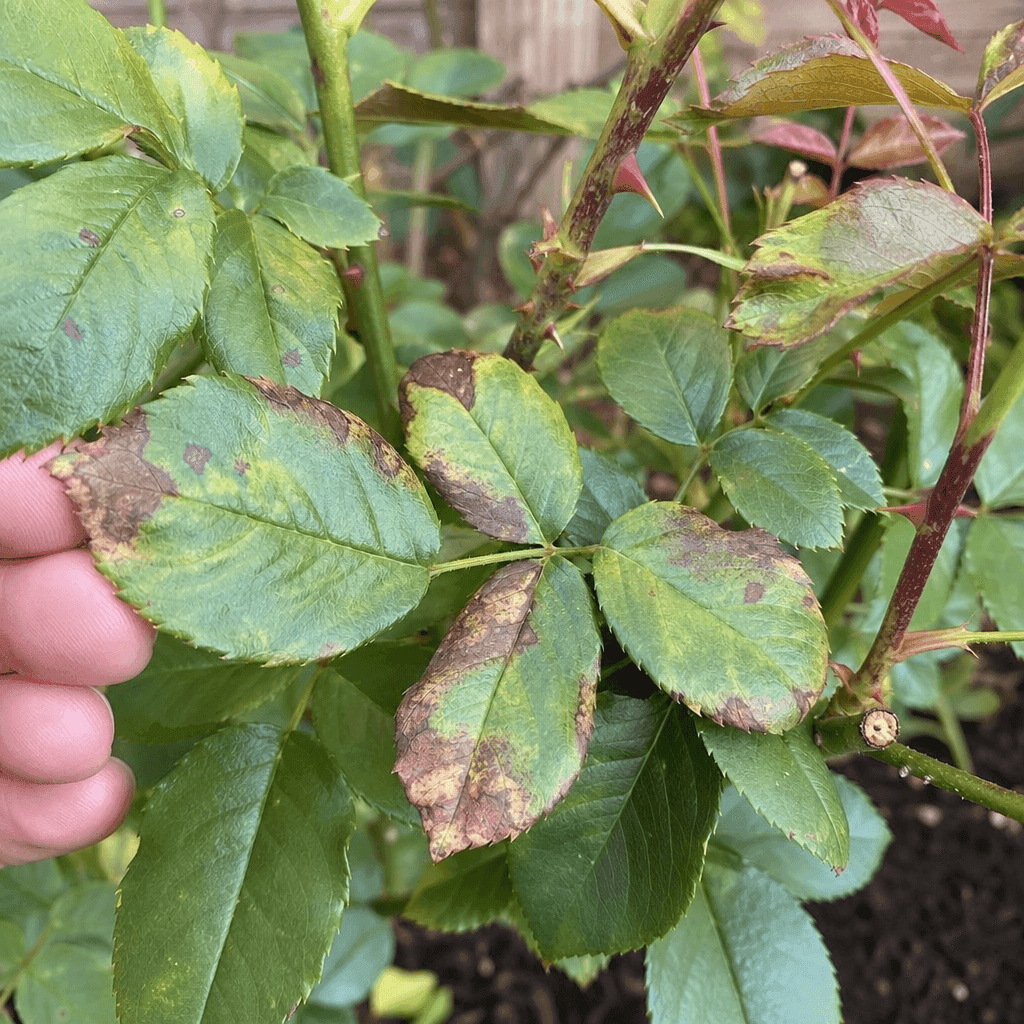
| Purple-black circular spots on leaves, surrounded by yellow halos; leaves drop early | Rose black spot | High | Spots are embedded in the leaf tissue — they cannot be wiped away. Worst after wet weather. | Remove and bin fallen leaves; improve airflow; consider disease-resistant varieties for future. | High |
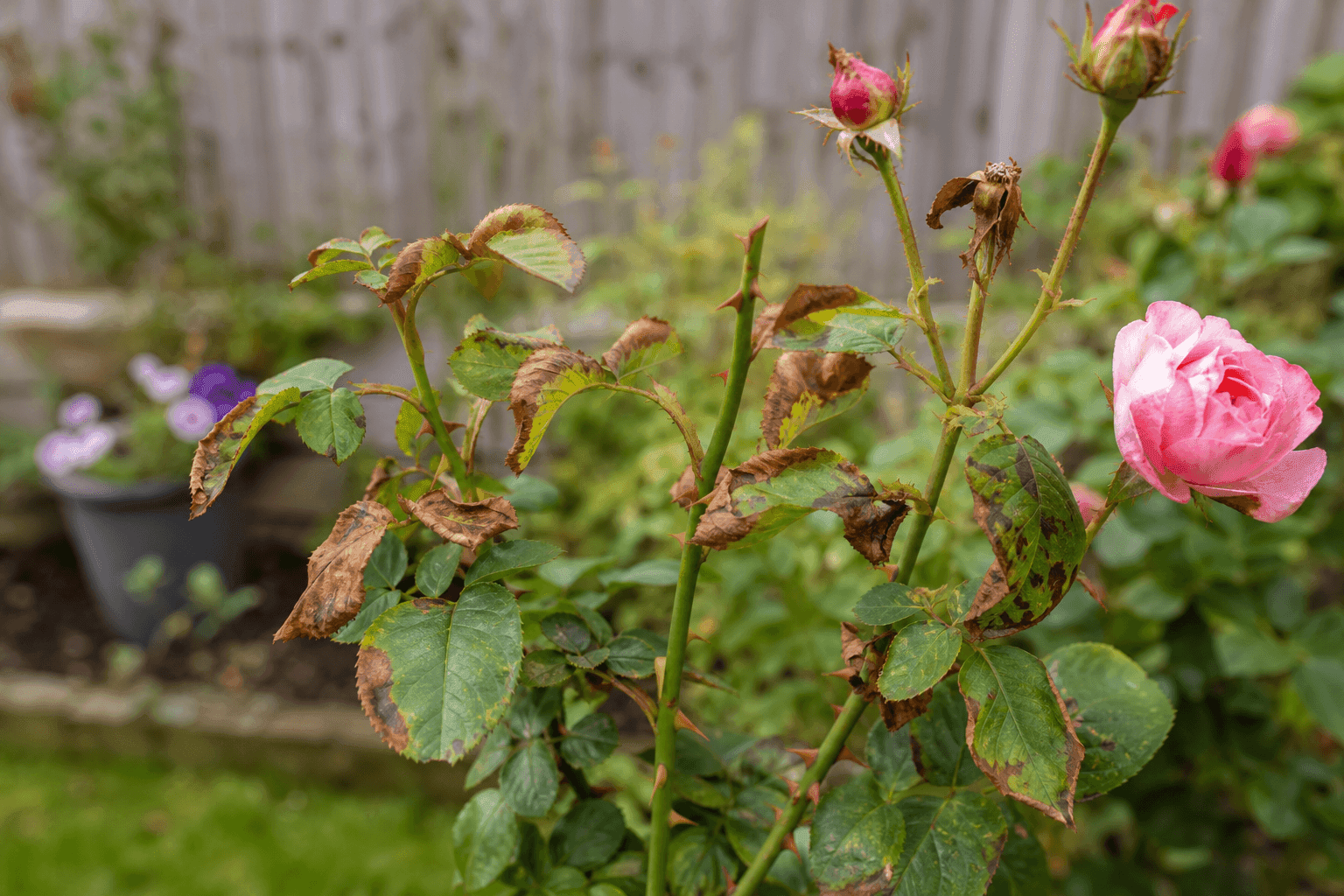
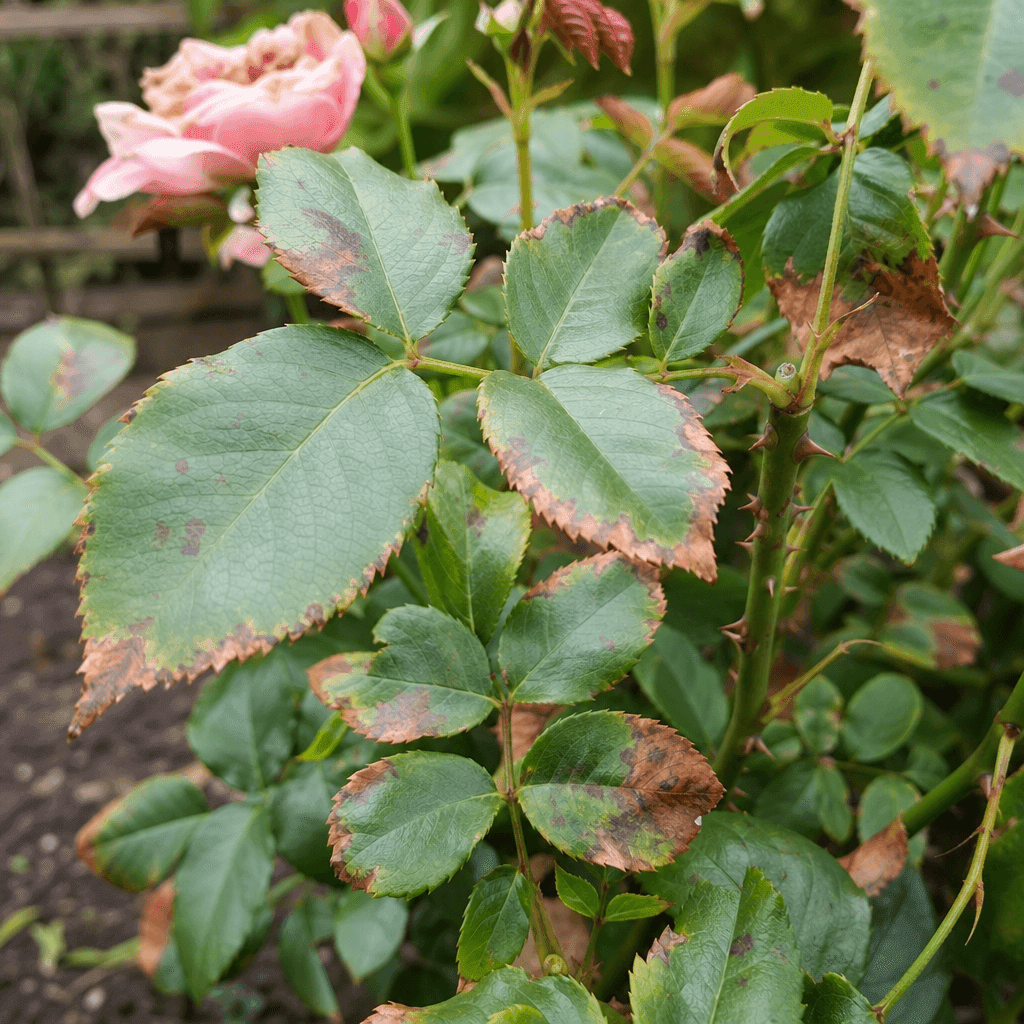
| Brown tips or crispy edges on leaves, worst on the sunniest or most exposed side | Drought stress and heat scorch | High | Soil is dry below the surface; browning followed a hot, dry or windy spell. | Deep-water the root zone; mulch; water at the base, not over the leaves. | Medium |
| Orange pustules on leaf undersides; yellow patches on top; leaves drop | Rose rust | Medium | Turn the leaf over — orange, then black, spore pustules are on the underside. | Remove affected leaves; improve airflow; choose rust-resistant varieties. | Medium |
| Whole stems or canes browning from the tip downwards | Rose dieback | Medium | Brown progresses downward from cut or damaged stem tip; internal wood may be brown. | Prune to healthy white pith; cut at 45 degrees above an outward-facing bud; disinfect secateurs. | Medium |
| White powdery coating on young leaves and buds; leaves may brown and distort | Powdery mildew | Medium | White or grey powdery film that can be rubbed off; worst in dry spells after warm days. | Improve watering consistency; prune congested growth; avoid drought stress. | Low–medium |
| Distorted stems with orange pustules in spring; looks like a gall or deformity | Rose rust on stems | Low | Orange powdery pustules on distorted stem tissue; more common on some older varieties. | Prune out affected stems and bin them; disinfect tools between cuts. | Medium |
| Lower leaves yellowing and browning; soil stays wet for days; plant looks weak | Waterlogging and root stress | Medium | Soil is wet and poorly drained; pot may have no drainage holes; root smell is sour. | Improve drainage; stop watering until soil partly dries; mulch but do not pile at the stem. | High |
The causes, in detail
Rose black spot
Most likelyRose black spot, caused by the fungus Diplocarpon rosae, is described by the RHS as the most serious disease of roses and the single most widespread reason for leaf browning and early leaf drop in UK gardens. It thrives in wet conditions — spores spread via rain splash from infected debris on the ground — and a wet spring or summer can cause significant defoliation. The characteristic signs are purple-black circular blotches embedded in the leaf tissue, usually with yellowing around them. The spots cannot be wiped away (unlike powdery mildew) because they are inside the leaf. Repeated severe infections weaken the plant significantly over several seasons. If the leaves are also yellowing around the spots, see our guide to rose leaves with yellow patches and black spots to confirm the diagnosis.
- Purple-black circular blotches are embedded in the leaf surface — they cannot be wiped away.
- The area around the spots turns yellow, and the leaves often drop before autumn.
- Symptoms are worst after wet weather and spread upward from lower leaves.
- Fallen leaves beneath the plant show the same spots.
- Remove and bin all affected leaves from the plant and the ground beneath it — do not compost them.
- Keep the ground clear of fallen leaves throughout the season, as they are the primary source of reinfection.
- Water at the base, never over the leaves — wet foliage encourages spore germination.
- Prune to improve airflow through the plant.
- Choose disease-resistant varieties for future planting — the RHS Award of Garden Merit list includes many resistant selections.
Stop it coming back:Existing spotted leaves will not clear. Look for clean new growth as a sign the plant is recovering. Resistant varieties will never be completely immune but will be significantly less affected.
compost diseased leaves — the spores persist and can reinfect through a home compost heap. Do not spray with unapproved homemade mixtures.
Drought stress and heat scorch
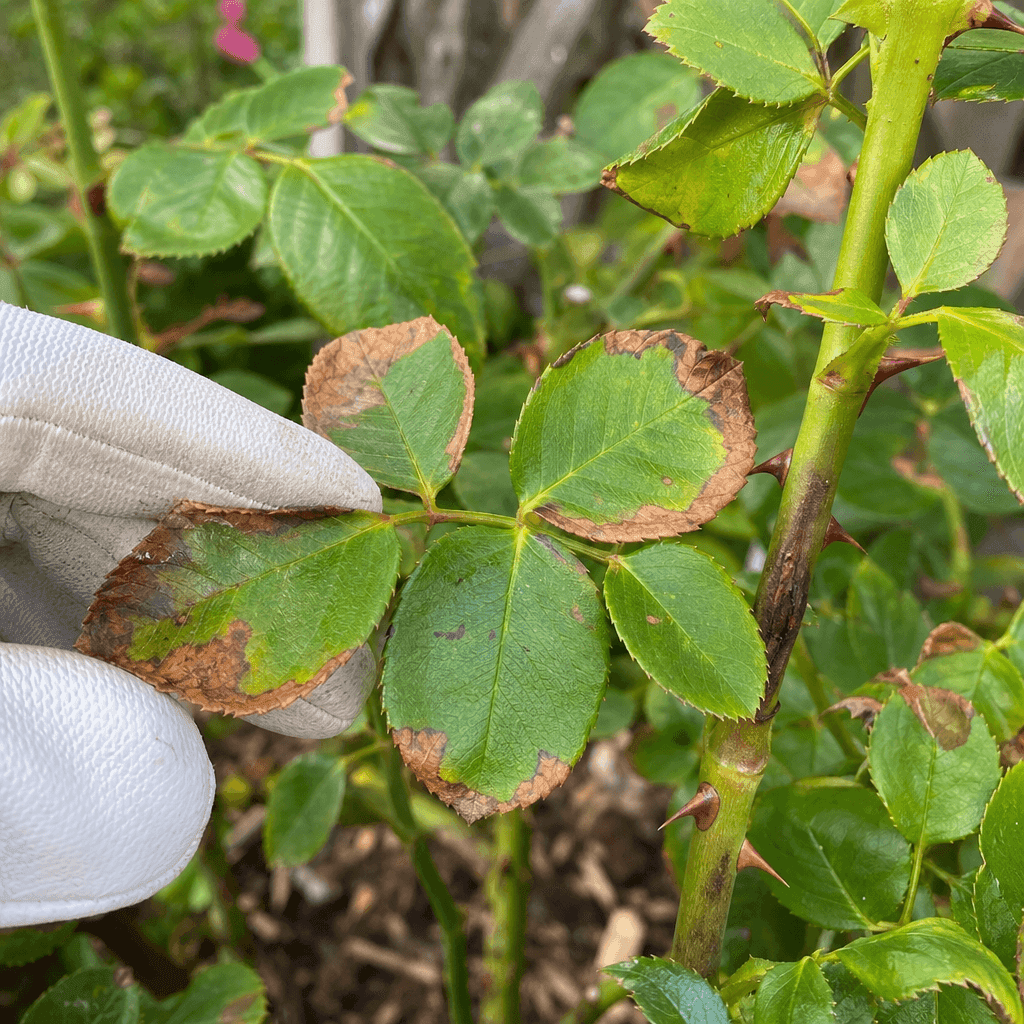
Most likelyIn a typical UK summer, roses — especially those in pots, against south- or west-facing walls, or in sandy or shallow soil — can suffer drought stress and heat scorch. The browning looks different from black spot: the damage typically starts at leaf tips and edges, often the sunniest or most windward side of the plant, without the circular blotching or yellow haloes of fungal disease. The RHS notes that weather damage including drought is a common cause of browning and dieback in roses. Drought-stressed roses are also significantly more susceptible to powdery mildew.
- The soil is dry below the surface when tested with a finger.
- Browning is at leaf tips and edges, worst on the sunniest or most exposed side.
- Browning followed a dry, hot or windy spell, or watering was missed.
- No circular spots embedded in the leaf tissue.
- Water deeply at the base — a slow, deep soak is far more effective than a quick surface splash.
- Apply a 5 cm mulch of garden compost or well-rotted bark around the root zone, keeping it clear of the stem.
- In pots, check moisture daily in warm weather and water until it drains from the bottom.
- Move potted roses to a slightly less exposed position in extreme heat if possible.
Stop it coming back:Brown, scorched leaf edges will not green up. Look for healthy new growth as a recovery indicator. A well-mulched rose in good soil rarely suffers severe scorch.
feed a drought-stressed rose to 'boost' it — feed pushes soft growth that wilts more easily. Rehydrate first.
Rose rust
PossibleRose rust, caused by the fungus Phragmidium species, produces bright orange spore pustules on the undersides of leaves in summer, with corresponding yellow patches on the upper surface. As the season progresses the spores turn dark brown or black. The RHS describes it as disfiguring and potentially debilitating for susceptible varieties, though some modern roses have reasonable resistance. It is most common in warm, humid summers and spreads quickly once established.
- Turn the leaf over — orange pustules are on the underside, not on top.
- Yellow-orange patches are visible on the upper leaf surface above the pustules.
- Distorted stems with orange pustules may appear in severe cases.
- Remove and bin affected leaves, including any that have fallen.
- Prune congested stems to improve air movement through the plant.
- Water at the base to keep foliage dry.
- In severe cases, a fungicide labelled for rose rust may slow spread but will not cure existing infections.
Stop it coming back:Rust recovery is slow. Damaged leaves will not recover, but new clean growth is a sign the plant is containing the infection.
look only at the top of the leaf — rose rust pustules are on the underside and are frequently missed on a quick inspection.
Rose dieback
PossibleRose dieback — the progressive browning and death of whole stems or canes from the tip downward — is caused by a combination of factors including weather damage, physical injury (poorly healed pruning cuts, frost, wind rock), and secondary fungal infections including grey mould (Botrytis) and various canker pathogens. The RHS describes it as not uncommon on roses and notes it can follow poor pruning technique, frost damage, disease or any combination of these. Internal stem tissue in affected canes is often brown or tan rather than creamy white.
- Browning progresses downward from the tip of a cane or from a pruning cut.
- The internal pith of the stem is brown or tan when the cane is cut across.
- Healthy stems are still green inside.
- There may be a canker — a sunken, discoloured area — at the base of the dying cane.
- Prune back into healthy white wood — cut at a 45-degree angle above an outward-facing bud.
- Disinfect secateurs between cuts with a garden disinfectant or 70% isopropyl alcohol.
- Remove all prunings from the garden — do not compost them.
- Check that remaining canes are tied in properly to prevent wind rock, which can crack stems and allow disease entry.
- In spring, prune canes back further if any remain with brown pith inside.
leave dead or dying canes in place over winter thinking they will recover — diseased canes harbour spores that spread to healthy tissue.
Powdery mildew
PossibleRose powdery mildew, caused by the fungus Podosphaera pannosa, appears as a white or grey powdery coating on young leaves, shoots and buds. Unlike most fungal diseases, it thrives in dry conditions with warm days and cool nights — making it common in UK summers. The RHS notes that drought-stressed roses are significantly more susceptible. Affected leaves may curl, brown at the edges, and drop early. In severe cases the new growth is so distorted it fails to develop properly. For a full walkthrough of treatment and prevention, see our dedicated guide to powdery mildew on roses.
- White or grey powdery coating on young leaves and shoot tips — this can be rubbed off with a finger.
- Worst on new growth, not old leaves.
- More prevalent during dry spells rather than wet weather (unlike black spot).
- The plant may have been drought-stressed.
- Improve watering consistency — drought stress dramatically increases susceptibility.
- Prune congested growth to improve airflow.
- Remove and bin the worst affected young shoots and leaves.
- Avoid high-nitrogen feeding that promotes soft, susceptible new growth.
Stop it coming back:Infected growth will not recover. Prevent reinfection by maintaining steady watering and avoiding excess nitrogen fertiliser.
assume wet conditions are to blame — powdery mildew thrives in dry air, unlike black spot, which is worst in wet weather.
Waterlogging and root stress
PossibleRoses need well-drained soil. In heavy clay, compacted ground, or pots without effective drainage, roots become oxygen-starved in wet conditions. The result is yellowing and browning of lower leaves, weak growth, and a plant that looks simultaneously wet and stressed. This is more common in autumn and winter, or after prolonged wet spells, and is often exacerbated in new-build gardens with compacted subsoil beneath a thin layer of topsoil.
- The soil stays wet for days after rain and does not drain well.
- Lower leaves are yellowing and browning while the soil is wet.
- There may be a sour smell from the soil surface.
- Do not add more water — assess drainage first.
- In pots, check that drainage holes are open and raise the pot on feet.
- In heavy clay, incorporate organic matter and consider planting roses in slightly raised beds.
- In waterlogged ground, improve drainage before replanting.
assume browning in wet conditions is always black spot — waterlogging can produce very similar symptoms but requires opposite management.
Still not sure?
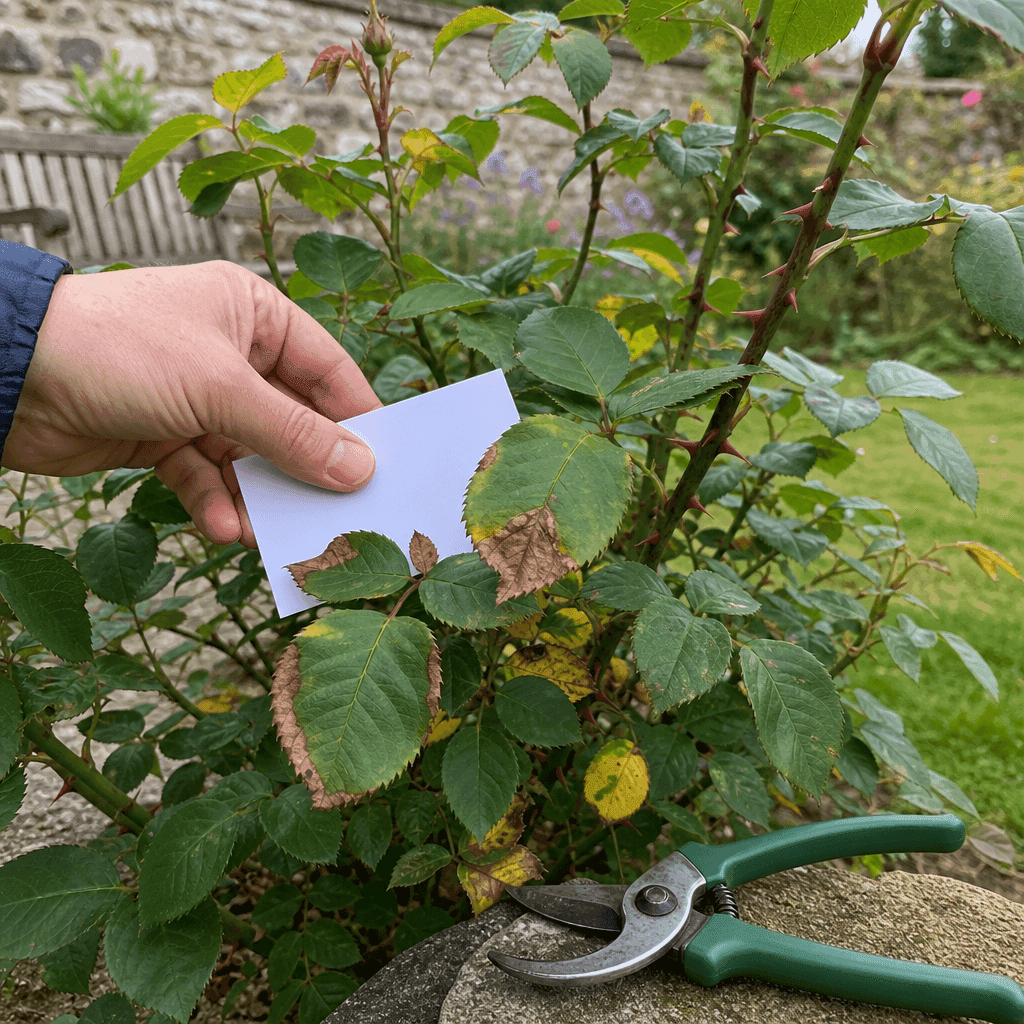
Work down these branches — the first one that matches is your answer.
What not to do
- Compost leaves affected by black spot or rust — bin them instead.
- Water over the leaves — always water at the base to avoid spreading fungal spores.
- Feed a drought-stressed or diseased plant as your first response.
- Leave dead or dying canes in place — remove them promptly to reduce disease spread.
- Spray with unapproved homemade mixtures (vinegar, washing-up liquid) — these can scorch foliage.
Common questions
What causes brown spots on rose leaves?
The most likely cause in the UK is rose black spot (circular purple-black spots with yellow halos). Other causes include rose rust (orange pustules on the underside), drought scorch (brown edges after dry weather), and powdery mildew (white coating that turns brown). Check the pattern and which side of the leaf is affected to distinguish between them.
How do I treat rose black spot organically?
There is no organic spray that cures black spot, but good hygiene is very effective. Remove and bin all affected leaves from the plant and the ground. Water at the base only. Prune to improve airflow. Choose resistant varieties for future planting — the RHS provides an Award of Garden Merit list of resistant roses.
Should I remove brown leaves from my rose?
Remove leaves that are clearly diseased (spotted, covered in rust pustules or mildew), dead, or have fallen to the ground. Leave lightly marked but still-green leaves on the plant — removing all foliage causes more stress than the disease itself.
Can a rose recover from black spot?
Yes, especially if it is a relatively resistant variety and care is improved. Existing spotted leaves and fallen leaves will not recover, but clean new growth is a good sign. Severely defoliated roses that are otherwise vigorous can regenerate new foliage.
Why are the tips of my rose leaves turning brown?
Brown leaf tips usually indicate drought stress, fertiliser burn, or a combination of both. Check whether the soil is dry below the surface and whether the plant has been fed recently. Deep watering and mulching usually resolve this. It is distinct from black spot, which causes embedded circular blotches.
What is rose rust and how do I identify it?
Rose rust is a fungal disease producing bright orange pustules on the underside of the leaves. Yellow patches appear on the upper surface above the pustules. It is most common in summer. To identify it, turn the leaf over — if the orange is on the underside, it is rust, not black spot.
When should I prune a rose with dieback?
Prune as soon as dieback is noticed. Cut at a 45-degree angle into healthy white-pith wood, above an outward-facing bud. Disinfect secateurs between cuts with a garden disinfectant to avoid spreading disease. Leave the cut clean and slanted to shed rain. If you are unsure whether dieback is the real culprit, our rose problems diagnosis guide helps narrow down leaf, stem and flower issues.