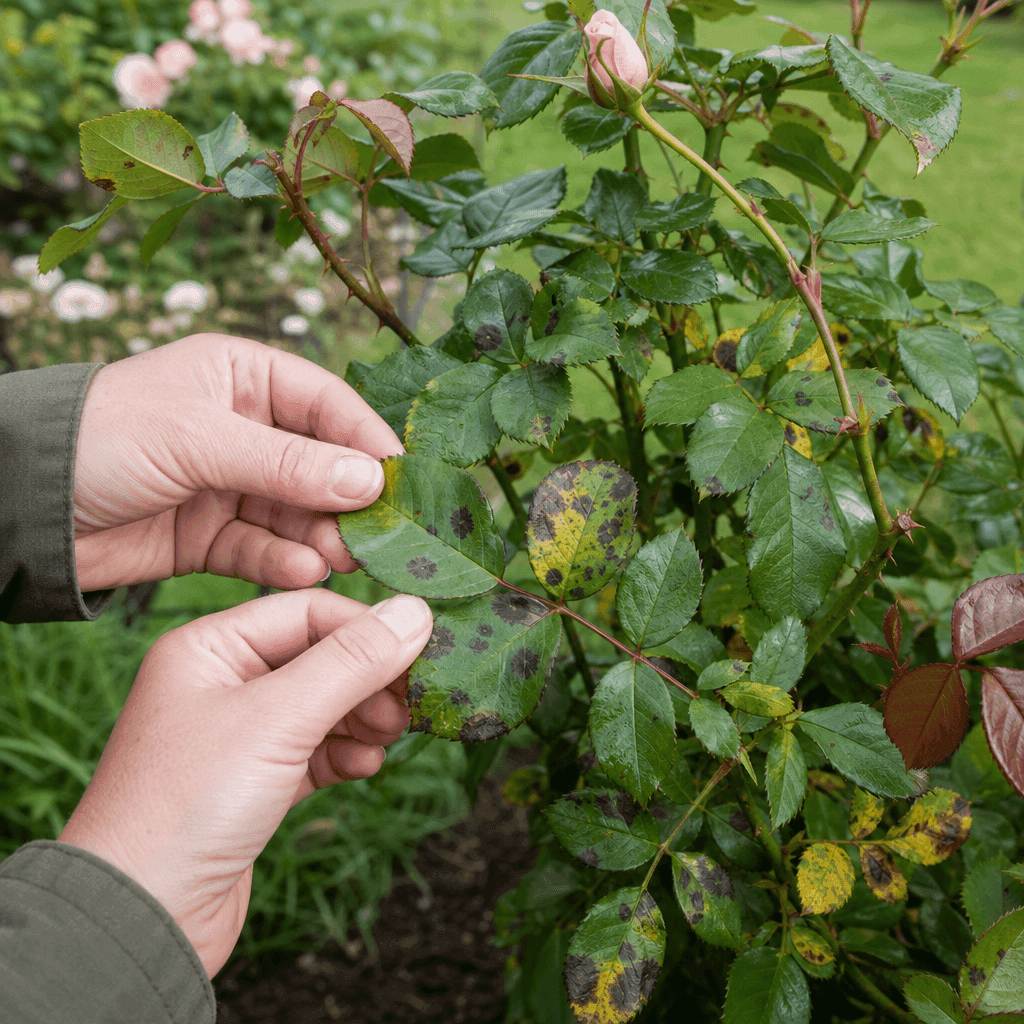
Quick diagnosis
Match the row to what you’re seeing, then jump to the fix.
| What you see | Likely cause | Confidence | How to confirm | What to do now | Urgency |
|---|---|---|---|---|---|
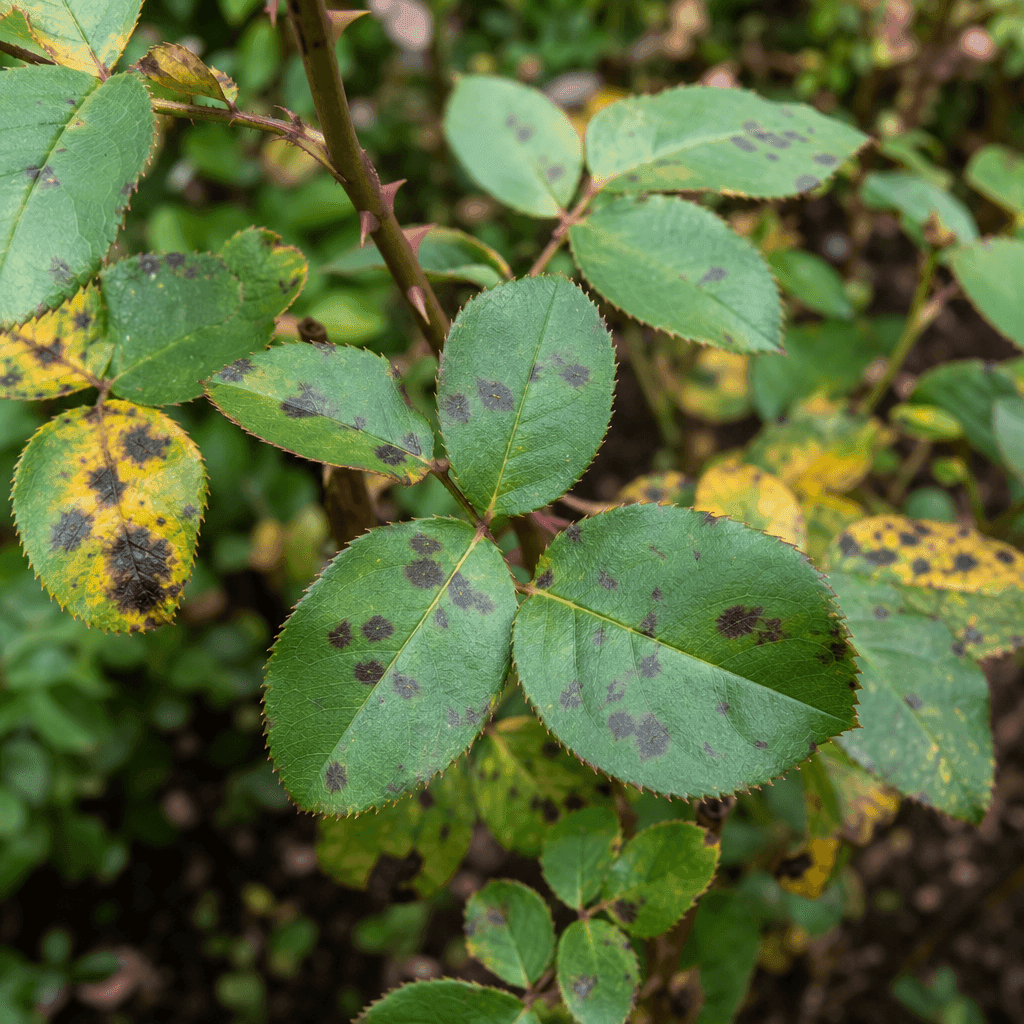
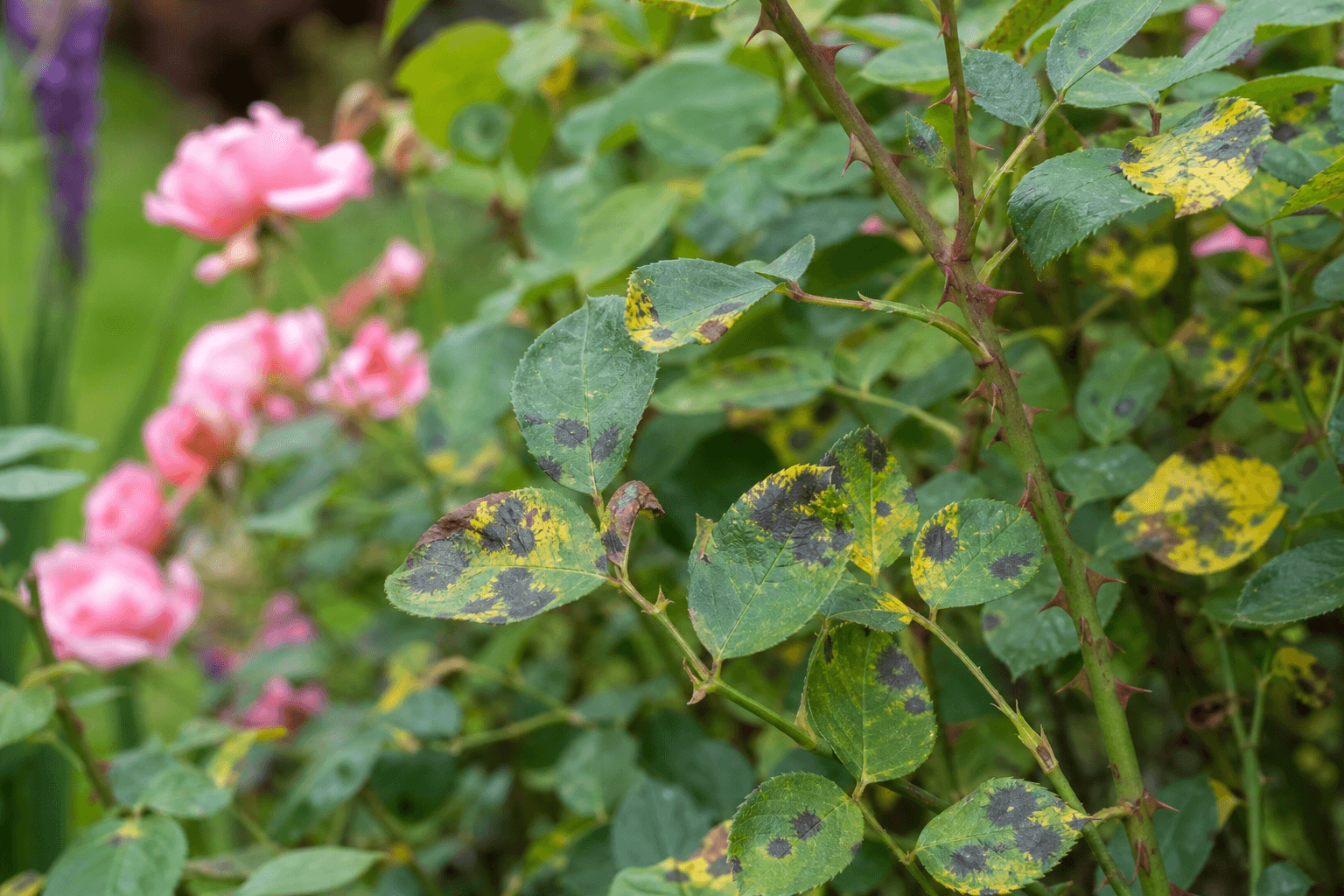
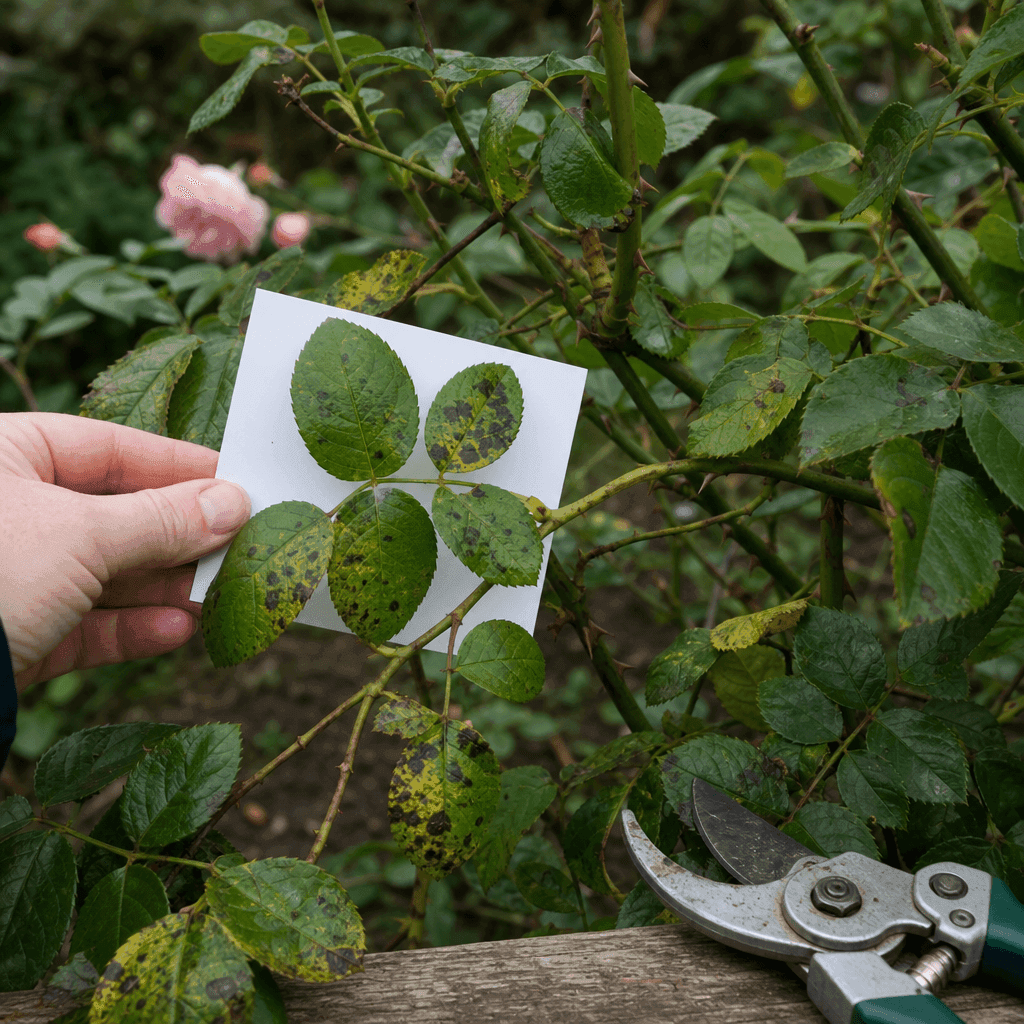
| Purple-black or black blotches on the upper leaf surface, yellow halos, leaves dropping early | Rose black spot | High | Spots are irregular or feathery-edged; worse after wet weather; lower and inner leaves often first. | Pick off the worst leaves, collect fallen leaves, mulch soil, water at the base, prune for airflow. | High |
| Small round spots, purple at first, later tan or grey in the centre with a darker border | Cercospora leaf spot | Medium | Spots look neater and more circular than black spot; centres fade tan-grey as tissue dies. | Use the same hygiene and dry-leaf routine as black spot; avoid overhead watering. | Medium |
| Yellow speckles on top with orange, dusty pustules underneath; pustules may turn black later | Rose rust | Medium | Rub the underside with tissue — orange powder transfers; check young stems for spring pustules. | Remove infected leaves, prune spring stem infections, collect fallen leaves. | Medium |
| Dark smears or black sooty coating plus sticky leaves, aphids clustered on buds or shoot tips | Pest damage with sooty mould | Medium | Look for green/pink/black aphids, white cast skins, honeydew, ants, distorted new growth. | Squash small colonies by hand, encourage predators, wash honeydew from leaves if practical. | Low–medium |
| Black spot started after rain, sprinkler use, dense growth or leaves touching soil | Water splash spreading fungal spores | High | Wet leaves stay damp for hours; symptoms begin low down or inside a crowded plant. | Change watering method, mulch, space canes, remove fallen leaves. | High |
| A few old lower leaves yellow and drop late in the season, with only minor spotting | Old leaves plus background disease pressure | Medium | New growth is clean, plant is otherwise vigorous, problem is late summer or autumn. | Remove fallen leaves and monitor; do not panic-feed. | Low |
| Pale leaves, weak growth, few flowers, small scattered spots but no classic black spot pattern | Nutrient or root stress making disease worse | Medium | Soil is dry, waterlogged or compacted, or the rose is unfed; yellowing is broad, not spot-centred. | Correct watering, mulch, feed in the growing season, then reassess the spots. | Medium |
The causes, in detail
Rose black spot
Most likelyBlack spot is the most likely diagnosis when yellowing wraps around dark, irregular spots. The RHS describes it as the most serious of all fungal plant diseases affecting roses in the UK, caused by the fungus Diplocarpon rosae. It can appear from spring onwards, and in a damp UK summer it moves quickly because the fungus produces spores in the spots and spreads in water.
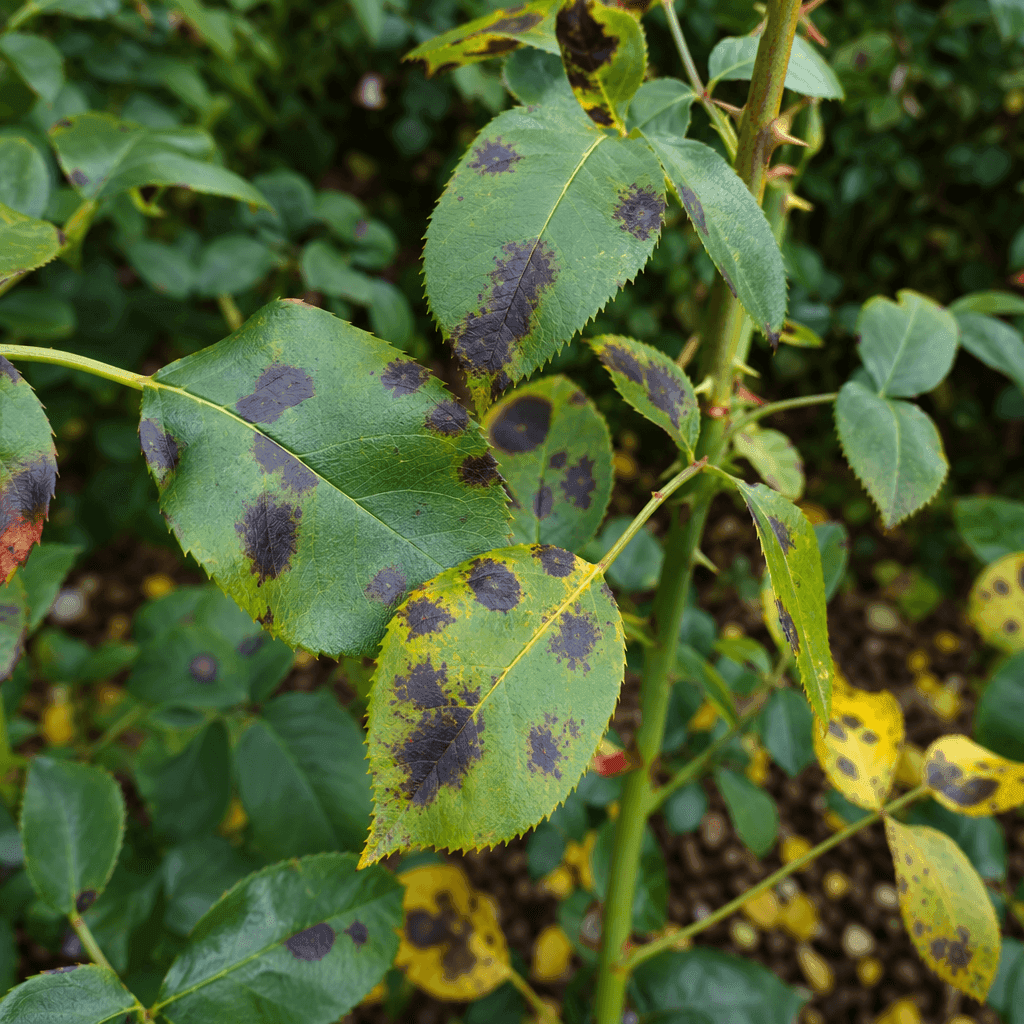
- Purple-black or black patches, usually on the upper leaf surface.
- Soft, irregular, feathery or radiating edges rather than neat pin-pricks.
- Yellowing around the spots before the leaf drops.
- Fallen yellow leaves under the rose, from the lower or inner plant first.
- Remove the worst infected leaves where the rose still has enough foliage to function.
- Collect fallen rose leaves and dispose of diseased material carefully — never leave it under the plant.
- After clearing, apply about 5cm of organic mulch to reduce rain splash from soil onto new leaves.
- Water the soil, not the leaves; avoid sprinklers on roses with a black-spot history.
- Prune for airflow at the normal pruning time, and feed sensibly in the growing season.
Stop it coming back:Existing spotted leaves will not green up. After hygiene and watering changes you may see fewer new spots within 2–4 weeks in dry weather. Keep up hygiene through autumn and winter so fewer spores overwinter.
rely on vinegar, washing-up liquid or baking-soda mixes — the RHS warns homemade sprays are unregulated and usually untested; and do not strip a weak rose bare in one go.
Cercospora leaf spot (the common lookalike)
PossibleCercospora leaf spot is another fungal leaf spot of roses, often confused with black spot because both cause spotting, yellowing and leaf loss. It is one of several common rose problems that look alike at a glance. UF/IFAS describes cercospora spots as circular lesions that often begin purplish, then enlarge with a tan-to-grey centre and a darker margin — more like a neat ring or target than the feathery black blotch of black spot.
- Spots are small, round and more regular than black spot.
- The centre of the spot fades tan or grey.
- There are no orange rust pustules underneath.
- The same shrub is affected even when nearby roses mainly show classic black spot.
- Remove badly spotted leaves and collect fallen leaves.
- Keep foliage as dry as possible by watering at soil level.
- Mulch after sanitation to reduce soil splash.
- Prune crowded roses so air moves through the plant.
- Avoid high-nitrogen overfeeding that produces soft, dense growth.
Stop it coming back:Affected leaves will not repair. Look for a lower rate of new spotting on young leaves over the next few weeks. In continued wet weather, expect some new lesions even after good care.
assume every dark spot is black spot if the lesions have pale grey centres, or spray repeatedly without improving hygiene and watering.
Rose rust
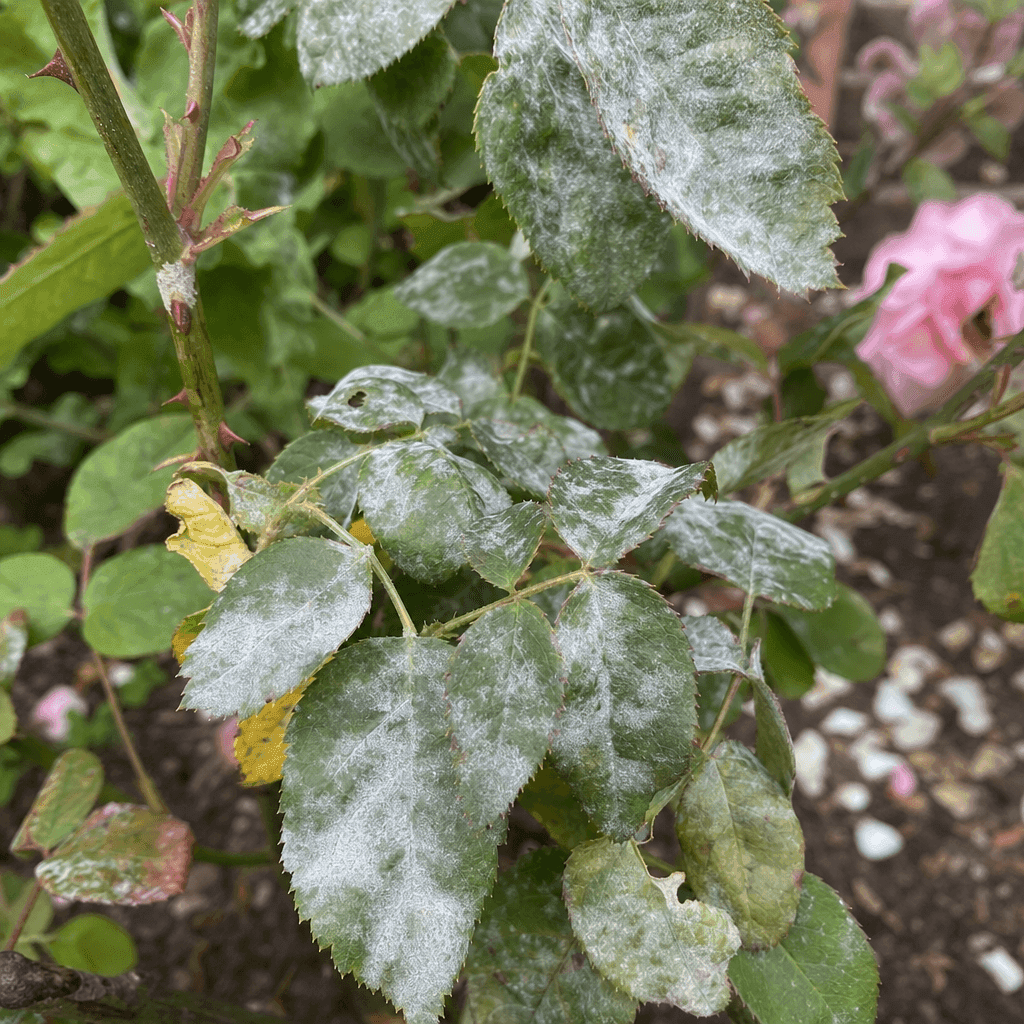
PossibleRose rust can make leaves yellow, but it usually gives itself away underneath the leaf. The RHS says rust produces yellow spots on the upper surface that correspond with orange spore pustules underneath; later in the season those pustules can turn black. Like powdery mildew on roses, it is a fungal infection that thrives in the wrong conditions, and while it is generally less serious than black spot it can still cause early leaf fall.
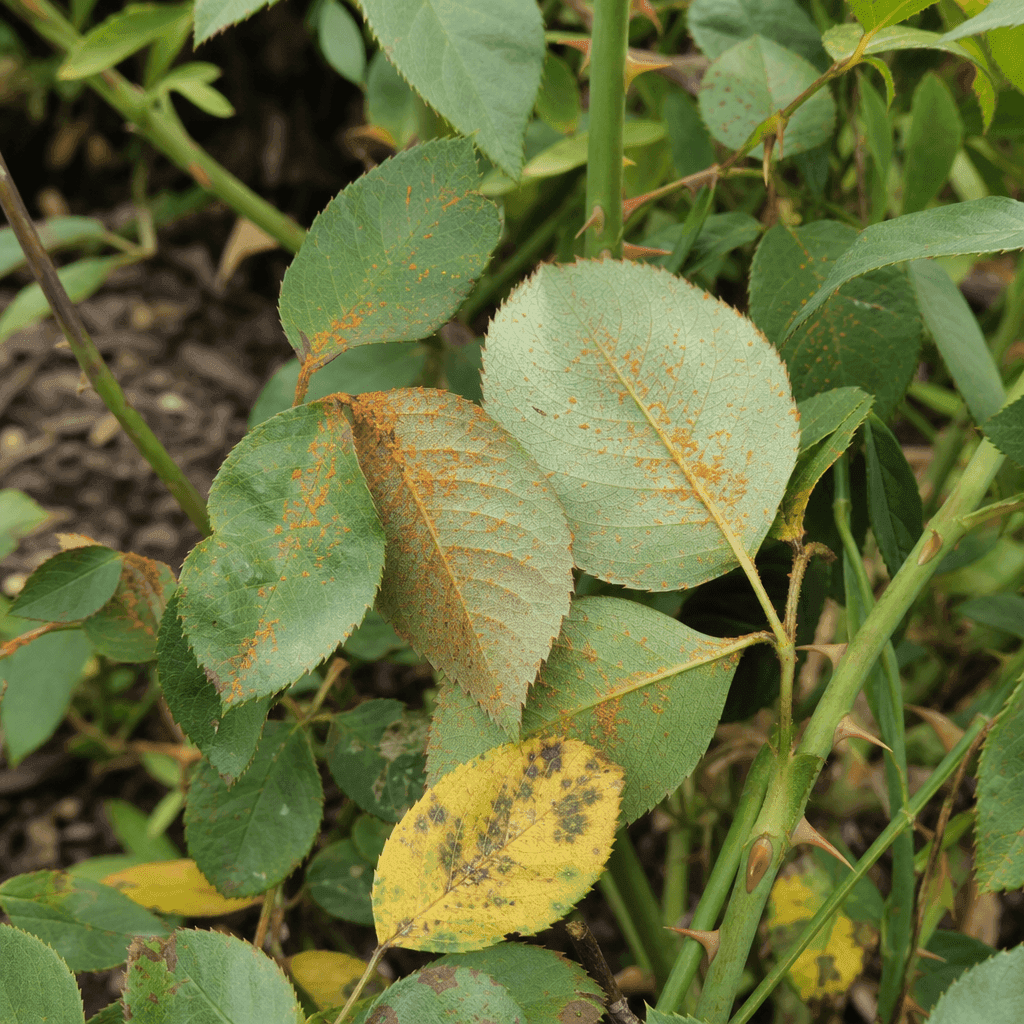
- Small yellow spots on the top of leaves.
- Orange dusty pustules on the underside directly below those yellow spots.
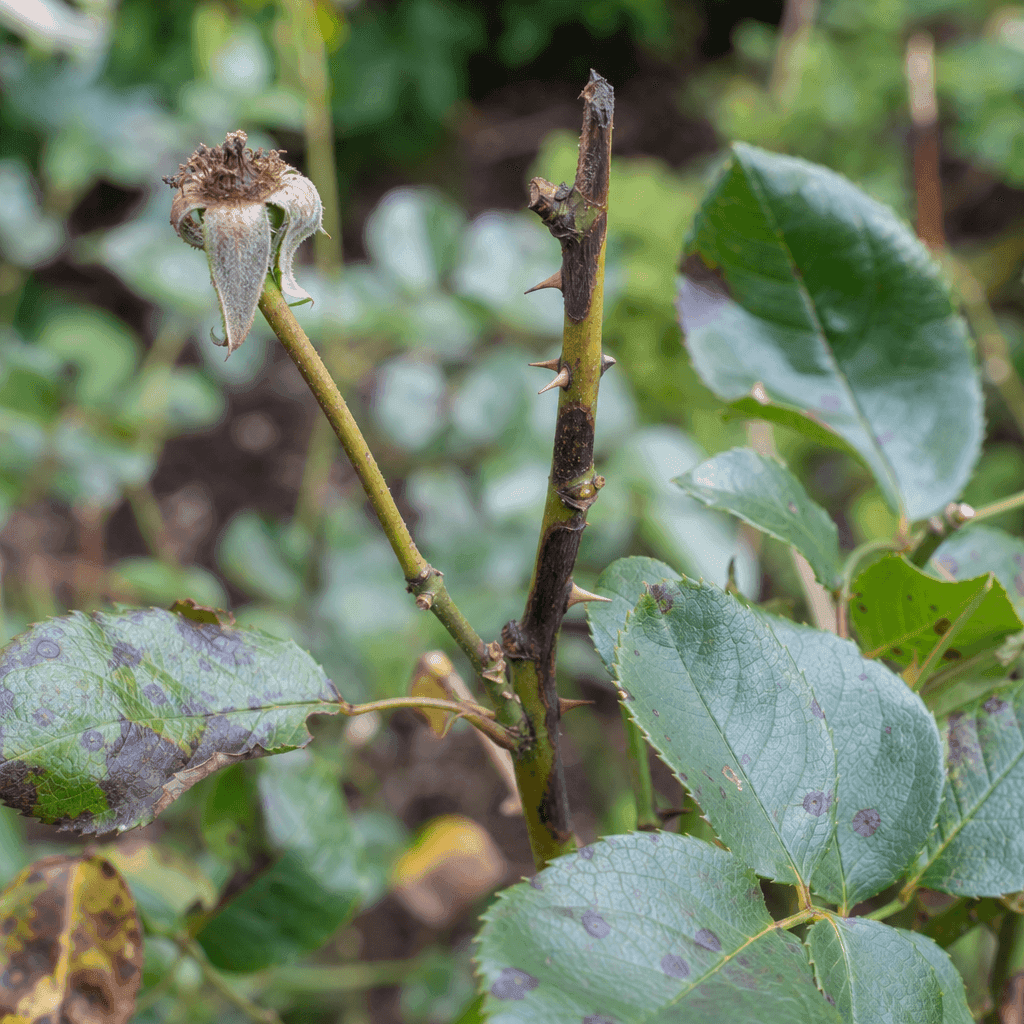
- Orange pustules on young stems in spring in some cases.
- Black pustules in late summer as overwintering spores form.
- Remove infected leaves as soon as you notice them, especially early in the season.
- Prune out obvious orange spring infections on stems.
- Collect and dispose of fallen leaves in autumn.
- Improve airflow through the plant.
- If the same rose suffers badly every year, consider a more resistant cultivar.
Stop it coming back:Once infected, leaves stay marked. Light rust often needs only removal and monitoring. Judge success by whether new leaves stay mostly clean over the next month.
diagnose rust from yellowing alone — the underside pustules matter — or leave fallen rust-infected leaves at the base over winter.
Pest damage and sooty mould
PossibleAphids on roses and other sap-suckers do not usually make classic round black-spot lesions, but they can cause sticky leaves, distorted new growth and a blackish sooty mould that grows on honeydew — easily mistaken for disease spots at a glance.
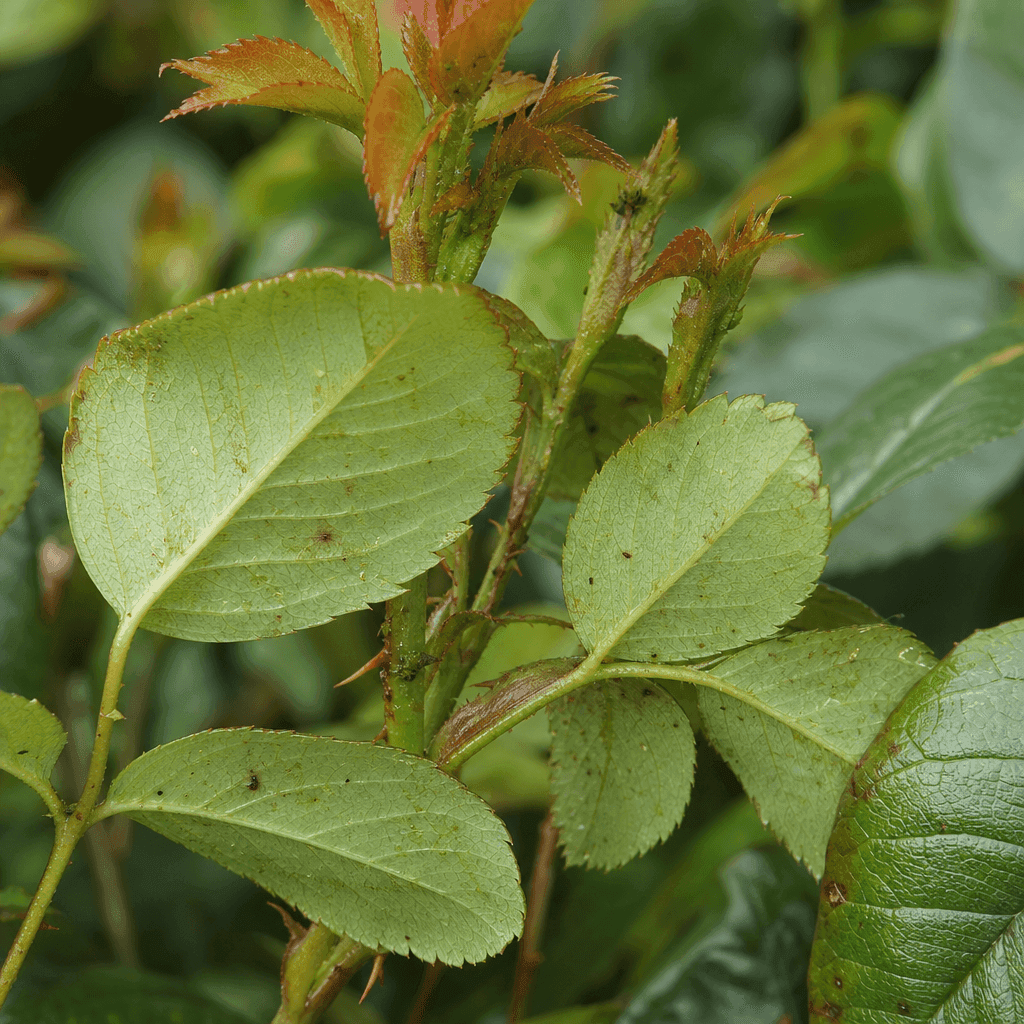
- Sticky leaves or stems, and green/pink/black aphids on shoot tips and buds.
- White cast aphid skins and ants moving around the plant.
- A black or brown sooty coating that sits on the surface rather than inside the tissue.
- Distorted young leaves or buds.
- On established roses, tolerate small aphid numbers because they support predators.
- Squash small colonies with finger and thumb where practical.
- Encourage ladybirds, hoverflies and parasitoid wasps by avoiding unnecessary insecticides.
- Wash honeydew from small plants with plain water in the morning so leaves dry quickly.
- Treat black spot separately if true lesions are also present.
Stop it coming back:Aphid colonies often fall as natural enemies catch up in summer. Distorted leaves may stay distorted, but new growth should look cleaner once pressure drops.
use a broad-spectrum insecticide just because you see a few aphids, or mistake sooty mould sitting on honeydew for fungal leaf spots.
Water splash and wet leaves
Most likelyWater splash is not a separate disease, but it is one of the main reasons rose leaf spots keep spreading. Black spot spores travel in water, and wet conditions are required for the disease to build. UK rain is unavoidable, but watering habits can make it much worse.
- The first spots appear on lower leaves close to bare soil.
- The rose is watered from above with a sprinkler or hose spray.
- Leaves stay wet overnight.
- Old diseased leaves are still lying under the rose.
- Water deeply at the base in the morning when needed.
- Add mulch after clearing diseased leaves.
- Remove weeds and crowded growth around the base.
- Prune to open the centre of the rose during its correct pruning window.
- Space new roses so leaves dry after rain.
Stop it coming back:Changing watering will not clean existing leaves, but it reduces reinfection pressure immediately. In dry spells you should see slower spread to new foliage.
mist roses with a hose because they look dusty, or water in the evening if foliage will stay wet overnight.
Old leaves (not always an emergency)
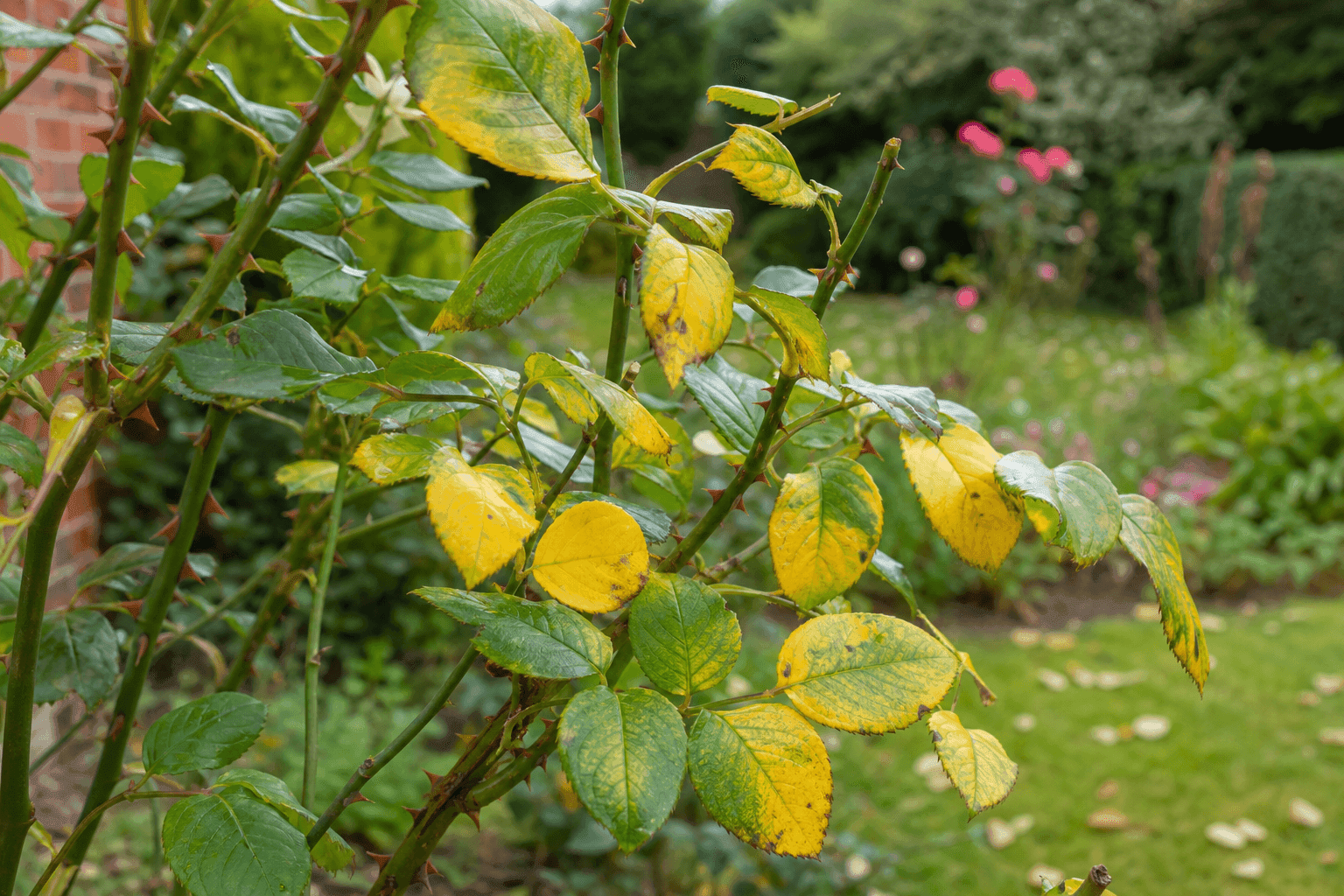
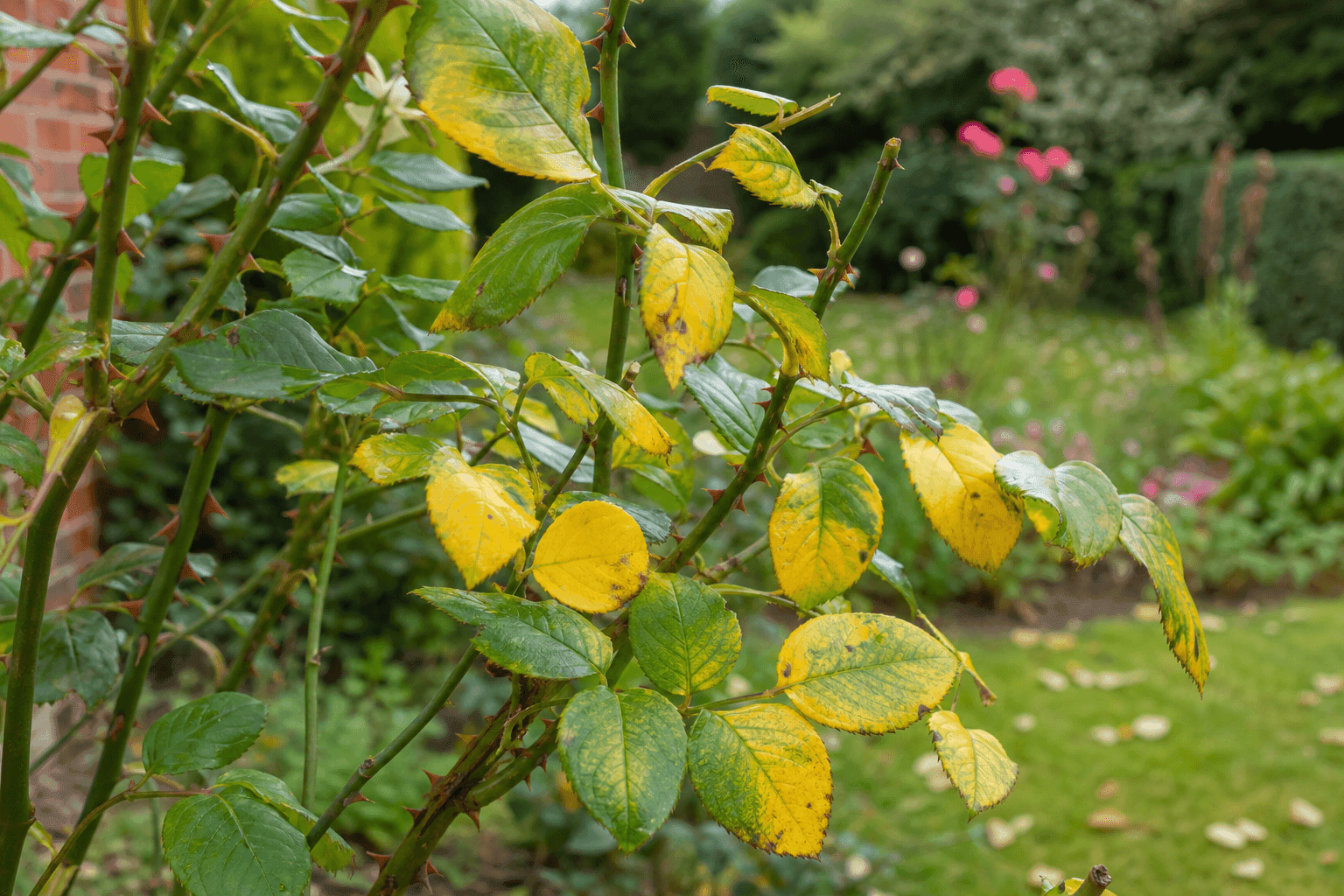
PossibleA few yellow leaves on an otherwise healthy rose are normal, especially on older lower leaves, after flowering flushes, during dry spells, or near the end of the growing season. The difference is scale and pattern.
- Only a small number of the oldest lower leaves are affected.
- New shoots are firm and green, and flower buds are developing normally.
- Yellowing is late summer or autumn rather than early spring.
- The spots are few and the problem is not racing up the plant.
- Remove fallen leaves during routine tidying.
- Keep watering consistent during dry weather.
- Mulch to keep roots cool and evenly moist.
- Monitor new growth for two weeks before feeding or spraying.
Stop it coming back:Normal old leaves do not recover — the plant simply carries on with healthy new foliage. If new leaves start spotting heavily, return to the black-spot and cercospora checks.
treat a few ageing leaves as a major outbreak, or apply late-season fertiliser to force soft new growth.
Nutrient or root stress (usually a contributor)
PossibleNutrient stress, drought, waterlogging and poor root conditions can turn rose leaves yellow. They do not usually create classic black spots by themselves, but a stressed rose tolerates disease less well and may defoliate faster.
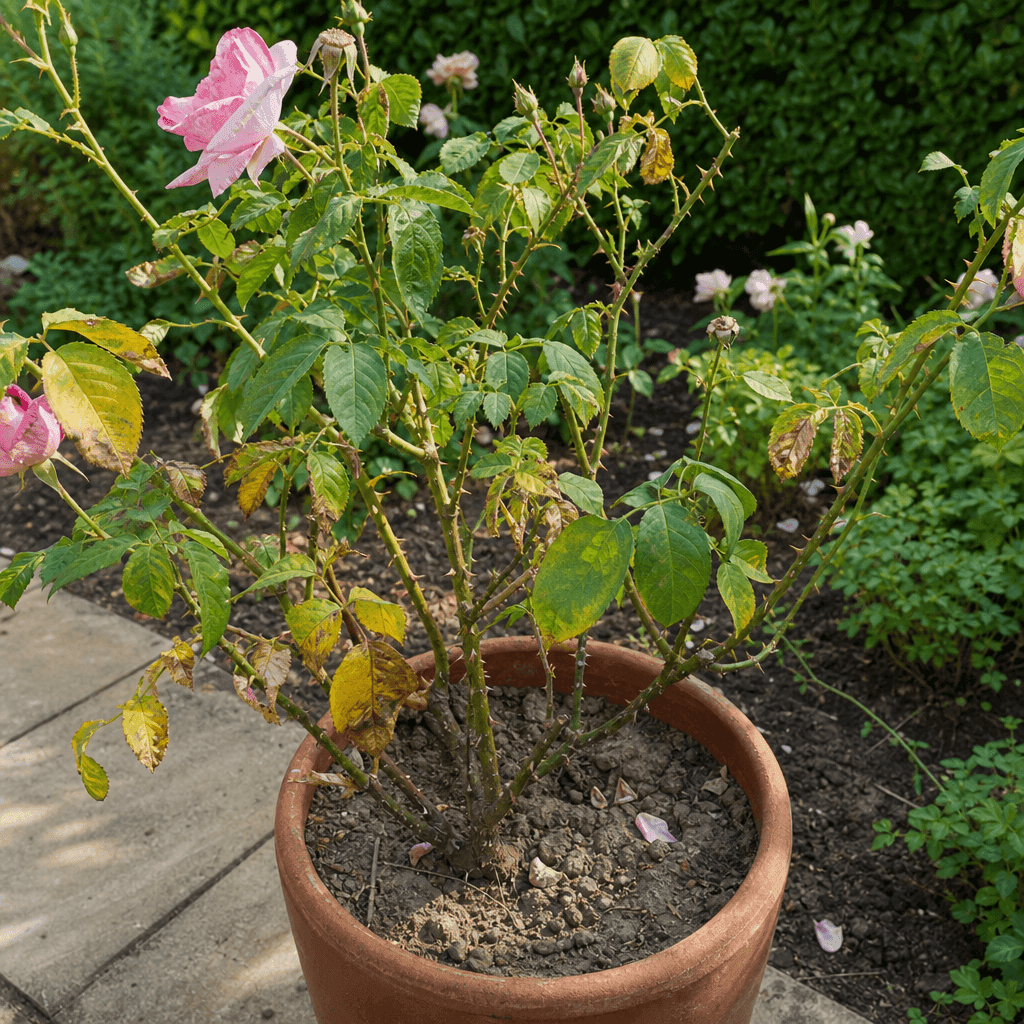
- Overall pale foliage rather than yellow halos around individual black lesions.
- Weak stems, poor flowering or small leaves.
- Dry soil pulling from the pot edge, or heavy wet soil with poor drainage.
- The rose has not been fed for a long time and growth is weak.
- Water deeply during dry spells, then let the top layer begin to dry before watering again.
- Improve container drainage — open holes, no standing water in the saucer.
- Mulch established border roses after watering.
- Feed in the growing season with a rose fertiliser at label rate; reduce competition from weeds.
- Repot a root-bound potted rose at the right time into a larger container.
Stop it coming back:Water-stressed roses may perk up within days, but yellow leaves will not green up. Nutritional improvements usually show in new growth over several weeks.
feed a waterlogged rose and expect recovery — fix drainage first — and do not blame nutrients for clear black-spot symptoms.
Still not sure?
Work down these branches — the first one that matches is your answer.
What not to do
- Reach for homemade vinegar, soap or baking-soda sprays — they are unregulated and can scorch foliage.
- Compost heavily diseased rose leaves in a cool home heap.
- Strip every leaf from a rose that still needs foliage to rebuild energy.
- Water in the evening so leaves stay wet overnight.
- Assume every dark mark is black spot — check the underside and the spot shape first.
Common questions
How do you treat black spot and yellow leaves on roses?
Remove badly affected leaves, collect fallen leaves, water at the base, mulch after clearing debris, and prune for airflow. If the rose is badly affected every year, consider a legal UK garden fungicide and follow the label exactly.
Should I remove black spot leaves from roses?
Yes — remove heavily infected leaves where practical and always clear fallen leaves from the ground. Do not strip a weak rose completely bare if it still needs some leaves to recover.
Will a rose recover from black spot?
Most established roses recover if the stems and roots are healthy. Spotted leaves will not heal, but clean new growth can appear after you reduce wet leaves, remove infected debris and support the plant.
Is rose black spot contagious to other roses?
It can spread to other roses because spores are moved by water splash and wet conditions. Good hygiene, dry-leaf watering and airflow help protect nearby roses.
What does rose rust look like compared with black spot?
Rust usually shows yellow spots on the upper leaf surface and orange dusty pustules underneath. Black spot is usually dark purple-black patches on the upper surface with yellowing around them.
Are homemade remedies safe for black spots on roses?
Homemade sprays are not recommended. They are unregulated, often untested, and can damage foliage or wildlife. Start with hygiene, watering changes, mulch and airflow.
Why do black spots come back after I remove the leaves?
Spores can remain on fallen leaves, infected stems, nearby roses, or arrive in wind-blown rain. Removal helps, but prevention also needs dry foliage, clean ground, mulch and good air circulation.
Is this the same as general yellow leaves on rose bushes?
No. This article is for yellow leaves with black or dark spots. If your rose has yellow leaves on rose bushes without any spotting, the cause may be watering stress, nutrients, old leaves or root problems instead. Our rose care and diagnosis hub covers those other patterns.