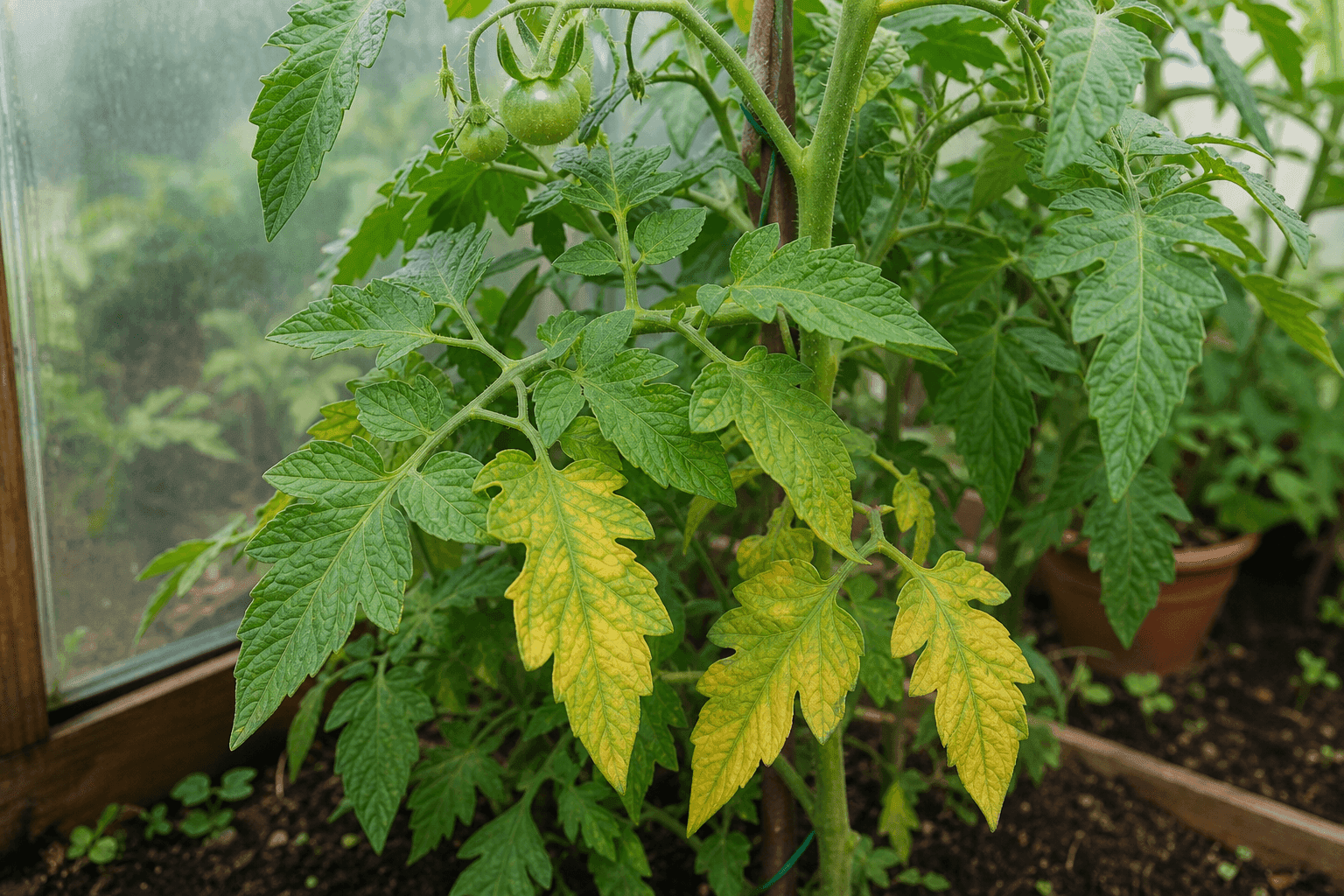
Quick diagnosis
Match the row to what you’re seeing, then jump to the fix.
| What you see | Likely cause | Confidence | How to confirm | What to do now | Urgency |
|---|---|---|---|---|---|
| Lowest older leaves yellow; plant otherwise growing well | Natural ageing or shading | Medium | New top growth is green; no spots, mould or wilt. | Snip off yellow leaves, keep lower foliage off compost, improve airflow. | Low |
| Lower leaves yellow evenly, plant looks pale, growth is slow | Nitrogen deficiency or exhausted compost | High | Often in small pots, old compost or grow bags after first trusses set. | Start regular tomato feed; if very pale before flowering, use a balanced liquid feed once. | Medium |
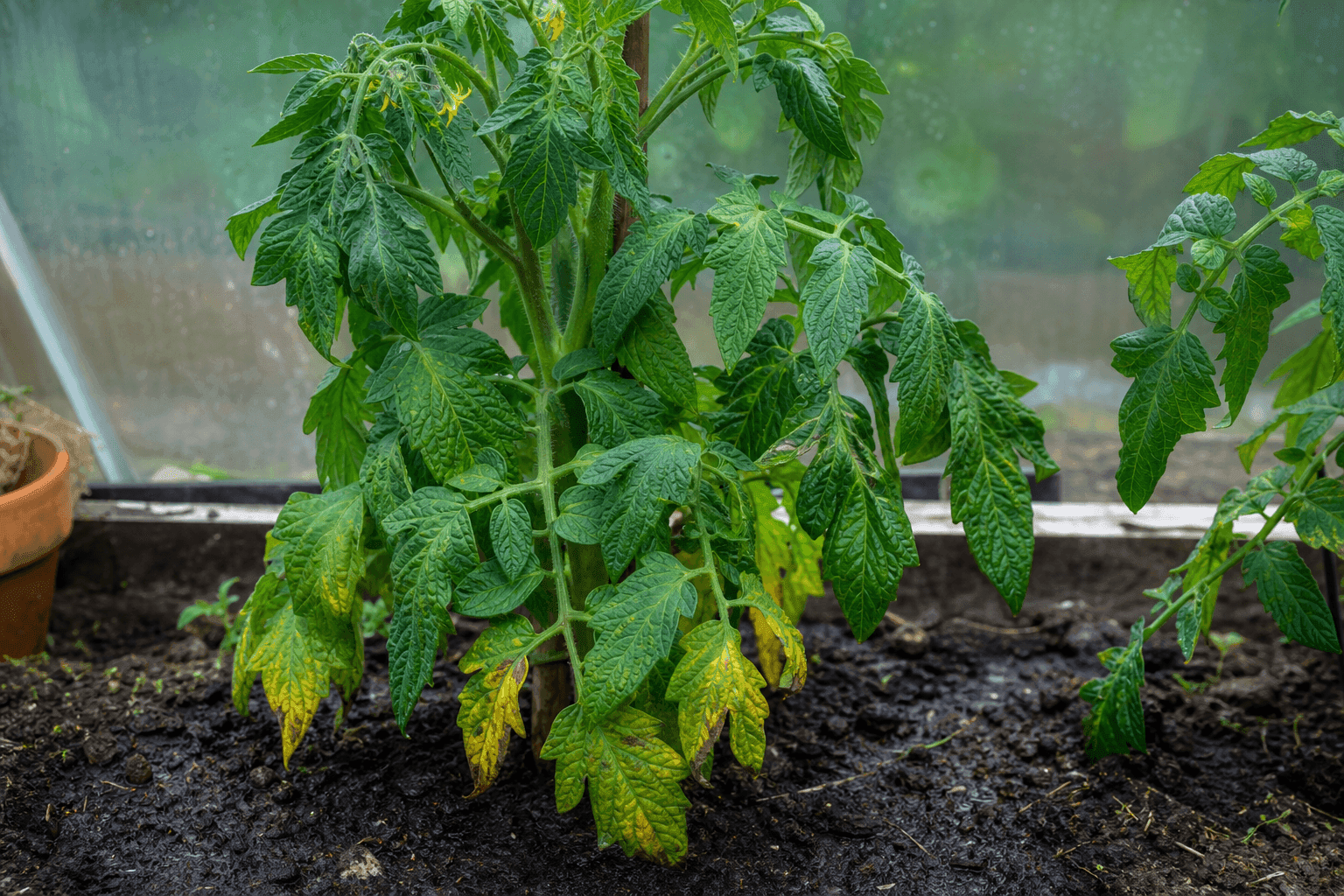
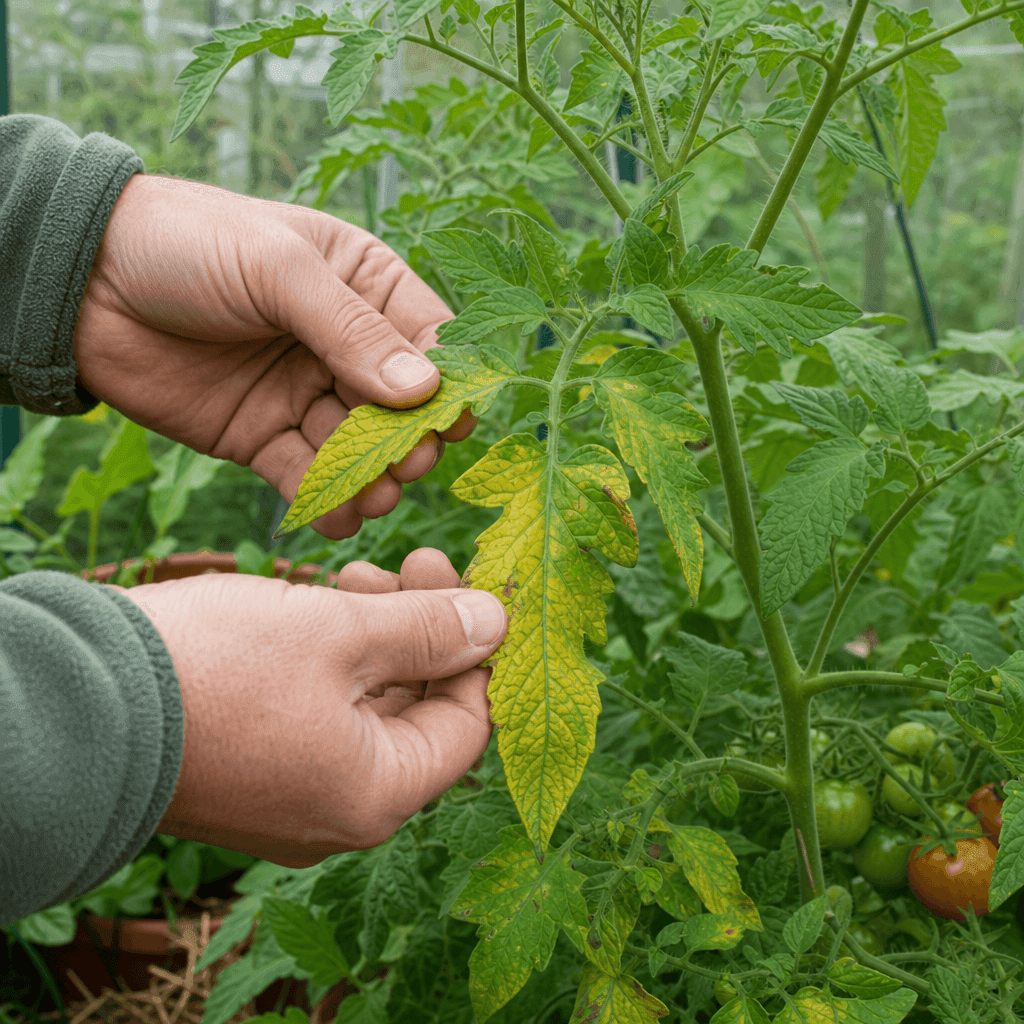
| Yellow patches between green veins on older leaves | Magnesium deficiency | High | Interveinal yellowing, usually on older leaves; plant otherwise crops. | Use tomato feed consistently; apply Epsom salts as a short-term magnesium top-up only if the pattern fits. | Medium |
| Leaves yellow and wilt; compost feels wet, sour or heavy | Overwatering or poor drainage | High | Pot is heavy; saucers hold water; roots may be brown and weak. | Stop watering until the top 5cm dries; remove standing water; improve drainage. | Medium |
| Leaves wilt in heat, edges brown, compost pulls from pot side | Underwatering or drought stress | High | Pot or grow bag is light and dry; plant perks up after deep watering. | Water slowly at the base; mulch; use a reservoir tray only for thirsty container plants. | Medium |
| Yellow leaves with brown circular spots or yellow halos, starting low | Early blight, Septoria or bacterial leaf spot | Medium | Spots enlarge; lower leaves die first; splashed soil or wet foliage common. | Remove affected leaves, bin them, water at the base, improve spacing. | High |
| Rapid brown, watery blotches on leaves/stems; white growth underneath in humid weather; fruit rots | Tomato blight / late blight | High | Often after warm, wet UK weather; spreads fast; stems and fruit affected. | Remove infected material; harvest usable fruit; keep foliage dry; check BlightSpy. | High |
| Yellowing plus grey-brown mould on leaf undersides in greenhouse | Tomato leaf mould | High | Mainly under glass; humid, crowded plants; top of leaf yellows. | Remove affected leaves, ventilate the greenhouse, avoid wet foliage. | High |
| Yellow stippling, dirty-looking undersides, fine webbing | Red spider mite | Medium | Worse in hot, dry greenhouses; mites on undersides with a lens. | Increase humidity around plants, remove worst leaves, use biological control if needed. | Medium |
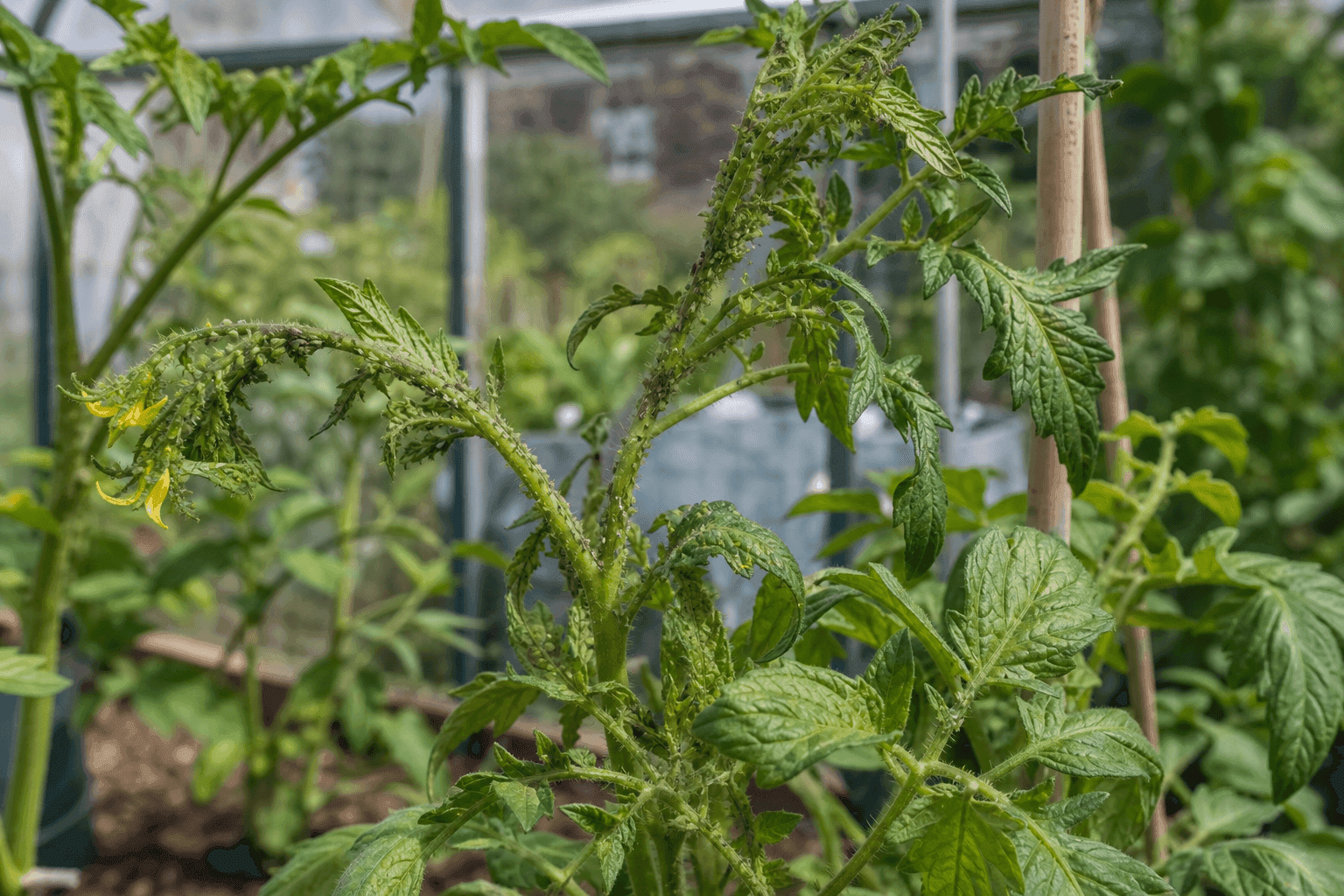
| New leaves narrow, twisted, crinkly or fern-like | Weedkiller drift or virus | Medium | Recent lawn weed-and-feed, contaminated clippings/compost, or mosaic mottling. | Remove contamination source; do not compost suspect plants; replace if severe. | High |
The causes, in detail
Natural ageing of lower tomato leaves
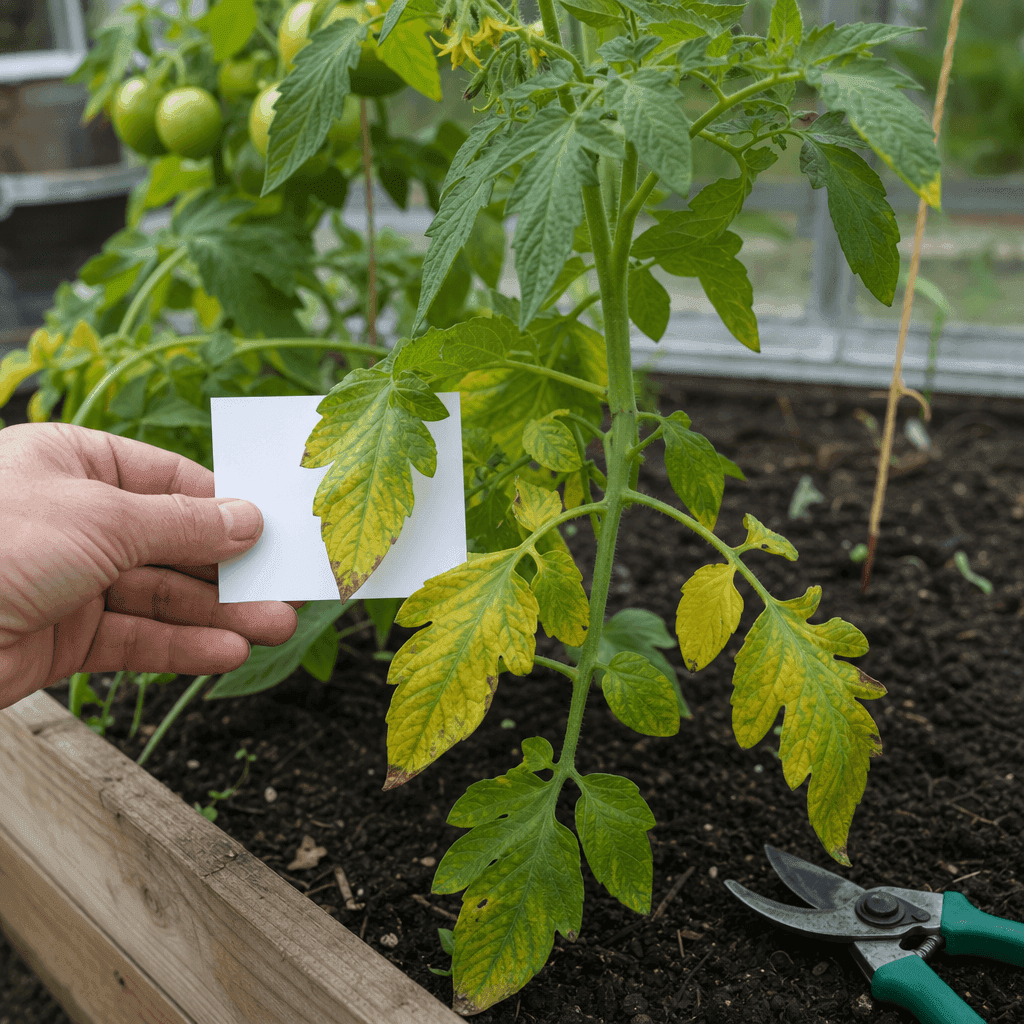
PossibleTomatoes often shed their oldest leaves as the plant grows upwards and the lower canopy becomes shaded. This is especially common once the plant is tied to a cane or string and the first fruit trusses are forming. If the yellow leaves are only the lowest one or two, and the rest of the plant is a strong green, this is not an emergency.
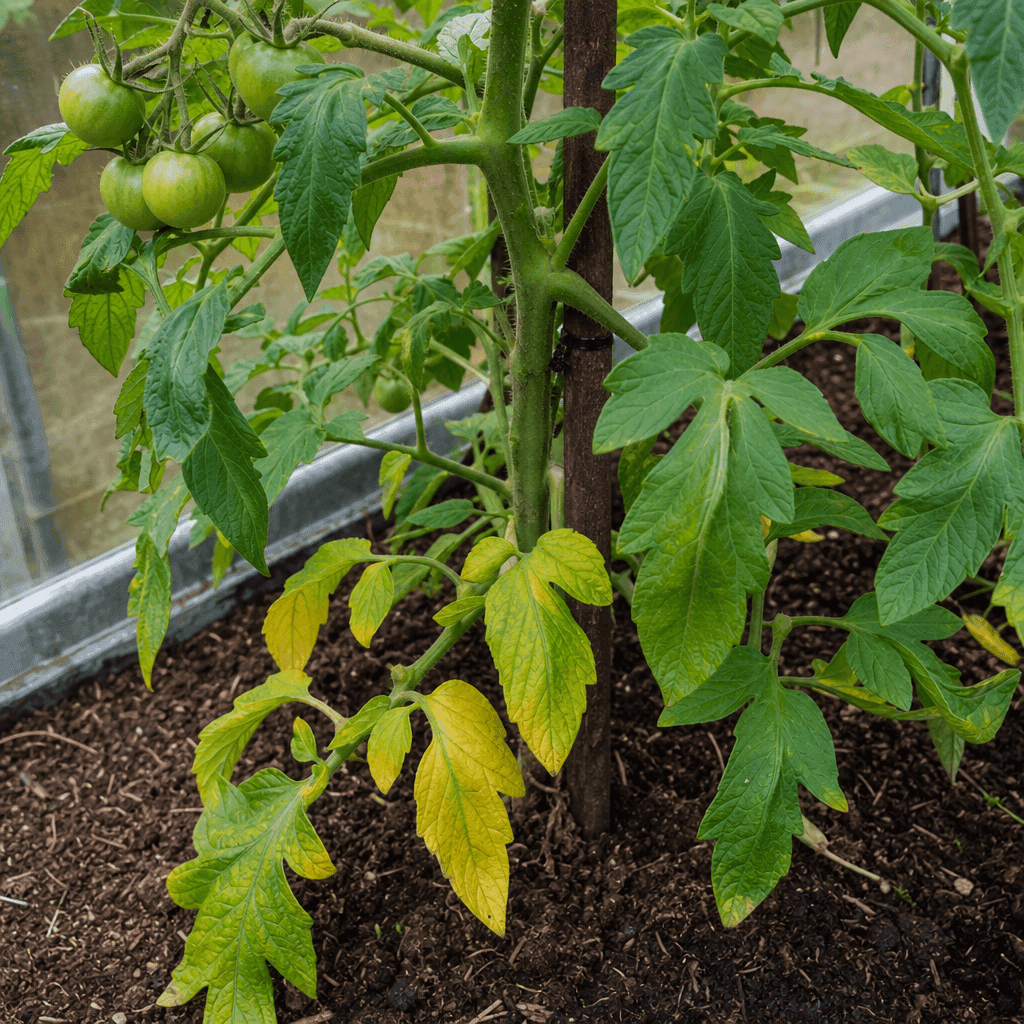
- Only the lowest one or two old leaves are yellow.
- New top growth is a strong green, with no spots, mould or wilt.
- The plant is otherwise vigorous and cropping normally.
- Cut the yellow leaf off cleanly with secateurs or pinch it at the stem.
- Do not strip the plant bare: leaves feed the fruit. Remove only yellow, damaged or soil-touching leaves.
- Keep enough foliage to shade developing tomatoes from scorching in a greenhouse.
- Keep lower foliage off the compost and improve airflow.
Stop it coming back:Keep lower leaves off the compost surface and maintain good airflow around the plant so shaded, soil-touching leaves don't linger.
strip the plant bare over a couple of old leaves — the foliage still feeds and shades the fruit.
Nitrogen deficiency or exhausted compost
Most likelyNitrogen deficiency usually shows as older leaves turning a fairly even pale yellow, while the whole plant looks hungry and growth slows. It is common where tomatoes have been in the same potting compost too long, in small containers, or in grow bags supporting several vigorous plants. UK tomato feeds are usually high in potassium for fruiting, which is right once flowers and fruits appear, but a plant that is pale and weak before flowering may need a more balanced liquid feed first.
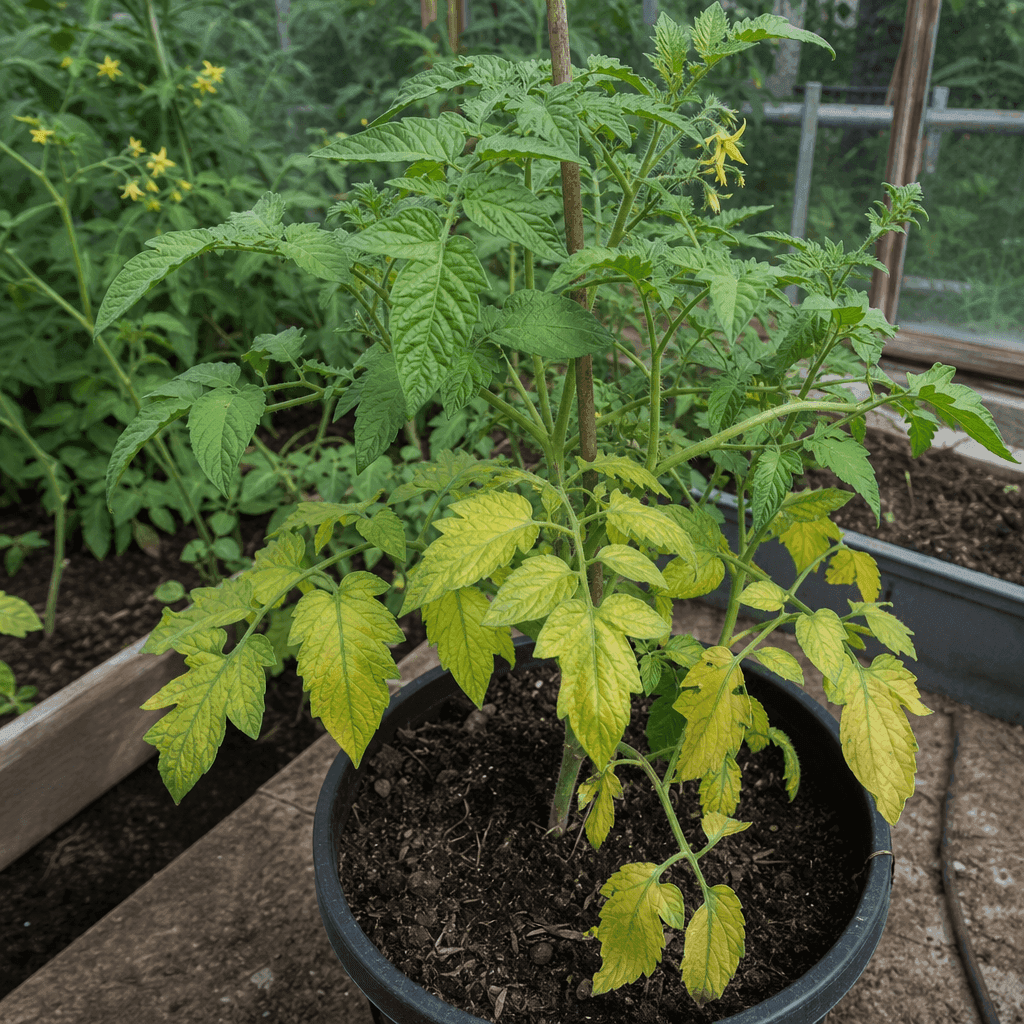
- Older leaves turn a fairly even pale yellow and the whole plant looks hungry.
- Growth has slowed.
- The plant is in a small container, old compost or a crowded grow bag.
- Start feeding once the first truss has set, following the tomato-feed label.
- In containers, feed little and regularly rather than one strong dose.
- If plants are pale before flowering, use a balanced liquid vegetable feed once or twice, then switch back to tomato feed.
- Next season, use fresh peat-free multipurpose compost or a quality grow bag, and do not overcrowd plants.
Stop it coming back:Start each season with fresh peat-free compost or a quality grow bag, don't overcrowd plants, and feed little and often once the first truss sets.
feed a dry plant with strong fertiliser — water first, then feed later.
Magnesium deficiency: yellow between green veins
Most likelyThe RHS notes that mottling and discolouration of older tomato leaves often indicates nutrient deficiency, especially magnesium, and is usually less serious if the plant is otherwise vigorous. The classic sign is yellowing between the veins while the veins remain green, mainly on older leaves. It is common in container tomatoes because frequent watering can leach nutrients from compost, and it can also appear when plants are cropping heavily.
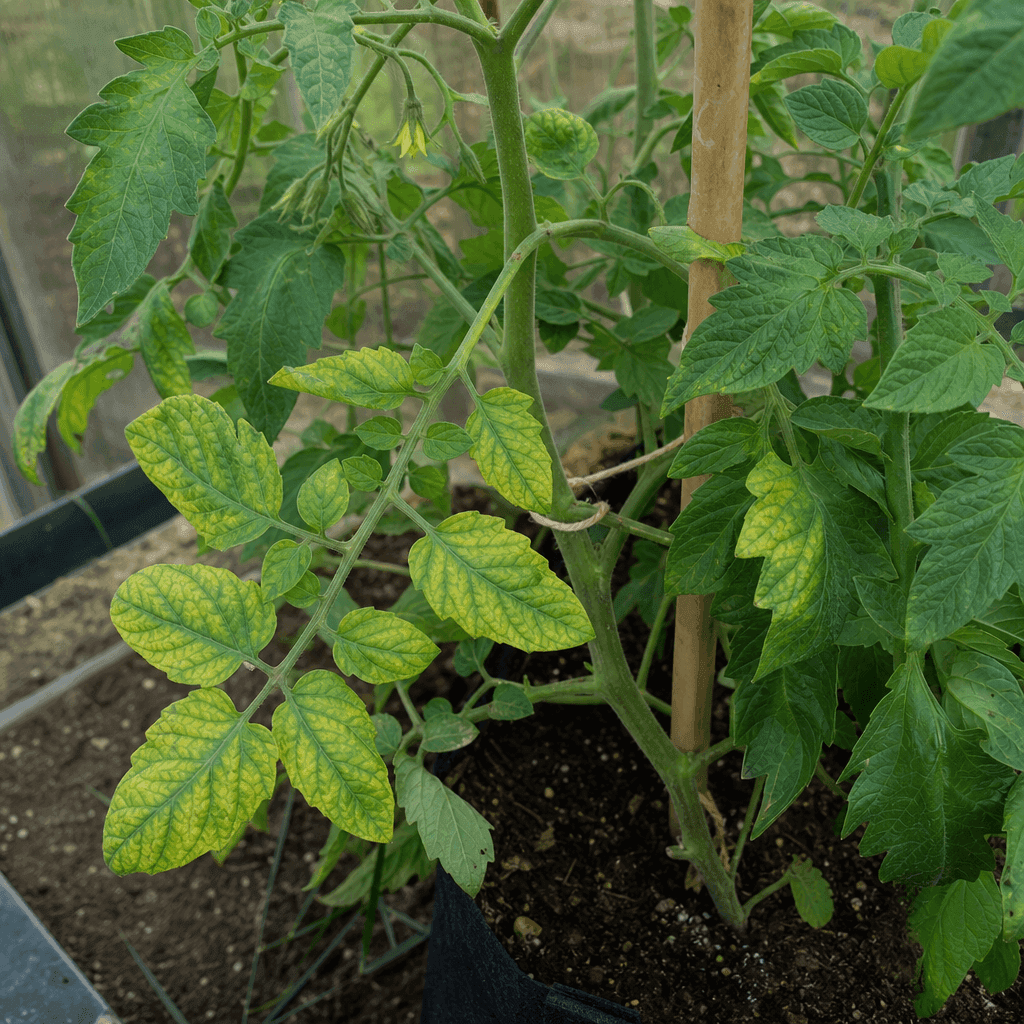
- Yellowing is between the veins while the veins stay green, mainly on older leaves.
- The plant is otherwise vigorous and still cropping.
- It is in a container watered frequently, or cropping heavily.
- Keep using a proper tomato feed at the recommended rate.
- If the pattern clearly fits magnesium deficiency, dissolve Epsom salts in water and apply as a short-term top-up according to the product label.
- Do not keep dosing Epsom salts blindly. Too much magnesium can interfere with other nutrient uptake.
Stop it coming back:Use a proper tomato feed consistently at the recommended rate through the season so magnesium doesn't run short during heavy cropping.
add Epsom salts to every yellow tomato plant; only use them when the leaf pattern suggests magnesium deficiency, and don't keep dosing blindly.
Overwatering or poor drainage
Most likelyWatering is the most common practical cause of yellow tomato leaves in the UK because tomatoes are often grown in small volumes of compost. Overwatered tomato roots cannot get enough oxygen, so leaves may turn yellow, droop, and look oddly soft even though the compost is wet. In peat-free composts, the top may look dry while the lower root zone remains saturated, so always check below the surface.
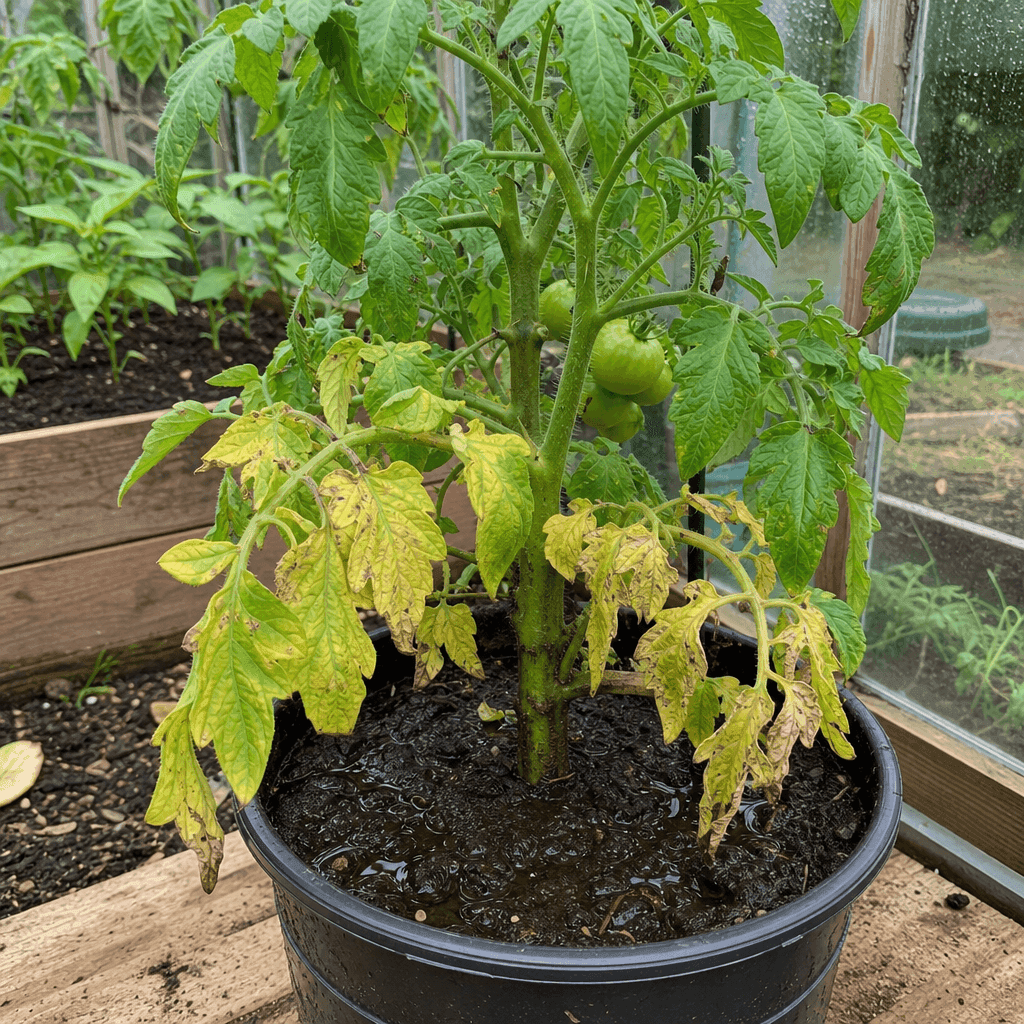
- The pot feels heavy and the compost is wet, sour or heavy several days after watering.
- Saucers or trays are holding water.
- Leaves are yellow and droop but feel soft; roots may be brown and weak.
- Empty saucers and trays unless you are deliberately using a reservoir system in hot weather.
- Let the top 5cm of compost dry before watering again.
- Raise pots on feet and check that grow bags have enough drainage slits.
- Avoid little-and-often watering in cool, dull weather.
Stop it coming back:Raise pots on feet, make sure grow bags have enough drainage slits, and water by checking the compost below the surface rather than little-and-often in dull weather.
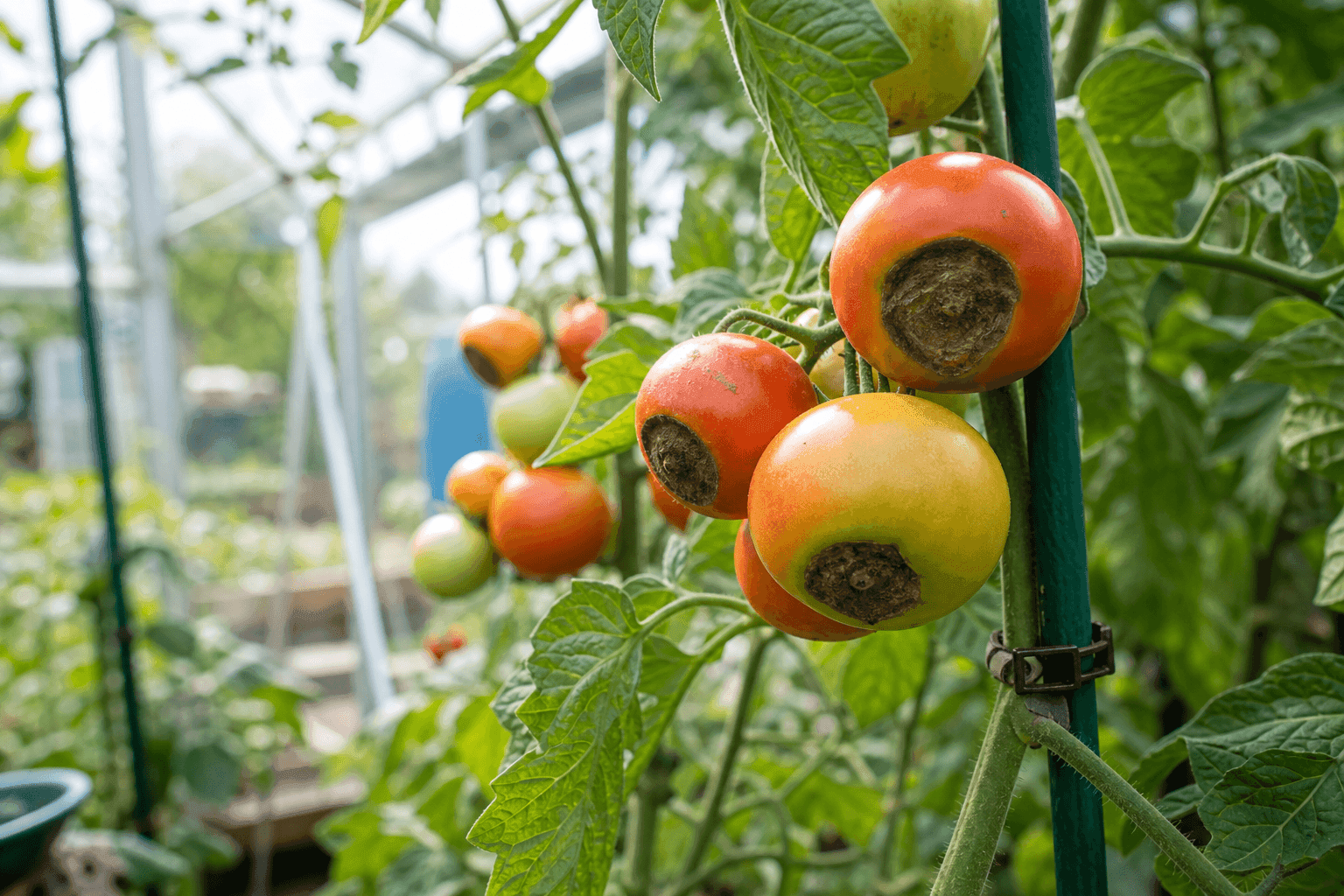
leave roots permanently sitting in water; big swings in moisture also increase fruit problems such as splitting and blossom end rot.
Underwatering or drought stress
Most likelyUnderwatered tomatoes wilt, especially at midday, and lower leaves can yellow and crisp at the edges. Containers and grow bags may need daily watering in a hot greenhouse, sometimes twice daily for large plants in small pots. The pot or grow bag feels light and dry, and the plant perks up after a deep watering.
- The pot or grow bag is light and dry, and the compost pulls away from the pot side.
- The plant wilts in heat, especially at midday, with brown leaf edges.
- It perks up after a deep watering.
- Water slowly at the base until the whole rootball is moist.
- If a pot has dried so much that water runs down the sides, stand it in a tray of water for 20–30 minutes, then drain.
- Keep watering consistent afterwards rather than flooding and drying repeatedly.
- Mulch the compost surface, and use a reservoir tray only for thirsty container plants.
Stop it coming back:Keep watering consistent rather than flooding and drying repeatedly, and mulch the compost surface to hold moisture in warm weather.
compensate for a drought by leaving roots permanently sitting in water; big moisture swings increase splitting and blossom end rot.
Early blight, Septoria or bacterial leaf spot
PossibleSmall brown or grey spots with yellow halos on lower leaves are more typical of early blight, Septoria leaf spot or bacterial leaf spot than late blight. These diseases often begin where soil splashes onto lower leaves, and the spots enlarge as lower leaves die off first.
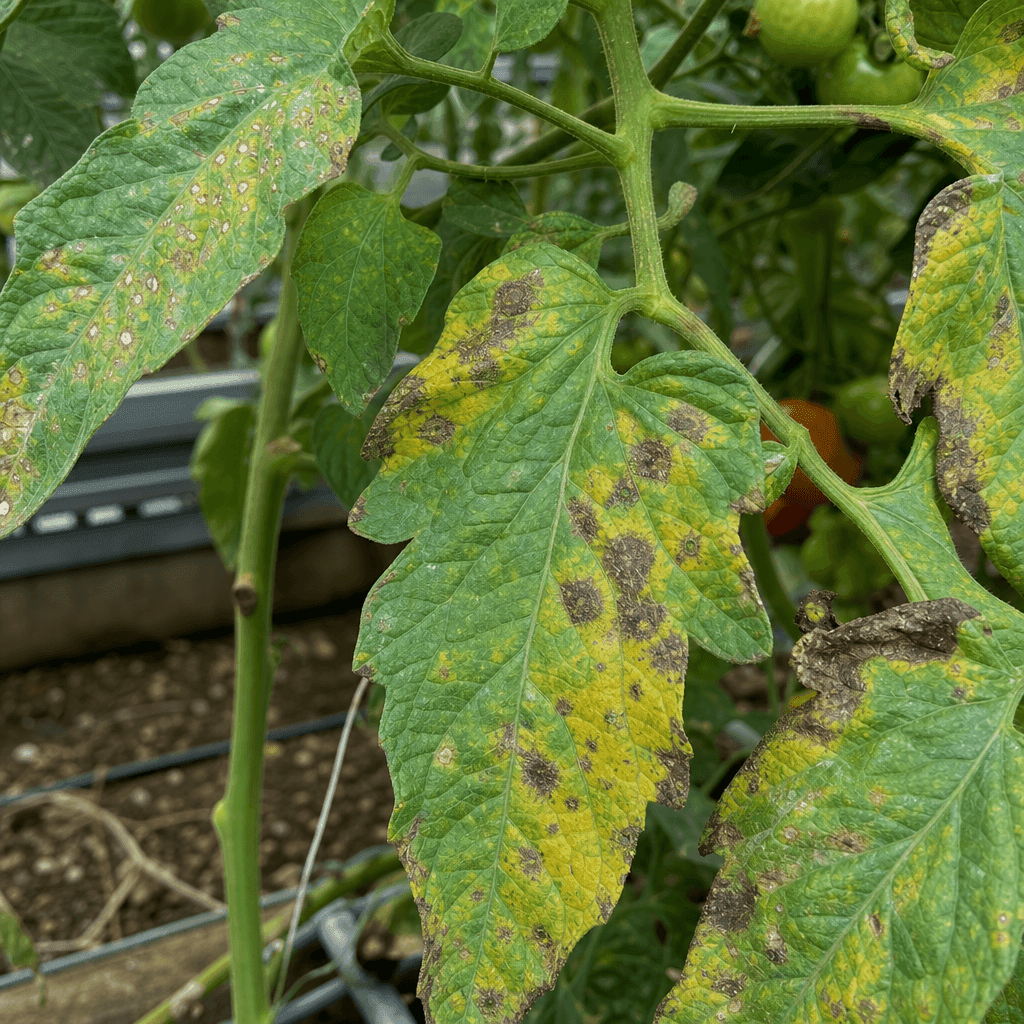
- Small brown or grey spots with yellow halos, mainly on lower leaves.
- Spots enlarge over time and lower leaves die first.
- Soil has splashed onto lower leaves, or foliage has been wet.
- Remove spotted lower leaves and bin them — do not compost.
- Mulch the compost surface to stop soil splashing onto foliage.
- Water at the base rather than over the leaves.
- Improve spacing, and clean canes and supports before reuse.
Stop it coming back:Mulch the compost surface, water at the base, space plants well for airflow, and clean canes and supports before reuse to reduce soil-splash infection.
compost the spotted leaves you remove, or leave them on the soil surface where spores can splash back up.
Tomato blight / late blight
Most likelyTomato blight is the worry many UK gardeners have, but not every yellow leaf is blight. The RHS describes tomato blight / late blight as a rapid disease of warm, wet weather, with watery leaf rot that soon collapses, shrivels and turns brown. Brown lesions can also appear on stems, and fruit may develop water-soaked brown patches. The plant declines over days, not weeks.
- Yellowing quickly becomes brown, wet-looking blotches.
- Stems have dark brown lesions and fruit has brown, firm or rotting patches.
- Weather has been warm and wet, or local blight alerts are active.
- The plant declines over days, not weeks.
- Remove badly affected plants or leaves promptly and do not compost blighted material at home.
- Harvest usable fruit, keeping in mind that fruit from badly infected plants may rot indoors.
- For greenhouse plants, keep foliage dry, ventilate well, and water only at the base.
- Rely on prevention and sanitation — there are no UK home-garden fungicides that reliably cure late blight once established.
Stop it coming back:Keep foliage dry, ventilate well, water only at the base, and watch warm-wet weather or BlightSpy alerts; prevention and sanitation matter most because there is no reliable home cure.
compost blighted material at home, or rely on a home-garden fungicide to cure established late blight — it won't.
Greenhouse leaf mould
Most likelyIn greenhouses, yellow patches on the upper leaf surface with grey-brown mould underneath can be tomato leaf mould. It thrives in humid, poorly ventilated conditions and is more common under glass than outdoors.
- Yellow patches on the upper leaf surface with grey-brown mould underneath.
- The plant is under glass in humid, poorly ventilated, crowded conditions.
- It is more common indoors than outdoors.
- Ventilate early in the day and avoid wetting leaves.
- Remove affected leaves and increase spacing.
- Avoid overcrowding side shoots.
- In a small greenhouse, use a maximum-minimum thermometer and vent regularly to prevent temperature and humidity swings.
Stop it coming back:Ventilate early, avoid wetting leaves, space plants generously and manage side shoots so humidity stays low under glass.
wet the leaves in the evening in a greenhouse, or let humid, crowded conditions build up without venting.
Red spider mite and other pests
PossibleYellow stippling rather than solid yellow leaves often points to sap-sucking pests. Glasshouse red spider mite is common in hot, dry greenhouses; leaves look speckled, dusty or bronzed, and fine webbing may appear. Aphids cluster on soft new growth and can cause curling, distortion and yellowing.
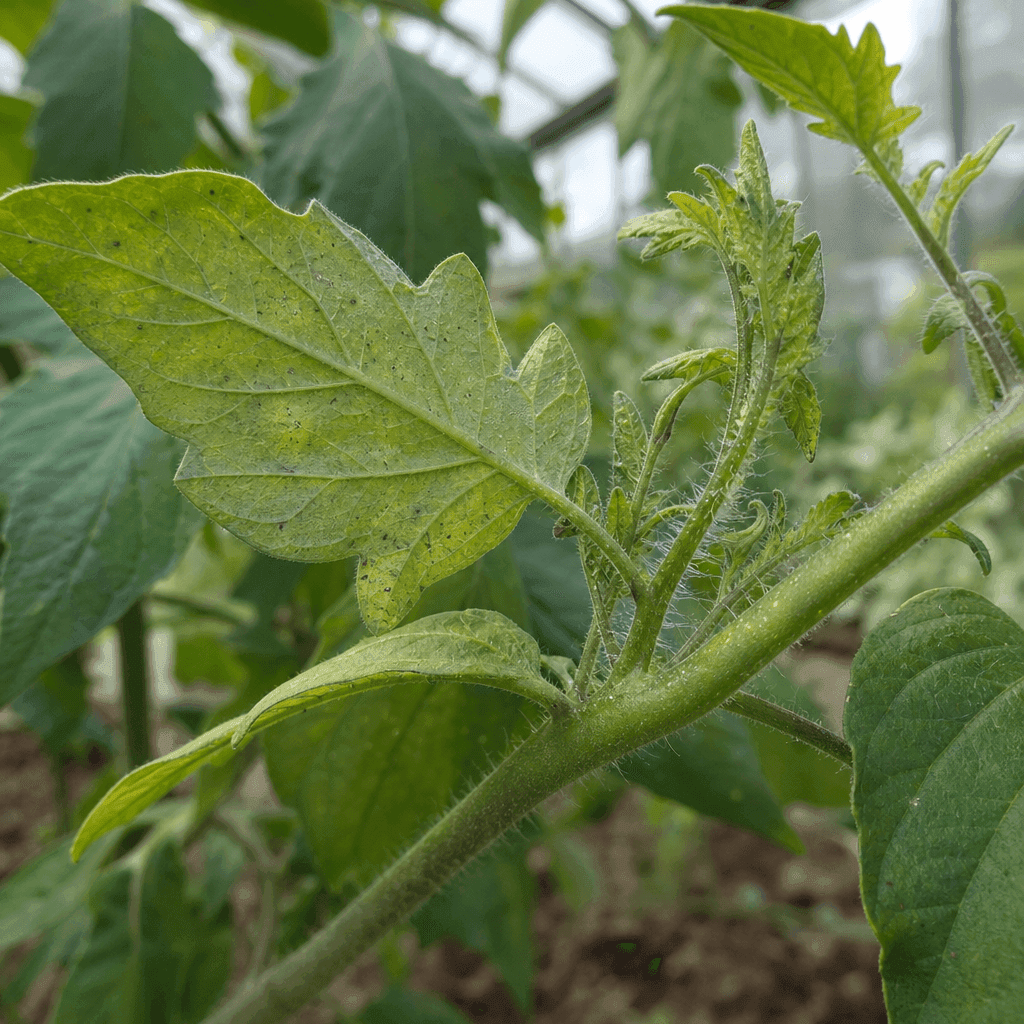
- Leaves look speckled, dusty or bronzed with yellow stippling, not solid yellow.
- Fine webbing appears, worse in hot, dry greenhouses.
- Check the underside of leaves with a hand lens; aphids may cluster on soft new growth.
- Check the underside of leaves with a hand lens and remove heavily infested leaves.
- Encourage predators and use biological controls in greenhouses where appropriate.
- Avoid spraying in hot sun.
- For red spider mite, increasing humidity around the crop can help, but do not create persistently wet foliage that encourages disease.
Stop it coming back:Keep greenhouse air from getting persistently hot and dry, check leaf undersides regularly, and encourage or introduce biological controls early.
spray in hot sun, or raise humidity so far that foliage stays persistently wet and encourages disease.
Weedkiller drift, contaminated compost or virus
PossibleIf the newest leaves are narrow, twisted, crinkled, fern-like or distorted, think beyond normal feeding and watering. Tomatoes are very sensitive to hormone weedkillers, including drift from lawn treatments or residues in contaminated clippings. Viruses can also cause mottled, distorted leaves and stunted growth.
- The newest leaves are narrow, twisted, crinkled, fern-like or distorted.
- There has been recent lawn weed-and-feed, or contaminated clippings or compost nearby.
- Mottling or mosaic patterning suggests a virus.
- Remove lawn weed-and-feed, treated clippings or suspect compost from the area.
- Do not use recently treated grass clippings as mulch around tomatoes.
- If a plant is badly distorted and not producing normal new growth, remove it rather than nurse it all season.
- Do not compost suspect plants.
Stop it coming back:Never mulch tomatoes with recently treated grass clippings, and keep lawn weedkillers and contaminated compost well away from the crop.
use recently treated grass clippings as mulch around tomatoes, or compost weedkiller- or virus-suspect plants.
Still not sure?
Work down these branches — the first one that matches is your answer.
What not to do
- Do not add Epsom salts to every yellow tomato plant; only use them when the leaf pattern suggests magnesium deficiency.
- Do not feed a dry plant with strong fertiliser. Water first, then feed later.
- Do not wet leaves in the evening in a greenhouse.
- Do not compost blighted or virus-suspect tomato material at home.
- Do not remove too many healthy leaves at once; fruit still needs leaf cover and sugars from photosynthesis.
Common questions
Should I cut yellow leaves off tomato plants?
Yes, remove fully yellow, diseased or soil-touching lower leaves. This improves airflow and reduces soil-splash disease. Do not remove lots of healthy green leaves at once, because the plant needs them to feed and shade the fruit.
Can yellow tomato leaves turn green again?
Sometimes mildly deficient leaves improve, but badly yellow leaves usually do not return to perfect green. Judge recovery by whether new growth is healthy and the yellowing stops spreading.
Do yellow leaves mean my tomato plant is dying?
Not usually. One or two lower yellow leaves are normal. Spreading yellowing with wilting, brown spots, stem lesions, mould or fruit rot is more serious and needs quick diagnosis.
What is the best treatment for yellow tomato leaves in pots?
Check watering first, then feed. Pots and grow bags run out of nutrients and dry unevenly. Water at the base, ensure drainage, and use tomato feed regularly once fruit has set.
Why are my tomato leaves yellow at the bottom?
Bottom leaves yellow first with natural ageing, nitrogen deficiency, magnesium deficiency, water stress, or soil-splash diseases. If the leaves are plain yellow, think ageing, feeding and watering. If they are spotted, think disease.
Why are young tomato plant leaves turning yellow?
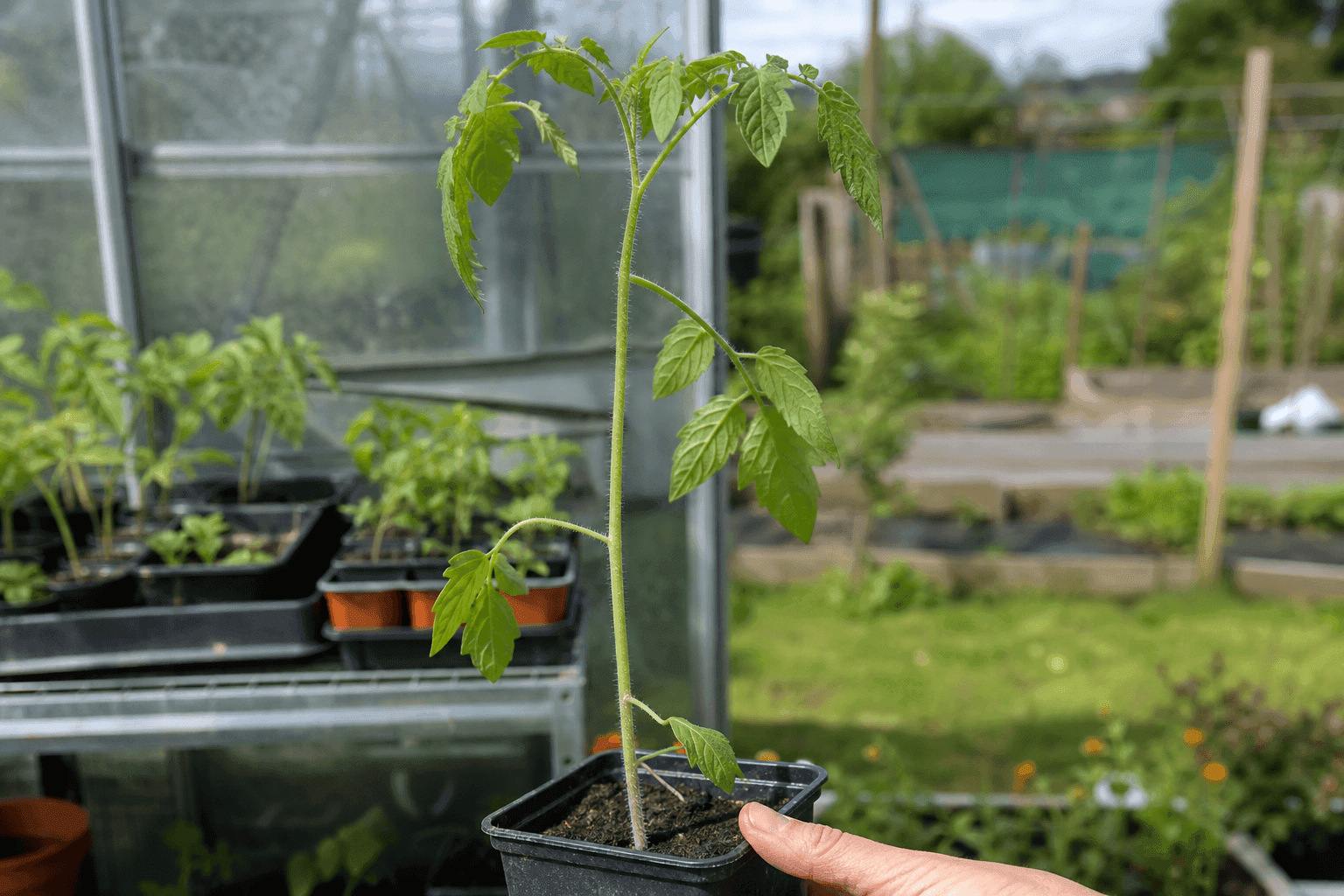
Young plants often yellow from cold nights, transplant shock, overwatering, poor light or hungry compost. Keep them warm, harden them off gradually, avoid saturated compost and feed only once they are actively growing.
How do I tell overwatering from underwatering?
Feel the compost below the surface and lift the pot. Overwatered compost is heavy and wet; leaves may droop but feel soft. Underwatered compost is light, dry and may pull from the pot edge; the plant often perks up after a deep watering.
Is it blight if leaves are yellow and brown?
Maybe, but look for the pattern. Late blight causes fast-spreading watery brown blotches, stem lesions and fruit rot in warm wet weather. Small dry spots with yellow halos low on the plant are more likely early blight, Septoria or bacterial leaf spot.