Quick diagnosis
Match the row to what you’re seeing, then jump to the fix.
| What you see | Likely cause | Confidence | How to confirm | What to do now | Urgency |
|---|---|---|---|---|---|
| Tall, thin, pale stems with small leaves; seedlings leaning toward the window | Insufficient light (etiolation) | High | Seedlings are on a windowsill more than a metre from the glass, or under artificial light positioned too far above. | Move to the brightest possible position; place under grow lights 5–10cm above the tops. | High |
| Seedlings sown in January or February are leggy; later sowings look healthier | Sown too early for available light | High | Sowing date was more than 8 weeks before expected last frost; seedlings sat indoors during the darkest weeks. | Sow tomatoes 6–8 weeks before last frost; make a fresh later sowing if seedlings are too leggy to recover. | Medium |
| Seedlings are stretching fast despite reasonable light; very warm growing space | Excessive warmth without matching light | Medium | Night temperature above 21°C; the seedling is on a radiator shelf or heated propagator with lid on. | Reduce night temperature to 15–18°C once germinated; remove propagator lid promptly after germination. | Medium |
| Seedlings in clusters stretching upward past one another | Overcrowding triggering shade avoidance | Medium | Multiple seedlings per cell or module; stems are racing upward to outcompete neighbours. | Thin to one seedling per cell at the first true leaf stage; pot on into individual modules promptly. | Medium |
| Seedlings on a north-facing or shaded windowsill; very pale and etiolated | Wrong windowsill position | Medium | Windowsill faces north, east, or is shaded by a building, roof overhang, or net curtains. | Move to a south-facing sill or use supplemental grow lights. Rotate trays daily to prevent lopsided leaning. | High |
The causes, in detail
Insufficient light (etiolation)
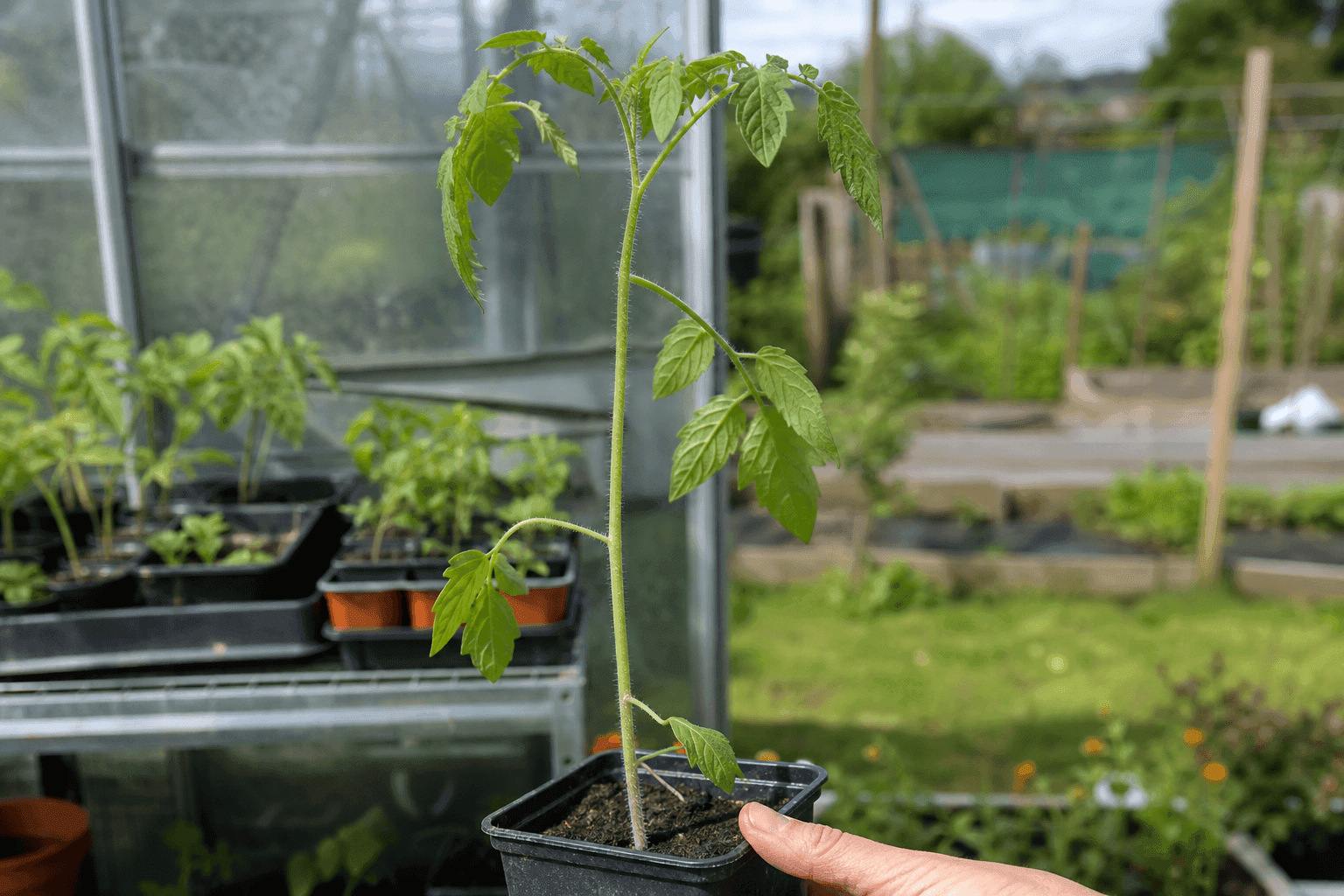
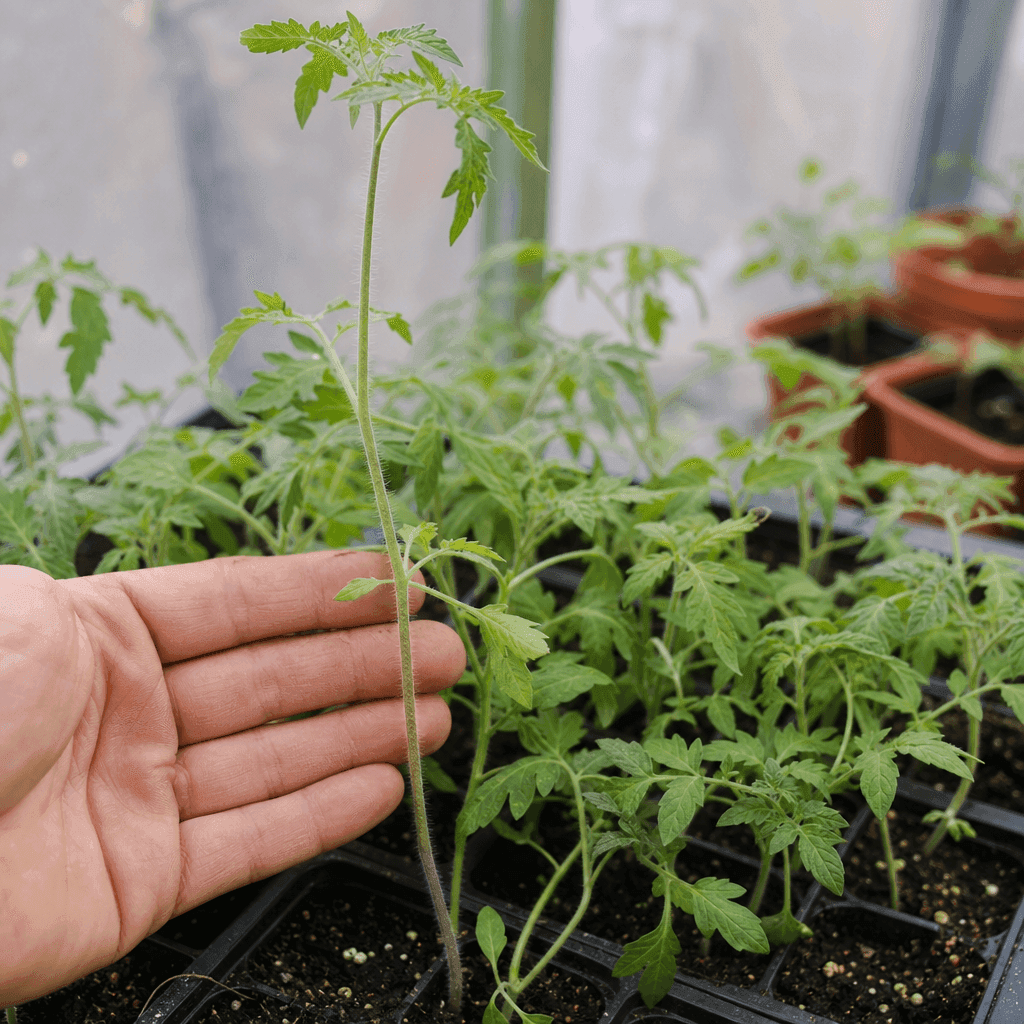
Most likelyEtiolation is the scientific term for the stretching that occurs when a seedling receives too little light. Tomato seedlings need strong, bright light for short, sturdy stem growth. On an average UK windowsill in January or February — overcast, short days, glass filtering UV — light intensity falls well below what seedlings need. The seedling interprets the low light as shade from competing plants and races upward, producing long internodes, pale thin stems and the kind of small, pale leaf growth you would expect from a light-starved plant. It is borrowing resources from future growth in a bet to reach more light. Grow lights positioned 5–10cm above the tops of seedlings can fully replace natural light in winter, and should run for 14–16 hours a day.
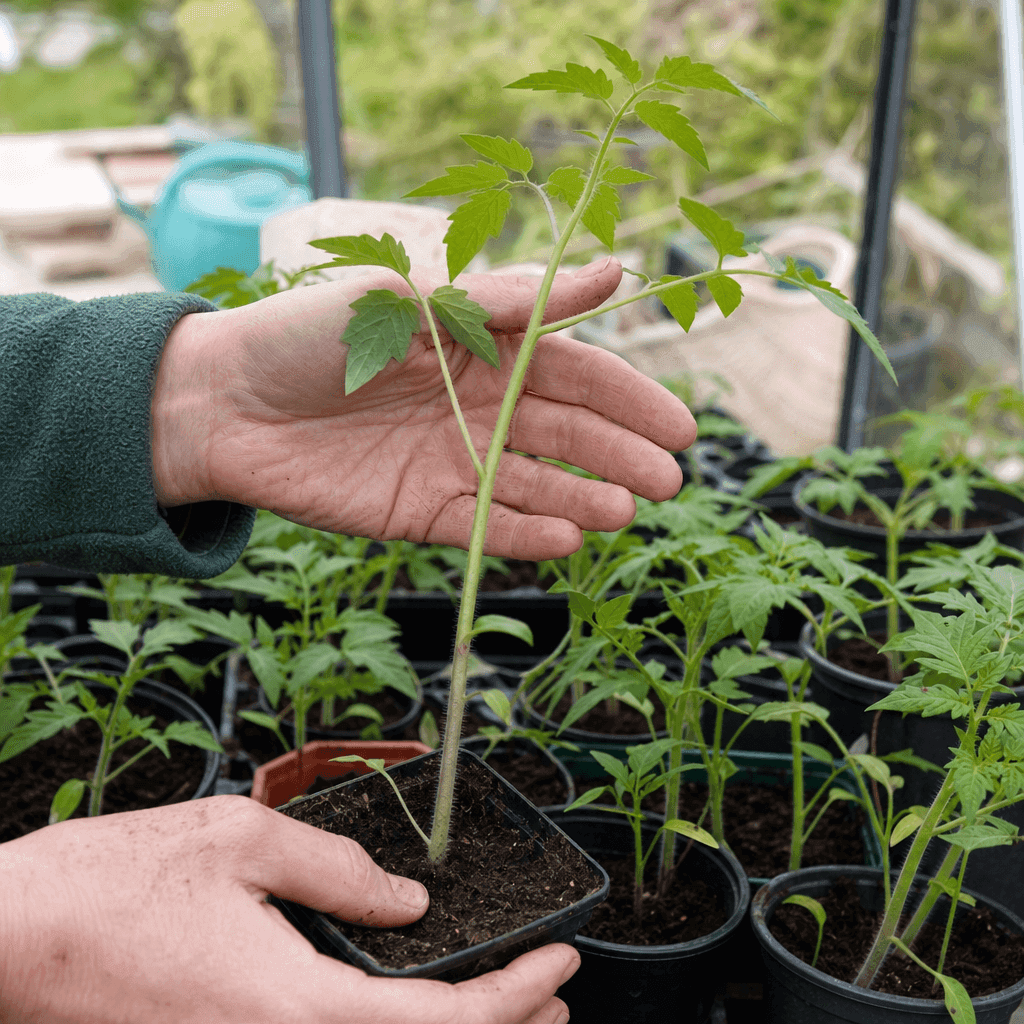
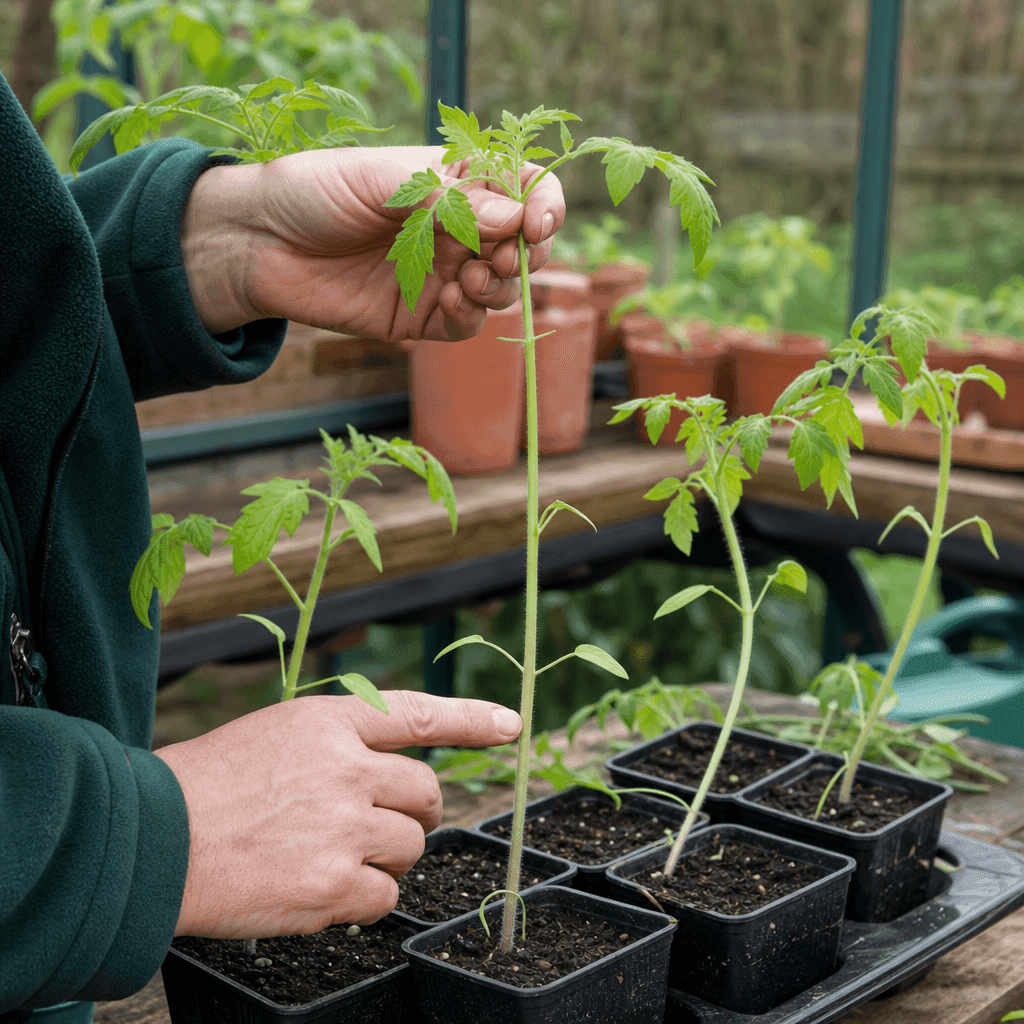
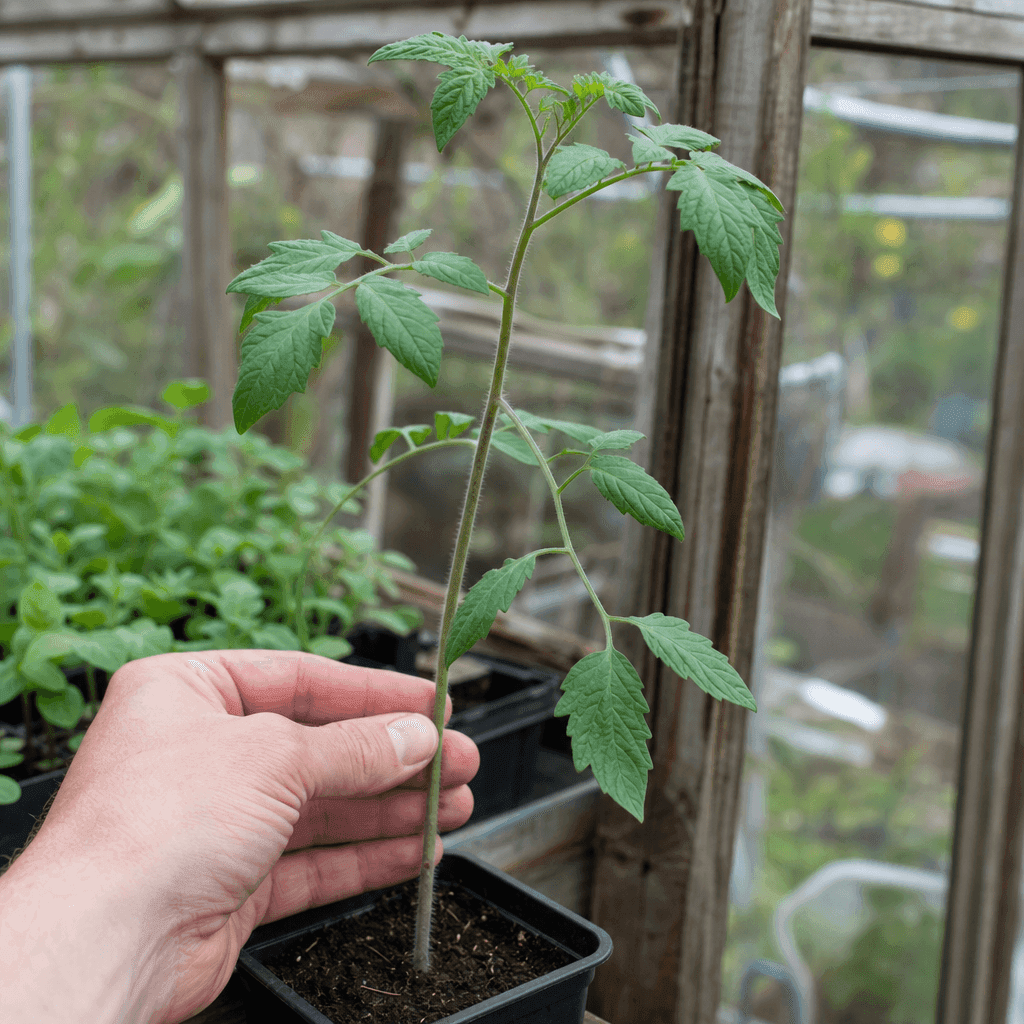
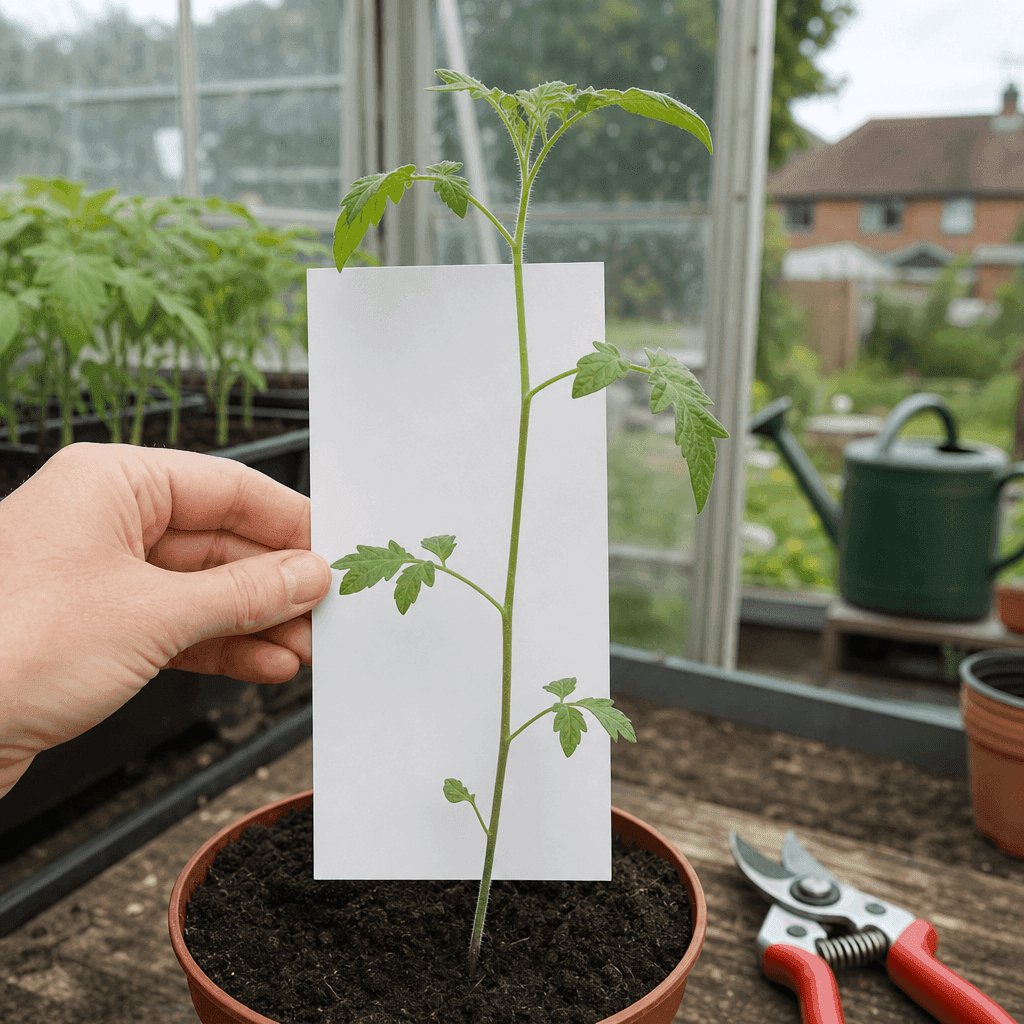
- Seedlings are tall, thin and floppy with long gaps between leaf nodes.
- The stems are pale and the leaves are smaller than expected.
- Seedlings lean noticeably toward the light source.
- Move to the brightest available windowsill — south-facing is best in the UK.
- Place grow lights (full-spectrum LED) 5–10cm above seedling tops and run for 14–16 hours per day.
- Turn trays daily on windowsills to prevent uneven leaning.
- Leggy seedlings can often be rescued by burying the stem deeper at potting on — tomatoes form new roots along buried stems.
- Pot on into individual cells or small pots promptly, burying the stem up to the lowest true leaves.
Stop it coming back:The best prevention is matching sowing date to available light. In the UK, sowing in late March for a mid-May last-frost date produces sturdier seedlings in much better light conditions than a January sowing.
place seedlings in a warm, enclosed propagator with no grow light supplement — warmth without light is the fastest route to etiolation.
Sowing too early for UK light levels
Most likelyUK gardeners frequently sow tomatoes in January and February, believing an early start gives an advantage. In practice, the low light intensity and short days of midwinter mean seedlings produce weak, leggy growth that struggles to recover. Seedlings sown in late March or early April — 6–8 weeks before a typical last frost of mid-May — grow in noticeably better light and typically catch up and overtake earlier sowings. Gloriousgarden.co.uk and other UK-specific sources confirm that later sowing is almost always better than earlier sowing for this reason.
- Seedlings were sown in January or February.
- The seedlings have been indoors for more than 8 weeks.
- Later sowings of the same variety look noticeably healthier.
- Make a fresh sowing in late March if the original seedlings are unrecoverable.
- If seedlings are marginally leggy, pot on deep (burying the stem) and move under grow lights.
- Resist sowing again even earlier to compensate — aim for 6–8 weeks before last frost.
- For the UK: last frost date varies from early April in southern England to mid-May in the north and Scotland.
Stop it coming back:Mark your local average last frost date and count back 6–8 weeks. In most of England, this means sowing mid- to late March. In Scotland or at altitude, aim for early to mid-April.
compensate for early sowing with extra heat — warmth without strong light makes etiolation worse, not better.
Excessive warmth without matching light
PossibleHeat accelerates cell elongation, and in seedlings that are already light-limited, warmth dramatically speeds up stem stretching. Keeping germinated seedlings on a heated propagator with a closed lid, on a shelf above a radiator, or in a warm room where night temperatures stay above 21°C will cause rapid legginess. The fix is to reduce temperature after germination. Research from extension services confirms that 15–18°C after germination slows stretching and builds thicker stems without stopping growth.
- Seedlings are in a heated propagator or on a radiator shelf.
- Night temperatures remain above 20–21°C.
- Stretching is rapid — the seedling visibly elongates within 2–3 days.
- Once about 50% of seeds have germinated, remove the propagator lid and reduce temperature to 15–18°C.
- Move seedlings off the radiator or heated mat.
- Open the greenhouse or cold frame vents during the day to bring daytime temperatures down.
- Cooler nights slow stretching and result in thicker, stronger stem tissue.
leave the propagator lid on after germination — the warm, humid, low-light environment inside accelerates both legginess and damping-off disease.
Overcrowding and shade avoidance between seedlings
PossibleWhen tomato seedlings are grown too closely together — multiple seeds per module, or trays too densely packed — each seedling detects the light reflected from its neighbours' leaves and interprets this as shade competition. It triggers a shade avoidance response: rapid upward stretching to outcompete neighbours. Thinning to one seedling per cell at the first true leaf stage removes this competition and often noticeably reduces subsequent stretching.
- Multiple seedlings are growing per cell, module or pot.
- Seedlings in the centre of a tray are noticeably leggier than those at the edges.
- Stems are particularly thin and spindly.
- Thin to one seedling per cell as soon as the first true leaves appear.
- Remove weaker seedlings with scissors rather than pulling — pulling disturbs the root of the one you are keeping.
- Space individual cells or pots so leaves are not touching.
- Pot on into individual pots before roots become tangled.
delay thinning hoping multiple seedlings might all survive — the shade avoidance response grows stronger the longer they compete.
Wrong windowsill position or shaded growing space
PossibleNot all windowsills are equal. A north-facing windowsill in a UK house receives little or no direct sun and may provide inadequate light even on bright days. Net curtains, neighbouring buildings, overhanging eaves, and single-glazed glass all reduce light intensity. Seedlings on such sills etiolate rapidly. The ideal position is a south-facing double-glazed windowsill, unobstructed, or a fully glazed greenhouse with whitewash removed.
- The windowsill faces north, northeast, or is heavily shaded.
- Direct sun rarely reaches the seedlings, even on clear days.
- Seedlings on the same sill on different sides of the house look different.
- Move seedlings to the sunniest available windowsill — south-facing is ideal.
- Remove net curtains or any obstruction between seedlings and the glass.
- Add a grow light positioned 5–10cm above the seedling tops on a timer for 14–16 hours per day.
- If moving to a greenhouse, ensure the glass is clean and any winter whitewash has been removed.
- Rotate trays by 180° daily on windowsills to prevent all seedlings leaning the same way.
assume a windowsill provides adequate light in winter or early spring — UK light levels are often insufficient without supplemental lighting.
Still not sure?
Work down these branches — the first one that matches is your answer.
What not to do
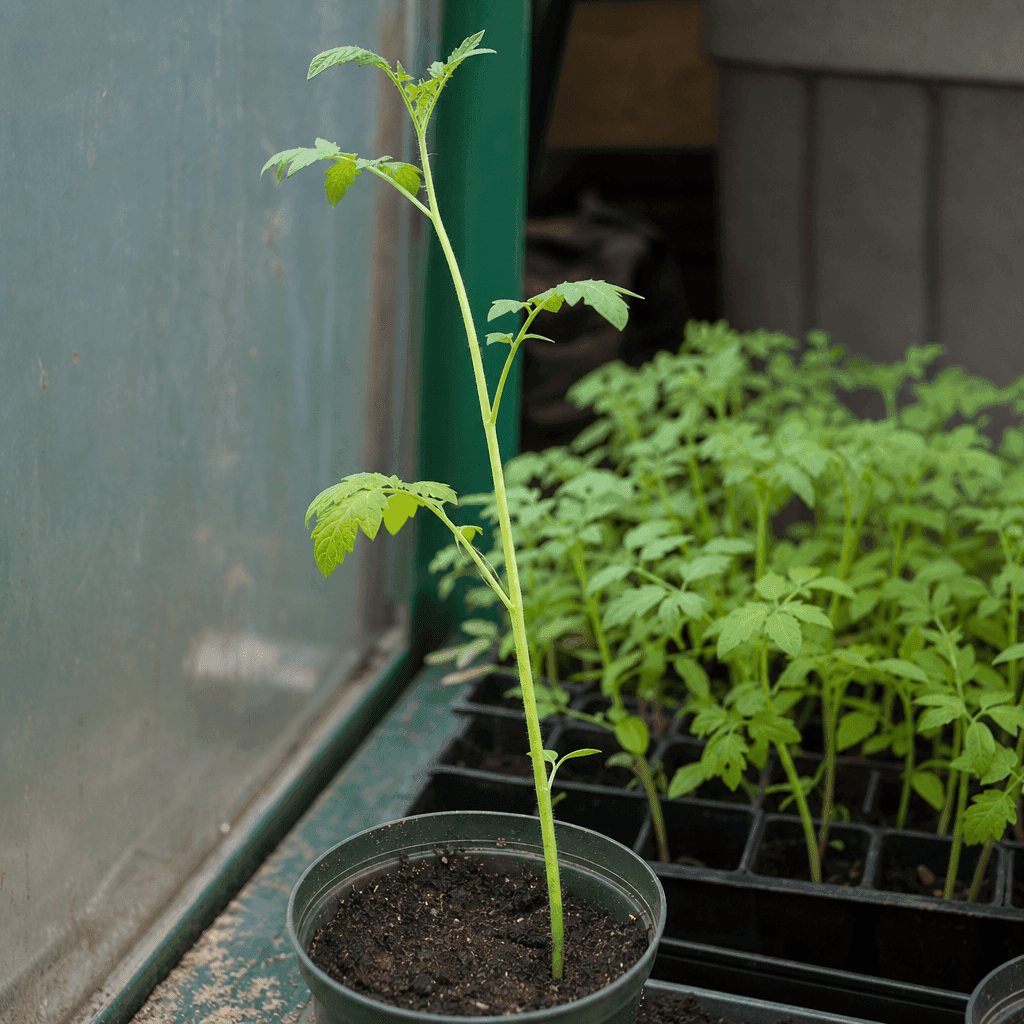
- Sow tomatoes in January thinking an early start guarantees better plants — in the UK's winter light, it almost always means leggy seedlings.
- Leave the propagator lid on after germination — the warm, dark microclimate accelerates both legginess and damping off.
- Compensate for low light by adding more heat — warmth without strong light makes etiolation worse.
- Delay thinning — multiple seedlings per cell accelerate shade avoidance stretching.
- Try to stake up every leggy seedling — if the stem is too thin to support itself, pot on deeply and improve light instead.
Common questions
Why are my tomato seedlings tall and thin?
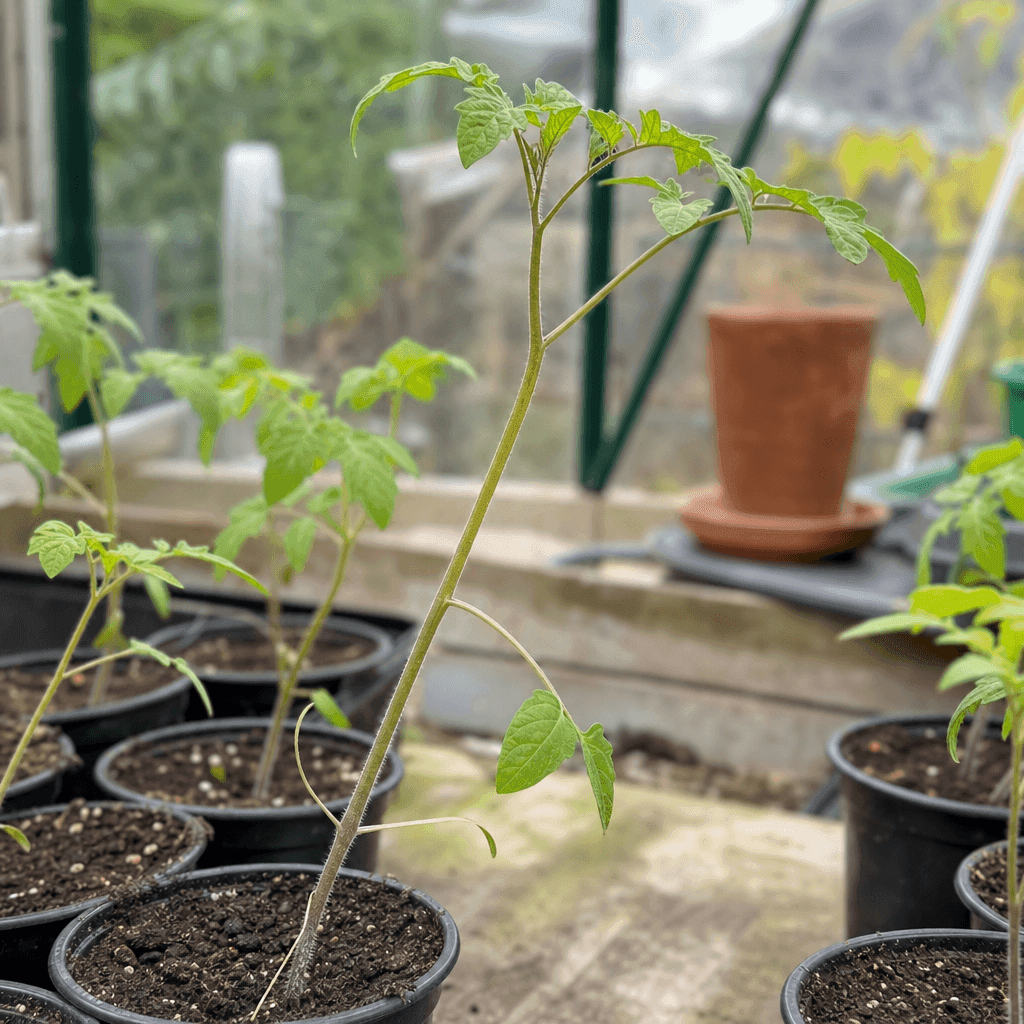
Tall, thin tomato seedlings are almost always caused by insufficient light — a process called etiolation. The seedling stretches upward searching for more light, producing long weak stems. Move seedlings to the brightest possible windowsill or use grow lights positioned just 5–10cm above the tops.
Can you save leggy tomato seedlings?
Often yes. The best fix is to pot the seedling on into a deeper pot, burying the stem up to the lowest healthy leaves. Tomatoes form new roots along any buried stem, which gives the plant a stronger anchor and more water uptake. Then improve the light immediately.
How do I stop tomato seedlings going leggy?
Use strong, direct light — a south-facing windowsill or grow lights (full-spectrum LED) positioned 5–10cm above seedling tops, running 14–16 hours a day. Sow at the right time for your region (6–8 weeks before last frost), keep night temperatures around 15–18°C after germination, and thin to one seedling per cell.
When should I sow tomatoes in the UK to avoid leggy seedlings?
For most of England, sow in late March — about 6–8 weeks before the average last frost of mid-May. In Scotland or at altitude, aim for early to mid-April. Sowing earlier into winter light means seedlings sit in poor conditions for longer, producing leggier results.
Should I use grow lights for tomato seedlings in the UK?
Grow lights are strongly recommended for any seeds sown before April in the UK. Full-spectrum LED grow lights positioned 5–10cm above seedlings, running for 14–16 hours a day, produce much sturdier seedlings than windowsill growing alone in winter and early spring.
Can I plant leggy tomato seedlings deeper in the ground?
Yes — this is one of the best fixes. Tomatoes form roots all along their buried stems, so a leggy seedling planted deep (with only the top few leaves above soil) will quickly establish a strong root system. Do this when potting on and again when transplanting outdoors.
Does temperature cause leggy tomato seedlings?
Heat accelerates stretching, especially when combined with low light. Seedlings kept above 21°C at night on heated propagators or near radiators will stretch fastest. Once germination is complete, reduce temperatures to 15–18°C and remove propagator lids to slow elongation.