Quick diagnosis
Match the row to what you’re seeing, then jump to the fix.
| What you see | Likely cause | Confidence | How to confirm | What to do now | Urgency |
|---|---|---|---|---|---|
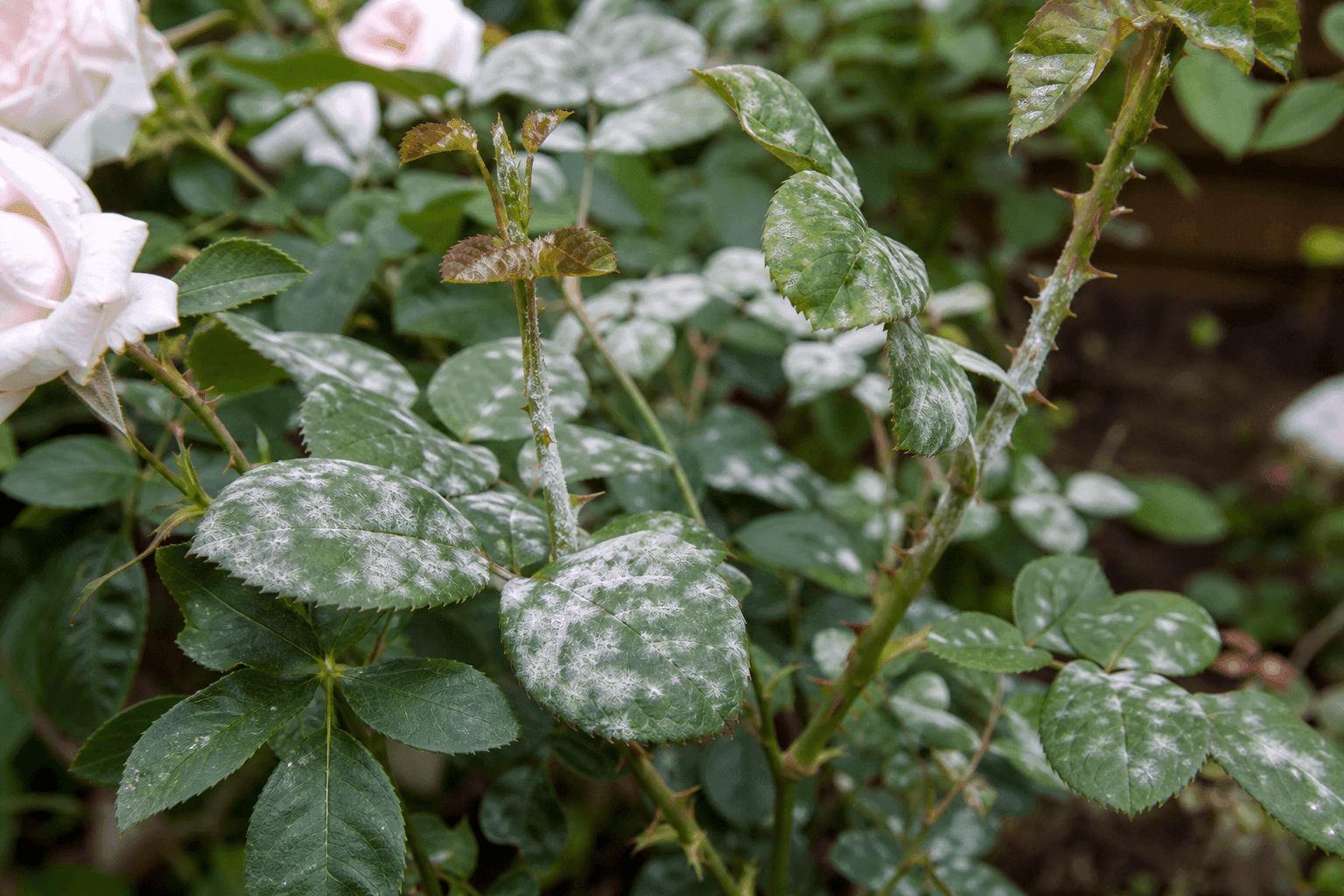
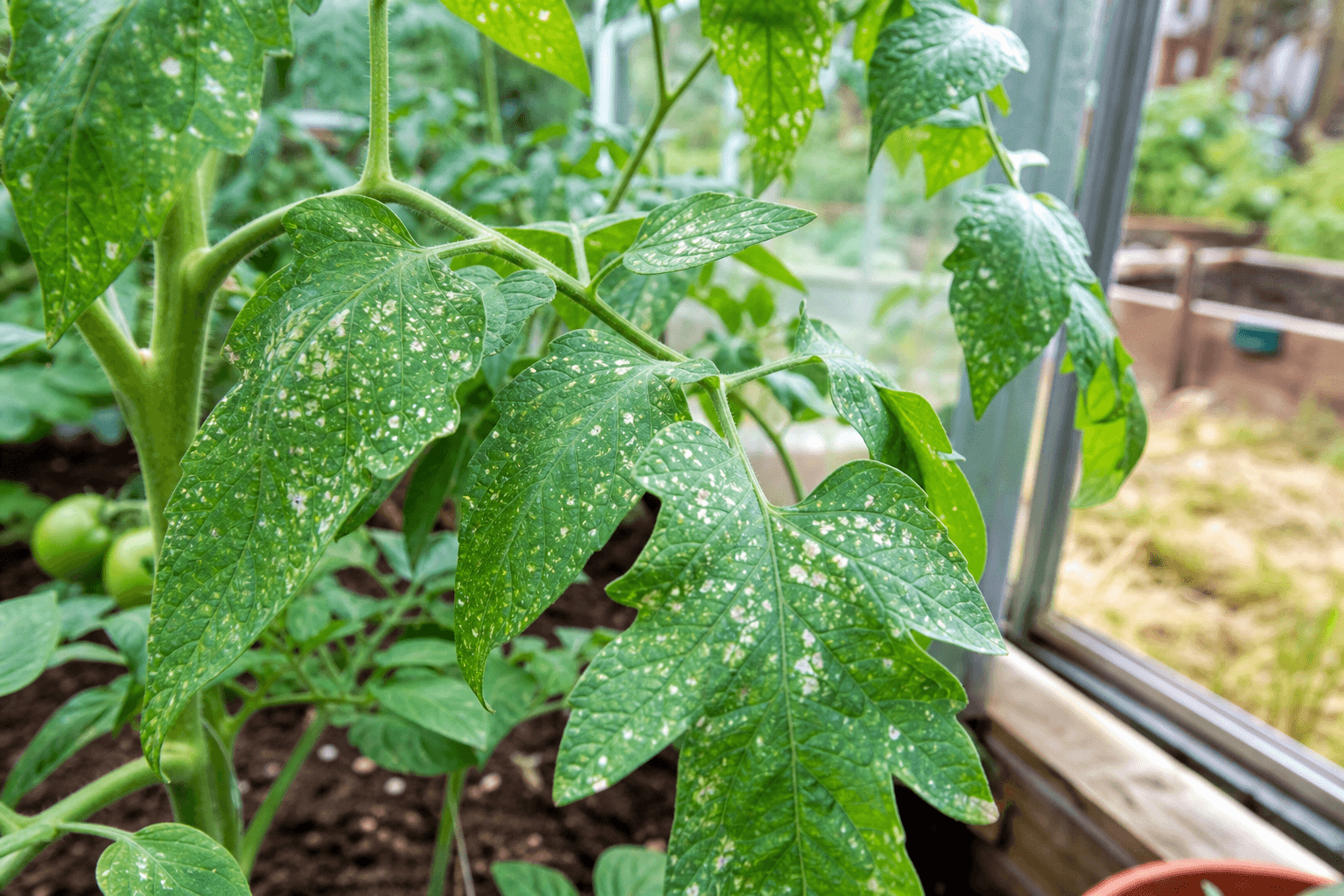
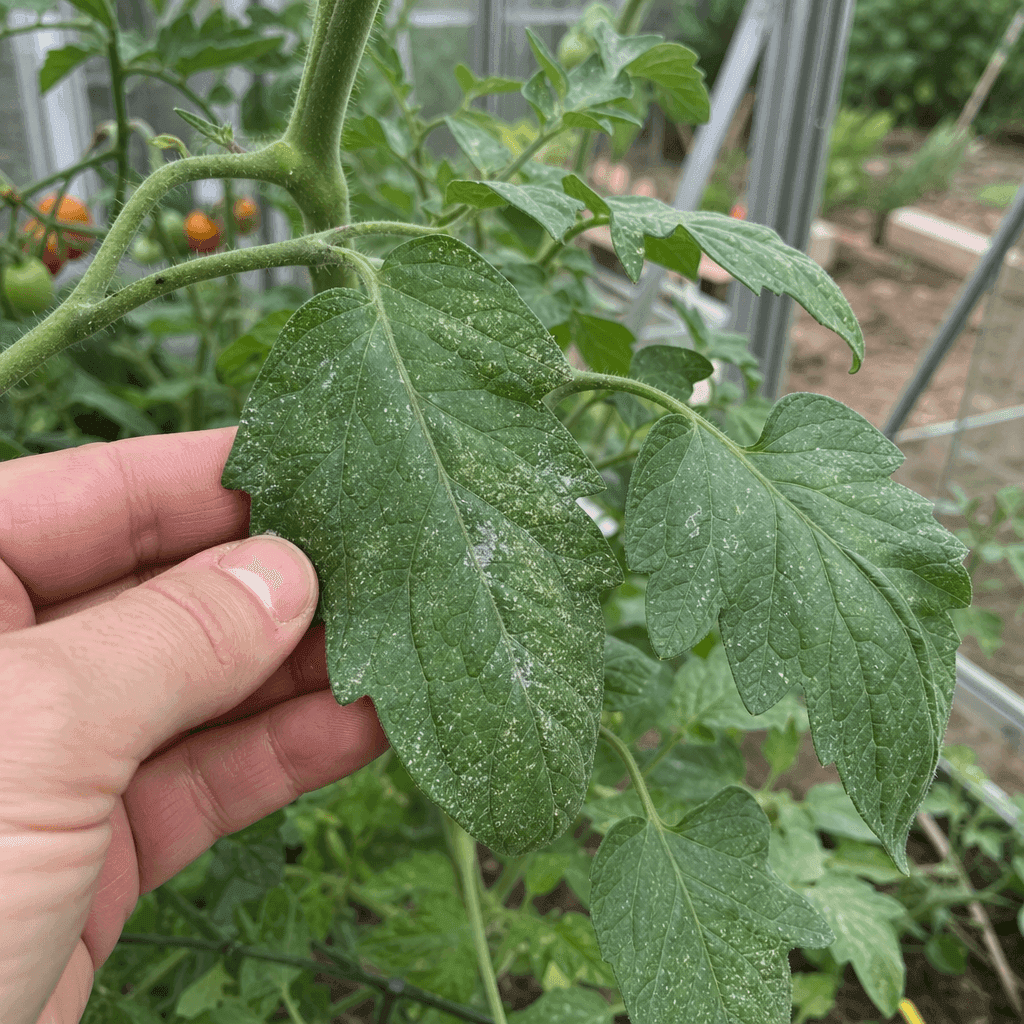
| White or grey floury coating on upper leaf surface; yellowing beneath | Powdery mildew (Oidiopsis taurica) | High | Coating rubs off with a finger; appears on upper surface; worst in warm, dry periods with cool nights. | Remove worst affected leaves; improve greenhouse ventilation; keep roots consistently moist. | Medium |
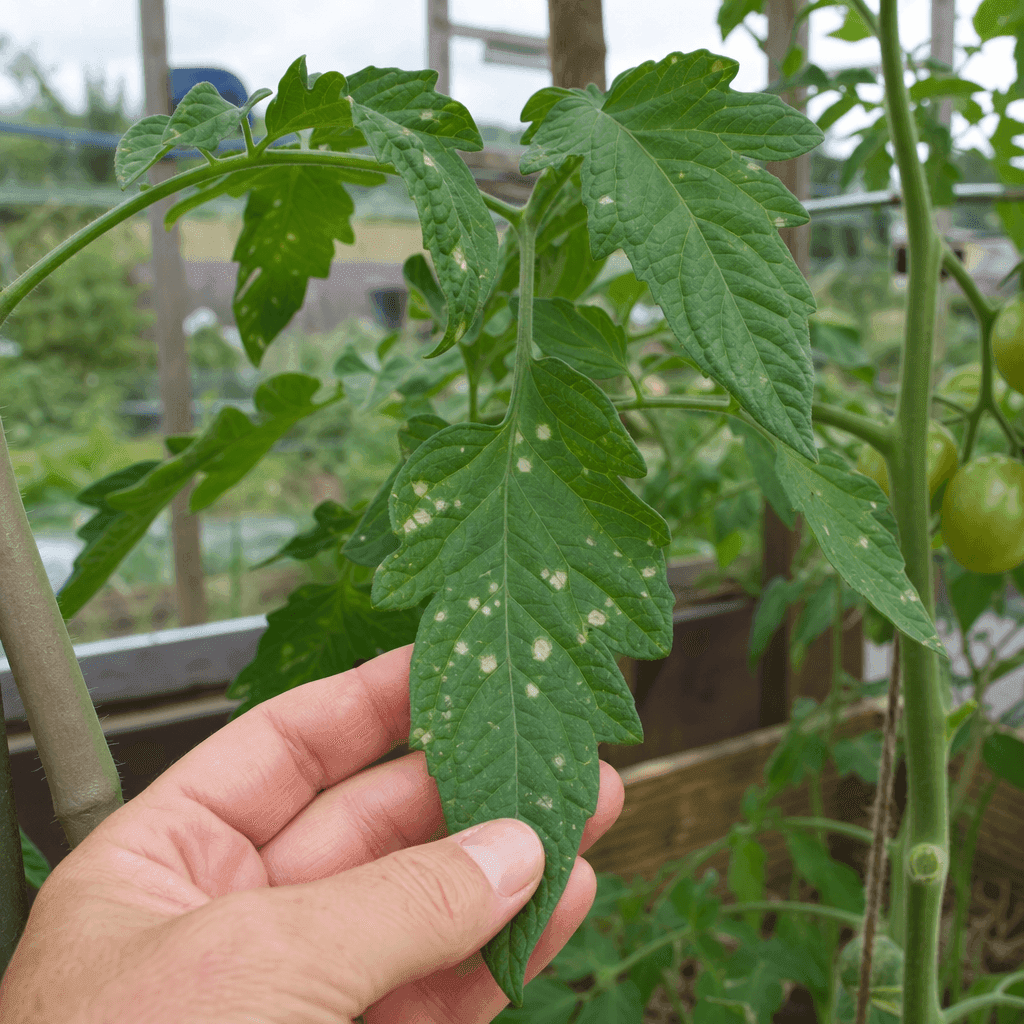
| Small, round spots with a grey or white centre and a dark brown border; starts on lower leaves | Septoria leaf spot (Septoria lycopersici) | High | Spots are roughly circular, 3–6mm across, with a distinct dark edge; worst after wet weather; starts on the lowest leaves. | Remove and bin affected lower leaves; avoid overhead watering; improve airflow around stems. | Medium |
| Pale, bleached or papery white patches on leaves facing the sun; no spots or coating | Sun scorch / sunscald | Medium | Damage is on the side of the plant facing direct sun; appeared after a very hot, bright day; no disease coating or spots. | Shade the plants during the hottest part of the day; ventilate the greenhouse; water roots adequately. | Low–medium |
| Raised, blistered, corky bumps on leaf undersides; whitish or pale in colour; no spread | Oedema (physiological water disorder) | Medium | Bumps are on the underside of leaves and feel corky; the compost is persistently wet; greenhouse humidity is high. | Reduce watering; improve ventilation; the bumps will not disappear but new growth should be clean. | Low |
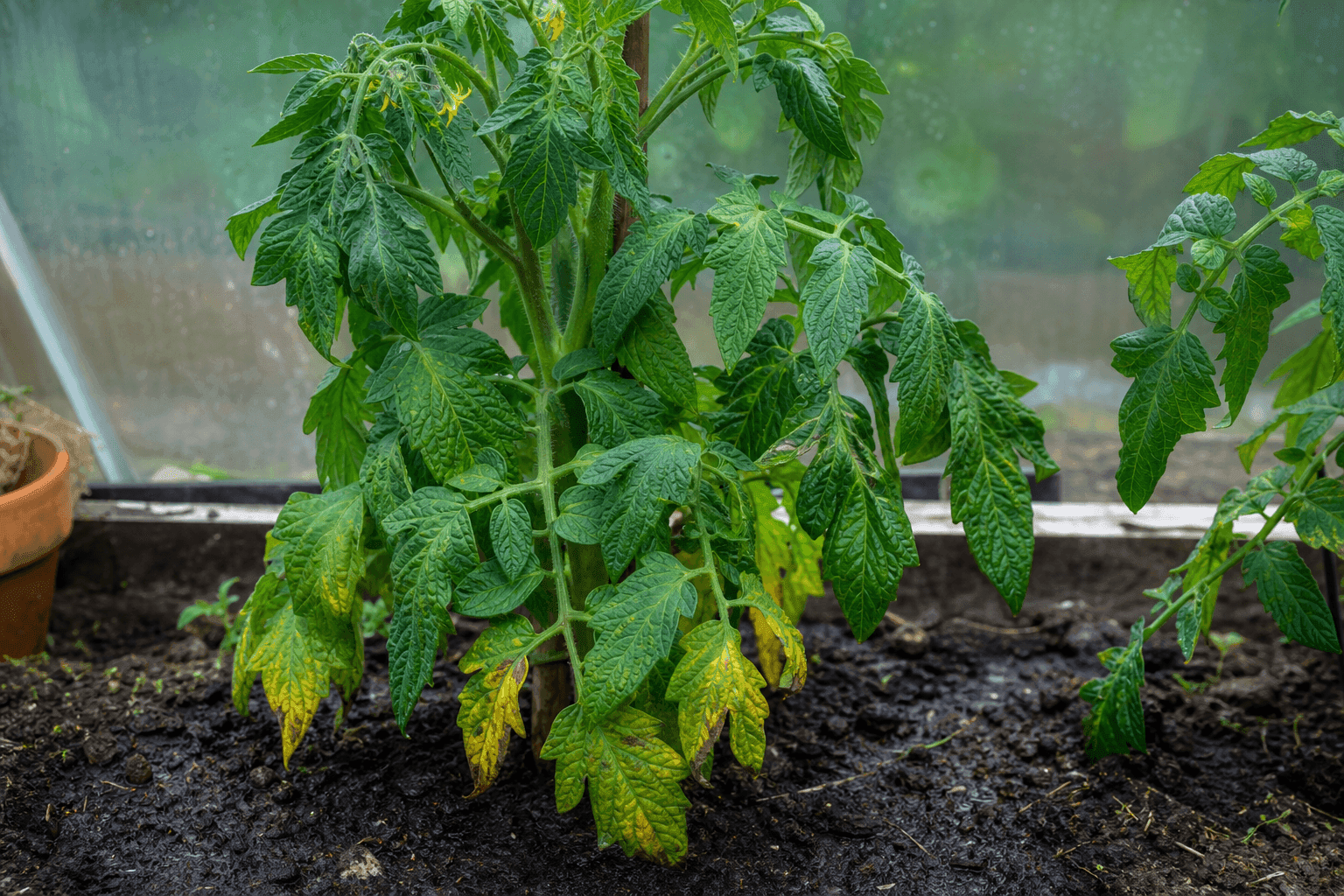
| Pale yellow spots on upper leaf surface with olive-green velvety growth underneath | Leaf mould (Fulvia fulva / Cladosporium fulvum) | Medium | Spots on upper surface have corresponding olive-green, velvet-like mould on the lower surface; mainly in greenhouses. | Remove affected leaves; improve greenhouse ventilation; reduce humidity by venting and avoiding wetting foliage. | Medium |
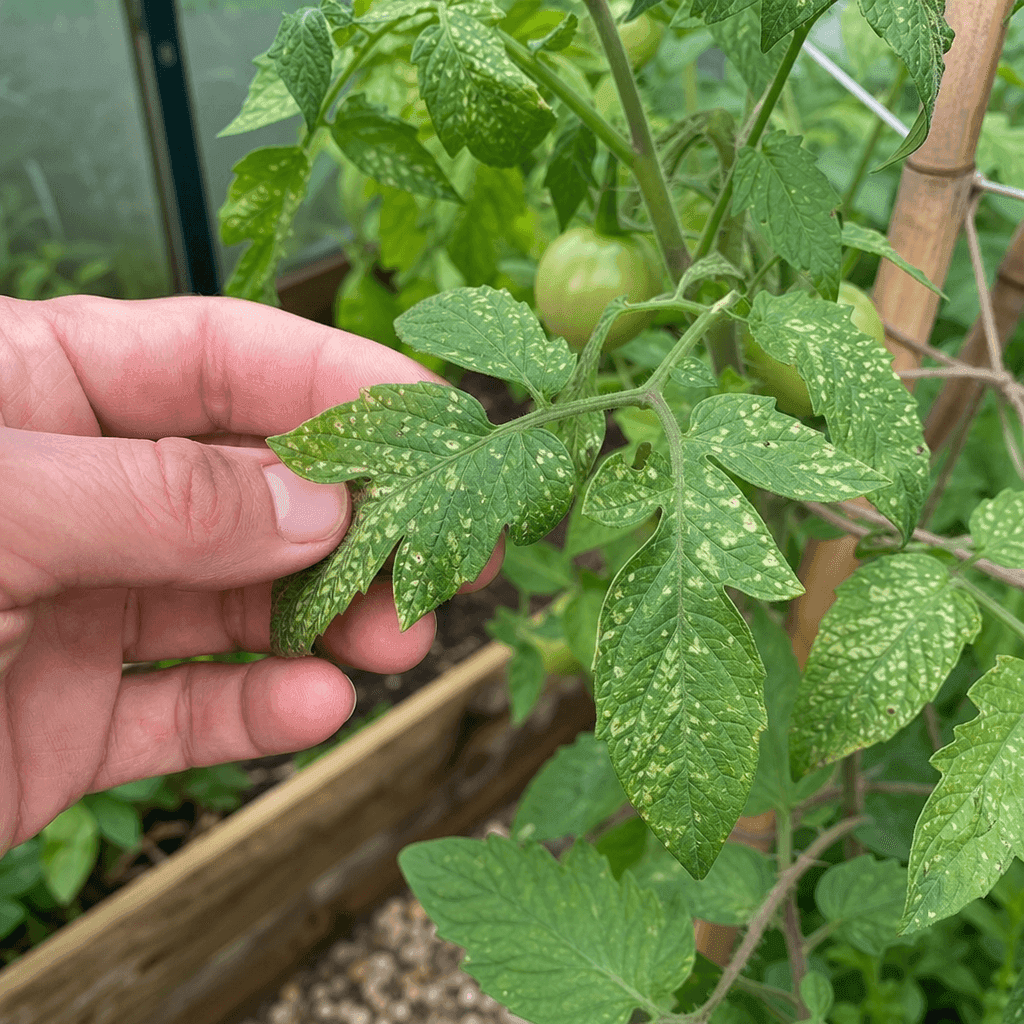
| Small white or tan spots scattered on older leaves; general pallor; irregular | Physiological leaf spotting from mineral stress | Low | Spots are not associated with disease signs; growing bag or container plant; irregular watering history. | Regularise watering; check feed schedule; use a balanced tomato fertiliser. | Low |
The causes, in detail
Powdery mildew (Oidiopsis taurica)
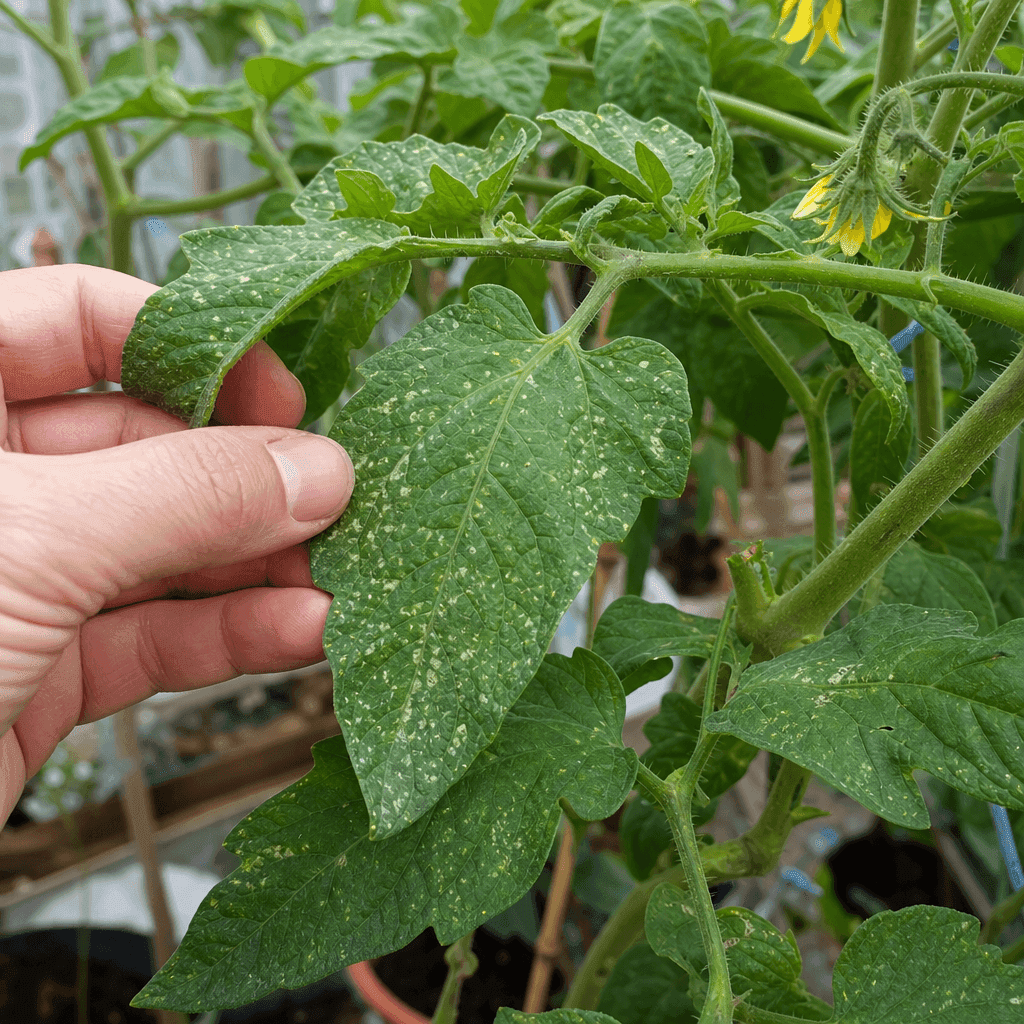
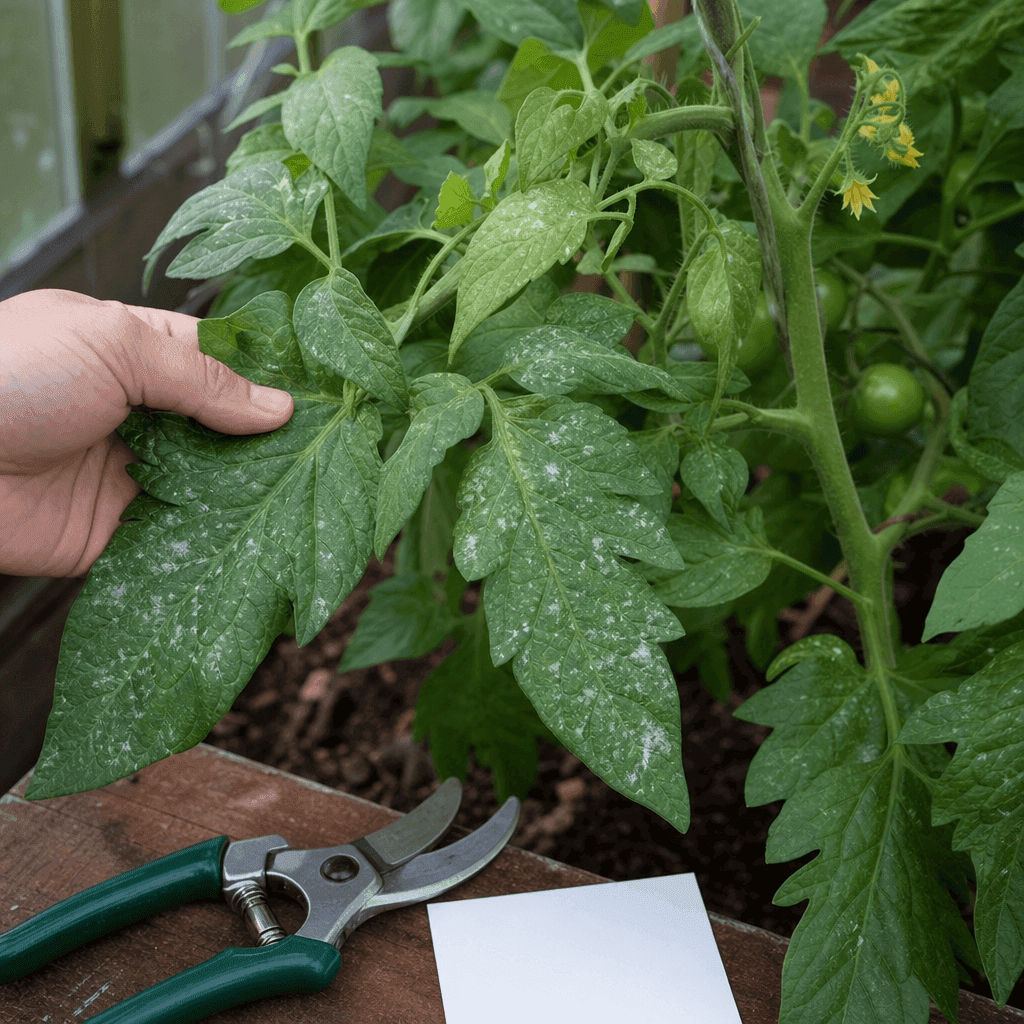
Most likelyTomato powdery mildew in the UK is caused by Oidiopsis taurica (also known as Leveillula taurica), a fungal plant disease that differs from most garden powdery mildews. It can infect through stomata as well as on the surface, and it thrives in warm, dry conditions with cool nights — conditions common inside UK greenhouses in late summer. It appears first as pale yellow patches on the upper leaf surface, which then develop a white or grey powdery spore coating. Infected leaves eventually turn yellow and fall. The University of Connecticut Extension IPM team confirms this species is particularly problematic for indoor tomatoes. The RHS lists this on its tomato leaf problems advice page.
- White to grey powdery or mealy coating on the upper surface of leaves.
- Infected areas may be slightly yellow beneath the coating.
- Coating rubs off with a finger.
- Conditions in the growing space are warm and dry, particularly at night.
- Remove badly affected leaves and bin them — do not compost.
- Open vents and doors to improve air circulation in the greenhouse.
- Keep roots consistently moist — dry roots predispose the plant to powdery mildew.
- Mulch the root zone and water at the base, not overhead.
- The RHS does not recommend fungicide use — cultural controls are more effective and sustainable.
Stop it coming back:Infected leaves do not recover, but the plant can continue cropping if conditions are improved. Focus on ventilation, consistent watering and removing infected material as the main prevention strategy.
stop watering to combat powdery mildew — dry roots are a predisposing factor; maintain consistent root moisture.
Septoria leaf spot (Septoria lycopersici)
Most likelySeptoria leaf spot is one of the most widespread tomato diseases in the UK, affecting outdoor and tunnel-grown plants alike. It is caused by the fungus Septoria lycopersici and appears as small, circular spots — typically 3–6mm across — with a grey or white centre and a dark brown to black border. Tiny dark specks (the fungal fruiting bodies, called pycnidia) are often visible in the white centre under a hand lens. The disease starts on the lowest, oldest leaves and works upward through the canopy. It is strongly associated with wet or humid weather, overhead irrigation, and poor airflow. Seed Parade UK lists it as one of the primary tomato leaf diseases.
- Round spots, 3–6mm, with a grey or white centre and a distinct dark brown border on lower leaves first.
- Spots appeared or worsened after wet weather or overhead watering.
- Tiny dark specks may be visible in the centre of spots with a hand lens.
- Spots are on the upper surface and spread progressively upward.
- Remove and bin all affected leaves, starting from the lowest — do not compost.
- Avoid overhead watering — water only at the base of the plant.
- Improve airflow by removing side shoots and lower leaves as the season progresses.
- Rotate tomatoes to a different growing area each year to reduce soil-level inoculum.
- Clear away all plant debris at the end of the season.
Stop it coming back:Infected leaves will not recover. Focus on preventing spread: remove affected material promptly, improve airflow, and avoid wetting the foliage. Outdoor crops are more exposed — staking and training to improve airflow is particularly helpful.
compost infected tomato leaves or stems — Septoria can persist in compost heaps that do not reach sufficient temperatures to kill the spores.
Sun scorch and sunscald
PossibleSun scorch on tomato leaves appears as pale, bleached or papery white patches — typically on the side of the leaf facing direct sun. It is not infectious. In UK greenhouses, scorch happens most often when ventilation fails, temperatures spike above 30°C inside, and plants cannot cool themselves adequately. Plants moved suddenly from a shaded indoor position to full outdoor sun may also show scorch on new leaves that have not hardened in direct sunlight. The RHS tomato guidance notes that whitewash on greenhouse glass can be used to reduce extreme summer scorch.
- Pale or bleached patches on the sunny side of leaves — no powdery coating or distinct spots.
- Damage appeared after a hot, bright day or following a sudden move outdoors.
- No spread to leaves on the shaded side.
- Tissue in the damaged area feels papery and thin.
- Ventilate the greenhouse thoroughly — open all vents and doors in warm weather.
- Apply diluted greenhouse whitewash to the exterior of the glass to reduce intense direct sun.
- Provide shade cloth over plants that have been recently moved outside.
- Water roots adequately — stressed plants with dry roots scorch more easily.
- Do not remove scorched leaves immediately unless they are more than 50% damaged; they still photosynthesise.
Stop it coming back:Sun-scorched tissue does not recover, but new growth in better conditions will be normal. Harden off plants gradually when moving them outdoors — a week of dappled shade before full sun exposure prevents most scorch.
assume sun scorch is a disease and apply fungicide or copper spray — it is a physical injury, not an infection.
Oedema (physiological water blistering)
PossibleOedema (also spelled edema) on tomato leaves appears as raised, corky or blistered bumps, typically on the undersides of leaves, which may appear whitish or pale. It occurs when the plant absorbs water faster than it can transpire — most commonly in UK greenhouses in cool, humid conditions with high soil moisture and low light. The internal cells rupture under pressure, producing the characteristic bumps. The RHS has a dedicated page on oedema confirming it is a physiological disorder rather than a disease, so no pest control is appropriate. Once formed, the bumps do not disappear, but new growth in corrected conditions should be clean.
- Raised, blistered, corky or warty bumps on the undersides of leaves — not on the upper surface.
- Bumps are whitish or pale-coloured and feel firm and corky.
- No spread between plants (not infectious).
- Compost is consistently very moist; greenhouse humidity is high.
- Reduce watering frequency — allow the compost to partially dry between waterings.
- Ventilate the greenhouse to reduce humidity.
- Remove badly affected leaves.
- Do not apply any spray — this is a physiological response, not a pest or disease.
treat oedema with insecticides or fungicides — it is caused by excess water uptake, not by any pathogen or pest.
Tomato leaf mould (Fulvia fulva)
PossibleTomato leaf mould is caused by the fungus Fulvia fulva (formerly Cladosporium fulvum) and is primarily a disease of greenhouse and tunnel-grown tomatoes in the UK. The RHS has a specific page dedicated to it. Initial symptoms are pale yellow or green spots with unclear edges on the upper leaf surface — these can look like whitish patches. The diagnostic feature is what appears on the underside: an olive-green or brownish velvety growth corresponding to each upper spot. In severe cases, infected leaves curl, yellow and fall prematurely. The disease thrives in humid, poorly ventilated greenhouses with temperatures of 20–25°C.
- Pale yellow or green spots with indistinct edges on the upper surface of leaves.
- Corresponding olive-green, velvet-like coating on the underside of the same spots.
- The plant is in a greenhouse or polytunnel.
- Conditions are warm and humid with inadequate ventilation.
- Remove affected leaves and bin them.
- Ventilate the greenhouse aggressively — open all vents and doors.
- Water at the base only; avoid wetting foliage.
- Reduce humidity by spacing plants widely and removing lower leaves as the season progresses.
- Use leaf mould-resistant varieties in future seasons — several commercial varieties have the Cf-resistance gene.
leave affected plants in a poorly ventilated greenhouse — leaf mould spreads quickly under those conditions and can rapidly defoliate a crop.
Physiological leaf spotting from mineral stress
Less likelyIrregular watering, salt build-up from heavy feeding, or very high or low pH can occasionally cause scattered pale spots or tan areas on older tomato leaves that do not match the pattern of any fungal disease. These are physiological rather than infectious. They may be associated with blossom end rot on fruits in the same plant — a sign that calcium delivery through the plant is compromised by erratic water supply. The RHS confirms that mineral deficiency spotting in tomatoes is usually secondary to a watering or root problem.
- Spots are irregular and scattered, not circular with defined edges.
- No powdery coating and no mould on leaf undersides.
- The same plant may have blossom end rot on fruits.
- Watering has been inconsistent or the plant is in a pot or growing bag.
- Regularise watering — keep compost consistently moist.
- Check drainage and ensure roots are not waterlogged between waterings.
- Switch to a balanced tomato fertiliser and follow label rates.
- Remove affected leaves only if they are more than half damaged.
apply foliar calcium or magnesium sprays as a first response — most calcium-related leaf issues in tomatoes trace back to water delivery problems, not nutrient absence in the soil.
Still not sure?
Work down these branches — the first one that matches is your answer.
What not to do
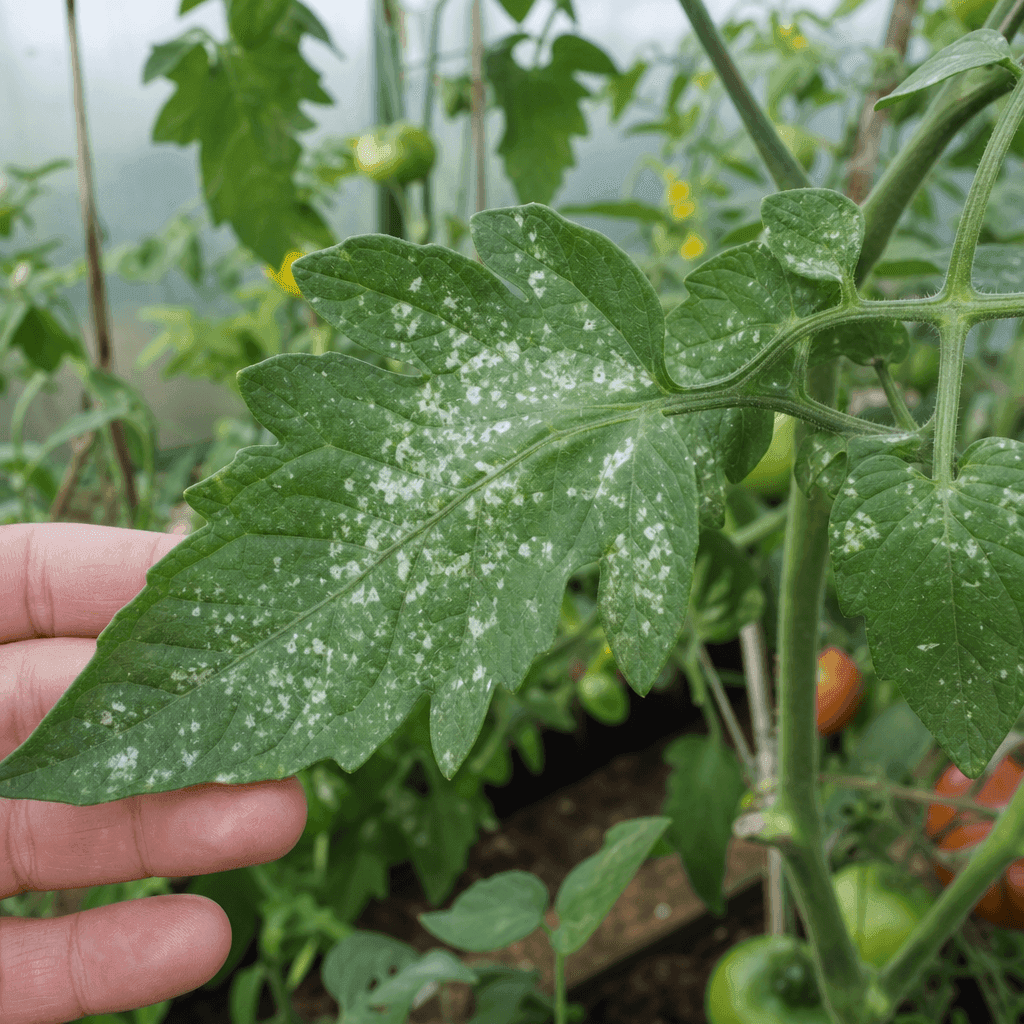
- Assume white spots are all the same — powdery mildew, septoria, sun scorch and oedema look different and need different fixes.
- Apply copper fungicide or calcium spray without confirming the cause — it will not fix sun scorch or oedema.
- Water overhead — many tomato leaf diseases are spread by water splash onto foliage.
- Compost infected tomato leaves — septoria spores can persist in inadequate compost heaps.
- Close the greenhouse to keep warmth in during summer — this is the most common driver of both powdery mildew and leaf mould.
Common questions
What causes white spots on tomato leaves?
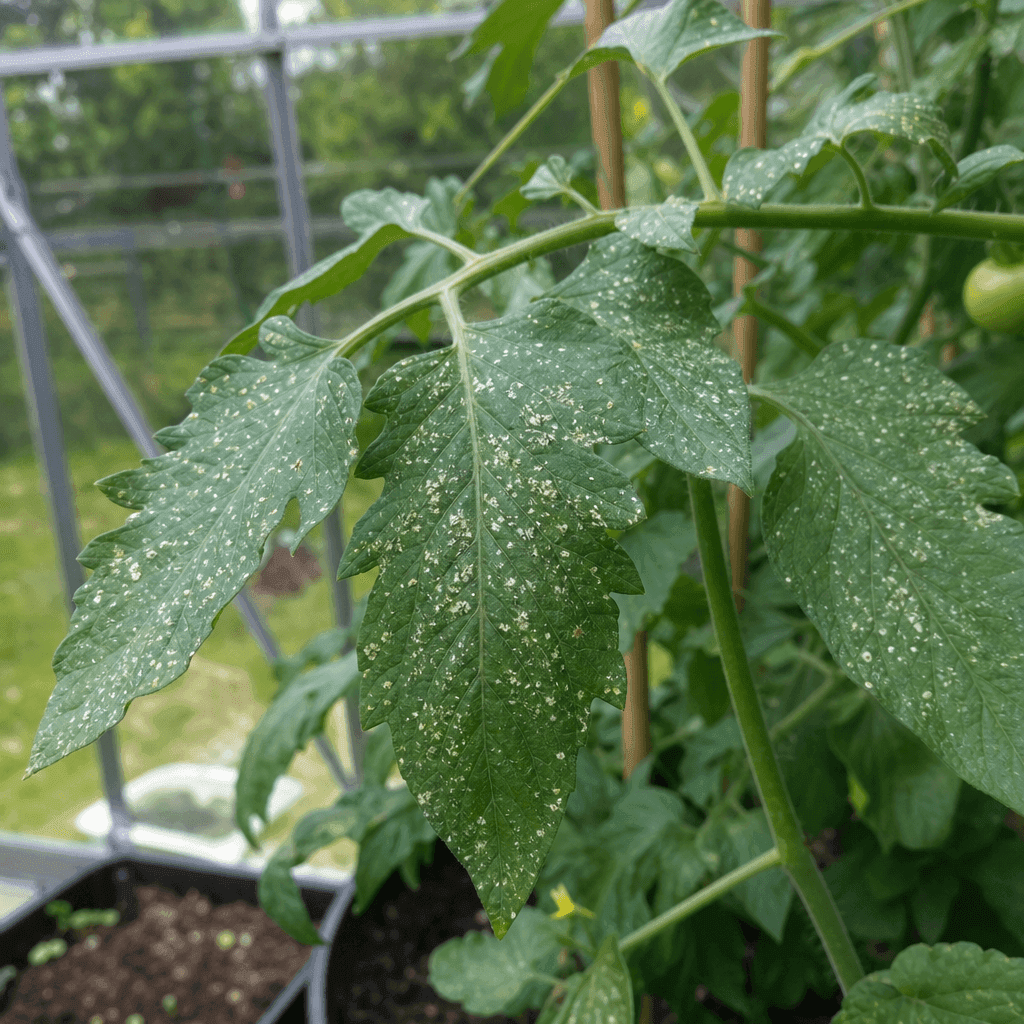
The most common causes in UK gardens are powdery mildew (a white floury coating on the upper surface), septoria leaf spot (small round spots with a pale centre and dark border), sun scorch (pale bleached patches), or oedema (corky bumps on leaf undersides). Each looks different — checking the pattern and position of the spots helps identify the cause.
What does powdery mildew on tomatoes look like?
Tomato powdery mildew appears as a white or grey powdery or mealy coating on the upper surface of leaves. It begins as pale yellow patches that then develop a dusty white coating. Unlike septoria, the white coating rubs off easily. It is most common in UK greenhouses in warm, dry conditions with cool nights.
What is septoria leaf spot on tomatoes?
Septoria leaf spot is caused by the fungus Septoria lycopersici. It appears as small, circular spots (3–6mm) with a grey or white centre and a distinct dark brown or black border, starting on the lowest leaves first. It is associated with wet or humid conditions and spreads up the plant. Remove affected leaves and avoid overhead watering.
Why do my tomato plants have white patches but no spots?
White or pale patches without defined spots or a powdery coating are most likely sun scorch — caused by excessive direct sunlight, especially in a poorly ventilated greenhouse. The tissue bleaches and becomes papery. It is not infectious and cannot spread. Improve ventilation and shading.
What are the corky bumps on the underside of my tomato leaves?
Corky, raised or blistered bumps on tomato leaf undersides are oedema — a physiological disorder caused by excess water uptake in humid conditions. It is not a disease or pest. No spray is needed. Reduce watering and improve ventilation. Existing bumps will remain but new growth should be clean.
How do I treat powdery mildew on tomatoes in a UK greenhouse?
Remove badly affected leaves, improve ventilation by opening all vents and doors, and keep the roots consistently moist — dry roots are a main predisposing factor. The RHS does not recommend fungicide use. Cultural controls are more effective for this disease in a UK greenhouse context.
Is white spotting on tomato leaves contagious?
Powdery mildew and septoria leaf spot are both infectious fungal diseases that can spread between plants. Sun scorch and oedema are physiological and cannot spread. If the spots are powdery or form a distinct circular pattern, treat them as potentially infectious and improve hygiene, airflow and ventilation.
Can tomatoes recover from white spot diseases?
Infected leaves will not recover, but the plant can continue growing and cropping if the cause is managed. Remove badly affected leaves promptly, improve growing conditions, and watch the new growth — if it looks clean, conditions have improved. Severe defoliation reduces cropping potential.