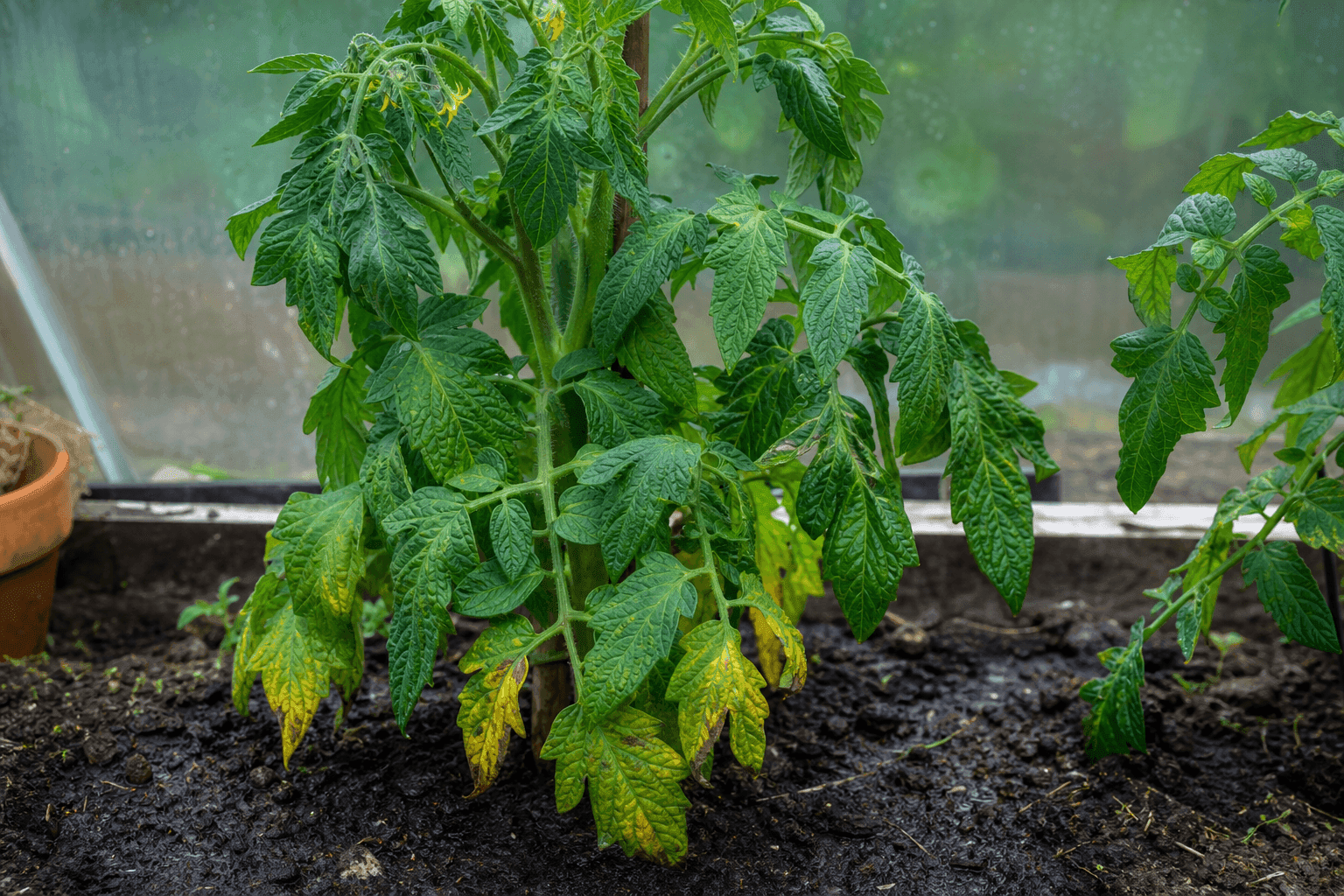
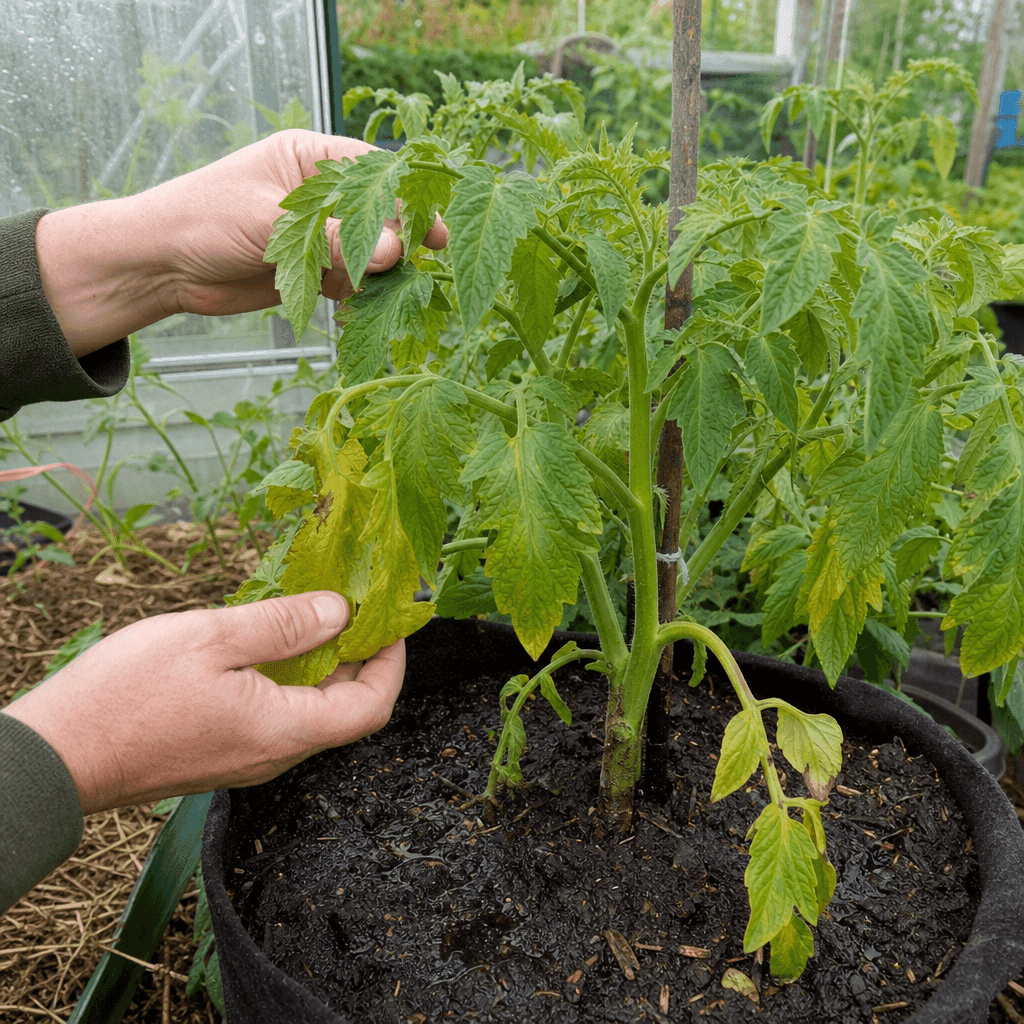
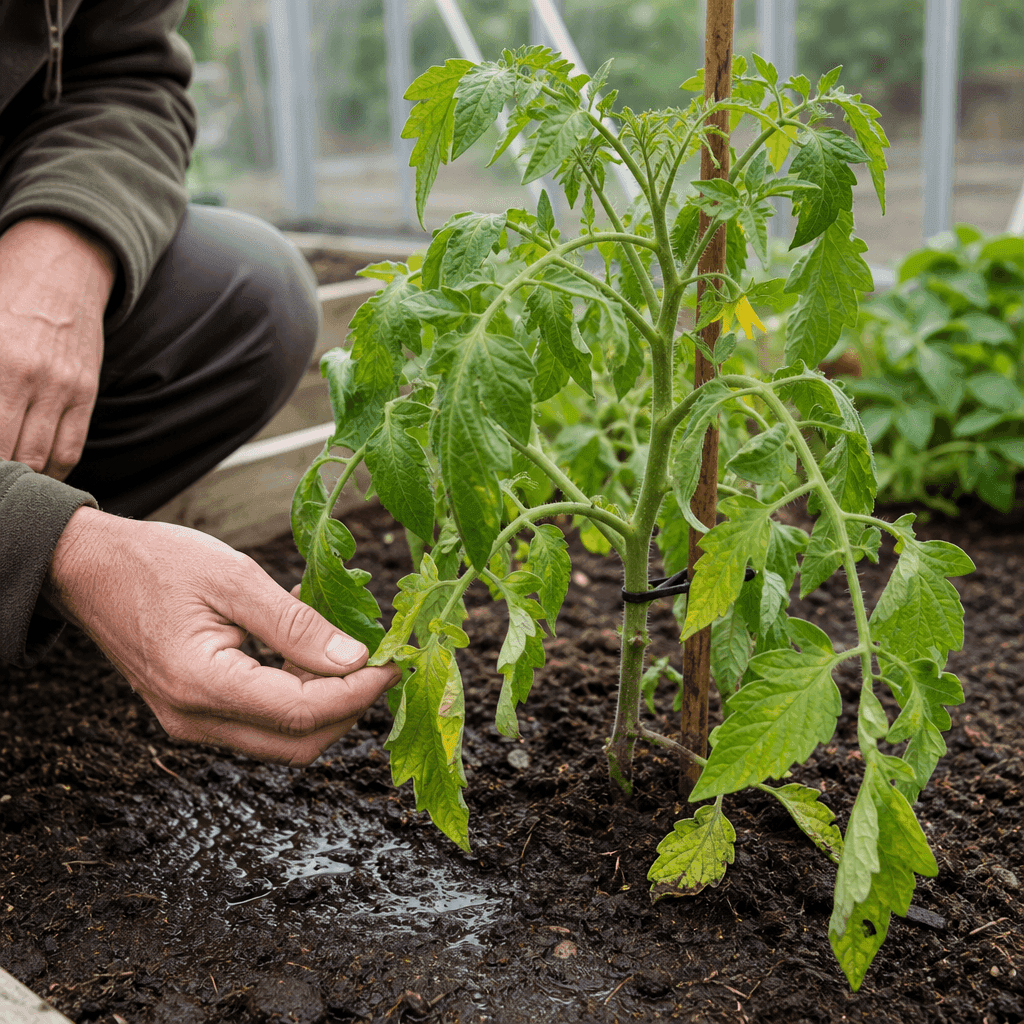
Quick diagnosis
Match the row to what you’re seeing, then jump to the fix.
| What you see | Likely cause | Confidence | How to confirm | What to do now | Urgency |
|---|---|---|---|---|---|
| Plant drooping while compost is wet; soil feels soggy or cold | Overwatering / root oxygen starvation | High | Press a finger 5cm into the compost — it is clearly wet. The pot feels heavy. The plant wilts despite moist soil. | Stop watering immediately. Check drainage holes. Do not water again until the compost has dried at finger depth. | High |
| Wilting persists after drainage is improved; soft stem base; sour smell | Root rot (Pythium or Phytophthora) | High | Slide the plant from its pot — roots are brown, mushy or slimy rather than firm and cream-coloured. | Remove from pot; trim dead roots; repot into fresh, free-draining compost; withhold water until compost is barely moist. | High |
| Compost stays waterlogged; water does not run through the pot | Blocked drainage holes or pot standing in water | High | Turn the pot and check drainage holes — they may be blocked by compacted compost, algae, or sitting in a full saucer. | Clear drainage holes; raise pot on feet; empty saucers after every watering. | High |
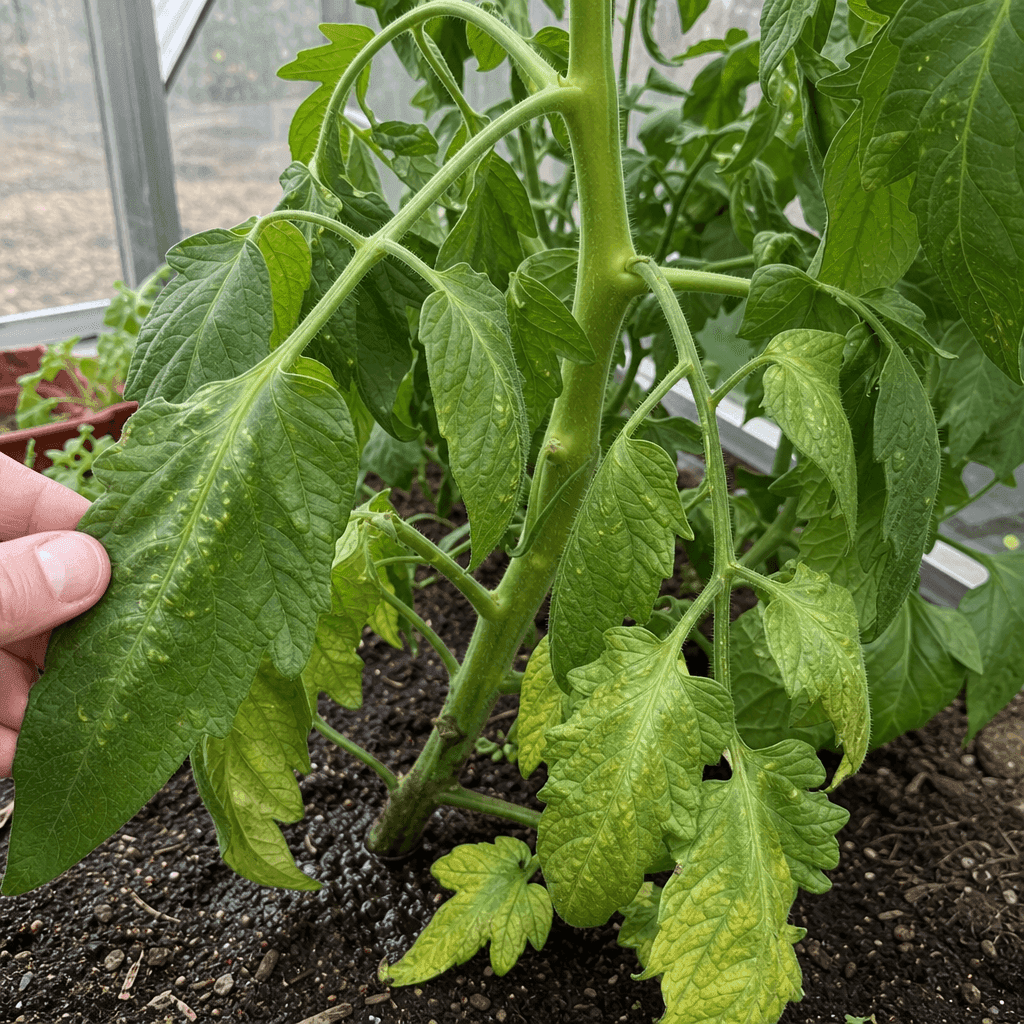
| Blistered, corky or raised bumps on undersides of leaves; no wilting | Oedema (excess water uptake) | Medium | Bumps appear on the undersides of leaves; the compost is consistently very moist; greenhouse humidity is high. | Reduce watering frequency; improve greenhouse ventilation; the bumps will not disappear but new growth should be clean. | Low–medium |
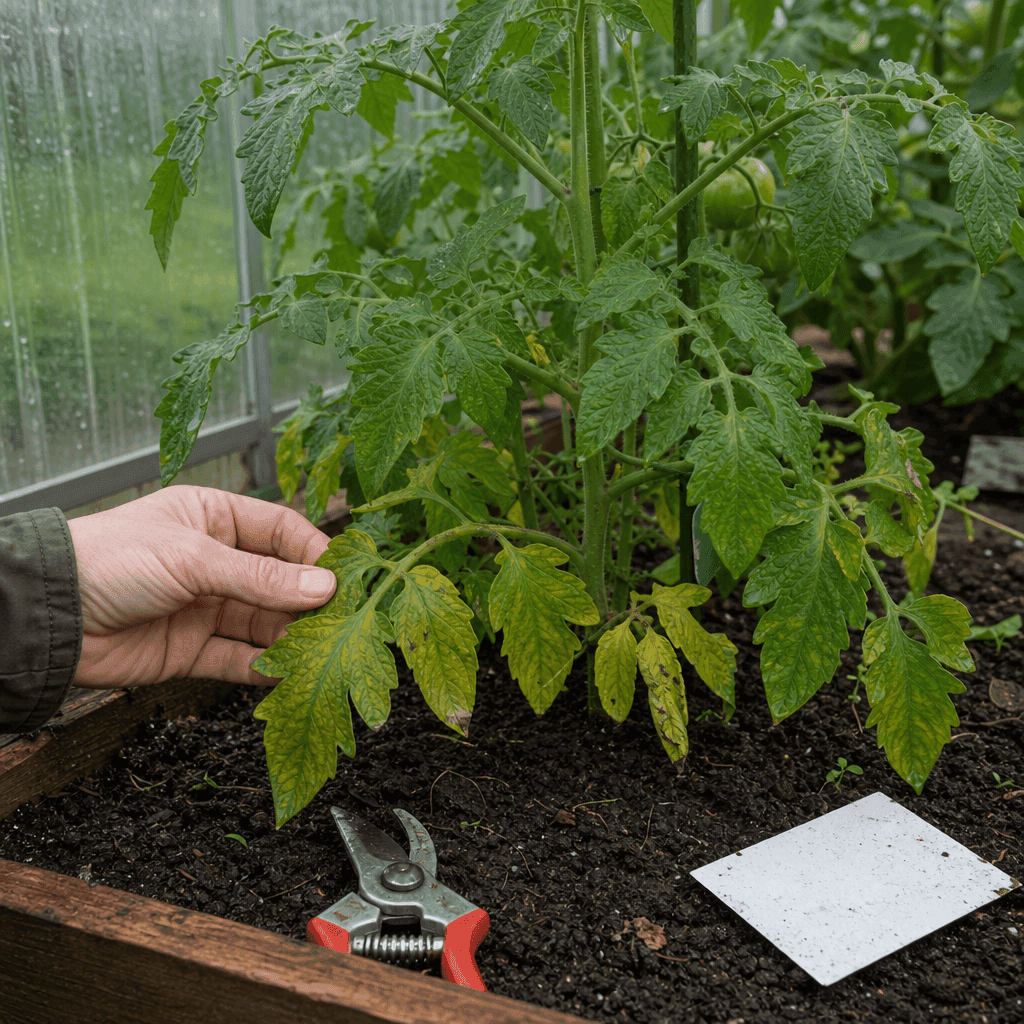
| Lower leaves yellowing and dropping; new growth looks pale | Nitrogen/nutrient washout from overwatering | Medium | Yellowing progresses from old leaves upward; the plant has been watered heavily; the compost may smell stale. | Correct watering first; once drainage is resolved and roots are healthy, resume a balanced tomato feed. | Medium |
| Soft, brown or blackened stem at or just above soil level | Crown or stem rot from waterlogging | Medium | Pinch the stem at soil level — it is soft and discoloured rather than firm and green. | If the rot is limited, remove the plant from wet compost, dust the stem with sulphur, and repot. Severely rotted plants are unlikely to recover. | High |
The causes, in detail
Overwatering and root oxygen starvation
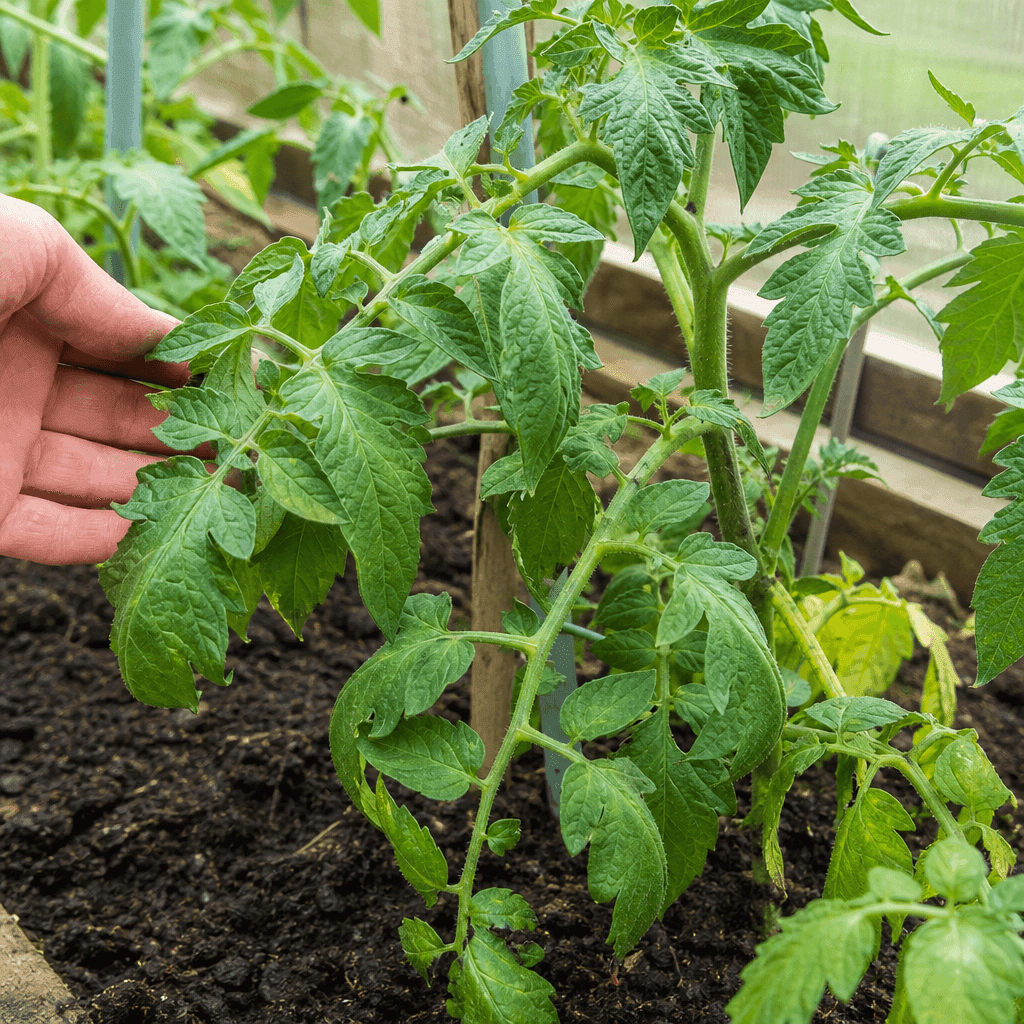
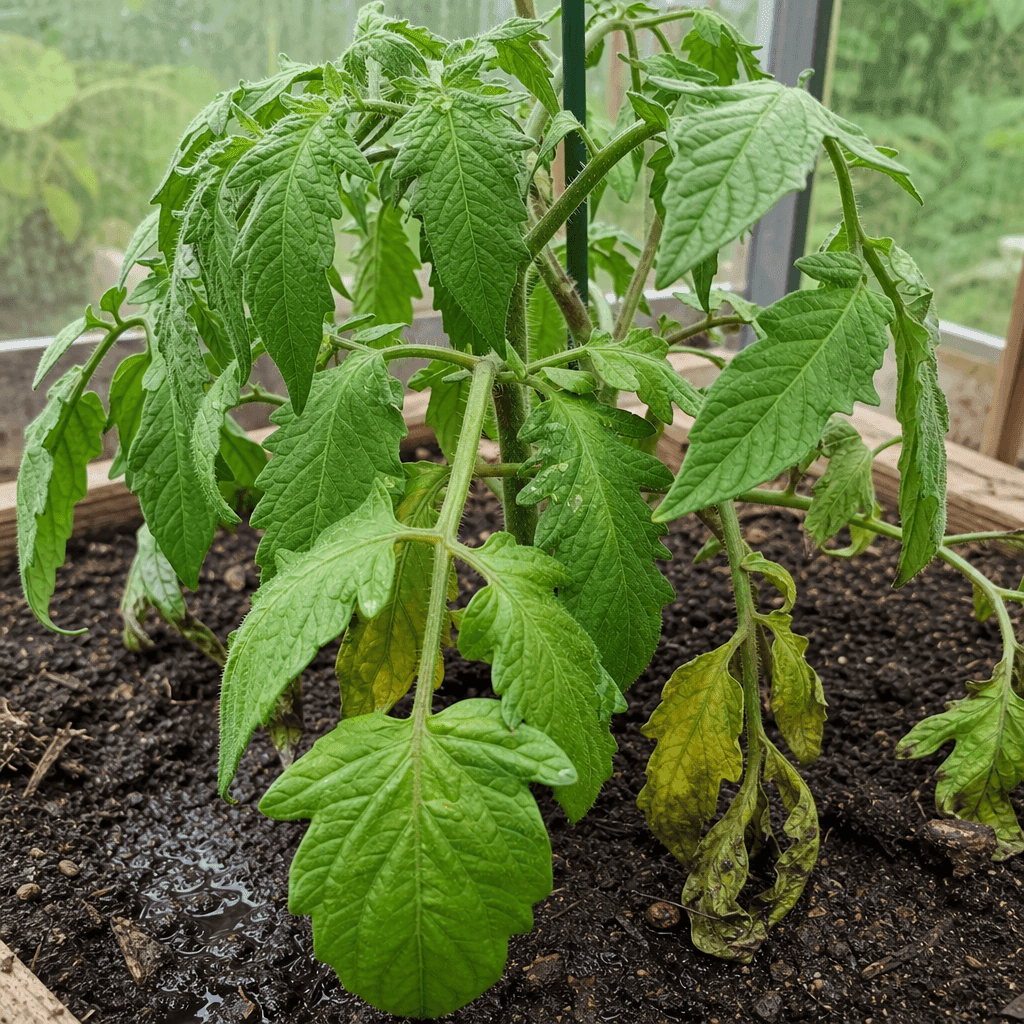
Most likelyTomato roots need both water and oxygen. When compost is saturated, air pockets in the soil structure fill with water and roots are deprived of the oxygen they need to function. They cannot transport water to the foliage even though the soil is wet — which is why an overwatered tomato can look exactly like a thirsty one. This is the most common cause of wilting in container-grown UK tomatoes in cool, dull spells when gardeners maintain the same watering frequency as warm weather demands.
- Push a finger 5cm into the compost — it is wet.
- The pot feels heavy when lifted.
- The plant wilts but the soil does not dry out.
- Improvement does not come after watering — in fact the plant gets worse.
- Stop watering immediately.
- If the plant is in a pot, check the drainage holes are clear and the pot is not standing in a saucer of water.
- Allow the compost to dry out to barely moist before watering again — check at 5cm depth.
- In future, water only when the top 2–3cm of compost feels dry, or lift the pot to judge by weight.
- In cooler or cloudier weather, tomatoes need far less water than on hot days.
Stop it coming back:Judge watering by the plant's needs, not by a fixed schedule. A tomato in a greenhouse on a cool cloudy day may need only a fraction of the water it needs during a heat wave.
water on a fixed daily schedule regardless of weather — this is the most common cause of overwatering in container tomatoes.
Root rot (Pythium, Phytophthora or Fusarium)
Most likelyWhen roots are kept waterlogged for extended periods, fungal-like organisms — most commonly Pythium or Phytophthora species — colonise the weakened root tissue and cause it to rot. Healthy roots are firm and cream-coloured; rotted roots are dark brown to black, slimy, and may smell unpleasant. Once root rot is established, the plant cannot absorb water even when the soil is drained, leading to persistent wilting. In greenhouse tomatoes, Fusarium crown and root rot can also cause similar symptoms.
- Remove the plant from its pot — roots are brown, mushy, slimy or black.
- The stem base may be soft, discoloured or hollowed.
- Wilting persists even after drainage is improved.
- A musty or sour smell comes from the compost and roots.
- Remove the plant from its pot carefully.
- Shake off sodden compost and rinse the roots gently.
- Trim away all brown, mushy, or slimy roots with clean scissors.
- Let the roots air-dry briefly — 15–30 minutes — before repotting.
- Repot into fresh, well-draining compost (avoid reusing old compost from a diseased plant).
- Water sparingly until new root growth is established.
Stop it coming back:Plants with significant root rot are challenging to recover. Early intervention — before the main stem is affected — gives the best chance. Do not feed until the plant shows signs of recovery.
reuse compost that has hosted a plant with root rot — it can harbour disease pathogens that will re-infect new plants.
Blocked drainage holes or standing water
Most likelyMany UK gardeners grow tomatoes in pots, growing bags, or raised beds, and blocked drainage is a frequent and underestimated problem. Drainage holes can become blocked by compacted compost, algae, or debris. Pots left standing in saucers allow roots to sit in pooled water between waterings. Growing bags laid flat on impermeable surfaces can pool water at the base. The result is that water cannot escape and the compost stays saturated.
- Turn the pot — drainage holes are blocked or have no clear opening.
- After watering, water does not visibly run out of the bottom.
- The saucer is full or the pot is sitting in standing water.
- Clear drainage holes with a pencil or stick.
- Raise pots on pot feet so drainage can flow freely.
- Empty saucers within 30 minutes of watering.
- If using growing bags, cut multiple slits in the base for drainage.
- Replace heavily compacted or water-repellent compost that no longer drains well.
leave pots permanently standing in saucers full of water — even moisture-loving plants like tomatoes need their roots to have access to oxygen.
Oedema (physiological water blistering)
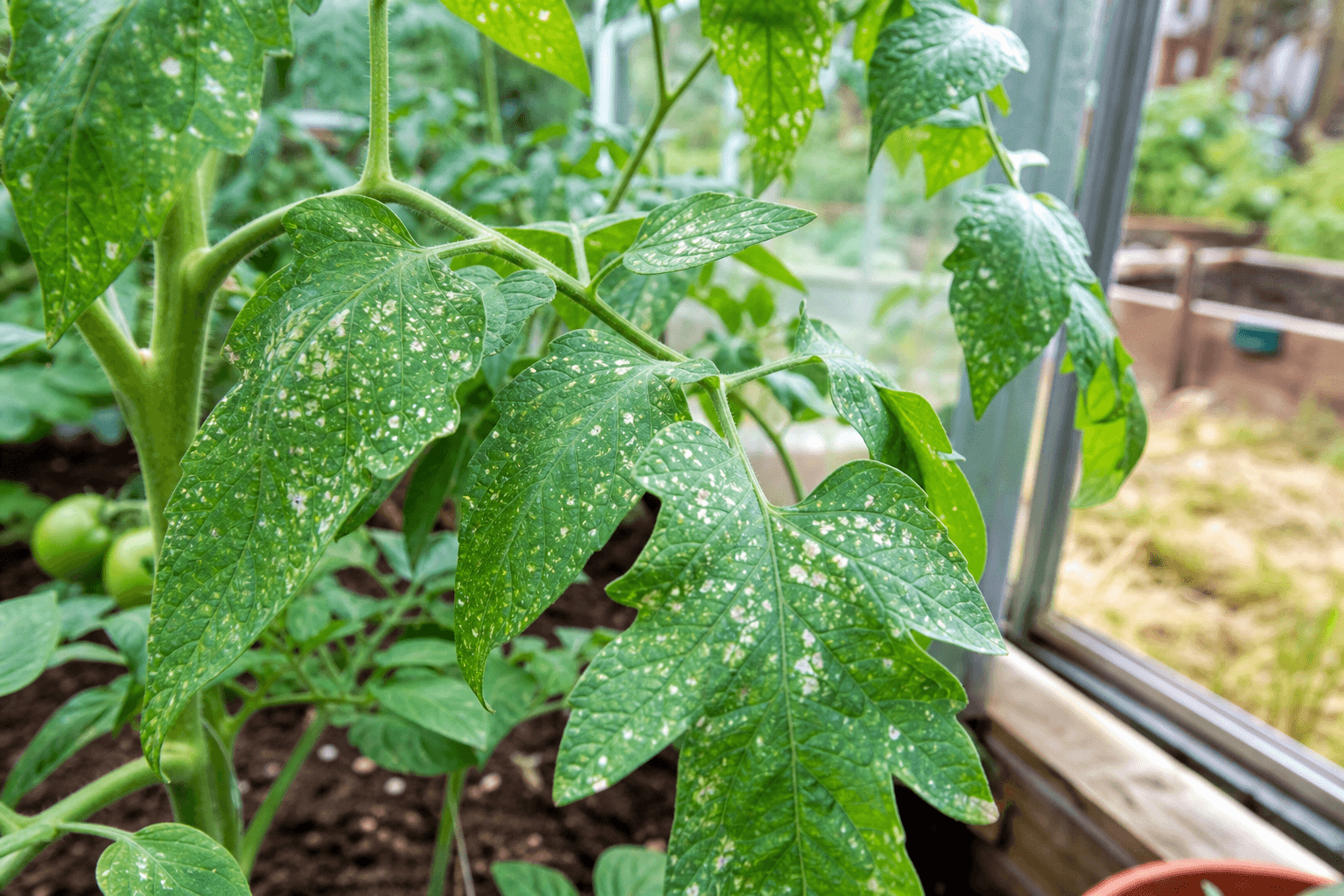
PossibleOedema occurs when a tomato plant absorbs water faster than it can transpire through its leaves — usually when greenhouse humidity is high and soil is consistently wet. The excess water causes small cells in the leaf to burst, creating corky, raised, wart-like bumps on the undersides of leaves. The RHS confirms oedema is a physiological disorder (not a pest or disease) and is most common in tomatoes grown under glass in cool, humid conditions with low light. Affected areas do not recover, but new growth is usually clean once conditions improve.
- Small, raised, blister-like or corky bumps on the undersides of leaves — not on the upper surface.
- The compost is consistently very moist.
- The greenhouse or growing space has high humidity.
- The bumps do not spread and there is no visible pest, mould or fungus.
- Reduce watering frequency — allow the compost to partially dry between waterings.
- Improve ventilation in the greenhouse or growing space to lower humidity.
- Remove badly affected leaves.
- Do not mistake oedema for a pest or disease — no spray is needed.
apply insecticides or fungicides to oedema — it is a physiological response to excess water, not a pest or disease.
Nutrient washout from overwatering
PossibleRepeatedly overwatering a tomato plant washes soluble nutrients out of the compost. Nitrogen is particularly mobile and is leached out quickly from containers. The result is lower leaves yellowing and dropping, followed by increasingly pale new growth. This is secondary to the overwatering, however — correcting watering first is essential before resuming feeding, because feeding a plant with damaged roots will not help and may cause further salt stress.
- Lower leaves are yellowing and dropping — working from the bottom up.
- New growth is noticeably pale.
- The plant has been watered very frequently.
- Feeding has not been done recently, or the compost has been flushed with heavy watering.
- Correct watering first — get the compost to an appropriate moisture level.
- Once the plant is no longer waterlogged and new growth is resuming, restart a balanced tomato feed at the recommended rate.
- Remove fully yellow leaves.
- Do not over-correct by applying heavy doses of fertiliser to a stressed plant.
apply concentrated fertiliser to a plant with damaged roots from overwatering — it will cause further root stress.
Crown and stem rot from waterlogging
PossibleIn severe or prolonged overwatering cases, rot can travel up from the roots into the stem base — the crown of the plant. The stem becomes soft, discoloured brown or black, and the plant collapses. This is often caused by Pythium or Phytophthora organisms taking advantage of waterlogged conditions. Once the crown is rotted, recovery is very difficult and the plant usually cannot be saved. Catching overwatering before the stem is affected is critical.
- Pinch the stem at soil level — it is soft, sunken, or discoloured.
- The stem base is brown or black rather than firm and green.
- The plant has completely collapsed despite adequate watering.
- If rot is limited to a small section, carefully remove affected tissue and dust with powdered sulphur.
- Repot into fresh compost and withhold watering to allow any remaining healthy roots to recover.
- If the main stem is badly rotted, the plant is unlikely to survive — remove it to prevent spreading disease to neighbouring plants.
- Disinfect the pot before reusing it.
compost or bin infected plant material — it can carry Phytophthora or Pythium spores that persist in the soil.
Still not sure?
Work down these branches — the first one that matches is your answer.
What not to do
- Water on a fixed daily schedule regardless of weather, soil moisture, or the season.
- Assume drooping always means the plant is thirsty — check the soil before watering.
- Leave pots standing in saucers of water between waterings.
- Feed a plant with damaged roots — nutrient uptake will not improve until the roots recover.
- Reuse compost from a pot where root rot occurred — it may harbour persistent pathogens.
Common questions
How can I tell if my tomato is overwatered or underwatered?
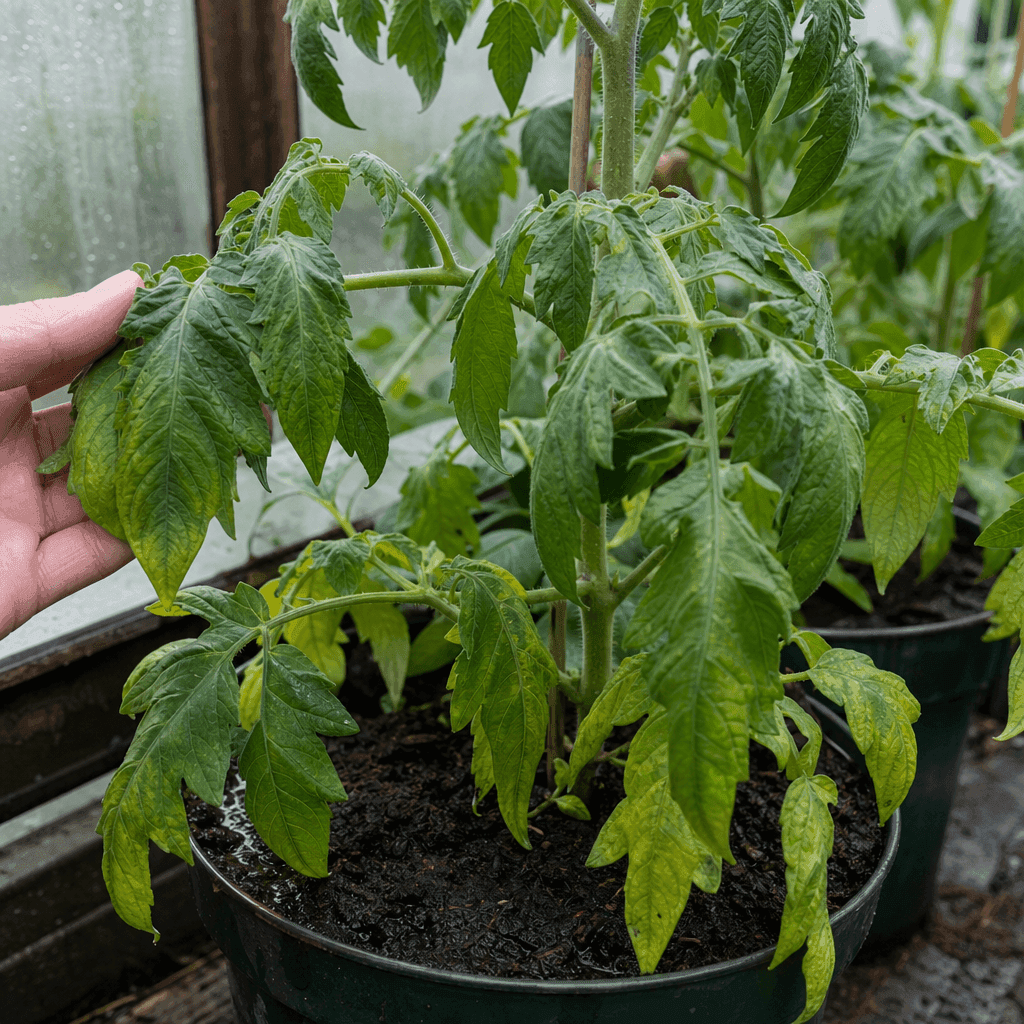
Check the soil. Overwatered tomatoes have wet or soggy compost, soft or mushy leaves and stems, and often a sour smell. Underwatered tomatoes have dry compost, crispy leaf edges, and leaves that feel papery. Both can cause drooping, but the soil texture tells you which is happening.
What do overwatered tomato leaves look like?
Overwatered tomato leaves are typically soft and limp rather than crispy. Lower leaves may yellow and drop. You may also see swollen, corky bumps on leaf undersides (oedema). Stems may feel soft near the base and the compost often has a sour or musty smell.
Can an overwatered tomato plant recover?
Yes, if caught early. Stop watering, improve drainage, and let the compost dry to barely moist before watering again. If root rot has set in, remove the plant from its pot, trim dead roots, and repot in fresh compost. Severe stem or crown rot is very difficult to reverse.
How often should I water tomatoes in the UK?
There is no fixed rule — it depends on pot size, weather, and the plant's growth stage. In hot weather, a container tomato may need watering twice a day; in cool cloudy spells, every 2–3 days. Always check by pressing a finger 5cm into the compost — water only when the top layer is starting to dry. See our full tomato growing and problem guide for more on seasonal care.
Why are my tomato leaves yellowing from the bottom up?
Yellowing that starts on the lowest, oldest leaves and moves upward is common with overwatering, nutrient washout, or a combination of both. It can also be early Fusarium or Verticillium wilt. Check the soil moisture first — if the compost is consistently very wet, overwatering is the likely cause.
What are the corky bumps on my tomato leaves?
Corky or blister-like bumps on the undersides of tomato leaves are oedema — a physiological response to excess water uptake in humid conditions. It is not a pest or disease and no spray is needed. Improve ventilation and reduce watering frequency. Existing bumps will remain but new growth should be clean.
Should I repot an overwatered tomato?
If drainage is genuinely blocked or root rot has developed, repotting into fresh, well-draining compost is the correct fix. If the overwatering is mild and caught early, simply improving drainage and reducing watering may be enough without repotting.