Quick diagnosis
Match the row to what you’re seeing, then jump to the fix.
| What you see | Likely cause | Confidence | How to confirm | What to do now | Urgency |
|---|---|---|---|---|---|
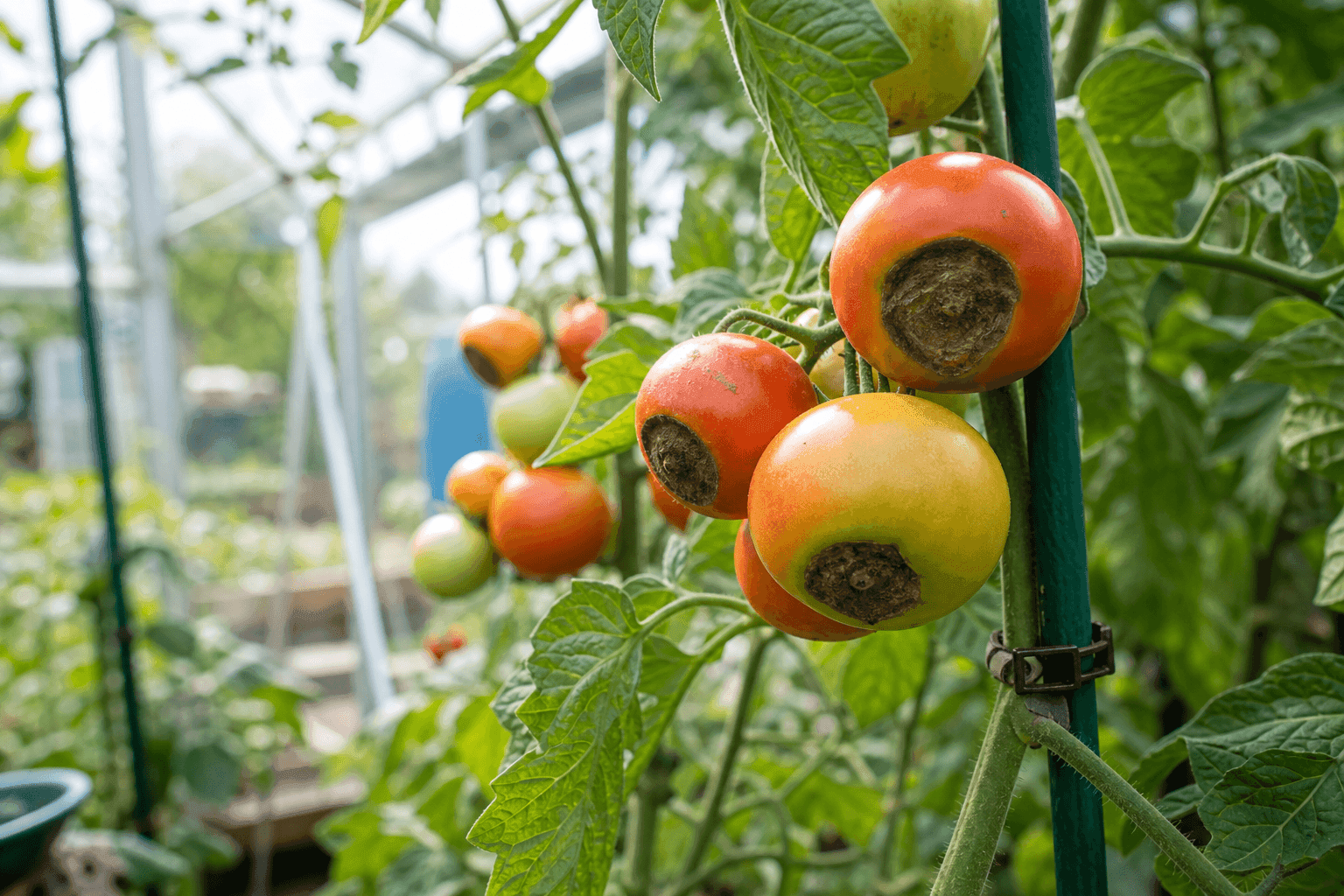
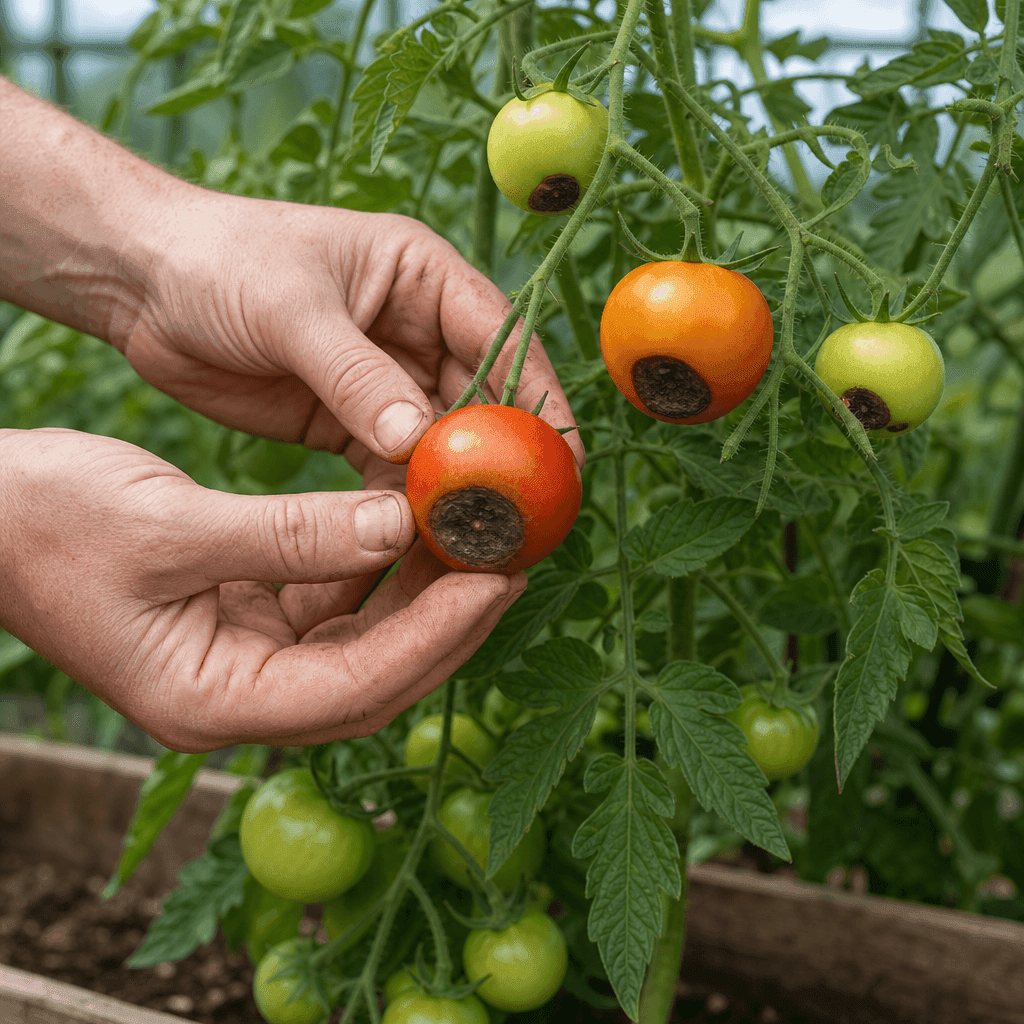
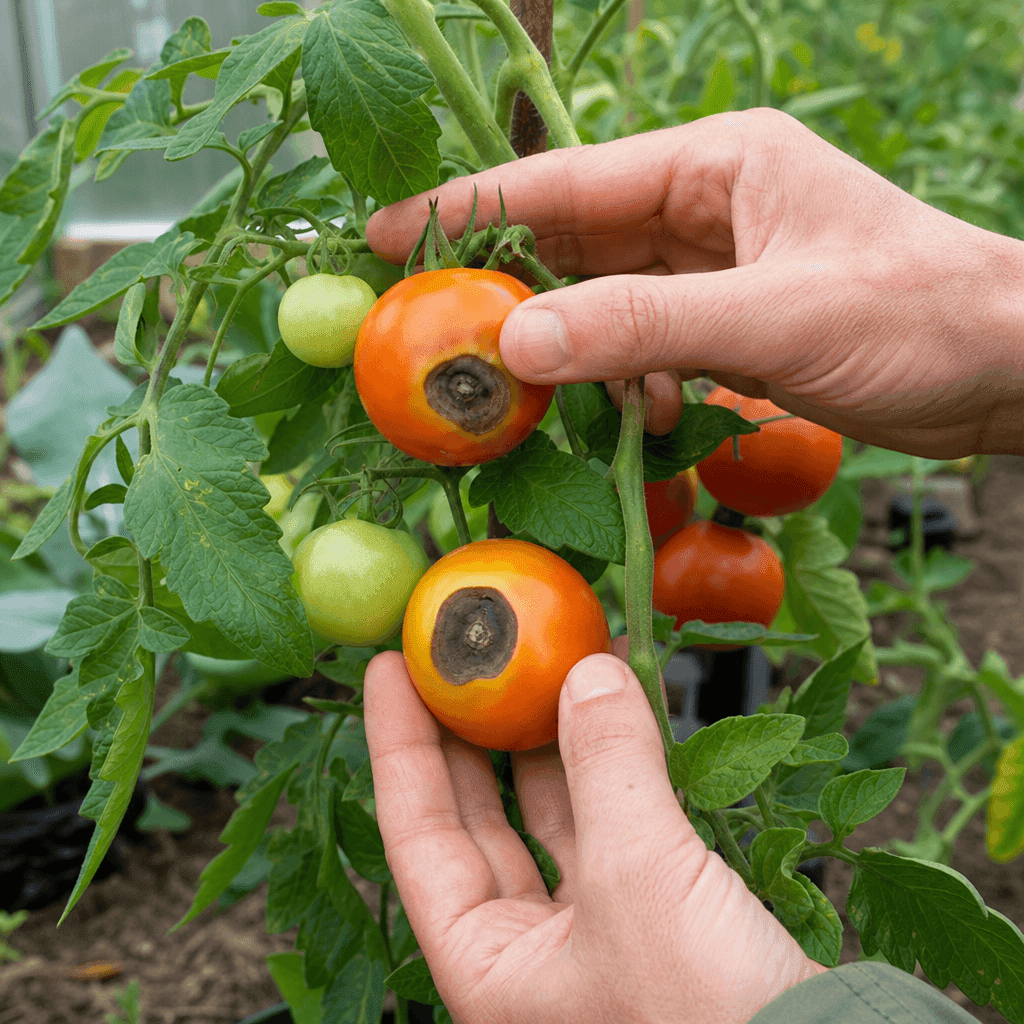
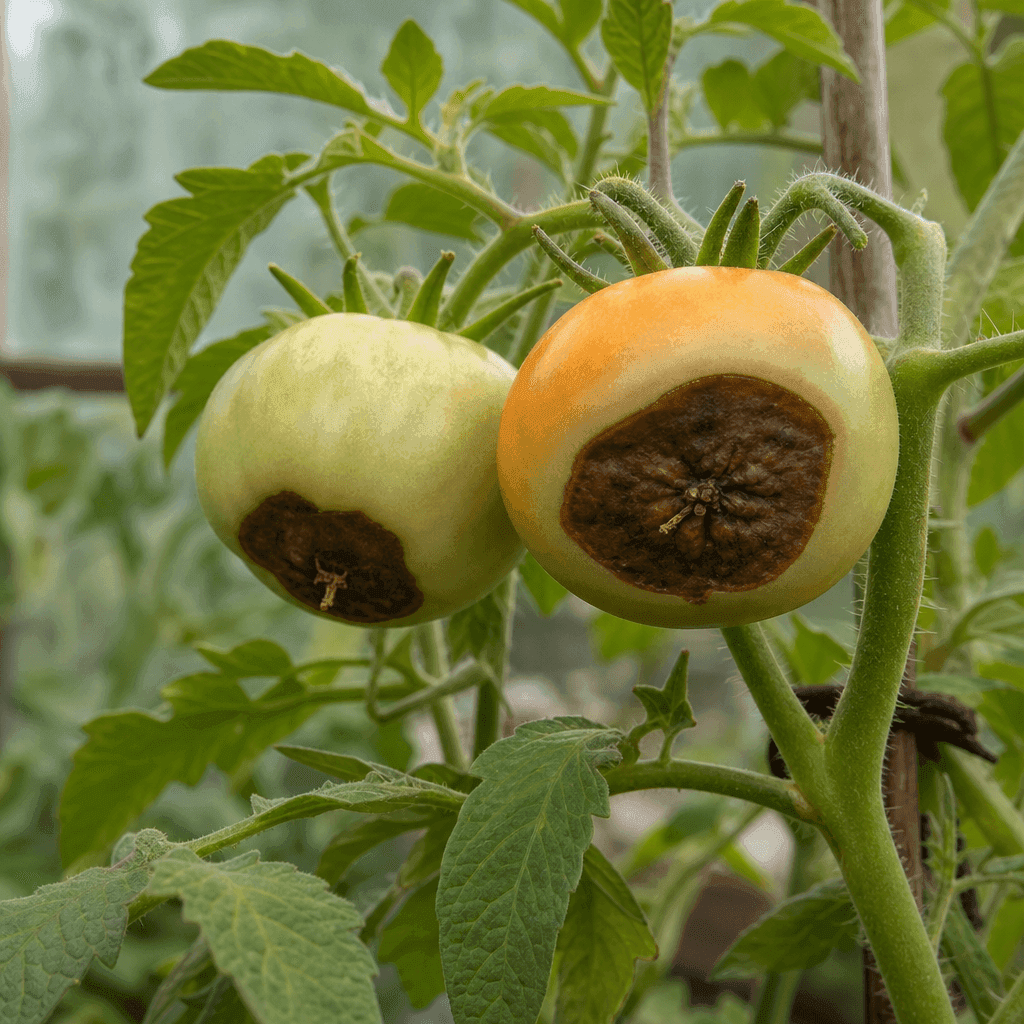
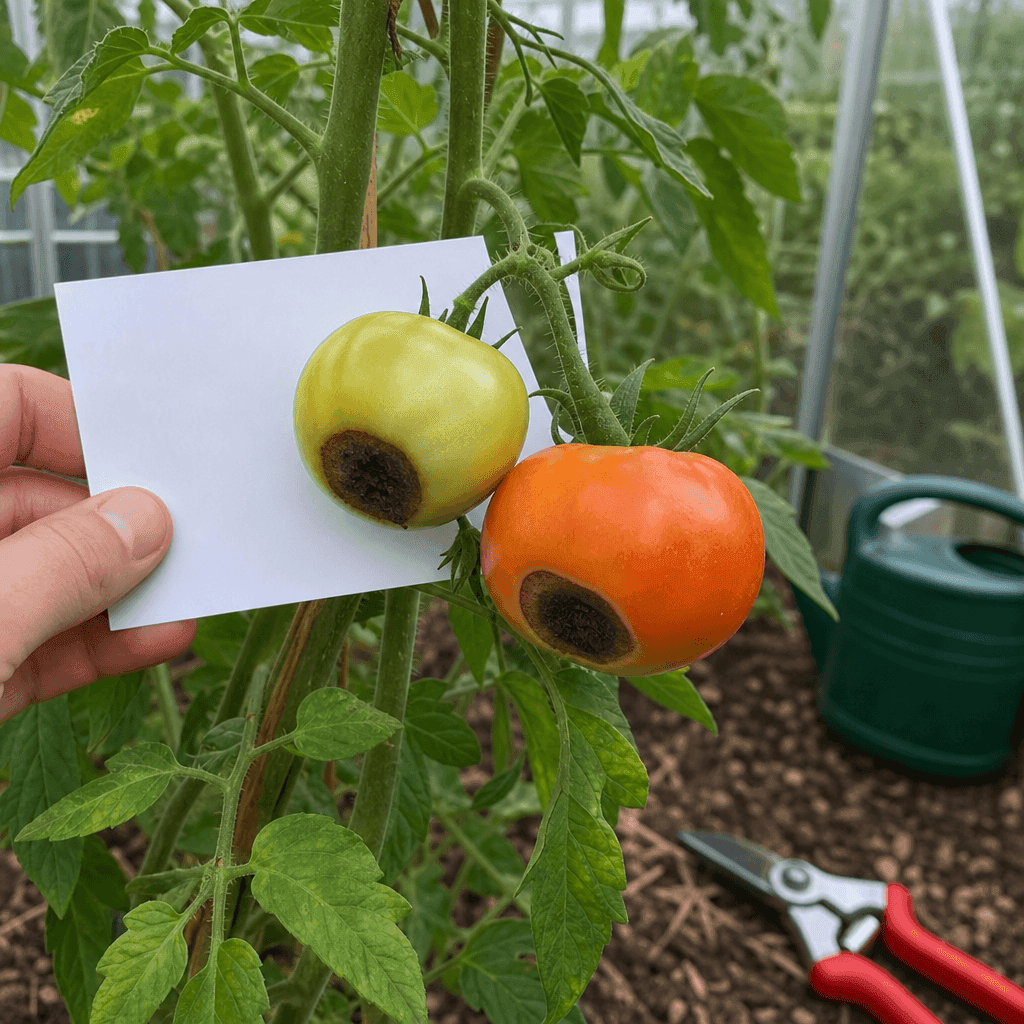
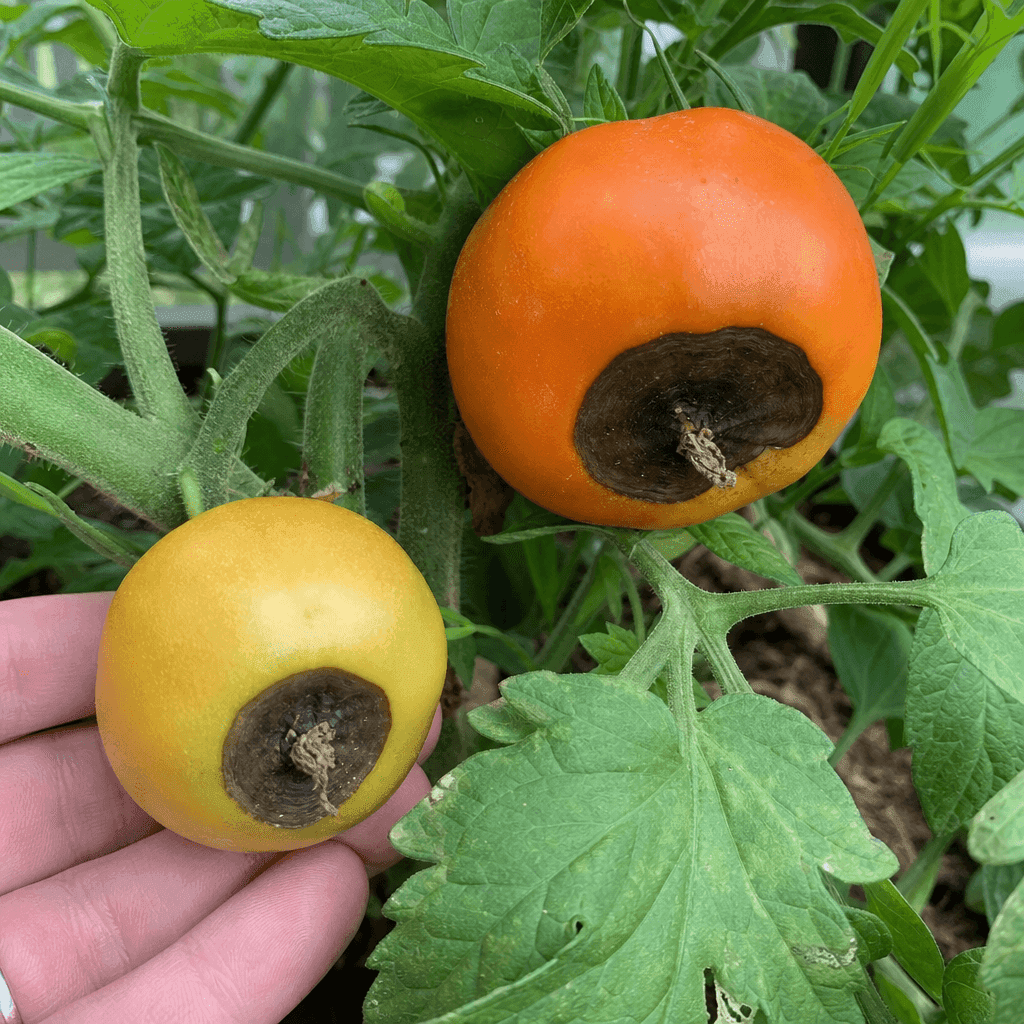
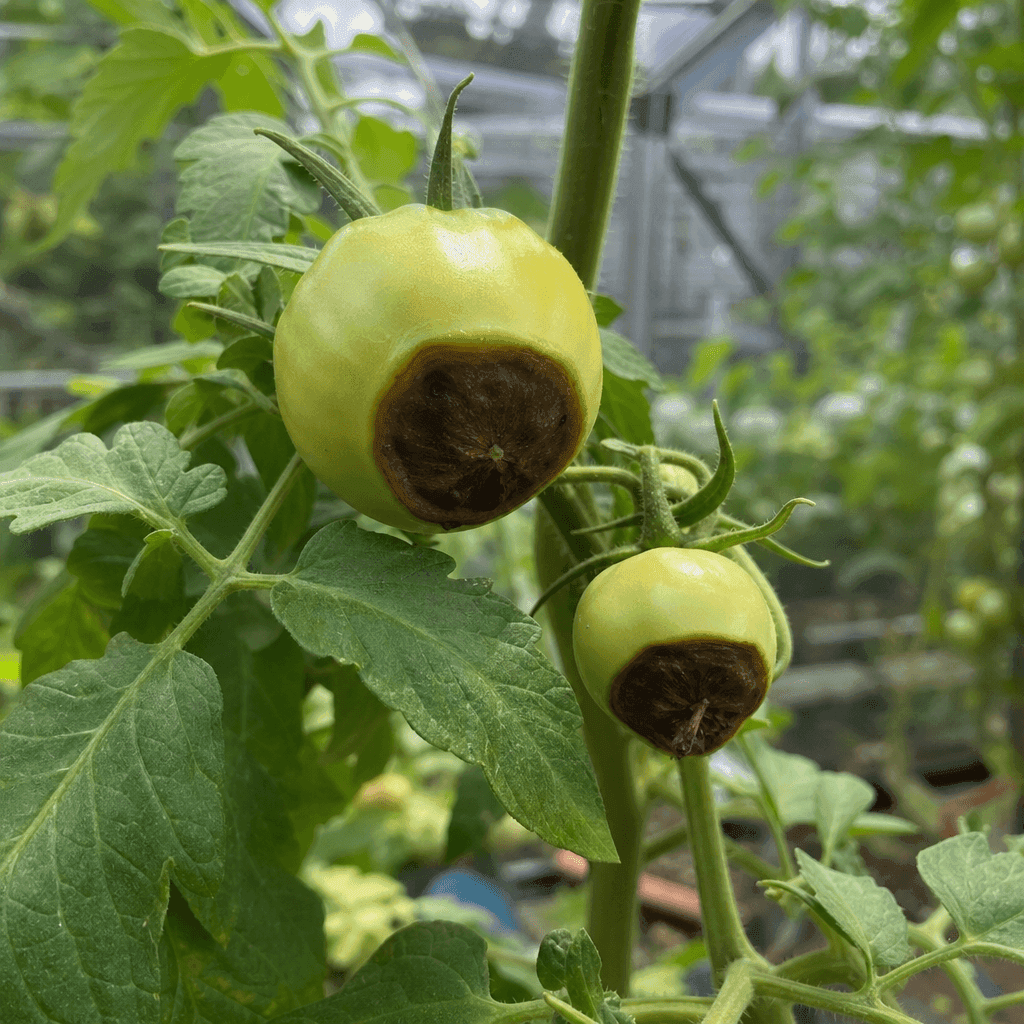
| Dark, sunken patch on the base of fruits; foliage looks healthy | Inconsistent watering / poor calcium delivery | High | Check whether the compost dries out between waterings, especially in pots or growing bags. | Keep compost consistently moist; water little and often rather than in large infrequent doses. | High |
| BER on plants in pots or growing bags; outdoor plants unaffected | Root restriction in containers | High | Feel the weight of the pot; check whether roots are circling or the compost pulls from the edge. | Move to a larger container with good drainage; water twice daily in warm spells. | High |
| Lush leafy growth, many affected fruits, heavy feeding regime | Excess nitrogen or ammonium-based feeds | Medium | Check the fertiliser label — ammonium salts compete with calcium at the roots. | Switch to a balanced tomato feed low in ammonium; avoid overfeeding with grow-phase fertilisers. | Medium |
| Sudden onset after a dry spell or heatwave; compost bone dry | Heat and drought stress | High | BER appears after a missed watering or a hot period; soil is very dry below the surface. | Rehydrate slowly — avoid sudden heavy soaking. Apply mulch. Shade containers during heatwaves. | High |
| BER following transplanting or cultivation near the roots | Root damage reducing water uptake | Medium | Recent transplanting, deep cultivation nearby, or roots disturbed by hoeing. | Avoid hoeing close to plants; water in after transplanting; mulch to reduce disturbance. | Medium |
| BER in plants fed heavily; leaf tips also scorching | Salt build-up from over-feeding | Low | White crust on compost surface; tip burn on leaves; heavy feed history. | Flush the compost with clean water; reduce feed concentration; use a balanced tomato food. | Low–medium |
The causes, in detail
Inconsistent watering and calcium delivery failure
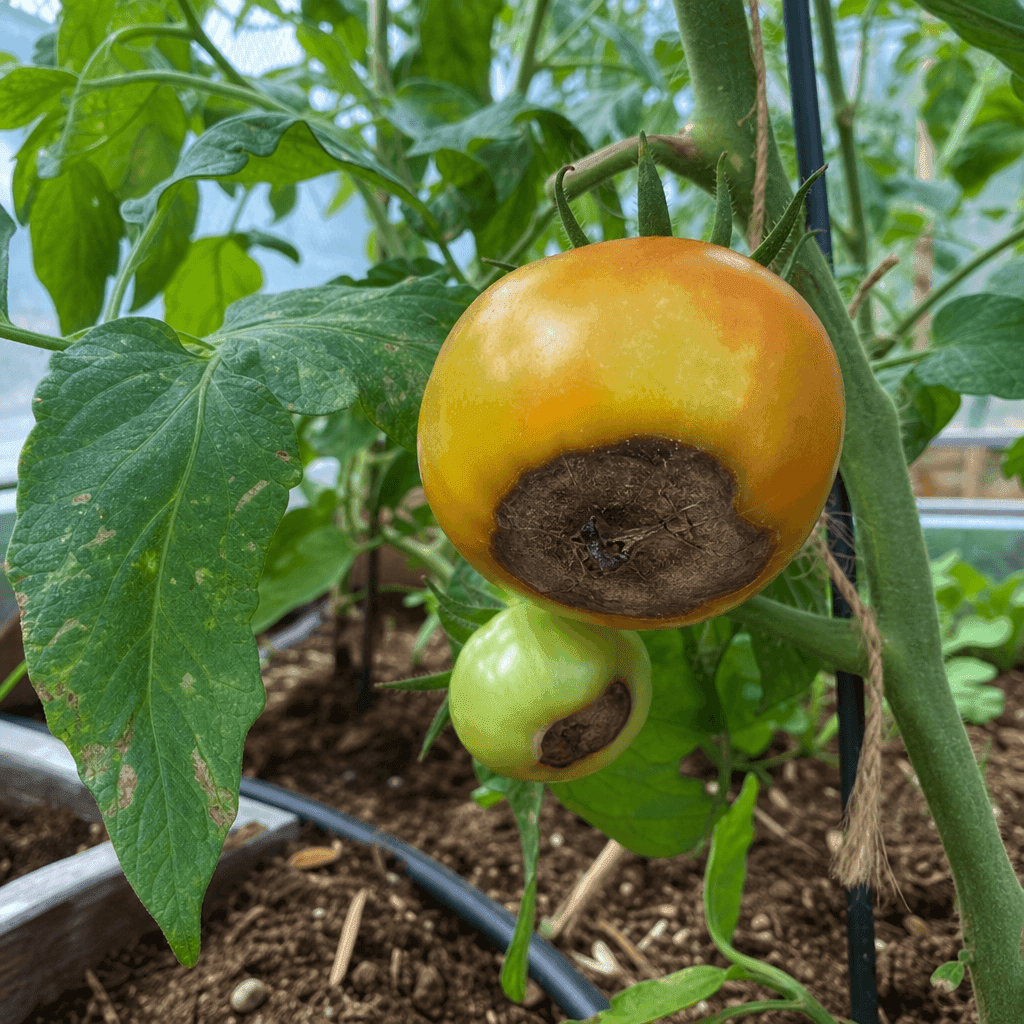
Most likelyBlossom end rot is fundamentally a water management problem. The RHS is clear: UK soils and growing media almost never lack calcium — there is almost always enough calcium in the compost or soil. The issue is that calcium travels through plants in the flow of water, and when that flow is interrupted by drying out and re-wetting, it cannot reach the fast-growing fruit tips. The cells there collapse and turn dark. Keeping the compost or soil consistently moist is the single most important fix.
- The compost or soil dries out noticeably between waterings.
- Fruits are affected but the foliage looks largely healthy.
- The problem is worse during hot or windy spells.
- Plants are in containers or growing bags rather than open ground.
- Water little and often — the RHS recommends twice a day in hot weather rather than a double volume once a day.
- Check moisture at finger depth before each watering, aiming for consistently damp but never waterlogged.
- Mulch the surface of containers with a thin layer to slow evaporation.
- Do not suddenly flood dry compost — rehydrate gradually to avoid root shock.
- Remove affected fruits promptly; the plant will often set new, healthy fruit once watering is steady.
Stop it coming back:Affected fruits will not recover, but new fruits can develop normally once watering is consistent. Do not discard a plant that still has healthy flowers and foliage.
apply foliar calcium sprays — the RHS confirms these do not work, as calcium does not move efficiently from leaves to fruit.
Root restriction in pots and growing bags
Most likelyTomatoes grown in containers, growing bags, or raised beds are far more vulnerable to blossom end rot than those in open ground. The small root zone dries out quickly — often within hours in warm weather — and even a brief dry period interrupts calcium movement to the developing fruits. Container-grown tomatoes may need watering twice a day during hot UK summers, far more than most gardeners realise.
- The plant is in a pot, growing bag, or raised bed with a limited root zone.
- The growing medium dries out fast — the pot feels light between waterings.
- BER appears mainly or only on container-grown plants.
- Use the largest container practical — at least 20–30 litres for a cordon tomato.
- Water thoroughly twice daily in warm spells, until water drains from the base.
- Consider self-watering containers or ring-culture pots, which buffer moisture.
- Mulch the surface of containers.
- Do not let growing bags dry out — press the bag and check the moisture daily.
place containers in very hot, south-facing positions without regular watering — even a short dry spell can trigger a flush of blossom end rot.
Excess nitrogen or ammonium-based feeds
PossibleAmmonium ions from nitrogen-rich feeds compete directly with calcium for uptake at the roots. Heavy use of grow-phase fertilisers or lawn feed accidentally reaching tomato beds can tilt the balance away from calcium. The result is lush leafy growth and more blossom end rot — even though the compost contains plenty of calcium. Switching to a balanced tomato feed reduces this competition.
- The plant has been fed heavily with a high-nitrogen or ammonium-based fertiliser.
- Growth is very lush and leafy with few flowers or many affected fruits.
- The feed label lists ammonium nitrate, ammonium sulphate, or similar compounds as the main nitrogen source.
- Switch to a balanced proprietary tomato feed, typically used from first flower onwards.
- Check the fertiliser N:P:K ratio — avoid feeds where nitrogen is much higher than potassium.
- Water well to dilute salt build-up in the compost.
- If using grow-phase feeds, switch to a fruiting formula once plants begin to flower.
apply general-purpose or lawn fertilisers to tomatoes during the fruiting period.
Heat and drought stress
Most likelyDuring UK heatwaves — which have become more frequent since 2018 — tomato compost in pots and growing bags can reach dangerously dry levels within a few hours. The sudden disruption to water movement prevents calcium from reaching new fruits. BER often appears in a flush following a dry spell, with fruits showing the damage that set during that period.
- BER fruits were forming during a recent hot or dry spell.
- Compost is bone dry or pulling away from container edges.
- The plant is in a sunny, south-facing or sheltered position where heat builds up.
- Rehydrate gradually — do not suddenly flood very dry compost.
- Water morning and evening in hot weather.
- Move containers out of direct afternoon sun during heatwaves.
- Apply a light mulch on top of pots to slow surface evaporation.
- Use shade cloth over greenhouse tomatoes when temperatures exceed 30°C.
suddenly flood bone-dry compost — rehydrate in stages to avoid further root stress.
Root damage reducing water uptake
PossibleAny damage to the roots — from deep hoeing, transplanting shock, vine weevil larvae, or nematodes — reduces the plant's ability to take up water steadily. Even if the soil stays moist, damaged roots cannot deliver calcium efficiently to developing fruits, and a plant that is also wilting despite moist soil points to a root problem. This cause is more likely in newly transplanted plants, or after soil disturbance near the base.
- BER appeared after transplanting or nearby digging.
- The plant wilts more than expected despite moist soil.
- Roots look brown or damaged when checked.
- Avoid hoeing within 30cm of tomato stems once established.
- Water in transplants well and keep soil consistently moist during establishment.
- Check for vine weevil larvae (white, C-shaped grubs) if roots are damaged with no obvious cause.
- Remove affected fruits and keep moisture steady while the root system recovers.
cultivate the soil deeply close to established tomato plants — surface mulching is safer for suppressing weeds.
Salt build-up from over-feeding
Less likelyHeavy feeding, especially in containers, can allow salt concentrations to build up in the compost. High salt levels damage root hair cells and reduce their ability to absorb water and calcium. A white crystalline crust on the compost surface or around the pot rim is a sign. This is less common than inconsistent watering, but over-feeding in summer can compound water stress issues.
- White crust or residue visible on the compost surface or pot rim.
- Leaf tips or margins also showing scorch.
- The plant has been fed at high concentration or very frequently.
- Flush the compost: water heavily with plain water several times to leach out excess salts.
- Let the water drain fully each time.
- Reduce feed concentration — follow product label rates carefully.
- Switch to a balanced tomato-specific feed.
feed at higher concentrations than the product label recommends, especially in hot weather or small containers.
Still not sure?
Work down these branches — the first one that matches is your answer.
What not to do
- Apply foliar calcium sprays — the RHS confirms they do not prevent or cure blossom end rot.
- Assume the soil is calcium-deficient without testing — UK soils almost always contain adequate calcium.
- Discard the whole plant if new flowers are still healthy — it can produce clean fruit once watering is steady.
- Feed heavily with high-nitrogen fertilisers during fruiting — this worsens the problem.
- Let pots and growing bags dry out between waterings, even briefly, in warm weather.
Common questions
What causes blossom end rot on tomatoes?
Blossom end rot is caused by inconsistent watering that prevents calcium from reaching the developing fruit tips. It is not usually a sign of calcium-poor soil — UK soils and composts almost always contain enough calcium. The RHS confirms it is a water delivery problem, not a nutrient deficiency.
Do calcium sprays fix blossom end rot?
No. The RHS advises that foliar calcium sprays are not effective for blossom end rot because calcium does not move efficiently from leaves into developing fruits. Improving watering consistency is the correct fix.
Should I remove tomatoes with blossom end rot?
Yes — remove affected fruits promptly. They will not recover, and their weight and decay can stress the plant. Once watering is consistent, the plant will usually set new, clean fruits.
Why do my tomatoes in growing bags get blossom end rot?
Growing bags have a very limited volume of compost that dries out quickly — sometimes within a few hours in warm weather. This interrupts calcium delivery to the fruits. Water twice a day in warm spells, and consider using ring-culture pots or larger containers. Take care not to over-correct, though — an overwatered tomato plant brings its own problems, so aim for consistently damp rather than soggy compost.
Can blossom end rot spread from plant to plant?
No — blossom end rot is a physiological disorder caused by water stress, not an infectious disease. It cannot spread between plants, though neighbouring plants in the same containers may be affected by the same watering conditions.
Why does blossom end rot appear suddenly after hot weather?
During hot spells, compost in pots dries out rapidly and the flow of calcium-carrying water to the fruits is interrupted. Fruits forming during that dry period develop blossom end rot, even if the plant recovers afterward. Fruits set after watering is restored are usually fine.
Is blossom end rot the same as tomato blight?
No. Blossom end rot is a water-stress disorder causing a sunken dark patch at the blossom end of fruits. Tomato blight (Phytophthora infestans) is a fungal-like disease causing brown patches and rot that spreads across fruits and stems in wet weather. They look and behave differently.
How do I prevent blossom end rot next season?
Use the largest containers practical, water consistently (twice daily in warm weather for pots), mulch to slow evaporation, use a balanced tomato feed, and avoid high-nitrogen fertilisers during fruiting. Inconsistent watering is also behind many other common tomato plant problems, so steady moisture pays off across the board. Resistant varieties are not widely available, so good watering is the main prevention.