Quick diagnosis
Match the row to what you’re seeing, then jump to the fix.
| What you see | Likely cause | Confidence | How to confirm | What to do now | Urgency |
|---|---|---|---|---|---|
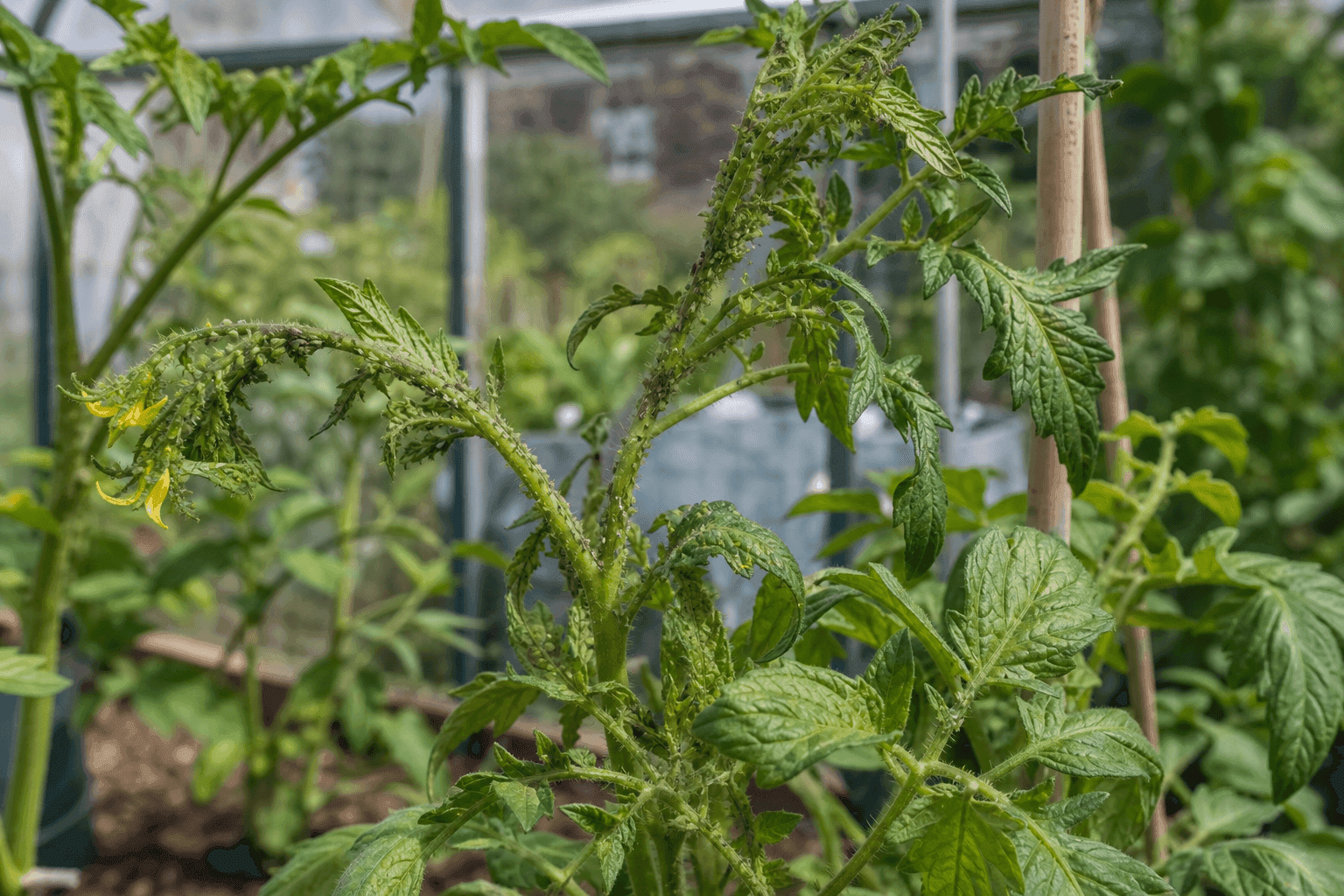
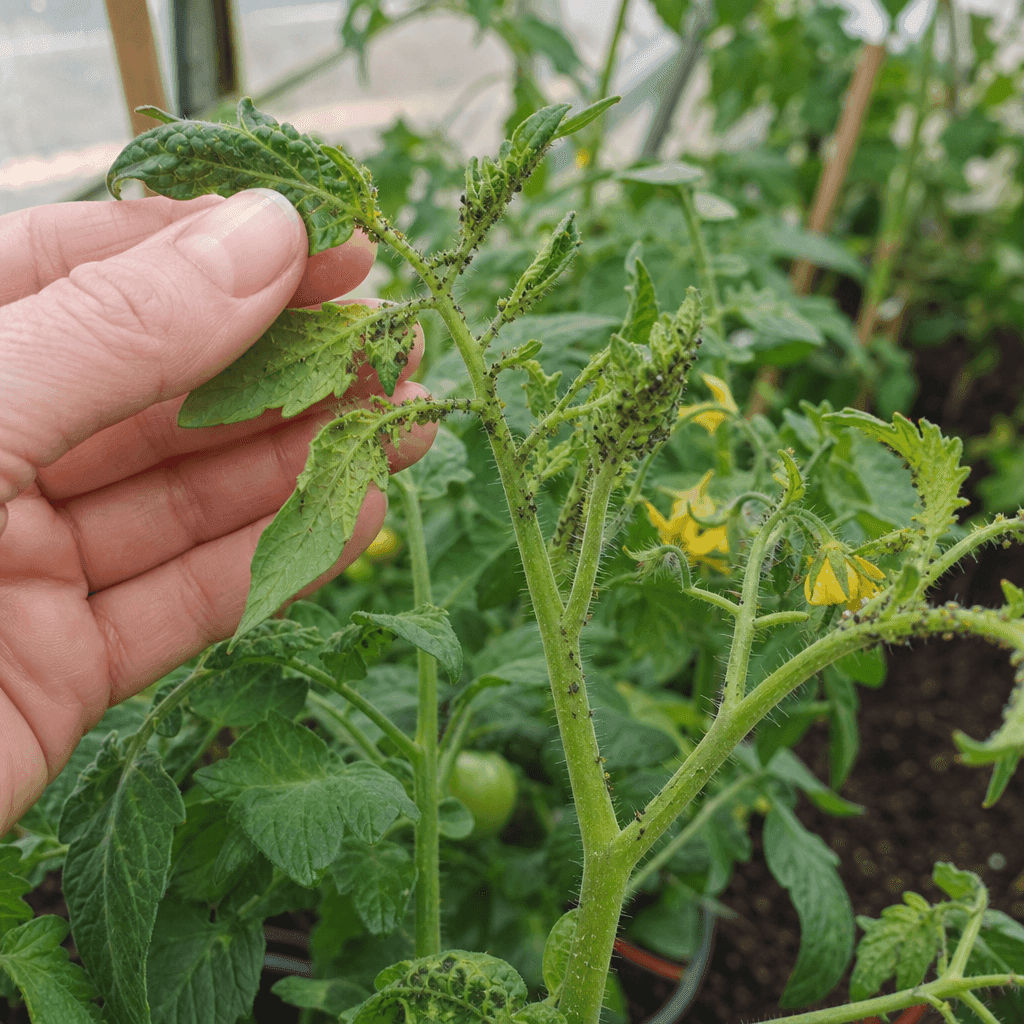
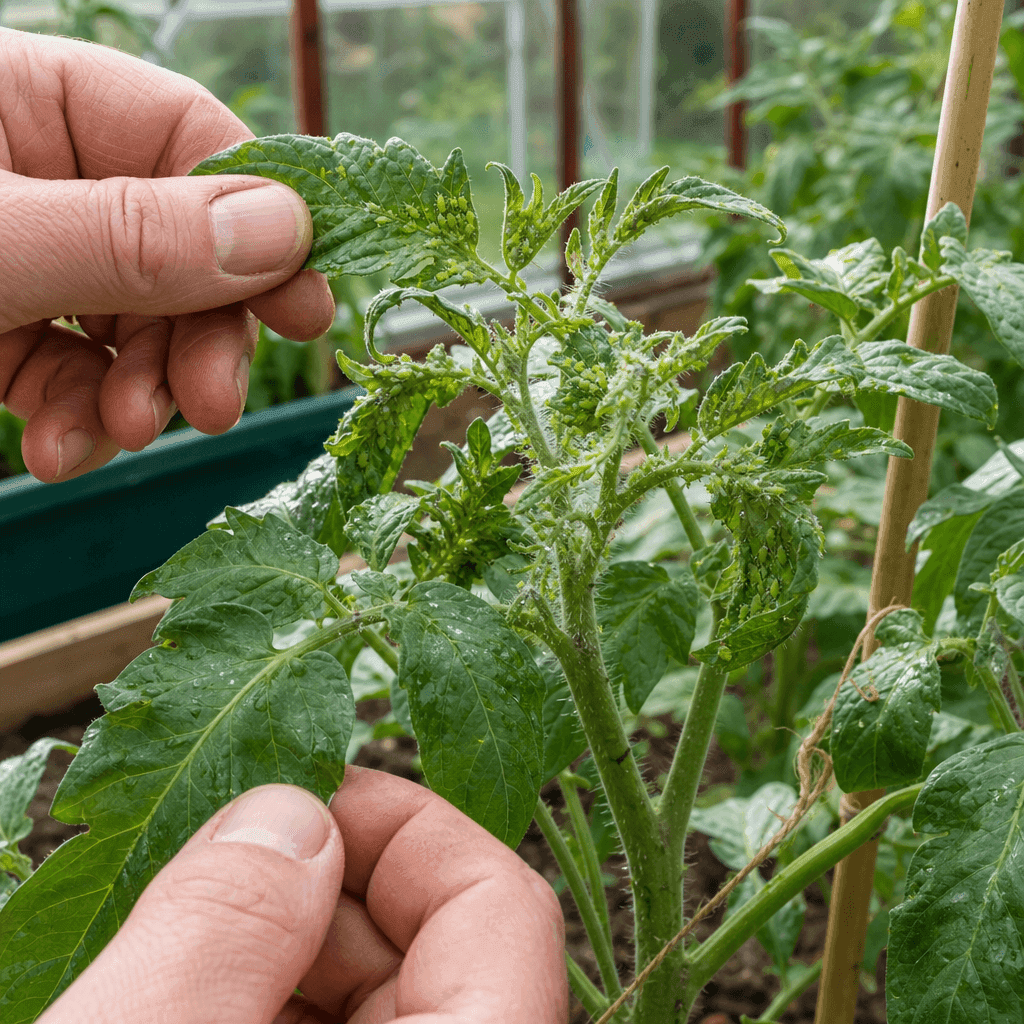
| Clusters of soft-bodied insects on shoot tips or leaf undersides | Aphid colony (glasshouse or peach-potato aphid) | High | Check with a torch — pale green, yellowish or pinkish soft insects in groups. | Wash off with water jet; pinch out worst tips; encourage natural predators. | Medium |
| Tiny white moth-like insects fly up when plant is disturbed; sticky leaves | Greenhouse whitefly | High | Shake the plant and look for white insects rising; check leaf undersides for scale nymphs. | Introduce Encarsia formosa biological control in greenhouses; use yellow sticky traps. | Medium |
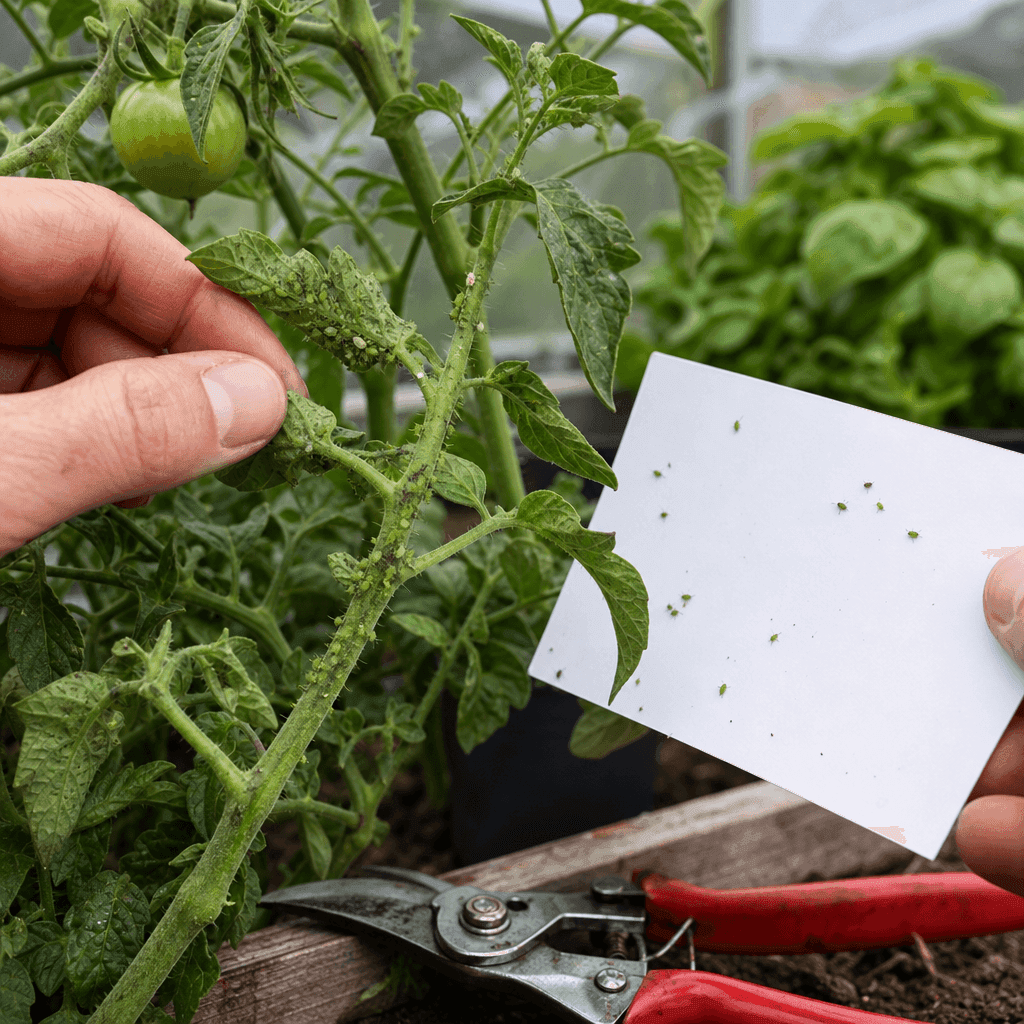
| Fine webbing between leaves, pale stippling or bronzed upper leaf surface | Two-spotted spider mite | Medium | Tap leaves over white paper — tiny moving specks confirm mites. Worst in hot, dry conditions. | Raise humidity; wash leaves; introduce Phytoseiulus persimilis biological control. | Medium |
| Distorted, mottled or mosaic-patterned leaves on multiple plants | Virus transmitted by aphids | Medium | Mottling is irregular; no insects visible now but aphids were present earlier in the season. | Remove and destroy affected plants; do not compost. Control aphid vectors on remaining plants. | High |
| Black sooty coating on leaves and fruit below affected stems | Sooty mould growing on aphid or whitefly honeydew | Medium | Black coating wipes off; sticky honeydew on surfaces below the source pest. | Identify and control the source pest; wipe leaves clean with a damp cloth. | Low–medium |
| Plant wilts and yellows despite adequate watering; no insects visible above ground | Root aphids | Low | Slide plant from pot — white waxy root aphids clustered on roots confirm this. | Repot into fresh compost; remove and destroy heavily infested plants. | High |
The causes, in detail
Glasshouse potato aphid and peach-potato aphid
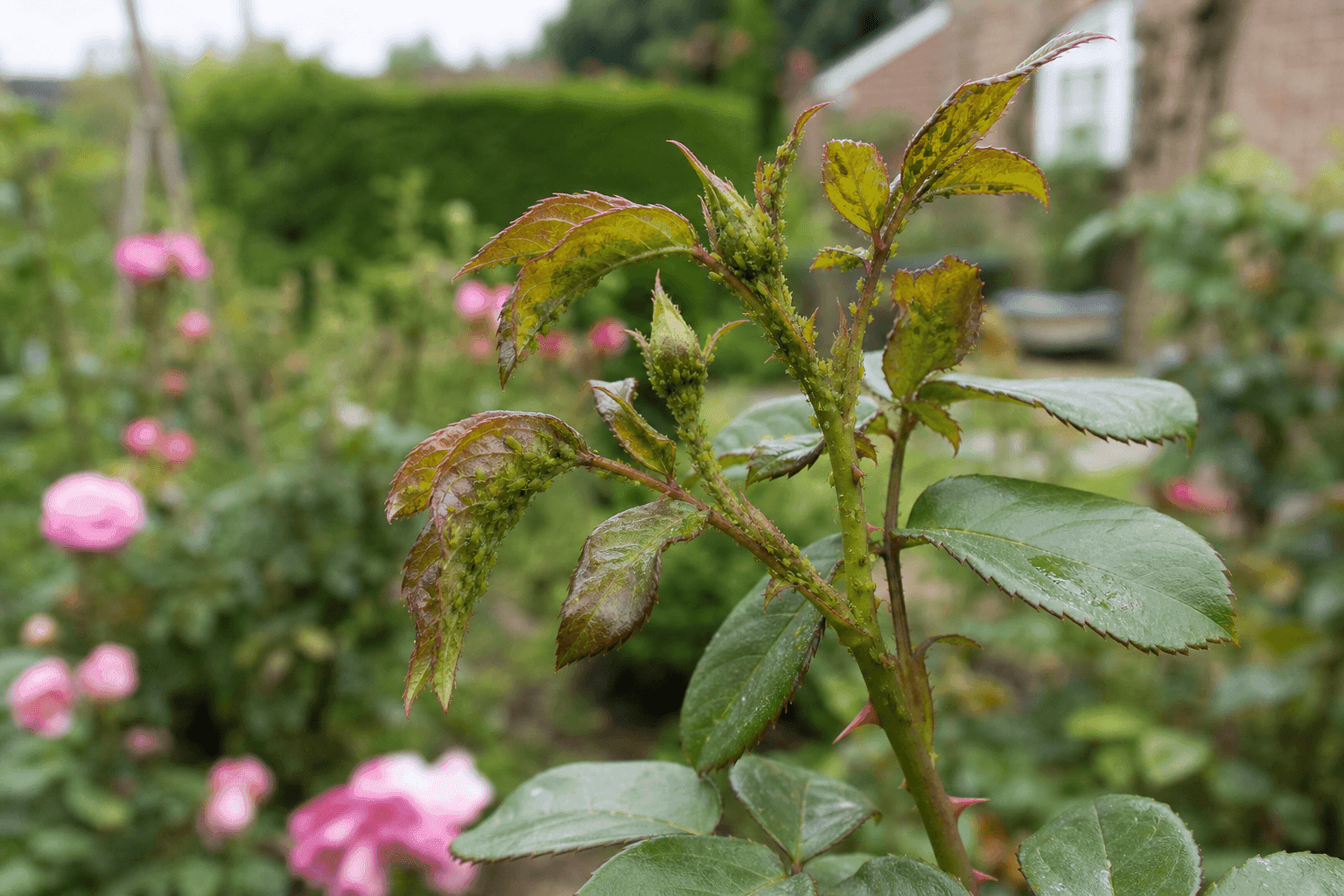
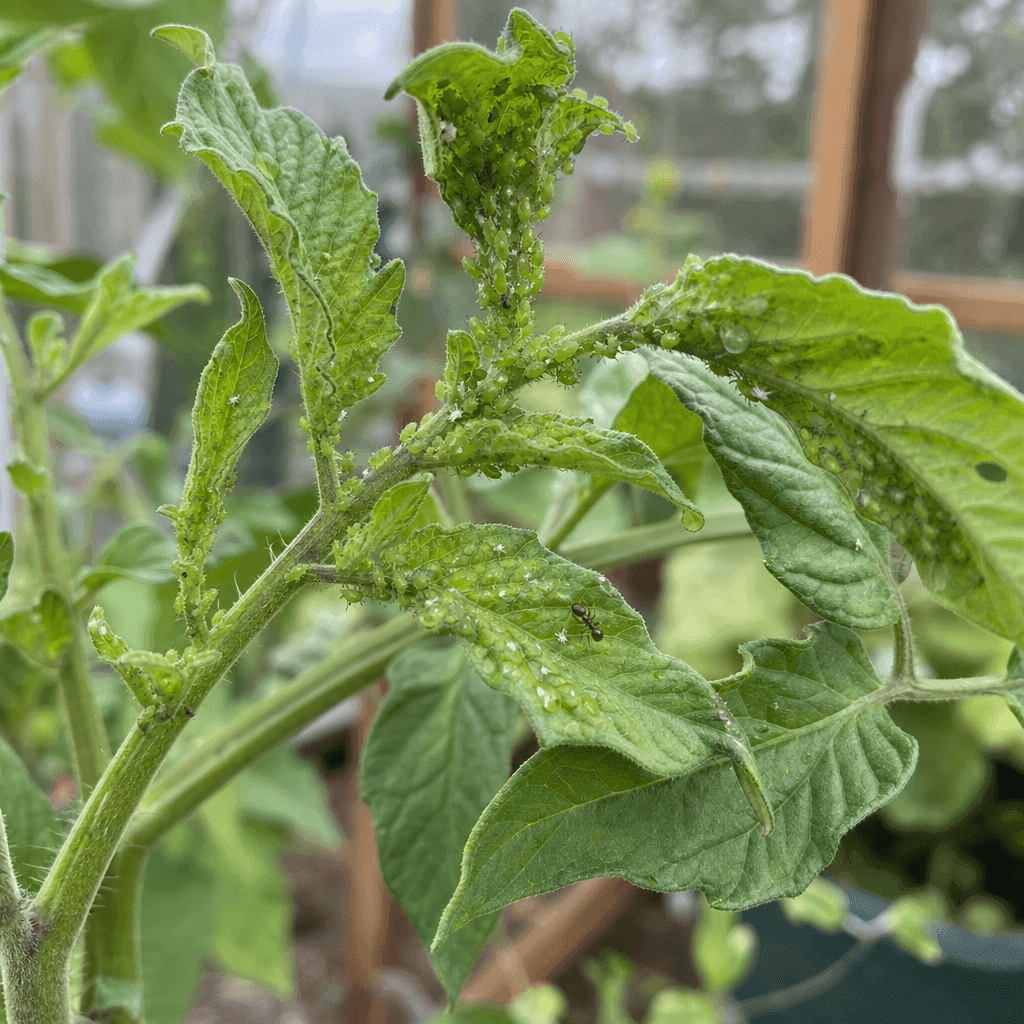
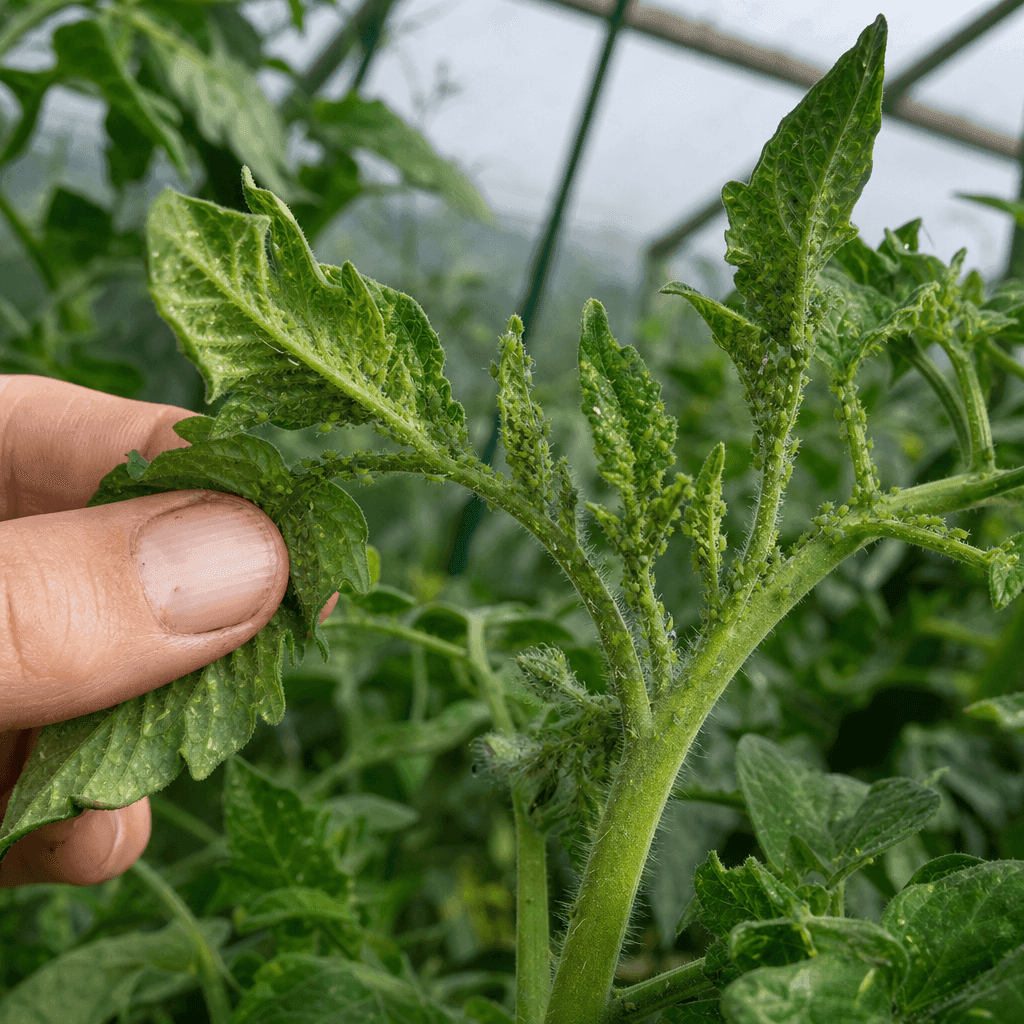
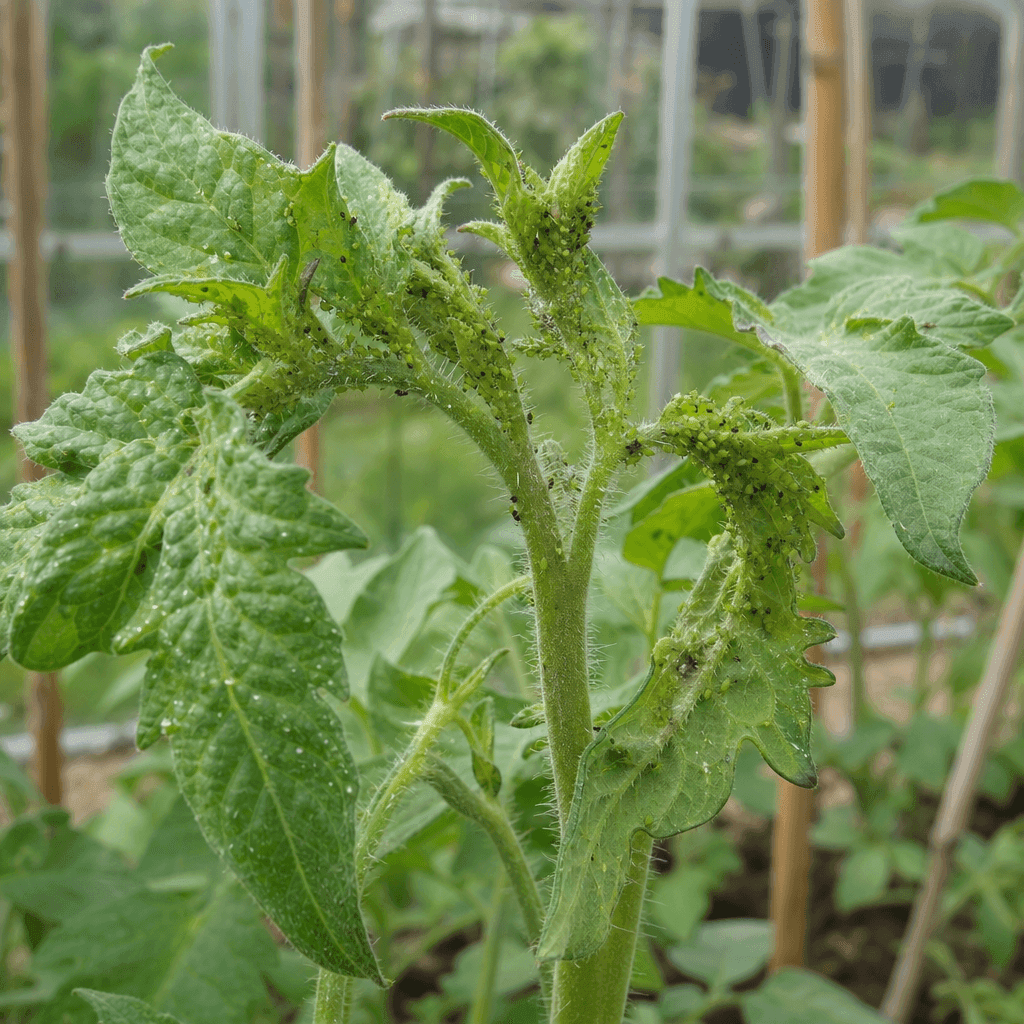
Most likelyThe two most common aphid species on UK tomatoes are Aulacorthum solani (glasshouse potato aphid — yellow-green with dark knee marks) and Myzus persicae (peach-potato aphid — pale green or pinkish). Both cluster on soft growing points, flower trusses and leaf undersides. The peach-potato aphid is the more damaging because it vectors tomato and cucumber mosaic viruses. The RHS notes that aphid populations surge in spring before natural predator numbers build up — if you can wait a few weeks, ladybirds, hoverflies and parasitic wasps will often provide control naturally. Aphids are just one of several common garden pests you may need to watch for on tomatoes.
- Use a torch to check shoot tips and the undersides of young leaves.
- Look for colonies of soft-bodied insects — pale green, yellow, or pinkish depending on species.
- New shoot tips may be curled or distorted from active feeding.
- Sticky honeydew on leaves and surfaces below is a secondary sign.
- Wash aphids off with a strong jet of water, directing it under the leaves — repeat every few days.
- Pinch out and dispose of the most heavily infested shoot tips.
- Encourage natural predators: avoid broad-spectrum insecticides, grow companion flowers (marigolds, fennel, calendula) nearby.
- In greenhouses, release parasitic wasps (Aphidius colemani or A. ervi) or hoverfly larvae as biological control.
- Only if the infestation is severe and predators are absent, use an insecticidal soap or plant oil spray registered for edible crops.
Stop it coming back:Check new growth weekly from June onwards. Aphid colonies build fastest in warm, calm weather — early action keeps numbers manageable.
use broad-spectrum insecticides — they destroy the ladybirds, lacewings and parasitic wasps that would otherwise regulate aphid numbers naturally.
Greenhouse whitefly
Most likelyGreenhouse whitefly (Trialeurodes vaporariorum) is a major glasshouse pest of tomatoes in the UK. Adults are tiny white-winged insects that fly up when disturbed; the flat, scale-like nymphs on leaf undersides produce honeydew that encourages sooty mould. Heavy infestations weaken plants and reduce fruit quality. The RHS recommends the parasitic wasp Encarsia formosa as the most effective biological control in warm greenhouses.
- Shake the plant — white insects rise in a cloud.
- Check leaf undersides for flat, oval, pale scale-like nymphs.
- Yellow sticky traps show high adult numbers if whitefly are present.
- Introduce Encarsia formosa parasitic wasps as soon as whitefly are first seen — release at 10–14 day intervals from spring.
- Hang yellow sticky traps to monitor populations and catch adult flies.
- Avoid using pesticides that would kill the Encarsia parasites.
- Remove heavily infested lower leaves and dispose of them away from the greenhouse.
- Maintain good ventilation to reduce temperatures that favour rapid whitefly reproduction.
Stop it coming back:Start biological control early in the season before populations build. Once established, whitefly are difficult to eliminate.
use broad-spectrum insecticides if biological control is in use — this kills the Encarsia wasps and makes the situation worse.
Two-spotted spider mite
PossibleTwo-spotted spider mites (Tetranychus urticae) thrive in hot, dry greenhouse conditions and can devastate a tomato crop quickly. The first sign is fine pale stippling on the upper leaf surface; heavy infestations produce visible webbing and leaves bronze and die. Mites multiply rapidly above 25°C and are largely invisible to the naked eye. The RHS recommends the predatory mite Phytoseiulus persimilis as the most effective biological control.
- Tap affected leaves over a sheet of white paper — tiny moving specks are mites.
- Check the underside of leaves for fine webbing and pale stippled patches.
- Symptoms are worst on the oldest leaves first; damage spreads upward.
- Raise humidity in the greenhouse by damping down paths and misting (but avoid wetting fruit).
- Introduce predatory mites (Phytoseiulus persimilis) as soon as spider mites are confirmed.
- Wash leaves gently with a damp cloth to remove mites and webbing.
- Remove the most heavily affected leaves.
- Maintain good ventilation to moderate temperature and reduce mite reproduction rates.
Stop it coming back:Existing stippled leaves will not recover, but healthy new growth shows treatment is working. Introduce predatory mites early — they are ineffective once infestations are severe.
use broad-spectrum miticides — spider mites are resistant to many chemicals and miticides kill the predatory mites used in biological control.
Virus transmitted by aphids
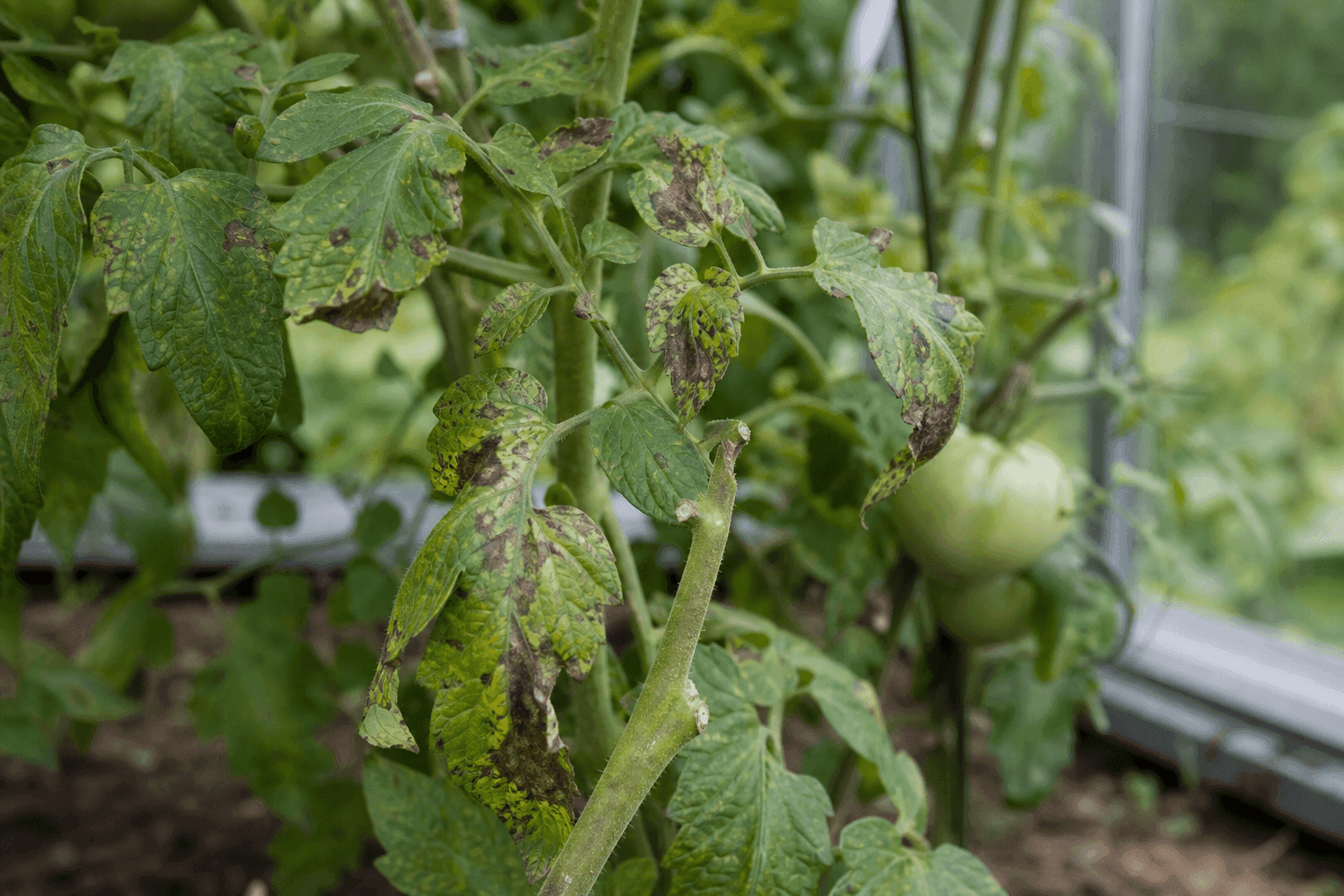
PossibleCucumber mosaic virus (CMV) and tomato mosaic virus (ToMV) can be spread from plant to plant by aphids, particularly the peach-potato aphid. Affected plants show irregular yellowing, mosaic patterns, leaf distortion and stunted growth. The RHS advises that virus-affected plants should be destroyed to prevent spread, as there is no cure.
- Leaves show mosaic, mottling or irregular yellow patches rather than uniform yellowing.
- New growth is distorted or stunted.
- Symptoms appear on multiple plants after an aphid infestation.
- Remove and destroy virus-affected plants immediately — do not compost them.
- Control aphid populations on remaining healthy plants to prevent further spread.
- Wash hands and clean tools before handling healthy plants.
- Grow resistant tomato varieties where CMV or ToMV are recurring problems.
leave virus-affected plants in the garden hoping they will recover — there is no cure, and aphids will spread the virus to healthy plants.
Sooty mould on aphid honeydew
PossibleSooty mould is a black fungal coating that grows on the sticky honeydew excreted by aphids, whitefly and other sap-sucking pests. It does not infect the plant directly but blocks light from leaves and reduces photosynthesis. Once the source pest is controlled, sooty mould can be gently wiped off.
- Black coating is on the upper surface of leaves below aphid or whitefly colonies.
- The coating wipes off with a damp cloth.
- Look above the affected area for the source pest.
- Identify and control the aphids or whitefly producing the honeydew.
- Wipe sooty mould from affected leaves with a soft, damp cloth.
- Once the source pest is controlled, mould deposits stop accumulating.
treat the sooty mould without first identifying and controlling the source pest — the mould will return until the pest is dealt with.
Root aphids
Less likelyRoot aphids are less common than foliar species but can cause serious damage to tomatoes, particularly in containers. The RHS notes that they are white and waxy, clustered on roots below soil level. Plants wilt and yellow despite adequate watering because root damage prevents uptake.
- Plant wilts and yellows despite moist compost.
- Slide the plant from its pot and look for white, waxy-coated aphids clustered on roots.
- No visible insects above soil level.
- Repot into fresh compost if roots are not too badly damaged.
- Remove and destroy heavily infested plants that are unlikely to recover.
- Clean pots thoroughly before reuse.
keep watering a wilting plant without checking roots — if root aphids are the cause, more water will not help and may worsen root damage.
Still not sure?
Work down these branches — the first one that matches is your answer.
What not to do
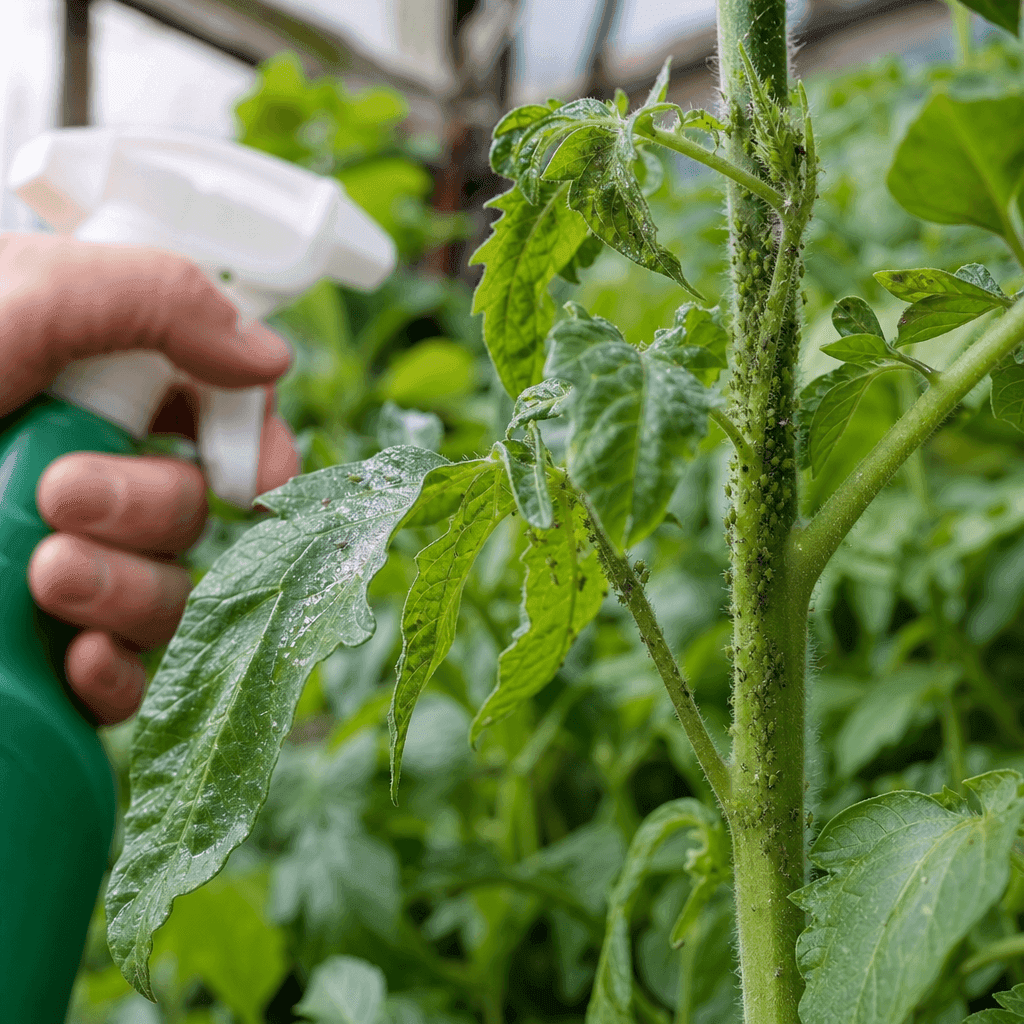
- Spray with broad-spectrum insecticides — they kill the ladybirds, lacewings and parasitic wasps that regulate aphid populations naturally.
- Ignore the first colonies in spring — aphid numbers can double within days in warm weather.
- Treat sooty mould without first finding and controlling the source pest.
- Leave virus-infected plants in the garden — remove and bin them to prevent aphids spreading the virus.
- Use pesticides once biological controls such as Encarsia or Phytoseiulus have been released — this will kill them.
Common questions
What are the small green insects on my tomato plants?
The most likely culprits are the glasshouse potato aphid (yellowish-green with dark knee marks) or the peach-potato aphid (pale green or pinkish). Both cluster on shoot tips and leaf undersides and are best controlled by encouraging natural predators — ladybirds, lacewings and parasitic wasps.
How do I get rid of aphids on tomato plants without pesticide?
Wash aphids off with a strong jet of water, pinch out the most infested shoot tips, and grow companion plants such as marigolds or fennel to attract hoverflies and lacewings. In greenhouses, release parasitic wasps (Aphidius colemani) or hoverfly larvae as biological controls.
Why are my tomato leaves sticky?
Stickiness on tomato leaves is almost always honeydew excreted by aphids, whitefly or other sap-sucking pests. Check shoot tips and leaf undersides for the insects causing it, then deal with the source pest rather than just wiping the leaves.
Can aphids kill tomato plants?
Rarely by direct feeding alone, but aphids can transmit viruses that may kill or seriously weaken plants. Heavy aphid infestations also weaken plants indirectly by distorting growth, encouraging sooty mould and reducing photosynthesis. For other things that can go wrong, see our full guide to tomato plant problems.
Should I use ladybirds to control aphids on tomatoes?
Yes — ladybirds are excellent natural predators of aphids and can be encouraged by planting nectar-rich flowers nearby and avoiding pesticides. You cannot buy ladybirds for garden release in the UK, but populations build up naturally when conditions favour them.
What is the white stuff under my tomato leaves?
White insects on tomato leaf undersides are usually greenhouse whitefly. Flat, oval, scale-like and immobile nymphs are the juvenile stage. Introduce Encarsia formosa parasitic wasps and use yellow sticky traps to monitor adult populations. The same control approach works on other plants, including whitefly on roses.
Are aphids worse in a greenhouse?
Yes. Greenhouses provide warm, sheltered conditions in which aphids and whitefly reproduce much faster than outdoors, and natural predators are less likely to find their way in. Biological controls — parasitic wasps, predatory midge larvae and hoverfly larvae — are particularly valuable under glass.
Can I use neem oil on tomato aphids?
Neem-based products can reduce aphid numbers but also harm natural predators. The RHS recommends a non-pesticide approach first: water jets, predator encouragement and biological controls. If you do use neem oil, apply in the evening to reduce harm to beneficial insects.