Quick diagnosis
Match the row to what you’re seeing, then jump to the fix.
| What you see | Likely cause | Confidence | How to confirm | What to do now | Urgency |
|---|---|---|---|---|---|
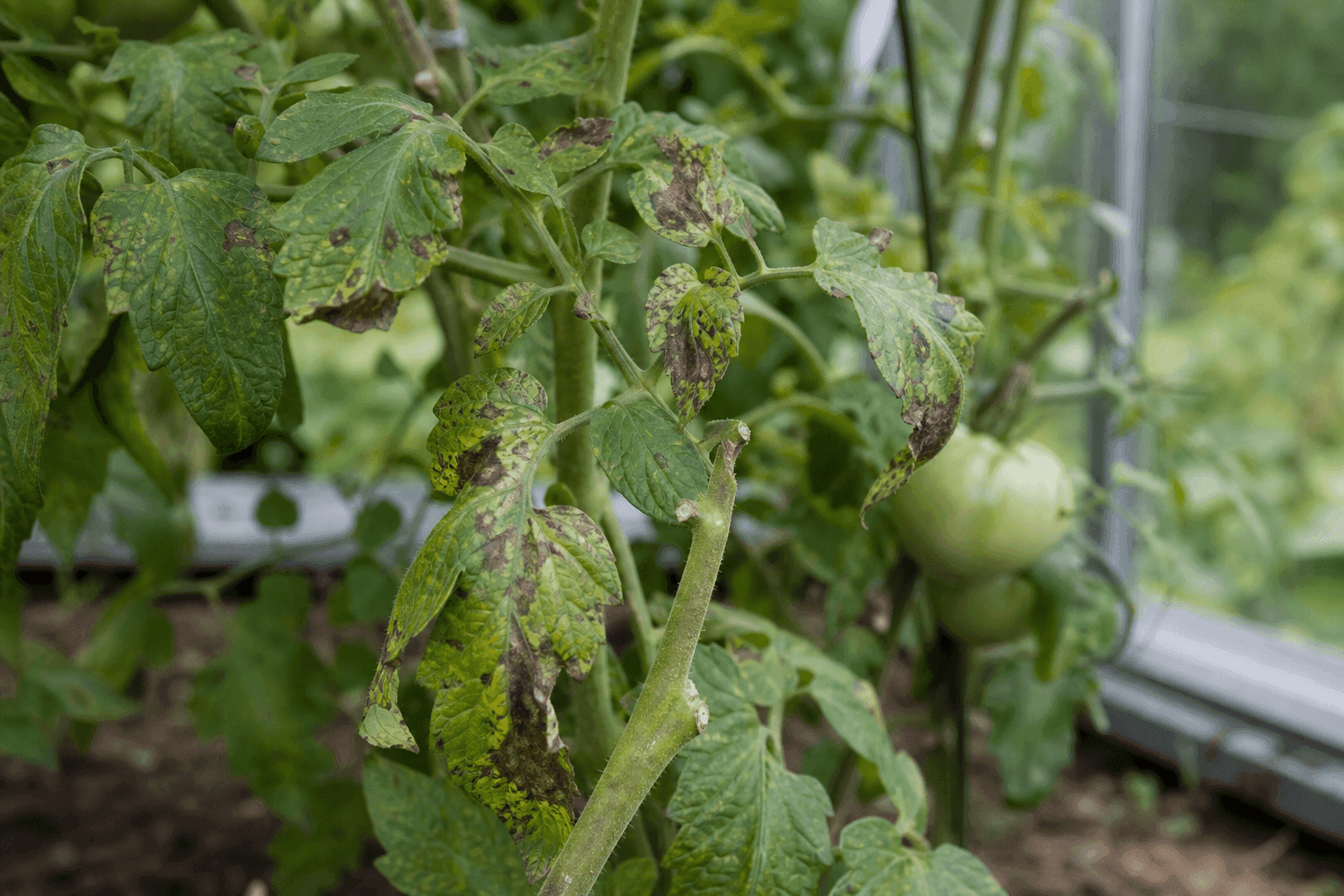
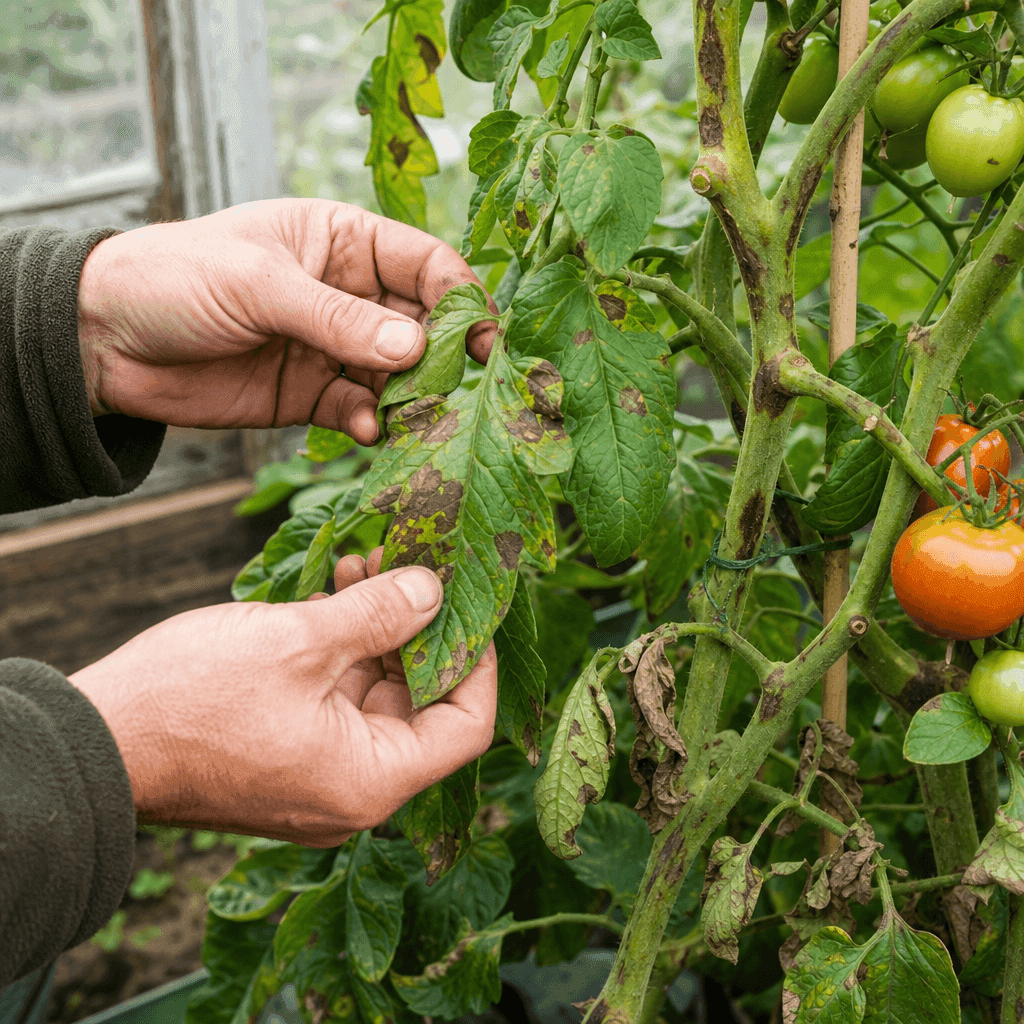
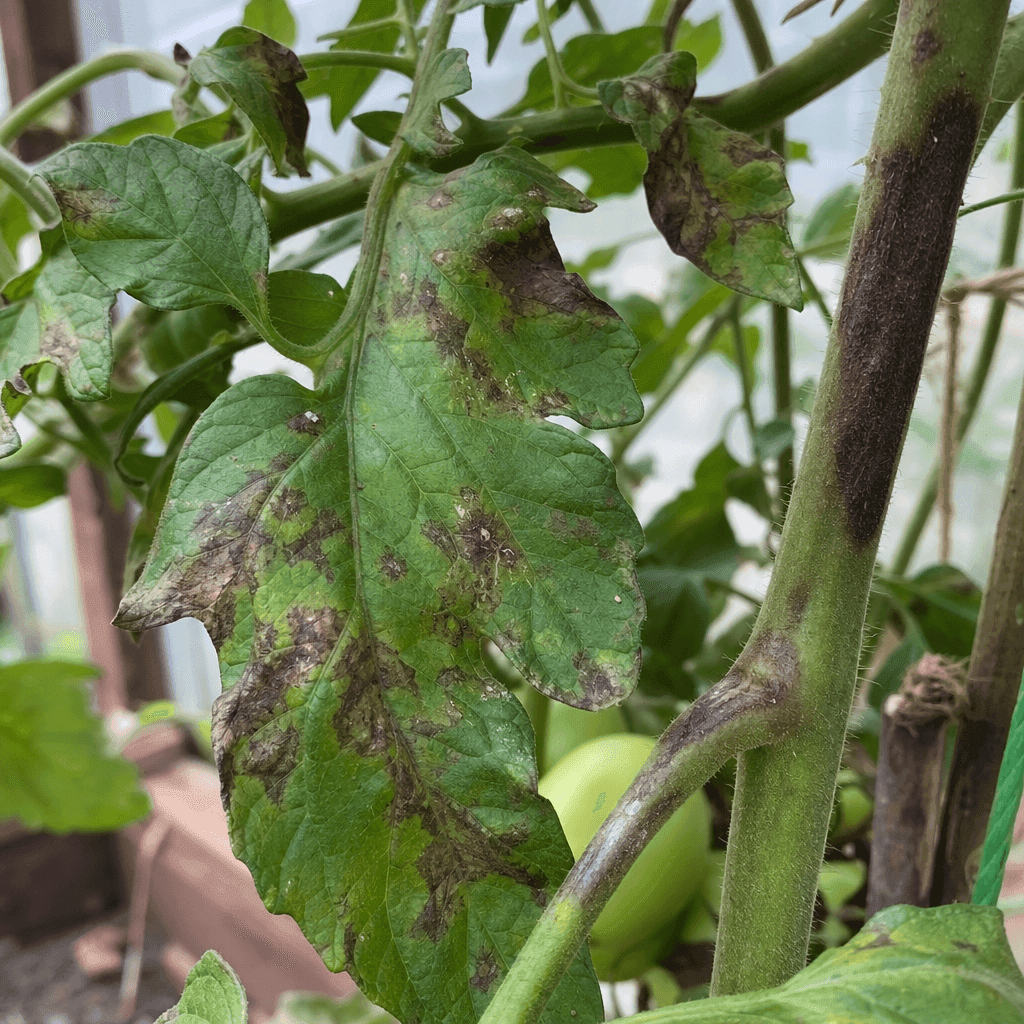
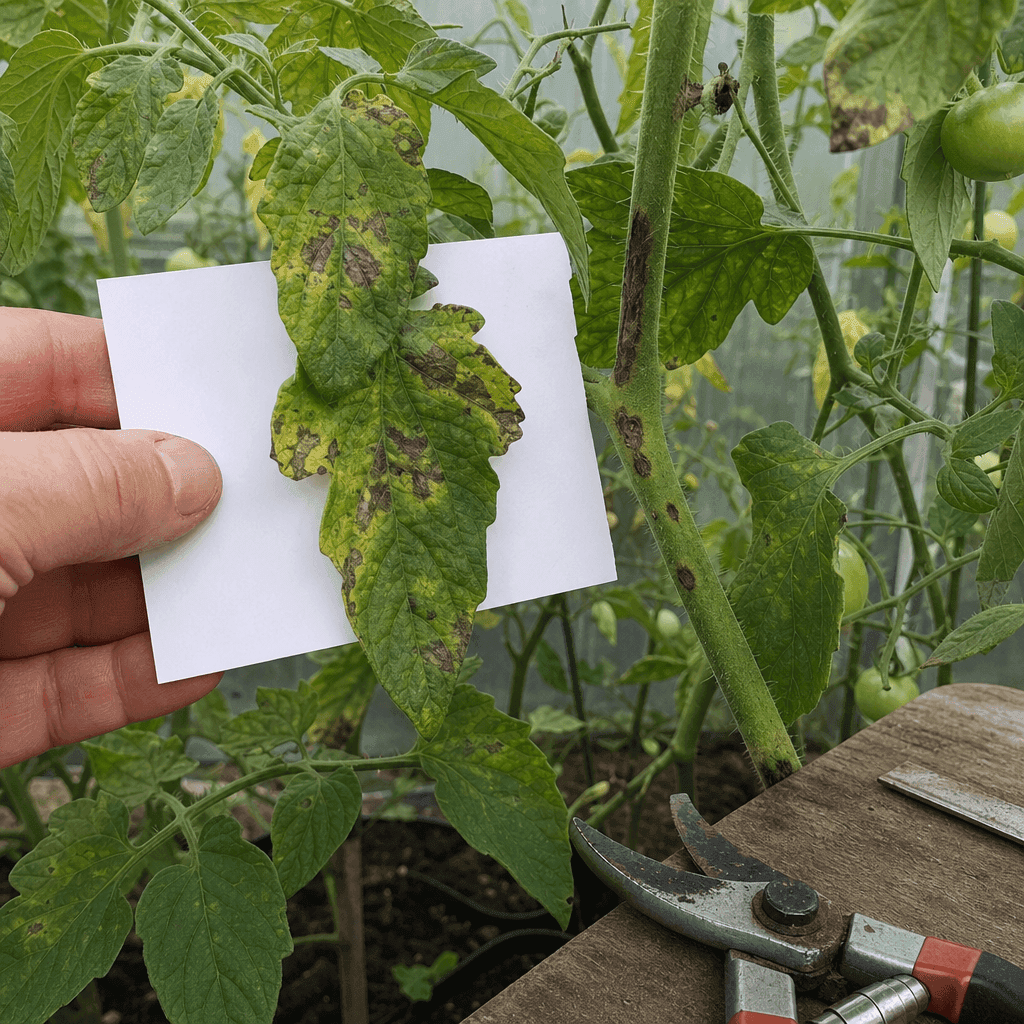
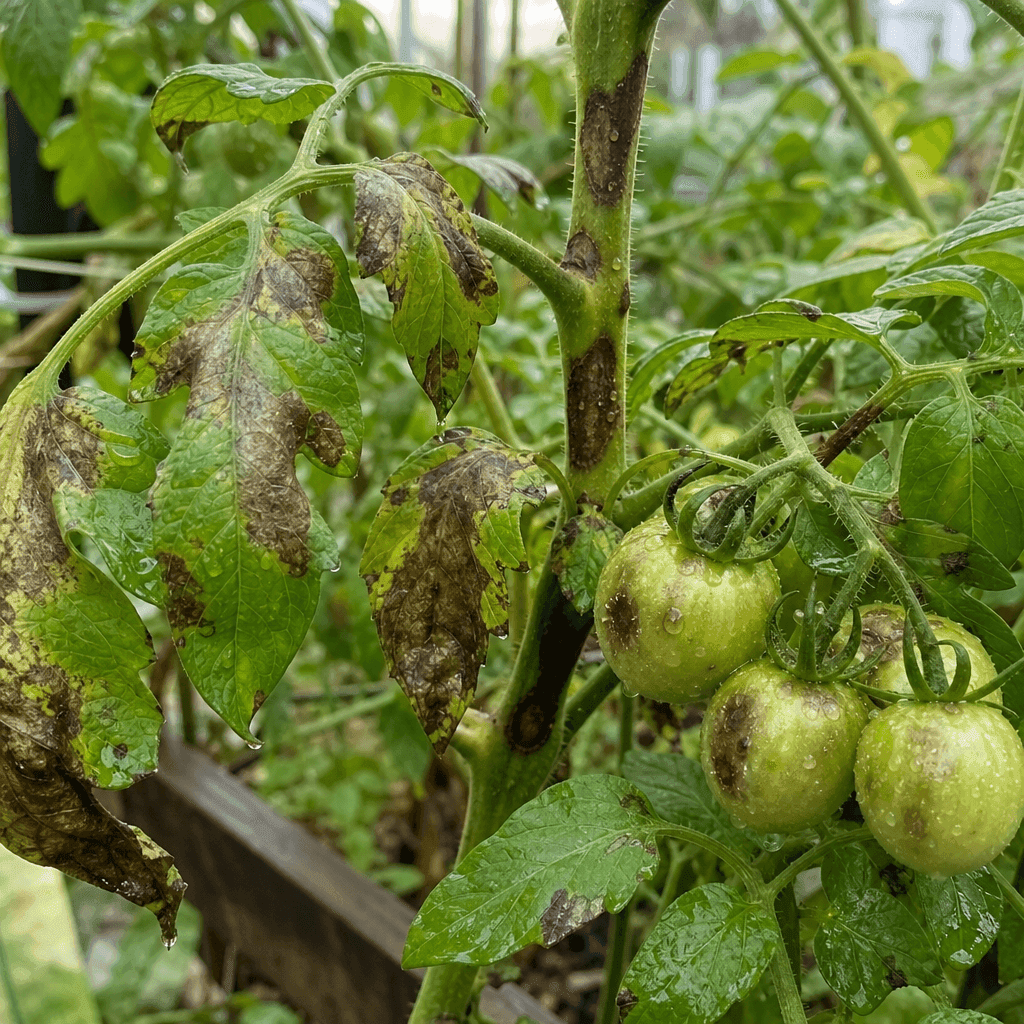
| Brown watery patches on leaves collapsing quickly; white fuzz under leaf in humid weather | Late blight (Phytophthora infestans) | High | Rapid spread in warm wet weather (above 10°C, humid); brown rot on green fruit. | Remove and destroy all affected material immediately; no effective fungicide available to UK gardeners. | High |
| Yellow patches above leaves with olive-brown velvety mould on underside | Leaf mould (Passalora fulva) | High | Commonest under glass; mould is only on the underside; spreads in humid, poorly ventilated conditions. | Improve ventilation; remove affected leaves; use resistant varieties. | Medium |
| Many small round spots with pale grey centres and dark borders, starting on lower leaves | Septoria leaf spot | Medium | Spots are small (2–4mm), uniform, with pale centres. Starts on oldest leaves. No rapid collapse. | Remove and bin affected leaves; avoid wetting foliage; improve airflow. | Medium |
| White powdery coating on upper leaf surfaces, especially on older leaves | Powdery mildew | Medium | White powder can be rubbed off; leaves may yellow beneath; commonest when roots dry out but air is humid. | Water roots consistently; improve ventilation; remove worst leaves. | Low–medium |
| Dark brown spots with concentric rings (target pattern) on older leaves | Early blight (Alternaria solani) | Medium | Spots have a characteristic target or bullseye ring pattern; starts on oldest leaves; fruit may also have dark sunken patches. | Remove affected leaves; improve airflow; avoid wetting foliage. | Medium |
The causes, in detail
Late blight — Phytophthora infestans
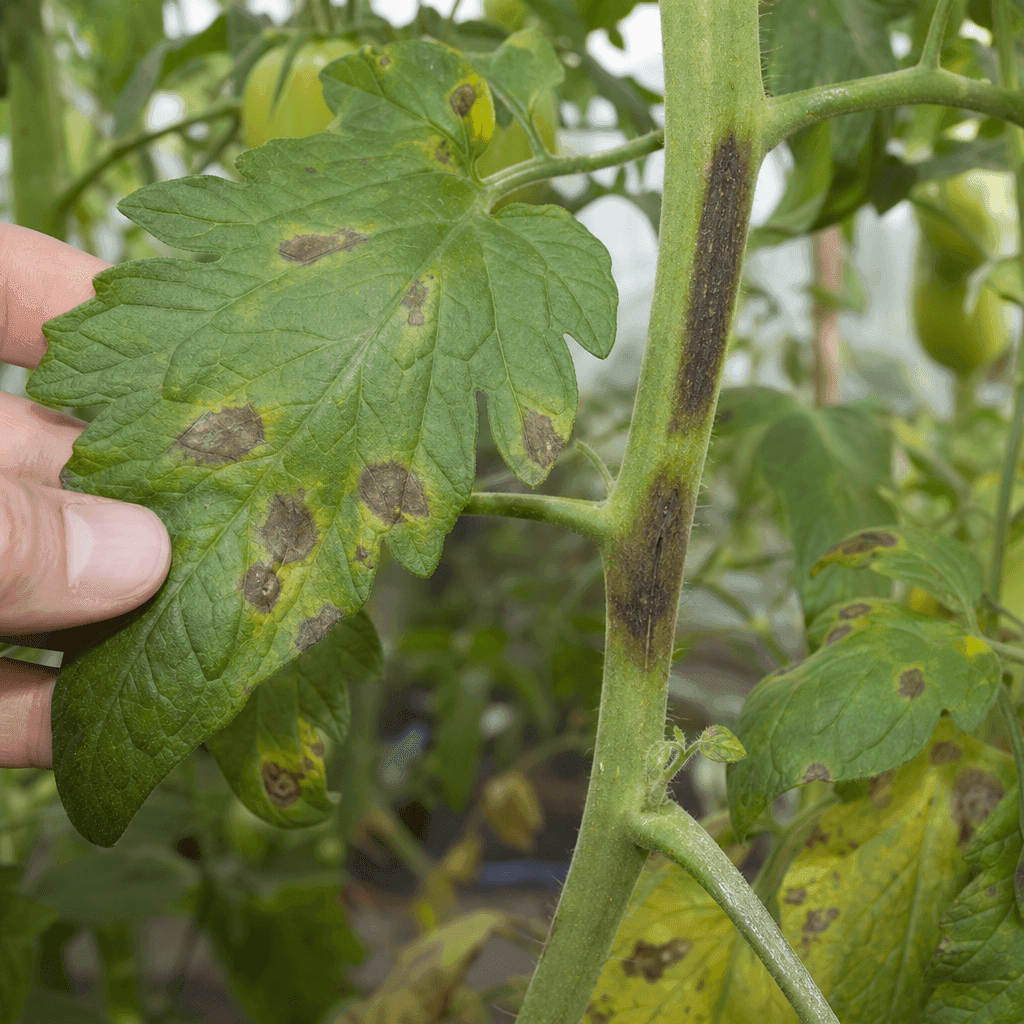
Most likelyLate blight is caused by Phytophthora infestans, a water mould (oomycete) rather than a true fungus. It is the most serious tomato disease in the UK and spreads explosively in the warm, wet summers typical of much of Britain. The RHS describes the initial symptoms as rapidly spreading, water-soaked patches on leaves that soon turn brown, collapse and shrivel. A white, frosty-looking growth may appear on the underside of affected leaves in humid conditions. Green fruit develop brown, watersoaked patches that rot rapidly; mature fruit also decays. Spores are wind-blown and can travel long distances, so blight can appear even in isolated gardens. The RHS confirms no effective fungicides are currently available for UK home gardeners.
- Water-soaked patches on leaves that expand quickly and turn brown within days.
- In humid conditions, look for a white or pale grey fuzzy growth on the underside of affected leaves.
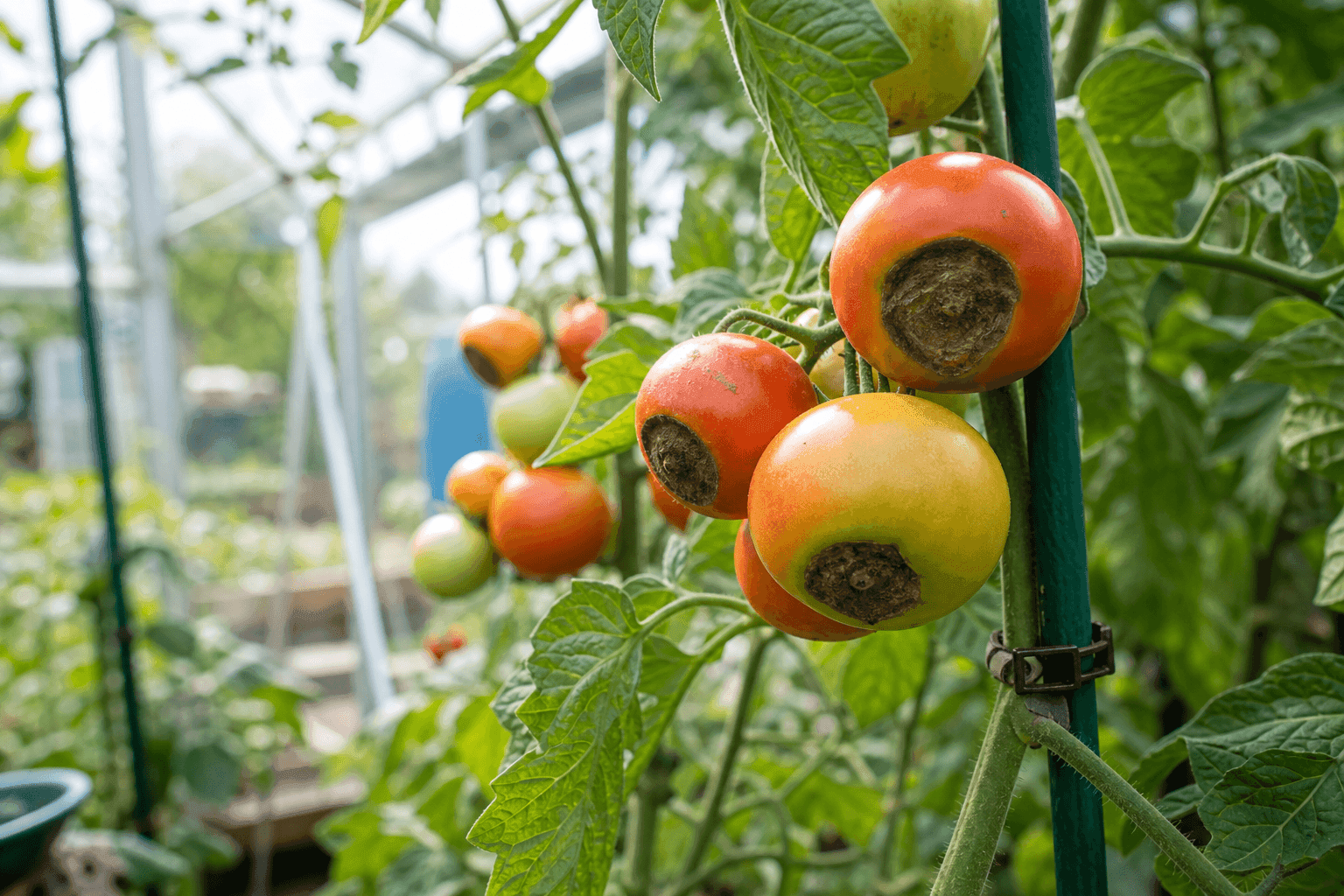
- Green tomatoes develop brownish, waterlogged patches.
- Check whether warm, wet weather (above 10°C, relative humidity above 75% for prolonged periods) preceded the outbreak.
- Compare with RHS blight alert warnings — the disease often appears in the UK from July onwards.
- Remove all affected leaves, stems and fruit immediately, handling gently to avoid shaking spores onto healthy tissue.
- Bin or deeply bury the infected material — do not compost it, and do not leave it on the soil surface.
- Consider whether remaining green tomatoes should be harvested and ripened indoors before blight reaches them.
- Grow next year's tomatoes in a different spot to reduce soil-borne inoculum.
- In future years, choose blight-resistant varieties such as 'Crimson Crush', 'Fantasio' or 'Lizzano', and grow outdoor tomatoes in a sheltered, well-ventilated spot.
Stop it coming back:There are no fungicides for UK gardeners to use against blight. Resistant varieties and good airflow are the main preventive tools. Stake plants to keep foliage off the soil, avoid wetting leaves when watering, and water at the base. Blight alerts are issued by the Blightwatch service and reported on the RHS website in season.
compost blight-affected plant material — it should be binned, deeply buried or burned to avoid reinfection.
Leaf mould — Passalora fulva
Most likelyLeaf mould is a fungal disease caused by Passalora fulva (previously Cladosporium fulvum) and is particularly common on tomatoes grown under glass in the UK. It causes yellow patches on the upper surface of leaves, with a distinctive olive-green to brown velvety mould on the underside. It thrives in high humidity and poor ventilation but does not spread as explosively as blight. Many modern varieties have resistance to some races of leaf mould.
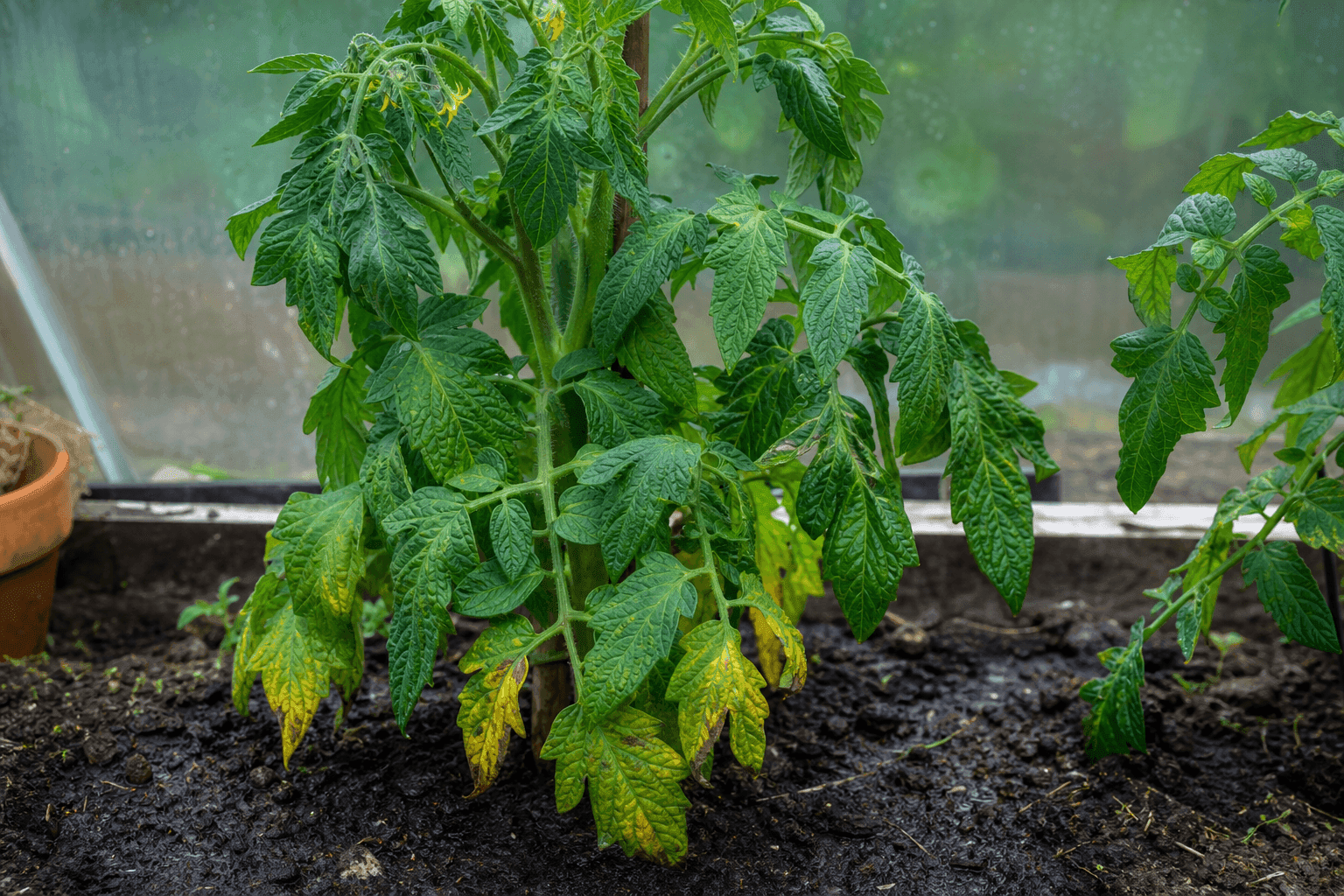
- Yellow patches on the upper surface of leaves.
- Olive-brown to purplish velvety mould only on the underside of the affected areas.
- Commonest in greenhouses in summer; linked to high humidity and poor airflow.
- Does not cause rapid collapse of whole leaves as blight does.
- Improve ventilation in the greenhouse — open vents and doors on warm days.
- Remove affected leaves promptly and dispose of them away from the garden.
- Water at the base; avoid wetting foliage.
- Switch to a resistant variety for next year if leaf mould recurs.
Stop it coming back:Good airflow and lower humidity are the main preventives. Avoid overcrowding plants and keep the greenhouse well ventilated from spring.
mistake leaf mould for late blight — check whether the mould is only on the underside of the leaf (leaf mould) or whether there is a rapid watery collapse on both sides (blight).
Septoria leaf spot
PossibleSeptoria leaf spot (Septoria lycopersici) causes numerous small, circular spots with pale grey or white centres, dark borders and sometimes tiny dark fruiting bodies at the centre of each spot. It starts on the oldest, lowest leaves and works upward. It spreads in wet weather and is worse when foliage is wet. Unlike blight, it does not cause rapid collapse of whole leaves and does not directly rot the fruit.
- Many small (2–4mm) round spots with pale grey centres and dark edges.
- Spots appear first on the oldest lower leaves and move up the plant.
- Tiny black specks (fruiting bodies) may be visible in the centre of spots.
- No rapid watery collapse; no olive mould underneath as seen in leaf mould.
- Remove affected leaves and bin them — do not compost.
- Avoid overhead watering; water at the base of the plant.
- Improve airflow by removing side shoots and staking the plant properly.
- Practise crop rotation — avoid growing tomatoes in the same spot for at least three years.
leave affected leaves on the plant — the disease spreads by rain splash and will move upward to healthy foliage if infected leaves are not removed.
Powdery mildew
PossiblePowdery mildew on tomatoes is favoured by dry roots combined with humid air — conditions common in late summer in UK greenhouses. The characteristic white powdery coating appears on the upper leaf surface, leaves may yellow underneath, and heavily affected leaves can fall. It is less destructive than blight or leaf mould but reduces vigour and fruit quality if left unchecked.
- White or pale grey powdery patches on the upper leaf surface.
- The coating can be rubbed off easily.
- Leaves may yellow beneath the white coating.
- Roots may have been allowed to dry out while air humidity remained high.
- Water the roots more consistently — powdery mildew is linked to drought stress.
- Improve ventilation to reduce air humidity.
- Remove the worst-affected leaves.
- Avoid wetting the leaves when watering.
Stop it coming back:Consistent root moisture and good ventilation greatly reduce the risk. Resistant varieties are available for some other crops but less so for tomatoes.
confuse powdery mildew with the white fuzzy growth of late blight on leaf undersides — powdery mildew is on the upper surface and does not cause rapid watery collapse.
Early blight — Alternaria
PossibleEarly blight (Alternaria solani) causes distinctive dark brown spots with concentric rings that look like a target or bullseye. It attacks older leaves first and can spread to stems and fruit. It is less devastating than late blight but can cause significant defoliation. It is favoured by warm, alternating wet and dry conditions and is more common on plants under stress. The same disease affects potatoes, where early blight on potatoes shows the same bullseye target pattern.
- Dark brown spots with concentric target or bullseye rings on older leaves.
- Spots may be surrounded by yellow halo.
- Dark sunken patches may also appear on fruit.
- Spreads upward from the oldest leaves but without the rapid watery collapse of late blight.
- Remove and bin affected leaves — do not compost.
- Keep plants well watered and fed to reduce stress.
- Improve airflow and avoid wetting foliage.
- Rotate crops and clear all debris at the end of the season.
confuse early blight with late blight — early blight spots have a distinctive target ring pattern and spreads more slowly; late blight causes rapid watery collapse.
Still not sure?
Work down these branches — the first one that matches is your answer.
What not to do
- Compost blight-affected plant material — bin it, deeply bury it or burn it to prevent reinfection.
- Wait to see if the damage improves — late blight spreads within days and early action limits the losses.
- Use broad-spectrum fungicides expecting to cure blight — no effective fungicides for blight are available to UK home gardeners.
- Grow tomatoes in the same spot year after year — rotation reduces soil-borne disease.
- Water over the foliage — wet leaves are a key route of infection for most tomato diseases.
Common questions
What does tomato blight look like?
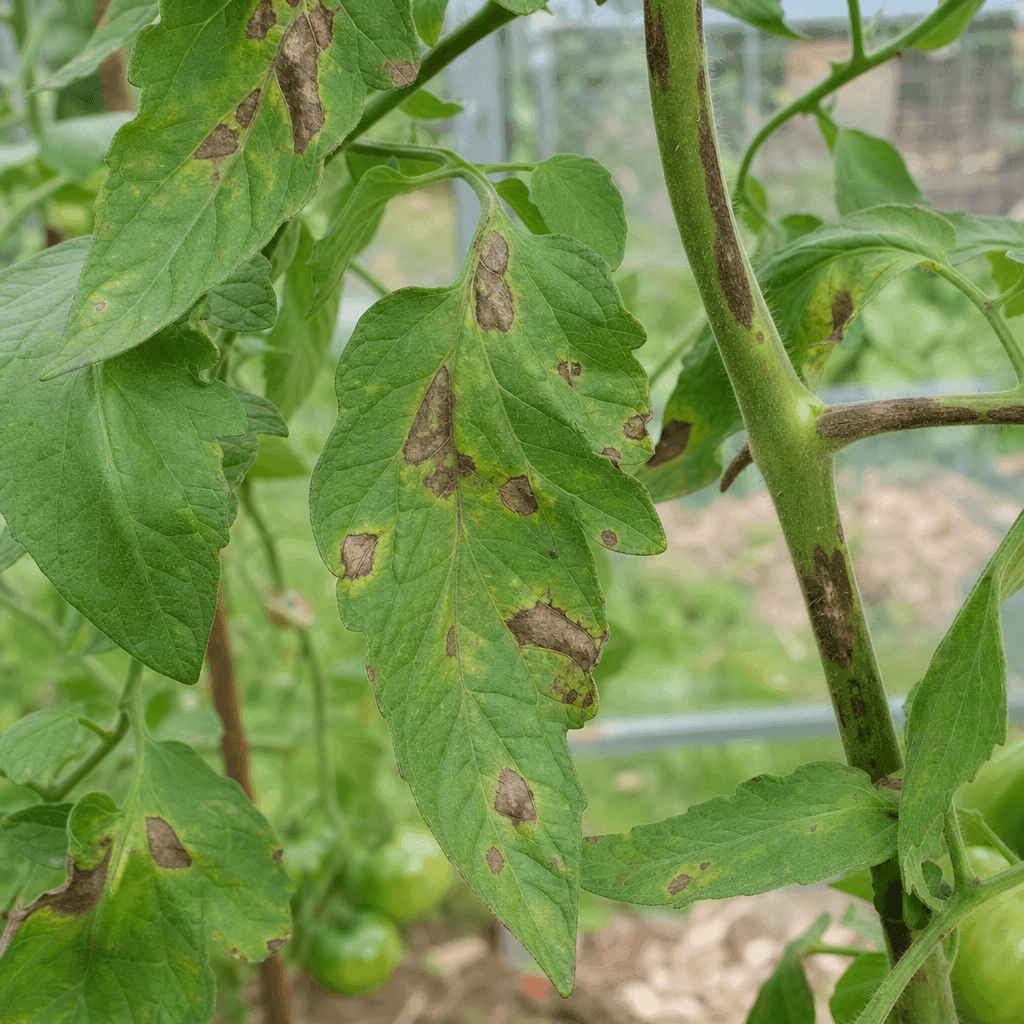
Late blight first appears as rapidly expanding, water-soaked, brown patches on leaves. The patches may have a white fuzzy growth on the underside in humid conditions. Affected leaves collapse and shrivel quickly. Green tomatoes develop brown, waterlogged patches that rot. The speed of spread in warm, wet weather is distinctive.
Is there a cure for tomato blight?
No. The RHS confirms there are no fungicides available to UK home gardeners that are effective against late blight. The best response is to remove and destroy all infected material immediately and harvest any remaining green tomatoes to ripen indoors.
Can I eat tomatoes from a blighted plant?
Fruit that is fully ripe and shows no signs of rot is generally safe to eat. Remove and discard any fruit with brown, sunken or waterlogged patches. Green tomatoes can be harvested and ripened indoors away from the blight, but check them regularly as they ripen. If the marks are confined to small dark spots rather than spreading rot, see our guide to tomato black spots on leaves and fruit to rule out other causes.
How do I tell tomato blight from leaf mould?
Blight causes water-soaked, rapidly expanding brown patches that collapse the whole leaf, and may show white fuzz on the underside. Leaf mould causes yellow patches above with olive-brown velvety mould only on the underside, and does not cause rapid collapse. Blight spreads much faster.
When does tomato blight usually strike in the UK?
Late blight typically appears from July onwards in the UK, when conditions are warm and wet. It is most severe in wetter regions such as the north and west. The Blightwatch service monitors conditions and issues alerts when blight risk is high. For other issues that strike the same plant through the season, our tomato plant problems diagnosis guide and the wider tomato growing guides cover the full range.
Are there blight-resistant tomato varieties?
Yes. Varieties such as 'Crimson Crush', 'Fantasio', 'Lizzano' and 'Ferline' have useful resistance to late blight, though no variety is completely immune. The RHS recommends them for outdoor growing in blight-prone areas.
Should I remove all leaves when I see tomato blight?
Remove only clearly affected leaves — those with water-soaked, brown, collapsing tissue. Removing all foliage at once will stress the plant further. Handle infected material carefully to avoid spreading spores to healthy parts of the plant.