Quick diagnosis
Match the row to what you’re seeing, then jump to the fix.
| What you see | Likely cause | Confidence | How to confirm | What to do now | Urgency |
|---|---|---|---|---|---|
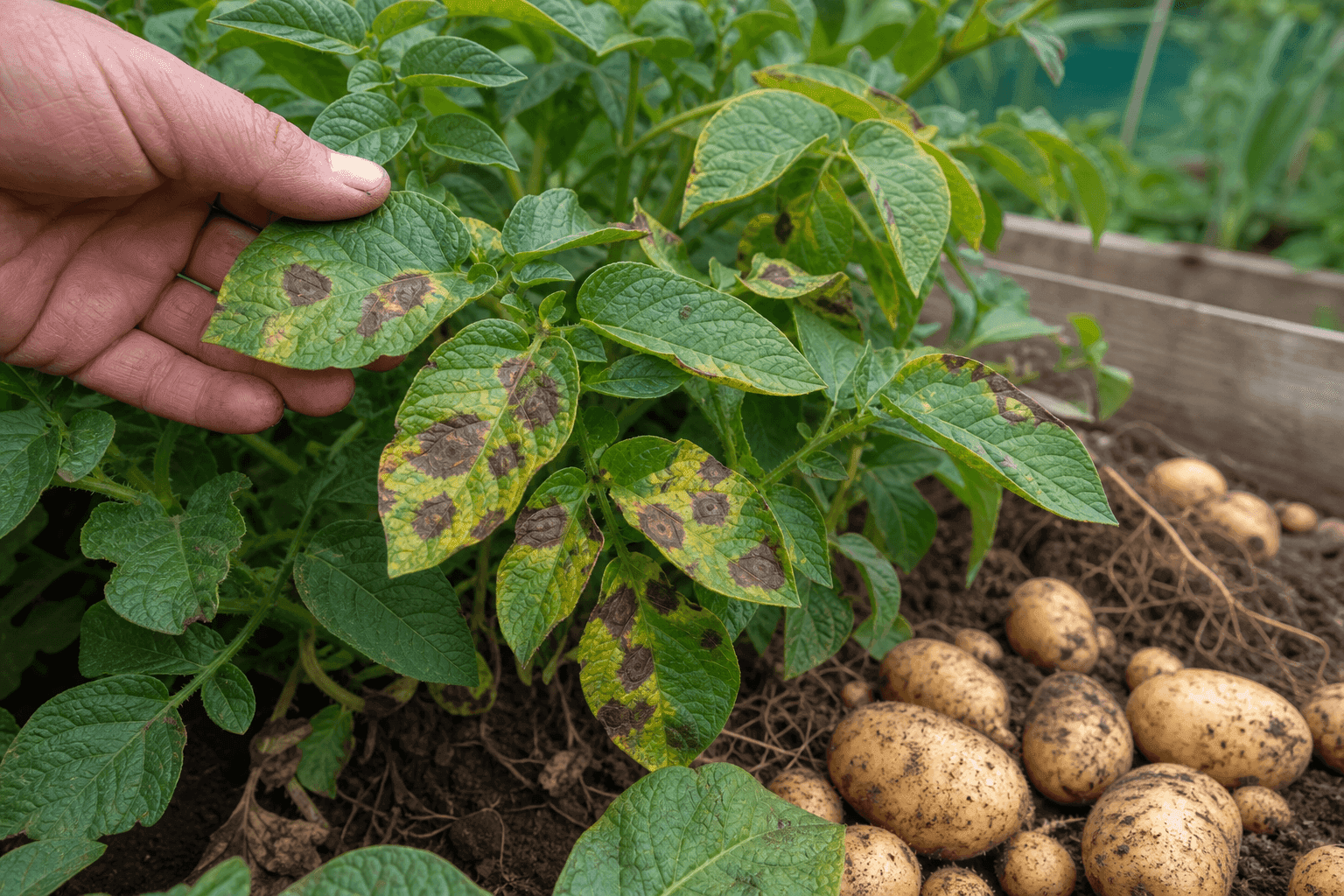
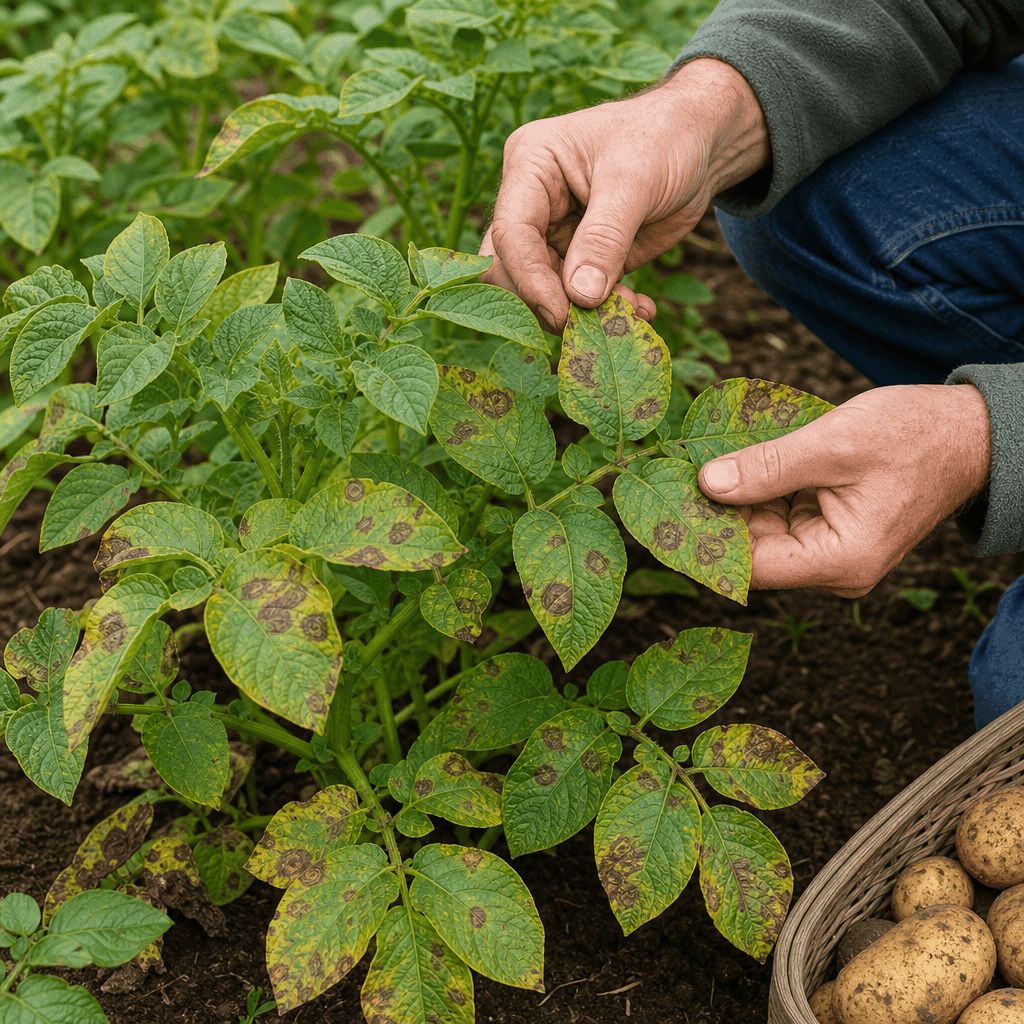
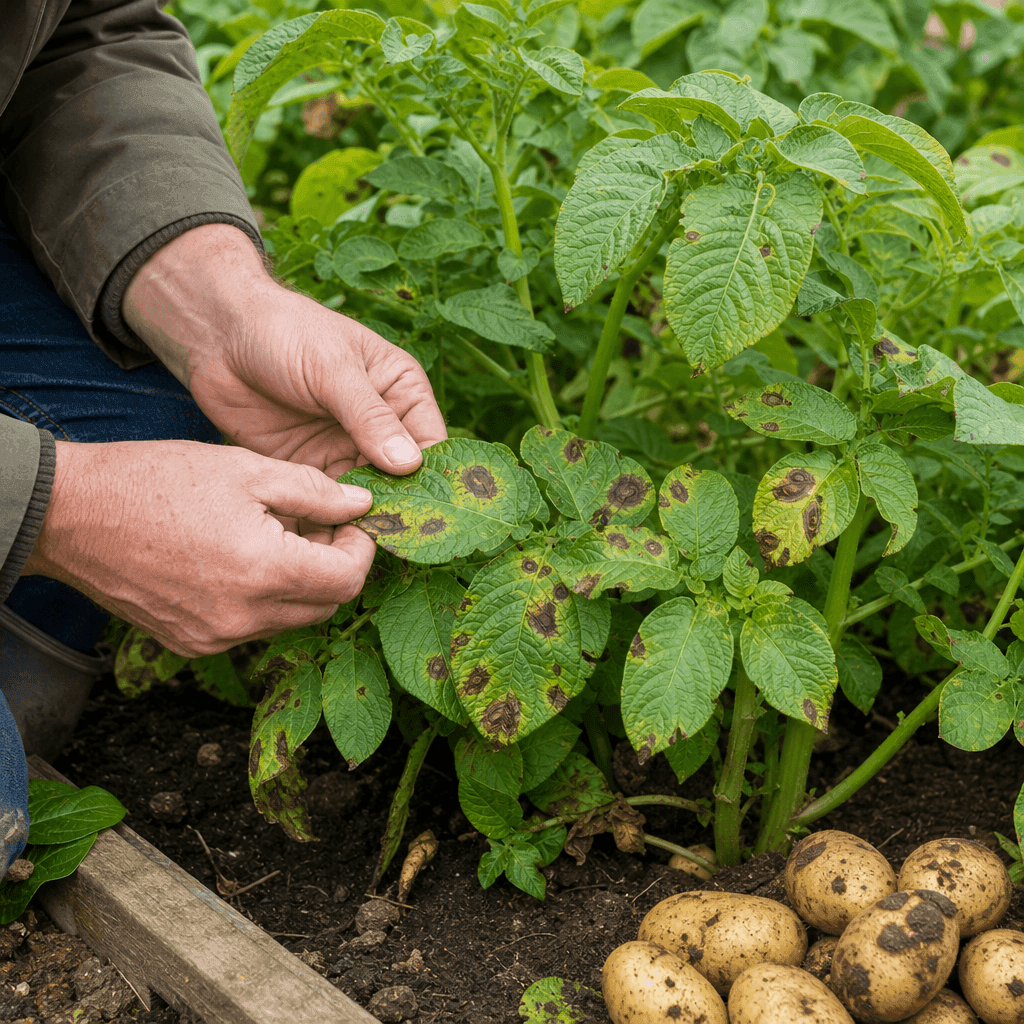
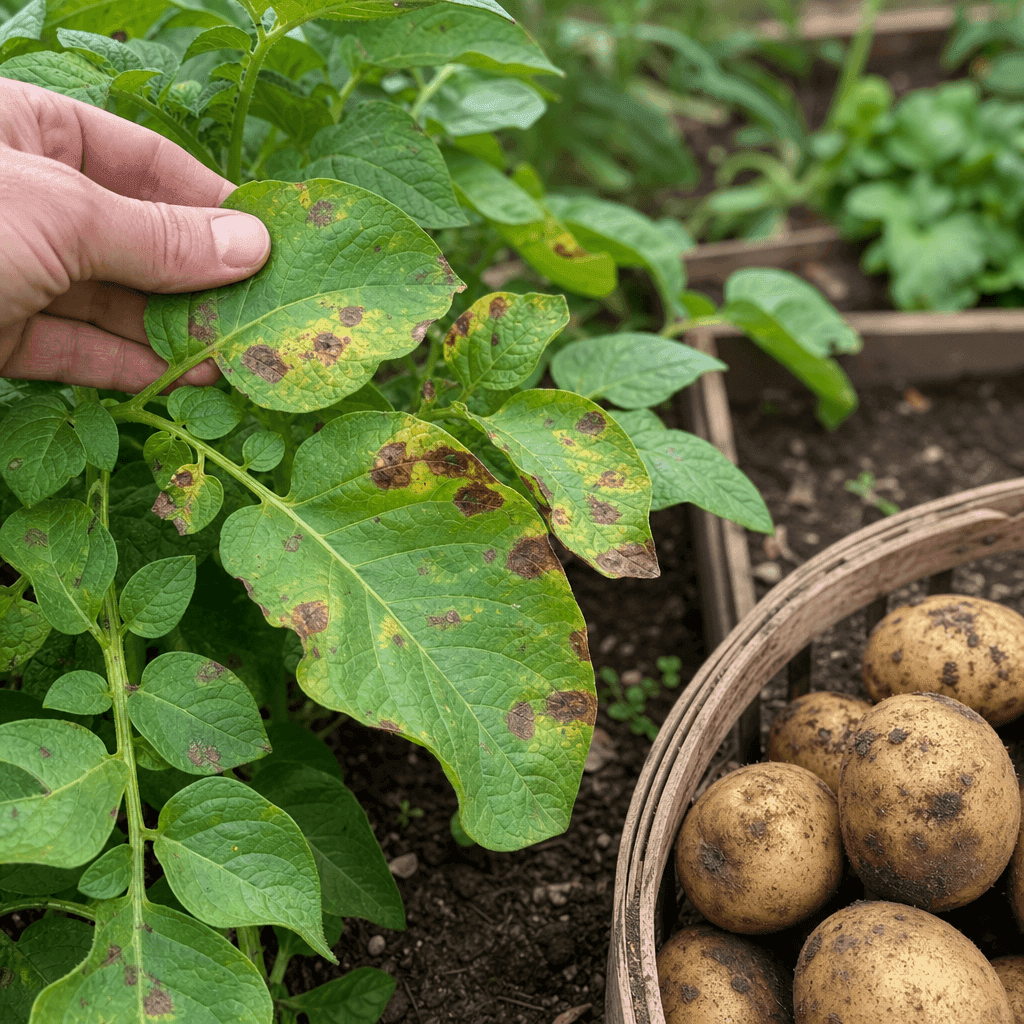
| Dark brown spots with concentric ring or 'target' pattern on lower leaves, yellowing around spots | Early blight (Alternaria solani) | Medium | Spots are dry, dark and angular with yellow halos; lower oldest leaves are worst affected; not rapidly spreading. | Remove affected leaves, improve airflow, avoid overhead watering; consider a copper-based fungicide. | Medium |
| Yellowing between the leaf veins (interveinal chlorosis) on older lower leaves, sometimes with reddish-brown tints | Magnesium deficiency | High | Yellow areas between green veins on older leaves; no classic target spots; sandy or acidic soil; potassium-rich feeds used. | Apply magnesium sulphate (Epsom salts) as a foliar spray or soil drench. | Low–medium |
| Rapidly spreading brown-black water-soaked patches, white mould on leaf undersides in humid conditions | Late blight (Phytophthora infestans) | High | Rapid spread within days; dark lesions with pale ring at edge; white downy growth under leaves in humid weather; typically July–September. | Remove and bin all affected foliage immediately; earthing up protects tubers; consider copper-based fungicide preventatively. | High |
| Small, irregular brown spots with darker borders, sometimes with tiny black fruiting bodies in the centre | Septoria leaf spot | Low | Spots are smaller and more irregular than Alternaria; tiny black pycnidia (fruiting bodies) visible in spot centres with a magnifier. | Remove affected leaves; improve airflow; avoid overhead watering. | Low–medium |
| General pale yellowing of the whole plant, older leaves first, with stunted growth | Nitrogen deficiency | Medium | Uniform pale or yellow-green leaves throughout the plant, not just spotted; growth is weak and thin. | Apply a balanced fertiliser or a top-dressing of dried blood or sulphate of ammonia. | Low–medium |
The causes, in detail
Early blight (Alternaria solani and A. alternata)
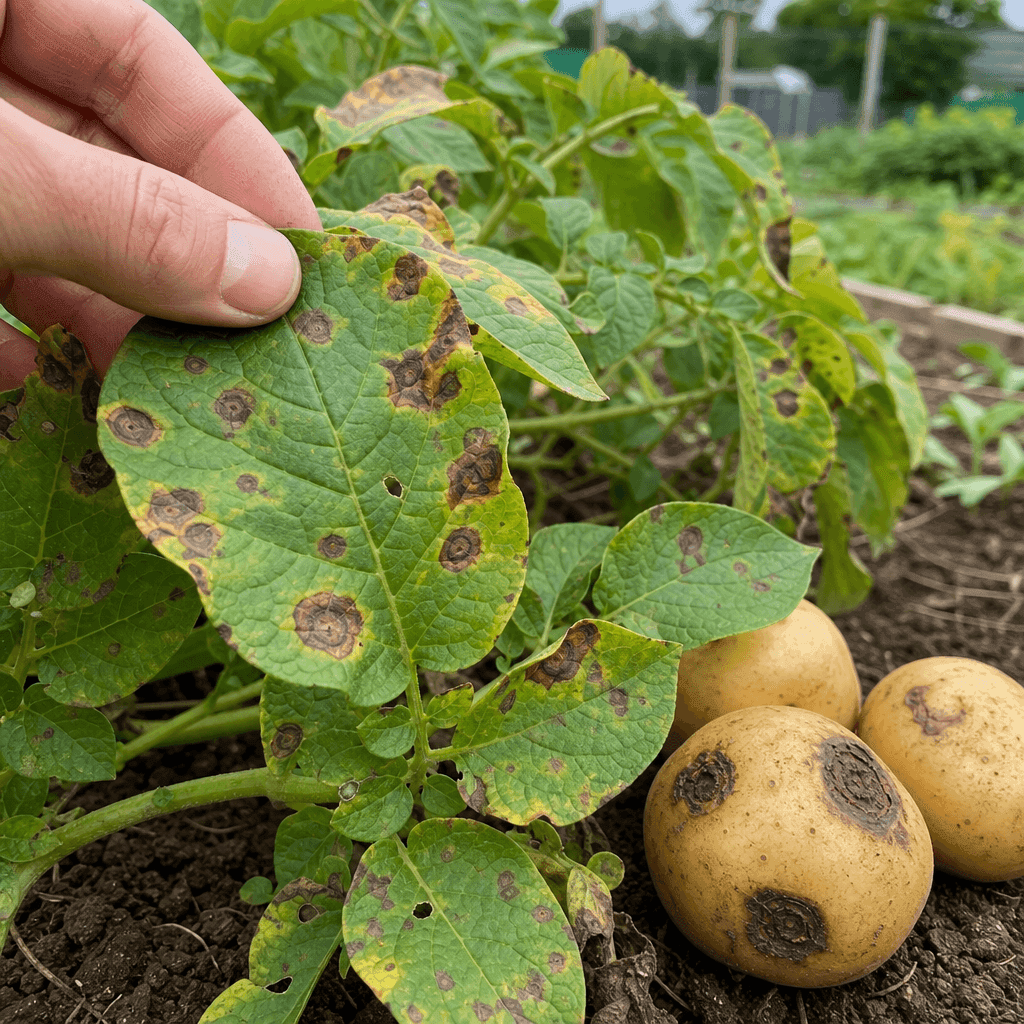
PossibleEarly blight is caused by the fungi Alternaria solani and A. alternata. Research published on NCBI (PMC) confirms it is one of the most economically damaging fungal plant diseases worldwide, though the AHDB notes it is less commonly diagnosed in British gardens than in continental climates. The characteristic symptom is dark brown, dry lesions with concentric rings (target spots) on the older, lower leaves first. Warm temperatures (20–30°C) combined with wet periods favour the disease. Spores survive in soil and on debris, and are spread by rain splash and wind. In severe outbreaks, defoliation can reduce yields by up to 30%. It does not typically attack healthy tubers directly, though wound-entry infections at harvest can occur.
- Dark brown spots with a 'target' or concentric ring pattern on lower, older leaves.
- Yellow halos often surround the lesions.
- Spots are dry and stay within the leaf tissue; no water-soaking or rapid spread.
- Disease starts on the oldest leaves and progresses upwards slowly over weeks.
- Warm weather with alternating wet and dry periods preceded the outbreak.
- Remove affected leaves promptly and bin them — do not compost, as spores survive.
- Improve airflow around the plant by earthing up and avoiding overcrowding.
- Water at the base of the plant rather than over the foliage.
- Apply a copper-based fungicide (e.g. Bordeaux mixture) approved for potato use in the UK, beginning before or at the first sign of disease in at-risk conditions.
- Remove and burn all plant debris at the end of the season to reduce overwintering spore load.
- Rotate potato crops to a fresh bed each year — do not return potatoes to the same ground for at least three years.
Stop it coming back:Choose disease-resistant cultivars where available. Maintain good soil nutrition, as plants under nitrogen or magnesium stress are more susceptible to Alternaria.
confuse early blight with magnesium deficiency, which is far more common in UK gardens and needs a different remedy entirely.
Magnesium deficiency
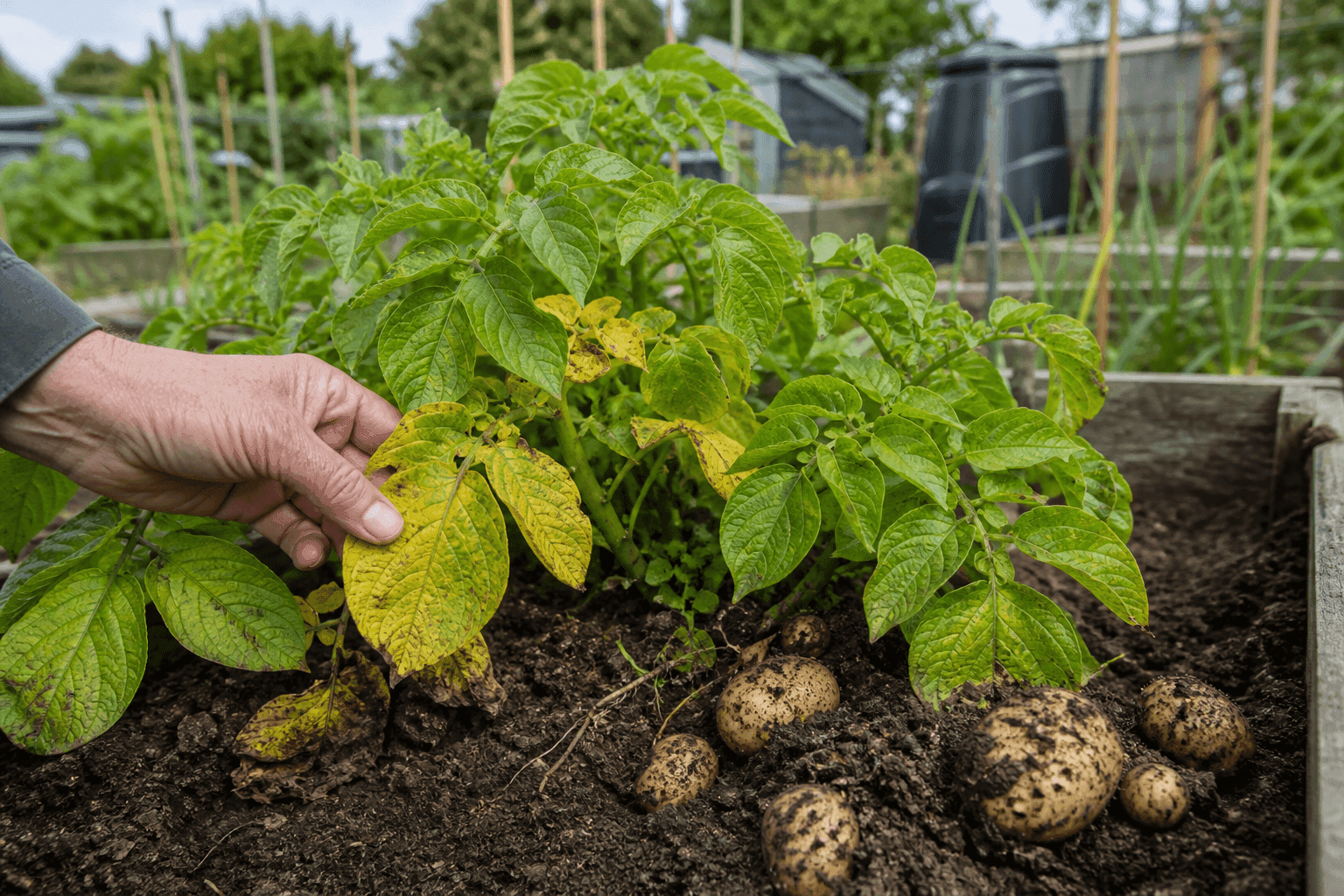
Most likelyMagnesium deficiency is the most common cause of yellowing, spotting and premature leaf loss in UK potato crops, and is frequently mistaken for early blight. The RHS lists potatoes as particularly susceptible. Symptoms begin on the older lower leaves as interveinal chlorosis (yellow areas between the still-green veins), sometimes with reddish or brown tints as tissue dies. The pattern differs from Alternaria: there are no clear target spots and the yellowing is more generalised. Deficiency is most common on light, sandy or acid soils, and is worsened by over-application of potassium-rich fertilisers, as the plant absorbs potassium in preference to magnesium.
- Yellowing between the veins on older leaves, while the veins themselves stay green.
- Reddish-brown or purple tints in severely affected patches.
- No clear target spot or concentric ring pattern — markings are more irregular.
- Soil is light and sandy, or high doses of potassium-containing fertilisers (e.g. tomato feed, sulphate of potash) have been used.
- Symptoms are not spreading rapidly between plants.
- Apply magnesium sulphate (Epsom salts) as a foliar spray: dissolve 200g per 10 litres of water and apply to wet leaves.
- For a soil application, work in 30g per square metre of magnesium sulphate before planting.
- Avoid applying high-potassium feeds alongside potatoes, as potassium competes with magnesium uptake.
- If soil is acidic, check pH and lime if necessary — magnesium availability falls in very acid soils.
Stop it coming back:On susceptible sandy soils, apply dolomitic limestone when liming (it supplies both calcium and magnesium) and rotate crops to avoid depleting any single nutrient.
apply potassium-heavy tomato fertiliser to potatoes — it will worsen magnesium deficiency.
Late blight (Phytophthora infestans)
Most likelyLate blight is the most destructive potato disease in the UK. Caused by Phytophthora infestans (technically a water mould rather than a true fungus, and the same pathogen behind tomato blight), it spreads explosively in warm, humid summers from July onwards — typical UK conditions. The RHS advises UK gardeners to be alert from mid-summer. Initial symptoms are dark, water-soaked patches at leaf margins and tips that spread rapidly within days; in humid conditions a white downy mould develops on the underside of affected leaves. Tubers can rot within the ground. Main crop varieties are particularly at risk. The disease spreads by spores in rain and wind and can destroy a crop within a fortnight.
- Rapidly spreading (within days) dark brown-black patches, often at leaf tips or margins.
- White downy growth visible on the undersides of affected leaves in damp or foggy conditions.
- Spread upward quickly through the plant and to nearby plants.
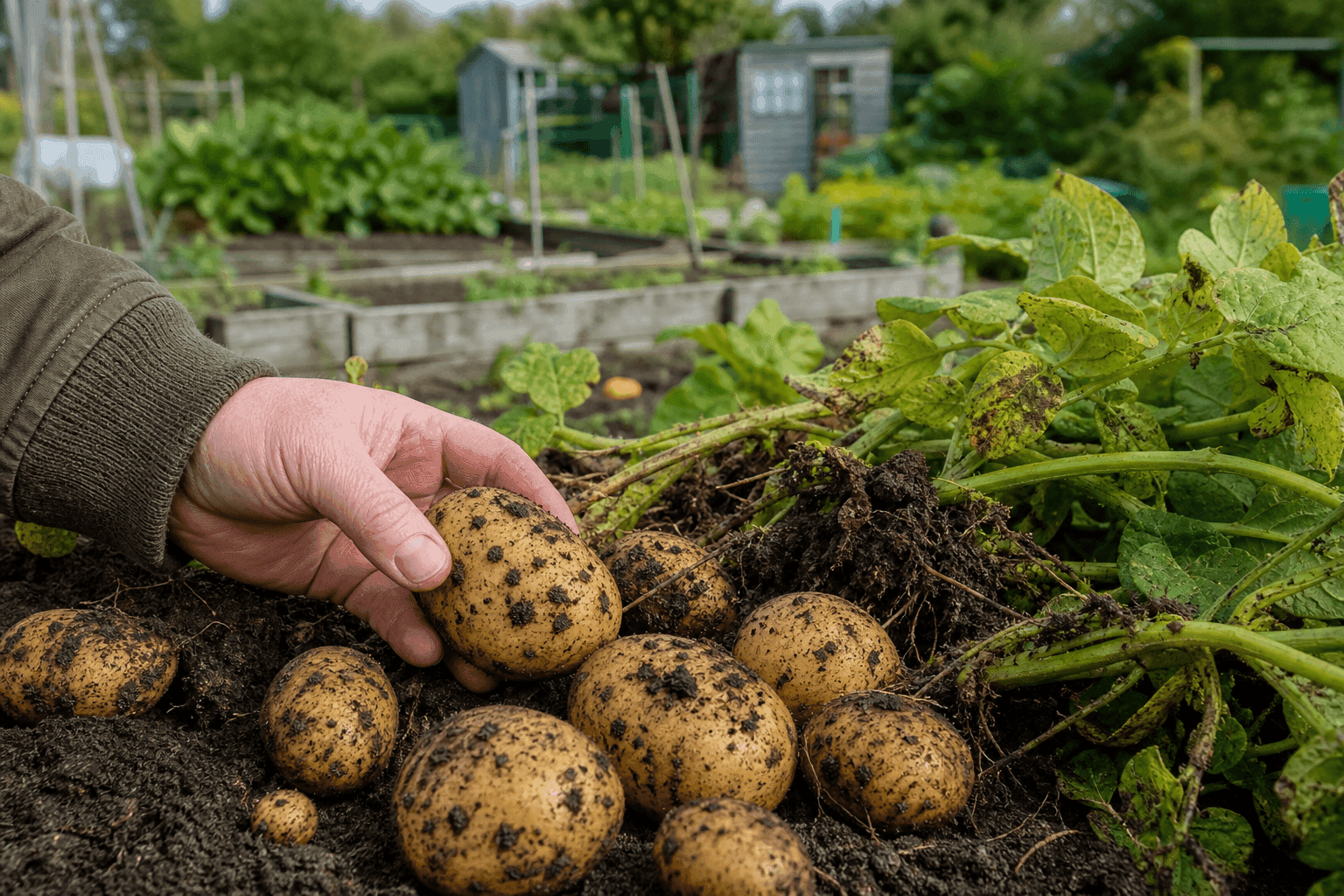
- Dark, sunken areas on harvested tubers with reddish-brown rot underneath the skin.
- Outbreak occurred July–September in a warm, wet or humid spell.
- Remove and bin all affected foliage immediately — do not compost.
- Earth up the soil around stems to create a protective layer over developing tubers.
- If you catch it very early, apply a copper-based fungicide as a preventive measure during blight-risk periods.
- Harvest tubers as soon as blight is confirmed, if the crop is otherwise mature — remove all leaf material first and leave the ground for two weeks before lifting.
- Destroy all potato haulm at season end; never leave infected material on the surface.
Stop it coming back:Grow blight-resistant cultivars such as 'Sarpo Mira', 'Setanta' or 'Orla'. Check the Blightwatch alert service (via AHDB) which predicts blight-risk periods from weather data.
leave any water-soaked or rapidly spreading dark lesions unattended — late blight requires immediate action to save the crop.
Septoria leaf spot
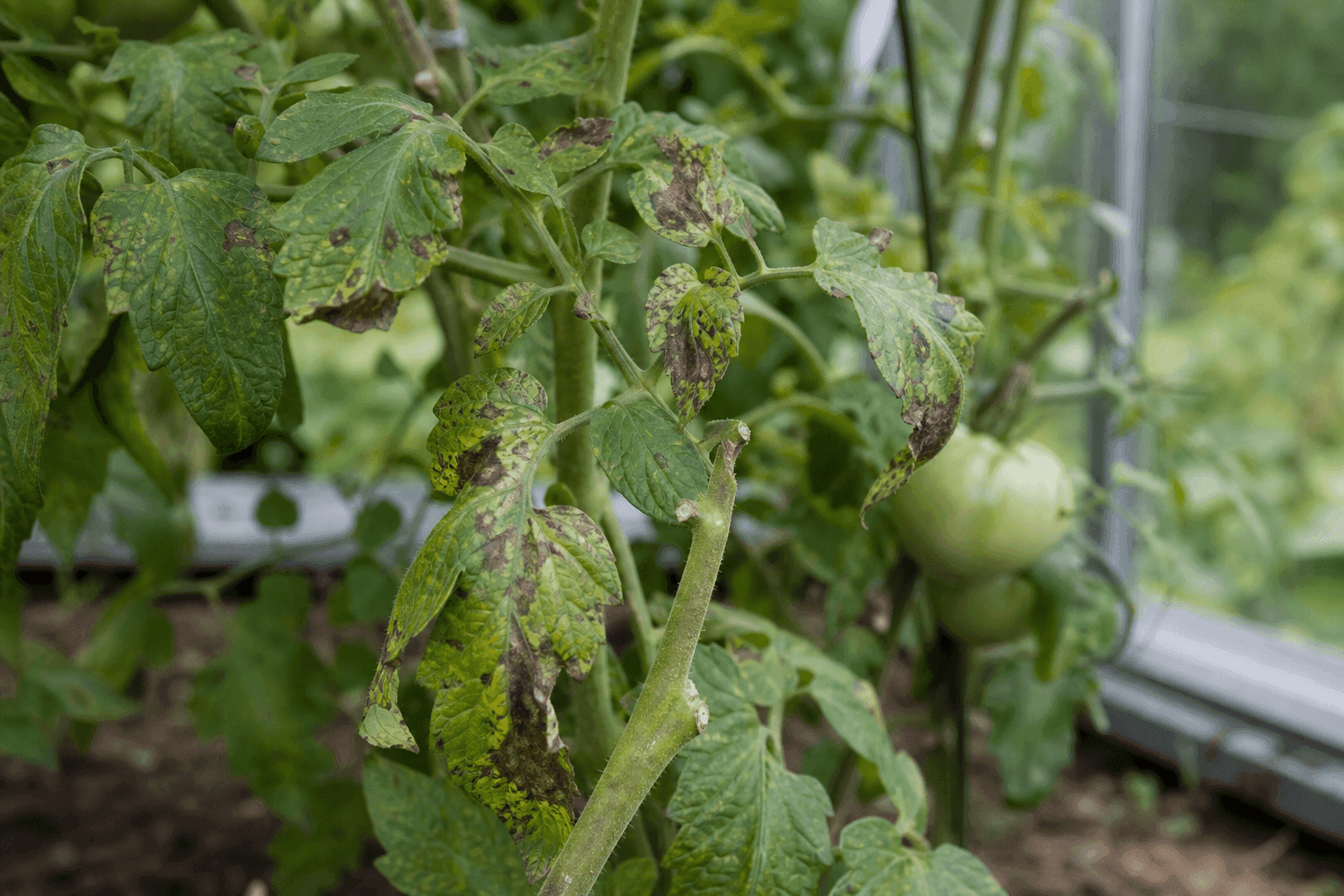
Less likelySeptoria is a fungal disease more commonly associated with black spots on tomato leaves in UK gardens, but Septoria species can affect potatoes. Lesions are irregular, brown and smaller than typical Alternaria target spots. A diagnostic feature is tiny black fruiting bodies (pycnidia) visible in the centre of spots under a magnifying glass. The disease spreads in cool, wet conditions by rain splash and can cause premature defoliation in susceptible cultivars.
- Small, irregular brown spots with no clear concentric ring pattern.
- Tiny black dots (pycnidia) are visible in the centre of spots under magnification.
- Cool, wet weather preceded the outbreak.
- Spread via rain splash from lower to upper leaves.
- Remove and bin affected leaves.
- Water at the base to reduce splash dispersal.
- Apply a copper-based fungicide as for early blight if the outbreak is severe.
- Rotate crops to avoid returning potatoes to contaminated soil.
confuse pycnidia in Septoria spots with the spore deposits in Alternaria lesions — a hand lens helps tell them apart.
Nitrogen deficiency
PossiblePotatoes are heavy nitrogen feeders and can quickly show deficiency on poor or exhausted soils, particularly in cool wet springs when nitrogen is leached rapidly. Symptoms are a general, uniform pallor and stunted growth — the whole plant turns pale yellow-green rather than showing the targeted spotting of Alternaria or the interveinal patterning of magnesium deficiency. Lower leaves are affected first as the plant mobilises nitrogen from older tissue to new growth.
- The whole plant looks pale and yellowish, not just the lower leaves.
- Growth is slow and stems are thin.
- Soil is poor, sandy or has not been fed; or a very wet spring has leached nutrients.
- No interveinal patterning or target spots — just overall pallor.
- Apply a nitrogen-containing fertiliser such as dried blood (8% N) or a balanced general fertiliser.
- For fast correction, a liquid general fertiliser (e.g. soluble balanced feed) applied to moist soil acts within days.
- Improve soil organic matter in future years with well-rotted compost or manure to boost nitrogen retention.
over-apply nitrogen once tubers begin to swell — excessive nitrogen at that stage encourages lush foliage at the expense of tuber size and increases disease susceptibility.
Still not sure?
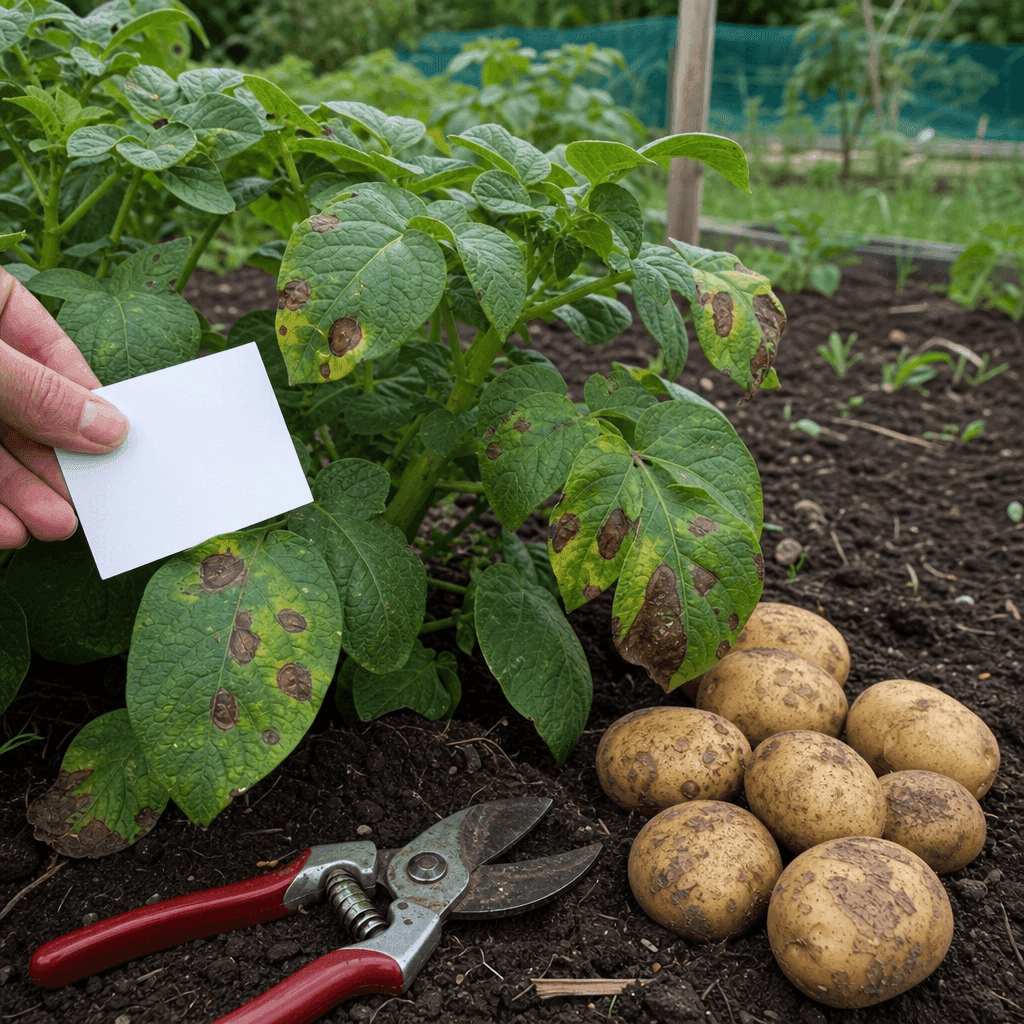
Work down these branches — the first one that matches is your answer.
What not to do
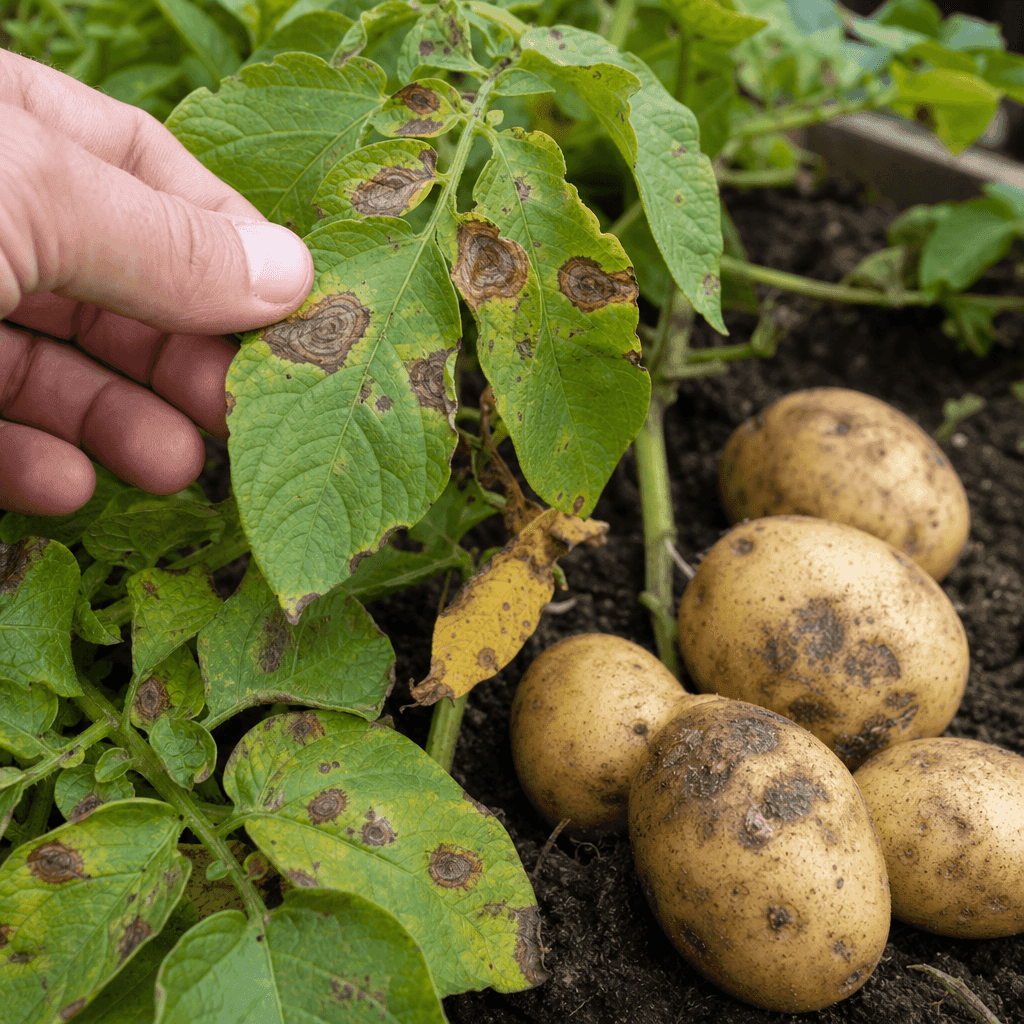
- Confuse the target spots of early blight with magnesium deficiency before treating — Epsom salts won't fix fungal disease and fungicide won't fix a nutrient shortage.
- Compost potato haulm or diseased leaves — spores and oospores can survive and re-infect future crops.
- Ignore rapidly spreading dark wet patches in summer — late blight requires immediate action.
- Apply high-potassium fertilisers (such as tomato feed) routinely to potatoes — this worsens magnesium deficiency.
- Return potatoes to the same bed without a minimum three-year break — disease and nematode build-up follow.
Common questions
How do I tell early blight from late blight on potatoes?
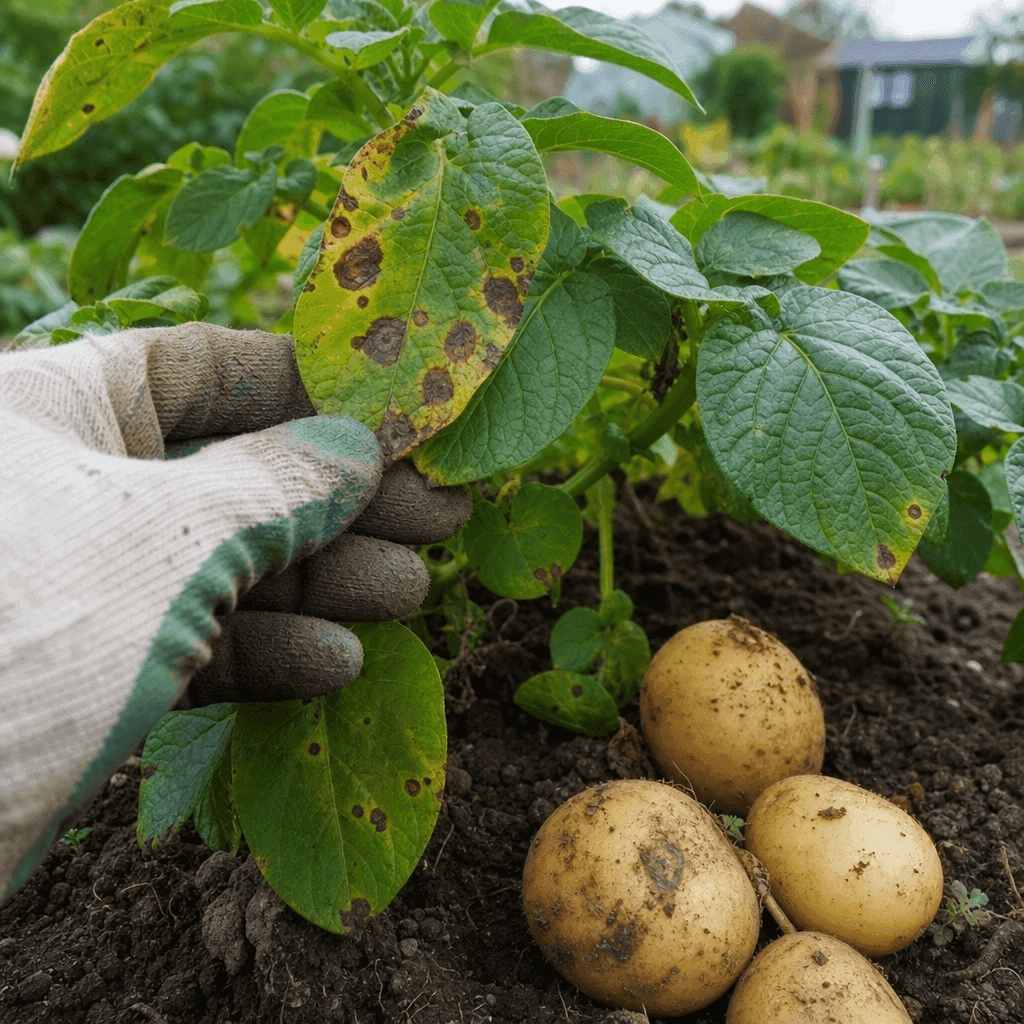
Early blight (Alternaria) produces dry, dark target-spot lesions starting on the oldest lower leaves and progresses slowly. Late blight (Phytophthora) produces rapidly spreading water-soaked dark patches from leaf edges, with white downy growth on the underside in humid conditions, spreading to new leaves within days and affecting tubers. Late blight is far more common and dangerous in the UK.
Is early blight common in the UK?
True early blight caused by Alternaria solani is not as common in British gardens as in continental climates. The AHDB notes that what is often described as early blight in the UK turns out to be magnesium deficiency, which produces similar yellowing and spotting on lower potato leaves.
What does magnesium deficiency look like on potatoes?
Magnesium deficiency causes yellowing between the leaf veins (interveinal chlorosis) on older lower leaves, sometimes with reddish-brown tints. Unlike Alternaria, there are no clear target spots with concentric rings. It is most common on sandy or acid soils and where potassium-rich feeds have been used.
How do I treat early blight on potatoes organically?
Remove affected leaves promptly and bin them. Copper-based fungicides (such as Bordeaux mixture) are approved for organic use in the UK and help suppress Alternaria when applied preventatively. Good crop rotation, improved airflow and base watering rather than overhead irrigation also help manage the disease.
Can early blight affect potato tubers?
Alternaria can infect tubers through wounds caused during harvesting, creating dark sunken lesions with slightly raised borders on the skin. This is much less common than foliar infection. Late blight (Phytophthora) causes a far more serious and rapidly spreading rot of tubers.
When should I spray for potato blight in the UK?
For late blight, AHDB's Blightwatch service monitors weather conditions and issues alerts when blight periods are forecast — typically from mid-July in most UK regions. Copper-based sprays applied preventatively during blight-risk periods are the most effective strategy for main crop varieties. For early blight, spray at first sign of target spots if conditions have been warm and wet.
What potato varieties are resistant to blight?
Several UK-available varieties have good late blight resistance including Sarpo Mira (very high resistance), Setanta, Orla and Valor. No variety is fully immune, but resistant cultivars significantly reduce the risk and can often be grown without fungicide sprays in most UK seasons. For wider help with growing healthy potatoes, pair resistant varieties with good crop rotation and balanced feeding.