Quick diagnosis
Match the row to what you’re seeing, then jump to the fix.
| What you see | Likely cause | Confidence | How to confirm | What to do now | Urgency |
|---|---|---|---|---|---|
| Yellowing between the veins (green veins, yellow spaces between) on older lower leaves; sometimes reddish tints | Magnesium deficiency | High | Yellow areas between green veins; no dark water-soaked patches; sandy or acidic soil; potassium-rich feeds used. | Apply magnesium sulphate (Epsom salts) as a foliar spray (200g per 10 litres). | Low–medium |
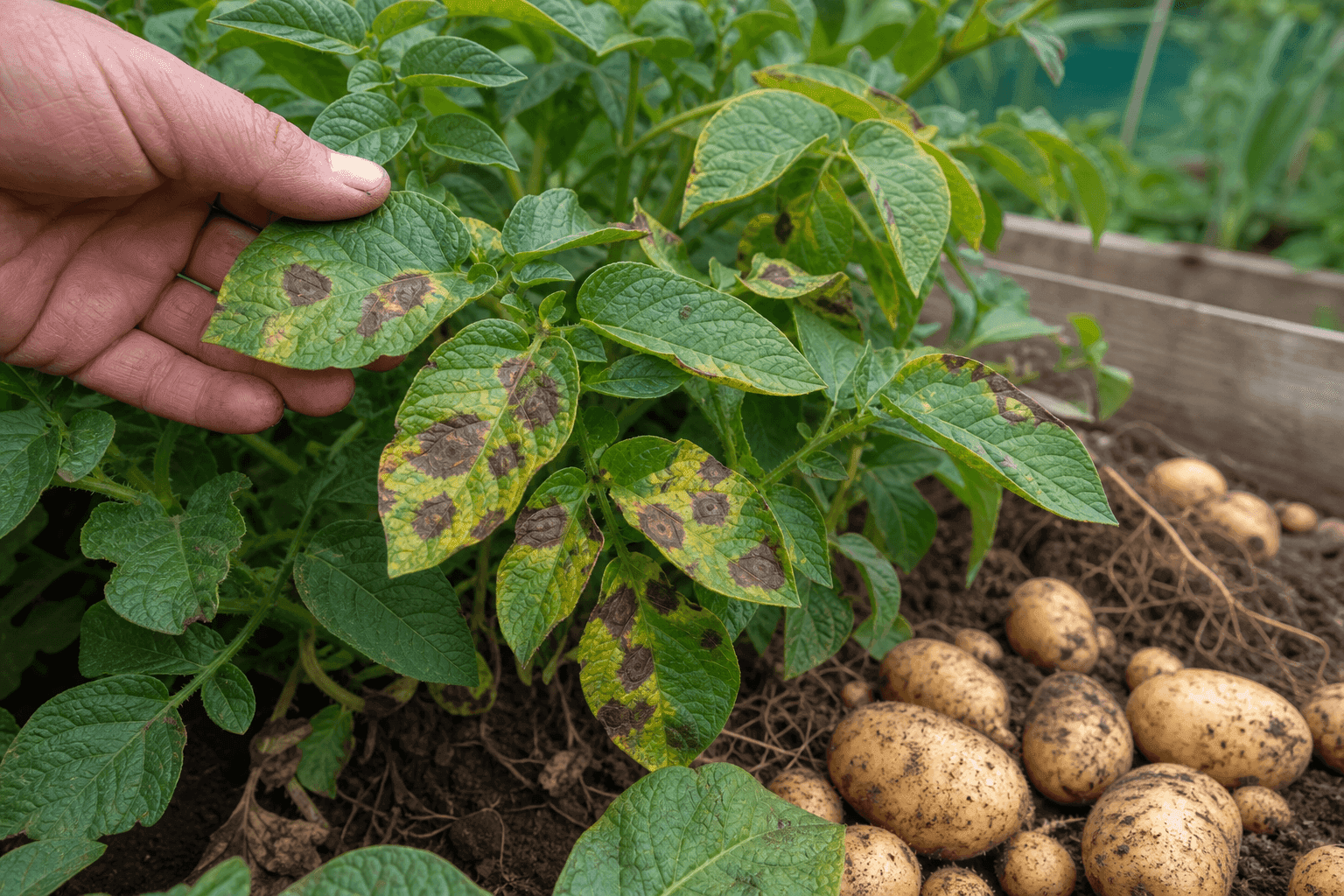
| Dark brown-black water-soaked patches spreading rapidly from leaf edges; white mould on underside in humid conditions | Late blight (Phytophthora infestans) | High | Rapid spread within days; typically July–September; warm, wet or humid weather preceded it; collapse of foliage. | Remove and bin all affected foliage immediately; earth up to protect tubers; consider copper-based fungicide. | High |
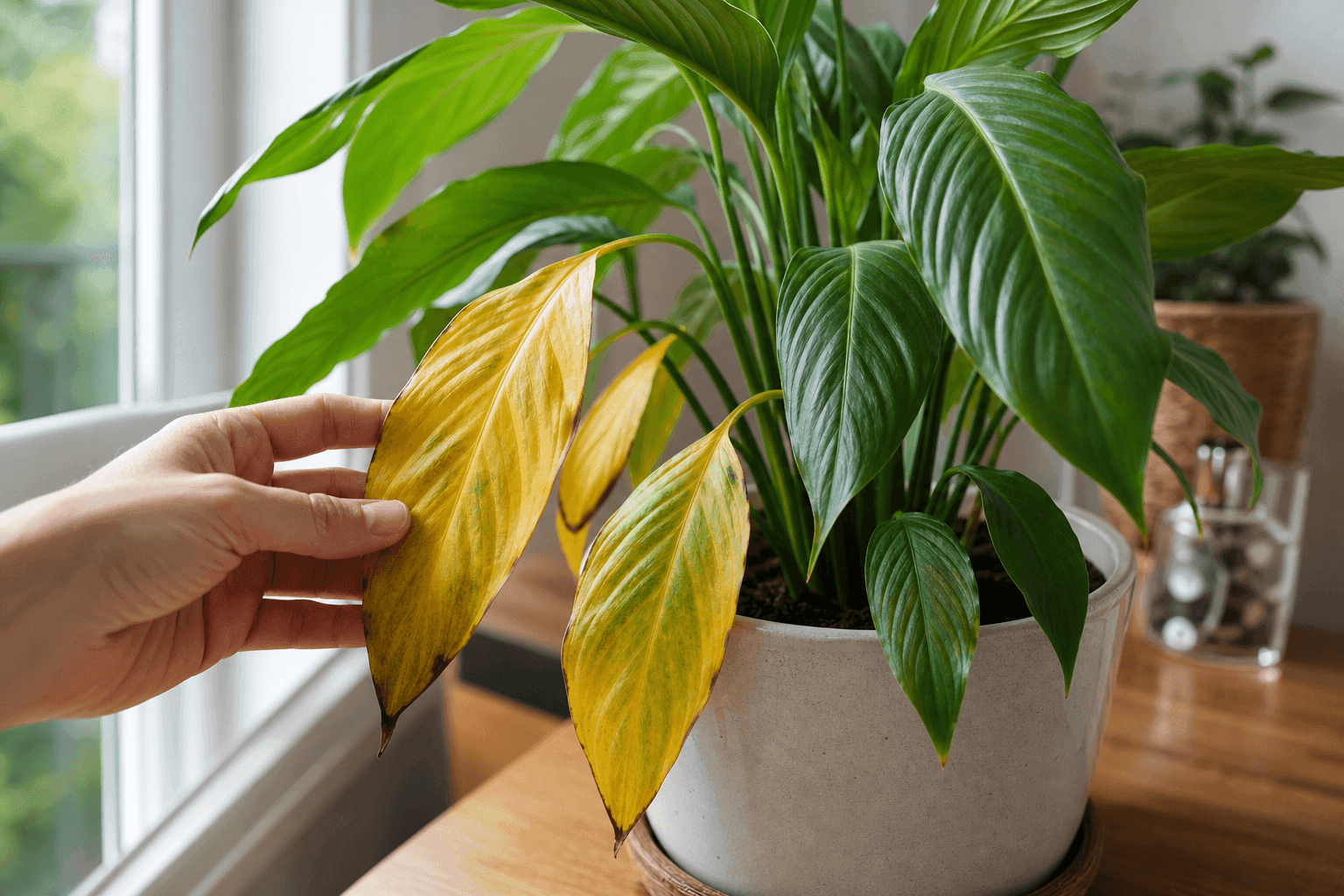
| Lower leaves yellowing from late June onwards, while upper leaves stay green and healthy | Natural senescence (normal lower leaf yellowing) | High | Only the lowest, oldest leaves are yellowing; new growth and upper canopy are healthy; no spots or spreading pattern. | Remove yellowing leaves cleanly; no treatment needed. | Low |
| Yellow, droopy or pale leaves across the plant; soil is wet, compacted or poorly draining | Waterlogging and root stress | Medium | Soil stays wet or waterlogged; plants in heavy clay or after prolonged wet spring weather; roots may be damaged. | Improve drainage; do not water until soil begins to dry; earthing up may help aerate around roots. | Medium |
| General pale yellowing of the whole plant, older leaves first; thin, weak stems | Nitrogen deficiency | Medium | Uniform paleness across the plant; no interveinal patterning; poor sandy soil; no supplementary feeding. | Apply a nitrogen-containing fertiliser (dried blood or balanced general feed) to moist soil. | Medium |
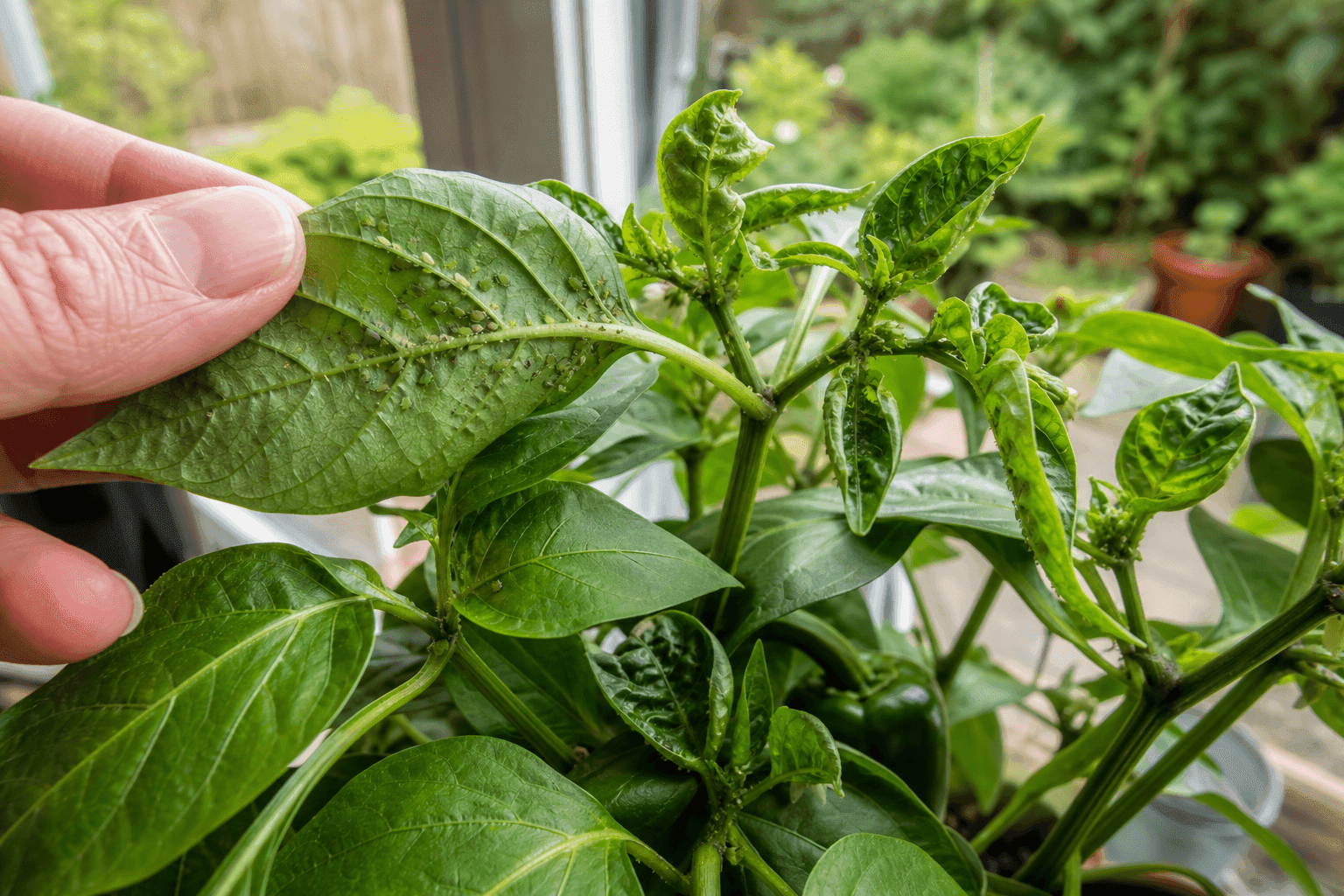
| Mosaic patterning, mottling, or irregular yellow patches; stunted or distorted growth | Virus (potato leaf roll virus or potato virus Y) | Low | Irregular yellow mottling rather than interveinal chlorosis; leaves may be distorted, crinkled or rolled; spread by aphids. | Remove and destroy infected plants; control aphids; plant certified seed potatoes next season. | Medium |
The causes, in detail
Magnesium deficiency
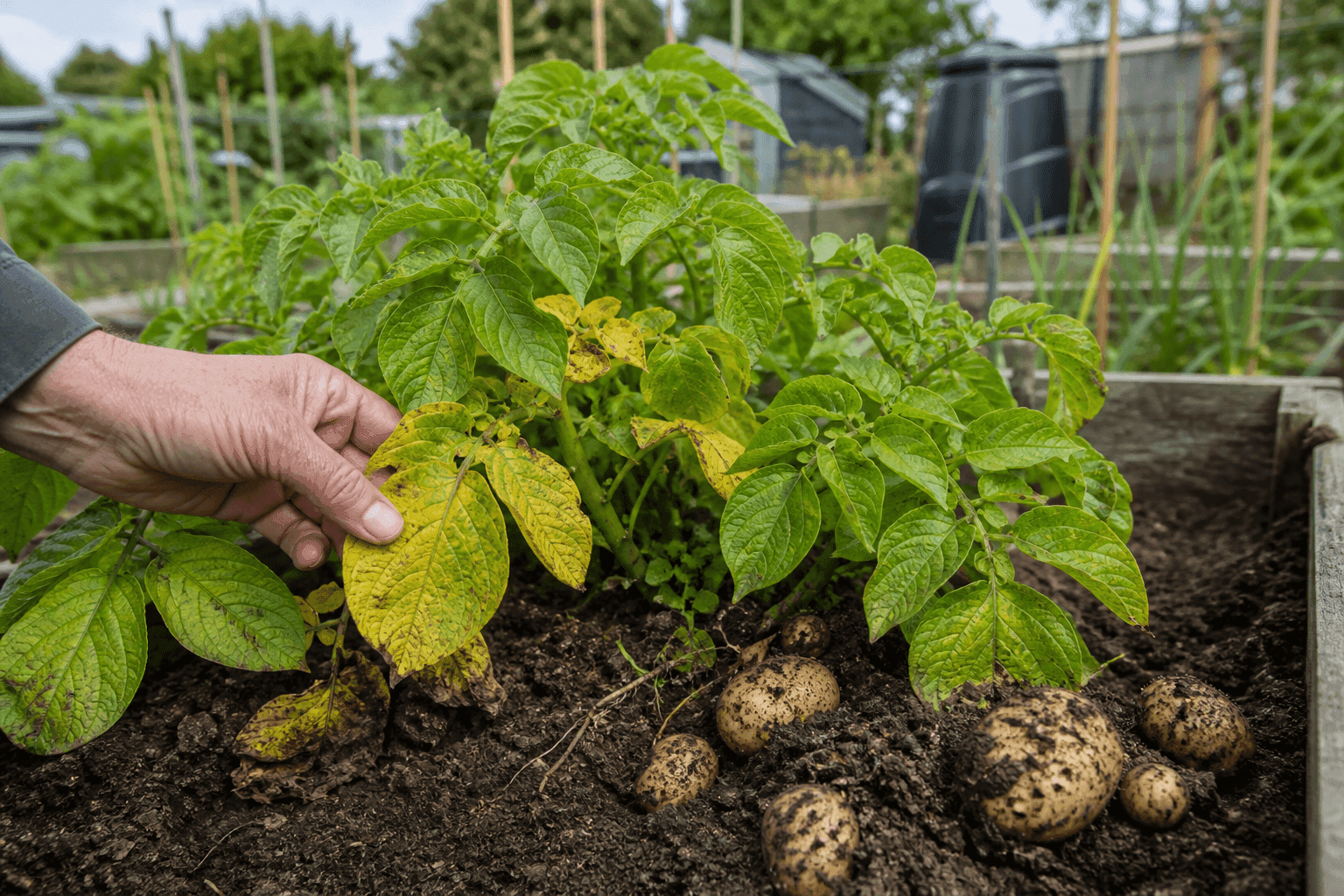
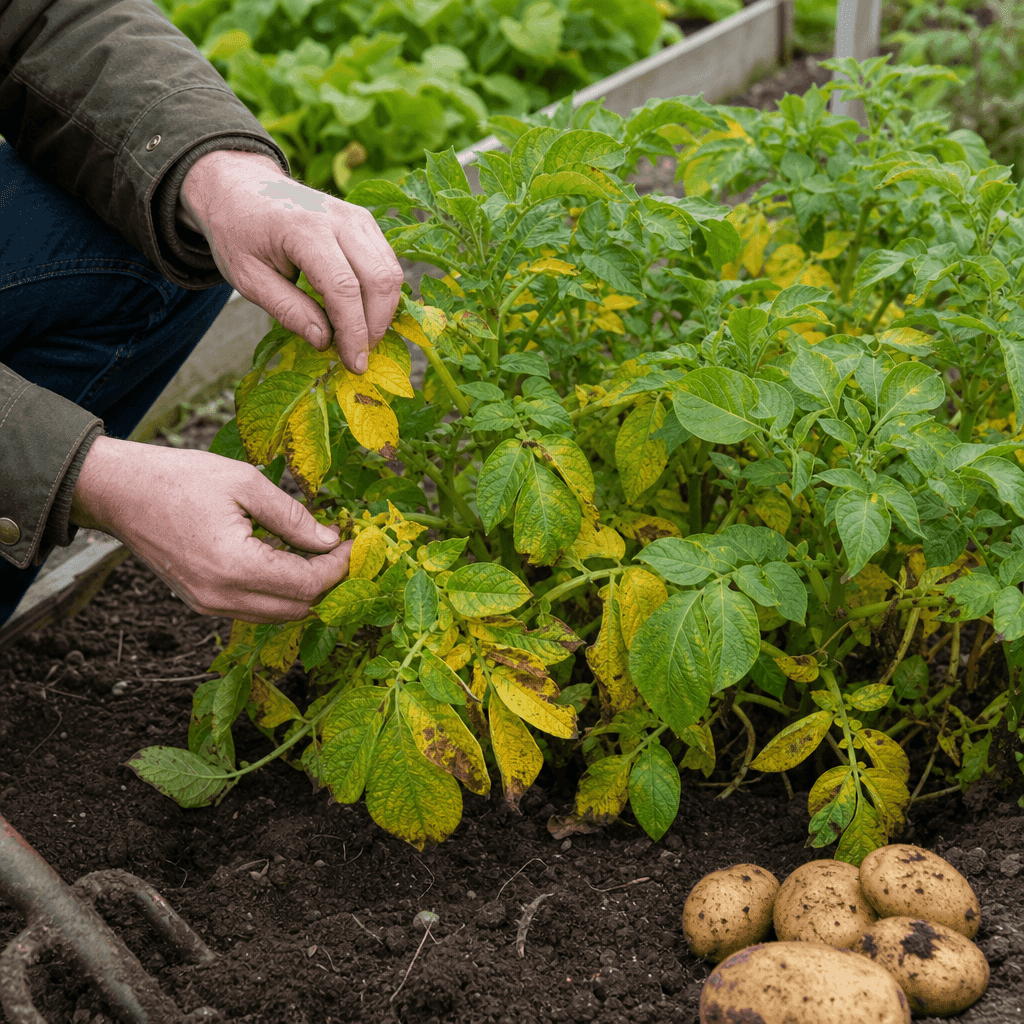
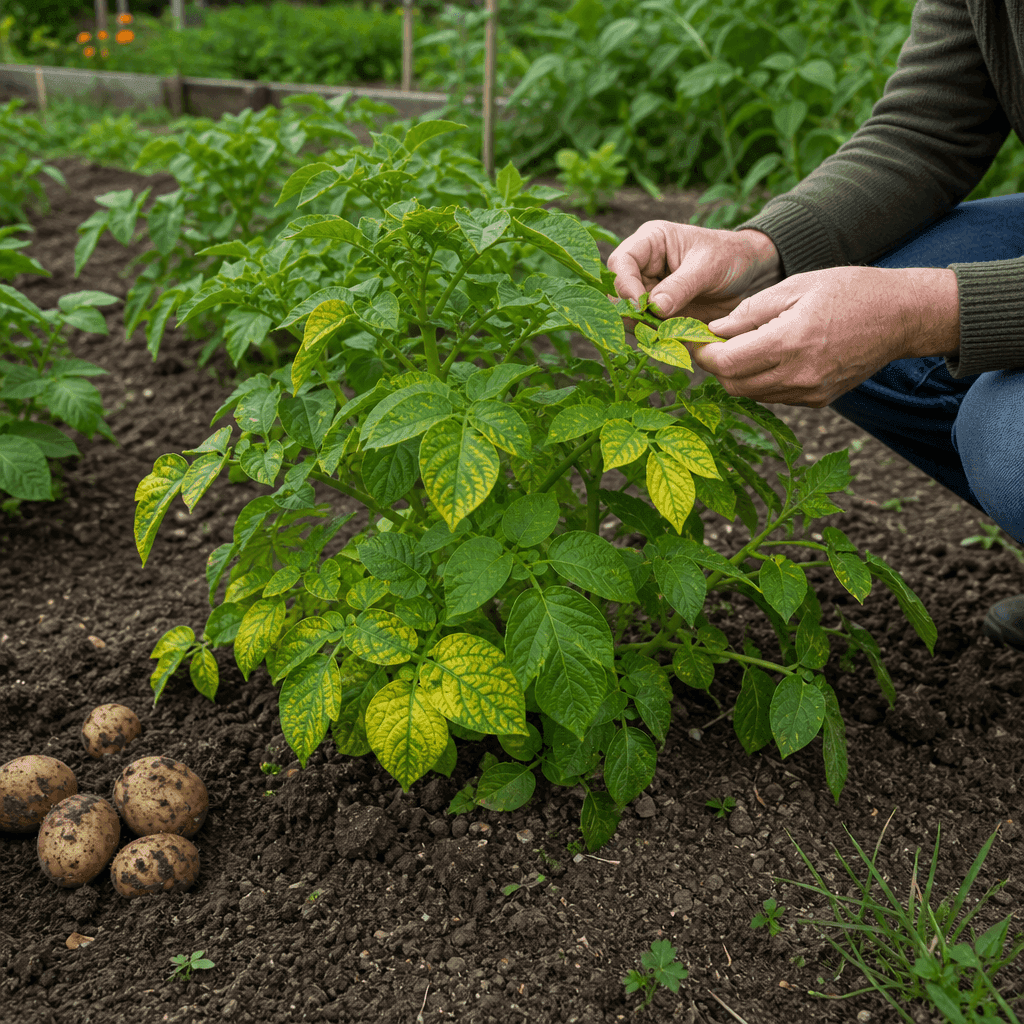
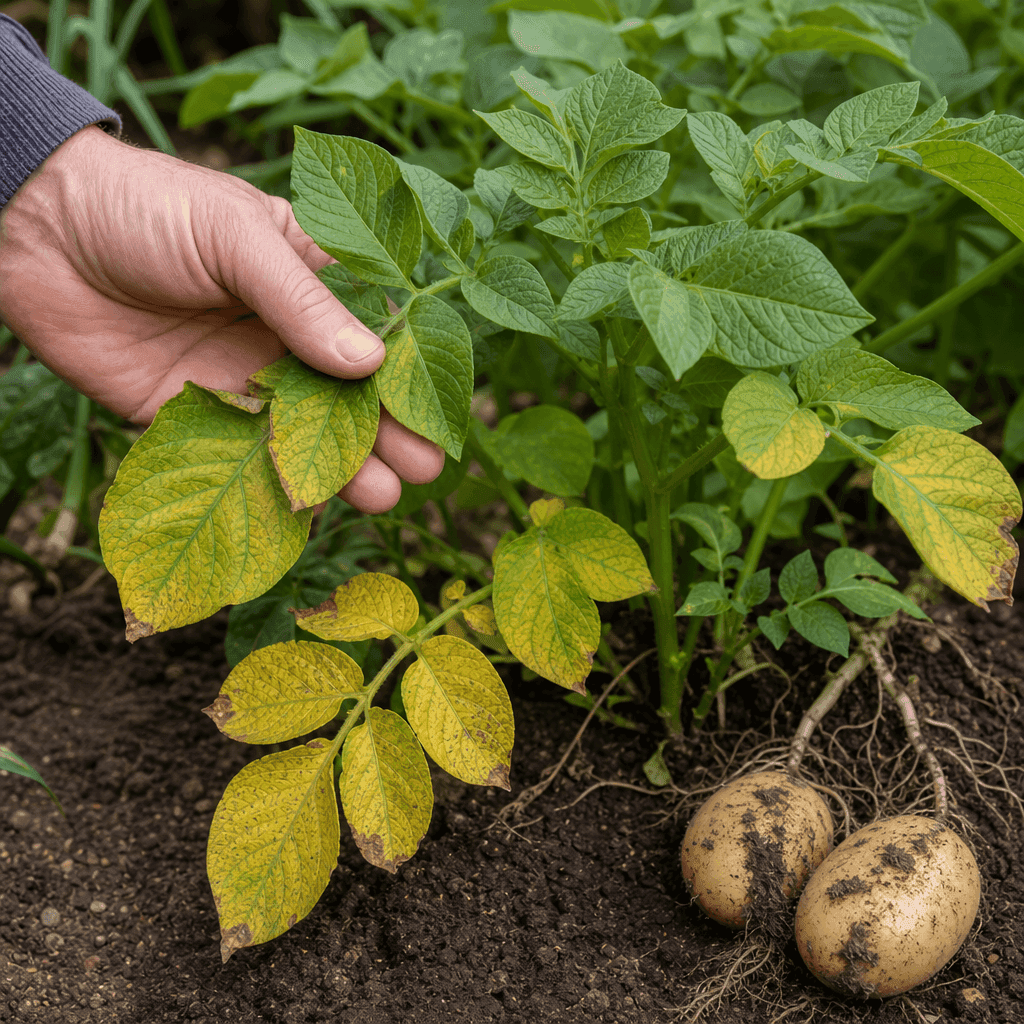
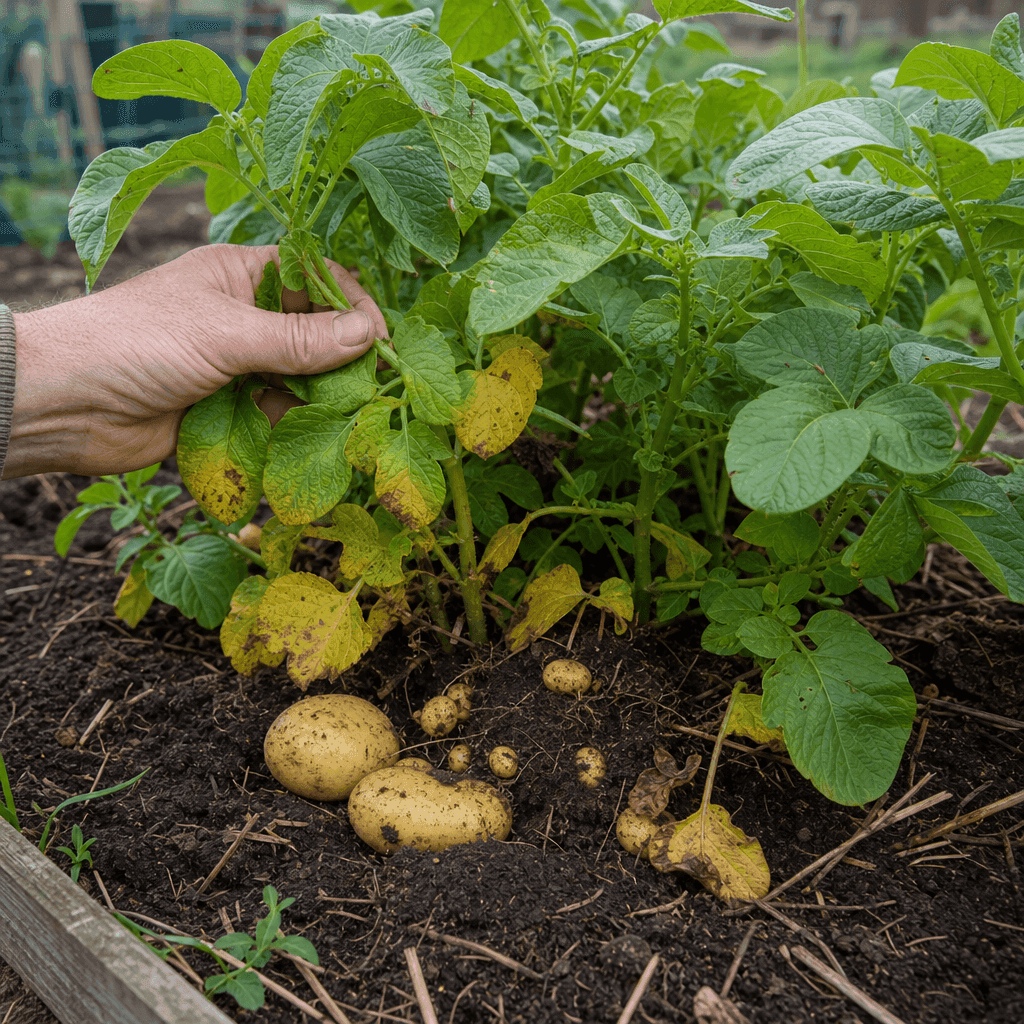
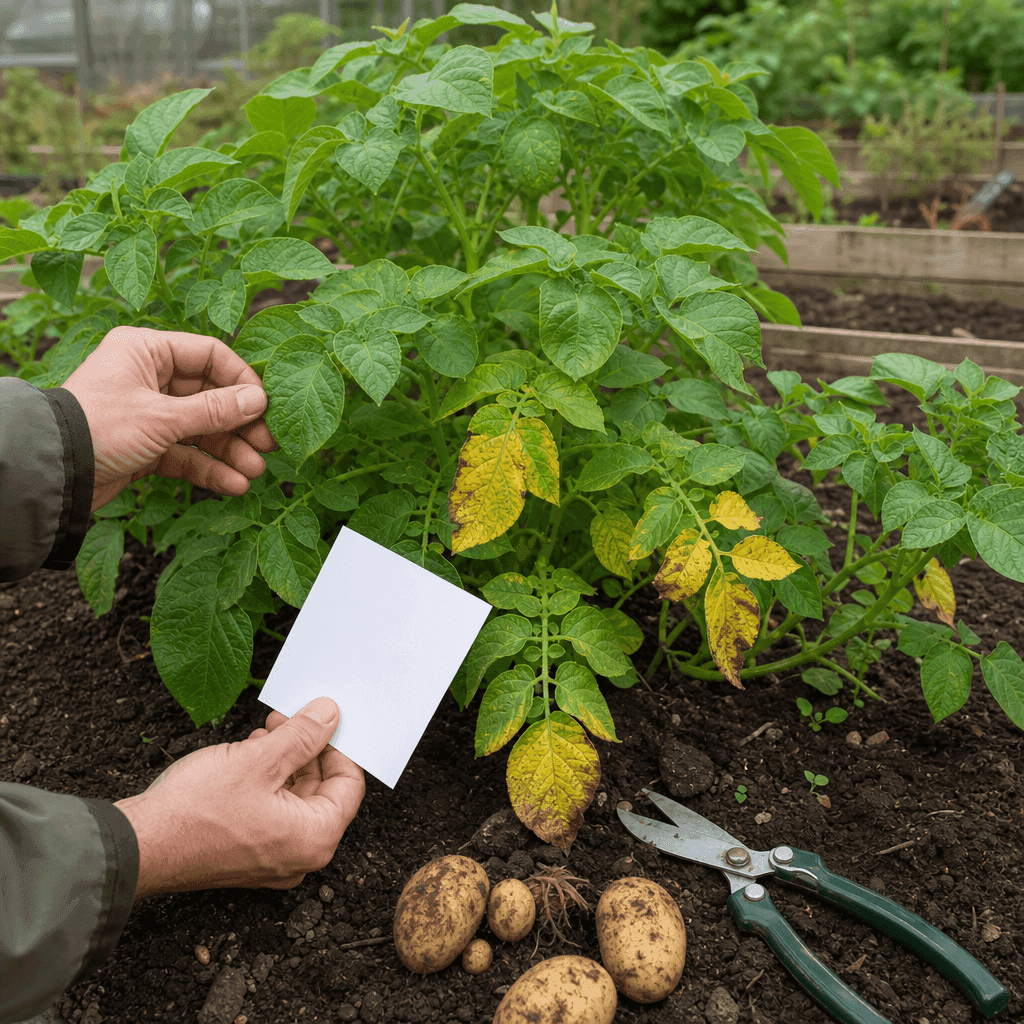
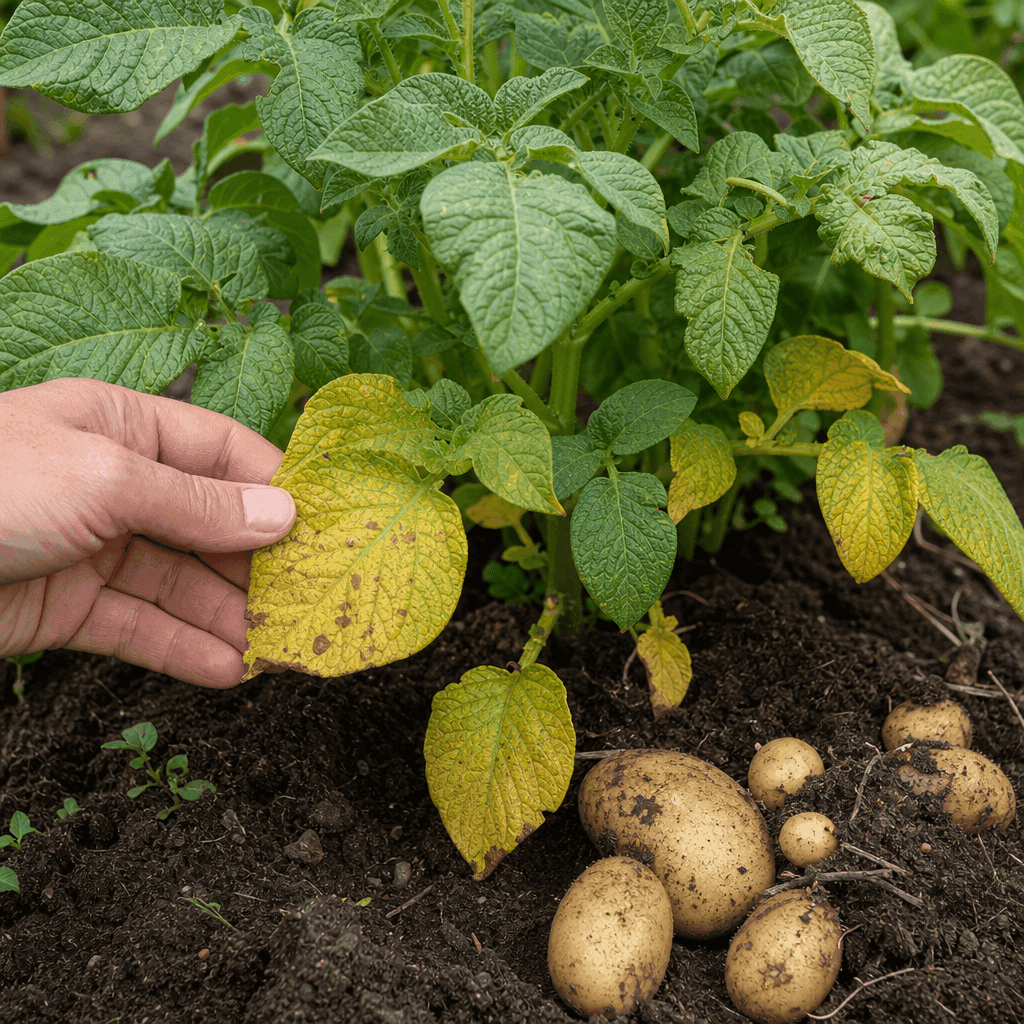
Most likelyMagnesium deficiency is the most common cause of yellow leaves on potato plants in UK gardens. The RHS specifically lists potatoes as being particularly susceptible to magnesium deficiency. Rocket Gardens, a UK vegetable growing company, notes that the symptoms are often confused with potato blight but are distinctly different: deficiency causes interveinal chlorosis (yellowing between the veins while the veins themselves remain green), sometimes with reddish or brown tints as tissue dies. Older, lower leaves are affected first. It is most common on light sandy or acid soils, and in gardens where potassium-rich fertilisers have been over-applied, as potassium and magnesium compete for uptake by roots. Magnesium deficiency is one of the most common watering and nutrient problems UK growers run into.
- Yellow areas appear between the leaf veins; the veins themselves stay green or darker.
- Older, lower leaves are most severely affected.
- No dark, water-soaked patches or rapid spread as in blight.
- Soil is light, sandy or acidic; or high-potassium fertilisers (tomato feed, sulphate of potash) have been used.
- The problem is not spreading between plants or between leaves like a disease.
- Apply magnesium sulphate (Epsom salts) as a foliar spray: dissolve 200g in 10 litres of water and apply directly to wet leaves, repeating after two to three weeks if needed.
- Alternatively, apply 30g per square metre of magnesium sulphate to the soil around plants and water in.
- Avoid using high-potassium fertilisers alongside potatoes if deficiency is recurring.
- In future, apply dolomitic limestone when liming — it provides both calcium and magnesium.
- Improve soil organic matter content to improve magnesium retention on sandy soils.
Stop it coming back:On light sandy soils, incorporate garden compost or well-rotted manure before planting to improve nutrient retention. Avoid using sulphate of potash or high-potassium general fertilisers without a corresponding supply of magnesium.
apply potassium-heavy fertiliser in an attempt to boost the potato crop if magnesium deficiency is already present — this will make the deficiency significantly worse.
Late blight (Phytophthora infestans)
Most likelyLate blight is the most devastating potato disease in UK gardens and responsible for the historical Irish Famine. The RHS describes it as caused by Phytophthora infestans, technically a water mould rather than a fungus. The initial symptoms in UK conditions typically appear from mid-July onwards during warm (15–25°C), wet or humid spells. Leaves develop dark brown-black, water-soaked patches starting at the tips and edges and spreading rapidly — a whole plant can collapse within a week in severe outbreaks. In humid conditions, a white downy mould develops on the underside of affected leaves. Blight spreads to tubers, causing reddish-brown rot just below the skin that eventually destroys the crop. The same water mould attacks tomatoes too — see our guide to tomato blight for how the disease behaves on related solanaceous crops.
- Dark brown-black, water-soaked patches on leaf edges or tips that spread rapidly — within days, not weeks.
- White or grey downy mould on the underside of the affected leaf areas in humid or foggy conditions.
- The whole plant canopy is collapsing or browning quickly.
- The outbreak is occurring from mid-July to September in warm, wet or overcast conditions.
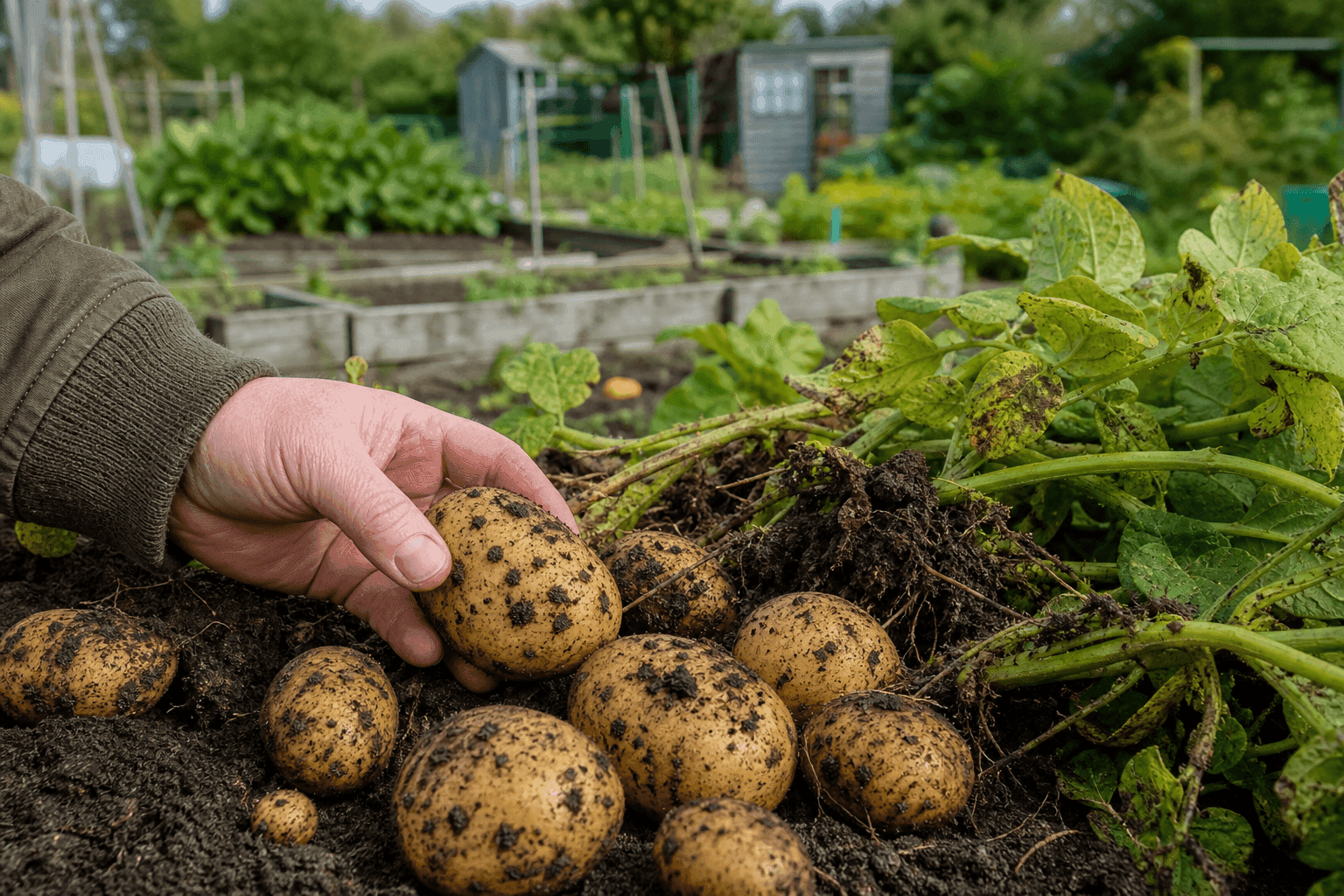
- Dark, reddish-brown rot appears just under the skin of harvested tubers.
- Act immediately — remove and bin all affected foliage (do not compost).
- Earth up remaining healthy stems to provide a protective soil layer over developing tubers.
- If caught very early, apply a copper-based fungicide (Bordeaux mixture or similar, approved for UK home garden use) as a preventive spray during blight-risk periods.
- Once the haulm has collapsed from blight, wait two to three weeks before harvesting tubers — the soil barrier protects them from spores resting on the surface.
- Harvest promptly and check tubers carefully — discard any showing internal brown rot.
Stop it coming back:Grow blight-resistant varieties such as Sarpo Mira, Setanta or Orla. Monitor the AHDB Blightwatch service for blight risk periods based on local weather. Preventive copper sprays applied before blight periods are more effective than sprays applied after infection.
leave water-soaked, rapidly spreading dark patches untreated in the hope they will clear — late blight accelerates fast and prompt action is the only way to save the crop.
Natural senescence — normal lower leaf yellowing
Most likelyIn June and July as the potato crop matures and tubers bulk up, the lower leaves of the plant naturally yellow and die back as the plant relocates resources from old tissue to the developing tubers. This is completely normal and is not a sign of disease or nutrient deficiency. Grower Experts confirms that this lower-leaf yellowing in maturing potato plants is a normal part of the growth cycle. The distinguishing features are: only the lowest and oldest leaves are affected; the upper canopy remains healthy; there are no spots, no rapid spread, and no water-soaked lesions.
- Yellowing is confined to the lowest, oldest leaves on the plant.
- Upper leaves, growing tips and new growth are all healthy and green.
- No spots, no water-soaking, no dark lesions — just plain uniform yellowing.
- The plant is in late June or later and tubers are beginning to form.
- Multiple leaves at the same node level are yellowing simultaneously.
- Remove yellowed leaves cleanly and either compost or bin them.
- Do not change your watering or feeding regime on the basis of this yellowing alone.
- Monitor to make sure the yellowing is confined to lower leaves and is not progressing into the upper canopy.
- If the whole plant is yellowing uniformly or rapidly, investigate other causes.
spray for disease or feed heavily on the assumption that lower leaf yellowing in July is a problem — check carefully that it is not simply the plant maturing before treating.
Waterlogging and root stress
PossiblePotatoes are sensitive to waterlogged conditions. In UK springs, heavy clay soils, compacted ground or low-lying areas can hold water for weeks after rain, depriving roots of oxygen. The resulting root stress causes the leaves to yellow and droop across the whole plant — not just the lower leaves — and the plant may be more susceptible to disease. Rocket Gardens notes that overwatered plants develop root rot and become more vulnerable to diseases such as wilt and blight. Waterlogging is more likely in beds that have not been improved with organic matter or on sites where drainage is poor.
- The soil in the planting area stays wet or waterlogged after rain.
- Yellowing and drooping affect the whole plant, not just the lower leaves.
- The soil feels cold, wet or compacted even several days after rain.
- Plants in the same bed are all affected similarly — suggesting a site problem rather than individual plant disease.
- Do not water until the soil begins to dry — potatoes need moisture but not saturated conditions.
- On heavy clay soils, create raised beds for future potato crops to improve drainage.
- Incorporate organic matter (compost, well-rotted manure) into the planting area in autumn to improve soil structure.
- Earth up carefully around affected plants to improve aeration around the stem base.
- If the season is very wet, consider lifting the crop earlier than planned to avoid further deterioration.
earth up in very waterlogged conditions without improving drainage — earthing up can trap more water around the stem if the soil is already saturated.
Nitrogen deficiency
PossiblePotatoes are hungry crops and quickly show nitrogen deficiency on poor or exhausted soils. Unlike magnesium deficiency, nitrogen deficiency causes a uniform, overall pallor and yellowing of the whole plant — not the interveinal pattern typical of magnesium deficiency. The oldest leaves are most yellow, and the whole plant may look thin and stunted. This is most common on light sandy soils or in growing bags that were used in a previous season.
- The whole plant looks uniformly pale or yellow-green, not just the lower leaves.
- Stems are thin and growth is weak.
- No interveinal patterning — just general pallor.
- The soil is sandy or poor, with no added feed.
- Apply a nitrogen-containing fertiliser such as dried blood (approximately 8% N) at 50–70g per square metre.
- Alternatively, apply a balanced granular general fertiliser such as Growmore at the recommended rate.
- Liquid feeds act faster — apply a soluble balanced fertiliser to moist soil.
- Improve soil organic matter levels in future seasons to build nitrogen-holding capacity.
apply high-nitrogen fertiliser once tubers have started to swell — excess nitrogen at this stage encourages leafy growth at the expense of tuber development.
Virus (potato leaf roll virus, potato virus Y)
Less likelyPotato virus diseases, primarily potato leaf roll virus (PLRV) and potato virus Y (PVY), cause various patterns of yellowing, mottling and distortion. PLRV causes the lower leaves to roll upward (with a stiff, almost crinkly texture), followed by general yellowing, starting at the base of the plant. PVY causes mosaic mottling, yellow streaks along veins or necrotic spots. Both viruses are spread by aphids and are much more common in areas with high aphid pressure. Using certified seed potatoes — health-tested and grown in isolation — is the most effective preventive measure.
- Irregular yellow mottling or mosaic patterning across leaf surfaces (not uniform or interveinal).
- Leaves may be crinkled, distorted or rolling upward.
- Aphid populations have been present on or near the crop.
- Non-certified seed potatoes or saved tubers from a previous season were planted.
- Remove and destroy infected plants completely — do not compost.
- Control aphid populations on nearby crops to reduce spread.
- Do not save tubers from virus-infected plants for next year's seed.
- Always purchase certified seed potatoes from a reputable UK supplier — these are grown under strict aphid exclusion conditions.
Stop it coming back:Use certified seed potatoes every season. Control aphid infestations promptly in spring. Maincrop varieties are more susceptible to virus accumulation over the season than earlies.
save seed potatoes from plants showing any suspicious symptoms — virus is transmitted through the tuber and will infect the entire crop next year.
Still not sure?
Work down these branches — the first one that matches is your answer.
What not to do
- Assume lower leaf yellowing in July is disease — check the upper canopy first; natural senescence is very common.
- Treat for late blight without confirming the spreading, water-soaked lesion pattern — the two conditions need very different responses.
- Apply potassium-heavy fertiliser to potatoes already showing magnesium deficiency — potassium competes with magnesium and makes deficiency worse.
- Save seed tubers from plants showing mosaic mottling, rolling leaves or other virus symptoms.
- Ignore rapidly spreading dark lesions in warm, wet summer weather — late blight requires immediate action.
Common questions
Why are my potato leaves turning yellow?
The most common causes in UK gardens are magnesium deficiency (interveinal yellowing on older leaves), natural senescence (lower leaves yellowing as the plant matures in summer), late blight (rapidly spreading dark patches from July onwards), and waterlogging. Check the pattern: if only lower leaves are yellow and upper growth is healthy in mid-summer, it is likely normal. If yellowing is spreading rapidly with dark patches, treat for blight immediately.
What does magnesium deficiency look like on potato plants?
Interveinal chlorosis — the areas between the leaf veins turn yellow while the veins themselves stay green. Older, lower leaves are worst affected first. Unlike blight, there are no dark water-soaked patches and the spread is slow. Treat with a foliar spray of Epsom salts (magnesium sulphate) dissolved in water.
Is it normal for potato leaves to turn yellow?
Some lower leaf yellowing is completely normal in June and July as the plant matures and energy moves to developing tubers. It becomes a problem when yellowing affects the whole plant, progresses rapidly up through the canopy, shows unusual spot or mosaic patterns, or occurs in wet conditions alongside dark or water-soaked patches.
How do I tell potato blight from magnesium deficiency?
Late blight produces dark brown-black, water-soaked patches at leaf edges that spread rapidly within days, with white mould under leaves in humid conditions. Magnesium deficiency produces interveinal yellowing on older leaves that progresses slowly, with no dark patches, no rapid spread and no collapse. Rocket Gardens has an excellent comparison guide on this distinction.
Can I eat potatoes from plants with yellow leaves?
Potatoes from plants with magnesium deficiency or normal senescence yellowing are perfectly safe to eat. Potatoes from plants affected by late blight should be checked carefully for internal reddish-brown rot before use — affected tissue should be cut away. Potatoes from virus-affected plants are generally safe to eat but should not be saved as seed.
How do I prevent potato blight in the UK?
Grow blight-resistant varieties such as Sarpo Mira or Setanta. Monitor the AHDB Blightwatch service for risk periods and apply preventive copper-based fungicide sprays before blight is established. Earth up regularly to protect tubers. Remove and bin any volunteer potato plants or solanaceous weeds that could harbour blight spores. Note that early blight on potatoes is a separate disease with a different leaf pattern, so confirm which one you are dealing with. Our full potato problem guides cover the other issues that can affect the crop.
When should I worry about yellow potato leaves?
Worry if: yellowing is spreading rapidly through the plant; you see dark water-soaked patches (blight); the whole plant is turning yellow uniformly rather than just lower leaves; there are spots with or without halos; or yellowing is accompanied by stunted or distorted growth. Also be alert from mid-July onwards in wet summers — this is peak blight risk period in the UK.