Quick diagnosis
Match the row to what you’re seeing, then jump to the fix.
| What you see | Likely cause | Confidence | How to confirm | What to do now | Urgency |
|---|---|---|---|---|---|
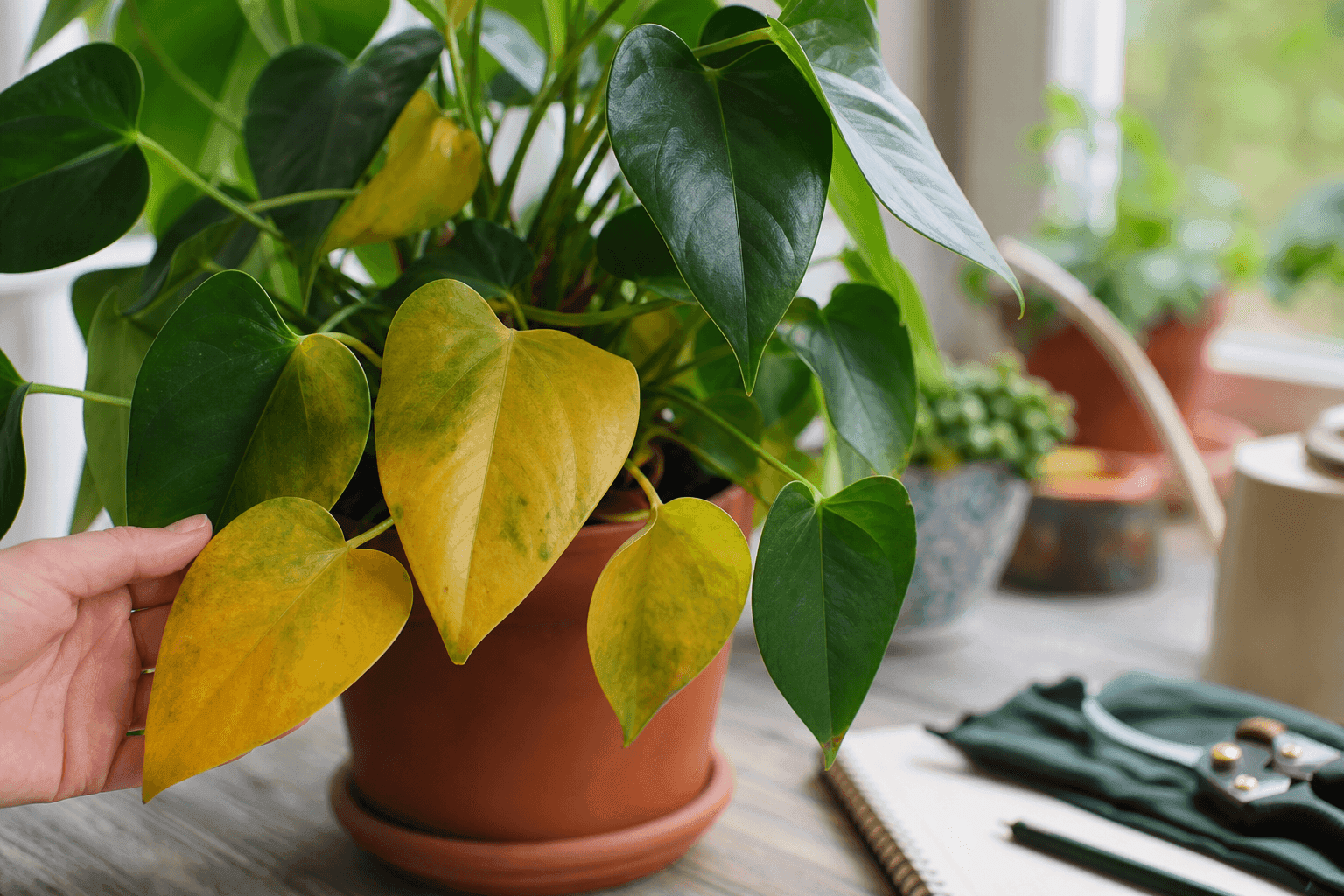
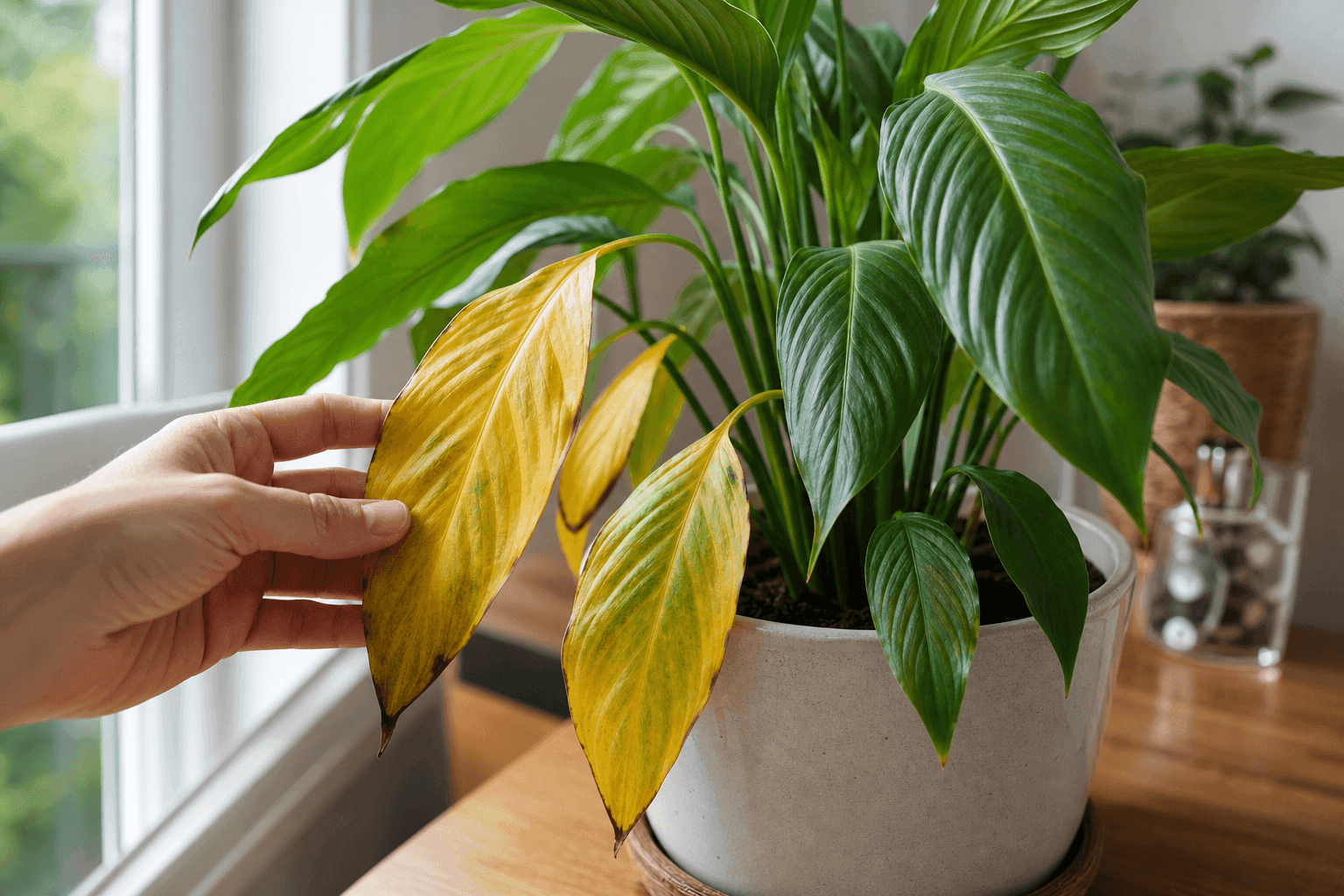
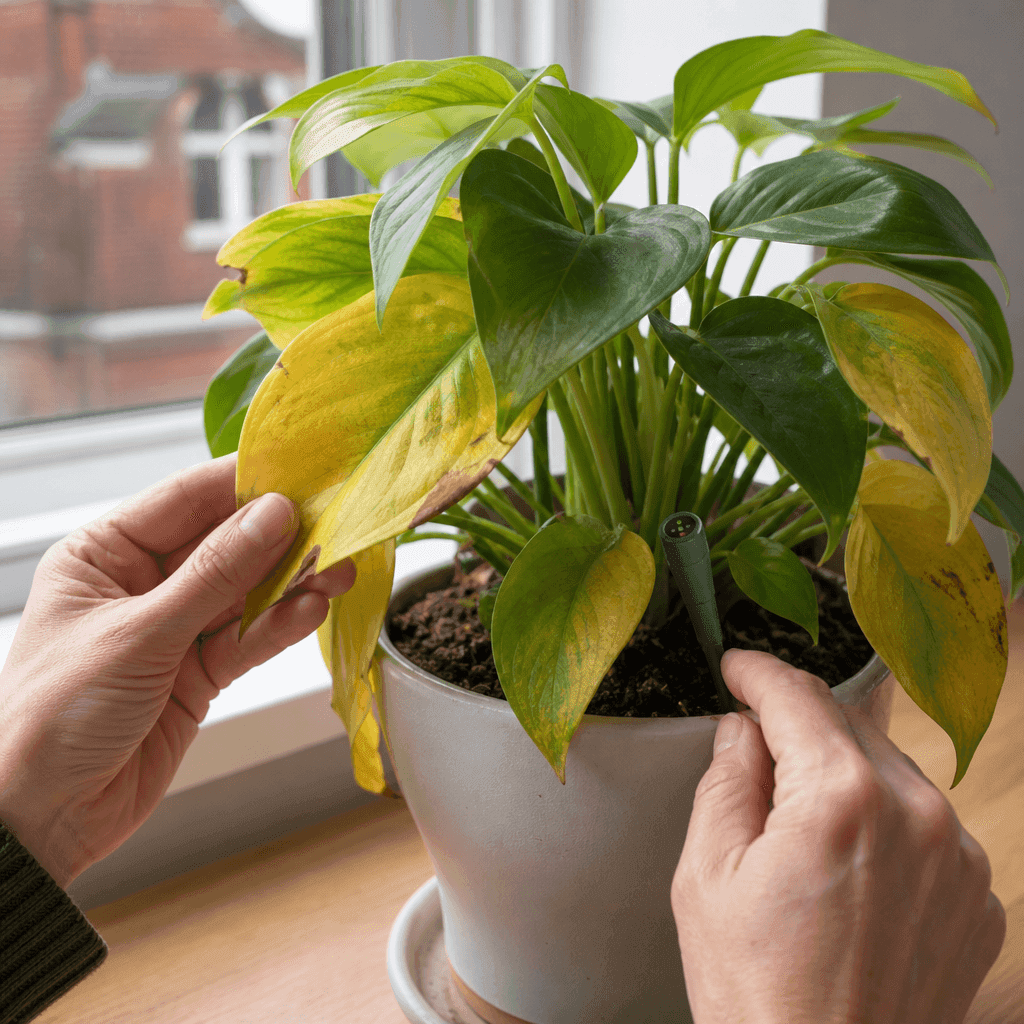
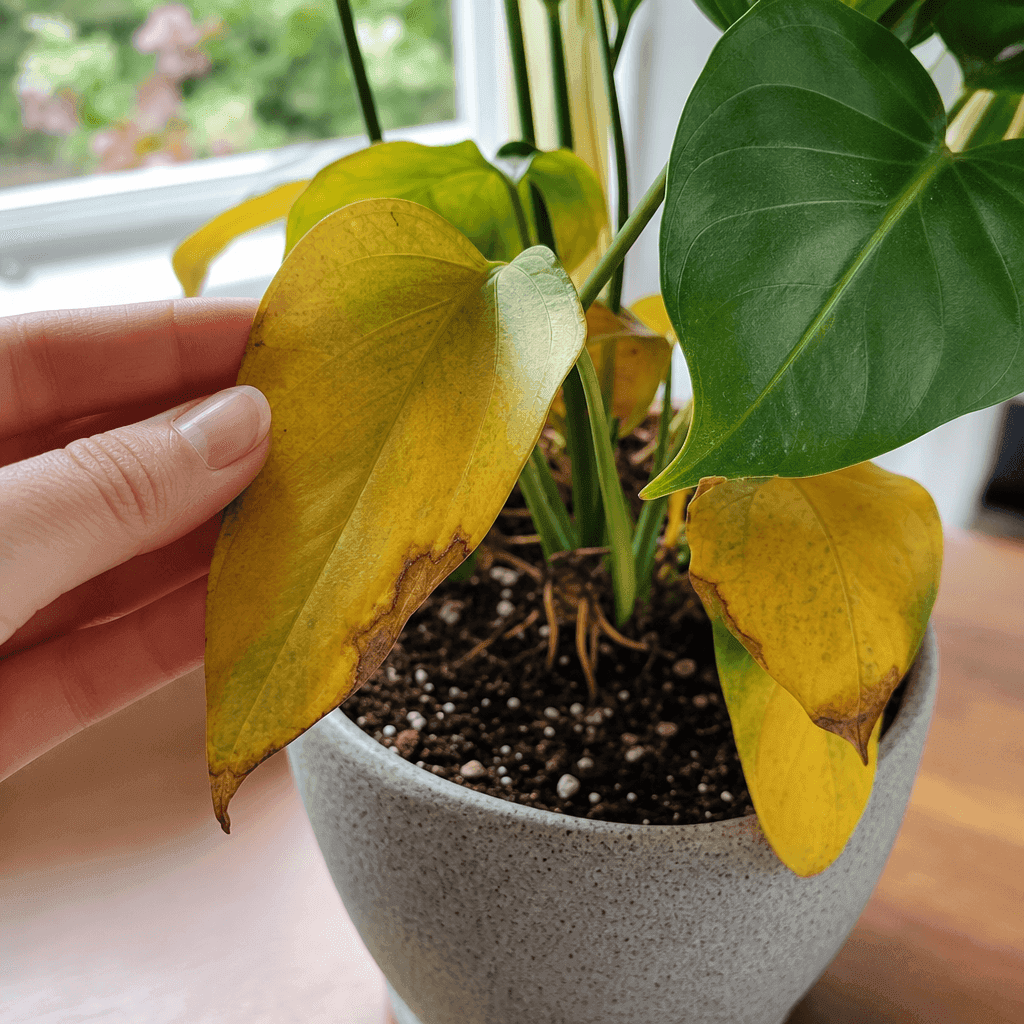
| Lower or older leaves yellow first; compost or soil feels wet; leaves may be limp | Overwatering, waterlogging, or poor drainage | High | Push a finger 5cm into compost or soil; check saucers, decorative pots, blocked drainage holes, compacted clay, or standing water. | Stop watering until the top layer dries, drain saucers, clear holes, lift pots onto feet, improve drainage before feeding. | High |
| Leaves yellow, wilt, crisp at edges, or drop; pot feels light; soil is dry below the surface | Underwatering or drought stress | High | Soil is dry 5cm down; water runs down pot sides without soaking in; new plants flag in warm weather. | Re-wet thoroughly, water at the base, soak very dry pots, then let excess drain; mulch outdoor plants after watering. | High |
| Whole plant is pale yellow-green, stretched, or losing older leaves indoors | Too little light | High | Plant is far from a window, in a dark corner, or shaded by curtains or other plants. | Move gradually to brighter indirect light; rotate the pot; prune only dead leaves. | Low–medium |
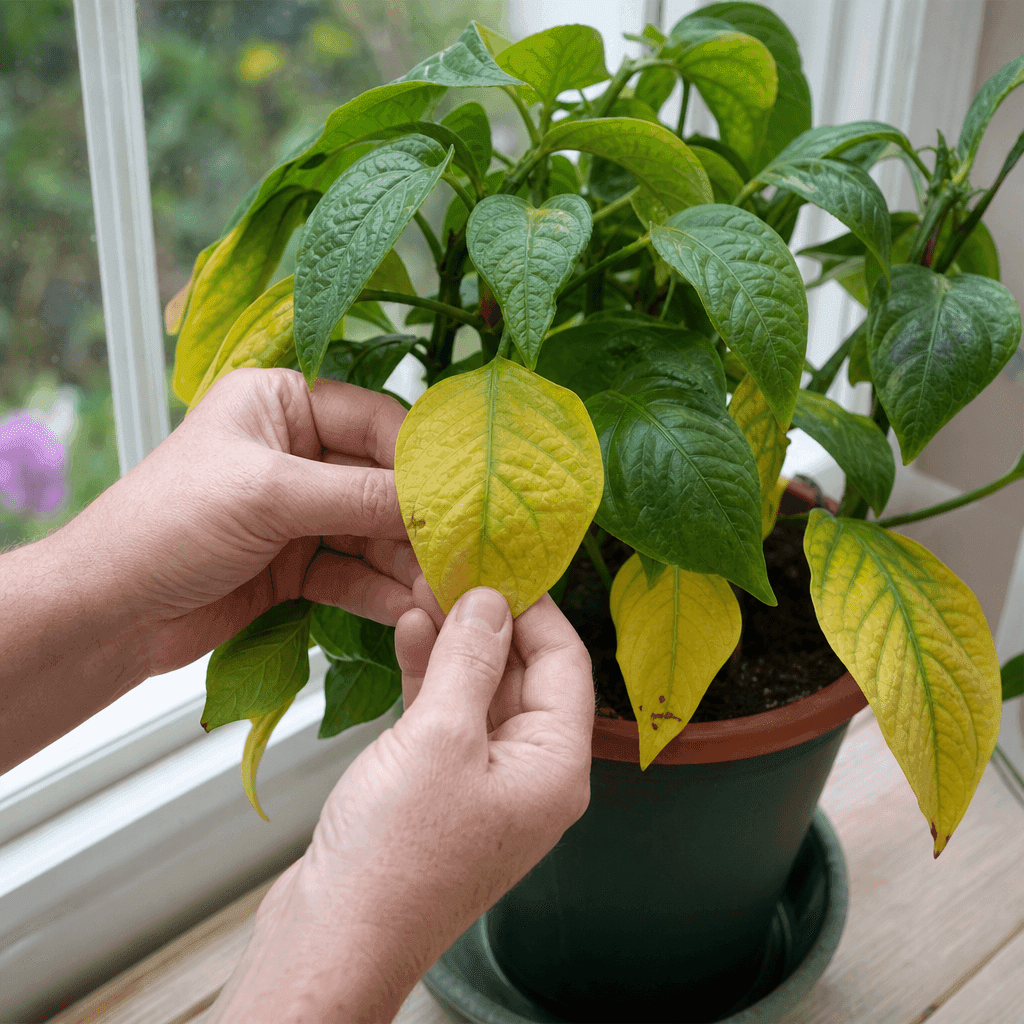
| Youngest leaves yellow between green veins, often on rhododendron, camellia, pieris, citrus, or plants in chalky soil | Iron or manganese unavailable, often linked to alkaline compost or soil | High | New leaves are affected first; veins stay greener; soil may be chalky or alkaline. | Test pH; use ericaceous compost for pots; improve conditions; use a suitable chelated trace element if needed. | Low |
| Older leaves turn generally pale yellow first; growth is weak | Nitrogen shortage or low fertility | Medium | No pests or spots; old leaves affected first; plant has been in same compost for months or soil is poor. | Feed at label rate during active growth; mulch borders with garden compost; do not feed dormant or waterlogged plants. | Low |
| Older leaves yellow between veins; veins remain green; brown dead patches may follow | Magnesium deficiency or nutrient imbalance | Medium | Pattern starts on older leaves, not the newest tips. | Use a balanced feed; avoid repeated high-potash feeding; only use magnesium treatment if the pattern fits. | Low |
| Leaf edges yellow then brown, especially older leaves | Potassium shortage, drought, salt build-up, or root stress | Medium | Check whether soil is dry, roots are crowded, or feed has been overused; edge scorching follows yellowing. | Correct watering first; flush pots if overfed; feed only if plant is actively growing and roots are healthy. | Medium |
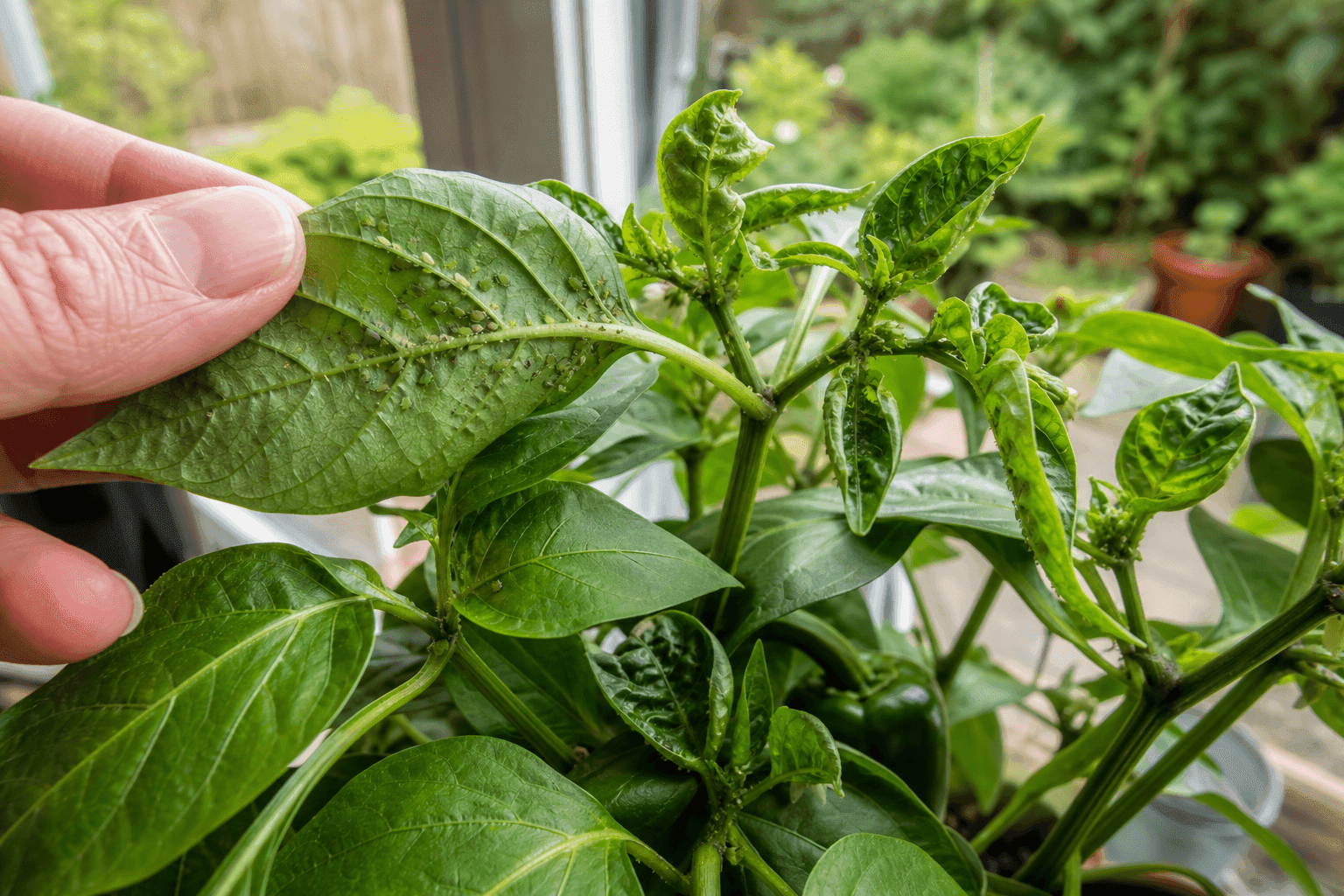
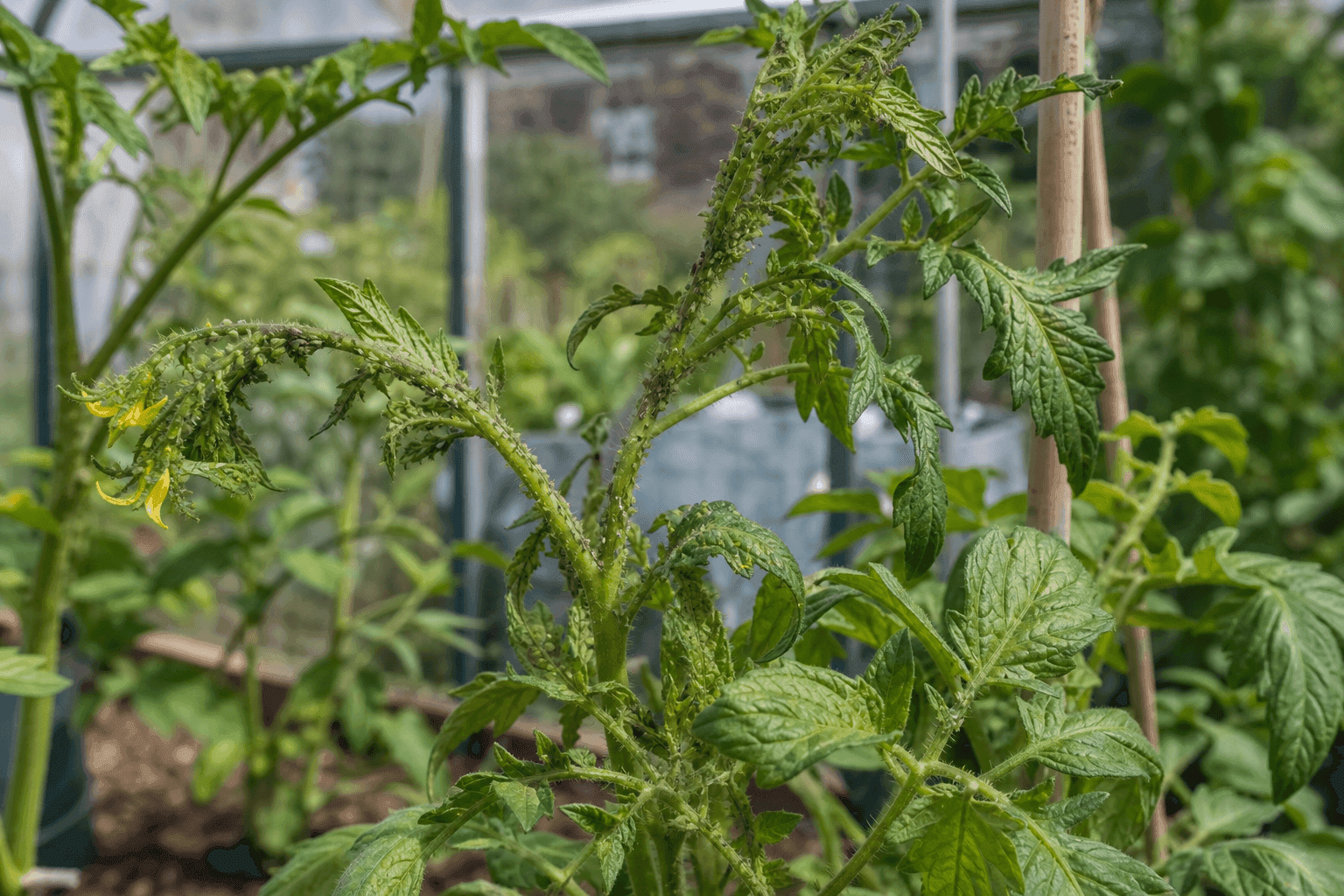
| Yellow leaves with webbing, sticky honeydew, sooty mould, stippling, scale bumps, or visible insects | Sap-sucking pests such as aphids, whitefly, scale, mealybug, red spider mite | High | Check undersides, shoot tips, leaf joints, and sticky windowsills; use a hand lens for mites. | Isolate houseplants, wipe or wash leaves, remove small colonies, encourage predators outdoors; use controls only according to UK label guidance. | Medium |
| Yellow spots, mottles, rings, streaks, distorted leaves, or mosaic patterns | Virus, disease, or physiological disorder | Medium | Pattern is patchy or patterned, not simply old leaves; plant may be stunted or distorted. | Isolate suspect plants; remove badly affected annual crops; clean tools; do not propagate from affected plants. | High |
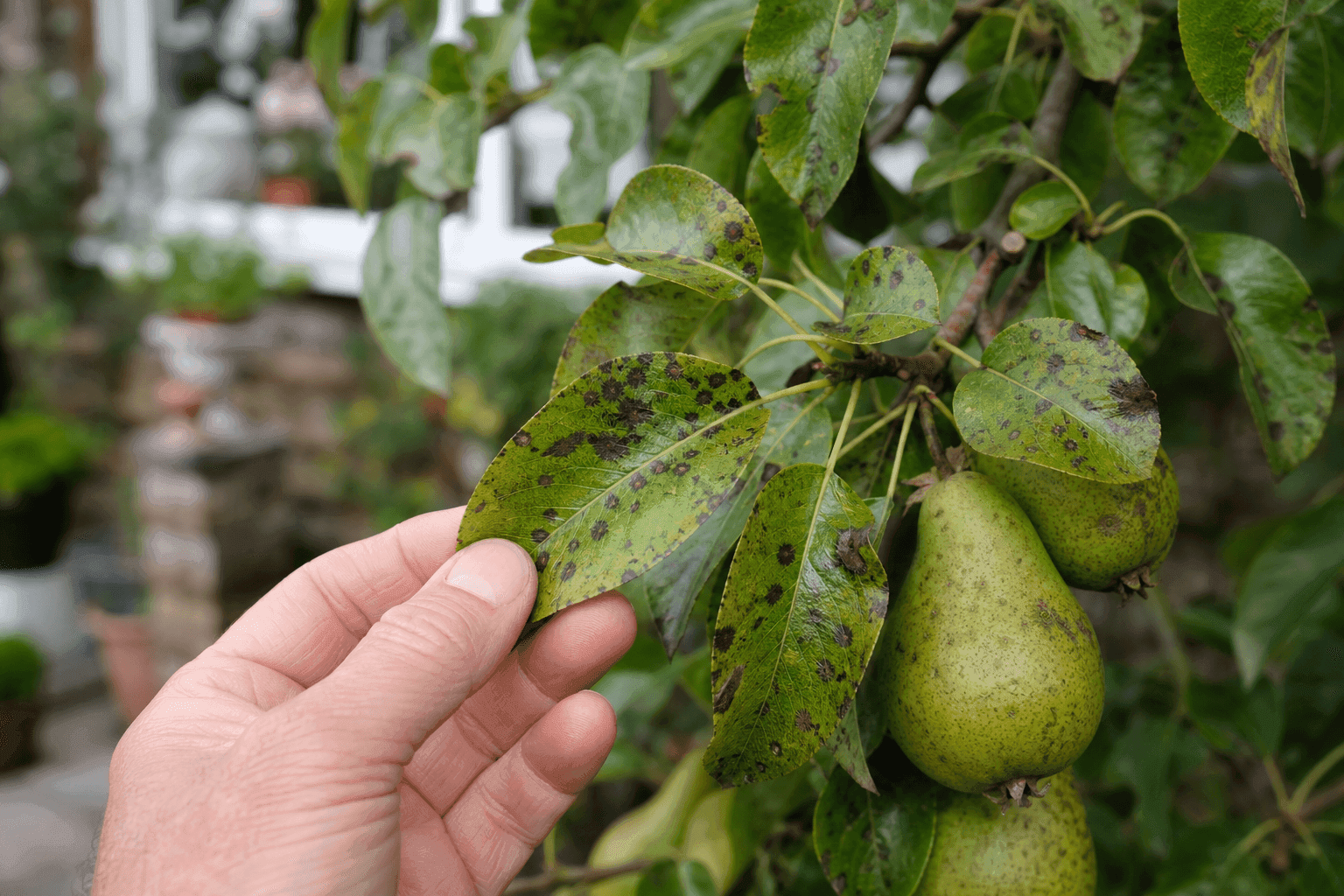
| Yellowing with black, brown, or pale lesions, mould, powder, or early leaf fall | Leaf spot, mildew, blight, rust, or other fungal/bacterial disease | High | Spots, pustules, powder, or mould are visible; symptoms may spread in wet weather. | Remove affected leaves where practical, improve airflow, water at the base, bin diseased material if severe. | High |
| Plant is yellowing and wilting even though soil is moist; roots brown, mushy, sparse, or eaten | Root rot, root damage, vine weevil grubs, compaction, or pot-bound roots | High | Slide plant from pot; healthy roots are pale and firm; rotten roots smell sour; vine weevil grubs are cream with brown heads. | Trim dead roots if salvageable, repot into fresh free-draining compost, remove grubs, or replace badly rotted plants; our [step-by-step root rot treatment guide](/root-rot-treatment/) covers salvaging a plant whose roots have already gone soft. | High |
| New growth is twisted, strapped, cupped, or oddly pale after nearby weedkiller use or contaminated compost | Weedkiller damage | Medium | Distortion is strongest on new growth; no pest colony or disease pattern; spraying occurred nearby. | Stop exposure, avoid feeding hard, water normally, wait for clean new growth; do not compost contaminated material. | Medium |
| Yellowing appears in spring after cold nights, especially on young growth of magnolia, pieris, skimmia, or tender plants | Cold stress or weather shock | Medium | Timing follows frost, cold wind, or sudden move outdoors. | Protect from further cold, wait for new growth, avoid unnecessary feeding until plant is growing. | Low–medium |
| Only a few old lower leaves turn yellow and drop; new growth is healthy | Natural ageing or seasonal leaf shedding | High | No pests, spots, wilting, or root issue; yellowing is limited to older leaves. | Remove fallen leaves if untidy; monitor rather than treating. | Low |
The causes, in detail
Yellow lower leaves and wet compost: overwatering or waterlogging
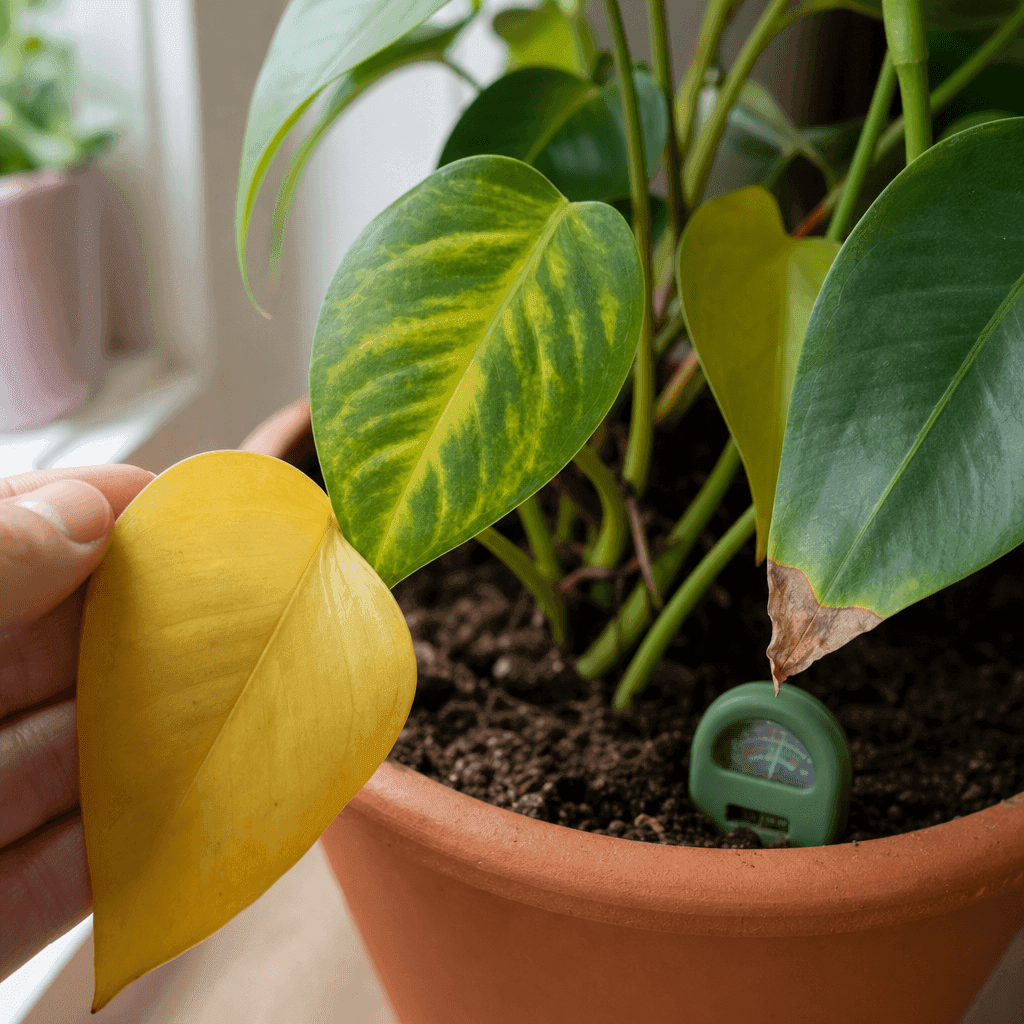
Most likelyOverwatering is one of the most common causes of yellow leaves on houseplants, patio pots, greenhouse crops, and container shrubs. Outdoors, the same stress is usually described as waterlogging. The RHS explains that waterlogged soil loses the air spaces roots need, so roots can effectively suffocate and the top of the plant looks thirsty even though it is sitting in water.
- Lower or older leaves turn yellow first, and leaves are limp rather than dry and crispy.
- Compost stays wet for days; water sits in a saucer, cachepot, tray, or blocked pot.
- Heavy clay soil, compacted borders, or puddling after rain outdoors.
- Lift the pot — a heavy pot usually means the compost is still wet; push a finger 5cm in and if it is cool and wet, do not water yet.
- In severe cases, soft stems, sour-smelling compost, or brown mushy roots.
- Stop routine watering and empty saucers and decorative outer pots.
- Clear drainage holes and stand outdoor containers on pot feet.
- Move houseplants to brighter, airier conditions if they have been in a dark, damp corner.
- If a pot has no drainage hole, repot into one that does; if roots are rotten, remove dead roots with clean snips and repot only if enough firm roots remain.
- For garden soil, avoid walking on wet clay, relieve compaction where practical, add organic matter over time, or move susceptible plants to raised beds or better-drained sites.
Stop it coming back:Match watering to how dry the compost is, not the calendar; use free-draining compost and pots with working drainage holes, and always tip away water that collects in a cachepot or tray.
feed a waterlogged plant as a first response — fertiliser will not repair roots short of oxygen and can add salt stress; and do not keep topping up water because the leaves look wilted, as damaged roots can look thirsty while sitting in wet soil.
Yellow leaves and dry soil: underwatering or drought
Most likelyDry roots can cause the same yellowing response as wet roots because the plant cannot move enough water and nutrients. This is common in hanging baskets, small pots, grow bags, greenhouse tomatoes and cucumbers, newly planted shrubs, plants under eaves, and borders competing with tree roots.
- The pot feels very light, or compost pulls away from the pot edge.
- The soil is dry several centimetres down.
- Leaves yellow, wilt, crisp at the edges, or drop.
- In very dry peat-based compost, water may run straight through without re-wetting the rootball.
- Water slowly at the base until the whole rootball is wet.
- Stand very dry pots in a bucket or sink of water for 20 to 60 minutes, then let them drain fully.
- Water outdoor plants deeply over the root zone, not a quick sprinkle over the foliage.
- Mulch border plants after watering, keeping mulch away from stems.
Stop it coming back:Check moisture at root level before warm, windy spells and keep watering even rather than swinging between drought and waterlogging.
water little and often if the lower rootball stays dry, or mist leaves and count that as watering — misting does almost nothing for roots and can encourage disease if leaves stay damp.
Indoor plant leaves turning yellow from low light
Most likelyHouseplants often yellow when they are asked to live in less light than they need. In the UK this is especially common from late autumn to early spring, in north-facing rooms, on shelves away from windows, or behind blinds.
- The plant looks pale all over, with long spaces between leaves and leaning growth.
- New leaves are smaller, and old leaves drop from the shaded side.
- The compost stays wet longer because the plant is growing slowly and using less water.
- Move the plant gradually into brighter indirect light — a sudden move from deep shade to hot direct sun can scorch foliage, especially behind glass.
- Rotate the pot weekly so all sides receive light.
- Reduce watering while the plant is in low light and not growing strongly.
Stop it coming back:Match each plant to a position with enough light for the season, and move plants closer to windows through the dim UK winter.
compensate for darkness with extra fertiliser — feed cannot replace light — and do not strip off every yellowing old leaf at once if the plant still needs the energy.
Yellow young leaves with green veins: iron or manganese problems
Most likelyIf the newest leaves are yellow but the veins stay green, suspect iron or manganese deficiency or, more accurately, a problem with nutrient availability. The RHS notes that iron deficiency affects the youngest leaves first. In UK gardens this often happens on chalky or alkaline soils, where acid-loving plants such as rhododendron, which yellows readily from this, azalea, camellia, pieris, skimmia, blueberries and potted citrus struggle to access iron and manganese.
- The newest leaves are affected first.
- The pattern is interveinal chlorosis: yellow tissue between greener veins.
- Soil may be chalky, limey, or alkaline.
- A plant sold as ericaceous is in ordinary multi-purpose compost or garden soil over chalk.
- For pots, repot into suitable ericaceous compost if the plant needs acidic conditions.
- Use rainwater where practical for lime-hating plants in hard-water areas.
- In open ground, test pH before trying to alter soil; on strongly alkaline soil, grow acid-loving plants in containers or choose plants suited to chalky conditions.
- Use a chelated iron or trace-element product per the label to green up new growth in the short term, but treat it as a stopgap, not a substitute for correcting conditions.
Stop it coming back:Grow lime-hating plants in ericaceous compost and rainwater from the start, and choose plants suited to your soil pH.
add random fertilisers without checking the plant's needs, or try to make a chalk garden permanently acidic with one-off treatments — it rarely works for long.
Older leaves turning yellow: nitrogen shortage
PossibleNitrogen is mobile inside the plant, so older leaves usually yellow first and the plant may look pale, small, and slow. This is common in hungry crops, containers that have been watered for months, poor sandy soils, and plants growing in old compost. Nutrient deficiencies are real but often overdiagnosed, so check water, light, roots and temperature first.
- Older leaves yellow first while there are no pests or spots.
- The plant looks pale, small, and slow-growing.
- It has been in the same compost or poor soil for a long time without feeding.
- Feed with a balanced fertiliser during active growth at the label rate.
- For outdoor beds, mulch with well-rotted garden compost or manure where suitable to improve fertility over time.
- Refresh exhausted potting compost rather than relying on feed alone.
Stop it coming back:Feed container plants through the growing season and keep border soil topped up with organic matter.
feed a dormant, drought-stressed, or waterlogged plant before correcting water and roots, and do not keep adding more feed just because leaves are yellow.
Magnesium shortage and interveinal yellowing
PossibleMagnesium problems often show as yellowing between veins on older leaves, sometimes followed by brown dead patches. On some crops and ornamentals, heavy or repeated high-potash feeding can make magnesium less available.
- Yellowing starts between the veins on older leaves, not the newest tips.
- Brown dead patches may follow the interveinal yellowing.
- There has been heavy or repeated high-potash feeding.
- Correct the basics first: even watering, healthy roots, and a balanced feed.
- Avoid repeated high-potash feeding that can lock out magnesium.
- Use magnesium products only when the pattern fits, following the instructions.
Stop it coming back:Use a balanced feed rather than repeated high-potash feeds, and keep watering even so roots can take up magnesium.
reach for a magnesium treatment for any yellow leaf — only use it when the interveinal pattern on older leaves actually fits.
Potassium shortage and yellow leaf edges
PossiblePotassium shortage can show as yellowing or scorching at leaf edges, often on older leaves. But dry roots, salt build-up, wind scorch, and root damage can look similar, so the edge symptom alone is not enough to diagnose.
- Yellowing or scorching starts at the leaf edges, often on older leaves.
- Check whether the soil is dry, roots are crowded, or feed has been overused.
- Edge scorching follows the yellowing.
- Correct watering first, as dry roots mimic potassium shortage.
- If the plant is in a pot and fertiliser has been overused, flush through with clean water and let it drain.
- Return to sensible feeding only once roots are healthy and the plant is actively growing.
Stop it coming back:Water evenly and feed at label rate so salts do not build up and scorch leaf edges.
assume yellow edges always mean potassium — rule out dry roots, salt build-up and wind scorch first.
Yellow leaves with pests
Most likelySap-sucking pests can drain plant vigour and cause yellowing, speckling, sticky leaves, distorted growth, and leaf drop. Aphids, whitefly, scale insects, mealybug, thrips, and red spider mite, which leaves fine webbing and pale stippling are common on houseplants, greenhouse plants, and sheltered outdoor plants.
- Inspect the undersides of leaves, shoot tips, leaf joints, and stems.
- Look for green, black or grey aphids on soft new growth, and whitefly that flutter up when leaves are disturbed.
- Look for brown or shell-like scale bumps, cottony white mealybug in leaf joints, and fine webbing with pale stippling from red spider mite.
- Sticky honeydew or black sooty mould is a giveaway; use a hand lens, as mites are easy to miss.
- Isolate affected houseplants.
- Wipe leaves, shower sturdy plants, or remove small pest colonies by hand.
- Outdoors, encourage natural predators and avoid unnecessary broad insecticide use.
- If a control product is needed, choose one approved for the plant and situation in the UK, read the label, and avoid spraying open flowers or pollinators.
Stop it coming back:Inspect new plants before bringing them in, check leaf undersides regularly, and keep plants unstressed so infestations are easier to spot and shrug off.
spray first and diagnose later — many yellow leaves are not caused by pests — and do not use household cleaning products or homemade pesticide recipes that may scorch foliage.
Virus, disease, or physiological disorder
PossibleYellow spots, mottles, rings, streaks, distorted leaves, or mosaic patterns point towards a virus or another disease rather than simple stress. The University of Maryland Extension advises separating abiotic problems from biotic ones: a patterned, patchy symptom on a stunted or distorted plant is suspicious.
- The pattern is patchy or patterned — spots, mottles, rings, streaks or mosaics — not simply old leaves.
- The plant may be stunted or distorted.
- If one crop shows spots, mosaics or distortion while unrelated plants look fine, a virus or disease moves up the list.
- Isolate suspect plants.
- Remove badly affected annual crops; with virus-like mosaics, rings, severe distortion and stunting there is usually no cure.
- Clean tools between plants and do not propagate or save seed or cuttings from affected plants.
Stop it coming back:Buy healthy stock, control sap-sucking pests that spread viruses, and disinfect tools between plants.
propagate from a plant showing mosaic or distortion, or assume all yellow spots are fungal — mites, nutrient issues and spray scorch can also cause speckling.
Yellow leaves with spots, powder, mould, or blight
Most likelyWhen yellowing comes with visible lesions, spores, pustules, mould, or rapid collapse, disease becomes more likely. The RHS notes that many diseases, not only viruses, can cause chlorosis. Vegetable crops such as tomatoes, potatoes, cucumbers, courgettes, beans, and brassicas can yellow from leaf spots, mildews, blights, and root diseases.
- Black, brown, purple, or pale spots, often with yellow halos.
- White powdery growth, orange or brown pustules under leaves, or grey mould on stems, flowers or fruit.
- Sudden yellowing plus wilting despite moist soil.
- Symptoms are patchy and spreading, especially in wet weather.
- Remove affected leaves where practical and bin diseased material if the disease is severe or likely to persist.
- Improve airflow and space plants properly.
- Water at the base and avoid handling wet foliage.
Stop it coming back:Space and ventilate plants well, water at soil level, and clear fallen diseased leaves promptly.
compost diseased plant material if you cannot maintain a hot composting system, and do not assume all yellow spots are fungal — mites, nutrient issues and spray scorch can also cause speckling.
Yellow leaves from root damage, pot-bound roots, and compaction
Most likelyRoots are the hidden part of most yellow-leaf problems. A plant can yellow because the roots are cramped, rotten, cut, compacted, too cold, too dry, too wet, or being eaten. In UK pots, vine weevil grubs are a common root-feeding problem on plants such as heuchera, primula, fuchsia, cyclamen and strawberry.
- For potted plants, gently slide the rootball out — healthy roots are pale, firm, and earthy-smelling.
- Warning signs include brown mushy roots, sour compost, a tight mat of circling roots, or very few roots for the size of the plant.
- Vine weevil grubs are cream with brown heads.
- Outdoors, newly planted shrubs may yellow if the rootball dried out before planting, was planted too deep, or has not rooted into the surrounding soil.
- Repot root-bound plants into a slightly larger pot with suitable free-draining compost, teasing out tight circling roots gently.
- Trim rotten roots only if enough healthy roots remain.
- Remove vine weevil grubs by hand when repotting and use appropriate biological controls at the right soil temperature if needed.
- For compacted soil, avoid digging when wet, add organic matter as a mulch, and improve structure gradually; move a plant from a constantly wet or compacted site rather than feeding repeatedly.
Stop it coming back:Pot on before plants become tightly root-bound, use free-draining compost, and plant outdoor shrubs at the right depth into well-prepared soil.
jump several pot sizes at once for a struggling houseplant — an oversized pot holds too much wet compost around a weak rootball — or tug at roots roughly when the plant is already stressed.
Weedkiller damage and chemical scorch
PossibleWeedkiller drift, contaminated compost, contaminated manure, or spray scorch can cause yellowing, distortion, cupping, narrow leaves, and odd new growth. The strongest clues are timing and shape: symptoms appear after spraying nearby, using a new compost or manure source, or applying a product to leaves in hot sun.
- Distortion is strongest on new growth, which may be twisted, strapped, cupped, or narrow.
- There is no pest colony or disease pattern.
- Spraying occurred nearby, or a new compost or manure source was used.
- Stop exposure.
- Water normally and wait for clean new growth — do not feed hard in an attempt to force recovery.
- If contaminated compost or manure is suspected, do not spread it further and do not compost affected material unless you know the contaminant is safe to compost.
Stop it coming back:Source compost and manure carefully, avoid spraying weedkiller on windy days near borders, and keep sprayers separate from those used for plant feeds.
feed hard to force a contaminated plant to grow out of it, or compost affected material when the contaminant is unknown — annual vegetables with severe distortion may not be worth saving.
Yellow leaves from cold, heat, and seasonal weather
PossibleWeather can yellow leaves even when care is good. Cold-induced chlorosis is common in spring on young active growth of plants such as magnolia, pieris and skimmia, and tender plants moved outdoors too early can yellow after cold nights. Heat and bright sun can also cause yellowing, scorch and leaf drop, especially after a plant has been moved from shade.
- Timing follows frost, cold wind, or a sudden move outdoors.
- Yellowing appears on young spring growth of magnolia, pieris, skimmia, or tender plants.
- Heat-related yellowing or scorch follows a plant being moved from shade into strong sun.
- Protect tender plants from frost and cold winds.
- Harden off indoor-raised plants before planting outside.
- During heat, water deeply, shade newly moved pots temporarily, and avoid feeding a plant wilted from drought.
Stop it coming back:Harden plants off gradually and wait until cold nights have passed before moving tender plants outdoors.
feed a cold-shocked plant before it is growing again, or assume cold-yellowed leaves will recover — judge success by healthy new growth later in the season.
Natural yellow leaves: when not to panic
Most likelySometimes yellow leaves are normal. Deciduous trees and shrubs turn yellow before autumn leaf fall, and evergreens shed old leaves too — the RHS gives holly hedges shedding older leaves in summer as a common example of harmless evergreen leaf loss. Houseplants also shed old leaves when they adjust to a new home, lower winter light, or a change in watering.
- Only the oldest lower or inner leaves are yellow.
- The plant is still making healthy new growth.
- There are no pests, spots, sticky leaves, or distorted shoots, and soil moisture is reasonable.
- Yellowing is slow and limited rather than sudden and widespread.
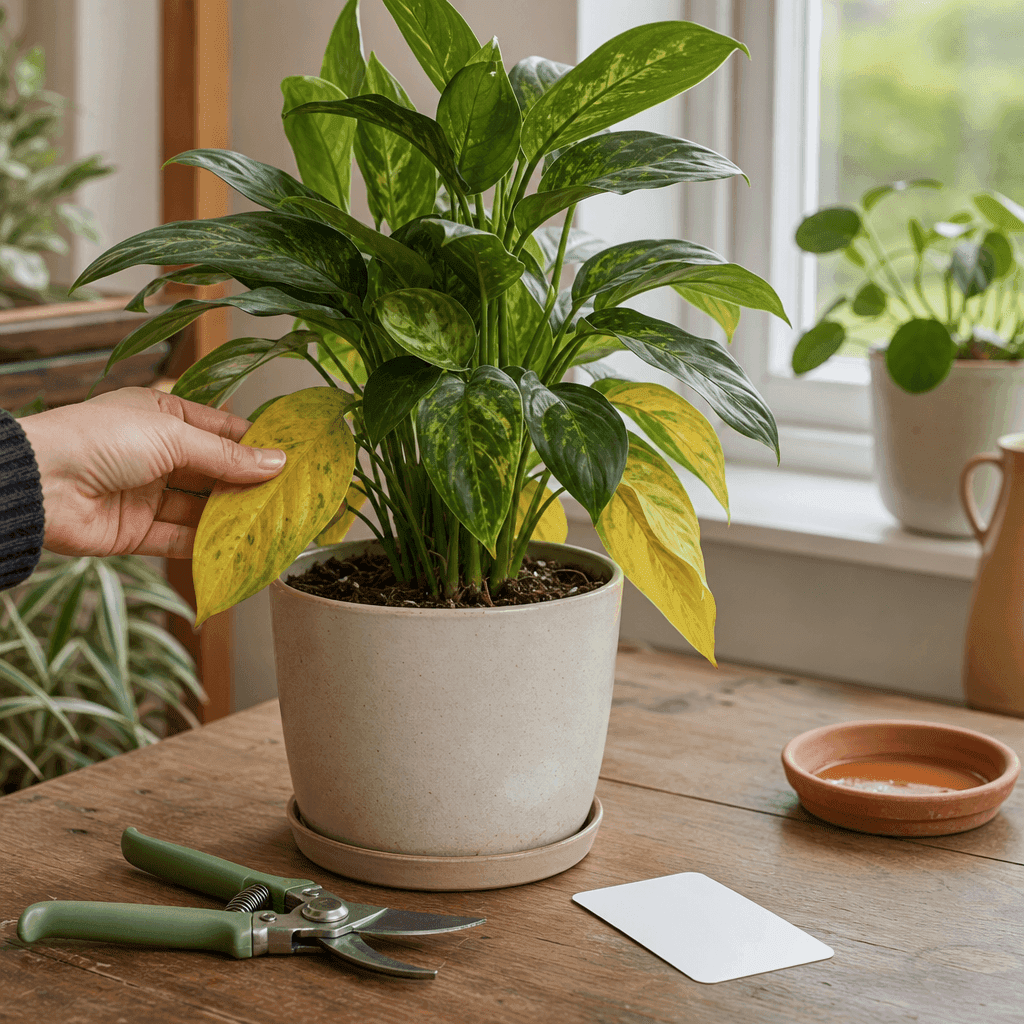
- Remove fully yellow leaves if they come away easily or look untidy.
- Leave partly green leaves alone unless they are diseased.
- Keep monitoring for new symptoms.
Stop it coming back:Accept that mature plants shed some old foliage; keeping care steady reduces stress-related shedding.
strip a stressed plant bare — partly yellow leaves may still contain nutrients the plant can reclaim — or repot, feed and move a plant all at once over one ageing leaf.
Still not sure?
Work down these branches — the first one that matches is your answer.
What not to do
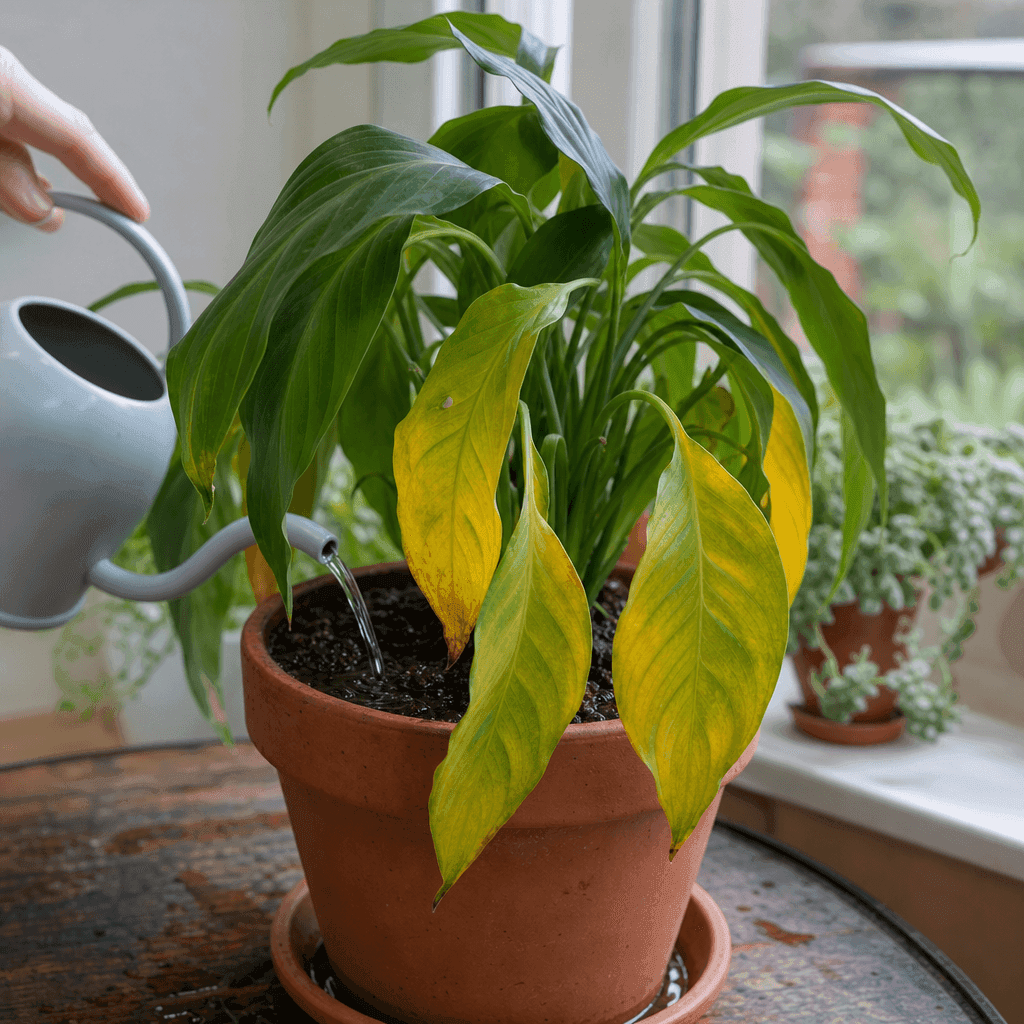
- Feed a waterlogged plant as a first response — fertiliser will not repair roots short of oxygen and can add salt stress.
- Keep topping up water because the leaves look wilted; a plant with damaged roots can look thirsty while sitting in wet soil.
- Water little and often if the lower rootball stays dry, or mist leaves and count that as watering.
- Compensate for darkness with extra fertiliser — feed cannot replace light.
- Add random fertilisers without checking the plant's needs, or keep adding feed just because leaves are yellow.
- Spray first and diagnose later — many yellow leaves are not caused by pests.
- Compost diseased plant material if you cannot maintain a hot composting system.
- Jump several pot sizes at once for a struggling plant; the excess compost just stays wet.
- Strip a stressed plant bare; partly yellow leaves may still feed the plant while you fix the cause.
Common questions
What is the most common reason plant leaves turn yellow?
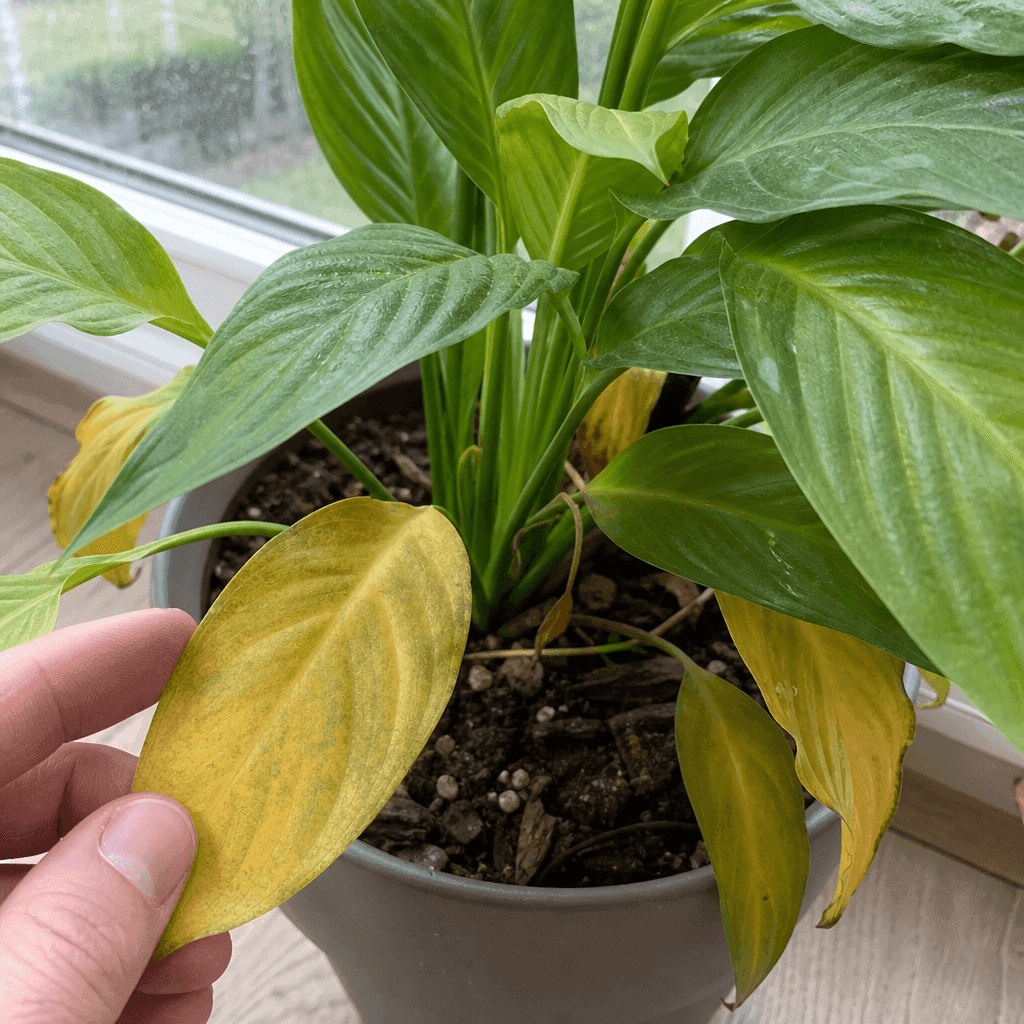
Water stress is the most common reason. Both overwatering and underwatering can turn leaves yellow because roots cannot supply water and nutrients properly. Check soil moisture and drainage before feeding.
Do yellow leaves mean overwatering?
Not always. Yellow, limp lower leaves in wet compost often mean overwatering, but yellow leaves can also come from drought, low light, pests, disease, root restriction, nutrient issues, cold, or normal ageing.
How do I fix yellow leaves on indoor plants?
Check moisture first. If compost is wet, let it drain and dry slightly. If it is dry, water thoroughly. Then check light, roots, pests under leaves, and whether the plant has outgrown its pot. Our guide to yellow leaves on indoor plants walks through the houseplant-specific checks in more detail.
How do I fix yellow leaves on outdoor plants?
Check whether the soil is waterlogged or dry, then look for pests, disease spots, root damage, and nutrient patterns. Improve drainage or water deeply first. Feed only when the plant is actively growing and roots are healthy.
Should I cut off yellow leaves?
Cut off fully yellow, dead, diseased, or pest-infested leaves. Do not remove lots of partly yellow leaves from a stressed plant until you have fixed the cause. The plant may still be reclaiming nutrients from them.
Can yellow plant leaves turn green again?
Usually not. Fully yellow leaves rarely recover. Mild chlorosis from nutrient availability can sometimes improve, but most recovery appears as healthy new growth.
What deficiency causes yellow leaves?
Nitrogen shortage often yellows older leaves first. Iron deficiency usually affects the youngest leaves first with green veins. Magnesium deficiency commonly causes yellowing between veins on older leaves. Water and root problems can mimic deficiencies.
Why are my plant leaves turning yellow and brown?
Yellow leaves that turn brown may be from drought, overwatering, root damage, nutrient deficiency, salt build-up, sun scorch, frost, or disease. Check whether browning is at the edges, in spots, or across whole leaves, and see our hub on diagnosing leaf problems such as yellowing, curling and spots to match the wider pattern.
Why are the tips or edges turning yellow?
Yellow tips or edges often point to drought stress, root stress, potassium shortage, fertiliser salt build-up, or scorch from sun, wind, or cold. Check watering and roots before adding feed.
Are yellow leaves contagious?
Yellow leaves themselves are not contagious. The cause might be. Viruses, some fungal diseases, and pests can spread, so isolate suspect houseplants and remove badly diseased annual crops.