Quick diagnosis
Match the row to what you’re seeing, then jump to the fix.
| What you see | Likely cause | Confidence | How to confirm | What to do now | Urgency |
|---|---|---|---|---|---|
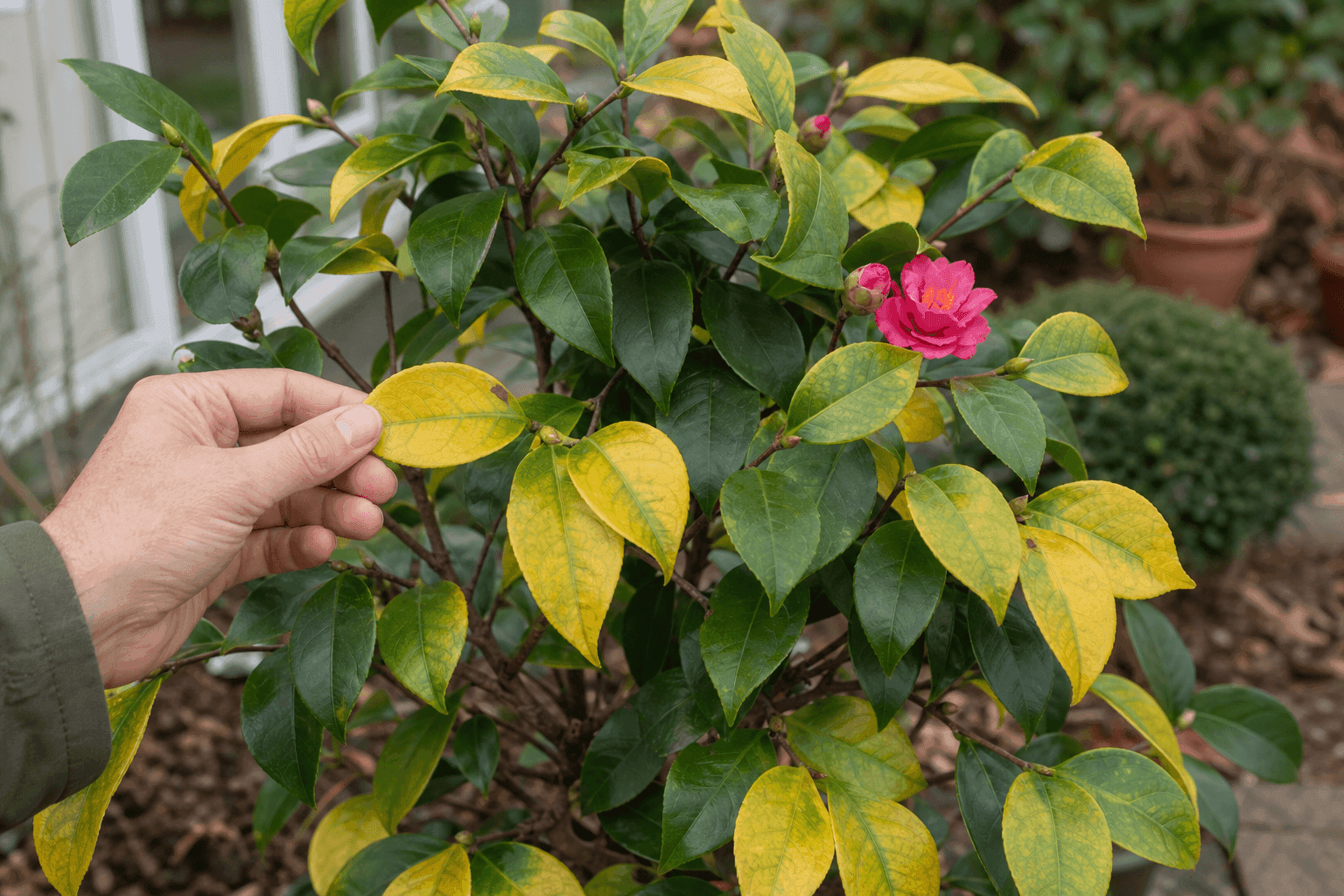
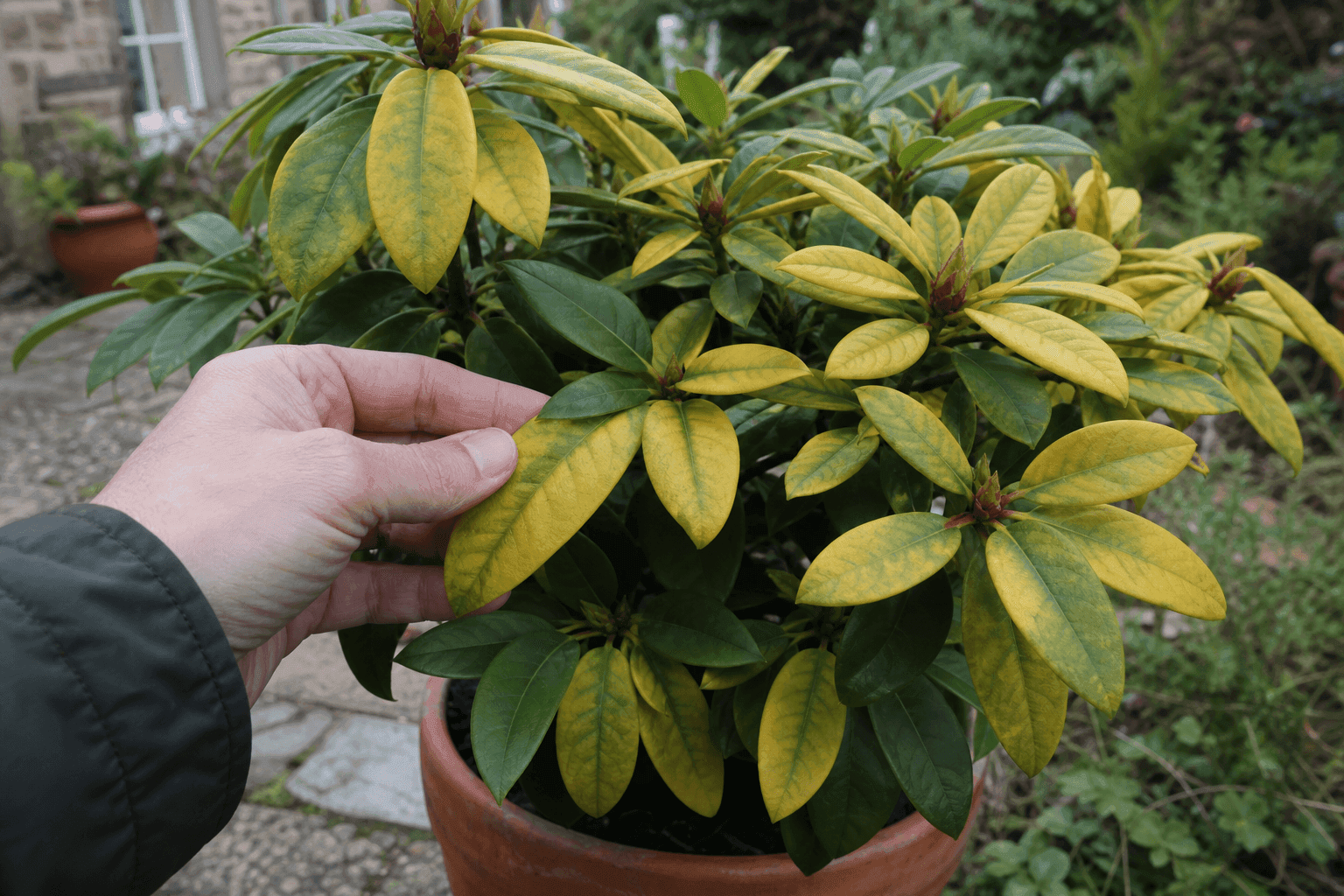
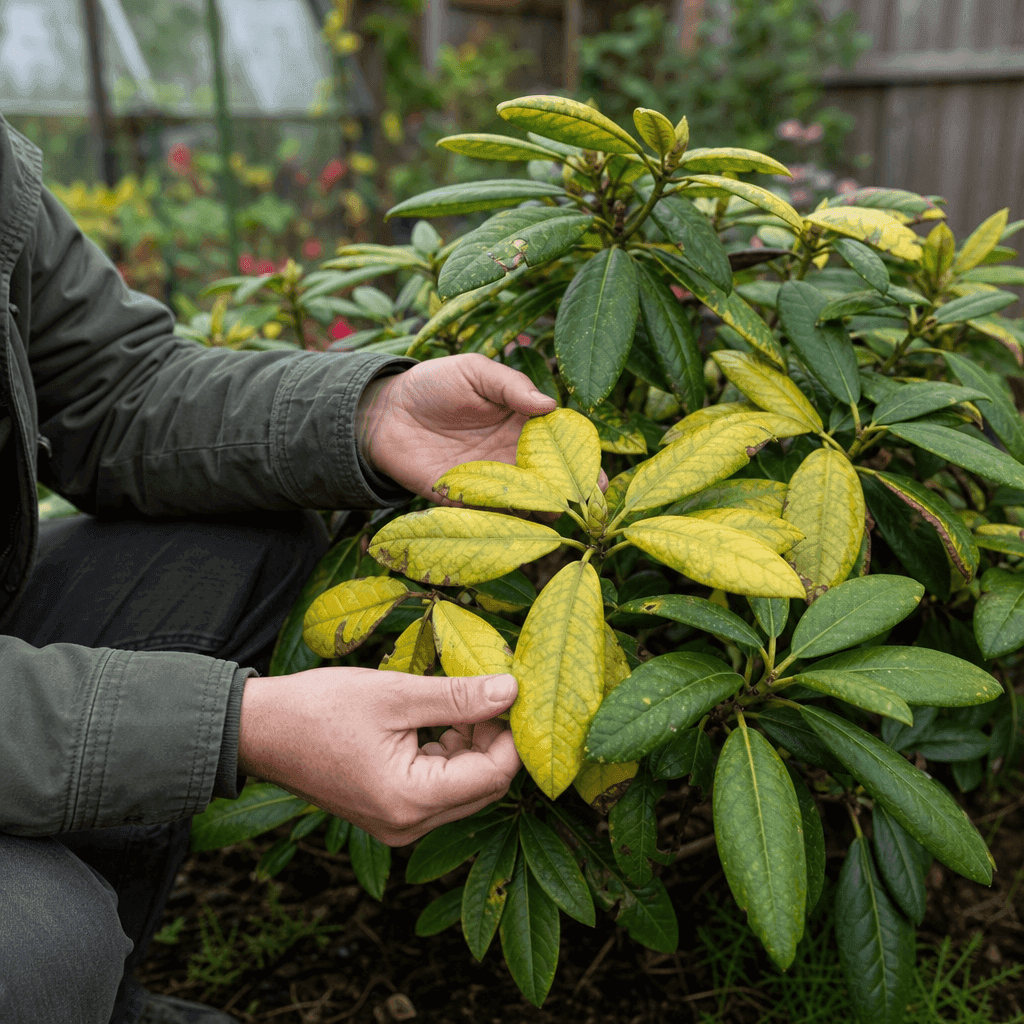
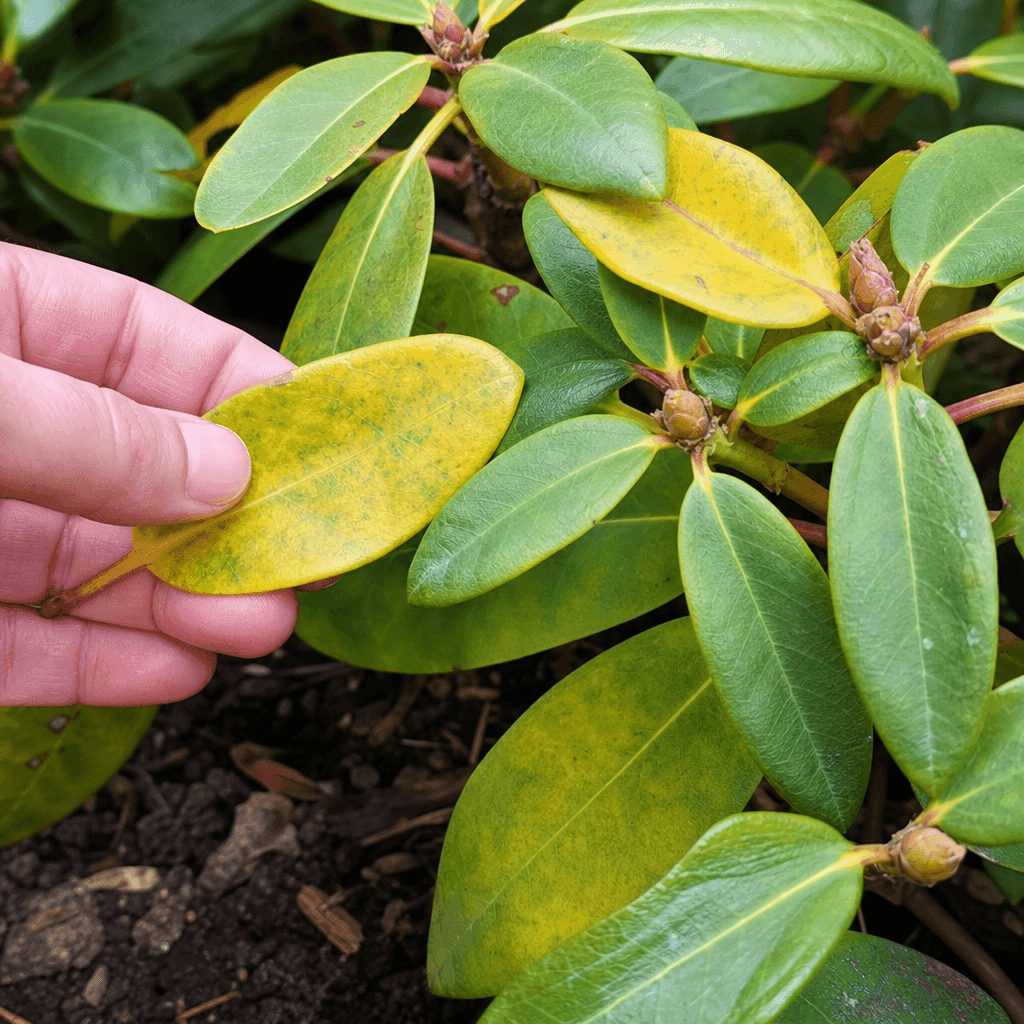
| Young leaves yellow with green veins; worst on newest growth at shoot tips | Lime-induced iron/manganese chlorosis | High | Test soil pH — rhododendrons need 4.5–6.0; check if tap water or lime-heavy soil is involved | Apply sequestered iron; switch to rainwater; use ericaceous fertiliser | Medium |
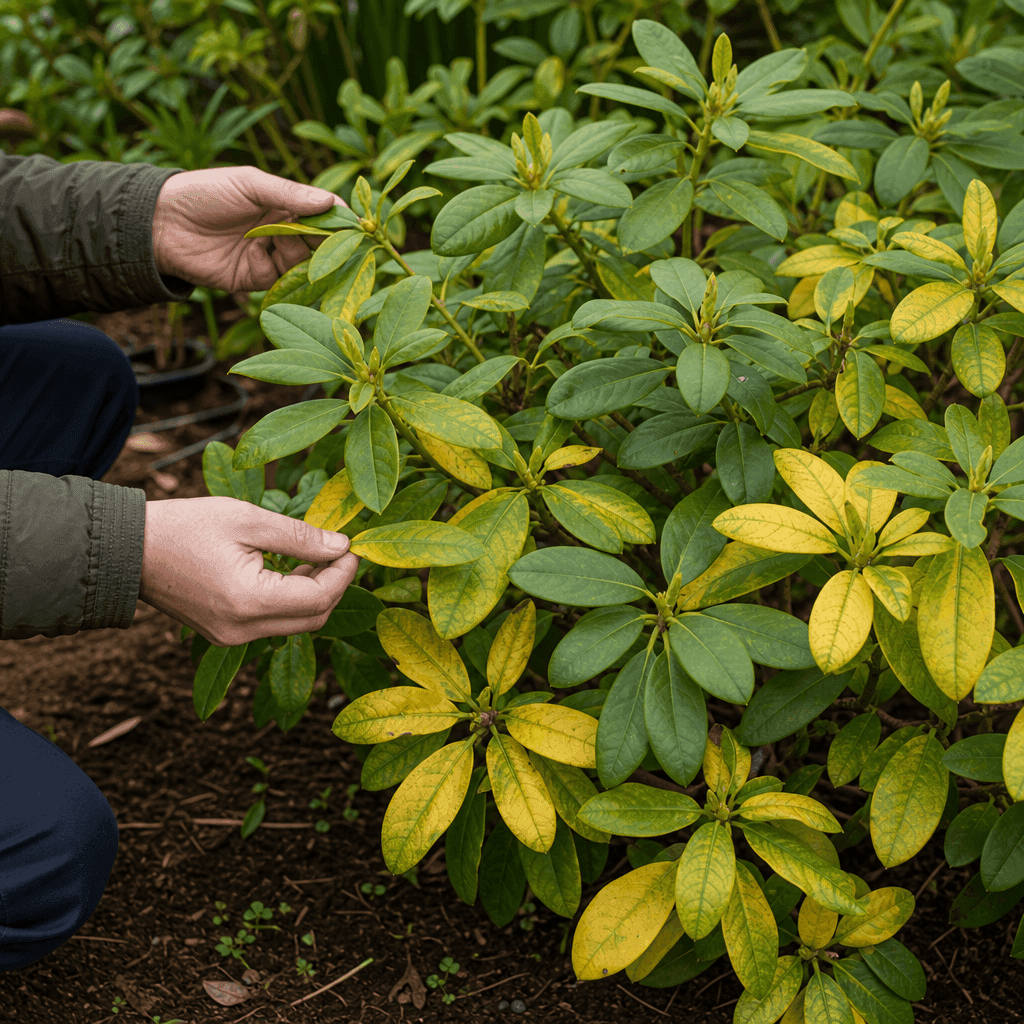
| Older inner leaves yellowing and dropping in spring or early summer alongside healthy new growth | Normal seasonal leaf shedding | High | Only old inner leaves affected; new growth at shoot tips is healthy and dark green | Rake up fallen leaves; no further action needed | Low |
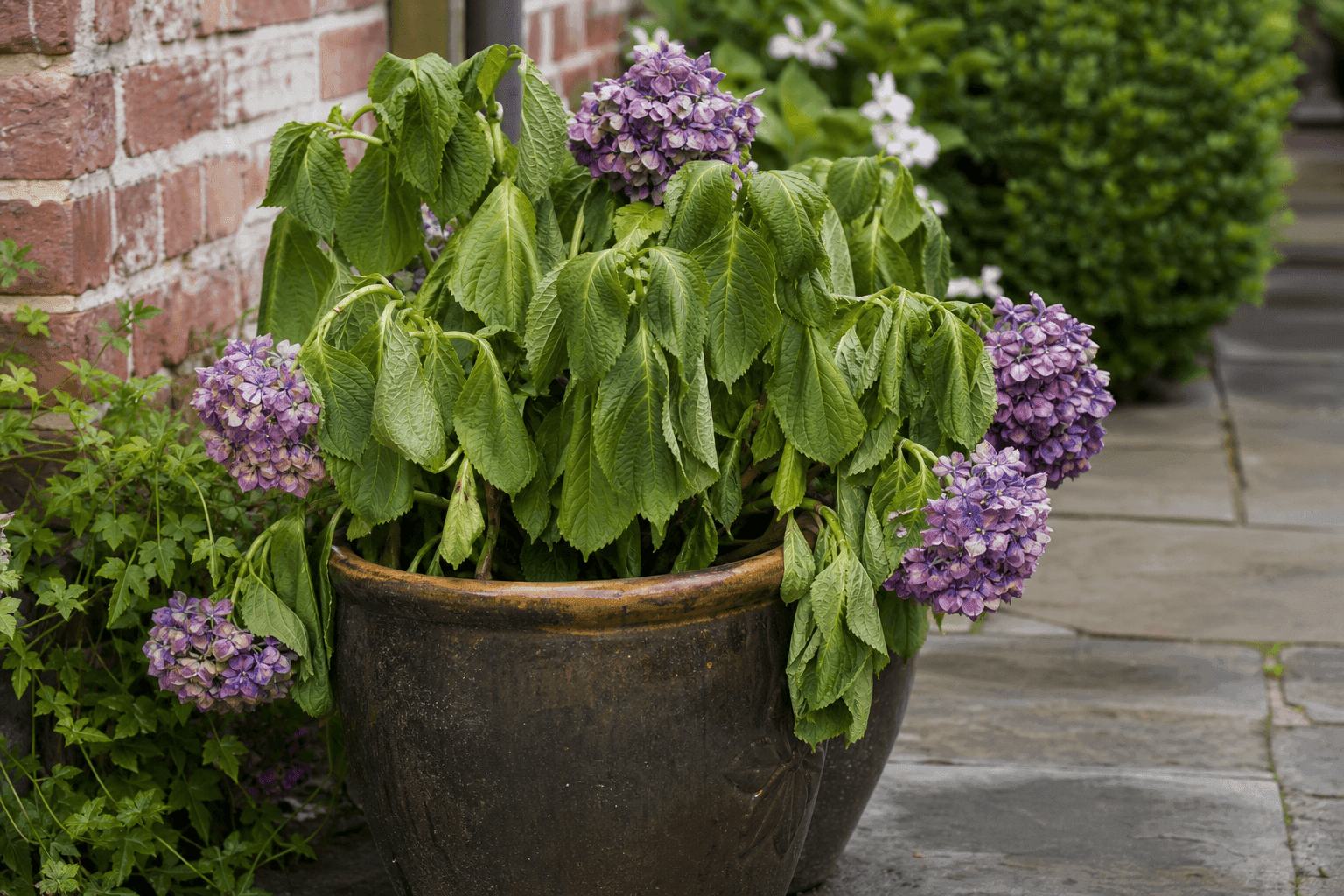
| Whole leaves uniformly yellow; wilting despite wet soil; poor overall vigour | Waterlogging and root suffocation | Medium | Soil stays wet for days; heavy clay soil or low-lying spot; can smell sour | Improve drainage; do not water again until partially dry; check for root rot | High |
| Leaves yellow then curl downwards and turn brown; plant declines rapidly; wilting not reversed by watering | Phytophthora root and crown rot | Medium | Dark staining visible in cut stem tissue just above the roots; follows a wet season | No chemical cure available; improve drainage; remove severely affected plants | High |
| Leaves roll inward and yellow; older leaves worst; compost dry; worse in late summer | Drought stress | Medium | Soil dry 5 cm down; plant near a wall, fence or under eaves; summer drought spell | Water deeply with rainwater; mulch; prioritise watering in late July to September | Medium |
The causes, in detail
Lime-induced iron and manganese chlorosis
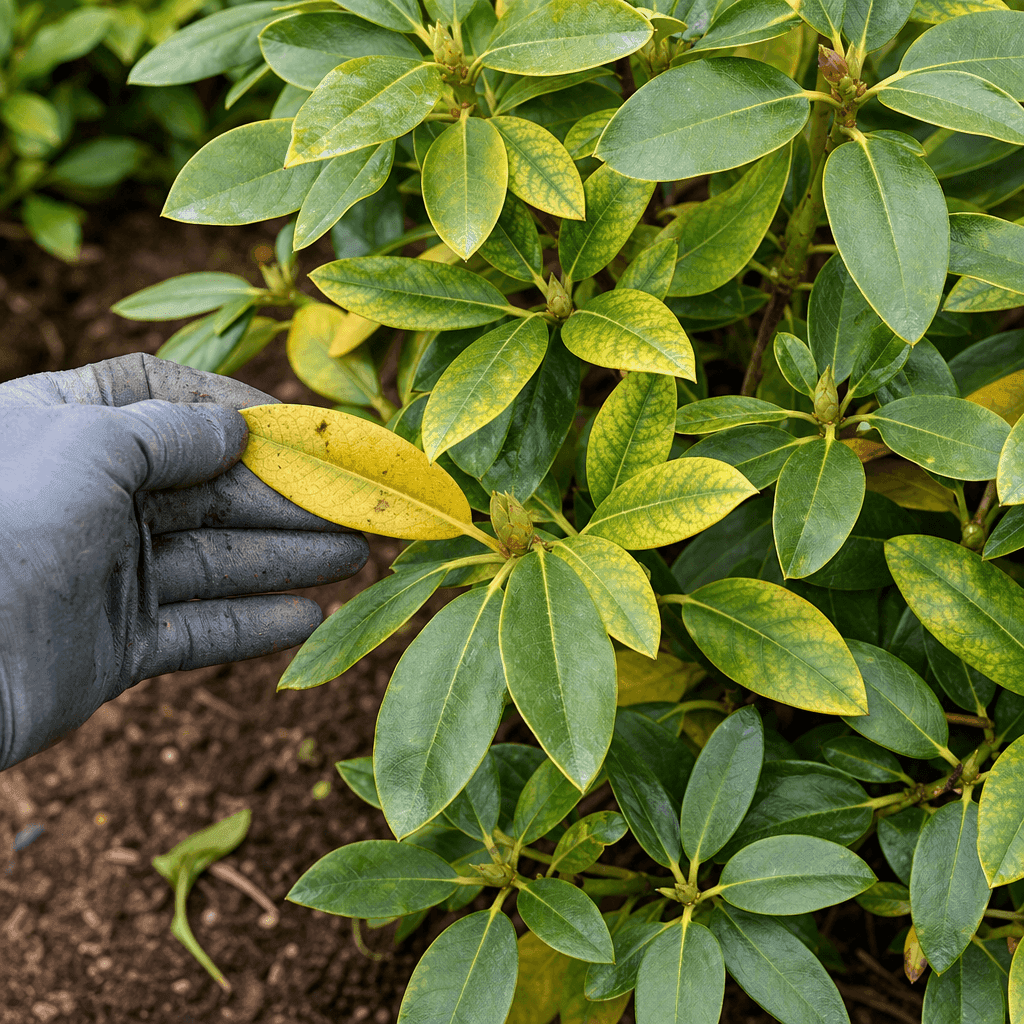
Most likelyChlorosis caused by high soil pH is the most common reason for yellow rhododendron leaves in UK gardens, and the same pattern affects other ericaceous shrubs — see our guide to camellia yellow leaves for a close parallel. Rhododendrons need acidic conditions (pH 4.5–6.0) to absorb iron and manganese; once the pH rises above 6.0–6.5, these minerals become chemically locked in the soil and unavailable to the roots. The result is interveinal chlorosis — the tissue between the leaf veins turns yellow while the veins remain green — appearing first and most severely on the youngest leaves at the shoot tips. Millais Nurseries (a specialist rhododendron grower) identifies this as the single most common problem sent to them by UK growers, and attributes it in containers to lime in tap water and in the garden to alkaline soils or proximity to masonry.
- Yellowing is between the leaf veins, with veins remaining green — clearest on youngest leaves.
- Soil or compost pH tested above 6.0 — use a simple probe or test kit.
- The plant has been watered with hard tap water, or is planted near a concrete path, wall, or structure that leaches lime.
- Older, lower leaves are largely unaffected — chlorosis is worst at the growing tips.
- Apply sequestered (chelated) iron — available as a drench or granules from garden centres; this is the fastest treatment and can start greening new leaves within weeks.
- Switch to rainwater for all future watering — hard tap water is alkaline and counteracts any acidification treatment.
- Feed with an ericaceous fertiliser (formulated for rhododendrons, azaleas, camellias) in spring.
- For border plants, mulch thickly with composted pine needles, ericaceous bark, or composted bracken to gradually acidify the root zone.
- If the plant is in a pot, repot into fresh ericaceous compost.
Stop it coming back:Yellow leaves will not turn green again, but new growth after treatment should emerge healthy. Plantura Garden UK recommends applying sequestered iron annually in spring as a preventive measure in areas with hard water or alkaline soil.
apply general-purpose fertiliser — it is usually neutral to slightly alkaline and will worsen the pH problem.
Normal seasonal leaf shedding
Most likelyRhododendrons are evergreen but still shed older leaves periodically, typically in spring and early summer as new growth pushes through. This normal turnover is frequently alarmed over by UK gardeners. The key distinction is that shedding is confined to the oldest inner leaves near the base of the plant, while all the new growth at the shoot tips remains healthy and green. The Millais Nurseries problem-solving guide specifically lists this as one of the most common enquiries they receive.
- Only the oldest, innermost, lower leaves are yellowing — not the new shoot growth.
- Yellowing is happening in spring or early summer alongside vigorous flushing of new growth.
- The overall plant looks vigorous and healthy with good new growth.
- Rake and remove fallen leaves from around the base.
- No feeding, watering, or treatment is necessary.
apply treatments or feeds in response to normal leaf drop — intervention is not needed and can disturb a healthy plant.
Waterlogging and root suffocation
PossibleRhododendrons have fine, shallow fibrous root systems that are easily damaged by waterlogging. In wet, airless soil, roots cannot access oxygen and begin to die, reducing the plant's ability to take up water and nutrients. The leaves yellow uniformly — not just between the veins — and the plant wilts even when the soil is soaking. Plantura Garden UK notes that compacted and waterlogged soil increases the risk of root infection by Phytophthora, making drainage a critical preventive measure.
- Soil stays wet for several days after rain or watering.
- Yellowing is uniform across the leaves, not interveinal.
- Plant is in a low-lying spot, heavy clay, or a pot with poor drainage.
- The plant wilts despite wet soil.
- Stop watering and allow the soil to dry partially before watering again.
- In the ground, improve drainage by adding horticultural grit and organic matter; consider raising the planting level slightly.
- In a container, check and clear drainage holes; repot into fresh ericaceous compost.
- Avoid heavy mulches that hold moisture close to the stem.
water more when the plant looks yellow and wilted without first checking whether the soil is already wet.
Phytophthora root and crown rot
PossiblePhytophthora cinnamomi and related species cause a serious root rot that is a significant threat to UK rhododendrons, particularly in poorly drained soils during wet seasons. The fungus attacks the roots and crown, and the first visible symptom is yellowing and inward-curling of the foliage, followed by wilting that does not reverse after watering. The RHS lists rhododendron Phytophthora diseases as among the most damaging problems UK growers face. A diagnostic sign is dark reddish-brown staining in the wood just above the roots when the bark is cut. Garvillo gardening notes that Phytophthora thrives in poorly draining, overwatered soil.
- Yellowing and wilting that does not improve after watering.
- Leaves curl downward and progressively brown after yellowing.
- Dark brown or reddish staining in the wood just above the root zone when the bark is cut.
- Preceded by a wet period or waterlogged conditions.
- The problem is spreading or affecting entire branches.
- There is no reliable chemical cure for Phytophthora in garden conditions.
- Improve drainage immediately — the disease thrives in wet, compacted soil.
- Remove and destroy severely affected plants; do not compost the material.
- Do not replant rhododendrons in the same spot without significantly improving drainage.
- For mildly affected plants, try improving soil aeration and reducing watering; some plants stabilise.
compost or chip wood from Phytophthora-affected plants — the pathogen survives in organic matter and can spread to other acid-loving plants.
Drought stress
PossibleRhododendrons have shallow, fibrous root systems that are vulnerable to drying out in summer, particularly in late July to September when next year's flower buds are forming. Drought at this time causes leaf yellowing and rolling, reduced bud set, and sometimes sudden plant death in established specimens. Plants under eaves, against walls, under tree canopies, or in free-draining sandy soil are most at risk. Savvy Gardening notes that summer drought is an underappreciated cause of yellow leaves in rhododendrons.
- Soil is dry 5 cm below the surface.
- Leaves are rolling inward — rhododendrons roll their leaves as a drought-defence mechanism.
- The plant is in an exposed, dry, or sheltered-from-rain position.
- Yellowing is worst in late summer during dry spells.
- Water deeply with rainwater — the whole root zone needs to be saturated, not just the surface.
- Apply a 7–10 cm deep mulch of composted bark, leaf mould, or pine needles, kept away from the stems.
- Pay particular attention to watering from late July through to autumn — this is when buds are set for next year's display.
- Check that rain reaches the root zone — plants under eaves or trees may need hand-watering even after rain.
use hard tap water to relieve drought stress in a rhododendron — over time this compounds alkalinity and worsens chlorosis.
Still not sure?
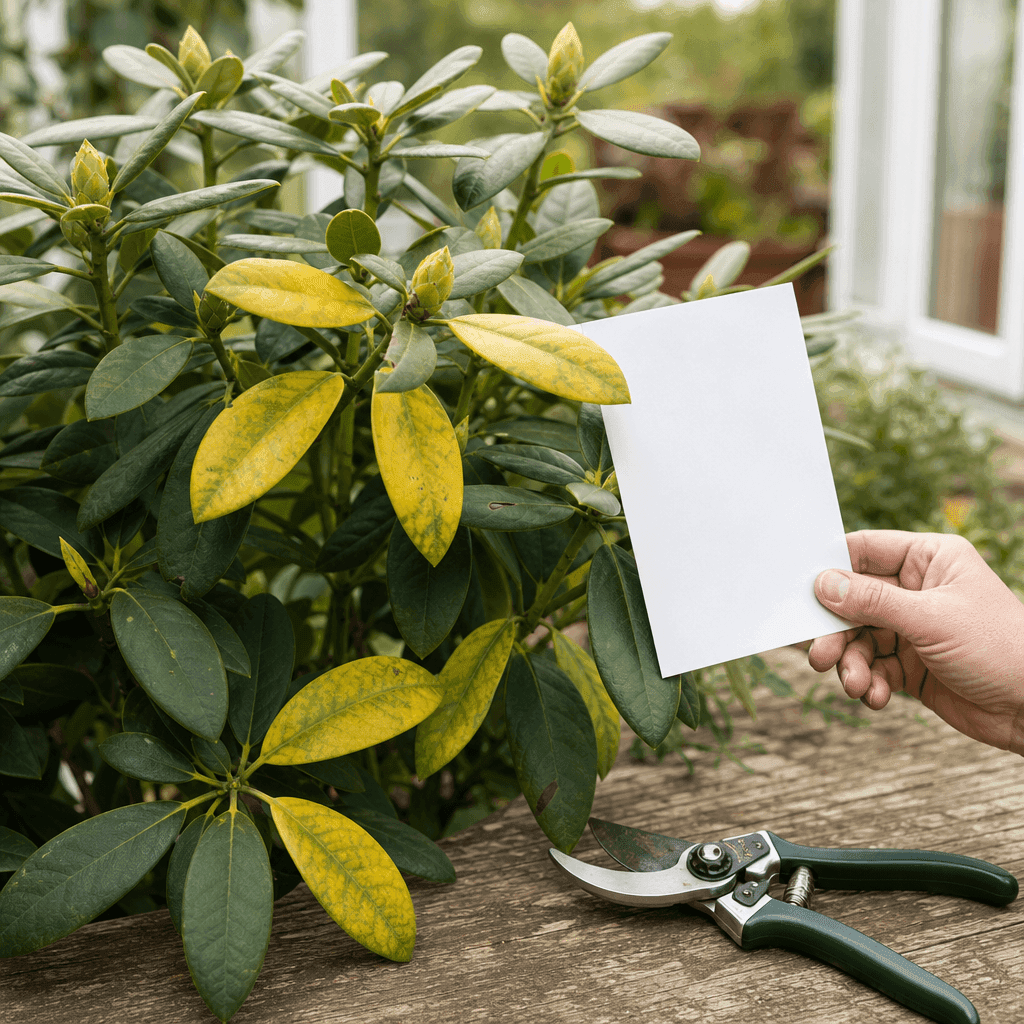
Work down these branches — the first one that matches is your answer.
What not to do
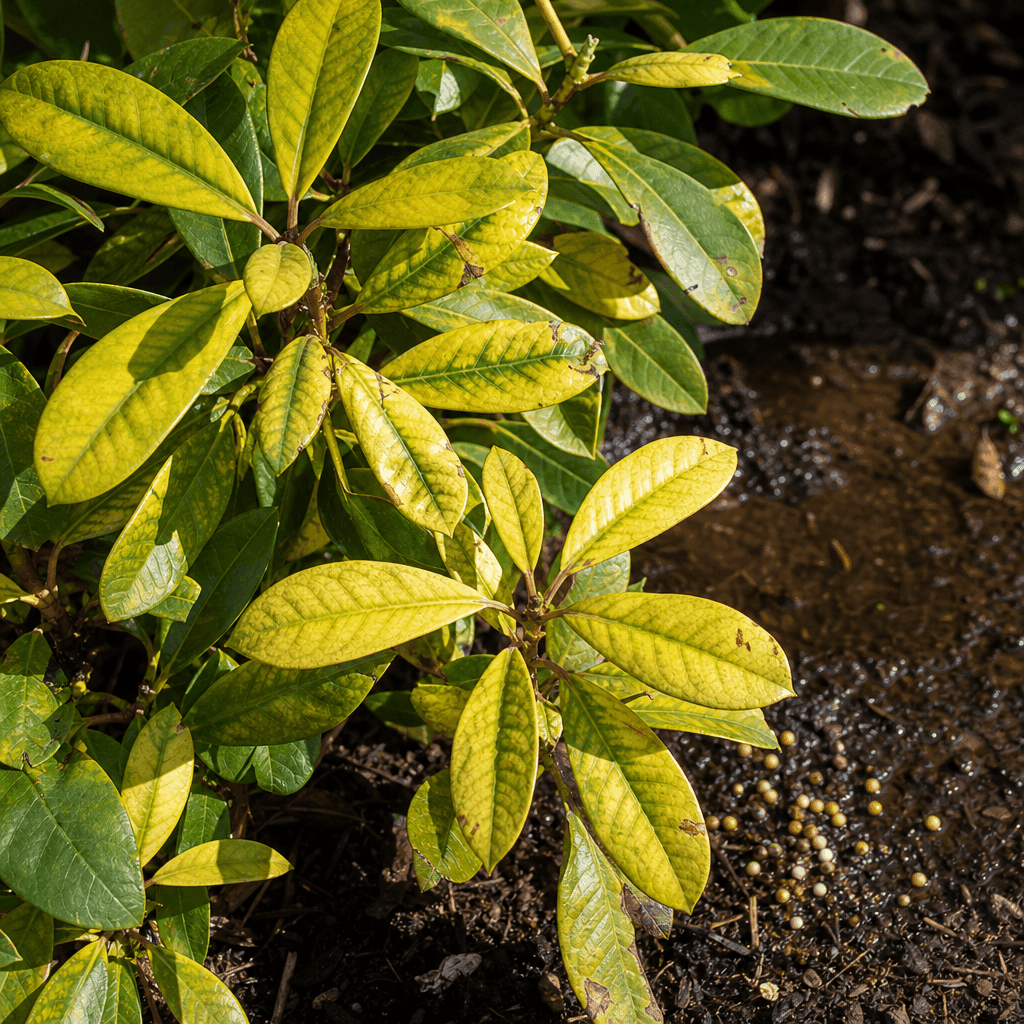
- Water with hard tap water long term — it raises pH and worsens iron chlorosis over time.
- Apply general-purpose or lawn fertiliser near rhododendrons — they contain lime and worsen alkalinity.
- Plant in a low-lying waterlogged spot — Phytophthora thrives in wet, airless soil.
- Compost material removed from Phytophthora-affected plants — bin it to prevent spread.
- Assume all yellowing is chlorosis without checking the soil moisture level first.
Common questions
Why are my rhododendron leaves turning yellow with green veins?
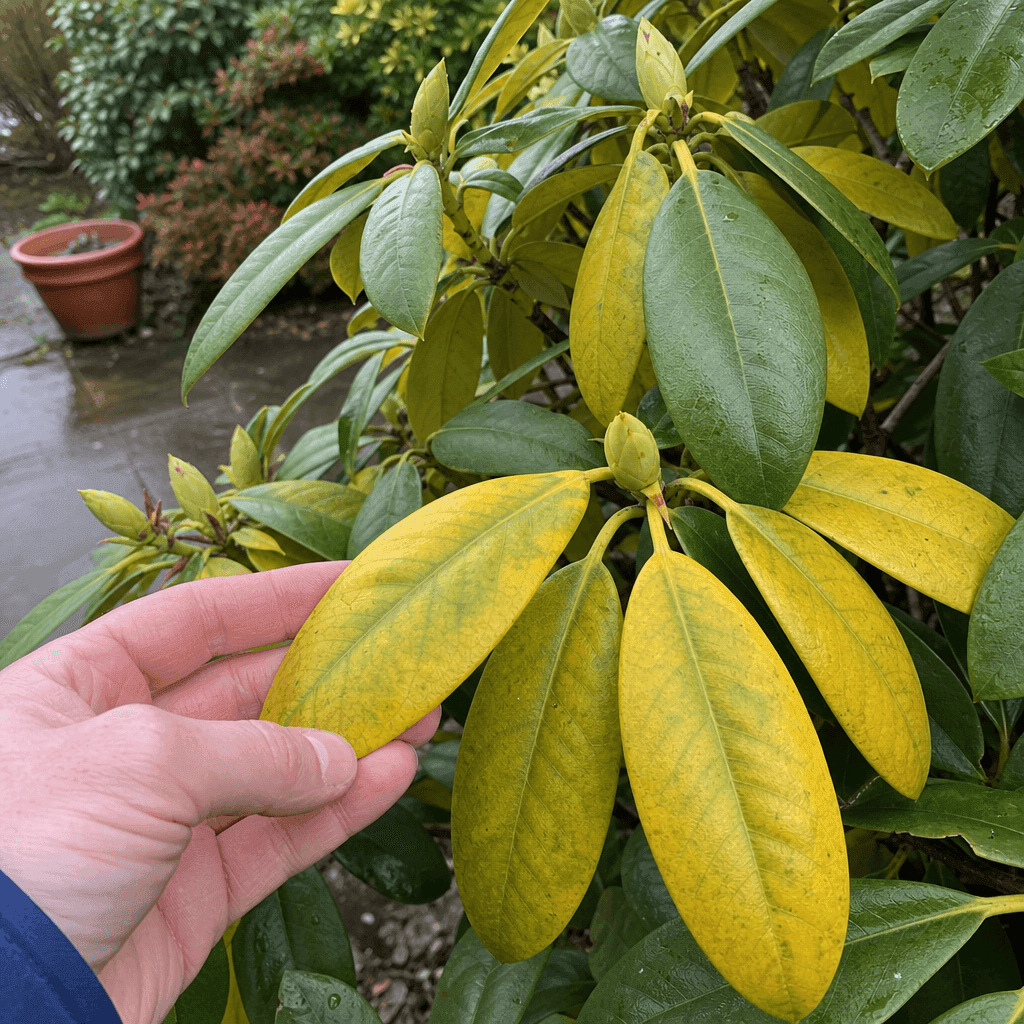
Yellow leaves with green veins is the classic sign of interveinal chlorosis, caused by iron or manganese deficiency due to high soil pH. Rhododendrons need acidic soil (pH 4.5–6.0) to access these minerals. Apply sequestered iron and switch to rainwater immediately. If the yellowing is uniform rather than interveinal, work through our general guide to why plant leaves turn yellow to rule out watering and nutrient causes.
Why are the old leaves on my rhododendron going yellow in spring?
This is almost certainly normal seasonal leaf shedding. Rhododendrons shed older inner leaves in spring as new growth pushes through. If the new shoot tips are healthy, simply remove the fallen leaves and take no further action.
Can rhododendrons grow in alkaline soil?
Only in a container with ericaceous compost and rainwater for irrigation. In alkaline garden soil, rhododendrons slowly develop severe chlorosis and decline. The solution is to grow them in raised beds or containers with acid growing medium rather than trying to acidify alkaline garden soil. For more on caring for this acid-loving shrub, see our full rhododendron problem guides.
How do I treat chlorosis in rhododendrons?
Apply sequestered (chelated) iron according to the product instructions — this is the fastest effective treatment. Also switch to rainwater for watering, mulch with acidic material (pine needles, composted bracken), and use an ericaceous fertiliser in spring.
What is Phytophthora in rhododendrons?
Phytophthora is a water mould that attacks the roots and crown, causing yellowing, wilting, and rapid plant death. It thrives in waterlogged or poorly draining soil. A diagnostic sign is reddish-brown staining in the wood just above the roots. There is no reliable chemical treatment — prevention through good drainage is essential.
Why does my rhododendron roll its leaves?
Leaf rolling is rhododendrons' natural response to cold or drought stress — they roll their leaves to reduce water loss. In winter, rolled leaves are usually a cold response and unwrap as temperatures rise. In summer, they indicate drought: water immediately.
How often should I water a rhododendron in the UK?
There is no fixed schedule. Water when the soil begins to dry below the surface, especially during late July to September when buds are forming. Established plants in well-mulched, moisture-retentive soil may need watering only during dry spells. Use rainwater wherever possible.