Quick diagnosis
Match the row to what you’re seeing, then jump to the fix.
| What you see | Likely cause | Confidence | How to confirm | What to do now | Urgency |
|---|---|---|---|---|---|
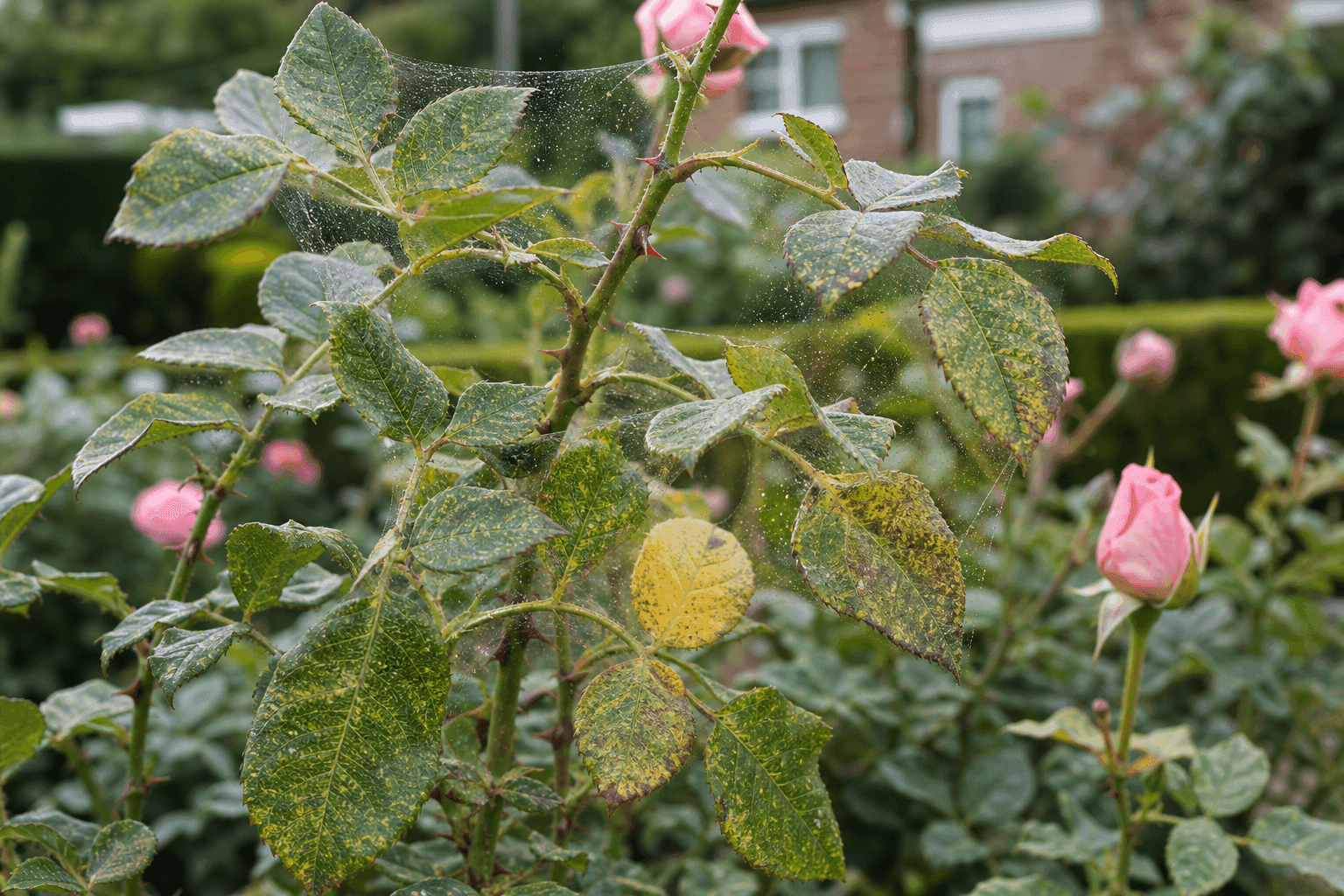
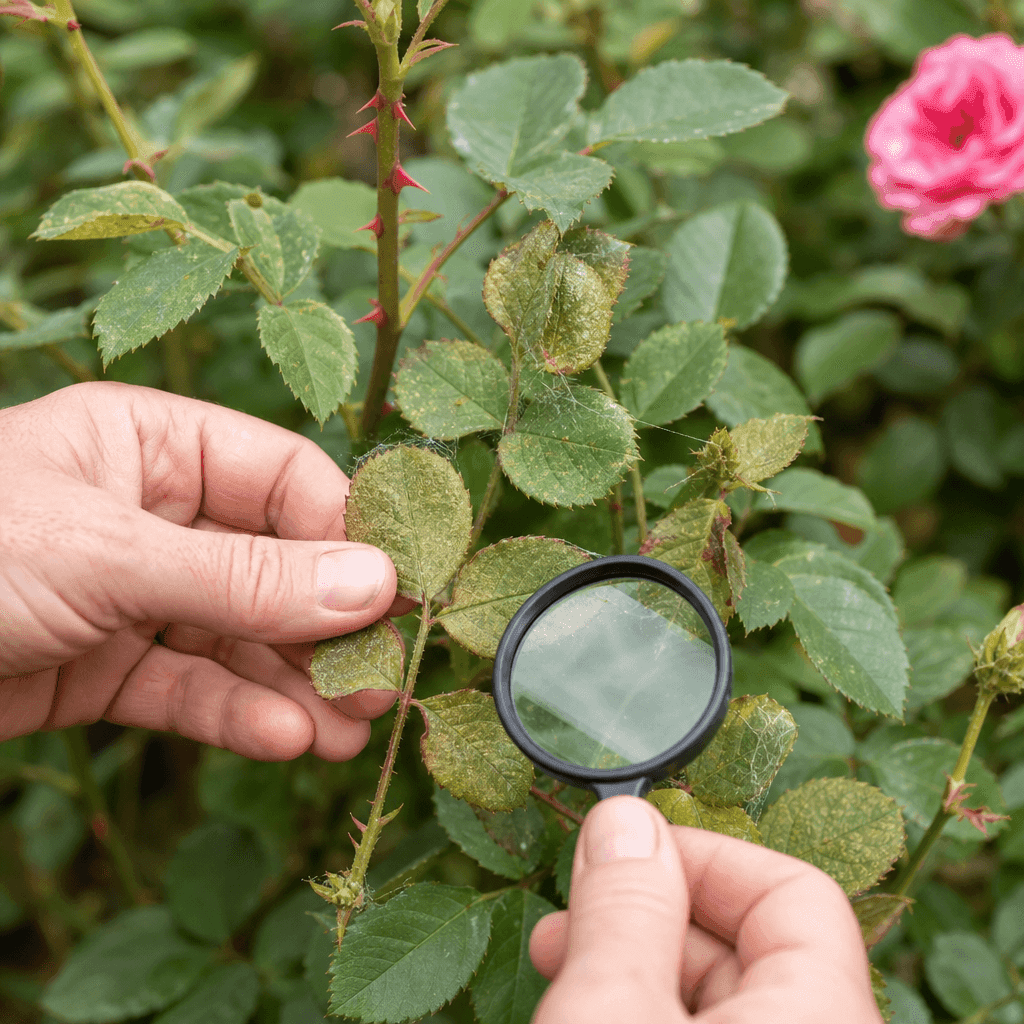
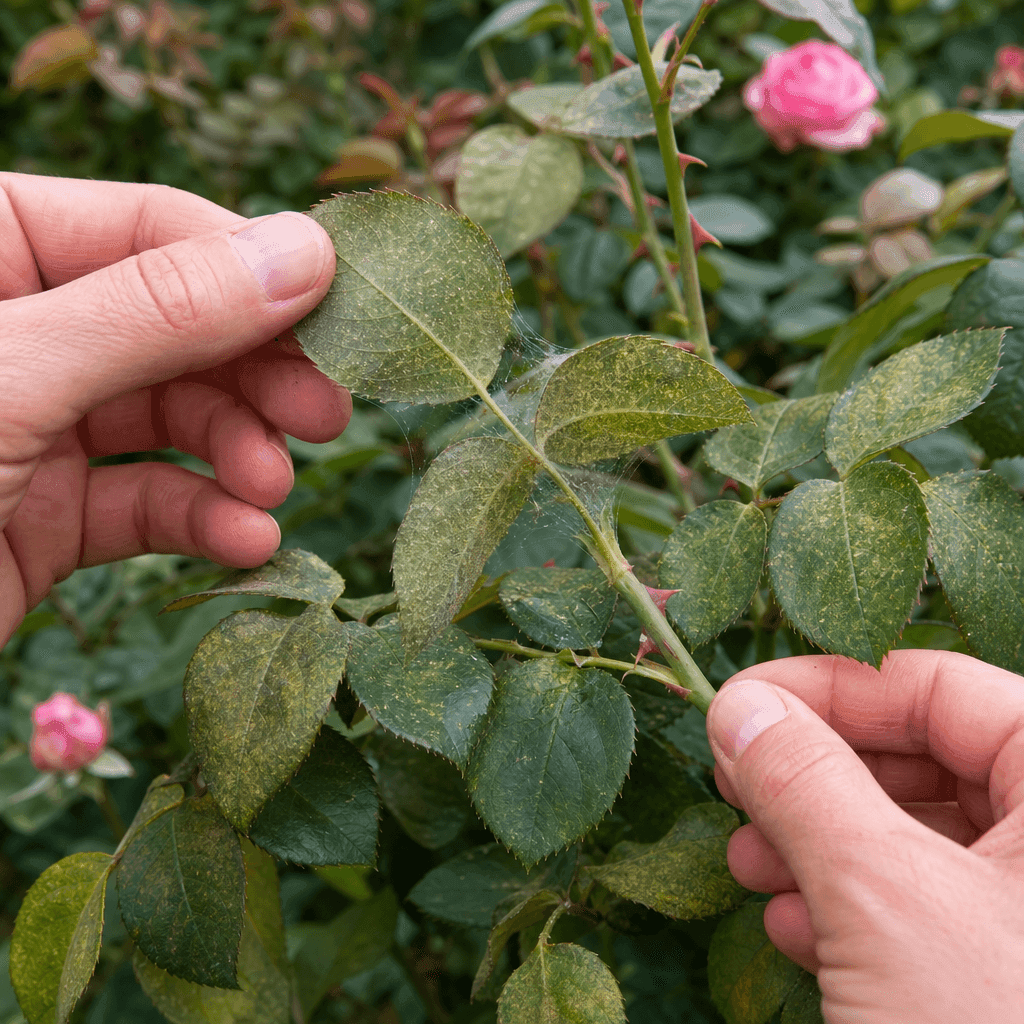
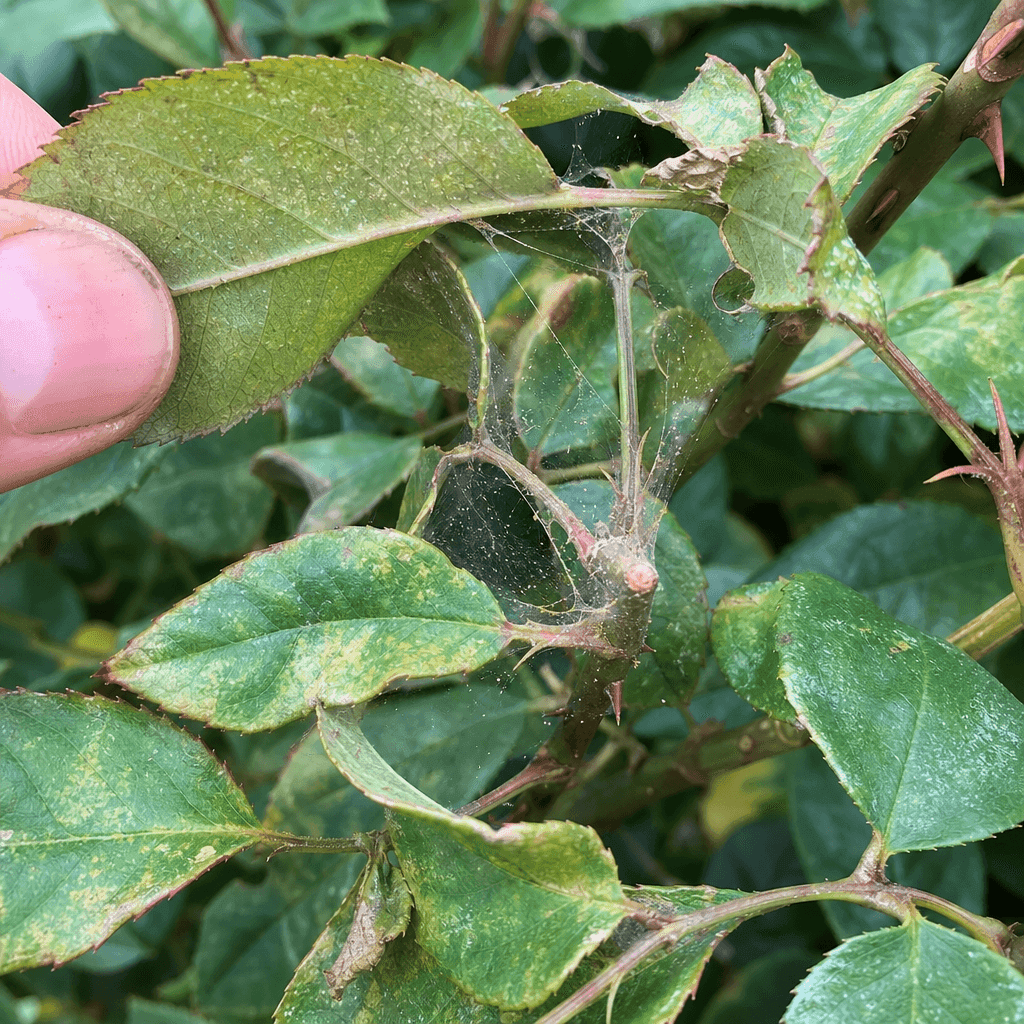
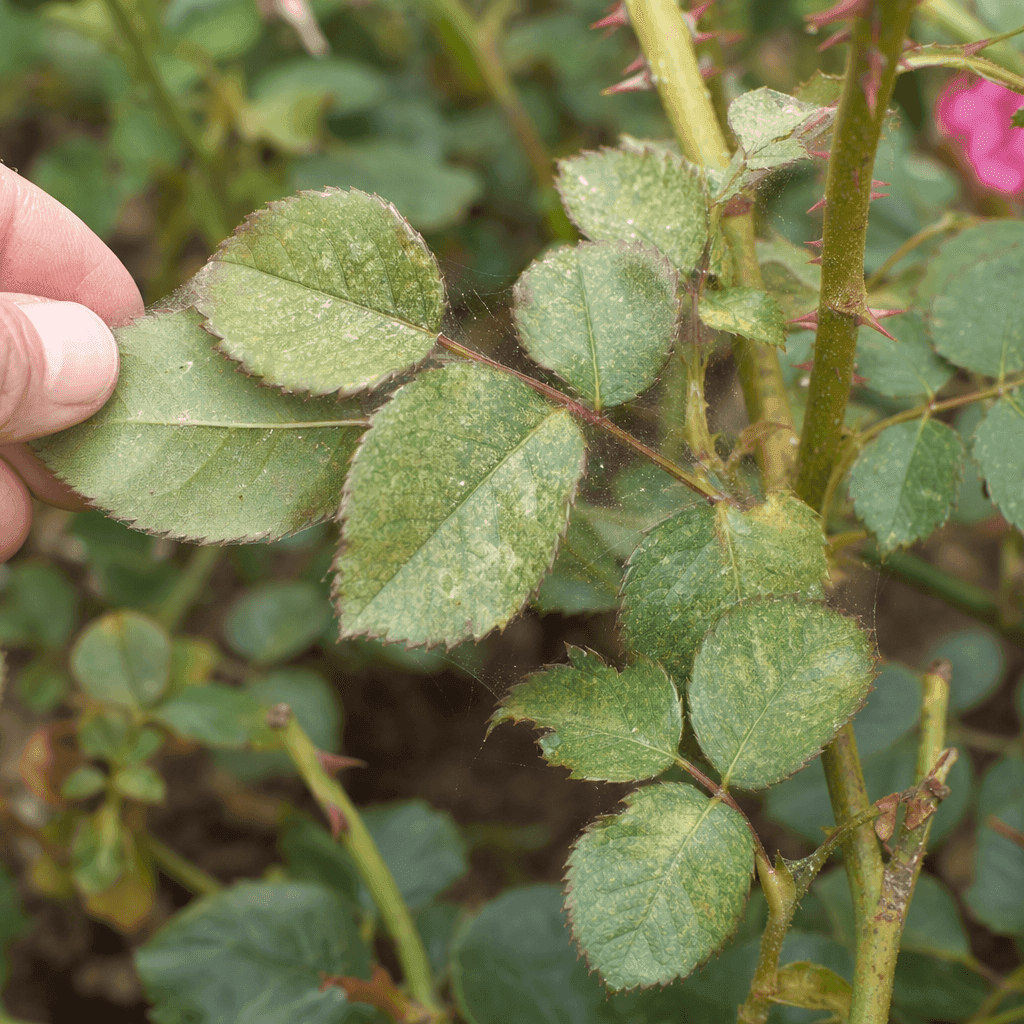
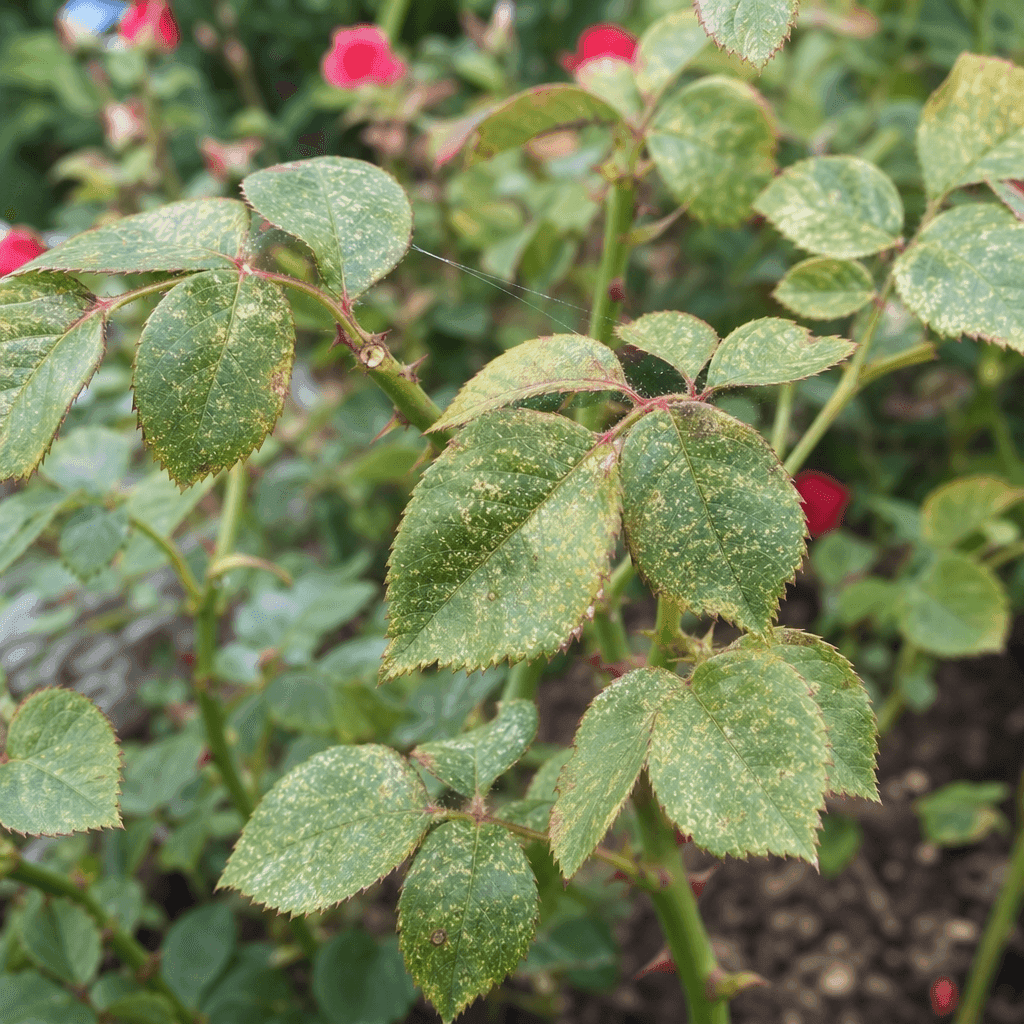
| Fine pale mottling or bronzing on upper leaf surface; dusty yellowy undersides; fine webbing in heavy infestations | Two-spotted / glasshouse red spider mite | High | Tap leaves over white paper — tiny moving dots confirm mites; use a hand lens to see the mites on leaf undersides | Spray undersides of leaves with water; raise humidity; introduce Phytoseiulus persimilis if indoors | Medium |
| Mottled pale leaves on roses that are also wilting or have dry soil; browning at leaf edges | Drought stress increasing mite susceptibility | High | Soil dry 5 cm down; rose in a hot, sunny or reflected-heat spot; mites confirmed on underside | Water deeply; mulch to retain moisture; treat mites — stressed plants attract far heavier infestations | High |
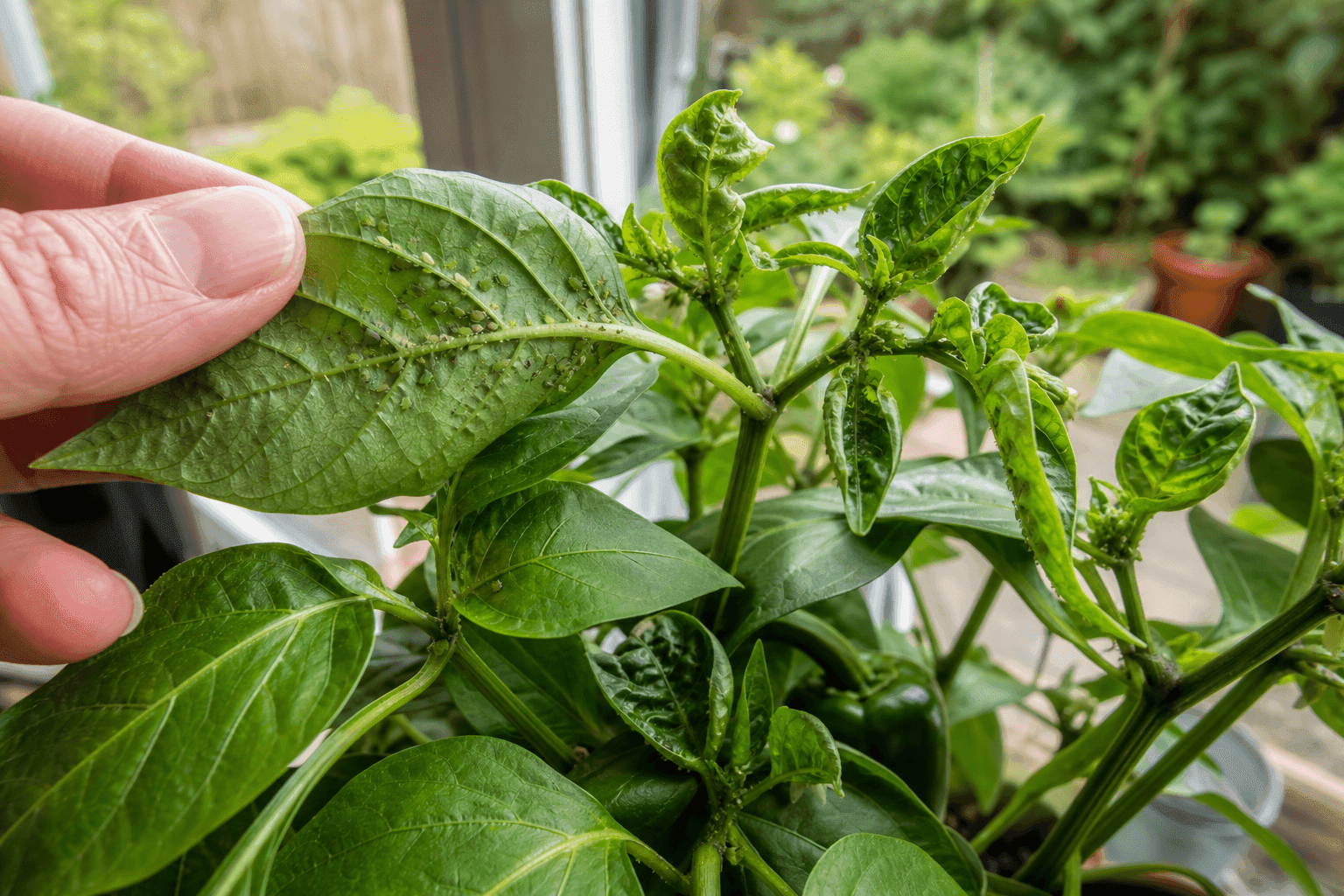
| Distorted new growth; sticky leaves; green or black insects on shoot tips — often confused with mite damage | Aphids (greenfly/blackfly) — commonly found alongside or instead of mites | Medium | Visible insects (1–3 mm) clustered on shoot tips and bud clusters; no webbing; leaf rolling | Dislodge with water jet; hand-squash; encourage ladybirds and lacewings | Medium |
| Leaf bronzing without webbing; damage often starting mid-season; no mites visible on white paper | False spider mite or eriophyid mite (rust mite) | Low | No webbing; use a hand lens to look for tiny elongated mites (not round) on leaf undersides | Improve conditions; some eriophyid infestations resolve when temperatures drop in autumn | Low |
The causes, in detail
Glasshouse red spider mite / two-spotted mite (Tetranychus urticae)
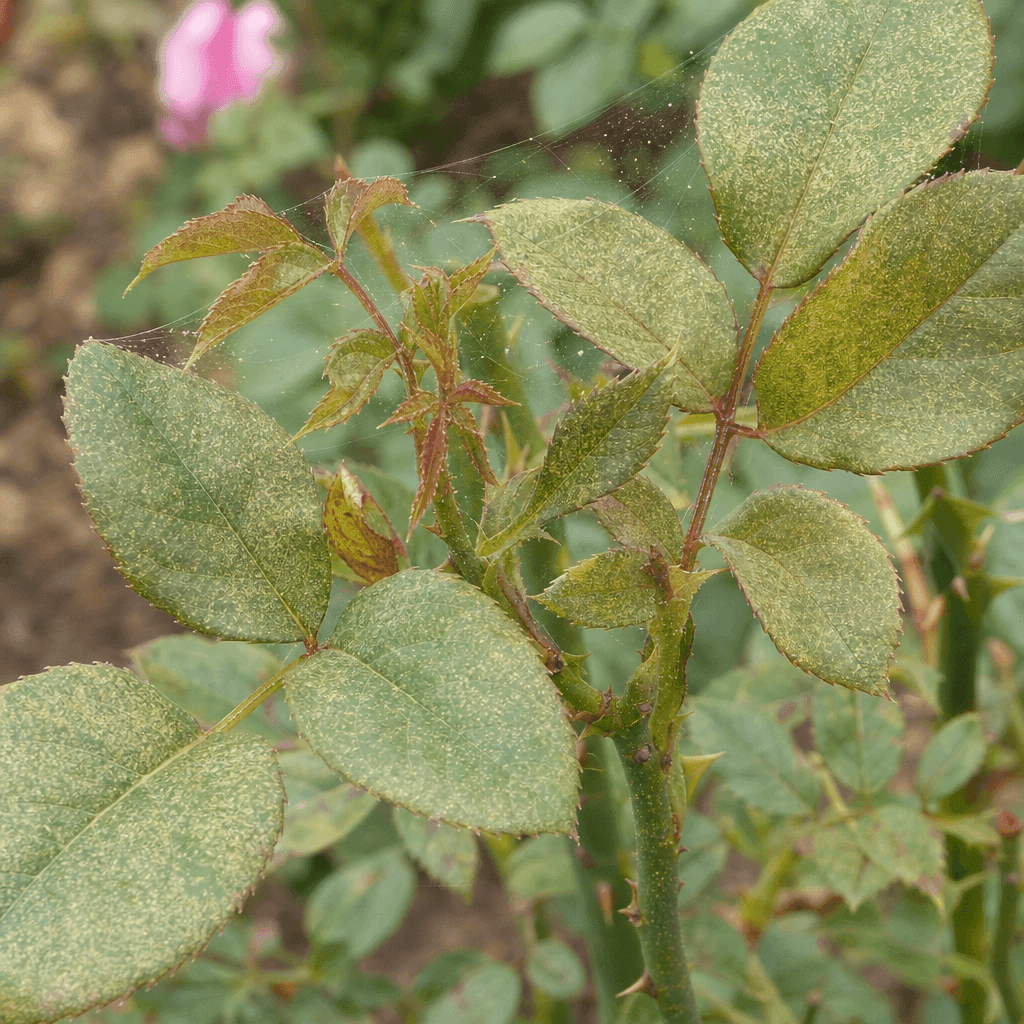
Most likelyThe glasshouse red spider mite is the most common spider mite pest of UK roses and is especially prevalent on indoor and sheltered outdoor roses during hot, dry summers. Despite the name, they are usually yellow-green with two darker spots in summer, turning orange-red in autumn. The RHS confirms they cause a characteristic fine pale mottling on the upper leaf surface as they puncture and drain individual cells, and that fine webbing appears once populations are large. A single female can produce up to 100 eggs, so populations can explode within two to three weeks in hot conditions. Koppert UK notes that Tetranychus urticae is the most economically important spider mite worldwide. Spider mites are one of the most persistent sap-sucking garden pests you will encounter on roses.
- Tap a suspect leaf or shoot over a sheet of white paper and watch for tiny moving dots.
- Examine leaf undersides with a hand lens — look for tiny oval yellowish-green mites with two darker spots, and white egg cases.
- Look for fine pale mottling on the upper leaf surface — the whole leaf looks dusty or silvery in heavy infestations.
- Check for silky webbing on shoot tips and between leaves in advanced infestations.
- Note whether damage intensifies after dry, hot spells — classic spider mite conditions.
- Syringe or mist the undersides of leaves with water forcefully — this dislodges mites and raises humidity, which inhibits reproduction.
- Repeat every 2–3 days — mites reproduce very rapidly in warm conditions and single treatments are rarely enough.
- Remove and bin the most heavily infested leaves.
- For roses in greenhouses or conservatories, introduce the predatory mite Phytoseiulus persimilis — a highly effective biological control available from UK biological control suppliers.
- Avoid broad-spectrum insecticides — they kill the natural predators (predatory mites, lacewings) that help keep spider mites in check, and mites quickly develop resistance to chemical treatments.
Stop it coming back:Spider mites prefer dry, dusty conditions. Keeping roses well-watered, regularly syringing the foliage (especially leaf undersides), and maintaining good soil moisture and mulch all significantly reduce the risk of serious infestation.
spray with pyrethroid insecticides — these kill predatory mites and often cause mite populations to rebound worse than before. Spider mites develop resistance to insecticides rapidly.
Drought stress and heat — the mite multiplier
Most likelySpider mites are dramatically more damaging on water-stressed roses. A rose suffering from drought produces less resistance to pest attack, and the hot dry conditions that stress the rose are exactly the conditions that accelerate mite reproduction — populations can double in less than a week in a heatwave. Roses in containers, against south-facing walls, on poor soils, or in hard-landscaped areas with little soil moisture are at especially high risk. Horticulture Magazine UK notes that 'prevention is easier than the cure' and that keeping roses well-watered is the foundation of spider mite management.
- Mite damage is severe on a rose that is also showing drought stress symptoms (wilting, dry soil, leaf scorch).
- The rose is in a hot spot — south- or west-facing wall, container on paving, or in a dry border.
- The summer has been hot and dry.
- Water deeply at the base of the rose — the whole root zone needs to be wetted, not just the surface.
- Apply a 5–8 cm mulch of garden compost or bark around the rose, keeping it away from the stem, to retain soil moisture.
- Move container roses off hot paving and into a less reflected-heat position during heat spells.
- Address mite control simultaneously — a stressed rose will not outgrow a mite problem without help.
treat mites alone without addressing drought — they will return rapidly on a stressed plant.
Rose aphids (greenfly)
PossibleRose aphids (Macrosiphum rosae and Metopolophium dirhodum) are often found alongside spider mites in summer, and the two can be confused. Both cause distorted, unhealthy-looking roses. The distinction is that aphids on roses are visible soft-bodied insects (1–3 mm) clustered particularly at shoot tips, flower buds, and tender stems, while spider mites are invisible to the naked eye and cause mottling across the leaf blade with webbing. Aphids also produce honeydew, making leaves sticky, which mites do not. The RHS recommends encouraging natural predators — particularly ladybirds and parasitic wasps — rather than applying insecticide.
- Visible clusters of small insects (green, cream, or pink) on shoot tips and bud clusters.
- Sticky honeydew on leaves and stems.
- Leaf curling and distortion of new growth.
- No webbing — webbing strongly indicates spider mites rather than aphids.
- Dislodge colonies with a strong jet of water directed at shoot tips and leaf undersides.
- Squash small colonies by hand.
- Avoid insecticides to preserve ladybirds, lacewings, and parasitic wasps — these predators can control aphids effectively if given the chance.
- Remove badly distorted shoot tips and bin them (do not compost).
spray with a broad-spectrum insecticide — it kills ladybird larvae and lacewing eggs that are already present and naturally controlling the infestation.
False spider mite and eriophyid rust mites
Less likelyEriophyid mites (rust mites or false spider mites) are much smaller than spider mites and cause bronzing or russeting of leaves without producing webbing. On roses they are less common than two-spotted spider mites but can cause similar-looking symptoms. They require a hand lens or microscope to confirm, as they are invisible to the naked eye and do not tap out onto white paper as readily as two-spotted mites (they are too small to see). They tend to cause uniform bronzing rather than the pale stippling typical of two-spotted mite damage.
- Leaf bronzing without any webbing.
- No mites are visible when tapping the leaf over white paper.
- Use a hand lens — eriophyid mites are tiny and elongated (worm-shaped), unlike the rounded two-spotted mite.
- Improve growing conditions — watering, mulching, and general rose health.
- Eriophyid mite populations often decline naturally in autumn when temperatures drop.
- Sulphur-based fungicides (used for diseases such as blackspot) also have some suppressive effect on rust mites.
apply the same treatment as for two-spotted mites without confirming the species — false spider mites and two-spotted mites respond differently to some controls.
Still not sure?
Work down these branches — the first one that matches is your answer.
What not to do
- Spray with pyrethroid insecticides — they kill predatory mites and cause mite populations to rebound strongly.
- Treat only once — spider mites reproduce rapidly and a single treatment rarely eliminates an infestation.
- Ignore drought stress — a water-stressed rose will suffer far worse mite infestations than a healthy, well-watered one.
- Assume leaf mottling is a disease and apply fungicide before checking for mites.
- Use the same insecticide repeatedly — spider mites develop resistance to individual chemicals very quickly.
Common questions
How do I know if my rose has spider mites?
Tap a suspect leaf sharply over a sheet of white paper — tiny moving dots confirm spider mites. Also examine leaf undersides with a hand lens for tiny yellowish-green oval mites with two darker spots, white egg cases, and fine webbing. The upper leaf surface shows pale stippling or mottling in the early stages.
When are spider mites worst on UK roses?
Spider mites are a problem from March to October but are worst in hot, dry summers — typically June to August in the UK. Roses on sheltered south-facing walls, in conservatories, or in containers are most often affected. They are largely inactive below about 12°C.
What is the best non-chemical control for spider mites on roses?
Regularly syringing or misting the undersides of leaves with water is the most effective non-chemical control — it dislodges mites and raises humidity, both of which inhibit reproduction. For roses in greenhouses, the predatory mite Phytoseiulus persimilis provides excellent biological control.
Can spider mites kill roses?
A heavy, sustained spider mite infestation can severely weaken roses, causing early leaf drop, poor flowering, and reduced vigour. It is rarely fatal to established garden roses but can kill young plants in containers if untreated over a full season. If you are unsure whether mites are the real cause, our guide to common rose problems helps you rule out diseases and other pests.
Why do spider mites keep coming back?
Mites return because the underlying conditions — hot, dry weather and stressed plants — favour rapid reproduction. Controlling mites without addressing drought stress, overexposure to heat, or the elimination of natural predators leads to repeated outbreaks. Focus on plant health and humidity as preventive measures.
Can I use washing-up liquid to control spider mites?
A weak solution of washing-up liquid or insecticidal soap applied to the leaf undersides can kill mites on contact. However, it does not have a residual effect, so repeat applications every 3–5 days are needed. Insecticidal soap is safer for beneficial insects than synthetic pesticides.
Do spider mites affect roses indoors differently from outdoor roses?
Yes. Indoor and conservatory roses are often affected first and most severely because the conditions — warm, dry, low humidity — are perfect for mites throughout the year. Outdoor roses are exposed to rain, which naturally reduces mite populations, and natural predators keep populations in check better than in enclosed environments. For more on keeping the plant healthy enough to resist pests, see our wider rose growing and care advice.