Quick diagnosis
Match the row to what you’re seeing, then jump to the fix.
| What you see | Likely cause | Confidence | How to confirm | What to do now | Urgency |
|---|---|---|---|---|---|
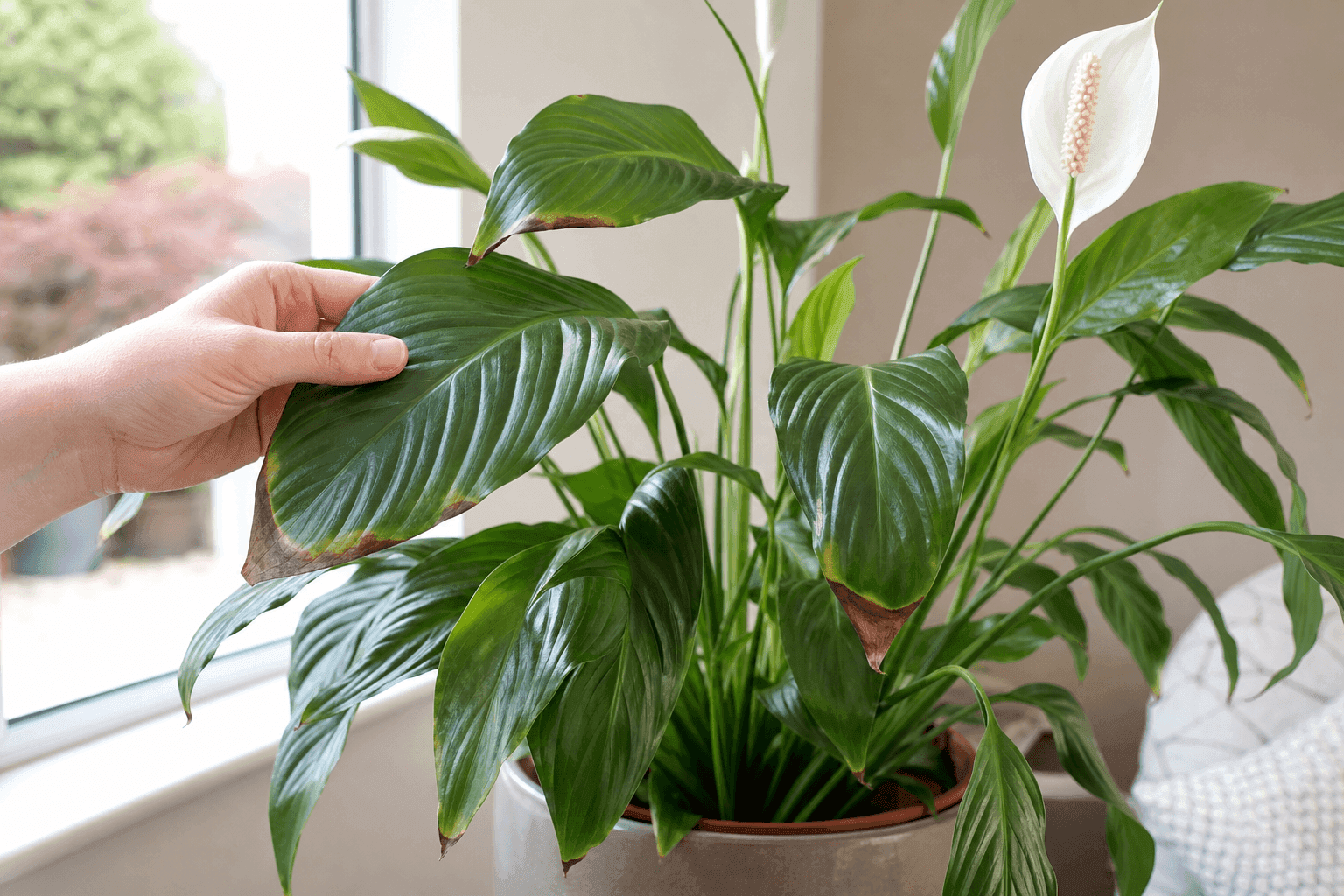
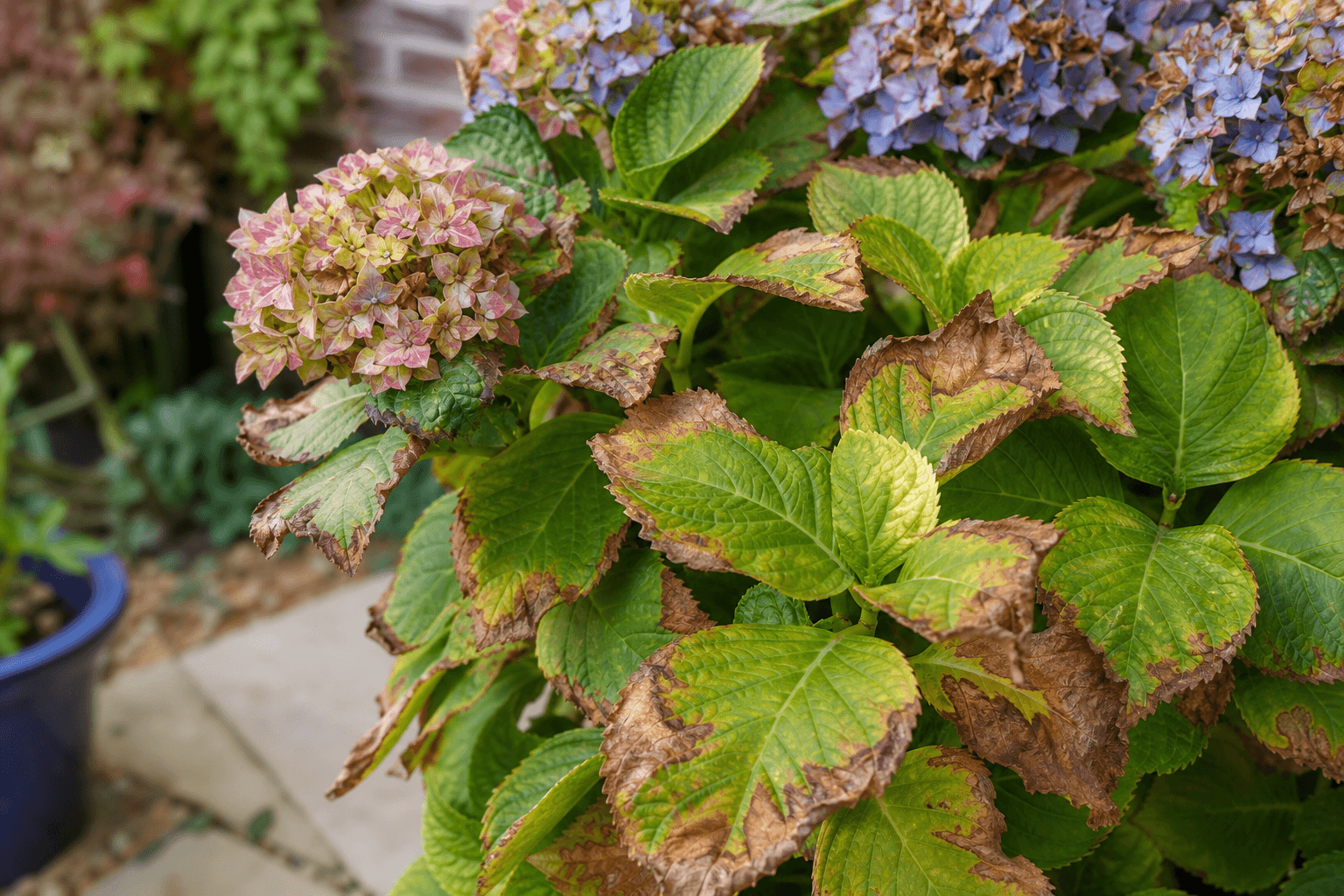
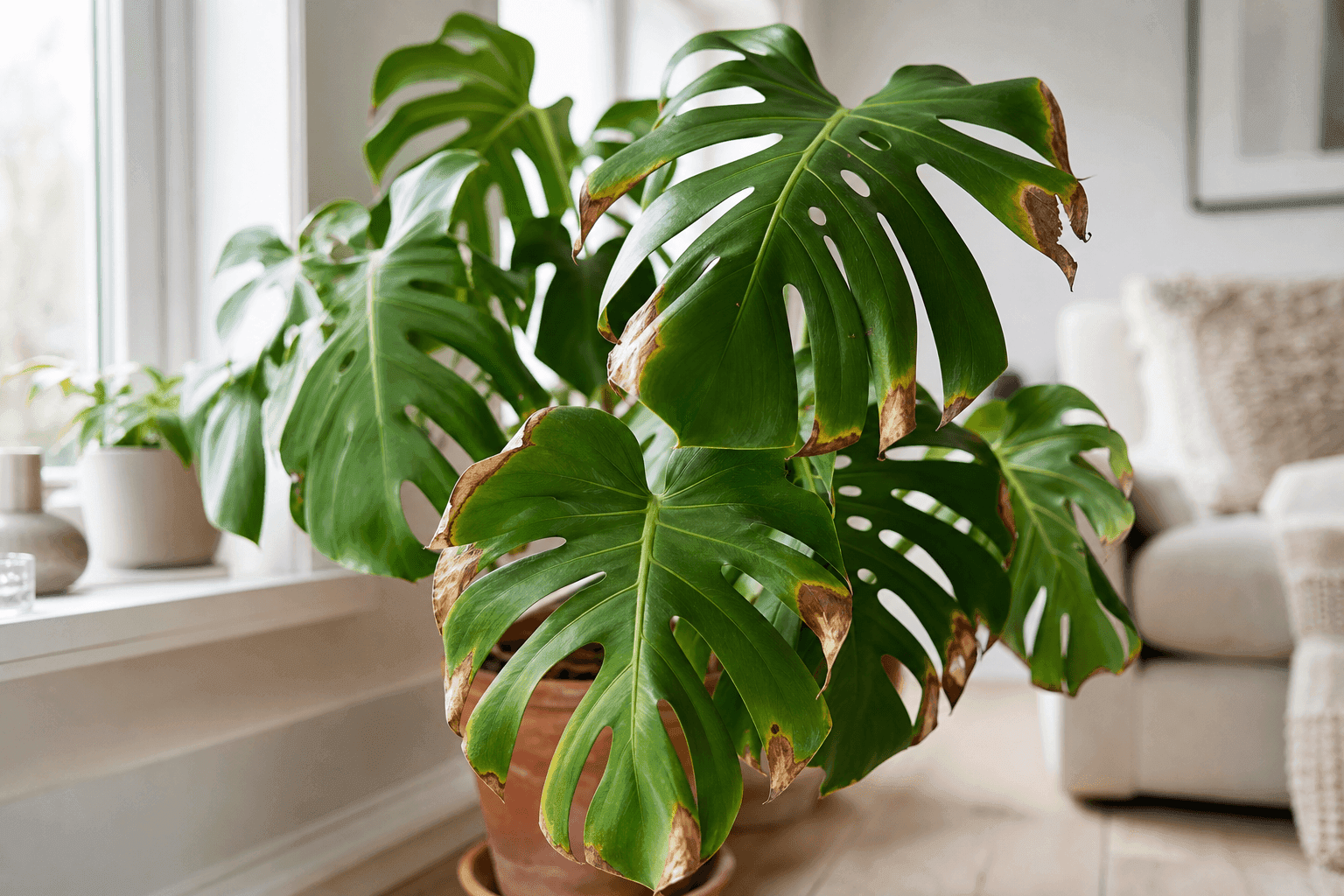
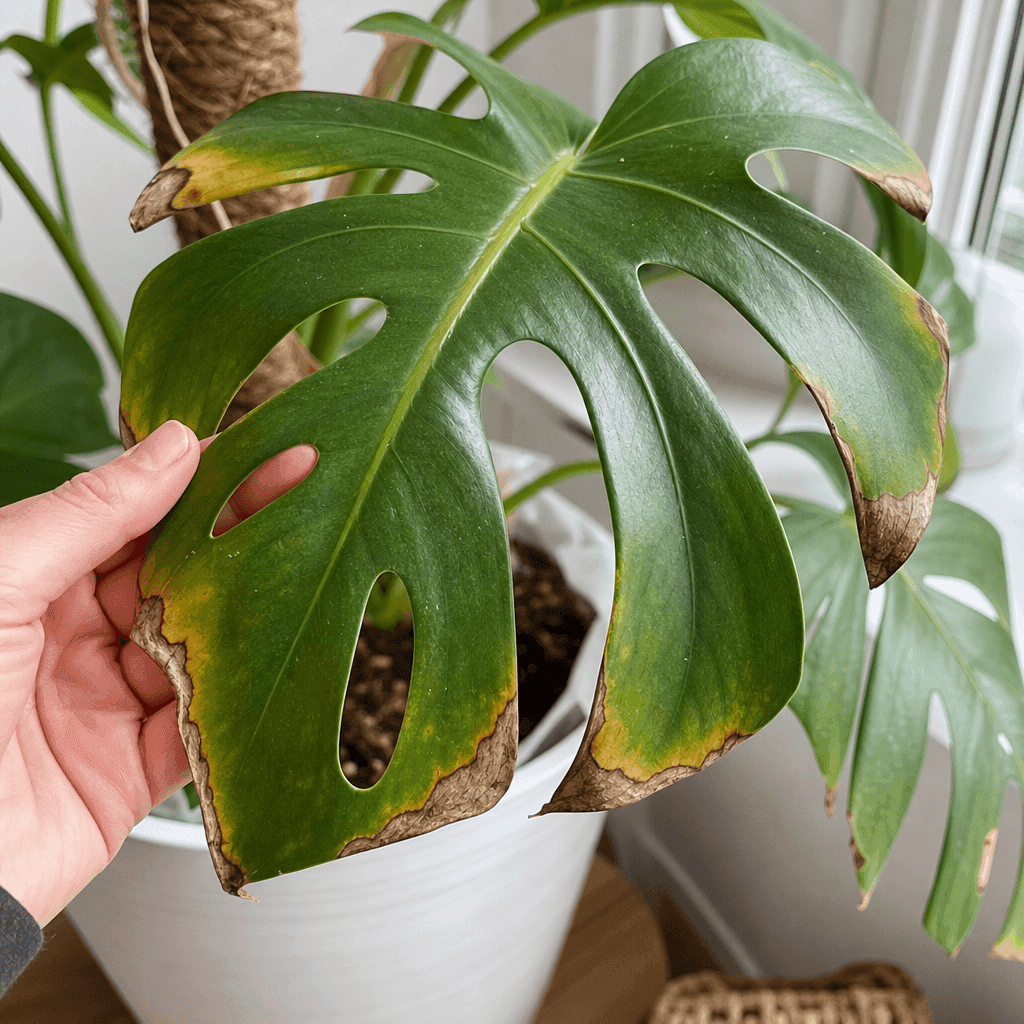
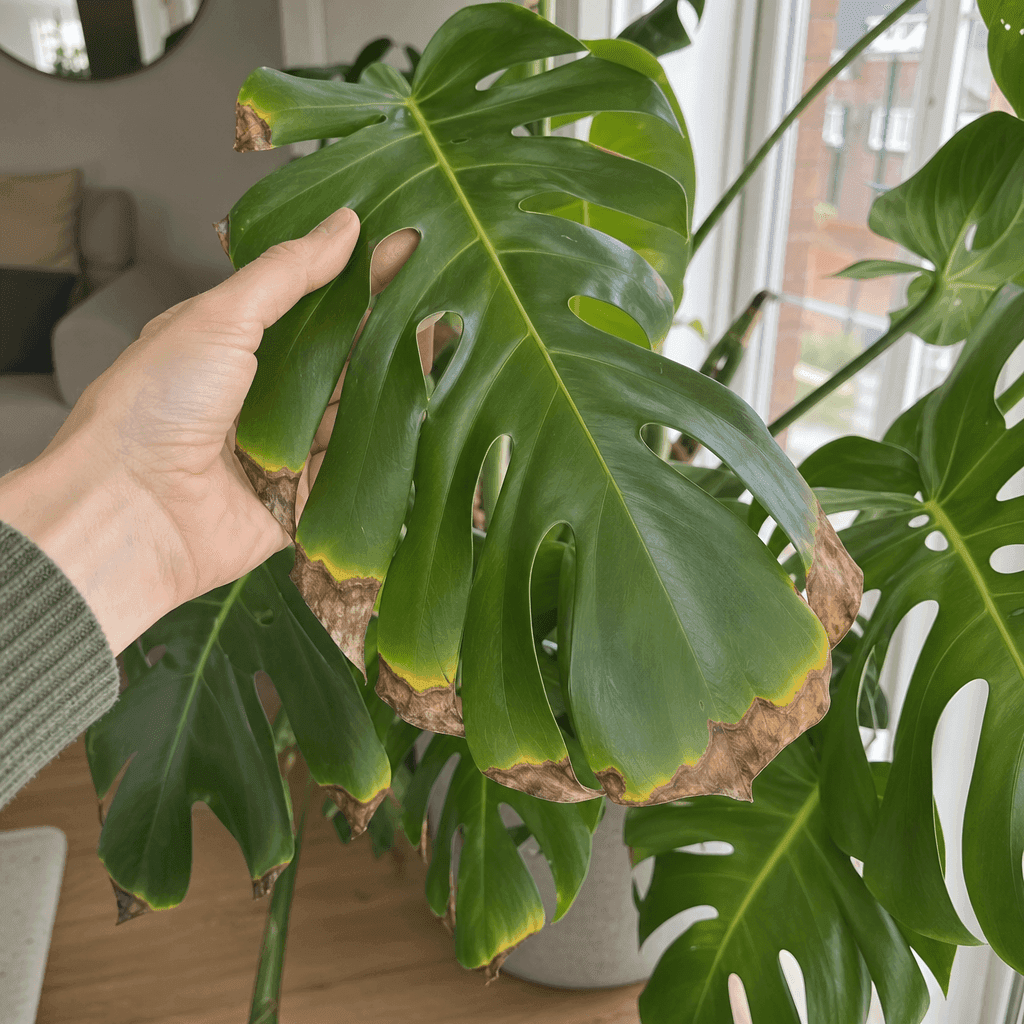
| Crispy brown tips spreading down the leaf edges; papery texture at the margins | Low humidity (central heating, radiators) | High | Heating is on; plant near a radiator or air vent; no other care issues | Move away from heat sources; mist regularly; use a pebble tray or humidifier | Low–medium |
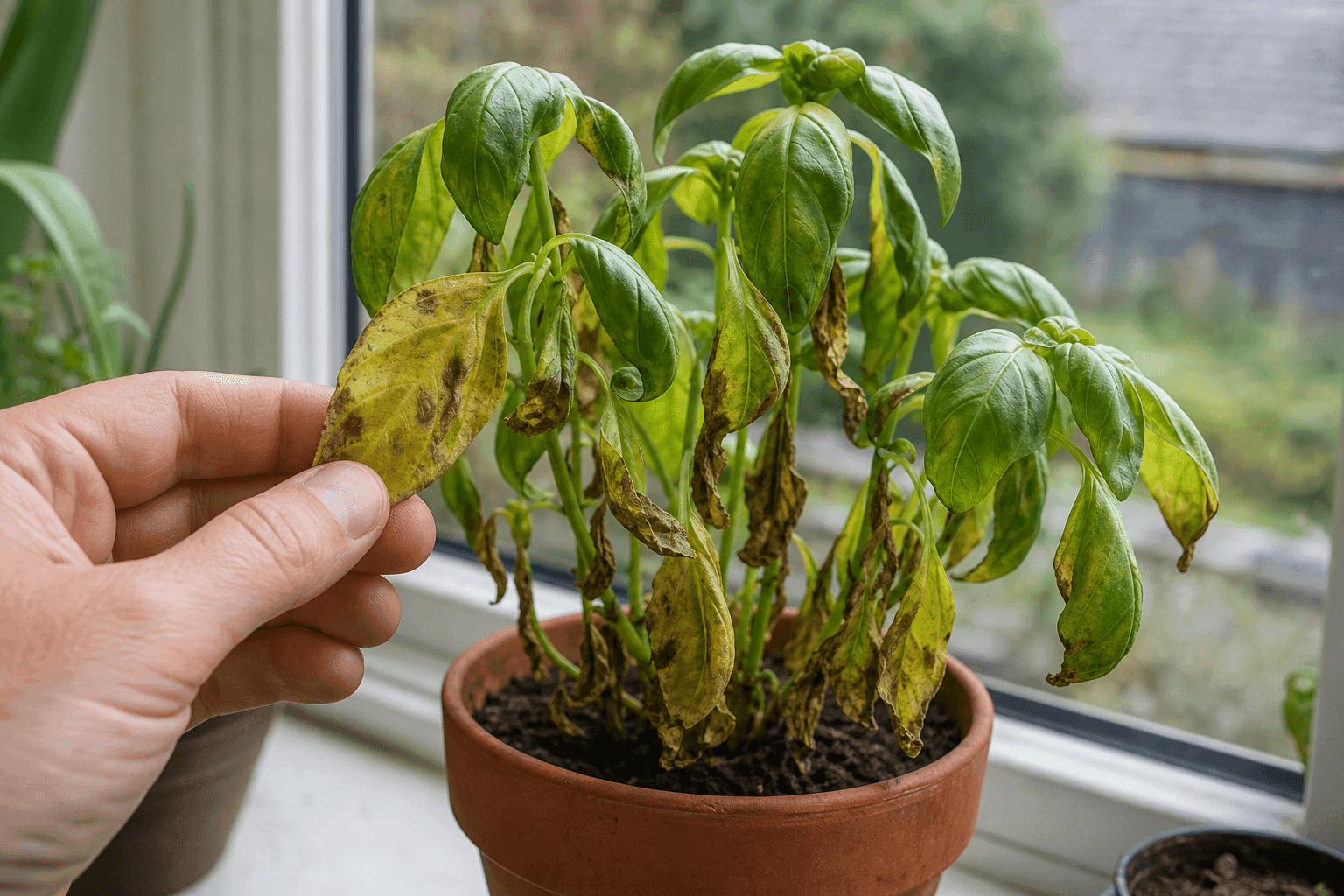
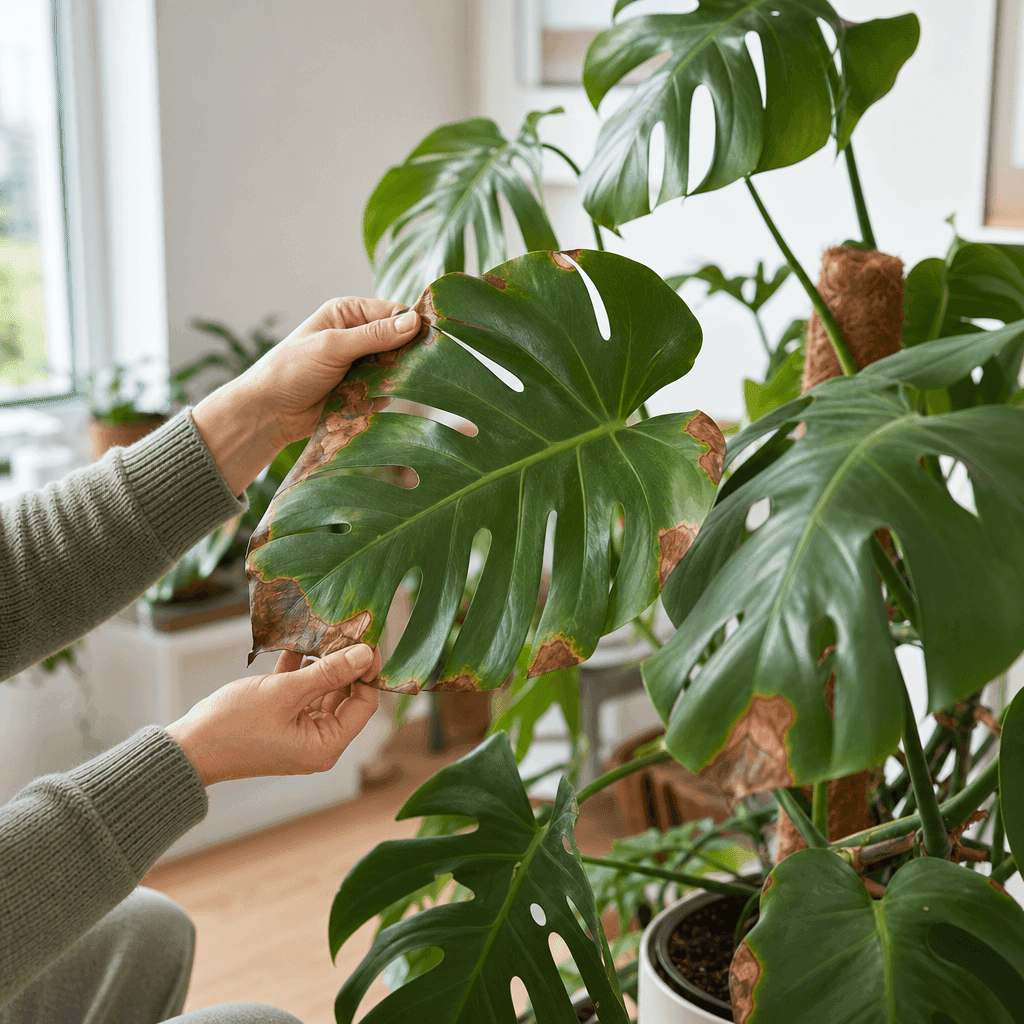
| Brown soft patches; yellowing leaves; wilting despite wet compost; musty smell | Overwatering and root rot | High | Compost wet 5–7 cm down; roots brown and mushy; pot has poor drainage | Stop watering; allow to partially dry; repot if roots are rotting | High |
| Crispy brown tips and edges; leaves curl inward; compost very dry and pulling away from pot | Underwatering | Medium | Compost bone dry 5 cm down; pot feels very light; leaves limp and crispy | Water slowly until it drains freely; consider a bottom-watering soak for very dry rootballs | Medium |
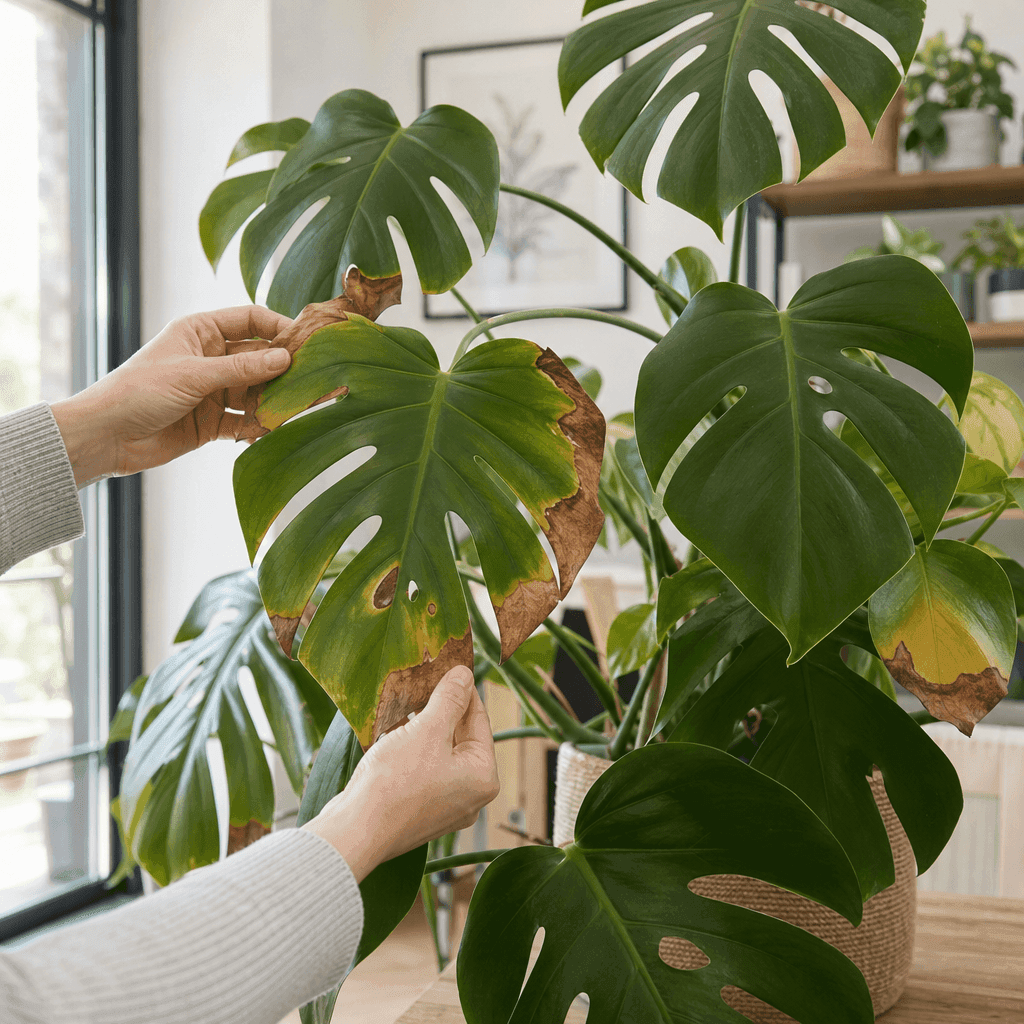
| Faded yellow-brown patches on upper leaf surface; irregular shape; not at edges only | Direct sun scorch | Medium | Plant near south- or west-facing window in summer; damage appeared after a bright spell | Move away from direct sunlight; bright indirect light is ideal | Low–medium |
| Brown tips, often with a yellow halo; white salt crust on compost surface | Over-fertilising and fertiliser salt burn | Medium | Fed frequently or at full strength; white crystalline crust on compost; tips browning shortly after feeding | Flush compost with plain water; reduce feeding to monthly at half strength in growing season | Low–medium |
| Gradual browning of tips over months; white residue on compost or pot rim | Mineral build-up from hard tap water | Medium | Using hard tap water in a hard-water area; slow progressive tip browning not linked to other stress | Switch to rainwater or filtered water; flush compost periodically to reduce salt build-up | Low |
The causes, in detail
Low indoor humidity
Most likelyMonstera deliciosa originates from tropical forests and prefers humidity of 50–70%. UK homes in autumn and winter typically drop to 30–40% due to central heating, which desiccates leaf margins faster than the plant can replace moisture. The result is brown, papery leaf tips and edges that spread down the margins over time. Plants near radiators, air vents, or on draughty windowsills are worst affected. Plants for All Seasons UK notes this is the leading cause of monstera browning in British homes.
- Browning starts at the tips and spreads down the leaf edges in a dry, papery way.
- The heating system is on regularly — typically October to April in the UK.
- The plant is near a radiator, heat vent, or single-glazed window.
- Compost moisture is not the problem — the compost is in good condition.
- Move the plant away from radiators and heat sources.
- Mist the leaves with room-temperature water every 2–3 days during the heating season.
- Place the pot on a tray of pebbles and water — as it evaporates, it raises local humidity.
- Use a small humidifier near the plant during winter months.
- Group tropical houseplants together — they raise humidity around each other through transpiration.
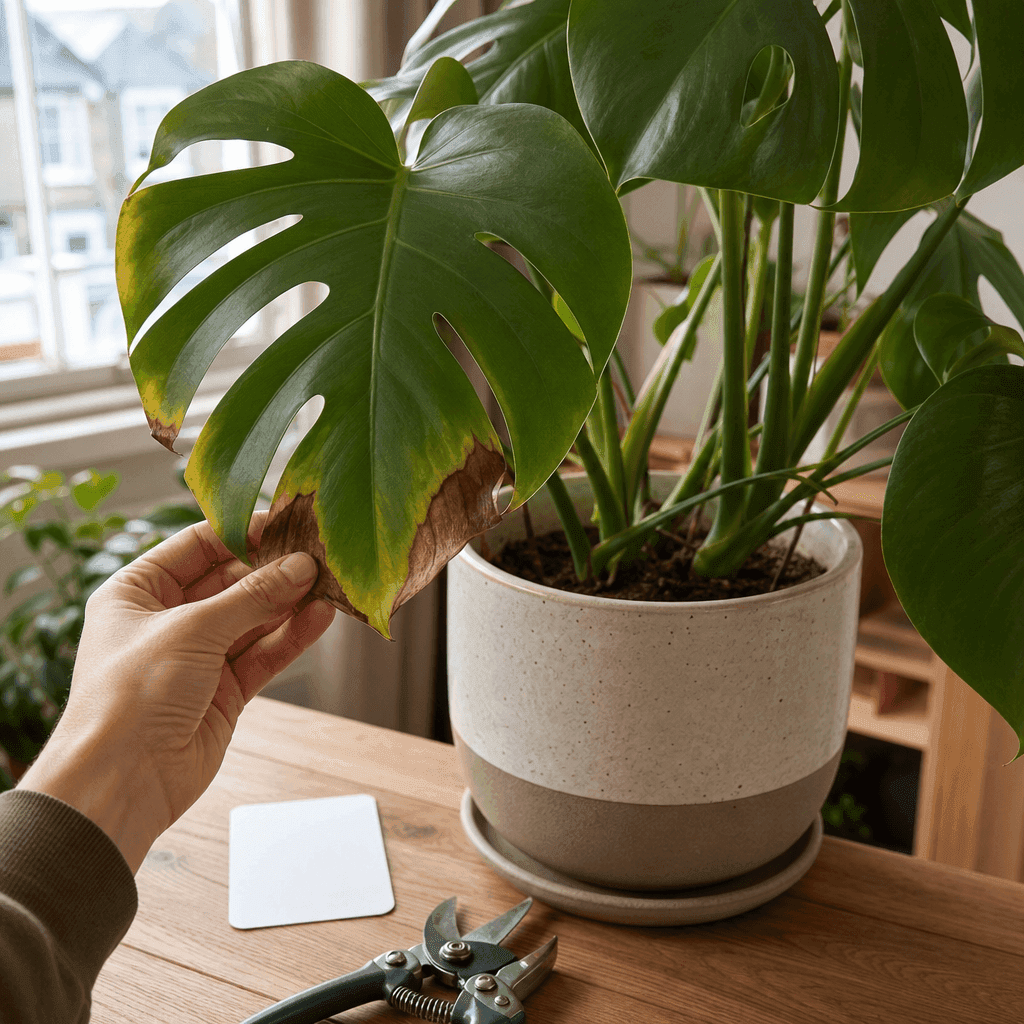
Stop it coming back:Already-brown tip tissue will not turn green again, but improving humidity prevents further browning on the same leaf and protects new growth. Trim brown tips with clean scissors if desired.
mist leaves with very cold water or in a cold draught — use room-temperature water and mist in the morning so leaves dry before evening.
Overwatering and root rot
Most likelyOverwatering is the most common serious problem affecting UK houseplant monsteras, particularly in winter. When the compost stays wet for extended periods, roots are starved of oxygen and begin to rot. Rotting roots cannot take up water, so the plant wilts and leaves brown even though the compost is saturated — an important diagnostic clue. Signs include soft, mushy brown patches on leaves, yellowing leaves, a sour or musty smell from the compost, and brown, soft roots when inspected. Monstera Plant Resource confirms that soft, mushy brown spots are the key visual sign distinguishing overwatering from underwatering. This is the most common over-watering and drainage problem reported by UK houseplant owners.
- Compost is wet 5–7 cm below the surface and stays wet for days or weeks.
- Brown patches on leaves are soft, not crispy.
- Roots are brown and mushy when inspected rather than firm and pale.
- The pot has poor drainage or sits in a saucer of water.
- Stop watering immediately.
- Remove the plant from its pot and inspect the roots — trim any brown or mushy roots with sterile scissors. Our step-by-step root rot treatment guide covers this in detail.
- Allow the rootball to partially air-dry for a few hours before repotting into fresh, free-draining compost.
- Use a well-draining houseplant mix (e.g., peat-free compost with added perlite) and a pot with drainage holes.
- In winter, reduce watering to every 2–3 weeks — only water when the compost is partially dry 5–7 cm down.
Stop it coming back:Root rot recovery is slow; expect 4–8 weeks before new growth resumes. A plant that has lost most of its roots may not survive. Act at first signs rather than waiting for total collapse.
keep the plant in the same wet compost while waiting to see if it recovers — report into fresh compost as soon as root rot is confirmed.
Underwatering
PossibleUnderwatered monsteras show dry, crispy browning that starts at the leaf tips and edges and can affect multiple leaves across the plant simultaneously. Leaves may curl inward and feel limp rather than turgid. This is distinct from low humidity browning in that the compost is bone dry and the pot feels very light. Monstera Plant Resource notes that the five signs of underwatering — crispy tips, curling leaves, dry compost, lightweight pot, and slow growth — help distinguish it from low-humidity damage.
- Compost is very dry 5 cm below the surface — bone dry, not just slightly dry.
- Pot feels unusually light.
- Leaves are limp as well as showing crispy brown tips.
- The plant has not been watered for an extended period.
- Water slowly from the top until it drains freely from the bottom.
- If the compost has become hydrophobic (water runs off without soaking in), place the entire pot in a basin of room-temperature water for 20–30 minutes — bottom-watering allows the rootball to rehydrate fully.
- Allow to drain fully before returning to its position.
- Adjust watering frequency — check the compost regularly and water when 5–7 cm down feels partially dry.
overcompensate with excessive watering after a dry period — return to normal watering rhythm rather than flooding the compost.
Direct sunlight and sun scorch
PossibleMonstera prefers bright indirect light. In UK homes, south- or west-facing windows in summer can expose the plant to direct afternoon sun intense enough to scorch the leaves. Sun scorch appears as irregular faded or bleached yellow-brown patches, often on the part of the leaf facing the window, and does not follow the edge pattern of humidity browning. Blooming Expert UK confirms this as a common cause of monstera browning in summer.
- Patches are irregular, faded or bleached yellow-brown, not confined to the tips.
- Damage is on the side of the plant facing the window.
- Browning started after a period of bright summer sun.
- The plant is within a metre of a south- or west-facing window.
- Move the plant back from the window or into a position with bright indirect light — no direct sun for more than 1–2 hours.
- Use a net curtain or blind to diffuse direct afternoon sun in summer.
- Remove badly scorched leaves cleanly at the stem.
move the plant into a very dark corner to protect it from sun — monstera needs good indirect light to thrive; deep shade causes different problems.
Over-fertilising and fertiliser salt burn
PossibleExcess fertiliser salts accumulate in the compost over time and can draw water out of root cells through osmosis, causing similar symptoms to drought — brown tips, crispy edges, and slow growth. This is more common when plants are fed at full strength, fed too frequently, or fed outside the growing season (October to February). Blooming Expert UK notes that fertiliser burn causes brown tips often accompanied by a yellow halo and sometimes a white crust of salt on the compost surface.
- Brown tips are present along with a yellow halo or border.
- White crystalline residue is visible on the compost surface or pot rim.
- The plant has been fed frequently or at full concentration.
- Browning developed or worsened shortly after a feeding.
- Flush the compost by watering slowly and heavily three times in succession, allowing full drainage each time — this leaches excess salts.
- Reduce feeding to once a month at half the recommended strength during the growing season (March–September).
- Do not feed at all from October to February when the plant is barely growing.
- If salt build-up is severe, repot into fresh compost.
feed more frequently to try to improve the plant's colour — if browning is caused by fertiliser salt, more feed makes it worse.
Hard tap water and mineral build-up
PossibleIn hard-water areas of the UK — much of England and Wales — tap water contains calcium, magnesium, and sometimes fluoride that accumulate in the compost over time. These minerals interfere with root function and cause slow, progressive tip browning that is not linked to any single episode of stress. The distinctive clue is a white powdery or crusty deposit on the compost surface or inner pot rim. Plantsforallseasons.co.uk recommends switching to rainwater or filtered water for monstera as a preventive measure.
- Slow, progressive browning of tips over many months.
- White powdery or crusty deposits on the compost surface or the pot interior.
- Hard tap water is used regularly in an area with hard water.
- No other care issues explain the gradual decline.
- Switch to collected rainwater for all future watering — slightly acidic and free from hard-water minerals.
- Alternatively use filtered water (reverse osmosis or filtered jug) if rainwater is not available.
- Flush the compost thoroughly with soft water several times to leach accumulated minerals.
- Repot into fresh compost if accumulation is severe.
use mineral water from bottles as a long-term solution — it may contain its own mineral load; rainwater or reverse-osmosis water is preferable.
Still not sure?
Work down these branches — the first one that matches is your answer.
What not to do
- Keep watering when the compost is already wet — this is the fastest route to root rot.
- Feed during autumn and winter when the plant is dormant — salts accumulate without being used.
- Place the plant near a radiator or air vent to 'warm it up' — this dramatically lowers local humidity.
- Move a monstera with root rot into a much larger pot — the excess wet compost will worsen the problem.
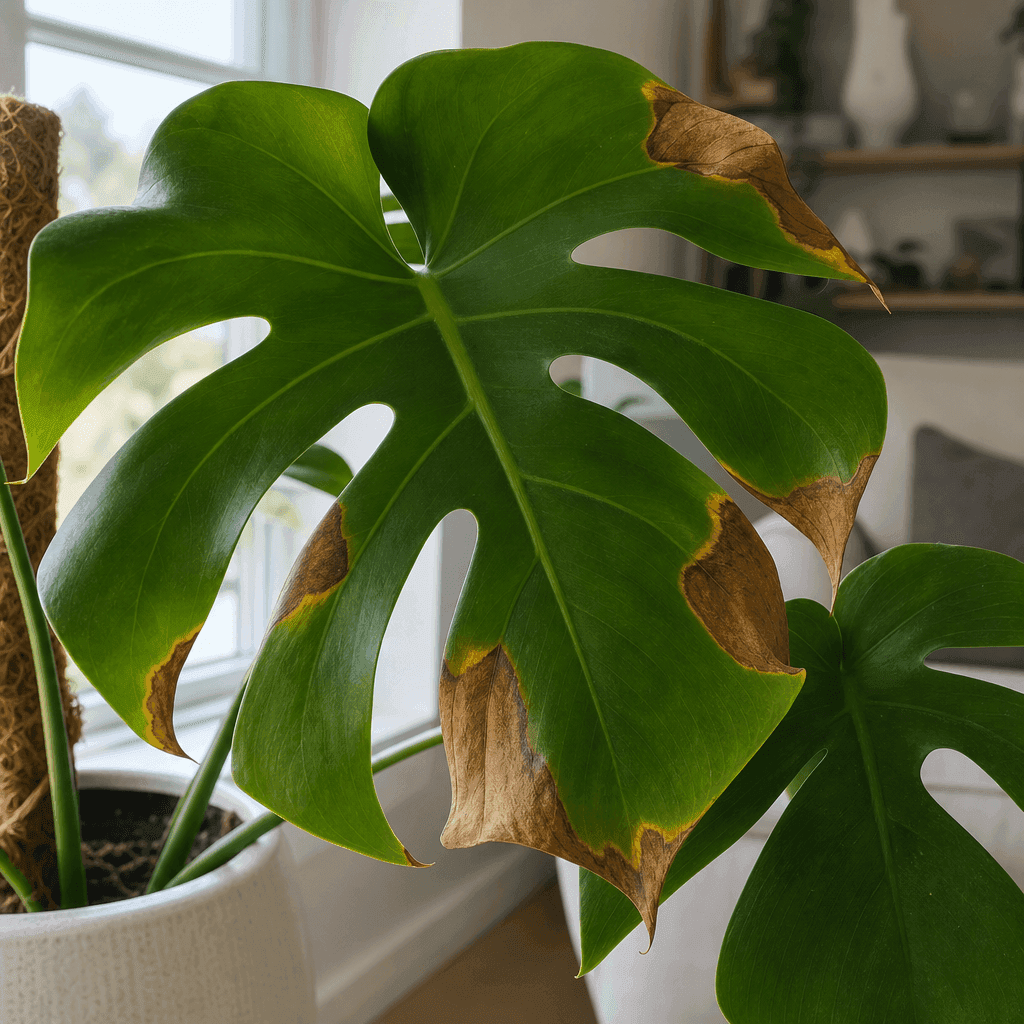
- Cut off every brown-tipped leaf — leave functioning green leaves even if they have brown tips.
Common questions
Why are my monstera leaves getting brown tips?
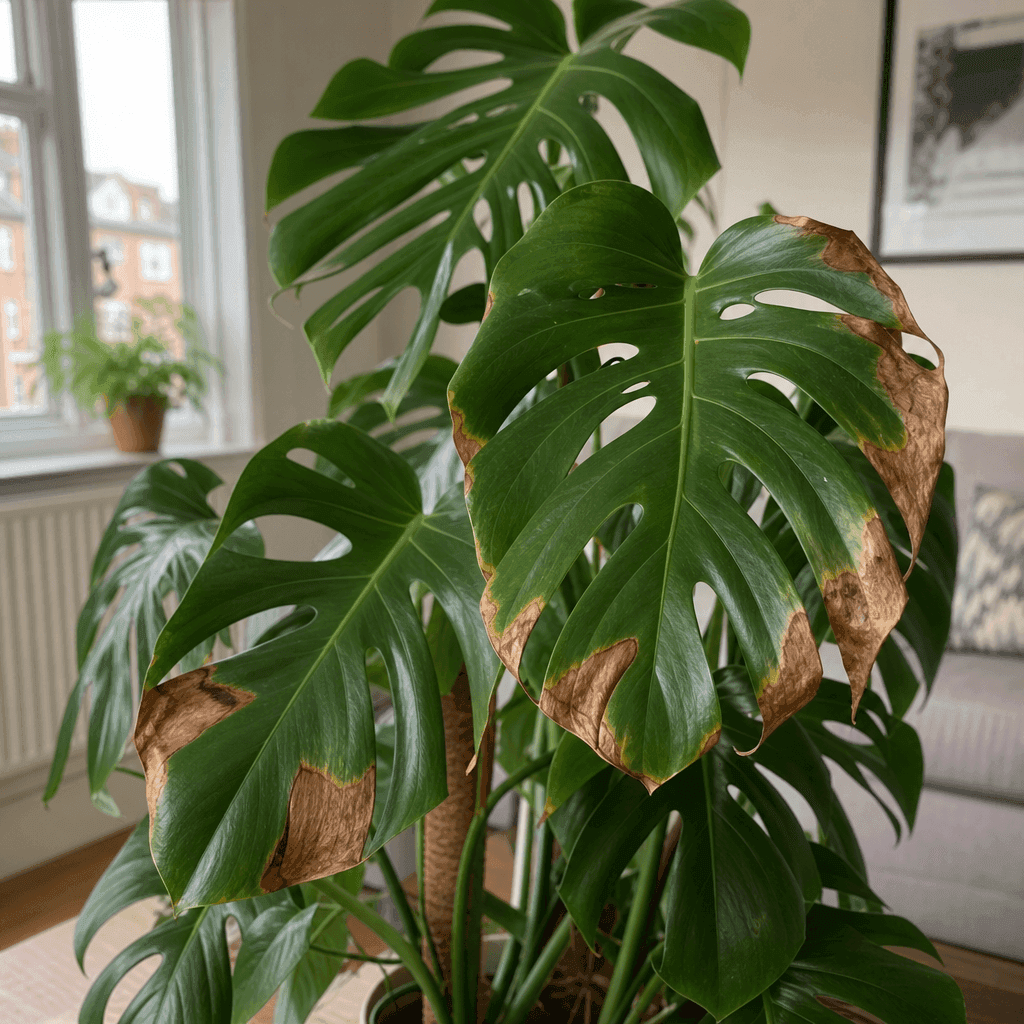
Brown tips on monstera are most commonly caused by low humidity (central heating in winter), underwatering, or mineral build-up from hard tap water. The tips and edges of leaves are the furthest from the root water supply and dry out first when moisture is insufficient. Improving humidity and switching to rainwater usually resolves it.
Can monstera brown leaves turn green again?
No — brown tissue is dead and will not recover. You can trim brown tips with clean scissors for aesthetics, but the underlying cause must be fixed to prevent new browning. New leaves that emerge after you correct the problem will be healthy.
How often should I water my monstera in the UK?
In the growing season (March–September), water when the top 5–7 cm of compost is partially dry — roughly every 7–10 days depending on pot size and temperature. In winter, reduce to every 2–3 weeks or less. Always check before watering rather than following a fixed schedule.
Why is my monstera getting brown patches in the middle of the leaf?
Brown patches in the middle of leaves rather than at the edges typically indicate overwatering and root rot (soft, mushy patches) or direct sun scorch (faded, bleached patches). Check both the soil moisture and the plant's exposure to direct sunlight.
Should I mist my monstera in winter?
Yes, misting with room-temperature water every 2–3 days during the heating season helps counteract the low humidity caused by central heating. Alternatively, place the pot on a pebble tray with water or use a humidifier nearby.
Can I use tap water for my monstera?
In soft-water areas, tap water is generally fine. In hard-water areas, regular use of tap water causes mineral build-up that slowly browns the tips. Collected rainwater is the best option for monstera in the UK — it is naturally slightly acidic and mineral-free.
Should I remove brown monstera leaves?
Remove leaves that are entirely brown, dead, or mushy. Leave leaves that are mostly green with only brown tips — they still photosynthesise. Trim brown tips with clean scissors if desired, cutting slightly into healthy tissue at an angle to follow the leaf's natural shape.