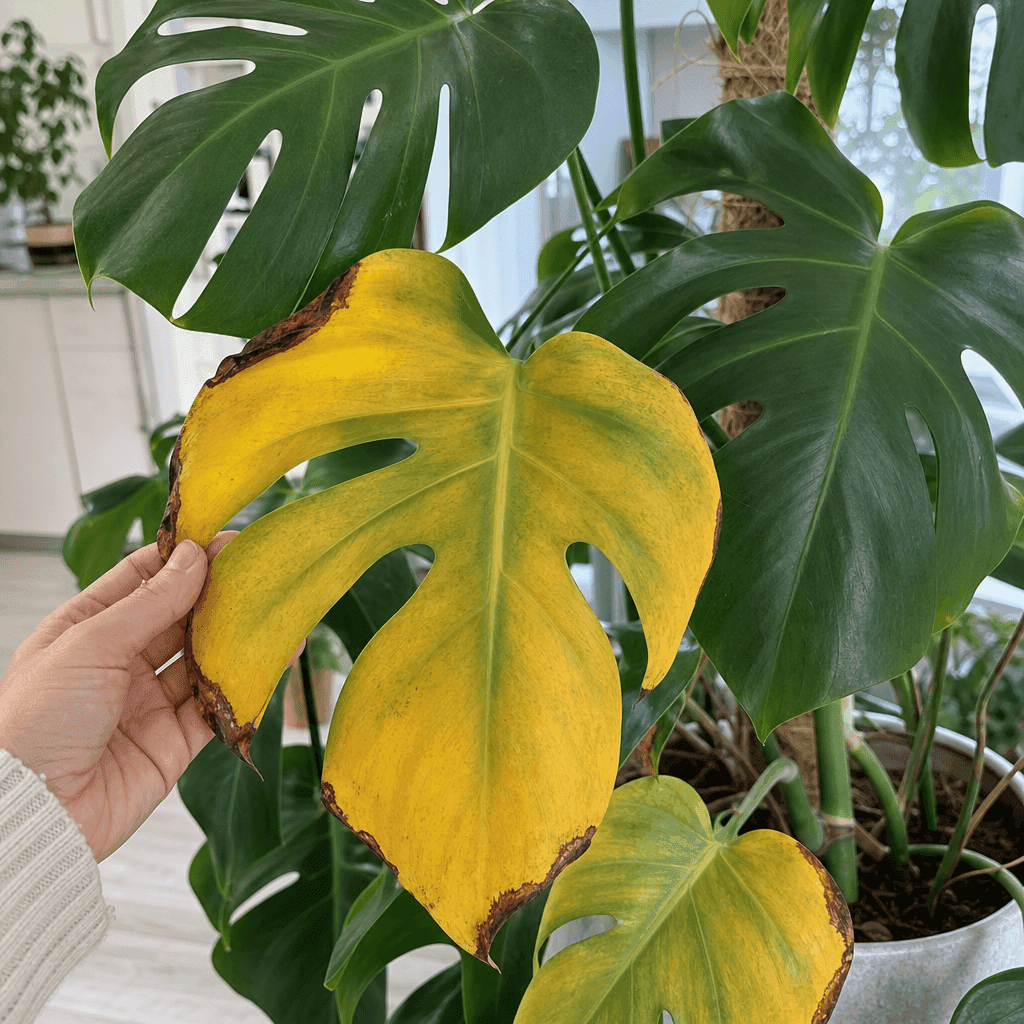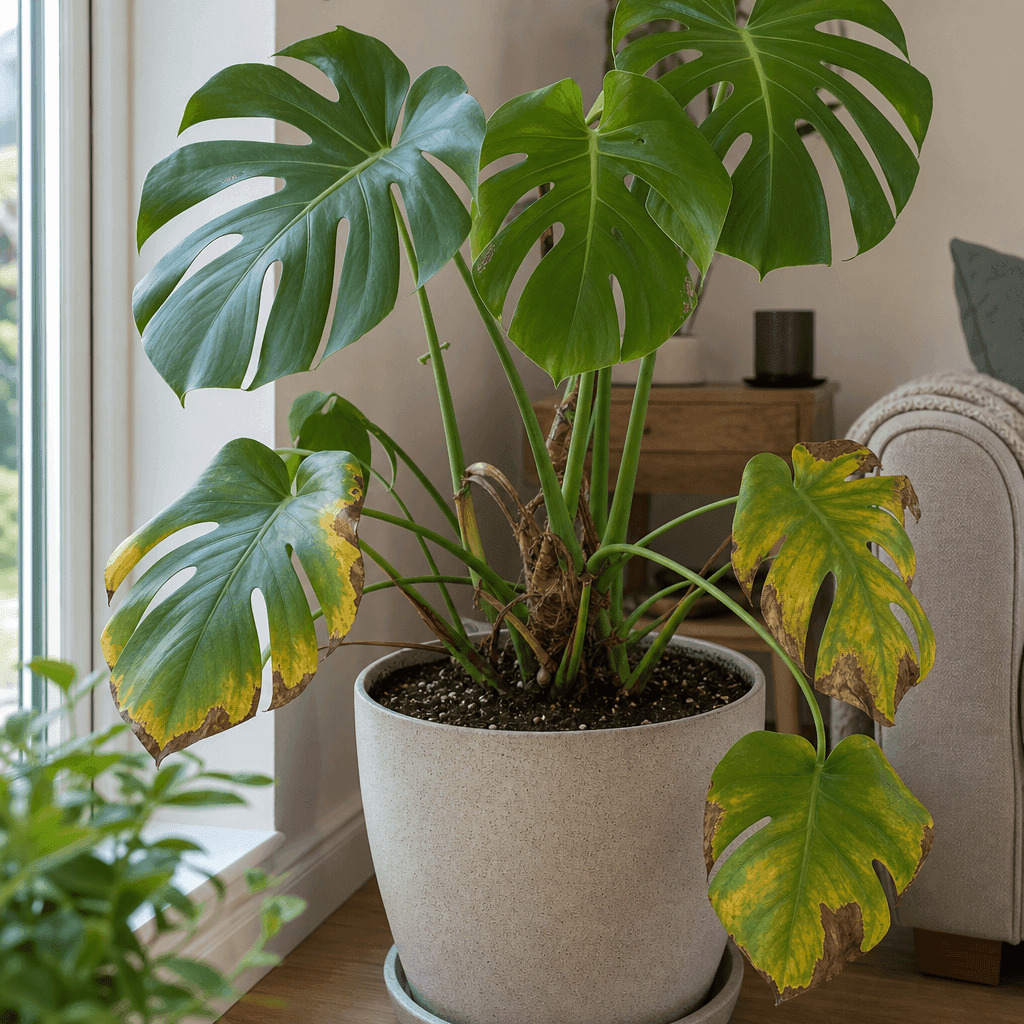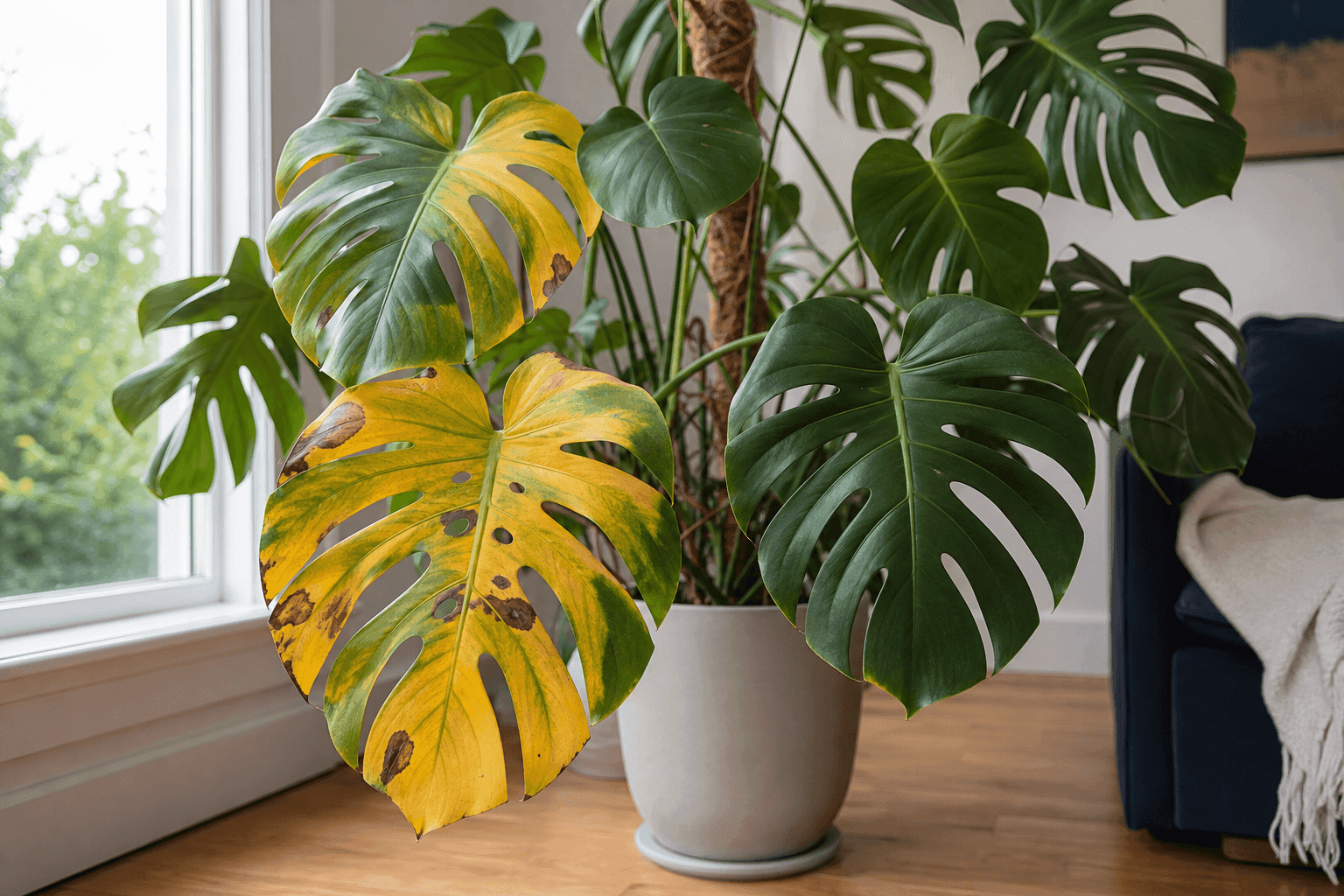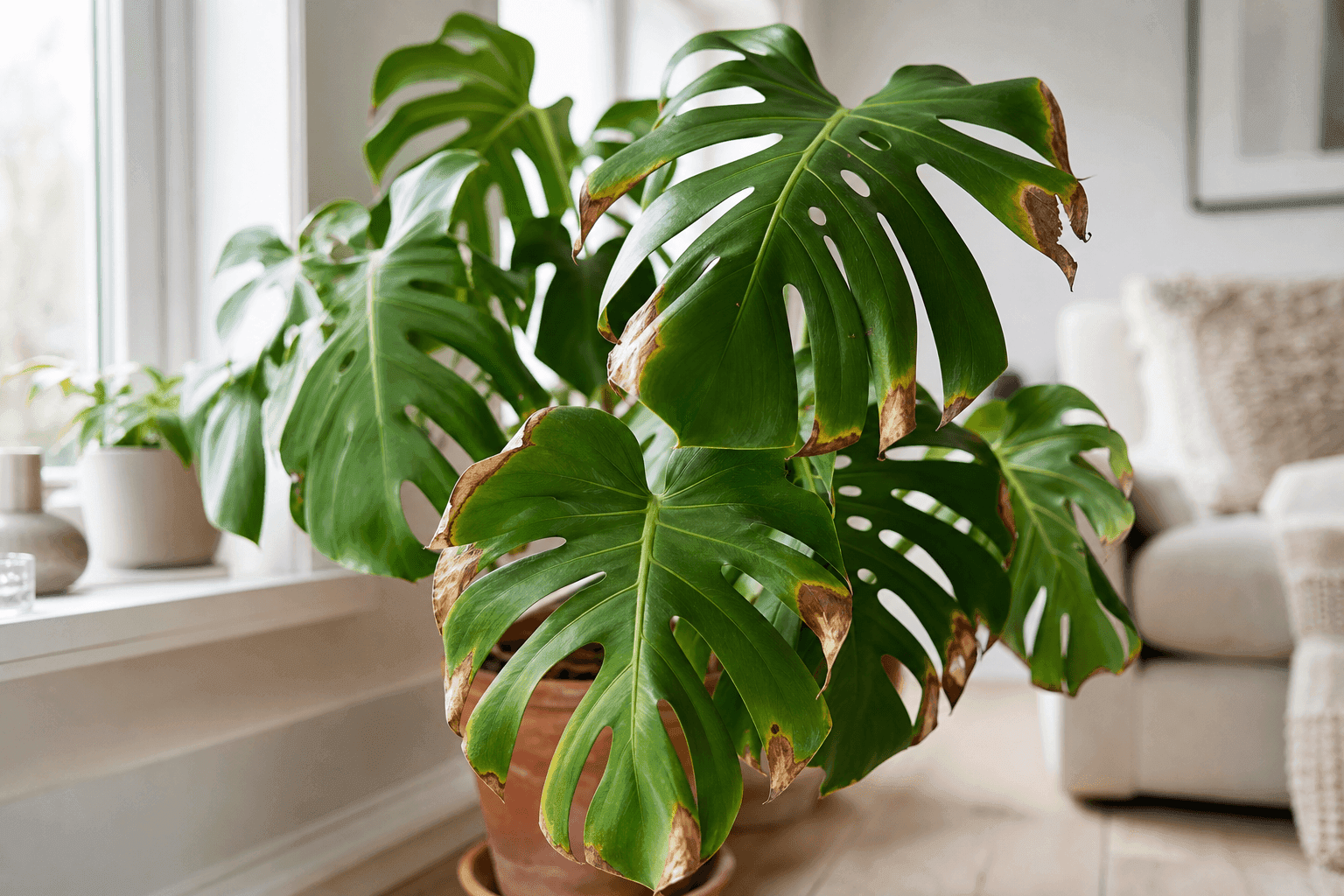
Quick diagnosis
Match the row to what you’re seeing, then jump to the fix.
| What you see | Likely cause | Confidence | How to confirm | What to do now | Urgency |
|---|---|---|---|---|---|
| Several lower leaves turning yellow; compost feels wet for days; stems may droop | Overwatering or poor drainage | High | Push a finger or skewer 5–7cm into the mix; check for water in the cachepot or saucer. | Stop watering, empty standing water, improve light and airflow; check roots if it keeps declining. | High |
| Yellow leaves plus black, brown or mushy patches; a sour smell from the pot | Root rot from prolonged wet compost | High | Slide the plant from its pot — rotten roots are soft, dark and may smell. | Trim rotten roots with clean secateurs, repot into fresh free-draining mix, water sparingly. | High |
| Leaves yellowing with dry, crispy brown edges; the pot feels very light | Underwatering or repeated drought | Medium | The mix is dry right through and pulls from the pot sides; leaves may curl or flop. | Water thoroughly until it drains, let excess drain, then water when the upper mix partly dries. | Medium |
| Older, small, unsplit lower leaves yellow one by one while new leaves look healthy | Normal ageing | High | Yellowing is limited to the oldest bottom leaves; no spreading spots, pests or root smell. | Wait until fully yellow, then remove with clean snips or a gentle tug. | Low |
| Plant in a dark corner; long gaps between new leaves; pale, weak growth | Too little light | Medium | Light is dim most of the day (especially in UK winter); the plant leans hard toward the window. | Move to bright indirect light near an east or west window, out of harsh midday sun. | Medium |
| Yellow mottling, pale speckles, webbing, sticky leaves, white fluff or brown scales | Sap-sucking pests | Medium | Inspect leaf undersides, petioles and leaf axils with a phone torch. | Isolate the plant, wipe leaves, remove visible pests, and use a suitable indoor pest control if needed. | Medium |
| Newer leaves pale between the veins; older leaves yellow generally; same pot for years | Nutrient depletion or rootbound plant | Medium | Roots circle the pot, growth has slowed, and there's been no feeding in spring/summer. | Repot if rootbound; feed lightly in the growing season — but only after water and light are right. | Low–medium |
| Yellowing soon after repotting, moving house or buying the plant | Adjustment stress or root disturbance | Medium | The timing matches a move, new position, cold journey or repot. | Keep conditions steady, skip fertiliser for 4–6 weeks, water only when needed. | Low–medium |
| Yellow patches or pale, bleached scorch on the sun-facing leaves | Direct sun or heat scorch | Medium | Damage is on the leaves nearest hot glass or strong afternoon sun. | Move slightly back from the window or filter summer sun; leave partly damaged leaves if still green. | Low |
The causes, in detail
Overwatering and poor drainage
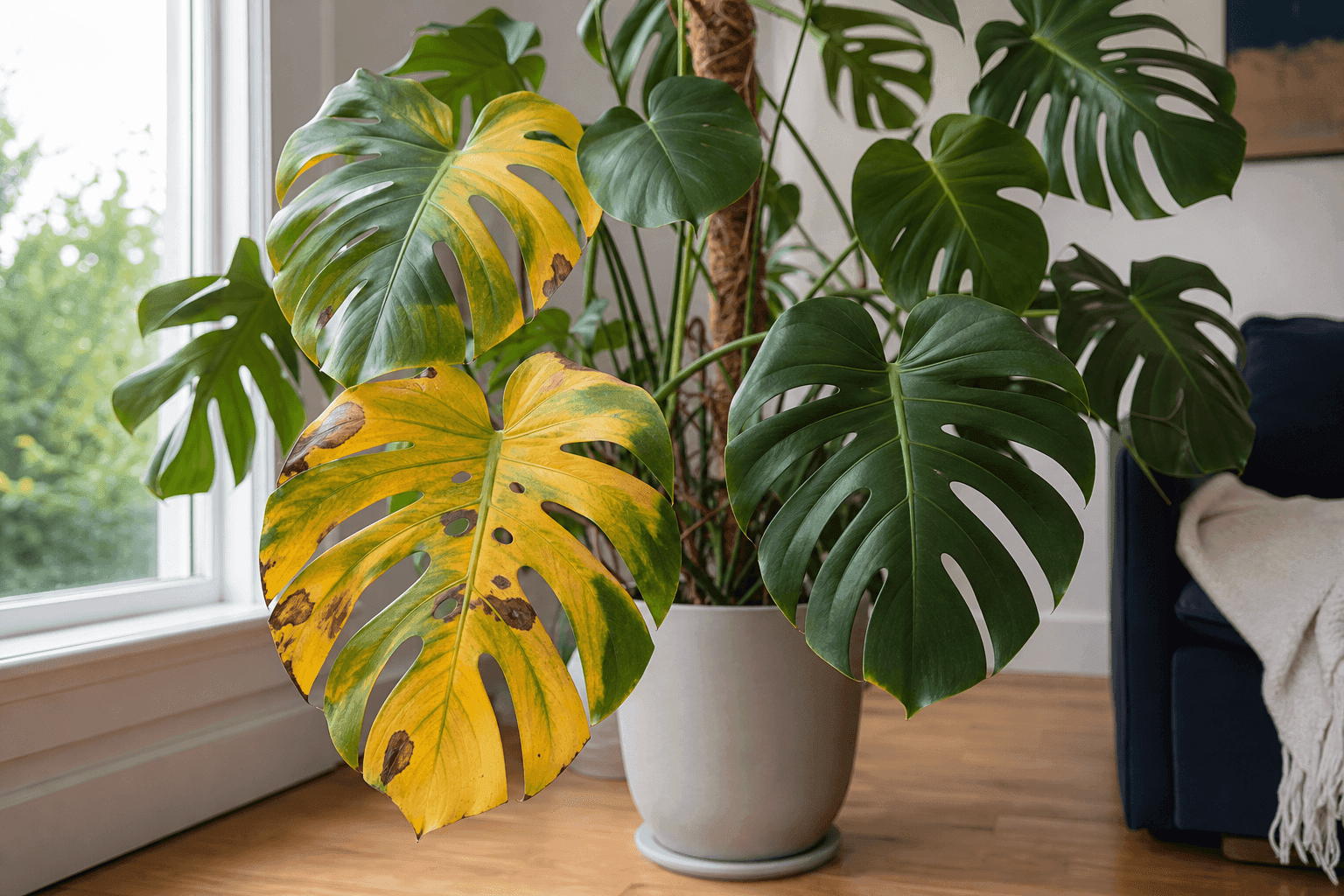
Most likelyOverwatering is the most likely cause when monstera leaves yellow in batches and the compost stays wet. The problem isn't 'too much water once' — it's roots kept short of oxygen because the mix, pot size or cachepot setup stays soggy too long. Leaves yellow from the lower part of the plant first, the plant may droop even though the mix is damp, and you may see fungus gnats or a stale smell. Already-yellow leaves won't re-green; look for steadier posture and no new yellowing over 2–4 weeks.
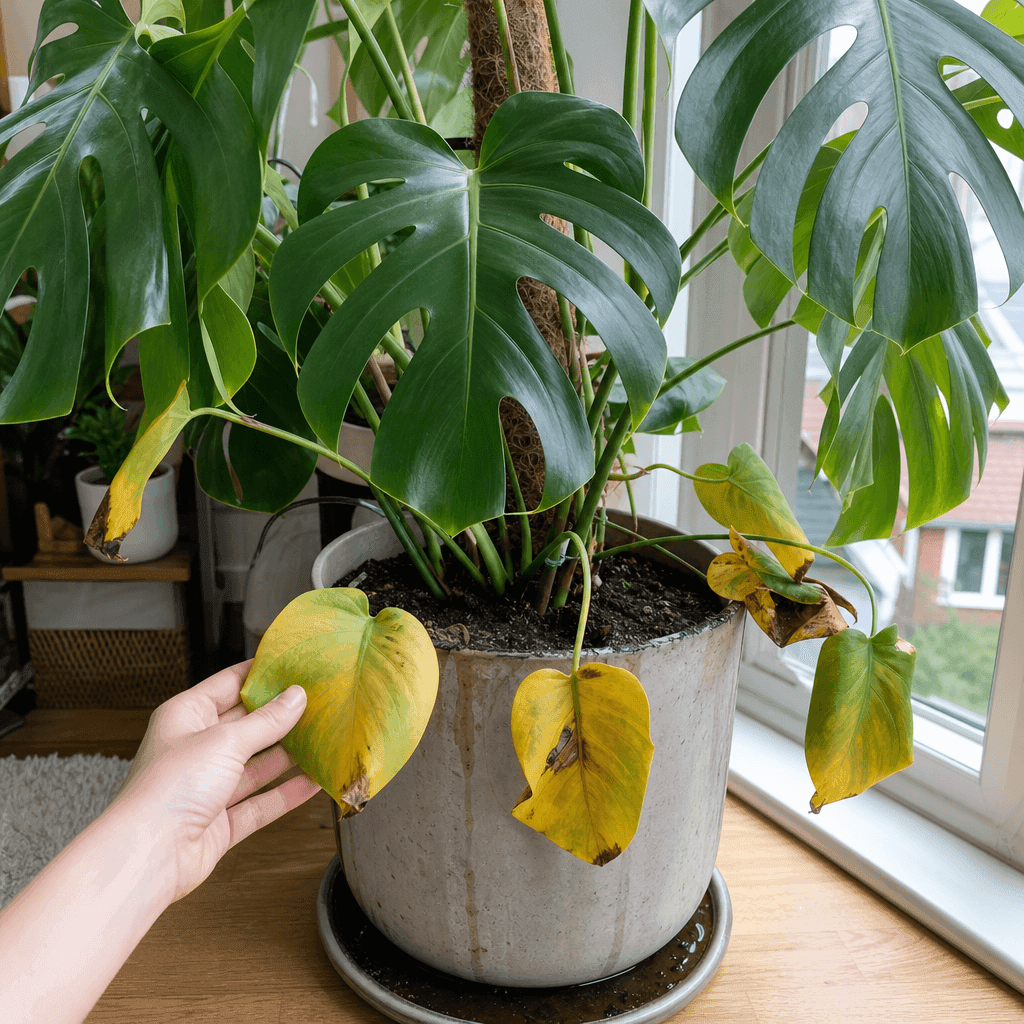
- Check for drainage holes, and whether water is collecting in an outer pot or saucer.
- Push a dry skewer or finger into the mix — if it's wet several days after watering, drainage or frequency is the issue.
- Leaves yellow from the lower part of the plant first; it may droop despite damp compost.
- Fungus gnats, limp stems, or a stale smell from the pot.
- Stop watering until the upper mix has dried, and empty any standing water.
- Move the plant into brighter indirect light with good airflow, away from cold draughts.
- Water thoroughly only when the top of the mix has dried, then let it drain fully.
- If decline continues, slide out the rootball and check the roots (see root rot, below).
Stop it coming back:Use a chunky, free-draining peat-free houseplant mix (with orchid bark, perlite or grit), a pot with drainage holes only slightly larger than the rootball, and always tip away water that collects in the cachepot.
add fertiliser to a wet, stressed root system, move straight into a much larger pot (excess compost stays wet), or keep watering on a fixed weekly schedule through winter.
Root rot from prolonged wet compost
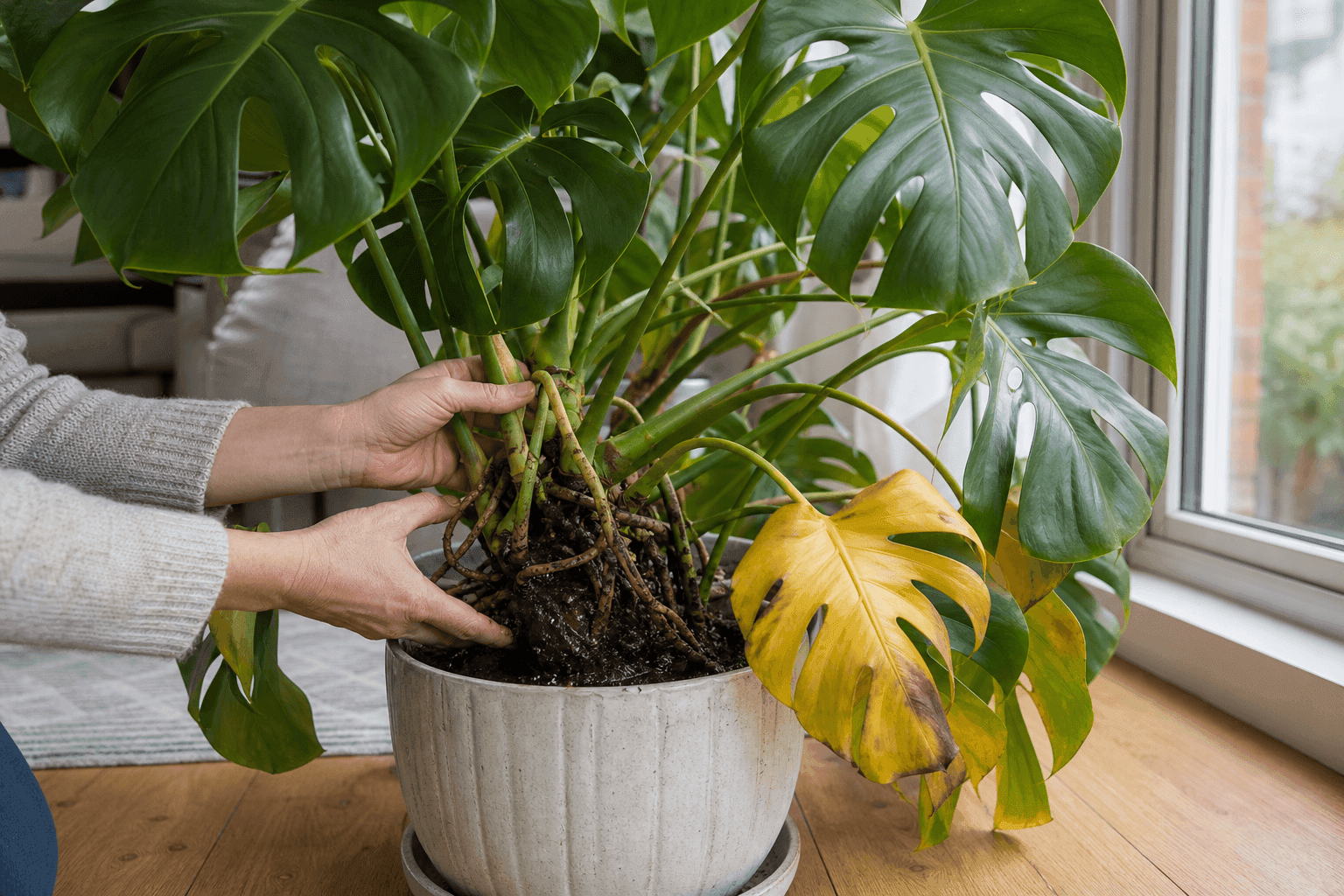
Most likelyLeft wet long enough, overwatering becomes root rot — the urgent stage. Yellowing comes with black, brown or mushy patches and a sour smell, and the roots themselves turn dark and soft. Healthy roots are firm and pale to tan; rotten roots are dark, mushy, and break or smell. Our step-by-step root rot treatment guide walks through saving the plant once you confirm it.
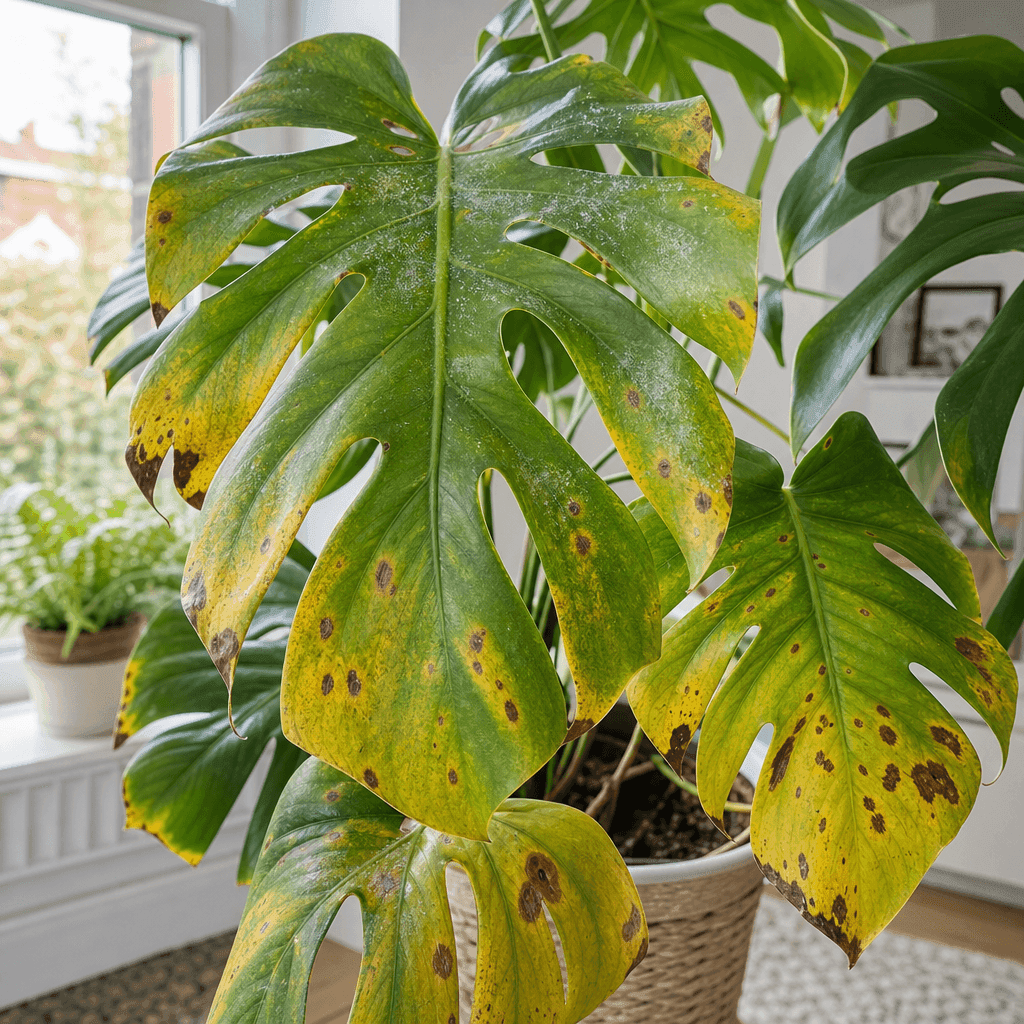
- Slide the rootball out carefully — rotten roots are dark, soft and may smell sour.
- Yellowing is accelerating, not limited to one old leaf.
- Black or brown soft areas on stems or leaf bases, and a sour pot smell.
- Cut away all mushy, dark roots with clean secateurs.
- Repot into a pot only slightly larger than the remaining healthy rootball.
- Use a chunky, free-draining houseplant mix (peat-free compost with orchid bark, perlite or grit).
- Water sparingly afterwards and keep the plant warm in bright indirect light.
Stop it coming back:Catch over-watering early so it never reaches the root-rot stage; never let the pot stand in water.
repot a rot-affected plant into a huge pot of fresh wet compost, or water it heavily 'to help it recover' — that just re-drowns the new roots.
Underwatering or repeated drought
PossibleLess common than overwatering in many UK homes, but it happens in small pots, very airy mixes, warm rooms, or when a plant's been forgotten during a bright spell. Leaves yellow with crispy brown edges or tips, the pot feels light, the mix pulls from the sides, and leaves curl or hang — but the rootball is dry, not soggy. Wilt can improve within a day if the roots are healthy.
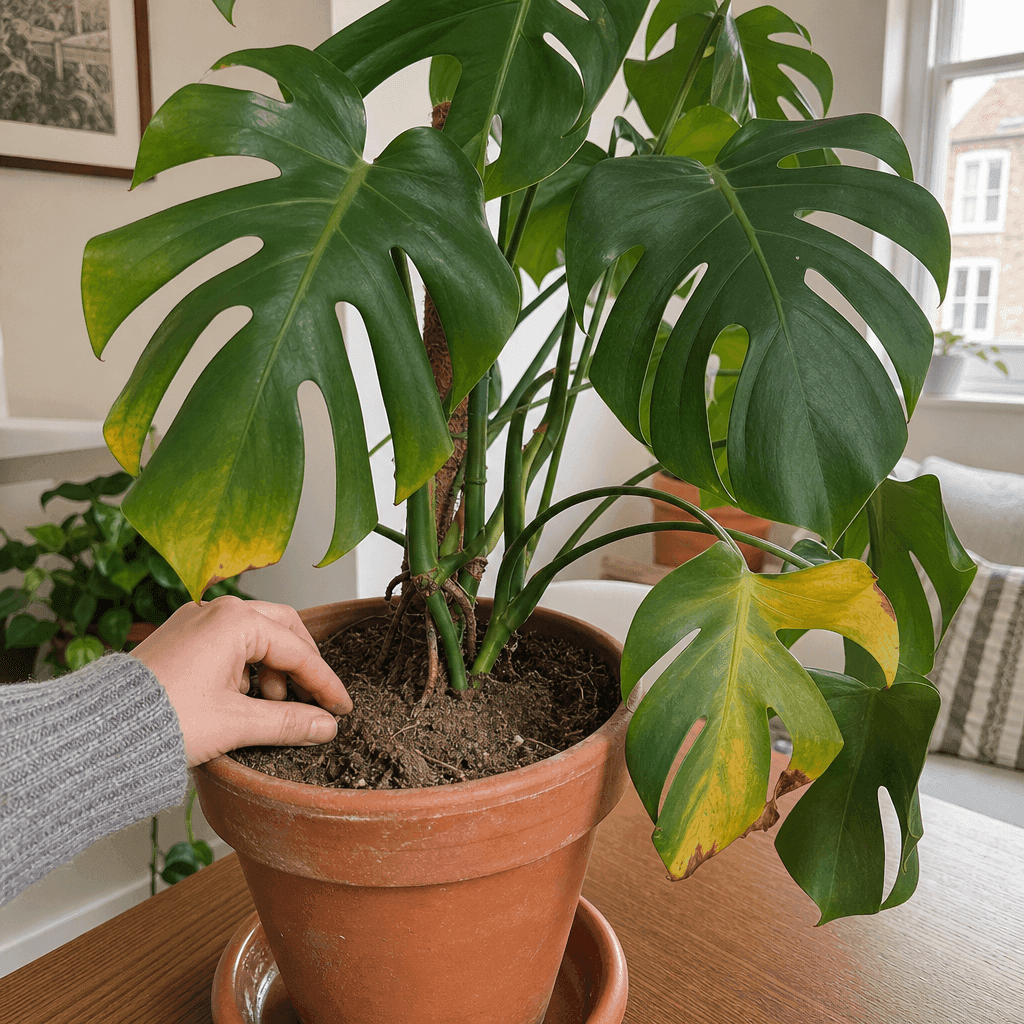
- Lift the pot — it feels very light.
- The mix is dry top and bottom and pulls away from the pot sides.
- A peat-based mix may be hydrophobic, shedding water down the sides without wetting the centre.
- Leaves curl or flop, with crispy brown edges rather than soft black patches.
- Water slowly until it drains from the base.
- If the rootball is very dry and repelling water, stand the inner pot in room-temperature water for 20–30 minutes, then drain thoroughly.
- Afterwards, check every few days and water when the top section has dried — don't wait until it's dust-dry throughout.
compensate with tiny daily splashes (they wet the surface but leave the deep roots dry), or leave the pot soaking for hours.
Normal ageing of old lower leaves
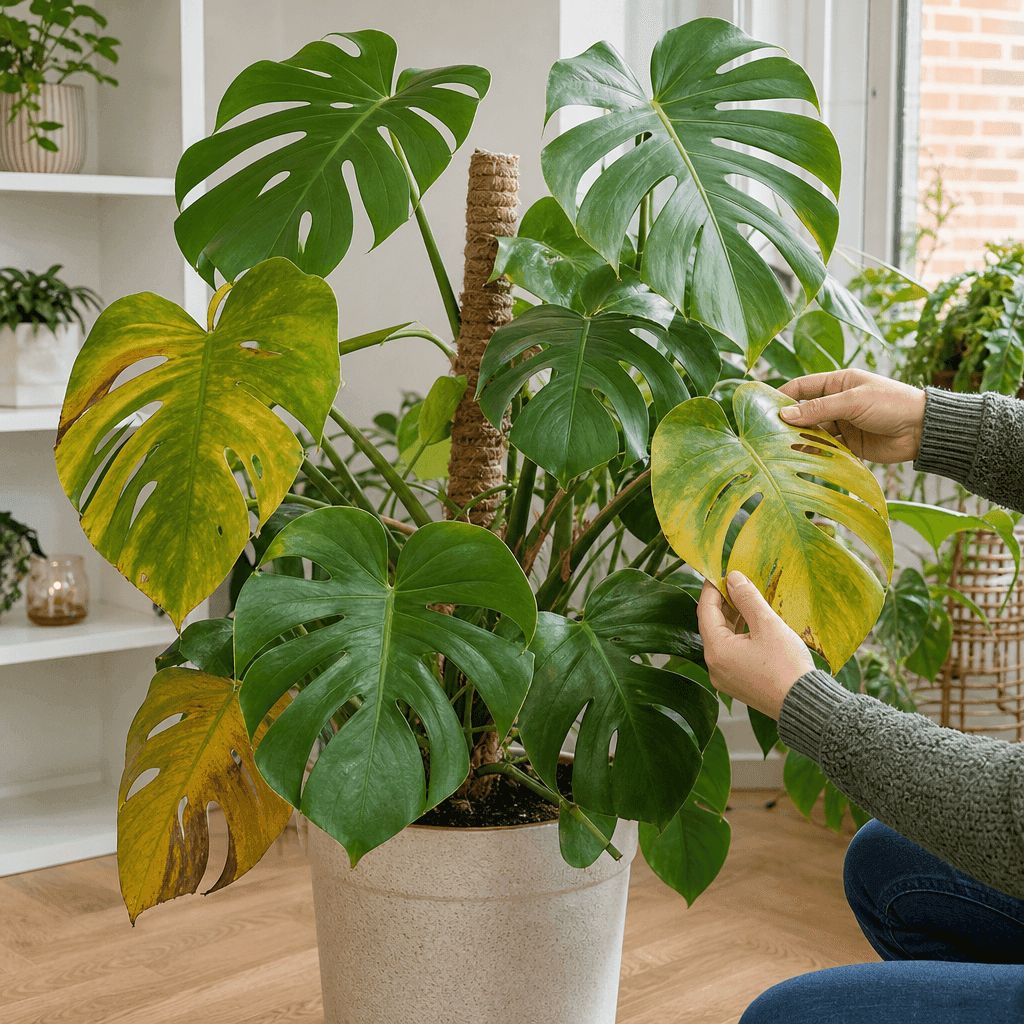
Most likelyMonsteras naturally shed their oldest leaves — especially the small, lowest leaves that formed before the plant matured and started making big split leaves. One old lower leaf turns evenly yellow, then dries or loosens, while the rest of the plant stays firm and new growth is healthy. No recovery is needed.
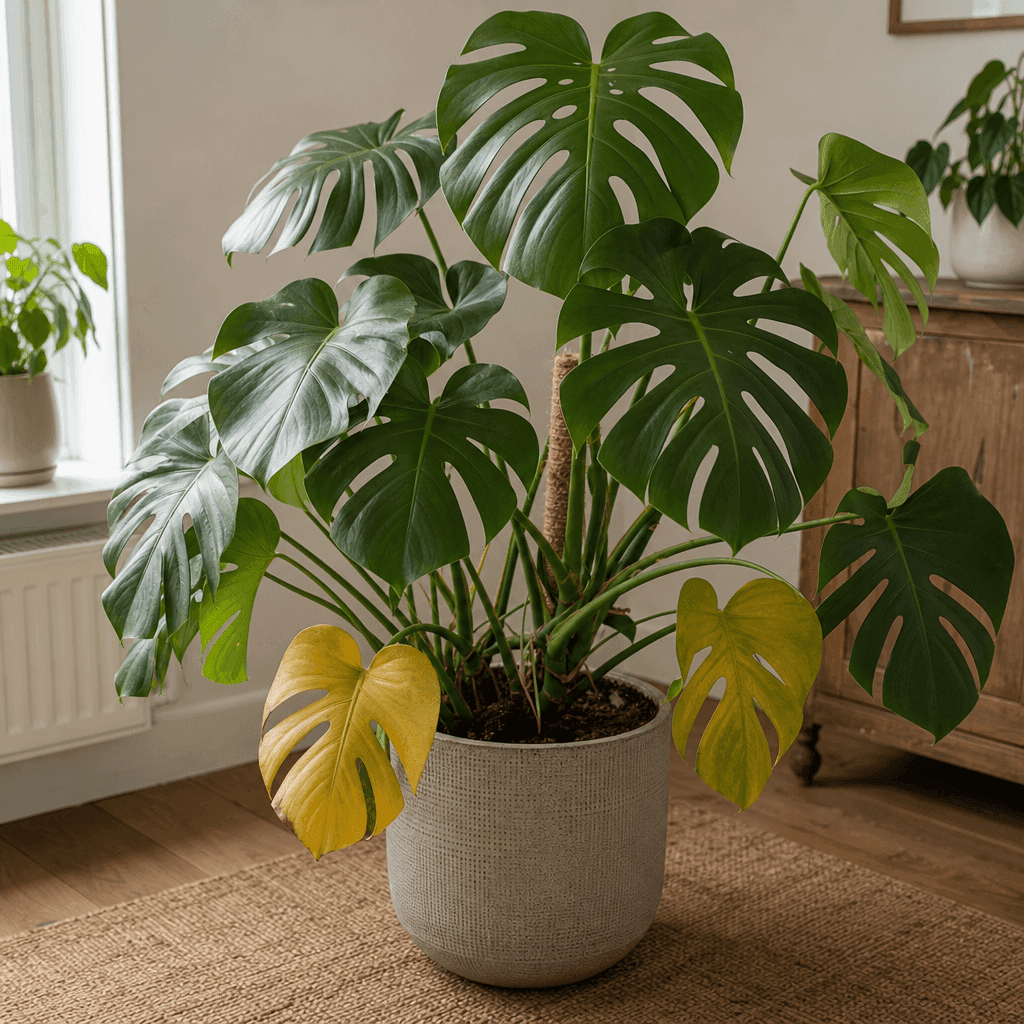
- Only the oldest, lowest leaf (often a small, unsplit juvenile leaf) is yellowing.
- No spreading spots, no pest signs, and the rootball is neither soggy nor bone-dry.
- New growth and the rest of the plant look healthy.
- Wait until the leaf is mostly or fully yellow, then cut it off close to the stem with clean snips (or gently pull if it releases).
- Leaving it until then lets the plant reclaim some nutrients first.
repot, feed and move the plant all at once over one ageing leaf — that creates more stress than the yellow leaf itself.
Too little light (especially in UK winter)
PossibleMonstera deliciosa tolerates lower light but doesn't thrive in a dark room. In low light it has less energy to maintain older foliage, so leaves yellow gradually and growth slows — internodes lengthen, new leaves are smaller, and the plant leans hard toward the window. A spot that was fine in summer can be too dim in a UK winter.
- Stand where the plant sits at midday — if you can't comfortably read without room lights, it's low light.
- Yellowing is gradual; growth is leggy with long gaps between leaves.
- North-facing rooms or positions several metres from a window are common culprits.
- Move the plant closer to bright indirect light — an east or west window often works well.
- A south window can work in winter, but filter or step back from strong summer midday sun to avoid scorch.
- Rotate the plant every few weeks for even growth.
move a shaded plant suddenly into intense summer sun against the glass — acclimatise it over a week or two.
Sap-sucking pests
PossibleSap-sucking pests cause yellowing, mottling and decline, especially when the plant is already stressed by low light or watering problems. The RHS notes mealybugs are common on houseplants and active year-round indoors. Spider mites cause fine pale speckling and webbing; mealybugs leave white cottony wax in leaf axils; scale insects look like small brown bumps with sticky honeydew and sooty mould.
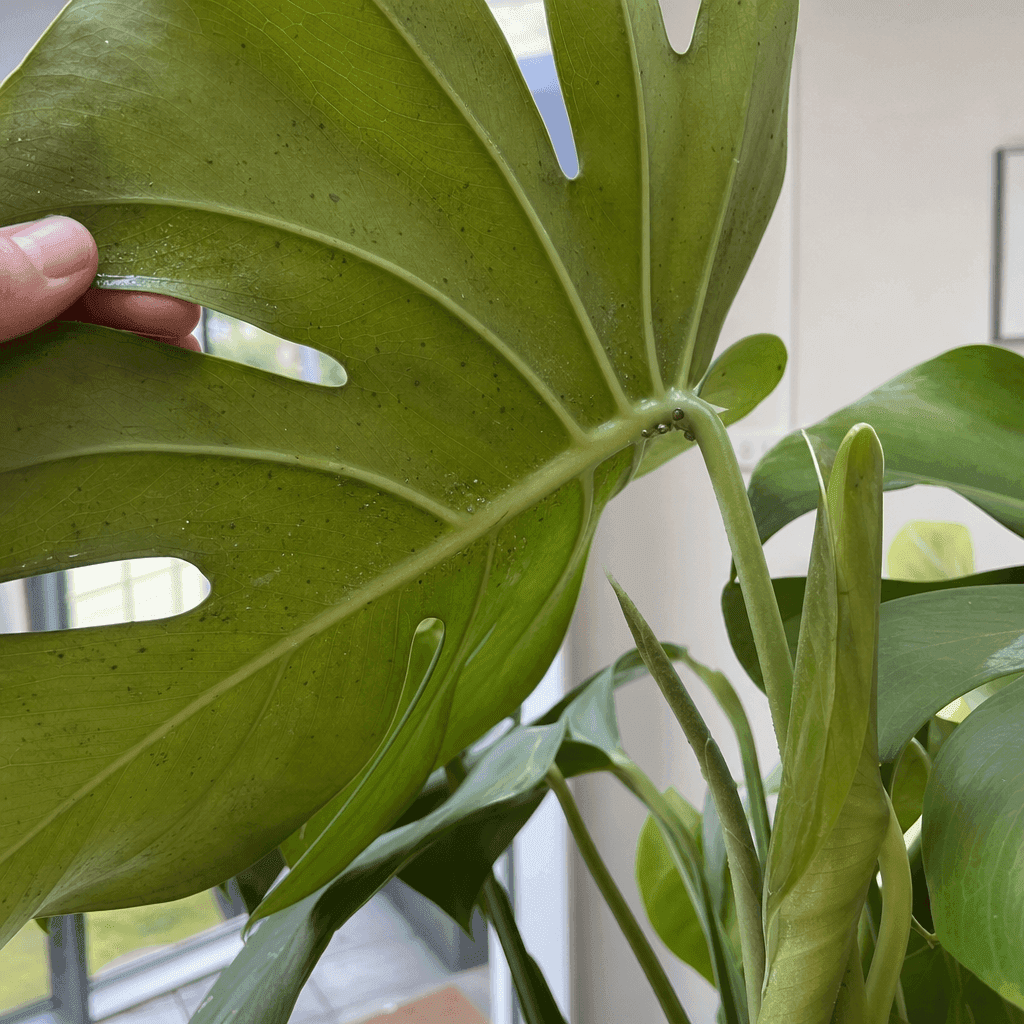
- Inspect with a phone torch and wipe a suspect patch with damp kitchen paper.
- Check leaf undersides, midribs, petioles and the tight leaf axils near the stem.
- Check nearby plants too; white wax on roots at repotting suggests root mealybug.
- Isolate the monstera from other houseplants.
- Wipe leaves and stems with a damp cloth, paying attention to undersides and axils.
- Remove mealybugs or scale with a cotton bud, or use a houseplant-safe product per the label.
- Re-inspect weekly for 4–6 weeks — eggs and hidden insects survive the first clean-up.
spray strong homemade mixtures on leaves in direct sun or on a drought-stressed plant, or treat every yellow leaf as pests without actually seeing pest signs.
Nutrient depletion or a rootbound plant
PossibleA hungry or rootbound monstera can pale or yellow — but feeding comes after checking water, drainage and light, because damaged roots mimic deficiency by failing to take up nutrients. Growth slows, leaves get smaller or paler, and the plant dries fast because roots fill the pot. General older-leaf yellowing is common after years in the same compost.
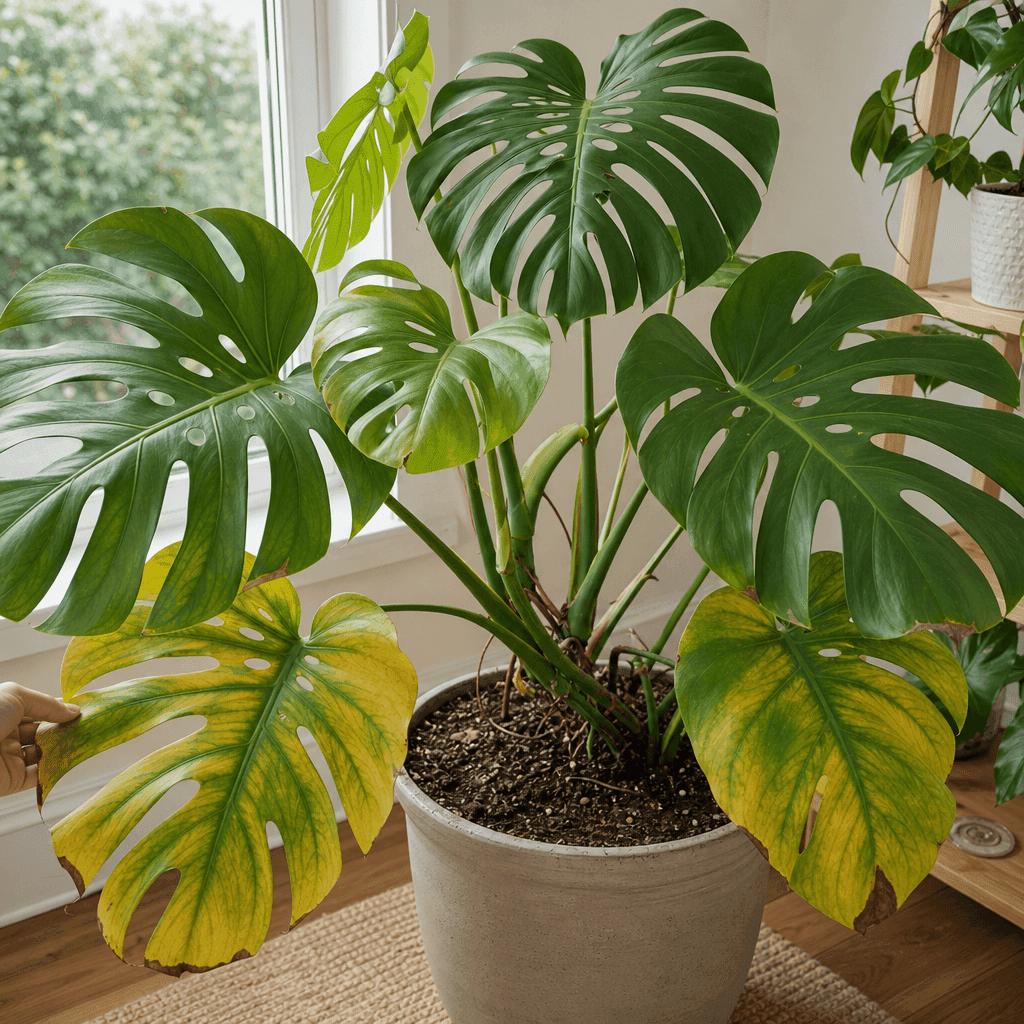
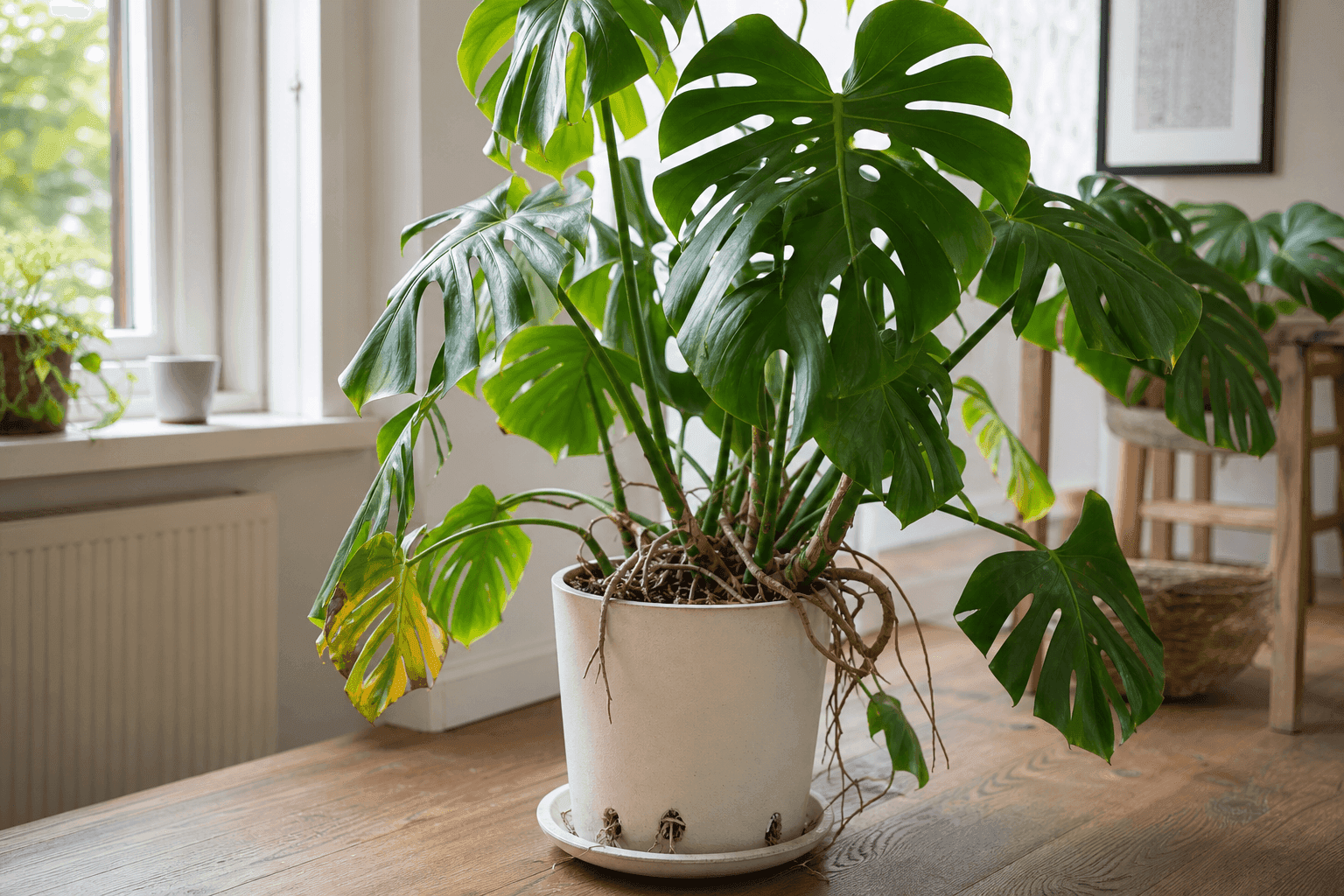
- Roots circle the pot edge or emerge from the drainage holes.
- Growth has slowed and the plant dries out very quickly.
- No feeding during the growing season, or old exhausted compost in a cramped pot.
- If rootbound, repot in spring or early summer into a pot one size larger, in free-draining mix.
- Feed lightly during active growth with a balanced houseplant fertiliser at label rate.
- In winter, reduce or stop feeding unless the plant is actively growing under good light.
feed a plant sitting in wet compost or with suspected root rot, or use fertiliser as a cure-all for yellow leaves.
Cold, draughts and sudden changes
PossibleMonsteras are tropical and dislike cold draughts, sudden temperature drops and cold wet roots. In UK homes this happens near single-glazed windows, in unheated conservatories, by external doors, or after a cold journey home from the garden centre. Yellowing appears after a move, cold night, delivery or repot; leaves may look limp, and the compost stays wet longer in a cold spot.
- Match the timing — yellowing started within days or weeks of a move, repot or cold exposure.
- The plant is near a cold draught, single glazing, an external door or an unheated room.
- The compost is staying wet longer than usual in a cool spot.
- Move the plant to stable warmth and bright indirect light.
- Keep it away from radiators (which dry the leaves) and away from cold draughts.
- Let the compost dry appropriately before watering again, and avoid feeding until it's stable.
feed or repot a cold-stressed plant — keep everything steady and let it settle first.
Direct sun or heat scorch
PossibleYellow patches or pale, bleached scorch on the leaves nearest hot glass or strong afternoon sun is direct-sun or heat damage — common where a plant was moved into a bright south-facing spot without acclimatising, or sits against hot summer glass.
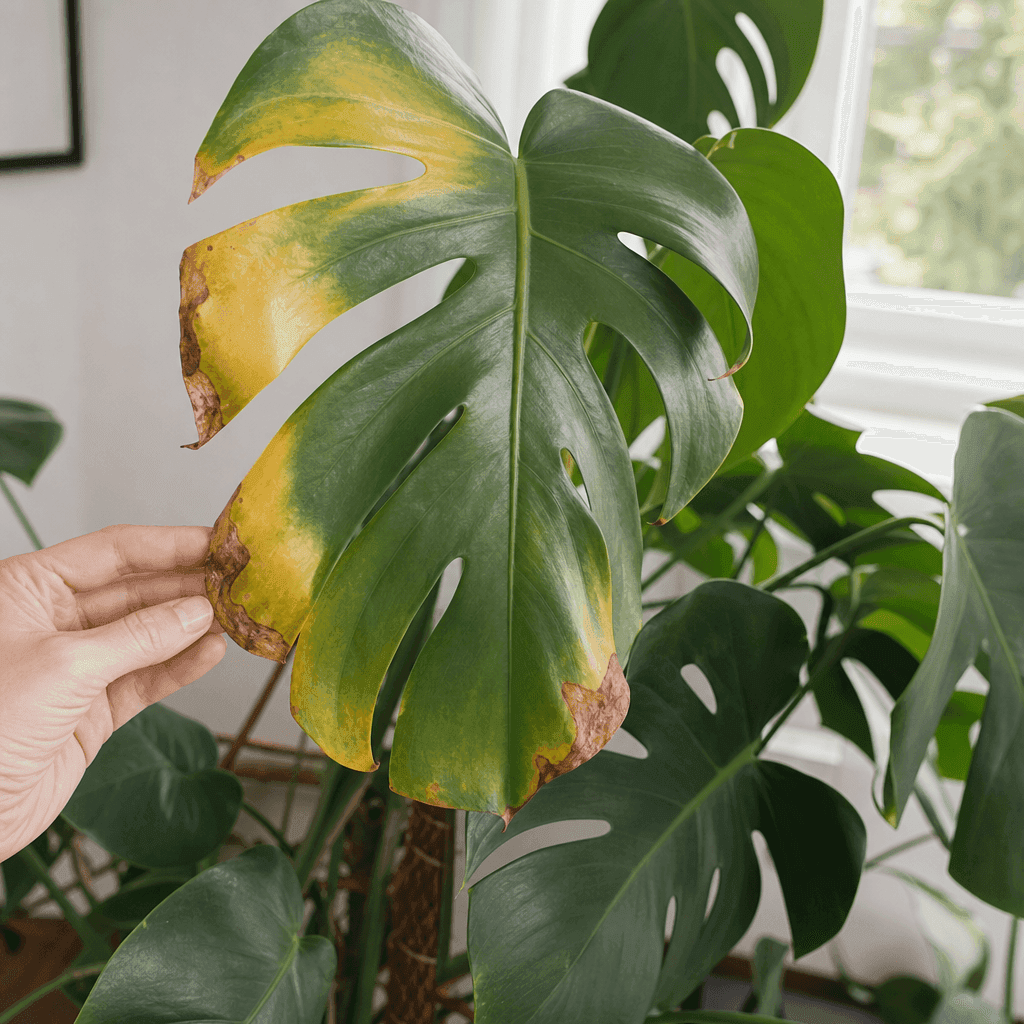
- The damage is on the leaves closest to the window or the strongest afternoon sun.
- Patches are pale, bleached or yellow rather than soft and dark.
- It followed a move into stronger light or a hot, sunny spell.
- Move the plant slightly back from the window, or filter strong summer sun with a sheer curtain.
- Leave partly damaged leaves in place if they're still mostly green.
- Acclimatise the plant gradually whenever you increase its light.
leave a monstera pressed against hot south-facing glass through summer, or jump it from shade straight into full midday sun.
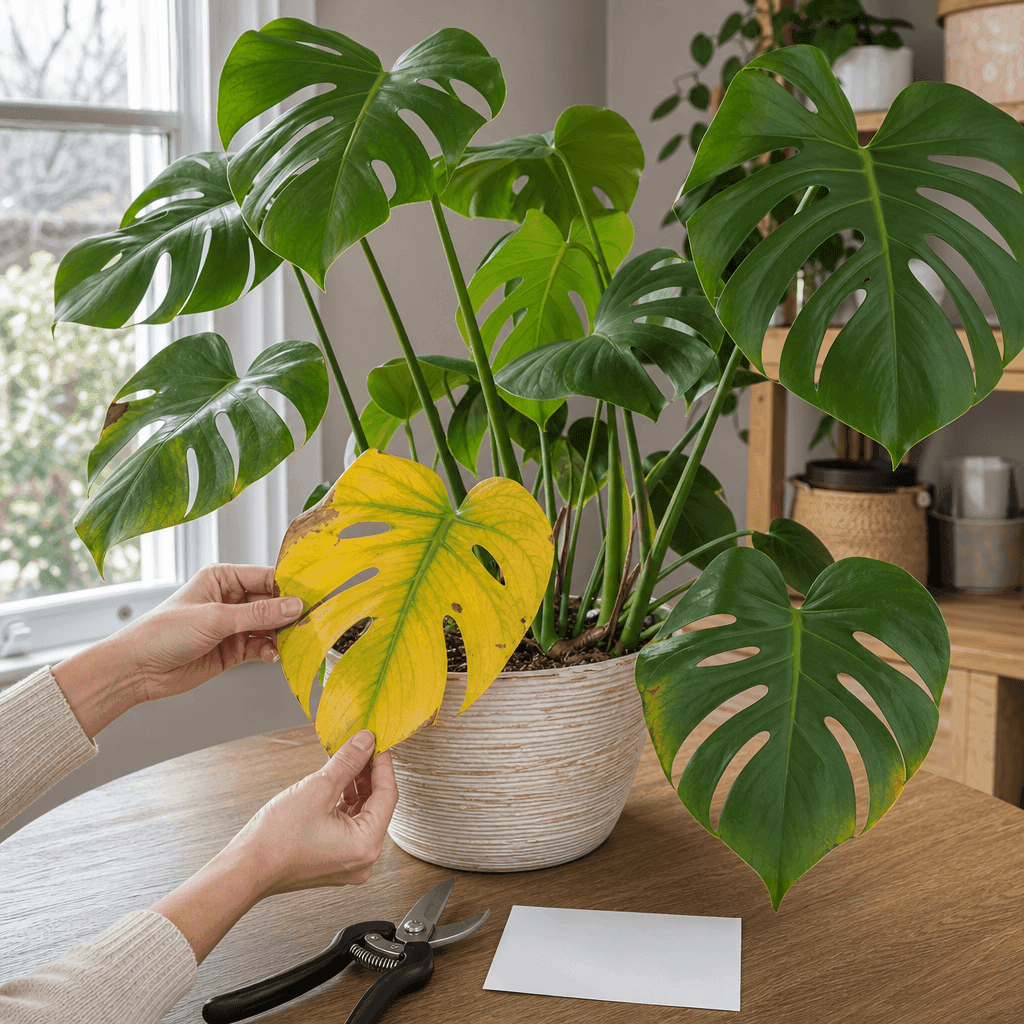
Still not sure?
Work down these branches — the first one that matches is your answer.
What not to do
- Feed a wet, stressed or rot-affected plant — fix water, drainage and light first.
- Move straight into a much larger pot; the excess compost just stays wet around the roots.
- Water on a fixed weekly schedule through a dim UK winter — go by the compost, not the calendar.
- Strip every yellow leaf; a part-yellow leaf can still feed the plant while you fix the cause.
- Assume every yellow leaf is pests — only treat for pests if you actually see speckling, webbing, fluff or scale.
- Move a shaded plant straight into intense summer sun without acclimatising it.
Common questions
Why are my monstera leaves turning yellow?
The most common reasons are overwatering, poor drainage, underwatering, low light, pests, nutrient depletion, cold stress or normal ageing of old lower leaves. Check the compost moisture and the leaf's position on the plant first.
What do overwatered monstera leaves look like?
Overwatered monstera leaves often turn yellow, droop and may develop soft brown or black patches. The compost stays wet for days, and rotten roots may be dark, mushy or sour-smelling.
Can yellow monstera leaves turn green again?
Usually no. Once a monstera leaf has lost its green colour, it rarely returns to normal. The goal is to stop new leaves yellowing and encourage healthy new growth.
Should I cut off yellow leaves on monstera?
Yes, once they're mostly or fully yellow, or if they're badly damaged or pest-infested. If only part of the leaf is yellow, you can leave it while you correct the cause — cut close to the base of the leaf stem with clean snips.
Why are only the bottom monstera leaves yellow?
If only the oldest bottom leaves are yellow and the rest of the plant is healthy, it's often normal ageing. If several lower leaves yellow together and the compost is wet, suspect overwatering.
Why are my monstera leaves yellow with brown edges?
Yellow leaves with crispy brown edges often point to drought stress, inconsistent watering, dry air, heat, or sometimes root damage. Check whether the rootball is dry or wet before acting.
Why did my monstera leaves turn yellow after repotting?
Repotting disturbs roots and changes how long the mix holds water. Keep the plant warm, bright and stable, water only when the upper mix has dried, and avoid fertiliser for several weeks.
Are yellow monstera leaves infectious?
Watering stress, low light and normal ageing aren't infectious. Pest problems can spread to nearby houseplants, so isolate the plant if you see webbing, sticky leaves, white fluff or scale insects.