Quick diagnosis
Match the row to what you’re seeing, then jump to the fix.
| What you see | Likely cause | Confidence | How to confirm | What to do now | Urgency |
|---|---|---|---|---|---|
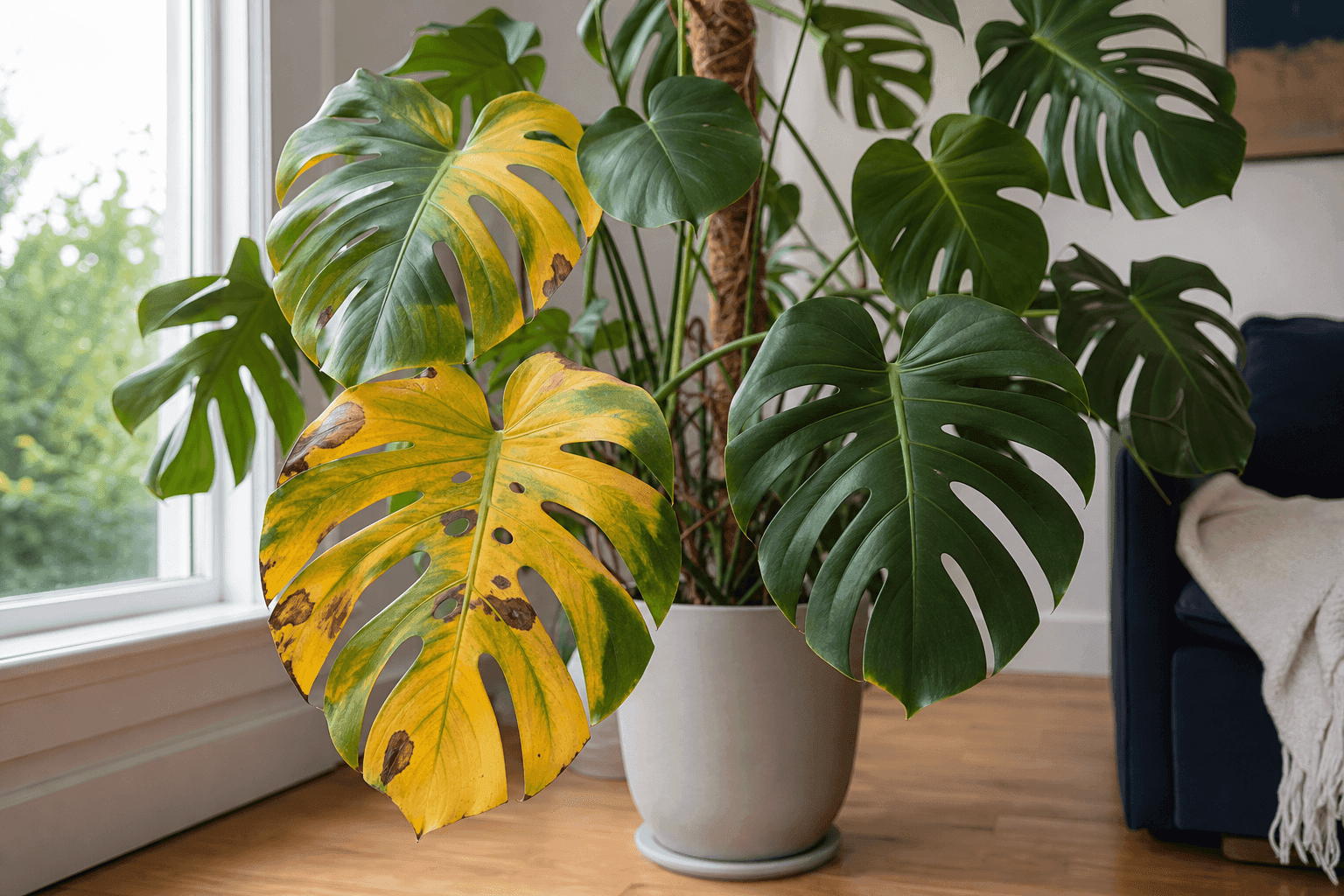
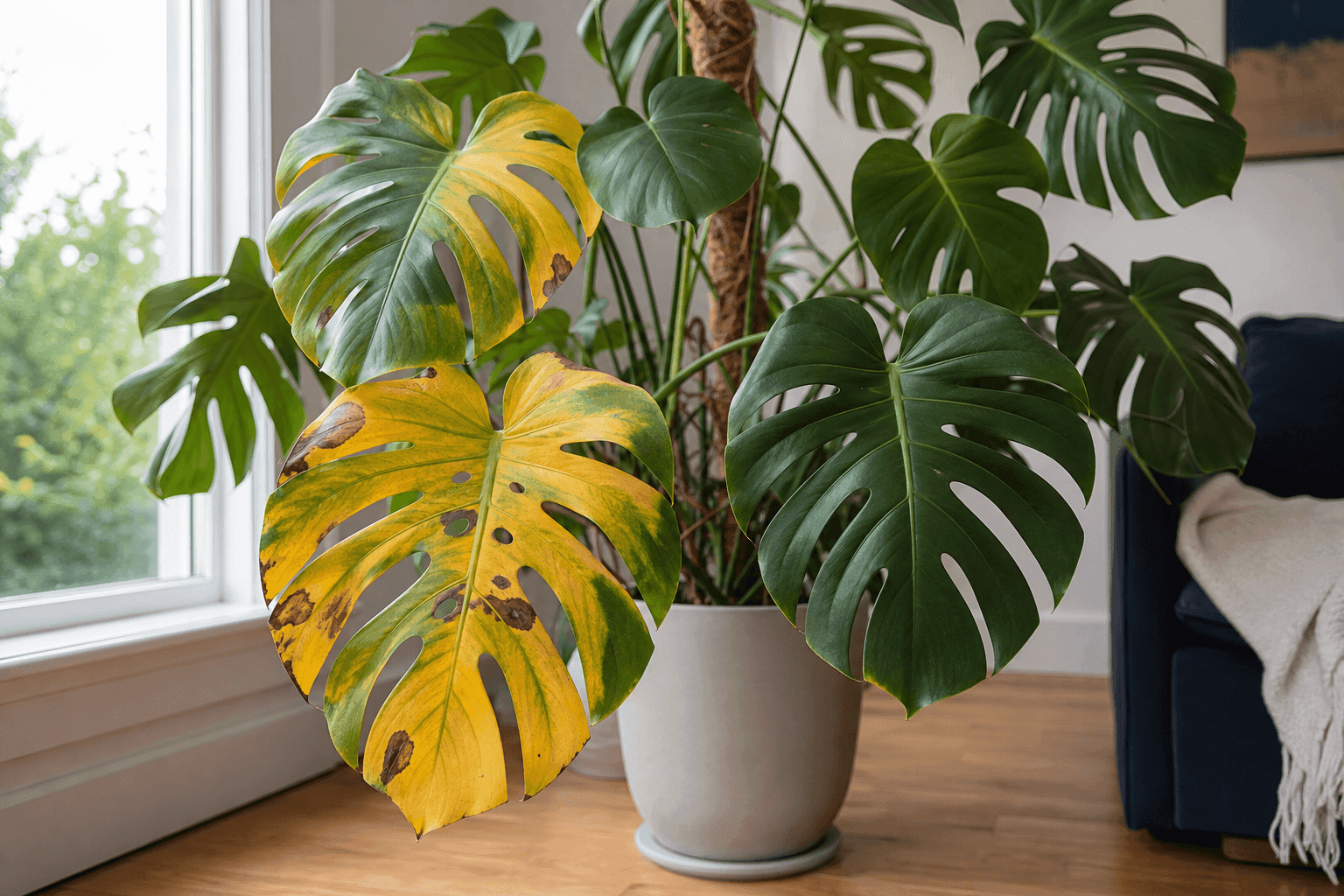
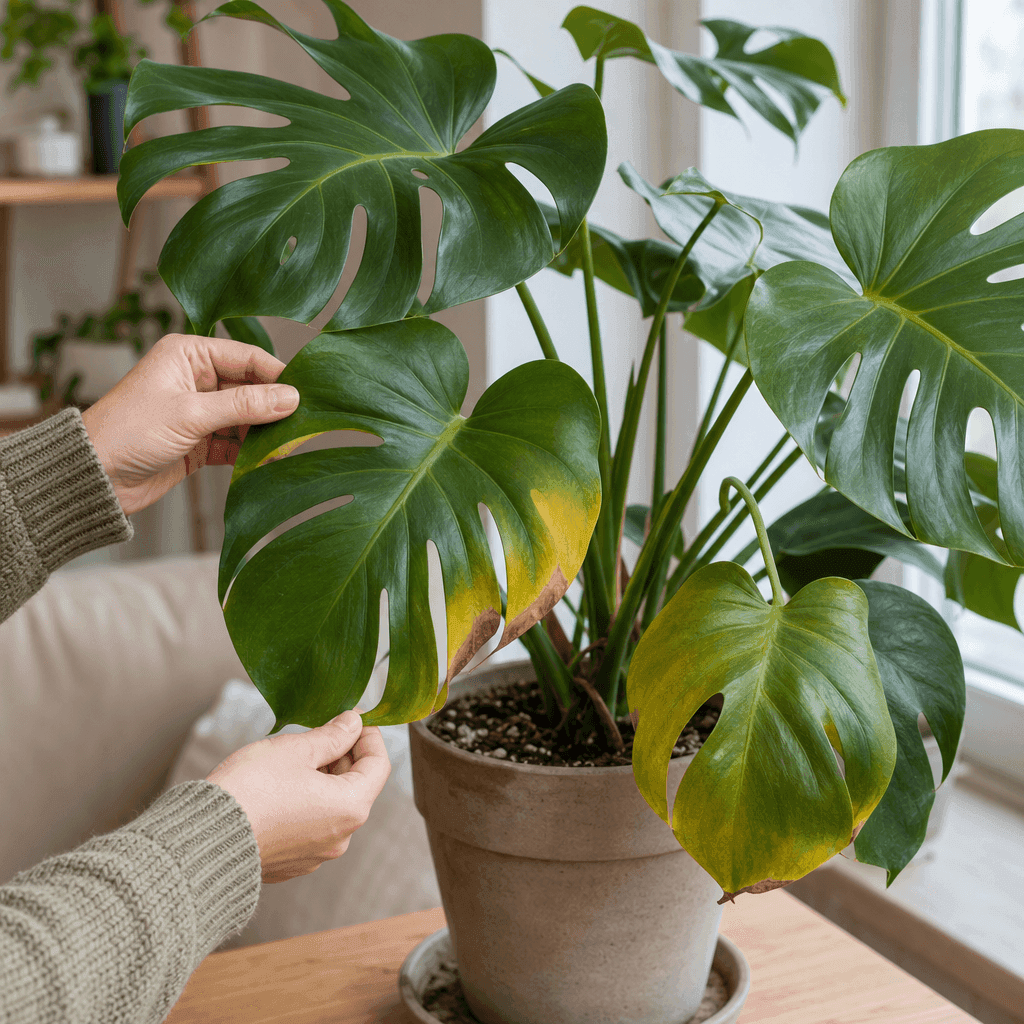
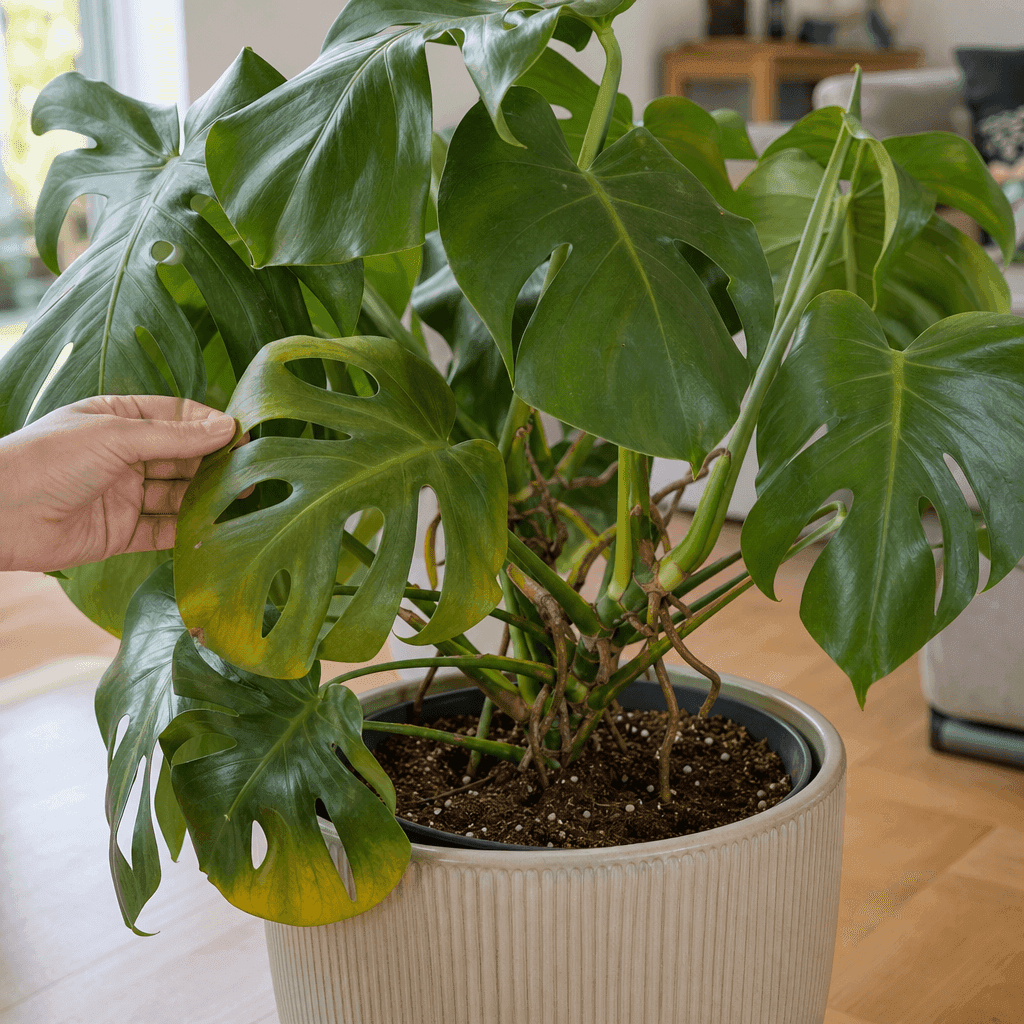
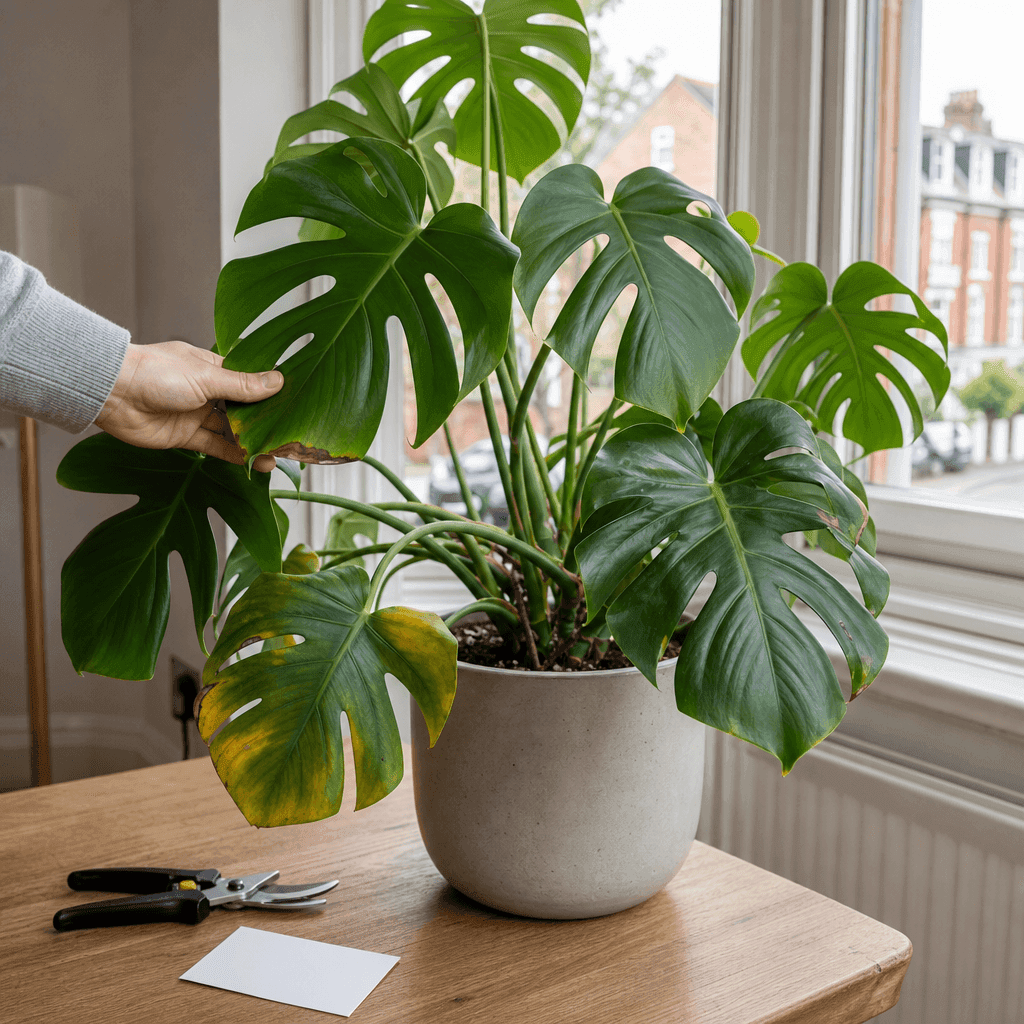
| One or two oldest lower leaves turn evenly yellow within 1–3 weeks; new growth is firm | Repot shock or normal old-leaf sacrifice | High | Timing matches repotting; compost is not staying wet; stems are firm; no smell. | Keep care steady, give bright indirect light, remove leaves only when fully yellow. | Low–medium |
| Several leaves yellow over days to two weeks; plant droops although compost is damp | Wet-root stress after repotting | High | Check 5–7cm down; pot feels heavy; compost stays damp for many days. | Stop watering, empty saucer/cachepot, improve light and air movement; inspect roots if it declines. | High |
| Yellowing began after moving into a much larger pot | Pot too large for the rootball | High | The rootball fills only a small centre area, with damp unused compost all around it. | Downsize to a pot only slightly larger than the roots, using an airy mix. | Medium |
| Yellow leaves plus black, brown, hollow, mushy or bad-smelling roots | Root rot | High | Slide the plant out; healthy roots are firm and pale to tan, not soft or slimy. | Trim rotten roots with clean tools and repot into fresh free-draining mix. | High |
| Yellowing starts after heavy root teasing, washing, splitting or cutting | Damaged roots | Medium | Plant wilts or yellows even when moisture seems reasonable; fine roots were lost. | Do not disturb again unless roots are rotting; keep evenly, lightly moist and bright. | Medium |
| Yellowing after repotting and moving to a darker corner | Low light after the move | High | The new position is further from a window; compost dries more slowly than before. | Move nearer bright indirect light or add a grow light; water less often. | Medium |
| Yellowing follows fertiliser applied straight after repotting | Fertiliser stress on disturbed roots | Medium | White crust, burnt tips, recent feed, or fresh compost that already contained fertiliser. | Pause feeding for 4–8 weeks; flush only if salts are likely and drainage is excellent. | Medium |
| Yellow stippling, sticky residue, webbing, white fluff or brown scale appeared after repotting | Pests noticed during stress, not caused by repotting | Medium | Inspect undersides, leaf axils and petioles with a phone torch. | Isolate, wipe or shower the plant, and repeat checks weekly. | High |
The causes, in detail
Repot shock
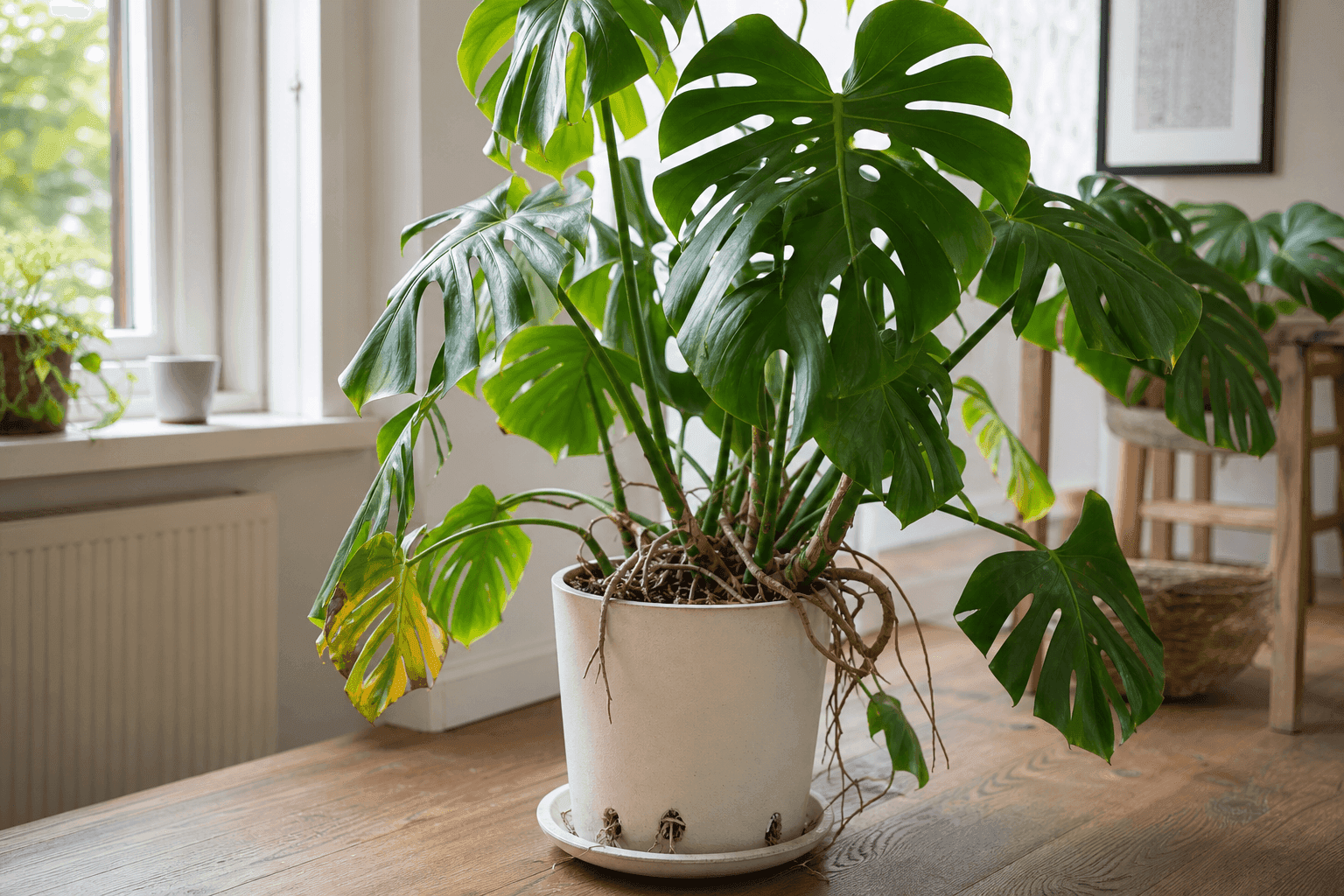
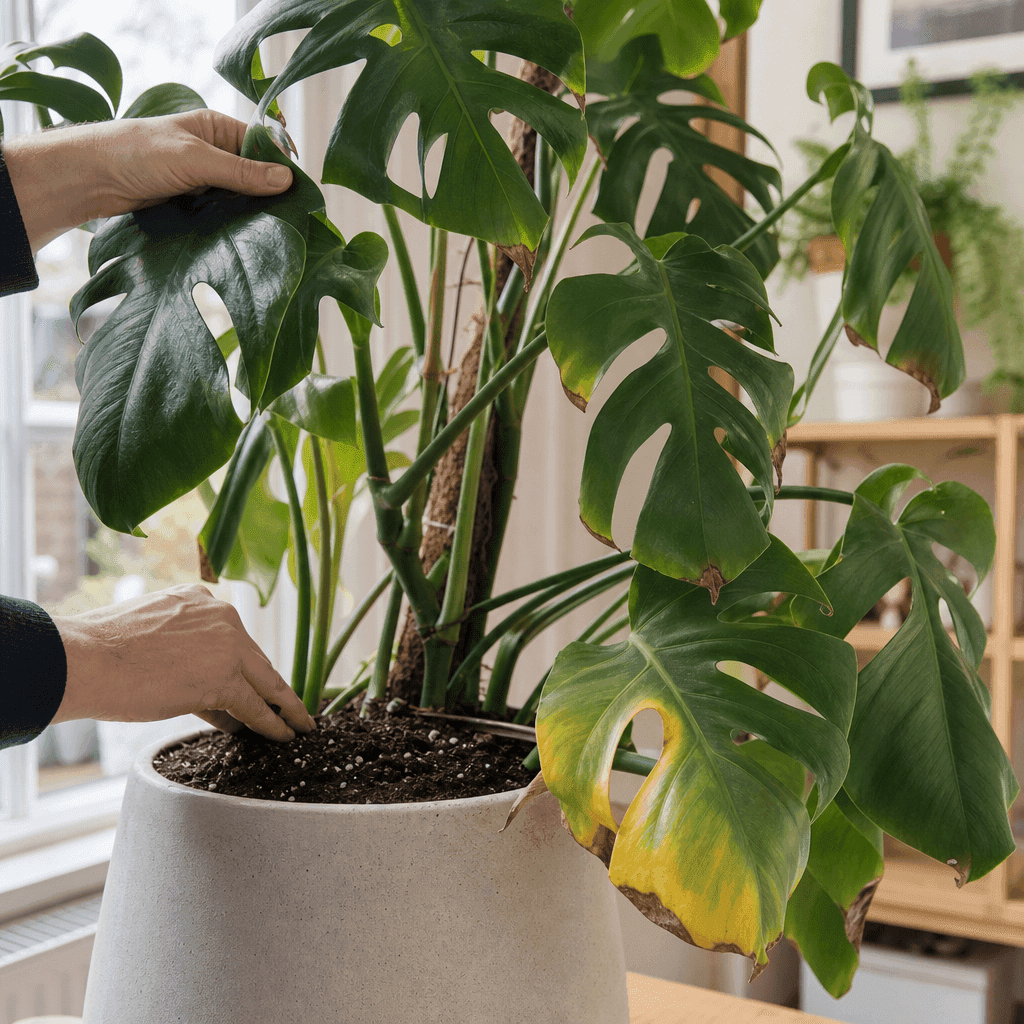
Most likelyRepot shock happens when a plant adjusts after its roots are disturbed, exposed to air, moved into a new medium, or returned to a slightly different position. In a Monstera this often shows as drooping, a pause in growth, or one or two older leaves turning yellow. It should slow down as the plant settles.
- Yellowing started within a few days to three weeks after repotting.
- Only a small number of old leaves are affected.
- Roots were disturbed but not left in wet, airless compost.
- There is no sour smell, mushy stem base or spreading black tissue.
- Keep conditions steady — bright indirect light, away from a radiator, cold draught or harsh midday sun.
- Water only when the upper mix has dried and the pot feels lighter.
- Do not keep moving the plant around to 'help' it.
- Leave a partly green leaf in place; cut a fully yellow leaf close to the petiole base with clean scissors.
Stop it coming back:Mild repot shock should stop worsening within 2–4 weeks. The yellow leaves will not turn green again — recovery means no new leaves yellowing and the next new growth emerging normally.
fertilise to 'perk it up' straight after repotting, or repot again unless the pot size, drainage or roots are clearly wrong.
Damaged roots during repotting
PossibleA Monstera copes with some root handling, but heavy teasing, washing all compost away, cutting thick roots, or splitting a crowded plant removes many fine feeder roots. Those fine roots do much of the water uptake, so leaves can yellow because the top growth is temporarily larger than the working root system.
- The plant wilts or yellows even though the compost is not bone dry.
- You pulled apart a tight rootball, separated vines, cut circling roots, or washed roots clean.
- Older leaves usually go first; growth pauses for several weeks.
- The compost is not wet and smelly (which would point to rot instead).
- Keep the plant in bright indirect light at a normal room temperature.
- Keep the mix lightly moist, not wet.
- Avoid fertiliser for 4–8 weeks.
- Avoid pruning green leaves unless the plant is too large for the remaining roots and keeps wilting.
Stop it coming back:Expect slow progress for 4–8 weeks, especially outside the spring/summer growing season. A plant repotted in a dull UK winter may take longer to show new growth.
keep unpotting the plant to 'check' it every few days — repeated disturbance resets recovery; only inspect again if rot or rapid decline is likely.
The new pot is too large
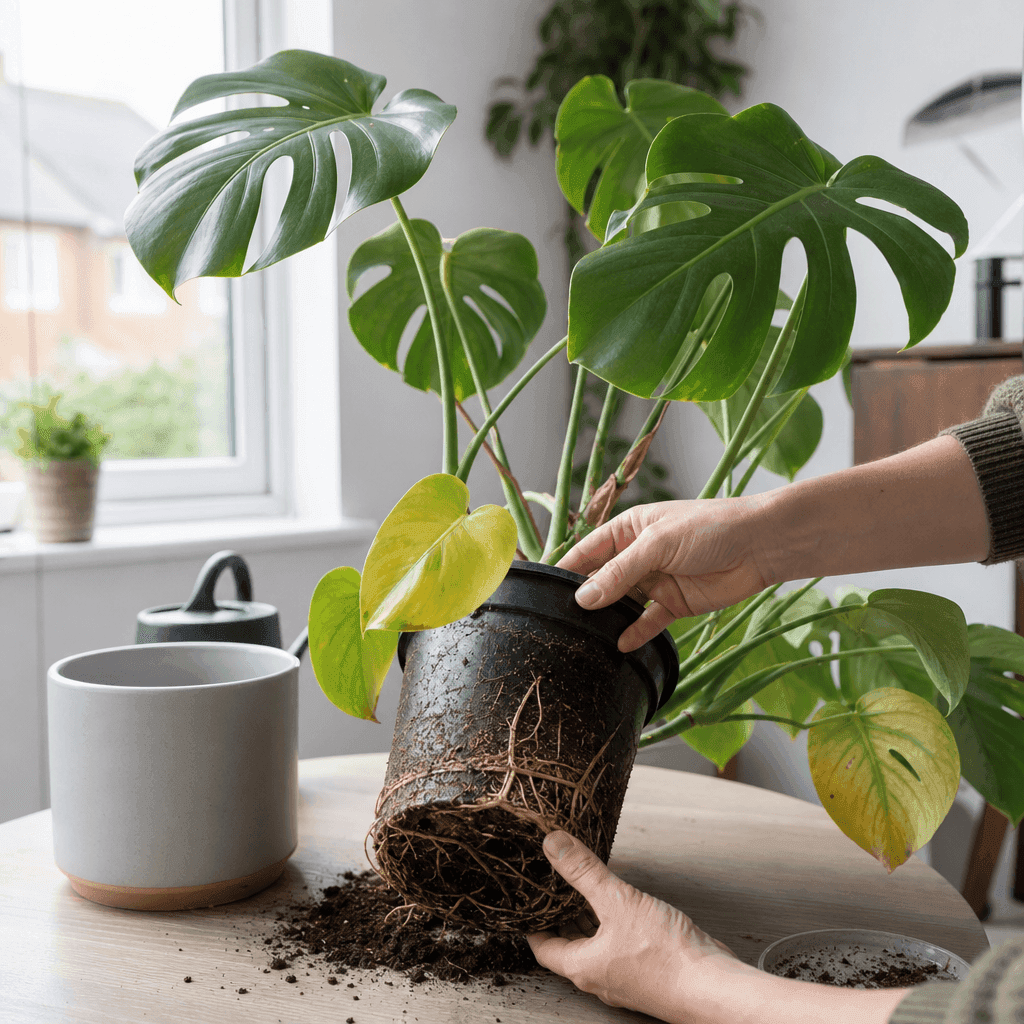
Most likelyThe classic forum scenario: the Monstera was repotted into a much bigger pot, then leaves started yellowing. The problem is not that Monsteras dislike space — it is that a large volume of unused compost stays wet around a smaller rootball, reducing oxygen and encouraging root-rot organisms. University of Georgia Extension advises increasing pot size in small increments rather than doubling it in one step.
- The surface looks dry while deeper compost stays wet, and the pot feels heavy for days.
- Yellowing often starts low and may come with drooping.
- Fungus gnats may appear if the mix stays damp.
- Sliding the plant out shows a small root mass in the middle ringed by wet compost.
- If leaves keep yellowing and the mix stays wet, downsize to a pot with drainage holes that fits the current rootball — usually only one size up.
- Use an airy houseplant mix with coarse material such as bark, perlite or coir chips.
- Water only enough to settle the mix and let excess drain.
- Then wait until the upper mix has dried before watering again.
Stop it coming back:If roots are firm, the plant can stabilise within a few weeks. If roots have already rotted, recovery depends on how much healthy root remains.
solve a too-large pot by adding gravel or stones at the bottom — University of Wisconsin Extension notes that can actually inhibit drainage; use a correctly sized pot and airy mix instead.
Overwatering after repotting
Most likelyRepotting changes how often the plant needs water. Fresh compost holds moisture differently, a larger pot dries more slowly, and a plant with disturbed roots uses less water for a while. Keep the old watering routine and the new pot can become too wet — leaves yellow and droop while the compost is damp, because low-oxygen roots cannot function. This is the most common of the watering and nutrient problems behind post-repot yellowing.
- Leaves turn yellow and may droop while the compost is damp.
- The pot stays heavy, and lower leaves feel soft rather than crisp.
- Water collects in the cachepot or saucer.
- Bloomscape's Monstera guidance flags overwatering as a common cause of yellow leaves.
- Stop watering until the upper compost has dried and the pot feels lighter.
- Empty saucers and cachepots every time, and move the plant into brighter indirect light if it is dim.
- If the pot has no drainage holes, repot into one that does.
- If it keeps yellowing, unpot once and inspect the roots — firm roots go back into an airy mix; mushy roots need trimming.
Stop it coming back:Mild wet-root stress should stop producing new yellow leaves within 2–3 weeks once watering and light are corrected.
water on a calendar after repotting, assume a dry top 1cm means the whole pot is ready, or feed while roots are wet and stressed.
Root rot
Most likelyRoot rot is the serious version of wet-root stress. University of Wisconsin Extension describes the symptoms as wilting even when soil is wet, stunted growth, and yellow leaves, with roots that are soft, brown and may smell bad. Wet soil conditions favour many root-rot organisms.
- Yellowing is faster and more widespread than simple shock.
- Leaves droop, petioles soften, and brown or black patches appear.
- The compost smells sour, and the plant looks worse after every watering.
- Unpotted roots are black, dark brown, hollow, slimy or foul-smelling rather than firm.
- Remove the plant from the pot and gently clear wet, sour or collapsing compost from the roots.
- Cut away rotten roots with clean scissors, disinfecting tools between cuts if rot is severe.
- Repot into a clean pot with drainage holes and fresh airy mix.
- Water lightly to settle, then let the upper compost dry before watering again; keep in bright indirect light and stable warmth.
- If little healthy root remains, propagate a healthy stem cutting with a node as a backup.
Stop it coming back:A plant with enough firm roots may stabilise in 3–6 weeks. A badly rotted plant may keep losing leaves while it rebuilds roots; recovery is not guaranteed if the crown or stem base is soft.
reuse the old wet compost, leave the plant standing in drained water, or rely on fungicide instead of fixing drainage and moisture.
Low light after moving the plant
Most likelyMany yellow-leaf problems after repotting are really 'repotting plus a move.' A Monstera that was near a bright window may end up further into the room because the new pot is larger or heavier. In lower light it uses less water, growth slows, and the compost stays wet longer. University of Georgia Extension notes adequate light is the most important indoor growth factor.
- Yellowing develops slowly after the move.
- New growth is smaller, and the plant leans towards the window.
- The pot dries much more slowly than it used to.
- The new spot is more than a couple of metres from a window, behind furniture, or in a north-facing room.
- Move the Monstera to bright indirect light — near an east window, or filtered light from a south/west window.
- Avoid sudden harsh direct sun on leaves that have been in shade.
- Reduce watering frequency after the move.
- Add a grow light if natural light is poor, especially in UK autumn and winter.
Stop it coming back:The plant should stop declining within a few weeks if roots are healthy. Existing yellow leaves will not turn green again, but new leaves should be stronger.
place a stressed Monstera in direct midday sun to 'dry it out' — that adds scorch to an already stressed plant.
Fertiliser stress on disturbed roots
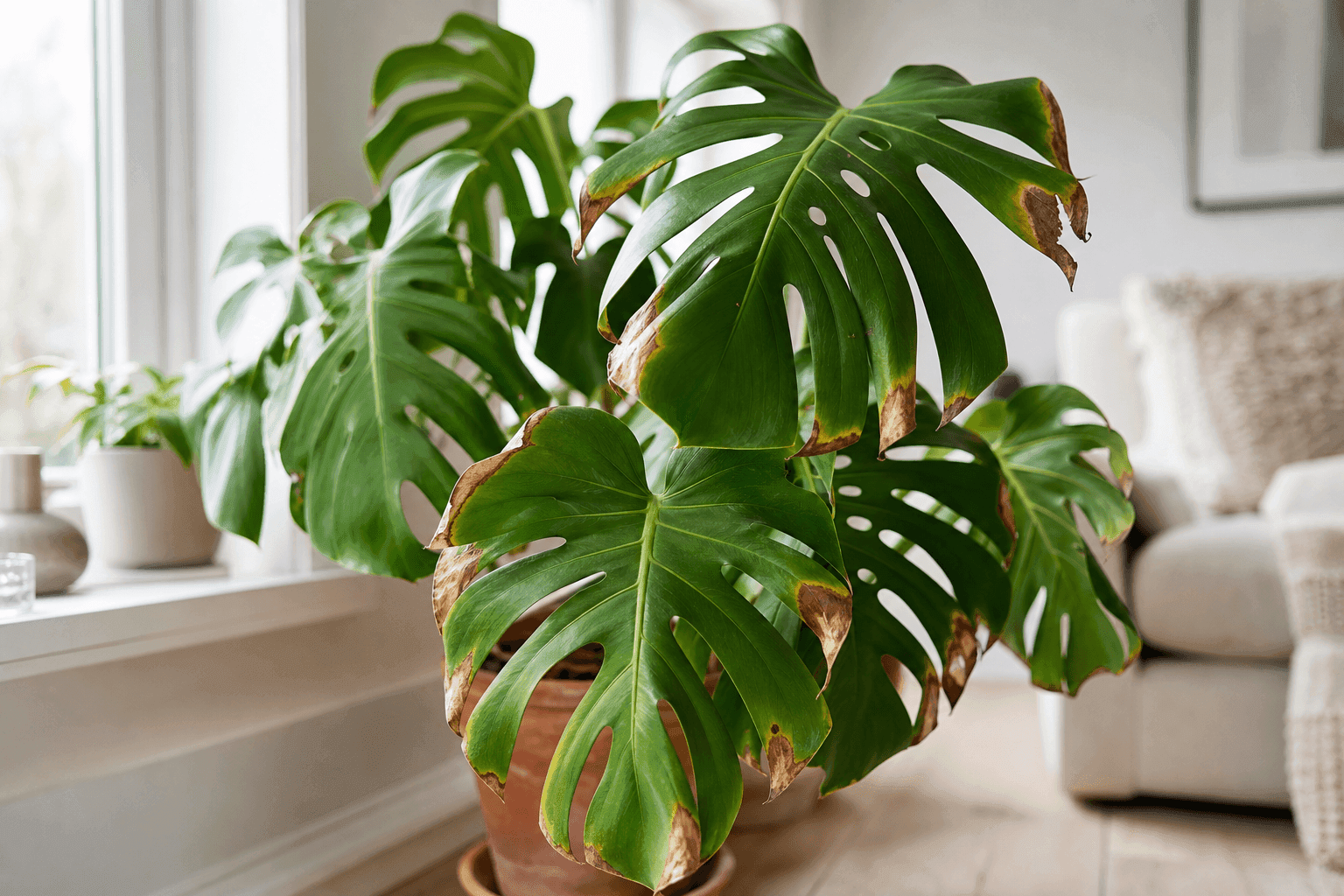
PossibleFeeding straight after repotting can stress freshly disturbed roots, especially if the new compost already contained fertiliser. Soluble salts build up and can scorch root tips, showing as brown leaf tips, dull growth and yellowing, sometimes with a white crust on the compost or pot rim.
- You fed soon after repotting, or the fresh compost already contained feed.
- There is a white crust on the compost surface or pot rim.
- Leaf tips are brown and growth is dull.
- Drainage is good and the compost is not waterlogged (which would point to wet roots instead).
- Pause feeding for 4–8 weeks while roots recover.
- If salts are likely and the pot drains freely, flush with plenty of room-temperature water and let it drain fully.
- Resume feeding only when the plant is actively growing, at a weaker dose.
- Avoid water from a domestic softener, whose salts are unsuitable for houseplants.
Stop it coming back:Salt stress recovers slowly because root tips need time to regrow. Expect stabilisation over 3–6 weeks, with better growth after the next flush. Damaged tips will not repair.
add more fertiliser because the leaf is yellow, or feed dry compost — both make root stress worse.
Pests noticed during stress
PossibleRepotting often makes you look closely at a plant, so pests that were already present can be 'discovered' rather than caused by the move. Sap-feeders such as spider mites, mealybugs, scale and thrips cause yellow stippling, sticky residue, fine webbing or white cottony clusters.
- Yellow stippling rather than even yellowing.
- Fine webbing, sticky honeydew, white cotton or brown scale bumps.
- Damage concentrated on leaf undersides, axils and new growth.
- Inspect with a phone torch or hand lens to confirm.
- Isolate the plant from other houseplants.
- Wipe leaves and stems with a damp cloth, or shower the plant, paying attention to undersides and joints.
- Remove badly infested leaves if plenty of healthy foliage remains.
- Use an appropriate UK-labelled houseplant pest control if needed, and repeat checks weekly.
Stop it coming back:Pest activity should fall within 1–3 weeks with consistent treatment, but damaged leaves stay marked. Keep checking new growth and nearby plants.
return the plant to your collection before pests are under control — they spread quickly to neighbouring houseplants.
Still not sure?
Work down these branches — the first one that matches is your answer.
What not to do
- Water on a calendar after repotting — check the compost and pot weight first.
- Fertilise immediately to 'perk it up' on freshly disturbed roots.
- Repot again into an even bigger pot.
- Keep unpotting to inspect the roots every few days.
- Move a stressed Monstera into harsh direct sun.
Common questions
Is it normal for Monstera leaves to turn yellow after repotting?
Yes, it can be normal for one or two old lower leaves to turn yellow after repotting. It is not normal for many leaves to yellow quickly while the compost stays wet or the stems soften.
Do Monsteras go into shock after repotting?
They can show repot shock after root disturbance, a new potting mix, or a move to a different spot. Mild shock should settle with steady care, bright indirect light and careful watering.
How long does Monstera repot shock last?
Mild repot shock usually improves within 2–4 weeks. If yellowing continues beyond that, or worsens quickly, check pot size, drainage, light and root health.
Why did my Monstera turn yellow after moving to a bigger pot?
The bigger pot may be holding more water than the roots can use. Excess damp compost around a small rootball reduces oxygen and can lead to root rot. Downsize if the pot is much larger than the roots and the mix stays wet.
Should I water my Monstera right after repotting?
Water lightly after repotting if the mix is dry or needs settling, then let excess drain fully. Do not keep watering repeatedly in the first week unless the upper mix is drying and the pot feels lighter.
Can yellow Monstera leaves turn green again?
Usually no. Once a Monstera leaf has turned fully yellow, it will not normally return to green. Recovery means the plant stops making new yellow leaves.
Should I fertilise a yellow Monstera after repotting?
No, not immediately. Wait 4–8 weeks, and only feed if the plant is actively growing. Fresh potting compost may already contain nutrients, and disturbed roots are more easily stressed.
How do I know if my Monstera has root rot after repotting?
Check for wet compost, drooping despite moisture, a sour smell, and roots that are brown or black, mushy, hollow or foul-smelling. Firm roots are a better sign.