Quick diagnosis
Match the row to what you’re seeing, then jump to the fix.
| What you see | Likely cause | Confidence | How to confirm | What to do now | Urgency |
|---|---|---|---|---|---|
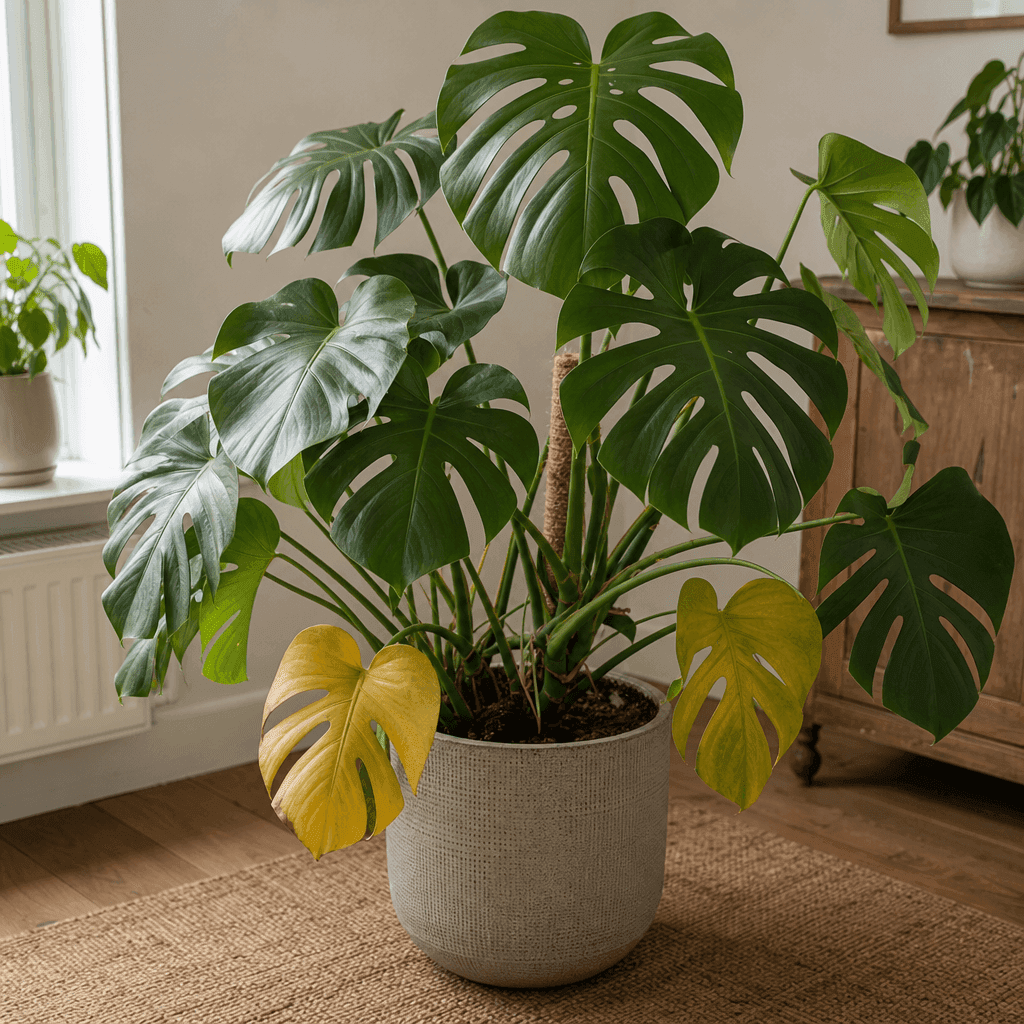
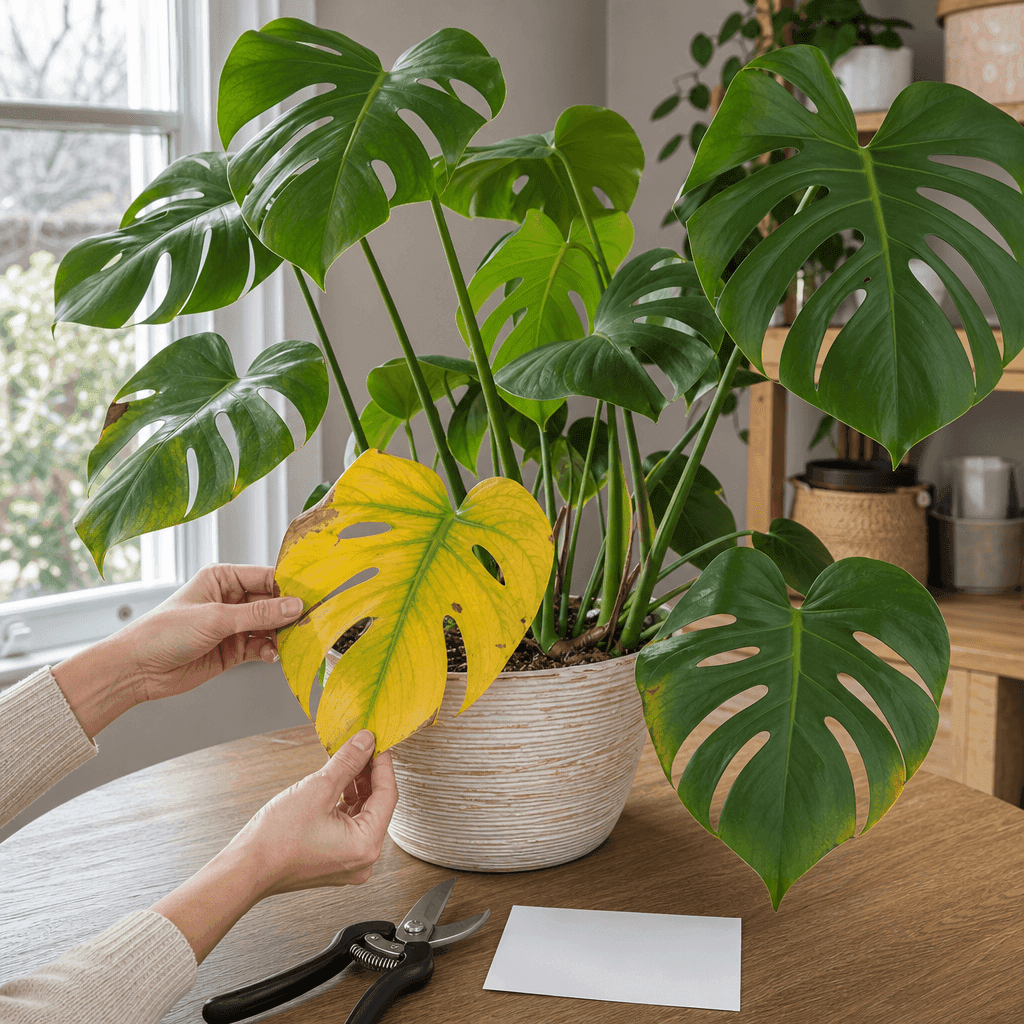
| One old lower leaf, fully yellow, plant still making healthy growth | Normal leaf ageing — cut it off | High | It is one of the oldest, lowest leaves and the rest of the plant looks firm. | Cut the petiole close to the main stem with clean scissors, or pull only if it releases easily. | Low |
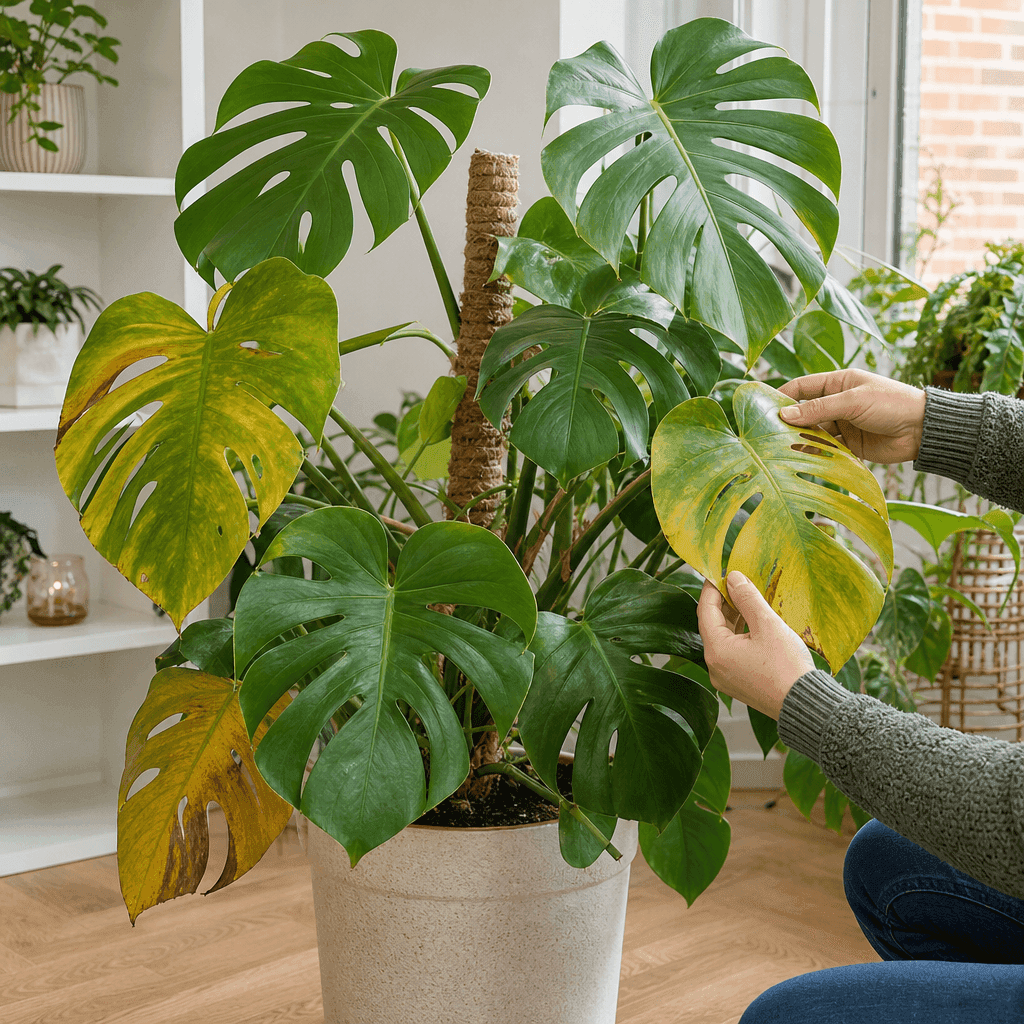
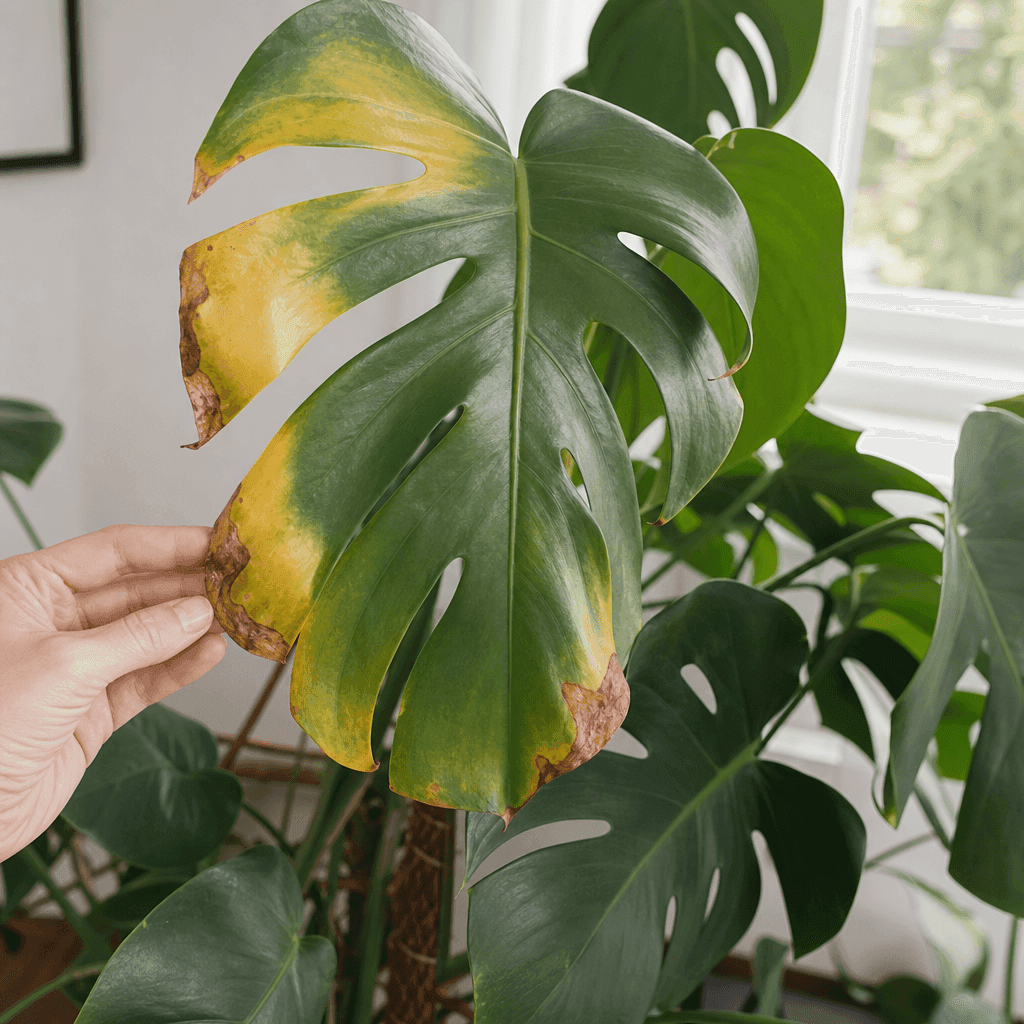
| Leaf is half yellow but still has firm green areas | Declining but still partly useful — wait | High | Green patches are firm, not spotted, sticky or webbed. | Leave it for now unless it is ugly enough to remove for appearance. | Low |
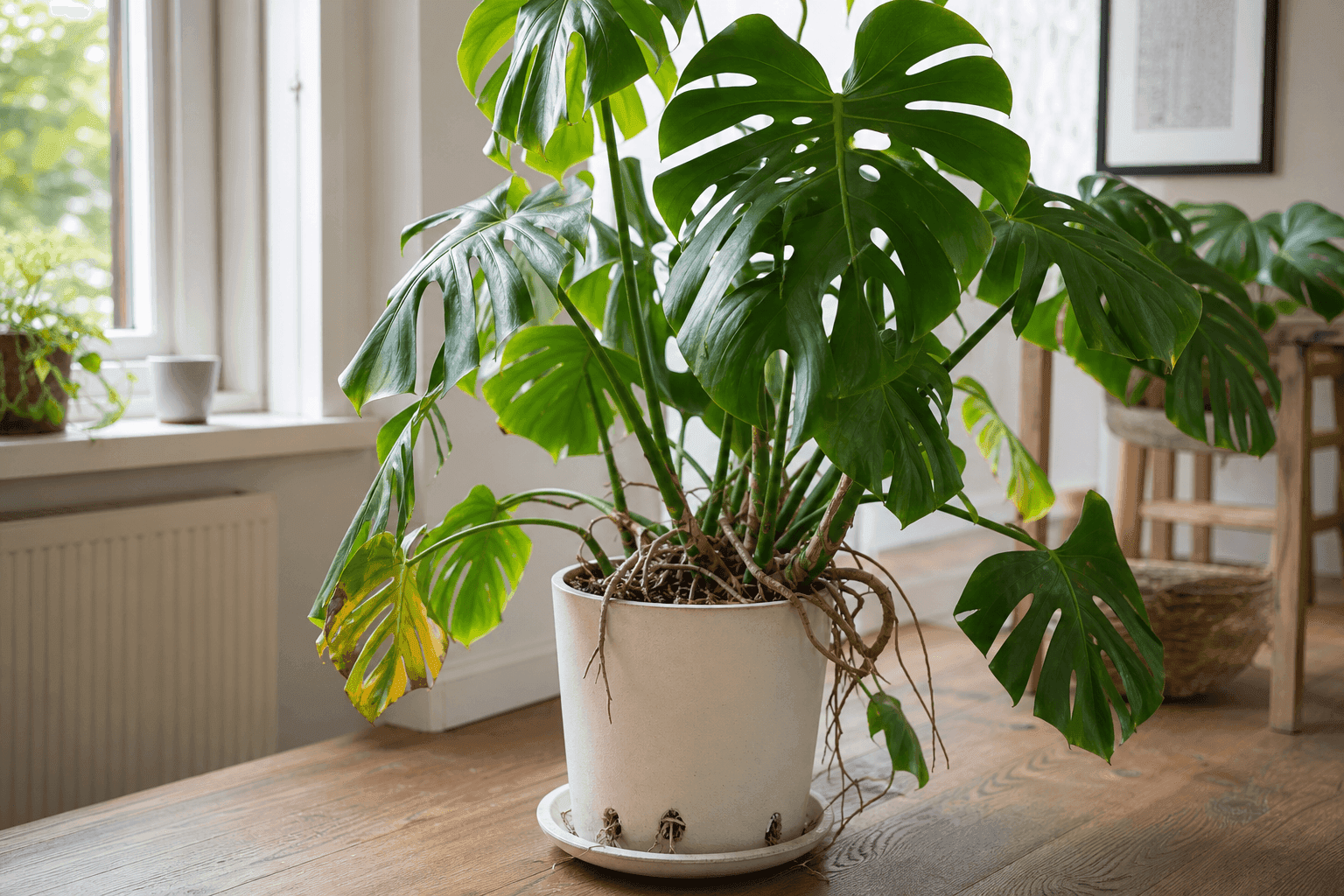
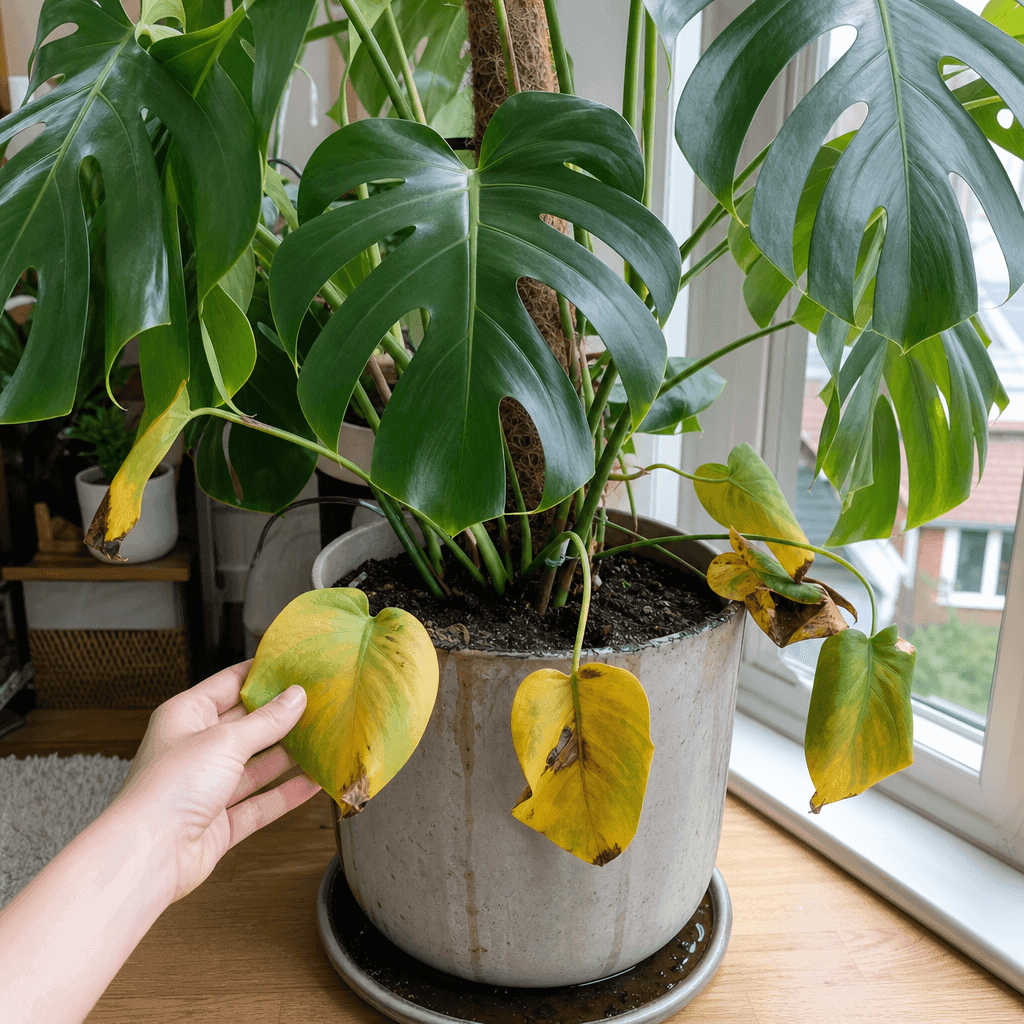
| Several leaves yellowing at once, compost stays wet, pot feels heavy | Overwatering or poor drainage | High | Check a few centimetres down; roots may smell sour or look brown and soft. | Remove only fully yellow or rotting leaves, then fix watering and drainage. | High |
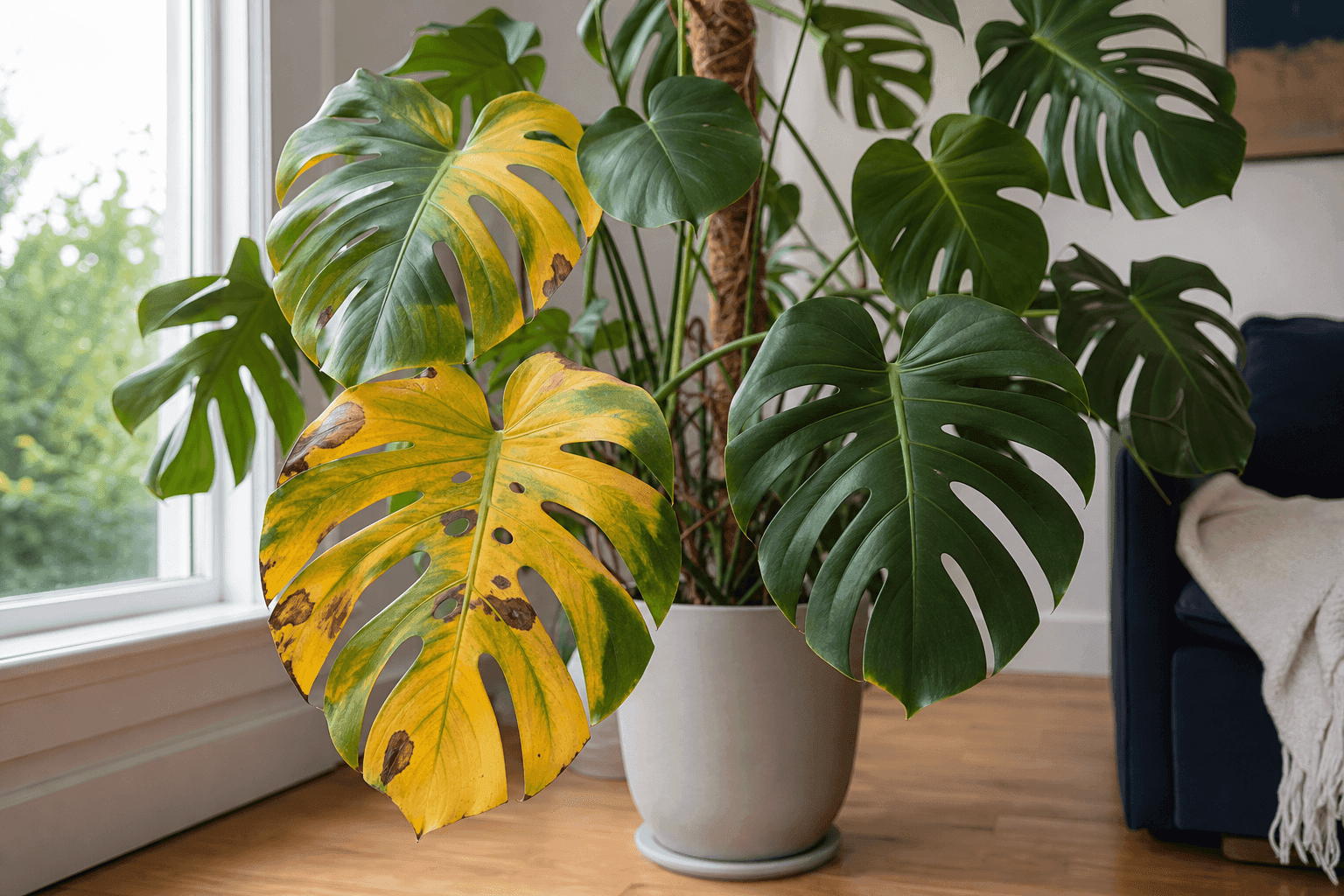
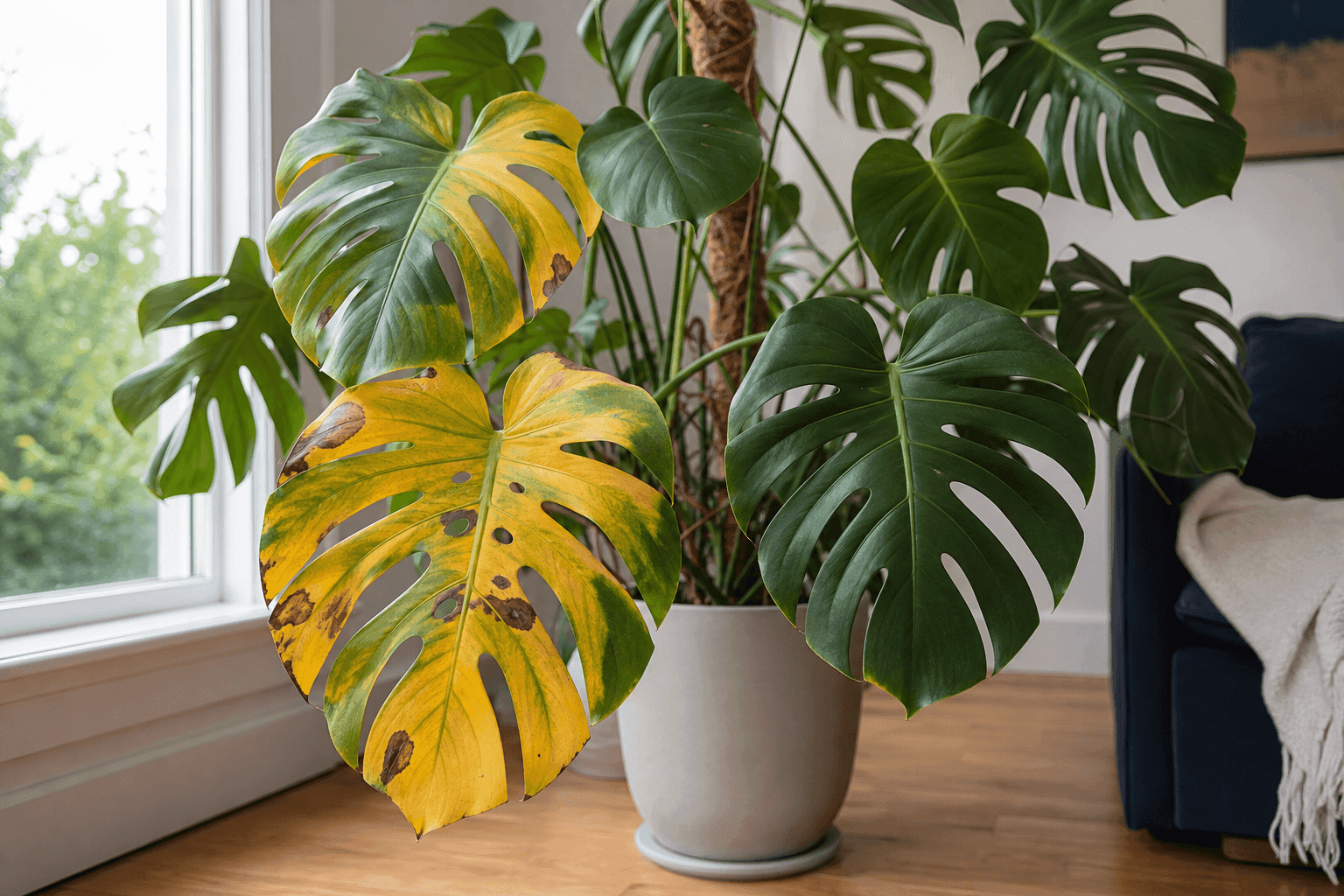
| Yellow leaf with brown/black spots, soft patches, mould, or yellow halos | Leaf spot, rot or damaged wet tissue | Medium | Spots spread, tissue is mushy, or nearby leaves are marked. | Cut off affected leaves, keep foliage dry, improve airflow, isolate if spreading. | High |
| Yellowing plus fine webbing, sticky leaves, white cottony blobs, scale bumps or silvery streaks | Sap-feeding pests | High | Inspect leaf undersides, petiole joints and new growth with a hand lens. | Isolate, remove the worst leaves, clean pests off, and monitor weekly. | High |
| Yellow leaf attached to a black, soft, mushy petiole or stem section | Stem or root rot risk | Medium | The petiole base feels soft, collapses, smells bad, or blackening moves into the stem. | Remove the leaf and inspect roots/stem health before watering again. | High |
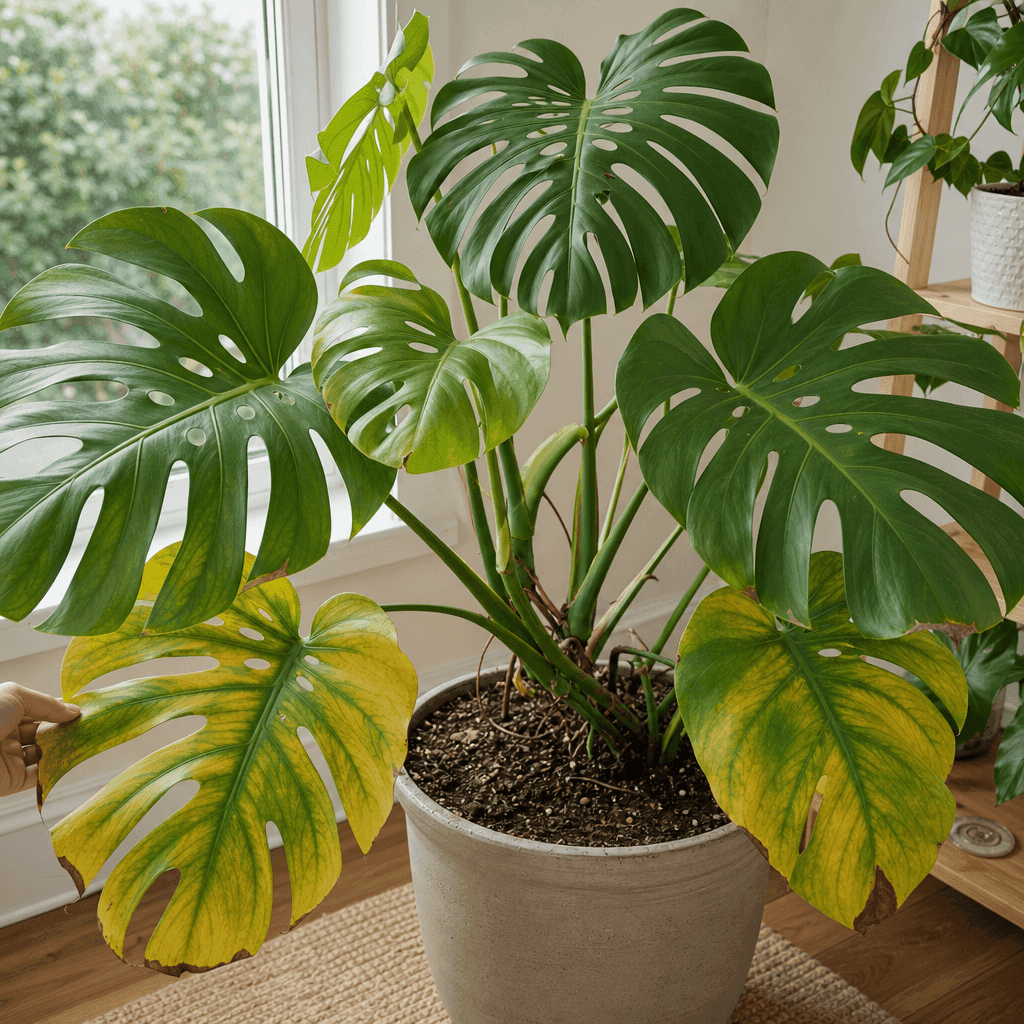
| Many lower leaves yellow after a move, repot, cold window or winter low light | Environmental stress | Medium | The change happened in the last few weeks; new leaves may pause. | Remove fully yellow leaves only, then stabilise light, warmth and watering. | Medium |
The causes, in detail
Fully yellow old leaf — cut it off if you want
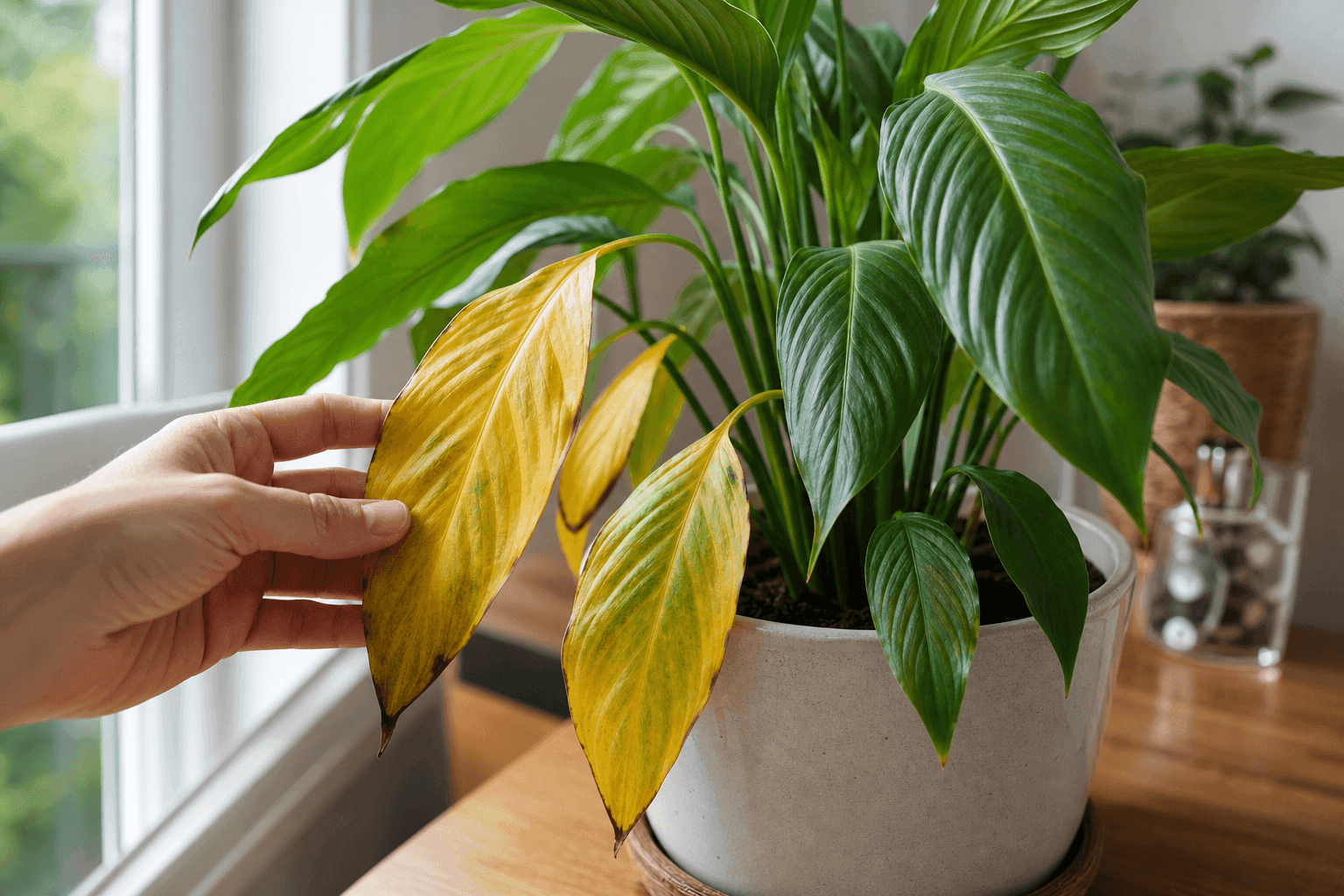
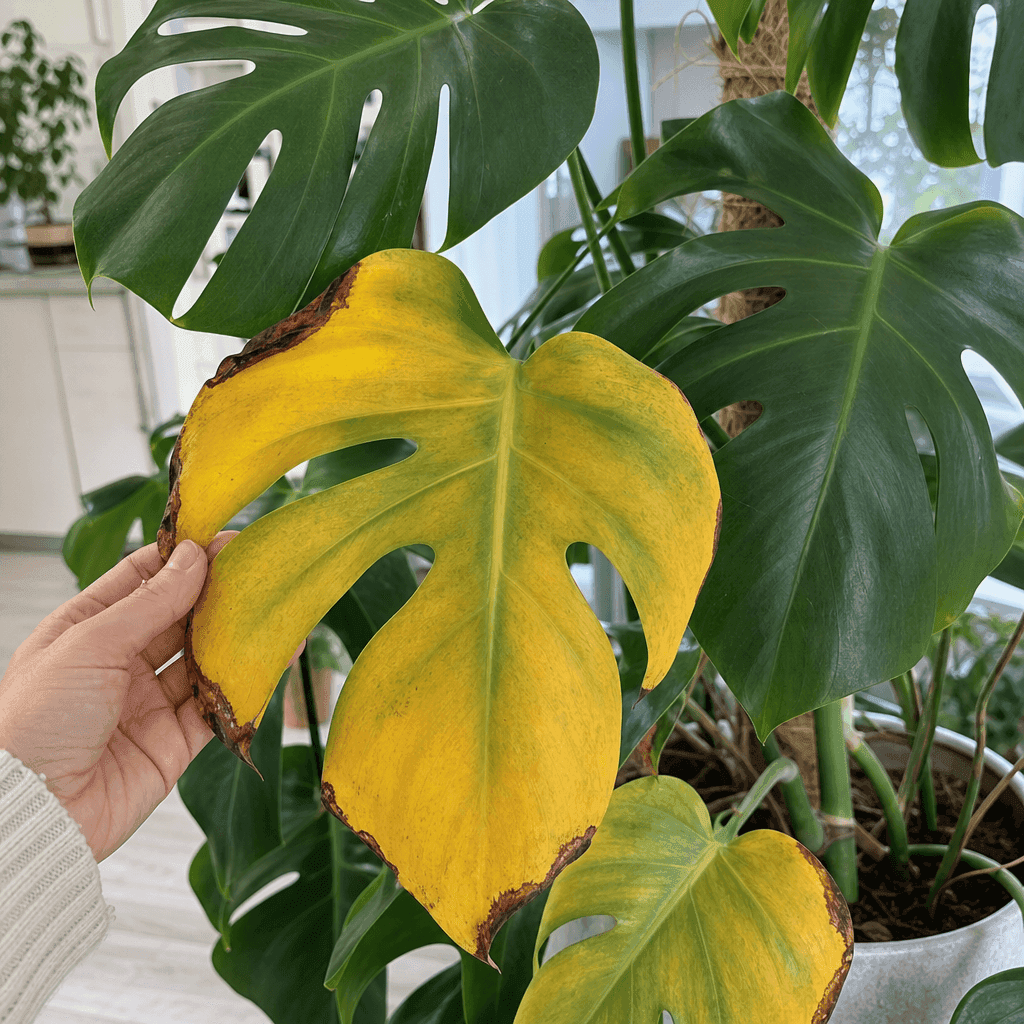
Most likelyThe whole leaf blade is yellow or yellow-brown, often on an older lower leaf, and may feel thin, floppy or papery while the rest of the plant looks normal. Older leaves have a limited lifespan, and RHS guidance notes that the odd lower leaf yellowing and falling on a mature houseplant can be normal.
- It is one of the oldest, lowest leaves.
- The newest leaves are firm and green.
- The main stem is solid rather than soft or black.
- Yellowing is slow and limited, not spreading fast.
- Cut the leaf off at the petiole base with clean, sharp scissors or secateurs.
- If the petiole is dry and naturally loosening, it may come away with a gentle tug.
- Do not yank if there is resistance — tearing can damage the main stem.
Stop it coming back:There is no recovery for the removed leaf. The useful sign is that the plant stays firm and produces healthy new growth in the next growth cycle.
assume every yellow lower leaf means the plant is dying — older leaves have a limited lifespan.
Still partly green — usually wait
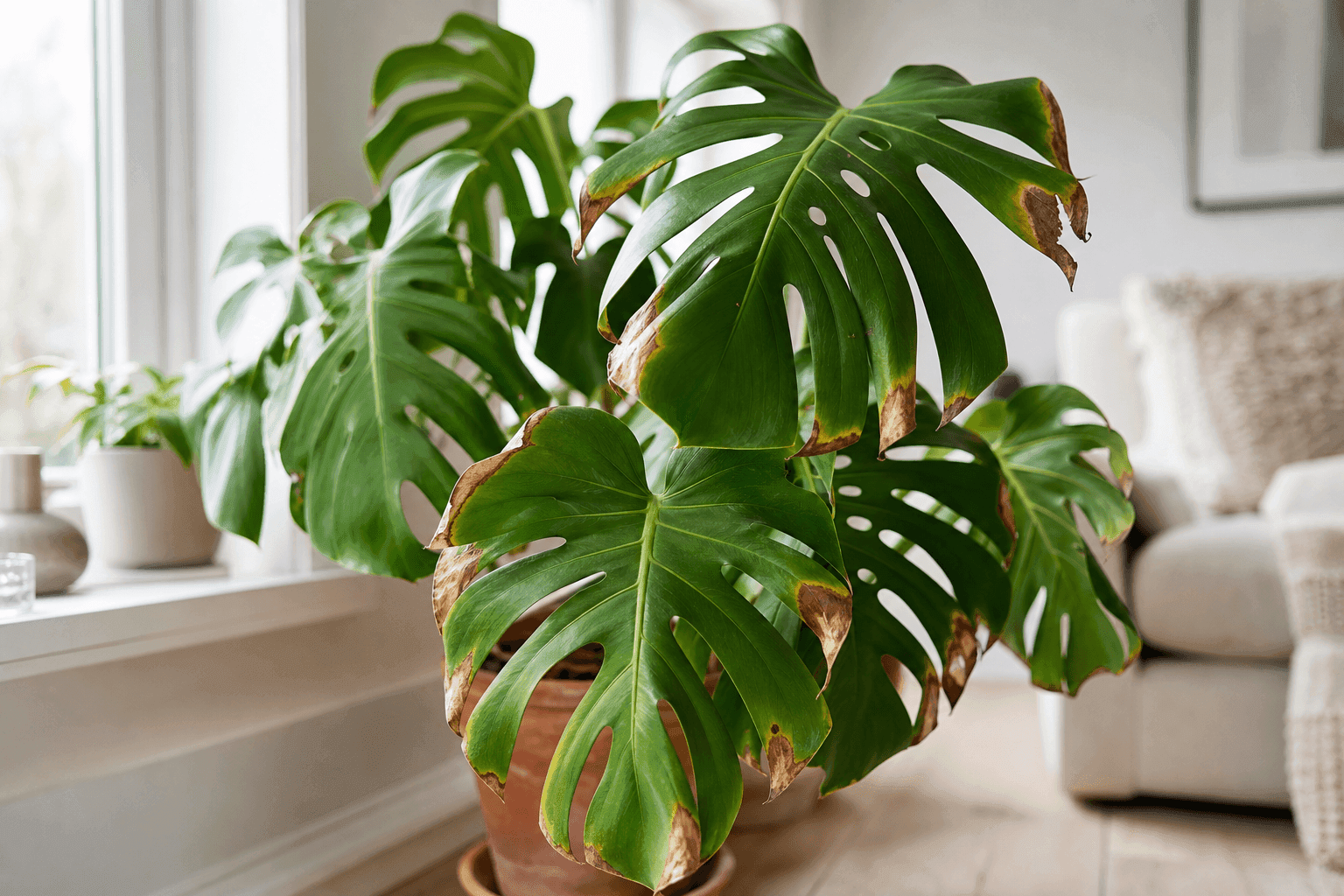
Most likelyThe leaf is yellowing from the edge, tip or between veins, but still has firm green areas. It may look untidy, but it is not slimy, mouldy, sticky, webbed or covered in insects. A partly green leaf can still feed the plant, so removing it early can reduce energy-making leaf area on an already stressed Monstera.
- Check both sides of the leaf and the petiole joint.
- Green parts are firm with no pest signs.
- The rest of the plant is stable, not wet and drooping.
- It is a single partly yellow leaf, not many at once.
- Leave the leaf in place until it is mostly or fully yellow, then cut it if you prefer a tidy plant.
- Meanwhile correct any obvious stress: bright indirect light, water only when the mix has partly dried.
- Keep the plant away from cold draughts and radiators.
Stop it coming back:The individual yellow area will not recover, but new leaves should look normal once the plant grows in better conditions — expect that over several weeks, not in the old leaf.
feed heavily to 'green it up' — once chlorophyll is lost a leaf will not reliably turn green, and feeding a stressed or waterlogged plant can worsen root problems.
Several leaves yellow with wet compost
Most likelyWhen several leaves yellow at once and the compost stays wet and the pot feels heavy, the problem is overwatering or poor drainage, not the leaves themselves. Cutting leaves will not fix it — the roots cannot use the water already present.
- The pot feels heavy and the compost is wet a few centimetres down.
- Drainage holes are blocked or the pot sits in a full cachepot.
- Roots may smell sour or look brown and soft.
- Leaves yellow and may droop rather than crisp.
- Remove only fully yellow or rotting leaves for now.
- Stop watering until the upper compost dries and the pot feels lighter.
- Empty the saucer or cachepot, and make sure the pot has open drainage holes.
- Repot into fresh, free-draining mix only if the compost is sour or roots are rotting.
Stop it coming back:A mildly overwatered Monstera may stabilise within a few weeks once watering and drainage improve. Fix the cause before deciding how many leaves to remove.
keep watering because the leaves look thirsty — yellow leaves plus wet compost usually means the roots cannot use the water already there.
Diseased or mouldy leaf — remove it promptly
PossibleA diseased yellow leaf may have dark spots with yellow margins, soft wet patches, grey mould, or spreading blackened tissue — different from a clean, evenly yellow old leaf. This is more urgent because it can spread to nearby leaves.
- Spreading spots, wet or collapsing tissue, or similar marks on nearby leaves.
- The foliage has been staying wet, or the plant is crowded with little airflow.
- The room is cool and damp.
- Marks look wet or fuzzy rather than dry and papery.
- Cut off the affected leaf with clean tools, and bin it rather than home-composting.
- Keep leaves dry when watering, and improve spacing and airflow around the plant.
- Isolate the plant if several leaves are affected while you work out the cause.
- Avoid random indoor fungicides unless the issue is identified and the product is labelled for it.
Stop it coming back:Removed leaves will not regrow from the same petiole. If the cause is corrected, new leaves should emerge clean; existing spots usually remain as scars.
mist a Monstera that already has leaf spots or mould — extra leaf wetness can make some foliage problems worse.
Pests present — remove the worst leaves and isolate
Most likelyPest-related yellowing is often patchy and comes with other signs: silvery streaks from thrips, fine webbing from spider mites, sticky honeydew, black sooty mould, white cottony mealybugs, or brown scale bumps on stems and undersides.
- Inspect the underside of the leaf, the midrib, petiole joints and new growth — use a hand lens if you have one.
- Look for webbing, sticky residue, white cotton or scale bumps.
- Look for dull, silvery, speckled or distorted leaves from thrips and mites.
- Damage is patchy rather than an even fade.
- Move the Monstera away from other houseplants.
- Cut off leaves that are mostly yellow, badly scarred, or hosting obvious pest clusters.
- Wipe remaining leaves and stems with a damp cloth, paying attention to undersides and joints.
- Repeat checks weekly; if you use a treatment product, follow the UK label exactly.
Stop it coming back:Pest-damaged yellow areas will not green up. You should see fewer new marks after 1–3 weeks if control is working; heavy infestations may take longer.
only prune and hope the pests are gone — many hide in petiole joints, new growth or on neighbouring plants, so monitoring and cleaning are what stop the problem.
Soft stem or petiole — check the roots first
PossibleIf the yellow leaf is attached to a petiole or stem area that is soft, black, water-soaked or foul-smelling, this is more serious than a clean yellow old leaf. The plant may also droop while the potting mix is wet. Soft, dark roots and a sour smell point to Monstera root rot, which needs treating below the surface rather than just trimming foliage.
- Gently squeeze the petiole and main stem near the yellow leaf — a healthy stem feels firm.
- The pot is heavy and the compost is wet.
- Tipping the plant out shows brown or black, soft, sour-smelling roots.
- Blackening is moving from the petiole into the stem.
- Remove the yellow leaf and any collapsed petiole tissue.
- Pause watering until you know what is happening below the surface.
- If roots are rotting, remove mushy roots with clean tools and repot into free-draining mix in a pot with drainage holes.
- Keep the plant warm and in bright indirect light while it recovers.
Stop it coming back:A mildly overwatered Monstera may stabilise within a few weeks. Serious root or stem rot may take months to rebuild roots, and badly rotted stems may not recover.
keep watering because the leaves are yellow — that worsens the rot that is already starving the leaves of usable water.
Environmental stress after a change
PossibleMany lower leaves can yellow after a move, repot, a cold window position, or winter low light. Removing leaves does not fix the cause — stabilising the environment does.
- The change happened in the last few weeks.
- New leaves may have paused rather than the plant collapsing.
- The compost is not sour or waterlogged.
- The plant may be in a darker or colder spot than before.
- Remove fully yellow leaves only.
- Stabilise light: bright indirect light, away from cold draughts and radiators.
- Keep watering steady — water when the upper mix has partly dried.
- Avoid repotting, moving, feeding and pruning all in the same week.
Stop it coming back:The plant should stop declining within a few weeks if roots are healthy. Existing yellow leaves stay yellow, but new growth should be stronger.
respond to environmental stress by piling on water and feed — steady, boring consistency recovers a Monstera faster.
Still not sure?
Work down these branches — the first one that matches is your answer.
What not to do
- Remove every yellowing leaf at once just for tidiness — fix the cause first.
- Cut into the main stem when removing a leaf; cut the petiole close instead.
- Feed heavily to try to turn a yellow leaf green again.
- Mist a plant that already has leaf spots or mould.
- Keep watering a wet, drooping plant because the leaves look thirsty.
Common questions
Should you cut off yellowing Monstera leaves?
Cut off fully yellow, brown, mouldy or badly pest-damaged Monstera leaves. Wait if the leaf still has firm green patches and no pest or disease signs.
Will a yellow Monstera leaf turn green again?
Usually no. Once a Monstera leaf has turned yellow because chlorophyll has been lost, that part of the leaf normally will not turn green again. Judge recovery by new healthy leaves.
Can cutting yellow leaves save my Monstera?
Cutting yellow leaves can remove dead tissue or reduce pests, but it does not fix the cause. If several leaves are yellowing, check watering, drainage, roots, light, temperature and pests.
Where should I cut a yellow Monstera leaf?
Cut the petiole close to the main stem, taking care not to cut into the stem itself. Use clean, sharp scissors or secateurs.
Should I remove a Monstera leaf that is half yellow?
Usually wait if it still has green patches and looks otherwise clean. Remove it sooner if it has pests, mould, black spots, mushy tissue, or you need to reduce disease spread.
Why are only the lower Monstera leaves turning yellow?
One or two lower leaves may simply be ageing. If many lower leaves yellow at once, check for wet compost, poor drainage, low winter light, a cold draught or root stress. Our Monstera care and problem guides cover each of these in more depth.
Should I cut off yellow leaves after overwatering?
Remove leaves that are fully yellow, brown or soft, but focus first on the roots and compost. Let the mix dry appropriately, check drainage holes, and repot only if roots are rotting or the mix is sour and compacted.