Quick diagnosis
Match the row to what you’re seeing, then jump to the fix.
| What you see | Likely cause | Confidence | How to confirm | What to do now | Urgency |
|---|---|---|---|---|---|
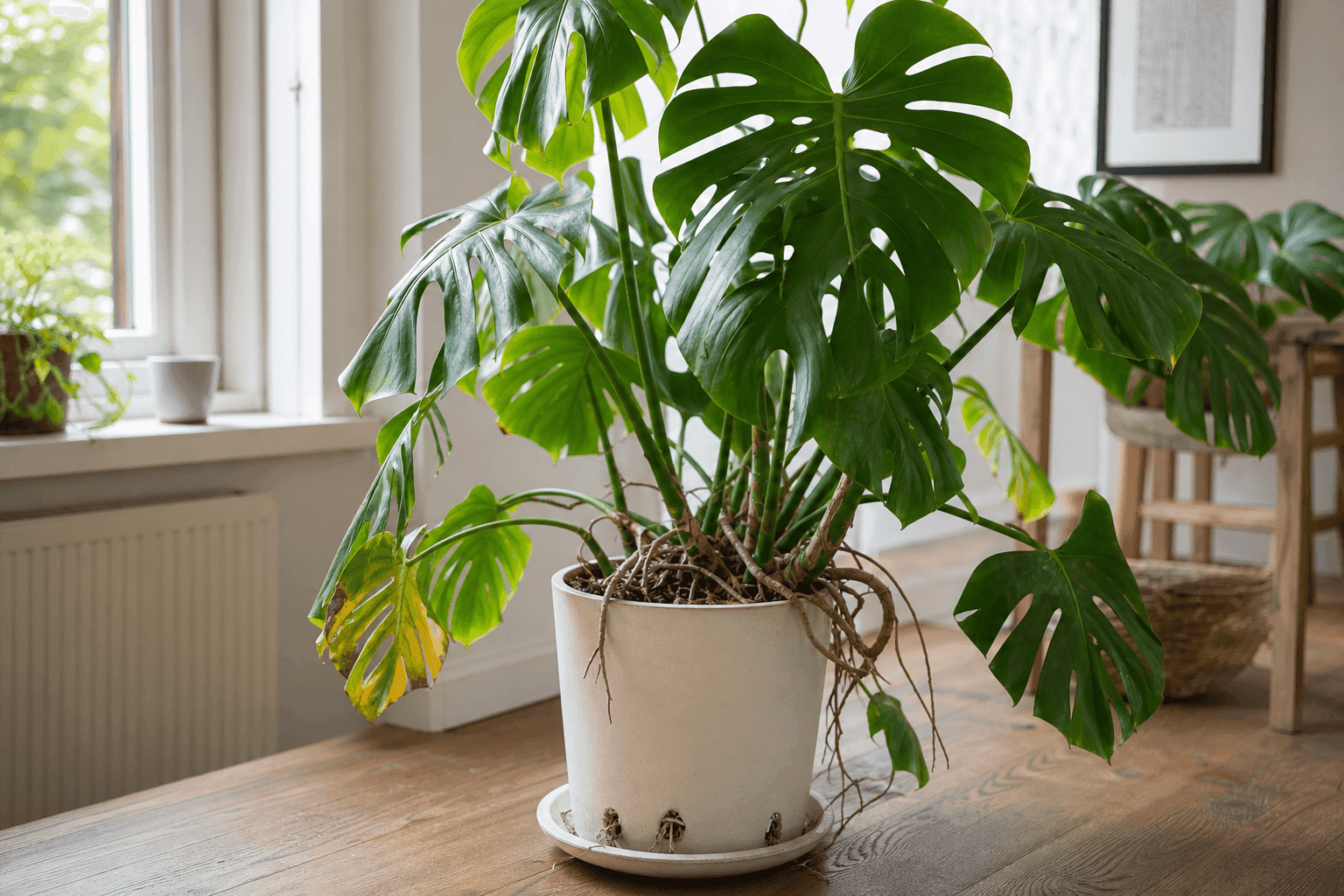
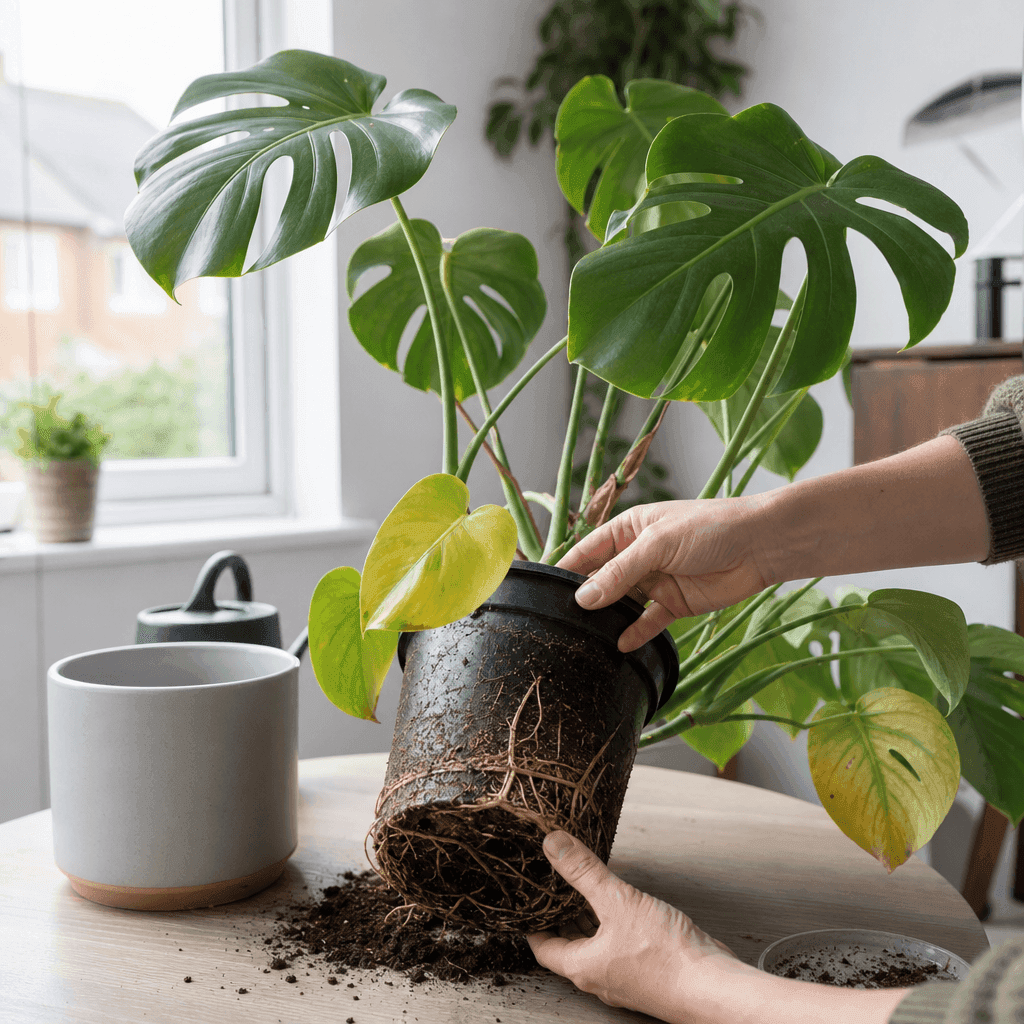
| Roots emerging from drainage holes or circling the surface; compost dries out very fast | Root-bound — needs repotting | High | Gently remove the plant from the pot — if roots form a solid mass with little compost, it is root-bound. | Repot into a pot 2–5 cm wider using a free-draining peat-free compost mix. | Medium |
| No new leaves for several weeks after repotting; existing leaves look flat but healthy | Post-repot adjustment (sulking) | High | The plant was recently repotted and is otherwise not wilting, yellowing or showing distress. | Be patient — monsteras take up to four weeks to adjust; keep care consistent and do not fertilise yet. | Low |
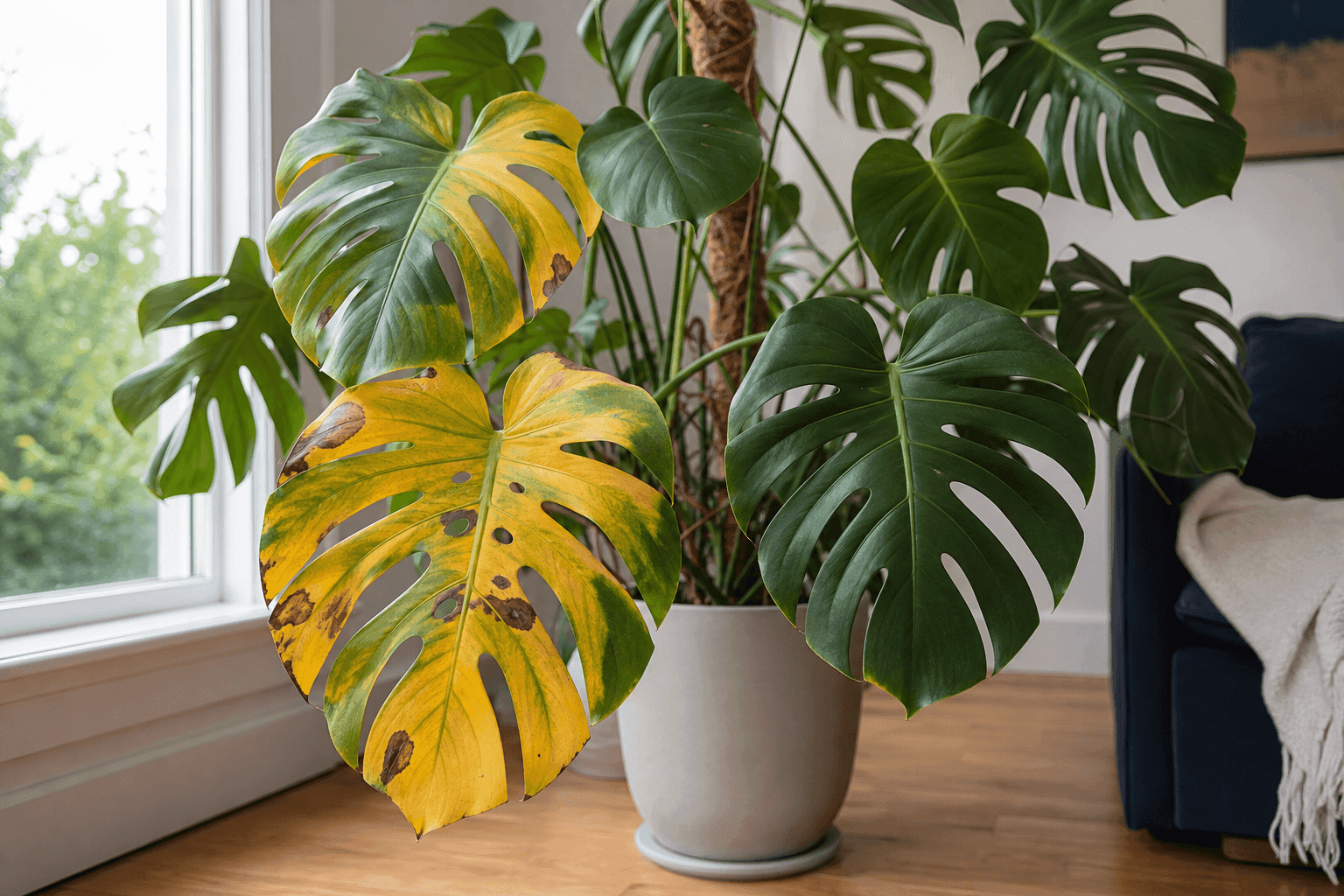
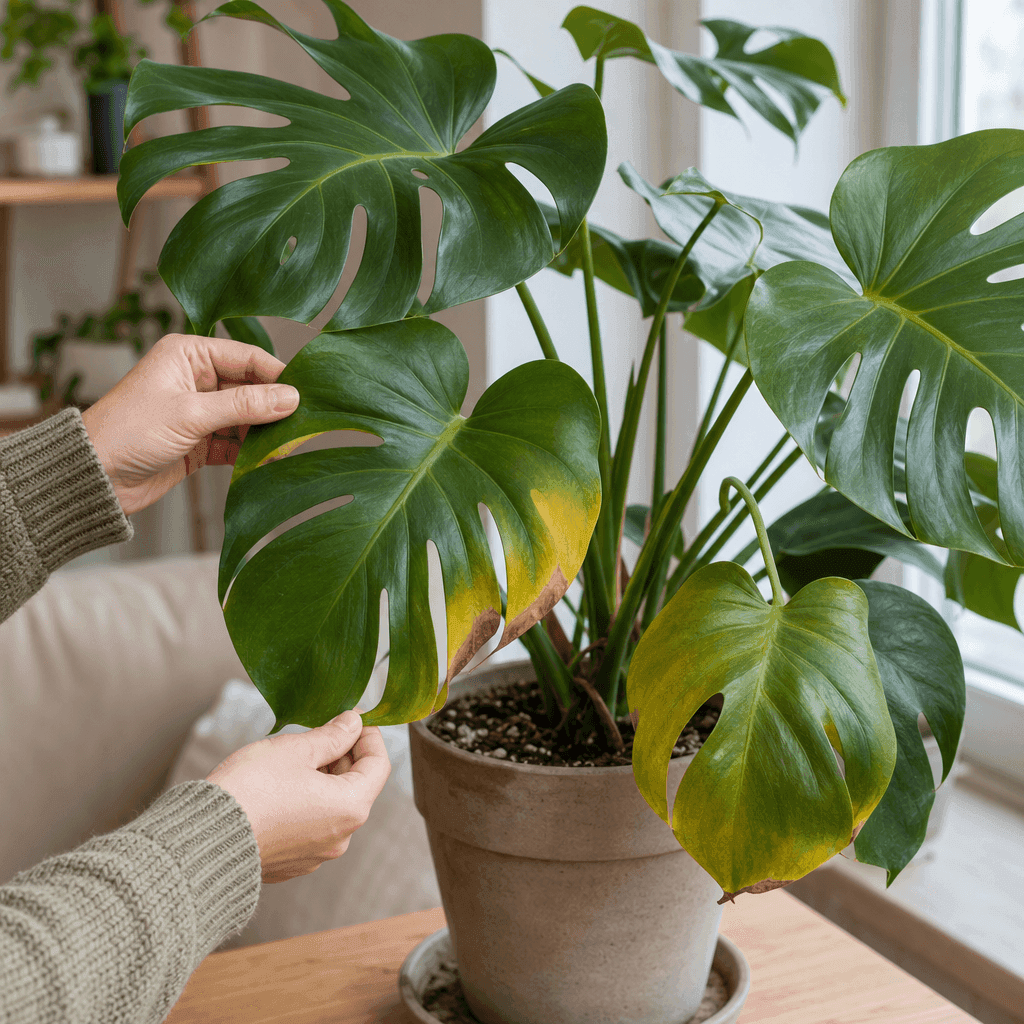
| Yellowing leaves or wilting in wet compost after repotting | Overwatering after repotting into a larger pot | Medium | The new pot is much larger than the old one; compost stays wet for many days. | Allow the compost to dry more between waterings; only water when the top 3–5 cm is dry. | Medium |
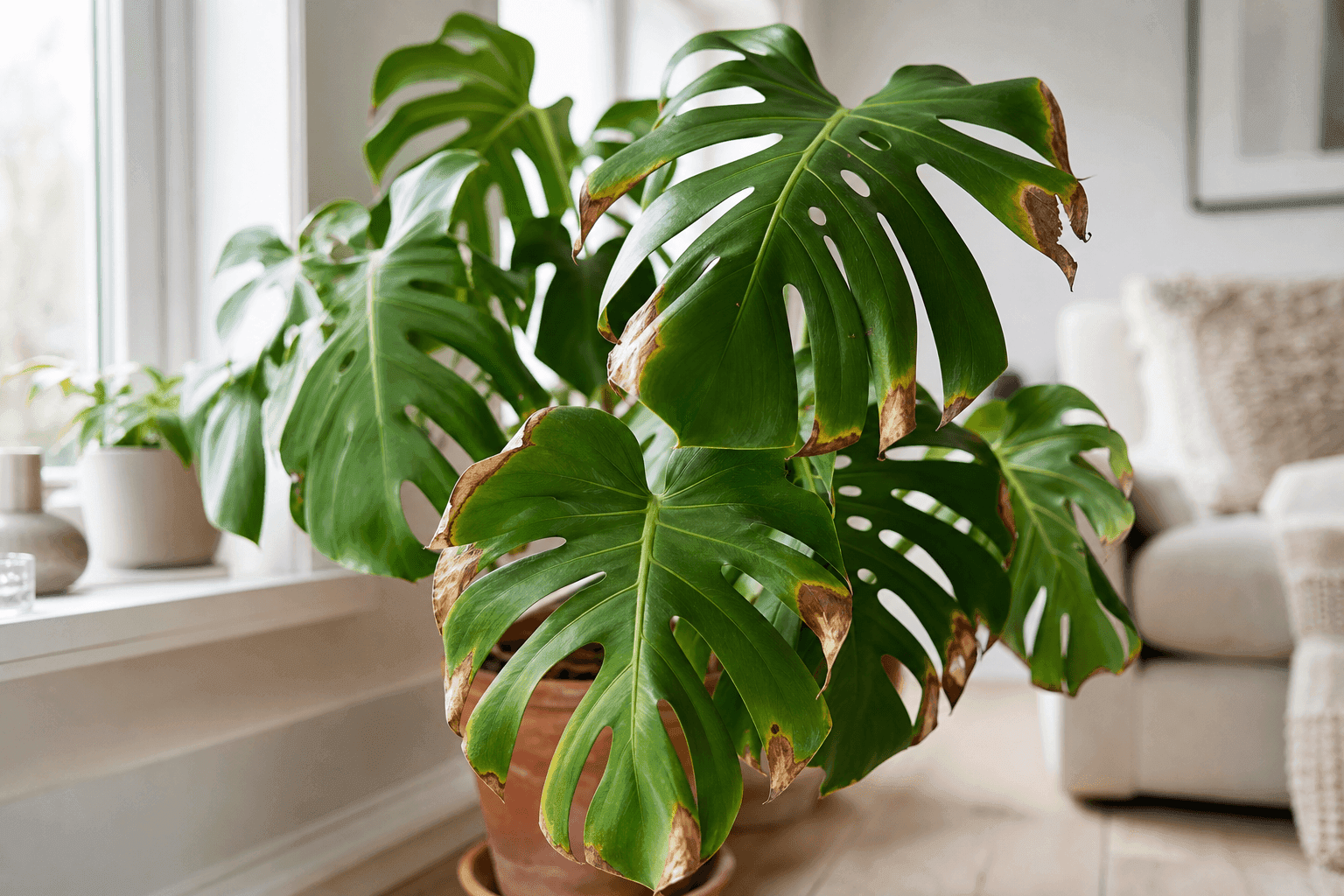
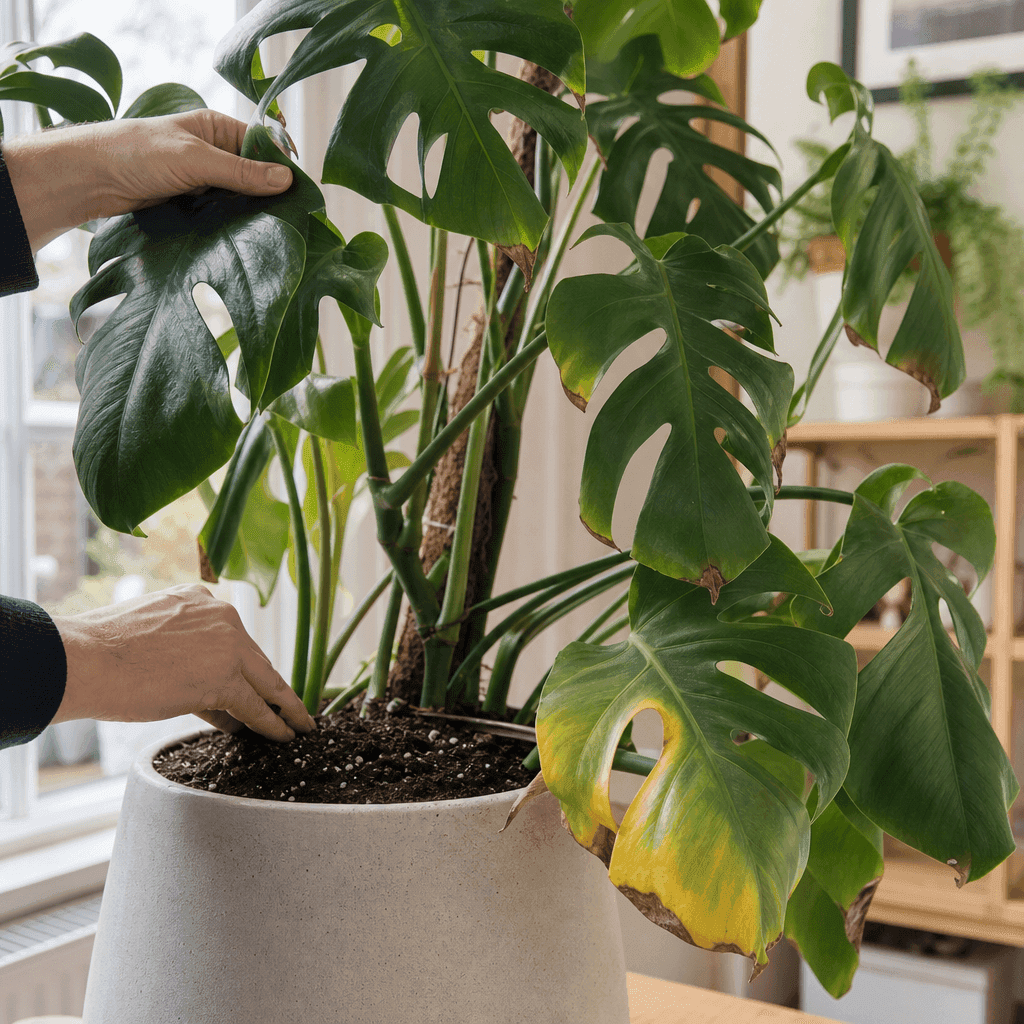
| Wilting, drooping leaves after repotting, despite adequate moisture | Transplant shock | Medium | Roots were heavily disturbed during repotting; soil is neither too wet nor too dry. | Keep in bright indirect light, away from draughts; water moderately and wait. | Low–medium |
| Slow decline after repotting; yellowing leaves; roots not filling the new pot | Pot much too large — excess wet compost | Medium | The new pot is more than 5–7 cm wider than the old one; compost stays wet for a week or more. | Repot back into a more appropriate pot size; always go up one size (2–5 cm) only. | Medium |
The causes, in detail
Root-bound — the plant genuinely needs repotting
Most likelyMonstera deliciosa should be repotted every two to three years, or when it shows clear signs of root-bound stress: roots circling the base or emerging from drainage holes, compost drying out unusually fast (within a day or two), new leaves emerging noticeably smaller than previous growth, and occasional yellowing despite correct watering. Epic Gardening advises repotting when you see approximately 70% roots and 30% compost when the plant is removed from the pot. In the UK, the ideal repotting window is late March to the end of May — the plant is entering active growth and will establish quickly in fresh compost.
- Roots are visibly growing through the drainage holes or circling the pot surface.
- The compost dries out within one to two days of watering.
- New leaves are emerging smaller than older ones, or growth has noticeably slowed.
- When gently removed, the plant holds its shape as a solid root mass.
- Choose a pot 2–5 cm wider than the current one — going up just one size reduces the risk of excess wet compost.
- Use a free-draining compost mix: three parts peat-free houseplant compost to one part perlite works well; some growers add a small amount of orchid bark for extra drainage.
- Ensure the new pot has at least one clear drainage hole.
- Lay the plant on its side, support the base of the stems, and slide it out; loosen any circling roots gently with your hands.
- Place a little fresh compost in the base of the new pot, position the root mass, and fill in around the sides, firming gently.
- Water moderately immediately after potting to settle the compost around the roots.
Stop it coming back:Check your monstera every spring by assessing whether roots are visible at the drainage holes. A plant that is only slightly root-bound can wait another year; repotting too often adds unnecessary stress.
repot into a much larger container to 'give the plant room to grow' — excess compost holds moisture and significantly raises the risk of root rot in a monstera whose root ball is not yet large enough to use the water.
Post-repot adjustment — normal slow period
Most likelyAfter repotting, it is completely normal for a monstera to pause leaf production for two to six weeks. The plant is directing its energy into establishing new roots in the fresh compost rather than producing new leaves. Lively Root notes that a monstera may take up to a month to recover and adjust in its new home. Provided the existing leaves remain firm, green and upright (not yellowing or wilting), the plant is fine. This is the most common concern after a successful repot and requires patience, not intervention.
- The plant was repotted two to six weeks ago.
- Existing leaves look healthy — green, firm and upright.
- There are no signs of yellowing, wilting or rotting.
- Continue normal care — bright indirect light, moderate watering (allow the top 3–5 cm to dry before watering), no fertiliser.
- Withhold fertiliser until new leaf growth appears — feeding a plant that is not actively growing can burn the new fine roots.
- Be patient — the first new leaf after repotting confirms the plant has settled.
- Avoid moving the plant to a different spot during the adjustment period.
Stop it coming back:The sulking period after repotting is shorter when you repot at the right time (March–May) and go up only one pot size.
increase watering or start feeding in an attempt to 'push' the plant into growing — this increases stress and can cause root problems while the plant is establishing.
Overwatering after repotting into a larger pot
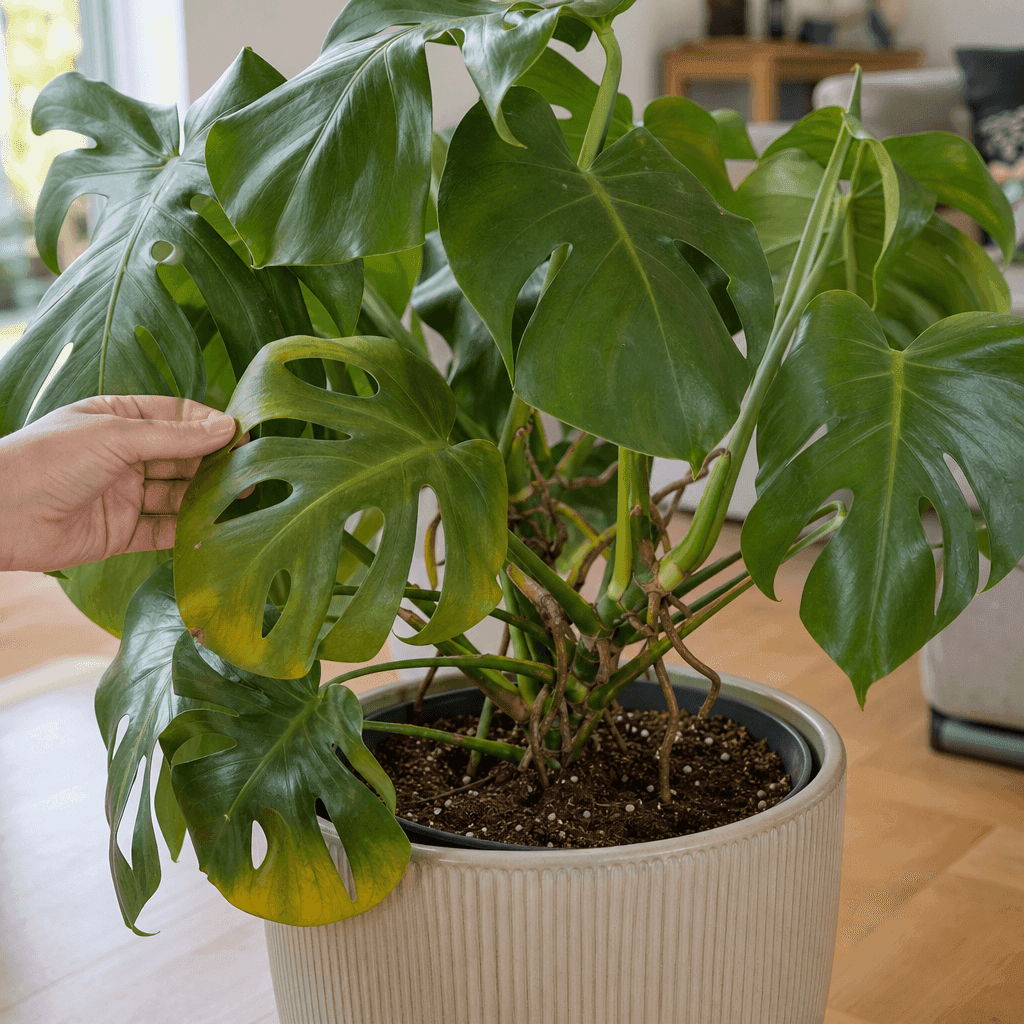
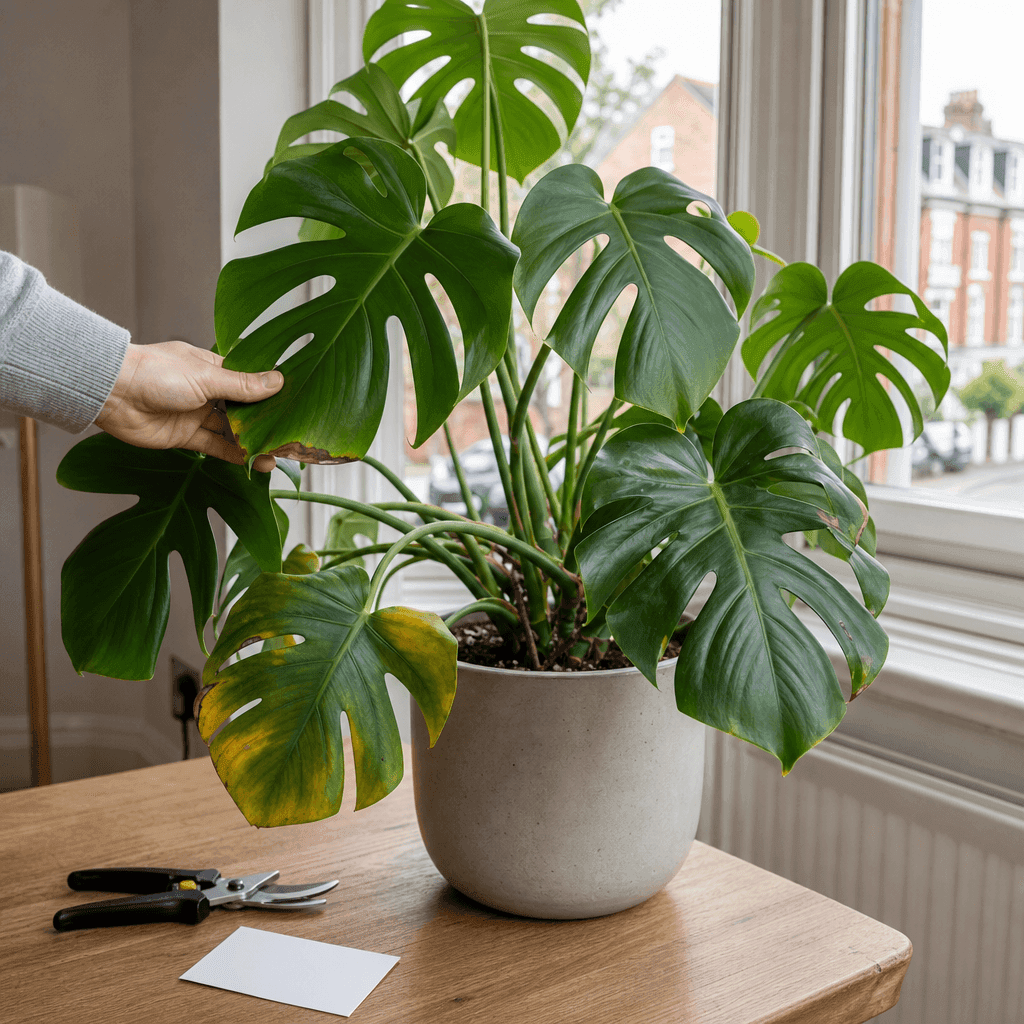
PossibleThe most common mistake after repotting a monstera is watering it as frequently as before, when the new, larger pot holds significantly more compost than the root ball currently needs. Fresh compost around the outside of the root mass stays wet for a long time, and the roots sitting in persistently wet compost are vulnerable to rot. Yellowing leaves after repotting and a wilting plant in wet compost almost always point to this overwatering and nutrient or watering problem.
- The new pot is larger than the old one and the compost is taking many days to dry.
- Leaves are yellowing or wilting despite the compost being wet.
- The pot was upsized by more than 5 cm, leaving a wide band of fresh compost around the root ball.
- Stop watering immediately and allow the compost to dry more — check by pushing a finger 5 cm into the compost.
- Only water when the top 3–5 cm of compost feels dry, not on a schedule.
- Ensure the pot has adequate drainage — repotting is the right time to confirm the drainage hole is unobstructed.
- If the compost smells sour or roots look brown when checked, repot into a more appropriately sized container.
water a newly repotted monstera on the same schedule as before — a larger pot retains moisture longer and the root system has not yet expanded to use it.
Transplant shock
PossibleEven when repotting is done carefully, some monsteras experience a temporary period of transplant shock — drooping or slightly wilted leaves as the root system adjusts to the disturbance. This is more pronounced when significant root pruning was necessary, when the repotting was done in hot weather, or when the plant was moved to a significantly different position. Transplant shock usually resolves within one to two weeks as new root hairs grow.
- The plant was repotted recently and is drooping despite the compost being neither too wet nor too dry.
- Leaves feel limp but have not yellowed.
- No pest or disease signs are visible.
- Place the plant in bright indirect light — avoid direct sun while recovering.
- Keep the compost barely moist — not wet, but not allowed to fully dry either.
- Avoid moving the plant to different positions while it recovers.
- Do not feed until the plant resumes normal growth.
- If the plant was heavily root-pruned, remove a few of the largest leaves to reduce the water demand the roots must meet.
repot a monstera in midsummer in direct sun or into a cold, dark spot — both conditions slow root recovery.
Pot much too large — excess wet compost
PossibleGoing up more than one pot size at repotting is one of the most common causes of problems in monsteras after the event. A root ball that occupies only the centre of a large pot cannot use the water held in the surrounding compost, which stays permanently damp and creates the ideal conditions for root rot pathogens. The plant may appear to decline for no obvious reason — yellowing monstera leaves, slow growth, soft roots — even though it was healthy before repotting. Dengarden notes that you should choose a container only slightly bigger than the current pot.
- The new pot is more than 7–8 cm wider than the previous one.
- The compost stays wet for five or more days after watering.
- The plant showed none of these symptoms before repotting.
- Remove the plant from the oversized pot — this is the right corrective action despite the disruption.
- Shake off excess compost from the root zone.
- Repot into a pot that is 2–5 cm wider than the original — not the oversized one.
- Use fresh peat-free compost with added perlite to improve drainage.
- Water sparingly until the plant shows new growth.
leave the plant in an oversized pot and simply water less — the compost around the outer edges stays wet regardless and root rot can still develop.
Still not sure?
Work down these branches — the first one that matches is your answer.
What not to do
- Repot into a container much larger than the current one — excess compost holds water and causes root rot.
- Feed immediately after repotting — withhold fertiliser until new leaf growth confirms the plant has settled.
- Repot in autumn or winter when the plant is barely growing — repot in March to May for the fastest recovery.
- Remove aerial roots — they are normal and should not be cut off.
- Water on the same schedule after repotting as before — a larger pot retains more moisture and needs less frequent watering until the roots expand.
Common questions
How do I know when to repot my monstera?
Look for roots emerging from drainage holes, compost drying out within a day or two, and new leaves coming in noticeably smaller than older ones. Repot in spring (March to May in the UK) when the plant is entering active growth.
What size pot should I use when repotting a monstera?
Go up only one size — a pot 2–5 cm wider in diameter than the current one. A much larger pot holds excess wet compost and raises the risk of root rot. Monsteras do not need a lot of extra space; a snug pot supports healthy growth. See our full monstera plant care guide for related issues.
What compost is best for repotting a monstera?
A free-draining mix works best: three parts peat-free houseplant or potting compost to one part perlite. Some growers add a handful of orchid bark for extra aeration. Avoid dense, peat-heavy composts that stay wet for too long.
Should I water a monstera straight after repotting?
Water moderately immediately after repotting to settle the compost around the roots. Then allow the top 3–5 cm to dry before watering again. Do not water on the same schedule as before — a larger pot retains moisture longer.
Why is my monstera not growing after repotting?
A pause in leaf production for two to six weeks after repotting is completely normal. The plant is directing energy into establishing roots in the fresh compost. As long as existing leaves remain healthy, this is not a problem. Withhold fertiliser until new growth appears.
Should I fertilise a monstera after repotting?
No — withhold fertiliser until the plant produces new leaves. Fresh compost contains nutrients, and feeding a plant that is not yet actively growing can burn the fine new roots. Resume a diluted liquid feed once new growth confirms the plant has settled.
Why are my monstera leaves drooping after repotting?
Some drooping or wilting after repotting is normal transplant shock. Keep the plant in bright indirect light, water moderately and be patient. If the compost is wet and the drooping is severe with yellowing, the pot may be too large — excess wet compost can cause root problems.
Can I repot a monstera in winter?
It is best avoided. Monsteras repotted in late autumn or winter are barely growing and recover slowly. Wait until late March to May when the days are lengthening and the plant is moving into active growth. Repotting in the growing season produces the fastest, most reliable recovery.