Quick diagnosis
Match the row to what you’re seeing, then jump to the fix.
| What you see | Likely cause | Confidence | How to confirm | What to do now | Urgency |
|---|---|---|---|---|---|
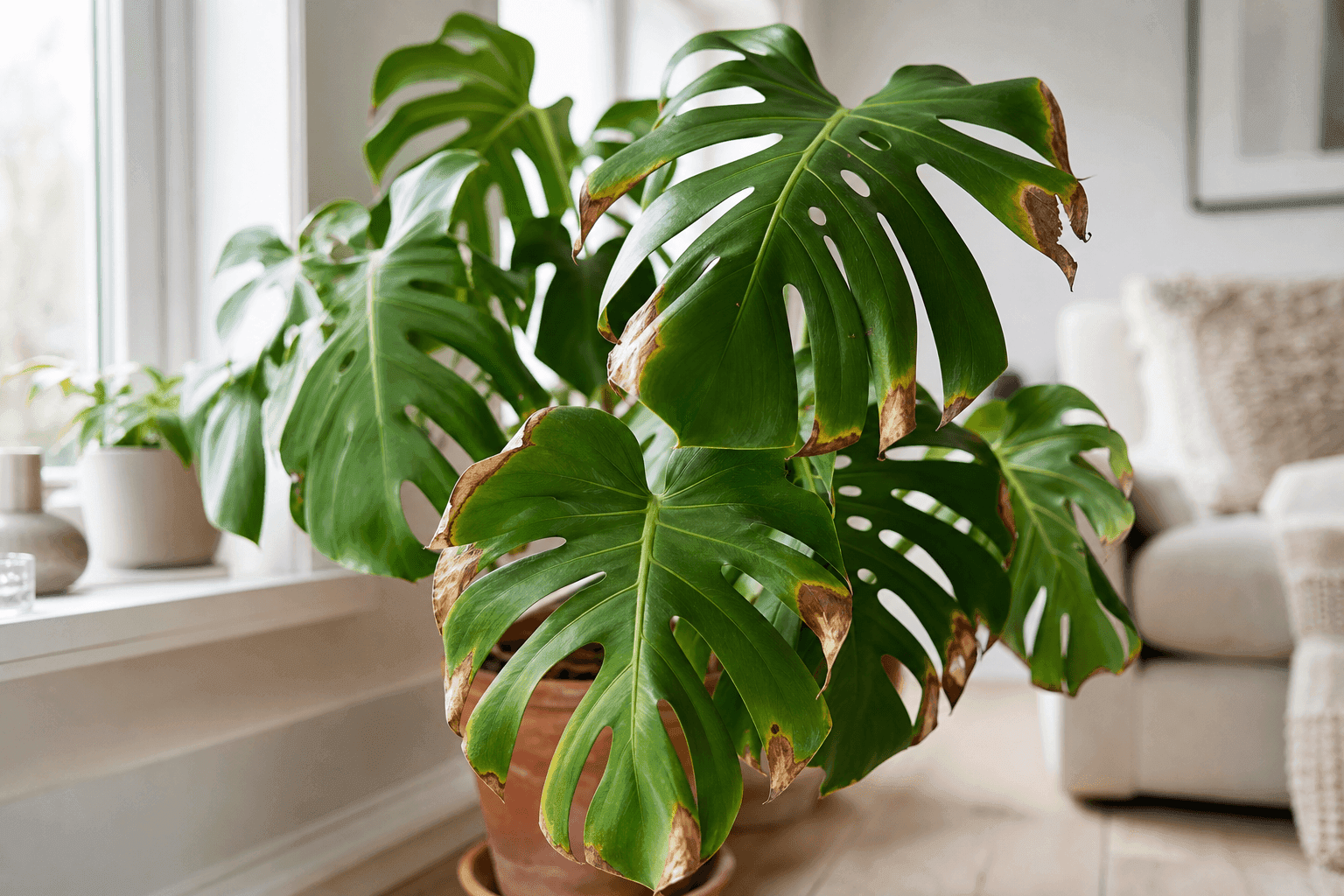
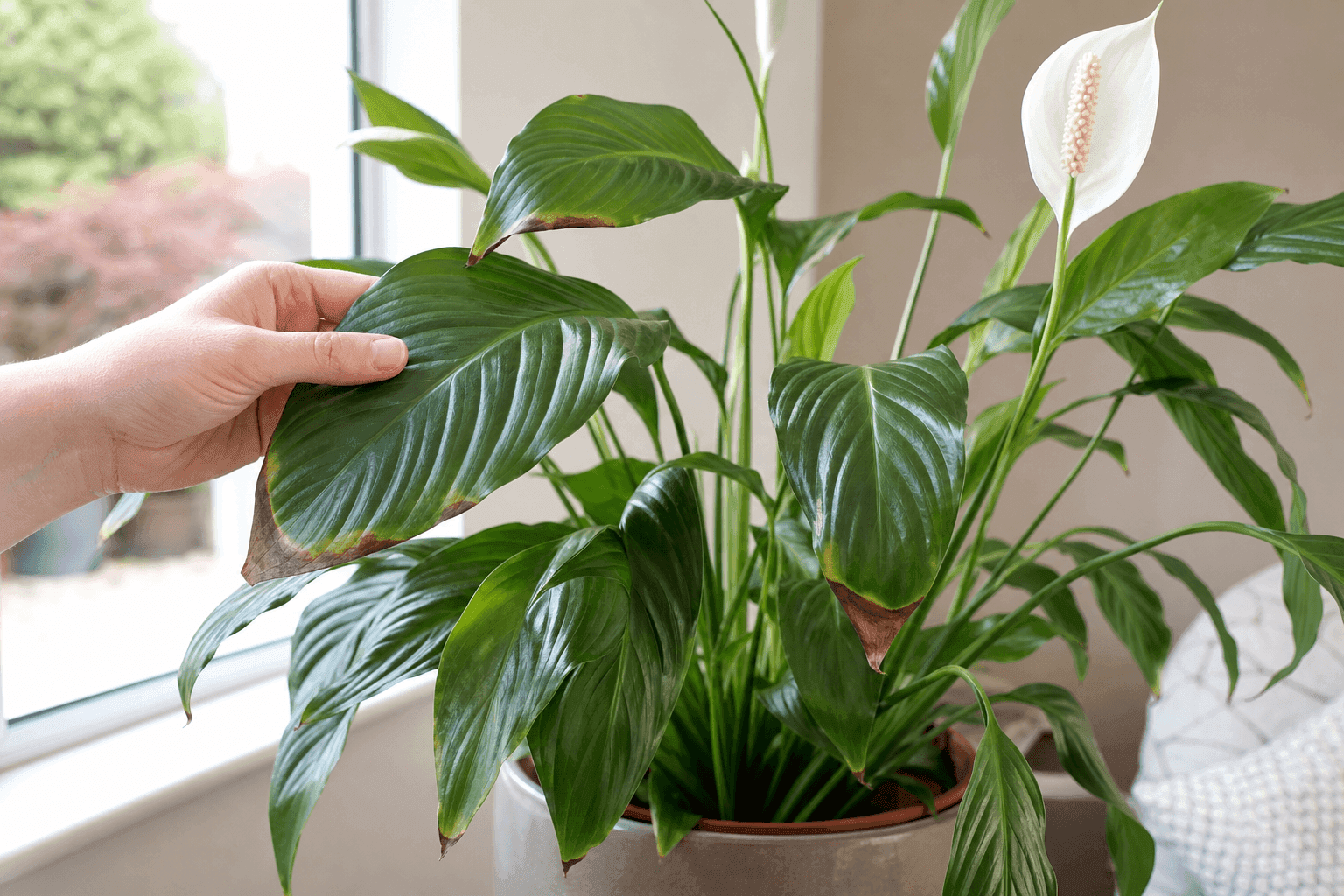
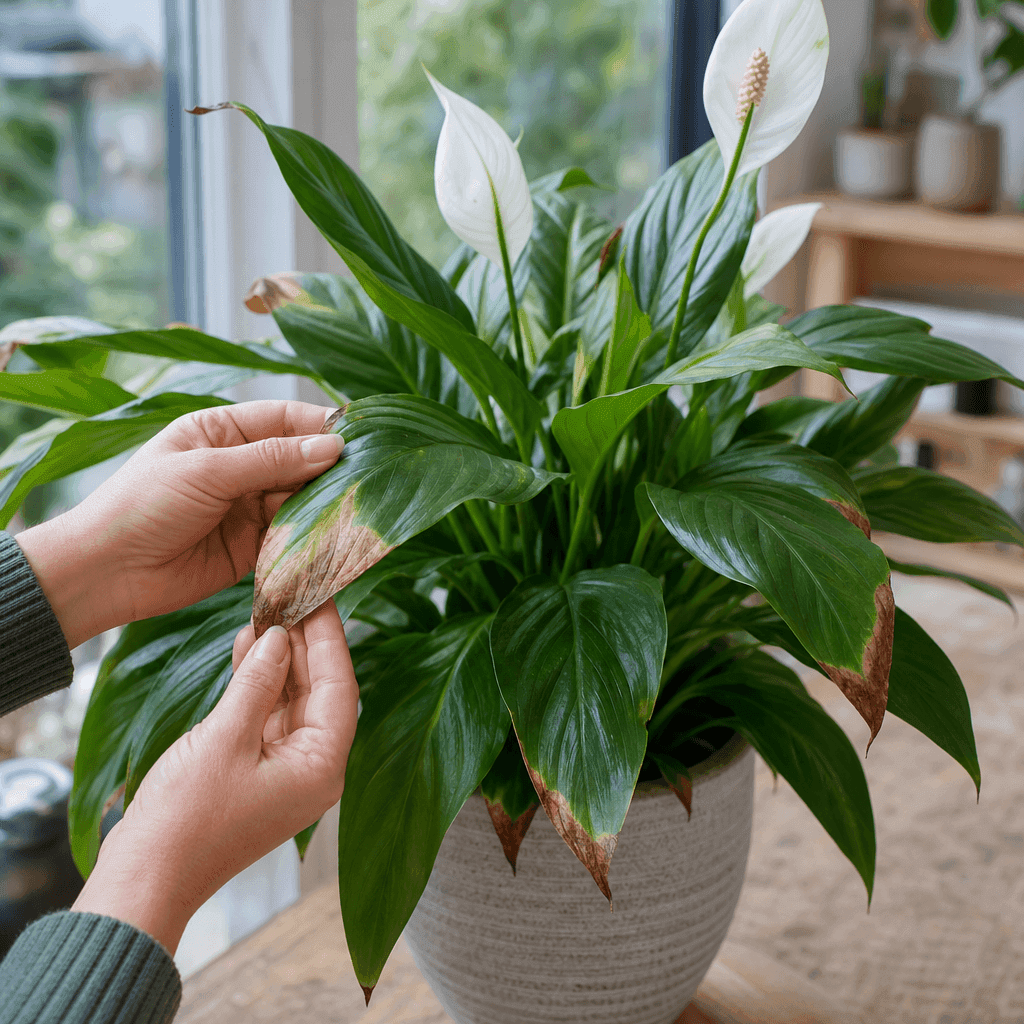
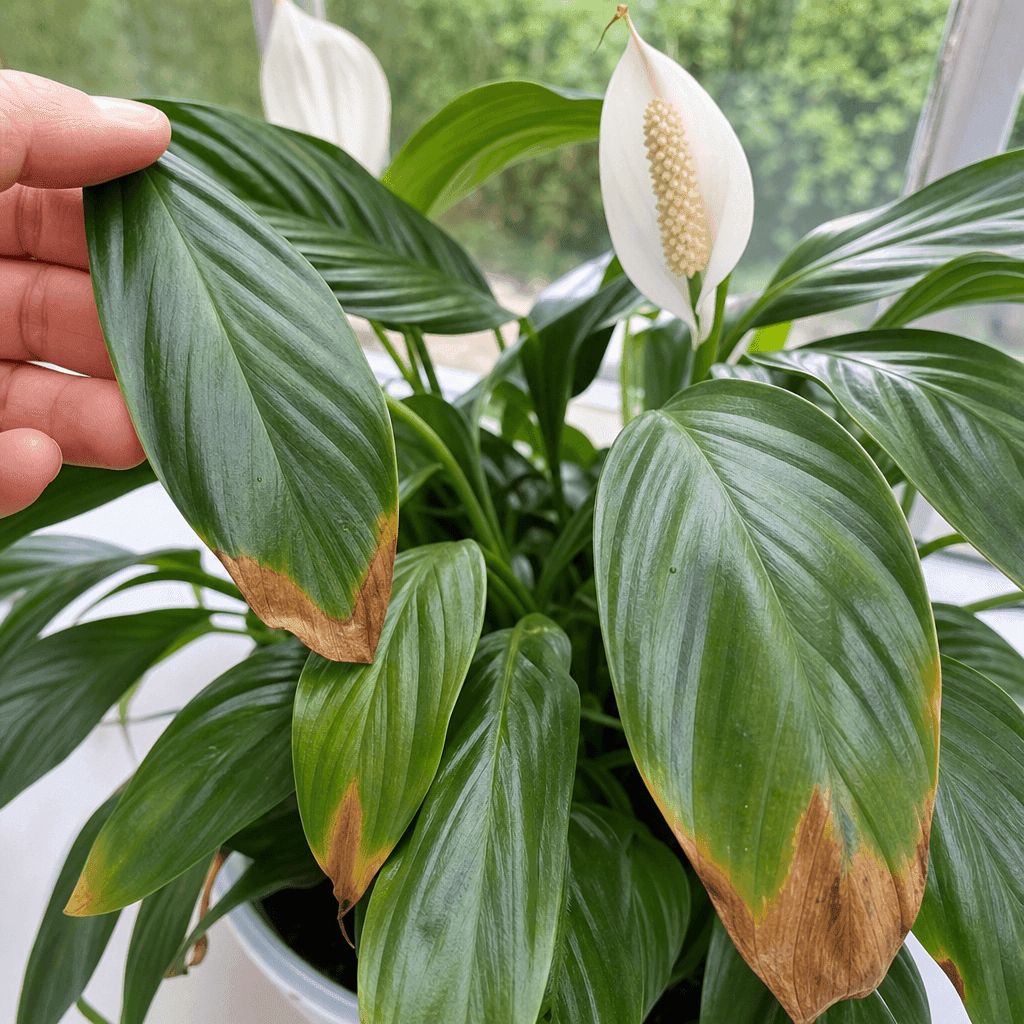
| Crispy brown tips, often with a yellow band between the brown and green tissue | Fluoride and mineral build-up from tap water | High | Tap water used regularly; white mineral crust on compost or pot rim; UK fluoridated area | Switch to rainwater or filtered water; flush compost with soft water | Low–medium |
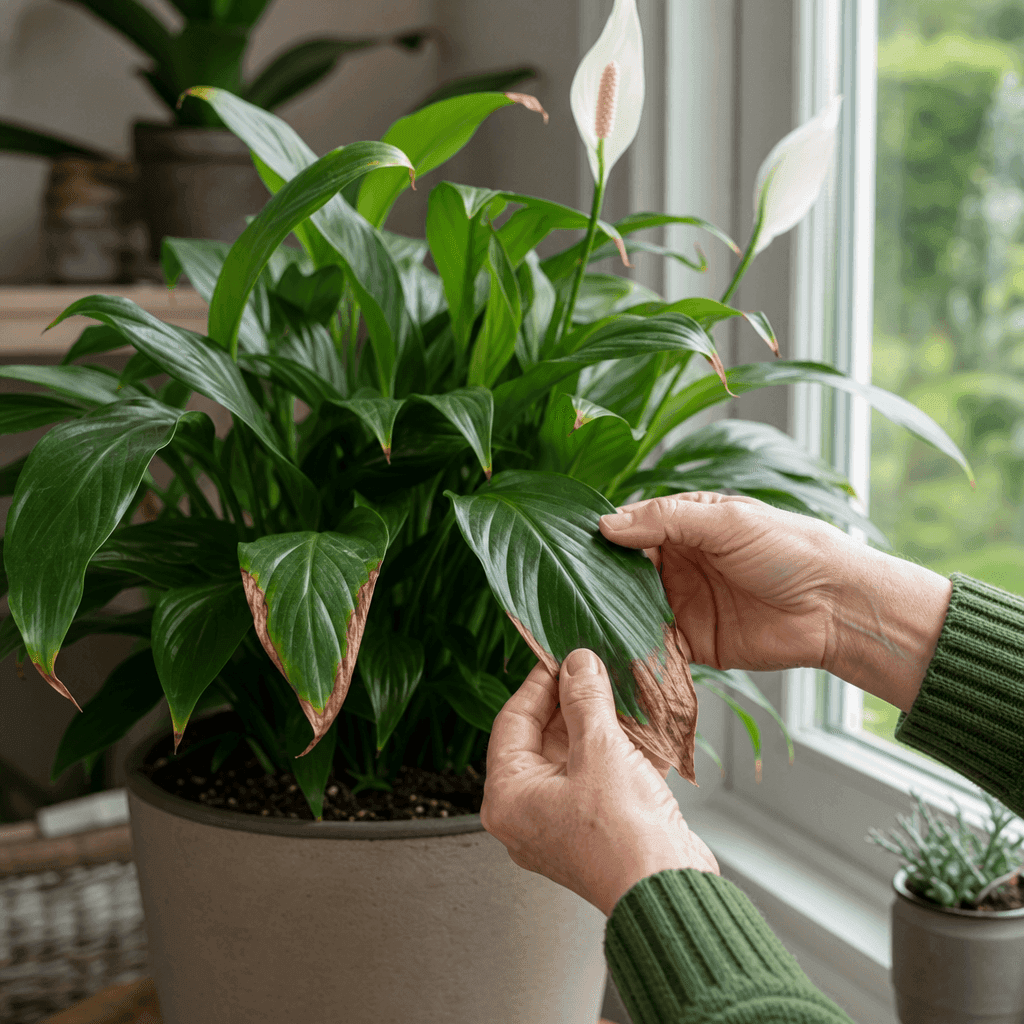
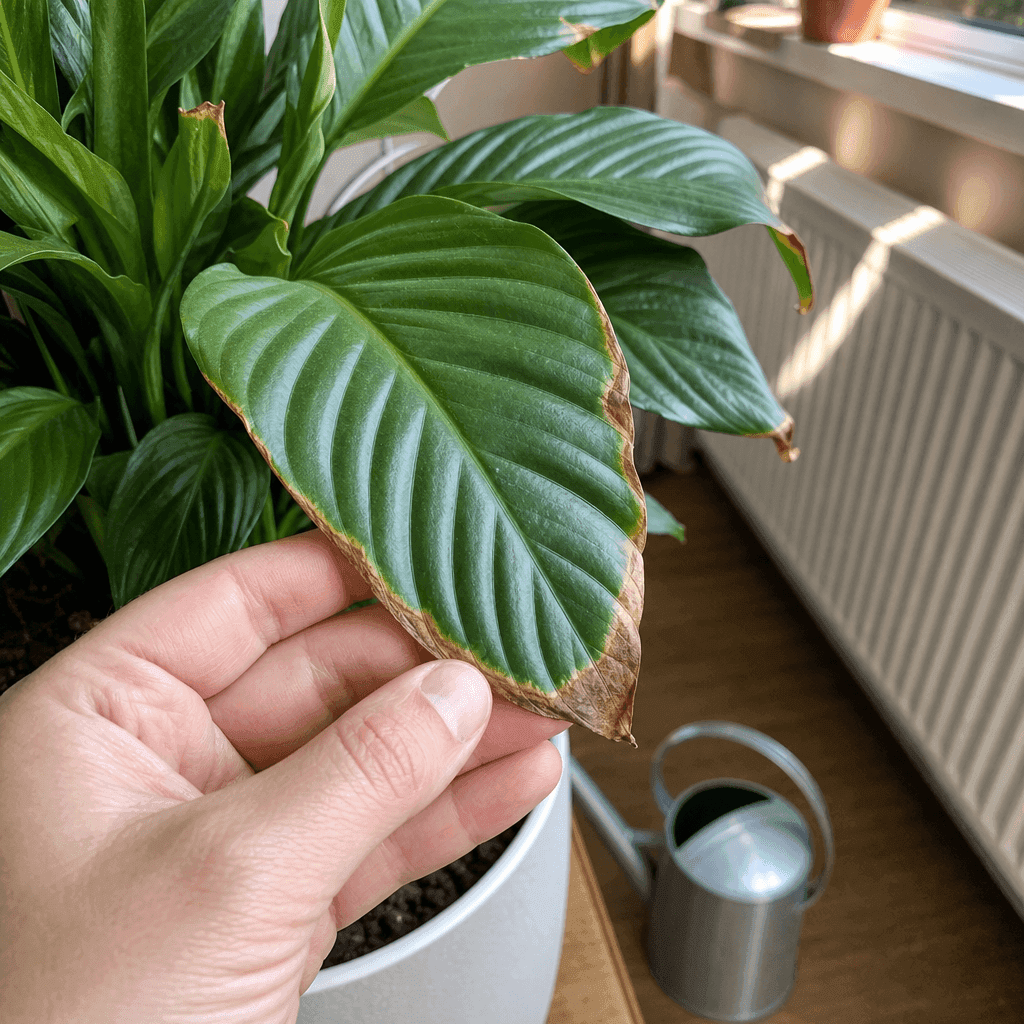
| Crispy brown tips and edges; worst in winter with heating on; spreads down leaf margins | Low humidity from central heating | High | Heating is on regularly; plant near a radiator or air vent; tips become crispy | Move away from heat; mist regularly; pebble tray; humidifier | Low–medium |
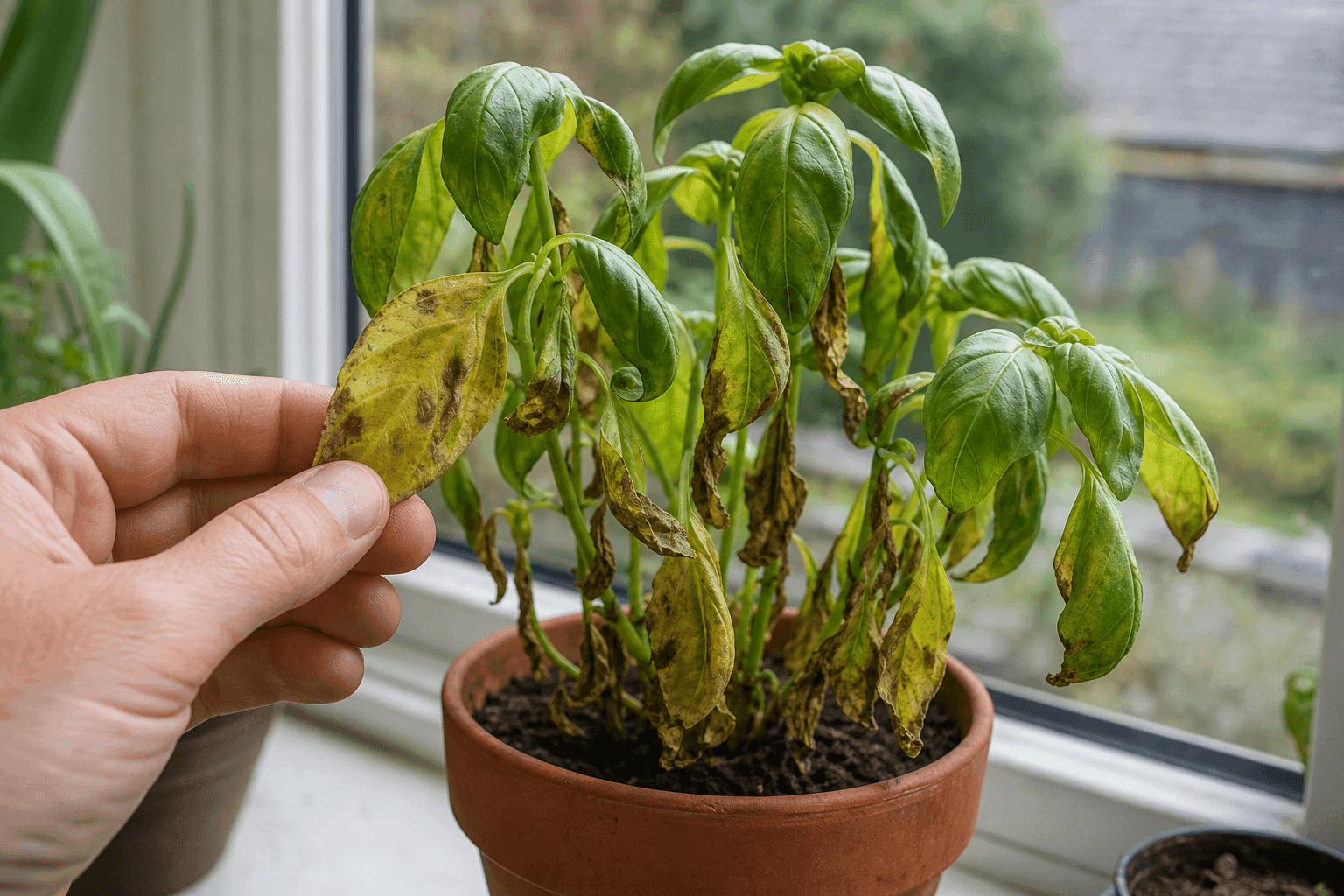
| Soft brown patches; yellowing leaves; plant wilts even though compost is wet; sour smell | Overwatering and root rot | Medium | Compost wet days after watering; pot without drainage or sitting in water | Stop watering; let compost dry partially; repot if roots rotting | High |
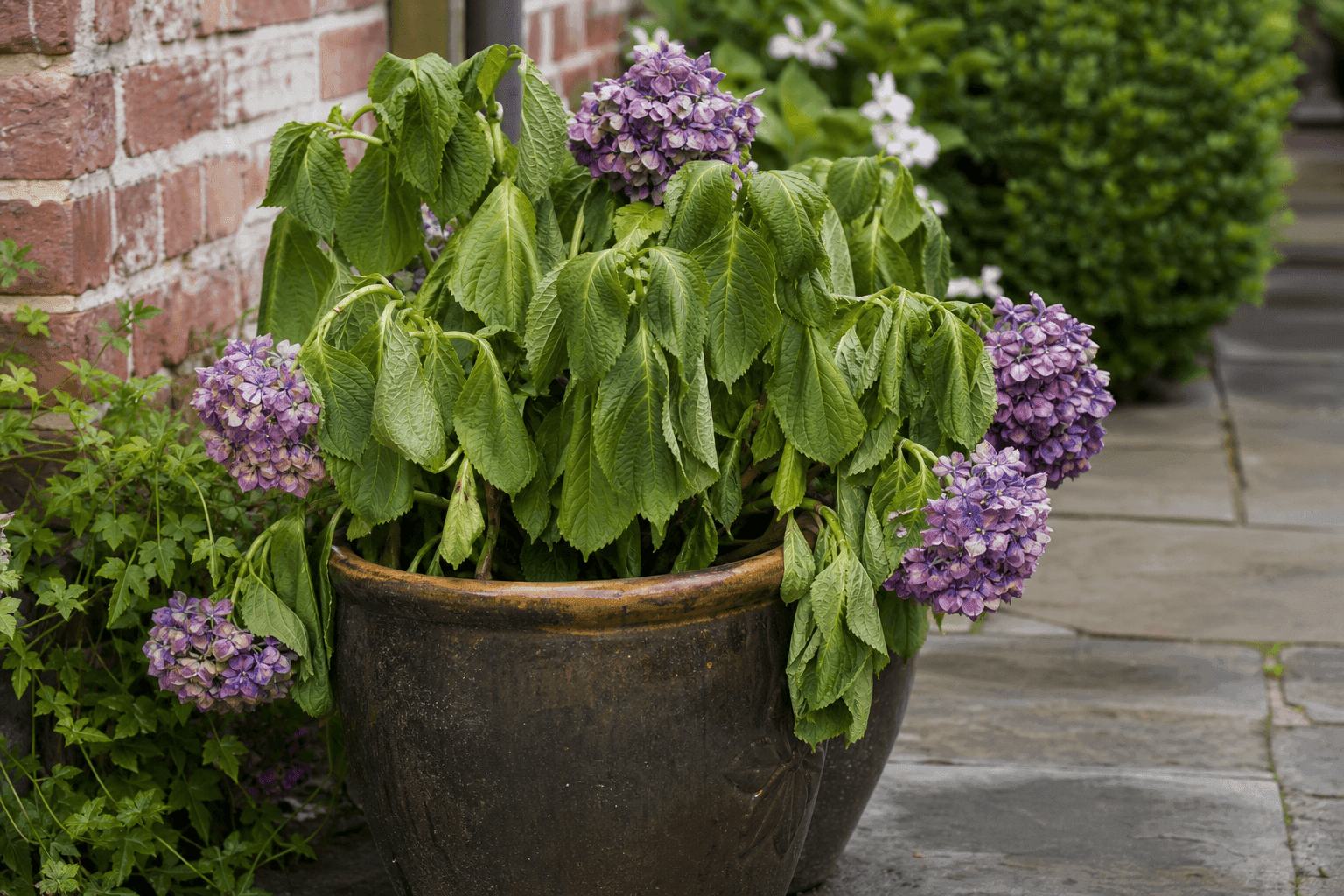
| Whole plant droops dramatically; leaves then brown from tips; compost very dry | Underwatering — peace lilies wilt visibly before browning | Medium | Plant has drooped or 'fainted' before browning appeared; compost bone dry | Water thoroughly; peace lilies recover quickly from mild underwatering | Medium |
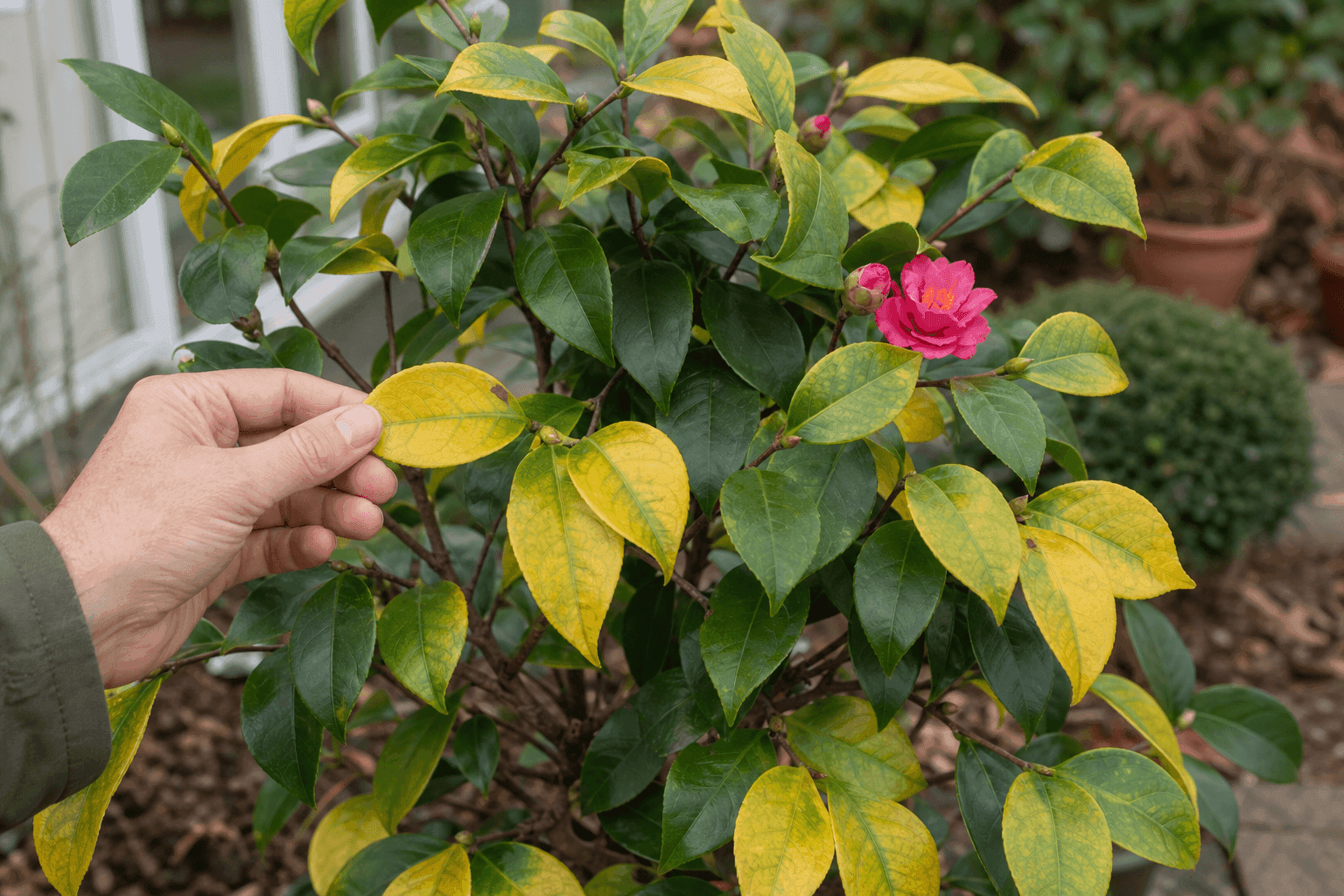
| Yellow-brown bleached patches on leaf surfaces; yellowing overall; not just tips | Too much light or direct sun | Medium | Plant near a sunny window; damage on leaves facing the light source | Move to bright indirect light — peace lilies prefer low to medium light | Low |
| Brown tips shortly after feeding; possible white salt crust on compost surface | Over-fertilising | Low | Recently fed at full strength or too frequently; more than once a month in growing season | Flush compost with plain water; feed only monthly at quarter to half strength | Low |
The causes, in detail
Fluoride and mineral build-up from tap water
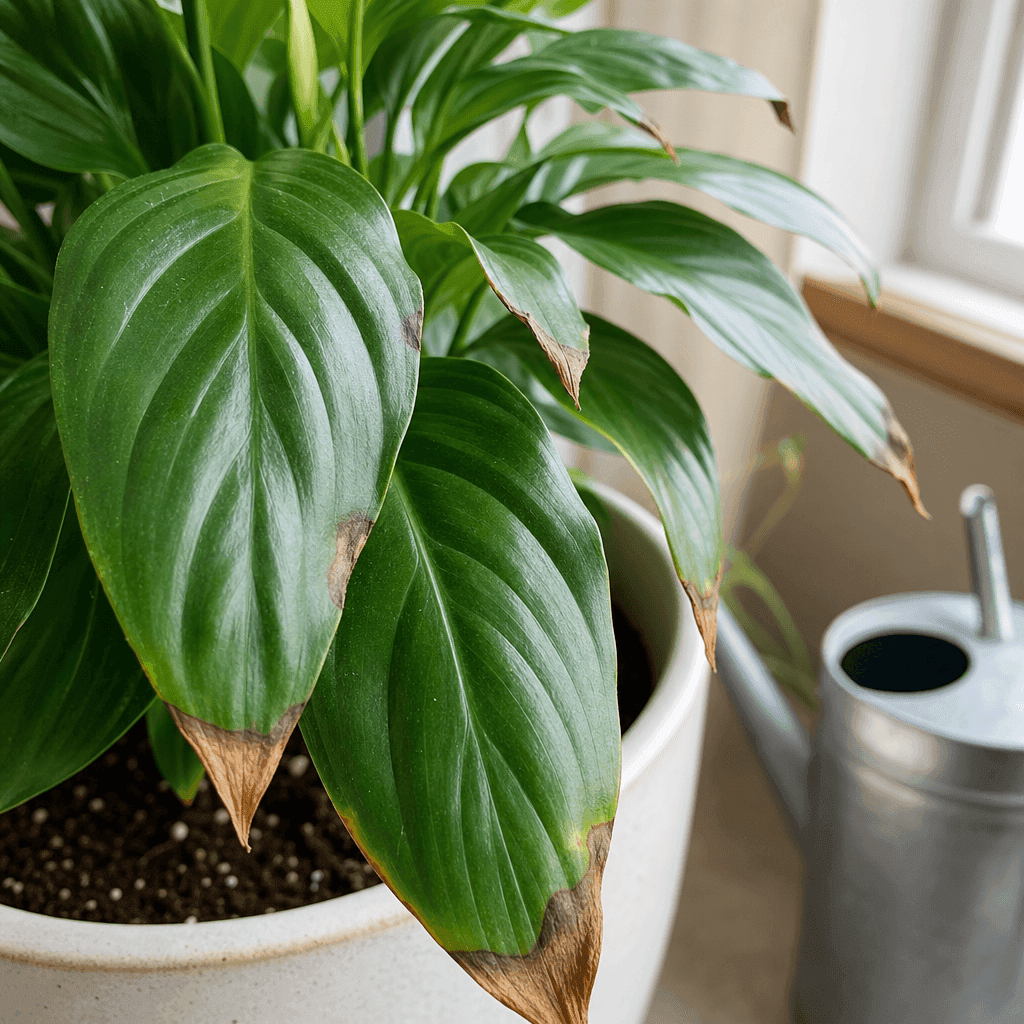
Most likelyPeace lilies are notoriously sensitive to fluoride, which is added to the drinking water supply in parts of the UK (mainly the Midlands and some northern regions) and also occurs naturally in water in some areas. Unlike chlorine, fluoride does not evaporate from water if you leave it to stand — it accumulates in the compost and concentrates in the leaf tips, where it damages and kills cells. Gardening Know How identifies this as one of the two most common causes of brown tips in peace lilies, noting the characteristic yellow band between healthy green tissue and the dead brown tip. Hard tap water also deposits calcium and other minerals that compound the problem.
- Brown tips with a yellow-green band between the brown and healthy tissue.
- The problem has developed slowly over months of regular tap-water watering.
- White or crusty deposits are visible on the compost surface or inner pot rim.
- You live in a UK area with fluoridated tap water or hard water.
- Switch to collected rainwater — the single most effective step for fluoride-sensitive plants.
- If rainwater is not available, use water that has been filtered through a reverse osmosis filter, as standard carbon filters do not remove fluoride.
- Flush the existing compost heavily three times with soft water, allowing full drainage each time, to leach accumulated fluoride and minerals.
- Repot into fresh peat-free compost if build-up is severe.
- Do not use phosphate-heavy fertilisers — they can worsen fluoride uptake.
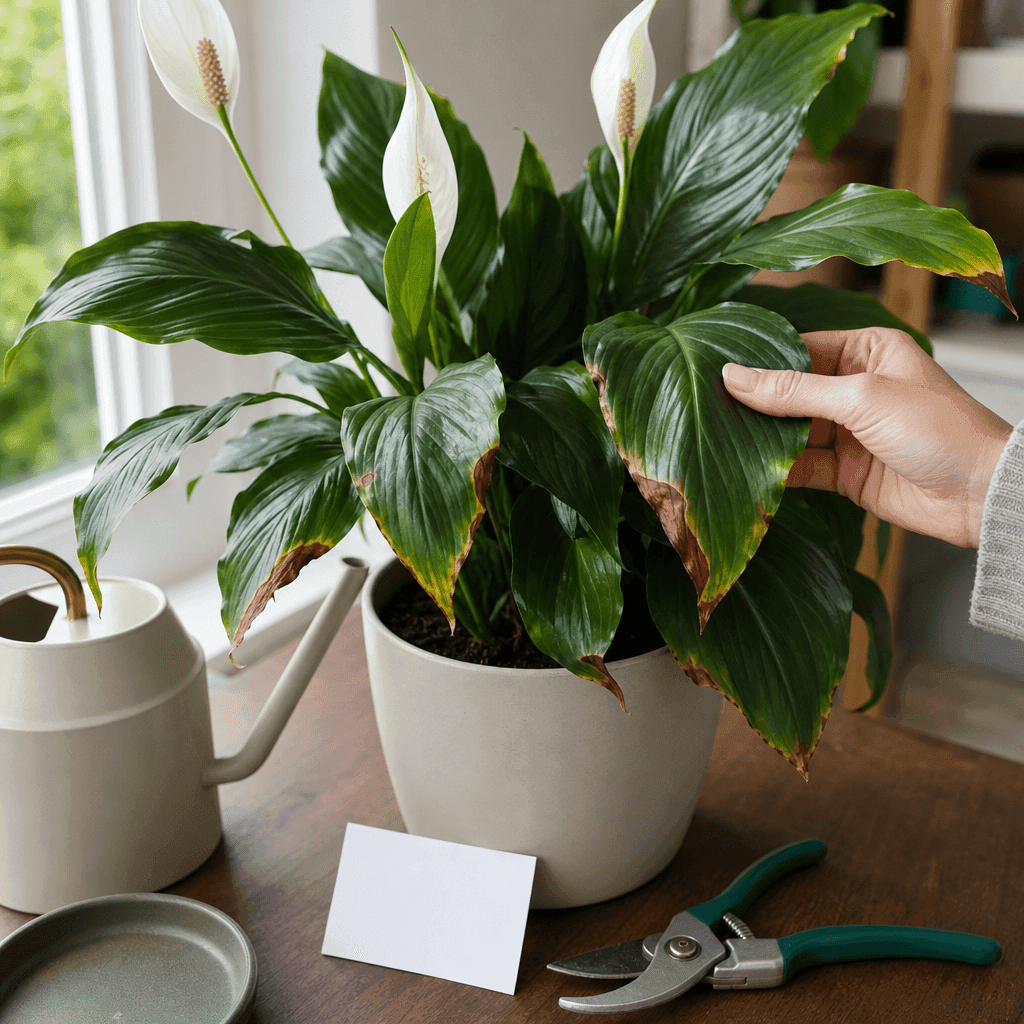
Stop it coming back:Brown tip tissue will not turn green again, but switching to rainwater prevents further damage. Trim brown tips with clean scissors — cut into healthy tissue slightly at an angle to mimic the natural leaf shape.
use bottled mineral water as a long-term solution — it has its own mineral content; collected rainwater is the best choice for peace lilies.
Low humidity from central heating
Most likelyPeace lilies are rainforest plants that prefer humidity of 50–60%. UK homes in the heating season (typically October to April) often drop to 30–40% relative humidity, and rooms with radiators or underfloor heating can be drier still. The leaf tips and margins dry out first because they are the furthest points from the root water supply. Tom's Guide plant care notes that heating systems are one of the most overlooked causes of peace lily browning — many people suspect overwatering or underwatering first, while the real problem is the air quality around the plant.
- Browning is at the tips and edges — dry, papery, and spreading down the leaf margins.
- The heating is on, and the plant is within a metre or two of a radiator or heat vent.
- The problem is worse in winter and eases over summer.
- Compost moisture is not the issue — the compost is in appropriate condition.
- Move the plant away from radiators, heat vents, and draughts.
- Mist the leaves with room-temperature water every 2–3 days during the heating season.
- Place the pot on a tray of pebbles half-covered with water — evaporation raises local humidity.
- Use a room humidifier, especially in the room where the plant lives.
- Group peace lilies with other tropical houseplants — they raise humidity collectively.
mist leaves in the evening — droplets sitting on leaves overnight in cool conditions can encourage fungal disease; mist in the morning so leaves dry during the day.
Overwatering and root rot
PossibleAlthough peace lilies are more moisture-tolerant than many houseplants, they can still develop root rot if the compost stays constantly wet — particularly in winter when growth slows to almost nothing. Root rot prevents the plant from taking up water, so the leaves first yellow, then droop and brown, even though the compost is still wet. This is a serious problem: Gardenia notes that overwatering is one of the top 15 causes of peace lily brown tips. A sour smell from the compost and brown mushy roots when inspected confirm it.
- Compost is wet or soggy several days after the last watering.
- The pot sits in standing water or has blocked drainage.
- Leaves are yellowing as well as showing brown patches — soft rather than crispy.
- Roots are brown and mushy rather than white and firm.
- Stop watering and allow the compost to partially dry.
- Remove the plant from its pot and inspect the roots — trim any brown or mushy roots with sterilised scissors.
- If more than half the roots are rotted, repot into fresh, slightly moist compost in a pot with drainage holes.
- Reduce watering frequency: in winter, water peace lilies only when the top 3–5 cm of compost is dry.
- Never leave the pot standing in a saucer of water.
water more when the plant is drooping without first checking the compost — peace lilies droop from both overwatering and underwatering, and the fixes are opposite.
Underwatering
PossiblePeace lilies are one of the few houseplants that give a clear and rapid signal when they need water: the whole plant droops dramatically before any leaf browning occurs. This dramatic peace lily wilt has earned them a reputation as 'drama queens', but it also makes underwatering easy to diagnose. If left too long, leaf tips and edges brown after the wilt. Low Light Leaf notes that peace lilies are good at telling you they're thirsty — the challenge is not missing that first dramatic droop.
- The plant has visibly drooped or 'fainted' before browning developed.
- Compost is very dry 5 cm below the surface.
- The pot feels unusually light.
- The plant recovers quickly after watering — within a few hours.
- Water thoroughly until it drains from the bottom of the pot.
- If the compost has become hydrophobic, bottom-water by placing the pot in a shallow basin of water for 20–30 minutes.
- Establish a more regular checking routine — test compost every 4–5 days during summer.
Stop it coming back:Peace lilies that are underwatered repeatedly become stressed and more vulnerable to pests and disease. A single dramatic wilt does minimal damage if corrected promptly — repeated wilting weakens the plant over time.
water so heavily after a wilt that the compost becomes waterlogged — restore normal moisture without flooding.
Too much light or direct sun
PossiblePeace lilies are among the most shade-tolerant houseplants and can suffer in bright direct sun. In a south- or west-facing window in UK summer, direct sunlight bleaches and scorches the leaves, causing yellowing and irregular brown patches across the leaf surface — not just at the tips. House Digest identifies excess light as a frequently overlooked cause of peace lily browning, noting that the plant's preference for low to medium indirect light makes it ideal for north- or east-facing rooms in the UK.
- Patches are bleached or faded yellow-brown across leaf surfaces, not crispy tips.
- The plant is near a window that receives direct sun during the day.
- The damage developed or worsened during summer or after a sunny period.
- Move the plant away from direct sunlight — to an east-facing or north-facing window, or back from a south-facing window.
- A metre or more from the window, or behind a sheer curtain, is ideal.
- Remove badly scorched leaves at the stem base.
move the plant into a dark corner — peace lilies tolerate low light but grow poorly in deep shade; indirect light from any direction is fine.
Over-fertilising
Less likelyPeace lilies are not heavy feeders and are sensitive to excess fertiliser. Feeding at full strength, feeding too frequently, or feeding in autumn and winter when the plant is barely growing causes salt accumulation that burns root cells and leads to brown tips, sometimes with a yellow margin. The compost may show a white salt crust.
- Recently fed at full concentration or more than once a month in the growing season.
- White or crusty residue on the compost surface.
- Brown tips appeared or worsened shortly after a feeding.
- Stop feeding immediately.
- Flush the compost three times with plain water, allowing full drainage each time.
- When feeding resumes, use a balanced liquid feed at a quarter to half the recommended strength, once a month, only from April to September.
- Do not feed at all from October to March.
use a fertiliser high in phosphate — it can worsen fluoride uptake problems in peace lilies that are already struggling with tap water.
Still not sure?
Work down these branches — the first one that matches is your answer.
What not to do
- Water with fluoridated tap water long term — it accumulates and causes persistent tip browning.
- Place a peace lily near a radiator or heat vent — central heating dramatically reduces local humidity.
- Leave the pot standing in a saucer of water — even moisture-loving peace lilies develop root rot in stagnant water.
- Feed monthly at full strength — peace lilies are sensitive to fertiliser and need only dilute, infrequent feeding.
- Move a peace lily into direct afternoon sun — it is a low-light plant and scorches easily.
Common questions
Why do peace lily leaf tips go brown?
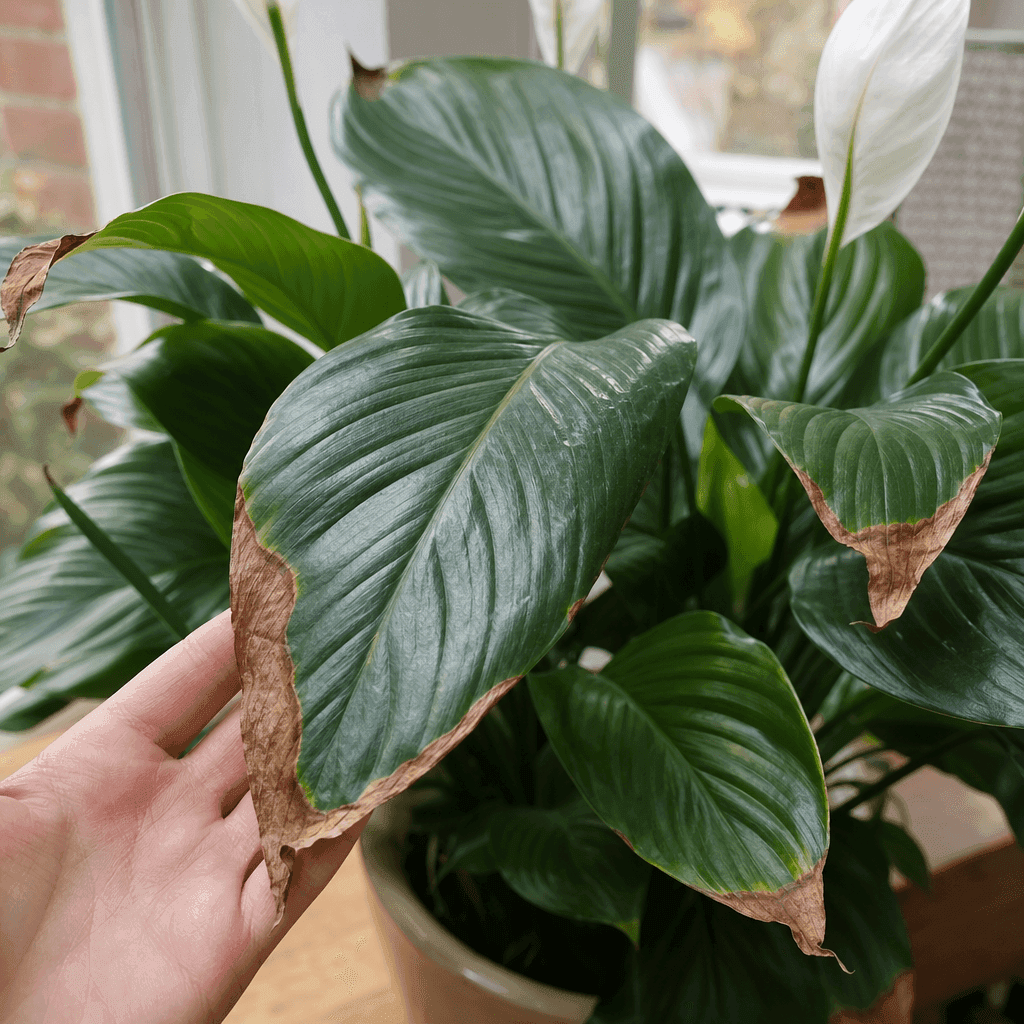
The two most common causes in UK homes are fluoride accumulation from tap water and low humidity from central heating. Both cause dry, papery brown tips. Check whether you use tap water in a fluoridated area, and whether the plant is near a radiator. Switching to rainwater and moving away from heat sources resolves most cases. If whole leaves are browning rather than just the tips, see our guide to peace lily brown leaves for the wider set of causes.
Can I cut off brown tips on a peace lily?
Yes. Use clean, sharp scissors and cut just into the healthy green tissue at a slight angle, following the natural shape of the leaf tip. This improves the look without removing the whole leaf. The trimmed tips will not grow back, but no further browning should occur once the cause is fixed. The same trimming technique works for spider plant brown tips, which are also commonly caused by fluoride and low humidity.
How do I fix peace lily brown tips caused by tap water?
Switch to collected rainwater as your primary watering source — this removes both fluoride and mineral build-up. Flush the compost thoroughly with soft water several times to leach accumulated salts, and repot into fresh compost if the problem has been going on for a long time.
Should I mist my peace lily?
Yes, misting with room-temperature water every 2–3 days during the heating season helps compensate for low humidity. Mist in the morning so leaves are dry by evening. Alternatively, place the pot on a pebble tray with water or use a small humidifier nearby.
How often should I water a peace lily?
Water when the top 3–5 cm of compost feels dry — typically every 7–10 days in summer and every 2–3 weeks in winter. Peace lilies will droop visibly when they need water, which is a useful signal. Do not let them wilt repeatedly — check the compost regularly.
My peace lily drooped and now has brown tips — what happened?
Your plant was underwatered to the point of wilting. Peace lilies droop dramatically before leaf damage occurs, so if you caught the droop quickly and watered promptly, the plant should recover. Brown tips that formed during the stress will not turn green again but new growth should be healthy.
Is peace lily suitable for a UK bathroom?
Yes — bathrooms with good indirect natural light are often ideal for peace lilies because the humidity from showers and baths keeps the air moist. Avoid windowless bathrooms where light is insufficient, and ensure the pot has drainage holes.