Quick diagnosis
Match the row to what you’re seeing, then jump to the fix.
| What you see | Likely cause | Confidence | How to confirm | What to do now | Urgency |
|---|---|---|---|---|---|
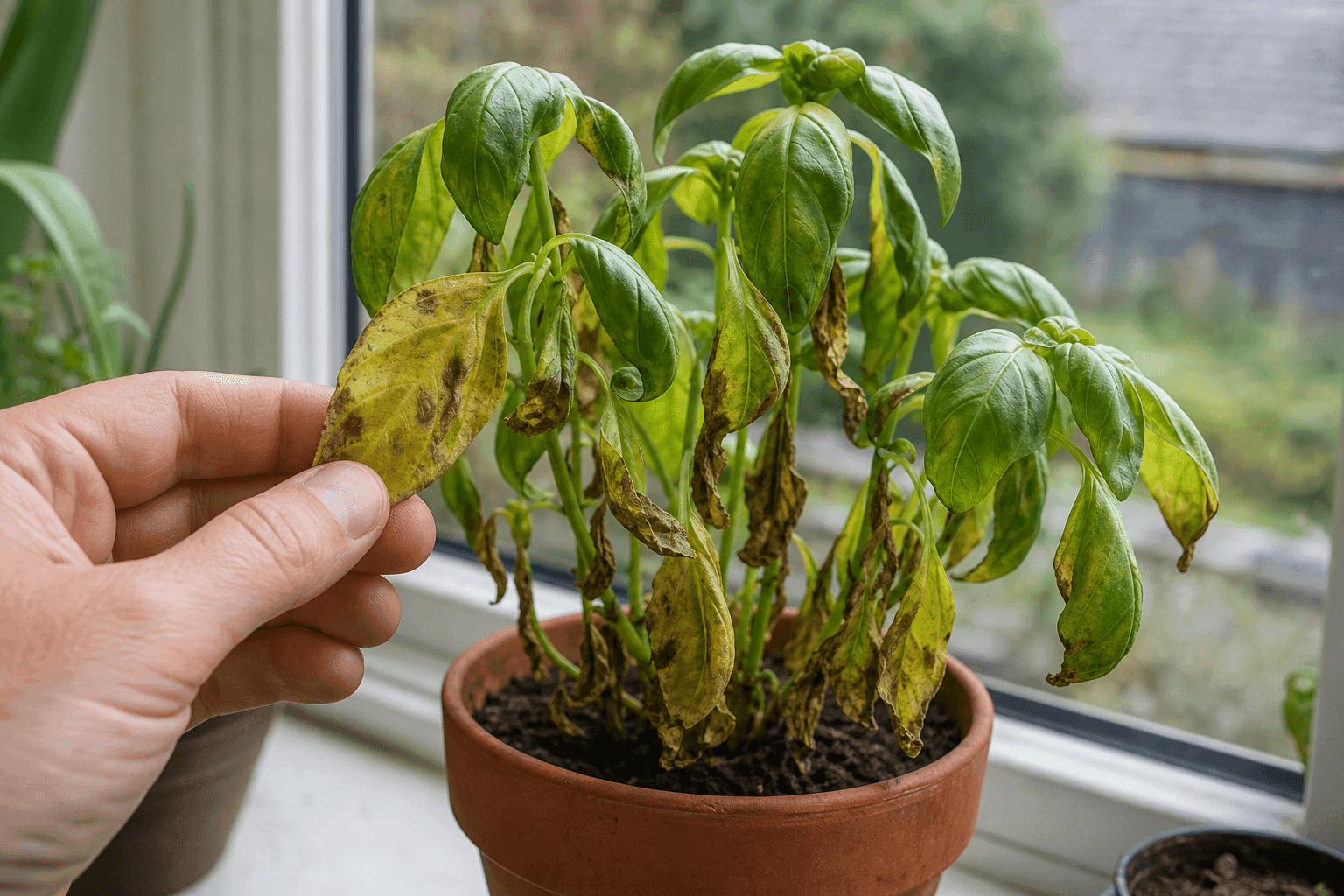
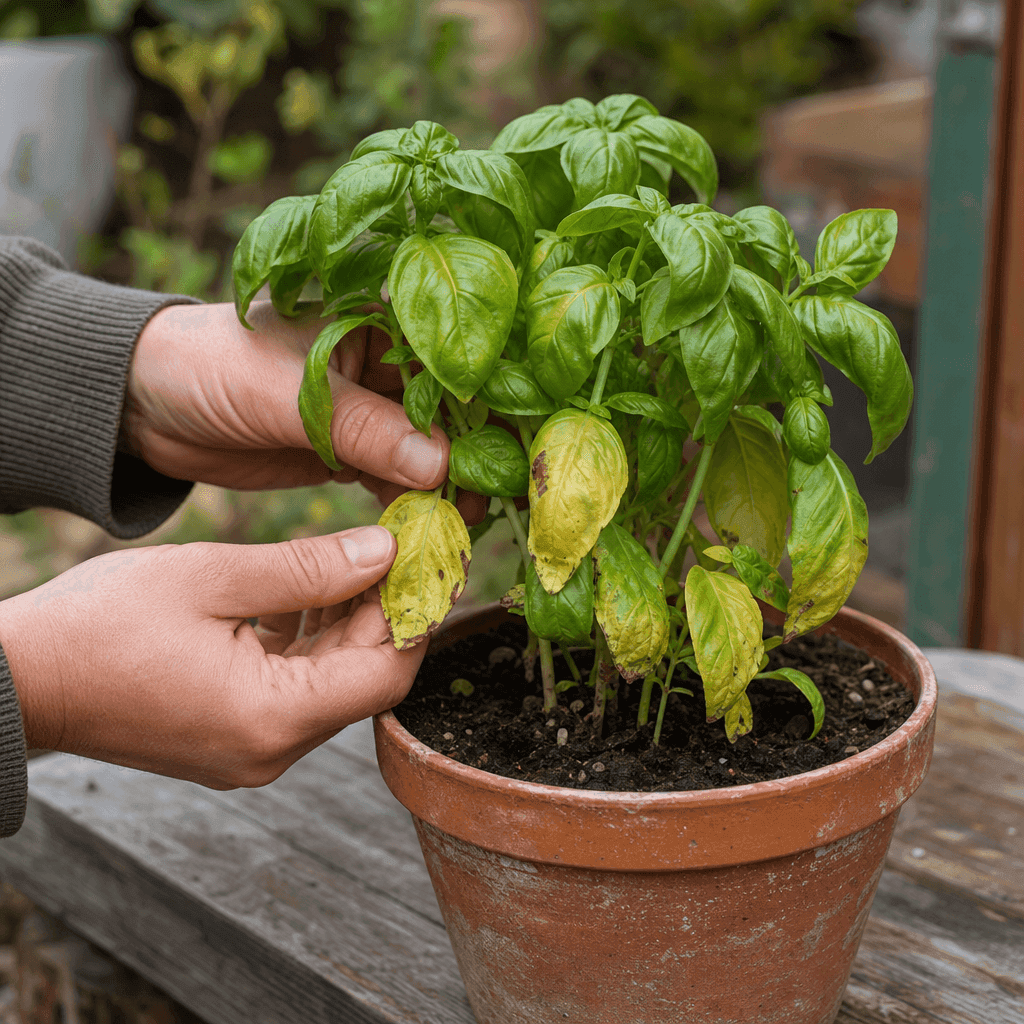
| Lower leaves yellowing; stem base soft or black; plant wilts despite wet compost | Overwatering and root rot | High | Compost wet and compacted; drainage poor; plant in a tray of water | Stop watering; improve drainage; repot if roots are rotting | High |
| Sudden blackening and collapse; all leaves affected; happened overnight or after a cold period | Cold temperature damage (below 10°C) | High | Plant was near a cold window, outside, or in a cold room; temperature dropped overnight | Move to a warm spot above 15°C; remove blackened leaves; recovery possible if stem is still firm | High |
| Leaves limp and dry; tips crisping; compost bone dry; pot feels very light | Underwatering | Medium | Compost very dry; basil wilts quickly when dry but usually recovers after prompt watering | Water thoroughly; basil should recover within hours if roots are not damaged | Medium |
| Sudden one-sided wilting; yellowing and browning on one side of the plant first; progresses quickly | Fusarium wilt (soil-borne fungal disease) | Medium | Wilting on one side that does not recover after watering; brown streaking visible in cut stem | Destroy affected plant; do not reuse the compost; there is no cure | High |
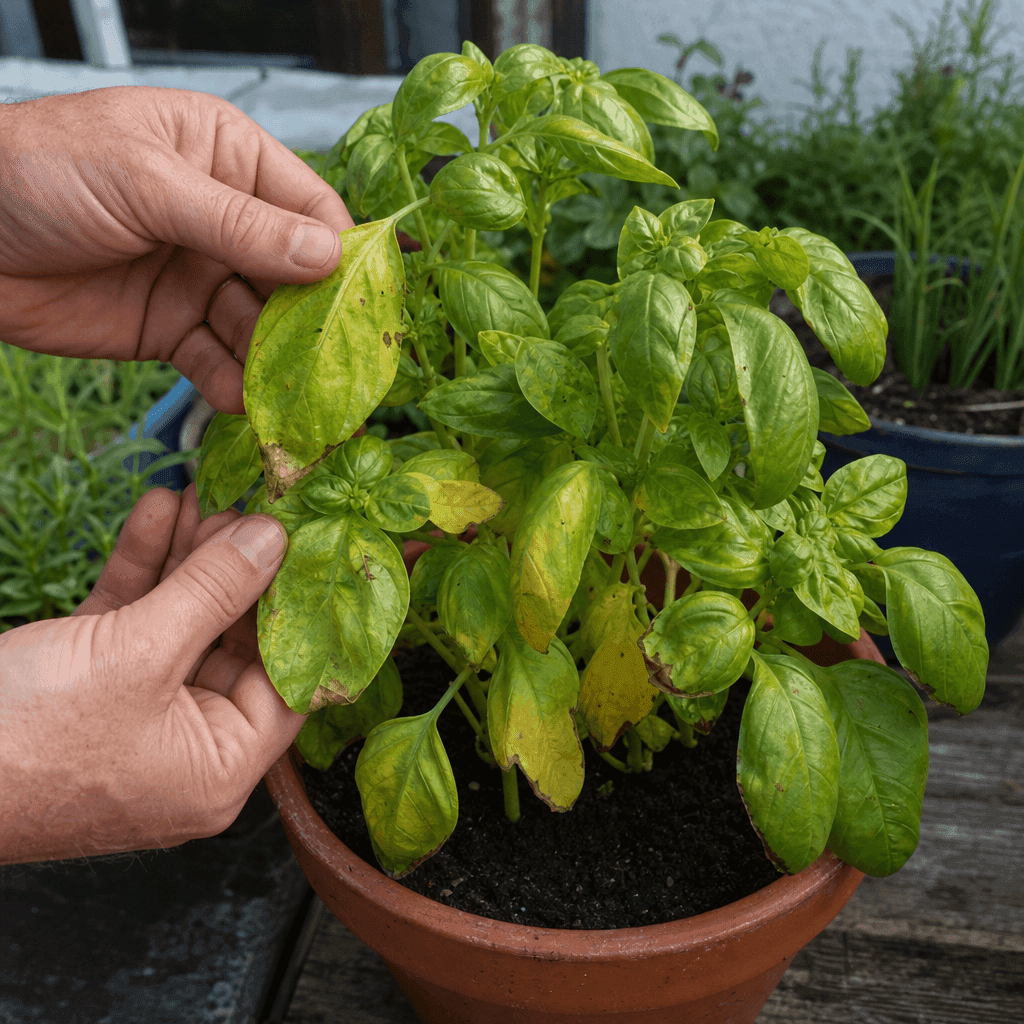
| Yellowing on top surface of leaves; grey-brown fuzzy patches on leaf undersides; spreads rapidly | Basil downy mildew (Peronospora belbahrii) | Medium | Fuzzy grey-brown patches on underside of yellowing leaves; worse in cool humid conditions | Remove affected leaves; improve airflow; move to a drier warmer spot; no reliable chemical cure | High |
| Long flowering stems; leaves getting smaller; plant looks woody and straggly | Bolting (flowering before harvest) | Medium | Visible flower spikes; plant has not been pinched back; warm weather or increasing day length | Pinch out flower spikes immediately; pinch growing tips regularly to keep plant bushy | Low |
The causes, in detail
Overwatering and root rot
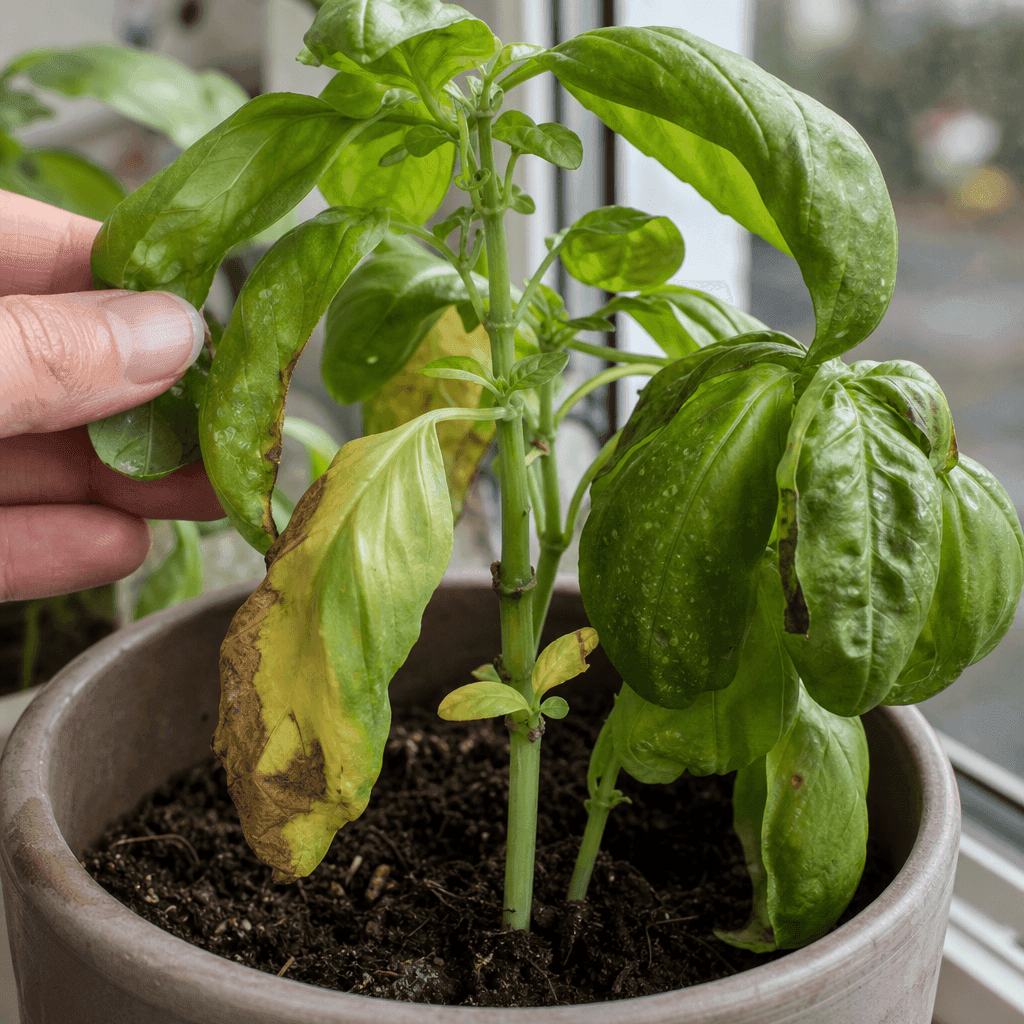
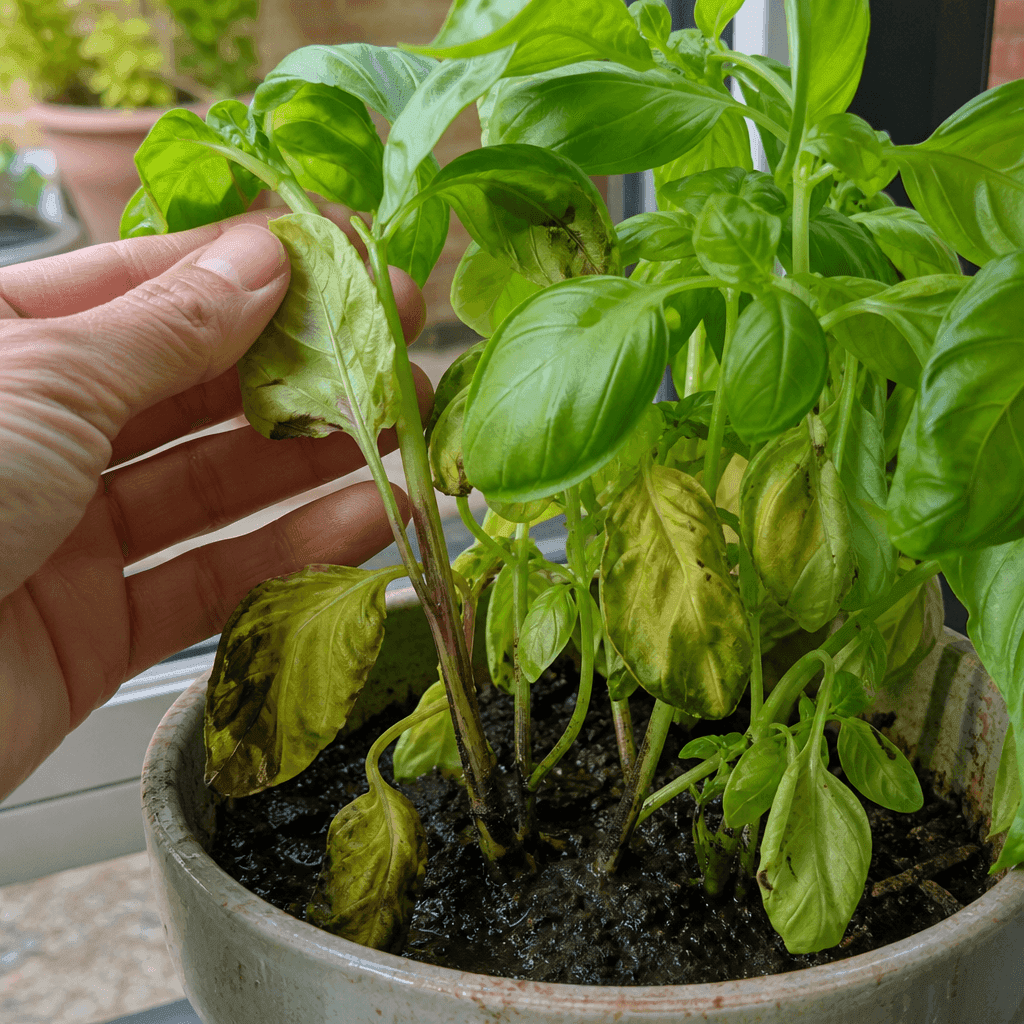
Most likelyOverwatering is the most common cause of basil plant death in the UK, particularly for supermarket basil pots — which are typically already stressed and overcrowded before purchase. Smart Garden Guide identifies overwatering as the number-one killer of basil, noting that soggy, poorly draining compost suffocates roots, leading to root rot and sudden collapse. The characteristic signs are yellowing of the lowest leaves, a soft or discoloured stem base, and a plant that wilts despite wet compost. The problem is almost always made worse by the saucer of water many people keep their pot standing in.
- Compost is wet and stays wet — push a finger in; if it is soggy at 3–4 cm depth after more than 2 days, it is too wet.
- Lower leaves are turning yellow, especially near the base.
- The stem base feels soft, slimy, or is discoloured — black or dark brown.
- The plant wilts even though the compost is wet or damp.
- Stop watering immediately.
- Remove the pot from any saucer of water.
- If the pot has poor drainage, repot into a container with drainage holes using fresh, free-draining compost.
- If the roots are still firm and pale, the plant may recover in a warm spot without further watering.
- If root rot is advanced (roots brown and mushy, stem base soft), the plant is unlikely to survive; take a few healthy shoot tip cuttings and try to root them.
Stop it coming back:Basil needs the compost to dry slightly between waterings — feel the compost every day and water only when the top centimetre is dry. In summer, this may be daily; in cooler conditions, every 2–3 days.
stand basil in a saucer of water permanently — it will cause root rot within days.
Cold temperature damage
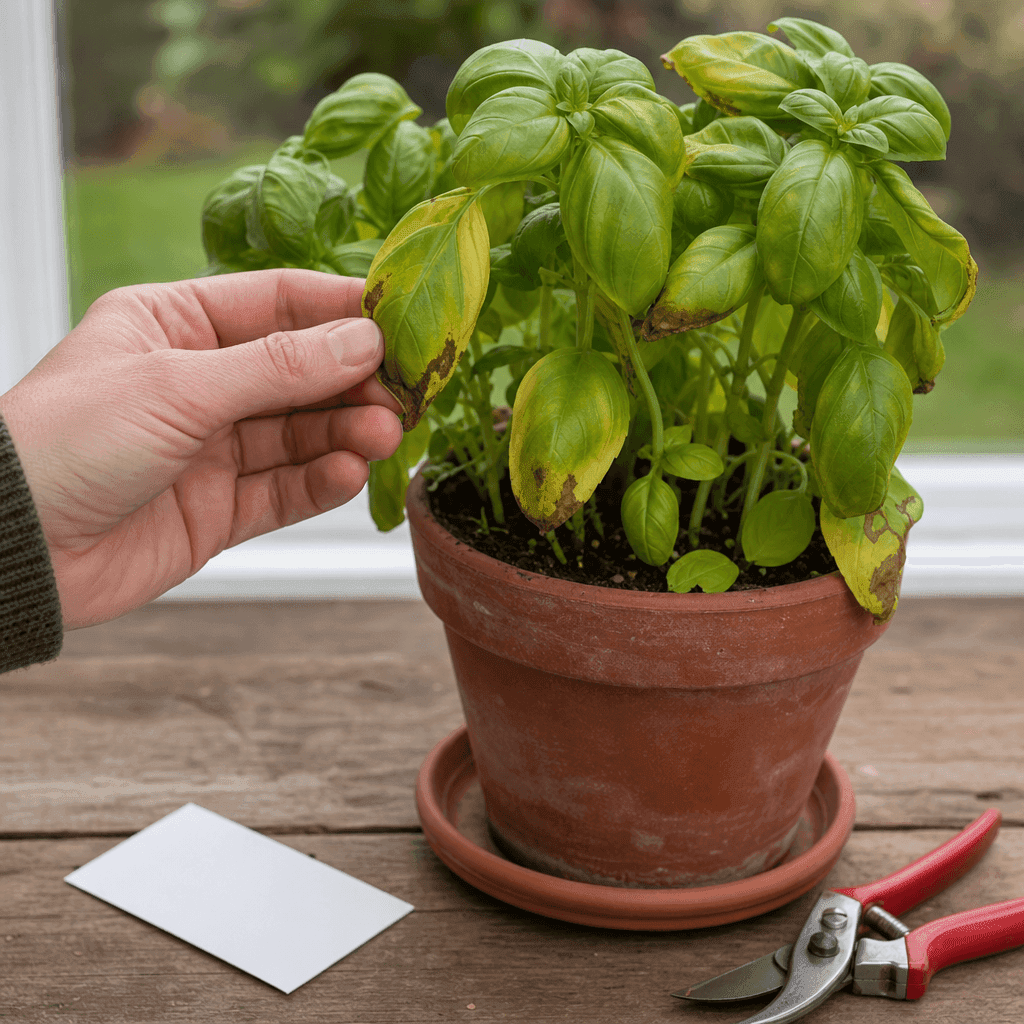
Most likelyBasil is a tropical herb that is genuinely damaged by temperatures below 10°C. UK gardeners frequently lose basil plants to cold windows, cold nights in early summer, draughts, or simply moving the plant outside too early. Epic Gardening notes that temperatures below 50°F (10°C) cause chilling injury — the cells in the leaves and stems are damaged, causing sudden blackening, wilting, and collapse that looks like disease. A windowsill that feels pleasant during the day may drop to 7–8°C against single-glazed glass on a cold night, especially in early spring.
- The collapse happened suddenly overnight or after a cold period.
- The plant was near a cold window, outside, or in a conservatory or garage that gets cold at night.
- All leaves are affected, not just lower or inner ones — distinguishes this from root rot.
- The stem may still be firm even if leaves are blackened — this is a positive sign.
- Move the plant immediately to a warm spot — a kitchen surface away from cold glass, ideally 18–22°C.
- Remove the blackened leaves cleanly.
- Do not overwater a cold-damaged plant — it will have reduced root function.
- If the main stem is still firm and there are intact leaves, the plant may push new growth in a few days.
- If the stem is also soft and black, the plant is lost — start a new plant from seed or buy a fresh pot.
Stop it coming back:Do not move basil outside or to an unheated space until late May to June in southern England, and later in northern England and Scotland. Keep it away from cold glass at night — even a few centimetres of distance makes a significant difference.
put basil outside in May just because the daytime temperatures are warm — night temperatures can still drop to damaging levels.
Underwatering
PossibleBasil wilts extremely quickly when underwatered — far faster than most herbs — because it has large, thin leaves with a high surface area and relatively fine roots. If your plant is collapsing rather than just dropping, our guide to basil plant wilting and how to revive it walks through the same checks. However, unlike cold damage or root rot, underwatering is easily reversed if caught quickly. The Skilled Gardener UK notes that a wilted basil plant can usually be revived within a few hours with a thorough watering, as long as the roots are not damaged. The key is to act before the soil dries to the point of the roots desiccating.
- Compost is bone dry — pull back slightly to check below the surface.
- The pot feels very light.
- The plant looks limp and sorry for itself but the leaves are not yet brown or crispy.
- The plant perks up within 1–2 hours of watering.
- Water thoroughly — slowly until the water drains out of the bottom of the pot.
- If the compost has become hydrophobic (water runs off without soaking in), place the pot in a basin of water for 10–15 minutes.
- The plant should recover visibly within a few hours.
- Adjust your routine — basil in summer may need watering daily in a small pot on a warm windowsill.
assume underwatering and water a plant that is actually suffering from root rot — wet, wilting plants need the opposite of more water.
Fusarium wilt
PossibleFusarium wilt (Fusarium oxysporum f.sp. basilici) is a soil-borne fungal disease that can affect basil at any growth stage. It is increasingly common in UK growing conditions, particularly in commercial plug plants and pots that have been transported through warm conditions. The disease blocks the plant's vascular system, preventing water and nutrients from moving through the stems. The characteristic pattern is wilting that starts on one side of the plant or one branch, which does not recover after watering. Epic Gardening confirms there is no cure — affected plants must be destroyed.
- Wilting starts on one side of the plant or one branch while the other side appears healthy.
- The wilting does not recover after watering.
- Cut the main stem near the base — brown or dark streaking in the vascular tissue (the inner core) confirms fusarium.
- Leaves may yellow and brown rapidly after one-sided wilting begins.
- There is no cure for fusarium wilt.
- Remove and destroy the entire plant — do not compost it.
- Do not reuse the compost — the fungal spores persist in soil for years.
- Clean the pot thoroughly before using it again.
- Buy 'fusarium-resistant' basil varieties if the problem recurs — some are available from specialist seed suppliers.
try to save a fusarium-wilted plant by changing watering — the disease is in the stem tissue and watering adjustment will not help.
Basil downy mildew
PossibleBasil downy mildew (Peronospora belbahrii) is a relatively new disease in the UK that has become widespread since the mid-2000s. It causes yellowing patches on the upper surface of leaves with characteristic grey-brown fuzzy spore masses on the undersides — most visible in the morning or in humid conditions. The disease spreads very rapidly through a planting, particularly in cool, humid conditions, and can destroy a pot of basil within days. Amazing Herb Garden notes it is now one of the most common fatal diseases of UK basil and distinguishes it from other problems by the distinctive downy underside of affected leaves.
- Yellowing appears on the upper surface of leaves, often in patches.
- Grey-brown fuzzy growth is visible on the undersides of the same leaves — most visible early in the day.
- The problem spreads rapidly to other leaves and nearby plants.
- Conditions have been cool and humid.
- Remove all visibly affected leaves immediately and bin them — do not compost.
- Move the plant to a warmer, drier spot with better airflow — downy mildew thrives in cool, humid conditions.
- Avoid wetting the foliage when watering.
- There is no reliable chemical treatment for basil downy mildew available to home gardeners.
- If the whole plant is affected, destroy it and start fresh in clean compost.
Stop it coming back:Space basil plants well apart, water at the base only, and avoid cool damp conditions. Some varieties (particularly 'Everleaf Emerald Towers' and Thai basil types) show more resistance to downy mildew than sweet basil.
mist basil foliage to increase humidity — this provides the conditions downy mildew needs to spread.
Bolting
PossibleBasil bolts — produces flowers and seeds — quickly when it reaches a certain size, when temperatures rise, or when days lengthen in late spring and summer. Once bolted, the plant puts all energy into flower and seed production, leaves become smaller, and the plant becomes woody and less productive. While not technically 'dying', a bolted basil looks poor and is much less useful for cooking. The fix is prevention through regular pinching rather than treatment after the fact.
- Visible flower spikes or buds at the shoot tips.
- Leaves becoming progressively smaller up the stem.
- The plant looks straggly and woody rather than bushy.
- Pinch out all flower spikes immediately as soon as they appear — do not let them open.
- Pinch out the tips of every main shoot regularly (every 1–2 weeks) to keep the plant producing leafy growth.
- If the plant is badly bolted with woody stems and few leaves, start a new plant from seed or buy a fresh pot.
Stop it coming back:Regular pinching from the time the plant has 3–4 pairs of leaves is the single most important cultural practice to extend the productive life of basil. Always pinch above a pair of healthy leaves.
allow flower spikes to open hoping to save seed — by this point the plant will stop producing quality leaves and decline rapidly.
Still not sure?
Work down these branches — the first one that matches is your answer.
What not to do
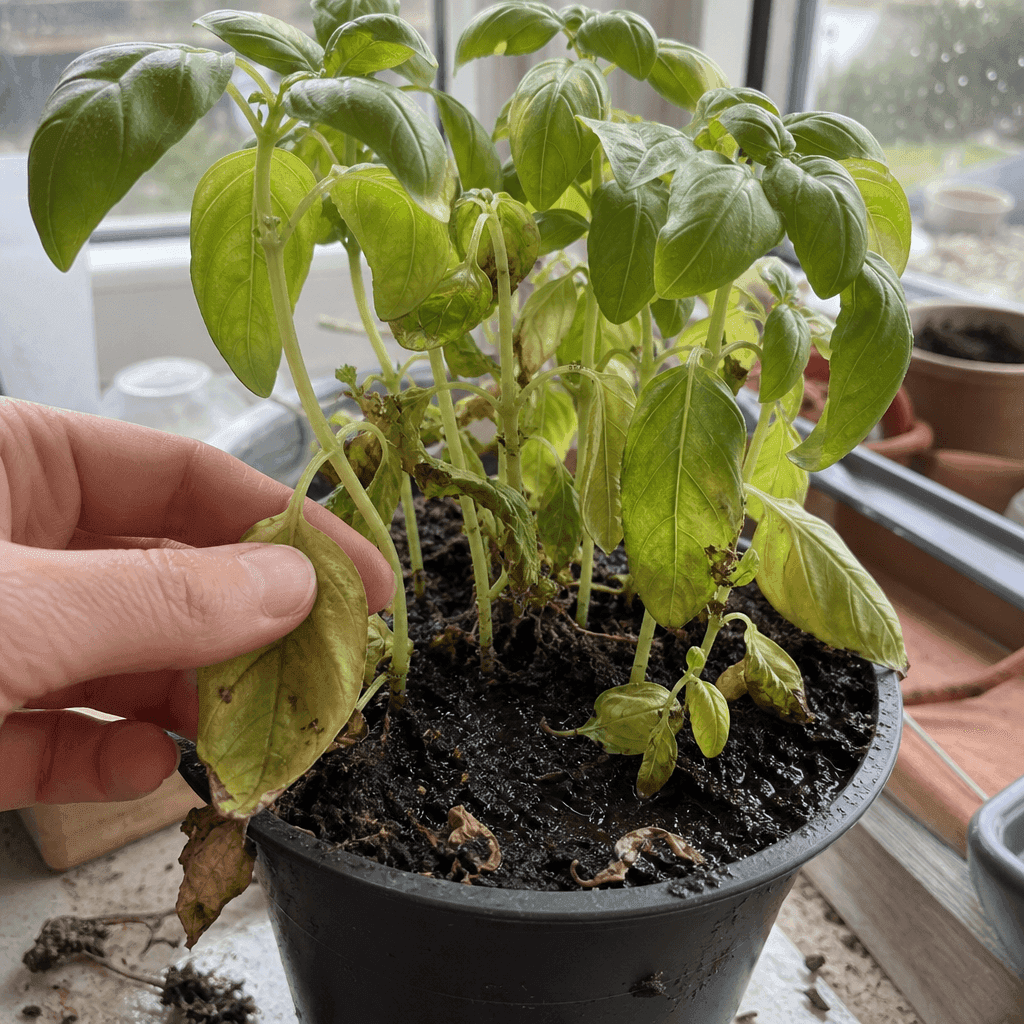
- Stand basil in a saucer of water — it causes root rot within days.
- Put basil outside or near a cold window before late May — temperatures below 10°C cause irreversible cold damage.
- Water more when the plant is wilting without first checking whether the compost is already wet.
- Compost material from a plant with fusarium wilt or downy mildew — bin it to prevent spread.
- Allow flower spikes to develop — pinch them out as soon as they appear to keep the plant productive.
Common questions
Why does supermarket basil die so quickly?
Supermarket basil pots contain many seedlings crammed together, often already stressed from overwatering during transport and sale. They are designed for harvesting rather than growing on. For best results, either use the whole pot quickly, or divide it into several smaller pots with fresh compost and grow them on in good light with careful watering.
Can a dying basil plant be revived?
It depends on the cause. Underwatering is very recoverable if caught quickly. Cold damage can recover if the stem is still firm. Overwatering and root rot can recover if caught early and drainage is improved. Fusarium wilt and advanced downy mildew — both serious fungal plant diseases — are not recoverable, so destroy the plant.
Why is my basil turning black?
Sudden blackening almost always means cold damage — the plant has experienced temperatures below about 10°C. More gradual blackening of the stem base with wilting usually indicates root rot from overwatering. Check the conditions and the compost to distinguish them.
How often should I water basil in the UK?
In summer on a warm windowsill, basil in a small pot may need watering daily. Check the top centimetre of compost — if it is dry, water until it drains from the bottom. Never leave it sitting in water. In cooler conditions, every 2–3 days may be sufficient.
Can I grow basil outside in the UK?
Yes, but not before late May to early June in southern England, and later further north. Basil needs warmth and shelter — a south-facing spot in free-draining soil or a container. It performs best in a warm summer and is killed by the first autumn frost. For more on keeping this herb healthy, see our basil care and problem guides.
What is basil downy mildew and can I prevent it?
Basil downy mildew is a fungal-like disease that causes yellowing with grey-brown fuzz on leaf undersides. It spreads rapidly in cool, humid conditions. To reduce the risk, water at the base only, maintain good airflow, grow plants in a warm spot, and remove affected leaves at first sign. Some basil varieties have better resistance than sweet basil.
How do I stop basil from flowering?
Pinch out the growing tips regularly — every 1–2 weeks — to prevent flower spikes from forming. Remove any flower spikes immediately when they appear. Keeping the plant bushy and leafy through regular pinching is the most important management technique for productive basil.