Quick diagnosis
Match the row to what you’re seeing, then jump to the fix.
| What you see | Likely cause | Confidence | How to confirm | What to do now | Urgency |
|---|---|---|---|---|---|
| Leaves flat and limp; compost dry below the surface; pot feels very light | Underwatering | High | Compost dry 3–5cm down; plant recovers dramatically within an hour of thorough watering. | Water thoroughly until it drains from the base; discard any excess from saucer after 30 minutes. | High |
| Leaves limp and yellowing; compost stays wet; roots brown or black | Overwatering and root rot | High | Compost wet for days; roots are brown, mushy or smell sour when plant is removed from pot. | Stop watering; repot into fresh compost after removing rotted roots with clean scissors. | High |
| Wilts rapidly after watering and dries out within a day | Root-bound pot | Medium | Roots circling the bottom of the pot or emerging from drainage holes; compost dries very quickly. | Pot up into a container one or two sizes larger with fresh multipurpose compost. | Medium |
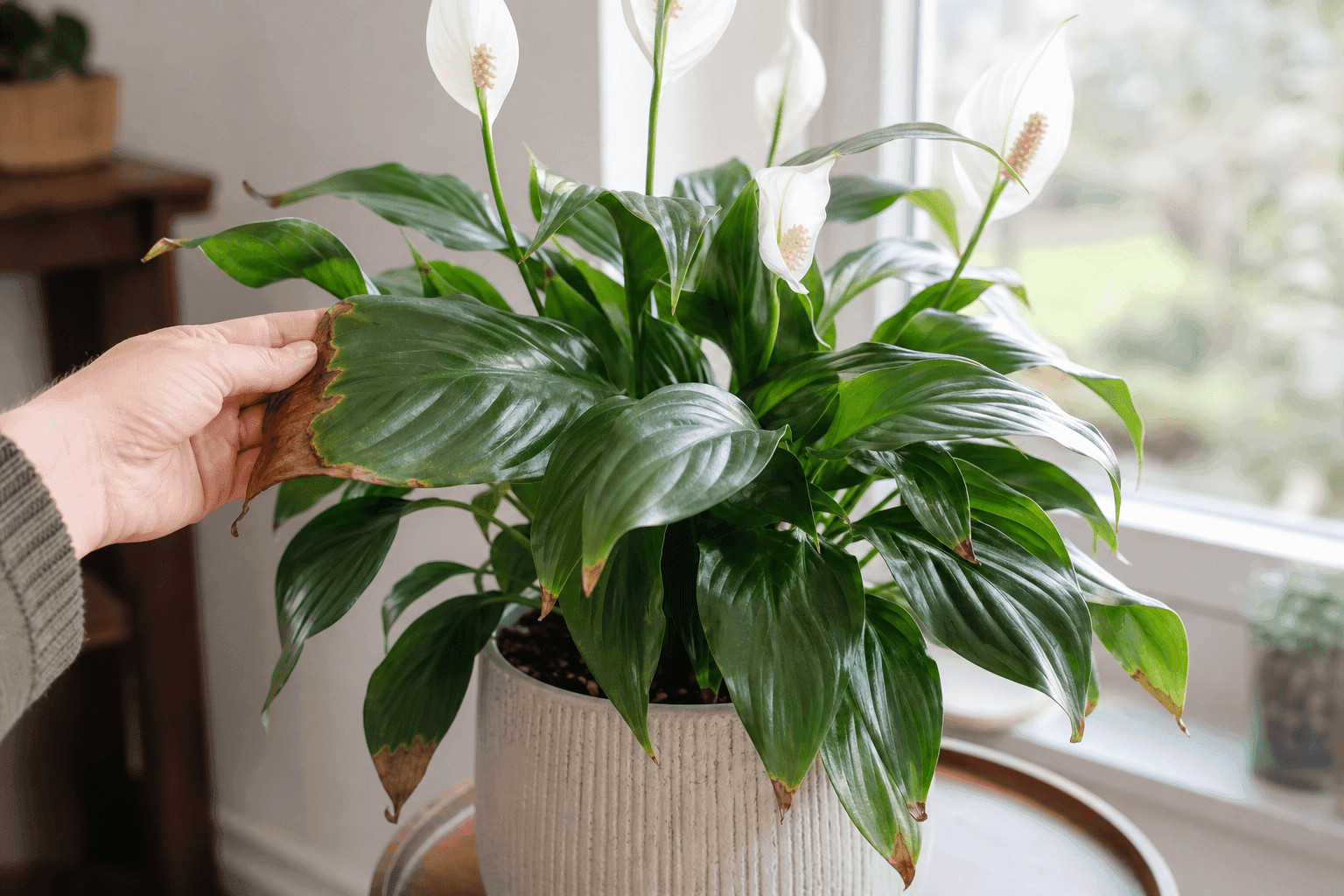
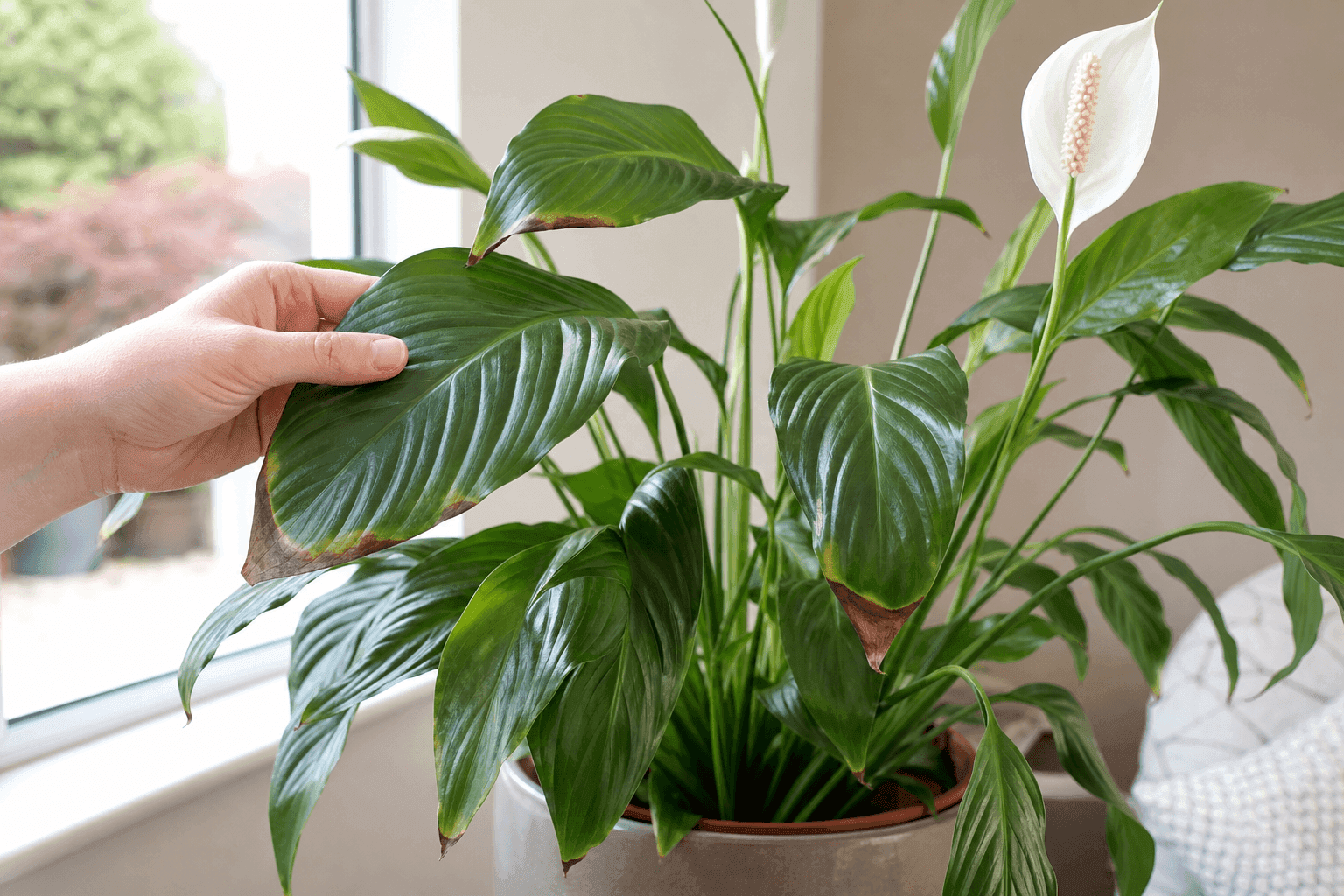
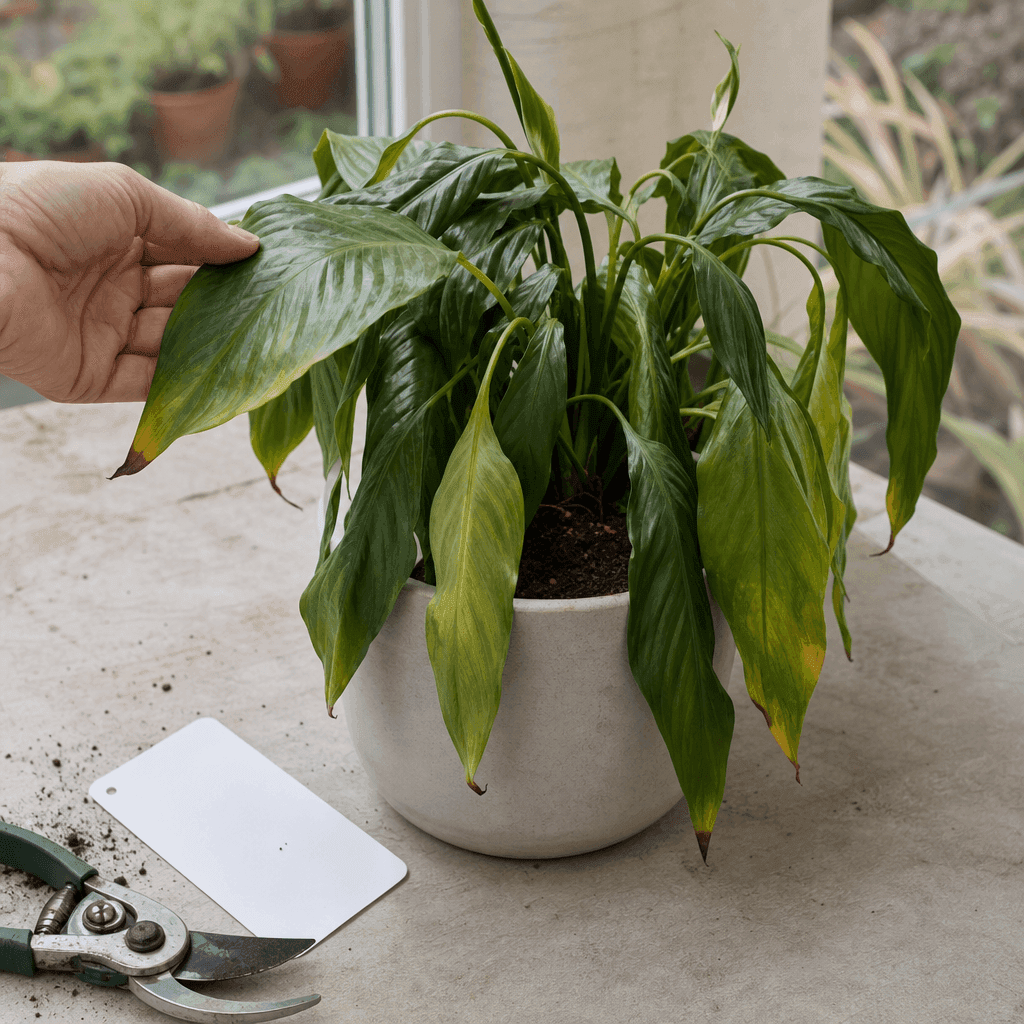
| Leaves droop and tips turn brown; plant is near a radiator or in a sunny position | Low humidity or heat stress | Medium | Plant is near central heating; compost is moist; room feels dry; leaf tips are brown. | Move away from radiators; place on a pebble tray with water; mist the air around the plant. | Medium |
| Sudden wilting after the plant was moved or near a cold window or door | Cold draught or temperature shock | Medium | Plant was near a draughty window, exterior door or on a windowsill in winter. | Move to a warm, stable position above 12°C away from cold draughts. | Medium |
The causes, in detail
Underwatering
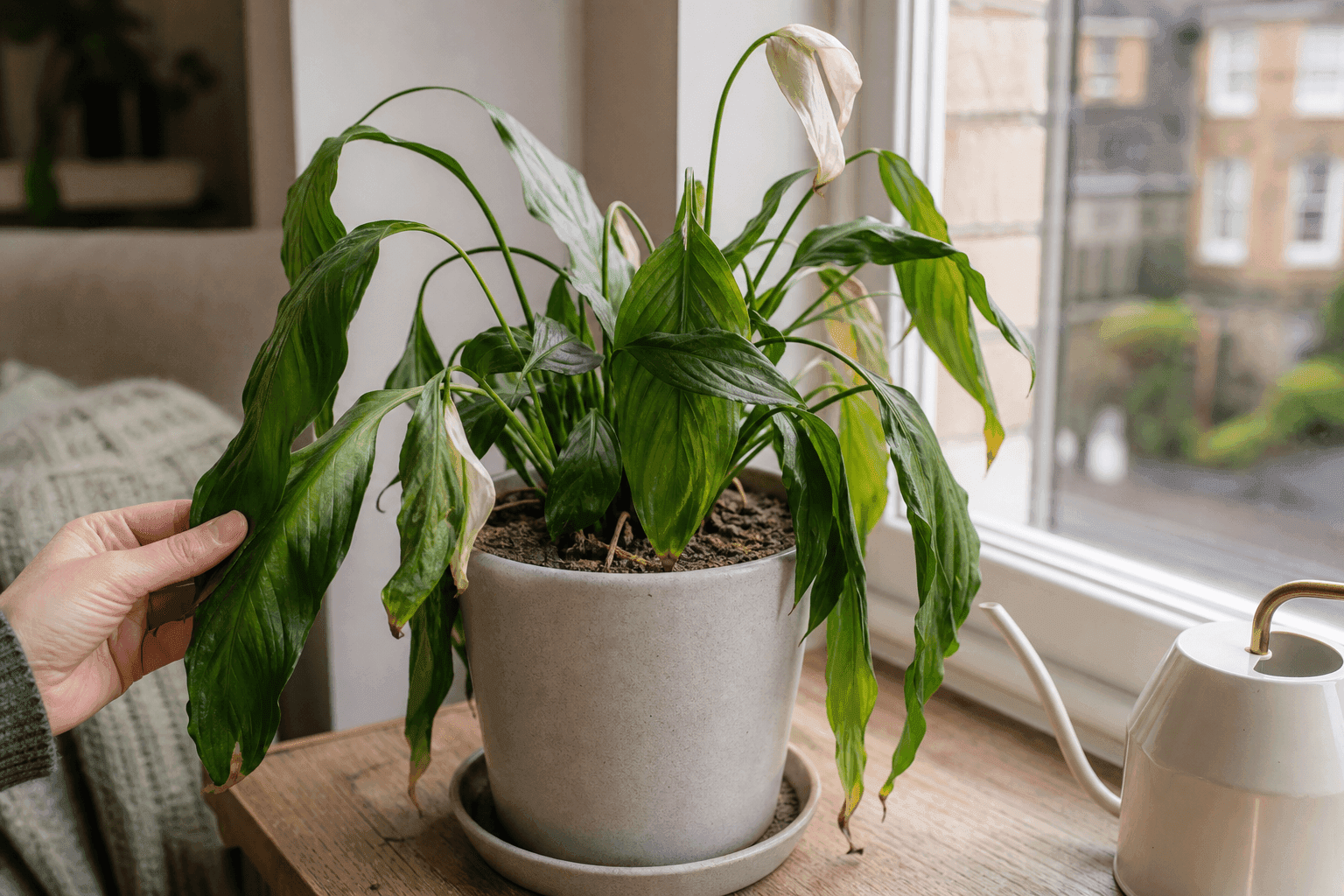
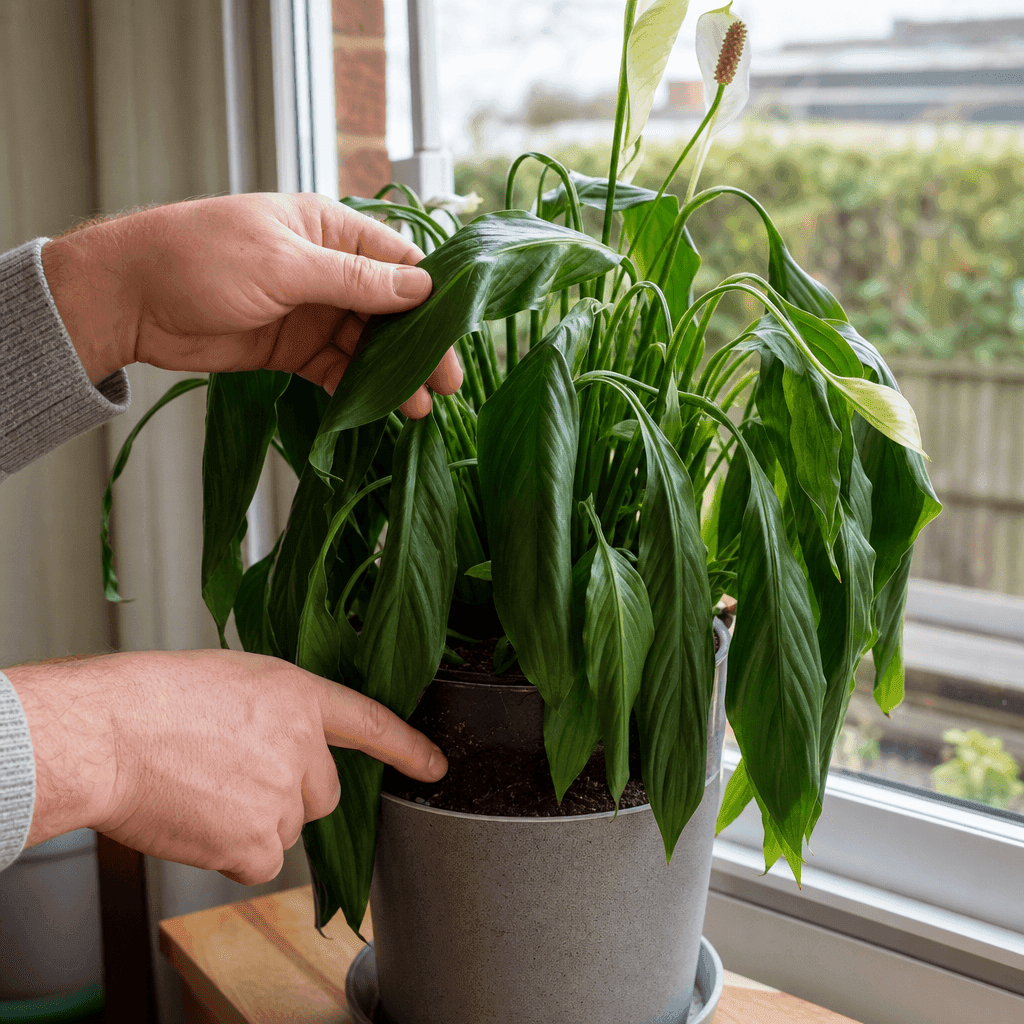
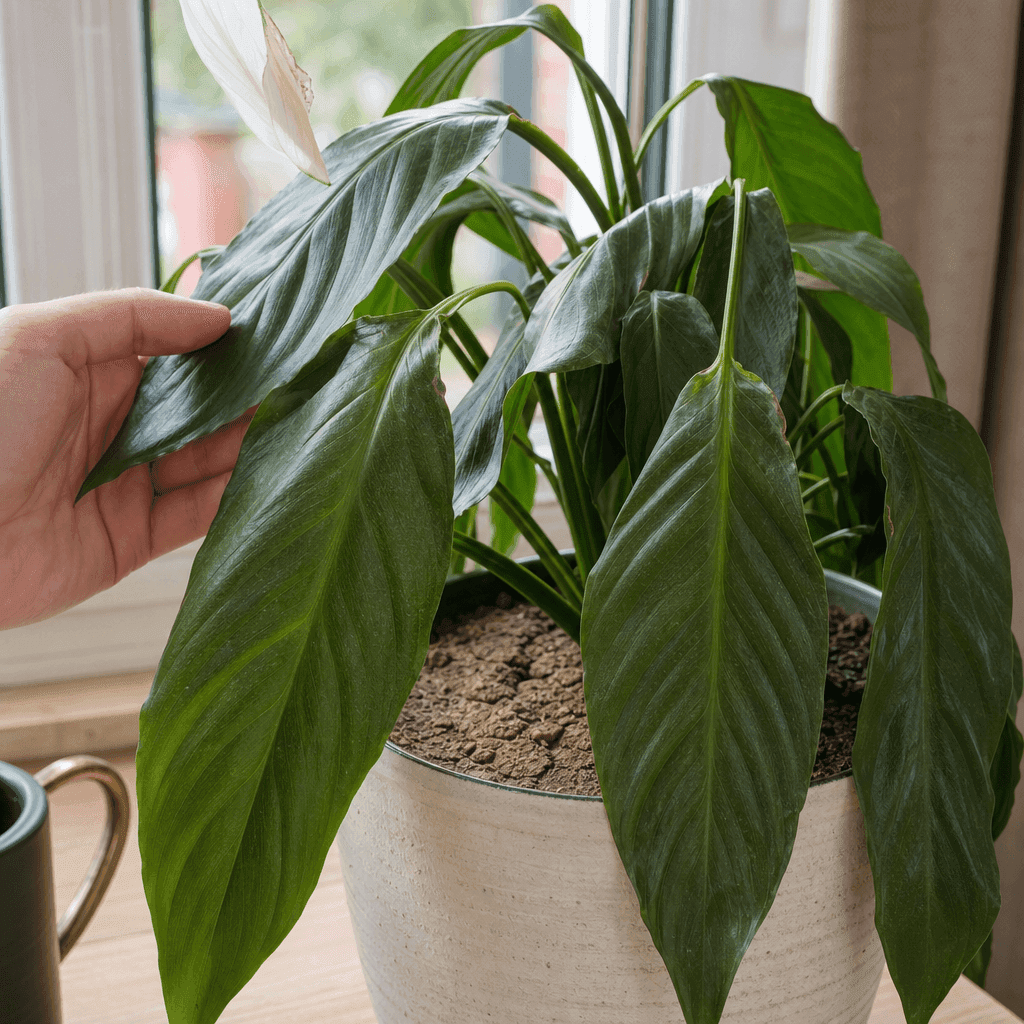
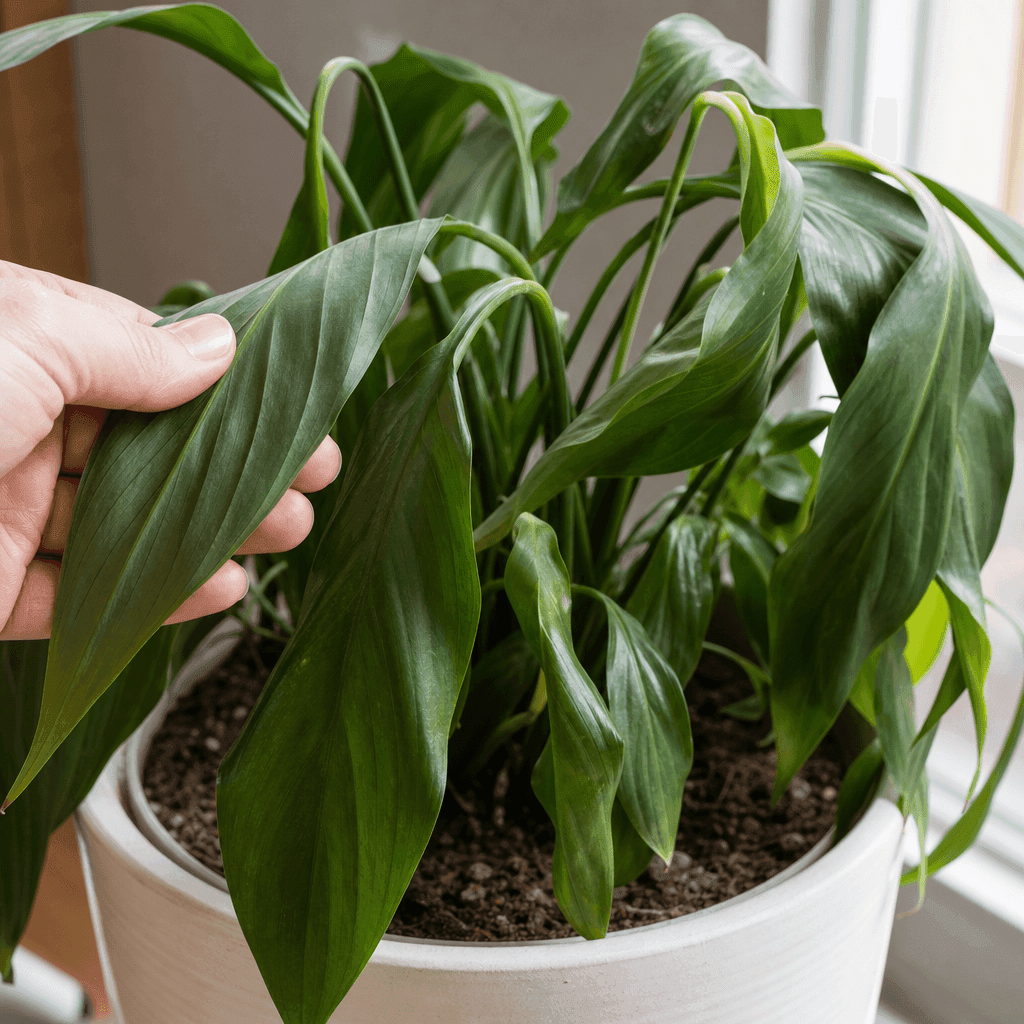
Most likelyPeace lilies are among the most dramatic wilters when underwatered — they can go from upright to completely flat within a day of the compost drying out. Fortunately, they are also remarkably good at recovering. Most UK gardeners find that watering when the top 2–3cm of compost feels dry, and watering thoroughly enough for water to drain from the bottom, is sufficient in a warm indoor environment. In summer, heated rooms or near a sunny window, peace lilies may need watering twice a week. Multiple horticultural sources confirm that underwatering is the leading cause of peace lily drooping — it sits alongside the broader family of watering and nutrient problems behind most houseplant collapse.
- Push a finger 3–5cm into the compost — it feels dry.
- The pot feels noticeably light when lifted.
- Leaves lie flat or droop dramatically.
- The plant perks up significantly within an hour of thorough watering.
- Water thoroughly — pour slowly over the compost surface until water drains freely from the drainage holes.
- After 30 minutes, discard any water remaining in the saucer.
- If the compost has shrunk away from the pot edges and water is running straight through without being absorbed, water more slowly or submerge the pot briefly in a bowl of water.
- After recovery, water whenever the top 2–3cm of compost feels dry — do not wait until the plant wilts.
Stop it coming back:Peace lilies can recover from underwatering very quickly — most spring back to full posture within hours. However, repeated severe wilting stresses the plant and makes it more susceptible to other problems.
water on a fixed schedule without checking the compost — the frequency needed changes significantly between summer and winter.
Overwatering and root rot
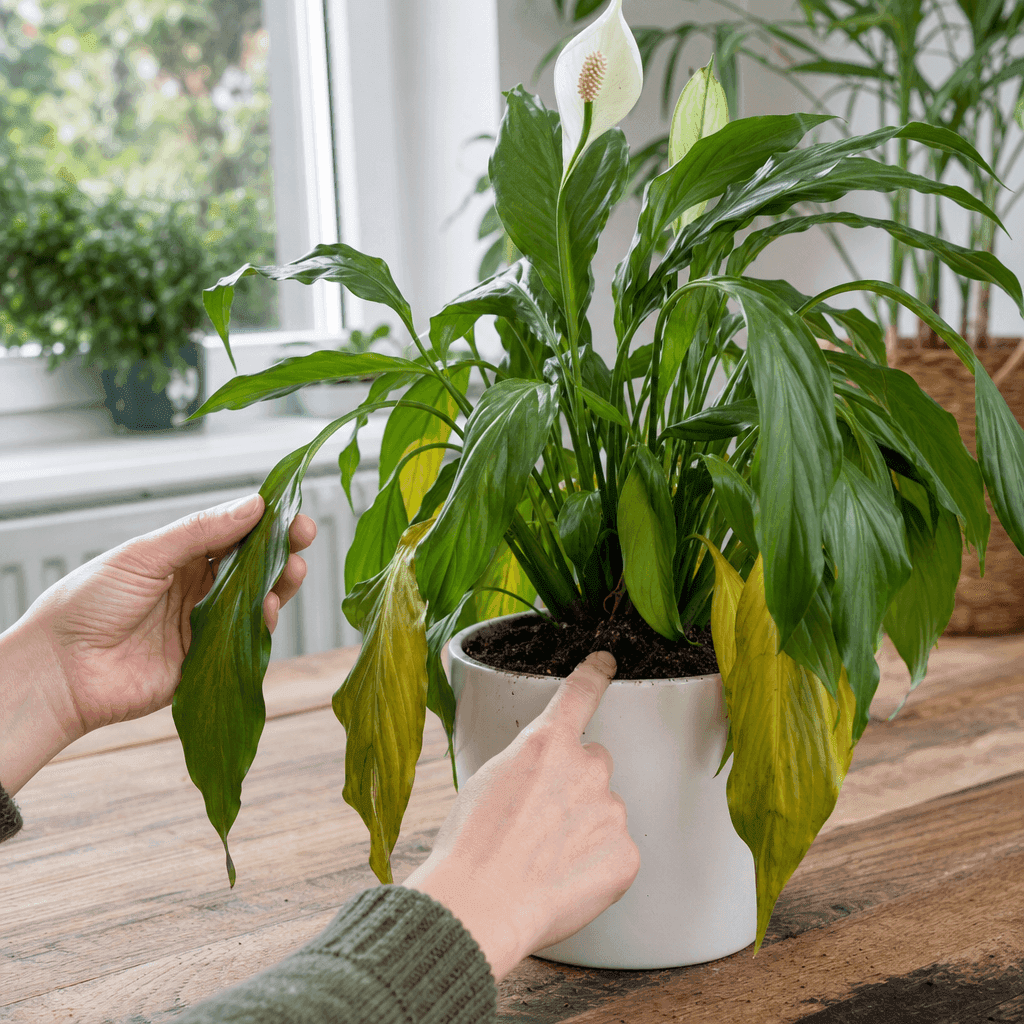
Most likelyOverwatering is the second most common cause of peace lily wilting and is more serious because it involves root rot. When roots are oxygen-starved in permanently wet compost, they die and begin to rot. Fungal organisms rapidly colonise the damaged tissue. The plant wilts because dead roots cannot take up water — so overwatered and underwatered peace lilies can look identical from above. The key difference is the compost: if it is still wet when the plant wilts, and roots are brown and mushy rather than white and firm, overwatering is the cause.
- The compost is wet or soggy despite days without watering.
- The pot feels heavy.
- When removed from the pot, roots are brown, black or mushy rather than white or pale yellow.
- The compost may smell sour or stale.
- Old and new leaves may be yellowing together — a classic overwatering sign.
- Remove the plant from its pot and inspect the roots.
- Cut away all dead, brown or mushy roots with clean, disinfected scissors.
- Let the root ball air for 30 minutes to 1 hour.
- Repot into fresh, well-draining compost — a peat-free multipurpose mix with added perlite works well.
- Water sparingly for the first few weeks until new roots develop.
- Keep the plant in indirect light and stable warmth to reduce stress during recovery.
Stop it coming back:If caught early with some healthy roots remaining, peace lilies can recover from root rot, but the process takes several weeks. Discard the plant if no healthy roots remain.
keep watering a wilting peace lily if the compost is already wet — always check the compost before watering.
Root-bound pot
PossibleA peace lily that is very root-bound wilts rapidly after watering because the dense root mass occupies all the compost space, leaving little water-holding capacity. The plant may dry out within 24 hours of watering. Roots circling the inside of the pot or emerging from drainage holes confirm this. Peace lilies generally need repotting every one to two years and actually prefer to be slightly pot-bound, so move up only one or two pot sizes at a time.
- Roots are circling the inside of the pot or growing through the drainage holes.
- The compost dries out very quickly — within a day of watering.
- The plant has been in the same pot for more than two years.
- Choose a new pot one size (2.5–5cm) larger than the current one — with drainage holes.
- Pot up using a fresh peat-free multipurpose compost.
- Water thoroughly after repotting and keep in a bright, indirect position.
- Expect some brief wilting immediately after repotting as roots adjust.
Stop it coming back:Peace lilies settle into a new pot quickly. Avoid potting up into a very large container, as excess compost holds water around roots and can promote root rot.
pot up into a pot much larger than the root ball — excess compost stays wet and can lead to root rot.
Low humidity and heat stress
PossiblePeace lilies are tropical plants that prefer moderate to high humidity (40–60%). UK central heating in winter can drop indoor humidity to 20–30%, causing leaves to lose moisture faster than roots can replace it, leading to drooping and brown leaf tips. Plants near radiators, heat vents or in south-facing windows in summer are most at risk. Unlike underwatering, the compost will be moist and the roots healthy.
- The compost is moist but leaves are drooping or showing brown tips.
- The plant is near a radiator, heat vent or in direct sun.
- The room feels dry — air humidity is low.
- Move the plant away from radiators and direct sunlight.
- Place the pot on a tray filled with pebbles and water to create humidity around the plant as the water evaporates.
- Mist the leaves lightly in the morning — avoid misting in the evening to reduce disease risk.
- Group plants together to create a more humid microclimate.
Stop it coming back:Leaves should look better within a few days. Brown tips will not recover but new leaves should be free of browning once humidity improves.
mist the plant in the evening or at night — wet leaves in cool, still air can encourage fungal disease.
Cold draughts and temperature shock
PossiblePeace lilies are sensitive to cold and dislike temperatures below 12°C. In the UK, a windowsill or draught from an exterior door can expose the plant to cold air even in a warm room. Symptoms include sudden wilting, darkening of leaf edges, or yellowing, often appearing within 24–48 hours of cold exposure. Centralised heating that is turned off overnight can also cause dramatic temperature drops.
- Drooping or leaf darkening started after the plant was moved or after cold weather.
- The plant is near a draughty window, exterior door, or on a cold windowsill.
- No watering issues are present.
- Move the plant to a stable position away from cold draughts and exterior walls.
- Aim for a consistent temperature of 18–24°C.
- Avoid windowsills that get very cold at night in winter.
- In very cold rooms, raise the pot off the surface on a small mat or piece of cork.
Stop it coming back:Plants moved to the correct conditions usually recover within a few days. Leaves with cold damage (dark patches, blackened edges) should be removed once recovery is underway.
place a cold-damaged peace lily next to a radiator to warm it up quickly — sudden heat after cold causes additional stress.
Still not sure?
Work down these branches — the first one that matches is your answer.
What not to do
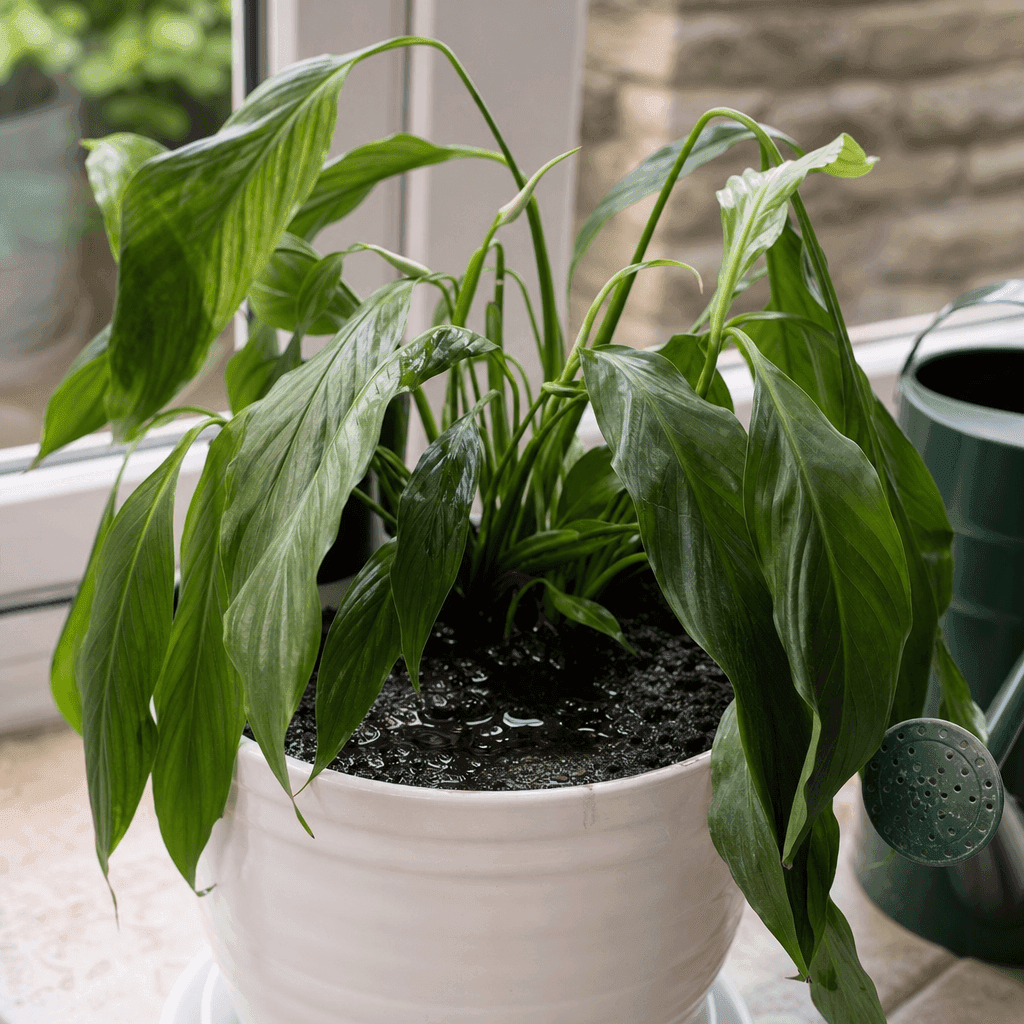
- Water without checking the compost first — overwatered and underwatered peace lilies look the same from above.
- Leave the pot sitting in a saucer of water — this maintains the wet conditions that cause root rot.
- Feed a wilting or root-rotted plant — fertiliser applied to stressed roots causes further damage.
- Move a struggling peace lily to a cold windowsill or draughty position — stability matters as much as light.
- Panic at dramatic wilting if the compost is dry — peace lilies recover quickly from underwatering once watered.
Common questions
How do I revive a drooping peace lily?
First check the compost. If it is dry, water thoroughly and the plant should recover within hours. If it is wet, remove from the pot, cut away rotten roots and repot into fresh compost. If roots are healthy, check for heat, low humidity or a cold draught.
Why is my peace lily drooping after watering?
If the plant droops despite being watered, either the roots are too rotten to take up water (overwatering/root rot), the pot is root-bound and drying out faster than it appears, or the problem is humidity or temperature rather than water. Check the roots. Other tropical houseplants behave the same way — see our guide to drooping orchid leaves for a parallel diagnosis.
How often should I water a peace lily?
Water when the top 2–3cm of compost feels dry — this is typically once or twice a week in summer and every 10–14 days in winter. Always water thoroughly until it drains from the base, and never leave the pot sitting in water.
Can a peace lily recover from root rot?
Yes, if some healthy roots remain. Remove all mushy, brown roots with clean scissors, repot into fresh well-draining compost and keep in indirect light. Recovery takes several weeks and the plant may lose some leaves before new growth appears.
Why are my peace lily leaves wilting and turning yellow?
Yellow leaves combined with wilting usually point to overwatering or root rot. Check whether the compost has been staying wet. Our guide to peace lily leaves turning yellow walks through the other causes. Underwatering causes wilting with green (not yellow) leaves, and the plant recovers quickly after watering.
Should I mist my peace lily?
Light misting in the morning helps maintain humidity and can benefit peace lilies in dry heated rooms. Avoid misting in the evening or getting water into the crown of the plant, as wet conditions at night can encourage disease. For more on caring for this species, see our full peace lily care and problems hub.
Can I keep a peace lily in a bathroom?
Yes — bathrooms with a window often provide the warmth and humidity that peace lilies love. Ensure there is enough indirect light and that temperatures stay above 12°C. Avoid bathrooms with no natural light.