Quick diagnosis
Match the row to what you’re seeing, then jump to the fix.
| What you see | Likely cause | Confidence | How to confirm | What to do now | Urgency |
|---|---|---|---|---|---|
| Lower, oldest leaves turn yellow one at a time; new leaves look green | Natural ageing | High | Yellowing is limited to the bottom/outer leaves and the plant is still producing healthy new growth. | Cut yellow leaves at the base with clean scissors; keep normal care. | Low |
| Yellow leaves plus limp stems; compost feels wet, cold or heavy days after watering | Overwatering / poor drainage | High | Pot has no drainage, plant sits in a cachepot of water, or top compost stays wet for a week or more. | Stop watering, empty saucers, move to bright indirect light, improve drainage. | High |
| Yellow leaves, drooping, crispy tips/edges; compost pulls away from the pot edge | Underwatering / repeated drought | High | Finger or wooden skewer comes out dry; pot feels very light. | Soak and drain once, then water when the top few centimetres are dry. | Medium |
| Many yellow leaves, wilting despite wet compost, musty smell, black or mushy roots | Root rot | High | Slide plant out: healthy roots are pale/firm; rotten roots are brown/black, soft and smelly. | Trim rotten roots, repot into fresh peat-free houseplant compost in a draining pot. | High |
| Leaves bleach pale yellow or develop yellow-brown scorch patches on window-facing side | Too much direct sun | High | Plant is in direct south/west summer sun or pressed against glass. | Move back from the window or filter light with a voile curtain. | Medium |
| Slow growth, yellowing older leaves, few or no flowers in a dark corner | Too little light | Medium | Plant is several metres from a window, in a north-facing room corner, or behind heavy curtains. | Move to bright indirect light near an east/north-east window or bright room. | Medium |
| Yellowing between veins, weak growth, no recent feed | Low nutrients / chlorosis | Medium | Compost is old, plant is growing April–October, and watering/light are already correct. | Feed at half-strength with balanced houseplant fertiliser; do not feed a stressed wet plant. | Low–medium |
| Yellow speckling, sticky residue, cottony clumps, brown scales, fine webbing | Pests such as spider mites, mealybugs, scale or aphids | High | Inspect leaf undersides, stems and leaf bases with a phone torch. | Isolate, wipe leaves, treat with insecticidal soap or horticultural oil as labelled. | High |
| Yellow or brown tips after regular watering with hard tap water | Mineral/fluoride sensitivity or salt build-up | Medium | White crust on compost/pot, leaf tips affected first, hard-water area. | Use rainwater/filtered water when possible; flush compost and let drain. | Low–medium |
| Yellowing started soon after repotting | Repotting shock, pot too large, or damaged roots | Medium | Repotted within last 2–8 weeks; compost stays wet in a much larger pot. | Keep warm and bright; avoid feeding for 4–6 weeks; repot only if compost is staying sodden. | Medium |
The causes, in detail
Natural old leaves are yellowing
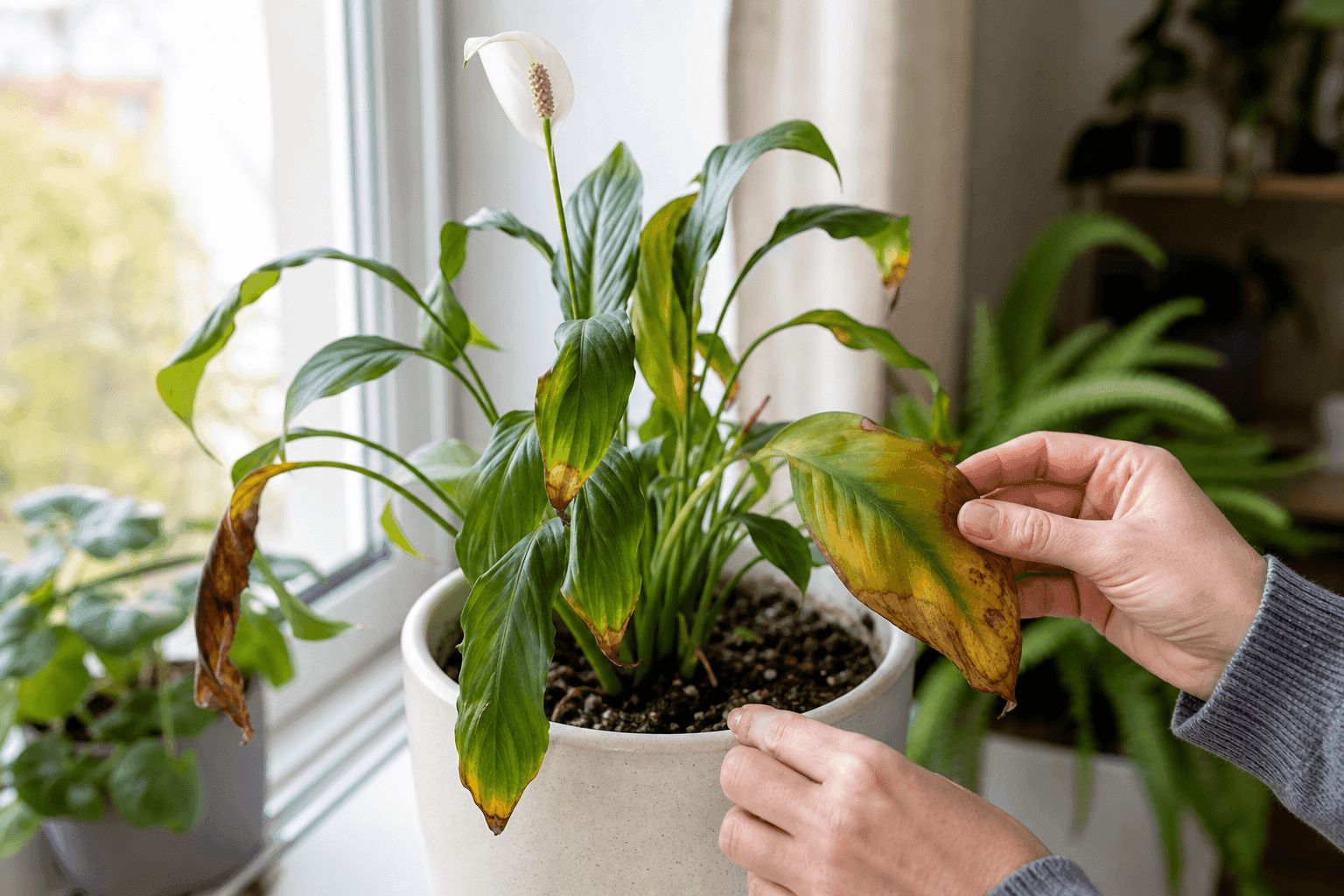
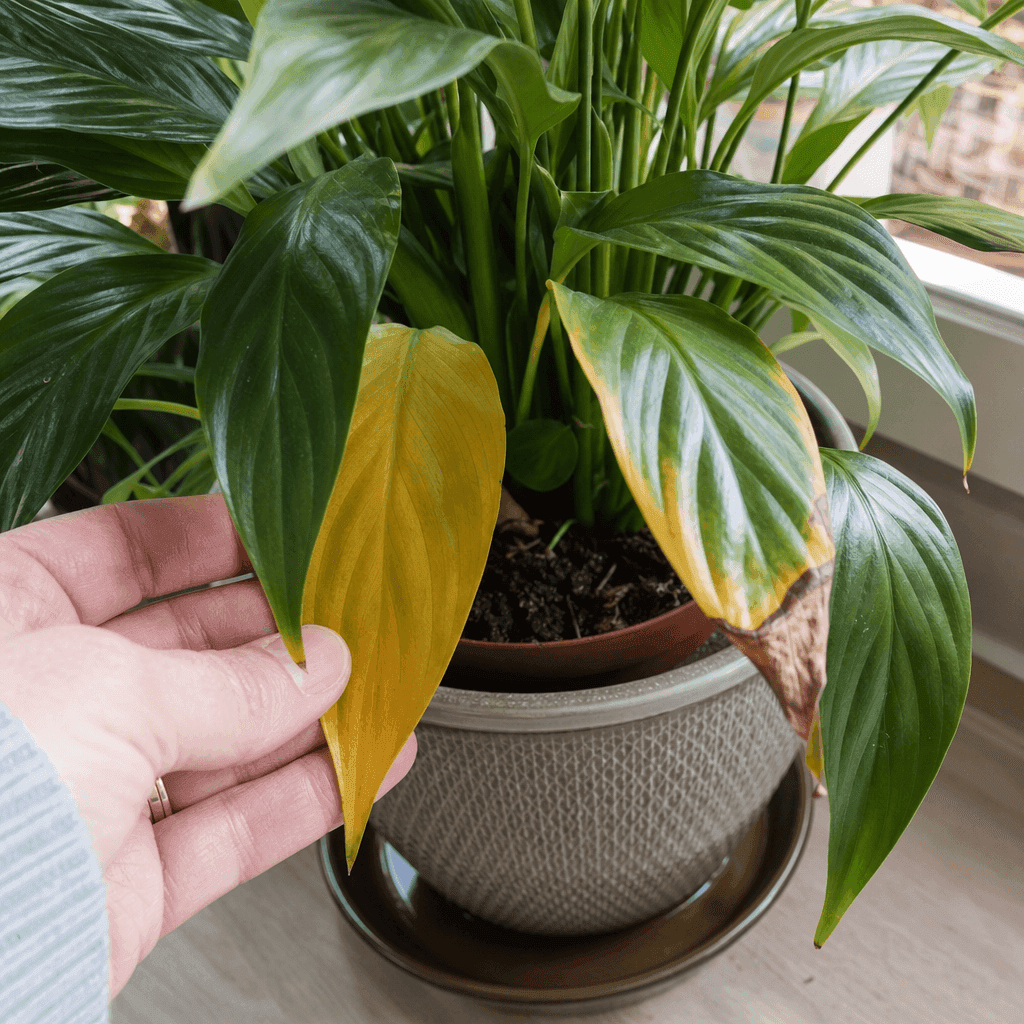
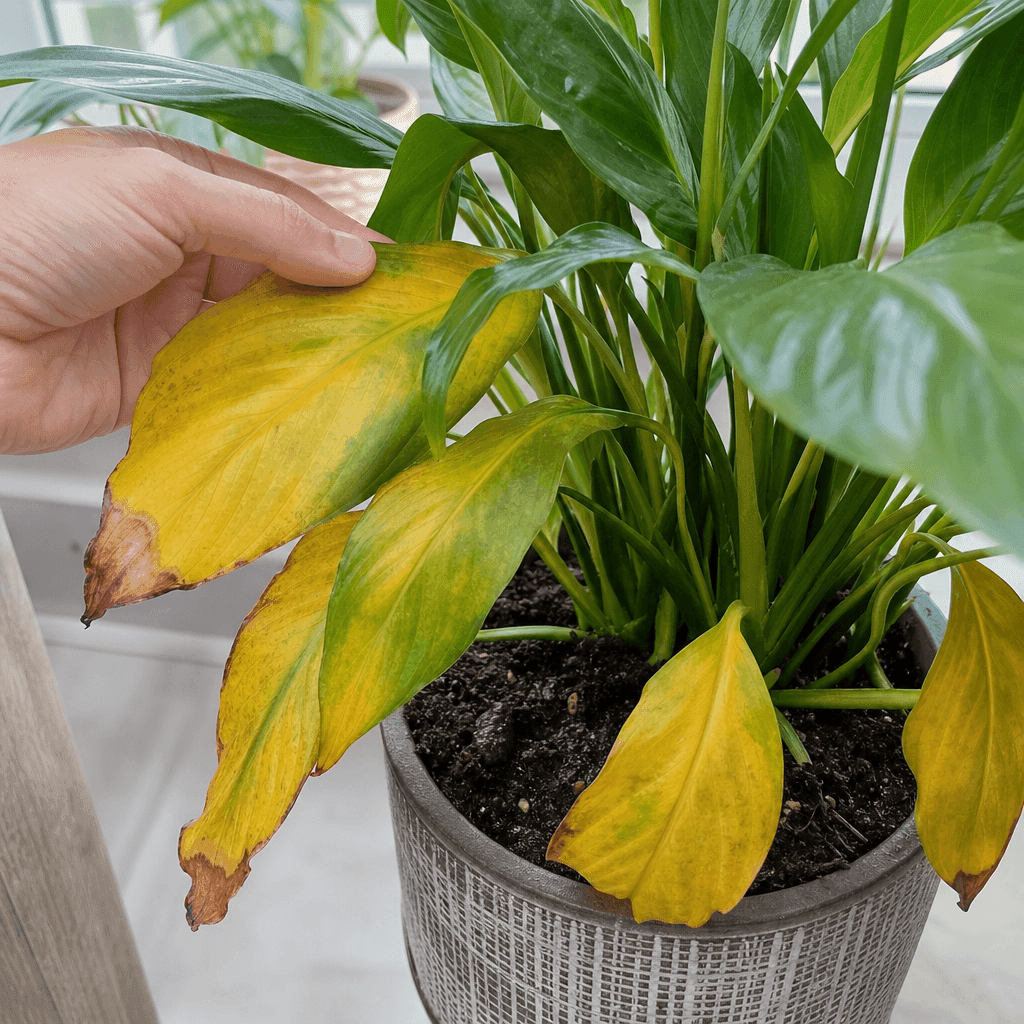
Most likelyPeace lilies regularly retire old leaves. If one or two of the oldest, lowest leaves turn yellow while the crown is making healthy green leaves, this is not a disaster. It is the plant reallocating energy from older foliage.
- Yellowing is mainly on the lowest outer leaves.
- The newest leaves are green and opening normally.
- The plant is not collapsing, smelling musty or showing pest damage.
- The compost dries slightly between waterings.
- Cut the yellow leaf stem close to the base with clean scissors or secateurs.
- Do not pull hard, as this can damage the crown.
- Keep the plant in bright indirect light and water only when the top few centimetres of compost feel dry.
Stop it coming back:Keep up steady care — bright indirect light and watering only when the top few centimetres are dry — so old leaves retire one at a time rather than in a flush.
feed heavily to “green up” an old yellow leaf; once a leaf has yellowed it will not become a healthy green leaf again.
Overwatering and poor drainage
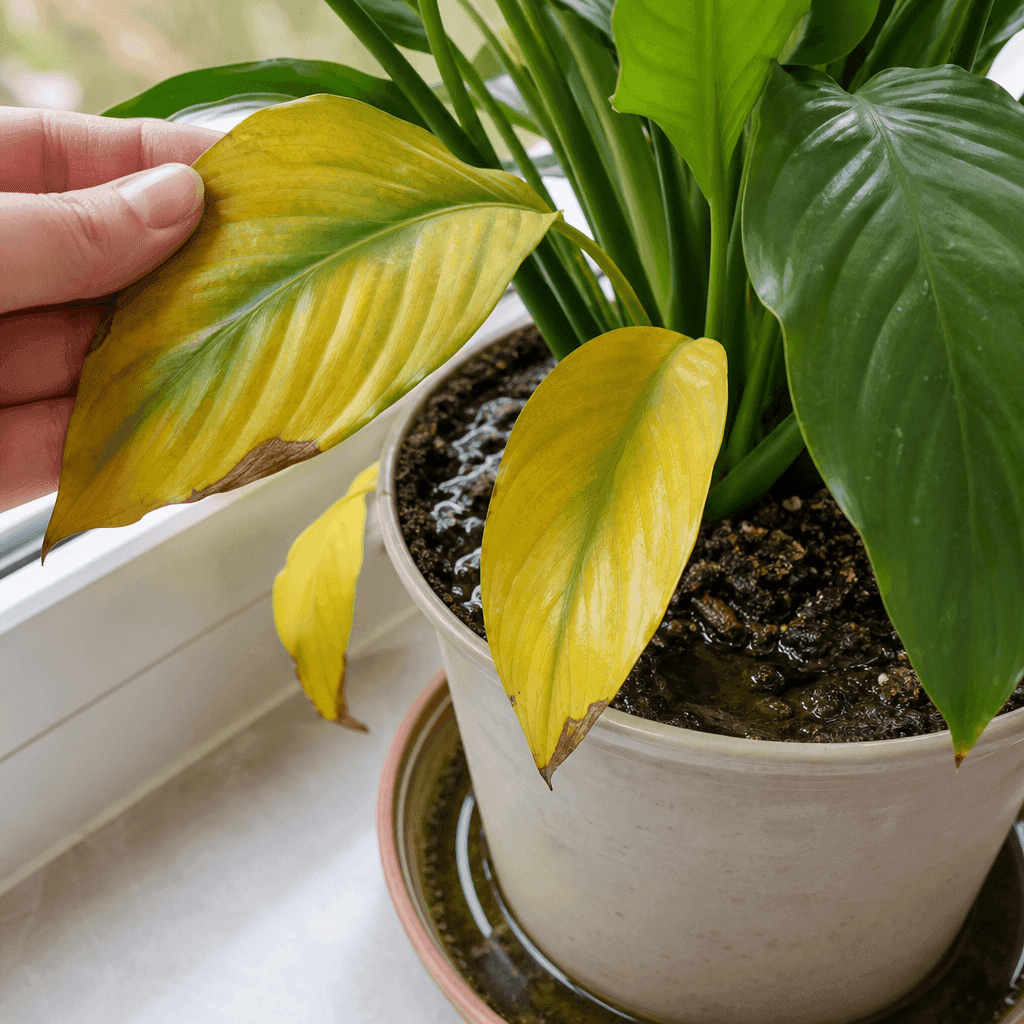
Most likelyOverwatering is one of the most common reasons for peace lily leaves turning yellow. The problem is not one large drink; it is compost staying wet for too long. Roots need oxygen as well as water, so when compost is constantly wet, roots cannot function properly and leaves yellow, droop and may later brown. This is especially common in UK homes in autumn and winter, and when a nursery pot sits inside a decorative pot with water hidden at the bottom.
- Compost is wet several days after watering.
- The pot feels heavy.
- Leaves are yellow and soft rather than crisp.
- The plant droops even though the compost is wet.
- There is water sitting in the saucer or cachepot.
- Empty any saucer or decorative pot immediately.
- Do not water again until the top few centimetres have dried.
- Move the plant to bright indirect light, away from cold draughts and radiators.
- Check that the inner pot has drainage holes.
- If the compost is dense, old or staying wet for more than a week, repot in fresh peat-free houseplant compost with added grit, fine bark or perlite for airier drainage.
Stop it coming back:Use a pot with drainage holes, empty the outer pot or saucer after watering, and water by checking the compost rather than on a fixed schedule — especially in low-light autumn and winter.
leave the nursery pot sitting in water inside a decorative pot, where hidden water keeps the compost saturated.
Underwatering or irregular watering
Most likelyPeace lilies are famous for dramatic drooping when dry. They often recover after a drink, but repeated drought can turn leaves yellow, especially older leaves. Compost that dries hard can also repel water, so water runs down the side of the pot without wetting the rootball.
- The whole plant droops, then perks up after watering.
- Compost feels dry several centimetres down.
- The pot is very light.
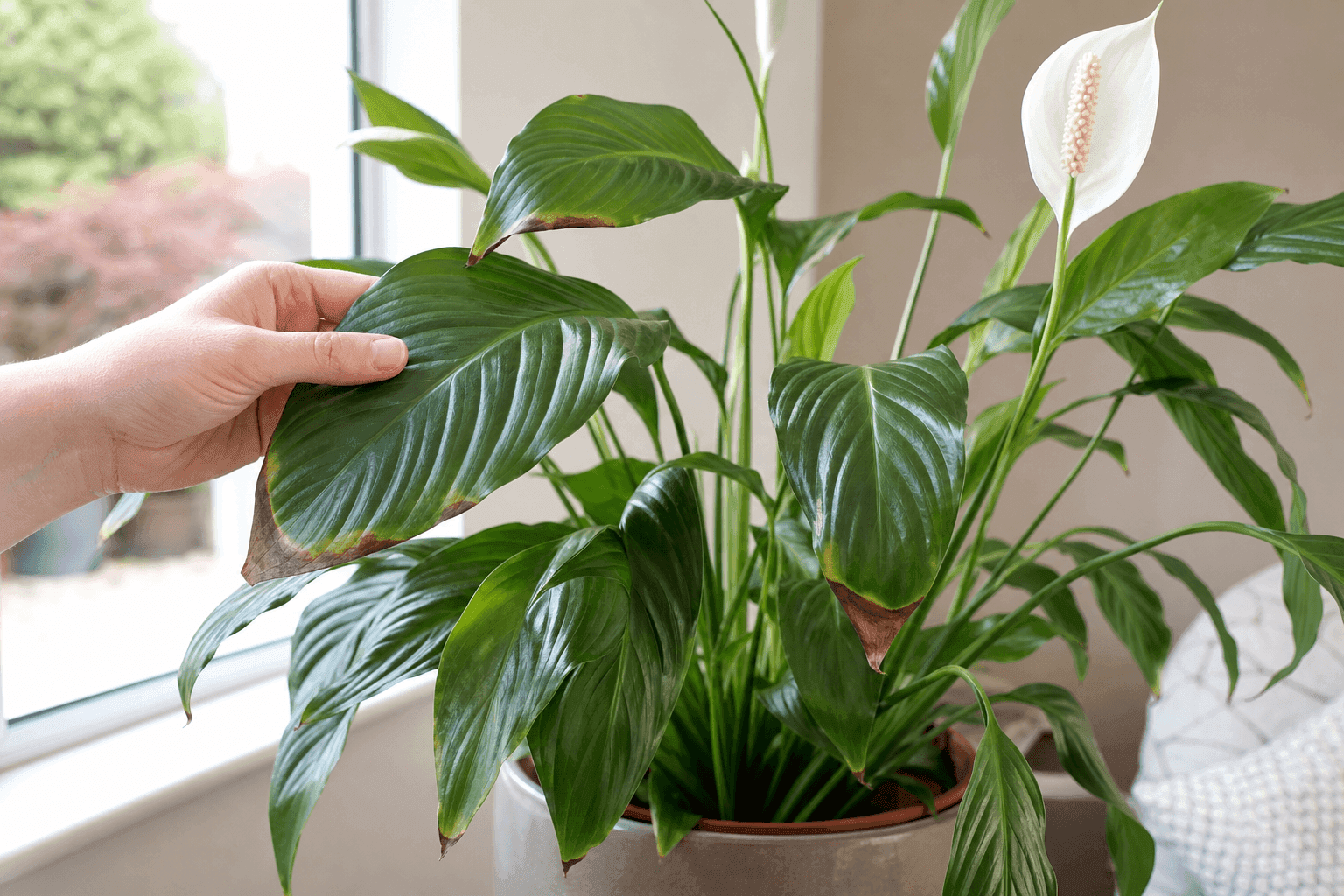
- Leaf tips or margins are crisp.
- Compost has shrunk from the pot edge.
- Give the plant a proper soak: place the nursery pot in a sink or bowl and water slowly until the compost is evenly moist.
- Let it drain completely before returning it to a decorative pot.
- Going forward, water when the top few centimetres are dry, not on a fixed calendar.
- In a warm UK living room this may be weekly in summer but much less often in winter.
Stop it coming back:Water when the top few centimetres are dry rather than on a fixed calendar, and check more often in summer; a bathroom or kitchen can keep humidity higher.
let the compost dry so hard that water just runs down the sides — soak the rootball properly instead.
Root rot
Most likelyRoot rot is the urgent version of overwatering. It happens when roots are kept wet and oxygen-starved long enough for them to die and decay. A peace lily with root rot may look thirsty even in wet compost because damaged roots cannot move water properly.
- Slide the plant out of its pot: healthy roots are pale to tan and firm.
- Rotten roots are brown or black, mushy, hollow, and may smell unpleasant.
- Compost may smell sour or stagnant.
- The plant wilts even though the compost is wet.
- Remove the plant from the pot.
- Gently shake away wet, sour compost.
- Cut off mushy black roots with clean scissors, keeping firm, living roots.
- Repot into a clean pot with drainage holes, only a few centimetres wider than the remaining rootball.
- Use fresh, free-draining peat-free houseplant compost.
- Water once to settle the compost, then let the top few centimetres dry before watering again.
Stop it coming back:Catch overwatering early and keep the plant in a free-draining pot so roots never stay oxygen-starved long enough to rot.
add fertiliser to a plant with root rot, or move it into a much larger pot “to give it room”; excess wet compost can restart the problem.
Too much direct sun
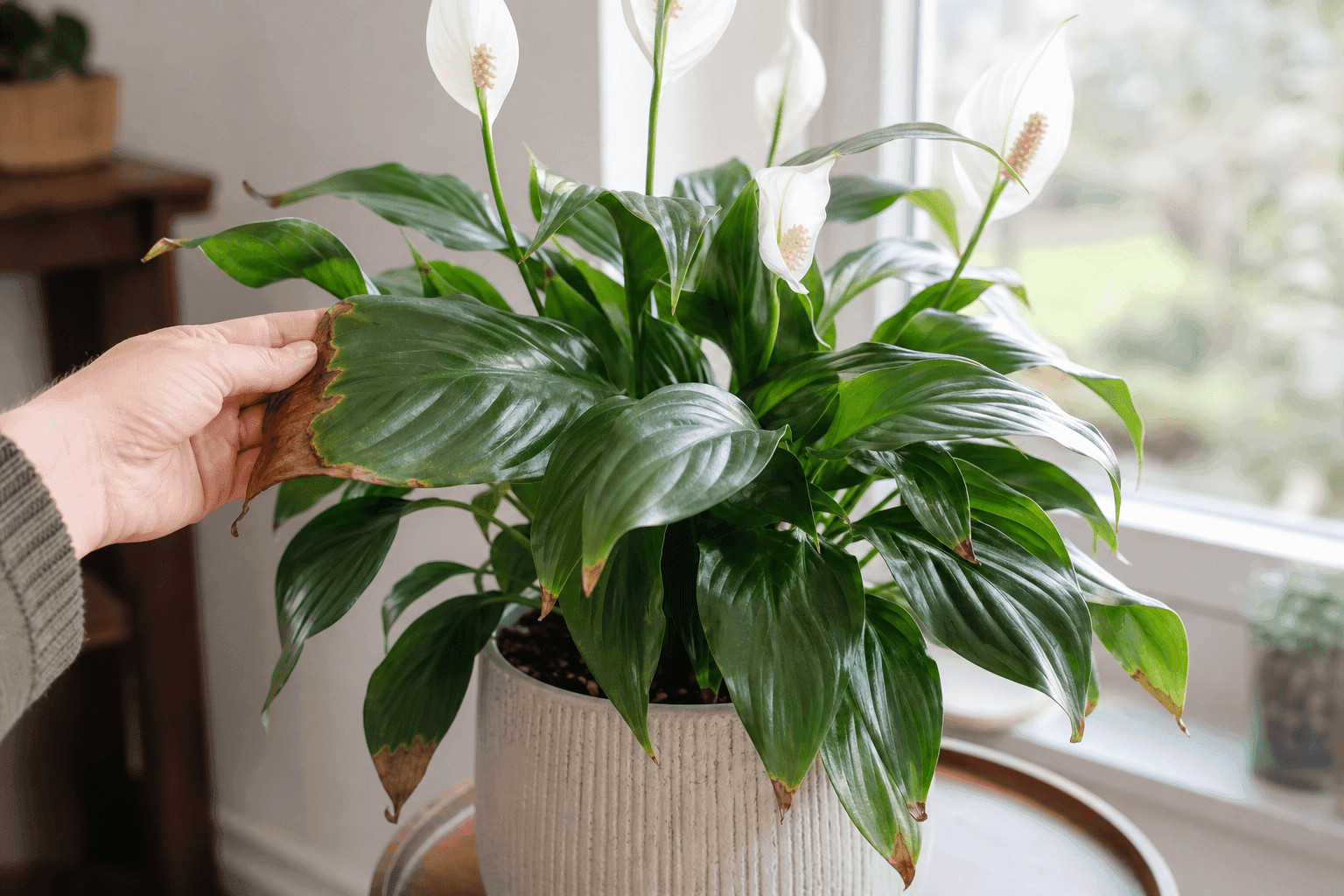
Most likelyPeace lilies want bright, indirect light. Direct summer sun through glass can scorch leaves, especially on a south- or west-facing windowsill. Scorched leaves may look washed-out yellow, pale, or yellow-brown in patches.
- Damage is worst on the side facing the window.
- Patches look bleached or scorched, not evenly yellow.
- The plant is in direct afternoon sun.
- Move the plant back from the window, use a sheer curtain, or place it near an east- or north-east-facing window.
- Aim for bright indirect light: bright enough to read comfortably by day, but not hot sun directly on the leaves.
Stop it coming back:Keep the plant in bright indirect light away from hot afternoon glass, filtering strong summer sun with a voile or sheer curtain.
place a peace lily in direct hot sun to “dry it out” — that scorches the leaves.
Too little light
PossiblePeace lilies tolerate lower light better than many flowering houseplants, but “tolerate” does not mean “thrive”. In a dim corner, growth slows, older leaves can yellow, and flowering becomes unlikely.
- The plant is far from a window or in a dark hallway.
- Growth is slow and stretched.
- It rarely flowers.
- Compost stays damp for a long time because the plant uses less water.
- Move it gradually to brighter indirect light.
- Avoid suddenly putting a shaded plant into direct sun.
- In UK winter, a position closer to a window is often helpful, provided the plant is not touching cold glass or sitting in draughts.
Stop it coming back:Keep the plant within reach of bright indirect light year-round, moving it closer to a window in winter without letting it touch cold glass.
move a shaded plant suddenly into direct sun — increase its light gradually.
Feeding problems and nutrient deficiency
PossibleIf watering and light are both sensible, yellowing can be linked to low nutrients, especially in old compost. Yellowing between green veins is often described as chlorosis and can be associated with nutrient availability. Peace lilies are not heavy feeders, but they do benefit from light feeding during active growth.
- Plant has been in the same compost for a long time.
- New growth is small or pale.
- Yellowing appears between veins rather than as old lower leaves only.
- No signs of wet compost, drought or pests.
- Feed with a balanced liquid houseplant fertiliser at half strength every 4–6 weeks from April to October.
- Water first if the compost is dry; never pour fertiliser onto a drought-stressed rootball.
- Stop or greatly reduce feeding in winter.
Stop it coming back:Feed lightly at half strength through the growing season and refresh tired compost periodically so nutrients don't run down in an old rootball.
use lawn feed, outdoor garden fertiliser at full strength, or homemade high-salt feeds, and never fertilise a plant with root rot.
Pests
Most likelyPests can cause yellowing by sucking sap from leaves and stressing the plant. Indoor peace lilies may get spider mites, mealybugs, scale insects or aphids. Pests often arrive on new houseplants or spread from nearby plants.
- Fine webbing or pale speckling: spider mites.
- White cottony clumps at leaf joints: mealybugs.
- Brown or tan bumps on stems and leaf ribs: scale.
- Sticky honeydew on leaves or nearby surfaces: sap-sucking pests.
- Small green insects on soft new growth: aphids.
- Isolate the plant from other houseplants.
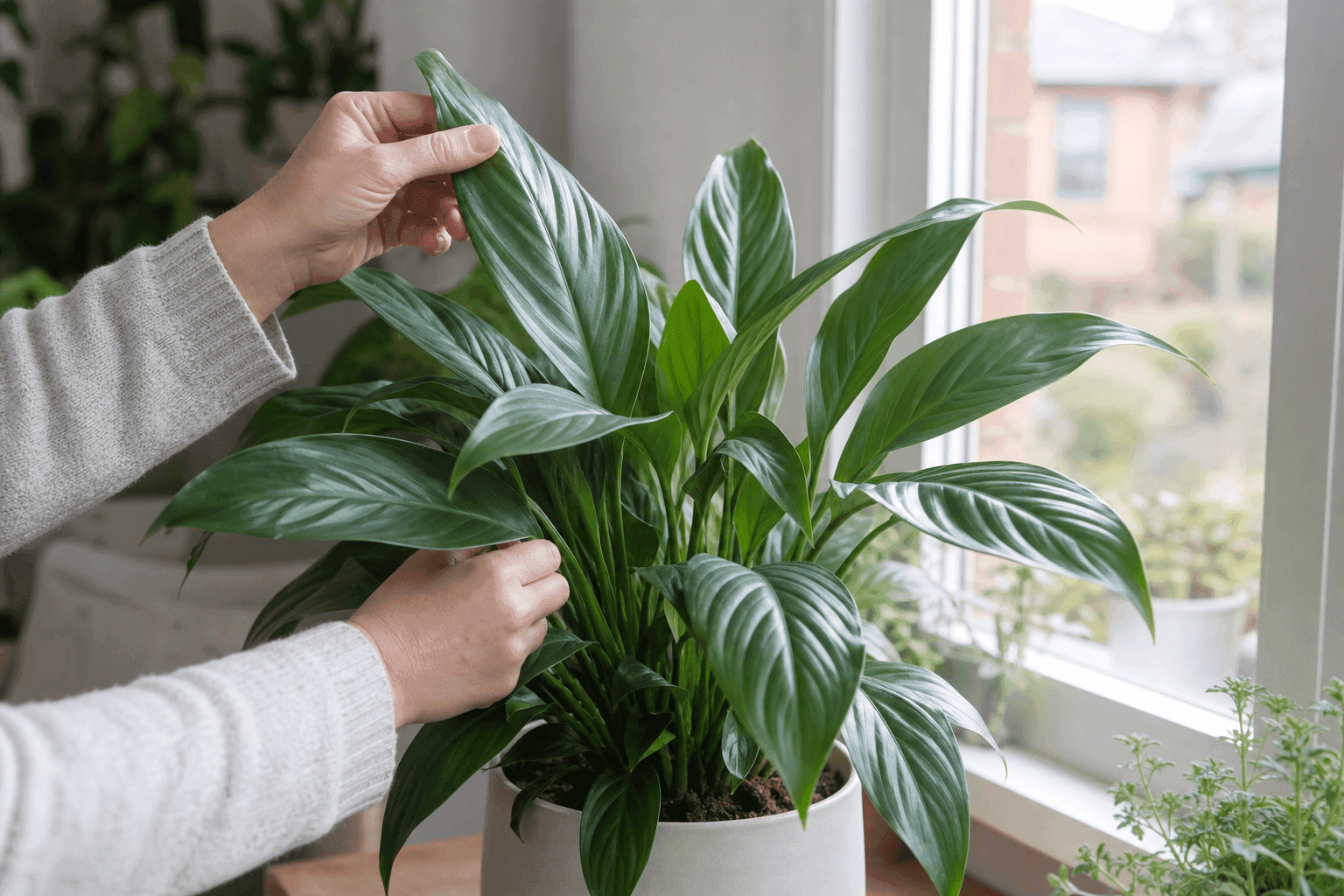
- Wipe leaves with a damp cloth, especially undersides.
- Remove visible mealybugs or scale with cotton buds.
- Use an insecticidal soap or horticultural oil suitable for houseplants, following the UK product label.
- Repeat as directed, because eggs and hidden insects can survive one treatment.
Stop it coming back:Wipe leaves regularly so you spot pests early, and isolate or inspect new houseplants before placing them near established ones.
assume a single treatment has worked; eggs and hidden insects survive, so keep re-checking for three to four weeks.
Tap water, minerals and salt build-up
PossibleThe RHS notes that peace lily foliage can be damaged by fluoride in tap water and recommends rainwater or filtered water where possible. In hard-water areas, mineral build-up can also show as white crusting on compost or pot rims. This often causes brown tips, but yellowing can appear when roots are stressed.
- Leaf tips are yellow-brown while the rest of the leaf is mostly green.
- You see white crust on compost, terracotta or pot edges.
- You water with hard tap water and have not flushed the compost for months.
- Use rainwater where practical, or filtered water.
- If using tap water, allow it to reach room temperature before watering.
- Flush the pot occasionally by watering thoroughly and letting excess drain away; never leave the plant standing in the drained water.
Stop it coming back:Use rainwater or filtered water where practical, especially in hard-water areas, and flush the pot occasionally to clear mineral and salt build-up.
leave the plant standing in the water you've just flushed through, which redeposits the salts you were trying to clear.
Repotting shock or the wrong pot size
PossibleYellowing after repotting can be shock, root disturbance, or a pot that is too large. A very large pot holds more wet compost than the roots can use, which can lead to overwatering and root rot.
- Yellowing began within 2–8 weeks of repotting.
- The plant was divided, roots were disturbed, or old compost was removed aggressively.
- The new pot is much bigger than the old one.
- Compost stays wet for too long.
- If the compost drains well and the plant is stable, give it time.
- Keep it warm, in bright indirect light, and avoid feeding for 4–6 weeks.
- If the compost is staying soggy, repot down into a pot only slightly larger than the rootball with a freer-draining mix.
Stop it coming back:Repot in spring only when roots are crowded, stepping up just one slightly larger pot size with peat-free houseplant compost so the rootball isn't swamped in wet mix.
move the plant into a much larger pot; the excess wet compost can lead straight to overwatering and root rot.
Still not sure?
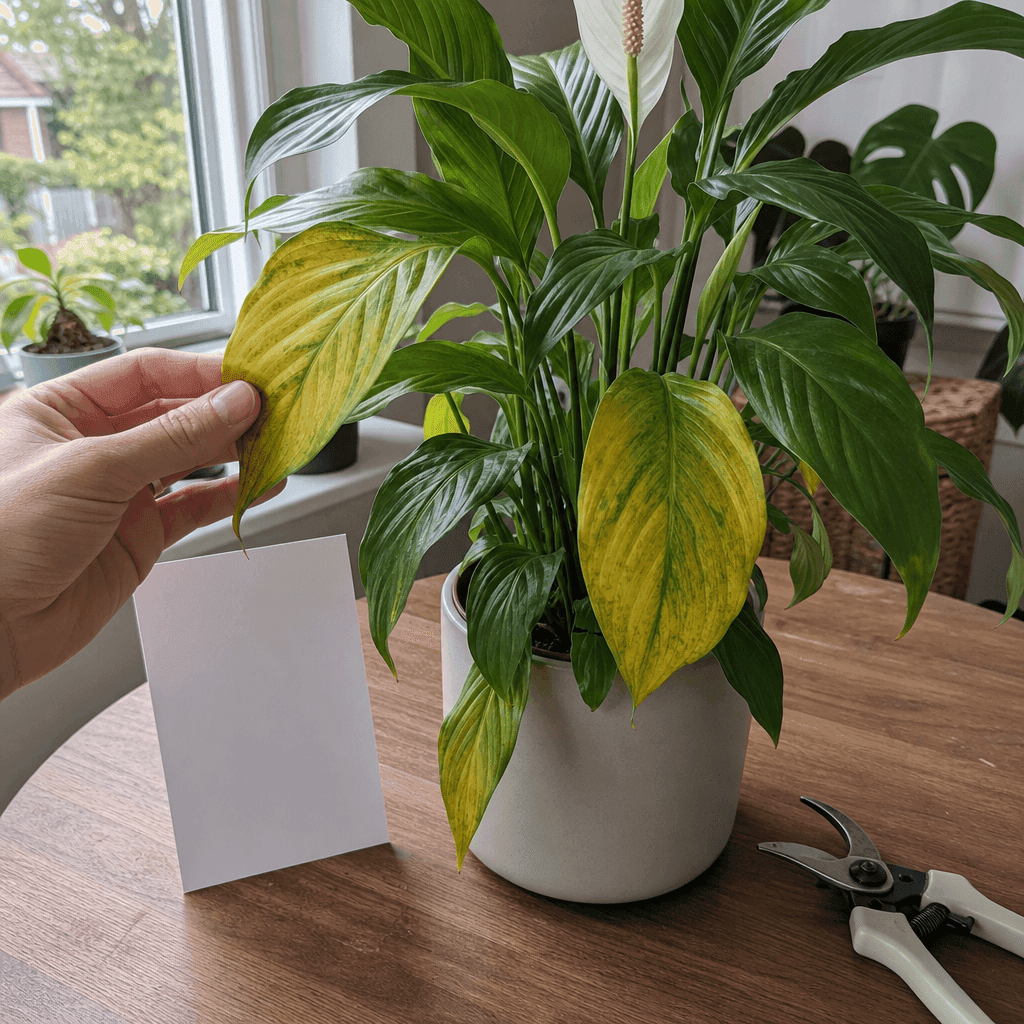
Work down these branches — the first one that matches is your answer.
What not to do
- Do not water on a rigid weekly schedule without checking compost.
- Do not leave the nursery pot sitting in water inside a decorative pot.
- Do not place a peace lily in direct hot sun to “dry it out”.
- Do not feed a plant with wet, rotting roots.
- Do not use baking soda as a general peace lily cure; it can alter the compost chemistry and add salts.
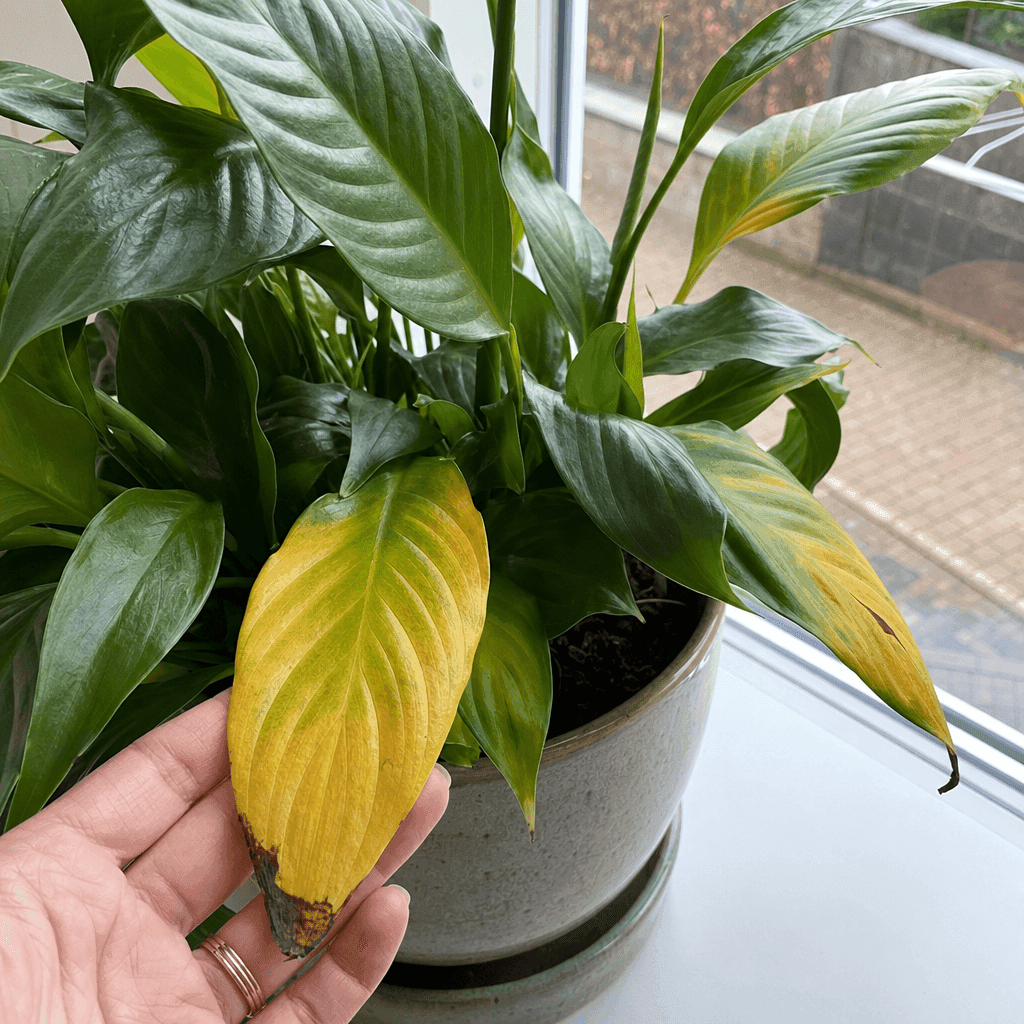
- Do not expect yellow leaves to turn green again.
Common questions
How do I fix yellow leaves on a peace lily?
Start by checking the compost. If it is wet and heavy, stop watering and improve drainage. If it is very dry, water thoroughly and let the pot drain. Then check light, pests, old leaves and feeding. Remove fully yellow leaves because they will not turn green again.
What does an overwatered peace lily look like?
An overwatered peace lily often has yellow, limp leaves and compost that stays wet for days. In worse cases, the plant wilts even though the soil is wet, and the pot may smell sour. That points to root damage or root rot.
Can a yellow peace lily leaf turn green again?
No. Once a leaf has lost enough chlorophyll to turn yellow, it will not return to healthy green. The useful goal is to correct the cause so new leaves grow green.
Should I remove yellow leaves from my peace lily?
Yes. Once a leaf is mostly or fully yellow, cut the stem at the base with clean scissors. Do not yank it from the crown. If many leaves are yellowing at once, diagnose the cause before removing too much foliage.
Are yellow leaves a sign my peace lily is dying?
Not usually. One or two yellow lower leaves are normal. Even water-stressed peace lilies often recover if roots are still healthy. For broader peace lily care and troubleshooting, watch for the serious warning signs: widespread yellowing, wilting in wet compost, mushy roots, a sour smell or fast-spreading pests.
Why are my peace lily leaves yellow and brown at the tips?
Yellow and brown tips can come from irregular watering, low humidity, hard tap water/mineral build-up, or fertiliser salts. Check for dry compost, white crust on the pot or compost, and whether the plant is near a radiator.
Why are my peace lily leaves turning yellow in winter?
In UK winter, peace lilies use less water because light levels are lower and growth slows. If you keep watering as often as in summer, compost can stay wet and roots can suffer, which is one of the most common reasons for yellow leaves on indoor plants in the colder months. Move the plant to bright indirect light and water less often, based on the compost check.
Will baking soda help my peace lily?
No, baking soda is not a recommended fix for yellow peace lily leaves. It can add salts and disturb the compost. Diagnose water, light, roots and pests instead.
Can I save a peace lily with root rot?
Sometimes. Remove it from the pot, cut away mushy roots, repot into fresh free-draining compost and water carefully. If most roots are rotten, recovery is less certain, but a plant with some firm roots and healthy crown tissue has a chance.