Quick diagnosis
Match the row to what you’re seeing, then jump to the fix.
| What you see | Likely cause | Confidence | How to confirm | What to do now | Urgency |
|---|---|---|---|---|---|
| Lush green leaves but no flower spathes for more than a year | Insufficient light | High | Plant is more than 1.5 m from a window, or in a north-facing room. | Move to a bright spot with indirect light; avoid direct summer sun. | Low–medium |
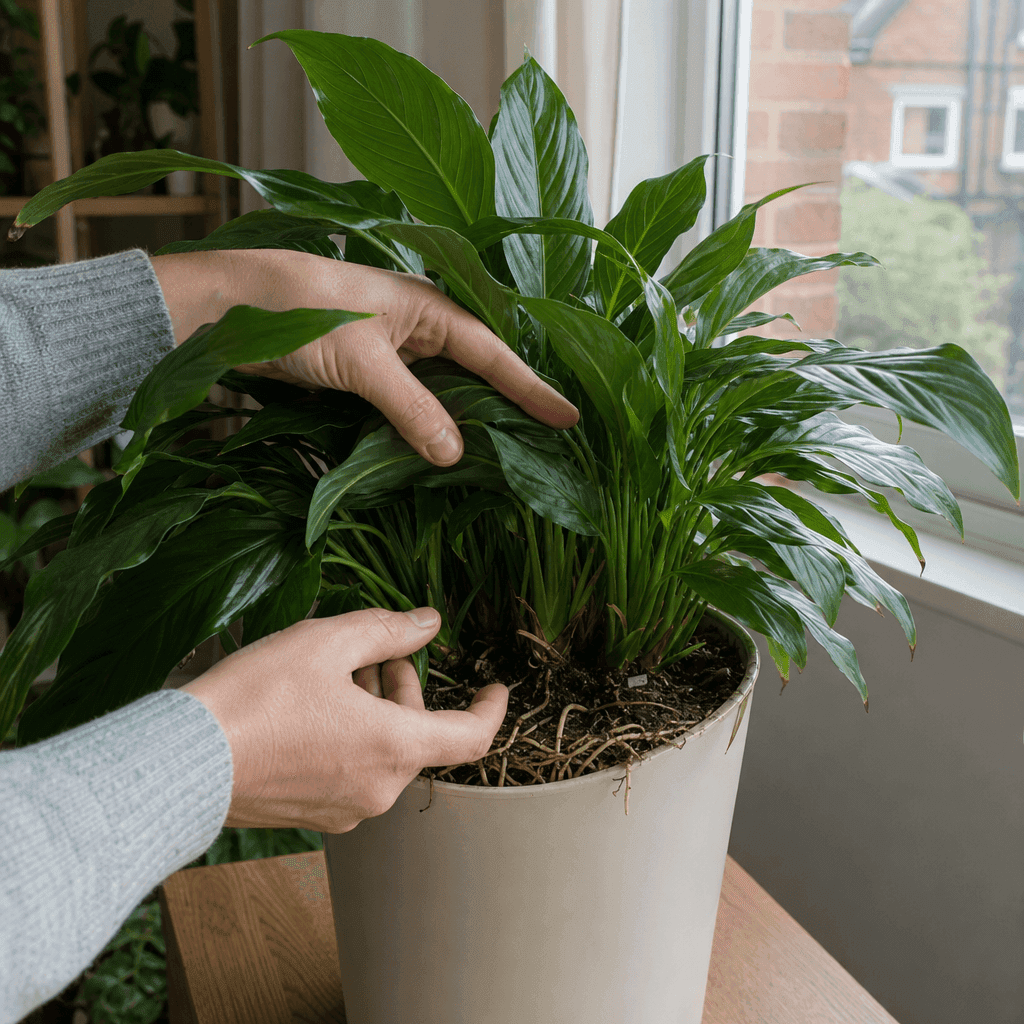
| Roots circling inside pot or emerging from drainage holes; compost dries rapidly | Pot-bound roots | High | Roots visible on the surface or forcing themselves out of the base. | Repot into a pot 2–3 cm larger using peat-free compost. | Medium |
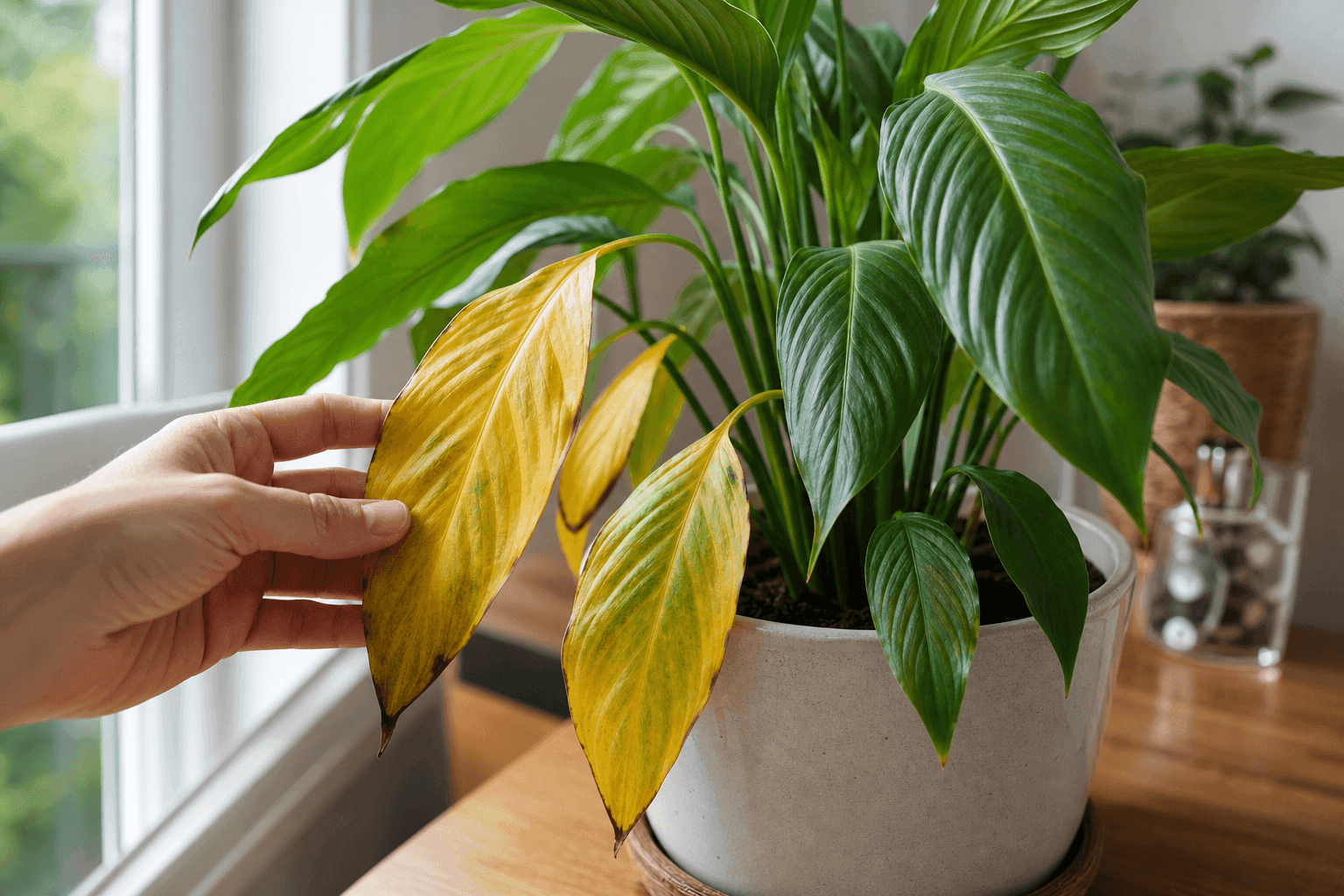
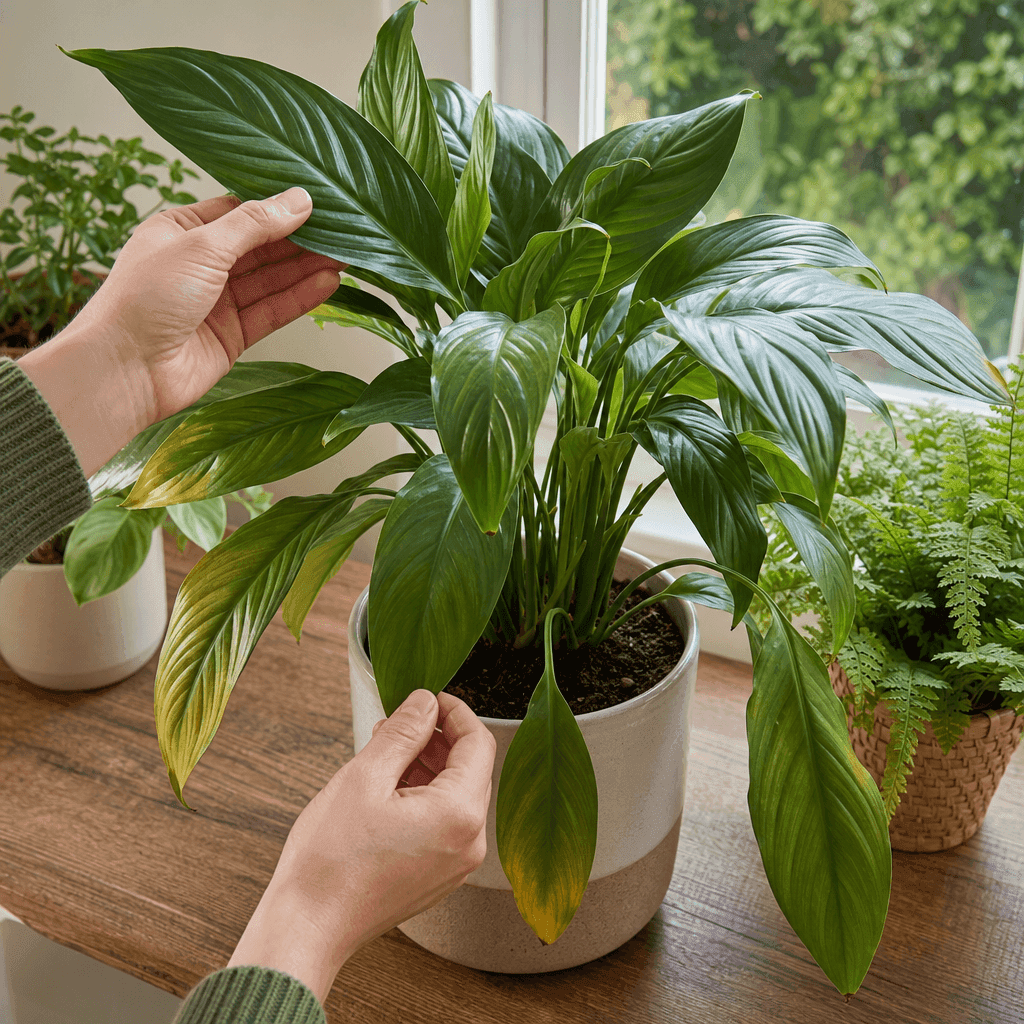
| Pale, yellowish leaves; white mineral deposits on pot or compost; no flowers | Hard water and nutrient lockout | High | In a hard water area; plant has not been repotted in 2+ years; white crust on compost. | Repot into fresh compost; switch to filtered or rainwater; use ericaceous liquid feed. | Low–medium |
| Leaves yellowing, plant looks limp; compost stays wet | Overwatering / root rot | High | Compost smells sour; roots are brown and mushy; pot has poor drainage. | Stop watering; improve drainage; repot if roots are rotted. | High |
| Slow or no growth in winter; no flowers despite adequate light | Low temperature or cold draughts | Medium | Plant is near a cold window or in a room below 15°C; winter position has changed. | Move to a warmer position; keep above 15°C; away from cold draughts. | Low–medium |
| Vigorous leafy growth but persistent failure to flower | Too much nitrogen fertiliser | Medium | Plant has been fed regularly with a high-nitrogen feed or general liquid fertiliser. | Switch to a feed with a higher phosphorus ratio in spring to encourage flowering. | Low |
| Newly purchased small plant; growing well but not flowering | Plant too young or recently purchased | Medium | Plant is small or was recently bought; commercial forcing treatments have worn off. | Provide optimal conditions and wait — young plants need 1–2 years to flower naturally. | Low |
The causes, in detail
Insufficient light
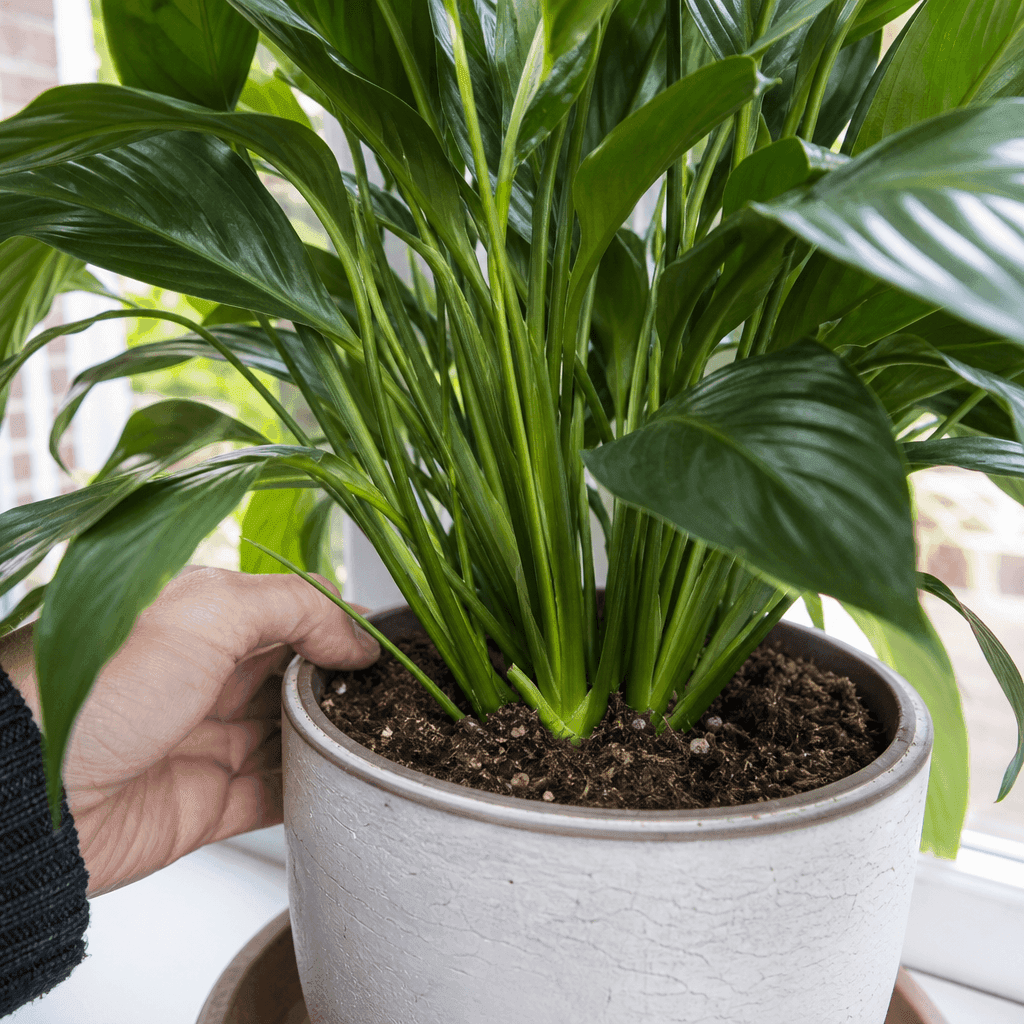
Most likelyPeace lilies can survive in quite shaded conditions but they require meaningful light to flower. The RHS growing guide confirms that in deeper shade, plants will survive but will rarely flower and will grow very slowly. Research and specialist growers suggest peace lilies need around 500–1,000 lux to produce their characteristic white spathes reliably — in a room more than 1.5–2 metres from a window, this is frequently not achievable, especially in UK winters. BBC Gardeners' World recommends a position in bright indirect light, such as near an east- or west-facing window, as the best compromise between flower production and leaf scorch avoidance.
- The plant is positioned more than 1.5 m from the nearest window.
- The room is north-facing or the window is blocked by trees, a fence or an adjacent building.
- The plant produces green leaves vigorously but has not flowered in more than 12 months.
- Move the plant to within 1 metre of a bright window with indirect light.
- An east- or west-facing windowsill is ideal in a UK home.
- A south-facing windowsill is acceptable in winter when the sun is low, but move the plant back slightly in summer to avoid scorching.
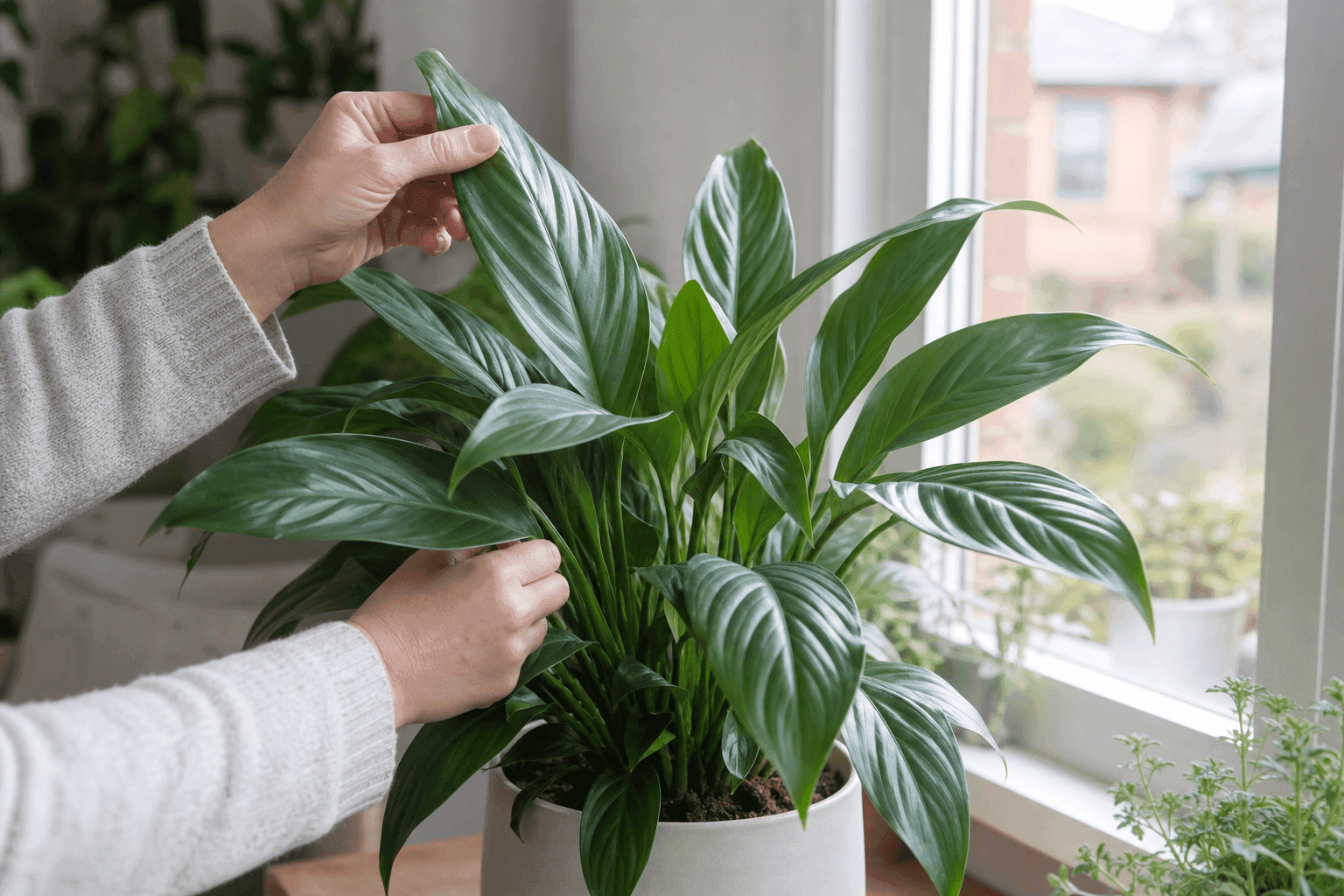
- Wipe dusty leaves clean with a damp cloth so they can absorb light effectively.
- Be patient — it may take several months of improved light before a new flower spike appears.
Stop it coming back:Leaves may look healthy even in poor light, but flowering requires a meaningful light source. Improving light is the single most reliable intervention for a non-flowering peace lily.
place the plant in direct summer sun — the thin leaves scorch easily, turning brown at the edges.
Pot-bound roots
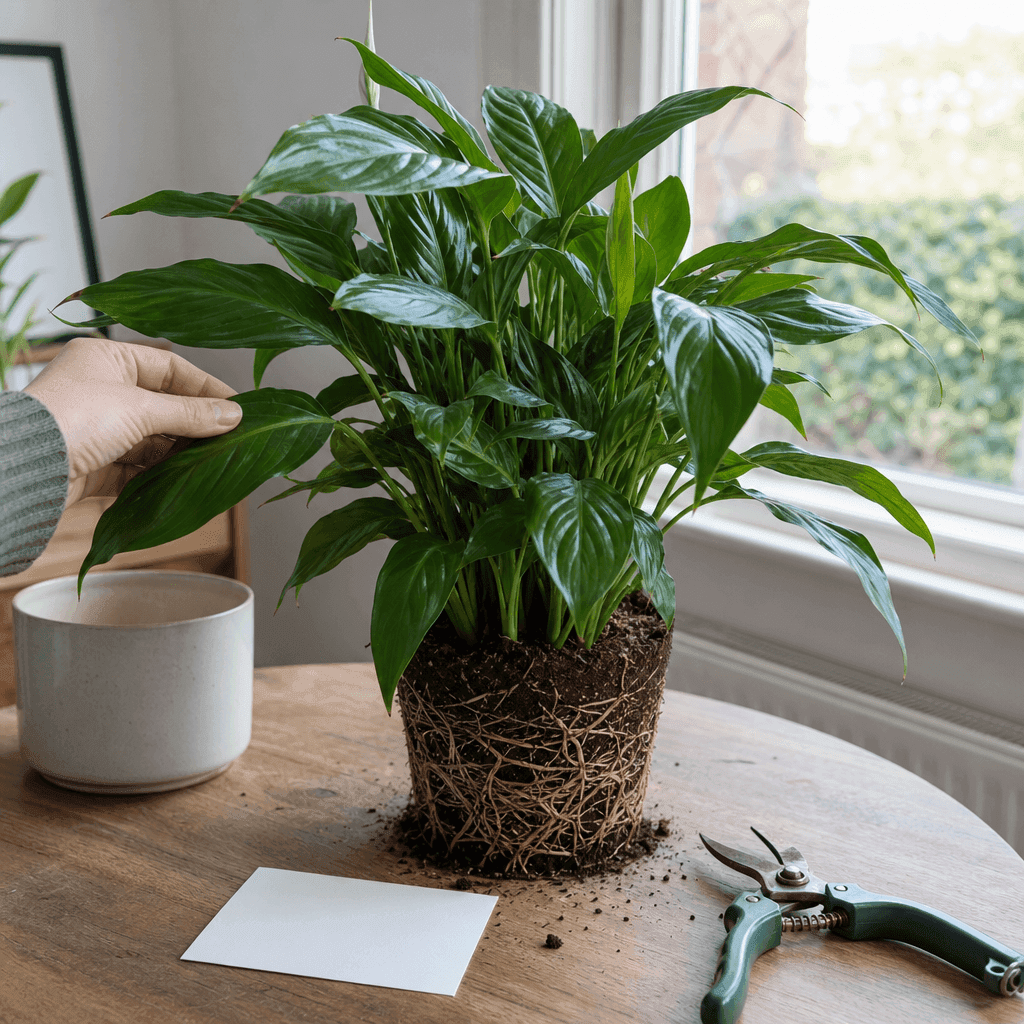
Most likelyA peace lily that has outgrown its pot becomes stressed in ways that suppress flowering. The roots have no room to grow, the compost dries out very quickly, and nutrient levels are depleted rapidly. Roots circle visibly inside the pot or push themselves out through the drainage holes. The RHS recommends repotting peace lilies when roots become densely packed and the compost dries out very quickly after watering. Going up only one or two pot sizes at a time prevents the excess compost from staying wet too long and causing root rot.
- Roots are visible on the compost surface or coming out of drainage holes.
- The compost dries out within 24–48 hours of watering.
- The plant is in the same pot it arrived in and has not been repotted in more than 2 years.
- Choose a clean pot 2–3 cm wider than the current one — not larger, or excess wet compost will stay damp and risk root rot.
- Use fresh peat-free multipurpose compost, ideally mixed with some perlite for drainage.
- Gently tease out circling roots before planting.
- Water thoroughly after repotting and place in bright indirect light.
- Avoid repotting in winter — spring is the best time.
pot up into a much larger container thinking it will save repotting again for longer — oversized pots stay wet too long and increase root rot risk.
Hard water and nutrient lockout
Most likelyOver 60% of England receives hard water rated above 200 mg/l calcium carbonate, with London, the south-east, East Anglia and the East Midlands particularly affected. The RHS notes that repeated use of hard tap water raises the pH of compost over time, which locks out iron and manganese — two nutrients essential for chlorophyll production and healthy leaf colour. In peace lilies, the result is progressively paler, yellowing peace lily leaves and a plant that gradually loses the vigour needed for flowering. A white crust on the surface of the compost or on the outside of a terracotta pot is a visible sign of mineral build-up.
- The plant lives in a hard water area — a white crust on the pot or compost surface is a clue.
- Leaves have become progressively paler or yellowish despite reasonable light and watering.
- The plant has not been repotted for more than 2 years.
- Repot into fresh peat-free compost to reset the pH and remove accumulated salts.
- Switch to collected rainwater or filtered tap water for routine watering.
- If flowering is the immediate goal, use a high-phosphorus liquid feed (look for 10-30-20 or similar) in early spring.
- An occasional flush with rainwater helps leach out accumulated mineral salts if repotting is not yet needed.
continue using hard tap water indefinitely without repotting — the gradual pH rise will lock out nutrients and suppress flowering regardless of other care.
Overwatering and root rot
Most likelyPeace lilies are frequently overwatered because they droop dramatically when thirsty, which prompts gardeners to water more often than needed. Persistently wet compost leads to root rot that needs prompt treatment, which damages the root system and prevents the plant from taking up water and nutrients — causing the leaves to yellow, the plant to stop growing and flowering to cease entirely. The first signs are often soggy, heavy compost that smells stale and browning lower leaves.
- The compost is wet and smells sour or musty.
- The pot has no drainage holes or sits in a full saucer.
- Roots are brown and soft rather than white and firm.
- Stop watering until the top 2–3 cm of compost has dried out.
- Ensure the pot has drainage holes and empty any saucer after watering.
- If root rot is advanced, repot into fresh compost after trimming dead roots cleanly.
- Water peace lilies only when the top layer of compost feels dry — roughly every 7–14 days in a warm UK home.
water again each time the plant droops — once root rot has set in, the leaves droop because the damaged roots cannot take up water, not because the plant is thirsty.
Low temperature and cold draughts
PossiblePeace lilies are tropical plants and are damaged by temperatures below around 12°C. In UK homes, cold draughts from poorly sealed windows, cold conservatories in winter, or positions near external doors can keep the plant too cold to flower. The RHS places the safe growing range at 12–24°C and specifically warns against cold draughts. Prolonged cold slows all growth and can cause existing leaves to yellow.
- The plant is in a cold room, near a draughty window, or in an unheated conservatory in winter.
- Leaves are yellowing slowly and growth has stalled, especially from October to March.
- The temperature in the plant's location drops below 15°C at night.
- Move the plant to a warmer position — a room consistently above 15°C.
- Keep away from draughts (draughty windows, air conditioning vents, exterior doors).
- In winter, move plants on windowsills away from the glass at night.
place peace lilies in an unheated conservatory or porch over winter — temperatures below 10°C will cause serious damage.
Too much nitrogen or wrong fertiliser
PossibleFeeding a peace lily with a high-nitrogen fertiliser — or with general-purpose liquid feed — encourages lush leaf growth at the expense of flowering. Nitrogen promotes vegetative growth; phosphorus promotes flowering. Specialist houseplant growers recommend switching to a feed with a higher middle number (phosphorus) in spring to encourage flowering. Jungle Houseplants (a UK-based retailer) recommends a 10-30-20 formula in March and April as an effective trigger.
- The plant has been fed with a general liquid feed or high-nitrogen fertiliser throughout the year.
- Growth is vigorous and leafy, but no flower spathes have appeared in 12 months.
- The plant is in a good position, well watered and recently repotted.
- Switch to a high-phosphorus liquid feed (middle number highest, e.g. 10-30-20) in early spring.
- Feed at half strength every 2 weeks from March to September.
- Do not feed in winter when growth slows.
- Return to a balanced feed once flowering resumes and the plant is well established.
overfeed at any time of year — peace lilies are sensitive to fertiliser burn, and too much feed can cause brown leaf tips and suppress flowering further.
Young plant or post-purchase adjustment
PossiblePeace lilies sold in garden centres and supermarkets are often treated with commercial hormones (gibberellins) that force them to flower at a young age for sale. Once these treatments wear off, the plant needs 1–2 years of good conditions — adequate light, warmth, correct watering — before it will flower naturally. Small plants bought in 7 cm or 9 cm pots are particularly unlikely to flower immediately.
- The plant is small or was recently purchased.
- It flowered well initially but has not flowered since.
- The plant is otherwise healthy with good leaf colour and steady growth.
- Provide optimal conditions: bright indirect light, temperatures above 15°C, and careful watering.
- Repot into a slightly larger pot if the roots are filling the current one.
- A brief exposure to slightly cooler night temperatures in autumn (around 15°C) can sometimes trigger flowering.
- Be patient — young plants often need a full growing season or two before flowering naturally.
assume the plant is defective or dying if it fails to flower quickly after purchase — post-forcing adjustment is entirely normal.
Still not sure?
Work down these branches — the first one that matches is your answer.
What not to do
- Keep the plant in a dark corner and expect flowers.
- Feed with high-nitrogen general fertiliser throughout the year.
- Water on a fixed schedule without checking the compost first.
- Use hard tap water indefinitely without repotting or flushing.
- Place the plant in a cold or draughty spot in winter.
Common questions
How do I get my peace lily to flower again?
Move it to a brighter spot with indirect light — this is the most effective single step. Check it is not pot-bound, repot if needed, switch to rainwater if you are in a hard water area, and use a high-phosphorus feed in early spring. A brief period of slightly cooler nights (around 15°C) in autumn can trigger flowering.
How much light does a peace lily need to flower?
Peace lilies need bright indirect light — around 500–1,000 lux — to flower consistently. The RHS confirms that in deeper shade they survive but rarely flower. An east- or west-facing windowsill in a UK home is usually the ideal position.
Why has my peace lily never flowered?
If it was purchased as a small plant, it may have been forced to flower with hormones and will need 1–2 years of good conditions before flowering naturally again. More likely, it is not getting enough light or is pot-bound. Move it closer to a window and check the roots, and review our wider peace lily care and problem guides to rule out other stress.
How often should I water a peace lily?
Water when the top 2–3 cm of compost feels dry — roughly every 7–14 days in a typical UK home. Peace lilies droop visibly when thirsty, which is a useful signal, but allowing them to droop repeatedly weakens the plant. In hard water areas, use rainwater or filtered water.
Can peace lilies grow in tap water areas of the UK?
They can, but in areas with very hard water the pH of the compost gradually rises, which locks out iron and manganese and causes leaves to pale and flowering to become erratic. Repotting every 2 years and using rainwater or filtered water largely prevents this.
When should I repot my peace lily?
Repot when roots are circling the pot, emerging from drainage holes, or the compost dries out within 24 hours of watering. Spring is the best time. Go up one or two pot sizes only — oversized pots stay wet too long and increase root rot risk.
Do peace lilies need fertiliser to flower?
Light feeding helps, but the wrong type of fertiliser can actually suppress flowering. Use a high-phosphorus liquid feed (the middle number on the NPK label) in spring and early summer. Avoid high-nitrogen feeds, which encourage leafy growth at the expense of flowers.