Quick diagnosis
Match the row to what you’re seeing, then jump to the fix.
| What you see | Likely cause | Confidence | How to confirm | What to do now | Urgency |
|---|---|---|---|---|---|
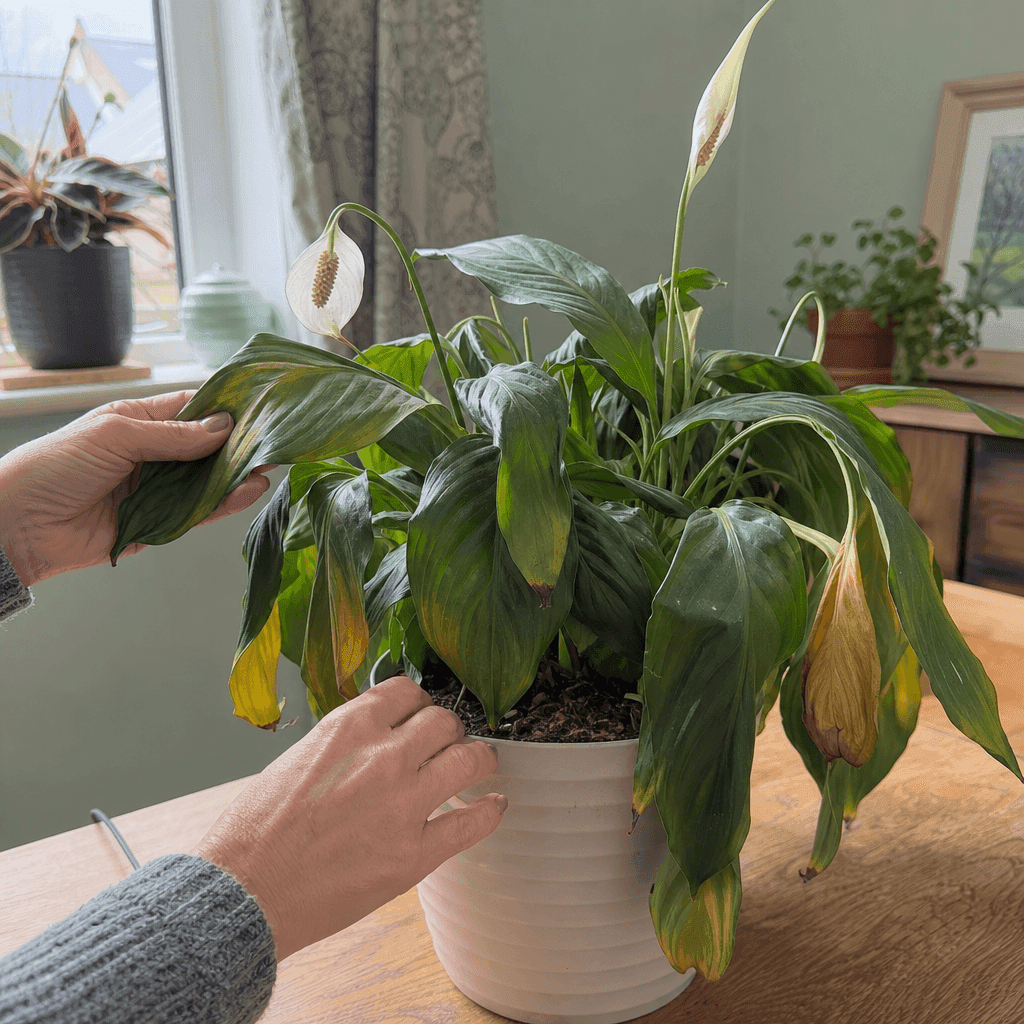
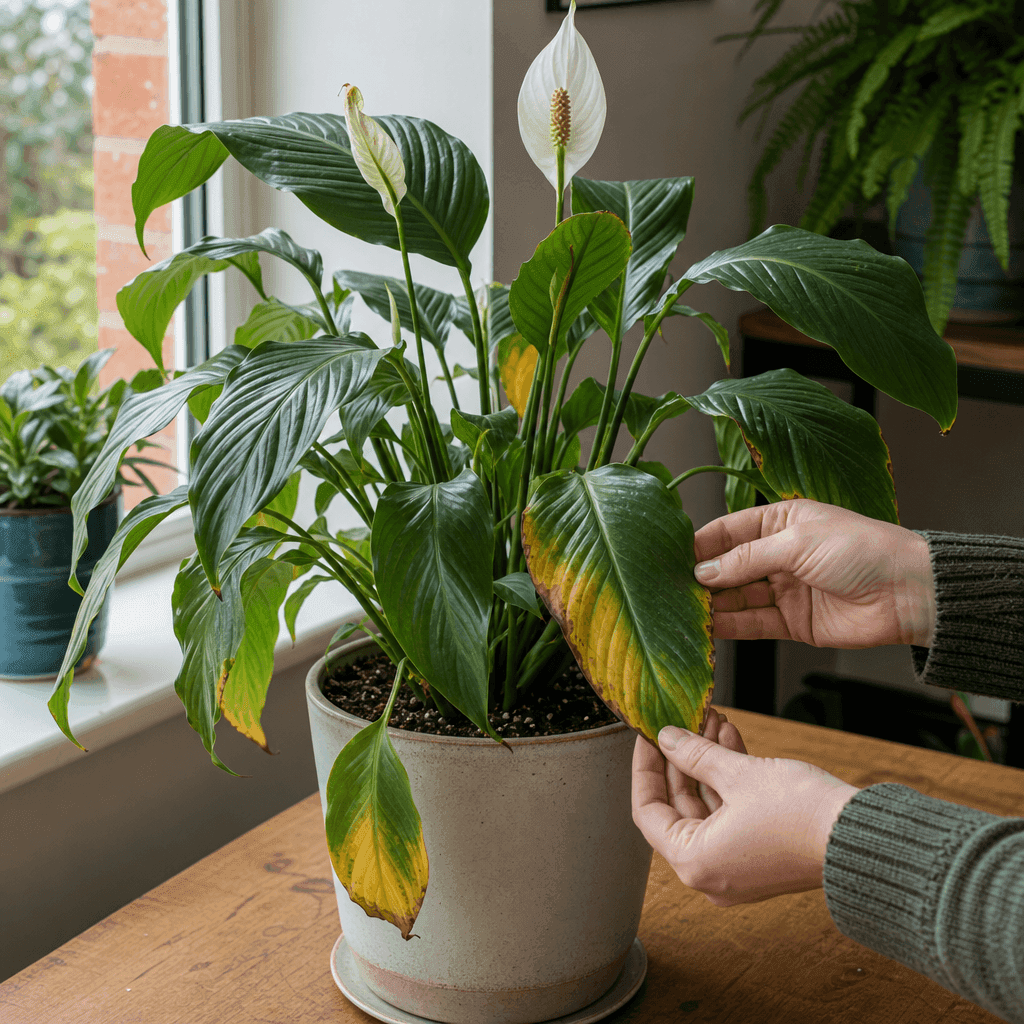
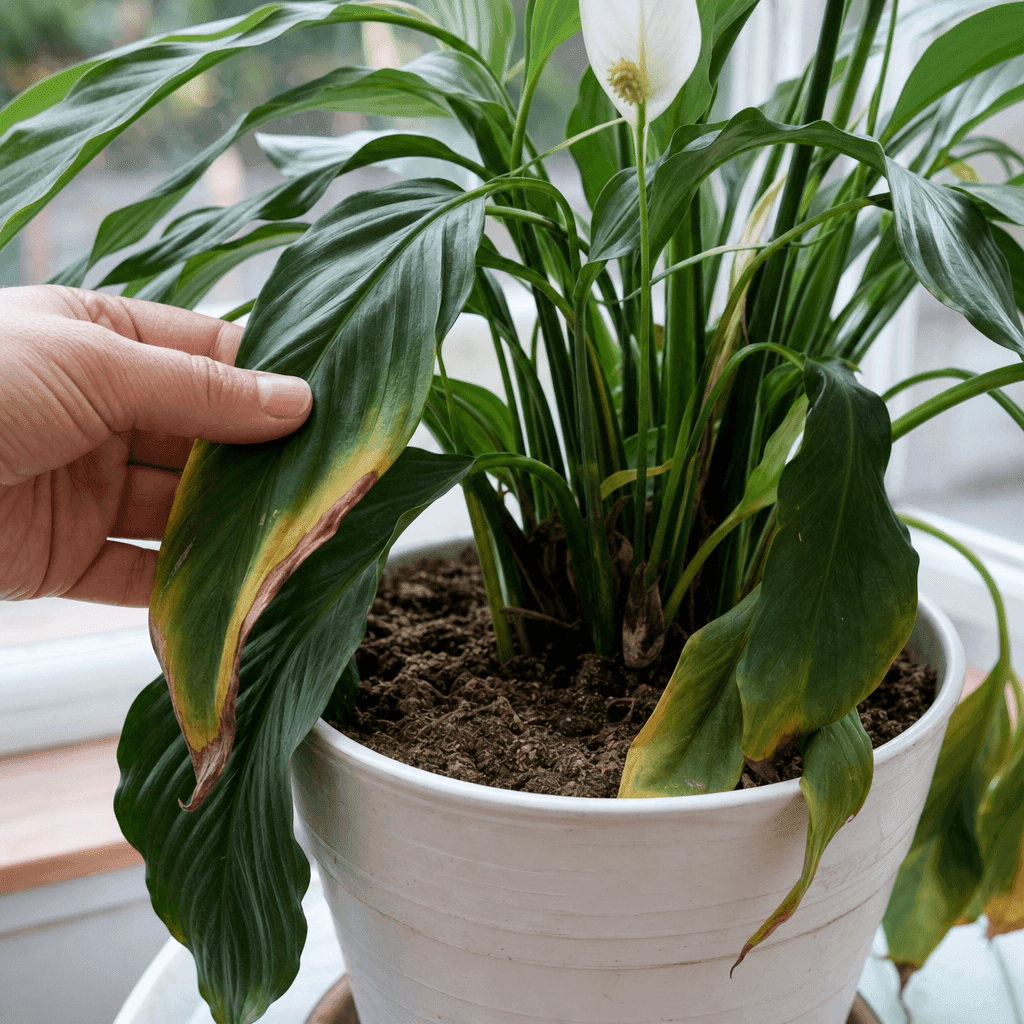
| Drooping or yellowing leaves with wet, heavy compost | Overwatering or waterlogged roots | High | Compost feels wet 7+ days after last watering; smell compost for sourness | Stop watering, check drainage, allow compost to partially dry | High |
| Whole plant drooping with dry, light, pulling-away compost | Drought stress — underwatering | High | Compost is dry 5 cm down; pot feels light; drooping recovers within hours of watering | Water thoroughly; the plant should recover within 2–4 hours if roots are healthy | High |
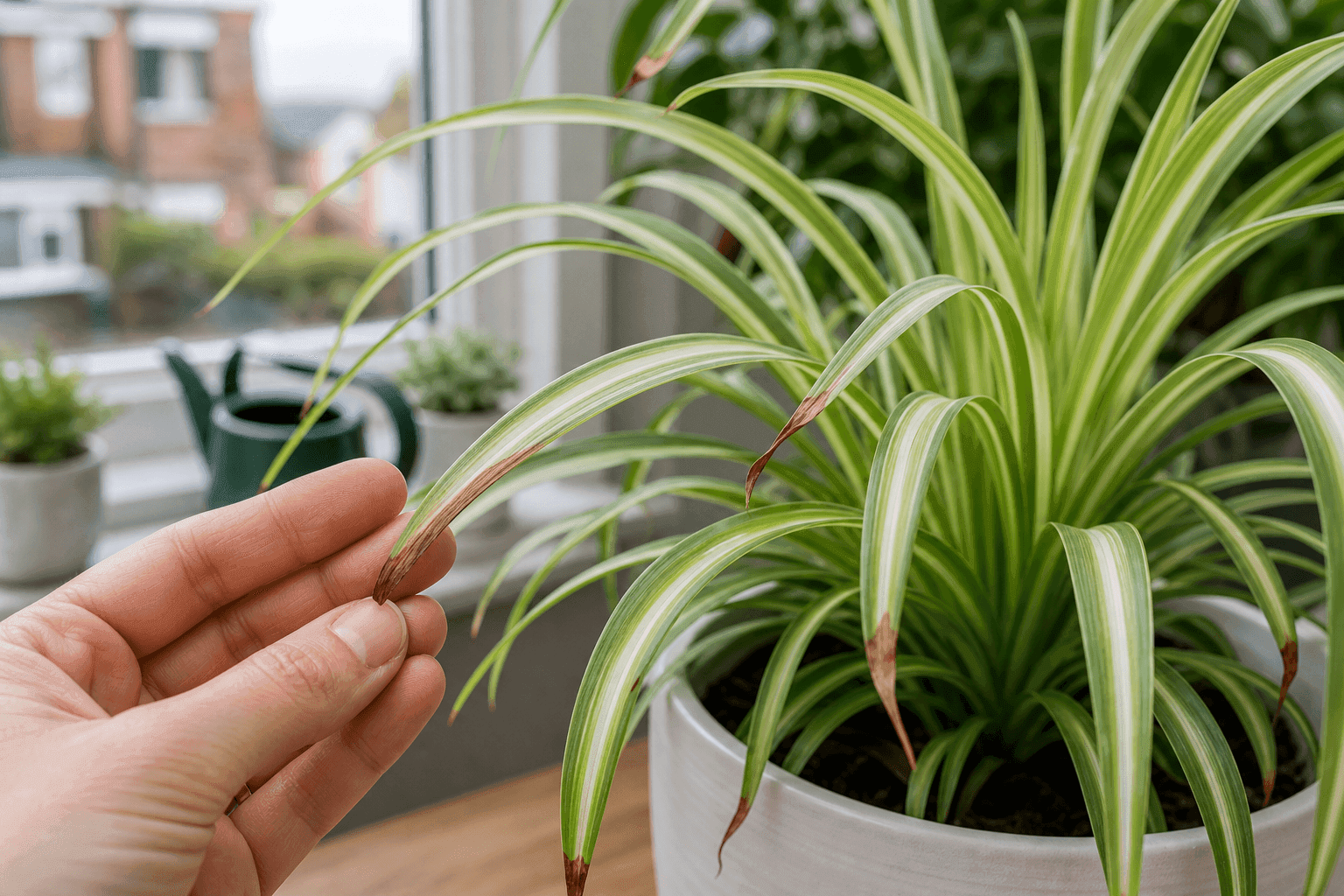
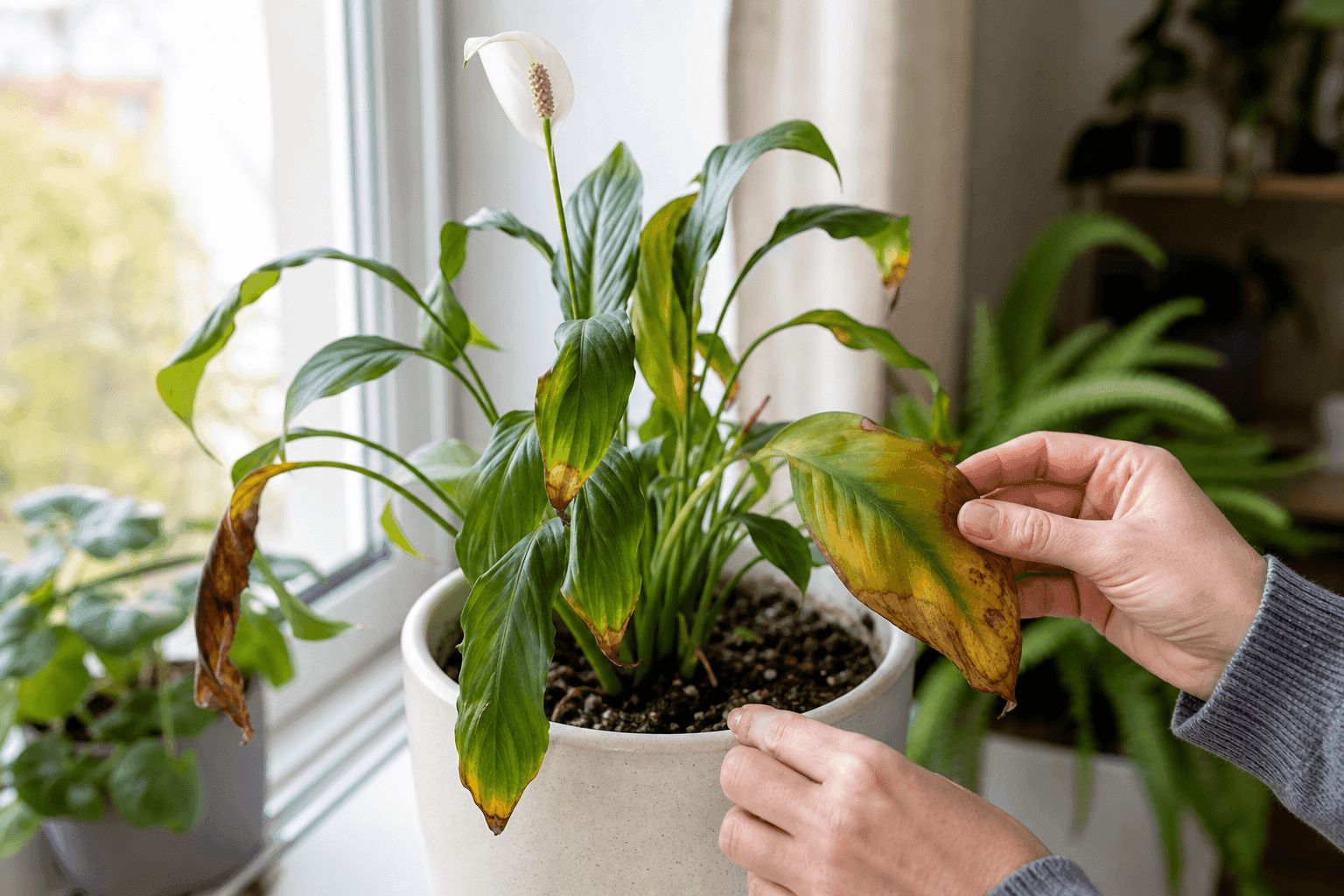
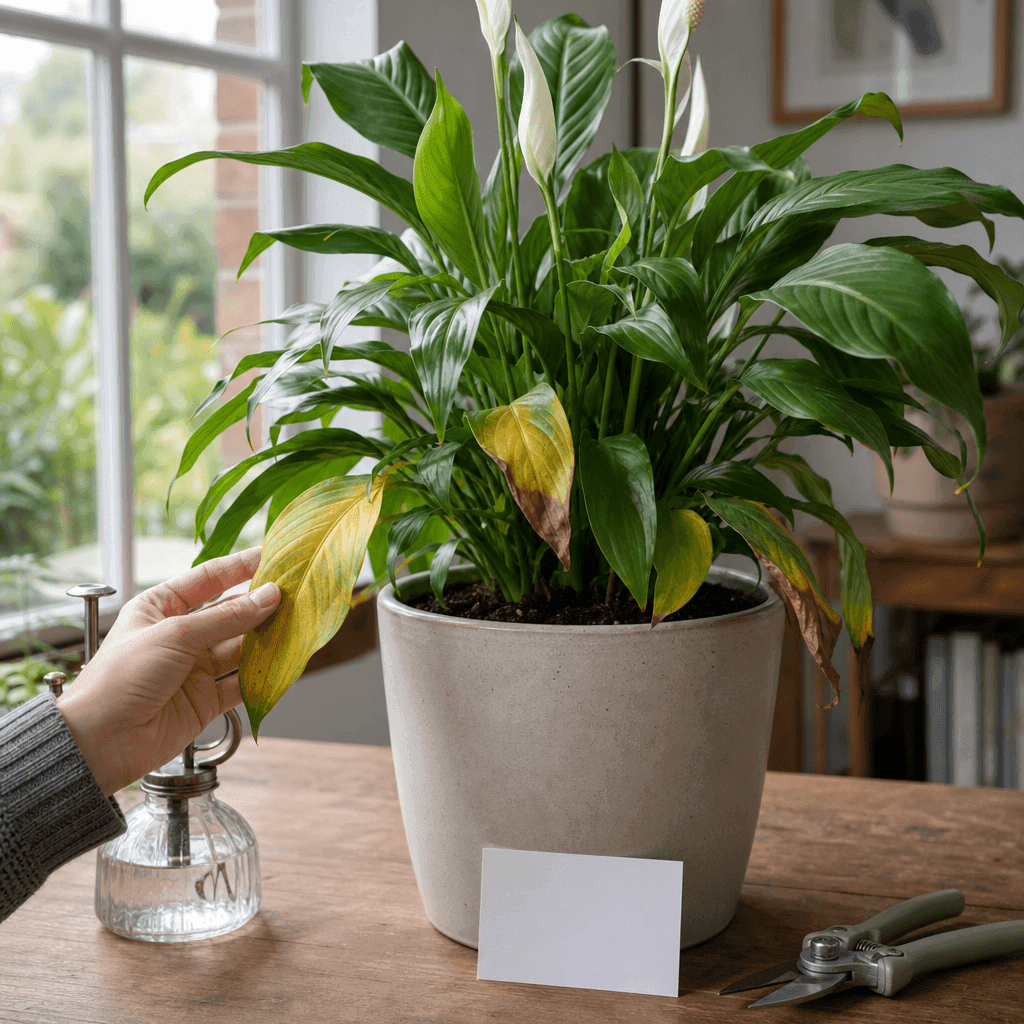
| Brown tips on leaf ends, crispy margins, otherwise healthy leaves | Low humidity — common in heated UK homes in winter | High | Central heating is on; tips are brown but the rest of the leaf is green; compost is moist | Mist regularly, use a pebble tray, move away from radiators | Low–medium |
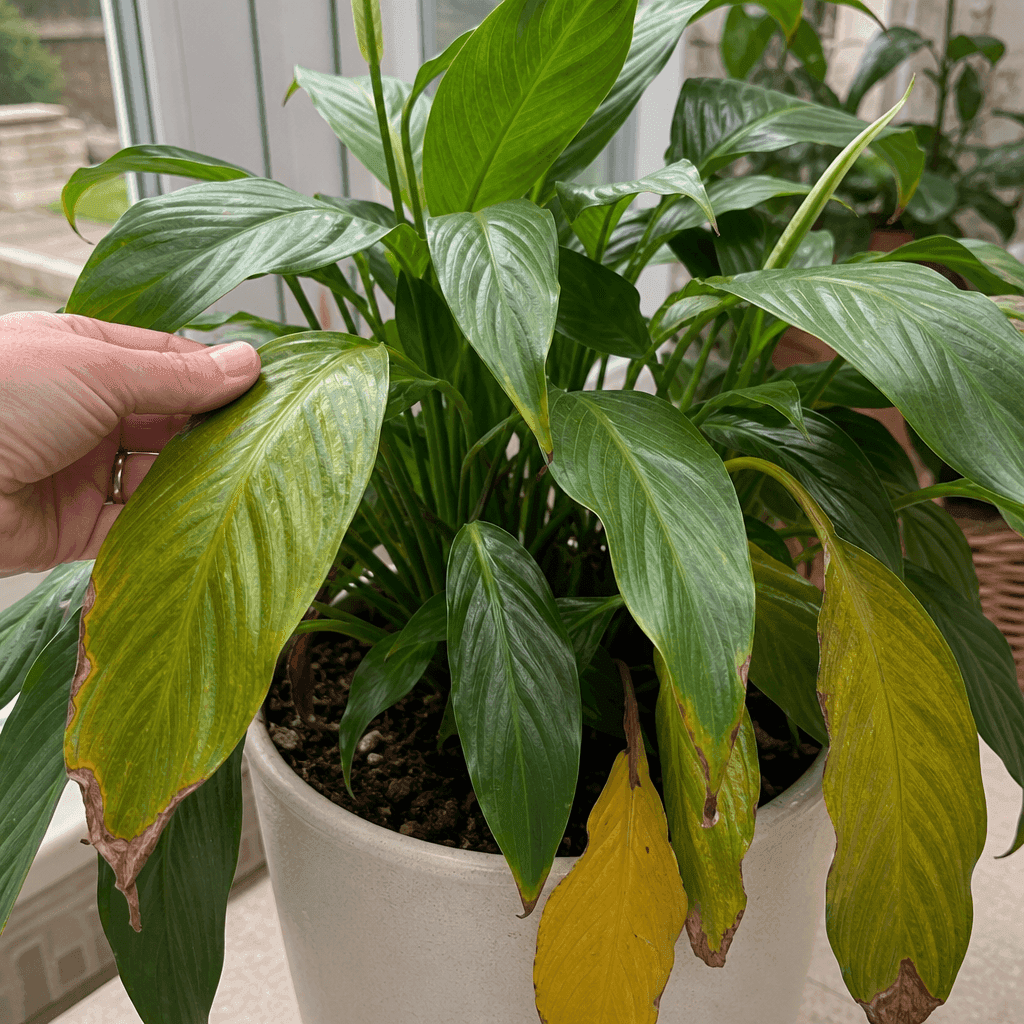
| Brown tips specifically on the ends of leaves; progresses gradually | Fluoride or chlorine in UK tap water | Medium | Tap water used consistently; hard water area; tips brown despite correct watering and humidity | Switch to rainwater or filtered water; flush compost with distilled water to leach built-up salts | Low |
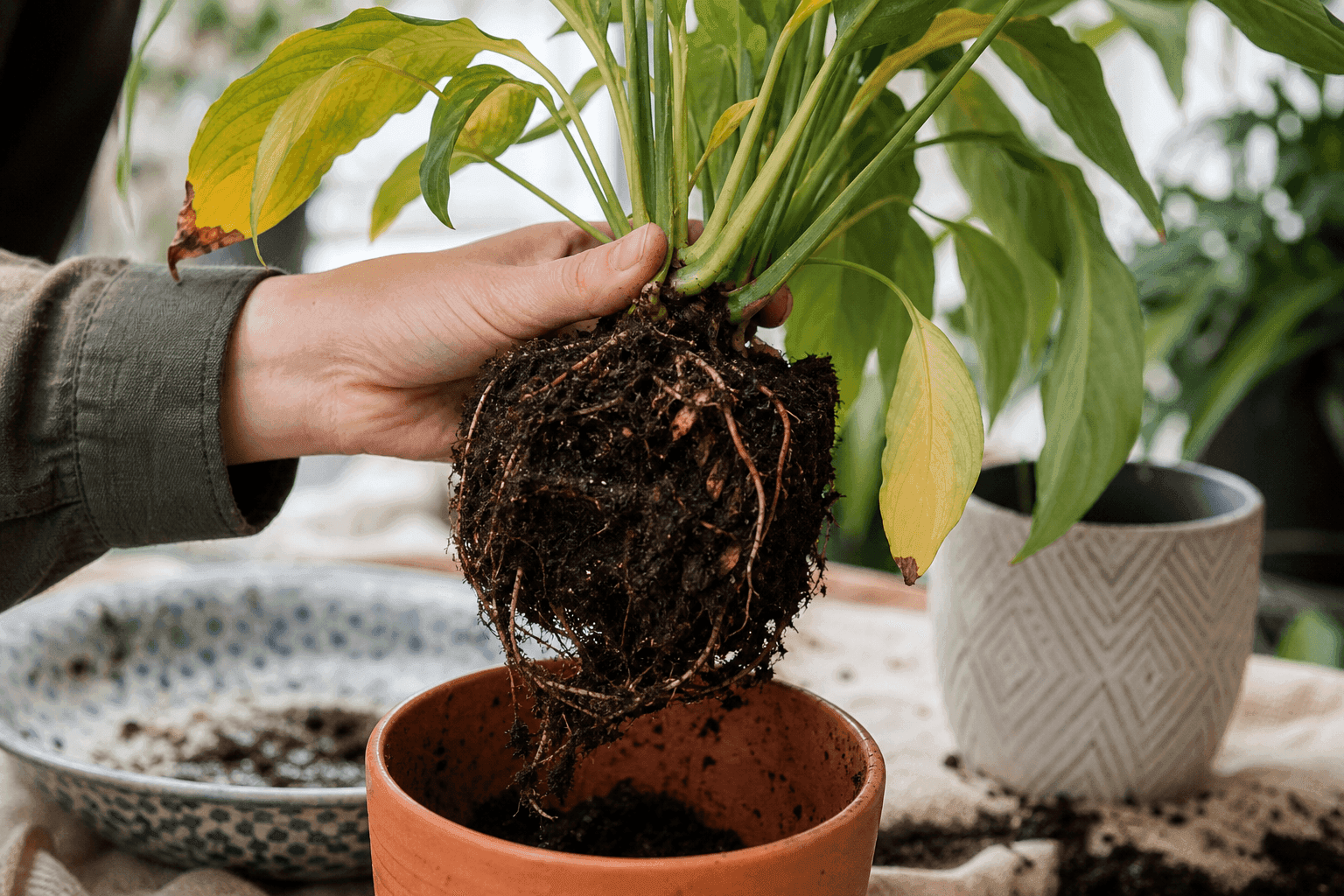
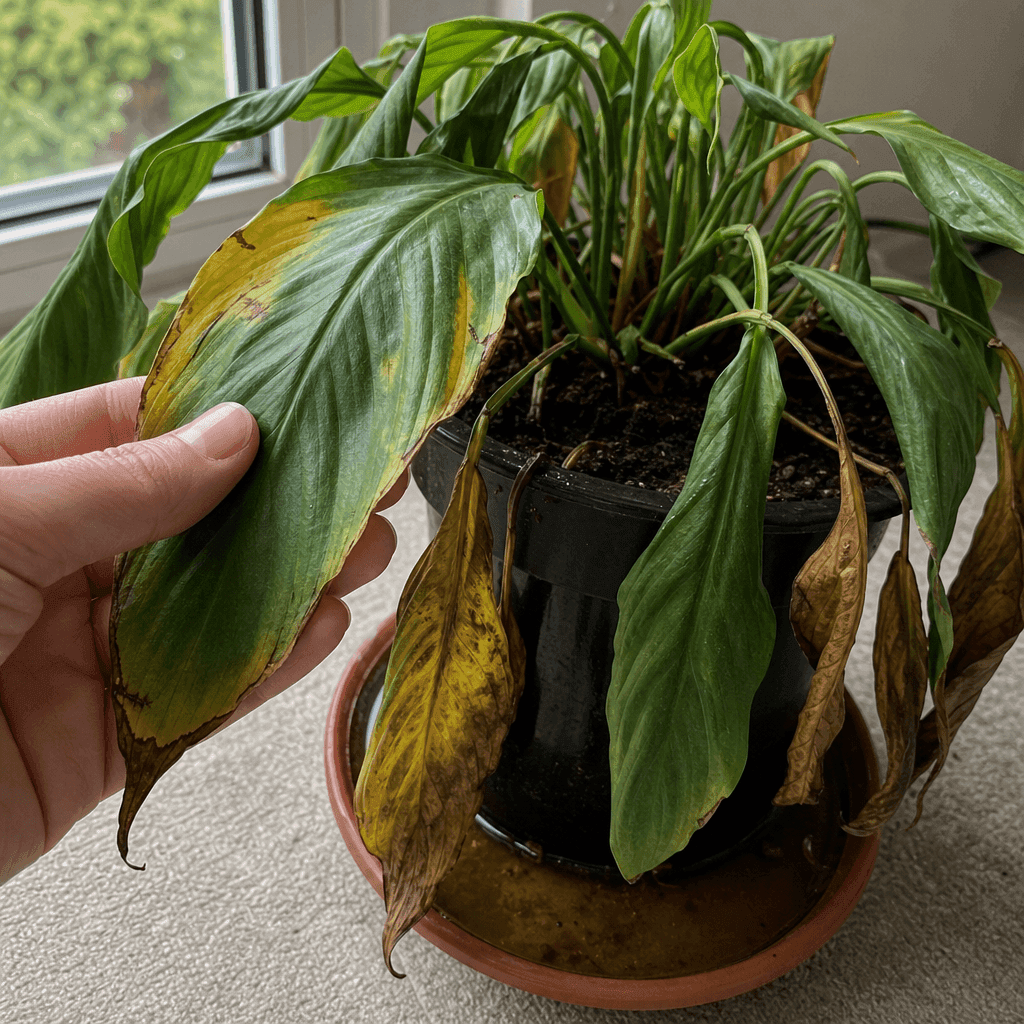
| Plant wilts, leaves yellow and then blacken, compost smells sour | Root rot from prolonged overwatering | Medium | Slide the plant from its pot: roots are brown or black and mushy rather than white and firm | Remove from pot, trim dead roots, repot in fresh well-draining compost | High |
| Leaf tips or margins turn brown; plant near a door, window or cold radiator | Cold draught or temperature fluctuation | Medium | Plant is near an exterior door, single-glazed window or cold corner; temperatures below 15°C at night | Move the plant to a stable warm position between 18–26°C away from cold draughts | Low–medium |
| Pale slow growth, wilting despite correct watering, roots circling pot base | Pot-bound roots restricting water and nutrient uptake | Medium | Roots visible at drainage holes or circling inside the pot; last repotted more than 2 years ago | Repot into a pot one size larger with fresh compost in spring | Low–medium |
The causes, in detail
Overwatering and waterlogging
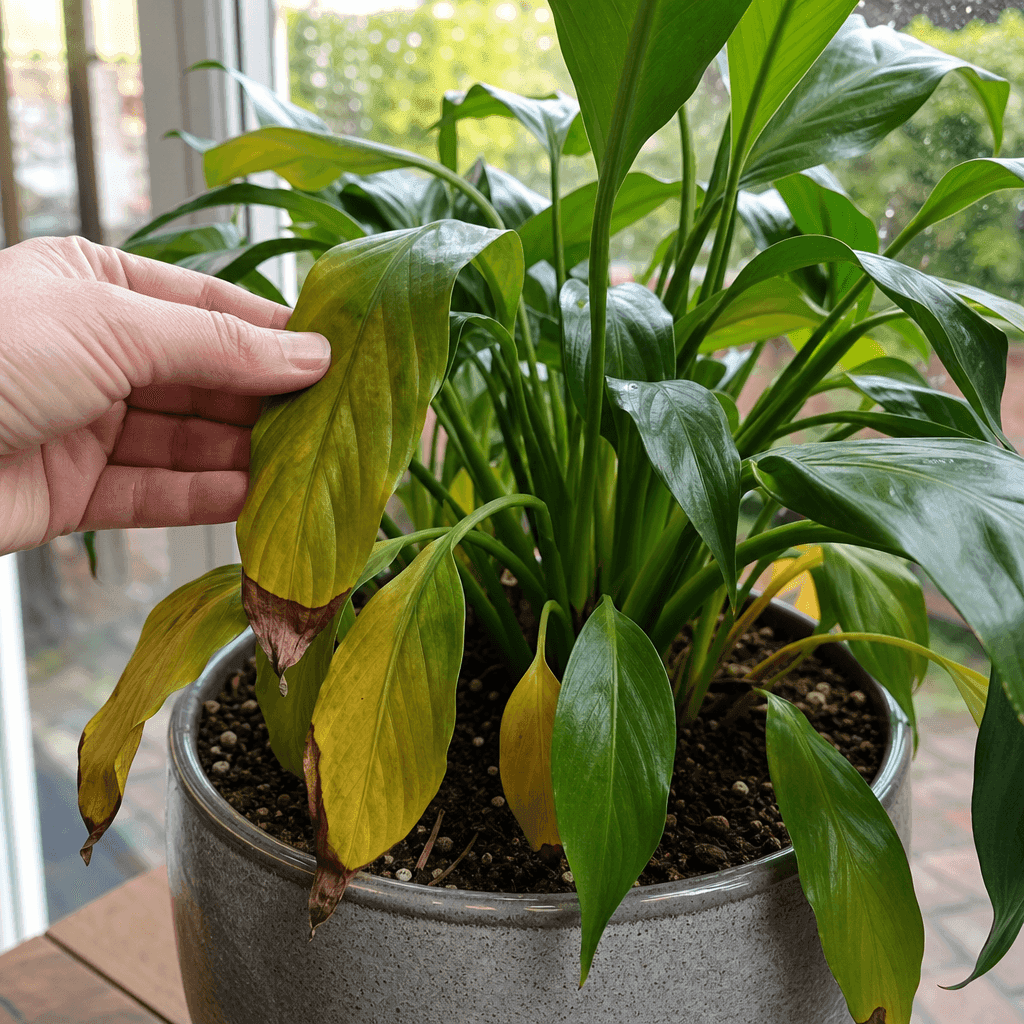
Most likelyOverwatering is the leading killer of peace lilies in UK homes. The peace lily droops when its roots are denied oxygen in waterlogged compost — exactly mimicking drought stress — and the natural instinct to add more water accelerates the decline. Signs of an overwatered peace lily include drooping despite wet compost, yellowing leaves, brown leaf edges, sour-smelling compost and eventually root rot. Happy Houseplants UK recommends watering only when the top 50% of the compost has dried out, and ensuring the pot drains freely after each watering.
- The compost feels wet or damp 7 or more days after the last watering.
- The pot is heavy.
- The plant droops or yellows despite wet compost.
- The compost or pot smells sour or musty.
- Stop watering immediately.
- Check the drainage holes — clear any blockages and raise the pot on feet if it has been sitting in standing water.
- Allow the compost to partially dry before assessing further.
- If the compost smells sour, slide the plant from its pot and inspect the roots.
- In future, water only when the top 5 cm of compost feels dry to touch.
Stop it coming back:Use the finger test rather than a fixed watering schedule. Peace lilies in winter need watering far less often than in the growing season — every 2–3 weeks may be sufficient.
assume drooping means the plant is dry — check the compost before watering. A drooping peace lily on wet compost is overwatered, not thirsty.
Drought stress — underwatering
Most likelyPeace lilies respond to drought dramatically and quickly — the whole plant droops and the leaves lose their glossy firmness. This is the plant's signalling system working correctly. Unlike overwatering, drought wilt recovers reliably and quickly: give a thorough watering until water runs from the drainage holes and the plant should recover within 2–4 hours. The peace lily's sensitivity to drought makes it a useful visual indicator, but it should not be left to this state regularly, as repeated wilting stresses the root system over time.
- The compost is dry 5 cm down and the pot feels light.
- The plant has drooped suddenly after a period of no watering or very hot weather.
- After watering, the plant recovers within 2–4 hours.
- Water thoroughly, slowly pouring water until it flows freely from the drainage holes.
- Allow excess to drain and empty the saucer after 30 minutes.
- If the compost has dried so much it is pulling away from the pot sides, partially submerge the pot in a bowl of water for 20–30 minutes to allow it to rehydrate evenly.
- Increase watering frequency slightly in summer or if the plant is near a heat source.
Stop it coming back:While the peace lily is a reliable self-signaller, repeated drought cycles stress roots and reduce the plant's resilience. Check compost moisture every 3–4 days in summer.
leave peace lilies wilting for extended periods as a regular management technique — frequent severe drought weakens roots and makes the plant more susceptible to disease.
Low humidity — central heating and winter air
Most likelyPeace lilies are tropical plants that prefer 50–70% relative humidity. Central heating in the UK typically reduces indoor humidity to 30–40% in winter, and the peace lily responds with brown or crispy leaf tips and margins. Houseplant.co.uk confirms this as one of the most common causes of peace lily leaf tip browning in UK homes. The brown tips are cosmetic once the humidity improves — existing damage will not reverse but new growth will be clean.
- Central heating is running and the room feels dry.
- Brown tips appear on otherwise healthy-looking green leaves.
- The compost is correctly moist — this is not a watering issue.
- The plant is near a radiator or in a room with very low airflow.
- Move the plant away from direct heat sources — radiators, underfloor heating vents and south-facing windowsills in winter.
- Place the pot on a tray of damp pebbles — as the water evaporates it raises local humidity around the plant.
- Group peace lilies and other humidity-loving houseplants together to create a microclimate.
- Mist the leaves gently with a fine mister in the morning — avoid misting in the evening in cool rooms.
- Use a room humidifier in the growing area if humidity is consistently very low.
Stop it coming back:Bathrooms and kitchens often have naturally higher humidity and can be good locations for peace lilies provided they also receive adequate indirect light. See our full peace lily care and problem guide for more on getting light, watering and humidity working together.
mist peace lily leaves in the evening in cool conditions — water sitting on leaves overnight in a cool room can encourage fungal leaf spotting.
Fluoride and chlorine in UK tap water
PossiblePeace lilies are sensitive to the fluoride added to many UK water supplies and to the chlorine used in water treatment. Over time, these minerals accumulate in the compost and in leaf tissue, migrating to the leaf tips where they cause progressive browning. Greenka UK and Peace Lily care guides confirm this is a recognised cause of brown tips in peace lilies watered exclusively with hard tap water. The damage is gradual and cumulative — it becomes more obvious over months of tap water use.
- Tap water has been used consistently and the area has hard or fluoridated water.
- Brown tips have developed slowly and progressively, not suddenly.
- Compost moisture and humidity are both adequate.
- If you rub a brown tip, it is dry and papery rather than soft and slimy.
- Switch to rainwater collected from a water butt as the main watering source.
- Alternatively, use filtered or distilled water.
- Flush the compost by slowly pouring several containers of distilled water or rainwater through the pot to leach accumulated fluoride and chlorine salts.
- Trim the brown tips with clean scissors, cutting at an angle to maintain the natural leaf shape.
- If you must use tap water, allow it to stand in an open container overnight before use — chlorine will partially off-gas, though fluoride will not.
Stop it coming back:Use rainwater or filtered water from the start. In hard water areas, flushing the compost every few months with rainwater removes salt build-up before it reaches damaging levels.
assume all brown tips on a peace lily are caused by tap water — check humidity and watering frequency first as they are more commonly the cause.
Root rot from prolonged overwatering
PossibleWhen overwatering continues unchecked, fungal pathogens destroy the root system. The peace lily declines rapidly — leaves yellow, then turn black, the plant collapses and cannot be revived by watering. Gardenine notes that root rot in peace lilies is caused by overwatering or poorly draining soil, and that repotting in fresh soil after trimming the dead roots gives the best chance of survival. Some sources suggest treating with a dilute fungicide at this stage, though this is not essential if all dead tissue is removed cleanly.
- Slide the plant from its pot — roots that are healthy are white or cream; rotting roots are brown, black or slimy.
- The compost smells sour or musty.
- The plant continues to decline despite stopping watering.
- Yellowing has progressed upward and leaves are going black.
- Remove the plant from its pot immediately.
- Rinse roots gently under lukewarm water to expose healthy from dead tissue.
- Using sterilised scissors, trim all brown or black mushy roots back to clean white tissue.
- Repot into fresh, well-draining compost in a clean pot with drainage holes.
- Do not water for 3–5 days after repotting, then water very sparingly while roots re-establish.
Stop it coming back:A peace lily with healthy roots and even a partial crown intact can often recover from root rot. The sooner it is treated, the higher the chance of success.
repot into the same old compost after trimming roots — the fungal pathogens that caused the rot will still be present in the old compost.
Cold draughts and temperature fluctuation
PossiblePeace lilies prefer stable temperatures between 18–26°C and suffer when exposed to cold draughts near exterior doors, single-glazed windows or cold spots in a room. Cold air causes brown tips and margins, leaf curling, and eventually a general decline if the plant is chronically cold. In the UK, peace lilies placed near exterior doors on a windowsill between October and April often show cold draught damage. The plant is not frost-hardy and should not be below 10°C.
- The plant is positioned near an exterior door, single-glazed window, or unheated porch.
- Brown tips or margins developed or worsened in autumn and winter.
- Touching the glass of the nearest window — if it is cold to the touch, the plant is in a cold spot.
- Overnight temperatures in the room drop below 15°C.
- Move the plant to a stable warm position where temperatures stay between 18–26°C.
- Keep it at least 30–50 cm from exterior doors and cold single-glazed windows.
- Close curtains at night to reduce cold air seeping through windows in winter.
- Trim any brown tips with clean scissors cut at an angle.
place peace lilies on a cold windowsill in winter — even if it seems bright and light, the cold radiating from the glass can damage leaves and roots significantly.
Pot-bound roots restricting growth
PossibleA peace lily left in the same small pot for more than two years may become root-bound — the roots circle the inside of the pot and exhaust the compost's nutrient and water-holding capacity. The plant wilts more quickly after watering, growth slows and becomes pale, and roots may be visible emerging from drainage holes. Repotting into a pot one size larger with fresh compost in spring usually prompts a rapid recovery.
- The plant has been in the same pot for two years or more.
- Roots are visible at the drainage holes or circling visibly inside the pot.
- The plant wilts very quickly after watering even though the compost drains well.
- Growth has slowed significantly and new leaves are small and pale.
- Repot in spring — choose a pot only one size (2–3 cm diameter) larger than the current pot.
- Too large a pot holds excess moisture and increases overwatering risk, so do not overpot.
- Use fresh peat-free houseplant compost.
- Water in well after repotting, then allow to partially dry before the next watering.
Stop it coming back:Peace lilies do not mind being slightly pot-bound and will flower reliably in a slightly snug pot. Repot every 2–3 years rather than annually.
repot into a pot much larger than the current one — this creates a large volume of wet compost around small roots, increasing the risk of waterlogging and root rot.
Still not sure?
Work down these branches — the first one that matches is your answer.
What not to do
- Water more when the plant droops without first checking whether the compost is wet or dry.
- Leave the pot sitting in a saucer of standing water — this keeps roots permanently waterlogged.
- Use tap water exclusively in a hard water area without occasionally flushing with rainwater.
- Place the plant on a cold windowsill in winter — cold glass conducts a chill that damages roots and leaves.
- Repot into a pot much larger than the current one — excess compost holds too much water and increases root rot risk.
Common questions
Why is my peace lily drooping even though the soil is wet?
This is the classic sign of overwatering or root rot. Roots starved of oxygen in waterlogged compost cannot take up water, so the plant droops despite wet soil. Stop watering, check drainage, and inspect roots — if they are brown and mushy, the plant needs repotting.
Can a peace lily recover from overwatering?
Yes, if treated promptly. Stop watering, improve drainage and allow compost to partially dry. If roots are already rotting, remove the plant from its pot, trim dead roots to white healthy tissue, and repot in fresh compost. A plant with some surviving healthy roots can recover within a few weeks.
Why does my peace lily have brown tips?
The most common causes in UK homes are low humidity from central heating, fluoride or chlorine in tap water, cold draughts, or inconsistent watering. Check all four factors. Our dedicated guide to why peace lily leaves develop brown tips walks through each cause in turn. Brown tips are cosmetic once corrected — new growth will be clean. Trim tips at an angle with clean scissors if they are unsightly.
How often should I water a peace lily in the UK?
There is no fixed schedule — it depends on the season and the room temperature. In summer, every 7–10 days; in winter with central heating off or in a cool room, every 2–3 weeks. Always use the finger test — water only when the top 5 cm of compost feels dry.
Should I mist my peace lily?
Yes, regular misting helps boost local humidity, especially in winter when central heating dries the air. Mist in the morning so leaves can dry through the day. Alternatively, stand the pot on a pebble tray filled with water, which raises humidity through natural evaporation without wetting the compost.
Why is my peace lily not flowering?
Peace lilies flower in spring and sometimes again in autumn when they are growing in bright indirect light and consistent conditions. The most common reasons for no flowers are too little light, overwatering, or being kept in low temperatures — our guide to why a peace lily is not flowering covers each one. Try moving to a brighter spot and applying a dilute balanced feed in early spring.
Is tap water harmful to peace lilies in the UK?
Tap water in hard water areas and fluoridated areas can cause gradual brown tipping. The chlorine in tap water is less of a concern if you let the water stand overnight. Rainwater collected from a clean water butt is the ideal watering source and will prevent mineral build-up in the compost.
How do I revive a dying peace lily?
First check whether the compost is wet or dry. If dry, water thoroughly. If wet with a sour smell, the plant needs repotting with root inspection. If leaves are brown-tipped but otherwise healthy, address humidity and switch to rainwater. Most peace lilies respond quickly once the correct cause is treated.