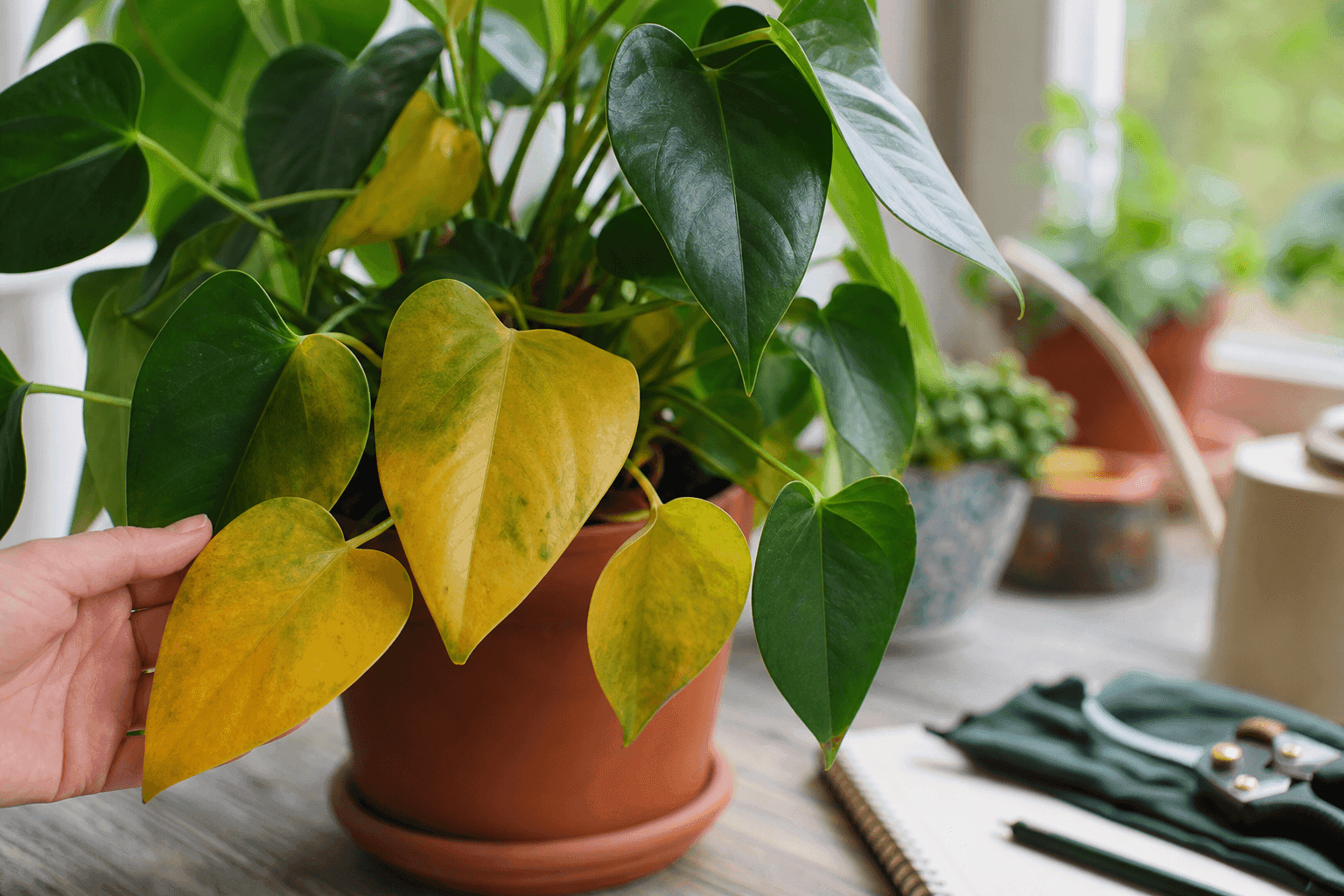
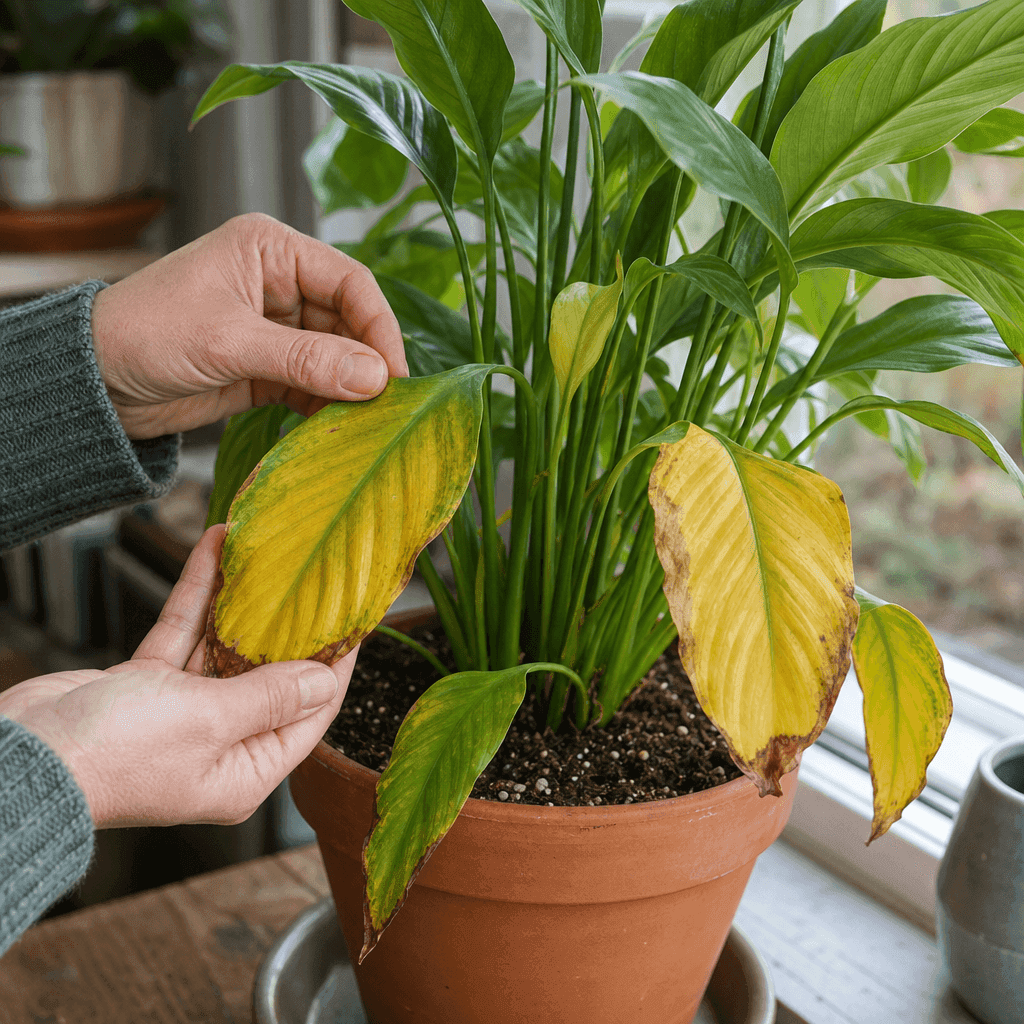
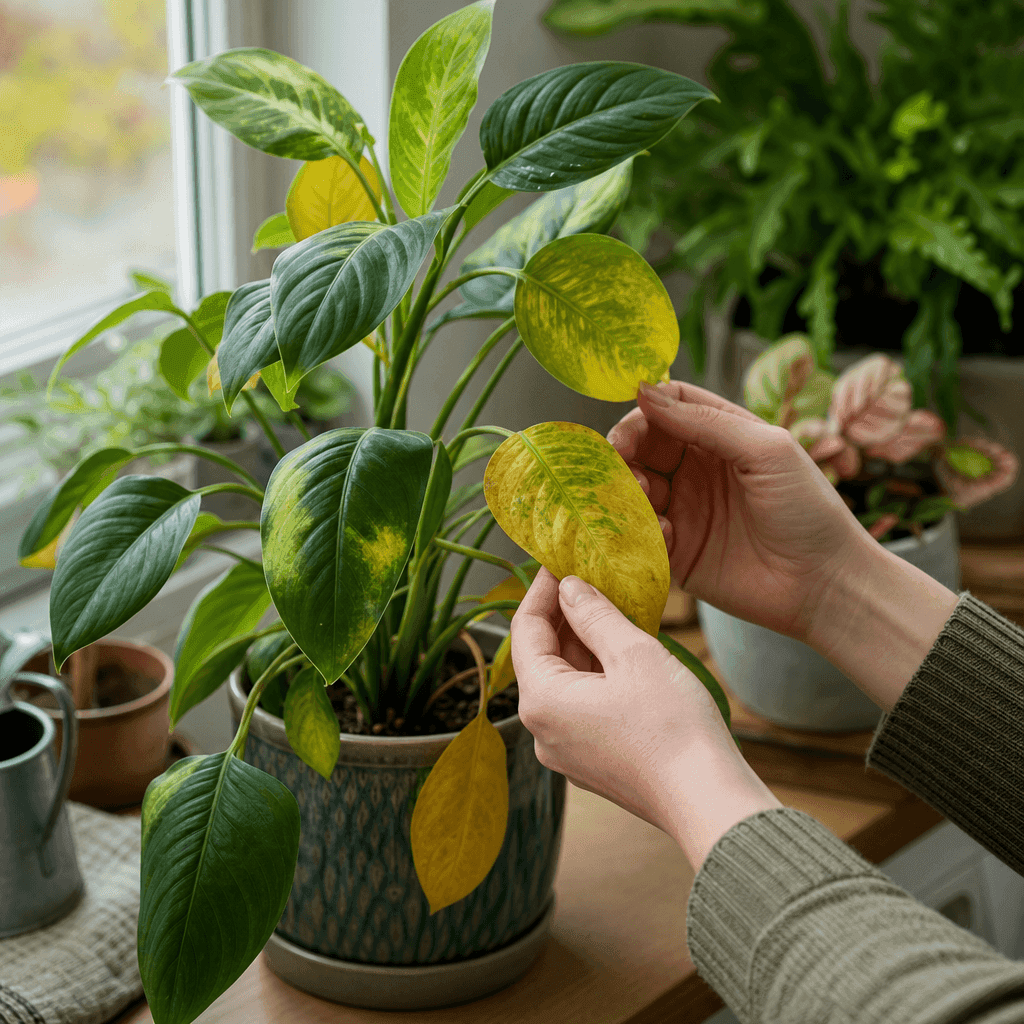
Quick diagnosis
Match the row to what you’re seeing, then jump to the fix.
| What you see | Likely cause | Confidence | How to confirm | What to do now | Urgency |
|---|---|---|---|---|---|
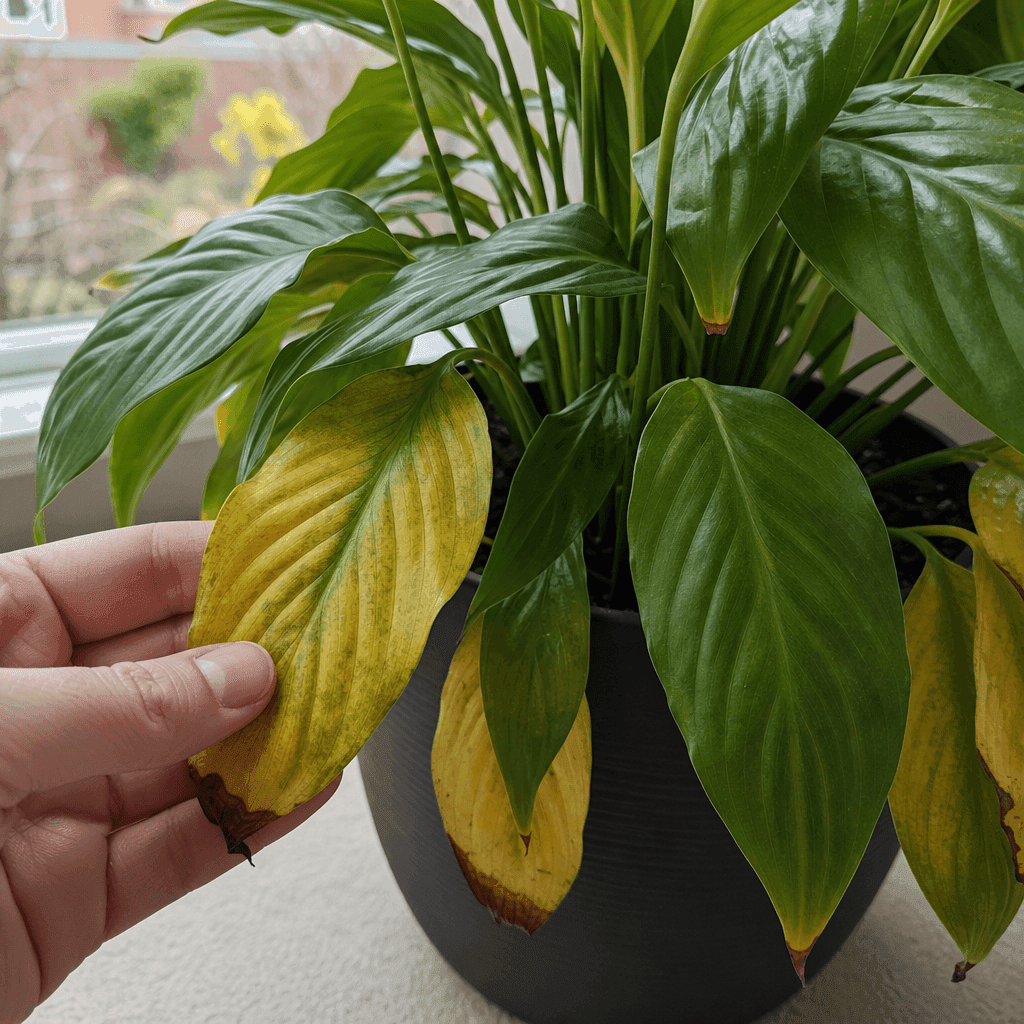
| Old and new leaves yellowing together; compost wet; plant may wilt despite wet soil | Overwatering or poor drainage | High | Compost wet below the surface; pot heavy; roots may be brown and mushy. | Stop watering; improve drainage; repot if roots are rotten. | High |
| Older lower leaves yellow then brown and crispy; pot feels light; compost dry | Underwatering or drought | High | Compost dry below the surface; lower leaves affected first; plant perks up after watering. | Water thoroughly until water drains from the base; check more frequently. | Medium |
| General pale yellow colour across the plant; weak, leggy growth | Too little light | Medium | Plant is in a dark corner; growth is pale and drawn toward the light source. | Move to a brighter position — bright indirect light is ideal for most houseplants. | Medium |
| Older leaves uniformly pale yellow; growth slow; plant has not been fed | Nitrogen or nutrient deficiency | Medium | No watering problem; plant has been in same compost for a year or more; growth pale overall. | Apply balanced houseplant liquid fertiliser at label rate during the growing season. | Medium |
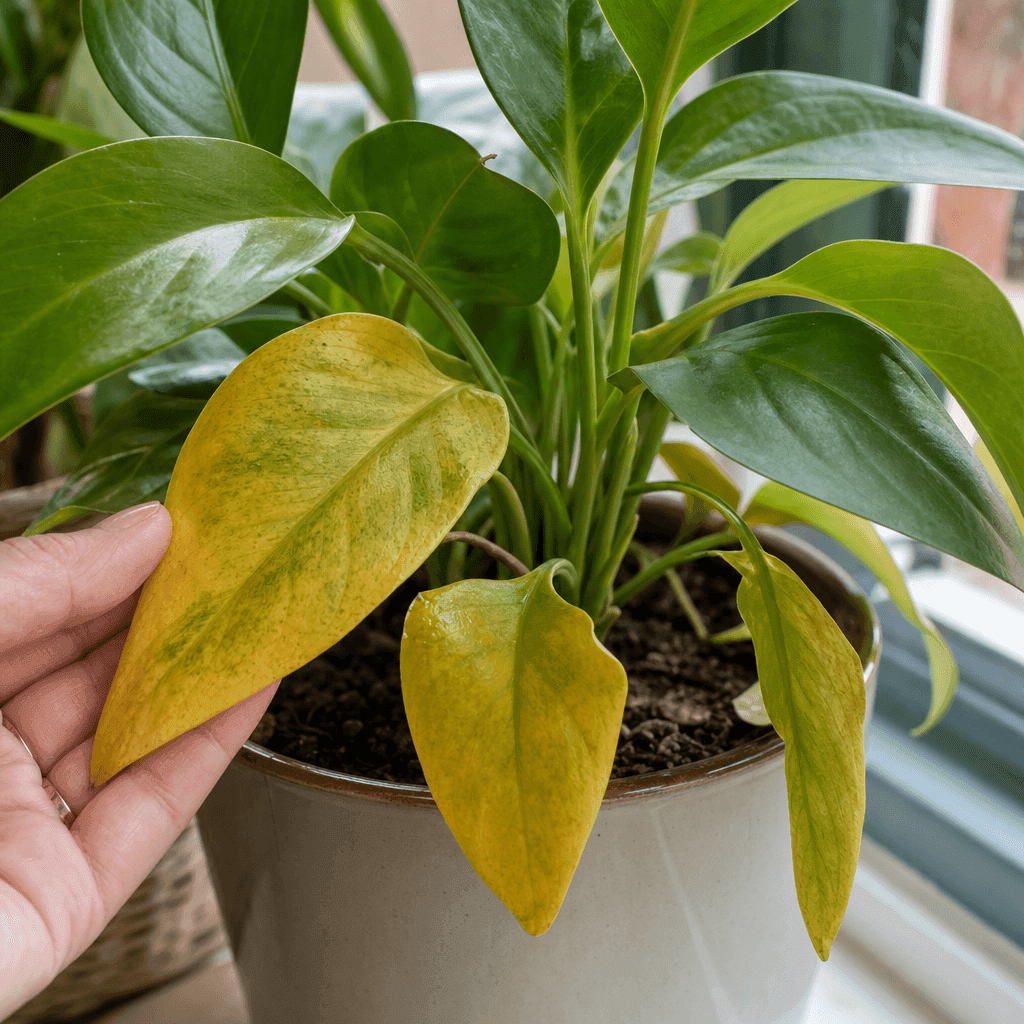
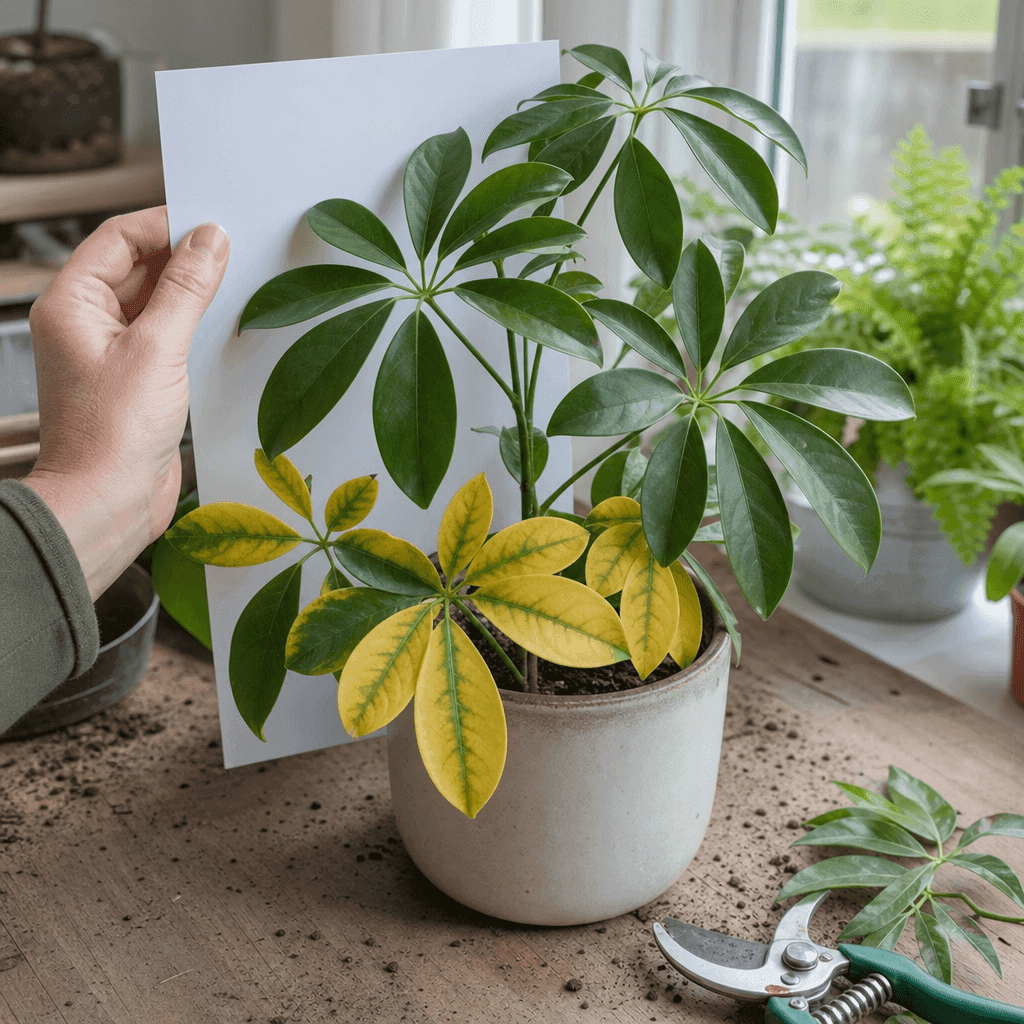
| New leaves yellow with green veins; older leaves may be greener | Iron deficiency (chlorosis) | Medium | Youngest leaves most affected; veins stay green; hard tap water used regularly. | Water with rainwater or filtered water; apply chelated iron or a houseplant feed with micronutrients. | Medium |
| Bottom leaves only turn yellow and drop; new growth healthy and green | Natural leaf ageing | Medium | Yellowing only on the oldest, lowest, most shaded leaves; the rest of the plant looks well. | Remove yellowed leaves; no other action needed. | Low |
| Yellow leaves with sticky residue, webbing, or visible insects | Pest damage (aphids, spider mites, scale or mealybugs) | Medium | Check leaf undersides and stem joints for insects, webbing or sticky honeydew. | Identify the pest; wash off or treat with insecticidal soap; isolate the plant. | Medium |
The causes, in detail
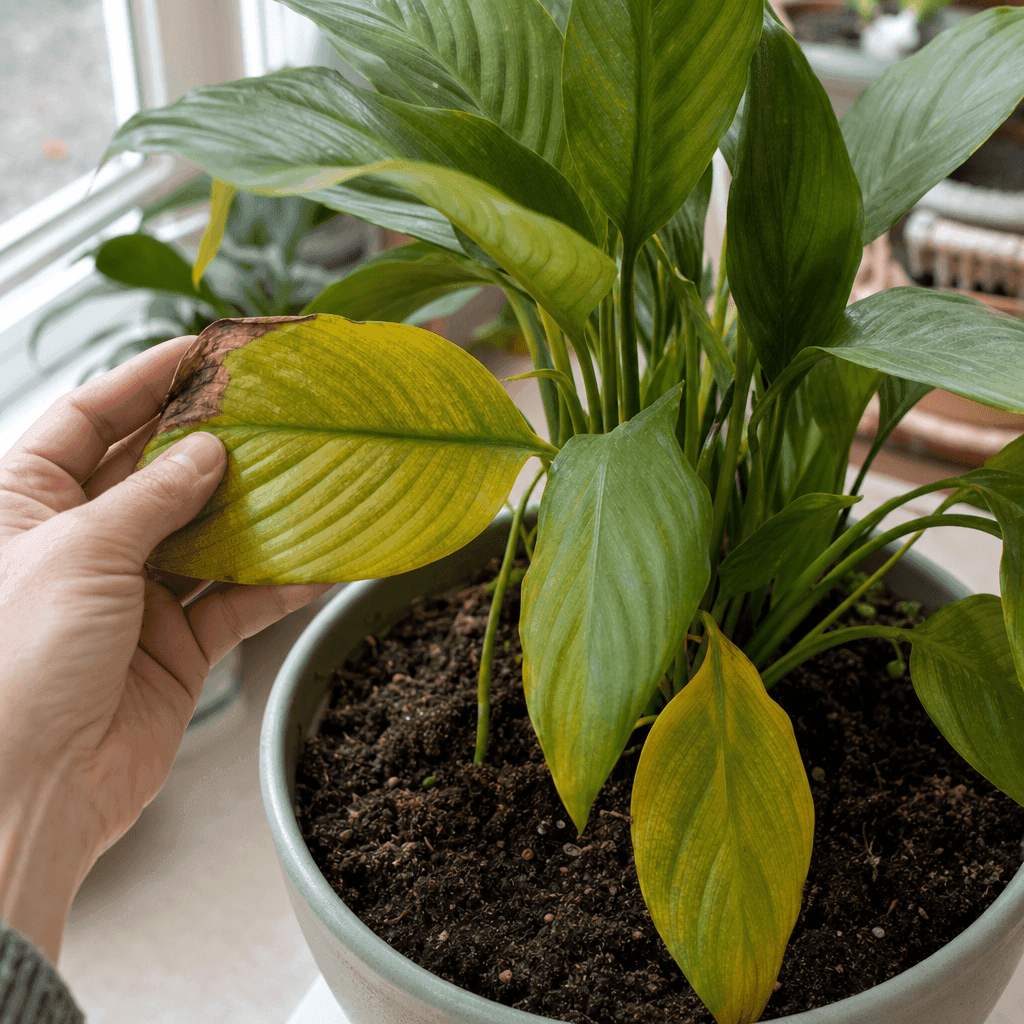
Overwatering and poor drainage
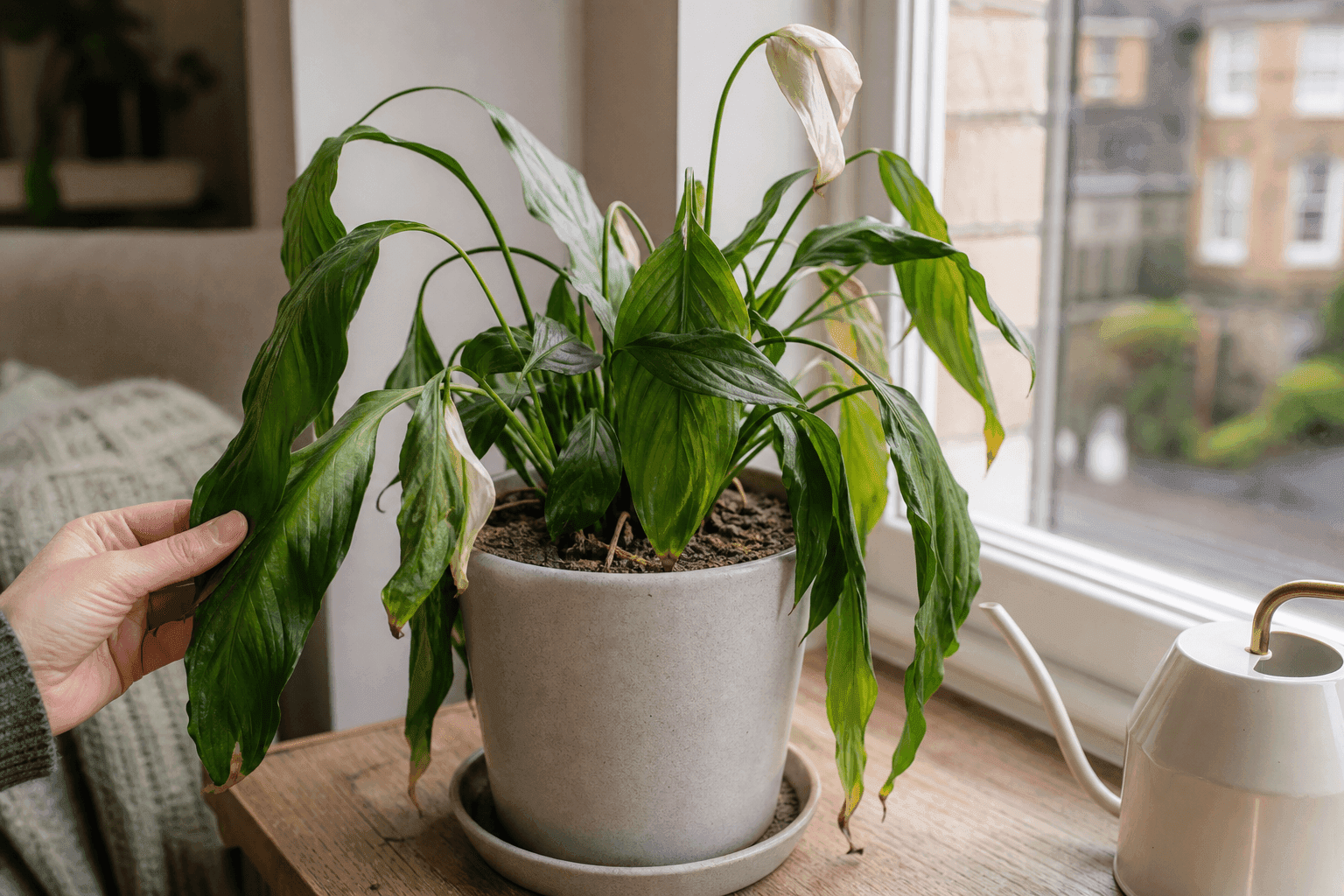
Most likelyThe RHS and multiple horticultural sources agree that overwatering is the leading cause of yellow leaves on houseplants. When compost stays wet for prolonged periods, roots lose oxygen and begin to die, preventing the plant from absorbing water and nutrients even though the soil is wet. Unlike underwatering — which typically causes older leaves to yellow and drop first — overwatering causes both old and new leaves to yellow simultaneously. Fleshy-leaved plants such as peace lilies, Chinese money plants and succulent types are particularly sensitive. In the UK, cool winter months reduce a plant's water needs significantly, but many people continue summer watering schedules.
- Compost stays wet below the surface for several days at a time.
- Both old and new leaves are yellowing together.
- Pot feels heavy; there may be water pooling in a saucer.
- Roots removed from the pot appear brown, black or mushy rather than white.
- The compost may smell slightly sour.
- Stop watering immediately and let the compost dry out.
- Remove the pot from any outer decorative container and check that drainage holes are open.
- If roots are mushy, repot into fresh, well-draining compost after trimming all dead roots.
- Going forward, water only when the top few centimetres of compost feel dry.
- In winter, reduce watering frequency significantly for most houseplants.
Stop it coming back:Recovery depends on how much root damage has occurred. If a proportion of healthy roots remain, new growth may look better within a few weeks.
water on a fixed schedule regardless of the season — plant water needs drop significantly in autumn and winter in UK homes.
Underwatering and drought
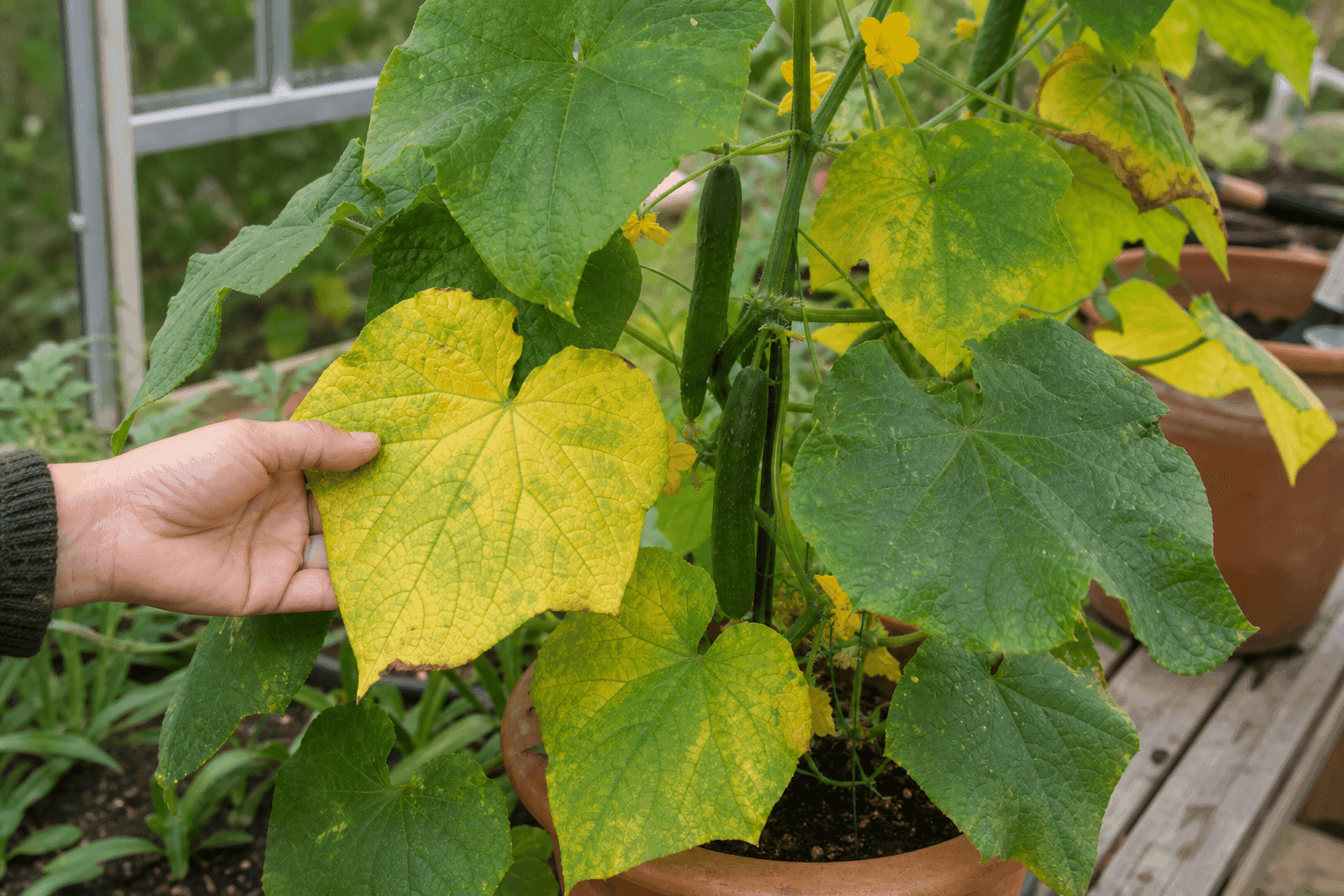
Most likelyUnderwatering is the second most common cause of yellow houseplant leaves in the UK. The RHS notes that with underwatering, older leaves at the base tend to yellow and fall first, whereas with overwatering both new and old leaves yellow together. Severely underwatered plants may also show wilted, limp foliage and brown, crispy leaf edges. Compost that has dried out completely may also start to shrink away from the pot edges, causing water to run straight through without being absorbed.
- Older lower leaves are yellowing first; new growth may still look relatively healthy.
- Compost feels dry below the surface; pot feels light.
- Leaf edges may be brown and crispy.
- The plant perks up after thorough watering.
- Water thoroughly — pour slowly until water drains from the base.
- If compost has shrunk from the pot sides, submerge the pot in a bowl of water for 20–30 minutes to allow full rehydration.
- Going forward, water when the top 2–3cm of compost feels dry for most tropical houseplants.
- In summer and near heating vents, check more frequently.
Stop it coming back:Leaves that have yellowed from drought stress will not recover, but new growth should be healthy once watering is corrected.
water little and often — most houseplants benefit from a thorough, deep watering followed by a period of drying, rather than frequent small amounts.
Too little light
PossiblePlants that are too far from a window or in a very shaded room will gradually become pale and yellow as chlorophyll production drops. Even shade-tolerant houseplants such as peace lily and ferns can develop yellow leaves if placed in very dark spots. The RHS notes that growing plants in conditions that are too dark is a genuine cause of yellowing. In UK homes, light levels drop significantly in autumn and winter — a spot that was adequate in summer may be too dark by November.
- The plant is in a corner well away from any window.
- Yellowing is general and pale across the whole plant, not specific to old or new leaves.
- Growth is weak and drawn toward the light source.
- The problem has worsened since autumn.
- Move the plant to the brightest indirect light available — a position near an east- or north-facing window is often ideal.
- Clean dusty leaves so they can absorb light more effectively.
- In the darkest winter months, consider a small grow light for light-hungry plants.
- Rotate the plant occasionally so all sides receive equal light.
Stop it coming back:Pale or yellow leaves caused by low light should improve once the plant is moved, though existing yellowed leaves will not recover. New growth should be greener.
move a shade-adapted plant directly into full sun — this causes scorch and is as harmful as too little light.
Nitrogen and nutrient deficiency
PossibleHouseplants that have been in the same compost for more than a year, or that have never been fed during the growing season, can develop yellow leaves from nutrient deficiency. Nitrogen is the nutrient most needed for leaf production and is the most soluble, so it depletes fastest. General pale yellowing of older leaves without a vein pattern is the typical sign. Potassium deficiency causes yellowing at leaf edges. The RHS recommends feeding houseplants during the growing season (spring to early autumn) with a balanced liquid fertiliser.
- The plant has been in the same compost for over a year without feeding.
- Older leaves are uniformly pale yellow without a strong vein pattern.
- No significant watering problem or light issue is present.
- Apply a balanced liquid houseplant fertiliser at the recommended rate.
- Do not exceed the label rate — overfeeding damages roots.
- Feed every two to four weeks during spring and summer; stop or reduce in autumn and winter.
- For long-term neglected plants, consider repotting into fresh compost rather than just feeding.
Stop it coming back:New growth should look greener within two to four weeks of feeding during active growth. Old yellow leaves will not recover.
feed a plant that is overwatered, stressed or in very low light — fertiliser does not help when roots are damaged or not functioning.
Iron deficiency (chlorosis)
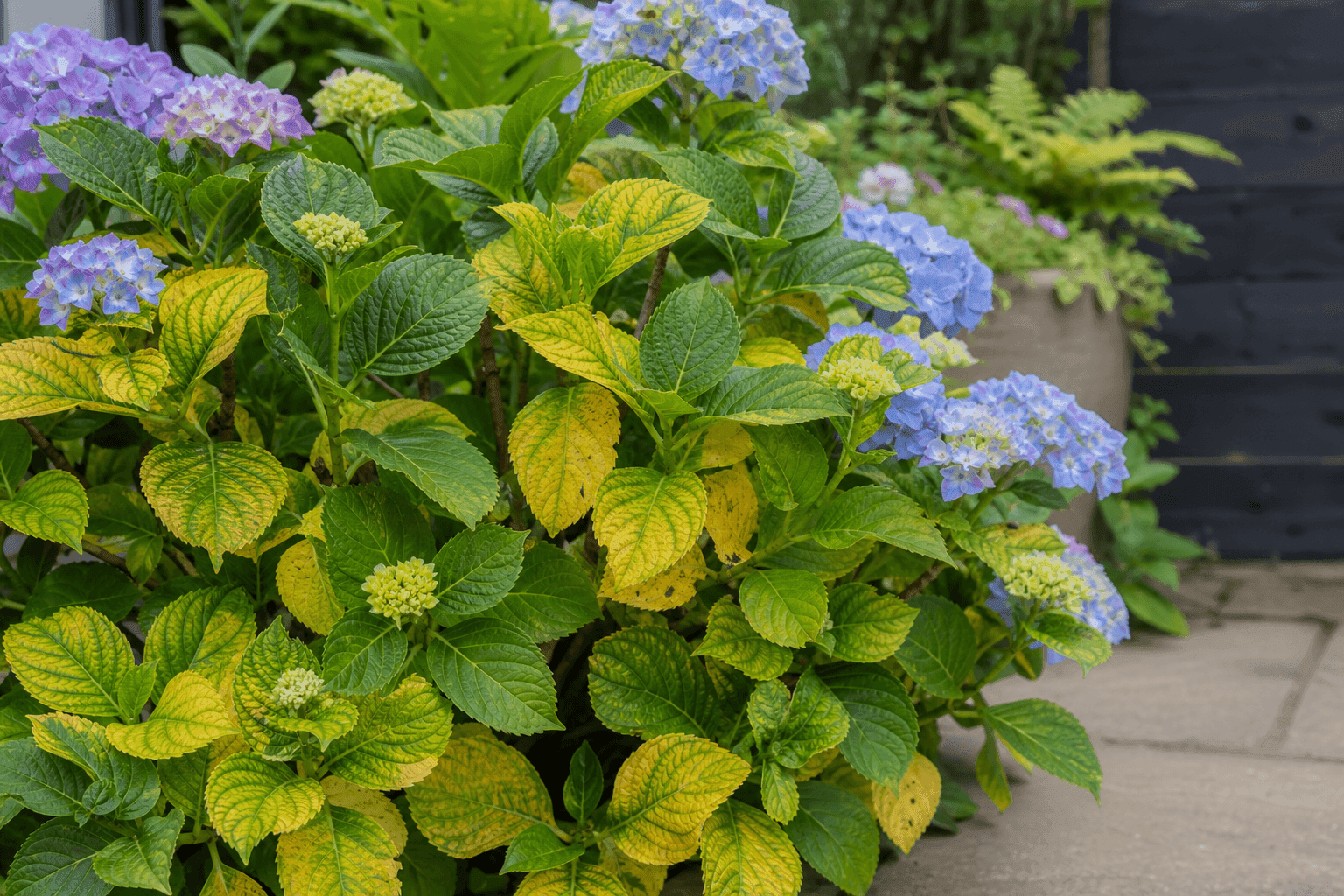
PossibleIron deficiency causes interveinal chlorosis — the tissue between veins turns yellow while the veins themselves remain green, and it starts on the newest leaves first. The RHS notes that iron chlorosis in houseplants is often linked to hard tap water (common in much of England) raising pH in the compost over time, making iron unavailable even if it is present. Acid-loving plants such as gardenias and azaleas are most vulnerable, but any houseplant watered long-term with very hard tap water can be affected.
- Youngest, newest leaves are most yellow; older leaves may be greener.
- Yellowing is between the veins — veins stay green.
- You use tap water regularly in a hard-water area.
- Switch to rainwater or filtered water where possible.
- Apply a liquid houseplant feed that includes trace elements and micronutrients.
- For severely affected acid-loving plants, apply chelated iron following the label instructions.
- Consider repotting into fresh ericaceous compost for plants that prefer acidic conditions.
Stop it coming back:New growth may look greener within four to six weeks. Existing chlorotic leaves may not fully recover.
apply large amounts of chelated iron or acidifying products without confirming the diagnosis — excess iron can be toxic to plants at high concentrations.
Natural leaf ageing
PossibleAll plants periodically lose old leaves as new ones grow. For houseplants, the oldest, lowest and most shaded leaves will yellow and drop as a normal part of the plant's lifecycle. This is not a problem if it is only affecting the very oldest leaves and the rest of the plant is growing well. Many people mistake this natural leaf turnover for a care problem and begin feeding or watering changes that are unnecessary.
- Only the oldest, lowest and most shaded leaves are affected.
- New growth looks green and healthy.
- Yellowing proceeds slowly — a leaf or two at a time.
- No watering, light or feeding issue is present.
- Remove yellowed leaves once they are fully yellow to keep the plant tidy and improve airflow.
- No other action is required.
start a cycle of feeding, watering changes and spraying in response to a couple of naturally ageing lower leaves — this often creates new problems.
Pest damage — aphids, spider mites, scale and mealybugs
PossibleSap-sucking pests can cause yellowing by damaging leaf tissue and removing plant fluids. Aphids cluster on shoot tips; spider mites cause pale stippling and webbing (worst in hot, dry conditions); scale insects are fixed, waxy brown or white bumps on stems; mealybugs are white, fluffy masses in leaf joints. All excrete sticky honeydew that can encourage sooty mould. The RHS advises checking leaf undersides and stem joints carefully before treating.
- Check leaf undersides and stem joints with a torch for small insects, webbing or waxy deposits.
- Look for sticky honeydew on leaves and surfaces below the plant.
- Check whether new leaves are distorted as well as discoloured.
- Identify the pest before treating.
- Wipe off mealybugs and scale with a damp cloth or cotton wool dipped in rubbing alcohol.
- Wash off aphids with a strong jet of water or insecticidal soap spray.
- Raise humidity and introduce predatory mites for spider mites.
- Isolate affected plants to prevent spread to other houseplants.
Stop it coming back:Once the pest is controlled, honeydew and sooty mould will gradually reduce. New growth should be clean.
spray the whole plant with broad-spectrum insecticide as a first response — this harms beneficial insects and may not reach all pest life stages, particularly scale and mealybug nymphs under waxy coverings.
Still not sure?
Work down these branches — the first one that matches is your answer.
What not to do
- Water before checking whether the compost is already wet — overwatering is the most common cause of yellow leaves.
- Feed a plant that is overwatered, in very low light, or whose roots are damaged — fertiliser does not help when roots cannot function.
- Move a plant suddenly from a dim corner to bright direct sun — scorch will compound the problem.
- Remove all yellowing leaves at once from a small plant — it still needs foliage to photosynthesise.
- Continue a summer watering schedule through autumn and winter — plant water needs drop significantly as light and temperatures fall.
Common questions
Why are my indoor plant leaves turning yellow?
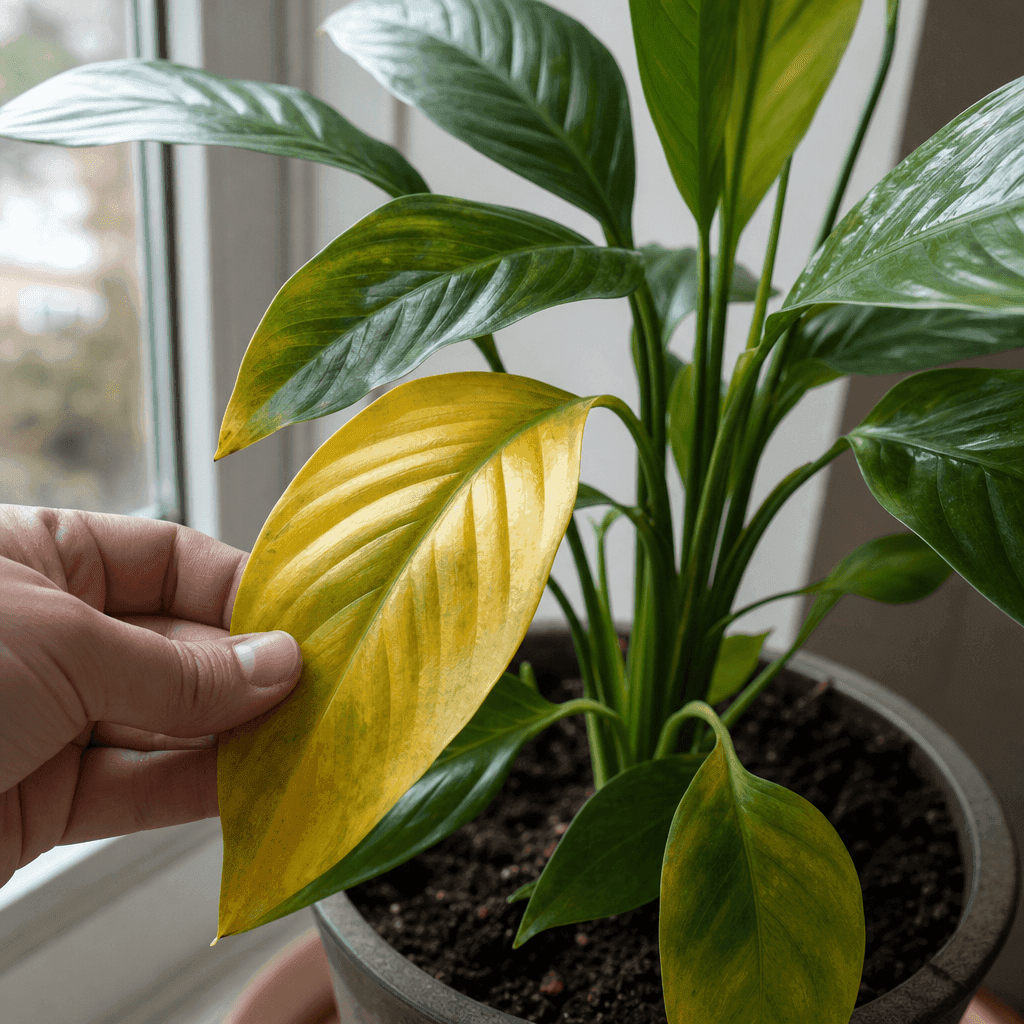
The most common cause is overwatering. Other causes include underwatering, too little light, nutrient deficiency, iron chlorosis from hard tap water, natural ageing or pest attack. Check whether the compost is wet or dry and whether both old and new leaves are affected — the pattern tells you which is most likely.
Should I remove yellow leaves from my houseplant?
Yes, once they are fully yellow. Remove them cleanly at the base. Do not strip too many partially green leaves from a small plant at once — it still needs functioning foliage to recover.
How do I know if I am overwatering my houseplant?
Signs of overwatering include old and new leaves yellowing together, compost that stays wet for days, heavy pots, sour-smelling compost and brown or mushy roots. Unlike underwatering, the leaves droop despite the compost being wet.
Why does my houseplant have yellow leaves even though I water it regularly?
Regular watering without letting the compost dry between sessions often causes overwatering and root damage. Check whether the compost stays wet for long periods and whether drainage holes are clear. Roots that have rotted cannot absorb water, causing yellowing despite wet soil.
Can yellow houseplant leaves turn green again?
Fully yellow leaves will not recover. Pale or partially yellowed leaves may improve if the cause is corrected promptly. Judge recovery by the colour and vigour of new growth rather than by whether existing leaves improve.
Do yellow leaves on houseplants mean they need feeding?
Not necessarily. Overwatering, underwatering and low light are more common causes of yellowing than nutrient deficiency. Only feed once you have ruled out root or light problems — feeding a stressed or waterlogged plant makes things worse.
Why are my houseplant leaves turning yellow in winter?
Winter yellow leaves in UK homes are often caused by continuing to water at summer rates when the plant's needs have dropped significantly, combined with low light levels. Reduce watering frequency in autumn and move plants closer to windows to compensate for shorter days.
Can I use tap water on my houseplants?
For most houseplants, UK tap water is fine. For acid-loving plants or where iron chlorosis is a problem, switching to rainwater or filtered water can help, as hard tap water raises compost pH over time and can lock up iron and other trace elements.