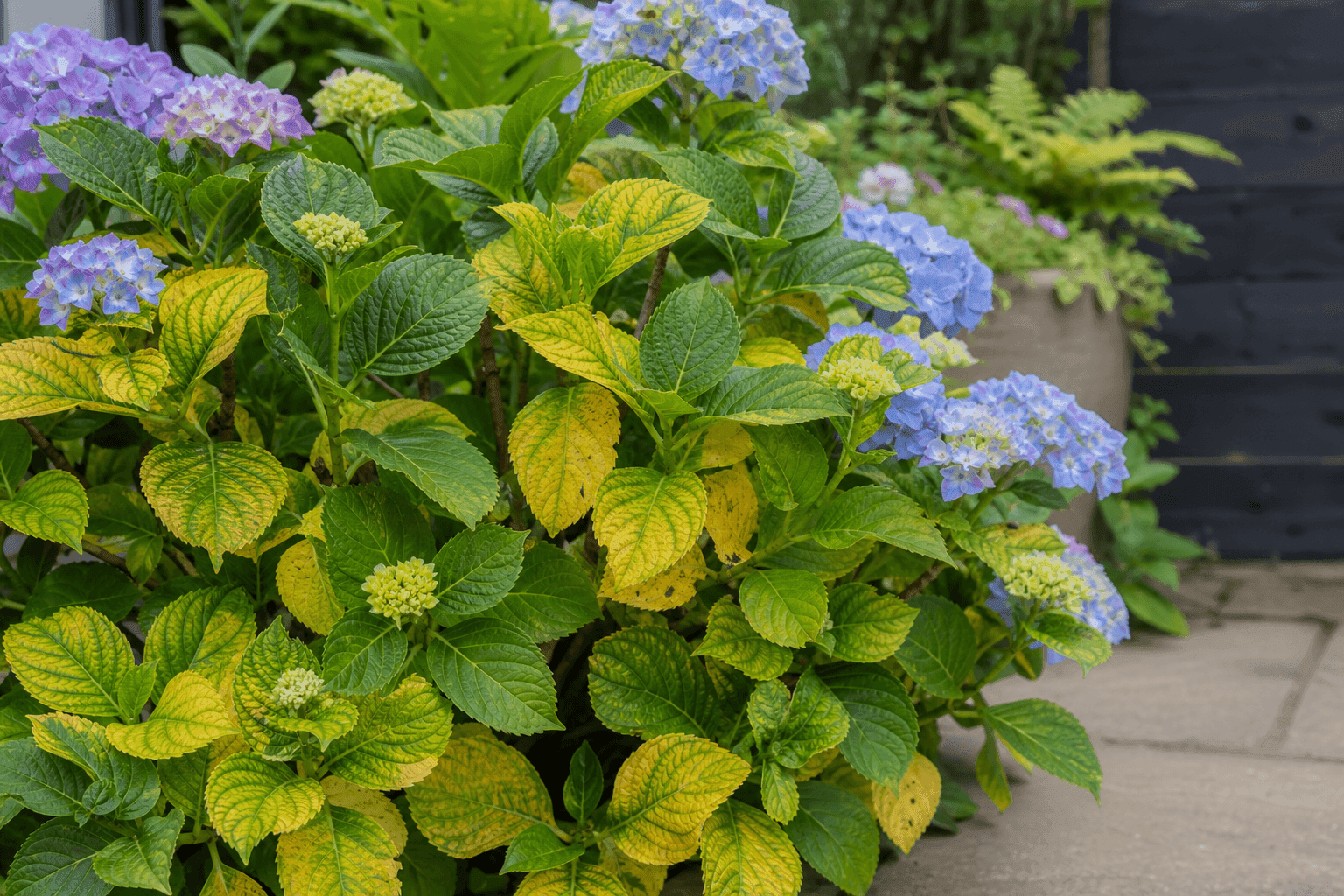
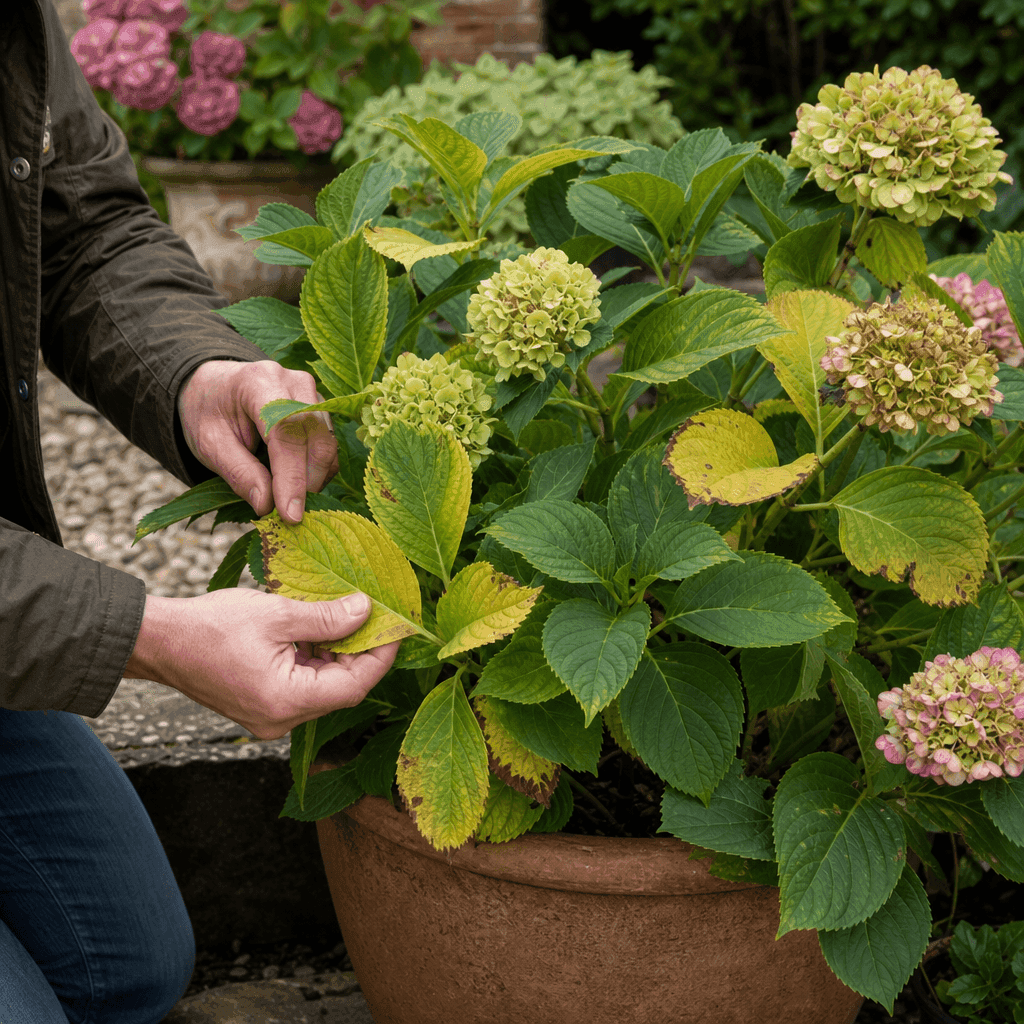
Quick diagnosis
Match the row to what you’re seeing, then jump to the fix.
| What you see | Likely cause | Confidence | How to confirm | What to do now | Urgency |
|---|---|---|---|---|---|
| Lower leaves yellow evenly; soil stays wet for days; plant may wilt despite wet soil | Overwatering or poor drainage | High | Compost wet below the surface; drainage holes blocked; roots brown or mushy in pots. | Stop watering; improve drainage; repot if roots are rotten. | High |
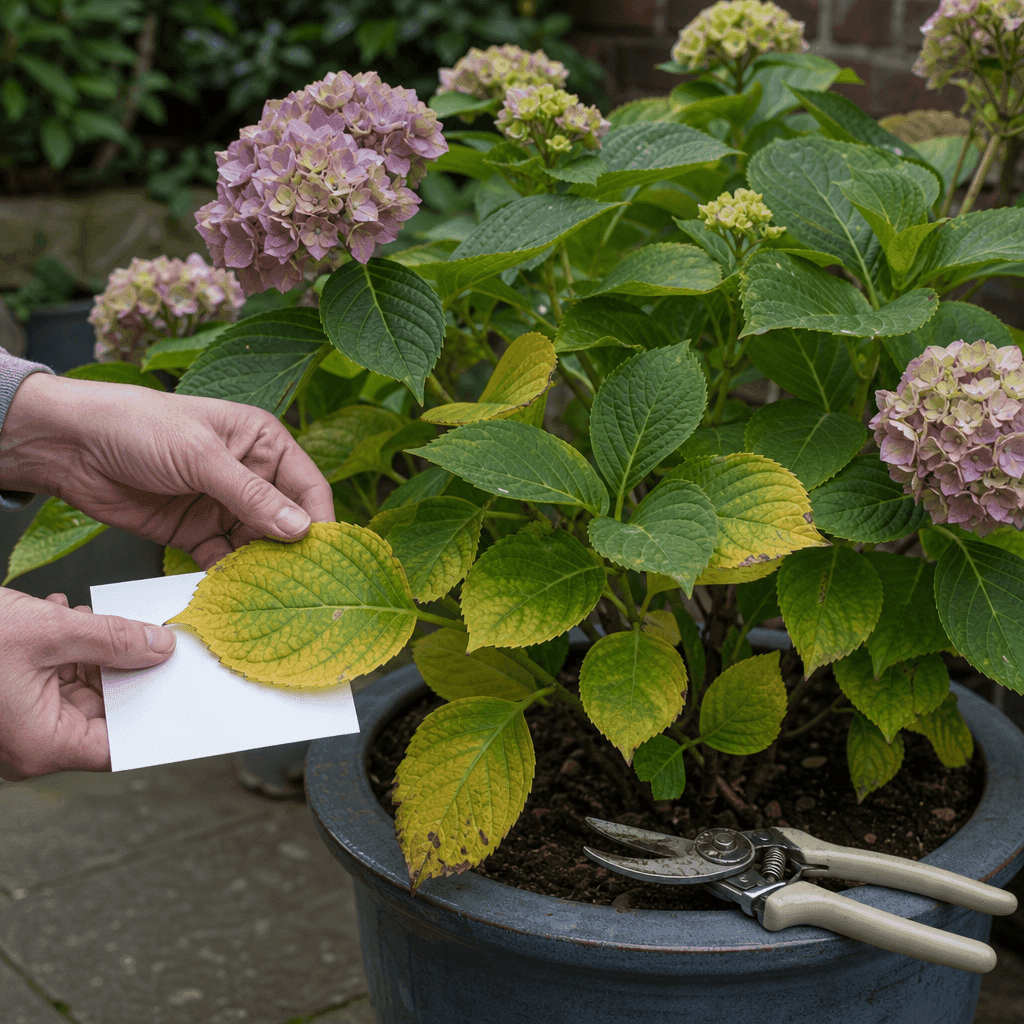
| Newest leaves yellow with green veins; older leaves may look greener | Iron chlorosis — alkaline soil or pH too high | Medium | Test soil pH — above 6.5 commonly causes chlorosis in hydrangeas. Hard tap water worsens it. | Use ericaceous compost for pots; apply chelated iron; water with rainwater. | Medium |
| Older leaves turn pale yellow evenly; plant looks weak; growth is poor | Nitrogen deficiency | Medium | Uniform pale yellowing on older leaves; not interveinal; no wet soil or drainage issues. | Apply balanced shrub or hydrangea fertiliser at label rate in spring or early summer. | Medium |
| Yellow patches between veins on older leaves; veins remain green | Magnesium deficiency | Medium | Older leaves show clear interveinal yellowing; high-potassium feeds used recently. | Apply Epsom salts as foliar spray at 20g per litre; switch to balanced feed. | Medium |
| Leaf edges yellow then brown and crispy; worst on sunny or windy side | Drought stress or leaf scorch | High | Soil dry below the surface; afternoon sun or drying wind; edges brown and papery. | Water deeply at the base; apply mulch; provide afternoon shade for pots. | Medium |
| Inner, shaded leaves at the base turn yellow and drop; outer growth healthy | Natural loss of shaded inner leaves | Medium | Only innermost or lowest shaded leaves affected; the rest of the plant is growing well. | Remove fallen leaves; no treatment needed. | Low |
| Yellow patches with distinct brown or black spots; worse in wet weather | Leaf spot disease | Medium | Spots are distinct and may enlarge in wet weather; overhead watering or crowded conditions. | Remove affected leaves; water at the base; improve airflow. | Medium |
The causes, in detail
Overwatering and poor drainage
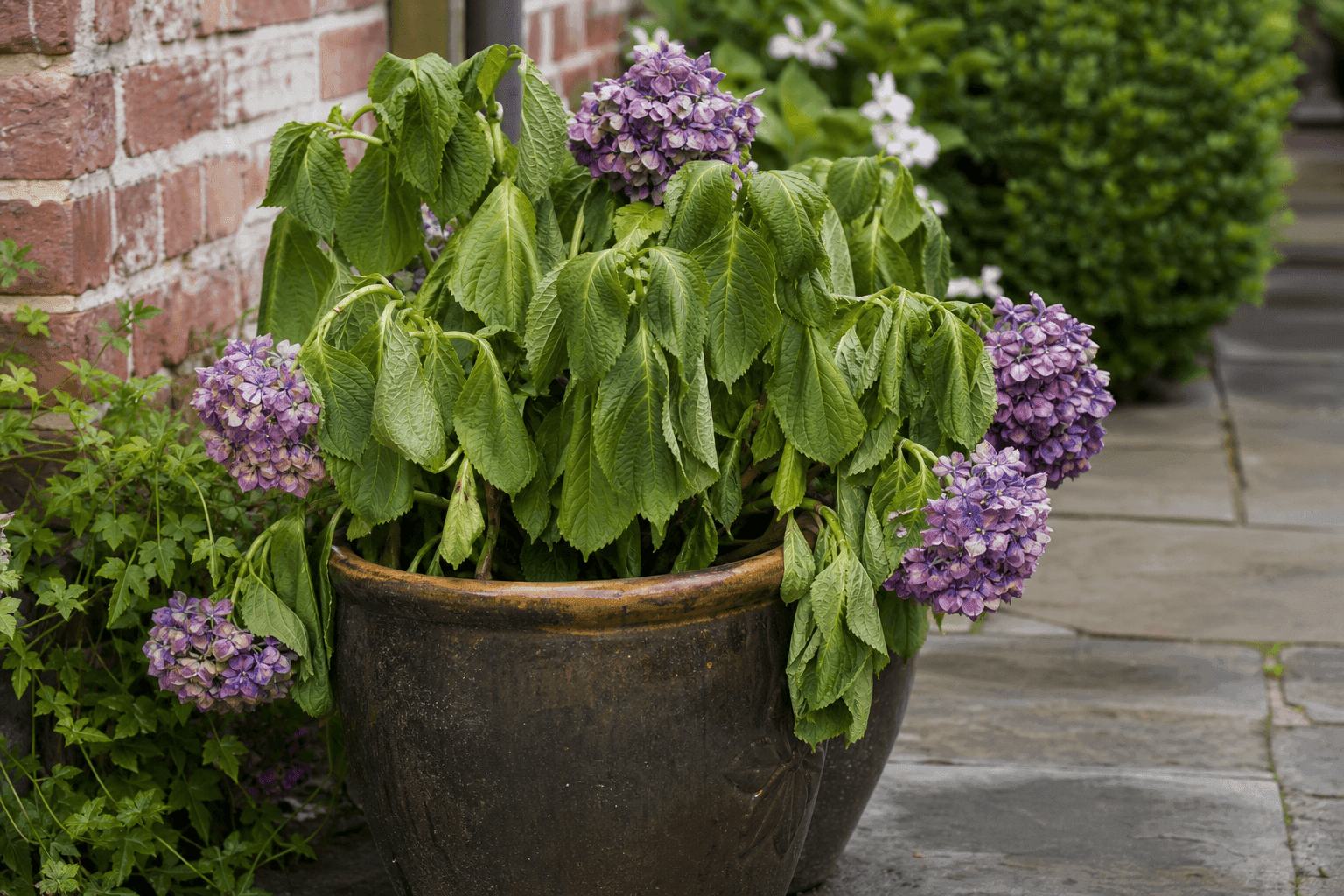
Most likelyOverwatered hydrangeas can look confusing because they may wilt and yellow while the soil is wet. Roots deprived of oxygen begin to die, blocking nutrient uptake and causing yellowing that starts on the lower leaves. In the UK, this is most common in heavy clay soils that hold water, in pots without open drainage holes, and in low-lying spots where winter rain accumulates. The RHS advises that hydrangeas like moisture but still need good drainage — a soggy, airless root environment is as damaging as drought, and these watering and nutrient problems are the leading cause of yellow hydrangea leaves.
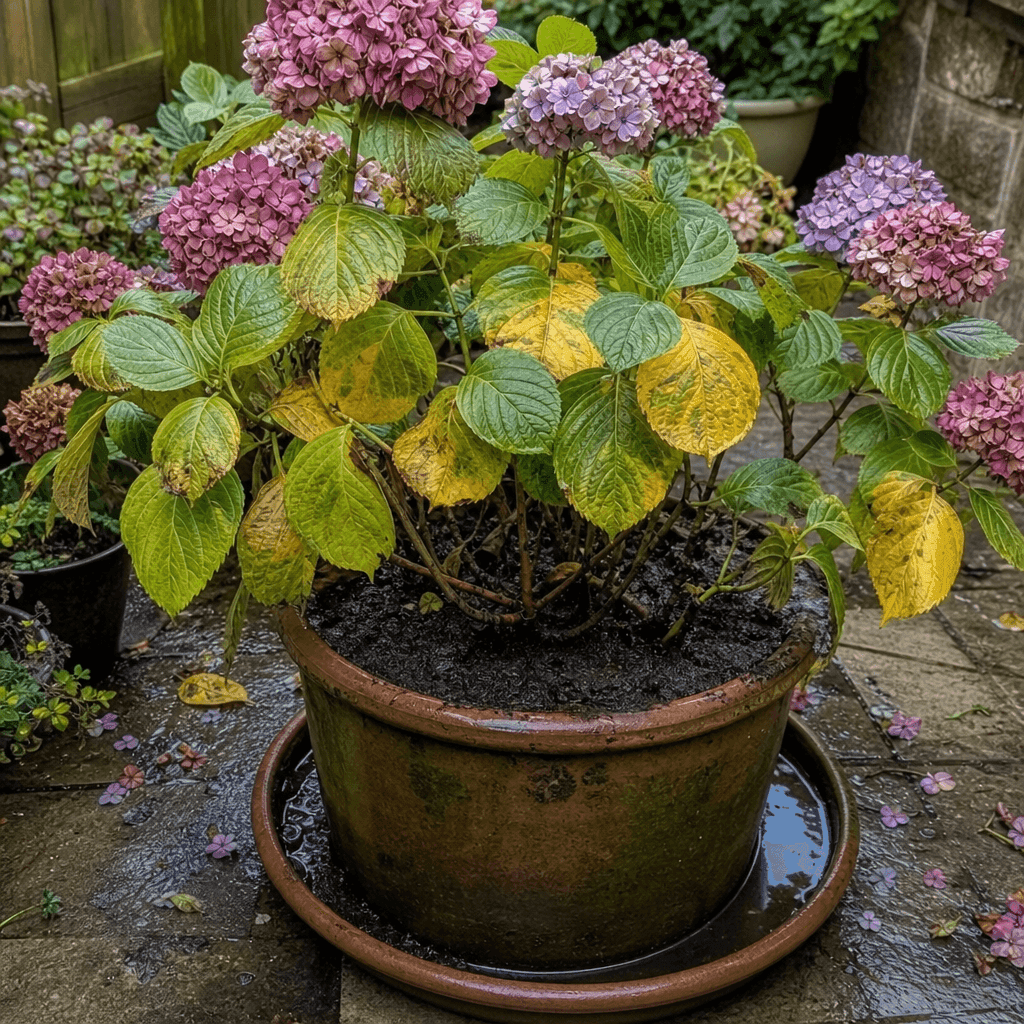
- Push a finger 5–8cm into the soil — it stays wet and cool for several days.
- Pot feels heavy; drainage holes may be blocked or the pot sits in a saucer of water.
- Roots visible at the drainage holes may be brown or grey.
- The plant may wilt despite the soil being wet.
- Stop watering until the top few centimetres begin to dry.
- Move pots onto feet and empty any standing water from saucers.
- If the compost smells sour or roots are mushy, repot into fresh free-draining compost and trim dead roots — follow our step-by-step root rot treatment if the rot is advanced.
- In the ground, improve drainage with organic matter and avoid planting in hollow spots where water collects.
- On heavy clay, plant slightly proud of the surrounding soil and mulch rather than burying the crown.
Stop it coming back:If caught early, new growth may improve in two to four weeks. Severe root rot is harder to reverse, especially in containers.
add fertiliser to a waterlogged plant expecting it to green up — damaged roots cannot use feed, and more nitrogen in wet soil worsens conditions.
Iron chlorosis and alkaline soil
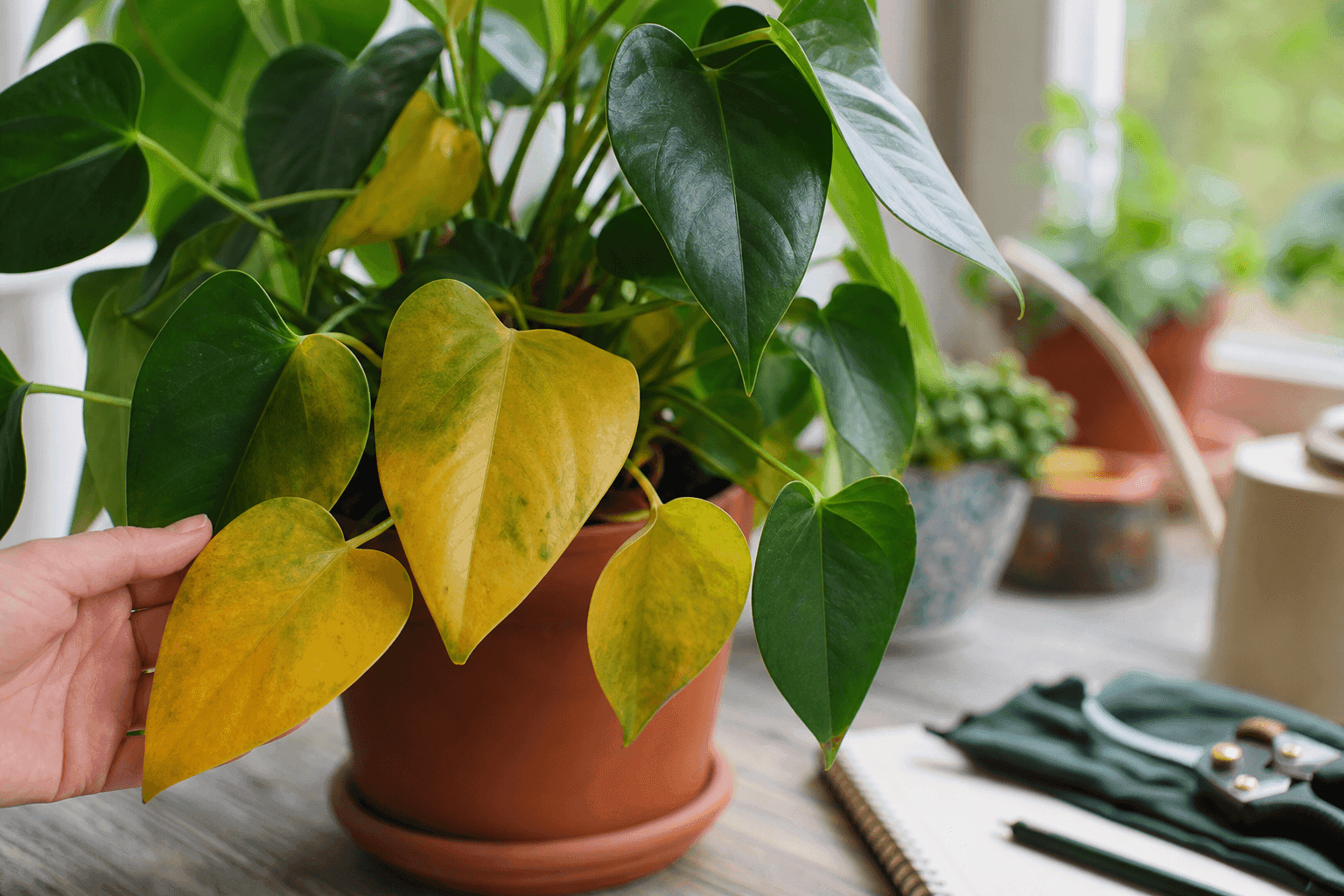
PossibleIron chlorosis causes yellowing between the veins of new leaves while the veins themselves stay green — this is the classic sign of iron deficiency. Hydrangeas need slightly acidic soil to absorb iron effectively; the RHS confirms that interveinal chlorosis typically affects the youngest leaves first when iron is unavailable. In many UK gardens, alkaline pockets from lime-rich subsoil, builders' rubble, mortar, or simply hard tap water raise pH above 6.5, locking up iron. Mophead hydrangeas (Hydrangea macrophylla) are particularly sensitive.
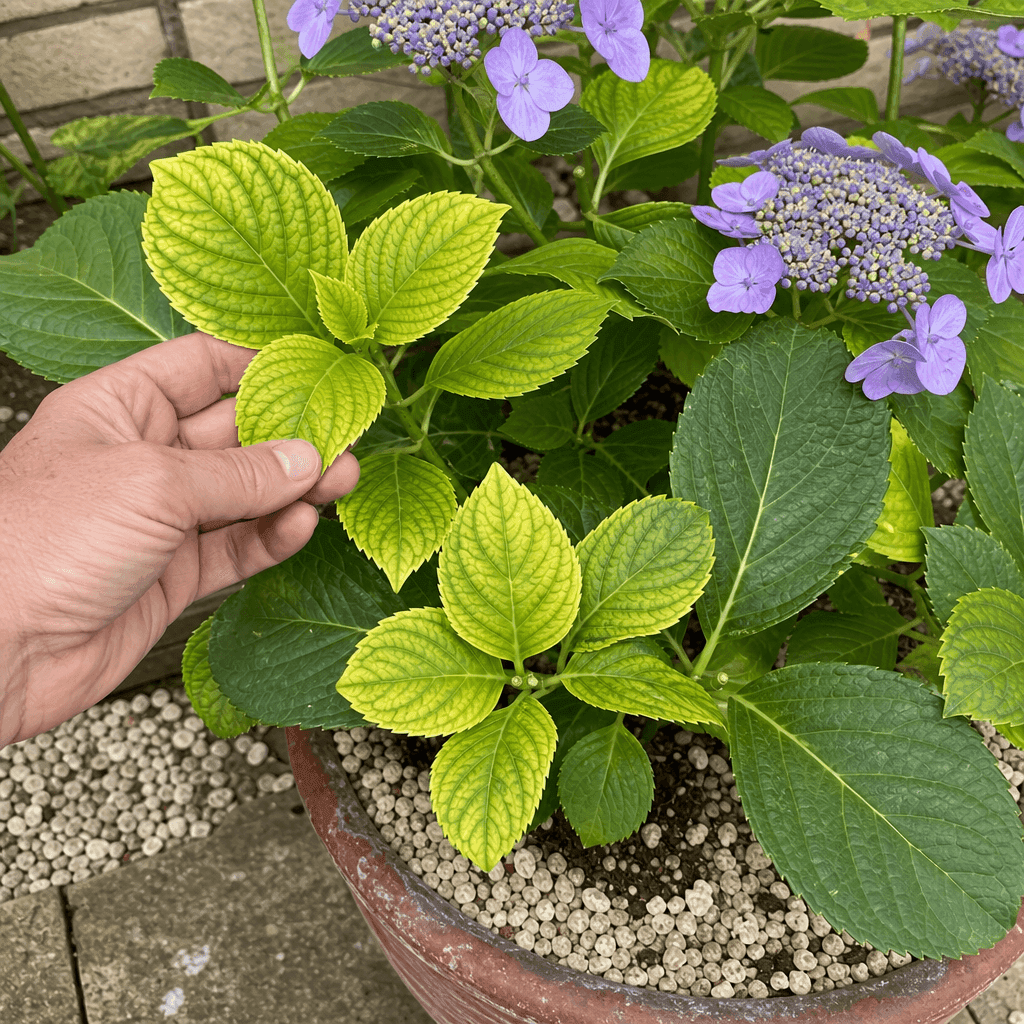
- New, youngest leaves are most yellow; veins remain green — this is the clearest sign of iron deficiency.
- Use a soil pH test kit — pH above 6.5 commonly causes problems for hydrangeas.
- The problem may be worse after watering with hard tap water.
- Also check drainage — waterlogged roots mimic iron deficiency symptoms.
- For potted hydrangeas, use ericaceous (acid) compost and water with rainwater where possible.
- Apply chelated iron (sequestrene) according to label instructions — this provides iron in a form the plant can absorb even at slightly higher pH.
- In the ground, mulch with ericaceous organic matter such as pine bark or composted bracken.
- Test soil pH annually and avoid adding lime or wood ash near hydrangeas.
Stop it coming back:New growth may look greener within four to six weeks after pH and drainage are corrected. Existing yellow leaves may not fully recover.
bury rusty nails, pour vinegar into the soil or repeatedly apply coffee grounds — these are unreliable, may harm soil life, and do not reliably lower pH.
Nitrogen deficiency
PossibleNitrogen deficiency causes the older leaves to turn pale yellow evenly, without a pronounced vein pattern. Growth may be generally weak, with leaves smaller than expected. Nitrogen is the most soluble of the major nutrients and washes out of sandy soils and pots quickly during wet UK winters. The RHS advises that established hydrangeas in good garden soil generally do not need regular feeding, but pot-grown plants and those competing with tree roots may need annual attention.
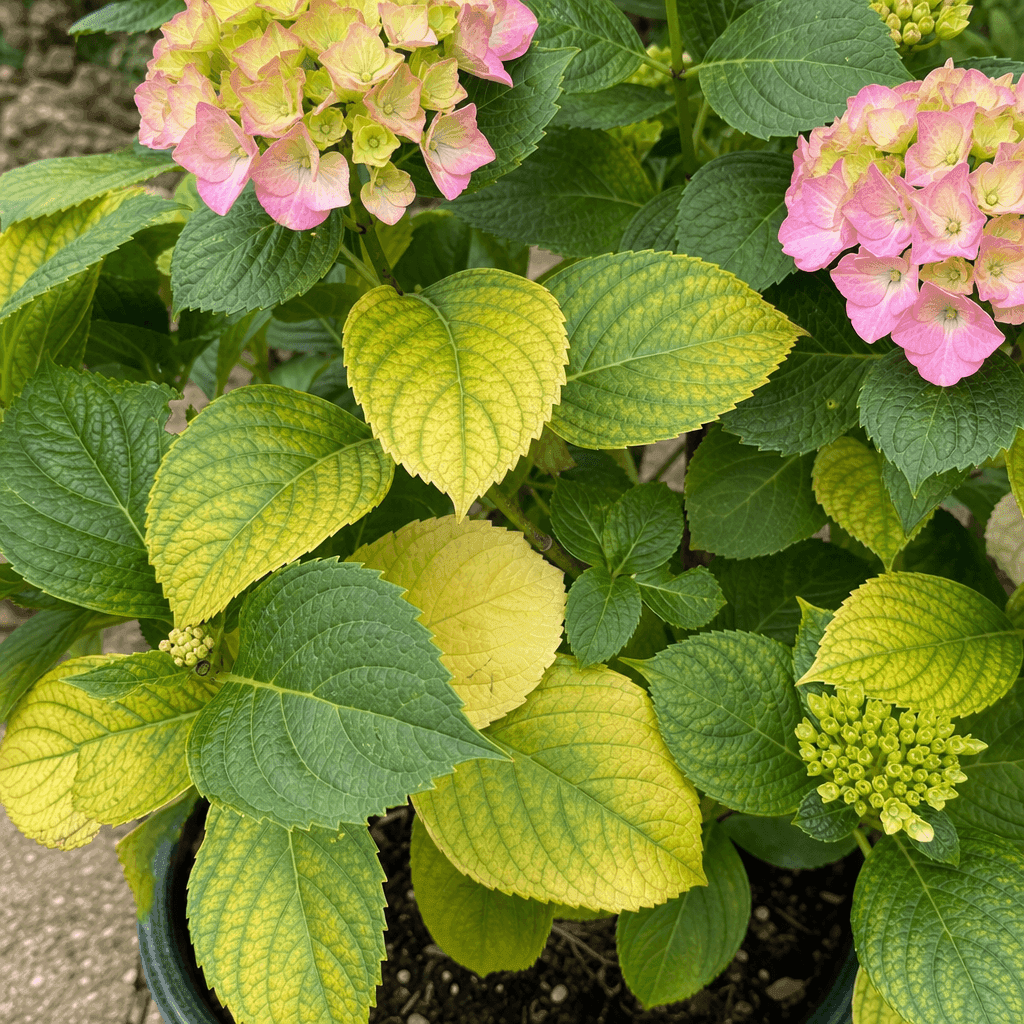
- Older lower leaves are uniformly pale yellow — not interveinal.
- General weak growth and smaller-than-normal leaves.
- The plant is in a pot, sandy soil, or competing with established tree or shrub roots.
- No significant wet or dry root problem is present.
- Apply a balanced shrub or hydrangea fertiliser in spring or early summer, following label rates.
- For pots, refresh the top 5cm of compost annually and repot when root-bound.
- Mulch border hydrangeas with garden compost or well-rotted manure each spring.
Stop it coming back:New leaves should look greener within two to four weeks during active growth. Old yellow leaves will not recover.
feed late in the season with high-nitrogen fertiliser — it encourages soft new growth that is more vulnerable to frost damage.
Magnesium deficiency
PossibleMagnesium deficiency causes interveinal yellowing on older leaves — the tissue between the veins yellows while the veins themselves remain greener. The RHS notes this is distinct from iron deficiency (which starts in new leaves) and from general nitrogen deficiency (which is more evenly pale). Magnesium deficiency is more common in pots, sandy soils, and after heavy use of high-potassium tomato-type feeds, which can displace magnesium uptake.
- Older, mid-plant leaves show yellowing between the veins while veins stay green.
- New leaves look relatively healthy.
- High-potassium or tomato-type feeds have been used without balancing magnesium.
- Apply Epsom salts (magnesium sulphate) as a foliar spray at 20g per litre of water — repeat two or three times at fortnightly intervals.
- Alternatively, water the solution onto the root zone at 35g per 9 litres.
- Switch to a balanced shrub fertiliser that includes trace elements.
Stop it coming back:New growth should improve within two to four weeks. Old yellow leaves may drop naturally.
apply heavy doses of magnesium without confirming the cause — excess magnesium can displace other nutrients.
Drought stress and leaf scorch
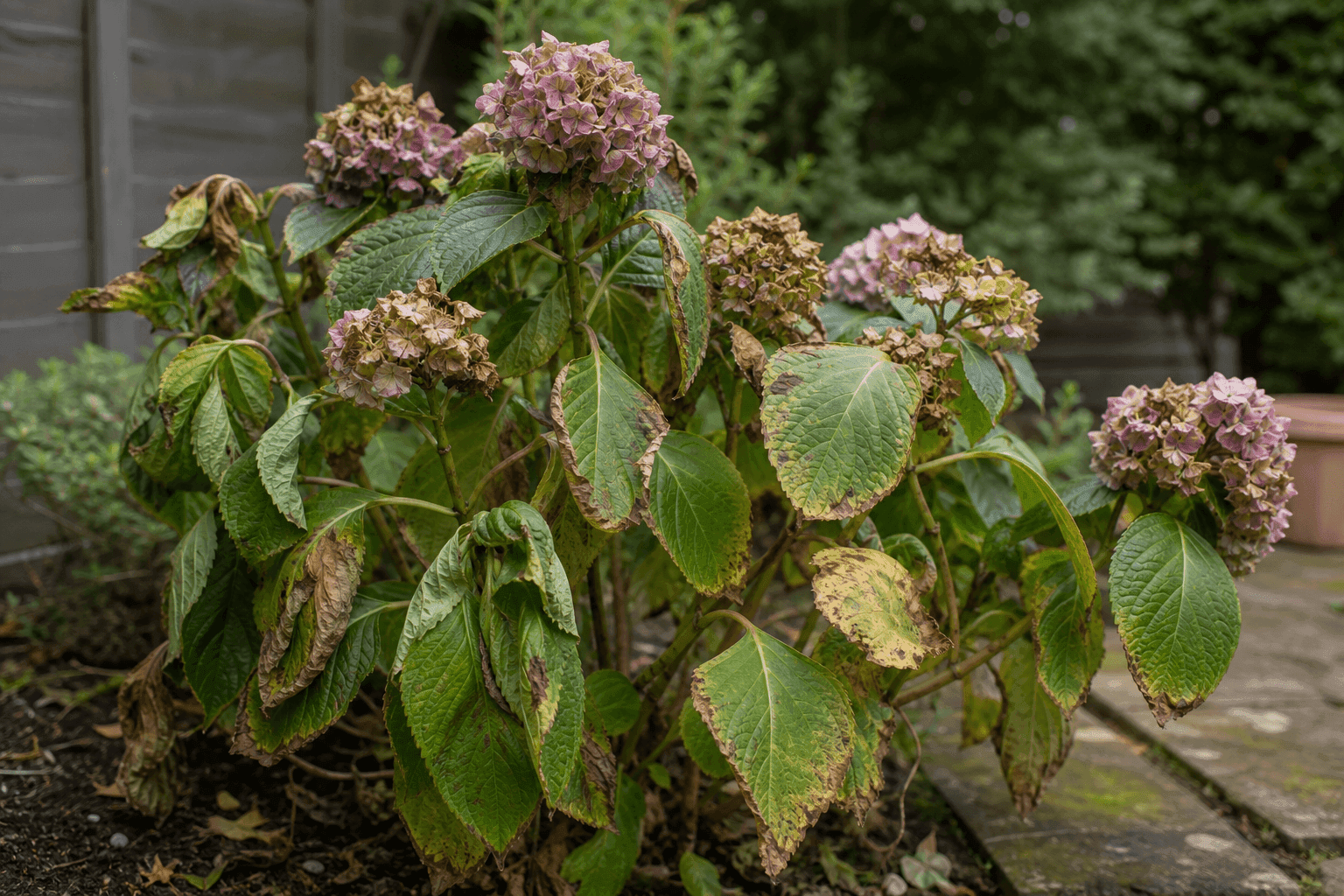
Most likelyHydrangeas have large leaves and lose water readily. Drought-stressed leaves may turn yellow at the edges, then brown and crispy. Leaf scorch is common on the side facing afternoon sun or drying wind, and in the UK is worst during warm, windy spells from May to August. The RHS notes that hydrangea wilt can be temporary in hot afternoon sun but that prolonged drought leads to permanent brown edges and yellowing.
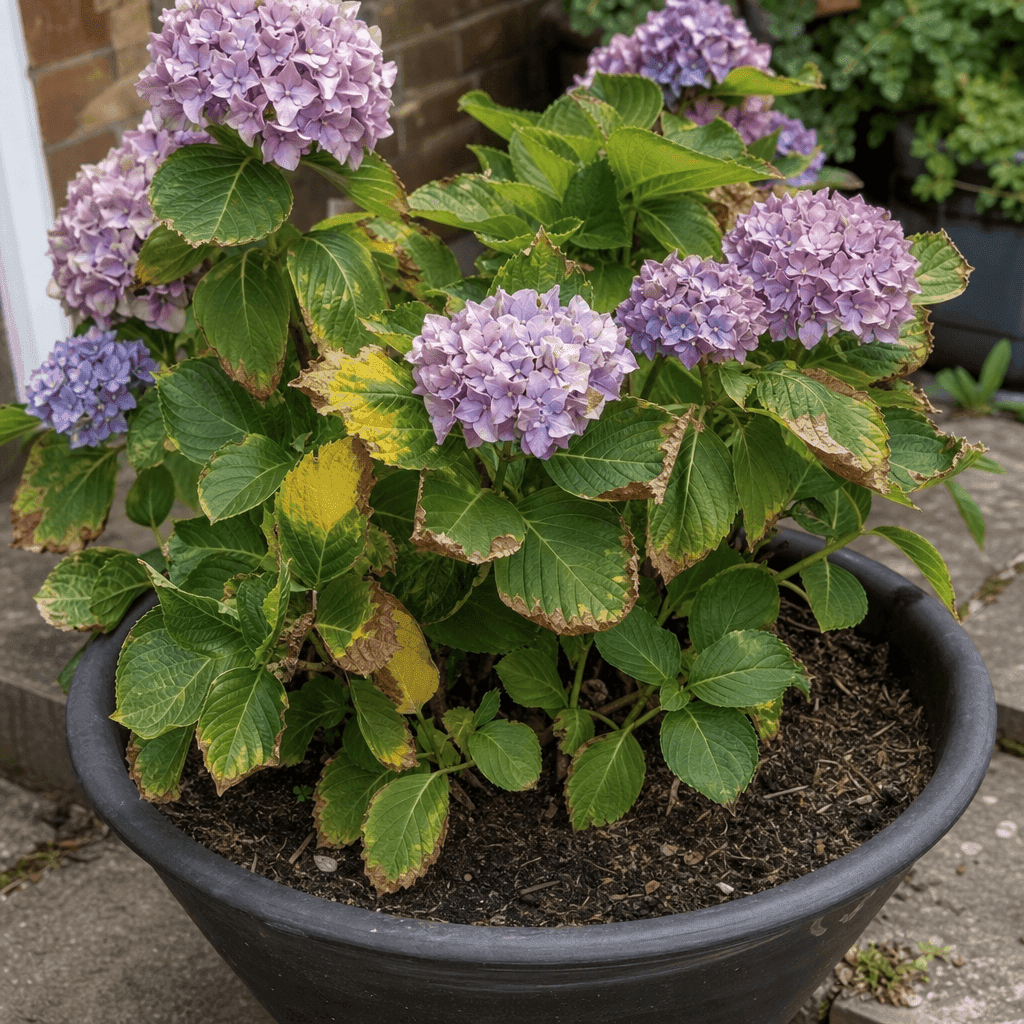
- Soil is dry below the surface; pot feels light.
- Yellowing and browning are worst at leaf edges and on the windward or sunny side.
- The plant may recover temporarily in the evening after mild heat stress.
- Water deeply at the base so the full root zone is moistened.
- Apply a 5cm mulch of organic matter, kept clear of the stem.
- Move pots to morning sun with afternoon shade.
- During hot spells, provide temporary shade for border plants with shade cloth or a parasol.
Stop it coming back:Brown leaf edges do not recover but new leaves should be healthier once watering and shade are corrected.
sprinkle water over the leaves in the evening — wet foliage at night encourages fungal disease, and leaf-level watering does not reach the roots.
Natural loss of shaded inner leaves
PossibleAs a hydrangea's canopy fills in, it naturally loses the oldest, most shaded inner leaves. This is a normal process and not a cause for concern if only a few shaded lower leaves are affected and the outer growth is healthy. The RHS advises this is common in summer as foliage density increases.
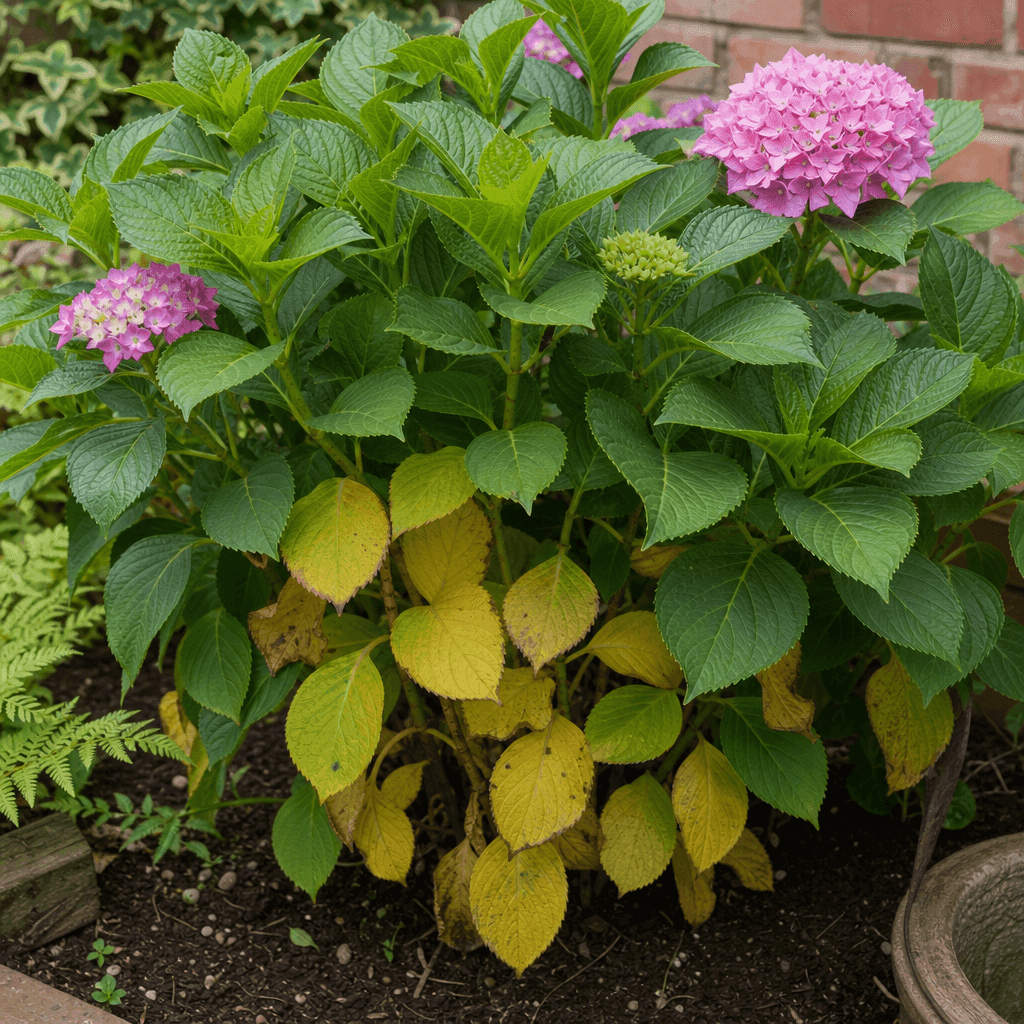
- Only the innermost or most shaded, lowest leaves are affected.
- Outer leaves and new growth look healthy.
- No pest, disease or unusual weather is present.
- Remove fallen leaves from the surface to improve hygiene.
- No feeding, watering or spraying is needed.
start a fertilising or acidifying programme in response to a few naturally ageing inner leaves — overcorrecting often creates secondary problems.
Leaf spot and fungal disease
PossibleHydrangea leaf spot diseases — caused by Cercospora or bacterial pathogens — produce distinct brown or purplish spots surrounded by yellow halos. They are worse in wet, crowded conditions and spread when water splashes between plants. They differ from scorch (where browning is dry, papery and concentrated on edges) by the presence of distinct, circular or angular spots that may enlarge in wet weather.
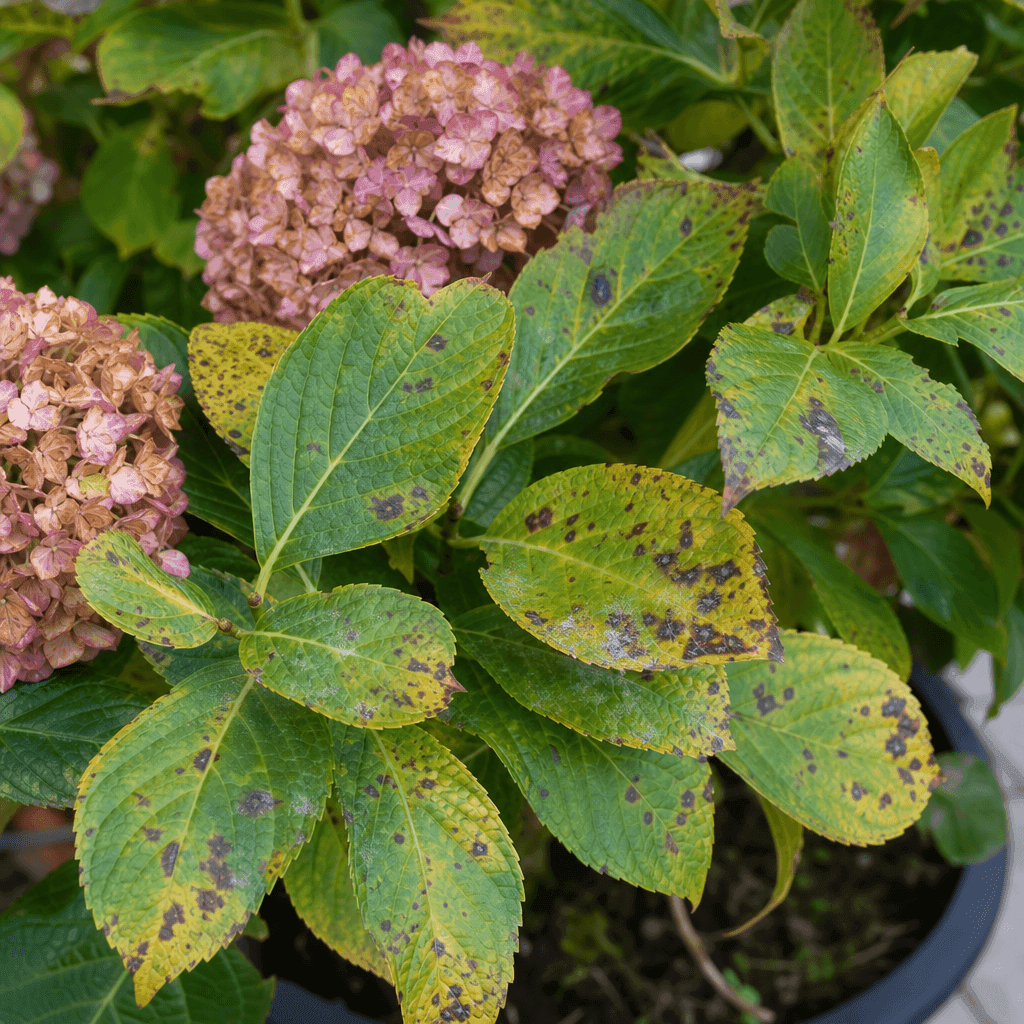
- Look for distinct spots rather than general or edge yellowing.
- Spots may be ringed with yellow halos.
- Worse after wet or humid weather; the plant may be growing in a crowded or poorly ventilated spot.
- Remove badly affected leaves and clear fallen debris from the ground.
- Water at the base rather than overhead.
- Thin nearby growth to improve airflow.
- Disinfect secateurs after pruning diseased material.
Stop it coming back:Affected leaves will not heal, but better hygiene and airflow should keep new growth cleaner.
compost diseased leaves — bin them to reduce spore levels in the garden.
Still not sure?
Work down these branches — the first one that matches is your answer.
What not to do
- Feed a waterlogged hydrangea — damaged roots cannot absorb fertiliser, and it makes conditions worse.
- Pour vinegar into the soil or bury rusty nails to treat chlorosis — these remedies are unreliable and can damage soil life.
- Feed with high-nitrogen fertiliser after midsummer — soft new growth is more vulnerable to frost.
- Water overhead in the evening — wet foliage at night encourages fungal leaf diseases.
- Assume yellowing means the plant is hungry — always check soil moisture and drainage before feeding.
Common questions
Why are my hydrangea leaves turning yellow?
The most common causes are overwatering, iron chlorosis linked to alkaline soil, nitrogen or magnesium deficiency, drought stress, or natural loss of shaded inner leaves. The position of yellowing on the plant — new or old leaves, even or interveinal — is the key to diagnosis.
Why are my hydrangea's newest leaves yellow with green veins?
Yellowing between the veins of the newest leaves is the classic sign of iron deficiency (chlorosis), usually caused by soil pH that is too high for the plant to absorb iron. Test soil pH — above 6.5 is commonly the trigger. Use ericaceous compost for pots and apply chelated iron.
Do hydrangeas need ericaceous compost?
Mophead (H. macrophylla) and lacecap hydrangeas prefer slightly acidic soil (pH 5.5–6.5) and benefit from ericaceous compost in pots. Other types such as H. paniculata and H. arborescens are more tolerant of a range of pH values.
Can yellow hydrangea leaves turn green again?
Partly pale or chlorotic leaves may improve once pH, drainage and nutrition are corrected, but deeply yellowed leaves usually will not recover. Assess recovery by the colour and vigour of new growth.
Are coffee grounds good for hydrangea yellow leaves?
Coffee grounds are not a reliable treatment for hydrangea yellowing. If pH is the issue, test the soil and use appropriate ericaceous compost or a chelated iron product rather than guessing.
Should I remove yellow leaves from my hydrangea?
Yes, remove leaves that are fully yellow, spotted or dead. Avoid stripping too many partly green leaves from a small plant — they still contribute to photosynthesis.
Why are my hydrangea leaves yellow and the soil is wet?
Wet soil combined with yellow leaves points strongly to overwatering or waterlogging. Roots in oxygen-poor, waterlogged soil cannot function, causing nutrient starvation and yellowing. Check drainage and stop watering until the soil begins to dry.