Quick diagnosis
Match the row to what you’re seeing, then jump to the fix.
| What you see | Likely cause | Confidence | How to confirm | What to do now | Urgency |
|---|---|---|---|---|---|
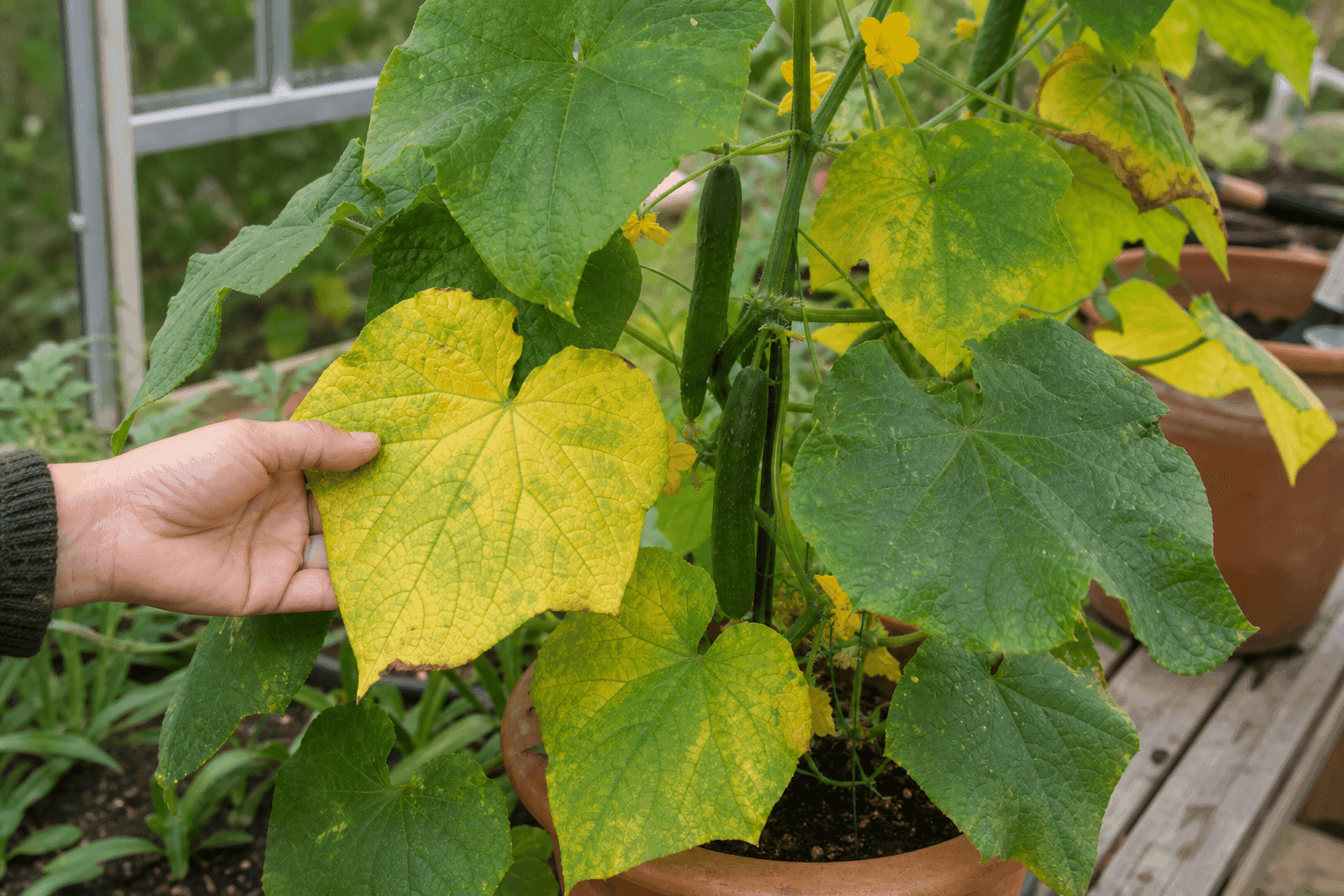
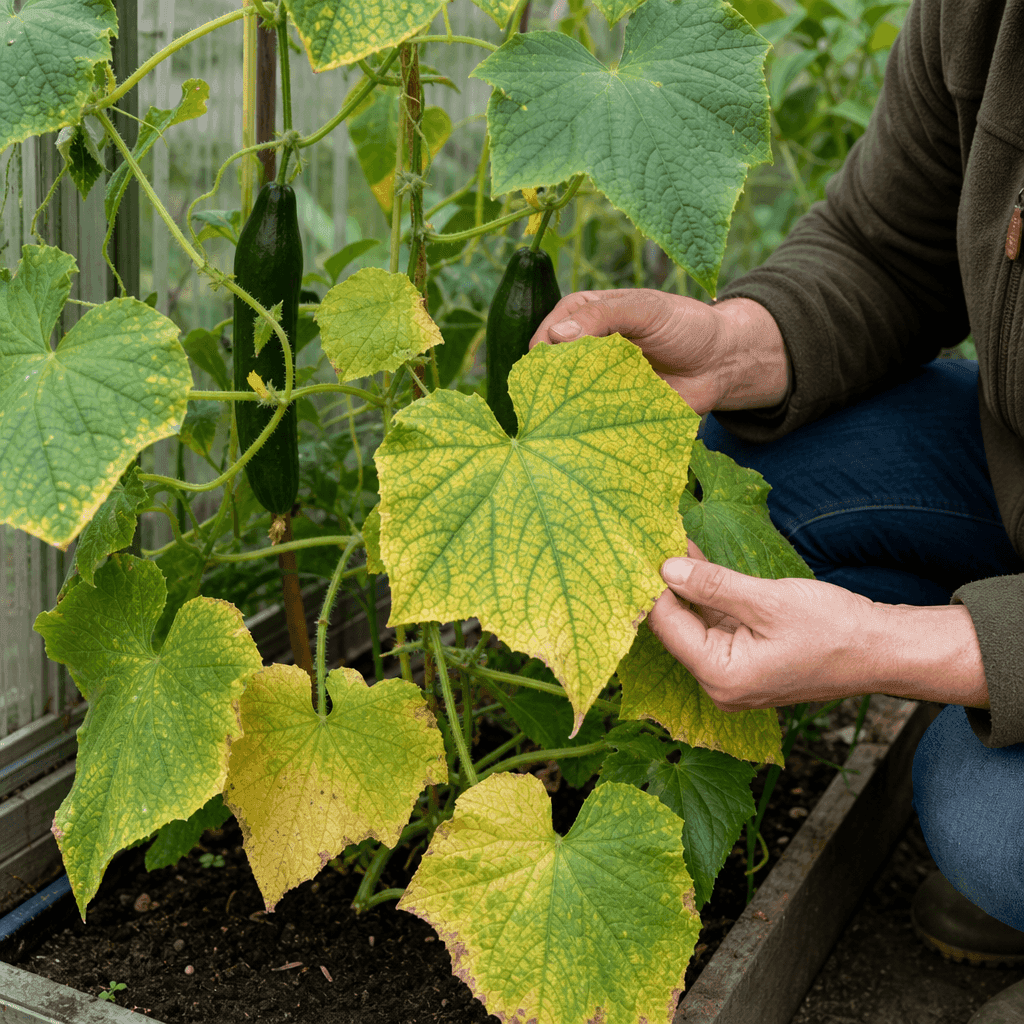
| Older lower leaves turn pale yellow evenly; general weak growth | Nitrogen deficiency | High | Lower leaves affected first; new growth is smaller and pale but not mottled. | Apply a high-nitrogen liquid feed; mulch soil with organic matter. | Medium |
| Lower leaves yellow; compost stays wet; plant may wilt despite wet soil | Overwatering or poor drainage | High | Push finger into compost — stays wet for days; pot may smell sour. | Stop watering until compost begins to dry; check drainage holes. | High |
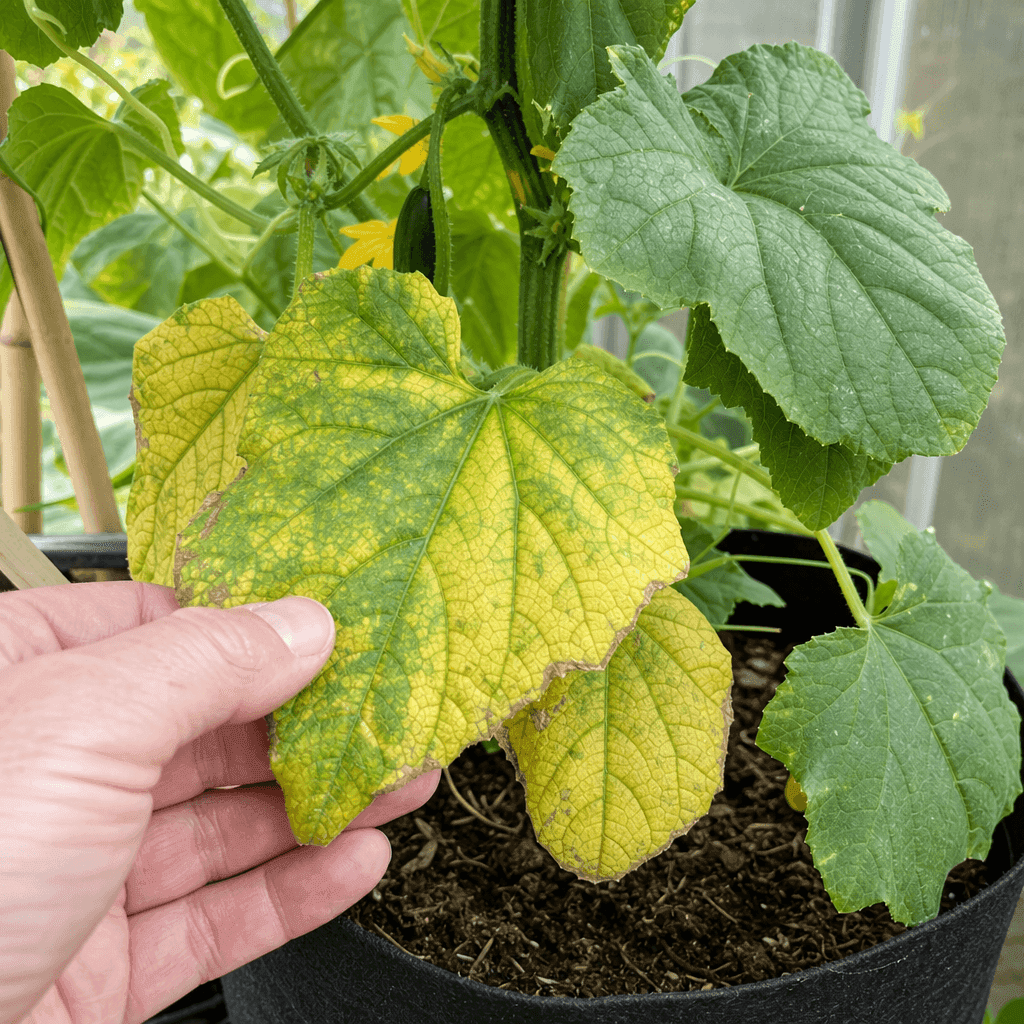
| Yellowing between the veins on older leaves; veins stay green | Magnesium deficiency | Medium | Interveinal yellowing on mid- to older leaves; RHS notes magnesium deficiency starts in older leaves. | Apply Epsom salts (magnesium sulphate) as a foliar spray at 20g per litre. | Medium |
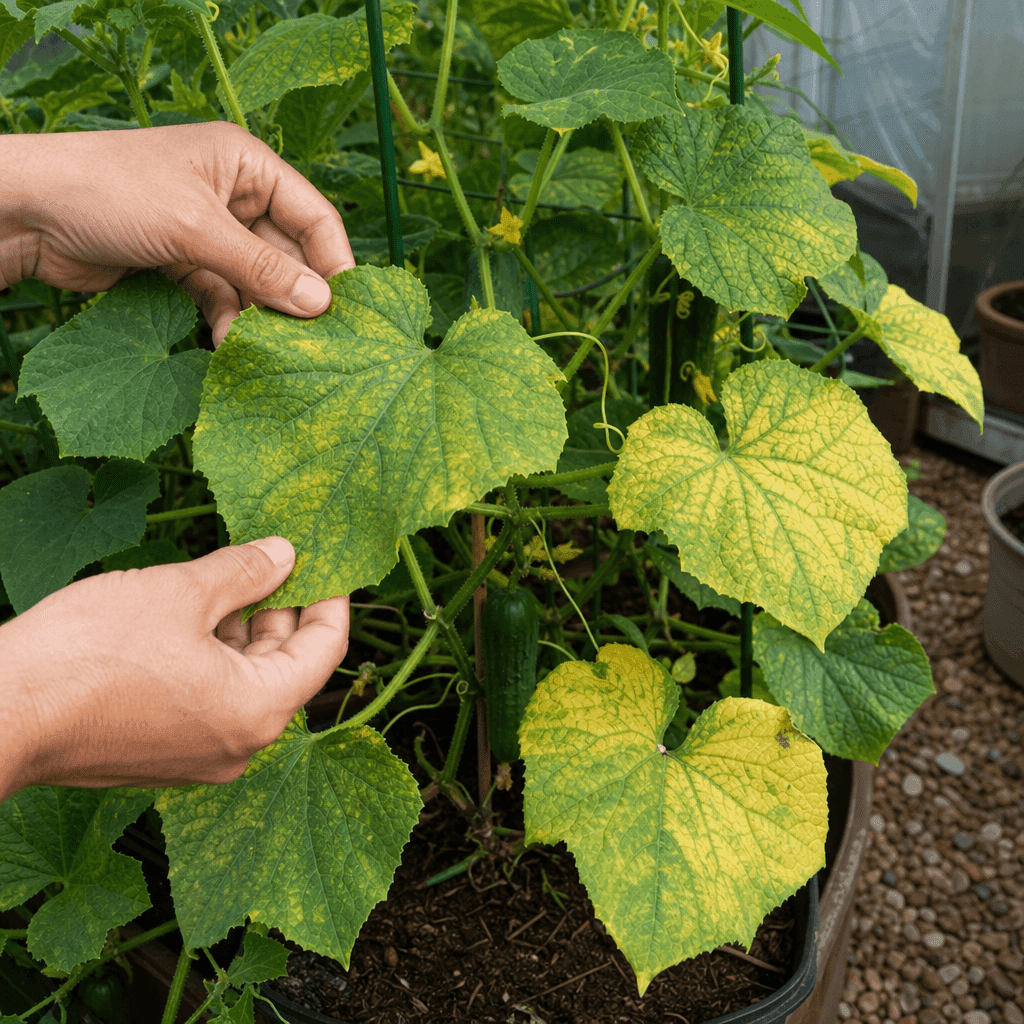
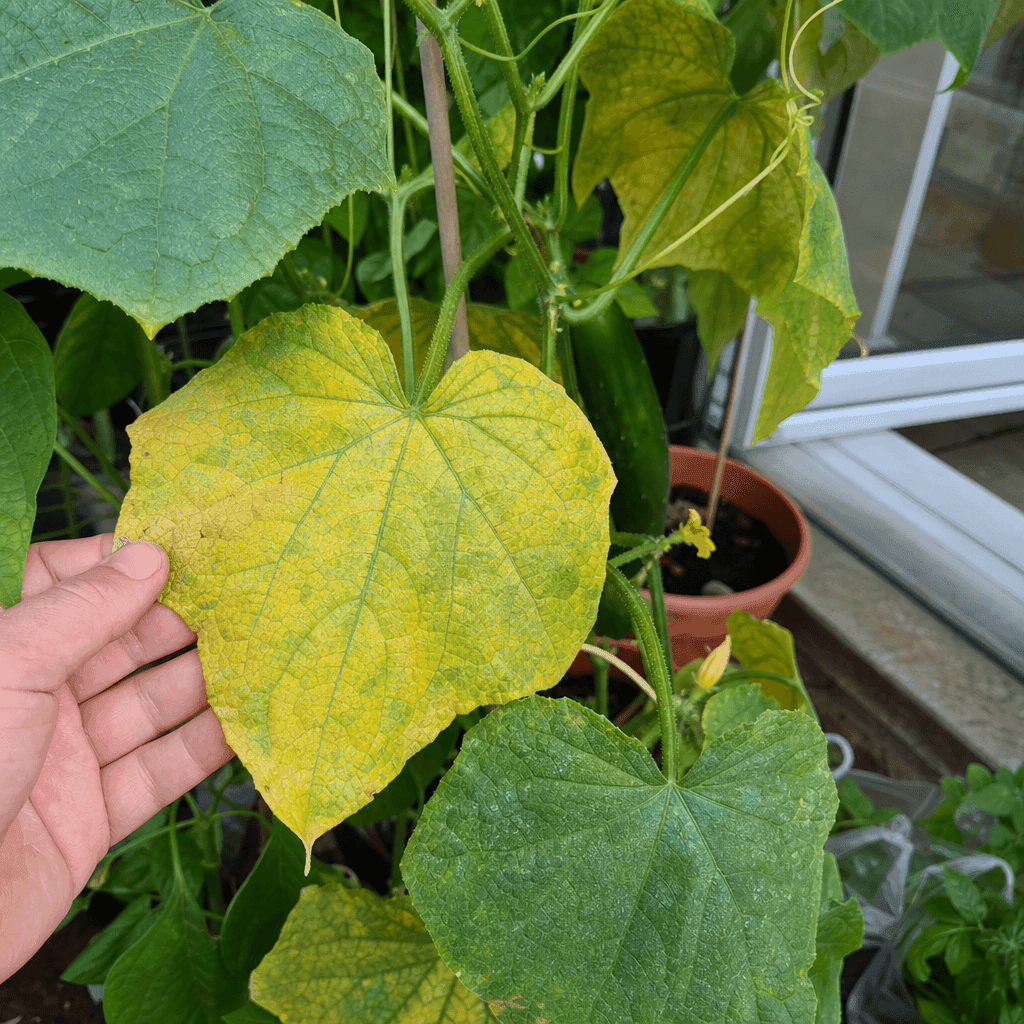
| Mosaic or mottled yellow-and-green pattern; distorted or puckered leaves | Cucumber mosaic virus | Medium | Irregular mottling — not uniform yellowing; new leaves distorted; possibly stunted plant. | Remove and bin affected plants; control aphids on remaining plants. | High |
| Leaf edges yellow then brown and crispy; plant wilts in hot weather | Drought or heat stress | Medium | Compost dry below the surface; pot feels light; worse on south-facing or unshaded plants. | Water deeply at the base; mulch; provide shade from harsh midday sun. | Medium |
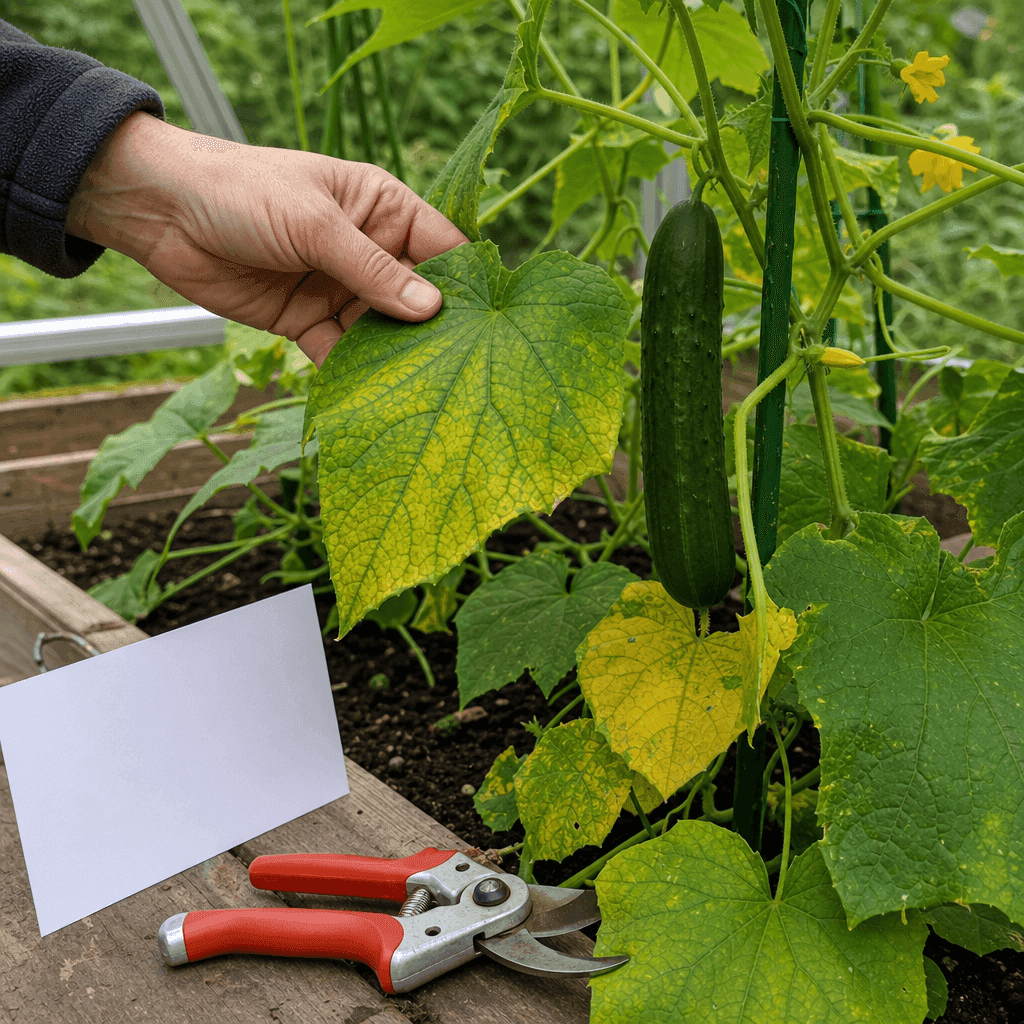
| Lowest leaves turn yellow and drop; new growth healthy | Natural leaf ageing and shading | Medium | Only the oldest, lowest, most shaded leaves affected; rest of plant growing well. | Remove yellowed leaves; no other action needed. | Low |
The causes, in detail
Nitrogen deficiency
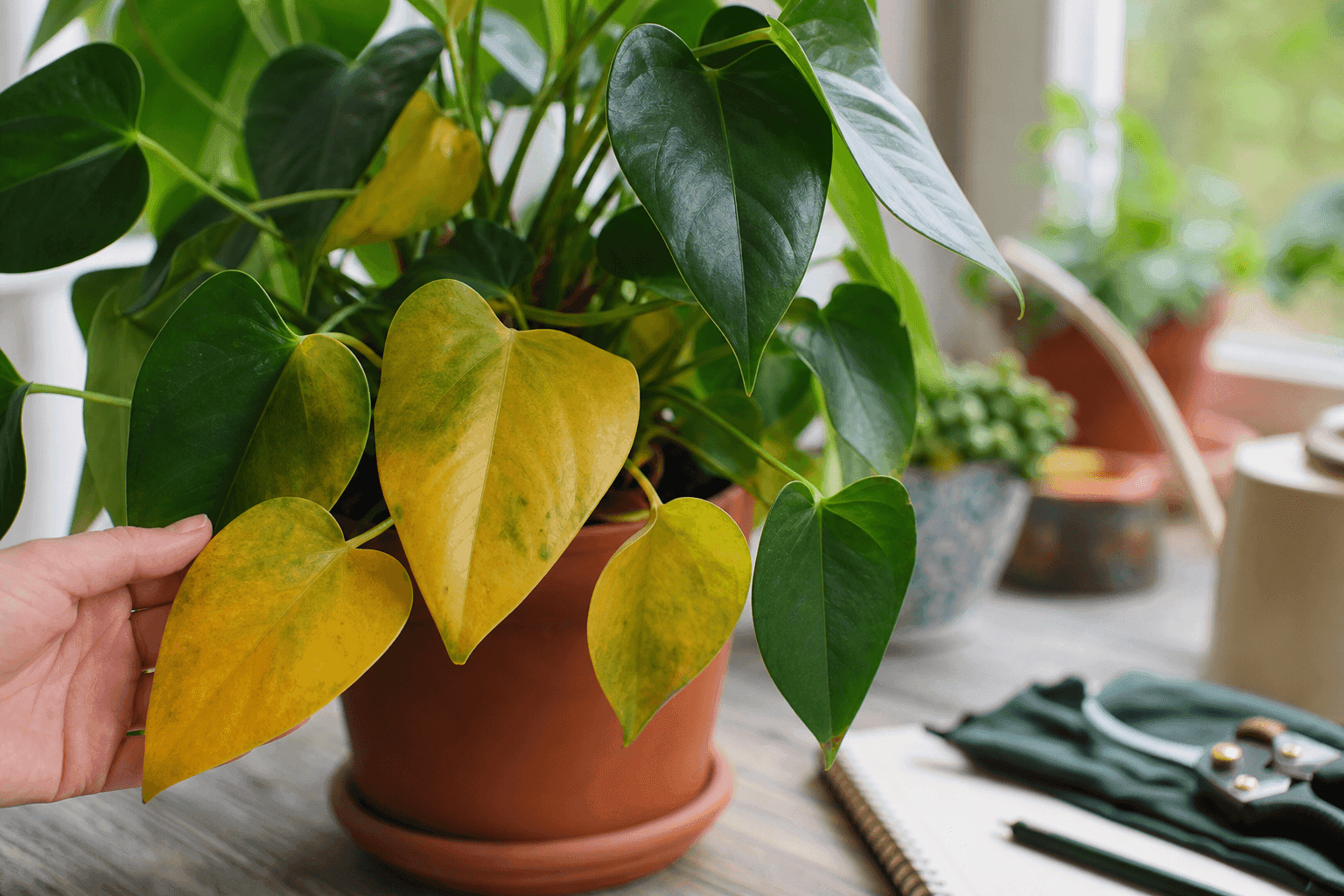
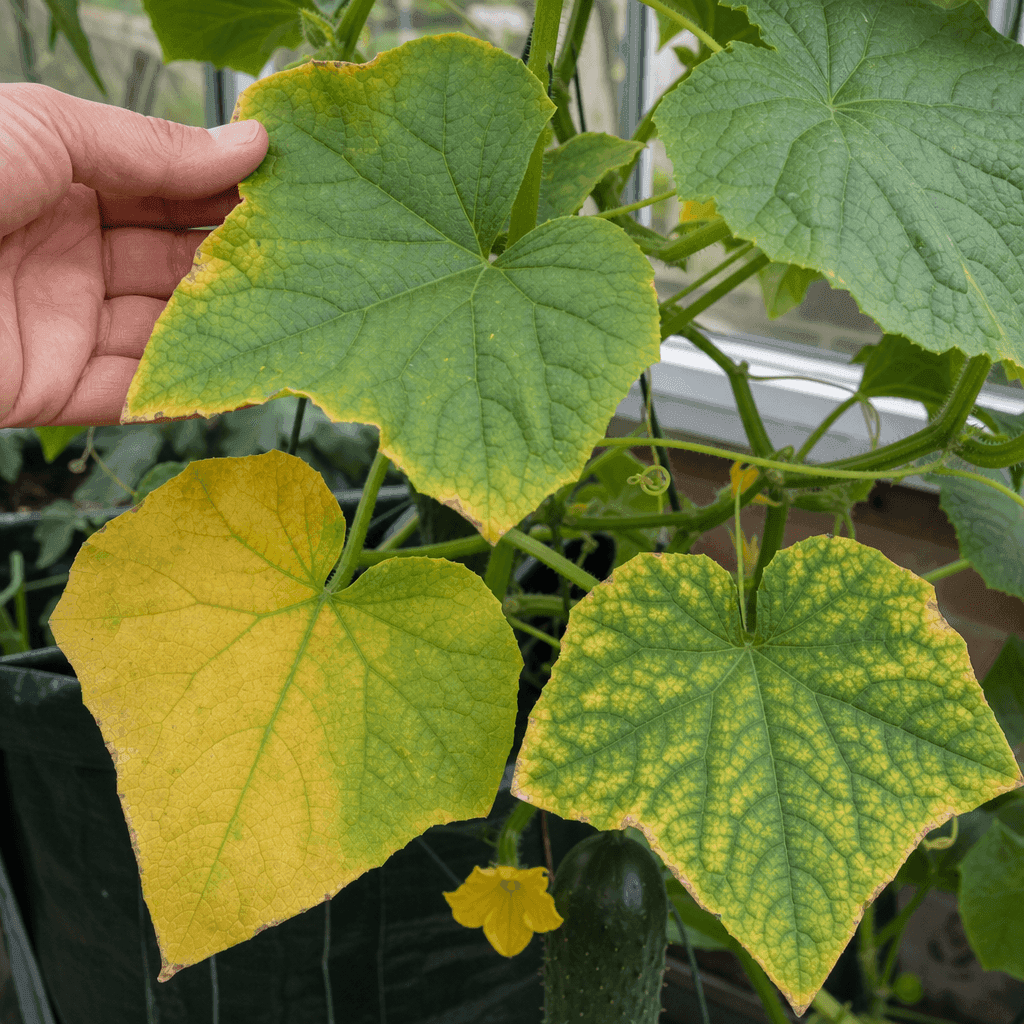
Most likelyNitrogen deficiency is one of the most common causes of yellow cucumber leaves in UK gardens, particularly in pots, grow bags and sandy soils where nitrogen washes out quickly. The RHS notes that nitrogen deficiency causes yellowing of older leaves first, as the plant moves mobile nitrogen from old tissue to new growth. Affected leaves turn pale yellow evenly, without a vein pattern. Growth is generally weak and leaves may be smaller than normal. Nitrogen is very soluble and is easily leached from compost by heavy watering or rain.
- Older lower leaves affected first; new growth remains relatively green but may be small.
- Yellowing is even across the leaf without a strong vein pattern.
- Growth is generally slow and weak.
- The plant is in a pot or grow bag that has not been fed for several weeks.
- Apply a high-nitrogen liquid fertiliser (e.g. tomato feed, balanced liquid feed) at the label rate.
- Mulch the soil surface with organic matter — garden compost, well-rotted manure or grass clippings — to provide a slow release of nitrogen.
- Feed container-grown cucumbers weekly once fruiting begins — compost in grow bags is exhausted quickly.
- In the ground, fork in a balanced general fertiliser in spring and mulch annually.
Stop it coming back:New leaves should look greener within two to three weeks of feeding. Old yellow leaves will not recover — judge improvement by new growth.
double-dose liquid feeds to speed recovery — excess nitrogen encourages lush, soft growth that is more vulnerable to pests and disease, and can cause root burn.
Overwatering and poor drainage
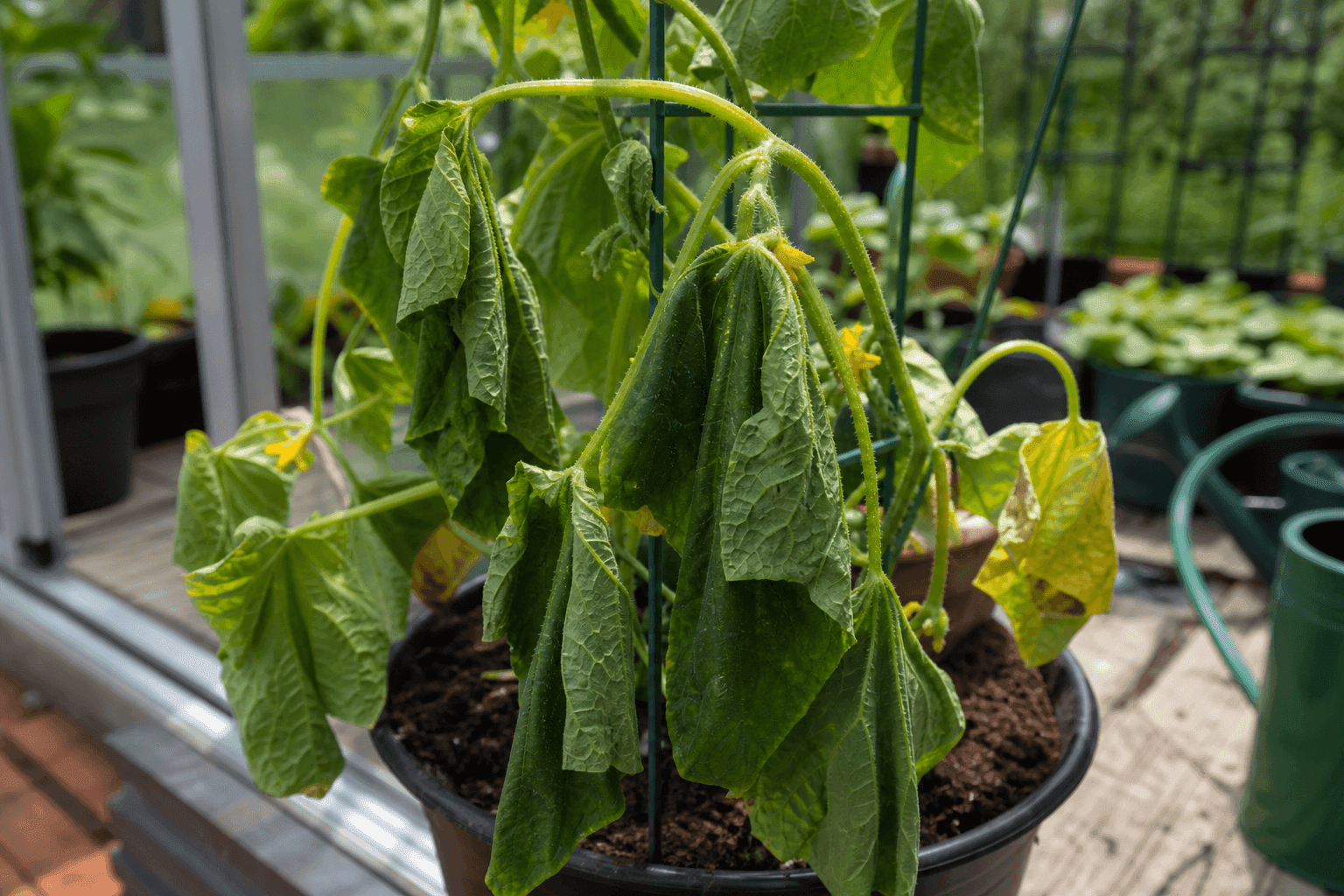
Most likelyCucumbers need steady moisture but are sensitive to waterlogged roots. In poorly drained pots or beds, roots lose oxygen quickly and begin to die, causing yellowing and wilting even though the compost is wet. This is one of the most confusing symptoms for gardeners — the plant looks drought-stressed despite being in wet soil, and the same waterlogging is a leading reason for a cucumber plant wilting outright. In the UK, cool, wet springs can lead to root problems before plants are established. Grow bags sitting in water or pots with blocked drainage holes are common culprits.
- Push a finger into the compost — it remains wet and cool for days at a time.
- The pot may feel heavy or smell slightly sour.
- Roots visible at drainage holes may appear brown or grey rather than white.
- The plant wilts despite the compost being moist.
- Stop watering until the top few centimetres of compost begin to dry out.
- Check that drainage holes are open and the pot or grow bag is not sitting in standing water.
- Raise pots on feet to improve drainage.
- If the compost smells sour, repot into fresh, free-draining compost, trimming any brown or mushy roots.
- In the ground, avoid planting in low-lying areas where water pools after rain.
Stop it coming back:Recovery depends on how much root damage has occurred. If caught early, new growth should look healthier within a few weeks once drainage improves.
keep watering a plant that wilts because you assume it is thirsty — always check the compost before watering cucumbers.
Magnesium deficiency
PossibleMagnesium deficiency causes distinctive interveinal yellowing on older leaves — the tissue between the veins turns yellow while the veins themselves stay green. The RHS notes this differs from nitrogen deficiency (general even yellowing) and from iron deficiency (which affects new leaves first). Magnesium deficiency is more common on sandy soils, in pots, and in gardens where high-potassium fertilisers are used without balancing magnesium — the same interveinal yellowing shows up on courgette leaves turning yellow, a close cucurbit relative.
- Yellowing is between the veins — veins stay green — on mid- to lower leaves.
- New, young leaves look normal or nearly normal.
- High-potassium feeds have been used without supplementary magnesium.
- Apply Epsom salts (magnesium sulphate) diluted at 20g per litre of water as a foliar spray — repeat two or three times at fortnightly intervals.
- Alternatively, water Epsom salts solution onto the root zone at 35g per 9 litres.
- Switch to a balanced cucumber or tomato feed that includes trace elements.
Stop it coming back:Improvement should be visible on new growth within two to four weeks. Existing yellow leaves will not recover.
apply heavy doses of Epsom salts without confirming magnesium is the cause — excess magnesium can displace other nutrients and create further deficiencies.
Cucumber mosaic virus (CMV)
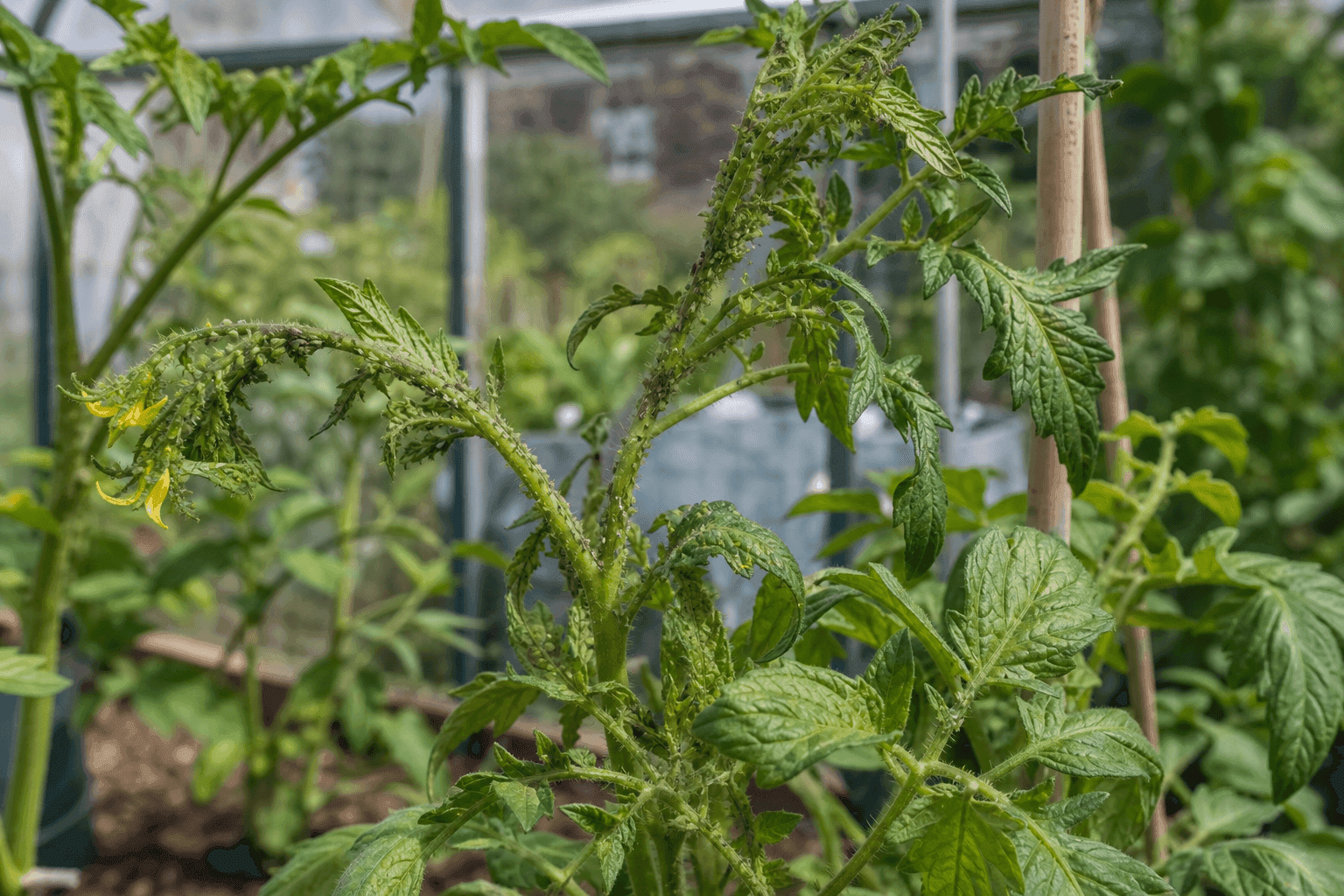
PossibleCucumber mosaic virus is one of the most widespread plant viruses in the world and affects cucumbers as well as many other garden plants. The RHS confirms it causes yellow mottling, mosaic patterns, distorted leaves and stunted growth. It is transmitted by aphids — particularly the peach-potato aphid — which spread it rapidly from plant to plant. There is no cure; affected plants should be removed and destroyed.
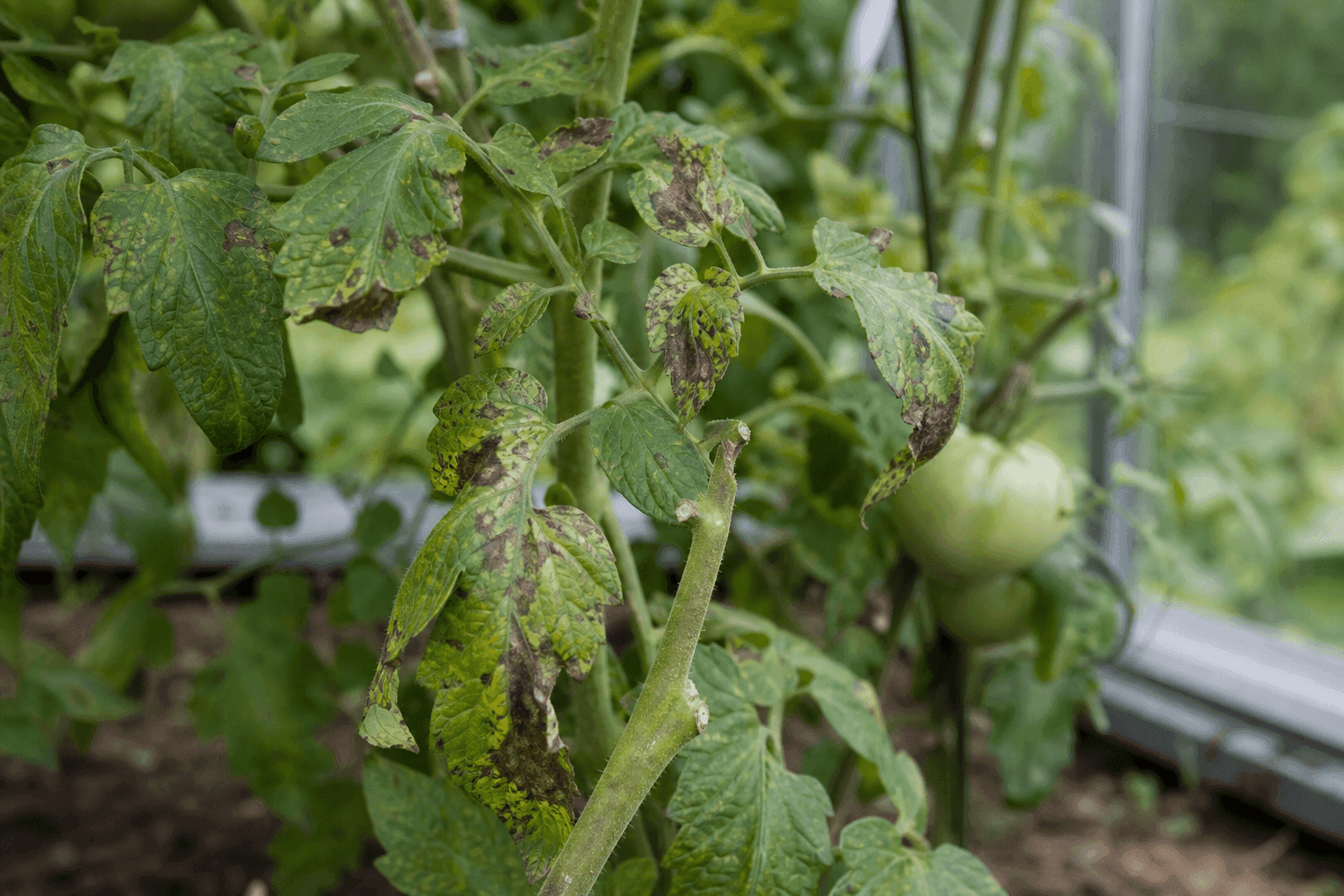
- Yellow mottling or mosaic pattern across leaves — irregular, not uniform.
- Leaves may be puckered, blistered or distorted.
- Multiple plants show symptoms after an aphid infestation.
- Fruit may be pale, mottled or stunted.
- Remove and bin all clearly affected plants immediately — do not compost them.
- Control aphids on remaining plants to prevent further spread.
- Wash hands and tools before handling healthy plants.
- Grow resistant varieties in future if CMV is a recurring problem.
leave virus-affected plants in place hoping they will recover — there is no cure, and aphids will spread the virus to neighbouring plants.
Drought or heat stress
PossibleCucumbers are fast-growing plants with large leaves that need consistent moisture, especially in warm weather. In UK greenhouses and grow bags, the compost can dry out quickly in summer and cause leaf edges to yellow and brown, followed by wilting. Unlike overwatering, the compost will feel dry below the surface.
- Compost feels dry below the surface; pot feels light when lifted.
- Leaf edges yellow and turn brown and crispy.
- The plant perks up within hours of a thorough watering.
- Water deeply at the base until water runs from the drainage holes.
- Apply a 5cm mulch of organic matter to conserve moisture.
- In greenhouses, damp down paths to raise humidity on very hot days.
- Use a water-retentive compost in grow bags and pots.
Stop it coming back:Brown leaf edges will not recover, but new growth should be healthy once consistent watering is restored.
water little and often — cucumbers need deep, thorough watering rather than frequent surface wetting.
Natural ageing of lower leaves
PossibleAs a cucumber plant grows and its canopy expands, it naturally shades and loses the oldest lower leaves. These yellow and drop without any disease or deficiency being present. If only the very lowest leaves are affected and the plant is producing new growth and flowers normally, this is simply natural senescence.
- Only the oldest, most shaded, lowest leaves are affected.
- The rest of the plant looks healthy, is growing well and producing flowers or fruit.
- No pest, disease or unusual weather has occurred recently.
- Remove yellowed leaves to improve airflow at the base of the plant.
- No feeding or watering change is needed.
start a feeding or watering programme in response to a few naturally ageing lower leaves — this may do more harm than good.
Still not sure?
Work down these branches — the first one that matches is your answer.
What not to do
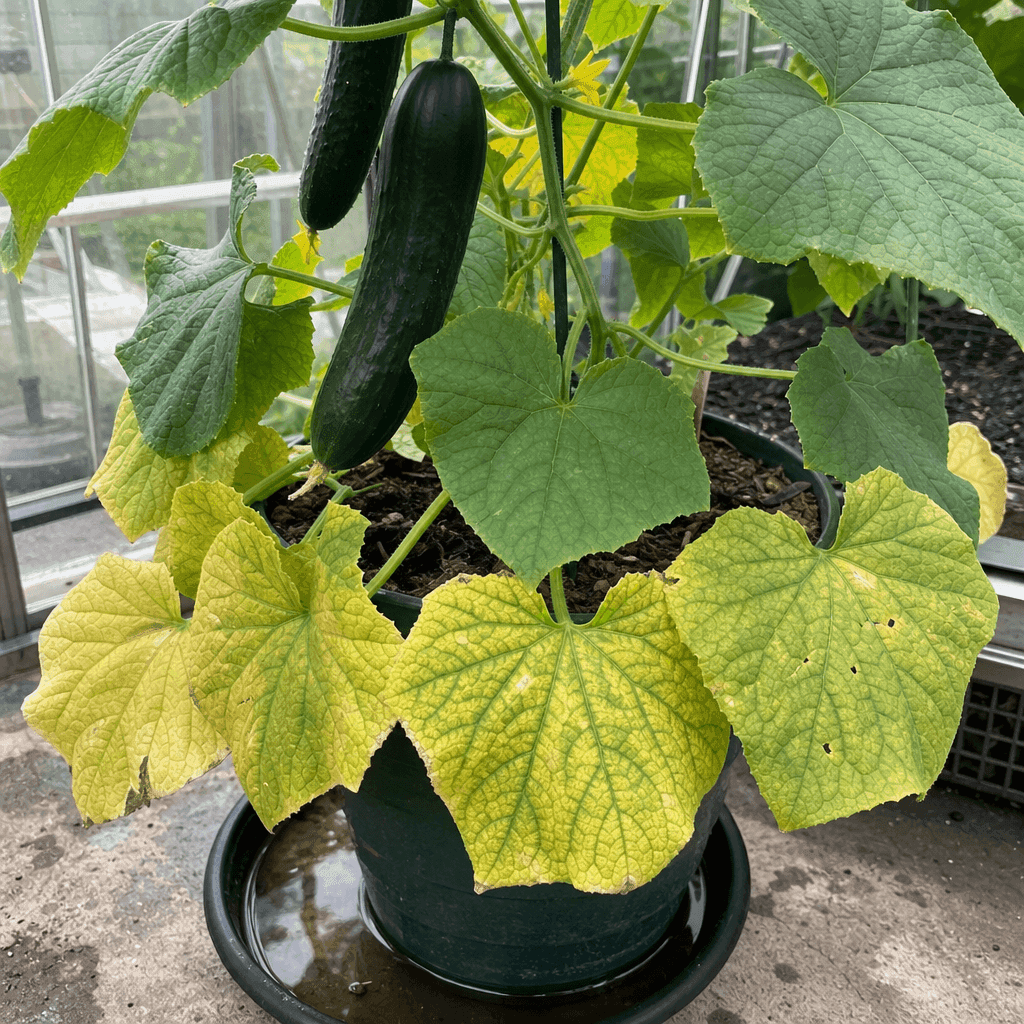
- Water before checking the compost — cucumbers in wet compost look the same as drought-stressed ones from above.
- Apply high-potassium tomato feeds exclusively without balancing magnesium, especially in pots.
- Leave plants showing mosaic virus symptoms in place — there is no cure and aphids will spread the virus.
- Double-dose feeds to speed recovery — this causes root burn and makes deficiency symptoms worse.
- Remove all yellowing leaves from a small plant at once — it still needs foliage to grow.
Common questions
Why are my cucumber leaves turning yellow?
The most common reasons are nitrogen deficiency, overwatering, magnesium deficiency, cucumber mosaic virus or natural leaf ageing. The pattern of yellowing — where on the plant, and what the leaf looks like — is the key to diagnosing the cause, and the same logic applies to why plant leaves turn yellow more generally.
Can I still eat cucumbers from a plant with yellow leaves?
If yellowing is from nutrient deficiency, drought or ageing, the fruit is fine to eat. If the plant has cucumber mosaic virus, the fruit may be mottled or pale but is still edible, though affected plants should be removed to prevent spread.
How often should I feed cucumbers in a grow bag?
Once plants start flowering, feed weekly with a balanced tomato-type fertiliser. Grow bag compost is exhausted quickly, especially when watered frequently. By midsummer, most of the original nutrients will be depleted.
What does cucumber mosaic virus look like?
Cucumber mosaic virus causes an irregular mosaic of yellow and dark green on leaves, often with leaf distortion or puckering. It is spread by aphids. The RHS advises removing affected plants and destroying them — not composting.
Are yellow lower leaves on cucumbers normal?
The very lowest leaves often yellow naturally as the plant grows and shades them out. This is normal as long as new growth is healthy and the yellowing is confined to the oldest, most shaded leaves at the base.
How do I fix yellow cucumber leaves in a greenhouse?
First check whether the compost is too wet or too dry. In greenhouses, overwatering, nutrient exhaustion in grow bags and magnesium deficiency are all common. Feed weekly once fruiting begins, water at the base and improve ventilation to reduce disease risk.